

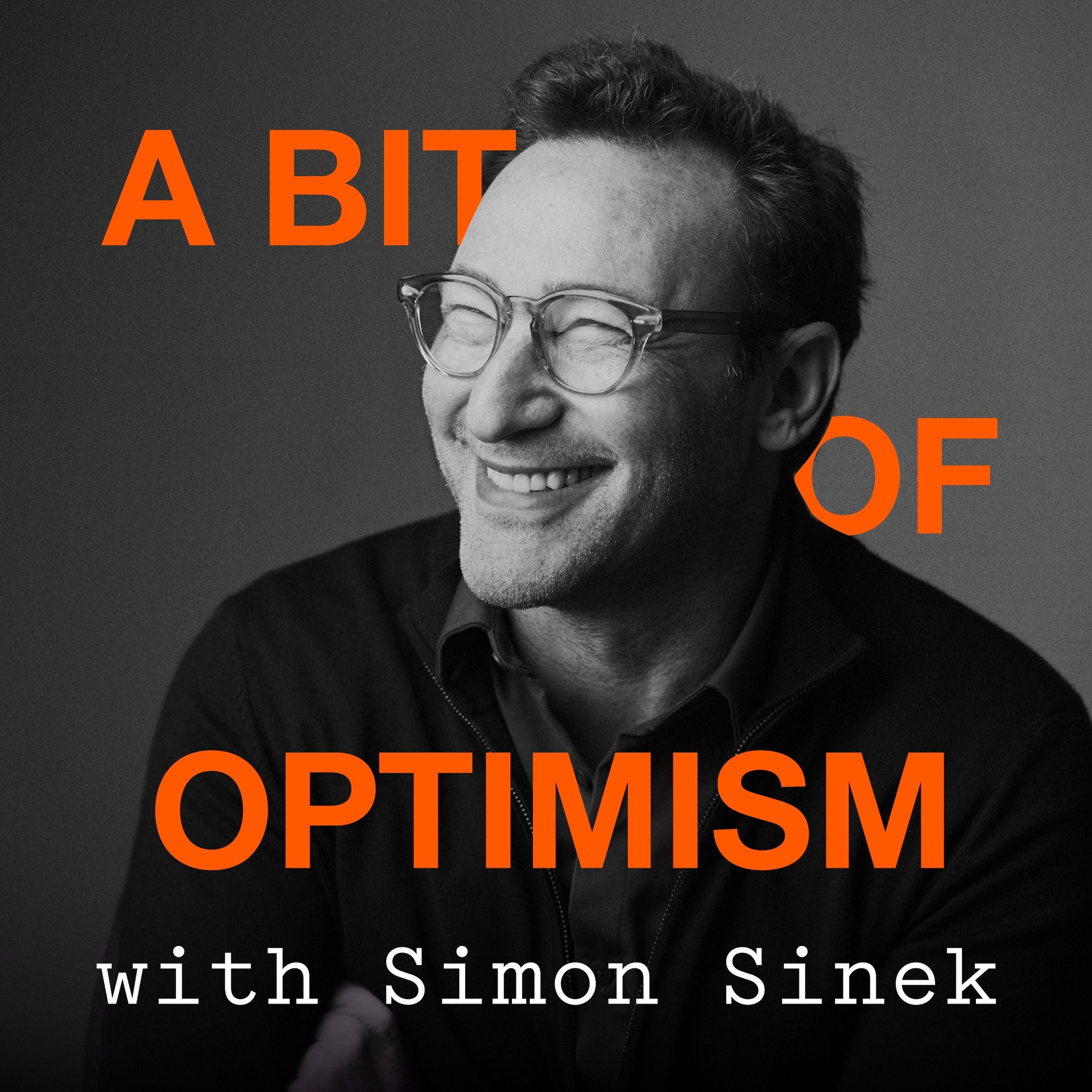
A Bit of Optimism· Folge 150
Alexis Ohanian: Why I Left Reddit and Why Greed Can Inspire Good
Dienstag, 12. November 2024 · 1 h 04
Kapitelklicken springt direkt hin
Shownotes
In 2020, Reddit co-founder Alexis Ohanian resigned from his own company in protest. After 15 years building Reddit into a social media juggernaut, why leave?
The answer is values. Alexis is the kind of entrepreneur and investor who believes that integrity and long term profits go hand in hand. It’s the reason he started his new company 776, allowing him to invest in startups that are trying to make the world a better place. And it’s the reason he resigned from Reddit after George Floyd was killed, requesting the board replace him with a Black director.
In this conversation, Alexis shares with me his thoughts on the future of entrepreneurship, the race for AGI, climate change, and the principles that guide the way he leads. It turns out, building a business with values is the best thing for long term greed.
This...is A Bit of Optimism
For more on Alexis and his work, check out:
776 (sevensevensix.com)
alexisohanian.com
Transkriptvom Podcast bereitgestellt · Zeitmarken springen hin
What you've said is so profoundly right. We have replaced long-term greed with short-term greed. And we need to get back to long-term greed because it's better. I'm going to love being told I'm right. So thank you. No, just hold on. If we just keep talking, I'll find something wrong. Okay. Alexis Ohanian is a tech investor who's famous for a few reasons.
Most people know him because he happens to be married to tennis icon Serena Williams. But if you didn't know, he's also the co-founder of Reddit. The reason I like him, however, is because he's the kind of entrepreneur and investor that absolutely leads with his values. After launching Reddit with his college roommate and friend in 2005, he spent the next 16 years helping it to become the ninth most visited website in the world.
But it was after George Floyd was killed that he decided it was time to resign from the board. And he did so in protest. He requested the company take more concrete steps to curb the hate on the platform and to replace him with a black director, which they did. Since then, Alexis founded an organization called 776 to invest in ideas at their earliest stages. And he's also become a leading investor in an advocate for women's sports, climate change, startups, and paid family leave.
All the while proving that investing with your values is a really good way to promote long-term greed. This is a bit of optimism. So I wanted to start in sort of an obscure direction. Good. I wanted to start talking about imposter syndrome. I know some about your early years that you were in tech, but you weren't really an engineer, you were studying it, but you didn't really go into it.
And I'm so curious as to your experience of imposter syndrome, but more important, not how it's hurt, but how it's helped. Here's the thing. I need to define some terms here. So I'm familiar with imposter syndrome, but tell me if I'm getting this right. Like this idea that you're occupying spaces that you don't necessarily belong in, like you feel like an imposter in, you know, in certain rooms or as the CEO, that sort of thing, right?
The way that most people use it is that they don't feel qualified for the thing that they're doing, and they want to keep it a secret because they don't feel like they should be there. Yeah. That's how I think, that's how most people use it. So this may not help, but I don't think I've ever felt it. And, and I think there have been, there have definitely been moments where I realize, oh, okay, like I've played a lot of view games growing up.
Like I've gotten to the next level, and this next level is a harder level that I'm not necessarily equipped for, but I don't know, I think this is, it probably helps to be the like, tall, confident, straight white guy in every one of these rooms. And even when showing up to that first batch of eye commonator, you know, Paul Graham is a very, it's a traditional technologist, right?
I've easily educated. He had a successful startup doing the first.com boom. He curated a very airy-dite, very well-degree group of founders in that first batch. Sam Altman, Stanford Dropout, like you couldn't think of a more central casting type founder. Right. That was the standard for that first batch of eye scene, frankly, for a lot of eye scene.
And I went to the University of Virginia, which is a great school, but it's a state school. And it's a school that I know, Paul, I think in his mind, he took a bit of a flyer, because he's like, okay, here's this founder and CEO. Like he's not an engineer. I mean, I started writing code when I was in middle school and high school, and I was taking classes in college, community college, before I got to UVA, but I was not a great programmer.
I didn't end up studying engineering because I was just on another level. And at the time, I wanted to be a lawyer, and eventually came back to tech. But Paul Graham was the first person, though, who did make me feel like I didn't belong. But I still wouldn't call it imposter syndrome, because I don't know.
On some level, it just pissed me off enough to want to prove him wrong, that I don't know. Did he actually say something to you? Like, did he actually say, just look around here, you're not one of us? Yeah. Well, I'll never forget this. So my mother was German, like German born, and so I grew up speaking German and English.
And we had another founder in the first YC Badge, who was Danish. They obviously speak Danish there, but he also speaks a little bit of German. And he found out my mother was German, he found out I was German, and we started talking each other in German. And I guess Paul was sitting near us. This was one of the famous YC dinners on a Tuesday.
I think Paul was sitting near us and he goes over to my co-founder, Steve, who was the real engineer. And he says, Steve, Alexis sounds so much smarter when he's speaking in German than in English. And of course, Steve, when we got home, told me this story. And I was like, what an asshole. Like, do I actually sound that dumb when I'm speaking English?
But it was the first time I'd ever had a moment like that where I was like, huh? Okay, like there are these people who exist, who, you know, I lived, I guess, a pretty sheltered life, very middle class, growing up in the suburbs of Baltimore. And I just never encountered people like this. I'd never met a person who had gone to an Ivy League school or certainly acted like that.
And I just thought, God, what an asshole. But it didn't make me feel like I didn't belong there as much as it made me feel like I needed to prove him wrong. And, you know, four years later, I was on a stage giving a TED talk. And as I got off stage to the standing ovation, there was a part of me that was like, where's Paul now? Like, I wish he could see this.
Because I carry these, when these moments happen, I put them on the wall. And I did this when there was an executive at Yahoo who invited us out in the early days of Reddit. For what I thought was like a potential acquisition offer. And he asked about our traffic. And I said, you know, a few thousand users today.
And he said, you guys are a rounding error compared to Yahoo. Like, what are you doing here? And I thought, well, you invited us. Like, I don't know, you invite startups here to just shit on them. Like, okay. And I went home and went back to the office slash living room of Reddit. I put it on the wall. I said, you are a rounding error because I wanted to look at it every morning.
And I wanted to remember this guy so that, you know, about 12, 13 years later, Reddit surpassed Yahoo in traffic. And I tweeted out and I told that story. I hadn't told the Paul one, but I told that one. And I just thought, God, thank you. I didn't name him, but I'm so grateful to that guy and so grateful to Paul for those moments.
Because I think the privilege of having two incredibly loving and supportive parents. And, you know, like I said, growing up the way I grew up, like, I get the benefit of the doubt and show many rooms. And so in these little moments, I'm like, oh, good. Like, let me find a reason to be pissed at you and use that as motivation to do better.
Now, I go tell my wife these stories. And she's like, really, you had to work that hard to invent enemies. Like, I just showed up at the tennis court and had people who were doing much worse things, obviously, to spite me or to stop me. But, um, but yeah, I don't know. I think in a weird way, I have been lucky for not. I can't. I mean, like I said, there been times when I, I know I was made to feel like I didn't belong, but it was these fleeting moments that like I said, I just used this ammo. And to this day, I'm still grateful for them. I mean, it really is a mindset, isn't it? I mean, did you ever see the, did you see the documentary last dance about the Chicago Bulls? Yeah. And like how I mean, that Jordan was so competitive
that he would play games with the security guards. And if he won't, he'd take their money, you know, he never, but don't worry about it, guys. He took their money, but he would invent these stories in his head just to be angry at the, at the other players on the other team, so he could take them down. Yeah, it's not healthy, but it works. No, I don't think that's healthy at all.
I don't know. But I do, I do find this as an amazing, it's, it is an amazing mindset, you know, which is when somebody is told by somebody more successful, more established, more famous, richer, whatever dynamic or statistic you want to use, when we're sort of early in our careers, we have ideas for a new business or a book or a movie or whatever it is that we're trying to do, and somebody tells us, this is useless or you're useless. And for some, that is a dagger through the heart. And for some, it's fuel to keep going. You talked about having loving parents. I too had had sort of wonderful loving parents. And very often when I was told, this won't work, you can't do it. I sort of was more curious as to like, how come you just can't see what I can see?
And I was wondering if somebody can learn this mindset. Have you ever seen some of the entrepreneurs you work with learn this mindset or is it just luck of the draw? You know, if you had good parents, you're going to be fine. If you had a screwed up child, it's not going to work. Well, no. Okay. I think here's the weird. If I think about the goats, I think about the Jordan's in tech. And when I again purely on from a sort of tech innovation business outcomes standpoint, you look at the jobs as the world, you look at the Bezos musk, you get on this list and you see a lot of young people who had tough situations, often at least one parent or not. You've got a couple of adopted kids there. You've got Elon's tortured relationship with his father. You could actually
look in one direction and say, okay, well, maybe the path to outsize tech entrepreneurial success is having this kind of damage at a young age that you find a way that humans are amazing creatures and you find a way to adapt to and turn into great strength. And it's wild, but like I, I don't know. I've never talked to Zuck about this. I feel like Zuck also had a pretty boring child. So I don't think it's as simple as like, hey, parents, if you want your kids to be successful tech CEOs, you should, you know, be horrible to them. Don't do that. But I do think you can, I've seen versions of this manifest, but by and large, the sort of brokenness that is required. Unfortunately, and I say that without judgment, but like the certain, I mean, I have a certain amount of brokenness
that's required to want to just keep building and doing and pushing more and never being satisfied. I've seen it come from places of tremendous stability, but I've actually probably seen it in more places come from founders who had something right. First generation immigrants, founders who again had had situations where they just, they needed to prove to someone or something that they could triumph. And don't get me wrong, I wouldn't trade my childhood for any of that. I'm like, I'm very grateful for having it, but it's a, it's a unique thing. And I, so it's your point to, I think for a lot of folks, it is learned early on in life, you know, the earliest Al Mita founders, probably 18, 19, those are some of the youngest who might pitch. And I've seen some founders build
a kind of resilience and fortitude over time. Yes, but the seeds of it are almost always present. I don't know the backstories of like Jeff Bezos. I mean, the Musk had the tortured relationship with his dad, but I think he had a loving mother. He did. Yeah. Jobs was adopted. Jobs was adopted. Jeff Bezos his parents split and then he was adopted by Jacqueline's second husband, Miguel. Okay. Okay. Maybe it's not about whether you have loving parents or you have tortured relationship, but it's having at least one person in your life. That's a better way to do it.
It believes in you. Yes. That's a better way to do it. I know in my work, you know, when I talk about courage, you know, I don't talk about courage is some deep internal fortitude where you dig down, deep and find the courage. But rather, if you have at least one person in your life, personal professional, it doesn't matter. Exactly. It doesn't mean to be. It doesn't matter who it is.
But one person in your life who sees something in you that others don't see or who says, I've got your back, who puts their hand on your shoulders and says, don't worry if everything goes south, I'll still be here. That we're able to find courage knowing that we're not alone. And it's the feeling that we're not alone that I think gives us the the fight, you know. That feels very right. And so I wonder, I wonder if that's all it is is who's your mentor, who's the person who loves you unconditionally, who's the person who's always got your back, whether it's your mom or your dad or a professor or a friend. And I wonder if that's a common thread as well in all of those folks who have who have the fight. I love that. At this point, I've got three or four dozen
companies that I invested in at the earliest days that are now a billion dollar multi billion dollar companies. And I can do a little straw poll of the CEOs if you like, because I do I do think there's a there there. And that's certainly a much more actionable viewpoint, which is if we can create more opportunities to put someone in roles again, like you said, doesn't have to be even a family member could be a teacher to get folks adults ideally in those roles to provide that support that unconditional love, like it just makes a world of difference. And probably even if you don't want to be a tech entrepreneur, I don't recommend to most people. And I mean, if you think about it, like if you were to think back to high school or college and think of the one teacher or professor
or coach who saw something in you that nobody else saw who believed in you who took you under their wing, however you want to put it, like you can remember that person's name, right? Like what's the name of that teacher? Yeah, Mr. Knox would have been my English teacher who definitely saw potential that that maybe I didn't see. And then I had two coaches slash teachers coach Parnell and coach Glenn shot up on the football team who also taught classes, of course, who I think saw something and and really galvanized again, it only takes one or two. Yeah. And you're right. It's a lifetime of appreciation and gratitude. I mean, like for me, it was it was Mr. Deamber, a doctor at ski and in college, it was professor Murray and even professor Jacobson to some degree.
And the thing that I think's amazing about it, which is every single one of us can recall those names instantaneously. But if I ask you to tell me the names of all the other teachers you had that day on your schedule, you wouldn't be able to remember. Yeah. And that's the power of having someone who believes in you. You literally carry their name with you for the rest of your life. Wow.
Damn. That's a legacy right there. And have you told them? Do they know? They must know. Two of them, Mr. Professor Murray, he doesn't know that I consider him and one of those people I think you should tell him. Unfortunately, Professor Jacobson, doctor at ski and Mr. Deamber of Olsen's have Olsen's died, which is a shame. He got one left. You could tell him. Yeah. I think that's a great idea. I think I mean, what what a great thing to do to go back to the people who believed in us because every single one of us knows those couple of names. Like, have we ever gone back and said, thank you, right? You know, I just want you to know that I am who I am today in part because of of whatever it is you saw in me. And I didn't I didn't know it at the time,
but you treated me differently. And I just want to say thank you to be able to go and express that gratitude to somebody. That's a big deal. That's huge. Now, now I'd also plays to the other question, which is, okay, are you that person to somebody else? Then in 10 years, 20 years, 30 years, they'll tell me your name. Yeah, that's the real legacy. I hope so. That's the real legacy.
And when I when I talk about an infinite mindset and playing the infinite game and, you know, which is clearly we're born, clearly we live a life and clearly we die. But I think living forever is not about the companies we necessarily build because those will change and sometimes go away and our successors will break them and sell them. But I think it's it's the people we impact who live on beyond us who carry our values. It's the continuance of values. And I think that's what great families do as well. Great families and still in their kids the values of the family.
And those kids carry it on. This is the number one. I mean, four years ago when I resigned in protest from the board of Reddit, this company I created and spent 15, 16 years of my life building. It was through this lens of making sure I spent the next, you know, I think I was 37. The next 37 plus years of my life fully aligned with not only doing my best work, but doing it in a way that I was really proud of. So I'm trying to more intentionally build that way since becoming a parent. And I do care. I mean, I, yes, I care about the broader world of folks who may be here in some way, you know, helped by me or motivated by the founders I meet with different folks, but boy does having a kid focus it. And I'm torn to because they're definitely times
when I'm like, I can have such an impact on these founders who like listen to everything I say, but my seven year old could not care less. And I'm trying to teach her about continents. And I'm like, Olympia. In the rest of my life, my work life, it's not very hard for me to get folks to pay attention, but boy, seven year old. Really? I mean, God, I am humbled every time.
I love this image of you. I love this image of you sitting down with your seven year old, trying to explain, you have to understand daddy's kind of a big deal. I mean, no, well, in my mind, I am thinking this, she just doesn't care. She's just, you know, short attention span. And I'm trying to make her care about, yeah, continents, but it's, yeah, in my mind, of course, I'm like, don't you understand? But let's go down this rabbit hole, right? Because especially in tech, you know, I'd say a lot of businesses, but especially in tech, it seems, it feels like values come second to the ambition to be the next unicorn. The values come second to putting enough lipstick on the pig to make your investors happy so you can have a liquidity event and make everybody happy.
You know, and so, you know, people may have good values at home and they seem to leave them at home when they come to work. I'm sure everyone can say, oh my God, my life changed when I had my kid, and now my seven year old teaches me kindness. And then they come to work and say things to people like, you're smarter when you when you speak German. I was before Paul had kids at least. That was before. Maybe he would say, but what is it? What is it about the twisted, contorted incentive structures and you see it more than most? That values are put second and the investors, by the way, are fine with it. The investors are not saying, hey, whatever advice we give you and whatever pressure we put on you, hey, make sure you stand up to us and stay true to your values.
Why is it that it seems that money's become more important than values, which feels different from the way business used to run a few decades ago? And how do we get values back? And how do you evaluate the values of the people that you're investing in? So I think part of what has changed is the stakes have gotten a lot higher and we're aware of how high the stakes are. You know, starting right at 2005, when Zuck started Facebook, it was like 2004, 2003, it was inconceivable that we could build businesses that could affect the world, right? That could affect elections, that could affect the zeitgeist, right? We hoped maybe on some level we could build something successful, but like none of those original creators in the first wave of social media,
I genuinely believe none of us really could conceive of the role it plays today. No one is ignorant to that today. Anyone building, especially in the last couple of years, you know, starting a new company in tech, no one doubts how big of an impact they can have, and the rest of us in society also are much more acutely aware that like technology is really going to create even more outsized returns the next couple of decades. All these conversations are on AI are, you know, our sort of immune system as a society has now been primed to realize like, no, no, no, no, as soon as we have these first breakthroughs with like Chatchy PT, we should be talking about this. Governments should be involved in this, citizens should be
involved in this, and I don't think we're having the most effective conversation around it, but we're definitely having it. Everyone is eyes wide open at least about the stakes today in a way that they wouldn't have been before, and that's also because this technology is just so damn powerful. And yeah, when it comes to values, look, there's values, there's the values, you know, treating people with respect that we'd like to teach at the dinner table, or at least I'd like to for my kids. That one's not too hard for me to make sure I translate into the workplace, but then there's the more subtle ones, which is like, there's, so there's the company values that we put on the wall, you know, Google's don't be evil motto has certainly evolved over the years,
and every company has some set of values that if done well, are actually really, really useful ways to scale a founder's vision, and but they're usually pretty benign things. Like one of the first values we instated on the Reddit turnaround was about details matter, and that's because the product for years was not very well built. And so we needed to create a culture where like people cared, they wanted to put their name on, basically sign their name to the code or the things that they were putting out in the world, because the deals mattered, it had to be well built product.
And over time, the product got better, the culture got better, and so we could shed that value, but that's like the lowercase v value. The really meaty ones, I think it's a world of gray, and I do think that when you're investing as early as we are, you know, you're meeting a founder often before there's even a company. And so you're going off of as much diligence as you can do, but there's no, there's not five years of PNLs, you know, you don't have a ton. You're just really betting on the founder and their ability to execute. We didn't invest in Theranos, but there are plenty of examples like Theranos where you see founders just go so off the rails and really are, you know, breaking laws. I think there's a world of gray, especially now in this age of AI,
because it's such a big tech change, where you're going to see founders continuing to operate with this gray area that you're talking about, which is I need to do right by my investors, and I'm going to try my best to do what's right for society, but I need to win. But isn't that part of the problem? I need to win. Win what?
Be the, what does that even mean? I need to win. It's not a race where there's a beginning of middle and end, you know, and I don't know what the numbers are in tech. I just know the broad American numbers, which is, you know, there are 33 million registered businesses in United States, and there have only been 700 unicorns, which is a company that reaches a billion dollars. The numbers of tech businesses, it's going to be even smaller. And so it's kind of like, I'm going to be an actor and I'm going to be the next, you know, Ryan Reynolds, right? Like the odds are so minuscule that to set out with that as a goal is unto itself hilarious.
And like I just go back to the question I said before, like I have to win. Win what? Well, okay. It's not a, it's not a game with a finish line. In, in, in the general sense, you're absolutely right. In the AI sense, what they would say, the prize is, it's one that they need to win for themselves, which is reaching basically AGI, or which is kind of a vague statement, but artificial general intelligence.
When you have an AI that is like basically truly on the level of replacing human work for so many things, so many cognitive capabilities that we can, it's this kind of, I don't know, Valhalla almost mythological thing that folks, you know, debate how close we are to it. Open AI has their own little rating system. And I think it's once we hit level five, like the world has changed type thing. And so they would say, okay, we need to win not just to beat our competitors in the US, but we need to win to beat China. We need to win to beat other, you know, maybe nation states that may not have the same values as us, China's an easy one to pick on that's also working towards this.
And in that way, it's got this almost Manhattan project, like characteristic to it, which puts it in its own little world, which again, if you'd say, hey, if we're in the 1940s and we know there's a chance we can make this thing that could bring quote unquote world peace, the atomic bomb, it is so important that we win, that we get there first. And I'm saying that without judgment, I can see the arguments for that being really important and almost by any means, necessary is what what it takes. And I can see the arguments against it.
So many thoughts. This is so interesting. I know it's going to say this, so this, this idea. So what I think is so interesting, there's two thoughts here. One that's so interesting is for the first time in a long time, we have stumbled upon a technology, as you said, at a time when the opportunity to be first as a nation, not as a company, is truly at the level of its existential and its global power competition. It's the Soviets, it's the Germans and the Allies racing towards a nuclear bomb, because whoever got their first would be able to influence the other.
It's Sputnik versus the American space program. It's these firsts that are about super power competition. And we haven't been in a situation in the globe like this for decades, where there is great power competition and there's a technology that whoever gets their first gets to dictate the way the world's going to work. And I don't think the rest of the American population fully appreciates that's part of what's happening here. And I don't think either Republican or Democrats are talking about it either. This is the space race. This is the Manhattan project as you put it.
This is, this is about a nation that needs to achieve something before another nation does. It's not about a company. And I can give you some low, we can talk about the lower stakes version too, but I, I go back, I did, so I didn't study engineering, but I studied history conveniently World War II history. And so is there any scenario where I would have wanted the Nazis to have gotten the atomic bomb first? Absolutely not. Of course, that's a counterfactual where you're like, oh, no way in hell, we would do whatever it takes to beat the Nazis to get the atomic bomb.
Now, if I plane that out is my, maybe I'm not thinking it, but Olympia or her kids one day, and they're like, hey, how important was it hypothetically that America beat China to getting this thing? Is it, is it equivalent? You know, someone's going to get, someone's going to get canceled here, but I think it's a worthy mental exercise to say, how important is it to America to make sure we're first? Yeah. And because the implications of this, you know, while AGI is not the same as a, you know, literal bomb, implications economically debatable, you know, defensively like they're, they're, they're significant. They're very, very significant.
I mean, what's also interesting is people forget about the unintended side effects, which is, you know, it was, it was in Germany in the, I think it was 1939, maybe 1939, where they sort of stumbled upon nuclear energy. And because it was a time of war, it was immediately applied to the building of a bomb. And nuclear power has suffered because it came to be during the Second World War. And nobody considered it as a clean source of energy until after the war.
And so it, it just got a lot of baggage where people are afraid of nuclear power, people, the word nuclear scares people. And it's just bad luck in terms of bad timing. And I wonder now that the same thing will happen to AGI, which is if it does become part of global great power competition, that moving forwards, we, we as a nation will struggle to make AGI anything other than a government or military asset. And people will fear those two letters like they fear the word nuclear, just because of the times that we're in. If it was 10 years ago or 15 years ago, where, where AI showed up, the debate might have been very different. Totally agree. And it's ironic that now because of AI and its tremendous power needs, we're reopening nuclear in the
United States, right? Microsoft's made commitment to this. I know it's ironic. I think we'll see more plants reopening. And the good news is the technology has gotten, I know everyone thinks about Chernobyl through my line. The technology of nuclear has gotten better, safer, all those things. And I do think we'll see this renaissance. It could use a rebrand. It could use a rebrand. But it is ironic that we're using nuclear power. Yeah, it's coming back. But I want to go down the other at the other path because I said I have two thoughts about it when you when you talked about this race and the winning, right? Which is what has happened in tech that I don't think has ever happened prior to tech. There's a dominant player in a space, right? Google is the dominant player in search.
Open AI is the dominant player at least so far in AI. And it's only like four or five companies that tech companies that basically control the world. Metta is the dominant player in social. And the race perhaps there's great irony, which is these companies have become ostensibly monopolies. Careful, that word. Amazon is the player in retail. It's very hard for anybody to compete against Amazon with your bricks and mortar or or online retail. It's just it's just very hard for anybody to to be somewhat close player. Walmart's giving it a good college try. You know, they're probably the only one that can take on Amazon. And I think they're doing a decent job of it. But it seems like the race is to be the monopoly, like which is we're all racing in a tech direction. And the companies
are trying to be the one that's trying to quote unquote win is to be the monopoly. And that's what we have. We have a ostensible monopolies in tech. And that seems to be the race. I'm not an antitrust expert, but I do think here's the weird paradox. So Google's a great example. There are Google certainly has monopolistic practices and characteristics, right? You brought up searches. Here's the paradox. Google also invented all of these practices of machine learning tensor flows. This stuff was actually originated in Google, the papers, the research that open AI built on. But because Google was so, you know, paradox or choice, bureaucratic, whatever you want to call it, they didn't want to cannibalize their beautiful search business. There was no internal
incentive to actually develop this technology. And it took an outsider to disrupt them. And there's a very good chance. I mean, if perplexity, and I'm not an investor, but like if perplexity continues to go grow the way it's growing or some of these other, maybe it's Chatchy Beauty, who knows, we could actually see a replacement for that list of blue links that we've all gotten so used to because it's just a better experience. And so while at the same time, I can I agree there are certainly monopolistic things about Google and what it's done. In the span of a few years, they are going to get severely challenged, if not upended by technology, they actually invented in house. And that speaks to the nature of tech, which like, okay, I guess standard oil,
again, I'm not an expert on oil things, but like if you own where the oil comes from, you own the things that move the oil, you own the places that sell the oil, that feels like this vertical integration gone awry and you're a monopolist because if you're talking about atoms, we're talking about scarce resource and physical things, but in software, the cost of iteration, you know, or scaling and the ability, the rapidness with which technology is going to evolve and change, makes it a different beast. And yeah, I don't think any trust folks have really caught up with that either. The SEC was worried about Amazon buying Roomba or something or Facebook, the worst one was Facebook or Meta buying Giffy, which is a platform of animated gifts, like it's the time to look
at Meta for those types of antitrust practices was like a decade ago, guys, like getting on them now for Giffy. And it's so you have technology which keeps the stakes get higher and higher, it keeps improving faster and faster. And then you have institutions like government that by design are slow and plotting along. And the next five or 10 years, we will see a major collision because the technology will just keep outpacing and outstripping these institutions ability to think through it and regulate it. But it's nature, government, government reacts, you know, something has to break first before they regulate. But and what I also think is so interesting, you know, that Google example, I didn't know that one, that Google example just reminds
me of Kodak. Kodak invented the digital camera in the 70s and suppressed the technology so it's not to cannibalize to your point, film, paper, chemicals until finally and ironically it was their patents that other digital companies like Fuji and Canon started to use. It was, you know, Kodak made money off the patents until the patents ran out and then those digital companies put Kodak ostensibly out of business. And so it's ironic that, you know, a Google technology may be the thing that puts it out of business, but it's still a race to replace the monopoly, right? Not co-exist with them because competition as Adam Smith defined it was that if you have choices, we benefit as customers. But if you take away the choice, the temptation for monopolistic decision making,
it's just too tempting. Yeah, this is the power of competition. And I want to give you some hope because I do think values can long-term align with business outcomes and I can speak to a fairly specific example without using like border room conversation. But so I see it a company called Row Health. It's one of these telehealth businesses started in 2014 when all the laws started changing so that you could be a doctor practicing in one state and speak to via telehealth like video chat, speak with a patient somewhere else and prescribe something in another state. And this is a big shift because now you could scale a real telehealth business. At the same time, ED meds like Viagra and Sialis were going generic. And so now you're going to get a proliferation of much
cheaper alternative brands and Row was there first on the scene with a few others. And very intentionally built a business where they said, okay, we are going to build integrity into what we do because we know this can be abused, right? If you're pursuing profits at all cost, you could see a model that incentivizes not just the CEO but everyone in the business down just hit their goal for the quarter and push as much product as possible even if someone didn't necessarily need it.
Do really aggressive tactics to lock them into subscriptions, push notifications, all that stuff. And they made a decision early on to build that into the culture. And where it paid off wasn't just there because they found success, kept growing, kept growing, kept growing. And there was a moment in time, I won't name the company, but some folks realized they could start writing prescriptions for ADD medications, it's like Adderall Ridley. And it was a no-brainer for the business at Row to not get into this. In spite of the fact that there were new entrants who were aggressively growing because they knew, you know, this is a popular drug, making this drug which is habit-forming really accessible to people like if you're putting
values aside, it seems like a great business model. But it didn't align with the values of Row to really be pushing this product as aggressively as these folks were and we didn't even bother expanding into it because there was too much of a downside risk. And not surprisingly, that company eventually got called out by the FDA, got into a lot of trouble and has paid the price as far as I can tell. And as that whole thing unfolded, what was so compelling from this was the CEO was there was never a moment of hesitation for him that this was the right thing to do because he was playing a long-term greedy game. He knew that the brand of Row, being a telehealth leader, didn't just mean making as much money as possible in a quarter. It meant making sure that
this was a brand that mattered and was something that customers trusted, but also that the government respected because at some point in these rapidly growing industries, whether it's AI, whether it's a telehealth, doesn't matter. Like you said, government is reactive. And so at some point, unfortunately, something goes wrong in government steps in and says, okay, what the hell's going on here? And they talked to everyone and they see what everyone's best like standards and practices are. And in that situation, you want to be the gold standard because then government goes and looks around and says, oh, okay, like you're the adults in the room, you're the ones who take this seriously, help us figure out what to make the standard because you're the ones doing it best.
And these are the areas where I think being high integrity actually aligns with being high, like sort of greed because you have the long-term best business outcome because you sacrifice some short-term business outcome for the long-term integrity and values move. And in health, it's an obvious. I think you're touching on an insight here that I really appreciate, which is if we look at capitalism the way it was prior to sort of Milton Friedman Jack Welch, and we look at capitalism the way it is now where short-termism quarterly results, shareholder supremacy, are standard. And they've done great damage to the middle class, they've done great damage to the nation, they've done great damage to economies.
You know, I like to remind people that we've had three major stock market crashes. We had the 1980s, we had Black Monday, we had .com, and then we had 2008, right? Three major stock market crashes, yeah. Prior to that because of the the the Glass-Degal Act that was put in after the Great Depression, which we dismantled in the in the 80s in the name of profit.
We had zero. We had zero. Zero major stock market crashes between the Great Depression and Glass Degal and the dismantling of it in the 80s. And since then we've had three. And so this idea of short-termism and short-term greed. And Goldman Sachs used to talk about this. You know, Goldman Sachs is often the poster child for sort of evil business these days. But even the old partners at Goldman Sachs, they used to talk about long-term greed as one of their values.
And I think this is right, which is we can't get away from greed. It's a very human instinct. It's one of the reasons communism fails is because people agree. But the idea of saying, look, we're not going to get rid of greed because we're people. But if we can commit to having long-term greed, we will make better long-term decisions. We will take care of employees. We'll protect the environment. We will be ethical because it's in our long-term greedy interest. Yes. And I think what you've said is so profoundly right, so simple and so profound, which is we have replaced long-term greed with short-term greed. And we need to get back to long-term greed because it's better. Yeah. Yeah. And I could make the case for, I mean, I love being told I'm right. So thank
you. No, just wait a minute. Hold on. If we just keep talking, I'll find something wrong. Okay. Look, I think I hope there's a long-term case for it with things like climate that I care about. My family foundation, all the money is going towards young people who are taking big swings to come back, climate change. And that's one area where you could say, okay, like it is clearly in humanity's best interest to make sure the planet is not destroyed by our own action. But it is a really, really hard thing to get folks to value. Myself included all of us, right, our short-term decisions for the, that is the ultimate long-term greedy move, right? Let's make sure this planet thrives for a very, very, very long time. And, and that's probably the one that's the most
sort of at odds with this because it's, you know, how long is long like thousands of years ago down that rabbit hole. Let's go down that rabbit hole. Why that long-term greedy seems to stumble even amongst those who believe in it, right? And by the way, getting worse. Yeah, it is. And I think one of the reasons is is even with long-term greedy, there are metrics that help you measure that you're on the right path. So the growth may be slower, but at least it's heading in the right direction, right? And I think that's where we confuse what metrics are because that's all a metric is, which is it's a, it's a measurement of speed and distance. And you modulate for, so that you can stay in the game, right? Like you, if you've ever run long distance, you don't hear
go and run as fast as you can because you'll run out of juice. Run a long distance, Simon. So this is what happens. When people run long distances and the gun goes, you can run as fast as you can because you'll run out of juice, you have to modulate. If it's a short race, you just run as fast as you can and then the race is over. But along race, you have to find a pace so that you can stay in the, in stay in the race. But the point is you're still moving forward and you can still measure that pace and you can see how tired you feel and you modulate. And I think, I think that one of the problems in climate is we don't have effective metrics that help us measure speed and distance to know that we're at least on the right path. So in other words, so that if we continue in this path,
we can see that long-term greedy will work out. What scientists are asking us to do is just go on faith alone. And then every year they say, up planets warmer, you know, natural disasters are worse. There's no weekly or quarterly metric that says, we're on the right path, folks, let's keep with this or this is going a little slower, this going a little faster, let's modulate this. We don't have regular notions of progress. We just, everything is, yeah, you screwed it up again.
And that sucks to hear the carbon footprint of the average American, at least sort of consciously doesn't, doesn't feel that what's the word bad, like relative to entire nations or relative to, I mean, even just the, I don't know, the ships that are moving all the stuff we need to live our lives around the world, right? Like there are layers to, to, to, I think for a lot of folks to hear, like, well, wait, like I'm doing my best, I'm, you told me to recycle, I do the recycling, I do the things I can, I walk where I can, blah, blah, blah. And it just feels like such a big, intractable problem. And to your point, yeah, there isn't, there's no good news every year. You look for these little glimpses. There's, um, God, there's a nonprofit I've been supporting
called Ocean Cleanup. And they have these dope machines. Have you seen this? Yeah, I'm sure they have these dope machines that eat up garbage, basically, I mean massive. So they, they basically clean up plastic that's already in oceans, waterways. And it's so interesting watching this because on the one hand, you know, it feels, it, and you see trolls on the internet be like, Ma, it doesn't matter. Like we, we need to end using plastics yesterday and all this stuff. But there's something for the, for the proponents of it, there's something deeply satisfying, just seeing someone making progress, seeing that's it. But that's it.
being removed from a waterway to get processed. You know, it's something. And we're very visual animals. We're incredibly visual animals, which is why we're so often metrics obsessed. Right, books, we want to see results to feel like we're making progress. And if you can't see it, I can't feel it. And so I, makes total sense to me when you scoop and junk out of the ocean and you see a thing filled with it that you're going to then go process, you're like, we're doing good because there's a, there's a metric. And when, when people just say, you know, turn the tap off, there's no, I don't know, shower doesn't feel like a shorter shower. Okay, there's no metric.
And I think, I think that's one of the things that's missing from all of this. Just to go off on a little tirade on a side, I get such joy. I think it's so hilarious when people debate whether the validity of climate change based on whether it's caused by human beings or it's just natural cycles of climate, which is like debating whether you have lung cancer from smoking or genetics.
Does it really matter? Does it really matter? You have lung cancer, right? And even if it is, just a normal cycle, cycle of climate, that's the equivalent of a meteor hurtling towards the earth that is going to hit us and kill us all. And we can all assume safely that that was not made by us. It's just the cycle of, of big rocks in the universe. And one of them's hitting our way, would we intervene and try and push it off course? Would we say no, no, no, leave it be it's just the cycle? Of course, we would intervene. Absolutely, by any means. And so these ideas that we wouldn't intervene because it's a natural cycle or debating where it comes from are such a waste of time and energy. It's a good point. It's a good point because because both sides, both sides will
definitely waste a lot of air time trying to convince the other side. And to your point, I never thought about it that way. It really isn't worth it. We acknowledge it's happening. So do something. It's happening. It doesn't matter where it comes from. It's happening. And it's kind of like, it's kind of like God. There are some people who don't really believe in God, but they pray just in case. And it's like like like, okay, maybe climate change is a hoax. But what if it's not?
Yeah. Maybe we'd do like some of it just in case. Yeah. Yeah. The marketing, the why, if I will, that has always resonated with me that I don't understand why folks don't push more, especially more conservative folks. I am not, let's say, I don't love going out into nature. I'm not out here, like you won't find me hiking on a weekend. You won't find like I did do Boy Scouts, though, as a kid, I was a Cub Scout. Well, Tiger, then a Cub Scout, then a Boy Scout. Only made it to life.
Didn't make it to Eagle. I'm a quitter. But I loved going camping and I loved spending time in these parks. One of the things that did lead me to appreciate was the natural beauty of the world. And this idea that you always leave the campground better than you found it. And it was a simple principle. And I just thought, damn, like there is at a minimum, regardless of who's to blame or what's to blame, we have a planet that we at this point only have one of for our species. And we should be trying to do right by it. And thankfully, now I think we're seeing the wonder of what technology can do. I think we're approaching some big breakthroughs here. We talked about AI, robotics is tied hand in hand to that carbon sequestration. Like actually trees are a great
way to do it all natural. God invented method of capturing carbon. But we have some manmade versions of carbon sequestration that are actually getting more and more compelling. And we have invested in a few like heirloom carbon where I do think in the next 10 years we're going to find some phenomenal ways to actually get better using technology at healing this planet.
And that's also the stuff that when you're thinking about an enterprising person who wants to devote decades of their life to solving a problem, especially one as big as climate. I hope that these young people see the chance to build as a much more seductive calling than and I'm going to get in trouble for this. But then standing on a street corner in New York trying to get me to stop and sign their pamphlet and its nature conservancy. And I'm just like, please, this can't be. This cannot be the best way. Come on your side.
This makes sense why you're saying this because you're talking about an entrepreneurial's perspective versus a corporate perspective. The corporate perspective is this is the way things are done. This is the way things have always been done. This is the thing that has always existed. And this is the thing that we're going to double down on with all the bureaucracy and complication that come with it because this is the thing that is familiar and comfortable. And then there's the entrepreneur that says, got it. You can keep doing that if you want. But I'm going to be over here doing carbon sequestration with technology. And maybe let's just let's see what happens.
I think more entrepreneurial spirit. I agree with you. It is ironic on so many levels. And you're 100% right. The politics don't matter. We want to protect nature because you're an environmentalist and you care about nature. Great. That's your motivation. You want to protect nature because you're a hunter and you love being out on the woods with, you know, on a weekend with your mates. And I want to protect the woods. You want to protect nature because you're religious. And this is God's creation. And I want to do what I can to protect God's like the motivations are beyond politics.
And for some reason in our very American way managed to politicize them to the point when we're debating about something that is literally not political. Mother Nature gives no shit. It doesn't care how you vote. It does not care. And she has given us a cool blueprint. And I'm telling you this stuff, you spend a little time. I've been doing the foundation fellowship for three years now.
And the most inspiring part of it is so it's 18 to 24 year olds apply. So this really is the film is like a college professor seeing these pitches. This is the next generation shown us what's possible. There's a young woman Maddie who started this company called Living Carbon where they are literally breeding trees. I think it was a type of popular to be even more effective at sequestering carbon and growing even faster. And like when I think about how if I were 20 again and I were thinking about what's the next company I'm going to start, I don't know if it'd be a social media company. And obviously red it's done and served me really well. Thank you for saying that. There is. But there's this generation now that just feel it's it feels within our grasp
to actually make a huge impact on that otherwise very intractable problem. And we've reached a point with the technology and we've reached a point with I think the youth of society, the really motivated the entrepreneurial ones. Would they know like okay like we saw how guys like me were building you know for the last 20 years like what can I do to take these skills and really build something that I'm going to be so proud of and built and they'd have a tremendous impact. And I've got some of these trees literally planted on my farm here and every time I take a stroll by them I'm like hell yes. Like there's an amazing team of hardworking people. It may not work but there's this amazing team of hardworking people that have are going to devote decades of their
lives to building trees that are going to do a even better job sequestering carbons. We can plant these things everywhere. But this goes full circle to where we started this conversation which is neither you nor Zuck all of these big tech founders none of them imagined in their wildest dreams that the thing that they did would have such an impact in the world. I think one of the challenges that young entrepreneurs have when they're in the climate space is they can see the impact they need to have and I think it's overwhelming and I think maybe to take that more dare I say it's not really realistic was it still idealistic and beyond beyond what most people are imagining.
But maybe don't try and boil the ocean but try and make progress towards boiling a piece of the ocean. Yeah absolutely just like cleaning up clean up build the first robot that you know can automatically clean that first waterway right and and pull out five tons of plastic and then the next one will be bigger and then build the next one will be exactly the way you clean your house as you start by cleaning one room. I didn't know this was a climate pod Simon I don't know I mean it's you know this is where it went. I love it. I am I do want to know that when you were putting that y-talk together yeah did you did you know it was a heater like you'd probably given it a few times before in some setting or whatnot like but when you were like you knew you had
something. So the answer is yes I had been giving the golden circle y-talk for about three years before somebody tapped me on the shoulder and said you want to do this. There was no way I was like he knows this thing as a heater and it's so good there's no way it was just like yeah I guess I'll throw something together tomorrow. Yeah no I'd been giving the talk for the talk for three years I had everybody I'd had hecklers and people throw stones at me. Stop. I'd been asked all the questions I'd worked through them already and I the the challenge I had wasn't what I thought about the talk the challenge I had was my talk was always an hour and I had to do it in 18 minutes. 18 minutes and so that was that was the hard part but the the idea set had already been validated for three
years before I got the tap on the shoulder. That's why I got the tap on the shoulder because somebody had seen me give the hour-long talk and said you know you should do this at TED and so I got this the opportunity to do a TEDx yeah. I love this and I have to and I make a note of it too one because I had a hunch and needed to ask because I remember watching that talk and I was like this is good I was like this is good feed me this is good but it's also worth noting too I always love for the benefit of your listeners in case they ever had it twisted like the final product never shows the hours and hours and hours and hours of work and stones and all the things that you ignored before that point and it's like we so many people myself and others saw the that
final product there on stage that went viral but you lose sight of the fact this was these were ideas that you were refining that you were thinking on that you were beating up that other folks were beating up that like got to that thing and that's what made it was all of that work that made it show spectacular yeah it takes it takes a long time to become an overnight success yeah and I just but like it's not I don't know it can never be said enough and so I'm glad I'm glad but you know but again it goes back to tech right because you know you meet some of these founders you know that have built businesses that are worth hundreds of millions of dollars sometimes and you're like when did you start they're like three years ago so there seems to be the twisted notion for young
people that there isn't a lot of work required to be an overnight success you just need to play roulette and get the right investors and the right valuations and ta-da and maybe that's true for some whether those are sustainable businesses or not you know and there are definitely some businesses that came out of nowhere and you know blew the doors off but again that number is and that's like winning the lottery my favorite thing about those founders is they don't acknowledge that they simply won a lottery they think they did something and then they go around and give speeches about how to succeed which is the equivalent of a lottery winner giving speeches about the numbers they chose and if you choose these numbers too you too will win the lottery sometimes it's just
to say hey man I was the right idiot the right place the right time yeah there are very few if I just think over the last 20 years there are very few enduring successful tech companies that were truly overnight and even the ones you know you look at open AI was the fastest biggest consumer launch of all time like they were iterating GPT for years years it was a non-profit when they started but I think they started in like 2014 yeah yeah and they never never expected it to be a business yeah well maybe they did yeah I think I think you're right I think they've I think you're right I mean I saw Sam Altman speak in an event like a week before he decided to leave the not-for-profit and become part of the profit business and somebody asked the question
he's like no I you know like I have no shares and you know I'm just happy in my not-for-profit and like literally a week later so I think you might be right there let me ask you a couple of final questions here what can you tell us for people who are young entrepreneurs are just you know in our lives when is it time to step aside and let others take over I mean you did it at reddit yeah how does one know when it's time to move on and let somebody else take the reins like how do we know when we're when we've Peter principled out well I don't think I Peter principled well you didn't Peter principled that but you certainly came to a place where you're like all right I gotta go yeah well that's where
I knew one voice out of five on a board especially for issues that I really felt strongly about like banning violence and banning hate communities like that that stuff I realized I was in a room that I wasn't aligned with and these were things that I just knew were right for business were right for society were right for all these things and I couldn't I couldn't do with being the front man of a company and and a founder of a company where I was just one vote out of five on something that felt so obvious and so the promise I made this is four years ago as I was just never going to let myself get in that situation again so even in building seven seven six which is this is going to be my life's work doing early stage investing incubating but in all the companies I build from this and in
this it's just me from like there's no there's no board so to speak where I could ever have four other voices telling me like no no no no like communities with violence and gore are fine and that was a that was a it was a frankly it was a moment where I think I shed some my own naivete about like how the world actually works and just realized you know what I have enough agency I have enough freedom I have enough you know wealth that I'm fortunate enough to accumulate like I can just write my own sort of playbook for the rest of my career and this thing that was like the big part of my identity for 15 16 years read it you know it's something my kids didn't know anything about like it'll be it was three a deer wasn't even born so I could manifest whatever I wanted for them
to know me as I wanted as they needed to see me working I that was important to me but I needed them to see me doing really the best work of my career and and doing it in a way that I felt was aligned with values full circle it goes right back to values again yes well I mean it's I think if you find yourself in these rooms and you have the ability right obviously look if you got to pay bills like there's lots of reasons why to stay in these harder situations even if you don't really that's but that's that's I mean that's a conversation for and it's an entirely new podcast like that's a whole new episode which is when we find that our that our that our values are being violated we can rationalize putting those values aside to quote unquote pay the bills or everyone's
doing it or you know that's what my boss wants you know when when the ethical fading starts to set in and we we can rationalize putting our values aside that can't be good over the long term but that's a different conversation yeah and I agree and I think there has to be I think as I've gotten older it's helped give me more clarity and and look I'm not I'm not putting myself on any kind of eye or sear I mean I know the the world is gray in so many things there's some black and white things for sure but there's a hell of a lot of gray and so I just wanted to have you know what I wanted I wanted the hundred percent agency to to be able to make those decisions and if I made them wrong that's on me that's what if I did something that felt really right and it was the right
thing like I got to do it I didn't have to ever be in a room like that again so that's what made I love that I love the accountability what women's sport are you investing in next gosh I'm actually okay so I've been waiting to do something in basketball and it's not a WNBA team at the moment but but my alma mater UVA has an amazing women's basketball program and so I'm putting some dollars toward I don't know what it's for I don't we need to call it something I'll be patron of a patron of the UVA women's basketball team and basically thanks to NIL I can put dollars to work I mean college sports is never going to be the same but in particular college women's sports are never going to be the same because these women can actually now get brand deals that make them
matter more to the NCAA right part of the reason in four years you went from women's college basketball not being allowed to even save final four and that's true because there's some trademark thing they didn't want it to be ruined you know because it was for the men only and they had that weight roomed buckle during COVID where the women had like two benches and the men had a whole full gym yeah we went in four years from that nightmare to you know Caitlin Clark Angel Reese the highest ratings ever women's college basketball in you know this recent March men's tournament did better numbers than the men and and how that shifted was was yes you had generational talent and amazing athletes and NIL forced everyone else to realize how valuable these athletes were because
their social media following didn't align with what the NCAA thought was their value so they weren't getting TV and this is unfortunately the vicious cycle that has trapped most of women's sports didn't get TV didn't get promotion didn't get that stuff because the men in charge didn't think people wanted to watch but you got assholes like me tweeting for years now that if you just looked at their follower accounts the women of college basketball were way more popular than the men and NIL allowed the women to monetize that and now that you have athletes making some are making seven figures a year again the free market speak and loud and clear and now you're not making a case about you know equality or feminism or social justice you're just simply saying like the market
spoken like NCAA if you're not supporting these women you're bad at your jobs yeah and and so I I've been just excited to be able to do this especially back UVA and I want to I need to do even more back there um but this was a great place to start so it's not really an investment because it's obviously it's donations but um still it's investing in in these young women in the program and hopefully it'll scale not all investments have financial returns it's still an investment that's right that's right we invest in education we invest in the future we invest in our children and you're investing in college women sports it's an infinite ROI I like this what a pleasure thanks so much for taking the time I really really appreciate it thanks so much my pleasure Simon big fan
so thank you for having me thank you if you enjoyed this podcast and would like to hear more please subscribe wherever you'd like to listen to podcasts and if you'd like even more optimism check out my website SimonCenic.com for classes videos and more until then take care of yourself take care of each other a bit of optimism is a production of the optimism company it's produced and edited by Lindsay Garbenius David Ja and Devon Johnson our executive producers are Henry at a Conrad and Greg Rudershen
