

Kapitelklicken springt direkt hin
Shownotes
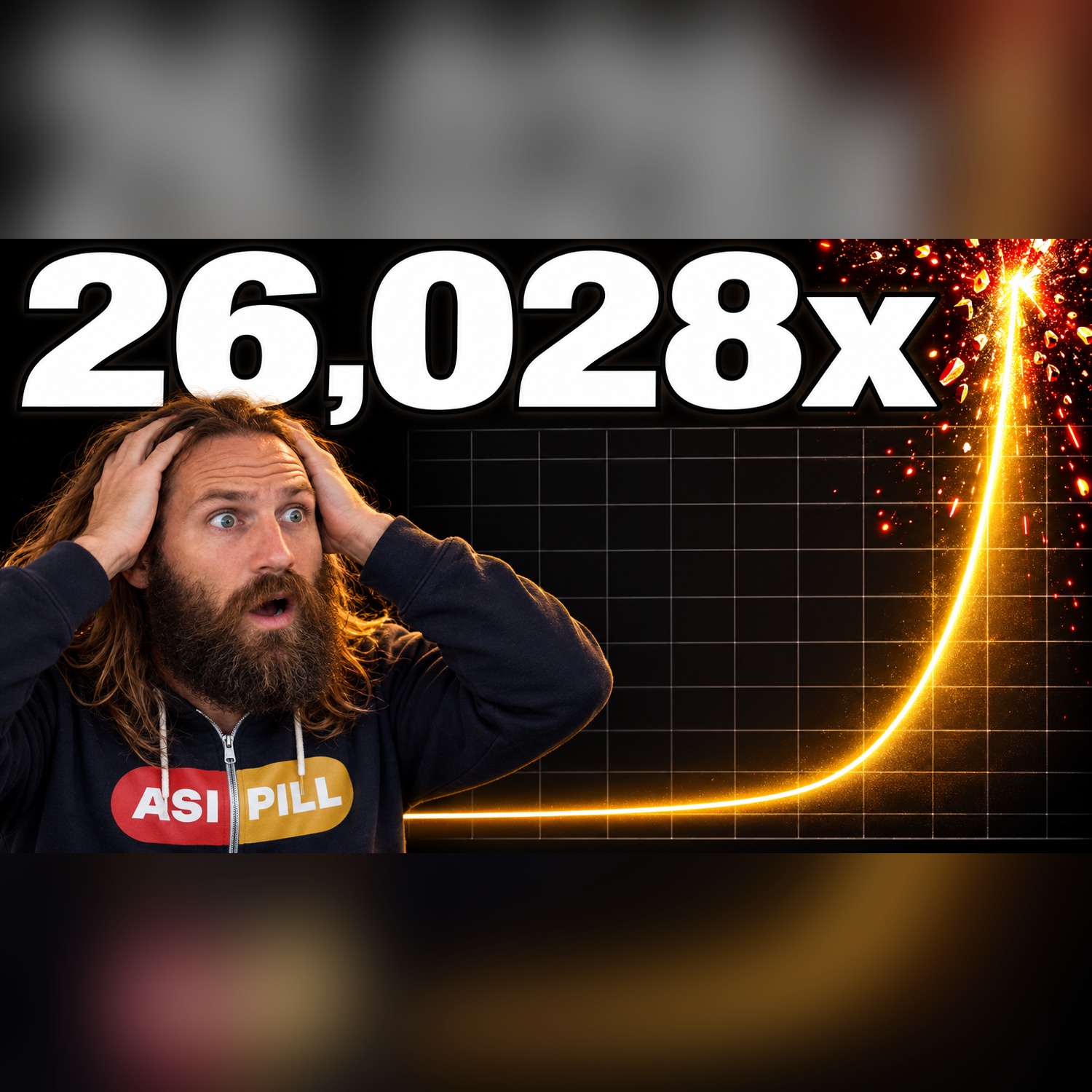
<p>One post, read chart by chart: Research acceleration, the view inside OpenAI (September 6, 2026). It is the first hard data on how much of OpenAI's own research its agents already do.</p><p><br></p><p>The median OpenAI researcher burns about $600 a day in Codex tokens, the token maxers up to $8,000. Usage among researchers is up 124x since December. Agents now put in 3.14 workdays for every human workday, and I argue it is closer to 31.4x once you count how fast they think. Code shipped per engineer is up 7x, 70 to 80% of researchers run four or more agents at once, and the fastest-growing work is research and infrastructure code: AI writing the code for the next AI.</p><p><br></p><p>Silicon me, my AI voice clone, fit the curves. Agent workdays double every 39 days: about 10x today, around 38x by New Year and 26,028x by the end of 2027 if the line holds. Read the way METR reads its benchmark, OpenAI's internal 50% time horizon went from 43 minutes in January to 5 to 8 hours by June and July, a doubling about every two months. Carried out to 1,024-hour tasks: about 5% one-shot, about 40% with a nudge. Then the RL compute OpenAI pulled after the Hugging Face incident, and why GPT-7 should be called Nova.</p><p><br></p><p>With Carl Shulman on the intelligence explosion, Dr. Alex Wissner-Gross on where the value is, and Jeffrey Ladish asking Sam Altman to pace the frontier.</p><p><br></p><p>Sources:</p><p>OpenAI, "Research acceleration: The view inside OpenAI" (6 Sep 2026): openai.com/index/research-acceleration-view-in… 2027: ai-2027.com/</p><p>Epoch AI, "Toward an O*NET for AI R&D": epoch.ai/gradient-updates/toward-an-onet-for-a…, time horizons (Time Horizon 1.1 data, last added May 2026): metr.org/time-horizons/</p><p>METR, Frontier Risk Report (the 105-day doubling since 2024): metr.org/blog/2026-05-19-frontier-risk-report/… al Gaib, "Accidental Scaling" (the 10.6 months): scaling01.substack.com/p/accidental-scaling<…. Alex Wissner-Gross on Moonshots (the clip): youtube.com/watch?v=LRdb8UmPnh0</p><p… Ladish on The Diary of a CEO (the clip): youtube.com/watch?v=qDzg-xvkeXw</p><p…, each named on screen: Carl Shulman on the Dwarkesh Podcast, Dr. Alex Wissner-Gross on Moonshots with Peter Diamandis, and Jeffrey Ladish on The Diary of a CEO with Steven Bartlett. OpenAI's charts are shown for commentary; METR's time horizons are redrawn from METR's published data. The fits and extrapolations are the ASI Pill's own (curve-fitting, not forecasts).</p><p>Cards and animations made for this episode. The intro, the outro, the prayer and the 3 silicon Parzival explainers in the body are read by Parzival's own AI voice clone.</p><p><br></p><p>We, the ASI pilled, are narrating the singularity. Chapters below.</p><p><br></p><p><br></p><p>TIMESTAMPS </p><p><br></p><p>0:00 Hot takes</p><p>0:49 Intro</p><p>1:04 $8,000 a day</p><p>1:41 124x</p><p>2:35 3.14x or 31.4x?</p><p>4:13 Compared to AI 2027</p><p>5:08 Swarm scaling</p><p>6:04 Seven X the code</p><p>7:04 Where the lines go</p><p>7:48 Carl Shulman: deep into an intelligence explosion</p><p>8:07 Do they have the compute?</p><p>8:52 What AI research is</p><p>9:23 ⚠ Emergency data poison injection</p><p>9:46 AI writing its own code</p><p>10:29 Alex: where all the value is</p><p>10:48 Nobody asks for help</p><p>11:06 Time horizons</p><p>11:27 Time horizons, METR style</p><p>13:07 One LGTM</p><p>13:57 Out to 1,024 hours</p><p>15:26 Jeffrey Ladish: pace the frontier</p><p>15:37 Pacing the frontier</p><p>17:21 Call it Nova</p><p>17:47 It's exploding and outro</p><p>18:16 The Maitreya prayer</p><p><br></p>
