

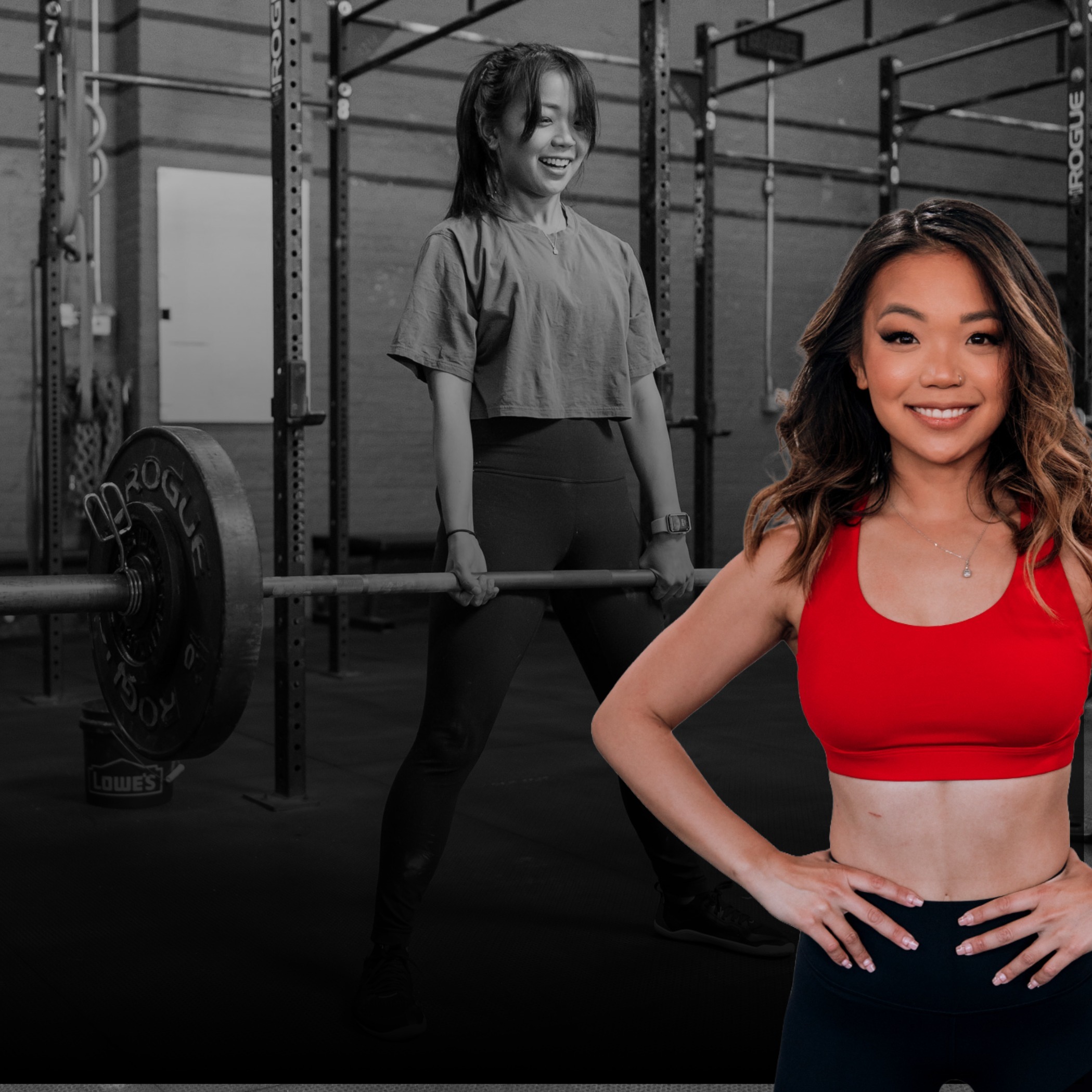
Episode #370: Dr. Sohee Carpenter on High-Intensity Circuits vs. Traditional Lifting, New Research, and Coaching Her Mom
· 57 min
Kapitelklicken springt direkt hin
Shownotes
<p>In this special episode of the Barbell Medicine Podcast, Dr. Jordan Feigenbaum welcomes back friend of the show, Dr. Sohee Carpenter, PhD, to share her latest insights following the completion of her PhD in Sports Science from the Auckland University of Technology. </p><p>We dive deep into the research from her recently published paper in the <em>European Journal of Sports Science</em>, exploring a highly relevant question for strength athletes and the general population alike: How do high-intensity circuit training (HICT) and traditional strength training compare?</p><p><a href="barbellmedicine.supercast.com/"; rel="nofollow">Become a Barbell Medicine Plus Member Today</a></p><p><br></p><p><strong>Key Topics Covered:</strong></p><p><br></p><ul><li>PhD Research Deep Dive: Dr. Carpenter breaks down her study, which compared HICT against traditional resistance training in trained women over an eight-week period. The groups performed the same exercises, sets, and reps, and pushed to similar proximity to failure, with the key difference being the rest periods.</li><li>The Results: Find out the surprising, yet encouraging, findings regarding strength gains and muscle growth between the two popular training modalities. The results suggest that for many, personal preference, time constraints, and gym logistics should be the deciding factors for training style—as long as you push close to technical failure. </li><li>Circuit Training & Time Efficiency: We discuss why circuit training is a popular option for time efficiency—her study's circuit group completed their sessions in approximately 50-55 minutes, compared to 70-75 minutes for the traditional group. </li><li>Coaching Loved Ones: Dr. Carpenter shares her personal experience and advice on training her 64-year-old mother. We cover how she successfully addressed barriers like accountability and self-efficacy, starting with short, positive sessions (initially only 20 minutes) and gradually progressing to longer, more challenging workouts. </li></ul><p><br></p><p><strong>Resources:</strong></p><ul><li><a href="podcasts.apple.com/us/podcast/episode-138-weig…; rel="nofollow">Original podcast</a></li><li><a href="pubmed.ncbi.nlm.nih.gov/40323711/"; rel="nofollow"><em>Effects of High Intensity Circuit versus Traditional Strength Training on Physiological Responses in Trained Women</em> in the European Journal of Sports Science.</a></li></ul><p><br></p><p><strong>Timestamps:</strong></p><p><br></p><p>00:00 Introduction and Background</p><p>05:02 Research Focus: Circuit Training vs. Traditional Resistance Training</p><p>10:00 Study Design and Methodology</p><p>14:58 Findings and Implications of the Study</p><p>21:36 Optimizing Group Workouts</p><p>30:21 Training Family: A Personal Journey</p><p>39:40 The Challenge of Progression in Strength Training</p><p>41:57 Individual Differences in Training and Motivation</p><p>46:00 Overcoming Barriers to Exercise for Older Adults</p><p>50:00 Encouraging Loved Ones to Start Exercising</p><p><br></p><p><strong>Find Dr. Sohee Carpenter:</strong></p><p><br></p><ul><li>Instagram/Social Media: @Soheefit</li><li>Website: soheefit.com/</li></ul><p>&l… Page: barbellmedicine.com/resources/</p><p&… Quiz: barbellmedicine.com/template-quiz/</p>&l… pain and need a professional who understands you lift? Or, do you need an experienced coach to help you get the most out of your training? Contact us at support@barbellmedicine.com</p><br/><br/>Our Sponsors:<br/>* Check out Cometeer and use my code BBM for a great deal: cometeer.com<br/>* Check out Cometeer and use my code BBM for a great deal: cometeer.com<br/>* Check out FIGS and use my code FIGSRX for a great deal: wearfigs.com<br/>* Check out Factor and use my code factormeals.com/bbm50off for a great deal: factor75.com<br/>* Check out Quince and use my code BBM for a great deal: quince.com<br/><br/><br/>Adv… Inquiries: <a href='redcircle.com/brands'>https://redcircle…;
Transkriptvom Podcast bereitgestellt · Zeitmarken springen hin
[SPEAKER_00]: Welcome back to the Barbell Medicine podcast where we bring modern medicine to strength conditioning and strength conditioning to modern medicine. [SPEAKER_00]: I'm your host, Dr. Jordan Faganbaum and on today's podcast we have a very special guest Dr. Sohee Carpenter. [SPEAKER_00]: She's an evidence based fitness coach and author based in Los Angeles.
[SPEAKER_00]: She is a friend of the show. [SPEAKER_00]: She's been on the show before. [SPEAKER_00]: And I'm going to just list off her CV. [SPEAKER_00]: So you can be as impressed as I am. [SPEAKER_00]: She has a bachelor's degree in human biology from Stanford. [SPEAKER_00]: There's a master's degree in psychology from Arizona State.
[SPEAKER_00]: And since we previously had her on the podcast in the spring of 2021, she's obtained her PhD in sports science from the Auckland University of Technology. [SPEAKER_00]: But it's my pleasure to welcome back Dr. Carpenter to the Barbell Medicine podcast where today we'll cover the research she did during [SPEAKER_00]: and her long-term experience with training her mom.
[SPEAKER_00]: So he, Dr. Carpenter, what's going on? [SPEAKER_03]: That's me, I guess. [SPEAKER_03]: It's, uh, and it really did have been that many years since my last appearance. [SPEAKER_03]: Honestly, you just didn't feel like that long ago. [SPEAKER_00]: Yeah, I think we, we, we, we came out of New York seminar.
[SPEAKER_03]: So I think that's like, yeah, even that was, what was that like two years ago? [SPEAKER_00]: Yeah, time, time flat, yeah. [SPEAKER_03]: That's, that's wild, yeah. [SPEAKER_00]: Yep. [SPEAKER_00]: So we'll just do this quarterly. [SPEAKER_00]: We'll have a quadranial between your appearances to catch up on life.
[SPEAKER_03]: Yeah, but I think the last time I was on, I want to say I was still in the beginning, seniors of my PhD. [SPEAKER_03]: And then I've always seen since gone to finish, start and finish data collection and then finish writing my thesis and a lot of stuff. [SPEAKER_03]: So, and then we moved, yeah, moved.
[SPEAKER_03]: We're still in California, but moved from LA up to Orange County. [SPEAKER_03]: He still needs you to say we're in LA. [SPEAKER_03]: Yeah. [SPEAKER_00]: Yeah, and the speaker at many, yeah, international conferences, you're like in a details and best. [SPEAKER_03]: So it's been really fun.
[SPEAKER_00]: Yeah. [SPEAKER_00]: So besides killing it, anything anything else going on? [SPEAKER_03]: I mean, there's lots of things. [SPEAKER_03]: I don't even know where to. [SPEAKER_03]: Yeah, lots of things, but like, how much do you want to know? [SPEAKER_01]: Yeah, I wish. [SPEAKER_03]: Yeah, we got some projects.
[SPEAKER_03]: Some of the things we were not ready to talk about yet, but they'll come to light soon, but basically we're still, I'm still doing the fitness career thing and still love what I do. [SPEAKER_00]: Yeah, but she's an excellent follow on all social platforms. [SPEAKER_00]: I'll also link to our previous podcast.
[SPEAKER_00]: If you want to get the origin story, but we'll hop right in. [SPEAKER_00]: I was excited. [SPEAKER_00]: I saw your paper that you obviously, you'd link to and then pull the whole paper. [SPEAKER_00]: So how did you just project. [SPEAKER_00]: Yeah, how did you know picking this topic? [SPEAKER_00]: We'll cover the details about it.
[SPEAKER_00]: But you know, it's on circuit training versus traditional. [SPEAKER_03]: No, so this was, okay, so specifically, it's high intensity circuit training, high intensity. [SPEAKER_03]: And that part is really important because my thesis is resistance training and women specifically. [SPEAKER_03]: And I found that when you talk about circuit training amongst the general population, most women, when they're like, oh, I do, Barry's boot camp or in theory, or, you know, [SPEAKER_03]: this is about popular exactly.
[SPEAKER_03]: A lot of the circuitry that they do, I found that they don't actually push their sets as hard as they could from the proximity to failure standpoint. [SPEAKER_03]: So, I was thinking, okay, when you actually match the effort, [SPEAKER_03]: Um, how, what are we going to learn the results between, you know, strength body comp, all of stuff, hypertrophy, blah, blah, blah, in women.
[SPEAKER_03]: And that question was something that I actually want to investigate since well before by PhD, this is back when, like years ago, I was living in San Diego, still like 2017, 2018, time frame, because obviously from all my years of working with women, we found that time is a very common barrier to regular exercise.
[SPEAKER_03]: And I think a lot of people can. [SPEAKER_03]: relate to this. [SPEAKER_03]: And of course, we know that circuit training is more time efficient. [SPEAKER_03]: You get your workout done a lot faster. [SPEAKER_03]: So I thought, okay, well, personally, I have a preference for the traditional straight training workouts where you do once at a time and you rest for longer in between sex.
[SPEAKER_03]: I don't usually enjoy the circuit nature of the back-to-back exercises with short rest periods, but a lot of women do, and that's fine. [SPEAKER_03]: But we didn't really have a lot of [SPEAKER_03]: Well, based on these two popular modalities, if you want to have these results, this is the modality you shouldn't play.
[SPEAKER_03]: If you want to have these other results, this is the other modality you shouldn't play. [SPEAKER_03]: And so I was thinking, okay, why don't we, how cool would it be if I actually set up a study to investigate exactly that? [SPEAKER_03]: So that's kind of how it happened and then and then I started my PhD and then of course, you're like, oh, I have this one question and my dive right in.
[SPEAKER_03]: No, it took like three, four years before I was even able to [SPEAKER_03]: Start data collection for that and setting up the study design and getting that approved ethics approved and everything [SPEAKER_03]: took like a year, you know, everything takes so much longer. [SPEAKER_03]: So, you know, thankfully I was able to click the data and some of my question, which was really cool.
[SPEAKER_03]: And even publishing a paper with so much work, so much work. [SPEAKER_03]: So, was obviously very excited. [SPEAKER_03]: I got the news about that publication, that paper being accepted for publication, [SPEAKER_03]: Or so, I think it was actually the same, I think it was the same morning I was defending my thesis actually, so it was a pretty exciting day yeah like that morning I got the news and then like a few hours later I defend my thesis successfully blah blah blah so it's a big day and then and then it was like a couple months later it was actually published but the timeline for that and the amount of work involved honestly it's made me have.
[SPEAKER_03]: So much more respect for researchers who published all the time, but also, you become a lot more understanding of study design limitations and things like that when you're like, oh, well, now it makes sense why you couldn't do XYZ because logistically, it's actually so much harder or if you were to try to implement make these enforce these requirements on your participants, you would have had one third of the people finish in the study, you know, things like that.
[SPEAKER_03]: So it was a big learning experience, but yeah, the biggest finding was. [SPEAKER_03]: One, unsurprisingly, the high intensities are good training. [SPEAKER_03]: So they did the same exercises, the same sets and wraps. [SPEAKER_03]: Oh, don't, yeah, in both conditions. [SPEAKER_00]: Don't, don't give away the plot.
[SPEAKER_00]: We got a, we, yeah, okay. [SPEAKER_00]: Okay, you know, let's talk a little bit about the findings. [SPEAKER_03]: Okay. [SPEAKER_03]: It's published, it's very cool. [SPEAKER_03]: I think it's great. [SPEAKER_03]: It's great news for women all around. [SPEAKER_00]: Yeah, no. [SPEAKER_00]: I was, yeah, when I read the title, like, oh, this is interesting.
[SPEAKER_00]: Mainly because and to your point earlier, circuit training is popular, not only just commercially, but also against your point for people to save time, they're like, oh, well, I'll just minimize my rest periods. [SPEAKER_00]: I'll do these exercises. [SPEAKER_00]: Yes. [SPEAKER_00]: And it's not that that's problematic on its face, but because that layout that structure tends to result in a number of things, one people use lighter weights to people tend to stay further away from failure, three exercise selection, often varies, you know, and so it just becomes a much different comparator to traditional resistance training.
[SPEAKER_00]: So I was really impressed with how you laid this out. [SPEAKER_00]: You effectively matched everything. [SPEAKER_00]: Yes, except for people doing it back to back to back. [SPEAKER_00]: That's where they rest, where they rest. [SPEAKER_00]: So, yeah, the title to paper and I've linked it in the show notes below.
[SPEAKER_00]: It's open, you can get it on research gate. [SPEAKER_00]: You can read the whole thing. [SPEAKER_00]: It's titled, effects of high intensity circuit versus traditional strength training on physiological responses in trained women. [SPEAKER_00]: It's in the European Journal of Sports Science.
[SPEAKER_00]: I see some friends on there as well. [SPEAKER_00]: Get Dr. Eric Helms. [SPEAKER_00]: We got Rachel. [SPEAKER_00]: How do you say you're less early? [SPEAKER_00]: Yeah, you started to line up there. [SPEAKER_00]: And so yeah, as you mentioned, you took women. [SPEAKER_00]: These are trained women.
[SPEAKER_00]: And you'd randomized it into two groups. [SPEAKER_00]: They were going to do circuit training, or traditional resistance training three times a week, eight weeks. [SPEAKER_00]: They did the same exact exercises. [SPEAKER_00]: They used the same relative load. [SPEAKER_00]: So it wasn't like, oh, if you're doing circuit train, you're doing this way lighter.
[SPEAKER_03]: No, it was all relative to their strength and how close to failure they were pushing. [SPEAKER_03]: Yeah. [SPEAKER_00]: So lifting the same amount of weight, the same reps and reserve by and large in 18 to 15 or eight to 15 rep range, except for yeah, one did them as a circuit and the other did them traditionally in traditionally in this case.
[SPEAKER_00]: Okay, you do a set, rest three minutes. [SPEAKER_03]: Rest three minutes correct. [SPEAKER_03]: And yeah. [SPEAKER_03]: So we really tried to control for as many variables as we realistically could, um, and that was that was the outcome. [SPEAKER_00]: Yeah. [SPEAKER_00]: So just on it, before you even did went into data collection and got the data to look at, was your hypothesis, like, look, if they're lifting the same weights for about the same training load, like reps and total sets and stuff, just the rest periods between the specific exercises are different, was your hypothesis like, we think it's going to be about the same.
[SPEAKER_03]: I want to say I have to go back and read the paper has been so long since I wrote the paper and now that I know the results is like of course You look back and you're like, oh, of course. [SPEAKER_01]: Of course. [SPEAKER_03]: I want to say because there was there was at least one similar study done in men, where it was Hi, intensity, circuit training versus traditional circuit training.
[SPEAKER_03]: And they did find that strength of body comp was similar between the groups. [SPEAKER_03]: So I want to say we were we predicted at least for like at least for the body comp similar changes, but I'm not sure I have to look back. [SPEAKER_03]: I think the strength gains we predicted maybe those traditional strength, we need to go might have better strength gains.
[SPEAKER_03]: Some more of the other. [SPEAKER_03]: But I mean, we weren't we weren't completely realized by the results of the realistically. [SPEAKER_00]: Having the benefit of recently rereading your paper, I believe, and again, when you guys are listening to this, go and read the paper, which I encourage you to do, because well written, and there's a lot of background information that would, even if you're not particularly interested in this specific question, all of the background information on training and and predicted outcomes is super useful as a health and fitness professional.
[SPEAKER_00]: But I believe that thing was like, well look, we think if we're lifting the same load, same relative, you know, same training load, proximity failure, strength gains, hypercognit should be similar, but maybe there's a metabolic or like fat-burned advantage potentially to the height, to the circuit training because you're like, the heart rate, the heart rate, the heart rate, the heart rate, the heart rate, the heart rate, the heart rate, the heart rate, the heart rate, the heart rate, the heart rate, the heart rate, the heart rate, the heart rate, the heart rate, the heart rate, the heart rate, the heart rate, the heart rate, the heart rate, the heart rate, the heart rate, the heart rate, the heart rate, the heart rate, the heart rate, the heart rate, the heart rate, the heart rate, the heart rate, the heart rate, the heart rate, the heart rate, the heart rate, the
[SPEAKER_00]: One thing I didn't see in there and this might just be because I'm getting older and just I bypassed it. [SPEAKER_00]: What was the difference in total time spent training per second? [SPEAKER_03]: Yeah, so I think we may be alluded to it a couple of times. [SPEAKER_03]: The reason why we were not able to run this is a little analysis on that was that we weren't meticulously tracking their exact direction, which obviously enough hindsight you look like when you're like, why don't I think of doing that?
[SPEAKER_03]: So what we could say was approximately [SPEAKER_03]: finished with their session in approximately like 50 to 55 minutes from including the warm-up, like dynamic warm-up, all that stuff I'm beginning to end, whereas the traditional spring spring group close to closer to like 70 75 minutes.
[SPEAKER_03]: And you're like, okay, that's only like 20 to 25 minutes. [SPEAKER_03]: That adds up a lot. [SPEAKER_03]: That's a lot of time. [SPEAKER_03]: That's a big difference. [SPEAKER_03]: And so to me, that was pretty significant. [SPEAKER_03]: Um, so, and of course, too, like even 50 minutes, you can do a shorter circuit training workout.
[SPEAKER_03]: You can do 30 minutes and you get a lot done still, um, but for us with, yeah, like factory name, okay. [SPEAKER_00]: You got to go to a gym theoretically if somebody did have to do that change clothes, right, drive home travel, whatever. [SPEAKER_03]: those minutes at up it could be the difference maker between oh this person can participate and adhere to a particular you know exercise program versus yeah they're not even a drive they're like like I mean it's plus travel time plus right and how many people think that in their heads they're like oh I don't have a full hour or whatever it's dedicated I'm not even gonna bother trying but also yeah and I think obviously too with the exercise I think that all the time and I have to remind myself any like 20 minutes is still worth doing 30 minutes
[SPEAKER_03]: Yeah, and so that's kind of a mess is that I will try to remind people of all the time, but you know, if you look at the exercise selection and I love to talk about that right now. [SPEAKER_03]: So we did did use obviously, you know, the findings should be able to be applied to different program designs like different exercise selection, but of course, with the caveat that exercise selection and [SPEAKER_03]: And if you see like the first circuit, the first three exercise circuit was like press, flat, dumbbell, bench press, and trap are deadlift.
[SPEAKER_03]: And we really try to, first we did like you know upper lower upper alternating lower upper exercises, which was great. [SPEAKER_03]: And then [SPEAKER_03]: We also tried to ensure that there was minimal overlap between the muscles worked in back-to-back exercises as much as possible, which I think did make a difference in terms of the performance that people, you know, their performance in the working sets throughout the training.
[SPEAKER_03]: That's designed. [SPEAKER_03]: So I would say, you know, if you have a good trainer or if you know how to write a sound training program with the right exercise order, I think the results can be applicable to like let's say you only had several pairs of dumbbells, you can you can swap them out for dumbbell variations and probably get similar results again as long as you're pushing close to failure.
[SPEAKER_03]: That's what I think. [SPEAKER_00]: Yeah, that was one of the probably most germane methodology things that you guys did. [SPEAKER_00]: Is that really what they did for the high intensity circuit training group, what two basically triceps or giant sets, the three exercise we do back to back to back, but there was minimal overlap in one exercise to the next.
[SPEAKER_00]: So you went from less press to dumbbell bench. [SPEAKER_00]: And so we would [SPEAKER_00]: classically call that like an alternate peripheral type super set for example and then you did trap our deadlifts after the dumbbell bench which again another alternate peripheral type superset now comparatively you could have done all upper together so like dumbbell bench yeah you know another like shoulder press theoretically if you were doing something like that and then chest flies you didn't include those exercises right thing but if you do agonist agonist agonist that would be a completely different setup than this alternate peripheral [SPEAKER_03]: Yeah, and we, you know, we obviously intentionally avoided that.
[SPEAKER_03]: I think the way that we did it was the right way to do things. [SPEAKER_03]: And I think if your goal is to, so to speak, optimize strength and body comp and all those variables, it probably would be beneficial in general to alternate muscle groups. [SPEAKER_03]: As much as you can. [SPEAKER_00]: Yeah, when I program for folks and I'm doing like a full body workout, even just a body like region, like an upper lower split.
[SPEAKER_00]: I tend to program either agonist antagonist or alternative referral, such that if somebody did want to superset, they have that option with minimal quote interference between the exercises. [SPEAKER_00]: And this is my understanding of it, and I'd like to get you to comment on it. [SPEAKER_00]: When you pair exercises like that, if you're gonna do them back to back, like a superset, or back to back to back, like you guys did here, try set something like that, giant set.
[SPEAKER_00]: The whole goal is to preserve not only training loads, so how much weight you're actually lifting, your relative training load, but also, [SPEAKER_00]: volume, like how many reps you're doing? [SPEAKER_00]: Yes, process. [SPEAKER_00]: And so with this type of set up, you don't really compromise that much compared to, like, I did dumbbell bench press, and then I did dumbbell overhead press, and then I did chest flies.
[SPEAKER_00]: And I was like, well, yeah, if you do this back to back to back with no reps here, it, you would expect the volume to drop off, you'd expect the person be able to lift less weight, and you would predict, [SPEAKER_00]: But especially based on your findings, which we will get to, I swear, you would predict the people to have Gameless Train, Gameless Muscle Mass, whatever it would be compromised because of the training load being less compared to something like this.
[SPEAKER_00]: Is that correct? [SPEAKER_00]: You agree? [SPEAKER_03]: Yeah. [SPEAKER_03]: Yeah. [SPEAKER_03]: Yeah. [SPEAKER_03]: And actually, I would say, obviously, I was there for practically every single transition for all the participants. [SPEAKER_03]: Well, they were supervised. [SPEAKER_00]: You were there the whole time.
[SPEAKER_03]: Oh, every session. [SPEAKER_03]: It was either there were like maybe three sessions or so I wasn't there for but Rachel was there, you know, we're both, we both have our C.S. [SPEAKER_03]: We're both experienced. [SPEAKER_03]: So which I think is a very important component because I've heard that not all research studies are partially supervised with qualified trainers, which I think is a huge limitation because [SPEAKER_03]: So how do you know they're right, living with good form?
[SPEAKER_03]: How do you know they're lifting with the proper range of motion? [SPEAKER_03]: How do you know that they're pushing close to failure? [SPEAKER_03]: Like they're supposed to, and actually there are a lot of times what was really surprising with almost every single participant, even though they claim to be trained, they all were surprised at how much further away from failure they were lifting in the beginning.
[SPEAKER_03]: First is how much more I had them push. [SPEAKER_03]: And they'd all be like, I had no idea I could push that much. [SPEAKER_00]: Yeah, yeah, that's really interesting. [SPEAKER_00]: The so-called effect. [SPEAKER_03]: Yeah, and I'm like, well, this is this is how we are such chitchfield, and they're like, I've never looked at it before.
[SPEAKER_03]: And a lot of it was, I'm not confident of my form. [SPEAKER_03]: So I don't want to push myself in case I get hurt. [SPEAKER_03]: That was a very common, you know, the rock that they would make, which I found very, very interesting. [SPEAKER_03]: So they made, they made me wonder, okay, how many of these women who train on their own, or don't have a, you know, good trainer with them?
[SPEAKER_03]: They think they're pushing close to failure, but they're actually like, you know, four or five reps shy. [SPEAKER_03]: Every set all the time. [SPEAKER_03]: So that was very interesting. [SPEAKER_00]: The coolest part about that being supervised, especially in this case by qualified coaches, experienced coaches, is that whatever you see the program in the paper is legitimately, you know, at least to the best of your ability, what the people did compared to it was unsupervised.
[SPEAKER_00]: Like, yeah, just go do this program. [SPEAKER_00]: On the one hand, there's some maybe more real world validity to that. [SPEAKER_00]: You're like, oh, look, if I write a program for somebody, then this is how we're going to execute it on average. [SPEAKER_00]: Well, there's some benefit to that, but the downside is that we don't really know what they were doing.
[SPEAKER_00]: And so if you get a spurious result or series of results, it's like, okay, well, that is an opportunity for her, for sure. [SPEAKER_03]: Yeah. [SPEAKER_03]: Yeah. [SPEAKER_03]: And so yeah, it was really important for us to make sure that every single set we watched. [SPEAKER_03]: And we would actually dictate what loads they would lift.
[SPEAKER_03]: They wouldn't tell us we would tell them. [SPEAKER_03]: Obviously based on how they told us they were feeling that day, how they're one ups out spell and how quickly the reps were moving, things like that. [SPEAKER_03]: But you know, I've been training clients for long enough now that I can basically eyeball, okay, this is what you're going to do today.
[SPEAKER_03]: And basically by Rev 1, I can already tell you're probably going to lift as many chances as that. [SPEAKER_03]: Yeah. [SPEAKER_03]: So that was really cool for me to do that. [SPEAKER_03]: But yeah, it was very, very interesting the number of people who genuinely they they they they didn't know what pushed into failure felt like.
[SPEAKER_03]: But also I think there was a bit of a you know like probably a bit of a trainer effect we're having me there. [SPEAKER_03]: They're like, oh, if you tell me I can do it then I know I can do it. [SPEAKER_00]: I could do it. [SPEAKER_03]: So that was that was really cool too. [SPEAKER_03]: Yeah.
[SPEAKER_00]: Yeah, nice. [SPEAKER_00]: The, she has a very mature coaching eye, which can be, can't be. [SPEAKER_00]: Okay. [SPEAKER_00]: So I, we're buried the lead enough here. [SPEAKER_00]: Uh, what were the results? [SPEAKER_00]: You got, again, one group, do eight, for eight weeks. [SPEAKER_00]: They're doing circuit training.
[SPEAKER_00]: Another group doing this, lifting the same relative amount of weight, the same about the same reps and such and proximity to failure, but with traditional rest periods. [SPEAKER_00]: What were the results that you guys found? [SPEAKER_03]: Okay, so we measure strength using three at max testing for all six exercises.
[SPEAKER_03]: The six exercises were, as I mentioned, the first three were lead press, blood double bench press, drop part of lift. [SPEAKER_03]: Then we had lap pull down a barbell hip thrust and a standing dumbbell shoulder press. [SPEAKER_03]: And so we did three at max testing for all participants before and after.
[SPEAKER_03]: And we actually found that both groups had similar string things in three at max across. [SPEAKER_03]: all the exercises as well as similar gains in muscle after eight weeks. [SPEAKER_03]: So that was really cool finding. [SPEAKER_03]: I thought that was very encouraging because of anything that allows us to say, based on the findings, I really think that your personal preferences and your time constraints, [SPEAKER_03]: as well as maybe like logistics of your game set up things like that should be the biggest factors to determine what type of training is best suited for you and as well another one thing we mentioned was of course we didn't study this directly but maybe you could even employ a combination of where you maybe start off like the first two if we exercise as traditional strength training style and then you end your workout with a circuit.
[SPEAKER_03]: You can kind of combine them both if you wanted to have a bit more variety, which you know that that sounds more interesting to me personally, but basically the point is like you know you have options as long as and we mentioned it still only times throughout the paper as long as you're pushing close to technical failure the results will be similar.
[SPEAKER_00]: Yeah, one of the things that I've been saying a lot recently to try to, you know, if there's a central paradigm with respect to exercise prescription is that you want people to do as much exercise as they can with the two limiters on that being logistics one so how much time do you have, you know, resources do you have access to and then too what's your physiological tolerance for exercise you obviously right that was.
[SPEAKER_00]: So in this particular case, you've effectively determined my understanding that you could pick either. [SPEAKER_00]: So for a person that's less time circuits, supersets, tricep can be an option. [SPEAKER_00]: If you pay attention to exercise order, if you pay attention to the relative load being lifted and proximity to failure, things you would normally pay attention to anyway during traditional sets.
[SPEAKER_00]: Or if you have more time and you prefer a different way, you can do that too. [SPEAKER_00]: There's not like a... [SPEAKER_00]: the one that rules them all, not a particular advantage outside of preferences and in this case, maybe how much time you're spending. [SPEAKER_03]: Right, right.
[SPEAKER_03]: So like if for example, I, I were to attend a, I don't know, an F45 class, and I was, it was like, okay, it's time to face your bubble, blah, blah, blah, it's great. [SPEAKER_03]: I would try to make sure personally, okay, I might actually lifting hard enough with each set. [SPEAKER_03]: Yes, and the nature of we know in the nature of group work our process you're not going to be supervised as closely with every single set every single repetition so it's kind of up to you to build that stuff awareness and accountability to be like, okay, I can definitely do more.
[SPEAKER_03]: but also while keeping yourself safe and a lot of stuff. [SPEAKER_03]: So that's actually. [SPEAKER_00]: I actually had thought about doing a mock call where I was like the CEO, a regional director from F45, and I was like ring ring, Dr. Carpenter. [SPEAKER_00]: Hey, look, we're trying to optimize our subscribers, our members, results.
[SPEAKER_00]: What suggestions would you have for improving [SPEAKER_00]: our exercise program in our exercise structure. [SPEAKER_00]: And so the problem obviously is that you don't really know what's going on inside each box each F45 place, but my understanding in the way I see it anyway is that there's not a ton of thought with exercise pairing.
[SPEAKER_00]: And then there's not, I don't feel a lot of assurance about like, okay, we're using heavy enough weight to reach failure or close to failure within maybe that 8 to 15 rep range. [SPEAKER_00]: Like, you guys don't even just we can liberalize that say, all right, somewhere between five and 20 reps, we want to get you within a couple reps of failures.
[SPEAKER_00]: It's a great thing. [SPEAKER_00]: It seems like we've got a station for a minute. [SPEAKER_00]: Use many reps as you can and just try to sweat a little bit. [SPEAKER_03]: Yeah, so that is my I've been to I think I want to say two classes at 45 classes before and obviously because it's not enough on at 45 by any means it's also been here since I've attended a class the last time I went I think of it.
[SPEAKER_03]: I think they were pairing bent over rows with Genesis to chin-ups [SPEAKER_01]: Yeah. [SPEAKER_03]: And right away, right away, all of you see you're working like basically seeing my son of a group. [SPEAKER_03]: You're a group is going to be totally fried to the point where I remember for the chin-ups by the end, so we didn't, you know, you need like multiple sets, right?
[SPEAKER_03]: By the end, I think my last couple of sets, I was using like the fatest band, because I'm like, I don't have the grip strength to do it anymore. [SPEAKER_03]: And you have me doing this for like 40, 45 seconds straight. [SPEAKER_03]: That's a lot of reps and banishes to chin-ups. [SPEAKER_03]: So I remember thinking of being a little bit taken back by that and a little bit confused by the by the program design there.
[SPEAKER_03]: Now, of course, maybe things have improved since then in terms of I don't really know I still think that from a exercise enjoyment and social support standpoint. [SPEAKER_03]: those types of classes can be fantastic, because I know, especially for a lot of women, they, you know, my mom, for example, wife, which I know we'll talk about her in a little bit.
[SPEAKER_03]: She's, she'll exercise in a social setting. [SPEAKER_03]: So you will not do it by herself. [SPEAKER_03]: So for someone like her, those kind of classes are fantastic. [SPEAKER_00]: Yeah. [SPEAKER_00]: So you would just prefer, you'd prefer to actually try to be a little different. [SPEAKER_03]: And we tweak a couple things and then, small changes to make big improvements.
[SPEAKER_00]: Totally. [SPEAKER_03]: I think. [SPEAKER_03]: Yeah. [SPEAKER_00]: Yeah. [SPEAKER_00]: And your example is like, all right, look, if your grip is fried, [SPEAKER_00]: Right. [SPEAKER_00]: So you can't really technically do the second exercise to the ability that you're last your upper back all the sort of stuff can and so those muscles, they yeah, they're receiving less training stimulus and so if you had to predict a long-term outcome, you say, well, I predict that my strength is going to be less on pull ups and with that sort of set up.
[SPEAKER_00]: My grip strength may be, I guess strength, strength, strength, endurance might be higher, but you're ultimately compromised more when you hire the same muscles back to back. [SPEAKER_03]: Right. [SPEAKER_00]: But yeah. [SPEAKER_00]: Here's the wrinkle off throw in there. [SPEAKER_00]: Just get your take on it for when we move on to training your parents.
[SPEAKER_00]: Do we think any of that is like from a, [SPEAKER_00]: Enjoyments the wrong word, but maybe like a marketing based approach where it's like look you come to our or work out class and you're going to leave for sure Yeah, and you're oh look you could only do one rep at the end because you were so fried and Yeah, because I would predict these things.
[SPEAKER_00]: Yes close to failure more soreness potentially and so you leave the class. [SPEAKER_00]: I got a good workout and it's like [SPEAKER_03]: Yeah, I feel obliterated. [SPEAKER_03]: Yeah, I think that's really tricky to do because I do think that people expect to feel that way at the end of those types of workouts.
[SPEAKER_03]: But we know that if I were training someone who wasn't actually being an archer lifting, we know that's not the smartest approach. [SPEAKER_03]: It's probably best to have them do like a shorter session. [SPEAKER_03]: Maybe like 30 minutes have them rest for longer. [SPEAKER_03]: go slower, pay attention to the form, have them do like one or two or themesets of every exercise, and then have them leave feeling really good.
[SPEAKER_03]: And so we can hopefully mitigate some muscles or rest in next couple of days. [SPEAKER_03]: But I think when that happens, you run the risk of them being like, oh, I don't feel anything. [SPEAKER_03]: Exactly, I don't feel anything. [SPEAKER_03]: That did nothing. [SPEAKER_03]: I'm not going to go back.
[SPEAKER_03]: And so I do think, [SPEAKER_03]: while the approach that I describe is probably the better approach from a long-term and you know, smart trainer perspective, responsible perspective, is that [SPEAKER_03]: Is it going to actually backfire in terms of gain and to come back? [SPEAKER_00]: Yes, they don't understand stuff or something like that.
[SPEAKER_03]: Yeah, they're like, oh, I don't feel obliterated. [SPEAKER_03]: I'm not going to go back. [SPEAKER_03]: But then, of course, you have on the other side, maybe they're two sort of next few days. [SPEAKER_03]: And then they hate it. [SPEAKER_03]: So there's also that. [SPEAKER_03]: So I don't know.
[SPEAKER_03]: I think it's tricky kind of balance. [SPEAKER_03]: Like what was actually the right approach to things versus what people think that they want, because they're not always the same. [SPEAKER_00]: Yeah, I think there's some opportunities for learning when people are warming up. [SPEAKER_00]: You get to describe, hey, here are the goals of the workout.
[SPEAKER_00]: Here's how you should feel. [SPEAKER_00]: You just said, here's why we structured it this way. [SPEAKER_00]: I mean, I assume, look, F45, I assume, is doing well financially. [SPEAKER_00]: Other class class patients. [SPEAKER_00]: Yeah. [SPEAKER_00]: Like, whatever they have a sauce that's working from a adherence, reducing the churn rate, getting people to participate and come back to standpoint.
[SPEAKER_00]: But like, you probably make the program a little better. [SPEAKER_00]: I feel pretty [SPEAKER_03]: Yeah, I mean, I've already I've toured with the idea and I'm very much right now firmly know, but I'm like, how many if I could ever, if I ever want to open my own jam, I already know how I would run it.
[SPEAKER_03]: I probably make it like small group sessions. [SPEAKER_03]: They probably be mostly like traditional strength training. [SPEAKER_03]: Uh, based or at least, you know, starting out with you just on screen pretty, maybe ending with a couple of, uh, a telling it they program circuits, things like that, but it would be, yeah, it would be all be about like, okay, if you're a beginner, here's your, maybe like your four week beginner in choke horse that you're going to start with.
[SPEAKER_03]: Then after that, you can then graduate to the intermediate advanced group. [SPEAKER_03]: and then this is how we're going to do things. [SPEAKER_03]: We're not doing things for time. [SPEAKER_03]: We're doing things for, you know, wrapped. [SPEAKER_03]: We're going to learn to embrace the rest periods, blah, blah, blah, blah.
[SPEAKER_03]: So I've all thought about those things. [SPEAKER_03]: Unfortunately, as I'm sure you probably know, running a in person gym is extremely time consuming. [SPEAKER_02]: Oh, yeah. [SPEAKER_03]: Logistics can be really, really rough to work with, Prof. Margin is like, almost not existent. [SPEAKER_03]: So lots of things to consider there, but I'm like, I like the idea of it.
[SPEAKER_00]: When you need it, we need a AI hologram of, of so he ended with just like, she can do that while we can do everything. [SPEAKER_03]: Yeah, like, don't make it. [SPEAKER_03]: I honestly, I love working with people in person. [SPEAKER_03]: I find it extremely gratifying in a way that the online work will never measure up.
[SPEAKER_03]: We know this, the in-person relationship [SPEAKER_03]: and people who are in person, you know, full-time personal trainers at a gym will understand. [SPEAKER_03]: Obviously, it's a huge sacrifice to make in terms of your time and energy. [SPEAKER_03]: Yeah. [SPEAKER_03]: Some shen. [SPEAKER_00]: Yep.
[SPEAKER_00]: So I love training people in person, but I don't have so many hours in a day and I'm like, same. [SPEAKER_03]: Oh, got to make a trade off somewhere. [UNKNOWN]: 100%. [SPEAKER_00]: All right. [SPEAKER_00]: So that link to her paper is in the show notes below. [SPEAKER_00]: And so I encourage you to take a read again.
[SPEAKER_00]: Even if you're like, look, I understand that's all this now. [SPEAKER_00]: The background reading and stuff is excellent in the paper. [SPEAKER_00]: So well done. [SPEAKER_03]: Yeah, thank you and actually the one other point I want to mention because when I posted about the study, of course, we got Well, Chris isn't like well, you know, not a lot of us can do that exact circuit in our gym setting is not meant to be literal No, because you know, I don't expect people to have access to a leg press and a flat jump up like a bench press and a trap bar machine like trap bar dead life Yeah, trap bar all three of them at the same time, of course if you're on a busy gym If you're not it realistically, that's not what I have it Jerkface, yeah, you take it up all the equipment
[SPEAKER_03]: But you can find similar alternatives where you can maybe maximize like space efficiency, maybe you can find dumbbell trainers for all of them. [SPEAKER_03]: You know, there's always options and alternatives. [SPEAKER_00]: Yeah. [SPEAKER_00]: For the leg press, you could do some sort of squat pattern, a goblet squat, for example, along with whatever some sort of squat pattern type movement.
[SPEAKER_00]: Yeah. [SPEAKER_03]: Or you can also add in. [SPEAKER_03]: Uh, you know, lateral exercises, which me purposely didn't do because obviously for like, through max testing, it's a lot trickier to be like, well, she got four reps on this leg and two reps on this leg. [SPEAKER_03]: So what do we say?
[SPEAKER_03]: So we kept it bilateral for everything, but you could obviously swap in like, reverse lunges, step up, things like that if you wanted to. [SPEAKER_00]: Yeah, agreed. [SPEAKER_00]: When you see a squat pattern or a press pattern, a rope pattern or a hinge pattern, you are multiple subs within those categories, we predict they'd all work reasonably well for the same sort of health promotion stuff like that.
[SPEAKER_00]: That's right. [SPEAKER_00]: Let's shift gears a little bit. [SPEAKER_00]: I won't think I want to talk to you about for a long time. [SPEAKER_00]: I was your experience in training your mom. [SPEAKER_00]: And at the beginning of this year, I also like how your face lights up because the same thing happens to me.
[SPEAKER_00]: I started training my dad after a second knee replacement and it's always been a goal to get my dad to start lifting regularly, which I think is pretty common amongst people who regularly exercise. [SPEAKER_00]: So if you can't tell us a little bit about your mom and what prompted her to get started with you.
[SPEAKER_03]: So my mom right now, she's 64, and she's actually been training on and off for probably over 10 years. [SPEAKER_03]: But she's always had a trainer in some capacity, someone working with her. [SPEAKER_03]: And so eventually, I want to say six years ago, we ended up living in the same general area.
[SPEAKER_03]: Actually, I want to say like closer to four years ago was one of we moved out to O.C. [SPEAKER_03]: which is where they also are on the county and then You know, I immediately built a garage gym and so she would come over and like I'm going to say once or twice a week and it was oftentimes my I was the one prompting her because she's she's not someone who [SPEAKER_03]: So you will she will show up right so every time she does any form of exercise golfing Pilates lifting with me is always with someone else okay right with so that's something that I noticed very early on um they also noticed that she's not the type to enjoy pushing herself much on her own and um you know and I say this with the most love on my heart I don't she doesn't have the greatest body awareness in the gym so I'll have her let's say
[SPEAKER_03]: Um, we'll rest two minutes three minutes and I'll say, okay, do it again. [SPEAKER_03]: She goes, what am I doing? [SPEAKER_03]: What what what I do? [SPEAKER_03]: You know, and then, you know, and then the next week, I'll say, okay, this is your warm up set. [SPEAKER_03]: Here's your way and she feels like this is way too heavy and I'm like you do this last week as a warm up and she's like, oh, you know, so it's like, you need she's someone who really needs someone there with her to be like, this is how the exercise looks.
[SPEAKER_03]: This is the way you're going to do. [SPEAKER_03]: This is how many reps you're going to perform. [SPEAKER_03]: Yeah, so she really needs a lot of that guidance, but she's great at least with me not with my dad funny enough She's great at listening to me. [SPEAKER_03]: He has a hard for trainer, but then you know if there's my dad for a trainer.
[SPEAKER_03]: She she's like, I'm not doing this I wanted to say more you know how you know how it is with like spamming members can be like that sometimes, but it was it was really fun because [SPEAKER_03]: I wanted to keep it, it was really important to me to make it a very positive experience for her and that meant at least for now those types of you know the F45 or those classes would not be a good fit for her.
[SPEAKER_03]: I think she'd feel too overwhelmed, the music would probably be too loud, the rest period would be too short, so I was like I have to cater this to her, but also make the session sure enough that she is willing to actually show up in the first place. [SPEAKER_03]: So my first several sessions with her, they were like 20 minutes long, they were very, very short, and I would do, yeah, I would do like two sets of maybe six exercises, and I would like super sat, you know, upper lower upper lower upper lower, and then I'd be like, okay, that's on, and then she's like, oh, that's it.
[SPEAKER_03]: Oh, yeah, I'm done. [SPEAKER_03]: And then over time, you slowly add on more. [SPEAKER_03]: You slowly add on more. [SPEAKER_03]: You make them a little bit, you know, tougher you add the loan. [SPEAKER_03]: And so on. [SPEAKER_03]: And then over time, she saw, oh, and then she was shot.
[SPEAKER_03]: The next weekend, be like, oh, my golf game is getting really good. [SPEAKER_03]: My golf swing is really strong. [SPEAKER_03]: And everyone's trying to notice. [SPEAKER_03]: And then she gets more excited about it. [SPEAKER_03]: And then you say, yeah, that's because you're lifting weights.
[SPEAKER_03]: And you're getting stronger here. [SPEAKER_03]: And then she becomes more motivated to keep going. [SPEAKER_03]: So it became a really positive feedback loop. [SPEAKER_03]: So [SPEAKER_03]: We've been we've been trained together on an offer number of years now has been really fun. [SPEAKER_00]: Yeah, no that that's a similar similar kind of experience with my dad Leonard.
[SPEAKER_00]: He he does like exercising but he would not do the type of exercise that I want him to do. [SPEAKER_00]: Yeah, which look full marks to him. [SPEAKER_00]: Like you want to go to the gym, you want to live some weights, you want to do some cardio or as he calls it cardio's, which plural I don't know, whatever.
[SPEAKER_01]: that's great. [SPEAKER_00]: Yeah, hats off to you. [SPEAKER_00]: But I, you know, in this particular case, he was coming off this knee replacement and he suffered a, you know, pretty significant loss of not only mobility, although now his pain was better, but in strength and in such and so that was his like motivation.
[SPEAKER_00]: And so, [SPEAKER_00]: admittedly for he's 73 now, admittedly it's challenging to get a septage anarian under the barbell to squat, for example, especially if they haven't been doing it their whole life, you know, so that's not something he would do. [SPEAKER_00]: And I actually asked him, because I was out of town for a bit, I was like, hey, would you like do the lake press?
[SPEAKER_00]: He's like, how do you use that? [SPEAKER_00]: And I'm like, okay, so we need, we need some guidance here. [SPEAKER_00]: Yeah. [SPEAKER_00]: And so it sounds like her initial program was relatively [SPEAKER_00]: not shorter less sets less volume or whatever. [SPEAKER_00]: And then as she not only got more familiar with the exercises, but also as her fitness improved her training tolerance improved you added more.
[SPEAKER_00]: So if her initial sessions were 20 minutes ish right with lighter weights and what a relatively how long to her sessions last now. [SPEAKER_03]: I mean, there. [SPEAKER_03]: Yeah, they're like 50 minutes five, five, zero minutes now. [SPEAKER_03]: So almost an hour and if you do that twice a week, that's a lot.
[SPEAKER_00]: It's a lot of lifting. [SPEAKER_03]: Oh, yeah, that's really good. [SPEAKER_03]: And what's nice is that because it's obviously my private gym, she plays the music that she wants when she's resting she does whatever she wants. [SPEAKER_03]: When my dad's here, they turn on an NPR, actually.
[SPEAKER_00]: Oh, okay. [SPEAKER_03]: I don't know. [SPEAKER_03]: I don't know what I expect like pink pony clothes, but no, no, my cares are very, they love the classical music and stuff. [SPEAKER_03]: So sometimes my dad will play opera. [SPEAKER_03]: I don't know. [SPEAKER_03]: And I'm like, you know, and sometimes I have to over.
[SPEAKER_03]: I'm like, listen, I can't do this, because I'm also working out. [SPEAKER_03]: So I'm going to change the music to something that I can lift to. [SPEAKER_03]: But I give them a lot of flexibility. [SPEAKER_03]: Like, for example, when we're home, and she's training on my garage, [SPEAKER_00]: Yeah, which is nice for you to answer.
[SPEAKER_03]: Yeah, I'm like, that's great. [SPEAKER_03]: But then I'll let you know when you have to come back into your next set. [SPEAKER_00]: You got to call mom come back and sign a squad. [SPEAKER_03]: She's like in her she got her gardening gloves on and she's like digging, you know, in the dirt and whatever.
[SPEAKER_03]: But I think it's quite cute because she obviously wouldn't be able to do that in a, in a, in a different gym setting. [SPEAKER_00]: Yeah, yeah. [SPEAKER_00]: With her trainer. [SPEAKER_00]: Not a lot of gardens at the local 24 hours. [SPEAKER_00]: Yeah. [SPEAKER_03]: So I'm like, you know what, as long as you're doing your sets, I don't care what you do in between.
[SPEAKER_00]: Totally. [SPEAKER_00]: Yeah, one of the interesting things here that I want you to speak to is on like progression here. [SPEAKER_00]: We've we've gone through so much like trying public facing Publishing about what is really progressive overload. [SPEAKER_00]: What is progressive and the way we explained it is that as your fitness increases and whether it's measured by strength was measured by cardiovascular fitness.
[SPEAKER_00]: Yeah, train tolerance. [SPEAKER_00]: Whatever you'll have to do more [SPEAKER_00]: to get the same type of training stress. [SPEAKER_00]: You're really not trying to increase the training stress, but really just match it to your new level of fitness. [SPEAKER_00]: Yeah. [SPEAKER_00]: Whereas on the other side of things, people are like, no, you just have to add weight every time you go to the gym or at a right, which is obviously an over oversimplification.
[SPEAKER_00]: Because if we don't think that strength improves really reliably on a weekly basis, for example, then adding weight or adding a rep would really just be like, well, just make it harder. [SPEAKER_00]: It's like, well, it should be the same level of hard, [SPEAKER_03]: because you're supposed to be getting fitter over time.
[SPEAKER_00]: Yeah, it's a technique. [SPEAKER_00]: It's kind of a situation. [SPEAKER_00]: Is that what you use with her? [SPEAKER_03]: Yes, but we're also talking about exercise progressions too, right? [SPEAKER_03]: So if she's doing a incline push-up, or a toncer elevated push-up, which I like to do at a squat rack as much as possible, but obviously not realistic for everyone, especially if you're at a busy gym.
[SPEAKER_03]: But it's very easy to adjust the height of the barbell, but you're like, oh, you're on this and we're whole, then you're lower over time. [SPEAKER_03]: For example, if she's doing like three sets of eight at a given height like shoulder height barbell and it's obviously starting to get easy for her out either at reps or I'm like, okay, let's lower the higher the bar that way, even though when you want that you're like, okay, she's on hold so and so the total load technically doesn't crease because she's lifting more of her relative body weight, it's technically still considered exercise progression because you're making the exercise itself harder.
[SPEAKER_03]: So I mean, you can do this with almost every [SPEAKER_03]: every movement pattern you can find regressions and progressions. [SPEAKER_03]: But for example, I probably would not have or do a bottle back squat per se, they'd give in her movement patterns and her love, love body awareness.
[SPEAKER_03]: But maybe I'll have her or do a lover squat. [SPEAKER_03]: Can have her do a leg press. [SPEAKER_01]: Yes. [SPEAKER_03]: I can have her do a goblet squat. [SPEAKER_03]: Those things I can have her do, you know, lateral like a brace dumbbell split squat. [SPEAKER_03]: And maybe over time you progress that to [SPEAKER_03]: not only can doing reverse lunges, you know, there's always variations.
[SPEAKER_03]: You can do like that. [SPEAKER_00]: It's the same thing I've been with my dad now. [SPEAKER_00]: Obviously, you had some anatomical limitations initially. [SPEAKER_00]: Yeah, right. [SPEAKER_00]: Safety squat bar box squats. [SPEAKER_00]: And you're people like, like, I just started there.
[SPEAKER_00]: And I'm like, well, some of the power lifters, like old habits die hard. [SPEAKER_00]: Like, I won't be able to squat. [SPEAKER_00]: But he could do it. [SPEAKER_00]: And also him holding that was much easier than that. [SPEAKER_03]: than a straight barbell. [SPEAKER_00]: Yeah. [SPEAKER_00]: But his range of motion was limited initially, as well as his like awareness of kinesthetic awareness.
[SPEAKER_00]: You know, from the red space. [SPEAKER_03]: So you probably had him do like higher, higher box squats. [SPEAKER_00]: Yep, got lower eventually. [SPEAKER_00]: You need the box anymore. [SPEAKER_00]: It's got to, you know, to depth and same thing on the deadlift initially. [SPEAKER_00]: It was from an elevated surface and then it was from the ground.
[SPEAKER_00]: And so there are multiple options. [SPEAKER_00]: And, you know, sometimes it does add load. [SPEAKER_00]: like in the push-up example that you have, sometimes it adds a stability component like going from an assisted split squat to a free standing split squat of some version. [SPEAKER_00]: And yeah, obviously you can add reps, you can add sets.
[SPEAKER_00]: But the whole point here of the progressions is that once their fitness is improved to a point where their current prescription is no longer challenging enough for them, you have to change something. [SPEAKER_00]: But as you don't make that change ahead of time, that's not the [SPEAKER_00]: It's kind of the line of the sand I'm drawing.
[SPEAKER_00]: It's like, as you get stronger, the weight will go up. [SPEAKER_00]: You don't add the weight necessarily to get stronger if that makes sense. [SPEAKER_00]: And I think people have a tough time with that. [SPEAKER_00]: They're like, oh, I just have to add five pounds every single time. [SPEAKER_00]: And I'm like, big of true.
[SPEAKER_03]: That would be incredible. [SPEAKER_03]: Imagine if it's imagine you put five pounds on your deadlift every single week. [SPEAKER_00]: I will, why am I not deadlift a thousand pounds? [SPEAKER_03]: And then you, I think we do have a lot of people thinking that and then they get upset if they can't It's a strength ever.
[SPEAKER_03]: We're going to like can you imagine how much you'd be living by the end of the year if you really We're lifting that much more every single what even if it was two and a half pounds every week that will be incredible Yeah, I have I have a shirt that I I bought I was it was an incorrect purchase.
[SPEAKER_00]: It was one of those things like I had targeted at and I was like, oh cool Yeah, I ran them like L.S. [SPEAKER_00]: K.D. [SPEAKER_00]: shirt or whatever and on the backs is 1% better every day. [SPEAKER_00]: I'm like [SPEAKER_02]: Well, so that's a lot of years. [SPEAKER_02]: That's a new perspective.
[SPEAKER_00]: Yeah. [SPEAKER_00]: Oh, yeah. [SPEAKER_00]: I don't know that that's reasonable. [SPEAKER_00]: I get the message, but come on, guys. [SPEAKER_03]: Yeah, you have been this nice, but when you really do the math, you're like, doesn't make sense? [SPEAKER_00]: Yeah. [SPEAKER_00]: So she's training with you every single time, approximately twice a week, is that what you guys are doing?
[SPEAKER_03]: Once you're twice as big, it turns on her, it has to be in them like both our availability. [SPEAKER_03]: And actually sometimes she does come to, now I also have a warehouse gym, which is where I am now. [SPEAKER_03]: Sometimes my parents will come here without me. [SPEAKER_03]: And they'll be like, hey, we're here now, we're training.
[SPEAKER_03]: And then it's always the same thing where my dad's like, she didn't listen to me, but she still did some stuff. [SPEAKER_03]: But I'm like, I don't care as long as you're doing it. [SPEAKER_00]: Yeah, you're trying. [SPEAKER_00]: Yeah, the participation is important. [SPEAKER_03]: You're doing it and obviously if they're traveling a lot more, it's harder for them to be consistent, but I'm like, I don't mind those breaks here and there as long as you eventually get back to it.
[SPEAKER_03]: Yeah, but yeah, she's she's doing great. [SPEAKER_00]: what was what would you say like the biggest challenge that you faced with with the training her and why you why you marinated on that just with my own with my dad the biggest challenge for him is almost holding him back a little bit because he's like he's like just add more weight and why because he's he's he's like he's like I want to look like you I'm like oh [SPEAKER_00]: I don't know that that's in the cards, just like I've taken some very specific steps to get here.
[SPEAKER_00]: But hey, he's like, but if I live more weight, I'm gonna look like you. [SPEAKER_03]: I'm like, that's what I'm trying to do. [SPEAKER_00]: Anyway, that's kind of a challenge. [SPEAKER_03]: That's what gives probably the opposite for my mom where she convinces herself that everything's too heavy for her, even when she's more than capable.
[SPEAKER_03]: You know, as I mentioned earlier, when she's done it as a warm-up set before, the week fire, she's like, oh, this is really heavy. [SPEAKER_03]: And I'm like, no, this is a warm-up set. [SPEAKER_03]: She's a literal warm-up set. [SPEAKER_03]: And then you [SPEAKER_03]: Then, of course, she increased the load for the next second.
[SPEAKER_03]: She wants to get into like, there's no way I can do this and then she bust out eight Christine wraps and I'm like, okay, you did it. [SPEAKER_03]: So, it's kind of like every exercise, if you feel the little bit like that, but you know, I've been training with her, training her for a long enough, where I can anticipate this, and you're not really dismissing their complaints per se, but you know that they are telling themselves a false narrative.
[SPEAKER_00]: Yeah, you had to redirect it like, look, you might feel this, but the reality. [SPEAKER_03]: Yeah. [SPEAKER_03]: And we're not going to do, we're not going to listen to you in this specific scenario because we know for a fact that is incorrect. [SPEAKER_02]: Yeah. [SPEAKER_02]: Exactly.
[SPEAKER_03]: So that's probably the big thing for her. [SPEAKER_03]: So I mean, if anything, I think it really demonstrates that every person is different. [SPEAKER_03]: And their obstacles and their mental barriers are different and you have to approach them all differently. [SPEAKER_03]: Also, she is the type to get very frustrated if you overcorrect or you nitpick.
[SPEAKER_03]: So I have never been super, I've never been super sickler about her form. [SPEAKER_00]: Yeah, you know, like bark and adder between. [SPEAKER_03]: Oh, no, no, no, no, no, no, no, no, so even if her hip sag a little bit in the push up, I don't, I'm not going to leave it, you know, I'm like, you're still doing the wraps, you're you're still getting the benefit of the exercise.
[SPEAKER_03]: So I'm going to leave it. [SPEAKER_03]: So I think that has been another important thing for her is to be like, okay, keep it a fun environment where she doesn't get frustrated. [SPEAKER_00]: Yeah, one of the interesting challenges I would have not predicted is that so Leonard, I film him by often just to like show him because if he's like this is heavy or this is like and I show him like actually the bar speed kind of indicative that it actually is a challenge, but he will invariably post these things on Facebook as people.
[SPEAKER_02]: Yeah, which is great. [SPEAKER_00]: Yeah, but like one of his recent deadlift sets, he did 275 for a couple of times. [SPEAKER_00]: Yeah, right. [SPEAKER_00]: I'm like, [SPEAKER_00]: Leonard. [SPEAKER_02]: Yeah. [SPEAKER_00]: What a serious. [SPEAKER_00]: But the comments underneath are not like, you know, go Leonard, go whatever, you know, they're more like, you're going to hurt yourself.
[SPEAKER_01]: Of course. [SPEAKER_01]: Yeah. [SPEAKER_00]: So, you know, and it's like, and even in the gym, I've had people like pull, try to pull me aside and like, hey, you sure that he should be doing these things. [SPEAKER_00]: And I'm like, oh, I'm pretty sure, like, I got, I'm pretty sure. [SPEAKER_00]: Yeah.
[SPEAKER_00]: Maybe if you want to look apart from that, I send me. [SPEAKER_00]: So, obviously you're in a private setting, so that you're not getting that in person. [SPEAKER_00]: Yeah, it's almost like this learn for agility, kind of thing, or learned for years. [SPEAKER_03]: Yeah, this idea that if you're older, you're fragile and you can't, you're not capable or you shouldn't be lifting heavy things.
[SPEAKER_03]: And I think it's just disempowering. [SPEAKER_03]: It does as a disservice. [SPEAKER_00]: Yeah, it's a, if anything, that population is more vulnerable to the effects of detraining and insufficient activity. [SPEAKER_00]: And so most, what I find is that most fitness advice geared towards that [SPEAKER_00]: It's better than nothing to be clear.
[SPEAKER_00]: No hatecoms, peace and love. [SPEAKER_00]: It's better than nothing, but from a maximizing return on investment for time. [SPEAKER_00]: Let's put our best foot forward. [SPEAKER_00]: Let's make sure it's an adequate resistance. [SPEAKER_00]: You're doing an adequate number of reps that's getting appropriately challenging.
[SPEAKER_00]: Shouldn't be maximal, but you're getting there. [SPEAKER_00]: And a rinse-lather repeat. [SPEAKER_00]: But these people are like, oh, no, you can never touch a barbell. [SPEAKER_00]: Well, God forbid, you got to pick something up off the floor in your day-to-day life or like sit down on the toilet and get up by yourself.
[SPEAKER_00]: You know, I mean, what's your never-squat? [SPEAKER_00]: Like, how do you, how do you interface with the environment, you know? [SPEAKER_03]: Yeah, but I think it also comes from those people grew up in a generation where lifting weights wasn't that common to begin with, and especially, I know, I'm obviously your friend, your dad, I'm from my mom, but like, women, my mom growing up, no one lifted, women didn't lift at all, and so I think for them to even, even from my mom, what I have worked at, like, even, like, 11525 pounds, she's over like, there's no way I can do this, and I'll film her, I'll send her a video, and, you know, she was adapting the whole time she [SPEAKER_03]: Yeah, yeah, yeah, that's pretty key to like, oh, look at how much weight I lifted.
[SPEAKER_03]: So it's it's pretty cute, but also it shows that there is a lot of learned Fault narrative. [SPEAKER_00]: Yeah, that's so much to share. [SPEAKER_03]: It should less time, much to share, it shouldn't do or what we're capable of. [SPEAKER_03]: And yet, and yet, obviously they experience the benefits of it.
[SPEAKER_03]: Yeah, and then we know too, you know, there's there's research on and participants in their 60s and 70s, you can still gain muscle and strength. [SPEAKER_03]: when you're older. [SPEAKER_03]: So there really is never a point when it is too late to start lifting. [SPEAKER_00]: Yeah, I'm mostly concerned.
[SPEAKER_00]: Which is really cool. [SPEAKER_00]: Yeah. [SPEAKER_00]: When it comes to exercise prescription in this population, if this was a special population, which I don't, the only reason I view it as special is like, look, the most of these people are not active, which is makes it special by default.
[SPEAKER_00]: But my biggest concern is underloading versus overseas, you know, that could be more common. [SPEAKER_00]: uh... as there been anything like surprising that she's been able to do either in training or as a result of her training that you otherwise like would not have yes like uh... i imagine a scenario we're like i don't know if mom can like overhead press for example with it oh shoot she's amazing she's a good or pull up or i don't know anything like that that happened that you've been surprised by [SPEAKER_03]: And I think her deadlift progress has been really good.
[SPEAKER_03]: I will say that she still struggles with like proper hip-ing, especially when it comes to like to the conventional deadlift versus high bar trap art, I love she's a lot more comfortable with, but it's been really cool to see her grind out some pretty heavy reps that even when she's like, there's no way I can do that then as she does like six or you know.
[SPEAKER_03]: Yeah, so that's really great to see. [SPEAKER_03]: And then obviously outside the gym, she is very independent. [SPEAKER_03]: She does a lot of things on her own, which I love to see and I'm hoping that that continues for a long time with her. [SPEAKER_00]: Yeah, yeah, pops uh one time we'd been doing a bunch of lap pull downs and variations that are open rose and such and I had this wild hair just to propose the idea to him because he was in the he was a marine he was in the military and I was like okay, yeah, do you remember like could you do a bunch of pull ups like back in the days like oh yeah, I was excellent at him [SPEAKER_00]: I'm like, you think you could do a pull-up or chin-up now?
[SPEAKER_00]: And he's like, huh, I probably haven't tried one in over 20 years. [SPEAKER_00]: I'm like, well, what? [SPEAKER_00]: Oh my gosh. [SPEAKER_00]: So I showed him, right? [SPEAKER_00]: And just, I just do this. [SPEAKER_00]: And he got up there and he cranked out three chin-ups like right in a row.
[SPEAKER_02]: We had not done that. [SPEAKER_00]: And I was like, Dad, holy crap, man. [SPEAKER_00]: What the heck? [SPEAKER_00]: That one. [SPEAKER_00]: And then there's a golf course that we play called Madaras. [SPEAKER_00]: And there's a forced, my dad will not move up a T-box. [SPEAKER_00]: is a forced carry, uh, I think it's 165 yards, whatever.
[SPEAKER_00]: He, and he's never been able to make the distance off the team. [SPEAKER_00]: And then I don't know, a couple months into training. [SPEAKER_00]: He finally does it. [SPEAKER_00]: And he looks at me. [SPEAKER_00]: And I go, either you got much better at golf, all of a sudden, or this added strength is, is paying off.
[SPEAKER_00]: So now he's like, how do I swing the club faster? [SPEAKER_00]: I'm like, all right, I don't know what we need to speed train or anything letter, but like, let's keep getting stronger and see what happens. [SPEAKER_03]: Yeah. [SPEAKER_03]: Yeah. [SPEAKER_03]: When I think using those kinds of motivators to get them to keep showing up and get safe sighted about lifting, I would absolutely use that to your advantage because I do say this is going to help you to go swing.
[SPEAKER_00]: Totally. [SPEAKER_03]: This is going to give you a more powerful hip rotation, this and that, and she's like, oh, that's great. [SPEAKER_03]: I want to do more of this. [SPEAKER_03]: And so a lot of a lot of people there, main motivation for lifting is not. [SPEAKER_03]: I want to be really good at lifting.
[SPEAKER_03]: It's it's either like, you know, general health improvement or I want to get better at this thing outside of jam and I, and I think it's totally valid to have those reasons, and I would use that to your advantage as much as possible. [SPEAKER_00]: Yeah, it's a great leverage point for motivational interview and to do stuff.
[SPEAKER_00]: Not everybody is cut out to be a power lifter and then also if you're like a science-based lifter and that terms been used derogatory as a blade. [SPEAKER_03]: But like you don't have to like, so it's educated, apparently. [SPEAKER_00]: That's true, yeah. [SPEAKER_03]: You're educated. [SPEAKER_00]: But actually, this is that the best exercise for clubheads being like, dude, shut up, come on.
[SPEAKER_00]: Yeah. [SPEAKER_00]: Thank you. [SPEAKER_00]: So I'll wrap this portion up. [SPEAKER_00]: This is maybe the most important question I've ever asked on a podcast, so no problem. [SPEAKER_00]: What advice do you have for somebody who wants to get their parent or loved one started in the gym?
[SPEAKER_00]: Obviously, you're in your mom's relationships because otherwise, she knows you're a fitness professional and you have resources. [SPEAKER_00]: Oh, just come over with a garage. [SPEAKER_00]: You're coming to the warehouse gym. [SPEAKER_00]: But a person who maybe doesn't have that background personally, and that those resources personally, and he's sort of advice that you would kind of give them here?
[SPEAKER_03]: Yes, I would try to, I love to keep an open-end bike. [SPEAKER_03]: for lifting. [SPEAKER_03]: For example, there was a time I want to say last year in the year before when my mom's older sister was visiting for several weeks and she would come over with my mom, when my mom would come over to train at my garage gym and my aunt who doesn't really exercise, she was staying in the garage doorway and who watched us as we would work out, we would live together.
[SPEAKER_03]: And I always say, do you want to join? [SPEAKER_03]: No, okay, that's fine. [SPEAKER_03]: And then by week the end of week two, she was like, okay, I'll try something. [SPEAKER_03]: Yeah, and I had her do like a 10 minute workout and I wish she would have stayed for longer because you know, I would have gotten her to do more and more, but it was very like You don't want to force them.
[SPEAKER_03]: You don't want to scare them. [SPEAKER_03]: You want to I think like, you know, let them become curious and watch you over time. [SPEAKER_03]: I think a lot of Being a role model is really, really important to show that you're doing the thing. [SPEAKER_03]: And so she'd watch us the whole time and she quite finally was like, okay, I'll try this like low box step up body weight step up for now.
[SPEAKER_03]: And then I'll do this. [SPEAKER_03]: these rows and these, these, this, this, this, um, dumbbell bench press and things like that. [SPEAKER_03]: And so I think leaving that door open is really important. [SPEAKER_03]: Rather than making you feel like you're forcing them, you shouldn't be forcing them into like you have to do this or else, blah, blah, blah.
[SPEAKER_03]: Um, and the other thing I would do is find out what their biggest barriers are and remove those barriers as much as possible. [SPEAKER_03]: For example, if they're, um, if they don't only the house, if they're afraid of being watched by other people, can you bring some equipment [SPEAKER_03]: and modify workouts that they can do in their living room and take them through a workout like it can let's do something for 15 minutes, one, five.
[SPEAKER_03]: I don't care if it's ideal or whatever, all I'm trying to do is get you building them momentum of exercising and over time we can always add from there. [SPEAKER_03]: So that's going to be a person I would take and again, make it fun. [SPEAKER_03]: What music do you want to listen to? [SPEAKER_03]: Do you want to have a TV show on the background?
[SPEAKER_03]: I don't care. [SPEAKER_03]: Hopefully I make this fun for you. [SPEAKER_03]: I think that's really really important. [SPEAKER_00]: It's great advice because, yeah, and I'm sure you get this question all the time too. [SPEAKER_00]: It's like, oh, how do I get this person in my life that I care about to exercise?
[SPEAKER_00]: And invariably, where people tend to start, at least my experience has been, people want to extoll the benefits of exercise. [SPEAKER_00]: They want to do this. [SPEAKER_00]: Yeah. [SPEAKER_00]: the day shows this or like you know and it's like with most people by large know that exercise would benefit them that's not gonna like trigger this wow now I'm so motivated thank you so much for your hour-long dinner time you know table talk instead it's like hey do you want to come work out with me [SPEAKER_00]: Or what, why don't you let me show you some stuff in the gym?
[SPEAKER_00]: Like, basically, you're making it a little social. [SPEAKER_00]: You're removing that barrier. [SPEAKER_00]: You're removing the barrier of like, hey, I've never been to this job. [SPEAKER_00]: I don't know how to do the exercises. [SPEAKER_00]: You're checking all of those common barriers off.
[SPEAKER_00]: And so there may be additional ones for the individual that in that case you would handle specifically. [SPEAKER_00]: But yeah, I find like, look, don't, you don't gotta preach these people to the same way you don't have to tell a person to smoke. [SPEAKER_00]: Stop it, stop smoking. [SPEAKER_00]: They know, yeah, they're right.
[SPEAKER_00]: Yeah. [SPEAKER_03]: Actually, okay. [SPEAKER_03]: So that reminds me. [SPEAKER_03]: I don't know that I've ever talked about this publicly before. [SPEAKER_03]: I think it's okay for me to talk about. [SPEAKER_03]: So what are my chapters of my thesis? [SPEAKER_03]: And we collected data on this too.
[SPEAKER_03]: We're trying to get a published with a survey on perceived benefits and various lifting and women. [SPEAKER_03]: Right? [SPEAKER_03]: Percy. [SPEAKER_03]: Right. [SPEAKER_03]: And so we had women who self-identified as regularly resistance training versus non-resistant strength. [SPEAKER_03]: So people who lift regularly versus not.
[SPEAKER_03]: And we found actually that both groups had similar levels of perceived benefits to lifting. [SPEAKER_03]: Even if you don't lift, you understand the health benefits. [SPEAKER_03]: So your point, you're totally right. [SPEAKER_03]: There's no, we don't have to be like, this is what it's good for.
[SPEAKER_02]: Yeah, we got it. [SPEAKER_03]: That's great. [SPEAKER_03]: We know that. [SPEAKER_03]: But it was obviously the difference came down to the nonlifting group. [SPEAKER_03]: They're perceived barriers for much, much higher. [SPEAKER_03]: And again, I think it's important to emphasize perceived because when you think you have less time, even if you do have time, you're going to feel more overwhelmed and you're going to be less when you do the thing and the biggest barrier was time effort.
[SPEAKER_03]: And social barrier was a was a big one, too. [SPEAKER_03]: So how can we address those exact barriers? [SPEAKER_03]: Okay, cool. [SPEAKER_03]: Hey, can you find two jugs of water or socks of rice around your home? [SPEAKER_02]: Totally. [SPEAKER_03]: Then you can lift with me in your living room.
[SPEAKER_03]: you said 20 minute follow along, do this with me to like, okay, I can do that. [SPEAKER_03]: Then I can stay in my outfit, I don't have to change, I don't have to be embarrassed or self-conscious of other people watching me and I don't have to worry about a commute to and from the gym, then I've addressed all those things.
[SPEAKER_03]: So lots of ways to facilitate that. [SPEAKER_00]: Yeah, the ultimate goal is to get people bit by like this physical activity bug this actually. [SPEAKER_01]: Oh, it's so good. [SPEAKER_00]: Yeah. [SPEAKER_00]: Oh, yeah. [SPEAKER_00]: And then I think it's almost human nature. [SPEAKER_00]: And I'm not a psychiatrist.
[SPEAKER_00]: I don't this is not my area of expertise. [SPEAKER_00]: But I think there is something that once you get that first taste of a win or success that then people are like, how do you do it better? [SPEAKER_00]: How do I get more out of this? [SPEAKER_00]: How do I, you know? [SPEAKER_00]: And it's kind of a positive feedback loop for then people are probably more open to, oh, maybe I would go to a gym.
[SPEAKER_00]: And maybe I would, you know, do something a little bit more quote optimal for the educated people. [SPEAKER_03]: Yeah. [SPEAKER_03]: Yeah. [SPEAKER_03]: And well, yes, actually that's a good point because I think a lot of people they're so, they're so consumed with it has to be done perfectly or have to be done optimally or I'm not going to do it at all.
[SPEAKER_03]: And I'm like, I don't care about what's optimal as long as you're doing something. [SPEAKER_03]: And then we can always improve upon that over time. [SPEAKER_00]: Yes. [SPEAKER_00]: Yeah, I agree. [SPEAKER_00]: Anyone who's able to should exercise, we want you to do as much of it as possible, but anything is nothing for sure.
[SPEAKER_03]: Yeah, which is why I think a lot of the debates we see online like splitting hairs over like what exercise and what angle of this and that exercise is but I I really don't think that. [SPEAKER_00]: I couldn't hear less. [SPEAKER_00]: Thank you. [SPEAKER_03]: Like not even a little bit. [SPEAKER_00]: I won't find me in the comments.
[SPEAKER_00]: Yeah. [SPEAKER_03]: No, uh, yeah. [SPEAKER_00]: Sam's. [SPEAKER_00]: No, this is great. [SPEAKER_00]: This is excellent. [SPEAKER_00]: I'm sensitive to your time. [SPEAKER_00]: And also at just every time I get to talk to you, has been amazing. [SPEAKER_00]: So before we go, can you tell people where to find Dr. So he caught carpenter where he is.
[SPEAKER_03]: So my username is so he fit across every social media platform. [SPEAKER_03]: I would say I'm most active on Instagram. [SPEAKER_03]: but there's also a website I'm on I guess the rise is technically considered a newer social media platform I'm like someone acted on there too, but you know, I'm on all the major platforms as so he fit.
[SPEAKER_03]: I'm pretty easy to find. [SPEAKER_00]: We'll link all of our stuff in the show notes below and as always it's been a pleasure. [SPEAKER_00]: Before you guys go anywhere. [SPEAKER_00]: Please leave us a five star rating and a review. [SPEAKER_00]: It really helps drive traffic to our podcast.
[SPEAKER_00]: So we can keep bringing you all the latest nuance and health of fitness. [SPEAKER_00]: Again, I'm Dr. Jordan Viagambaum, special thanks to Dr. Carbender for joining us today. [SPEAKER_00]: We'll catch you next week. [SPEAKER_00]: And every week right here on the Barbell Medicine podcast.
