

CreepsMcPasta Creepypasta Radio
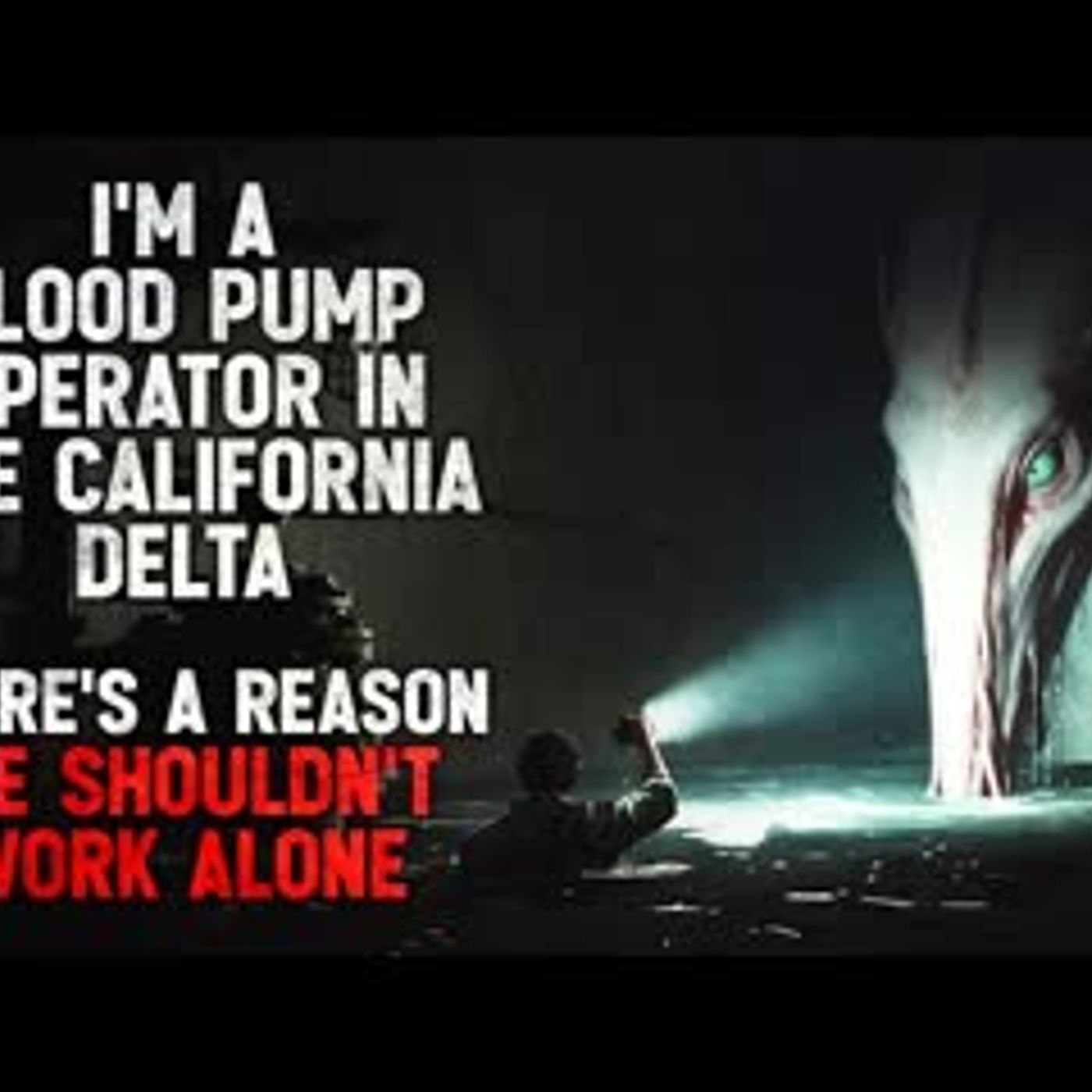
I'm a Flood Operator in the California Delta. There's a Reason We Shouldn't Work Alone Creepypasta
Freitag, 10. Juli 2026 · 49 min
Kapitelklicken springt direkt hin
Shownotes
REEPYPASTA STORY►by frequent-cat: / frequent-cat
Creepypastas are the campfire tales of the internet. Horror stories spread through Reddit r/nosleep, forums and blogs, rather than word of mouth. Whether you believe these scary stories to be true or not is left to your own discretion and imagination.
LISTEN TO CREEPYPASTAS ON THE GO-
SPOTIFY► open.spotify.com/show/7l0iRPd...
iTUNES► podcasts.apple.com/gb/podcast...
SUGGESTED CREEPYPASTA PLAYLISTS-
►"Good Places to Start"- • "I wasn't careful enough on the deep web" ...
►"Personal Favourites"- • "I sold my soul for a used dishwasher, and...
►"Written by me"- • "I've been Blind my Whole Life" Creepypasta
►"Long Stories"- • Long Stories
FOLLOW ME ON-
►Twitter: / creeps_mcpasta
►Instagram: / creepsmcpasta
►Twitch: / creepsmcpasta
►Facebook: / creepsmcpasta
CREEPYPASTA MUSIC/ SFX-
►bit.ly/Audionic ♪
►bit.ly/Myuusic ♪
►bit.ly/incompt ♪
►bit.ly/EpidemicM ♪
This creepypasta is for entertainment purposes only
Transkriptvom Podcast bereitgestellt · Zeitmarken springen hin
There's land in this part of California that sits below the water beside it. People don't believe me when I tell them that. They picture rivers running downhill to the sea, and they can't make it fit that You can stand on a road on Tyler Island and look up at a boat going by, and the slough, the hole riding higher than your head, separated from you by nothing but a dirt levee and a pomp that's been running since before you were born. That's the delta, A thousand miles of sloughs and channels braided through islands that used to be tidal marsh, drained and farmed one hundred and fifty years ago, the peat soil shrinking every year since until the islands settled into bowls. Some of them are twenty
feet down now below the rivers. The tide has been wanting back in the whole time, and the only things telling it no are the levees holding the sides and the pomps emptying the bottom. Power walk away and an island goes back to being a lake inside a year. I keep one of those pumps running twenty two years for the Reclamation District. The last nine of them, mostly alone.
Out on Prospect Island, which is one of the lower and lonelier ones, a long dropped rectangle of farmland with a two lane levee road in a pompouse at the bottom of the ball where all the island drainage collects before we lift it back up over the levee into the slough. The district has four operators for nine islands. Officially, we work in pairs on a storm. Unofficially, when it's bad everywhere at once, there's one man to a station, and it was going to be bad everywhere at once.
That's why I drove out a dusk with a storm already visible from the causeway, the gray wall coming in off the Pacific, an atmospheric river the Weather Service had named and capitalized it the warm Wake conveyor that rides up from near Hawaii and parks itself of a northern California stacked on top of it, a king tide, the highest of the season, when the sun and moon line up and pulled the whole estuary a foot and a half higher than ordinary ar storm. On a king tide, the two things that fill the data. Arriving together at night, I'd done bad nights before. Not this exact pairing, but close enough that I knew the shape of it. You and the machinery against the water until the tide turns and lets you win. There's a rhythm to that kind
of work. Most of the year the job is grease and paperwork. A real storm is the only time it's what is supposed to be. I let myself in and ran the start up prospect station old with two large electrical drainage pumps with vertical shafts that drop into the four bay, a concrete sum by the lowest point of the island. The pumps draw from it and lift the water up the discharge pipes over the levee out through the flat gates into minor slough on the other side.
Simple a hundred years of the same idea. I check the gauge's four bay level normal slough level already high and climbing toward the King tide high water predicted for two fifty one a m. I wrote it in the log book by hand, because the district's computer logging goes down every time the power flickers. Tide tables taped to the wall above the desk, the radio base unit to the district office, squelch, hissing my phone, sitting face down on the desk, which out here gets one bar and a good night, and tonight wouldn't find any there was no by to check for it. I'll say it that way because it isn't a sad story, and I'm not telling it for sympathy. My wife and I came apart slowly years back, the way a levee does. Not a
big blowout. Just see pitch, a softening. You don't notice until the ground won't hold. She's in Sacramento, now we're civil. My daughter's grown and gone to Portland. We talk on a birthday of mine. I took the Lonely Island because it was open and nobody else wanted it. I told myself it was because I liked the quiet, which was true, and underneath that was another thing I never said out loud.
There was nothing at home to drive back to, so it didn't matter much where I spent the night. A man can run and routine a long time, longer than you think. You wake, you work, you sleep, and not minding becomes its own kind of comfortable. You don't go looking at it too hard, because what would be the point I started. The pumps both came up smooth, that deep building hum you feel in the soles your boots before you hear it. The shafts spinning down in the dark of the forebay, the discharge pipes thudding as the water hit them, The needles and the gages settled. The station was doing its one job. The rain started maybe twenty minutes later, drumming the metal roof, so I poured the first cup from the thermos and settled in to
watch the levels. The forebay had a tress screen across the intake, a steel grating that kept big debris out of the pumps branches, mostly trash that blows into the ditches. Now and then something dead, a possum, a feral cat, once a whole hog that must have gone into the ditch up stream and floated down. There was a bad hour with a pike pole. The screen clogs in a storm because the rain washes everything into the drains, and the drains bring it all here to the low point.
To me, clearing the screen is half the job. On a wet night, you rake it, the level drops, you go back to the desk. Around eleven, the four bay started backing up faster than the pumps could pull it down, which meant the screen was loading normal. I took the rake and a big flashlight and went down the steel stairs to the forebay deck to clear it. The screen was loaded all right. I raked half a matt of tool reeds, a fertilizer sack, something soft I didn't look at, and the level started dropping. I was turning to go back up when the flashlight beam crossed the grating and I stopped. The debris i'd raked off had been on the upstream face, the land side. Everything the drains bring down hits the upstream face as the whole point of
the screen. It catches what's coming toward the pumps. That's where you rake. There was a second mat caught on the downstream face, the pump side, tool weed and dark matter packed against the grating from the side when nothing should be but clean water moving through the pumps, as if it had come up from the forebay. I stood there with the rain coming down the open stairwell and looked at it longer than it deserved. Then I told myself what a man tells himself. A flat gate, hung open serge pushed the sludge of slow water back down the discharge before the pump caught it brought some trash with it. No mystery. Write it up and tell maintenance the gate needs checking when the storm's done. I raked
the downstream matter off too awkward reaching around the screen, and it came away heavier than it should have. And I didn't look at that either. I went back up the stairs. I logged it twenty three ten, cleared screen, both faces. Possible flap gate fowling on discharge, advised inspection. I poured another cup. The rain came harder. High water was at two fifty one. I had hours. I sat and watched the needles, and somewhere below me, the second pump changed this note for just a second, a stutter the sound of pump makes when something passes through it that isn't water, and then smoothed out again before I'd finished turning my head. I wrote nothing down for that one.
There was nothing to write. The storm came in hard a little after midnight. The metal roof went from drumming to a roar, and then the wind found the building and the whole station leaned into it. I went to the gages. The sloughside was climbing fast, faster than the tide table said it should searge running ahead of prediction, the atmospheric river dumping its rain into every creek and channel upstream, all of it arriving at once and stacking on top of the king tied. The number on the slough gauge was one I'd seen maybe twice in twenty two years, and it wasn't slowing. When the slough comes up like that, the land water can't get out. The discharge pipes lift it over the levee. But if the slough on the far side rises to meet the top
of the pipe, you're pumping against the head that gets steeper every minute. The pumps work harder for less than the forebay behind you starts the fill. There's a camera on the road in the two lane highway on top of the levee that is the only way off Prospect Island on a normal night, it shows ashphalt and the reflector posts on the shoulder. Now I saw water sheeting across it, the posts standing out like markers on a boat channel. The road had overtopped hours early, which meant the slough was already above the levee. Crown at the low spot by the gate. You don't drive that. I want to be clear because people hear these stories and think the man was a fool to stay. You do not drive a flooded levee road at night in a
rising sarge. The water's moving, you can't see the edge, and the edge isn't where it was that afternoon. People die every year in this state doing exactly that, finding the soft spot at speed, going off the side into water that's twenty feet deep on the island's and running hard. The smart thing. The only thing is to stay with the station. The station is built to survive the night HIKEI the radio district, Prospect roads over top to the gate.
I'm staying with the station. Sloughs running ahead of the table. I'm losing head on the discharge. Copy a pause. Then the dispatcher, a kidnamed Rays, who I figured was running the whole border alone tonight, Copy Prospect, You're not the only one. His voice was thin and fast. We got overtopping on three islands, a slide on. Sherman Tyler's calling for a second operator. They're not gonna get hold what you got. Soon as the hebb drops, the road we'll get a crew to you. You're okay out there, I'm fine, I said, it was true at the time. I went back to work, both pumps running flat out, the forebay holding more or less level. I pour the last of the thermos and watched the rain come sideways through the worklights.
Something close to contend. This is the job, this is the only thing I'm good at, just me and the water and the machinery. And the machinery was holding. Then number two quit. The motor up on the desk started the labor pulling against the load. It couldn't move. The antmeter swung into the red and stuck down in the forebay.
I felt the shaft shudder through the steel of the deck, and then the thermal overload did its job and cut the motor before it burned. The knocking stopped. Half my capacity was gone. The forepay needle lifted the moment the pump died. One pump can't hold this island in a storm like this. I had maybe an hour before the water topped the deck, and after that it would be in the lower works of the building. I had to clear the pump. You kill the power. The panel pulled the inspection hatch on the discharge column and reach down into the throat to the pipe with a pike pole to free whatever's wedge in the impeller. You hate doing it because the column drops blind into the forbay below, and you're working by feel. I locked out number two
at the panel, got down on my knees on the wet deck work the inspection hatch off, and the smell that came up out of the pipe was in the green rot of slough water. It was something else, the inside of something. I put the flashlight into the opening. The column was full of black water, and below the black water something moved against the current, not with it the flash I caught it for less than a second.
A pale surface down in the pipe with a light hit it, and dark everywhere else, with a texture like nothing that grows on a branch. It slid down and away from the light, toward the impeller and the forbay below, and the water in the pipe surged up with the displacement of it and slopped over the hatch, slip onto my knees, warmer than floodwater has any right to be.
Then it was gone into the dark under the deck, where both pumps fed. I knelt there with a pipe pole in my hands and the flashlight shaking. There was nothing wedged in the impeller anymore. Whatever had stopped that pomp had let it go and taken itself back down into the bottom of the island, the body of water I was sealed in with. I've reset number two from the panel with my hand not quite steady, and the motor came up clean the four bay leveling. It wasn't an animal that had pulled its way down that pipe.
Animals go with the current when they're caught in a pump, and they don't reach back from the light. The thing about a crisis is that the work doesn't stop to let you have it. I had a dead road, a busy radio, and something in the water under my feet, and none of it changed the only number that mattered, which was the four bay level climbing toward the top of its deck. So I did what I've always done.
The next thing in front of me, both pumps were running. I work the math in the log. Two pumps that reduced output. The forebay holding a hair under its deck, the tide turning at two point fifty one and starting to fall after If I could keep both pump alive until the EBB, I'd make it. If I lost one again, I wouldn't. The whole night came down to keeping two old motors spinning for two more hours. I keep the radio district Prospect a long pause and Rayers more ragged than before. Go Prospect lost number two POMP for a few minutes, got it back. Something fouled it. I'm running both, but i'm losing head. Slow's still coming up. What's my window and a crew prospect. I'm going to be straight with you. Static chudored the edges of his voice. Sherman
Slide took out their access We got two other operators stuck, and one of them's hurt. Sheriff's running boats for the residential islands. You're a single operator. Structure's sound. You're holding. You're at the bottom of the list. I'm sorry. Earliest crew is the EBB when the road drops, and that's if I can pull bodies off the worst jobs. You hold what you got? Can you hold? I can hold?
I said, say again, your status you're breaking up, I said, I can hold. I looked at the four bay needle rayes, the fouling a number two. Has anyone else called in anything in the system coming up the discharge, anything in the pumps that is in debris. The static kissed a second past where I thought I'd lost him. Say again, prospect something in the pumps. I stood there with the hand said against my mouth, and found I couldn't say it.
Something pulled itself down the discharge column away from my flashlight. There's no box for that on the incident form. And what would it get me saying it out loud? Or a twenty five year old running aboard alone on the worst night of the year, a crew to a road still underwater. Now negative, I said, just debris, heavy debris, yar, prospect out copy hang in there. The radio went back to its hiss. I went to look down. The water in the forebay was higher than I'd ever seen it risen most of the way up the walls, turning slow with the two intakes pulled at it. I put the flashlight on the water and walked the deck along the edge, looking nothing broke the surface. The phone turned and along the concrete of the far wall with a level had
dropped an inch or two. When I'd gotten both pumps running, there were gouges, scratches in the concrete below the old water line, just above the new one. They ran in sets, four or five at a time, dragged downward the way you'd claw at something that gave you nothing to hold. They went down into the water, and I knew they continued under it. Something had been working the walls of the forebay, trying to get up out of the tank.
The concrete of that forebay is older than my father. Whatever had raked it hadn't done it tonight. The gougers had the soft, pale look of old brakes, weathered by years of standing water, other storms, other high water. Something came up the discharge when the slough rose high enough, worked at the walls and went back down year after year, not once making it out. Yet it wanted out. The gouges weren't reaching for a man. They were reaching for air out of a concrete tank. It had been flushed into by rising water, trapped the same way I was.
I should have made it less frightening. And I stood there and turned it over, waiting for that to be true. And it wasn't a thing that just once out will go through whatever's between it and to night between it and the dry deck of the island was the rising water. It was riding higher every minute, and me I went back up the stairs faster than I came down. The forebay needle had climbed, not by much, but it was over the line now, and the pumps hadn't stopped. I stood at the desk and logged at the number, and ran through it the way I'd run through it a hundred times in twenty two years. Water in equals water out the drains feeding the forebay against the pumps emptying it.
I knew both halves of that equation. The drains couldn't bring in more than they were bringing unless something was adding water to the forebay that didn't come down the trains, or something was choking the discharge. So the pumps were lifting and the water was falling back down the pipe as fast as they were being pushed up. Something at the top of the pipe, where the door had been left open. The level climbed another quarter inch while I watched it. You can't fix a choked discharge from inside the building. The problem was up the pipes at the flat gate. So I put on my coat and went out into the storm. The slough side of the levee is a different world from the island side. On the island side you're sheltered up. On the crown, you're exposed,
and the wind off the water hit me the moment I cleared the top hard enough that I had to lean into it to stay upright. The rain came hard enough to sting through my hood. Below me, where there should have been six feet drop to the discharge headwall and the flat gate, there was black water risen almost to the crown. The king tied and the surge had filled the slough to the brim. The discharge headwall as a concrete apron where the two big pipes come out of the levee and the flap gates hang on their hinges.
On a working night, you'd hear the gates banging as the pumps pushed slugs of water out. I got my flashlight on them. The number one gate was doing its job, water surging out of it into the slough in pulses. The number two gate hung open, held against the current that should have been slamming it shut, and the open mouth of that pipe was where my pumped water was running straight back down into the island. I worked my way down the wet face of the headwall with a flashlight in my teeth, telling myself it was debris, a log jammed under the hinge. That's all A hung gate ever is. Got down to where I could reach and put the light on the gap it was holding the gate open. From the inside. I saw a part of it.
Something had come part way out of the pipe mouth into the gap of the gate, hooked around the steel, working at it the way a hand works a stuck draw. And what I had the light on was a length of it that ran from the pipe mouth to the hinge bracket pale where the beam caught it, and wrong, the way deep water things are wrong, banded, moving in the wrong place. When it moved too long for the diameter of the pipe it was threading out of the light didn't hold on it cleanly. It had no edge I could fix on where it gripped the gate. The steel groaned, the hinge screaming with a full slow weight of it, the whole heavy door giving way one degree at a time. Then it felt the light the part of it and the gap went still, and then it
came toward me along the gate. I got back up the headwall fast. I don't remember the climb. I remember being on the crown again with the wind trying to take me off it, and the gate was empty. The thing had gone back down, and the slough water poured into the open pipe and ran down into my island. I couldn't close that gate. It would take a crane and a crew, and I had neither. The discharge was lost, one pumps worth of lift gone, and the other pump now feeding the island its own water back. I went back down the island side to the building. I'd hold inside with a one good pump and keep the level as long as the motor lived. The four by deck was underwater when I got to the stairs, the working floor where i'd stood an hour ago, black water over
the lip and spreading across the concrete and climb, I mean the steel stairs toward me. The caged worklight was under it, glowing green. Number two was dead again. Number one was still running. I could hear it laboring somewhere below the surface, and while I stood on the stairs the sound of it changed. The shaft fighting against something in the column, and the thermal cut it. Both motors stopped, and the last sound went out of the building except the storm and the water coming up the stairs toward me.
I keep the radio at the desk district prospect. I've lost both pumps in the discharge. I'm taking on water in the building. I need a boat. I need anybody, dead air. I keyed it three more times, said Raya's name into it, said anybody, and the dead air took all of it. The water was at the top of the four bay stairs and starting under the floor of the level I was on. There was one way left, and it was up. The control room sit a half flight above the pump floor. A short steel stair to the platform with a panel and the desk are the highest dry place in the building. I took the log bok and the flashlight and went up. I stood there and watched the black water climb the steps behind me.
One had a time unhurried somewhere under it. I knew the thing was rising too. The water was its road. Every inch the flood came up was another inch of the building it could reach, And the building was down to one platform. I'd run out of things to do next. There'd been a problem and an action for every hour of the night. Clear the screen reset the pump key, the radio, climb the head wall. Now there wasn't The road was twenty feet under, the radio was dead, the pumps were drowned, the discharge was open and feeding the water higher. So for the first time all night, I stood still, and in that stillness, the question came up out of the dark, the same way the water had.
Who would even know? Rayers would notice the station go dark before he noticed me, would log the prospect offline and dispatch a crew to the equipment, and somewhere down the list of the night's damage there'd be a line about the operator. My ex wife in Sacramento wouldn't know for days, and when she did, she'd feel sorry for a man she used to be married to. My daughter in Portland, who had spoken to twice this year. There was no one sitting up tonight with a phone in their hand waiting to hear my truck in the drive.
I built it that way a little bit of time, Like how the islands sank, a slow settling you don't notice until you're twenty feet down and the water once in. The Thing that frightened me wasn't the dying, It was how little the dying bothered me. I pressed it the way you press a bad tooth, waiting for the flinch.
You could just sit down, let it come up, stop climbing. And no part of me rose up against it. No white's face, no child, no reason with a name. I didn't sit down. I want to be clear about that. I kept my feet and I kept my flashlight on the stairs. There was one thing left in the building that could move water, and I'd forgotten it because nobody ever uses it on a flood, the gravity gate. Most of these old stations have one. A colvert through the bottom of the levee, separated from the pump discharge, a hand craked pen stock on the inside end a steel plate in a frame that you raise and lower on a threaded stem with a wheel. When the slough drops below the level inside the island, you crank it up
and the island drains itself out through the colvert. No pumps, no power, just water finding lower ground. You keep it shut the rest of the time, because when the slough is high, it runs the wrong way on a king tied with a surge. You keep it shut and bolted, and you don't think about it. But the tide turns high water at two fifty one. After that, a slough would fall, and somewhere in the falling it would drop below the level of the water now standing in my building.
When it did, the gate was a drain I could open by hand. It wouldn't save the island, but it would pull the level down off this platform and buy me the hours until the ebb dropped the road and a boat could reach me. The gate was in the lower works, under the water, in the dark, where the thing was. I sat with that for a minute on the platform with a flood, climbing up the stairs. I'll tell you honestly, I didn't go down because I'd found some reason to live. I hadn't. That question was still sitting at the bottom of me unanswered. I went down because there was a wheel to crank, and cranking it was the next thing. I am a man who is run on the next thing for twenty two years. My hands wanted the wheel. The rest of me came along.
I tied the flashlight to my wrist with a boot lace and went down the steel stairs into the black water. The cold of it closed over my legs and then my chest, and drove the breath out of me in a way I hadn't expected, my body making this objection plain, even if the rest of me wasn't. I waded out across the drowned pump floor, toward the corner where the gate stem comes up. The water was chest deep and rising, carrying everything. The flood had lifted off the floor at Jerry kan the desk chair rolling slowly on its side, paper turning to pulp. The flashlight threw a cone to the MRK and I found the wall by feel and working along it toward the gate, and that was when the water changed. You feel a thing move in the
water before you see it, a pressure against your body from a direction the current isn't coming from. The whole flooded floor shifted around me, a slow, heavy displacement, the water bulging with something large moved through it. I froze with my hand on the wall and put the light out across the surface and saw the wake of it, a slow line peeling away from the dark beyond my beam, moving across the room, unhurried, curving around behind me. It knew where I was in the pipe. It had drawn back from the light and now in the water with me standing chest deep in it. The light meant nothing to it at all. I got to the gate stem.
The wheel was there, rush stiff, with threaded stem, dropping down into the black, toward the penstock plate six feet below. No good to me yet, not with the slough still of the crown. Crank it now, and I'd only let the flood in faster. I put both hands on the wheel and I waited for the ebb. The wake came back.
It came fast this time, and from the side, and the displacement hit me before I saw it coming, put me under the flashlight on my wrists, swinging wild through the murk. It lit A length of it, close enough to touch, a paleness, the surface of it sliding past my face, slick and cold, going on too long, no head I could find, just the endless middle of it, pressing me down into the pomp floor. Then it took my arm a grip. It wrapped my right arm the way a hand wrapped a stick, and it was strong in a way that it had no ceiling to it, a strength that didn't feel like it was trying. It pulled and I felt my shoulder go, and then I felt the skin of my forearm begin to tear as I hauled the other way against it with everything I had.
My left hand was on the gate stem. I held the stem and pulled my arm out of its grip, through the tearing, through the white nothing where the pain should have been, and it came free in a cut of my own blood gone black in the flashlight. I got my feet under me and drove for the stairs. I don't remember the stairs. I came up out of the water onto the platform on my knees, right arm hanging before arm opened to the bone in the flashlight spill behind me. The wake settled and was still. I got my back against the panel, got my belt off one handed, and sinched it above the elbow until the bleeding slowed to a welling. The flashlight still hung on my wrist, throwing its cone at the ceiling, and I sat in the spilled light and shook and looked at
what I had. A gate that would flush the island when the EBB came. One arm, a tide table that said the EBB was hours off, and the thing in the water below me between me and that wheel in no hurry at all, waiting out the tide same as I was, because it wanted what I wanted, the gatep and the water running. The only difference between us was that I had to survive for long enough to open it, and it only had to survive long enough for me to try. Eventually, the tide turned at two fifty one, the way the table on the wall had always said it would. Nothing announced it, But I'd watched these waters for twenty two years, and I could reap the slough through the gage still running off the battery backer. The
number stopped climbing, sat and began by a hare to fall. The King tide had crested out past the levee in the dark Minuslough was starting the long drop toward the low water, and every inch it fell brought the outside closer to the inside, closer to the moment the culvert through the bottom of the levee became what it was always built to be, a drain. The flood standing in the lower works wouldn't move on its own. The discharged flap gates would seal themselves shut against the falling water outside, and the water inside would see it exactly where it was going Nowhere until I cranked that gravity gate up by hand and gave it somewhere downhill to go. There was the only road out of here, a wheel, one arm,
and whatever was waiting between me and it. I sat against the panel with my arm belted to my chest and did the math half an hour maybe less, before the outside dropped below the inside, and the wheel meant something. I thought about not going. I could stay on the platform. The water would hold just below the steel I sat on, and I could wait for the EBB to drop the road, wait for a boat, and maybe it would in time, and maybe it wouldn't. It would have been the easier thing, And some part of me said, let it be the easier thing. What are you saving exactly? I found I had an answer, and it surprised me. I had not, at any point in twenty two years walked off a station while it was still drowning. I did not start tonight.
Whatever was or wasn't waiting for me at home. The man who didn't leave the water was the one thing I'd ever been all the way through, and I was not going to sit on a platform with the one gate and the building still shut. I went down the stairs into the black water. The belt held my right arm against my chest, and I only had my left.
The wake found me before I reached the wheel, that slow, heavy push against my legs, the surface peeling open somewhere past my light. But he didn't come at me. It hung off in the dark and circled. I could feel the tide the same way I could read it on the gage, and it wasn't going to spend itself on me.
Before the gate opened, we were waiting on the same thing. I got my feet braced on the drowned floor, gripped the wheel left handed, and turned it. The gate fought me the way, something that hasn't moved in years rus stiff, the weight of water standing on the plate, and I had one arm and no purchase, my feet sliding on the slick concrete. A quarter turn stop, I hung my whole weight off the wheel. Something in my torn shoulder let go, and I made a sound into the cold and dark, but I kept turning and down at the corvert mouth six feet under, I felt the steel plate lift off its seat, the first thin thread of current finding the gap the flooded room, leaning a degree toward the corner, and then the wheel stopped. I hauled on
it and it didn't give dead against my one arm and my full weight. The stem jammed somewhere in its travel, debris in the frame or the plate fouled, and it didn't matter which, because a third open is not a drain, it's a trickle. It would empty the building in a week. I pulled until the white nothing came up behind my eyes and the wheel did not move. My left arm alone was never going to be enough. That was when the water changed. The trickle through the cracked gate was what it had been waiting for. The wake came off the far wall and turned toward the corner, toward me, and it was not circling now. It came straight for the only door where I was standing. I had a breath, maybe less. I did not brace, there was nothing to
brace with. Instead, I tore the belt off my right arm with my left hand, and I hugged that dead weight, the open forearm, and hugged it through the wheel from the right side, jammed it through the spokes to the elbow, so the rim sat in the crock of it, and I put the whole red length of it square in the path of the thing coming for the gap. I gave it the arm. I put my body to the side and I gave it the one part of me that was already gone. Hooked through the wheel on the side where I pulled toward the culvert, would drag the rim counterclockwise open. It took the arm the way it had taken it the first time, that grip, with no ceiling to its strength, and it pulled, lunging past me for the gap and the moving water beyond it. Crawling
on the arm, hooked through the wheel with every pound of that long, pale weight, the whole current of it building behind the pole, and the wheel turned. The jam broke under a force no man could put on a wheel, the stems screaming up out of its threads, the plate tearing the rest of the way off its seat. It cranked its own door open. In half a second of blind animal want, the gate went full open, and the building went down it. The flush took the creature first, ripping it off the arm and into the hole, a long pale rush, folding into the dark of the colvert, and then gone. It tried to take me with it, the current grabbing my body and streaming me flat toward the throat, But the arm was still hogged through the
wheel to the elbow, and when the flush hauled me toward the colvert, the rim caught in the hook and held. That was the only thing between me and the culvert. The arm grinding against the rim, shredding what the creature hadn't already torn. And I hung there off the ruin off it while the water ran, the current eased, the head equalized. The level dropped past my chest, then my waist, the drowned floor coming back up slick into the cone of the flashlight. I got my knees under me. My right arm came off the wheel when I moved. I looked it at once, and then I didn't again. A thing hanging from my shoulder that the wheel and the creature had finished between them, kept attached by less than i'll describe here, useless past any saving Above me. The
wheel stood open on its bent stem. The station was straining, The thing was out. I sat in the receding water and took stark of what remained. The slough was falling. In six hours it would turn and rise again the next tide, lower than the King tide, but rising all the same. The number two flap gate was still out there on its bent hinge, hanging open the door I couldn't close without a crane and a crew. I'd flushed it on this ebb. I had not fixed the door.
The route it came in by was still standing open, and the water always comes back. But I'd won the night. I sat in the wreck of my station and understood that the night was all anybody ever wins out here. You hold the water back until the tide turns, and then you do it again. The flashlight burned toward nothing on my wrist. I held what was left of my arm and watched the black water run out of my island, and waited to find out whether the morning would reach me before the next time tied. Did morning came. The boat came at gray first light, two men from the district and a sheriff's deputy running the slough as the ebb bottomed out and the road still lay under a foot of falling water. They found me on the platform,
with the building drained below me and what was left, and my right arm wrapped in my coat, the belt cinched so tight above the elbow my skin had gone black hours back. The deputy said later he thought I was dead from the lock of me until I told him to mind the open gate stem on his way across the floor. Rayers had locked prospects dark and half past two and put it on the list, and the list had finally come around to me. They got me to a hospital and Sacramento and took the arm the rest of the way off at the elbow because there was nothing below it worth saving. The surgeon used the word mangle, which is a clinical term and not just the thing you say, caught in the pump machinery, they wrote, and I let them write it because it fits a
form in a way the truth never would. I gave the district the version that held together surge ahead of prediction. Both pumps fouled and lost discharge gate. Failed operator opened the gravity culvert by hand to drain the island and lost the arm doing it. Every word of it true, the shape of it a lie. There is nothing on the incident report for the thing that took the arm, and no tone of voice there would have carried it to any one who needed to sign a form. They listed the number two flap gate for repair. I don't know if it got repaired. I didn't go back to find out. I took the medical retirement. They offered, and I let Prospect Island pass to whoever wanted it. Some nights I think about that, about a man I've never met,
manning that station on the next King tide, raking the screen and never once putting a light on the wall below the water line. I thought about warning him. I think about it still, but there's nothing to say that he'd believe. And I know that because there was a time I wouldn't have believed it either. I'm not a haunted man. Nothing followed me up out of that water.
I sleep fine, mostly, But I went into that station, a man who stopped minding what happened to him, who'd taken the lonely island because there was nothing to drive home to, and somewhere in the bottom of it holding a wheel with one arm, or the flood tried to take me. I found out I wanted to come up, not for anyone, just the plain one of it, which I'd buried so long under the routine of not minding that I'd forgotten it was mine. So I called my daughter in Portland, not on her birthday and a Tuesday in November for no reason, and she was so surprised she thought someone had died. We talked for an hour.
We talk most weeks now. I drove up in the spring, learning the one handed way of everything as I went. She put me in the spare room and we had three days of small things, coffee and a walk. Nothing said that needed saying out loud, and it was more than I'd let myself have in years. I don't tell why. I can't tell anyone why I was drowning and found out I didn't want to be his close. But it leaves out the thing in the water, and without that, it's just a man being sentimental about a bad night at work. I live differently now, smaller and more. I answer the phone. The arm that isn't there aches in the cold, and I don't begrudge it. They tell you the missing part does that, and the right Some night
it aches in a way that feels less like a nerve and more like the arm is still down there in the cold water, reaching for the wheel. It cost me an arm and a knight. I can't tell anyone about, but I'd be lying more if I said I wanted to go back to the man I was before
