

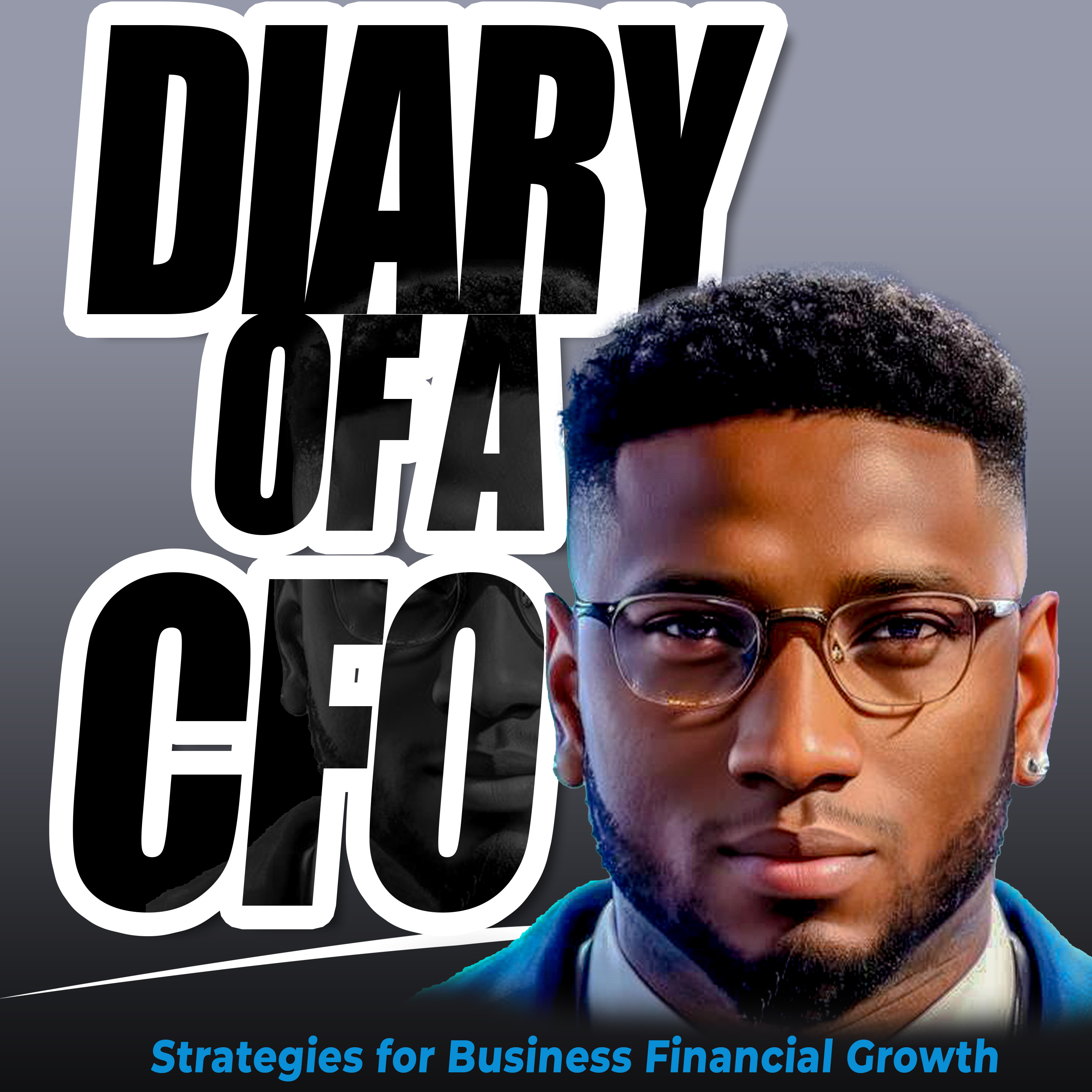
Diary of a CFO | Financial Strategies for Smart Business Growth· Folge 11
Profit Strategies & Rapid Growth Secrets with Dr Joey Drolshagen & Ademola Odewade
Freitag, 25. Juli 2025 · 43 min
Kapitelklicken springt direkt hin
Shownotes
Profit strategies ignite money management mastery as fractional CFO Ademola Odewade merges expert finance insights with AI driven strategy insights to scale income business growth and HR performance.
Ready to break revenue limits and lock in profit? In this explosive Diary of a CFO episode, rapid growth specialist Dr Joey Drolshagen reveals how subconscious mindset training (SMT) fuels data-driven decisions, profit planning and sustainable business scale. Ademola drills into fractional CFO tactics that turn cash flow into long-term equity while slashing expenses with smart HR and tech.
🌍 We are already in the Global Top 10 % on ListenNotes. Help us sprint to Top 1 % before 2025—hit follow, share the show and drop a quick rating. Your click powers our climb.
🚀 Tools we personally use and love—grab a free trial or discount and support the show:
• ▶️ Craft stunning decks in minutes with Gamma → try.gamma.app/KingDemsPodcast
• ⚡ Auto-boost SEO visuals with Alt Text AI → alttext.ai/?red=kdemsc
• 📈 Simplify investing via Tykr → tykr.com/?red=kdemsc
• 🎤 Run high converting webinars on WebinarGeek → app.webinargeek.com/?red=kdemsc
• ⏱️ Track team output using Insightful → insightful.io/?red=kdemsc
• 💬 Centralise chats with Timelines AI → timelines.ai/?red=kdemsc
• 🎙️ Record studio-quality shows on Riverside → riverside.fm/?via=ademola
• 🎁 Save $300 on the King Dems Growth Bundle → inspirationengineer.com/kingdem-bundle (code KINGDEMS)
• 🛍️ Explore more premium resources → stan.store/k-demsconsulting
🎯 Work 1-on-1 with Dr Joey—book a free 15-min Rapid Growth call and claim your SMT book gift → coachwithjoey.com
👉 Subscribe for weekly money management strategy insights. Comment your biggest takeaway and tag a founder who needs fresh finance expertise.
#TheKingDemsPodcast #ProfitStrategies #BusinessGrowth #FinancialPlanning #AI #EntrepreneurTips #CFOInsights #ListenNotesTop10Percent
Transkriptvom Podcast bereitgestellt · Zeitmarken springen hin
The SMT method stands for subconscious mindset training. So just to finish up what I was saying before. So as I started getting help with doing this and multiple people and you know, a lot of years and doing so all of a sudden I started going from barely getting by to landing $18 million contracts, $22 million contracts.
My highest one was $25 million year over year contract. Welcome to the King Dems Podcast, where growth mindset meets leadership and business insights. Get insights from top entrepreneurs, professionals and thought leaders. Visit kingdomspodcast.com. Fuel your mind Your next breakthrough starts here.
Looking for expert legal support you can trust? At Grayfield Solicitors, we simplify complex legal issues for both businesses and private clients across Essex and beyond. From pensions and insolvency law to construction conveyancing and commercial litigation, our experienced team is here to help with clear, practical advice. Send a commitment to results.
We put your Peace of Mind 1st every step of the way. We're proud sponsors of The Kingdom's podcast, championing voices that enlighten the world on growth mindset, leadership, and business insights for entrepreneurs. Visit grayfieldsolicitors.com today to book your free consultation. We are live.
Ladies and gentlemen, you once again welcome to the King James Podcast. And today I've got with me fighting out of South Carolina, United States of America. Mcwhacken, Dr. Joey, the rapid growth specialist Joel Shogun. How are you? Great to be here. Sir Joey. Whoa. You're a fighter now, Doctor Joey?
Yeah. I have been, you know, as needed. All these wars always will be. You know, shortly before I hit the record button, I said one thing that, you know, fighters and entrepreneurs have in common is the fighting spirit, you know, the fighting spirit. And I did, I did confess to you that I was going to reschedule this, you know, episode this session.
But when I saw the profile as that, OK, no, no thesis. What's the Kingdom's podcast is about, right? Growth mindset, leadership and business insight. And this man ticks all of the boxes, right? This man ticks all of the boxes. There is there is scheduling this one. And guess what? We are going to publish this right immediately after we're done recording because you are an epitome.
You are a paradigm of worth. This podcast represents, by the way, this podcast is an education podcast and Apple podcast categorizes it under self improvement. And if there is anybody who is self improvement in person in human form, I think that has to be done. And from me to you, it is love and respect to you.
Thank you very much for coming on the show today. And I always say this gratitude is good attitude and when a person shares their time with you this year, their life with you because the SI unit for measuring life, it's time. So it's time to unlock the rapid growth, subconscious mindset mastery and the scaling strategy with Doc Joey, Joe Shogun.
So we'll kick off with your professional journey, SMT method and the mission behind helping businesses and you know, business owners skill with alignment and purpose. So how do you come about the SMT method? It was yeah, man, it came about because I thought I was broken. Really. I grew up in a very low blue collar family, one of five children in in a very struggling family. I mean, struggling where people would have to bring groceries. My dad worked his tail off to, you know, he operated heavy equipment.
He worked as many hours as he could. And he ended up with knee surgeries, hip surgeries, multiple back surgeries. And if you just keep going and working as many hours as he could to make ends meet. And, and, and that was what was modeled for me. And when I was 22 old, I had an opportunity to take over a construction company, an existing multi $1,000,000 construction company. I didn't have to even go get a loan. We're going to cover it over A5 or seven-year revenue share to do it.
And and that went from the most exciting day of my life up to 22 years old to three days later me telling them I, I can't do this. And the reason I couldn't do it is because I felt so much guilt inside of myself that I didn't work hard enough to deserve that opportunity. That's I didn't know what it was, but I knew something was broken within me.
And from there I became a student of the works I do today. I have a 28 year career in corporate America, ground floor and sales driving for, you know, years and years and years and not really getting any mark to it to to under as I understood the continuously looking at, you know, continuously working on myself and trying to understand this and what it was and do a culture program after coaching program after coaching program.
And I learned a lot, but it never changed my results to understanding. And it wasn't it wasn't guided by me. It just happened. It unfolded on to starting to understand the subconscious mind. The subconscious mind is responsible for 85% of the results we experience. Not good or bad, just the results, whatever they are.
If there's struggle, 85% of that's coming from the subconscious mind. The other is like hap chance or things like that. If it's good things and growth and things like that, it's coming from that programming. So for me it was that programming causing my limitation. There was never anything wrong with me. You know, the God's child here it was it was that when that programming in my subconscious and that there's there's a motherboard in our subconscious that hosts all of our programming.
Everything that we we have been told everything that we've experienced, everything even experiences we don't have, but somebody tells us about becomes embedded in that subconscious. The importance of the subconscious towards our results is the subconscious is responsible for triggering brain waves to the actions we take or don't take.
So if for me with that construction company, lack was one of my things, the other is deserving. And so I couldn't get past that programming that I didn't deserve that because I didn't work hard enough for it to accept that. And that would have changed the trajectory of my entire life in doing that.
And so it since that didn't happen, I went through years, I've been the Guinea pig of this whole SMT method and change. And so, so the whole thing happened. And, and then as it started happening, I went from barely getting by and afraid of losing my jobs to traveling 3000 to 5000 miles a week trying to develop territories and not really making any mark at all. To within a year and a half of understanding the subconscious and then getting help from multiple sources and understanding how I can how I can adjust that programming. And I didn't even know if it was possible. I just believe the mustard seed we talked about earlier. I just.
Believe the mustard seed. I'm just so happy you, you, your mind that is loaded with a lot of value and nothing, nothing excites me in this life more than talking with people that are people of value. I'm, I'm not trying to blow your trumpet. And of course I'm not a hype man. I'm a person who appreciates people. You know, I give people the flowers. I won't wait until you're dead and but we're signing the condolence register or or a given tributes. I love people getting their tributes when they are alive, right.
And from me to you, it's, it's so much appreciation. I, I don't think words are enough to express how much appreciate you as a person because for, for me, everything I have done in my life is actually towards achieving what you stand for, right? And of course, my body of work actually speaks to that effect. The kingdom's forecasters, growth mindsets, business insights and leadership.
And that is what you represent. And of course, that's why I'm speaking with you today. You know, you, you talked about the subconscious mind and it's really, really, you know, driving my curiosity, subconscious mind. I'm a man of faith. You're a man of faith. The Bible says as a man think it in his mind, so is he right?
And you talk about not deserving, you know, what was handed over to you. And of course, in my manner, I was thinking, is that a function of what's it called again, imposter syndrome? Would you, would you say that was imposter syndrome at the time? And of course, you know, I'm very, very curious about the SMT What does SMT even stand for? And you know, what was that a hum moment right for you in your personal transformation?
Of course, at some point things changed for you. Right, so the. SMT Yeah, that's what I. Was excited. The SMT method stands for subconscious mindset training. So just to finish up what I was saying before. So as I started getting help with doing this and multiple people and you know, a lot of years and doing so all of a sudden I started going from barely getting by to landing $18 million contracts, $22 million contracts, my higher. 1. Was $25 million year over year contract and so I started doing that.
So then as I started going up in the leadership positions, I started taking again, this SMT method wasn't even a thought or nothing for me is I just started using some of those tools of what I had learned over that two Dec 2 1/2 decades and started applying it to my team. And I ended up in multiple organization corporations with the highest percentage of top producers on sales teams at the companies that ever experienced.
And so as I started doing that and then later on, I got into helping organizations in bankruptcy to get back to profitability and, and at one point my dad passed away of cancer and a year later my mom passed away. Thank you. She just didn't want to be alive without him. And I found myself. In the Walker. Now, and I'm still in corporate and now I have started getting certifications and things like that. And it's like, man, So I, once we found new owners for the last company, I resigned and I moved down here to South Carolina up in the mountains.
And I've been, I started out handing out five business cards a day because I didn't know anybody down here, you know, and started building from there with that, with that hope that mustard seeds though, and, and it's just continued to grow and impact and, and it's just, and, and the SMT method isn't something I sat down with a pen and paper and wrote out.
It came through me. It was, it was God. It was God's work for me. For the inspiration of the Holy Spirit it. Was, yeah, yeah. And so now I get to spend my days helping people have like literally breakthroughs going from $300,000 a year revenue to $3,000,000. And it's as rewarding as that is, the real gift in it is seeing that person transform into the person being at that $3,000,000.
And I get to see that over and over and over again. And it's just. $3,000,000 The The number 3 means a lot to me right now because this broadcast was recently certified global top 3%, right? And of course the goal is to heat global top 1% before the end of this year 2025. And of course I think I'm speaking with the right person.
I hope I'm gonna I'm I have you on recording now. Are you committed to collaborate with us to achieve that transformation into the comment of global top 1% our podcast are are you committed to that? Nice, nice, yeah. Thank you. OK, thank, thank. Thank you very much. And you? Know how you talked about that with the scripture?
You know, as a man thinketh, uh huh, shall we be think about that now think about somebody who's going around with limiting thoughts, with low self esteem, with worth issues, with things like that. That's the same kind of things they're thinking. That's the life they end up living. So what the SMT method does better than anything else I've ever come across.
And there's reasons I say that is it helps identify to bring awareness to those limitations and then holds the tools to very quickly shift those, which then changes our perception, which then changes our, the results that we experience. So anybody who wants to change their results, they have to change their perceptions. The only way to do that on a permanent basis and quickly is is shifting that programming into subconscious level. You know, I, I.
I tell people something that the brain is like a computer, right? And it's like a software and I feel like the subconscious mind is the OS, the operating system, right, that the brain works with. So people think, I think some people think that the mind is here. But guys, the, the mind is here because the brain is, you know what's controls the mind And you say in 5% of the results we achieve in life, right? Or the outcomes we have are a function of the subconscious mind.
So how about the conscious mind, right? What role does it play? So the conscious mind we have control over, the conscious mind is the words we use, the thoughts that we entertain, the people we hang out with. You know, all of that's in the conscious mind, but also in the conscious mind is our knowing of what we want.
And then the subconscious mind, all it does is absorbs. It doesn't determine right from wrong, want from not want, whatever it is, it just absorbs. And then that's what feeds into that motherboard of that programming. And that's the voice we hear in our head. It's the thoughts that come up that go, ah, who do you think you are? Man?
This can't, this is going to be a huge struggle to do this, but I'm willing to take it on. And things like all of that stuff is coming from that, that subconscious. And what we do is we live so much of our life unconsciously, we're not even aware. It's just that program playing over and over and over and over again.
So it's playing and causing limitation. And So what we do, we're we're programmed again to work harder, to put in more effort, more hours, things like that. And so we try harder and harder and harder to do it. And that's where you get the mentality, like back in the day when it was like, you know, if you want something, you got to put massive actions, exhaustive efforts, and you got to be willing to trade off your life in order to get it.
But that was never true. Back then, we just didn't know any different. Today we do. It doesn't have to go like that. You know, I help my clients. I help the client go work. Smart don't work hard. I hope the client go from $7.5 million in a 13 year high to topple over $22 million in 12 months and that in the year that that growth happened was the only year of her adult life that she took five weeks of vacation during that year that, that and and the now. Now you're making me jealous.
I love vacation. Well, the other thing, the other thing that happens is, is it's specific to entrepreneurs here, right? If you look at the definition of an entrepreneur, they get into like a flow, right? And that flow, as they continue to, you know, move as they're going through it, they continue to adjust as they're going.
That's entrepreneurship. But so many people who claim to be entrepreneurs are trying to find the ABC model that equals D and follow that and call themselves an entrepreneur. But that's not even what entrepreneurship is. Entrepreneurship is, is where we live fully live alive and awake and conscious of what's happening.
And we're shifting that path as we're going. What works today may not work tomorrow. AI, it could be, you know, it's one thing today, AI, yeah, I know within within 18 months, AI is going to be doing so much more. So if you're not, you know, as entrepreneur, if you're not looking at those things now, you're going to get behind on it.
So. And I'm just using that as an example as many other things, but entrepreneurship is really, you know, one of the things I did during in COVID is I took up Hang Gliding. So I jump off a 2000 foot mountaintops with me and a glider, you know, and and and and in doing that, there's fear. But entrepreneurship is just going to be fear. See if he is.
We, we can't do the same thing, expecting the same results over and over and over again. We have to adjust and we have to, you know, and, and it really is like taking a kayak down the river. You know, we have to go with the flow of it. As soon as we start paddling upstream, we've stepped back into the unconscious living of of massive actions. Exhaustive effort.
You know, and since you speak it, it makes me happy. You know why growth mindset is the key theme of this podcast? You know, people ask me how come you're talking about mindset and you're talking about business insights on the same podcast. I'm like, excuse me, do you know what drives business success?
It's basically your mindset, you know, and let us try to lean kids, you know, directly to, to, to business success here, right? What is it that most people get wrong about business growth and business success? So one of the things is, you know, I used to hear sayings all the time, if you want something, find someone who has what you want and do what they did.
So we have a lot of coaching platforms, we have a lot of teaching, we have books, all the kinds of stuff built around that philosophy. But it doesn't work because what we don't understand is that person who put that model together, that became hugely successful, they found their pathway. And so when we follow a coaching program that's going to help us to grow and stuff, it's it's a locked model. You do AB and C and you get to D. And so we come in on it with fury and excitement and all this stuff.
And then we find as we go through it without even realizing it sometimes it's weak. You have to. Contort the individual away from who they authentically are in order to fit that model. That's why with the SMT method, I there's a model, but the model fluctuates to the individual. So, so it's based on their unique desires of what they want to achieve, their unique programming, their you, you know, all of their unique gifts and skills and talents that that were placed within them when they were brought to, you know, when they were born, all of that. So it works off of that.
So it's in alignment with them. And I'll give you a quick example, one of the. Things are different, folks. One of the things we do in the SMT method is we develop systems of accelerating habits that are unique to that individual. So I have over 700 clients I've worked with over the past 12 years. Now, one of them has the same systems of habits as somebody else does.
They're unique to that individual. We all have different handprints. We do. We do. We all have different desires. We all have different financial goals, we all have different family goals. We all have different programming within that subconscious. Now, I was talking earlier about the conscious and subconscious. So what happens is we know what we want in our conscious mind, but we have this programming in our subconscious that's the doing part of what we want.
And so it doesn't trigger the brain waves to take the actions that will lead to that. So there's a gap between the two. The way we close the gap, the only way in 40 years of studies and everything else in my doctorate degree and being in philosophy, everything else is, is the only way to close that gap is you have to go in there and reprogram that subconscious motherboard.
In doing so, we start immediately opening up the door for not only greater results, but achieving that with less effort going into it, you know? Speaking of results, right, the most important resort to business owners is profit, profits, profitability, right? But as a fractional CFO that I am, you know, and of course, I'm a finance professional by training chartered accountant, economist, masters in business administration, global beak for, you know, consultants.
And I tell my clients something that people get often get things wrong when it comes to business. Revenue is vanity, profit is sanity or cash is reality, right? When a business has consistent positive net cash flows, especially net operating cash flows, you are able to operate as a going concern. And being a going concern is being able to operate for the foreseeable future without any, you know, form of hindrances, right?
But when it comes to business owners, I think they tend to focus on the wrong metrics. And I'm sure you, you've seen this a lot in the course of your, your coaching career to focus a lot on revenue, right? And some people focus a lot on expansion, expanding revenue, expanding the operation and they, they've run into issues, right?
So you are a rapid growth specialist. And with rapid growth comes, you know, challenges and growth, if not done the right way, will lead to crashing. And I'm sure you've actually seen this things. So I just want you to talk about the transformations you've seen in business and how you turn around like, you know, bankrupt entities into profitable ones. Yeah, you know, here's how I do.
That is, you can't look at one or the other. You can't look at profitability alone. You can't look at revenue alone. You know you could be doing 70% profits, but if you're only your revenues are only $1000 a month. You're not really bringing. It in like you want to right. So you have to look at your revenues, but you have to make sure that they are profitable. So when I say about the rapid growth specialist, it's all about profitable revenue growth.
So now when you put those you got to look at I've never worked with somebody and not have looked at both of those things. You know you don't what you could sell $1,000,000 and if your revenue and if your margins are negative. You have nothing. And that is why you. You are the rapid growth specialist specialist for a reason. There's a reason why you have specialist to your title. Well, so so if.
You think about it in, in, in every organization, every business owner I work with, we start out with where's your margin? Where's your margin level at right now and why is that? And we start looking at that and what the possibilities are coming up and things like that. But then we start looking at, once we get a margin in place that's that, you know, works, then we start ramping up the revenue because now you've got your margin.
Now as you're adding revenue, you're increasing more dollars for that organization. And then we come up with the prudent reserves. We come up with things like that. You know, the companies that I worked, the companies that I have helped get out of bankruptcy, you know, at one time they had like $80 million in cash and they just blew it. They did all kinds of stuff with it and blew it thinking the times are always going to be great. And then when he when he when the times went down for the foundry industry, they had nothing to back them up anymore because they blew through it.
So that's I like what you said. I'm so. Sorry to interrupt you. I'm so sorry to interrupt you. I love what you said. Nothing to back them up. It speaks to something that I always say, that profits says you're winning in business, but cash determines how long you can stay in the game. Yeah, and even business?
Owners who I helped like they're, they're fresh starting out and things like that, you know, and they go, oh, I'll pay myself down the line and things like that go, no, no, no, you'll never be successful there because you're going to run into things. You're stepping out into entrepreneurship. You're going to run into things.
Build a prudent you have to. Pay yourself. You have to build a personal prudent reserve that you can fall back on in case there are times when you can't or things like that when it's our hiring staff or whatever it is. But you have to have that because without that your business is gone very quickly. You.
Don't have the? Money to feed yourself. You can't run a business. It just doesn't work unless you go into deeper depth with, you know, lines of credit. And I hear that a lot with entrepreneurs in line. And those are great if used properly. So yeah, that whole side of things, it's, it's the mix of it all. It's not.
You can't say this is this is, you know, Christian, this is Satan. It has to be, it has to be profitable margins that set on your products and then scaling that revenue. That's really both of those are in combination with each other. You know I love what? You say in terms of achieving that balance, but would I say the the ex auditor in me is curious about OK, how do you achieve that equilibrium? You know, when we look at the would I say I don't, what do you guys call it in, in America, the income statements, we call it the statement of OK, income statements basically you guys, that's what you you call it.
And of course for the balance sheet, right, we call it the statement of financial position. So the nomenclature is, you know, a bit slightly off in the US and in the international, international financial reports. Yeah, yes. So some people focus on assets, right? Some people leverage. That is the.
Equity is probably less than the, the, the liabilities, right? They, they, they bring in a lot of, you know, excel capital like you, you, you talked about or when you come to the income statement revenue top line. But in the process of scaling, you discovered that your operating expenses tend to, you know, rise up very, very fast.
And sometimes it erodes the bottom line, right? But Someone Like You, you are a specialist. You, you know, how to, you know, peg certain things and ensure that, you know, certain, you know, operating expenses are kept under check in order to scale effectively and efficiently, right? So I'll, I'll like for you to touch on that because, you know, a large population of our listeners are, you know, entrepreneurs, finance people at some point every. Client I work with, they have to start building a team, right? You build up the revenue until too much and I'm not an advocate and let's hire the team and then go out and get the revenue. I've got entrepreneurships about that flow. So as things are growing at some
point before it gets to be like overwhelming as we start bringing people in and things like that. When we do that, we got to go back to the margins and look because they impact margin. And so we got to look at what that margin is. Now sometimes starting out hiring a couple people, we may be able to weigh out that margin with the revenue gain and things, especially if they're hiring sales people and things like that because they're bringing in. So they're still bringing more dollars in with it. But at some point we got to start adjusting that margin each time we got to adjust the margin to see what that impact is going to be on growth.
And and then we make adjustments in that. Sometimes it's, it's going through and figuring out where we can save costs, what we can cut out in doing that and stuff to keep that margin. Ideally, I would love to see every one of my clients at 100% margin. You know. Depending on the industry, though, well, it's not possible. I haven't found an industry yet where that's possible to do. But what I'm saying by that though is we want to constantly monitor and we want to shift that upwardly and at the same time simultaneously grow those revenues. And then the margin continues to go. Now I have companies who they have scaled from a couple $1000 a month when I met him a couple years ago, who is currently doing right around $55,000 a
week in revenue. So now he's got his team in place. We've gone through the margins, we've gone through all that stuff. Now what he's doing is he's looking at acquiring companies. So now that we've built up the Peruvian reserve, he has money to rely on with it. He has, you know, you know, things like that set up. Now he's got a line of lines of credit, things like that and stuff that he has available to him. Now he can go out and buy a company and double his size, triple his size with purchasing one company. You know, now when we, when we bring that in and we start going through the same thing, what are, what are their margins based on their revenues and where do we adjust that? Where do we, you know, where do
we, how do, how do we tweak that to get that as high as we can, but then now between both companies continue increasing that revenue, you know. I, I have a serious issue with, you know, business combinations. A lot of times if you just look at the numbers, but they don't look at the, what I say, qualitative factors like the cultural clash, right?
You know, the, the integration of the people because the people make the company, right. But I'd like for you to speak on efficiencies that are achieved by way of AI. Because for my own company, for example, we leverage a lot on AI tools. But the truth is this, AI tools are also not free. So sometimes you need to weigh that balance between, you know, would I say getting certain activities or certain tasks done by a human or, you know, by way of getting that efficiency through IT tools.
So in your experience, how have companies been able to leverage on AI to would I say, achieve efficiency and of course scale faster? Well, as as far as. AI mean there's so many uses for it and things like that and stuff as far as even marketing, it can help with marketing plans. It can help with your, your, you know, your pitches that you give as far as sales pitches and things like that can help with presence out like all of that stuff. It can help across the border.
It can help even help with motivating, you know, the the individuals within the, you know, within the organization and things like that. But one thing that kind of back up a little bit when you talked about that with like a quite what I call acquiring companies and stuff like that. I'm not an advocate when I'm working with CEO or board or president, you know somebody who owns their own business.
I am not an advocate of you buy this company and you let them continue to operate the way they have been. I am an advocate for you go in there and you set the structure that's working for you in this company in that and then eventually you find somebody that manages that that's you know, could be from your own organization.
So it's not you miss a lot of that struggle that comes up when it's like 2 different organizations, 2 completely different philosophies and, and all that stuff is you're bringing that under your umbrella of what worked for you to build what you have here because. The cultural clashes a lot of times tend to lead to inefficiencies and a lot of friction.
And it's not what you want as an entrepreneur, you know. But as far as AI goes, right, it's really changing the landscape or of business, right? I look at my landscape, my life. Really, it's changed the landscape. Absolutely. Because I think about it, people ask me how were you able to achieve global top 3% in less than two years? A very, very big shout out to AI. And of course, I am AI myself.
You know, like it's crazy how a lot of the people I used to look up to in the world of podcasting, I look at them, I look at my show and we have similar following, similar streams and download numbers. This is what AI can do. And of course, big shout out to Gamma app. They are our affiliate partners. Gamma actually helps you to create fantastic presentations, you know, fantastic images, fantastic websites, you know Peaches like you talked about, you know, the great and gamma. So guys, check out our gamma affiliate link and of course, you know, go sign up and of course promote the show, support us.
We make something we make a sweet Commission from the gamma app sign ups. So we have just 9 minutes left because Doctor Joey is a very, very busy man. Of course I'll try to milk what we can actually get out of the last, you know, 9 now it's 8 minutes right on the podcast. So a lot of entrepreneurs struggle with the knowing, doing gap and how can they overcome it the surest way I've.
Found to do that, and this is what a lot of people do, is you lower your expectations of what you want that without knowing it matched the programming. That's one way of doing it. A lot of people do that. Whenever I hear people talk about a plan A and Plan B, we have a plan A. This is what we want right here. This is what we want, but I'd be willing to settle for this whenever that happens.
We arrive somewhere around this. So, so we, we, we settle for scraps of what's really possible. And so with the SMT method in the dynamic visioning, we set up that a plan and that's what we go for. And that's all that there is possible. Is that a plan? So we shift everything to fit into that. And the other way I know to do it is shift your perceptions, which means you have to go back in, identify and shift that programming to match what it is you truly want. There are two ways it can happen. You either settle for less than or you do the work of programming.
And because here's one of the things with all this stuff is you cannot go out and get to your vision. You can't go anywhere and get to your vision. You can't go to church, can't hang out with the right people. You can't, you know, none of that. You have to come from with it, from that within you.
And if we have the desire, that means the way is already planted in us. We just don't see it. So we. In becoming of that person, in shifting, identifying and shifting that programming is how we get to becoming of that person, living that life. And for the guy that was the $3,000,000 with the wholesale company from 300,000, what in a year you know, to three million and now we're going to 5 million.
He brought me down to up to Ohio last week to celebrate because he was planning on doubling his warehouse facility next year. Instead, January things just came together. He ended up quadrupling his warehouse and he was doing the open house on it last week. And so I got to go up there and be a part of that and stuff and meet his family and just like, it's just so amazing seeing the impact this has and getting to be a part of it in people. 'S lives.
That's a jury. We want. Available to us? Absolutely. We can. The power of the mind. But we. Got to do something about the programming in order for that to happen. I, I I. Love that. And of course, you, you'd notice that I've been smiling, right? You, you, you mentioned something about entrepreneurs settling for scrap. But when people ask me about what's the plan, What's the plan?
You know, you, I hope you have a plan BI Hope you have a plan C, right? Ask you a quick question. How many alphabets does the English language have? 26. 26 right? And guess what, Doctor Joey, I have a plan A, but I have plan BCDEFTH up to plan XYZ, right? And guess what? Guess what, Plan B to plan C is actually to make plan A work. So I guess so if that's the case, at least this, at least this, you should learn that, you know, never settle for less if that's the case.
You. Actually have a. Plan A is what you have because of plan B&C are to meet Plan A, then you have a plan A. Absolutely. The other thing, The last. Thing I want to add in here is so many entrepreneurs have an idea and they'll sit down and they'll get a pad of paper and they'll get a pen and they'll spend hours and hours and hours writing out a strategy for how they're going to get there and everything they're going to do and the exhaustive To Do List and all of that stuff and they write it down. How many things have you ever achieved? That went exactly as.
Your plan was nothing. So many hours doing that. So with my clients, when I get up to throttle back a little bit, when we develop that vision, what happens when we're going 150 miles an hour is there's opportunities, insights, directions, whatever it is just flying by us and we're not even noticing. The only way we notice them is we have to start backing up a little bit, going slower, throttling down and be more and be more conscious of how we're living, get out of that unconscious living.
And as we do, all of a sudden something comes out of the blue and we overhear something or we put on the radio and, and, and we're hearing somebody talk or a podcast and and we're hearing it speak exactly into what we're trying to figure out. And that can happen. So often people call that a coincidence To me, I believe that I know that that's God work in my life, but people will call it a coincidence.
But we really, there's a design that you can live by those things continually flowing and happening, but you can't do that and be be chucking along at 150 miles an hour at the same time. Absolutely not. So we we've got 4 minutes left on the clock and of course I see it takes 4 minutes to save a life. So let's save lives with a quick fire round. I just ask you a quick question and of course, you keep the rapid answers, being the rapid growth specialist that that you are.
Let's go. Let us. Go, let's go. So #1 what's one or two accelerator habits you think every entrepreneur should have to improve their leadership? You know what? Find things. That you enjoy doing that would be the one. I don't know. I can't tell you this exact habit because I don't know the every individual and and that's why it's unique.
So find things that you enjoy doing towards your business and do that more often. I love that. So what's 1 belief about success? You had to unlearn yourself that I wasn't worthy. OK, what's the most impactful book you've ever read? I think it would. Be the God. There's so many of them. Joseph Murphy, the subconscious mind. Why?
Is jury inclined towards Joseph? Is it a jury party? It opened up a gateway in my life when I start understanding the subconscious mind and how powerful it is. Okay, I think that would be recommended. Many other ones. I hope the book is on. Amazon, I'll try to add that to the the links in the description what any of the ones you're. Going to be able to add to well, no, because you're I have a book coming out August 4th and it's reprogramming your subconscious mind the SMT method for rapid growth and that'll be coming out so but it's not yet.
So you have the pre-order. Link. Let's add that to the. No, that's not waiting to put. Together right now, so within the next 48 hours I'll have it, but I don't have it tonight. A fantastic, definitely. We we are always in communication, so we we can always have that and add that to the description.
OK, So what is a 15 minute ritual that shifts your energy? What's like a practice or vitro you something you do every day that shifts your energy. That is like an energy one thing I would say. To people is start being more conscious. Start paying attention to the words you're using, the thoughts you're entertaining, what you watch on television, things like that.
Start being aware of that because whatever those settings are is what you're feeding into the subconscious, and that's what you're going to experience tomorrow. You're what you say. What's the best investment you've ever made that wasn't money? I would say my. Time in this 40 years of I love. That the best investment is the investment in yourself, many other people. Absolutely, yeah.
And of course. What is one piece of advice you would give to your younger self? Trust have. Faith, trust the process. Whoa, have faith. And of course, you know, I have faith that this episode would actually impact the lives of millions of people across the world. And for me, to you, it's an attitude of gratitude. I'm so grateful to have you on the platform today. It's love and of course, respect to you, Doctor Joey, and to our audience, please help me.
Tell them to do the right thing, like share, drop your comments, help this platform, you know, to, to shoot for the stars because we are on a journey to global top 1% in 2025. Thank you very much for the support tool for global top 3% is by no means, you know, a Little Feat. And of course, we we are growing higher.
And of course, we've got Doctor Joey in our corner as well. Do you want to leave a shout out to anyone? And of course, you want to leave any final thoughts before we call it a session. I do I I feel. The exact same way about this conversation. Man, this is such a delight to to get to have this in the depth that we got to go and so and anybody Patu.
Patu. Please go. OK, book Patu, Sir, anybody can get a hold of me and schedule a 15 minute call. I have a link set up to my personal calendar. Coach with joey.com, One word coach with joey.com. We'll have that in the description. OK, we'll set up a. Conversation at but a special thing for your guests, for your for your audience tonight is anybody who schedules that call.
While we're on there, I will gift you a copy of the book. Fantastic, fantastic guys as teaching time saves night. Wow. So thank you very much once again. And of course, guys, till I come your way again, stay out of trouble, keep believing in yourselves and always, always go for something. Always try to achieve something very, very important.
Go for something in your life. And of course, be curious, you know, be hungry, Learn, you know, conceive belief, strive to thrive and of course, achieve. So God bless you guys. For me, it's goodbye.
