

Home Assistant Podcast· Folge 231
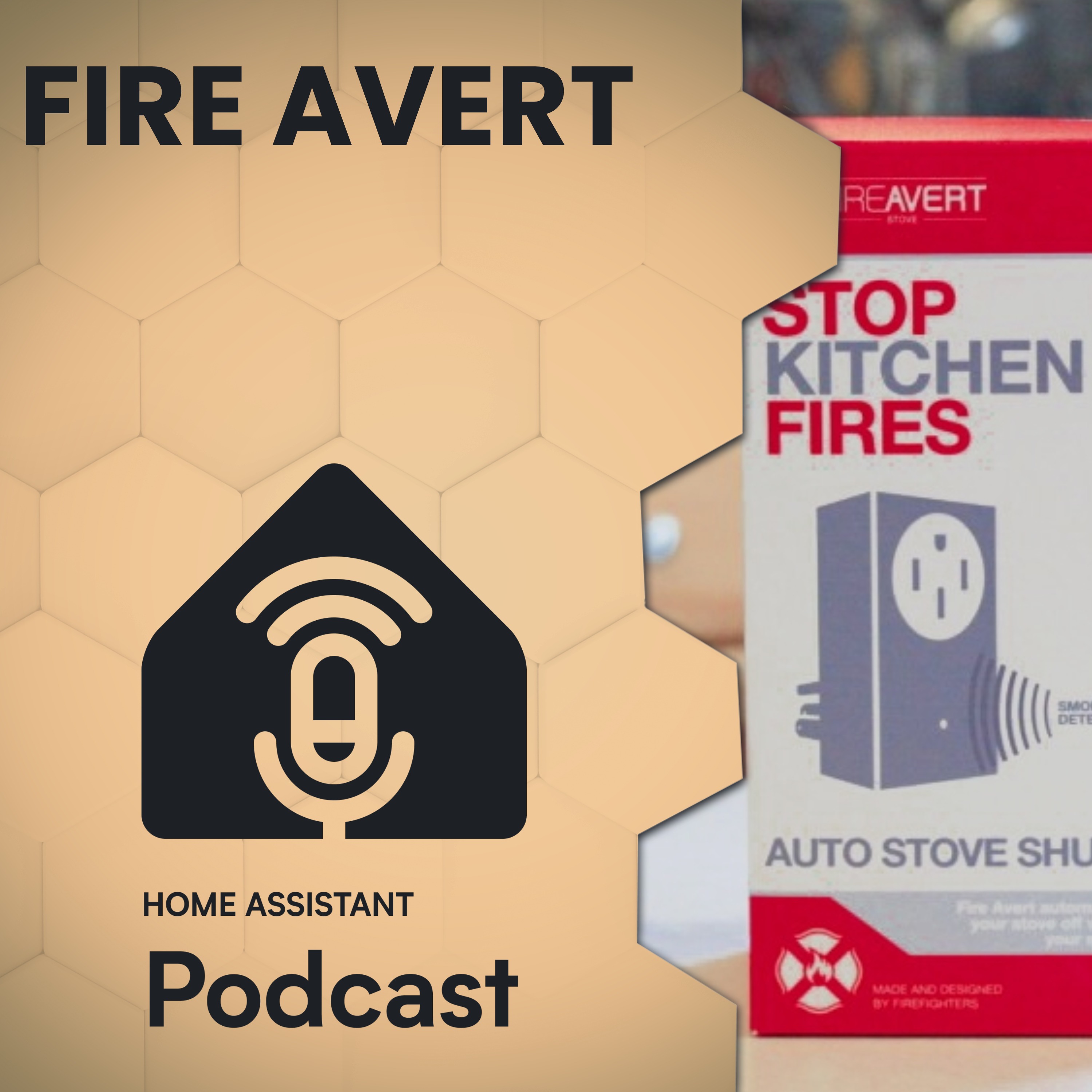
How FireAvert wants to prevent house fires with a smart home twist
· 48 min
Kapitelklicken springt direkt hin
Shownotes
<p><span>We’re sitting down with Nick and Larsen from FireAvert to talk about how FireAvert aims to stop house fires, and how they can tie into smart home systems like Home Assistant</span></p><p><a href="youtu.be/C1q_R1Ddtbo"; rel="nofollow">Watch this episode on YouTube</a></p><p><span>Show notes for this episode are available at </span><a href="homeassistant.fm/HA231"; rel="nofollow">homeassistant.fm/HA231</a></p><… the Podcast</strong></p><p><span>Get early-access to episodes and an ad-free feed by supporting our Patreon.</span></p><p><a href="homeassistant.fm/patreon"; rel="nofollow">homeassistant.fm/patreon</a></p>&l… your story</strong></p><p><span>We wouldn't be able to do this podcast without community members and home automation enthusiasts sharing their stories. To register your interest to come share your home automation journey, head over to </span><a href="homeassistant.fm/"; rel="nofollow">homeassistant.fm</a><span> and click </span><a href="homeassistant.fm/guest-registration"; rel="nofollow">share your story</a><span>.</span></p><p><br></p><p><strong>Chapters</strong></p><p><span>00:00:00 Intro and Sponsors</span></p><p><span>00:04:00 What FireAvert Does</span></p><p><span>00:08:00 Technical Challenges and Detection</span></p><p><span>00:12:00 Form Factor and Installation</span></p><p><span>00:16:00 Accuracy, ML, and Notifications</span></p><p><span>00:20:00 Smart Automations and Control</span></p><p><span>00:24:00 Product Evolution and Z-Wave/LoRa</span></p><p><span>00:31:00 Risk Areas: Kitchens, EVs, Dryers</span></p><p><span>00:35:00 Water Leaks and Mitigation</span></p><p><span>00:39:00 Startup Lessons and Team</span></p><p><span>00:43:00 Home Assistant Dev and Roadmap</span></p><p><span>00:46:00 Global Availability and Wrap-up</span></p><p><br></p><p><strong>This episode was made possible thanks to our sponsors</strong></p><p><a href="nabucasa.com/"; rel="nofollow">Home Assistant Cloud by Nabu Casa</a></p><p><span>Easily connect to Google and Amazon voice assistants for a small monthly fee that also supports the Home Assistant project. Configuration is via the User Interface so no fiddling with router settings, dynamic DNS, or YAML.</span></p><p><br></p><p><a href="thesmartesthouse.com/"; rel="nofollow">Zooz</a></p><p><span>If you're looking to upgrade your smart home - you can’t go past Zooz! Zooz offers a range of affordable and innovative devices, including water leak sensors, water valve controllers, smart plugs and scene controllers.</span></p><p><span>For the best prices on all Zooz products, head over to </span><a href="thesmartesthouse.com/"; rel="nofollow">thesmartesthouse.com</a></p><p&… href="apolloautomation.com/"; rel="nofollow">Apollo Automation</a></p><p><span>Apollo Automation are the makers of open source smart home sensors built for the Home Assistant ecosystem. They're an official Open Home Foundation commercial partner and their devices are built with local control, privacy, and reliability in mind, giving you full control and flexibility right out of the box.</span></p><p><br></p><p><strong>Products Discussed</strong></p><p><span>FireAvert Gas Auto Shut-Off: </span><a href="amzn.to/4vLz0rl"; rel="nofollow">amzn.to/4vLz0rl</a></p><p>&l… href="amazon.com/shop/homeassistantpodcast"; rel="nofollow"><strong>Products we Recommend</strong></a></p><p><br></p><p><br></p><p><strong>Hosts</strong></p><p><span>Phil Hawthorne</span></p><p><a href="philhawthorne.com/"; rel="nofollow">Website</a></p><p><span>Twitter: </span><a href="twitter.com/philhawthorne"; rel="nofollow">@philhawthorne</a></p><p><span>Bluesky: </span><a href="bsky.app/profile/philhawthorne.com"; rel="nofollow">@philhawthorne.com</a></p><p><a href="buymeacoff.ee/philhawthorne"; rel="nofollow">Buy Phil a Coffee</a></p><p><br></p><p><span>Rohan Karamandi</span></p><p><a href="karamandi.com/"; rel="nofollow">Website</a></p><p><span>Twitter: </span><a href="twitter.com/rohank9"; rel="nofollow">@rohank9</a></p><p><a href="buymeacoff.ee/rkaramandi"; rel="nofollow">Buy Rohan a Coffee</a></p><p><br></p><p><br></p><p><span>This episode contains Amazon affiliate links. If you click on one of them and make a purchase, we may earn a commission at no extra cost to you. As an Amazon Associate, we earn from qualifying purchases.</span></p><br/><br/>Privacy & Opt-Out: <a href='redcircle.com/privacy'>https://redcircl…;
Transkriptvom Podcast bereitgestellt · Zeitmarken springen hin
[SPEAKER_04]: Hello and welcome to Homestasin Podcast, as usual, my name is Rohanda and I'm joined with Phil. [SPEAKER_04]: Hey Phil, how are you? [SPEAKER_04]: Good. [SPEAKER_04]: And today we have two guests, Nick and Larsen, both from FireAvert. [SPEAKER_04]: Hey guys, how are you doing? [SPEAKER_04]: Hey, good.
[SPEAKER_04]: And as usual, this podcast is sponsored by Homestas and Cloud by Nabukasa. [SPEAKER_04]: For a small monthly fee, you'll unlock powerful features, like secure effortless access to your system, from anywhere, your choice of voices since off-site backups and more. [SPEAKER_04]: I'll configure from the UI.
[SPEAKER_04]: with no YAML needed. [SPEAKER_04]: It also helps support the developer of home assistant, yes, be home, and other open home foundation projects, click on the link to learn more. [SPEAKER_01]: This episode is sponsored by Apollo Automation. [SPEAKER_01]: Makeers of open source smart home sensors built for the home assistant ecosystem.
[SPEAKER_01]: They're an official open home foundation commercial partner and the devices are built with local control, privacy, and reliability in mind. [SPEAKER_01]: Almost everything they offer is works with home assistant, and may it be home certified, giving you full control and flexibility right out of the box.
[SPEAKER_01]: And the best part, they build in the open, working directly with the community to create sensors that people actually need. [SPEAKER_01]: If you're deep into home assistant or just getting started, definitely check them out at ApolloAutomation.com. [SPEAKER_04]: Alright, Larson Nick, welcome.
[SPEAKER_04]: It's great to have you guys here. [SPEAKER_04]: for folks that aren't aware. [SPEAKER_04]: We learned, fellow not learned about firevert at CES this year. [SPEAKER_04]: I think Nick, were you there? [SPEAKER_04]: You look really familiar. [SPEAKER_04]: I'm pretty sure you were there. [SPEAKER_03]: Yeah, Lars was there too, but he had to leave her really.
[SPEAKER_03]: So you may not have got him here. [SPEAKER_04]: Maybe, maybe I don't remember if I met you, Larson. [SPEAKER_04]: But thank you guys so much for coming on. [SPEAKER_04]: I know we emailed and we said, hey, let's get you guys on here and, you know, welcome. [SPEAKER_04]: For those listeners that haven't heard a firevert before, you know, in a sentence or two, can you kind of talk about what your product does, what problem it solves, and what you're a little bit?
[SPEAKER_03]: Yeah, absolutely. [SPEAKER_03]: So firevert was founded by a firefighter. [SPEAKER_03]: Pure Thorpe is the CEO and founder of firevert. [SPEAKER_03]: You can be on the podcast this evening, but [SPEAKER_03]: He basically had the idea for the product because he was getting caught out on a lot of kitchen fires.
[SPEAKER_03]: Unattended cooking is the number one cause of fires globally. [SPEAKER_03]: In North America, it's about 50% and in multifamily housing, it's about 73%. [SPEAKER_03]: So what fire avert does is it's a device that plugs in behind the stove and listens for the smoke alarm. [SPEAKER_03]: So if the smoke alarm is sounding, and the stove is turned on [SPEAKER_03]: It's listening for that smoke alarm, it'll cut power to the stove to prevent a fire from ever happening.
[SPEAKER_04]: That's awesome. [SPEAKER_04]: And I believe you have a gas version as well, right, for natural gas. [SPEAKER_03]: That is correct. [SPEAKER_03]: Yes, we have gas and two devices for electric or three and a four-prong. [SPEAKER_03]: And then also working on some international devices as well.
[SPEAKER_03]: Arson can probably explain a little bit more about those but looking to expand into some international markets this year. [SPEAKER_01]: Yeah, I remember when we were at C.S. [SPEAKER_01]: I remember the, um, the set by the lines, um, create his breakfast and there was a sign like moving into Australia and was it South Africa or when you see a little somewhere, um, Elvis is like, oh, that's cool.
[SPEAKER_01]: Like, generally our houses, anything ready for Australia. [SPEAKER_01]: And this was like one of those safety devices. [SPEAKER_01]: It's like that is such a gladiator. [SPEAKER_01]: I wish it was available down here. [SPEAKER_01]: And there it was, right? [SPEAKER_01]: I'm moving into Australia.
[SPEAKER_01]: So I was really happy to see that. [SPEAKER_02]: That was crazy going on in the CES because we kind of had our, so what we have, we have distributors we work with in Australia, and so as we, it was like the first 10 people that came through were like, it seems like two or three of them were from Australia, yeah.
[SPEAKER_02]: but he's catering to Germany, France, and the Netherlands. [SPEAKER_02]: So there's the markets where we're pursuing over there. [SPEAKER_04]: Yeah, yeah, Europe is huge into home automation as well, right? [SPEAKER_04]: And it's, uh, [SPEAKER_04]: lot of innovation coming out of there.
[SPEAKER_04]: So I mean, the concept of your product seems pretty straightforward, right? [SPEAKER_04]: You hear the alarm, you turn off the electric or gas, whatever it looks like. [SPEAKER_04]: But obviously, behind the scenes, it's probably going to be a lot more technical than that. [SPEAKER_04]: And there's a lot of engineer that goes behind it.
[SPEAKER_04]: Obviously, this is a very, very oversimplified way of putting it. [SPEAKER_04]: What were some of the technical challenges when you're building a product like this? [SPEAKER_04]: that you, that you're reinventing. [SPEAKER_02]: So many, and they continue, I should say, I think one of the biggest things is, I think you said it really well, it's so simple, but when you factor in audio and acoustics, filtering out noises and music and being able to capture that distinct smuggle arm sound, [SPEAKER_02]: That's been a really big challenge, but our algorithm has become perfected over 14 years of being a business and we've dumped a lot of R&D money into this to make it really a bullet proof product.
[SPEAKER_02]: So yeah, that's a big one. [SPEAKER_02]: Supply chain is always challenging, we've had to navigate COVID and the whole chip shortage [SPEAKER_02]: That was a crazy time, we still see ripple effects from that, but we have a good team, and a good mission behind us, I would say, that keeps us going forward.
[SPEAKER_01]: So where does the device live? [SPEAKER_01]: So you just mentioned there that you're listening for smoke alarms. [SPEAKER_01]: Where is it physically in the home to be able to listen to those and also take action to shut off gas or power to the stove? [SPEAKER_02]: Think of it like a smart plug that plugs in behind your stove.
[SPEAKER_02]: So in the Z-wave world, we're all used to smart plugs that you can control a lamp or light switch or whatever. [SPEAKER_02]: Think of our product as another smart switch that goes in your home, but it actually plugs in behind your stove. [SPEAKER_02]: So I actually have one right here. [SPEAKER_02]: It's a pretty good size.
[SPEAKER_02]: It has a relay built into it. [SPEAKER_02]: So this is for our 240-volt products. [SPEAKER_02]: So your stove normally would plug into the wall. [SPEAKER_02]: What firework does is you would unplug your stove, plug it into firework right here, and then you plug this firework device directly into the wall.
[SPEAKER_02]: So in that way, we act as kind of like a pass-through device, smart switch. [SPEAKER_02]: We have a microphone that's built into the product right here. [SPEAKER_02]: And when the smoke alarm sounds, that microphone is listening for the audible cadence and tone of the smoke alarm. [SPEAKER_02]: And when it picks up, hey, the smoke alarm's been sounding for 30, 40 seconds, it then will turn off your stove.
[SPEAKER_04]: How do you find the accuracy on that? [SPEAKER_04]: Like in terms of both false positives and negatives, right? [SPEAKER_04]: Like on how do you do you find that it's like pretty accurate or you find that there's a little bit of tweaking, [SPEAKER_02]: And the early days when we very first got started, it was like, ACDC would turn your stove off.
[SPEAKER_02]: It was like, it was kind of cool. [SPEAKER_02]: But now it doesn't do that. [SPEAKER_02]: Right. [SPEAKER_02]: We have a huge sound bank that we have collected over the years. [SPEAKER_02]: We have installed teams that kind of circumnavigate the United States. [SPEAKER_02]: and they're collecting audio from all the smoke alarms that they install into apartments.
[SPEAKER_02]: So we have this huge audio bank that we've collected, and then we also have false activations that are known to trip up the algorithm. [SPEAKER_02]: So, you know, now we have machine learning that we're putting into our algorithms, so they're just getting better and better. [SPEAKER_02]: So as we...
[SPEAKER_02]: As we see more alarms, we see more false activations, the algorithm just improves all the more. [SPEAKER_02]: So the cool thing about it is, um, [SPEAKER_02]: there's smoke alarm code that the smoke alarms have to have a specific cadence and frequency. [SPEAKER_02]: So we tune into that same code that's already there for the smoke detectors.
[SPEAKER_02]: So the smoke alarm manufacturers abide by that regulation that's already in place. [SPEAKER_02]: It creates a stable playing field for us. [SPEAKER_03]: Another note there, we talk about the firebird device [SPEAKER_03]: When we look at the smart home space too, it also acts as a smoke alarm, like notification device.
[SPEAKER_03]: So if you didn't have a smart smoke alarm, the firevert could then take the place of that incentive notification anytime a smoke alarm is sounding in addition to doing that column stove. [SPEAKER_03]: So that's another added benefit of the device. [SPEAKER_02]: Yeah. [SPEAKER_02]: We like to call our device a Swiss Army knife of sensors.
[SPEAKER_02]: There's really like three different end points that you can grab onto. [SPEAKER_02]: There's the listening device that Nick alluded to. [SPEAKER_02]: So we can listen for the sound of the smoke alarm. [SPEAKER_02]: And as you're setting up our device on your hubs, your Z-wave hubs. [SPEAKER_02]: You can tune in, like you could literally make our device like a smoke detector.
[SPEAKER_02]: So whenever your smoke alarm sounds in your home, whether it's related to your stove or not, we will notify you. [SPEAKER_02]: We also have a current sensor built into the product. [SPEAKER_02]: So we can tell you anytime your stove turns on. [SPEAKER_02]: So if you have a grandparent or parents that are aging in place and they shouldn't be cooking after 8 pm at night, you can set up those rules in your ecosystems to say, hey, don't allow the stove to ever turn on at this time.
[SPEAKER_02]: And if it does, notify me. [SPEAKER_04]: Um, put a program I just want some tea and you're just like, no, I'm so happy. [SPEAKER_02]: Exactly. [SPEAKER_02]: Yeah. [SPEAKER_02]: So yeah, that's a huge market for us is the senior living communities. [SPEAKER_01]: Is the relay in there controllable?
[SPEAKER_01]: Like if you've now you've got it on a separate network, can I then, if I'm going away on holiday or the house is armed because we're away, can I then kill power to the stove before it gets in and on? [SPEAKER_02]: That was the third pillar I was getting to. [SPEAKER_02]: So the third one is it's an actual smart switch itself.
[SPEAKER_02]: So that I know of where the only plug-and-play 240 volt switch here in the US where you can actually control your stove. [SPEAKER_02]: So if you've got your own on vacation, that's a great example. [SPEAKER_02]: How many of us have gone on vacation and were like five miles down the road and it's like, [SPEAKER_02]: Honey, did you turn this over?
[SPEAKER_02]: Yeah, it's like you're paranoid the whole weekend because you don't know if your stove's off or you know, maybe you've got pets at home and the dogs jumping up and bumping the knobs or something, so. [SPEAKER_02]: really it's that piece of mind and with those three end points, it being a switch, you can tie in and create rules around like, you know, create geo-fensing rules.
[SPEAKER_02]: Every time I leave my house, you know, this arm, or arm I still, like, turn it off. [SPEAKER_02]: So there's a lot of cool things you can do, especially with this DIY community. [SPEAKER_02]: It's [SPEAKER_02]: they have a lot of opportunities. [SPEAKER_04]: And are you exposing the power consumption as well?
[SPEAKER_04]: Like I know, I know you, you monitor it, but are you exposing that through Z-Wave as well? [SPEAKER_02]: Uh, yes, if it is on, we will notify you and like you, like on my fiber, I've got it plugged into my space heater. [SPEAKER_02]: So I can check it in anytime and be like, oh, my space heater's on.
[SPEAKER_02]: Like in the bath. [SPEAKER_03]: Ron, is your question more towards consumption? [SPEAKER_03]: Like how much power is it consuming? [SPEAKER_04]: Yeah, because a lot of people like to monitor that, right? [SPEAKER_02]: We don't support the metering command class. [SPEAKER_02]: That's going to be like our version two of the product, zero product.
[SPEAKER_02]: but we do send notifications of when it's on and off. [SPEAKER_04]: So, I mean, from a fire use case perspective, that makes total sense, right? [SPEAKER_04]: It's like, and again, for me, it's also that big to a Phil set about that paranoia of, I leave. [SPEAKER_04]: I'm going on vacation and it's like, and literally every time I travel, it's this, right?
[SPEAKER_04]: Like, did I turn off the stove? [SPEAKER_04]: And to the point where I've turned back several times to go in and be like, okay, I gotta turn it off. [SPEAKER_04]: Let's go ahead and go ahead and check and it gets all off, so. [SPEAKER_02]: Yeah, or if you're managing like multi-family or if you have a duplex, you have a vacation rental, whatever a cabin, and you just want peace of mind, you know, you provision it in there and you say, okay, every time I leave the house, turn it off.
[SPEAKER_04]: Yeah, yeah, why not, right? [SPEAKER_04]: It's both like for me, in my case, it's myself and my wife that would operate this dog, right? [SPEAKER_04]: And good, neither one of us home cut the gas, right? [SPEAKER_04]: Or power for, fuck those that have, that makes [SPEAKER_03]: And Larsson alluded to something else too.
[SPEAKER_03]: There he says he has one plug into his space heater. [SPEAKER_03]: So we have the one, the Firever Auto Stove Shut-Off. [SPEAKER_03]: We also have an Auto Appliance Shut-Off. [SPEAKER_03]: And that's something that was very well received at CES when we brought in there. [SPEAKER_03]: But that can work for your space heater's toaster ovens.
[SPEAKER_03]: Um, in a machine shop, we're like a, they are like a garage shop, you have your, uh, 3D printers, small CNC machines, like all of those devices can be plugged in and then you could, you would have the ability to check in on those or know that they will be powered down if, if they started to go, hey, wire.
[SPEAKER_04]: Yeah, which makes sense. [SPEAKER_04]: Cause those are higher-ampurched devices, right? [SPEAKER_04]: Typically, I'm thinking space heater specifically, right? [SPEAKER_04]: It's, uh, uh, so that would be, again, depending on what it pulls, you probably don't necessarily want to, or higher-wattage devices, sorry.
[SPEAKER_04]: You don't necessarily want it to, uh, be on any other type of switch. [SPEAKER_02]: So these are the smaller one-twentable products. [SPEAKER_02]: So you've got actually two outlets on either side. [SPEAKER_02]: So like in your kitchen, you could put one side in your microwave and one in your toast drum, et cetera.
[SPEAKER_02]: Yeah, yeah. [SPEAKER_02]: Or in my wife's case, a curling iron. [SPEAKER_04]: I was like, I was like, I heard the girl I got. [SPEAKER_02]: That's the one that scares me the most honestly. [SPEAKER_04]: Yeah. [SPEAKER_04]: Same. [SPEAKER_04]: What kind of stuff did you guys run into once you develop the product and you built this thing and like hey great this is super cool.
[SPEAKER_04]: It's a good use case As you mentioned the founders firefighter and which part of it were you like oh we didn't even think of that like I went where when you go into the field and when you see how people are using it what were some of those kind of edge cases that you that you see it's all [SPEAKER_02]: an evolution that's that's what I would say my experience with the company has been I've been with fiber for about eight years now and really it's like we started with the simple product the product and it's simplest form we call it and the early days we called it Boy Scout Technology and in the sense that smoke proceeds fire and our product simply reacts or responds to that smoke smoke local arm sounding.
[SPEAKER_02]: But then, as we kept, you know, I'd go on installs. [SPEAKER_02]: We've done over 100, no, probably we probably have over a million devices. [SPEAKER_02]: We do 100,000 devices every year. [SPEAKER_02]: As we would go into apartments, tenants would start asking questions like, hey, what is that do?
[SPEAKER_02]: What are you putting behind my stove? [SPEAKER_02]: And then they wanted notifications. [SPEAKER_02]: So I really it's been like this evolution of listening to our customers and going into their homes into those tenant homes and they were requesting notifications. [SPEAKER_02]: And so that was what's pushed our initiative [SPEAKER_02]: what we call as firework pro, where we are actively collecting data on the product itself, and then we send out notifications to tenants whenever they want to sign up for those notifications.
[SPEAKER_02]: That's been really cool. [SPEAKER_02]: And then, Z-Wave, Z-Wave has just enabled that even more. [SPEAKER_02]: That let us down the road of the DIY customers and the home security or our product really adds peace of mind to existing home ecosystems that people are already using. [SPEAKER_02]: So...
[SPEAKER_02]: Yeah, that's been a cool thing to observe and kind of go down the path of the product evolution. [SPEAKER_04]: Because you do Laura and Z-Win, right? [SPEAKER_04]: Those are the two that you support? [SPEAKER_01]: Yeah, yep. [SPEAKER_01]: On the z-way front, are you also reacting to the smoke detector command class sending events back to you?
[SPEAKER_01]: So I know you mentioned that you can send, like, when you hear a smoke detector going off, you can make that as a smoke alarm going off on the network. [SPEAKER_01]: If another z-way of smoke alarm is going off, can you then respond to that event and then shop down before you hear on the microphone?
[SPEAKER_02]: Yeah, yep, and that all just comes down to how you want to provision your ecosystem and set up automations within your environment, but yeah, we can respond to any of those things. [SPEAKER_02]: One of the big ones that we've been working with several access control companies and manufacturers.
[SPEAKER_02]: It's appealing for them because if you think about that use case when you leave on vacation You know what if before you even get down the street you get notified. [SPEAKER_02]: Hey, nobody else is in the house or like you have proximity sensors in your home And as soon as everyone like as soon as your proximity sensors detect that there's no motion in your kitchen There's no reason why your stove should be on because it's unattended.
[SPEAKER_02]: So [SPEAKER_02]: Yeah, there's a lot of different use cases I would say that revolve around that ecosystem of sensors, piggybacking off of the different technologies that are already existing. [SPEAKER_04]: Now, you guys were also on Shark Tank. [SPEAKER_04]: I saw, I just, like, I just Google, you know, [SPEAKER_04]: And I saw a picture of you guys there, you're presenting it.
[SPEAKER_04]: I think it was Peter that was doing it. [SPEAKER_04]: What was that whole experience like for, I mean, I mean, I'm either of you guys were there, but what was it as a team being like, hey, this is kind of cool, right? [SPEAKER_04]: Like, I think it's cool at least, but what was that like?
[SPEAKER_02]: Yeah, Peter's really the one to take the heat on this one, but, [SPEAKER_02]: He tells it the best, but it's all... [SPEAKER_02]: It's all a show, you know, like there's a reason it's on TV and it's hyped up for us as a company, it was just, it was great publicity, it was pretty interesting, like when they, every time they would air the show, they start on the East Coast, like the East Coast time and then Central time and mountain times and then West Coast, each time they would air it, [SPEAKER_02]: Yeah, as a team it's kind of stressful because it's like oh, it's going to be a big wave or you know what what's going to happen So and everyone's about like we'll we'll continue to get I don't know if they're still airing it, but But we'll see those up ticks Yeah, so yeah, I think the publicity was was good You know, they they try to put you on the spot and sure
[SPEAKER_02]: But I think it was a positive experience. [SPEAKER_04]: And maybe this is more of a question for Peter. [SPEAKER_04]: But did it change kind of how you guys think about the product at all or was it like, hey, this is our ethos. [SPEAKER_04]: This is our mission. [SPEAKER_04]: We've got it already.
[SPEAKER_04]: And we're looking for investment looking at kind of thing. [SPEAKER_02]: I mean, I think, I think saying you went on shark tank is always a boost of confidence for people and I think we all, as we got to trade shows, it's a fun talking point. [SPEAKER_02]: So I think in a lot of ways, just the validation behind someone of that, um, [SPEAKER_02]: In that business or in a different industry, Peter did a deal with Lori and we saw the opportunity for KVC.
[SPEAKER_02]: So I think it's just more than anything I would say and still confidence that what we're doing is good and has potential for an impact. [SPEAKER_04]: Well, for sure. [SPEAKER_04]: I mean, if there's somebody that's saying, hey, I'd like you to take you to a bigger market kind of thing, right?
[SPEAKER_04]: And it's like, we'll get it. [SPEAKER_04]: There's probably something there. [SPEAKER_02]: Yeah. [SPEAKER_02]: Yeah. [SPEAKER_02]: For sure. [SPEAKER_02]: Yeah. [SPEAKER_02]: Each time we, you know, talk to investors, we learn something new. [SPEAKER_02]: We learn opportunities or industries that that our technology could be applicable, you know, Nic alluded to.
[SPEAKER_02]: to an industrial use case for our product, which we're working on several different product lines for that industrial space specifically. [SPEAKER_02]: So that's exciting and that's still to come. [SPEAKER_02]: So I'll look for those product launches when they come out. [SPEAKER_01]: Now, if someone's listening today and they go, you know what, I want my smartphone to be able to turn off, you know, my appliances the same way that I can control my lights and control my media center.
[SPEAKER_01]: If someone wanted to look at doing a smartphone designed around fire safety. [SPEAKER_01]: Where do you think they should start? [SPEAKER_01]: Like it's easy for us to go, okay, we need to plan these switches for lights or these areas for motion sensors. [SPEAKER_01]: But what should someone make their building in your home decide or try and look out for in the early stages of a build to be more ready for a smart home and preventing fires?
[SPEAKER_02]: We always tell our customers that your smoke alarm is your first line of defense. [SPEAKER_02]: So you think about your smart phone, if it's on silent mode, at night in the middle of the night, it's not gonna wake you up. [SPEAKER_02]: So starting with your smoke detectors, that's really step one, make sure you have really good smoke alarms or smoke detectors that work.
[SPEAKER_02]: And make sure they work. [SPEAKER_02]: I get it's important to do the tests and make sure your batteries are plugged in. [SPEAKER_02]: And then I would say our product would be right behind that. [SPEAKER_02]: We piggyback on the technology that's already there. [SPEAKER_02]: you know proximity sensors are nice that they improve that access control there's a couple we worked with the company early on I'm forgetting the name but it would actually shut the doors in your home when there was a fire [SPEAKER_02]: So a lot of people think that you should open your doors in your house so you can evapire.
[SPEAKER_02]: But the important thing is that all your doors are shut because a fire can actually stay contained in your house. [SPEAKER_02]: Because most doors are fire rated. [SPEAKER_02]: It'll stay behind. [SPEAKER_02]: that door for a long time. [SPEAKER_02]: So as long as you don't open oxygen to all your house, it's going to contain the fire to that one room.
[SPEAKER_02]: So yeah, Nick, do you have any thoughts on that? [SPEAKER_03]: No, yeah, I was going to bring up the doors. [SPEAKER_03]: We're working a partnership with another door company that's looking at how to plan that, how do you navigate an evacuation plan, but also close doors to keep it room and content.
[SPEAKER_03]: If there is a fire, but yeah, I think Larsen said it best. [SPEAKER_03]: The smoke alarm is your first line of defense that's going to give you the alert. [SPEAKER_03]: And then I think fire of it would be the next thing or the backup because we can also send those alerts. [SPEAKER_03]: If it's not a smart smoke alarm [SPEAKER_03]: Yeah.
[SPEAKER_02]: Yeah. [SPEAKER_02]: There's a really cool company auto slide. [SPEAKER_02]: We've been in communication with them for some time, but they actually have automation where they can control windows. [SPEAKER_02]: They can close your windows or like your sliding doors. [SPEAKER_02]: So that's a really good use case for, you know, if you have to fire in your home and you want to lock everything down, shut your windows so that you don't have this floating oxygen into your home.
[SPEAKER_02]: And then you want to unlock your front door at least so you can do that. [SPEAKER_03]: Let's set that automation up. [SPEAKER_03]: The smoke alarm sounds the front door on locks was easy to get out. [SPEAKER_03]: Yeah, I was going to say it, and in terms of like risk, right, we look at, and this is these are U.S. base statistics, but kitchen fires the number one, I mentioned 50%, then followed by that, but way down would be electrical.
[SPEAKER_03]: I don't have the percentages off of hand, and then after that would then be dryers. [SPEAKER_03]: So if you're going to tackle things in order of, uh, [SPEAKER_03]: you know, the risk factor that would be the next way to look at it. [SPEAKER_03]: I think one that's creeping up as I've been kind of looking at the statistics slightly is EV charges or you know EV charging in the home.
[SPEAKER_03]: That's another area where this, I mean our solution can be relevant there, right? [SPEAKER_03]: It's a 240 plug. [SPEAKER_03]: I think it would require some additional [SPEAKER_03]: You know, automation or additional sensors to be whatever that EB Charger is to work properly. [SPEAKER_03]: But those are the other baby factors that you would want to consider to make the home as safe as possible and mitigate as much fire risk as possible.
[SPEAKER_01]: What about dryers? [SPEAKER_01]: Do you find like, you know, people having like, mean to fires with them, you know, trying or even pivoting to maybe even flood protection, you know, like to detect that there's flood, because I'm thinking you've already got you're monitoring power, you're monitoring smoke, you've got gas and electricity, and the next thing element coming into your house is water, right?
[SPEAKER_01]: I've thought about pivoting to water as well. [SPEAKER_03]: Yeah, so we do offer like leak detection and watershed off solutions as part of our fire of repro system, obviously it's not our core competency, but it is a very good ad on and again, just as built value around the ecosystem of fire of Earth, for sure.
[SPEAKER_03]: I mean, and then you ask the question about dryers, right? [SPEAKER_03]: And don't quote me on the exact number of stats, [SPEAKER_03]: the annual number of kitchen fire instances is somewhere near between like 45 and 50,000 occurrences annually. [SPEAKER_03]: I think electrical is somewhere in the teens like 12 to 15,000 occurrences annually and then dryers is somewhere around 2 to 3,000 instances.
[SPEAKER_03]: So again, in terms of risk level, that's kind of where those things stack up. [SPEAKER_03]: But yeah, I think water detection would be that next [SPEAKER_03]: risk it poses and also the potential cost involved in water damage. [SPEAKER_01]: Now if you're looking to upgrade your smart home, you can't go past the zoos.
[SPEAKER_01]: The zoos have just released their brand new Zwave long range RGBW dimmer. [SPEAKER_01]: You can now automate 12 to 24 volt LED strips with full brightness and color control. [SPEAKER_01]: It's designed to easily install the Hydroit, memory rules which, or you compare it with your Zwave scene controller for more flexibility.
[SPEAKER_01]: You can use the RGBW dimmer for accent lighting, under cabinets, behind screens, or wherever crazy you can think to put an RGBW light strip. [SPEAKER_01]: Zeus are also an official works with home assistant partner, helping network cusser by providing long-range devices for testing the home assistant connect ZWA2 radio, so you know you're in friendly hands.
[SPEAKER_01]: Zeus offer a range of affordable and innovative devices, including water [SPEAKER_01]: There's N78 high power relay, allows it to control and monitor higher load appliances, up to 40 amps, which is perfect for pool pumps, air compressors, and other high power outlets. [SPEAKER_01]: So for the best prices on all zoos products head over to thesmartestowse.com.
[SPEAKER_01]: That's thesmartestowse.com. [SPEAKER_04]: Those are some, again, that's a lot of fires, right? [SPEAKER_04]: Let's, uh... [SPEAKER_04]: And even like, I know like tool batteries is a big one. [SPEAKER_04]: I know somebody that actually lost their home to a fire because of one of their tool batteries, just.
[SPEAKER_04]: lighten up, blown up, whatever, and middle of the night, obviously chemical smoke all of that, right? [SPEAKER_04]: And it's, uh, they were lucky to get out. [SPEAKER_04]: And it's, you know, stuff like that is very important to consider, right? [SPEAKER_04]: I mean, I just simply, I have an automation with something with a monitor switch, where it's like, hey, the power starts dropping, cut the power, and, and, you know, it's filled enough, right?
[SPEAKER_04]: I don't need to overcharge it, and those kind of things for those kind of batteries. [SPEAKER_04]: But, [SPEAKER_04]: It's, uh, I think there's a lot people can be doing just people don't think of, right? [SPEAKER_04]: Um, just even iPhones or Samsung for whatever your phones and all these kind of devices that people just like then.
[SPEAKER_03]: Yeah, batteries are scary. [SPEAKER_04]: Yeah, it's funny. [SPEAKER_04]: I always think twice especially what if I'm like DIYing something or like building my own thing But like how I want to power it right because again batteries to your point Especially like listen my look or listen phosphate batteries whatever those like the cheap Once you get from like all the express or what have you [SPEAKER_04]: Even Amazon stuff.
[SPEAKER_04]: I don't know how much I trust those to not blow up, right? [SPEAKER_04]: So it's yeah, I'd rather have it just powered in rather than actually on battery unless it needs to be. [SPEAKER_01]: When you guys were first starting, uh, firework, we first joined firework. [SPEAKER_01]: What was your, um, uh, when you realized you're getting traction, what was you like, oh, this is no just an idea.
[SPEAKER_01]: We're actually going to make a product out of this. [SPEAKER_01]: I think it was around a turning point, you thought? [SPEAKER_02]: I wanted to move down to the garage. [SPEAKER_02]: That was when it has been nice. [SPEAKER_02]: Right, I met Peter when he was working in his basement. [SPEAKER_02]: So we were literally distributing out of his garage.
[SPEAKER_02]: So yeah, I think when I was like, OK, we've got to move out of the house without growing the house. [SPEAKER_02]: That was when it was like, oh, man, we're going to scale this. [SPEAKER_02]: And I think hiring sales teams behind it for a long time. [SPEAKER_02]: Peter was the driver behind all the sales and I was kind of more technical support.
[SPEAKER_02]: So I think once we started dedicating sales reps toward accounts and that was kind of the beginning for [SPEAKER_02]: for growth. [SPEAKER_02]: So it's been good. [SPEAKER_02]: We've seen a lot of growth and we're excited for the future and more growth. [SPEAKER_01]: Yeah, now we have a lot of listeners that love, you know, DIY and things, prototyping with things like ASB Home, [SPEAKER_01]: And then a whole bunch of people, you know, maybe, then what I think, you know, how do I get this be a commercial product?
[SPEAKER_01]: If you had some advice for anyone listing that's starting, there are little projects or what And once they make it into a business, would you have any advice for them? [SPEAKER_02]: start in your garage. [SPEAKER_02]: No, it's really good and and get your hands dirty. [SPEAKER_02]: You know, I think a lot of times people get overwhelmed at the complexity of starting a business or starting their own thing.
[SPEAKER_02]: Start really lean. [SPEAKER_02]: Don't go by a big warehouse thinking the sales are going to come. [SPEAKER_02]: I would say, you know, validate an idea and solve a real problem. [SPEAKER_02]: That's something I've been reminded of over and over why firever is such a good product. [SPEAKER_02]: As you think about how big that pain point is when it does happen, it's, you know, it displaces families, it [SPEAKER_02]: destroys homes and, you know, those are memories that people don't forget and so if we can prevent that from happening, you know, that's a big problem that we're solving.
[SPEAKER_02]: So, yeah, I think that would be my advice is identify a problem, stay really lean and generate sales, go, go prove it to people that you really are solving a problem for them. [SPEAKER_03]: I would add to that finding good people to put around you, whether that's people who are working for you or people who are now working with to help you, whether it's investors or just consultants, I think, a lot of the success of Firever has come from [SPEAKER_03]: The people that Peter has surrounded himself with, and the people that he has employed at the company, and so, you know, that I think that's a testament to how he chose to run the business, and we've got a great team, so if somebody's looking to start it, that it starts with the people for sure as years you're scaling.
[SPEAKER_04]: Now, I want to know a little bit about your guys' homes and how you use, well, not only firebird, but just home automation as a whole, if you do, I know Larsen, but while we were talking earlier, you said you do have homelessness and set up. [SPEAKER_04]: Are you doing anything with it, anything around your house?
[SPEAKER_02]: Yeah, it's funny, because my wife still unplugged she unplugged fire from the wall every night. [SPEAKER_02]: And I'm like, honey, we just, we have an automation that does this, so it's been indoctrinated in our family to always check stoves. [SPEAKER_02]: And we're always, we're obviously hypersensitive to fires because we're sure thinking about them all the time.
[SPEAKER_02]: Yeah, I'm continue like every year, I get smarter and smarter in my home, I should say. [SPEAKER_02]: So, home assistant is actually new, newer to us since we developed Z-Wave this year. [SPEAKER_02]: So, typically our sales and efforts have been in the multi-family space. [SPEAKER_02]: So, it's been fun though, like I downloaded home assistant, got one of the hubs, and [SPEAKER_02]: I've been adding switches and like I've got the fiber device plugged in, I've got access control.
[SPEAKER_02]: So it's been cool to kind of infuse that into my life as well. [SPEAKER_02]: So yeah. [SPEAKER_01]: Where were you before home? [SPEAKER_01]: Is like would you have an ecosystem that you were tied into? [SPEAKER_02]: I personally didn't, so this has been really fun for me. [SPEAKER_02]: I mean, I'm deep in the tech world, but my home hasn't been equipped with it until introducing Z-Way.
[SPEAKER_02]: So, yeah, it's been fun. [SPEAKER_02]: Nice. [SPEAKER_02]: There you go. [SPEAKER_02]: It's the Z-Way of Change Your Life. [SPEAKER_04]: Yeah. [SPEAKER_04]: It is. [SPEAKER_04]: Nick, have a yourself. [SPEAKER_03]: Yeah, I would say I'm a novice head best as well. [SPEAKER_03]: Like, I mean, I've dabbled, I was telling Phil before we started recording, just purchased a home and now that I know about home assistant and ecosystems for smart home, like I'm definitely gearing up for building that, but previously, I had a lot of smart devices that didn't, [SPEAKER_03]: work together, weren't connected through one ecosystem.
[SPEAKER_03]: And so my pain point was like, yeah, I have all these apps and I hate this. [SPEAKER_03]: And so I wrote, set up is best I could. [SPEAKER_03]: But yeah, I'm definitely learning and excited to kind of build out a new project in my new home using Homocystin and all of the devices that come along with that.
[SPEAKER_02]: Yeah, I will say home assistant, as we're doing the development, like home assistant was the one ecosystem that just like our product works seamlessly with like out the gate. [SPEAKER_02]: We like the other, some of the other ecosystems we've had to build subdrivers for and it's been a little bit more complicated, but home assistant has been like glitch free, so that's been that's been awesome.
[SPEAKER_04]: Yeah, it's cool to see that as a talking to somebody who's building the products, right? [SPEAKER_04]: That it just like, hey, just kind of worked, right? [SPEAKER_04]: So it the nice thing as a user as a consumer of products, right? [SPEAKER_04]: Is that, you know, having that standard and running something like homelessness and just means, yeah, and I'll probably just work, right?
[SPEAKER_04]: And probably don't need to do a ton of tweaking and all that stuff, but. [SPEAKER_02]: Yeah, and it's really cool. [SPEAKER_02]: Like you can get as you can geek out about it as much as you want or you can keep it as simple as you want. [SPEAKER_02]: So that's been really cool and fun for me to experience home assistant firsthand.
[SPEAKER_02]: So. [SPEAKER_02]: Yeah, awesome. [SPEAKER_03]: Thanks for me by what was really nice is that it's kind of I guess you could say ecosystem agnostic right like I'm not married until one thing if there's a smart home device that I like that's on a different a radio protocol it's still can work inside of home assistant and so that's kind of one of the reasons that I've been really motivated to go that route.
[SPEAKER_01]: What do you guys say that you're using homes in the office as well? [SPEAKER_01]: That's just like a test bit or it's actually powering like automating the office. [SPEAKER_02]: Yeah, we have several of our doors. [SPEAKER_02]: We've got security access control that are managed by homocystant.
[SPEAKER_02]: And then we have test, test switch it, like test stands and switches that we're using. [SPEAKER_02]: So a little more work focused, but and space heaters there, we've got guys that have cold feet in the winter and they're always leaving their space heaters on. [SPEAKER_02]: It's nice to have a fighter and home assistant there to to ensure everything's turned off.
[SPEAKER_01]: So yeah, I'm just typing the energy, all right, like that. [SPEAKER_02]: Oh yeah, for sure. [SPEAKER_04]: Yeah, you literally have the combination of the most inefficient things to tell you this electricity or edits that as your test bed, but it's cool to hear that you're actually using home assistant in your testing as well, right?
[SPEAKER_04]: So it's for users out there, at least I don't listen to us, know that, hey, it's a consideration at minimum on your side, right? [SPEAKER_04]: And [SPEAKER_02]: Yeah, from a day one, we home assistant was what we basically developed our product on, so it's been very, very useful tool for us.
[SPEAKER_02]: That's awesome. [SPEAKER_04]: Why, why? [SPEAKER_04]: So again, I talked about this earlier saying you have Laura and you have Z-Wave. [SPEAKER_04]: what drove the choice of protocols are. [SPEAKER_04]: I'm just curious, because usually when people build a product, they build on Wi-Fi, right?
[SPEAKER_04]: It's kind of or Bluetooth. [SPEAKER_04]: It's kind of low barrier of entry. [SPEAKER_04]: You don't need any custom chips or anything like that. [SPEAKER_04]: And in Zigbee's cheap, [SPEAKER_04]: Z-wave, I would argue, is more advanced, but way more complicated. [SPEAKER_04]: How did you determine that that's what you wanted to use?
[SPEAKER_04]: And Laura, as well, from a tech stack perspective. [SPEAKER_02]: Yeah, it kind of goes back to what I was talking about, the evolution of the product, and understanding our customer base. [SPEAKER_02]: We continued that continues to evolve as we build business relationships and customer relationships.
[SPEAKER_02]: So in the early days, when we started going to trade shows, [SPEAKER_02]: Our product really resonated in the multi-family space. [SPEAKER_02]: Yeah, so we had big real estate ownership groups that would come through and they would meet with us with our booth and I was like, man, I have, you know, if you had a big real estate company that has a hundred thousand units.
[SPEAKER_02]: and they're portfolio. [SPEAKER_02]: They're having anywhere from like 10 to 20 fires a year that are big fires. [SPEAKER_02]: And so a lot of them, they, you know, if they're big enough, they have to be self-insured. [SPEAKER_02]: Insurance companies like they don't want to touch them because they're too big.
[SPEAKER_02]: So we resonated really well with multi-family and ownership groups that have these big apartment complex portfolios. [SPEAKER_02]: That was kind of where product started and in our customer-based started and a lot of those apartments don't have Wi-Fi. [SPEAKER_02]: They don't have a blanket Wi-Fi for all the [SPEAKER_02]: And so pretty early on, we realized why if I wasn't a great option for us in terms of installing all the devices like you'd have to get all the tenant credentials and then provision that Wi-Fi device.
[SPEAKER_02]: Anyway, it just became really clunky so that was what drove us to explore other other options where we wouldn't necessarily need a local network. [SPEAKER_04]: Um, yeah, to kind of build it over the top of what people already have, right? [SPEAKER_02]: So you could like a tent or like a building owner can manage it or the facilities team there can manage it rather than giving the, that's who we're interfacing with was the owners and the property managers and so I was like, man, these guys need tools and they need, you know, one or two gateways versus, um, you know, a gateway in every single unit and that's what [SPEAKER_02]: And then Z-Wave, Z-Wave is just further down the evolution we started talking with security companies who have built platforms on Z-Wave in the single family space and our product seems to, we can see how we can enhance those already existing security systems by bringing
[SPEAKER_04]: Yeah, that makes sense, because I think who's at alarm.com, I think is the way if I'm not mistaken, and AD, maybe? [SPEAKER_04]: Is it? [SPEAKER_04]: Yeah. [SPEAKER_04]: Yeah. [SPEAKER_04]: Yeah. [SPEAKER_04]: That totally makes sense, because then you can kind of integrate it as part of a platform, even from there, maybe potentially as a managed offering from those folks, or me as a user can say, hey, I just want this as part of my DIY system, and during the homelessness and build it out that way.
[SPEAKER_02]: Yeah, what Wi-Fi is coming just like it will come. [SPEAKER_02]: I think we're just, it's all driven by sales and interests. [SPEAKER_02]: So it's definitely on the road map for us. [SPEAKER_01]: From a technology side, when you're thinking of implementing Wi-Fi, I know we have a lot of issues in the DIY community of the cloud, right?
[SPEAKER_01]: Like we have a regular segment of our podcast, and the Cloud Strucks again, where cloud providers will offer it a service and then they realize it's actually a cost, keeping the cloud running and they shut it down. [SPEAKER_01]: Have you got ideas for Wi-Fi is it going to be local only?
[SPEAKER_01]: Are you going to? [SPEAKER_01]: implement some form of cloud for convenience, like how you're managing that sort of decision process. [SPEAKER_02]: Yeah, that's a good question. [SPEAKER_02]: I think, you know, I think we'll continue to do research on it. [SPEAKER_02]: I think if it's up to me, I would like to make it local, localize, so that it could operate.
[SPEAKER_02]: I'm just a local network. [SPEAKER_02]: like homocystins, so yeah, if we like what homocystins do earn and getting the end customer that kind of flexibility. [SPEAKER_02]: So. [SPEAKER_02]: If that's because of the app even, that's what we're going to do. [SPEAKER_01]: If there's something that Homerson can give you, right?
[SPEAKER_01]: Like, it's literally a before you go too far down the Wavari rabbit hole. [SPEAKER_01]: It's like, we would love it local. [SPEAKER_01]: Because I'm sure there's some people that aren't running even in the DIY space. [SPEAKER_01]: So I think they're not running as their way of network or as they've been at work or all or all Laura, but they still want to have you to connect it to Wi-Fi, but they don't necessarily want a cloud subscription or having to dwell out to the cloud to find out if there's a fire in their house.
[SPEAKER_02]: Yeah, that's definitely the route that we want to go with it, so yeah. [SPEAKER_01]: Well guys, thank you so much for joining us today. [SPEAKER_01]: I am really excited to see where you guys go with this. [SPEAKER_01]: I think it is such a nice... [SPEAKER_01]: It's like a part of that you go, why didn't exist?
[SPEAKER_01]: Like all this, why is it only now that we're finding out about this? [SPEAKER_01]: Particularly now that you're going into the Z-wave down that, that rhetoric, right? [SPEAKER_01]: I think that is a perfect fit for it. [SPEAKER_01]: I love the Z-wave command classes, and I think this device is perfect for it.
[SPEAKER_01]: And I'm glad that you're not just focusing on the North American market. [SPEAKER_01]: Where are you guys going to be available in? [SPEAKER_01]: What markets are you available in? [SPEAKER_03]: So right now, the US and Canada, and then Australia, Netherlands, Germany, France, is there any other countries Larson that those plugs are going to work for?
[SPEAKER_02]: So, yeah, you got Australia on there? [SPEAKER_02]: Yeah. [SPEAKER_02]: We got the UK as well. [SPEAKER_02]: That's coming soon. [SPEAKER_02]: We've got a couple of distributors. [SPEAKER_02]: We're trying to court there, but yeah, we have a product that will be used basically internationally, which is our hard-wired product, but as, like Nick said, we've developed a couple of products [SPEAKER_02]: But the cool thing about those is, as the way we've designed them, we can easily swap out plugs and take them anywhere in the world.
[SPEAKER_02]: So, yeah, if you've got anyone listening that's interested in distributing our product in other countries, we're happy to fill those calls. [SPEAKER_02]: So, yeah, it's exciting. [SPEAKER_02]: Yeah, there you go. [SPEAKER_04]: Perfect. [SPEAKER_04]: Well, thank you guys so much, appreciate your time, Nick Larson, and, and, and, you know, thanks for coming on, and thanks for talking about again, fire safety doing, and we try and talk about it once in a while, but it's nice to almost have a dedicated episode to talk about that, right, and the importance of it, and to see what you guys are doing as well.
[SPEAKER_04]: So, I really appreciate that. [SPEAKER_02]: Thank you, guys. [SPEAKER_02]: We really appreciate, coming on and the invitation. [SPEAKER_02]: Thank you. [SPEAKER_04]: Thank you. [SPEAKER_01]: Thank you.
