

Kapitelklicken springt direkt hin
Shownotes
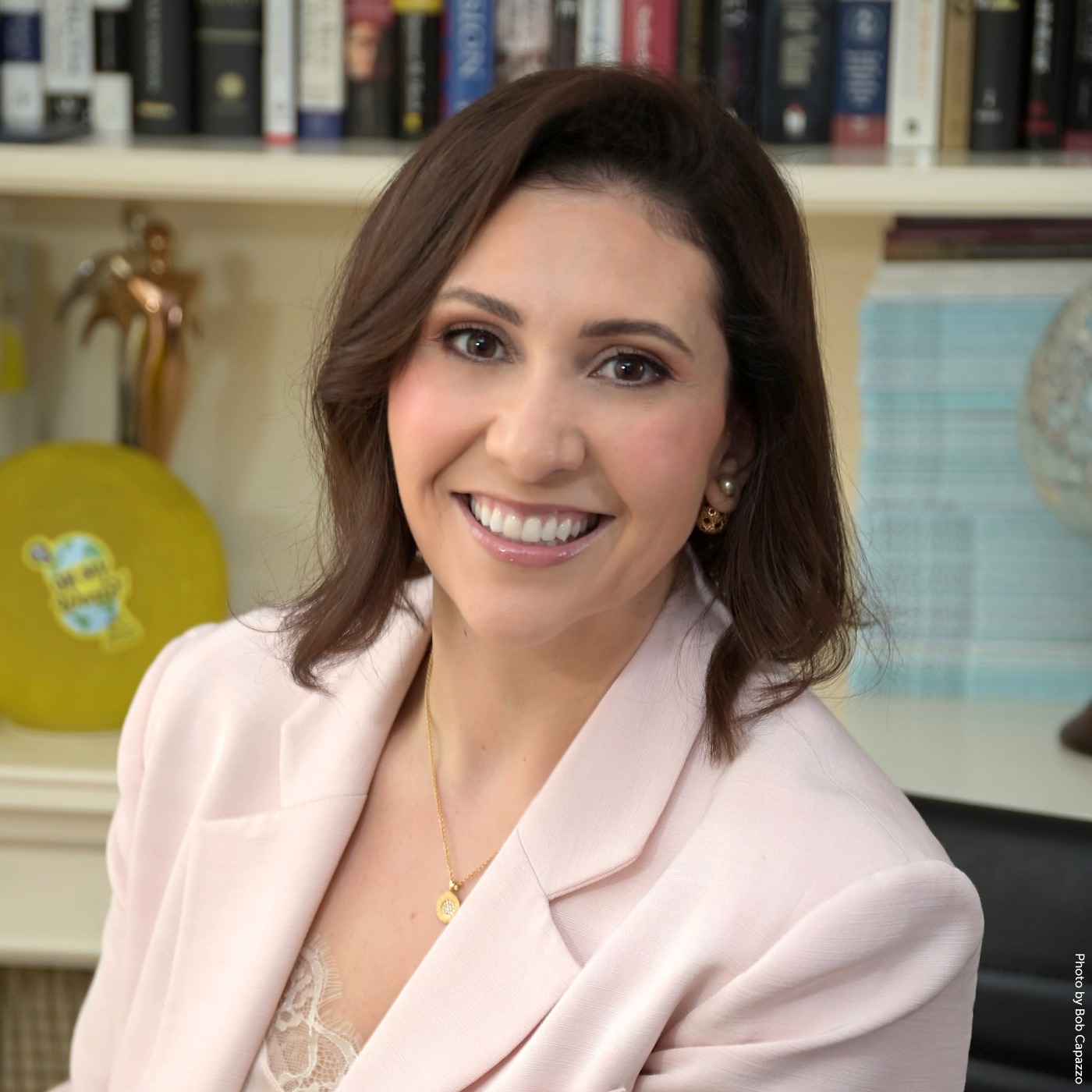
<p>Raised Christian in Connecticut after her family fled Lebanon’s civil war, Hagar Chemali learned as a teenager that her mother was Jewish. A former White House national security official and U.N. spokesperson who co-founded the Lebanon-Israel Peace Alliance, Chemali explains why she believes a peace accord between Israel and Lebanon is possible within the next two years.</p>
Transkriptvom Podcast bereitgestellt · Zeitmarken springen hin
I'm Rabbi Ammi Hirsch of the Stephen Wise Free Synagogue in New York, and this is In These Times. My guest today spent years in top national security roles in the Bush and Obama administrations, and served as a spokesperson at the United Nations. But Hagar Chemali's personal story is just as fascinating.
Raised Christian in the US after her family fled the Lebanese Civil War — when she was just a teen, Hagar learned a secret about her mother that upended many of her life's assumptions. Today, with a cross and a Magen David around her neck, Hagar proudly identifies as Christian, Jewish, and as a self-described Lebanese Zionist.
Earlier this year, she launched the Lebanon-Israel Peace Alliance to help push for peace and break down decades of legal taboos Pressure is finally mounting to disarm Iran's proxy Hezbollah, including inside of Lebanon, where the people are getting tired of being dragged into pointless war. Haggar knows that there's work to be done, and she's doing it through talks at the Munich Security Conference, appearances on MS Now, CNN, and HBO, and through her own media network, Oh My World.
Hagar Chemali, welcome to In These Times. Oh, thank you for having me, Rabbi. I'm happy to be here. I've, uh, been looking forward to this, uh, conversation for a long, long time, and very grateful that you, you made the time, uh, to speak with us. It's truly, it's truly my pleasure. I was really excited when you reached out as well, you and your team.
So thank you for having me. Uh, I want to talk to you about the Lebanon Israel Peace Alliance that you launched, uh, earlier this year, and there's so many potentially exciting things that are happening, uh, between Israel and Lebanon, including historic, uh, negotiations that you're- you've been, uh, monitoring and, uh, you understand, uh, maybe better than almost everybody else in the world.
But you, you have this unique background that brings you to this type of, uh, political activity, and it's just fascinating. I don't wanna, I don't wanna mischaracterize your story 'cause I want you to tell it to our audience. So you were born in this country, but you have a very interesting background from Lebanon and a very interesting background and touchpoint with, uh, Judaism as well.
So tell us what brought you, uh, to this work, and what brought your parents to the United States. Sure. You know, it's interesting because there are so, there are so many times I feel like I was meant to do what I'm doing now. Like, everything has kind of led to this point, uh, and I couldn't have foreseen it along my career, along the path.
So, uh, to try and sum up, my-- both my parents come from Beirut. My mother is Lebanese Jewish. My dad is Lebanese Christian. I'll get to the Jewish part because I didn't learn that I was Jewish until I was a teenager. And, uh, and they fled the civil war in Lebanon. That was in the 1980s, right? That's right, in 1981.
And my dad and his brother were kidnapped and brutally beaten because of an, uh, a r- uh, it was actually a political family vendetta, believe it or not. And, uh, and they were released on the condition that they leave the Christian area of Beirut and go to the Muslim area, which during the civil war was basically a death sentence So they decided to leave the country and they toured the world for three months, and they had settled on moving to Milan, Italy.
So my life could've been completely different. And they were visiting friends in Connecticut, where I live now, and there was a complication with the pregnancy with me, which, so I like to say that I chose Greenwich, Connecticut. But my mom had a complication. She was told she couldn't travel until I was born.
And my dad, being a businessman, was very happy to set up shop in the New York area, in the New York City area, and so he opened a branch of his business here in, in New York City, uh, a toy business. It was importing and exporting toys, uh, coming from China at the time. And they stayed. And I love the story too, because his first business failed, and he…
It was just a very different system here. And so my mom, two years in, said, "Great. Let's go to Milan," as was the plan. She w- she's an art historian. That was more the life she want- you know, the world she wanted to be in. And my dad said, you know, "Just give me one more chance. Now I know the market here, I know the business here."
And he ended up opening a different business, uh, for- on a very small loan from a family member, uh, focused on just a different kind of im- import/exporting discount items and, and gift pieces and decorative pieces, and that business really took off. And, uh, we've been in the United States, in Connecticut, ever since.
And along the way, my parents always told me how lucky I was to be born in the United States, how lucky I was to be American, that I could do whatever I wanna do and say whatever I wanna say. And conversations about Middle Eastern politics, particularly terrorism and extremist Islam, was always a big part of our conversations, and I have no doubt that that's what led me to pursue work in the US government later in counterterrorism.
And along this way, as I had mentioned, when I was a teenager, my mother told us… We were raised, my brother and, and I were raised non-denominational Christian, because she just didn't question a, um, kind of the tradition in Lebanon, which is to follow the father's religion. And she just didn't really question it.
She didn't-- She was trained to practice in secret her whole life, and I guess she didn't want that for us. And as teenagers, she told my brother and me that she was in fact Jewish, and she didn't expect such an American reaction, which was, you know, at that time we were like, "That is amazing. Can we get Hanukkah gifts too?"
And, and from there, she continued to practice in secret, and it was my own interest in it as, uh, when I was in Washington, DC, a lot of my friends there, Jewish friends, Jewish bosses, invited me for different holidays, and I took a personal interest in it, and then, in Judaism. And then when I had my own children, I told her, I said, "You know, these traditions die with you.
I, I'm not sure I'm gonna take a crash course in becoming Jewish now." And, uh, and so that's when she took an effort to teach us the traditions and the prayers and the s- And it stunned me, because I had no idea this woman knew the prayers in Hebrew, songs in Hebrew. Um, it was… It's still shocking.
I still learn things about her and about this, about the Jewish community in Lebanon and their traditions. Uh, and so it's been a fun journey for me, but now I very much incorporate it in my life. I'm assuming you know, under Jewish law, you're Jewish if your mother's Jewish. Oh, yes. You wouldn't need to convert.
You, you're a good Jew. You could be the king of Israel if, uh, under Jewish law. That's right. I, I tell people-- So first, I'm very proud of this fact, and so I tell everybody immediately, um, that I'm Jewish, and I tell everybody I'm a member of every tribe. When they get confused- Yeah … I say, "I'm a member of every tribe." I saw, uh, before we started filming that, if I'm not mistaken, you have a, uh, two necklaces, a cross and a Jewish star.
So- That's right … are, are those your religious and national identities? Yeah, basically. You know, it's -- I went through this process a bit because particularly after October 7th, I felt the, the need to be very public about my background. So my friends all knew, obviously, um, and it's not something I sought to hide, but, but I am also a public figure, and I never really discussed it publicly.
And that's a little bit my government training. We just didn't really involve religion in our work because we didn't want foreigners we worked with to view us as though we were guided, you know, that our foreign policies were guided by a certain, um, a certain view or perspective in particular. And so it was kind of a government training.
And so after October 7th, I felt a real responsibility to be very public about this. And I-- it's funny because of all the jewelry I own, these necklaces are what I receive the greatest number of compliments on. Even people you kind of -- who seem a little anti-Semitic, by the way, um- Mm-hmm and, and, and im- it's almost like they're just curious, and then they'll say, "Well, that's amazing. I love that. Wait, tell me more." It's- So American, right?
I mean, there are parts of the world where that just wouldn't go. Yeah. Yes. There's something beautiful about, about America and, you know, still that we're saturated with this sense of goodwill and pluralism and, "Oh, that's great. Um, tell us more about that." Yeah. That's true. I started working on Lebanon-Israel peace efforts last January, January 2025, when a very small group of us saw the shift in geopolitical dynamics in the region and this very unique window of opportunity.
And at that time in Lebanon, talking about working with Israel, peace with Israel was very taboo, anything related to Israel, and in fact, it's why I am -- I have not been able to travel to Lebanon. I used to go twice a year for the, you know, the winter holidays and also summer. And then when WikiLeaks cables were leaked, one of those cables detailed a trip I took to Israel and meetings I had with the Mossad on undermining Iran, Hamas, and Hezbollah's finances.
And, uh, and it was somebody in the Lebanese government, a friend, an ally, who said, "You know, this, this cable is circulating everywhere, and if I were you, I wouldn't come for a while." And, uh, and that's because at that time, Hezbollah controlled the airport, so you just, law or not, you don't know what could happen.
I'm not a Lebanese citizen. For Lebanese people, I will always be viewed as Lebanese and, uh, which I understand, and, uh, and so it, it was too much of a risk. And I share this story to, to highlight the taboo nature at that time. And so February 2025, I was asked to talk about Lebanon-Israel peace at the Munich Security Conference And it was very last minute.
I was only asked a f- a few days before to, to, to, to prepare and get to Munich. And I was talking to fr- the, the few friends of mine who, where we saw this, this, uh, this opportunity, and one of them said, "You should really wear a, a Star of David. You should wear the Magen David, and you should wear a cross to really emphasize your own personal background and what it means i- in this, uh, and how relevant it is to the work you're doing." And so it's a few days before.
I, I don't have much time, and so I ordered necklaces on Amazon. Each one is about $12 or $13. They're not real. And I mean, they're not real pavé diamond is what I'm trying to say. And, uh, but I was like, you know what? I'll just get something quickly. Let me get something quickly and, you know, later I'll worry about get- getting something fancier.
And I go to Munich, and I talk about Lebanon Israel peace for the first time, and, and a group of people stormed out of the room. They were pissed that I was even talking about this. Others gasped. They whipped out their phones, um, to, to, to watch, you know, how on earth is it somebody Lebanese is talking about peace with Israel, you know?
The blasphemy of it all. Here I am with these necklaces and making this statement. In, in the United States it wasn't like that, right? Obviously. Yeah. In the United States, we are celebrated for that kind of pluralism, for that kind of for speaking out as well. Um, and, and I find, and I d- I have deliberately kept these necklaces from Amazon, by the way, instead of going and buying real ones because, you know, real gold or real pavé diamond, because I just love the, I love the whole story of it.
Now, I cannot tell you how many Lebanese and other Middle Eastern, those of Middle Eastern background also, now I'm very public, they, they see what I do. They seek me out. But if they don't seek me out, they see what I'm wearing and they ask me. And then when they ask me, they tell me, "I'm in favor of peace, too.
I hate Hezbollah, too." You know? It's, so it's opened this up and opened that pluralism up and, uh, and, and a real movement, if you will, which is v- it's very exciting to, to watch and to be part of. Before we get to contemporary events, your parents, w- h-how did they settle in, in America? Did they ask for asylum?
Oh, that's a good question. No, they didn't. They deliberately didn't ask for asylum, actually. They wanted to… They invested. My dad had his business, and I don't know if this is still the case, but at the time, if you had a business that you opened a branch of, you were able to get a certain visa for that.
And so that's how they came. And my, I asked my dad this, why he, why he did it that way, because he could have asked for asylum. In fact, they took, he took photos of himself post the beatings he, he went through in Lebanon in case he needed to apply for asylum. And he told me that he, from the beginning, he knew he was never returning to Lebanon.
And this is something he tells people now who, who emigrate h- into the United States in particular. He always says- He's never been back to Lebanon? After the civil war ended in 1991, he would return for vacation for two or three weeks. Um, he didn't love it though, and, and, and after a while, he lo- he really looked for any excuse not to go, and I think the reason, to be honest, even though we had fam- we have family there, is he really, he really didn't enjoy it.
But regardless of going for vacation, he, he believes and, and tells anybody w- or from any country when they emigrate here, he always says, "It's best you don't look back. You should make your roots here. You should fight for this country. You should contribute to this economy, to this society, and better yourself.
And you can go back for vacation. You can have fun in your old homeland for vacation. Um, but this is your home. The United States is your home." And, you know, and I, you see this all the more now, especially with, you know, when you see this, the free Palestine movement, and I wanna say, by the way, the so-called free Palestine movement because those, those, those kids hitting the streets are not doing anything to support the real Pales- uh, uh, any Palestinian cause for the betterment of Palestinian people- Yeah in any way, shape, or form, um, on the contrary.
Arguably, they're, they're actually harming because they're- 100% … setting back what should be a, a, a serious peace process. Oh, completely. And, and by the way, you have a number of, of very thoughtful, very brave Palestinians who s- who talk about that, people like friends of mine like Ahmed Fu'ad Al-Khatib, who's been very loud about this, and the greatest amount of hate he receives is from young Americans who are hitting the streets who don't know the region at all whatsoever.
And he talks to them all the time about how they're undermining, um, anything that could lead to anything that's pro-Palestinian. So he always says that the, quote on the so-called pro-Palestinian, he puts it in quotes, so-called pro-Palestinian movement. But with that movement You saw kind of an awakening among those who are Arab American who seem to be fundamentally un-American, that are against American values of, of democracy and freedom, that are against, um, American values of, uh, of, of pluralism, of, of freedom of speech, or of why we have the allies we have, uh, of American national security interests.
And i- there's, there seems to be this desire, and I know I'm, I'm, I'm stereotyping here. I'm not trying to blanket all Arab Americans this way. It's, it's particularly those that have gotten politically involved lately, what you see in Michigan, what you see in New York City, what you see in New Jersey, where you're seeing those who want to change the American system to, for what they think is right, um, and to advance their own agenda, but that j- that agenda is fundamentally un-American.
Mm-hmm. And that comes, I think, from if you weren't raised that way, the way my dad is saying, "Forget the past. This America's your home now. America's the best country in the world. Establish your roots here. Contribute to the economy and society here." And those are the immigrants, from any country by the way, you see advancing.
Those are the ones you see become wildly successful in the United States from around the world. Those are the ones you see chase the American dream and achieve it. And there are many, many immigrants who feel this way, by the way, um, including Arab Americans, by the way. But that is why, to answer your question, why he didn't want to seek asylum, because asylum implies that you're returning, and he just didn't view it that way.
He viewed it as, "No, I'm-- That's in the past now. Lebanon took everything from me. I, I need a-- I'm starting a new life. I'm starting a new life for my family and for my children," and he understood that American promise very, very deeply. We have, um, I think, I think it's fair to say mostly a Jewish audience, although a surprising number of, uh, people of all faiths around the world listen to this podcast.
Just to go back to your mom for a second, um- Do you remember the day when she revealed that she was Jewish? And what did you, what did you feel? Was it, did, did you feel deprived or did you feel, no, there were reasons why she kept it secret? Or w- and why did she keep it secret? So I do actually remember this day very well.
And no, I didn't feel deprived, I think 'cause I didn't know better. For some reason my, uh, uh, my brother and I, we were in her bedroom. And out of nowhere, it was very random, but it was l- in the run-up to Christmas. And she said, "Well, actually I'm Jewish." And so I don't know what, what, what, what preceded that.
Maybe something related to, to Christmas. But maybe some- Y- you speak Eng- you speak English at home with your parents? Yes. So I spoke, uh, growing up French and English. My grandmother lived with us, and she didn't speak English, so she raised… She, she taught me French. I speak both na- perfectly natively.
Um, but for some reason my parents chose to speak to us in English, but they have a heavy accent and I often make fun of it. Some- I do satire for fun as a hobby, and, uh, you can see it on my Instagram. I make fun of them all the time. But, but fun in a, in a, in an entertaining, endearing way because they're, they're the most amazing people.
Like I said, I don't know what preceded it, but she said, w- uh, I can never forget 'cause it came out of nowhere, and she was like, "Well, actually I'm Jewish." And my brother and I started jumping up and down. I do remember that. We started jumping up and down. We were like, "That's amazing. We get Hanukkah too?" Because it was that time, it was that season.
Presumably you grew up in Connecticut. You presumably had a lot of Jewish friends. You went- Yeah. Yeah … you went to public school and there were a lot of Jewish- Exactly people there. Yeah. Yes. At- Yeah … at that time I ca- I don't know. I was in public elementary school and then I switched to private school, but, uh, but I had Jewish friends in both.
That's what we knew. We knew that our Jewish friends had eight nights of gifts. This is what we knew, right? We, they had eight, eight nights of gifts. So to us, we were making our mental calculation, "Do we get eight extra gifts in add- in addition to this? And do we also get to take off the days they take off?" Um, so that's what we understood, right?
And she just kind of, she kind of laughed and she said, "Well, I d- I don't think you're gonna get extra gifts, but you should know that you are Jewish." And so we just thought it was cool. And from that moment onward We both, my brother and I would tell people, "We are Jewish and Christian," or we'd say, "We're half Jewish, half Christian," because we didn't really know how to explain it.
That Christmas, my brother and I bought her a menorah as a Christmas gift, and we bought it from Pier 1. I don't even know if Pier 1 still exists. It was this, you know, kind of weird furniture store, and there was one on Greenwich Avenue in the center of Greenwich. We wanted to partake in this. After that, our, our world in Judaism was really more bat mitzvahs and bar mitzvahs we were invited to, which we also thought was cool, obviously, and, uh, particularly the parties here.
And, you know, and so we would say like, "Well, do we get this, too?" But at this point, we were already-- We were going to this non-denominational church, and I don't think she knew how r- how to incorporate this, the Judaism into our lives, and a lot of that was her own fears stemming from her childhood.
And so I've asked her now, I've asked her, "What precipitated you to tell us that you were Jewish when you told us?" And she always says, she says, "I really don't know. I just think that whatever, whatever it was, I just couldn't keep it inside anymore." But she still practiced in secret after that, and I know that because, like I said, when I had ch- my-- I, I took my own personal interest in it in Washington, D.C. when I was living there, and then I had children.
And when I had children, I asked her, "You know, I really need you to help me on this. I don't know how to host a Shabbat dinner. I don't know how to host a Seder. I don't know all-- what I'm supposed to say when I light the candles during Hanukkah." And so she ca- I remember the f- I can never forget this, the first night where she came with a menorah to light the candles, and I, uh, had my two boys, and she starts reciting the prayer in Hebrew, and it was like somebody I didn't know.
I was like, "Who's this w- I didn't know you even knew these, knew these prayers." And by the way, it, this continues. We were at a Rosh Hashanah, uh, party, dinner, uh, that we were invited to, and they were singing a certain song, and she knew all the words to the song. And I looked at her and I was like, "Ma, how do you know these songs?"
And she was like, "Ah, yes, I should teach this to your kids." I was like, "You think?" 'Cause I don't know these songs. And so I do feel-- I have, I am very interested myself in taking some kind of course or courses, um, so I can be a better Jew, I guess, because I do feel very passionately about it.
And so- Before we get to the, um, the politics of the day, I just want to ask you about your family. I presume that you have family in Lebanon, too? Yes, I have family in Lebanon and around the world And around the wor- in the ar- around the Arab world, too. A little bit, yeah. Um, well, now- nowadays it's really mostly Lebanon because I had family in Syria.
I had a lot of family in Syria. My dad's dad's side of the family is from Aleppo, and, uh, Syrian Christian. And they were living there up until really the Syria war. And so now they live either in Europe or Lebanon or Canada. And then, uh, the family in Lebanon is largely still there. And again, some of them also moved to Europe, Canada, and the United States.
And I, I'm, I'm interested, h- uh, uh, I don't know if you can generalize with respect to your family, but do you get some pushback from some family members who are disappointed or, or even angered by your activities? Yeah, that's putting it mildly. I have, uh, the-- Of my family, all, all of them really but the Syrian Christian side are very supportive of what I do and what I say.
Um, so that includes, that means the Lebanese Christian side and the Lebanese Jewish side, uh, are extremely supportive of what I say and, uh, and, and I love getting their messages when they tell me how proud of me they are or that, you know, that they're th- they're, they thank me for being their voice or, or so on.
The Syrian Christian side, I, uh, many of them particularly, it was after October 7th, um, they-- when I would post something or, or say something. And it's, it's not just where, where they're seeing this are… Some of it is just social media posts, but I am a commentator on air, so I'm saying this on TV and then posting it.
I do videos for my media brand, Oh My World!, and I was doing it there, and so on and so forth. And this is obviously something I felt very strongly about, very passionately about. And, um, so they started with private messaging, but very angry, and very angry and lecturing me and, and so on. The more I went into this world, and then it w- it morphed into Lebanon-Israel peace, right?
So the October 7th era and, and then into the Lebanon-Israel peace era. And the Lebanon-Israel peace era they just were, you know, offended by, even though they're Syrian, by the way. One of them even wro- reached out to my dad and started yelling at him, "How could you let your daughter be brainwashed this way?"
And so on and so forth, after she lectured me publicly, uh, on Facebook, I think. And th- this is-- And they're Christians after they were persecuted in Syria. The Christians are, are essentially persecuted in many areas of the Middle East- Yes … and had to flee, and, and had to flee, and they're still They're still upset, I mean, with you, of course, but, but they're upset with you because they're upset with your opinions and, and your, your communication.
Um, w- why? Why- Yeah … why? Wh- where is that coming from? Syrian Christians are different, um, a- as with any, by the way, I mean, a- any community, uh, in the Middle East. It's so complicated, such a mosaic. I mean, y- the Druze are a good example. The Christian, the Le- the Lebanese Druze are totally different than the Syrian Druze in their views of Israel.
Um, and, and, and obviously the Israeli Druze, who are, who feel very strongly about Israel and are a formidable ally for them. Um, the Syrian Christians, the thing is, I don't… I'm, I'm empathetic to it because they were raised with wrong history books and, and they have a perspective that is literally wrong.
So they'll try to tell me all the time that Israel y- is, it was made from a bunch of invaders. And, and, uh, you know, and then when you tell them, when I highlight to them, for example, that my mom is Jewish, um, they come up with some kind of different thing for that. They're like, "Well, yeah, but the Jews were always part of our society and always welcome in our society."
I'm like, "Yeah, that's also factually inaccurate." Um, that is why when you go to Israel, uh, a- if you ask the Israelis, each one will say, "I'm, oh, I'm originally, my family originally came from Morocco or from Iraq or from Yemen." Uh, this is very well established. And, um, and so they were raised with just completely different distorted realities and distorted and not factual narratives about the creation of the state of Israel, uh, who Jews are in general, uh, and, uh, and how they are and their values.
And, and so sometimes, I don't wa- maybe empathetic was the wrong word. I just, I, I always think to myself You know, I'm not gonna be the one to be able to teach you. And so y- clearly, and, and this information is readily available. It's free. Google is free. But if you guys don't wanna open your mind to that, and you don't want to l- to hear the facts, and then I, then I can't help you, right?
And, and it has caused a distance, right? They unfollowed me. All of them unfollowed me on social media, uh, and so on. There are a handful of them, uh, who still will reach out, you know, at the holidays or, or birthdays or whatever. But, um, but yeah, now I'm, I'm happier they unfollowed me, to be honest with you, because I really, I really hated receiving their lectures and remarks, um, that were not just anti-Israel.
They were blatantly anti-Semitic. And then when I would tell them, they would say, "No, that's not anti-Semitic." They can't shake that world they grew up in. And, uh, and so it's-- A- and I think, and they think similarly that I'm brainwashed, and that I, you know, that I have some kind of distorted reality and that they know best.
And, um, yeah. Well, they're wrong, but- That's a pretty good description of why there are wars, right? Yeah. That's the kind of the nub of the issue. Um, I must say, uh, just parenthetically, uh, really am attracted to people like you who are courageous, you know, that, who pay a price for their beliefs and are so committed that, um, they're prepared to pay that price.
It's really very inspiring, Hagara. Very, uh, moved by your story. Thank you. You know, I never looked at it that way, to be honest with you. I really appreciate that. I really just, you know, I don't know why I'm this way. I do feel very passionately about, about these issues. Um, and I don't question ever, you know, not speaking out or it d- I, I n- never.
Uh, so I appreciate that. Thank you. Thank you. Tell us about the work that, uh, you're doing now. First of all- Now, there are no real t- no real territorial issues between Lebanon and, uh, Israel. There could be peace, it seems fairly easily w- within the context of the difficulties of the Middle East.
Um, and, uh, I guess from the American side and from the, uh, Israeli side, um, i- if it weren't for Hezbollah, uh, that is essentially the, the s- the central obstacle to… Israelis always talked about, you know, taking a drive up to Beirut, uh, having lunch there by the beach and coming back, and there were periods in the past where the border between Lebanon and Israel were, was open actually, and certainly before the, before 1948, before Israel was established.
Recently, there've been launched in Washington, uh, peace… I don't know how to describe them either. Are they peace discussions or non-belligerent discussion? What's going on now? What's going on with Hezbollah? Are there real prospects for accommodation between Lebanon and Israel? Yes. Oh, I'm so excited to talk about this.
I eat, sleep, and breathe this now, so it's, you know, we're, we're, um, let's, let's get into it. So first, I need to give you the background when I mentioned the geopolitical dynamics that shifted, that created this window of opportunity for peace. It started really in November 2024 when there was an escalation between Hezbollah and Israel.
Hezbollah launched its own war against Israel on October 8th, and then it escalated on November 24. That's when you had the, the famous pager explosions, um, the anniversary of which we just celebrated. Uh, the assassination of, uh, of Hassan Nasrallah, the Secretary General of Hezbollah. Literally, the, that anniversary just happened.
That was September 27. And by the way, these are, yes, anniversaries that Lebanese are celebrating. Um, so this was 2024, and Hezbollah was left very weak and degraded and completely humiliated. And it ended in a ceasefire, a November 2024 ceasefire, um, that stipulated the disarmament of Hezbollah Then you had after that in December, what no, none of us could have foreseen, was the fall of Bashar al-Assad, who fled like a coward to Moscow.
And this was important because it meant that the two nooses around Lebanon's neck were suddenly gone, Hezbollah and Assad, who were-- and they were allies. And so come, fast-forward- A- Assad was gone, but Hezbollah is not really gone, right? No, but so s- but particularly in that… And no, and I'll get to that.
Particularly in that period, they were so degraded, so humiliated, so, by the way, penetrated by the Israelis, that they also kind of felt, seemed, and felt paralyzed, and they acted as such. And, um, and they were. Their military m- arsenals were ge- were genuinely degraded. The, the number of commanders that had been killed, y- you know, it, they, they suffered a significant blow.
But yes, still, still there, for sure. Um, and they went up and down since then. And, uh, and then, and then you get to January 2025, which is when I told you that the small group of us kind of saw these shifting chess players. And Lebanese President Aoun gets elected as president. He makes a statement to the parliament where he says that all weapons will be under the monopoly of the state, and Hezbollah needs to be disarmed.
And then fast-forward, so that I don't dwell onto this, for through the year 2025 Disarmament efforts are the cabinet, the Lebanese cabinet decides officially that Hezbollah needs to be disarmed, tasks the military with that, and there are some efforts that, that are good and others really that Hezbollah finds workarounds for.
And that is very common of any terrorist group, as I can tell you having worked in counterterrorism. It's like a game of Whac-A-Mole. They, you know, the Syria land bridge was closed, the airport was cleaned up, and they found other ways to rearm. They found ways to get money from the Iranian regime again.
They, they used the ports of Beirut. They started dealing in crypto, and so on and so forth. This is what you have through 2025 essentially, uh, running us into 2026 when the Iran war starts. By the end of 2025, the Lebanese prime minister had declared the south, uh, disarmed by He- of Hezbollah. And the Israelis were like, "Yeah, no.
That's-- No, no, it's not," you know? But, but, but nice try. And, uh, and this was proven when the Iran war started in February of this year. Lebanon, on March 2nd, even though the Lebanese government said, and when I say the government, I mean what we call the three presidents. So the first is Lebanese President Aoun.
The president is always a Maronite Christian. The prime minister, who currently is Nawaf Salam, he is a Sunni. Always it's a Sunni position. And the third is the speaker of the parliament, currently Nabih Berri, and that is a Shia position. This was a setup that was created after the civil war at the end to create basically a confessional system where everybody felt represented.
So the three presidents, uh, when the Iran war started, told Hezbollah publicly and privately, "You are not to get involved in this. Stay out of it. Don't even think about firing anything, not so much as a rock." And sure enough, on March 2nd, Hezbollah disobeyed, followed the orders of Tehran, obviously, because when Tehran says jump, they say how high, and they launched a war with Israel.
And then obviously we had the, what, you know, the, the backlash from that. And this shifted everything in Lebanon. It-- This moment is what shook every Lebanese citizen. Now they've, since then, they view Hezbollah, rightfully, finally, as only an Iranian proxy and as a, as only a foreign agent of the Islamic Republic of Iran.
And that even with these three presidents and everyone in the country saying, "Don't you dare get involved," they did it anyway. So which by the way, we- we have been saying from here for decades, which is that Hezbollah is occupying Lebanon, Hezbollah's using Lebanon as a launchpad for its wars. But the problem is that the Hezbollah has been very good and very sophisticated in its propaganda, in convincing people that it's pursuing a resistance, that Lebanon would be, uh, defenseless without Hezbollah, that i- Israel would eat it up alive, and so on.
And this moment finally woke the Lebanese up. And so suddenly, and finally, like I said, thankfully, um, Hezbollah was viewed as the main problem and as isolated from the views and feelings and sentiments of the Lebanese citizens and the Lebanese government. And so right after that The Lebanese government declared Hezbollah's operations, its military and security operations, as illegal.
They, um, and, and, and, and have been louder in their views against Hezbollah and regarding disarmament. So this is what led us to the peace talks, and they are peace talks, that were launched in April of this year. And, uh, since then we've had multiple rounds of peace talks. From the beginning, it was viewed as two sides that wanted peace, and this is unprecedented.
It is unlike any other Middle East peace process, which is why people like me and others have such hope for it because you have the citizens themselves of both sides, but particularly the Lebanese side who've been, you know, the annoying ones, saying, "We want peace. We want a peace deal. We don't want to live in the shadow of war and violence anymore, and we don't want Hezbollah using our land to invite wars into this country anymore."
And that has been the atmosphere from the beginning, and they've been quite public about that and in their commitment toward reaching a peace deal. The trilateral framework agreement was signed on June 26th, nine days after the shambolic Iran MOU. And that's important because I need to explain to you how we even got to that framework agreement because when the Iranians were negotiating the MOU, they included language in it that talked about a ceasefire in Lebanon, and they wanted Israel to withdraw.
Now, normally on its surface when people hear ceasefire, they would think, "Well, what's the problem with that? What's the problem with withdrawal?" But if you have a withdrawal without any kind of terms stipulated, terms of a disarmament, terms of, uh, control, uh, of the area by the Lebanese Armed Forces, for example, then basically you're just handing the area over to Hezbollah and cementing their power and influence forever.
And we certainly didn't want to do that. That would've taken us backwards, backwards several years. And so the Lebanese and Israelis are the ones that came up with this idea of getting to some kind of agreement that they could sign and have a fancy ceremony to prove to, to, to the White House that this peace process was worth continuing and investing in, and to send a message to the Islamic Republic of Iran that they are not to meddle in Lebanon's affairs.
And you had a series of statements at that time also from the Lebanese president saying, "Nobody will negotiate on Lebanon's behalf other than Lebanon," because Iran kept trying to, to meddle and, and stick its dirty little hands in there. And so once you had this framework agreement The process continued.
And since then, it's been a little bit, um, it's been s- progress has been slower, if you will. But talks are expected to go up and down. Um, but it's been slower mainly because, to get really weedy with you, the two parties had to rush to that agreement in order to wrangle this away from the Iranian track and the, and the Iran's hands.
And as a result, not everything was figured out. This is the biggest problem that they're trying to solve right now. And so talks continue. They've had now about seven or eight rounds, I believe, and the Lebanese president has visited Washington. Uh, he had a, a fairly successful meeting with President Trump.
And the next round of talks will be in Rome in October. And now they're kind of sorting out the kinks of-- And, and until elections, frankly, in Israel and i- in the United States, that progress is going to be slow because no party is really moving strongly one way or the other, or boldly one way or the other.
Uh, and so we kind of expected that. But the parties remain committed. The citizens could not be louder on both sides about the extent to which they want peace, and they don't want Hezbollah, to, to your original question, to have the ability or freedom, feel the freedom at least, to launch wars of this kind.
They very much identify Hezbollah as the problem and the parties wanting the same goal, and it's just a question of how to get there. My broadest question to you is these Hezbollah, and Hamas for that matter, they are built, their whole raison d'être is resistance to Israel, armed resistance to Israel.
And, uh, that's supported by, uh, Iran and funded by Iran. So what are the-- Isn't it unrealistic to expect that, uh, Hezbollah will be disarmed And isn't it unrealistic, for that matter, in Gaza to expect that Hamas will voluntarily disarm? W- w- help us, give us something to, uh, rely on, something good, optimistic to, to suggest that, in fact, these two issues can be resolved.
I smile because, um, well, first 'cause it's the question I receive from everybody, and because you're not totally wrong, uh, to, you know, your expectation is not wrong at all. Uh, it i- I don't think anybody expects Hezbollah to voluntarily disarm, and there are a lot of moving pieces. That means that Israel, on its part, continues to degrade Hezbollah in Lebanon with, uh, first, in particular, the zone that they're in, the yellow zone, um, and in targeted strikes where they see violations.
So this is on one hand. You have the continued degradation of Hezbollah. On the other, you have to have the Lebanese Armed Forces step up and control the areas that at the moment they've been given, which are called two pilot zones. So they've been given these pilot zones and told that these are the, the concepts that you're gonna prove to everybody, that you can control these areas and, uh, pursue disarmament where these areas are and, uh, and, and ensure that Hezbollah doesn't take advantage.
Already you have problems in those areas, so I don't wanna sugarcoat it for you. Already there have been numerous reports from people on the ground of Hezbollah folks coming in, Hezbollah NGOs coming in, trying to take advantage, and the Lebanese military not being able to meet its responsibility. It's difficult.
The more Hezbollah's degraded, the more bold the Lebanese military can behave. And what comes with that, as the Lebanese military keeps complaining about or the president says, "Well, we don't have the funds and eq- and all the equipment and the salaries to really take on the task that we're being asked for."
There is some truth to that, but the US is not gonna give them funds unless they prove themselves, and they haven't proven themselves yet. For example, they have, uh, commanders in the Lebanese Armed Forces whom we know collaborated with Hezbollah, coordinated with them during the disarmament of last year, and these guys have been named and not fired.
In fact, the Treasury Department sanctioned one of them, and that guy is still working at the Lebanese Armed Forces. So there are some positive steps, and, and it's not like the Lebanese government doesn't know. The US government details these steps to them at every chance they get. So they, the US needs to see more bold steps so that the US can give the Lebanese Armed Forces the equipment or funds they need to be the partner we need them to be.
I don't think anybody expects Hezbollah to be 100% disarmed It can no longer pose a threat to Israel, launch a war from Lebanon, which poses a threat both to Israel and the Lebanese citizens. It cannot be this largely, have its own, uh, uh, function as such a massive non-state and away from it. And you're seeing that among the Lebanese Shia population, more and more of them.
I mean, it's actually, it's like a wave saying, "We don't want Hezbollah in this area anymore. We-- You invite war, you destroy our houses, and you don't pay for them. I can't return to my village because of you." And so the more that they are degraded that way, they might end up becoming a small ragtag gang with weapons.
Don't get me wrong. I'm not saying they couldn't cause harm in Lebanon. Um, but that doesn't mean that you can't have a peace deal. So I think that there's this mix here of, um, yes, they're gonna get further disarmed and further weakened. Will it be 100%? Maybe not. But that doesn't mean you can't have a peace deal, and it doesn't mean that you can't reach a point where they no longer pose a threat to Israel's security and, of course, uh, b- by that measure, Lebanon's citizens in return.
So that's a really good, uh, summary of what, uh, the parties are striving to achieve If I were to ask you, where will we be three years from now? Will there be a peace accord? What would you say? Are you optimistic about that? I am optimistic about that. I say yes. I, I say yes, and I will, and, and I will tell you, if it doesn't happen in two years, then I worry it's not happening.
And the reason I say that is not because I'm try- I'm not trying to be partisan. I am not partisan myself, uh, whatsoever. I'm very objective, and I am independent. Um, but I do believe that this is a commitment that is made by the Trump administration, and I, and I, uh, just judging by the direction of American politics on both sides, frankly, I, I, I don't think this will be prioritized whatsoever if they don't reach a peace deal then.
But the two sides are very acutely aware of the pressure they will face and the risks and threats they face if they don't make that peace deal within this two-year time period, and the threats they face are from the, both the Islamic Republic of Iran. If the Islamic Republic of Iran is still growing, if there's some deal that gives them money, um, for example, then this will continue to be a significant threat, and these terrorist groups, they are no longer, uh, you know, the, the, the JV team.
The technology out there, the AI that's out there, the creativity they find, that they, that they figure out, uh, means that they can, they increasingly pose threats. And that is, if there's no, if there's a lesson from October 7, then that is one of them, that we can't anymore look at these groups as ragtag idiots.
Um, they find a way, and a peace deal undermines that, particularly between Lebanon and Israel. It undermines Hezbollah's narrative w- all, altogether, and its, and therefore its support. You have that part, the pr- the pressure they feel from the Islamic Republic of Iran, but there's also the pressure they feel from the direction of American politics, and both sides are very aware of this.
They talk about it all the time. They can see the way the wind is blowing, uh, on the-- and for different reasons. On the Israeli side, they see that, you know, what will the U.S. relationship be with Israel? Regardless of whether it's Republican or Democrat, it looks like there's going to be some kind of change.
Even if that change is small, that's not how terrorist groups hear it. When they see daylight, they think it's massive. Regardless of who comes that, uh, terrorist groups might feel emboldened, the Islamic Republic of Iran might feel bol- emboldened. And so th- and, and Israel might feel, well, what support are we going to get from the United States?
Can we count on all of it right now? Uh, right now, the Israelis are hoping to be completely militarily independent by 2030, so there's still some time there. And on the Lebanese side, it's a different kind of fear. It's a fear of if it's isolationism, then a fear that, uh, they're just not gonna care about this region, and they're gonna wonder why they even should be involved.
Why is that in the America's interest? And then if it's the left side, uh, and a more far left, uh, sentiment at the moment, that far left sentiment is they sometimes come off pro-Iranian regime and pro-adversary, American adversaries. Now, I know I'm giving you the two extremes here, and there's always a possibility that somebody rational comes in the middle.
Um, but based on that, they feel that pressure. So both sides feel that they are tied to each other, that their success and their future and their stability and future prosperity is actually, in such a funny turn of events, tied to one another. And you see that because peace talks are difficult. I always say when, when the press starts to say that like, "Oh, nothing came of this Rome meeting," you know, some of them don't have deliverables or announcements.
And I always tell them, I'm like, "Because this is hard work. If it was easy, it would've been done by now." It's really difficult. But what keeps them in it, albeit the ups and downs, is the fact that they, they feel this acutely, that they have no choice but to come to an agreement, or they could really face some massive threats and risks in the future Hagar, this has been, uh, fascinating.
I'm, uh, going to maybe, uh, we'll be in touch two years from now. Yes. We'll see how far we come, and God willing, if there's a peace accord, we'll, we'll come on and we'll celebrate together. Oh, it is w- it was my pleasure. You have a, a f- you and your, your, um, audience who feel passionately about this and your team have an invitation to what we call, um, what we the peace crew, uh, plan, which is when we get peace, we will, uh, fly to Ben Gurion Airport and drive to Beirut, and I joke that it will be a caravan of trucks and buses, uh, crossing the border.
And so you all are invited along with us. Thank you for that. Count me in. I'll def- and I'll drop everything for, to see the day of peace between Israel and Lebanon, and, and I'll go with you if you promise that, uh, you take me to the best hummus joint in Beirut. Somebody was s- joking with me that they're gonna do a marathon.
Uh, they're, they wanna set up a marathon from Tel Aviv to Beirut, which I don't think that would be a marathon. I mean, it is close, but not that close. Um, and I told him, I was like, "I'm not training for this. Uh, that's not, no, I'm not doing that. I'm gonna be in the car handing out water," I said, "and then we should make stops along the way for the best hummus, uh, as, as we go along."
So… I'm in for that, for sure. Yes. You know, you know, people in Israel especially have been dreaming about visiting the hummus joints in Lebanon because they're, they're supposed to be the best in the Middle East. Yeah, yeah, yeah, they are. They are. And by the way, Lebanese Christians in particular dream of visiting Jerusalem, and they talk about it all the time.
And there are criminalization laws in Lebanon that prohibit the Lebanese from speaking to Israelis. Now, this law is broken every single day. There are reporters interviewing Israelis. There are people calling for peace. Again, and yet another reason I have a lot of optimism and hope, but, uh, and I will be publishing an op-ed soon arguing for the United States to pressure Lebanon n- more to at least suspend these laws while negotiations are happening.
And let me tell you something, the day it's suspended, it will be a flood of tourists who want to visit. Um, and then a flood of people who are curious, who just want the people-to-people exchange. They're so hungry for it. Uh, it is remarkable, and yet another reason I have such optimism. In the meantime, uh, there's a phrase from the Bible, "May you go from strength to strength, and may you be strengthened and strengthen others."
Oh, I love that. So, uh, keep on doing what you're doing and keep on giving us all this, uh, not only knowledge, but supplying us with inspiration and hope. We especially need it at this time. Hagar Chemali is such a fascinating human being. She's the kind of person who reminds you that we can do better, be better, and aspire to better times.
What an inspiration My sincerest prayer is that her hope that Israel and Lebanon can establish peace within the next two years materializes. And on that day of the signing of the accords, the morning stars will sing together and the children of God will shout with joy. After interviewing Hagar, my first reaction was to say to myself again for the umpteenth time, wars are just so stupid.
And this war between Israel and Lebanon is especially stupid. There are essentially no territorial disputes between the two countries. Most Israelis and most Lebanese would agree tomorrow on a peace deal. Within months of finalizing peace accords, many thousands of tourists would flow in both directions, northwards from Israel and southwards from Lebanon.
Both countries would benefit economically. So if wars are so stupid, why are there so many wars in the world? And if peace between Israel and Lebanon is in both countries' overwhelming best interests, why are Lebanon and Israel still in a state of war? We can be honest with ourselves. Diplomats and politicians often need to couch their words, say things that are purposely evasive, or hide the truth.
But we don't. Every honest and decent person knows the truth. If Lebanon, or more accurately, Iran-backed Hezbollah in Lebanon laid down its weapons and abandons its ambition to destroy Israel, there would be peace within weeks. If Israel laid down its weapons while Hezbollah prosecutes its ambition to destroy Israel, Israelis would be massacred.
This is the simple and basic truth. All the rest is commentary. Until next time, this is In These Times.
