

Kapitelklicken springt direkt hin
Shownotes
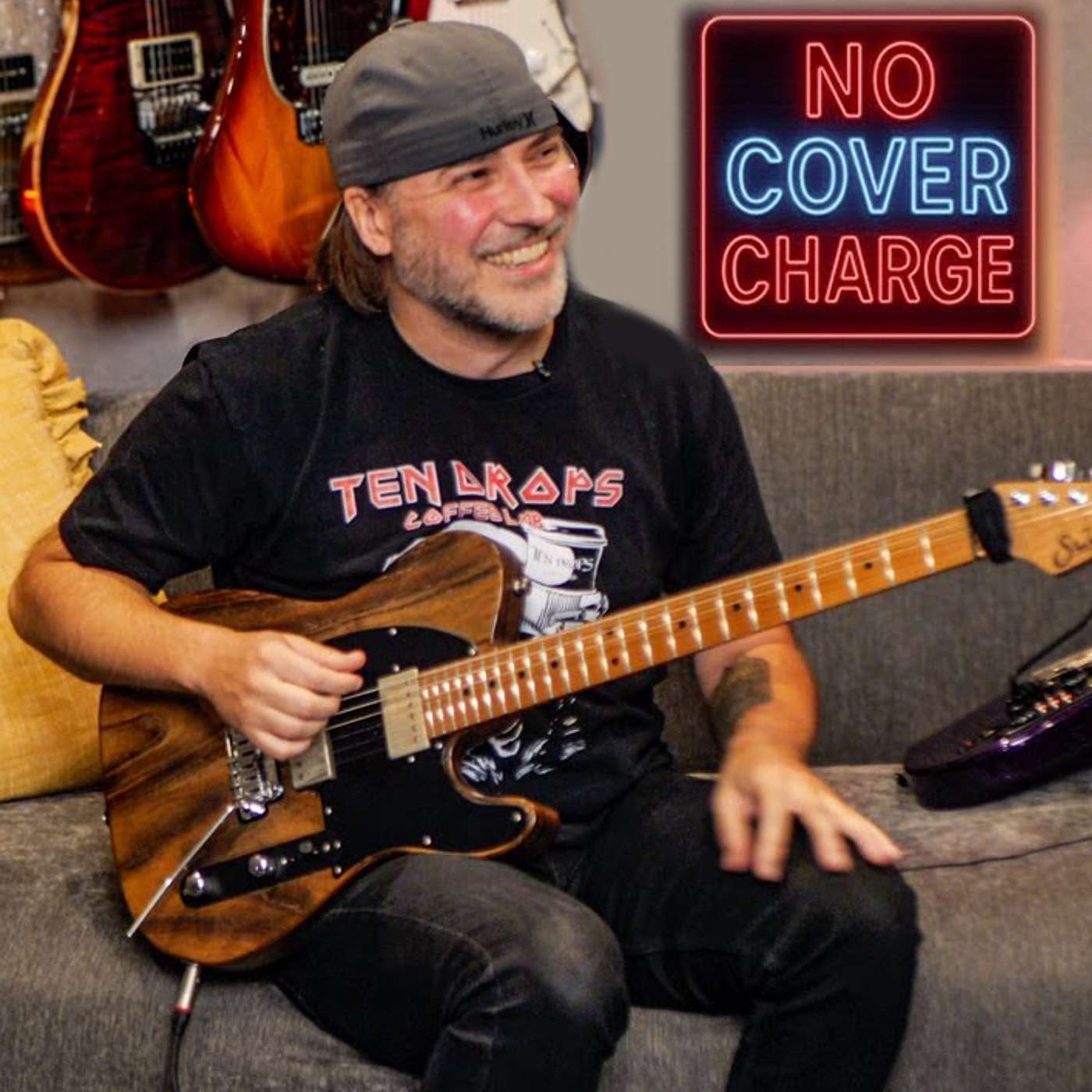
🎸 In Episode 2 of The No Cover Charge Podcast, Tyler Larson and Jared James Nichols sit down with guitar virtuoso Andy Wood. Known for his jaw-dropping technique, blend of bluegrass, country, and rock, and his fearless approach to tone and songwriting, Andy takes us deep into his musical journey.
Expect stories from the road, inspiring insights on finding your voice as a guitarist, gear talk, and live playing that will leave you speechless. If you’re into shred, chicken pickin’, tone chasing, or just love hearing from one of today’s most versatile guitarists, this episode is for you.
Subscribe for more unfiltered conversations with the world’s best players – all with no cover charge.
The No Cover Charge Podcast with Tyler Larso & Jared James Nichols is your all-access backstage pass to the world of guitar—and there's never a cover at the proverbial door. Hosted by two of the most passionate guitarists you'll find, Tyler and Jared deliver a mix of electrifying interviews with legendary guitarists, laugh-out-loud tales from the road, deep dives into guitar culture, and no-holds-barred gear talk.
Whether you're a lifelong shredder or just love music, you'll find something unexpected in every episode—a hidden gem, a new perspective, an epic jam, or a story that'll stick with you. It’s always a good time, and best of all? No cover charge.
Plug in and hang out.
Check out Andy's website (andywoodmusic.com)
Subscribe to Andy on YouTube (youtube.com/user/andywoodmusic)
The Woodshed Guitar Experience (woodshedguitarexperience.com)
Support Andy on Patreon (patreon.com/andywoodmusic)
Support the show (buzzsprout.com/2524633/support)
Email the show at nocoverchargepodcast@gmail.com
The No Cover Charge Podcast YouTube Channel (youtube.com/channel/UCByw94IQQkzfiIlRc9PZzgA)
The No Cover Charge Instagram Page (instagram.com/nocoverchargepodcast)
The No Cover Charge Podcast Facebook Page (facebook.com/profile.php?id=61579811813164)
The No Cover Charge TikTok (tiktok.com/@nocoverchargepod)
Transkriptvom Podcast bereitgestellt · Zeitmarken springen hin
This episode is going to be a great one, Andrew. Wood Nobody's ever referred. To him as Andrew Wood, I don't even know if that would make him mad. Andrew, I hope we're good enough friends at this point. We love you, buddy. It's an endearing. I just have to personify Andy as a man because sometimes I feel like he's just ascending beyond when he's playing.
I think you guys are in for a real treat. Yeah, Andy, kind of. He's like Freddy Krueger, dude. He like every time I close my eyes after this podcast I just saw him picking faster than I've ever even imagined. I think that the most fun thing about Andy is that he doesn't care how great he really is at the guitar.
He really just cares about getting the thoughts out in musical form and the way he articulates and explains his process is really mind numbing and I mean that in the best way possible. It's just awesome to see and hear him play. He's inspiring. This is an inspiring podcast. This one, yes. This one is going to be good. Not.
All of our shows are so inspiring. We might, we might let you down a lot, but this time? So here we go, the next episode of the No Cover Charge podcast, Andy Wood. From Crossroads, the. So when he goes Rock Hooters was. Everybody, always. It's in all of our blood. Like that's like, that's great, but there was all this other great stuff before we got. There the quasi like the thing with the bar, the slide thing all.
That's pretty fun. Yeah. Yeah. Feeling bad Blues that he does in the middle. Have you guys ever heard Bonamassa play that? No. He did it. There's a video of him doing it. Maybe like a Guitar Center workshop? Oh, really? Yeah, and he does the whole thing. He's tuned open like you know. Was it? All that.
Yeah, that stuff. Easier, but still. I just noticed you changed from your pick to your fingers. Yeah. Where does the pick fall with this sort of playing? Like when will you use the pick? Because I you're obviously always using your fingers regardless, but you you still can use your fingers like a pick. When would you use a pick versus your fingers to like? When you drop the pick no no.
Yeah, because you did move it and then you put it. No, but it seemed like when you started to dig in almost micro tonally all of a sudden. The faux slide thing, I, I Remember Me and Ben Eller were working on the Junk Town record and I just started like sniffing around at it and trying to see how far I could push it because I, I typically played hard tales my whole life, right? So I, I this before I got into the the bar version of it and I, I noticed that a lot of things that made something sound slide, especially a guy like Derek or like Sonny Landreth. Yep.
The other Landry, Joey Landry, yeah, all those guys, they're so in tune when they go into it. It's not really about this very exaggerated. That's what I noticed with guys doing faux slide that didn't sound right was they were coming from back here. Like that doesn't sound right to me. They're almost like already almost in tune. So I noticed one of the details was like starting a little, a few cents sharp of the note you're on and a few cents flat of the note you're going to right. So if I'm going to A, I'm not going to start on G#, I'm actually going to start right about. Yeah, you're already, you're already on your rise. I've already got it like a little bit ready. But it's not.
There's no noise coming out in that pre bend. So how do you get there? So that's the next. The other thing I noticed was all of that flutter that like wow and flutter. Yeah, you know, you see that in relation to delay a lot. I noticed that it was happening in Derek's playing and he really has two main ways of getting the flutter 1 is like that dolphin flip.
That's what he gets. That's where you really hear the the this one. But there's another one that he does where it's like, you know, you hear the hand a lot on the guitar because he plays loud. And like I noticed that when you hear like these little triplet things in front of it, if you were to exaggerate. It it makes it a little froaty, like, yeah. It's a Dwayne thing too, you know, Maybe right there. There's something to be said about playing out of tune. It's it's.
That's so hit. Do you have? To know how to play in tune before you can play out of tune. That is the real. Question. Yeah, to me, it was just a lot of this ghost information that was on the front. It's a lot of the things that are overlapped in like the idiosyncrasies of like the chicken picking language too, because chicken picking stuff like traditional Nashville telly stuff really overlaps on a vocabulary standpoint of traditional bluegrass.
Traditional bluegrass guy give you a you know that kind of line or maybe even clean and they're picking everything you know because every now. Can confirm. Nashville thing. It's about that ghost note stuff in there too where it's like. Yeah, little, little pop. Yeah, yeah, yeah, Pop is. Just before the beat.
Brent was, you know, because Brent is Brent's my favorite and he always had, you know, the thumb and then tune press on nails here and then this finger was doing the pop stuff. So. Like a tune like that, opening lines, like he's doing it, you know, if you notice Brent keeps that thing kind of up in the air.
So his alternate picking sound, even when I do it, I'm playing with the flesh. Like he, he, another joke's in there somewhere, but like like when I do it like this, I grab it with a little bit of the nail to sound kind of like his. So it sounds more like ham, right? And. Then what's the Drake line?
That line? I pick it all. Those kind of licks are very Brent to me, but that that all goes back to like the Jerry Reed stuff. It's like everything kind of got it from somewhere. Brynn just played it with like a lot more A, A, he had that tone, that sound, but then B, it's like he he was super aggressive.
I first heard you on the No Guitarist Safe podcast. Shout out Jude Gold. Old. School. Throwing it back, old school. Your influences are Satch, Brent, Mason. Of course you have your mandolin background, so. It's weird that you say Satch because I got to him later. I got satch like right away when I heard you on the note.
That's amazing. There was that time that I think we all experienced where that G3 DVD was that like everybody bought that DVD, brother. Is that Guitar Center? Man, everybody brought that. Yeah, I mean, we all had that. So that's like, that's a big one. But yeah, if you even if you dissect my originals like you know, I always play Junk Town at show.
If you'd start taking away the rock aspects and put it in a, you know, it's, it's really a chicken picking that's really not that far away from Brent's tune. That blend was finding my voice of like all the things that I loved. And now don't segregate them. Like you haven't noticed. Guitar players love to be like a country guitar player for 30 or 40 minutes and then they're like, OK, now I'm going to play rock lids.
Like I think this like great, you know, awakening that I told myself was like, hey, man, stop being this guy on this song and that guy on that side and just let all of it come together when you're making your own record. And that's that's actually surprisingly difficult to let go of. Like like like the the barriers. Why did you let go of whatever was, you know, keeping you from realizing that?
Because there's a reason people don't take that route, Because it's sort of a leap of faith in yourself. I worked on the Scott Sapp tour with guitar tech named David Lamont. Big D and we all know Big D. Legend love you Big D. Yeah, yeah. Shout out to D Big D is now tecking for Luke Bryan, for my boy Travis toy. Now shout shout, out Travis Toy.
Friend of the show. Yeah, friend of the show. So before that, Big D was tecking for Rhodes on the Bonamassa thing, and I forget what I was in town for doing something here. And Dee's like, hey man, you're around, you know, we're just out here. Sound check. Smoking cigars, come hang, got to hang with Joe plays rig, you know, absurdly loud and all that stuff. It's really cool.
And we're outside and I mean, he probably said it and Joe, if you're watching this, he probably said it as a throwaway statement. He's like, man, you're great man. As I can't wait to, you know, hear what your statement is. What's your statement? And at this point, I've made two records and I on those records, like Truth in Line was actually written 24 songs, double album, 1 size, all acoustic, one size, all electric.
Everything was still segregated. Yeah, yeah. And so when he said that, I couldn't let go of it. To this day, I still can't let go of it. And what's your statement? It stayed in me and I, I came back home, you know, that night I was like, man, what is my statement? Because he was like, man, you're great. It's like, you know, you get this glowing review from, you know, a guy that's in the game, that's a master is craft. You're fired up about it.
And I told Ben I was like, what's my statement? I was like, I got to, you know, I got to make my statement. And he's like, man, you know, I was like, you sound like you. And I was like, yeah, but I don't. There's more to it. There's got to be, you know, it's like. And that's when I I made it a project and ask Ben if he would engineer.
It's the first time I made a record and like ask Ben to engineer. So I didn't run any controls making the record. Let me just be in the artist chair and not be a session player or doing overdubs or anything that's on the clock. Let me just step out of the clock. And when we were talking about it hanging out like this, you know, we'd toss back and forth ideas and like it, it started becoming really clear that that that like epiphany started happening where I was like, man, it's it is the Brent thing, but it's the EJ thing too.
Like in that same song, there's like, what leads into the solo is like these little, you know, it's like there's the if you play with a more dark tone turning into that guy, that's his statement. You can't drive on his lawn. Yeah. But I was like, man, if I blend this and blend a little fusion with it, all these kind of different elements, sharp fours and all these things that I like, I was into and start being like, hey, man, what is if I if I die, what's the one song that that I could hand somebody when I'm the gates of heaven be like? Well, this is what I think I sound like, you know, and that tune ended up being Junktown.
And ironic thing about Junktown is I would you know, I was on tour with I don't know who it was somebody and it's sound check, you know, in front of house. I just go out and line check and I just every day I go, you guys know like you play a live show and this is for people watching. Like if you're clubbing, no sound man wants to hear you play licks. Never.
Hey, never ever, ever this is. Your sound man, pleasing lick. He wants to hear what your loudest signal is so he can, you know, dial the room and stuff. And he doesn't want to hear this. Nobody wants to hear that he. Doesn't want to hear. That any of that. So every day I would just be like, and I think it was turbo.
I think I was out with low cash. It was it was turbo. Turbo now runs front house for Hardy. So shout out to shout out to Turby. But yeah, every day I just kind of it's enough to where he could like do it. He's getting his levels. And nobody's getting annoyed. No one's getting assaulted. No one's getting assaulted. And then somebody walked up to me and was like, now when are you going to write that song?
Like just kind of real backhanded. And I was like, oh, snap. Like there it is there. So now it's all kind of lining up. But I think, wow. That's a cool. That's a cool origin of that riff. I never knew that. I think you can only get there if you make a lot of songs. Like you're probably on what record 4/5? Record.
This would be record Record 4. Wait, So what? What's your you play on on stage all the time? What's your sound check riff? Yeah. What do you do when you're like? I need some guitar in the morning. Something just super open. So you can hear the. Wall. Yeah, I, I give them the wall and I say, all right, this is my Sonic wall, you know, and then I'll hit kind of like I, I'll start to break the wall up a little bit now, maybe do a top one, but I never go, you know? Because you can't mix to that.
No one gives a shit about that. You're playing licks. You start to just get that really good, almost mid meat of whatever you're kind of going for as a player. For me, that's what I do, and a lot of times too, if I'm rolling with the same sound guy, he wants to hear certain licks of a song, or not licks, but riffs. He doesn't care about your guitar. Well, he does in a sense, because he wants to mix the gig. In the music way, yes, but it's not like, hey dude, check out these licks.
It's like no no no dude, play the licks from the songs. That's where the eyes start rolling. That's where front of house guys get real annoyed. I'll tell you another one that gets bad to me. Bro yeah. Let me apologize to everyone that played a club gig mate with me when I was in my early 20s because I was the world's worst. Like I would just play non-stop, non-stop. And now that I got a little more Gray in the beard, a little more mileage, the last thing I want to hear at sound check is like, I want to hear this cook snare.
I want to hear him go kick snare. Hat Tom one, Tom 2, Tom three. I want to go in order and I want out of there. We're not there to noodle. If you're there to noodle, go backstage with the micro cube. Don't do it where people are trying to work. People are trying to patch the stage, they're trying to EQ the room. It's like stop playing this.
Is like a normal courteous frame of mind? Or is it go the other way typically? Oh, it's the thing where on a on a country pop country festival, because, you know, I work in that world a lot. I can always tell the kids straight out of Belmont. The kids had just moved to town. No offense, Belmont people, No.
Offense I'm taking. No, I just kidding. It's it's the kids that are so eager to show you what they got that they're like, you know, it's the equivalent of taking a run and go and doing a 360 dunk from the free throw line while people are warming up. Which I would like to see, but during the game, not during. The game.
Also, it's like, I can't agree more with you, dude. And not only that, people are working, people are there trying to do things in a timely manner and you can weed out the fresh, the green ones real quick. And also it's almost as if it's like an Olympic thing at that point and they're trying to do all this stuff to impress someone.
But you sit there and you go like, there's many times we'll be on the road and there'll be like the opening band will be sound checking, right? And the guy's just blazing. He's going through everything he knows and he's seeing who's. No one cares. No one's looking at me. No one, you know, because you got to be able to.
Here's 2. Here's the other side of that. If we were to take that and like, expand it out, it's one thing to have no center of time and start blowing a bunch of licks. It's another thing to be like, there's a groove happening. Are you still ripping? Yeah, man. Because there's the difference between like, I mean, you give Steve Morse a rhythm section, he's going to rip your throat out and it's just going to be the greatest thing ever. But it's like playing fast with no time Field, I think is like a total like green amateur approach. I was the world's worst.
I was just sit, try to play as fast as I could. It's like man, you got to make it count where like when it counts like. Well, when I'm watching you play, even when you're just showing all the different techniques stuff, you can see how good your rhythm is, dude. You can hear how good it is. I can imagine a band behind you when you play, and I think that that's the ultimate.
I know I've heard this somewhere, and it's like a obviously controversial opinion, but somebody said learning the alternate pick, you should actually play as fast as humanly possible to see what it feels like to play this fast and practice that way. And it was a prominent guitar player who said this. I'm not, like, just making this up. Yeah, yeah, yeah.
And obviously the sentiment is you should just feel the top speed. Yeah. Is there any truth to that? Oh, here we go. It's funny that you say that. Truth to it. Just yeah, I will say, short answer, yes, there's truth. To it. OK, cool. You grew. Up playing those fiddle tunes, bluegrass tunes, and they're all real fast, you know, Even the ones that are a light jog, you know.
That's still like. That's like medium tempo you would say. Oh, that's like on the slower side of medium pie because you're fast. Stuff is like the Skaggs thing, you know, that's like where stuff is like, brother, you're cooking, you're burning baby, cooking some meat right there. It is so important to figure out what it feels like at top tempo because the motions are so different. Like if I were to play an old fiddle tune like BlackBerry Blossom.
There's plenty of that. Watch the hand. There's a lot of swing I'm there's a lot of space in between it. That's like trying to help me, like get that gallop going in it. The volume dynamic is a little higher on one note than the other. Yeah. Can feel that 24. If I play that fast. Everything starts shrinking down.
Oh yeah. Even though it's the same thing, it's still down, up, down, up. Everything's just shrinking. I'm, I'm just as relaxed, but it's just we're dealing with smaller information now. Most people's right hand is way faster than they give it credit for. I think the malfunction with playing fast is hand synchronization. Everybody develops this flam where it's like if I were to exaggerate it.
That's the perfect word, Flam. It's like a drum flam, you know? And you get it tighter until it's like, this is the same. There was a yeah, it's like even just then I accidentally hit a flam, right? Because I'm not a drummer, right? But like when you get that thing down. Did you, did you have a big breakthrough or obviously you're doing the mandolin thing, but.
When that's a good song. Where you like, OK, I already know kind of the the mindset of getting into that playing louder playing or more dynamic and then getting the. Yeah, all that was already there. Yeah, you already had. That, yeah, because those two, I mean, like when I got to guitar, I'd been playing mandolin for 15 years. It's amazing.
So it's like everything I wanted to play was up top. That's why Steve Morse was so important, because tunes of his, they sounded like fiddle tunes, like Stressfest has got the. But the main melody is that. I mean, that's a that's a fiddle tune. Yeah. With just distortion. Yeah. Yeah, Yeah. So to me, that was the gateway drug to the rock world. But like when I saw Ed, you know, doing, you know, when I saw him doing that and I saw Steve, I like, you know, I was just like building the chair and like, just like he would like just lick his hand and and like you're just. Like I will activate a harmonic with my tongue now. Yeah, that was me just hitting a wall. I was like, this is witchcraft.
This is not that can't be. I have 15 years of understanding that there's only one way to to get it out. You see that there's no, there's no compression or legato on a mandolin even just like even just on a clean channel, there's a little bit of legato that can be like that's that's impossible on a mandolin. There is none of that.
I don't even play the mandolin and I already go that's impossible on a. Mandolin and I had a PV bandit and a boss yellow distortion pedal trying to play cliffs and over. I was like this. Does not sound like that. Right. I just got this stuff and it's not working that that happened to all of us. I, I hope honestly, it's important to experience that low is like the, the feeling of thinking that gear will solve your problems, but you do have some gear down here, uh. Oh.
This is low mileage man. You literally just it's it's virgin cruise. It's got a brand new set of tires on it. Fresh oil. Fresh oil. Yeah, fresh oil. The guys that I use is exact Tone Solutions. Shout out to Greg Berry and Eric over there. I've been begging Fractal to put their effects only because I I use amps, you know what I mean? Like, I love Fractal stuff.
I love all the texts. You just don't need the amps. I just don't need the amps. So I was like, can you just get? And so they kind of dropped this out of nowhere on me. They're like, hey, man, we're going to send you something to beta test, that's all. And I was like, tell me what it is. They're like, no.
And I was like, you have to sign an NBA. Matt was like, no, no, no, no, just don't tell anybody. So the first gig was off before it came out. Yeah, October. It was one of these. So I thought it was a great time and before I start revving up this year for shows to take the Striman off, basically this is just four different modulations, but they're nice, man.
It's like the pitch shift isn't. Oh, baby boy. So that's really nice for like on some of those Rascal Flatts parts where I've got to be the ever so irrelevant, you know what I mean? Where it's like. Yeah, a texture man. Just stuff like that. It's like, and I haven't programmed any of these. These were just defaults, but like, you know, you need a trim, you need a Rotary. And I kind of set my rotaries to be in between Stevie, in between that and in between.
Those are like if I'm. If I'm in between those on the Rotary, it sounds right and the last thing I've got is a 3 1/2 DB bump just where no matter what sound I'm on. You got a little gas. I love it because you can't even tell you're really clicking anything and then all of a sudden you just. It's pleasant, man.
It's like, oh. Just a little bump, so clean with some delay and then I use like a more which would be. Starts adding a little bit of. Like a Blues dropper kind of thing. That'd be like a that's like your meat, potatoes, pop country tone, right? Great. And then the crunch thing. Which we've heard I like. Crunch.
Is Crunch is a little comfortable? You know what I mean? And then the lead tone is just the gearbox. I said about your lead tone that I liked, and I was saying this to you before. When you start to do that, it reminds me of the best qualities of like a Fuzz Face without the stuff, without the bad stuff.
It's got all the tracks. Great. And then and my favorite pedal on the board is the the the Octopus. So I use that on like on my cover of Rooster. The. The. That's the thing. So like if I'm if I'm judging A fuzz octopus, it's. That's the craziest sound, I think. It's so good. What are the best Octopus tracks I'm thinking of? I got Satch on the brain so I know Super colossal. That album has one of those tracks, and then there's like that Kenny William Shepherd.
Ian Thornley's insane. What's that blue on black? Blue on black. Classic but also if you go back dude, like. Hendricks. Oh yeah, we're talking bandages. Bandages. That's where I go. I hear I in my head, I hear the yeah. Yeah. Yeah, and with all that shit, machine gun and. Yeah, yeah, yeah. I think out of the modern guys, boy. Doyle Brown.
Landreth, Ian. An aerial post when it comes. To those are the Octa fuzz freaks. No, it's that. Disgusting, disgusting sound aerial post and in particular I've thrown up after watching some of his Instagram stuff. So good go. There's something, though about us in our DNA as guitar players that when you start to hear that muddy fuzz nastiness, even when it's like that, that weird with a buzz, you go, yeah, that's the sound. It's interesting we, we start our lives and our paths seeking out these perfect lead tones.
Yep. And then once we kind of get comfortable with what we sound like, we're like, OK, now how can we distort that? How can? We How can we warp that? I think that's a novice mistake in recording, whether it be instrumental guitar or session playing or like you're scenario where you're an artist, you get so married to the three tones. You've made 47 minutes of the three tones. You've got to be like, hey man, what what characters are in this song from a textural aspect.
Now it's really easy, a guitar player be like I'm going to use this lick in this one and this lick in this. One what characters? That's funny. Licks, right, You need more than just licks because it's characters. It's like colors on the spectrum and and a lot of guys default to things like just an amp or a different way to get a great lead tone.
And I'm like, but what about Poly octave stuff? What about crazy module? What are all the other things out there in the world? You can really give a song its own personality. Absolutely, You know, And I think that usually comes with, like, album three. Yeah, you start. Sick of that? You start to get sick of that tone, man.
It's not that we get bored, but you get a little bored, you go. I need something that's going to cut the edges off. Man, I got to go. You need to be inspired, yes, when you turn it on, you need to not, you need to have a little bit of that. I don't, I don't know exactly how this is going to react. And a fuzz is a great way that I think that's why I'm so many great players like Tremonti or VI. Guys like this, they really love a wah because no matter what you're doing with your foot, it's never exact. It's never exact.
It's never these. Never an exact thing. It's not an exact science. And I think that's. That's kind of what's going on with an octopus. That's kind of that thing. You know about what's going to happen, but every now and then you could be like, ho ho, I didn't mean to do that. Or like you have to fight it more. Sometimes that can also be rewarding when you do get something good out of it.
I did a session recently and I was playing through a realistic karaoke machine and the guy goes plug into that and I'm like, it's like from the 80s. And I was like, do you want me to plug my guitar? You want me to plug a 1952 Les Paul into that? You guys, I plugged it in and and I swear to you with the sound that came out, it was like we were in a garage. But it was the coolest, funkiest and I played this riff like and it sounded perfect.
It's like the riff arrived because of the tone. Yes, sometimes you find these other sounds and you go. That's the. Shit, yeah, that's going to make the song have its own vibe, you know? What I've run into in the studio when I've recorded is doing too much to attract to where I can't possibly recreate it live.
I think that's a common thing that anyone who makes music in their home studio or in a real studio if they're a band like starting out, could be like Let's keep layering. Doing how? How do you write music with the knowledge that you're going to be touring it like some of your stuff? It's not complex from the perspective of The Black Page by Frank Zappa, but it's not simple. It's not page.
Three, it's not like, necessary, yeah, perform this music, but you write the music. You think you're thinking about layers, but do you think about how it's going to be perceived live? Do you even get to that point when you're writing here? Recently, me and my drummer that I work with a lot of Andy Campbell, we've been kind of like in not in like a a violent agreeance because we have different opinions on how something is delivered live.
And he makes a great point. He's like, hey man, Zeppelin produced the crap out of those records, but when they wouldn't play live, it was a different thing. Song remains the same as a different version of the thing, you know? And I love that because that is the improvisational aspect. I don't. My show's not on rails. And by that, if you might don't know what I mean, it's like I'm not to time code.
My drummer's on a click, but we don't have tracks and stuff going. But there has been things in the new album, the song I wrote for my dad and my granddad is really pretty ballad. There's 102 tracks of strings that Eli Bishop did and it's a real and I was like, I want those on there. So we play those tracks and Andy's like, man, I don't want to do tracks.
I was like, Jeff Beck used tracks when he played Nason Dorman. So now we're in the like, what does that mean? And and I think I'll get back with you when I when I understand. But I think the first thing that I did this year was make the the the strict decision that like the Andy Wood Artist show, the Andy Wood show live will be a four piece from here on out.
We just did one in Dallas and I took my friend Eli Bishop, who both of you have met at different points, whatever, and he's great. And so when we do all the tunes that have like that's like got, it's dregsier, you know, I mean, because we're dueling everything with fiddle and and guitar and like when he's not available, you can take a steel guitar, take Travis or whatever. But like I'm always looking to add another version, another like lens to it for the live thing that gets you in that space of their stuff here in this Sonic area, right. But it's not a track.
There's something that's very uninspiring to me. If it gets so on the rails, you can't improvise. All of my songs have like a section. Not all the songs. Most of my songs have sections that can intentionally be looped like an Allman Brothers thing or a Zappa thing. You know, it's like when you, when you think of like the Zappa tunes, there's like, here's the section of the song and now we're going to get here and it can go indefinite. Or Jessica by The Allman Brothers. Yeah, just goes, just goes.
I feel like though bringing in another human. It's the right idea to me. It's. The right idea, because when I'm watching a show, and maybe this is throwing shade at certain people, I'll watch a guitar player go up there and play the tracks. Straight tracks, No band. And the tracks doubling like everything that they're playing. I'm not saying that's bad, I'm saying that's not what I want to.
Do no. And when I watch that, I can watch it for 30 seconds to a minute and I go, wow, that's really cool. That person's very talented. Yeah, yeah, yeah. But there's no show. It gets real nammy. Yeah, it gets real nammy, you know what I mean? And when you're in a venue with a bunch of people, oh. Brother, you got to have a show.
You got to have a show. Man, you can tell guys that have clubbed a lot or played a lot on stage, just when they walk up to greet the audience 100% you can always feel it when and how an artist greets the audience. It's like, have you how how many of these have you done? And you could kind of they.
Just like. Oh yeah. Yeah, like, oh, this next song is about this time I got sad. I had a girl, I lost her. I'm sad. And here we go. It's like. So you're saying there's guitar players that will just have the backing tracks and and sing with it and that's the whole band? I've seen it. I've had to do it for clinics.
I think that's no, I mean. Clinic is different than performance. I think that's yeah, yeah. It's the only time I think it would be cool is like to jam to a backing track. I've done it prepared for a clinic, but a performance like buying a ticket to a show and it's a person on stage with the PA and you don't really maybe you can discern what they're doing.
Like I'm trying to see if they're if it's ever like cool. I'll red team. Shredding maybe like a virtual asset guitar player. It's like, all right, well, they're not miming that, but like. The things now, it's like now the Axe FX's and the computers and everything have gotten so integrated. You can't tell what from front of house.
Sure you can tell on Sage. You can't tell from front of house what's being actually played or not in some instances. Which is a disconnect. It's a disconnect. Fundamentally, the. Thing that I noticed maybe you've seen it now artists can't afford to take out a full band. Sure. So they'll put the be like it'll be two guitar players and a drummer and and when the guitar player sings and they've got the rest of it tracked it's like that's out of a pure financial drought now I'm not saying it's right or wrong yeah, I would I would say that like if that was the case for me well, we just wouldn't have the second guitar.
I would keep the drum I'd keep the bass player. That would be my conscious decision but there's no right or wrong way. I just think you see, how do you get to Jeff Beck, Carlos Santana, John Mayer if you've got a bunch of tracks, I just. To me, it's not a hit or a dig on the artist or even how good they are or whatever.
It's a discussion of integrity and ethics and where that line is. I don't. It's like we don't know what the right answer is. It's what we. Just know it's there's some friction here that I think is interesting to discuss. I think the right answer is if you, the artists, feel good about your statement, that's the right answer.
And if you want to go out there with an iPad? Dude who cares what 3 dudes you said in a freaking guitar studio? I say because. That can easily be amazing. I mean, one of the most amazing things I ever saw was Andy Timmons playing the iPad the first time I met him 13 years ago at a clinic we were teaching. Like that doesn't degrade.
No, because it's tracked. I think you. Was it a clinic though? Good about it. I think you got to feel good about your your statement. And there's certain things on my new record that have like tremolos and stuff. Like there's one tune that's got this like, you know this like. We know that track.
Yeah, yeah, yeah. That track's going and like, but if there's like some stuff on there that's got this, like, and I would like to have that, I would like to have that on a track. I don't feel like if somebody's heard that, they'd be like, Amy's not playing that. Nobody's going to care about that part.
But it's something to oscillate in the side speakers while I'm doing the, you know, all that things happening. So it's, you know, to me it's, it's the ethics of it all, especially in the most recent couple of months with Giacomo getting in hot water and all that stuff. It's like. Boiling hot. Boiling hot? Really.
Scalding Magma. Bolton. I think it's important. I think both of you guys agree with me when I say this. I would love nothing more than that kid to take six months a year. Rise up, dude. Rise up. Yeah. You got to come back and play. Make it make and be real and post on a cell phone and and give us the thing. I don't ever want to see something happen where somebody looks at music like it's betrayed them and now they're never going to do it.
Never. That breaks my heart. Now with that said, you can't lie to people. You can't steal from people, you know. I'm a I'm a subscriber to once a cheater, always a cheater. So whether or not he comes back to social media in some capacity, like I wish him nothing but the best in life. But as far as the guitar stuff goes, I think that would that would be a tough road to climb. I would watch, I would click on it and be like, oh. Would you guys agree though, that the line for me that from what I see is that it gets to this point where we start to go, you know, you work so hard to get to this certain level, right?
And then to see someone potentially not playing it or even on stage and you go, he's miming that or he's that guy can't even play that. That's the part. That's to feel bad. That's where you start to go. That sucks. The theft, the theft to me is the coup de It's like Jack and Tom and Mark. That's the whole reason that anybody you.
Know Levi was the one I think had the spotlight and he was like hey man, this is not yours. This is. So insane. Yeah, yes, that was egregious. I love him man. Levi will not, he will not shelter the. He's a badass guitar player too. Right, man, Yeah. And and I think that's The thing is you see guys working real hard and and there is a fine line because you and I both when we worked together on the gig and guitar some, we were quoting Leslie W.
It's a quoting Dick, Netflix. Don't get me wrong. Theft. Yeah, but I. Think it's I think it's different because this is just my opinion. I think it's different because we have put in the hours to try to steal it in a way that it's endearing and keeping the music alive and all of these and it's it's with all this passion and love.
It's not with a Let me get rich off of your. Stick last week I got to jam with Buddy Guy. Right. Oh, I mean, come on, man, you're. Sitting there pretty good. Come on bro. I might as well just put my hands behind my back because anything I play right now, even if I sat there and I went. Like brother, where did I come from? Sorry, like, but that's us because we love it. It's a big difference where you're starting to sell people's music and also you're putting these people that have worked there asses.
Off. And you're just going to go mine now? That's the problem. There was a couple of them that felt bad because, you know, God love him. I mean, Tom is one of my best Bros. Jack's one of my Bros. Like, they were great about it. Mark's a bro. And they were all like, yeah, man, you know, they took the high roads. They took the High Road.
But they're all those dudes have guitars and pedals with their names on them, You know what I mean? They're it's not, they're not like now flip it to some of those guys that had 800 followers. 50 views. Bro. That's those are the ones that had to have been. That's why I was like, this man is sick to be able to find these like that is some serial color.
That's the serial killer level. That's it's nuts. Man, all of his pedals are the same manufacturer. Misha from Periphery, he's got a great quote. He says if anybody's got only one manufacturer on their pedal board, they're a serial killer. Yeah, that's funny. Dude, that's all Boss pedals. Yeah. It's like, I know Boss pedals look cool, but if it's all Boss, why? That guy's a serial killer.
I did some touring with John 5 and his whole pedal board was all Boss pedals. Oh well, that makes sense. John 5 is a crazy guy. But he's also, yeah, he portrays the serial killer. Well, check this out. I was like, hey man, and he was talking to me about his pedal board or whatever. He's like, oh, that was a good.
One little Nashville Thunder. He goes, yeah, you know, this is the stuff I started with and yeah, it just works. It. Just works for me. I mean, Zach Wiles got a simple setup. Yes, he's played the same thing, same thing, 100 years, but you go. Damn those dudes man. They just like they were like, it's not broke.
I'm not. Yeah, I'm like a messing about it. Yeah, yeah. I love seeing the video of NGV with the Boss Wazza thing because you know the the the it's like a load box that has some delay and stuff in it. Oh, I've seen that thing, yeah. The video he did was really great because you could tell he had really discovered something that was, you know, because the way he runs his amps and stuff, you can't run the delays and verbs in front of the amps because they're producing the gas. They don't have loops because.
They're no, because they're old. Billion years old. So it's like watching him discover this thing that's like now got this workaround so he's not having to line out and get it into the mix. You know, I thought that. Hearing himself in a whole new way. And I thought that was so inspiring. It's like this guy has been in the game and been that guy forever and he's still chasing a way to make it.
It's amazing, man. I think that stuff is inspiring from all of our heroes that, you know, it's like every now and then, you know, Timmons will say, hey, man, you should try this volume pedal because volume pedals are notoriously the worst. And he sent me one about 3-3 or four months ago. Sure enough, I tried it and I was like. Like bro.
That's the one, OK. I want to play you some clips. I want to know what's happening here. None of those notes were in the key or something. What were you doing? And yet. And yet it. Sounds amazing. Can you please tell me how you were dancing around every right note and thus playing the right note?
Man, that's that, that's that hanging out with Travis toy. That'll get to you, right? I see a dominant 7th chord, which is just like, you know, that thing I'm I'm seeing actually more of a ten note option. I can actually probably sell you every note in it. Like if somebody's like, hey, play me a you know, will a flat 9 work over that? You know, like probably not.
But if I go now, I've sold you a flat 9 right sounds. Like my ear? It's like now that that can be exceptional, acceptable, not exceptional, but like when I, when I see this, I see the Blues thing. So that's, that's one, two. Now we've added a note. I'm not taking anything away. Now this, this one that's still on deck. Now if I see a six, I can I can do like a jazz enclosure. There's that same thing.
I'm thinking that flat 5, a lot of things I like to do is take a grip and change where a note is. So if you play a, a typical flat 5 like a rock guitar guy, you know that's where we play it, right? I love that, you know, we love that one. But if you put it back here, you're first, you're forced to work some different fingerings and you get a little bit of that Western swing thing.
I think that lick right there was on a Brent Mason instructional DVD that I had as a kid. Yeah, but it's like that old Western swing thing. But if I see that, so what's like? Gorgeous, what's an actionable take away for a guitar player who wants to sound outside over something like this? Like is you? You mentioned the nine there.
Is there like 1 pentatonic lick that you're changing a note of or are you looking at it? From I'm looking at the things around of around, Yeah, it's like if I see all my if I see things I'm 1 is going to be my least interesting approach, right? That's going to be it's it's already kind of telling you the punchline.
So like if I see that, if I hear, I'm going to say you're already waiting on some more information. I'm still like, I'm still riding the six really hard. And you can actually outline a bunch of if if you want it from a, from a triadic standpoint. He's starting looking at it from a bunch of flat fives. SO1, flat 5.
One flat 5. 1. Did you listen to So It's like I actually went to school for Jazz for about a year and a half at Utah. I think I was enrolled for two years but dropped out halfway through the 2nd 2nd year. Did you bring it? Did you bend? I was, yeah. Did you bend a straight? Kelly, I wasn't playing the Howard Roberts jazz box.
OK, OK. But yeah, I was learning all those. Because I wondered if you were just hearing that and you were you're. Now it's there. I don't think my way through it, of course, my way through. It yeah, you hear your way through. It and a lot of us just taking things that are are stacked on it so over that that's just one to flat 7 that I'm seeing the whole time.
And then from there it's like if you want more color, you start adding in, you know, and that one sounds normal when we play all of the notes around it. If I played that you guys would really be familiar with probably be able to play it back to me. But if I played. Yeah, also my my ear gets bent there and I go where does he just?
Go. I didn't play any. I didn't play any other notes. It was all the opposite. Ones I left stuff out, yeah, it's cool. So like, it's a Jimmy Herring kind of approach. Right. I love Jimmy. Herring. Yeah, He's such a monster. So when I play those little stacks, they sound foreign. But if I play now you're back in.
It's how something is kind of presented and I love the idea. Usually you'll see like guitar players talk about a diminished thing and they start setting the rules of which diminished you can use, right? Because the two stacks, it's really this one. And that covers all your needs. All your diminished needs are right here.
And it's like. Almost sounds pedal like steel. It's totally those things. And so it's just like you start looking away from that. And Steve Morse was such a big influence of all his chromaticisms that sounded really fresh because he would always end up some kind of real big band. You don't have to overthink it a lot of times. I think that the cage system and some of those approaches, they build rules that we think we're supposed to stay. In, but you don't realize they're they're imaginary fences.
They're imaginary fences, yeah, Go, go. If you go around, man, if you feel uncomfortable, like you're comfortable here and you're comfortable here, don't practice there. What a concept, yeah. Play where you quit rehashing all your you. Suck. Play there, you suck, and then you won't suck. Maybe you won't suck there next time. Speaking, I'm not sucking this.
This is an interesting lick that you have here for us. What I want to know is who's car is in the back? Who's super bird? Man. Had to use piece of this video because I knew we had two car car nuts with us. So talk about the cars, talk about the sweep tapping. How many octaves? So good friend of mine I've known for a long time.
His name is David Farmer, and he's a sweetheart of a guy, fellow car nerd, and he has a great car collection, muscle cars, and I ask him if we could film kind of like the Fast and Furious. All the cars curved around and I'm a car guy and I didn't want my car in the shop. There's just a couple of shots where if you look real hard you can see in the corner. But yeah, the Super bird actually was Richard Petty signed the wing of it.
And like, you know, it's some really, he's got some really great cars. So that's the car sort. Yeah, it's really great. And he was so kind to let us film that music video there. As far as the sweep tab goes, it's actually way easier than you would ever think it would be. But this is also something I heard you do on No guitar safe, which is maybe why I associated more of the like virtuosic shredding.
Guthrie Govan does things. Yeah, man, Like, Guthrie's obviously the first person I heard do it. And I just like, like everyone else on the planet, we heard that lick. We're just like, yeah, what? That one, I was like, hold the front door open. It's really finding a faster way to play the pentatonic scale, less than speaking volume. And the notes were popping up.
You put that through a cranked flamethrower rather. Be throwing flames. But yeah, so like, you literally take this play one play 345 hammer from nowhere and it literally is the pentatonic. So gorgeous. How low is your action and stuff? What are you running? Not stupid, no, it's it's whatever Sir sets them out at the factory, that's you that runs and then. What, 10 to 46?
Actually, a hybrid gauge if I've got a Fender scale length with six on this side. OK, so if I'm playing either one of those guitars, I play 10s. Got you on this. Because the brake angle. I use nines for these three and then the 10s for these three. Wow. But if the head sucks going the other way, yeah, I don't do that. And then Floyd's, because there's no brake angle. I use 9 1/2 to 44.
It's really about trying to get the tension to feel like if we switch guitars, yeah, everybody's kind of living in the same world, so I'm not messing up. Vinny Moore, I can't play it like that, but he played, Yeah. And he hit the octave and that was like my first, like, introduction to sweep tapping. Yeah, Yeah.
I think it was like Meltdown or something, one of his songs. OK, last one here, but this is important because Jared and I picked this one up on the backing trackside. What's that guitar? Yeah. That guitar looks familiar. I told you this when we were at Sweetwater, but that's my favorite track on the on your most recent Thanks man shoot the sundown.
So a lot of things to explore here, but I think a cool way to get into it. Jared and I were checking out that progression before, so if you want to just jam over it a little bit, let's. Do it, Yeah. I'm going to be the lowboy. Check this. Out amazing that you guys scoped it. The. The. You've had that album out since September.
How do you feel about it now? What are your thoughts? We're in the summer of 2025, almost a year after. How do you relate to your albums after this point? This album's a little more unique than the other ones. I'm, I'm really proud of this one. This one's been really good to me, like articles in Guitar World and Guitar Magazine and like.
Much deserved. Just like. You, you got just big enough to be on this show, dude. Can you? I mean, you put that at the top of your resume. Frame it, frame that thing when you get that text message and it says Bro, John Petrucci on it, you're just like what you know, it's like. And, and, and shout out to JP for he heard the demos early on and he was a big part of the reason that I got the distribution. You know, the deal that I did.
He just, he just believed in it and a lot of those guys just believed in it because they like the songs. And so this record from a song standpoint and a show standpoint and playing it for people, this record doesn't feel like, hey, look at how good I play or how fast I can play. This record feels like, hey, these are good songs.
I hope you like these songs. Would you say it's mature? I'm. Dare I don't know what they say when they're like, well, I've matured. I think you know. What does that verbiage even mean? I think it's it was combination of a lot of things. We were all locked in our houses with COVID forever. And I'm a touring guy.
This is the first time since 2013 I've not been on the road all all your. Life is totally different. So I was like, OK, and then in the midst of that, I lost my dad and my granddad within 13 months of each other. And that was my best friend and the guy that gave me music. So like my mother's father was the guy that was the lighthouse and the the source of music and then my best friend, my car guy.
So I was like, I didn't know what to do. I I should have got a therapist and been an adult, but I made a record and so you know. Some say that is honestly dude, there's no wrong or right way to do it. Like the songs, to me mean a lot. Like, you know, the one I wrote for them. The. The. Trying to be a bass player too. I need to work it up solo first.
So it's like when I play those songs, I don't feel like it serves any kind of purpose other than like, this is just a, this is just a song that I like, I believe in, you know? And it's not like licks, you know? And I don't know the answer to the question about maturity. It's like, I guess that happens. That could be a thing.
But when you get to a point where in the back of your mind you still hear Joe Bonamassa saying, hey, man, what's your statement? It's like, man, what am I going to say? What does it feel? What does it feel like when you lose your family member? What does that sound like? What does it sound like when you you know, you imagine the different spectrum things in life that you love? Like, I mean, I'm a big Danny Elfman fan and one of the songs has got this like total Danny Elfman kind of vibe to it. And it's like I came at the record with 52 demos. So when it times scaled down, I I've been locked in my house for yeah, man, a year and a half.
It's like, now we can now you can make an honest record. And I think in today's world where all three of us are always like posting and we're trying to make something for the the day or the week or whatever, we think that that's working. It's like that, that hard reset was so valuable for me to be like, OK, what are you going to say?
If you could say anything, what what is it going to be? And you know, the reality is it's not going to be a bunch of licks. Like there's licks on the record, but that's not the songs. It's a great way to put it, man. And also like, it's not the right way to say it, but it's like we know you can do that.
We know. We've heard it, we've seen it. You communicating with all of the devices you have, that's the special part. And like you said, putting that emotion through it. Yeah, that's the shit. It's got to serve a bigger purpose. Yeah, the first demo that I made was the one that's, and that's like the simplest thing I wrote probably my whole life. And that was the first demo that I had. And I was like, that's clearly on this record. There's something to, it's like you start getting out of your own way and it's like if you were a chef, maybe you would go, man, there's something really great about a burger. It's like everything doesn't have to be deconstructed. We had it right with the burger,
yeah. It could be good with that. And you know, if you're a car guy, it's like, Lord knows there's a million things out there with 1500 horsepower these days, but there's something cool about an old Camaro just because it just because it's. Because what it does? It doesn't, it's not the fastest, it doesn't handle the best, but it's just when you see it, you're like, that's cool.
And if you can get out of your own way and write good songs, that usually comes from the perspective of like, I actually like this, yes. And so it's easy to play for you guys because like, I believe in this and it's like it's not. Also, when I listen, when I listen to it, hearing your interpretation, taking it in, it's like that melody.
I'm going to be humming that all night. Like, do you practice your songs in any other way than they're written? Oh, the songs, I'm always moving around. You're always like, yeah, it's like if I were to just play through that. It's like the song's so here. It's like a conversation. Yeah, it becomes the conversation, right.
And we all know that the thing that holds us together is and then that one, right. And then you have. Oh dude, I remember you played that. For me, it's Sweetwater. I was like good luck. I mean, it's like I the thing that makes that really so great is, Oh yeah, that's the melody, right? And so. Earworm Man.
Yeah, it's like the whole record's like that. It's like that's what makes that one good. The other one that's good to me is like it started as a ZZ Top thing like. But it ended up more like a. What's a message you'd like to get out to the guitar public? What do you wear? I know we have the woodshed experience. Do you need or is that sold out yet or can people still sign up? There's still a few slots left.
There's something else. And we'll do a code for you. We'll do Tyler 200 for these last nice last few. And this year we've got Dan Hoff that'll give you $200 off. We've got Dan Hoff, Paul Gilbert, Trey Hensley, Mark Latieri, myself live band live. You know, you, you've done it. It's like so that that thing's in September, but as far as like the message to get out, man, you know, it's like a.
Message for the guitar people. Man, you know, come, come hang out at the, you know, Andy Wood pages my corners of the Internet. And if you like the music, come hang out. Be a part of the community. Like my Patreon community is kind of an offshoot of doing woodshed. Every Wednesday night we all get online for two hours on master class and talk about whatever's happening very much like this, talk about whatever's happening that week in in music and do lessons.
People have questions and and Zoom is a a great way where guys can spend time to ask a question. It's not like an Instagram message. Yeah, true. So I think that's it. And then more importantly, and all my sick players out there in the world, all you guys that are monsters, all you guys blasting through insane playing, and please make me a record.
And I don't mean that condescendingly. I mean that as a fan, like I want more guitar records. Bring them out. Give them to me, man. I want to see what the graduating class I'm ready for the next Avia Musicom. Somebody out there is going to give it to me. And so I just want to hopefully encourage people that there's life beyond 30 seconds.
You know, it's like, make an album, take the time, it's worth it. You'll be a better musician. All the things we've talked about comes from putting in the work. That's a great diamond, man. Seriously. Yeah, take it to the next level. Yeah, do it, man. It's never been easier to make a record at home, to make a record on a laptop, you know?
So like, where are the records? And if you get past the first one, if you can get past that first one, it'll be so much easier from there on out. It will man, Because the first one, thankfully I was so young and so broke I could only afford 10 days so I had to write record. Done in these 10 days. This is what we got to do.
So like disconcerting amalgam was 10 days and that was a snapshot. And then after that, you know, it just took the weight off of that inaugural. Oh my God, the world's going to judge me on. It's like now you can just make records. So there's so many great players out there that I follow online that I'm such a fan of. And I just, I can't wait to see those records and hear, hear, hear those statements and hopefully try to steal those melodies and.
I think the keyword for this dude. What's your statement? I mean Joe man, brother is wise. The.
