

Kapitelklicken springt direkt hin
Shownotes
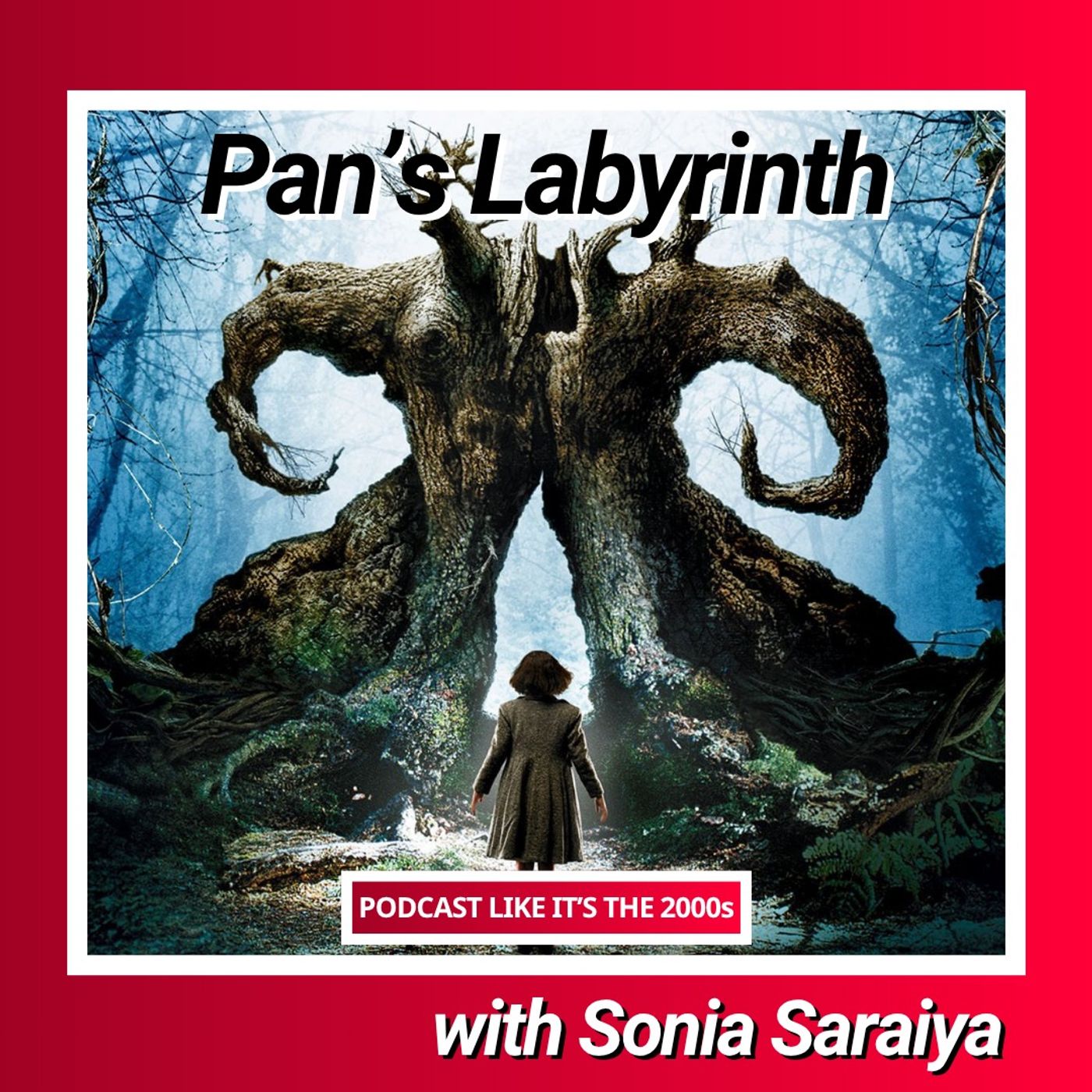
Phil and Emily are joined by critic Sonia Saraiya, back for the first time since Charlie Wilson's War, for Pan's Labyrinth (2006), the fourth stop in the October Guillermo del Toro mini-series. In 1944 Spain, eleven-year-old Ofelia (Ivana Baquero) arrives at a rural outpost with her pregnant mother to live under Captain Vidal (Sergi López), a Francoist officer hunting the last Republican guerrillas, and finds a faun in the ruins who tells her she is a lost princess with three tasks to complete. It earned six Oscar nominations and won three, got four stars from Ebert and a 98 on Metacritic, and lost Best Foreign Language Film to The Lives of Others, which Phil is still relitigating.
The three dig into why Vidal works as a fairy-tale monster who happens to be a real fascist, the idea that fascism is itself a fairy tale about making the world what it "should" be, the Pale Man (Doug Jones under the most painful prosthetics of his career, and a critique of the Church del Toro has been explicit about), and the mandrake root as the film's whole thesis in one wriggling prop. Emily debuts her Oscar-nominated song "Monster With the Eyes in His Hands," Stephen King squirming in his seat gets ranked alongside the Oscar as del Toro's proudest moment, and the ending gets argued from both sides: is Ofelia going home to the underworld or dying in the dirt at peace with what she chose? There's a real case here for Pan's Labyrinth as the movie where everything del Toro tried in The Devil's Backbone finally lands at once. Brutal, tender, and certain the fairies are real. Same as the movie. Next week: Hellboy II.
Follow the show & guest:
Podcast Like It's... - instagram.com/podcastlikeits
Phil Iscove - instagram.com/pmiscove
Emily St. James - instagram.com/emilystjams
Sonia Saraiya - instagram.com/soniasaraiya
💜 Patreon (bonus episodes & video): patreon.com/Podcastlikeits
Transkriptvom Podcast bereitgestellt · Zeitmarken springen hin
Welcome to Podcast Like It's the 2000s, the podcast where we talk about the films of the aughts here from our perch in 2026.
I'm one of your hosts, Phil Isco.
I'm your other host, Emily St. James. And a fun fact about me is that I am actually one of the co-writers of the Academy Award-nominated song, Monster With the Eyes in His Hands, from the film Pan's Labyrinth. And I can see that both Sonia and Phil want me to sing that now. So I'm going to. .
.
.
Like six.
It was me and Will.i.am.
Taylor Swift.
Mark Ronson.
A lot of cooks in the kitchen.
Ashley Simpson.
With us today to continue our miniseries on Guillermo del Toro's 2000s films is critic Sonia Soraya.
Thank you so much for being here.
Thanks for having me, guys.
Before we hop to Mike.
We discussed that it's been almost a year since we discussed Charlie Wilson and his war.
I think this is an upgrade, wouldn't you say, in terms of quality of cinema?
So much so.
This one makes me feel a lot of stuff in a way that Charlie Wilson's war is a little flatter, I'd say.
Yeah, I don't feel a lot with Charlie Wilson's war other than anger. But yeah, I mean, this, I reached out to you, so I know when I suggested this, you know, we wanted to have you back.
I sent you a whole, and you picked this movie. Um, did you see this in theaters? Was this a movie that you saw back then? No.
Um, I, my viewing experience was actually like on a laptop, like really.
Really classic, uh, college dormitory viewing.
Sure. Sure. Sure. Sure.
Yeah.
So this, yeah, this is Oh six.
Um, yeah.
I mean, Emily, you saw this in theaters.
Yes.
Yes.
Yeah.
I think I saw it at the Arclight Cinebar.
Yeah.
On Sunset Boulevard. Indeed.
Yeah. I think I saw it there too, actually.
I've never heard of it.
Yeah. Well, it's coming back.
It's coming back and it's going to be at Alamo. Whether we like it or not.
Yeah. I, this was a movie that came out, I moved to LA in 05. So this was like an early, a movie I remember seeing in my early days of living here And truth be told, I have not watched it that many times. I bought the Criterion when it was available.
It is no longer. It is out of print for reasons.
You cannot stream this movie.
You cannot stream this movie at the moment. A 20th anniversary is coming out in theaters, I believe, in the next couple of weeks.
October 9th. Yeah.
And my assumption is that it will be.
Come back to streaming after that but maybe i'm wrong i don't know what the right situation is who knows.
I think they're doing a 3d release in theaters and a 4k edition as well Okay.
All right.
So, Emily, your hit song will have to be.
I'm sorry, your award-nominated hit song will have to be rendered somehow in three dimensions, so I just want you to be prepared.
I think you mean more in three dimensions. I already felt it in three dimensions as Emily was singing it, but.
Is it coming in 40X? Will you feel the pale man's stomping feet?
I don't know about that, but I will say this, because we brought up the re-release, and it's worth noting that.
Guillermo del Toro said that, uh, no AI.
Was used in converting the film to 3d. He explained, uh, what we're protecting is the beauty and the redeeming power of art. It's not about who gets the job. We are protecting a lineage of art. If we cut a generation of people from learning their craft, you're cutting the rest of the history of that medium away from them for what I choose.
Good.
You have put in the time you have to do every element by hand, a human made a decision of depth.
So, uh, there you go.
Um, Yeah, I mean, this was a movie that, or is a movie, that is very personal to Guillermo. One might argue the most personal film he's ever made. A real passion project. I think he lost 45 pounds making this movie or some crazy.
Amount of weight.
In fact, I think that that actually, in some ways, inspired the Pale Man's visage.
And his skin hanging off his bones in the way that it was. Yeah.
Like Peter Jackson, the year before that, lost a ton of weight making King Kongs. This is just an era for our chubby kings. Love them. Love them.
It is.
Yeah.
Just like them getting so into a project that they forget to eat. And like, whom's amongst?
It does feel like this was a very anxiety inducing project for Guillermo. I just, I think that it, um, and you feel it. I, you know, Guillermo's passion is all over every frame of his films just because they're, they are very visual, but also just in general. And I, I do feel like five minutes into this, you could just sense the love in everything that he was doing.
Um, so Emily, Hmm.
You've seen this movie a couple times, and as you mentioned to me yesterday when I lent you my Criterion Blu-ray so that you could watch this film.
That this film gets a little less... You like it a little less each time you watch it.
You still quite like the movie, but I'm curious where it is now for you.
I would say as of yesterday before I watched it, it was pretty high in my rankings of GDT, but it was probably like 5 or 6. I have more I like. This is the first time I have watched it since transition, since unearthing childhood trauma, since becoming a mom and like Christopher Nolan's interstellar. I'm now all the, all the fucking way. And this movie is great. Hold on.
My wife needs to look at my face.
That was.
For our listeners. A phone was presented.
Your phone needed to look at your face.
The phone was presented out of frame to Emily's face so that it could be unlocked.
It was perfect. I have no notes. Yeah, that makes sense. That makes sense.
This is like, yeah, all of the issues I had with it, similar to Interstellar, are still there. I'm still like, I think those are still problems. And also I'm like, another thing that has happened is the last time I watched this was 2016. I watched it for the 10th anniversary, right before Trump's election. And at the time, my complaint has always been the fascist asshole. There's like nothing about him that is human. He's a fairy tale monster. And now I'm like, yeah, fuck. Yeah, sure. Absolutely. That's how it is.
Okay.
Well, fascist is so good.
I think like, I know, like, Sorry to jump on what you were saying, Phil, but I think this is the second time I've watched this movie only because the first time was so upsetting. And the first time I was like, that guy is so scary.
And I just wasn't really processing it.
But this time I'm like, oh, that guy's doing such a great job. Doing the whole character sketch of that guy is incredible.
This time was great. my hatred for Vidal was so palpable to me. And part of that, as you said, Emily might very well be that, you know, we live in a, whatever the fuck we live in right now, but yeah, the thing that, that really kind of.
Bowled me over watching it this time was the seamlessness, which with which it transitions from.
Fantasy to reality. And I don't just mean.
Visually, cause yes, there's a lot of lovely wipes and whatnot, but like, they do feel like they exist in the same space. That these are not two different worlds, if you understand what I'm saying.
It really feels to me like the reality has caught up to this movie in a way that I don't know that I would have expected. Because Guillermo del Toro makes movies that are out of time. They are movies that are set in their own specific universe. And this is set in our world, a version of our world, but it's very much like oh this is this is the unseen layer of our world it's it's it's similar to hellboy in that regard and the thing that i appreciate now is how much of this movie is about fairy tales both as like structures that we organize our childhood brains around and as political structures because fascism is a fairy tale of like how you can like make the world what it should be and like um We
are living in a world where people are telling themselves stories about how they can like restore some great kingdom of the past by like building a computer god or something. And you're just like, that sounds fucking stupid. but you know what sounds better finding a toad in a tree and getting a key from him that sounds like a better.
That sounds that sounds much better i mean you're absolutely right emily that that and i think that's why they coexist so well at least on upon this viewing through the lens of 2026 but still like there is something very delusional, quite frankly, about dictators and about fascism, right? Like you have to, you have to buy into, as you said, Emily, a fantasy.
I also just, you know, Sonia, we did Devil's.
Backbone first in this miniseries and then obviously Play 2. And we're doing the Hellboy movies as well and this. And it, this movie just, feels so emotional in a way that, and I really liked Devil's Backbone. I hadn't seen it and I thought it was wonderful. But this movie just feels like an exposed wound. It feels so raw.
And both of you guys are parents.
This is very much a movie about parenthood as well.
Oh, fuck, I am.
Sorry to break it to you, Emily. Do you know where your kids are right now?
Preschool.
Preschool, yeah.
But I'm sort of curious as to the maternal component of this movie, right? There is, you have this Carmen, the mother to Ophelia, who is pregnant with Vidal's, he's decided as a boy.
She's sick with baby.
Sick with baby.
That was what the subtitles said. I was like, is that the translation? She's sick with baby.
Sick with baby.
It does feel like that sickness doesn't go away, though. Aren't you just sick with baby forever? Isn't that kind of what happens.
As a parent?
No, being pregnant's worse somehow.
Okay, fair enough, fair enough, fair enough.
I will say, like, the thing that, and this is a total tangent that's just for Sonia, but the thing that is fascinating about it is how every stage is easier than the last one, except also harder in, like, weird ways you weren't anticipating. Now that she can really communicate well, like there's all these like emotional hurdles that no longer exist. But now she's also like yesterday she asked, mama, why is the earth in danger? I was like, well, I got a whole list of things. She had internalized a thing I said offhand about why we drive an electric car that a couple of days before. And she'd been like turning it over in her brain and she wanted to know about climate change. And I was like, I don't know how to explain this.
Yeah. It's so hard. It's so hard.
Yeah.
Yeah.
Uh we got a the a couple of weeks ago we got what happens after.
You die um wasn't ready don't don't want to talk about.
It yeah well you move to the underworld and become a fairy sure.
Yeah i mean i do think though that actually is a pretty good transition to you know midway through the film carmen says to ophelia soon you'll see life isn't like your.
Fairy tales the world is a cruel place And.
I do think that this parent, this mother, is gestating a child, but has a, I think she's.
11 in this? Is she 11? Is that how old she is?
That sounds right.
You know, and that's of an age where they very much can comprehend big ideas, but are still also very quite childlike in terms of the way that they sort of see the world. And Ophelia obviously has a very vivid imagination, but for Carmen to say that to her child, to be like, you need to get your head out of the sand and you need to see the reality for what it is, is heartbreaking, especially when you know how this movie ends, right?
Like you, it's, it's.
It's also a little misguided.
Cause I, for what it's worth, like, like Carmen's obviously going through so much in the, but like, I think Ophelia knows she has a sense of how cruel the world is. And also the fantasy world is not pleasant. Like the fantasy world is quite cruel too. I think it's one of those moments where the child, and in this case it's Ophelia, but I feel like this happens a lot in fairy tales and in real life. The child has more understanding than the adults like fully willing to give them. And I think like, you get the impression that carmen has like gotten with senor vidal capitan vidal for ophelia's future in a way right or for her absolutely but then clearly that's not working and i think like i think it just is one of the
ways in which kids can perceive so much they're obviously vulnerable but they can perceive so much and sometimes can perceive more than their parents can.
Absolutely absolutely I thought about Alice Munro a lot watching this movie.
Oh, interesting.
The thing where she was one of my favorite writers ever. And then after she died, her daughter revealed that her second husband, the daughter's stepfather, had been sexually abusing her from childhood onward. And it was.
And Alice was told.
Alice Munro knew about it and like turned it into fiction. And now I can't read those stories anymore because like, it's one of those things where the artist's sin is so great in a way that taints the work, you know? And, but I was thinking about Carmen's decision to marry this man and think that that is going to be a way to protect her daughter. But it just, it ends up, it's poison fruit. It infects everything and you can't, and she, you know, in a world where she doesn't die, where all of this doesn't happen, it's not like, these people are going to escape his clutches. They are trapped there forever and he's an evil man.
So, yeah.
The first thing he does is put her in the, well, I mean, I'm sorry, just to go back to this guy and his performance in the character sketch. There's so much to it, but He puts her in the wheelchair, right? And he's like, you have to do this for me. And I was so struck by the sort of making her sick, disabling her even further somehow. She's really just a kind of vessel for him to get this thing that he wants.
Which is a son.
She's experiencing it, but she doesn't seem to be able to fully grasp it, too.
And it's quite sad.
No, it's... Yes, sir.
The bits where she's telling her daughter, you need to give up childish things. You can feel the ways in which that is Vidal speaking through her. And that is how these systems of abuse perpetuate themselves in a home, in a community, in a society is like someone decides it has to be this way and they lean on weaker, more vulnerable people. And it takes a different kind of strength, which is often portrayed in our society as childlike or innocent or naive, because you're not dealing with how the world really works, heavy air quotes. And you can fill in literally any number of currently ongoing situations in our country and in the world that are built atop this logic.
But it is like, there's sort of a famous saying that fascism is abuse at scale. It's just like replicating that abusive father dynamic in a society. And I think Yeah. I think I was just more prepared for that in reading this movie this time for some reason.
So I don't know why that's embarrassing.
I mean, I do think too, you know, Carmen is, is sort of approaching this marriage, this relationship and, and what he can provide for them on a superficial level, as opposed to what, you know, the, the, the evil that obviously he's perpetuating.
And, and, and I do think that, you know, she's not alone.
There's a lot of parents that do just that. I mean, unfortunately it's somewhat engendered. It feels like it tends to be in this dynamic of, of a, of a mother or, you know, a woman, an abusive father situation.
Yeah.
But yeah, I mean, it's, I, I don't know what it's like to live through a civil war in your country. I hope not to ever, fingers crossed for this one. I think that, you know, wartime, is going to.
Warp everything, right?
And you're going to sort of protect your children to the best of your abilities or what you think is protecting them. Again, I'm not making excuses for Carmen, but I can understand the headspace that she's coming from. Many people in war-torn countries are in that situation or have been. And I think that there's a reading of this or an execution of this story that could have been so much more binary and of like little girl escapes world war war torn country escapes into a fantasy world.
Right.
I mean, we've seen that many, many times not to denigrate that, but watching this.
And the richness and the nuance and the detail. And, and as you said earlier, so I know this, this fantasy world, the fawn is can be very nice to her, but then could be just a real fucking asshole to her.
You know, it's that sort of duality. You don't see that in fairy tales that much.
What I think is so neat about this movie is that Del Toro has said he believes all the fairy tale stuff is real. And like, that is why it works. Because the faun could be her brain coughing up a representation. of her stepfather, or it could just be a faun or it could be like her imagination going wild like it's it's it's all three at the same time, which is so cool. Absolutely.
Absolutely.
I just to jump off of that, because I did see he I think he just did a Reddit AMA where he kind of revisited this.
So I was I was looking at that.
And the funny thing about that is watching this movie again as a parent, someone who's also like more, you know, experiencing what how fascism can take over so much more in real time that at the end of this movie, I actually felt way less hopeful for her survival than I did the first time. Where the first time I was like, oh, but like there's a part of her that's like living and like it's OK.
And this time I was like, oh, she she dead. She fucking dead. Like in the sense that the fantasy.
Were the the the underworld, the the image of it at the end where like the evil dad has been replaced with like this good dad and her mother is there and the.
Baby is there.
But the baby, we know the baby is so confusing for so many reasons. And one of them is that the babies in the underworld and up there in the real world and, uh, or like the, you know, uh, present day. And, um, it just made me feel a lot, like I felt a lot more that it was something that was comforting her.
And, and it's so great to hear what, guillermo.
Said about it and and i i do like believe in in that vision too but it's not i was saying this to my husband i was like but it's not like it's a triumphant movie like it is not the ambiguity and the struggle is for is very much in the foreground so it's not like he he knows that that's the that's the takeaway um and i was struck by that.
She's the princess she's either dead Or she's the princess of a weird haunted world. And listen, I know which of those two I would take. I would love to be princess of a weird haunted world. That would rock.
You are. In my mind, you are, Emily. Don't worry.
Thank you.
But yeah, it's a thing where like Del Toro said in some interview, someone was comparing this to Narnia. And he was like, yeah, this is a riff on Narnia. This is a riff on children's literature in general. And one of the great things about children's literature is Oz is the famous example, the film more so than the book, of like, oh, this person you know from outside has a synecdoche and the other side. And it's such a cool thing. And so I sort of interpreted the baby as being like, There's a warped version of her real family that's existing here, or there's a warped version of her real family up here, down here. So like it's, you know, it survives all possible layers of interpretation, even if it's very clear that all of this is real
and she's currently ruling.
Yeah.
Good for her.
Okay.
So I have to jump off of that because, um, one thing that really struck me is, and I was, I was very curious and I do not like invoking, um, I do not like invoking, um, she who shall not be named, but, um, in Harry Potter, there are mandrakes, right? And I was not like familiar with mandrake stuff before Harry Potter, but then in this, in this movie, um, the Mandrake is so much more cool, like so much more like vivid and insane. What's, first of all, first of all, I think like when what you were just talking about, Phil, with like how the, the real world and the magical world are not, are like, they have a very complicated duality. I think the Mandrake really sells that for me, really brings that home because the, the,
you know, in the real, uh, in, in the Carmen's pregnancy, like something bad is happening.
Um, and the fawn gives her this weird.
Lant.
That wants to be a person. Like that's sort of, it's sort of framed to her like a plant who dreamed of being human or something. And she has to feed it milk and blood, which is so amazing and so insane. And like put it under the bed. And then like, she watches this root kind of, gain baby-like qualities.
And for some reason, creating the plant baby makes the human baby healthier or makes the pregnancy healthier. And then at some point, the root's not responding and Ophelia gets very upset, but her mom is doing much better. And then her mom throws it into the fire.
And Vidal throws it in the fire. No, no, no.
Carmen throws it into the fire. Vidal finds it and is mad about it.
No, no, no.
I was really noticing this and I was like, I was, you know, I think that that's Carmen's like last big scene.
Right.
And I really feel like she lets her daughter down. Like, I think that's what you're kind of seeing is like her daughter's offering her this like very strange idea of what will help. And she, she rejects her daughter. I mean, I think that's very challenging. And for, you know, it's challenging to watch, honestly.
And then this, the plant baby shrivels, screams, shrivels up, dies. And then the human baby lives, but... she died, Carmen dies.
And then I think very striking, the human baby so rarely cries, screams, feeds. Like you never, I literally, I was like, who's feeding the baby? Like who's, when is the baby cry? Like, and there's a part of me, It just like, so first of all, I was very struck by how weird that baby magic was. And then it also made me question the reality of the human baby.
Like this, why is the baby in a cradle in like the man's war office? Like who is feeding the baby? It like really bothered me. And I think it's like part of the uncanny. I don't think it's an overlooked detail. I think it's one of the things that kind of itches on a weird way about the movie.
It's really riffing on the changeling idea. The idea of like a real baby would be pliant and quiet and a baby who cries too much as a changeling. And you probably, the fairies like swap one in. It's so, you know, it's down in there. It's buried pretty deeply. I'm glad that we, I found this quote from a website I've never heard of called Twitch Film. But they interviewed Del Toro back in 2006. And he points out the various things that he, I'm going to read from this several times because there's some great quotes in here, but he points out various ways that he thinks he indicates that the fantasy world is real. Although he says it should be ambiguous, you are meant to think that both things are kind of true, that she both dies
and lives on in essence. But he points out, and this is the same trick he uses in Devil's Backbone, the way she like gets out of the attic can kind of only work if there's magic. And in Devil's Backbone, the way those boys get out of that room only works if there's a ghost. So I do think that our brains are more primed to accept the presence of a ghost in an otherwise piece of fiction than fairy tales.
But he is kind of working off the same logic.
I agree with that. I want to give a little bit of context. for people that might not have seen Pan's Labyrinth.
We just gave you so much context.
You know what I mean.
No, no, I know. We talked for a long time.
I know we did.
But for what it's worth, this is the criterion synopsis. An Academy Award-winning dark fable set five years after the end of the Spanish Civil War, Pan's Labyrinth encapsulates the rich visual style and genre-defying craft of Guillermo del Toro.
There is the criterion. It is mine.
11-year-old Ophelia comes face to face with the horrors of fascism when she and her pregnant mother are uprooted to the countryside where her new stepfather, a sadistic captain in General Francisco Franco's army, hunts down Republican guerrillas refusing to give up the fight. The violent reality in which Ophelia lives merges seamlessly with her fantastical interior world where she meets a faun in a decaying labyrinth and is set on a strange mythic journey that is at once terrifying and beautiful. In his revisiting of this bloody period in Spanish history, del Toro creates a vivid depiction of the monstrosities of war, infiltrating a child's imagination and threatening the innocence of youth. Pan's Labyrinth opened on December 29th, 2006
against A Night at the Museum, The Pursuit of Happiness, Dreamgirls, Charlotte's Web, and The Good Shepherd.
Oh my God.
It wasn't a great.
Time at the movies around Christmas of 2006.
I'm trying to, I famously kind of like The Good Shepherd. um and okay i i i liked the good german too i always get confused.
You liked good i like i like good war movies.
That's good life good plays good yeah yeah i did i do quite enjoy that charlotte's web i don't think it really i've never seen it i don't think it.
Quite nails it but i i think that is a very delightful adaptation of that story i mean.
We've we have talked dreamgirls um a fine movie with a baffling final sequence and you know three.
Of those songs were nominated against me uh at the oscars which is we all we all lost to melissa etheridge i need to wake up oh.
My god um pursuit of happiness i remember just being just trickly as all get out but i don't really.
That that trailer was unavoidable i remember yes and that's really what, when I was reacting, I was thinking about, oh, my God, that trailer.
And why was there a why in the word happiness? And you just, there's questions that weren't answered.
Brutal.
Yeah. An enormous hit, though.
People loved it.
Yeah, people loved it. This movie made $ 55.
Million from DVD sales and rentals alone in.
The United States.
It's nominated for Best Original Screenplay, Best International Picture, Art Direction, Cinematography, Makeup, and Score. It went on to win Art Direction, Cinematography, and Makeup. It did not win International Feature, which Emily corrected me the last time we spoke of this.
It is one of those years where it lost and you were like, what the fuck? And then it lost to a movie that I would still vote for Pan's Labyrinth, but it's almost as good. It's called The Lives of Others from Germany.
Oh God, that is a great movie.
It was like, yeah, you kind of can't lose either way.
Roger Ebert loved this film. He gave it four stars.
He said, Pan's Labyrinth is one of the greatest of all fantasy films, even though it is anchored so firmly in the reality of war. On first viewing, it is challenging to comprehend a movie that is, on one hand, provides fauns and fairies, and on the other hand, creates an inhuman sadist in the form of Franco's fascists. The fauns and fantasies are seen only by the 11-year-old heroine, but this does not mean that she's only dreaming.
They are as real as the fascist captain who.
Murders on the flimsiest of excuses. The coexistence of these two worlds is one of the scariest elements of the film. They both impose a set of rules that can get an 11-year-old killed. What makes Del Toro's Pan's Labyrinth so powerful, I think, is that it brings together two kinds of material, obviously not compatible, and insists on playing truth to both, right to the end. Because there is no compromise, there is no escape route, and the dangers in each world are always present in the other. Del Toro talks of the rule of three in Fables, three doors, three rules, three fairies, three thrones. I'm not sure three viewings of this film will be enough, however.
Oh, that is lovely.
Yeah.
It's a really....
It is interesting because I remember when this film came out, I remember that it was adored by critics for the most part. I mean, I didn't read a ton of contemporaneous reviews, but it's got a 98 score on Metacritic and 8.6 from audiences and a 4.2 average on Letterboxd.
This is one of the most acclaimed films we've done so far.
It was loved, loved, loved by the critical establishment. And I have always internalized that it was much less liked than it was because I was on a message board where a lot, like there were a lot of like real film snobs there and they were like, why is this, you know, this movie. And I, to me, I shared some of their criticisms until literally last night when I was like, they don't matter. You know? Um, I think a lot about movies that are improved. I think a lot about art that's improved by its flaws where you're like, you recognize the flaw and you're like, this doesn't work, but you know, Whether it's like some hinky plotting or like a performance that's kind of off or whatever. And then it just like in the overall tapestry, it just
all kind of works. And I think this is a movie where I could nitpick all day long. But now I'm like all that stuff makes the thing come together.
It also just feels, sorry, please go ahead.
No, no, to your, I think just to that point, like, I think it really, especially, I think especially if you were thinking of the movie as from the perspective of the 11-year-old girl, the extremes of it and the, like, for example, the fact that the stepdad, like, has no nuance, as you had mentioned early on. It's like, yeah, like, that's what it is. she is, she feels trapped. Like in many ways, she is a powerless child who is trapped and like she's seeking escape. And that does mean she throws herself in the hands of like monsters. Like she throws herself at them, but it's better than, yeah.
Anyway. Some, to some degree, I think, I wonder if part of my response to it was obviously the strongest emotional component was like recognizing some of my own biography in this, this movie. But some of it is just now that I have a daughter, I am learning to see the world through her eyes again, which happens with any child. But, like, obviously there is a sympathetic resonance here with, like, you know, if, God forbid, my wife died and I, like, had to remarry or something and I married a fascist captain. Don't do that. No, I would marry Mercedes or I would marry the faun. Those are the two people I'll marry in this book.
I do think though, too, like to, to look at it from a macro perspective on Guillermo's career as well, in terms of, you know, as much as I liked Devil's Backwood and I liked it quite a bit, this is just leaps and bounds in terms of his filmic abilities, the language.
That he's speaking, the, it is, it's a really sort.
Of stunning achievement as a filmmaker to go from like, It's just, it's interesting because he's at this point.
In his career.
I mean, we haven't recorded our Hellboy episode yet, but Hellboy is in between Blade.
2 and this. Of course.
And I do just like watching this movie, the first like 10 or 15 minutes of it, I was just like, this guy has just upped his game on so many levels of just really understanding his own voice and what he wants to say with his films. But also I would say too, the balancing act, I don't know that he's ever balanced visuals and emotion.
As well as he does with this film.
And I think he's made lots of other films that I really love, but there is something, I'd be surprised if this isn't the film that he would want in a time capsule.
He gets to pick one of his movies. This just feels so, everything is just clicking on this. He turned down many opportunities to do this with studios.
Oh.
Because he wanted it to be in Spanish. He wanted it to be, you know, and they were like, well, give me more money if it's in English.
Oh, that rocks, dude.
That's awesome. And he turned it all down. So he took a lot less money. He did it with, you know, a smaller company.
It had, I mean, even I remember in 2006, its release was, you know, significant. But at the same time, it's not sort of the blanketed thing that it would be if Sony.
Had put it out or whoever.
I think that it's I just think it's really interesting how this kind of came together for him.
The idea came from.
The idea of the fawn came from sort of childhood experiences he had.
He had like lots of notebooks. He would write all these ideas and doodles.
He lost the notebook at one point in a cab in London, but the cabbie returned it to him.
Which I think is amazing.
Yeah, because the fucking pale man came into his house.
Yeah, he's like, fuck this.
This is going to haunt my cab. Yeah, totally.
It was originally about a pregnant woman who falls in love with a fawn as opposed to a child. He went through many sort of iterations of this. He's obviously talked about the various things that he's inspired by.
Lewis Carroll's books.
Borgay's, lots of Francisco Goya's work. There's lots of which you can see um but yeah.
It feels to me like there's a ton of spirited away in this movie absolutely in terms of like movies that had just come out that he was probably seeing that like filtered.
Absolutely i think makes sense of that too and emily i'm sure you can speak to this but um it's a it's a catholic movie um it's you know he talks about how Del Toro himself has said that he considers the movie to be a truly profane film, a layman's rift on Catholic dogma, and that.
His friend Alejandro Gonzalez.
Turned out to describe it as a truly Catholic film, but that Del Toro explained, once a Catholic, always a Catholic, so i love like.
I i read i read a bunch of interviews with him and i love how many people are like so this is very catholic and he'll be like i don't think it's very catholic and then eventually he just gets worn down it's like i guess i just fuck it.
It does feel that way it's sort.
Of overtly i mean it's sort of textually critical of the literal church like the literal priest and the literal church and then the uh when the priest is giving the eulogy for carmen you're like infuriated by everything he's saying like something about i i it was you know like like suffering and like this is the way that like jesus shows us he cares or something and it's that it's like so hot really rings so hollow um and i think uh it's so well so tell so tell me the ways in which you are seeing the catholicism then.
I think it is a movie like obviously the idea of being born into a new life after death. That is better. That is like sort of royalty adjacent, you would say, is very Catholic. I think I would even say just very Christian. Like the iconography of it is very Catholic. Del Toro himself has said that. the pale man is a specific critique of the Catholic church because the pale man pursues children instead of the beautiful feast laid out before him.
Correct.
When you hear it that way, you're like, well, that's not very subtle at all, is it? But yeah, also just the idea of like, the son must be sacrificed to save humanity in essence. And then she refuses to do it. And that like leads to her greater reward. I see how he thinks that's like anarchism. But I do think it is. It's so anti-Catholic. That it ends up being sort of Catholic.
In a weird way. Sure.
Very similar themes.
I think it's fascinating in its own way.
That Pan's not in this story.
Pan is not the faun. Right.
Like Del Toro has been very clear about the fact that he's been inspired by the various iterations of Pan when he was writing this, but that this is basically just kind of a bastardized interpretation of the Spanish.
Language title the title ultimately.
Works out to like fawns labyrinth right like something where the labyrinth of the fawn or.
So the labyrinth of the fawn yeah yeah yeah.
And i think that ultimately i can only assume that someone was like i think pan's labyrinth sells.
Better um and thus it is.
Titled that it does sound better but anyway i just like can't imagine being like honey let's go see the labyrinth of the fawn.
It's it's it's less catchy um del toro gave up his entire salary all back end points to see the film get realized Um, to this day, he.
Said it's worth it.
He probably, he probably actually did pretty well in the ends financially. So I'm sure, I'm sure.
Um, he wrote the English subtitles himself. He doesn't trust translators. Really?
I'm sorry.
I keep like, I know he's kind of our King, but I, every time he's like, like more details of it are really touching to me.
Okay.
A cue for you that I have had because.
Del Toro is Mexican and And this story is set in Spanish Civil War. I was curious if you know anything about, like, does he trace his lineage back to this era at all?
Or, I mean, presumably there's something.
I mean, I didn't read anything on that in particular.
I will say this, though, that when we did Devil's Backbone, that was not supposed to take place in Spain. Funding ultimately materialized from Spain and it became about the Spanish Civil War.
And I think that.
Emily spoke of this, I think, last week about how he has talked about there being a third sort of Spanish Civil War.
Fantasy movie that he plans on doing at some point.
I think that what started with Devil's Backbone as a financial decision has inspired him in ways to sort of explore this.
That's awesome. Like the pan-lingual sort of connection.
He's born in 1964. uh but he's born in mexico but his parents are of spanish descent so they're you know that often means that they fled franco spain for a different spanish-speaking country um doesn't necessarily that isn't necessarily the case but he is clearly animated by this conflict in a way that suggests absolutely you know um yeah it is and i do one thing i do like about this Is that it is functionally kind of a sequel to Devil's Backbone. Because it takes place later on.
The war's over. Now we're running down the rebels. And the two sort of main boys from Devil's Backbone have a small cameo here. It's like soldiers with the marquee. So it is... Yeah, it is kind of a... I think his idea was, I'm going to finish this trilogy. And then he just... has never done it but uh.
We welcome i imagine he will one of these days we welcome.
It absolutely we opted to make hellboy 2 instead.
Yeah i mean god bless him man i mean i i do love as well that he uh stephen king attended a screening of the film and sat next to guillermo del toro and according to guillermo king squirmed at the pale man and he said to toro has subsequently said that the two things that mean most to him are that he won an oscar and that stephen king squirmed at one of his things which i think is.
Just tremendous That's right, King.
Squirm.
Squirm.
I mean, the pale man still gets me.
It's upsetting. The eyes and the hands. It really is. So this feels like a good opportunity to talk about Doug Jones, who I'm sure we'll talk about a little bit more when we record the Hellboy episode as well.
He is Guillermo's go-to creature guy. He has embodied several of them at this point. He is the faun in this. He's also the pale man in this.
He's talked a fair.
Amount about how this was the most difficult thing he's ever done. The faun costume had this special kind of rig for the legs so that basically he wore these green stockings and stuck his legs through the faun's upper legs and his feet fastened to the faun's feet.
So whenever Jones moved, he would control the fake faun's legs himself.
And then afterwards, the green parts of Jones's legs were erased, obviously digitally. The fawn's horns weighed 10 pounds and had to be put on last.
I mean, I can't imagine what that did to his neck. It's just the whole he also had to memorize it only his own lines in Spanish, a language he does not speak, but also Ophelia's lines. So he knew when to speak his next line. But the headpiece and the facial expressions and the ears, all that, the noise of all of the contraptions, he couldn't hear any of his lines or her lines of dialogue. So all of this is just to say that it's a miracle of a myriad of things. It's a....
I mean, we're talking about top five creatures of all time, I would say, in terms of just how beautiful and also scary and how emotive it is.
And the tactility of it.
I mean.
as we've discussed a little bit, Emily and I have talked about how Guillermo has pivoted a little bit more into the CG realm, just of things that I can only assume budgetarily speaking. He's still pretty tactile, but like you watch these things. And when, I mean, I'm very excited for Hellboy 2, a movie that is just like the most Guillermo fucking like every creature and thing he could build, he built it.
I just, I love it. I love that the font feels so real.
It's very funny that he gets kind of his biggest blank check until he wins best picture off this movie, a movie that is successful in the United States, especially for a foreign language film, but it's not especially successful. And every studio is like, we will give you whatever you want.
Yeah.
It's, I think part of it, and I'm obviously very curious to hear what you both think of this, because, you know, we alluded to this a little bit in a previous episode, Emily, of the style over substance filmmakers, right? You're, you're, you're Tim Burton's, you're Wes Anderson's or what have you, right?
Where people sort of ding them with this.
I think part of the answer to what you're talking about, Emily, about the blank check he got off of this is because this felt elevated.
This felt, and part of it's because it's got this depressing ending and part of it is because it's a war torn movie and all of that. But I think that that just really showed to the snooty people of this industry that like, this guy's more than just cool looking gadgets. Like this is a guy who like has something to say.
Whereas I think people are convinced that Tim Burton and Wes Anderson have nothing to say and they might be right. But do you know what I'm saying, Emily? Like it felt more substantial.
Yeah, I think it's, I think, you know, you look at the one time Wes Anderson got Academy attention and it's a movie that is set kind of during wartime, obliquely. It is, it honestly, Grand Budapest Hotel is a very similar movie to Pan's Labyrinth in weird ways. It's told from the point of view of a young person who goes into a fantastical world on the edge of a war.
What a double feature.
So wait, does that make Refines the Fawn?
Yeah, it does. But yeah, there is this thing that is like, okay, we love if you can make your whimsical world about war or the movies. And Del Toro's like, I'm happy to do both. Thank you so much.
I will sign up.
Give me your money, please.
Wes Anderson is a little more circumspect about all of that, although I think he does okay. He likes to play with very serious themes in a whimsical way. And then Tim Burton, of course, is just a charlatan.
Thank you. Thank you for saying it.
Yeah, I think of Wes Anderson as being really reluctant.
To engage with solemnity.
And I think that one of the, just to go back to a slight tangent, but just speaking on the ways that this film works, I mean, it.
Has an emotional core element. that is so powerful that holds.
Up all of the, the whimsy and the effects, you know, things that in other, you know, in other contexts, you might be like, Oh, that looks so like, it looks sort of sloppy or like, it looks kind of gross, but because you keep coming, like going back around to Ophelia and what she's experiencing, you, it keeps drawing you back in.
Um, I recently.
Rewatched another movie about fascism, Schindler's List.
And I.
Yeah, there's a... Friends of mine are doing a Spielberg thing. So we're watching a bunch of Spielbergs. And I was just struck by the fact that... I've seen that movie more times. It's doing different things.
But the. The torture scenes in Pan's Labyrinth and the sense of fear and dread are for some reason very powerful for me in this movie in a way that watching that other movie I found myself a lot more comfortable with. more, like, I guess it's bigger. I don't know if that makes sense.
And I feel like this story is like narrow and very powerful. It really punches.
Yes, yes, yes, yes, yes.
I think sort of the difference you're illuminating here is Schindler's List is told from the point of view of you presumed good, nice person who lives on the edge of a genocide and has to like recognize it for what it is. And then what are you going to do? How are you going to help? And you will never be as good as Oscar Schindler, but it is worth it to try because if you save one life, whatever, it is fundamentally a film from the point of view of an adult. And this movie is from the point of view of a child. So when the violence interrupts it, it is that much more shocking because it is like, When you're that age, when you're 8, 9, 10, 11, and parts of your brain turn on that are preparing you for adolescence, which is to prepare you for adulthood,
you just suddenly start to realize... the world is, is broken in multivariate ways. And there are things that you are never going to be able to fix. And there, there's evil all around you. And so even though Ophelia is not in some of these scenes, they are shot as though she is. And I think that's what is, is hanging on.
I think I agree with both of you guys.
And, and to piggyback on both points, I think that, I mean, physically, I would say that this is a much smaller movie, right? Like, budgetarily or otherwise, the scope of it just feels a lot more intimate and it's, you know, Schindler's List had a lot of money and a lot of, it has Spielberg and all of that, right?
I also feel like, you know.
Schindler's List is shot like a documentary, right? It's in this stark black and white, it's handheld photography, it's all of that.
Not that you're really comparing these two movies, but on the violence level, there is something about the violence in this movie. First of all, that is incredibly visceral.
Like it's, it's the, the, the, the sequence where Vidal just like crushes that man's skull with the bottle.
Um, you know, there, there is just a, a, a, a truly gory, like a horror.
Component to this movie that I think to Emily's point is supposed to make you scared of what you just.
Don't know what could happen.
Um, also makes you scared of the fantasy world as well because the violence is happening in the real world which to.
Be clear is actually a lot worse.
Than the violence that's happening in the fantasy world i just i i was really kind of i had forgot how violent this movie was um and and how horrific the things that vidal does to just innocent bystanders essentially um yeah it's it's.
All and the way in which to go back to the performer um sergi.
I'm sorry sergi lopez thank.
You yeah sergi lopez um uh who the the zeal.
With which vidal prepares himself for torture with like he like takes the suspenders off and unbuttons his shirt because he's about to make intimate torture.
Like he's it does feel sensual it is.
Absolutely it is the most sensual thing he does i mean his only the the pain and the inflicting of it is his only uh uh intimate moment but he.
Even says to the to the first guy that where he says you know uh the steps of what's going to happen and then by the end we'll.
Be closer than than brothers yeah.
It's yeah it's fucked It's profoundly fucked. I wanted to ask you both if you had an insight into the clock stuff. His obsession with the aesthetics of his whole thing really drives so much home. At some point, he describes the Spain he wants for his son as a clean and new Spain.
And I was like, that's insane. You've said something insane.
But in general, there's a bunch about this clock and like who's on time and then he's like obsessively winding his clock and repairing it. And then there's this thing about his dad that gets kind of tossed in there and it.
Comes up again at the end.
And I was just curious what you guys make of it because I couldn't quite follow it.
I thought that, for our listeners, he has a pocket watch that his father smashed in his dying moments so his son would know when he died. And he has... Normal stuff. Totally normal shit. Vidal has subsequently fixed the watch so it works.
And denies the story to his dinner party guests.
Which is weird.
For some reason, yeah. Which is weird.
And then at the end.
I guess the symmetry of it is that at the end, as he stands in front of all the rebels, he basically says, like, I didn't stop the watch, but tell my son.
And then she shoots him in the face and is like, I will never know your name, which is fucking dope. But it is.
I do think that this idea of him thinking that he's achieved something greater than his father.
But I'm not sure.
Mercedes is my wife.
Um he's so amazing she's fucking awesome she's so awesome.
Um i think i think it is um fascism is always heavily associated with totalitarianism in general is heavily associated with um rigid order you know famously the saying about the the the nazis is that they made the trains run on time which is not actually might have been mussolini somebody made the trains run on time which is actually not true but that was like how people sort of explained all of the things um Reminds me of my favorite Barbie joke, which is when Barbie gets called a fascist and she's like, but I'd go control the railroads or means production.
I was thinking about it, too.
Thank you for bringing it up. But I think it's also like this idea of the perpetuation of the childhood self, which is like beaten out of you by a cruel father. And yet there is a part of him that wants to maintain what is effectively a childhood story. This story of like, my father died and I know when he died, but he has to put childish things behind him, but he wants the same first. Like he's trying so often there's an element of attempting to recapture youth that exists within parental abuse. And like, it feels to me like that's some of what's, what's going on here. He's trying to recapture the boy he was by.
Yeah.
And the fact that it's a, yeah, I mean, I, that, that really resonates with me.
The fact that it's a clock did sort of make me wonder about the way that this, or the, the effort to impose order, um, on a world that is, uh, on a world that is not, that is chaotic, that is alive and, and unpredictable. And, and that time is always running out that you, you are not holding onto it forever. Um, So, so I guess the futility of that, but Emily, you're so right that he has his own fairy tale and he's, he's doing his, he's really just tried to.
Bring his fairy tale into the fold of his, his.
Totally.
I think there's also an argument to be made for that. Carmen has a fairy tale as well as to what she thinks that this new family unit is going to be exactly. I think that, I mean, would argue that so does mercedes and pedro i mean everyone is living by their own sort.
Of carrot on the end of a string they're hoping to achieve.
I think the only person in the film who doesn't have a fairy tale is mercedes and i think that is why a why she rocks and b why she like survives the story and this gives me a perfect chance to read another del toro quote please interview with twitch film um twitch film asks him about um uh sort of parallels between ophelia and mercedes And he says, the idea for me is that you're born with a mother and then you find another on the way. You are born with a brother and you find another one on your way. You fabricate your family as you grow up.
Mercedes is the future of Ophelia if Ophelia chose to stop believing. Ophelia asks Mercedes, do you believe in fairies? And Mercedes says, I used to when I was a child. I used to believe many things that I don't believe in anymore. That's why the attraction is so strong. They see each other in each other.
I like that. And I like that Mercedes ultimately is the one that's going to raise the little boy.
You know, it's... I hope that kid rocks.
I hope so. Genetically, I'm worried.
He's got a knife in his diaper.
I mean, that's the thing, too. The way she fights back physically and otherwise, she's just.
I don't know. There's something very... The cut smile.
The cut smile.
The fucking Joker smile.
Joker smile. It's an incredible image.
I'm sorry.
You'll have to help me with the timeline. It predates the Joker, doesn't it? This movie?
Oh, yeah.
By a lot.
Yeah, yeah.
It's two years.
I mean, I was so.
Well, there's so many things by the time that you get to that point of the movie. Because also, because he tortured the stutterer, The poor stutterer. He's got blood all down. Or no, maybe it's because she cut him. He's got blood all down one side of his shirt so he's got this duality on his shirt and then he's.
Got this smile.
This horrible thing cut into his face and the way that it's trans it immediately transforms him into this.
Oh and that he keeps drinking Oh, yeah.
Even though the pain because you see like at one point he shows up his own face, which is just like truly hard to watch. Like that was a tough scene to watch, even though I despise him.
Anyway, so he shows up his own face. He puts a bandage on it.
Then he takes a shot and you see the bandage immediately blossom red because he's obviously crying.
He's leaking alcohol out of his cut mouth. It's crazy.
I think he's trying to disinfect it or whatever.
Sure.
Which is fair.
Phil, you couldn't sew up your own face.
I could not.
You'd go to the fucking hospital.
I'd go to the doctor. Unfortunately, he's already murdered the doctor at this point.
What a fucking moron.
What... I actually was really I was really struck by that moment for it's sort of the moment where you it's like the turn in his character when he turns on the doctor because he's rejected the magic medicine and then he rejects the medical doctor as well. He's like, no, life will not know. No one's living anymore. And it's kind of like I mean, it's sort of this. revealing mask off like fascism is a death cult like you know not to not to be too buzzwordy about it but that that is his it's his only ethos.
Right and a rejection of science too in its own way too like it is sort of this moment of like a rejection of the natural.
World in a lot of things it's.
It is i mean it does feel it does feel like he would have a place in rfk jr.
I was just gonna say yes rfk would survive.
Rfk rfk would be like two would gather children and be like all right you just gotta go in there and you gotta grab you can't take any just grab them it's okay if you but if you get caught by the pale man it's fine.
Wait is rfk the pale man now i think he is right i mean there he is yeah No.
No, no.
RFK is the captain.
RFK is the one going, my dad, when he died, he left me with some kind of talisman that I was going to be whatever, and now I'm doing it, and the only way I can find to do it is by literally inflicting death on everyone around me.
I mean, it's madness to watch.
I mean, not to keep drawing corollaries between this war and where we are right now and these people, but it is hard not to sort of see the, the, the sheer levels of delusion that's required to be in powers of positions of power like this.
I also think, yeah, you'll notice, I mean, I mean, del Toro has the fascists clocked, but I, and I have to say like the Spanish world, like, well, like I, Spain is a very post, I think of Spain as being a lot more like post-colonial than.
Than, than we are.
Uh, they are the way that they talk about like, uh, into, into integrating us into a larger whole.
I mean, the, the, hmm, where am I going with this? They fought this very recently, right?
They fought this on their own ground very recently, and they made that decision. And I think it's very unequivocal to go back to the thing about him having no real redeeming qualities.
There's nothing there they want.
Yeah. Yeah. There's no redeeming qualities to to Vidal or to any of his men, obviously, I think that there's also something really lovely.
There's an earlier scene in the film where Carmen and Ophelia are lying on bed together and Carmen's talking about why she got married and how she quote unquote been alone too long.
Um, this idea of, of an expiration date of like, you know, a woman's, you know, uh, whatever, in terms of, you know, how attractive she is to men and various things like that. But also just like the idea of her sort of tiptoeing into that notion of talking to her daughter about how harder it is when you get older, and her being a single mother.
And, you know, the father also feels like a fantasy that Ophelia doesn't remember all that well. There's all this kind of like, and then you have this sort of lovely transition of Ophelia telling one of her stories as we pan into the mother's stomach and we see the brother in utero, and then sort of like, as it turns into the story she's telling him, like all this stuff is just so beautifully rendered. I mean, we haven't talked really about the sheer production of it, but like it wins best cinematography and best art direction to make up for reason, right? This movie is exquisite to look at.
It is just so lovingly made, even if it has got some horrific imagery in it.
So a cue for you both. what's with all the green?
And then, and then at the end, so just a couple of visual things I noticed is that, you know, the green is very vibrant early in the movie. There's an incredible kind of brightness to the forest. And then, especially after Carmen dies, you can see like the brightness is just turned down.
Like it dims, the whole movie dims. And then at the end, the scene has no green.
It's very bright, but it's like red and blue and yellow and, And I was sort of struck by, I mean, the living, the living versus the not living, that kind of comes to mind for me.
There is something very heavenly and very golden, obviously, about the vision she has at the end.
It feels very sort of like, you know.
Yeah.
But I agree with you that there's a vibrancy that slowly kind of gets drained from the film. I would assume as Ophelia's hope and Ophelia's journey is coming to this tragic end.
Yeah.
There's also just a lot of like, I mean, green's the color of, of wild places and wild places are where fairies live. And so the magic of the world is being sucked out of the movie. And she does go to a magical place, but it is not really like, there are a couple of fairies there, but it's mostly just, you know, Um, we're just hanging out in a weird throne room with our best pal.
It's the underworld.
No, right.
Like it's not, it's not living per se. It's also interesting because you guys seen.
Uh, great expectations, Alfonso Cuaron's great expectations.
Cause that movie is like lush with green and it's sort of the same thing where you're like, what? No, no dresses have been made that aren't green in this entire movie.
Like what's going on here?
And in that movie, I was like, oh, well, green is the color of money. And I don't think that's what's happening here. Also, green isn't the color of money everywhere, obviously.
I mean, I think that I, again, take it for what it's worth, but I interpret it as life. This green is this lush sort of moss and leaves and everything that's sort of at the peak of its potential. And you know, obviously there's a juxtaposition of the fantasy world versus reality.
But at the same time, I think that like.
Ophelia sees the possibilities of what could be if she's the princess of this underground world.
I guess. I mean, again, I would love to be princess of an underground world.
You are.
The thing, I am. And that land is called North Dakota. I, I think that, one of the things that's cool about this movie is I've done a lot of like reading into like fairy lore, um, for various projects that have never come to fruition, but fairies often kind of represent too much life to the degree that like there's an abundance of wildness and abundance of whatever. And then we cannot comprehend that because they are like living in a way that we can't come or they represent death. They represent the presence of death and the presence of like, They're uncanny in a way that death is uncanny to us.
Often they take the form of dead loved ones in some stories. And so like when you are dealing with a fairy, you kind of don't know which one you're dealing with. And I think this movie is like the one movie that kind of gets that vibe.
Right. It's like, especially with the phone.
Yeah.
Yeah.
Yeah.
Again, my brave husband, the phone.
I mean, I think that it is, it's, I think that the fact that we can't really get a full handle on the labyrinthian world, whatever we're calling it, I think that that is such an asset to the movie. I think it's why it makes this movie pop. It's why I think critics were so willing to sort of, you know, forgive me, but fawn all over it. I do think that that is such a key part of all of this.
I also think too, that this movie has a very sort of interesting relationship with the body, if you will. There's a really lovely scene in it where there's a soldier.
Who is about to have his leg amputated by a doctor. And he asks for a moment to just look at his leg, to just take a second before it's taken from him. I think there's something very sort of obviously visceral about that, but just like bodies in general, this this movie has a very interesting i mean obviously guillermo del toro has a very interesting relationship with that i think that you have sort of um you have vidal and the shaving scene where he seems to have suicidal ideation at a certain point the way that he sews himself up the way that he tortures these other people there's just a lot of like.
Sort of mixed feelings about the human.
Body like there's a conflict between it's like living and uh living and dying in the sense of like maybe joyful outward living and then like constricting and punishing and suffering are in conflict in a more complicated way than absolutely yeah.
Totally you can see it with carmen which is that she's creating life and that's what kills her um you know there's the the relationship between this baby and the mandrake root is also sort of this push and pull of of you know the miracle that is life the miracle that is the human body and also the horrible things that we do to each other it's.
Kind of it's kind of fucked that bringing a new life into this world may.
End your own yep and i would say so if.
I have notes That's what I'm doing right away. I'm like, that feels a little easy.
It's a little hat on a hat.
As a white woman, you have the power to complain to the manager, so I'm looking forward to you.
That is why I transitioned. I just wanted to have the manager listen to me. Yeah, I'm going to just reach out to the powers that be and just be like, listen, can we fix this?
Just a little suggestion, yeah.
There's... I just listened to a podcast with Naomi Klein, and she and Astra Taylor have a new book called, and I guess this seems really relevant because I know that del Toro is passionately against AI, as we've already discussed.
And as I was saying before, I.
Just feel like he's clocked fascism as a death call, right from the get-go. And their new book is called, I'm just going to read the title so I don't get it wrong, End Times Fascism and the Fight for the Living World. That is the book that's out this week, I think, from these two. And if you don't know who Naomi Klein is, she's Canadian, but also she's an incredible thinker. And she and Astrid Taylor have been longtime leftists and progressives. And a lot of what they're talking about in the book is how AI and the intense...
focus on AI and the way that AI is kind of eating up so much power, like so much literal gas, like, right.
Like this eats up energy.
It's kind of in this opposition to this thing that we like, and the way that people are doomers about AI is in direct opposition to like the real problem of climate change and how like.
Our world desperately needs like those resources.
And in the podcast, they talk about how they wanted to be pro-life, but they didn't want to be, you know, that's a branding battle that has been lost.
So this is what they came up with.
But I really see that very fundamental struggle that it's an artistic struggle. I mean, they even said in this, I can't remember if it was Naomi or Astra who said in this podcast, but They say in the book that they feel that our world needs new myths to get through what we're experiencing.
And this feels like, in a way, a myth for.
the moment i mean 20 years later as you as we've all been saying like the relevance of it seems even more striking and i think like that that title is the movie pan's labyrinth could be subtitled like the fight for the living world like the end times fascism anyway yeah.
Absolutely i think i think one of the sort of speaking to um klein and her co-authors point is we increasingly, I think, I think a big part of why fascism has taken hold all over the world, um, particularly in, in the United States, but it's, it's the far right is ascendant everywhere, which is fun. We love it. It's good.
Not everywhere, but in more places than we would like.
Yeah. And, uh, they, uh, uh, is that we have lost the ability to tell new stories in essence. we are constantly recycling and reusing the same old shit. And like to the degree where, you know, um, it's hard to get an adaptation made of a book now, like, uh, you know, which adapting novels and stage plays and whatever was like what Hollywood did for most of its history.
But now it's like, and you see the same thing in like the, the, the Chinese film industry and other film industries of like, we're just going to keep iterating and, and granted this has always existed we've always had sequels all of that I'm not saying this is a new problem but the idea that like now to get something made you have to have enormous like IP attached to it is pretty new and is I think not good and I think that that is you know I think we have we have lost sort of the ability to imagine things other than the things we already know and that has created a world where even if you are doing something imaginative within a thing people know all they want is what they remember from when they were children
i mean i've been following the discourse around the resident evil movie where like the fans are like why isn't this the game and like okay i guess.
On the plus side it's gonna make a lot of money.
And also people also people are mad about uh meryl street playing asslin which i think rocks that's hilarious i mean it's.
Really funny get upset about that if you'd like that's.
God is a woman, as Ari Manade taught us.
I do think it's interesting that Del Toro turned down doing Narnia. He was offered Narnia, Fantastic Four, and X-Men Last Stand after Hellboy, and he turned down all of those things.
He would have made a good Narnia movie.
I think he would have made a good Narnia movie.
The other two, I just don't care, but he would have made a good Narnia movie.
I'm thinking a little bit about what Emily said about how like in a, in a way it's hard to blame as someone who can be, who can be frustrating on this topic too. Like in, sometimes when you see like a pride and prejudice adaptation, for example, you're like, I just want it to be what I expect it to be.
But in a way that's because nothing new is happening.
Like I'm cannibalizing my own first experience of reading that book or whatever. And I think like the living, like, The art that lives and grows and can transform us is outside those bounds. So when we find it in our warmed over nostalgia, we're frustrated. It's like it's a living bug. It's not supposed to be here.
I mean, I think that so much of nostalgia, I mean, specifically now is just to feel something.
Right like to feel something familiar.
Right something comforting and something and and so they're gonna pull that string as many times as they possibly.
Can but if you go to star wars and they do something you don't expect and the last jedi makes you feel a thing you didn't expect.
To feel about a movie you gotta burn the whole thing down.
Because let me tell you i felt so much during mandalorian and grogu and none.
Of them was good i mean i love grogu grogu's my friend whatever um But like, that is, I think the danger of nostalgia is that like that comforting feeling is a, is a childish feeling. And it is a thing that you're building a cocoon and fascism preys on that. It's always like, you know, you look at the buildup to the Nazi, the Nazis created art that was like very, just like strongly, like reminiscent of things people have already known.
It's a thing that, these societies do all the time and we are um we're so scared of of new ideas that the fucking pit gets treated like a revolution in television and it's a wonderful show but it is just doing the thing i agree with.
You we used to do it all the time yeah.
Listen if if if putting the pit on hbo max uh somehow fascism people It also convinces people that we can do this again.
Great.
I don't care what it takes in order for them to start making more episodes of Producible Television.
I do think that Dr. Robbie can stop fascism. For sure.
For sure.
There's a really heartbreaking scene in this movie that really kind of crushed me.
There's more than one, Phil.
There's many.
But there is one scene where Bedell finds a wounded soldier. And the wounded soldier just keeps sort of like, batting away the gun that he's pointing at him with this just weak sort of attempt to try to stop it um and then he shoots him like multiple times in the head and.
It's just it's this just this this.
The the notion i mean first of all like war is just fucking dumb like every part of this to me is just so like it's so mind-numbingly frustratingly dumb that we think the only way that we can get through to people is by killing other people it doesn't it doesn't make any fucking sense.
It just breeds more anger and more hatred, obviously. But this sort of scene.
Of this, this, just this pathetic soldier, just using what little strength he has left.
And for Vidal to just be monstrous in the way that he is just sort of, and then obviously you've got the stuttering torture sequence and all of that. It's just, it really does feel like, almost a mustache twirling villain.
He is a mustache twirling villain. Yeah. It's the complaint and the success of this movie.
Yeah. Yeah.
I don't know what you guys are talking about. He doesn't have a mustache.
It's just true.
It's true. He doesn't actually have a literal mustache.
He is viewed through a childlike point of view, which I think helps the film considerably in that regard. But yeah, it's hard to imagine a movie told from his perspective where he would have a lot more nuance to him. And that's the thing like. that's the thing that I have realized in the 10 years since I last watched this movie. These people don't have nuance.
They are.
He's eliminated it.
Yes.
He's eliminated nuance from himself.
Right.
Like, and I, yeah, I think he should have adopted the Mandrake route as his role.
Exactly. Yeah.
I just say too, that there's, I mean, this is just one of those things, but Del Toro is so good at so many things, but his sound.
Design is so on point. There's a moment you spoke of the Mandrake, when the Dell grabs the bowl.
So the mandrake is in a bowl of milk and blood and he pulls it out from underneath the bed and you hear it jostling. Like you hear the liquid jostling with the mandrake root. It's it's, it really is just sickening and yet incredibly effective. That's the type of stuff that attention to detail of him wanting you to feel.
Every single thing is, is incredible. I, the.
The, Loved to see Mercedes get saved by her brother in The Rebels. It's a wonderful scene where she's surrounded by all.
The, you know. Yes, Emma?
We're past the toad, right?
Yes, we're past the toad.
I just want to throw out a shout to the toad. And the pale man, wonderful creations. The toad rocks. He's just a big old toad.
He is a big old toad that barfs up his own body.
Well, that's the thing.
That's what really strikes you at the toad, is when the toad is, the stones enter the toad's mouth, and then for some reason every bug or thing that he has ever eaten, I don't know why I'm gendering the toad, that they have.
Ever eaten comes out of.
Their body and then it's just like flat toad skin and then for some reason the innards with like studded with bugs it is a child's idea of what is inside a body which i think yeah i think that's.
Pretty i think also it's i mean i agree with you emily the toe deserves some love too because it is an amazing visual effect they do some amazing like it it.
Feels again this is 2006 obviously special effects have.
Come a long way but they're not where we are now in a lot of ways And it's great.
I just, like, I really thought I was going to win at the Oscars that year because The Fawn, The Pale Man, and The Toad presented original songs.
Sure, yes.
And I remember The Toad, like, pulling the envelope out and, like, opening it with his sticky tongue. And then The Fawn says, Melissa Etheridge. And I'm like, no!
Fuck you! He croaked it, Melissa Etheridge.
The Fawn, The Pale Man, and The Toad, yeah.
Speaking of the monsters and Vidal, who was the true monster, just to take this back to something we were talking about before about our children and trying.
To answer their questions.
My son is such a tender-hearted boy and he gets frightened by things and he will say things like, oh, I thought there was a monster in there, but monsters aren't real.
And I cannot.
bring myself to affirm him that monsters are not real, which is, which is not to say I, I have sort of tried to explain myself through it a bit. Um, but I think that I, I actually think it might be helpful for him to know that they're, they're out there. They just don't look the way that you expect. Um, and, and, and maybe I sort of feel like in a way that's what to go back to del toro who is speaking to the child who was speaking to the child with the imagination i think he's kind of saying that too um that the monsters are real they don't look the way you expect just like the fairies are real and at first comes to her as the as the praying mantis i guess as the phasmid.
The stick the stick bug the stick bug yeah yeah.
How old would you show how old would you want your kid to be before you show it them this movie is a question i had.
My kid in particular has a real low tolerance for fear so for a scary movie i should say so uh like finding nemo is hard because of yes yeah yeah yeah so i would say i would love to get to a solid like 12 to 14 years.
Old i was gonna say like 12 yeah i think.
I think i think i could i think i could see doing 10 or 11 Depending on the child. I've always been like Spirited Away is another movie that I could be showing a 10 or 11-year-old as like a.
So weirdly, we have seen Spirited Away. Interesting.
But to me, that's somehow Miyazaki is able to do this, where he is able to... I think Totoro, I think My Neighbor Totoro, a movie that is a goddamn masterpiece, the part where Mei goes missing.
Is to me.
fucking terrifying and my son treats that movie as a comfort movie right like he is because miyazaki is able to somehow transform the incredibly frightening things that are happening in the movies into a language that children.
Can digest so easily that i.
I genuinely it's genuinely beyond me uh how it works so well but i.
Also think there's a there's a real like kid logic to miyazaki stuff you know just that sort of like flights of fancy everything's just kind of like heightened and kind of crazy.
Not that this movie doesn't have that but it has it in a very grim and melancholy.
Way yes that i think.
Would be tough for for certainly a you.
Know the animation definitely helps it gives it a bit of distance yeah.
And a kid dies at the end i'm like i don't know if you know that but.
I mean yeah but i think i think when you're like 10 or 11 i'm I would love to raise a small, serious child. I don't know if this is going to happen for me.
Has your daughter seen any Miyazaki so far?
Yes.
She loves Kikis. Totoro, she loves the character of Totoro. She loves the world of Totoro. And Totoro was too scary for her for a while. And we've just gotten to a point where she's like, oh, he's fun. But she gets so worked up when Mei gets lost.
Yeah. Oh, so she gets it in a way that my son is completely unbothered, which is amazing.
You know, and then we have to like one thing we have discovered is when we tell when we tell her stories, when we when we take her to watch a movie with her, we have to tell her the whole story at the start or she gets too scared. And she's still like she'll gets too scared sometimes.
It's like me, I have to read the Wikipedia of scary movies.
I took her, to give Libby a break, I took her to this recent fucking Paw Patrol movie. And she was so scared at several points because there was tension. So I had to frantically scroll the Wikipedia for this. I'm like, what's telling her? Now here's what's going to happen. And then she fell asleep for a while. So I was just a grown woman watching Paw Patrol.
The dino movie.
Not very good. Not a very good movie.
She really set you up, man. She really did.
She did. But yeah, I think there is a thing of watching a movie like this. It feels like a rite of passage to me. A movie that's a little bit scary, but in a way that teaches you something about the world. Feels like such a vital 10, 11-year-old experience.
Absolutely. I mean, this movie does... Watching it the other day.
I don't want to say that I forgot that Ophelia dies at the end, but I think I, I kind of put it somewhere else in my brain so that as it was, I was like, Oh, right.
Yeah. This doesn't end well for her.
Um, is another reason why I would say, Emily, that this movie sort of two Academy voters and the critics at large.
Makes it feel elevated, makes it feel heady, makes it feel like it's saying something heavy. Um, It's a tough pill to swallow, though. It really is. Because at the end, you're just like, this shit's unfair, man.
It's a sad ending.
I think it's a good ending.
I must say it's a bad ending.
No, no, no. I have never seen this movie as sad.
Genuinely.
The end of it is so... It's melancholy, but it's so beautiful. I guess I just most of the time when I'm working on a project where it's like ambiguous, whether it's supernatural or not or watching something, I'm always on the side of no, it's it's it's like natural. It's grounded in science. It's whatever's happening is right.
Whatever.
And this movie, I'm like, no, she goes to the fucking underworld. She's the princess. She like found her way back to her true self after a sojourn. here on our world um and it's just like it it really like the ending just does not hit me as it hits me as tragic it hits me as but what's what is beautiful to me is that she escapes, you know, whether she escapes through death or she escapes through moving to the underworld. Because if she's in the underworld, then the very first person she's going to meet who's dead is this guy. And she's going to be like, take him out back and stab him. And pull his intestines out. Yeah, I think.
I have another del Toro quote, but Phil, I want to let you... No, no, no.
Let's see.
I want to see where to start this.
Okay.
If you die and your legacy is one little flower blooming in a dry tree, that's enough of a legacy for me. And that's a magical legacy. If she had not done the things she did, the tree would have never bloomed. But because she did them, there's a little flower blooming. On the other hand, she dies at peace.
She dies at peace with what she did. She's the only character in the film who decides not to enact any violence, not to take any lives. Even the doctor takes a life. But the only one who chooses, I will not take any life because I own only mine. That's the character that survives spiritually. The fascist dies the loneliest death you could ever experience. And the girl, I'm reminded of the quote by Kierkegaard that said, the tyrant's rule ends with his death. The martyr's rule begins with it.
It is the legacy, no matter how small it is, that makes Ophelia survive that episode.
Oh yeah, that is pretty Catholic.
I think that's wonderful. That's a great way of putting it.
I mean, I don't mean to suggest that it's, I mean, listen, it's not a not sad ending. I understand all the things he's saying and that he's couching it in the positivity of it. And I would also argue that like, I think that Guillermo is very okay with death, right? Like I'm not, I don't, I don't get the impression that he is necessarily afraid of it, nor does he want to make movies that make people afraid of it.
I think that his movies are embracing what comes after this, whatever that might very well be.
Um, and this movie is, I would say at the top of that list of, of his work.
I think, um, Yeah, I think it's just like I remember how one of the things that I found very smart about the TV adaptation of The Handmaid's Tale that people eventually found unbearable is that at that point in time, TV shows were over indexing on killing characters. And The Handmaid's Tale was the only show where you were like, if they died, that would be better. You know, and the end of this movie, I don't want to see like, obviously, it'd be great if I knew that Ophelia was going to go off with Mercedes and like fight with the rebels.
but also she's going to have to live in the fucking mountains. You know, like she is, there is not a future for her. So even if you take the extremely, just like she died and it was sad, that ending is in a way a triumph because she dies standing up for something and like believing in something. And the problem with why these systems of abuse keep recurring in our society is the only way to stop them is to break the cycle. And then it's the hardest fucking thing in the.
World to do.
It is so hard to have been wronged as a person and then not act like that is a reason for you to perpetuate wrong on others. You know, we've seen it a billion times. How many, you know, the endless cycle of conflict among countries, among people, among like spouses is this thing replicating of like resentment, breeding resentment, breeding resentment, and it never stops. And the thing is to suffer the harm and to get something like justice and then to release it. entirely and like ophelia is the only character in this movie who releases it and that's you know why she kind of has to die but she gets to be a rad princess that's a that's a good dress that is a good look like yeah.
It's a good fit um should we rate this movie emily yeah why not So.
I saw this in 06. I liked it quite a bit in 06. It was, it was never kind of a go-to Guillermo for me. I think it will be now.
I think this was definitely the one that I, I'm very, very happy that I rewatched this.
I mean, I probably would have given it like an 82 back in 2006.
I'm in the mid, the sort of low nineties now. I think I'm at like a 92, 93. I think it's, I think it's a really, really beautiful movie. And yeah, I don't know. I, I, it, it, It really kind of floored me this time in a way that it hadn't in previous watches.
I guess similar to yourself, Emily, but this time really kind of blew me away. What about you, Emily?
Where are you at? The first time I saw it was at a cast and crew screening in 2006. They invited me and Ashley and some of the other people who worked on the film on the song. And I was, it was an unfinished rough cut. And I was like, you know, I love it. Does the toad get lines? Can I give the toad lines? And Guillermo was like, stay away from me. Who is this woman?
Right, right, right. I, at the time, no.
In 2006, I saw this in theaters and I was, I liked it a lot. I loved it even. I think I probably would have been like a 90.
Okay.
Over the years, it has come down for me substantially. I came into it being like, I think I'm probably going to give it like a 75. I think I'm, I think I'm at a, it's settled for me at a place where it's like three and a half stars, you know, out of five really good, but not like my thing. And I, I don't know, it, it, it really, it really hit me. So I'm going to say 98.
Yeah.
My one point off is because I lost the Oscar. Really?
That would make any sense.
So, Sonia, where were you when you first saw this in terms of rating? Has it gone up? Has it changed now that you're a mom?
Fun little side story is that I watched this movie on a laptop, as I said before, alone because I was writing a review of it for a critique class that I took and later dropped. Because I think Emily will appreciate this.
I got through two sessions of that and I was like, oh yeah, I'm smarter than everyone here.
Hey.
Same.
I genuinely was like, well, I think I know how to do this already. And the professor was like, that was a really good review of Pan's Labyrinth.
I was like, thanks. So at the time, I adored it. And then re-watching it, I felt... I felt really, I noticed so much more.
There was so much more ambiguity. And I still come away kind of floored. I was going to say, yeah, I was going to say, I'll just go between. I'll go with the 95. I'm going to go right in between you guys.
Love that.
This is perfect. Feels good.
Yeah, I mean, this is, I'm really happy that we're covering this swath of his career, Emily, because I do think that it's, he's made other films that I obviously would love to talk about. deeper into his run, but this really feels like him coming into his own, figuring out his shit, but also being a weirdo that wants lots of robots and aliens.
This is bookended by Devil's Backbone and Hellboy 2. It's just like the Guillermo del Toro experience. Sonya and I, of course, worked together for less than a year, actually. I always am like, several years, but it was less than a year. And then we've been friends for a long time, and I did hire you because I read a clip he said i was like this is no later yeah i was like this is someone who thinks they're better than and i was like game recognized.
Game recognized game yeah that's correct that's incredible um so uh next week sonia we're covering uh hellboy 2 um.
The golden army um the the most uh The most Star Wars-y, I would say, Guillermo ever really gets. I mean, it's like the whole movie feels like you're in the fucking cantina from Star Wars.
I don't know what Hellboy is or Hellboy 2. I'm sorry. I don't even know what universe it's supposed to be in.
It's a comic. It's based on its own comic.
Oh, okay. Is it like Marvel? Okay, great.
No, I don't even know what it is.
It's a Dark Horse comic. From Mike Mignola. It's kind of like What If X-Files, but it's a big demon boy.
Oh, great.
What if a demon boy had a big red rock stone fist for a hand?
And is he the Mulder or the Scully?
I mean, they're all, they're all Mulder and they're also, yeah, no, I, it's, I, I got, this is going to be the, well, obviously by now audiences know this, but I, I really enjoyed these comics and read quite a few of them.
Oh, I didn't know that.
It was like a rare comics property where I'm like, I got to take, so.
Great.
This is going to be great. So we'll be talking about that next week.
So is there anything that you want to tell people about?
Is there things that you want to plug?
Oh my gosh.
No, I'm, I'm, they can follow you on various social media, right? Like you're on Instagram.
And I'm mostly, uh, yes, I am also, uh, finally after, uh, maternity leave. Well, not that I was really on leave from anything, but I feel like I'm finally trying to write perfect.
Like, like, in my life again in a way that I just stopped. I just wasn't doing it for a while.
We're glad to have you back.
Yeah.
It's nice.
It's nice to kind of be, kind of be trying stuff again.
Okay. Yeah.
But yeah, it's all very, it's all very TBA. I don't know where, where that's going.
Feel free to pitch me.
Yeah.
Okay, great.
Yes, no, absolutely. People should follow you.
You're a great follow either way on you know on blue sky instagram what have you um thank you so much for coming on and i hope that you know you'll come back we'll.
Find something yeah for sure and james wants to come talk about something canadian with you guys.
Oh hell yeah all right please i love this we just gotta find we just gotta find the venn diagram intersection of pan's labyrinth and charlie wilson's war Absolutely.
It's going to be great.
What is that? I think it's Howl's Moving Castle.
Also written by Sorkin, obviously. Well, thank you so much. This was wonderful.
Thanks for having me.
Bye.
