

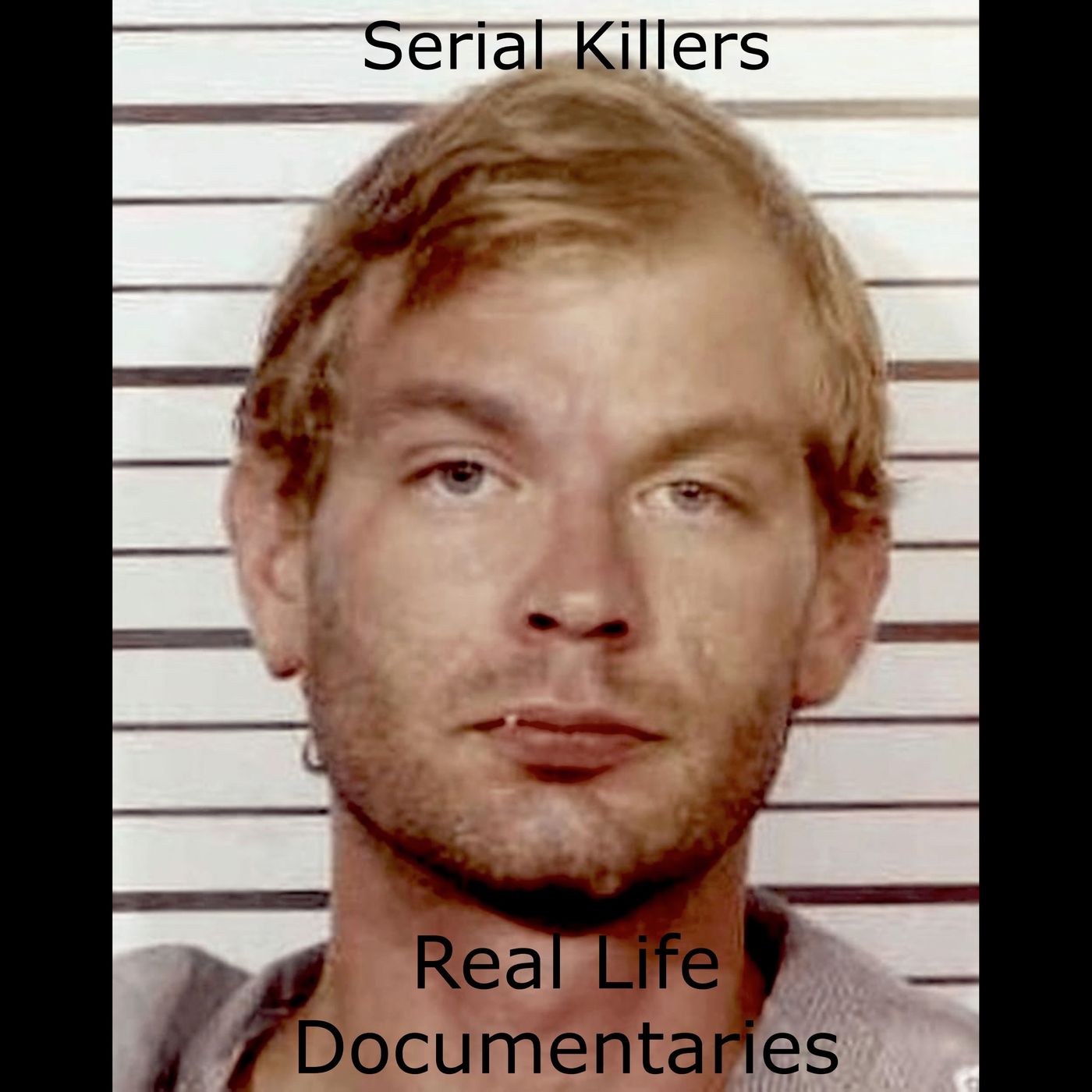
Serial Killers: Real Life Documentaries
Serial Killer Documentary - Myra Hindley: Britain's Most Famous Female Serial Killer
Sonntag, 11. Oktober 2026 · 47 min
Kapitelklicken springt direkt hin
Shownotes
Serial Killer Documentary - Myra Hindley: Britain's Most Famous Female Serial Killer
Transkriptvom Podcast bereitgestellt · Zeitmarken springen hin
You going to book me?
I've got a mug here.
Is that gorgeous or what, eh?
And I believe I can run a decent marathon.
Download Veely now.
In this series, I'll be shining a light on six of the most prolific female mass murders in history.
So welcome to the dark world of the Lady Killers.
Some may ask, why call up anew this gruesome crime of more than 30 years ago? Let time cover it, let it be forgotten. Surely I would not recall it for the sake of sensation. I write of it in the hope of applying to it the increase of understanding of such crimes that has come during these years. And in the hope of drawing from it some further increase in a comprehension of human behaviour. These are the words of author Maya Levin in The Fall to Compulsion. It's a crime novel about two people who set out to commit the perfect murder, purely as an intellectual experiment. And it was the book that allegedly inspired Ian Brage and Myra Hindley to torture, rape and kill five children across Manchester in the 1960s. Personally, I don't think anything I
could write would make someone actually go out and commit murder. But Brage and Hindley seem to devour books, films and lyrics twisting them to suit their own perverted ideology. While listening to Nazi war speeches, Ian would affectionately call Myra Hess after Hitler's notorious deputy.
It was this desire to live by.
Their own rules and develop their own secret code, which eventually led them to systematically plan the Moors' murders as part of a sexually sadistic relationship. But what interests me is how does a seemingly ordinary working-class girl from Gorton become the most hated woman in British history, have faced the iconic image of evil. I think it's important to start with that police photo and found out why it became so embedded in this country's cultural landscape.
You felt there was a mask. Would somebody please take that mask off and show the real Myra Hindley? Because that mask there with that white hair, that sullen face, The eyes drooping, the prominent lips, the whiteness of the face, the whiteness of the hair with those dark roots. It's almost as if someone had touched her up to give her that look of evil.
Yeah, but she's got evil bloody eyeshows. And if you look at her photo, you can see the evil coming through to you.
I think it has become, hasn't it, the absolute image of... because she does look rather unreal in it, or created. And in a way, over the years, we have created Myra Hindley.
Right up until the day of her death, the only pictures that were being shown was that one picture of this hard-faced, peroxide blonde woman. And this became the face of evil, the face of wickedness, the face of crime.
It is an iconic image. It figures a lot in the psychopathology of people who... I do see with mental illness, if they're deluded, if they're schizophrenic, often the delusions will revolve around Hindley and Brady. It's quite common. I am Myra Hindley, or Myra Hindley's sending me voices.
But every picture tells a story, even a police photograph. Journalist and author Duncan Staff regularly wrote to Hindley and he visited her in prison. He says she was desperate to demolish the iconic image to convince people she was bullied into the killings.
When Myra Hindley wrote to me about her arrest photograph, she described how she was upstairs being questioned by detectives, how they then led her by the arms downstairs, underground, into the basement of Hyde Police Station, which was an extraordinary place. The corridors were very narrow, it was confined.
And she said she was then sat down in her chair and believed that she was about to be hit, that she was about to be interrogated.
Because Hindley thought she was going to be assaulted, she claimed she clenched her teeth defiantly. But it was a police photographer's flashbulb and not a fist, which went off in her face.
Now, I'm not sure that's quite an accurate version of events. What she's trying to do there is to show herself as a bewildered, frightened girl who's suddenly behind bars. I don't believe it's quite like that. I actually think the image that you see of her, that hard, harshly lit image, it is actually an accurate portrait of Myra Hindley at the time.
The photograph didn't do her justice. The photograph was a prisoner's photograph. And I'm quite sure she was a bit more photogenic than that photograph shows.
Her.
None of us, if we're arrested, would like the photograph taken down in the police cell area to be the one that's forever... shown on the front page because you're at your worst. It did portray her, as far as the public was concerned, as the monster that they perceived her to be.
I find it really ironic that photographs should play such a part in her demise. Brady and Hindley happily recorded every part of their lives with expensive cameras. Brady spent hours in his darkroom developing hundreds of these images. Personal photographs from their vast collection give me a real insight into their relationship.
They look like any other normal couple.
In a lot of these snaps, Myra looks really glamorous.
You can see they're.
Obsessed with their pet dogs, but there are clues to their secret life. There's an obvious fascination with guns and the Moors. Later, police realise that these scenes mark the graves of their victims. They escape to Saddleworth to drink wine, listen to classical music and kill children. It was Myra and Ian against the world.
For all intents and purposes, Hindley seemed a relatively normal, in inverted commas, young female until she teamed up with Ian Brady.
She said she, in due course, was fascinated by him and eventually it led to, frankly, a total Bonnie and Clyde kind of relationship where she said she ended up literally killing for the love of this man, Brady.
She was indoctrinated, but she was very willing to be indoctrinated, and she had the wherewithal, perhaps even more than Ian had, the ability to carry out such crimes.
But what I really want to find out is what caused Hindley to turn her back on everything she knew and coolly take children off the streets where she actually lived with the sole purpose of ending their lives.
As a crime author.
I've always been intrigued by what motivates women to kill. I've done a lot of research into Myra Hindley and the Moors murders. And I'm still no closer to understanding how a female could actually torture and murder children as young as 10.
To me, I still find that shocking.
So imagine the reaction to this case in 1966.
This is the.
First time that we had people who were enticing individuals from their environment torturing them, killing them, and burying them in a place like the Moors. And when you look at the individual's consent, they didn't do anything by chance. They planned everything.
And that's what makes it even more evil.
I've come along to the National Archives in London to meet Ian Fairley. As a 21-year-old detective constable, he arrested Brady and helped crack the whole Moors murder case. We've been allowed to see some very rare documents from the trial and of their lives together. I'm hoping these will help me understand what turned Hindley into the most notorious female serial killer of our times.
Oh, yeah, and this is really exciting.
I mean, we're some of the first people to have access to all this now, you know, so it's all been made public.
I think the first.
Thing we need to do is get these gloves on before we touch anything. I mean, for you, after 40 years, I mean, this must be... I mean, is it shocking?
It is.
It's like when you think you do something in 1965 and you see it 43 years later, it's here. I mean, it's like all our yesterdays. It's all their yesterdays. It's certainly all their lifestyle because there's everything here.
Well, yeah, obviously. This is your notebook, isn't it?
Yeah, yeah.
Ian Fairley's notebook records a dramatic event of 7th October 1965. which led to Hindley and Brady's downfall. At this stage, police were unaware that the couple had already killed Pauline Reid, John Kilbride, Keith Bennett and Lesley-Ann Downey, but their fifth murder was to prove their last.
On that morning, DC Fairlie was one of three officers.
Who responded to a 999 call made by David Smith from a phone box in Hattersley. The 17-year-old was married to Hindley's younger sister, Maureen, He told police that he'd witnessed the brutal murder of teenager Edward Evans at the house Hindley and Brady shared with Myra's grandmother at 16 Wardlebrook Avenue, a killing they wanted him to be a part of.
What's that?
Myra England? Yeah.
I've got a report of a murder. A murder?
What are you doing?
You can't just come back.
The door in actual fact had been answered by Myra Hindley. We walked in, and me and Brady was actually lying in bed in the lounge, and he was in the process of writing a note to his employer saying he wouldn't be in that day as he had twisted his ankle.
He was writing that, wasn't he, so he could go and dispose of the body?
Well, in actual fact, he did have an injury to his ankle, and what we think, and what we were pretty certain happened, was when he actually attacked Edward Evans with the axe, he struck his own ankle with it on the blunt end of the axe... and damaged his ankle, so he was limping. He did injuries himself. Mrs Mayberry, that was Myra Hindley's grandmother, was still asleep in the bedroom upstairs. And also, one of the bedrooms was locked upstairs.
Hindley then produced the keys for the bedroom. We went upstairs, in a corner, we found the body trussed up in the fetal position, and it was in two plastic bags.
At this stage, police were treating Edward Evans' death as a one-off murder. As a seemingly respectable couple with good jobs, Hindley and Brady were quite confident they could get away with their plan B. That was to blame David Smith, Myra's brother-in-law. He was a local troublemaker and he was in awe of Ian Brady.
Brady interview, 4.15.
I never left Brady's side that day, but through the course of the day, we interviewed him and he made a statement. He wrote Myra Hindley out of the incident He admitted he had killed Edward Evans, but suggested that David Smith had taken an active part.
David Smith was meant to help rob Evans. Now, Brady had this idea that Smith was going to kill Evans and help him dispose the body. The trouble with it was that when he saw Edward Evans being beaten to death by Ian Brady with an axe, he simply didn't have that same mental toughness that Myra Hindley had and didn't want to be part of those killings.
David Smith told us that there was more. When he said more, more what? More murders. Why do you know there's more murders? Because he's told me.
Detectives were drawn a blank until they found two suitcases in the left luggage office at Manchester Central Station. Inside, sick mementos from the killings led them straight back to Brady and Hindley.
Now, to say these suitcases were packed was an understatement. You couldn't have got anything else in them. There was loads of books, there was also tape recording reels, loads of photographs, and we found a photograph of a young girl, naked, with a scarf tied around her face. I didn't recognise who she was, but I've got to say, that was enough.
It's really a suitcase full of horrors, and it was then that everything began to change from a normal routine murder into what developed into a serial killing by two monsters.
It's getting to somewhere in the region about quarter to ten, ten o'clock at night. A lot of black and white televisions on the corner. And all it comes on, and it was children missing from home in Manchester. And the first picture flashed up on the screen was Lesley-Ann Downie.
Myra Hindley had picked up the 10-year-old from a fairground the day after Christmas 1964. Pornographic photos of the little girl found in the suitcases revealed she'd been tortured in Hindley's bedroom, something that makes my blood run cold.
But it was a 16-minute.
Tape recording in which Hindley tells Lesley-Anne to shut up as she pleads for her life, which reduced even the hardest of hearts to tears.
After listening to that tape, one police officer said, this case is beginning to rank as one of the most nauseating murder investigations. So nauseating, in fact, that the details may never become public.
In that tape, Leslie Andoni has been tortured and she wants her mummy. Another voice on the tape is, of course, Mary Henley. I think possibly that was that tape where the child was eventually murdered. But what makes it even worse is in the background is the tune The Little Drummer Boy is being played. 43 years later, it makes me go cold now thinking about what was on that tape or what must have happened to that little girl.
But the fact that.
They taped it, God, it's horrible.
They'd got tape recordings, they'd got photographs, and the picture that began to assemble then was of a bizarre, ugly, pornographic cult relationship, and it was then that they started looking through missing files, missing children and so on, and the whole thing basically exploded.
Following a tip-off from David Smith, police from five neighbouring forces began searching Saddleworth Moors. They were determined to give poor Leslie Ann Downey's mum some kind of closure. But they were also looking for missing children like John Kilbride, Keith Bennett and Pauline Reed.
They really had to change their whole attitude and their whole approach to it in terms of the scale of the investigation and trying to understand these people more particularly, trying to get their heads round how many children could be involved and how many bodies could be up on the moor.
Police searching the moors found Leslie Ann's body in a shallow grave. After the discovery of the little girl, detectives decided to take another look through the suitcases for more clues. One name in Brady's notebook leapt out at DC Fairley.
I was just thumbing through the book and, of course, I saw his writing here and all that, wondered what it was, and then, of course, saw John Kilbride's name. John Kilbride was a connection to the Brady and Hindley And of course, as a result of that, we went on. And found out everything. We looked at the photographs. We actually saw the photograph of Myra Hindley with a dog inside a coat looking at the ground. Yeah. Dug the ground up and found the body of John Kilbride. So this tied them into the John Kilbride murder.
The clothing of the body found buried on the Yorkshire moors yesterday has been identified as that of John Kilbride, the 12-year-old boy who disappeared from his Manchester home nearly two years ago. The search on the moors continues.
By this stage, police not only had enough evidence to convict Hindley and Brady of the killing of John Kilbride, but of the murders of 10-year-old Lesley-Ann Downey and 17-year-old Edward Evans. so a decision was made to call off the search for other missing children. Their other victims, 16-year-old Pauline Reed and 12-year-old Keith Bennett, remained.
Buried on the moors.
Tragically, it was another 20 years before Pauline Reed was found and finally given a proper burial. Keith Bennett's mother, on the other hand, has never been able to bury her firstborn son.
Until he's found, I'll never stop. Even if I'm a bloody old woman and I've got to crawl on my knees, I'll come up here because I know he's up here now. I won't stop coming up here until he's found. I've told the police I don't think much of him because they've never found him. Why can't they find Keith? They found all the others. Why can't they find Keith?
I still maintain, and I've maintained that always, that we did not do it justice in 1966, but there were senior officers who still had budgets, and that was the decision that was made. There was no money to spend on a well of Goochess, and they couldn't do it. Let's bear in mind, in 1966, we didn't know that they had murdered Keith Bennett. We only know that now, because Brady and Henley weren't telling us. The same in 1966, we didn't know they'd murdered Pauline Reade.
What impressed the police officers interrogating Mary Hindley and her cool, resigned and casual way in which she dealt with questions left one single impression, that here you are dealing with someone who does not have the full complement of emotions.
I mean, some of the stuff that we've looked at here today, I mean, some of the photographs and everything... when she was sort of showed these things, she still didn't.
Didn't want to know. Just didn't want to know. Complete blank.
Denial.
Complete blank. And all she kept saying, Ian didn't do anything, I didn't do anything, it was David Smith. And it was always down to David Smith.
Despite their silence, 23-year-old Myra Hindley and 27-year-old Ian Brady were charged with the murders of Edward Evans, Lesley-Ann Downey and John Kilbride. Months earlier, they would have faced the hangman's noose, but the fact that this was the first murder trial since the abolition of the death penalty fuelled the public hatred. David and Maureen Smith went from being part of the couple's inner circle to becoming star witnesses for the prosecution.
The extraordinary atmosphere that surrounded the case came through in Mara Hindi's letters and in her unpublished autobiography. She was very aware of that. She described how they could hear waves of sound coming down the corridor.
It shocked the nation, really, and it shocked people, what had happened and how it happened and the numbers involved, and also the families involved. We then had television, and it was almost brought into people's sitting rooms, and it was there in front of you, and so it didn't go away.
The trial at Chester Assizes was sort of the final scene, the final act, but rather like first night, your sense of expectation. How is it going to play?
The whole thing had placed her on a high in the sense of, you know, she was no longer walking on the real world. You know, here she was, the center of worldwide attention for these dreadful crimes. It hadn't yet dawned on her that she was now to face life imprisonment, separated from the man she'd loved. and to be the most reviled and hated prisoner in Britain.
And yet what's striking is that in the face of this, her bond with Ian was completely unbreakable. She was still in this world with him and wouldn't let go.
They were like two musketeers. They were one for all and all for one. They were all together. They were together in a partnership and they stopped by that. And if you kick one, the other would limp. They lived in each other's world and they lived together. And they lived for each other.
Some people might say Myra didn't react to anything at first because she was in shock, probably the shock of getting caught. But I think the fact that she remained totally cold throughout the trial spoke volumes about her character.
The thing which lives with me most of all is watching these two in the trials, sitting there, completely expressionless. They just didn't move for days on end, you see. The faces, no sign of emotions.
Not even a wet eye, not even, if you like, even a tear of regret or a tear of fear.
You were hypnotised in a peculiar sort of way by them, by their lack of reaction, by their behaviour. You say, well, is this not having any impact on you at all?
She had this ability to switch on. Like, she had the ability to switch off when she was being questioned. She had the ability to switch off when she heard the tapes of Lesley-Ann Downing.
Hindley's fate was finally sealed when the prosecution's key piece of evidence was played to a packed court number two at Chester Assizes. 42 years on, those who heard little Lesley-Ann Downey being tortured and pleading for her life remember every second of that tape. Incidentally, that same recording that brought about Hindley's downfall is now locked in a secret vault.
It's deemed to be too disturbing for the public to hear.
We'd been briefly prepared for it. But when it came, I was shocked. It was gut-wrenching stuff. You hear that kid screaming for her life, pleading.
You could see these people around the court, members of the jury. You could see the tears coming to people's eyes.
And you looked at these two and said, no emotion on their face as it was played.
No emotion.
You aren't really human. Go on, react, react, do something. Show some emotion. so we can basically record it and show you that's some humanity.
But it wasn't there.
Not at all.
Once that tape was played, one couldn't sink lower so far as horrendous crimes are concerned. And once the jury and the court had heard that, I mean, so far as the world was concerned, and the victims' families especially, there was no coming back.
When the jury came by and gave the verdict, I mean, There was more expression of relief from the police than there was any expression of despair from them. I don't think there was any expression at all from them.
The verdict was no surprise. Their reaction was no surprise. Sentence was delivered. No reaction from them. No words. And take him down, take him away, and then it went out of public gaze.
On the 6th of May, 1966, Judge Justice Fenton Atkinson sentenced the Moores murderers to life imprisonment. Myra Hindley was 23 years old. It would be the last time Brage and Hindley would ever see each other. For Hindley, life really did mean life. She would die behind bars 36 years later. 40 years after she became the face of evil for a whole generation, Hindley remains the most reviled woman in Britain.
But I want to find.
Out what sparked her fatal attraction to Brady and how did this obsession lead to her own compulsion to kill? In 1966, 23-year-old Myra Hindley was jailed for life for her part in the Moores murders. In just over two years, she and her partner Ian Brady had tortured, raped and killed five children and teenagers across Manchester.
I want to know why.
More than 40 years after she was convicted, Hindley remains the most hated woman in Britain. Four successive Home Secretaries have refused to even consider her for parole. At the time of her death, she was the longest-serving female prisoner in our history, a dubious record that she still holds. As a crime writer, I want to know what drove this woman to torture and murder children from her own community.
Myra Hindley was born in the working class district of Gorton in Manchester on the 23rd of July, 1942. Like many others, she was raised in a typical back-to-back Victorian terrace.
Myra Hindley was born into a not well-off working class family, the same way thousands and thousands of people over Manchester were. The thing that was unusual about her family circumstances was her father. Right, young lady.
A father knocked her to hell and back when she was at home, when she was a kid, because he was a drunkard.
She had quite a brutal upbringing and there was a turning point, as she describes it, where she'd been bullied by another child and dad had told her, you know, stand up for yourself and fight back and she ended up hitting this kid and that she's attributed to shaping her in the sense of saying violence is okay.
Definitely a girl that could stick up for herself. Definitely a strong, confident I would say that if there was any problems, she could sort them out.
When Myra was four, her sister Maureen was born, and her parents sent Myra to live with her granny Mayberry.
Myra overpowered her gran. Gran was such a lovely, lovely lady. Myra was then the boss, and Myra liked being the boss. She was loud, she was brash, and she was definitely the boss.
I think that certainly had a role to play, the fact that she could get away with whatever at her grandmother's house, and certainly in terms of her development, being able to get away with whatever she wanted to, that kind of sent a message to her.
She loved her grandmother, but there was always this feeling that she had been put out of the nest in order to create a space for a new baby. It was probably her first rejection, although she perhaps didn't realise it was rejection at the time.
The question is, which came first? Did the rejection make her cold or was there something rather cold about her? Was she an easy baby to reject? Did she come into this world with some kind of propensity for destructiveness that was more than others and then was triggered in this relationship?
Hindley struck up close friendships with other children and played like any other little girl would. But she escaped her surroundings by immersing herself in the world of books like The Secret Gardens.
Her lifelong love of.
Literature was to prove a significant shared bond with Ian Brady.
Myra did form deep friendships and relationships with people throughout her life. It was a characteristic of her personality that she would latch onto individuals. It was described to me by a former lover of hers as her beam, and once you were locked in her beam, you were the sole focus of her attention.
Like any teenager in the rock and roll era, Myra enjoyed going to dances, Every Saturday night, she and her friends would go to the Ashton Palais and bop along to the latest records. But her life changed forever when she started work as a typist at Millwoods Engineering in Gorton. By the end of her first day, she'd fallen for a mysterious Glaswegian clerk called Ian Brady. The 18-year-old wrote in her diary about her unrequited love for a 23-year-old man who reminded.
Her of Elvis Presley and James Dean.
On these pages, she poured out her frustration over Brady's indifference.
He ignored her for a year, which, of course, whetted her appetite more and more, because... What you can't have becomes more desirable, and he was just playing her along.
He was handsome, and I said, what is he doing with her?
The lads used to say she was all right and gone, but as a kid's point of view, I don't think she was a pretty woman.
Myra did write to me about how she first started the relationship with Ian. They'd been out to a pub, it was a Christmas party, they'd all got drunk, they then went back to Millwoods, and she described... how he started dancing and he was drunk and he trampled all over her feet. But she writes about it years later with a great feeling of happiness. You can see that there's real excitement there. And then from that point on, the relationship accelerated very quickly.
But this was to be no ordinary courtship. Hindley regularly worshipped at the Catholic Monastery of St.
Francis in Gorton.
She later wrote that Brady convinced her to give up her faith. Instead, she was encouraged to read books by the philosopher Nietzsche and the Marquis de Sade. It was her introduction to the world of sexual sadism which laid the foundations to the Moors' murders. These are actually Ian Brady's own personal copies of the Marquis de Sade, of Justine, and The Life and Ideas. When you read some of the stuff that he's written, sort of in his notebook, he's got here, people are like maggots, they're small, blind, worthless, fish bait.
Rape is not a crime, it's a state of mind. Murder is a hobby and a supreme pleasure.
He goes on and on, all this stuff that he's read in Justine and everything else. Personally, I think two people met here who recognised some kind of evil in the other person, that they possessed themself.
The Magadhisad is really the benchmark of sexual sadism. A sexual sadist enjoys or gets sexual pleasure out of other people's pain, that is, controlling them, humiliating them, and actually watching them endure physical tormenting.
And certainly the first sexual encounter, you know, we have it on account, and of course it's her account, that he was quite sexually vivacious and quite aggressive and violent. That was her first experience, but she was quite happy to be part of that and to carry on the relationship on those terms and of course from there things would only ever get worse.
Hindley and brady began to create their own special secret world but this world revolved around sexually sadistic fantasies of torturing raping and murdering young children 18 months after starting their relationship they were finally ready to kill myra hindley was just 21 years old.
Myra tried to argue in later life that she had no idea that Ian Brady was serious, that he gradually indoctrinated her to a point where she was willing to take part in the murders. I don't think it was as simple as that. I think that she was constructing a world with Ian Brady and that that world got stronger and stronger and stronger and then eventually they were able to carry out the killings.
For anybody to suggest that she could be indoctrinated into anything unwillingly is completely out of the question. I think she initially could be influenced into taking part, but I do believe that she was very much a willing partner.
We need to remember that she did go on to become a very active part, and in fact was the one who went out trolling for victims.
Most sexual sadists don't carry out their fantasies. That's the wonderful thing about fantasy. Fantasy is better as a fantasy. Reality brings with it elements of lack of control. For example, a fantasy you can control completely. Reality, as with Hindley and Brady, got out of hand.
Myra said that they got to a stage where they were ready to commit murders when he introduced her to a book called Compulsion, which is about killings by Leopold and Loeb. So they already had this abnormal sexual relationship. They already had these fantasies that they were acting out. Then he introduced her to a book about killing and told her, I want to commit the perfect murder.
I mentioned compulsion right at the beginning of the program. It's based on a real case from Chicago in the 1920s, when two privileged young college students kill another young boy purely to exercise their superior intellectual skills. Dubbed the crime of the century, the killers were caught out by forensics.
Ian Brady vowed not to make the same mistake. Using secret codes and elaborate plans, they plotted every detail of their perfect murder.
With sexual sadists, you know, it doesn't just happen by chance. There's planning, preparation. They know exactly what they're going to do, which role they're going to play, right up until, you know, the body disposal and what happens afterwards.
It was the first time, as far as I'm aware, that we became knowledgeable about how meticulous people planned events.
They counted the buttons on their clothes before they went out and killed children. They counted them when they got back. They burned their shoes. They took photographs of the grave sites before the killings and then after the killings. There was nothing accidental about the way these crimes were carried out.
Hindley and Brady's photo album contains pictures of children that they'd taken at random in school playgrounds. It's really frightening to think that they may have been identifying and even watching potential victims.
However, the first killing was much closer to home.
On the 12th of July, 1963, Hindley's 16-year-old.
Neighbour, Pauline Reed, was walking to a local dance.
But Hindley and Brady had more sinister plans in mind for the teenager's evening.
Myra Hindley said that she was bullied into the killing of Pauline Reed, that Ian Brady made her do it. Now, I'm not sure that's right at all, because the murder was carefully planned. Myra was driving down Froxham Street... She stopped her car, rolled down the window and said, would you help her look for a glove?
She coolly and calmly took somebody off the street that she knew and fed Pauline to Ian, knowing full well what was going to happen next.
They then drove up the moor with Ian following on a motorcycle. Mara knew where to park. She knew that Brady was going to take her onto the moor and she describes sitting in her van knowing that Ian Brady was raping her and was going to kill her. Very shortly afterwards, she describes drinking a bottle of Drambuie with Ian and making love to him. This speaks of an act that somebody has carefully worked out and is then entering into as a willing accomplice.
Pauline wouldn't have gone in any stranger's car. Pauline only got in that car because she knew her. She wouldn't have gone with anybody else.
She wasn't stupid. She wasn't a daft girl, Pauline. She was very sensible.
Hindley quickly perfected her role in the couple's killing partnership. Four months after Pauline's murder, she coolly lured 12-year-old John Kilbride to his death. Seven months later, Keith Bennett was walking to his grandmother's house. He never made it. 12-year-old Keith was to be their third victim.
Brady couldn't drive a car. So she'd done all the driving, and he was at the back of her, and when he wanted somebody, he'd point him out to her and flash his light on his back, and they took him straight to the roads after that, and that was it. But I didn't know that at the time. I just thought, oh, he'll come back, and when he does come back, I'll bloody kill him, you know, but he never come back.
Mara Hindley was a woman, but it was because she was a woman that the murders could happen. Ian Brady needed her, He was an awkward person and nobody was going to get into a car with Ian Brady. And Myra Hindley admitted that.
She said to me, Andrew, I ought to have been executed. I ought to have been hanged. I deserved it. And she said my crime was worse than Brady's because I was the woman and I enticed the children, as it were, into Brady's car and they would never have entered the car without my role. And so she said, I have always regarded myself as worse than Brady.
Brady was diagnosed with a psychiatric illness a few years ago And although this doesn't justify his behavior, it may be explained some of it. But when you look at how Hindley acted, it's not as clear cut. Some people say she was mad, but I think she was just plain evil.
Nobody would know anything what she'd done. She'd go in the pub. It was all photographs of missing children then. I'm not just talking for after Pauline went missing, Nazian Downey, John Kilbride, all of them. And she'd just go in them pubs and then flick her an eyelid. stand there and have a drink, laugh, joke, knowing that she knew where them children was.
Myra was a chameleon. She adopted to circumstances incredibly, far more than most people on this planet ever did. She surely has to be accepted as being psychopathic. Her limited sensitivity and empathy would be necessary in order for her to go through the things she's done.
It's possible she'd suffer from a disorder called psychopathy or psychopathic personality disorder. And all personality disorders have in common the feature that you've been like it from an early age. It's not like an illness where you were well and then you got it. And there are many aspects or many facets to psychopathy. but one is this callous, unemotional behavior.
She was also quite profoundly evil because she was very aware, as many psychopaths are, of the harm they were doing.
It's obvious to me that over the course of the two years they killed those children, the power in their relationship shifted.
He was the boss at work, but how much was she the boss at home? And that's something that I feel that she did what she wanted.
I don't believe that Mara Hindley was ever a servant. I think that she was a participant in the acts, and I think that she enjoyed them from the start.
She remained cool, you know, very calm about what was going on. And in fact, you know, it was Brady's own reckless and impulsive behaviour that led to them being detected and arrested.
It was Brady's failed attempt to introduce Hindley's brother-in-law, David Smith, to their sadistic partnership, which led to their downfall. Smith was a close friend until he witnessed the brutal murder of their fifth victim, 17-year-old Edward Evans, and went straight to the police.
The game was finally up.
And the couple were destined for life behind bars. But 40 years on, why does the name Myra Hindley still automatically go hand in hand with evil? Is it purely because she was a woman, and women are meant to be mothers, not mass murderers?
Maybe.
But I think it's probably more to do with the lies she told inside. Lies which led to her being seen as even more heinous than Brady. Myra Hindley and her lover Ian Brady raped, tortured and murdered five children across Manchester in the 1960s. 40 years on, they remain Britain's most notorious killers. It's always fascinated me why Hindley is seen as more evil than Brady. I think it's because he accepted his fate and wanted to die behind bars.
But Myra Hindley was determined to get out. After breaking off her relationship with Brady, She even tried to claim she was bullied into the killings. Influential supporters like Lord Longford continuously campaigned for her release, but the tabloids were always ready to remind the public of the horrific nature of Hindley's crimes.
I mean, she was, and she knew, she was notorious. I mean, the Sun newspaper would say to me that her case would sell as many newspapers as Princess Diana at the time. She was great for circulation and anything would be printed. Whether or not it was factual or not, that was irrelevant. The main thing is, let's get her on the front page.
The reason she stayed in the newspapers is because the crimes weren't solved. Newspapers and the tabloids are often produced saying they latched on to her just about selling papers. There's an element of truth in that, but there's also truth in the fact that they could see that she was lying and they kept nailing her for it over the years, and I think that that had a profound effect on public opinion.
In 1986... Brady told a newspaper that the couple had killed other children. This led to a dramatic announcement by Myra Hindley.
The Moors murderer Myra Hindley has confessed tonight to her part in the death of two children who vanished more than 20 years ago.
Hindley's decision to finally come clean about her actual involvement in the murders of Pauline Reed and Keith Bennett exposed the extent to which she'd persistently lied and manipulated everyone around her for years.
I would say... that Myra Hindley was evil. She was bad, if not worse, than he was.
Where did the evil come from? Was it always there or was it an evil deed or deeds done by someone who was fundamentally ordinary? In all my interviews with Myra, I never felt that I got to the bottom of that.
I don't think she was an evil person. I think she was a person who did evil things and that's a big difference. And I think she realised she'd done evil things.
You just shake your head in disbelief that this young person, who used to be a friend and a colleague to a lot of us, has done this horrible thing.
She took the babies, didn't she, to the slaughter, didn't she?
Yeah.
Who'd take a child in a car knowing that she knew exactly what was going to happen to that baby, boy or girl? There was no remorse in that woman whatsoever.
Not evil, evil.
Myra Hindley, probably the most hated woman in Britain, is dead. The Moors' murderess died of a chest infection after 36 years in jail.
Myra Hindley died on the 15th of November 2002.
She was 60 years old.
The priest who held her hand as she slipped away believes she did feel genuine remorse for her crimes. But it's ironic, really, because although he may have held her hand and offered her forgiveness, It seems the prison service actually had an awful lot of trouble finding an undertaker who was willing to handle the body.
All I can say is that she'd put herself into a position where in the past she confessed her sins. She was one of those people who over the time came to believe in the generous, in the giving nature of God and that in fact she was forgiven.
I don't know whether Myra Hindley felt genuine remorse. I can't answer that. What I do know is that she continued to lie about her involvement in the killings because she wanted to get out of prison. And I think that whether she felt remorse or not, that action and the consequences it had for the Reed family and for the Bennett family is something that's very difficult to forgive.
I was looking and hoping and praying that they'd find him, but I didn't think for one minute I'd go 40 years without him, or 44 years without him. And I've got to live with it for the rest of my life. I love coming up here any time of the day, day or night, because I know he's here somewhere, and it's the only way I can express my feelings, because I know he's been murdered up here. And I know he's with me somewhere on the moat, and he knows I'm coming up with flowers and that.
When I see Winnie still desperately trying to find her son, it's very hard to forgive Hindley. As a crime writer, I plan other people's lives and I often plan their murders too. But after getting so close to Myra Hindley, I don't think that there's a writer in the world who could adequately even come close to the arrogance, hate and deceit that festered inside her heart. It's clear that Hindley and Brady thought evil was some kind of spiritual experience.
They believed that they were superior to everyone around them and that they had the right to snuff out the lives of innocent children for their own pleasure.
Well, no-one has that right.
