

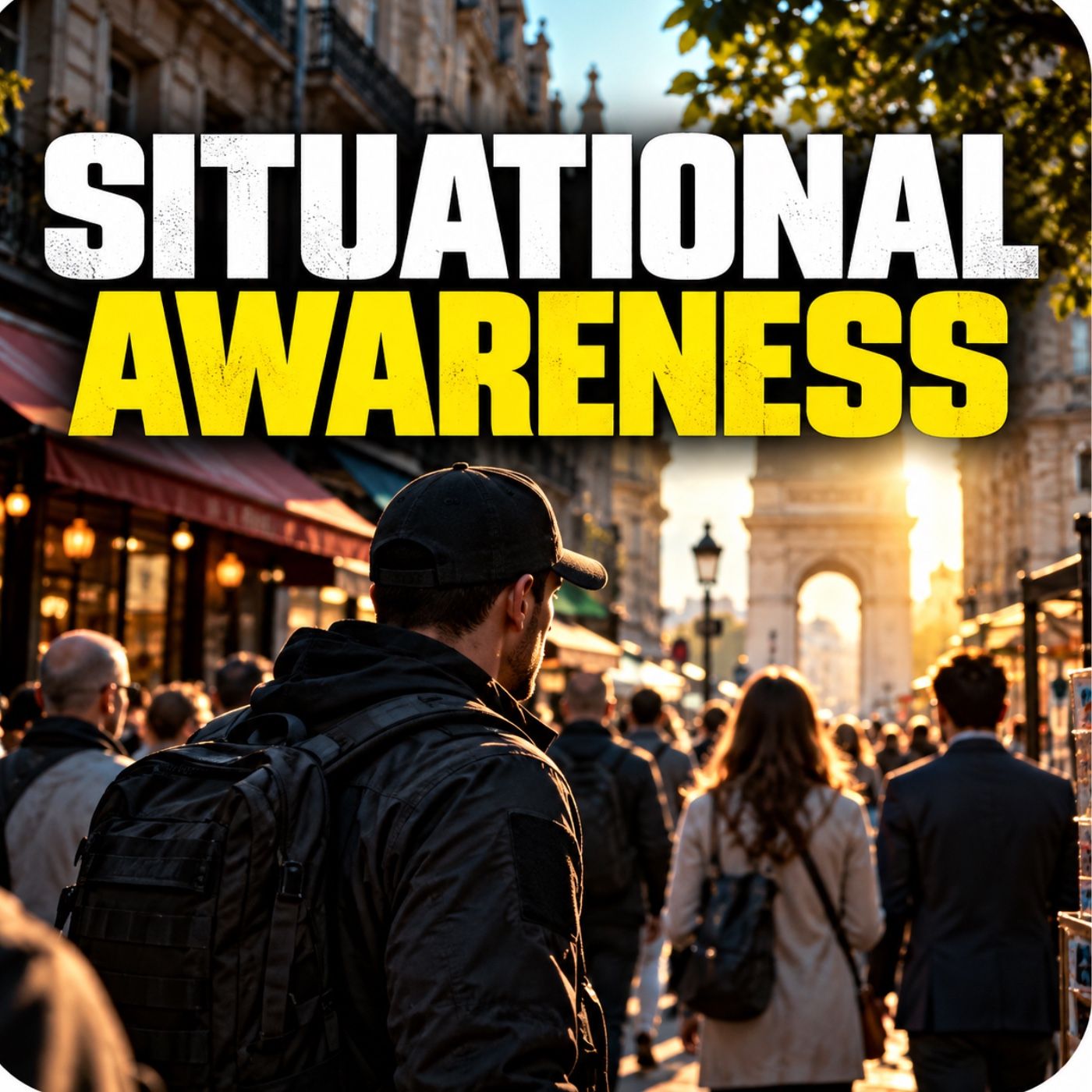
Are You Being Followed? The Situational Awareness Clues Most People Miss
Sonntag, 4. Oktober 2026 · 4 min
Kapitelklicken springt direkt hin
Shownotes
Someone has been behind you for several minutes. You turn, they turn; you cross the street, and eventually they do too. This episode explores how situational awareness helps you distinguish ordinary coincidence from a developing pattern—and what you can do without panicking or unnecessarily confronting anyone.
Transkriptvom Podcast bereitgestellt · Zeitmarken springen hin
Are you being followed? You're walking through a busy downtown area when you notice someone about 30 feet behind you. Nothing unusual about that. At the next intersection, you turn right. A minute later, you notice the same person behind you again. You cross the street and continue toward a shopping district. Eventually, the person crosses too. Now you start asking yourself, are they following me? Or are two people simply traveling in the same direction? Situational awareness begins with resisting the temptation to answer that question too quickly. One shared direction means almost nothing. People leaving the same train station, parking garage, office building often travel similar routes. What deserves attention is
pattern persistence. The person remains present after several ordinary changes in your movement. Perhaps you turn onto another street, enter a public location, or alter your destination, and later notice the same individual again. No single observation proves intent. Instead, your attention should increase as coincidences accumulate. The question changes from is this person suspicious to is this pattern becoming less easily explained by coincidence. Most people make one of two mistakes. The first is inattention. They're looking at their phone, wearing headphones. They never establish enough awareness of their surroundings to notice repetition. The second is confirmation bias. When someone thinks that a person is following me, Every action thereafter
can suddenly appear threatening. If the person turns, that seems suspicious. If they stop, good situational awareness requires avoiding both extremes. Notice without immediately interpreting. The principle is simple when it's called the awareness principle. Look for patterns, not isolated behaviors. Human behavior is noisy. Someone looking in your direction may simply be looking past you. Someone walking behind you may share your destination. Context matters. What gradually increases concern is the combination of repetition, persistence, and decreasing coincidence. Think of awareness as gathering information rather than reaching a verdict. You mentally note, blue jacket, backpack, approximately 30 feet behind me.
Then you continue normally. A few minutes later, simply notice whether that person is still part of your environment. This approach prevents two dangerous tendencies. Ignoring meaningful changes because everything initially appeared normal. and escalating an innocent situation. Situational awareness isn't about constantly searching for threats. It's about maintaining enough attention to recognize when the environment stops behaving as expected.
If the pattern begins making you uncomfortable, you don't need to determine the person's intention. Just create distance. Move toward a populated, well-lit, staffed location such as a store, hotel lobby, restaurant. Contact someone you trust or the authorities. Avoid confronting the person simply to discover whether your suspicion is correct. Your objective isn't to solve the mystery and you're not in a TV show or a movie. It's to reduce your exposure while gathering better information. Sometimes the safest decision happens before you're certain there is a threat. Notice first, interpret second, act before certainty becomes necessary. You don't need to prove someone is following you before making a low-risk decision that
increases your safety. Situation awareness does not mean assuming that someone behind you is dangerous. It means recognizing when coincidence begins developing into a pattern. Human beings have patterns.
