

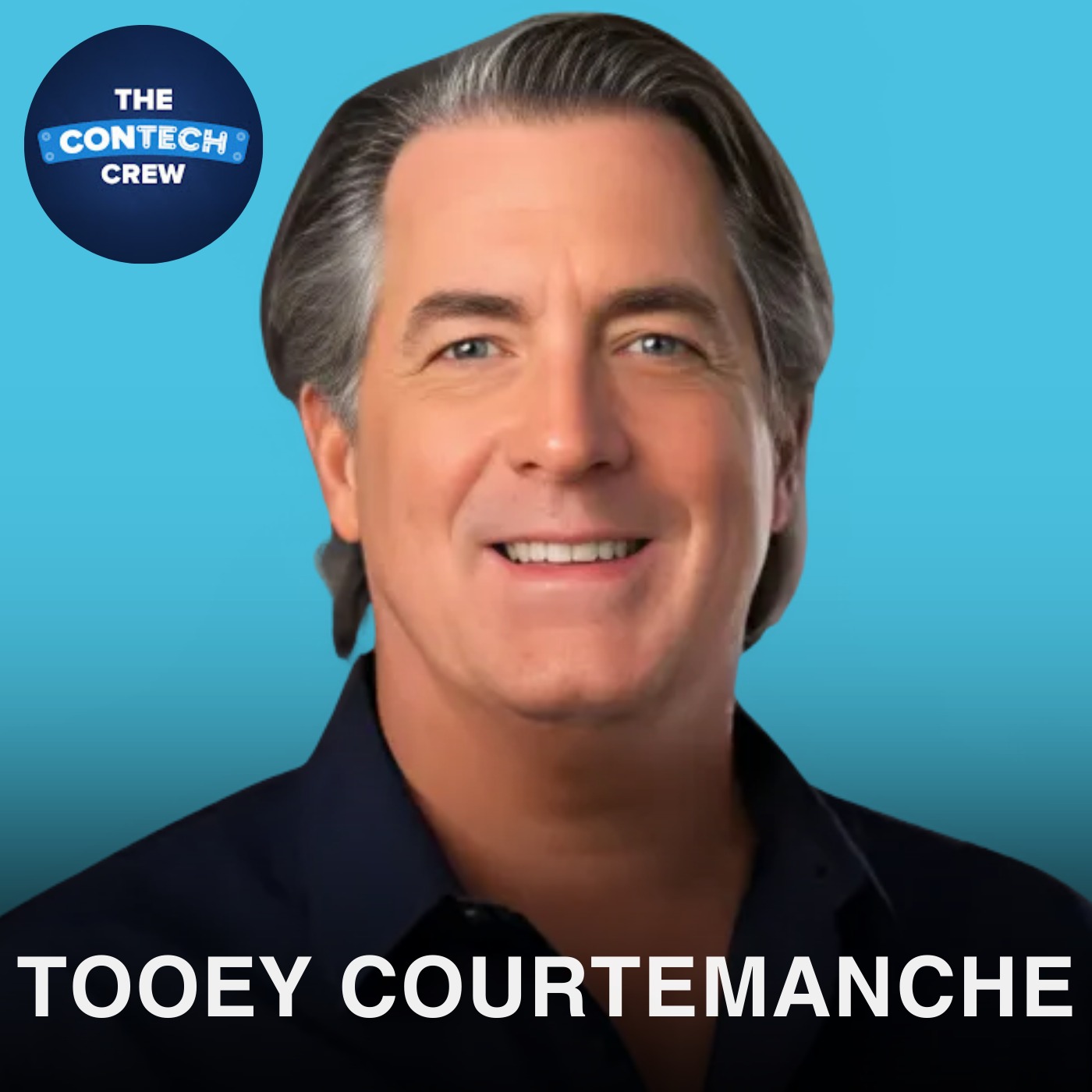
AI and Leadership Are Transforming the Construction Industry with Tooey Courtemanche
· 50 min
Kapitelklicken springt direkt hin
Shownotes
<p><strong>Disclaimer:</strong> This episode is a rerun of a previously aired conversation, but the insights remain as relevant and powerful as ever. Enjoy this timeless discussion on the evolution of construction and the role of technology in shaping its future.</p><p><br></p><p>In this episode of <em>The ConTech Crew</em>, host <a href="linkedin.com/in/ironmanofit/"; rel="nofollow">Jeff Sample</a> sits down with <a href="linkedin.com/in/tooey"; rel="nofollow">Tooey Courtemanche</a>, CEO of Procore Technologies, for an enlightening discussion on the construction industry's transformation over the past decade. Tooey offers a unique perspective on how technology has reshaped the sector, the role of leadership in driving innovation, and the growing importance of mental health awareness within the industry.</p><p><br></p><p>Tooey also shares the story behind Procore's journey, reflecting on key trends that have impacted construction and giving a sneak peek into what the future holds. The episode is packed with valuable knowledge and forward-thinking ideas for seasoned construction professionals. </p><p><br></p><h3>Key Takeaways</h3><ul><li>Celebrating ten years of innovation in construction and what's on the horizon for the industry.</li><li>Why learning to prioritize is essential for success in construction tech.</li><li>The critical need for mental health initiatives and the role companies can play in supporting well-being.</li><li>How cutting-edge technology is changing the way construction projects are planned and executed.</li><li>The impact of technology on the next generation of construction professionals.</li></ul><p><br></p><h3>Timestamps</h3><p>[] – Setting the Stage</p><p>[] – Leadership Lessons from Reagan’s White House</p><p>[] – Embracing Competition to Drive Innovation</p><p>[] – The Evolution of Construction Technology</p><p>[] – Leveraging AI for Predictive Insights</p><p>[] – Mental Health Awareness in Construction</p><p>[] – Closing Thoughts & Looking Ahead</p><h3><br></h3><h3>Follow The Guest & Company:</h3><ul><li><strong>LinkedIn:</strong> <a href="linkedin.com/in/tooey"; rel="nofollow">linkedin.com/in/tooey</a><strong>; </strong></li><li><strong>Instagram: </strong><a href="instagram.com/tooeyc/"; rel="nofollow">instagram.com/tooeyc/</a></li><…: </strong><a href="x.com/tooeyprocore"; rel="nofollow">x.com/tooeyprocore</a></li><li&… (Company):</strong> <a href="procore.com/en-sg"; rel="nofollow">procore.com/en-sg</a></li><li&g… (Company):</strong> <a href="linkedin.com/company/procore-technologies/"; rel="nofollow">linkedin.com/company/procore-technologies/<…; </li><li><strong>Facebook (Company):</strong> <a href="facebook.com/procore.tech"; rel="nofollow">facebook.com/procore.tech</a>; </li><li><strong>Instagram (Company):</strong> <a href="instagram.com/procoretech/"; rel="nofollow">instagram.com/procoretech/</a>; </li></ul><h4><br></h4><h3>Follow the Host:</h3><ul><li><strong>LinkedIn:</strong> <a href="linkedin.com/in/ironmanofit/"; rel="nofollow">linkedin.com/in/ironmanofit/</a></li&… The ConTech Crew:</h3><ul><li><strong>Website:</strong><a href="thecontechcrew.com"; rel="nofollow"><strong> </strong></a><a href="thecontechcrew.com/"; rel="nofollow">thecontechcrew.com/</a>; </li><li><strong>YouTube:</strong><a href="youtube.com/channel/ConTechCrew"; rel="nofollow"><strong> </strong></a><a href="youtube.com/channel/UCBDRThvRmSpyTZmMWY4EAjg&q…; rel="nofollow">youtube.com/channel/UCBDRThvRmSpyTZmMWY4EAjg&l…; </li><li><strong>LinkedIn:</strong> <a href="linkedin.com/company/the-contechcrew/"; rel="nofollow">linkedin.com/company/the-contechcrew/</a>; </li><li><strong>Facebook: </strong><a href="facebook.com/TheConTechCrew/"; rel="nofollow">facebook.com/TheConTechCrew/</a>; </li><li><strong>Instagram:</strong> <a href="instagram.com/thecontechcrew/?hl=en"; rel="nofollow">instagram.com/thecontechcrew/?hl=en</a>; </li><li><strong>Tiktok: </strong><a href="tiktok.com/@thecontechcrew"; rel="nofollow">tiktok.com/@thecontechcrew</a>; </li><li><strong>Twitter: </strong><a href="x.com/TheConTechCrew"; rel="nofollow">x.com/TheConTechCrew</a></li></…;
Transkriptvom Podcast bereitgestellt · Zeitmarken springen hin
[SPEAKER_01]: On this week's show, 10 years of groundbreaking experiences with Tui from Procourt. [SPEAKER_01]: Alright, I don't really think he needs an introduction, but I am really excited for a special episode to sit down with Tui, CEO of ProCore, Tui, say hello to the folks, you're not new here, so say hello.
[SPEAKER_00]: And no, it's just good to be back, hello everybody, this is fun. [SPEAKER_00]: I'm not actually sitting down though, I should tell everybody, I'm actually standing up. [SPEAKER_00]: We're having a non-sit down, get together. [SPEAKER_01]: So yeah, we're having a little virtual chat, you know, we tried to chat at this little event called Groundbreak recently, you know, but there we decided we needed to sit down and talk.
[SPEAKER_01]: So I'm excited to sit down. [SPEAKER_01]: I really appreciate all the times you've been on the show. [SPEAKER_01]: It's really cool because we've gotten to kind of cover the ride and kind of ride along with it, going to groundbreaking part of it and covering it. [SPEAKER_01]: So I'm excited.
[SPEAKER_00]: No, I'm excited too. [SPEAKER_00]: And I appreciate Jeff the fact that you've been so involved in covering us and letting me come on. [SPEAKER_00]: It's always, it's always a lot of fun. [SPEAKER_00]: So thank you. [SPEAKER_01]: uh... you're welcome and so this this is what i want to dig into so i couldn't leave this and it just feels like forever but ten years of groundbreak this year i know i know it's uh... a decade of our lives Jeff i've gone by and uh...
[SPEAKER_00]: you know I it's funny we we actually dusted off the uh the power point presentation that was from that ground break the original one and uh it's just it's it's amazing to see how far this industry has come in a decade you know we had come from essentially the pen and paper days to you know now we're you know now we have robot dogs walking job sites it's just the future is here [SPEAKER_01]: Yeah, yeah.
[SPEAKER_01]: And we could see it kind of from there. [SPEAKER_01]: I mean, I can't imagine because it's it's a 22 year run for you. [SPEAKER_01]: So 22 years ago, I guarantee you couldn't see today. [SPEAKER_01]: But 10 years ago at that first ground break, what are some of the things you got right?
[SPEAKER_01]: You look back at the at the power point. [SPEAKER_00]: What do you get right? [SPEAKER_00]: Well, believe it or not, half of the entire event was trying to convince the audience that adopting mobile technology, both either an iPhone, an Android or a mobile device, I mean, a path iPad, was the future of technology.
[SPEAKER_00]: And we had all these proof cases as to why and like, [SPEAKER_00]: It was a funny that we were essentially selling the industry on why you should actually put a device in the hands of the people in the field. [SPEAKER_00]: That was one. [SPEAKER_00]: There was a lot on AR and VR being the future.
[SPEAKER_00]: A lot of robotics augmenting the construction process as being the, you know, future. [SPEAKER_00]: frankly, I don't know about you Jeff, but I'm just disappointed that we haven't done more in that decade. [SPEAKER_00]: Like, I think that there's, I don't know. [SPEAKER_00]: I mean, the fact that we've been talking about augmented reality for a decade, and, you know, we're just really getting to it as kind of, [SPEAKER_00]: I don't know.
[SPEAKER_01]: Yeah, it's kind of funny because this whole show follows your path there, right? [SPEAKER_01]: I think that was the cool, interesting reason that we didn't just jump together accidentally and talk to you guys along the way, it was because the show was born because we knew people didn't know what those mobile devices were, how to define AR and VR, how to define [SPEAKER_01]: That's part of me is is a little bummed we haven't reached further, but also after 10 years of this part of me realizes how Just big and Complicated the industry and the problems were trying to solve are so Part of me is like yeah, I wish we were further, but part of me is also like hey [SPEAKER_01]: Can't we celebrate this a bit because I mean you get to see this you get to see the projects you get to meet the people They're amazing.
[SPEAKER_00]: Oh, yeah. [SPEAKER_00]: Oh, yeah, and by the way, this is not to take anything away, but I just have the I had that founders mentality which is yours never satisfied with where you are you [SPEAKER_00]: You know, especially where you see where you're going, it's kind of like you're not driving vast enough to get to your destination, but yeah, no, I mean, and you're right, really what it comes down to the people, what's really interesting is we used to have to search, by the way, one of our guest speakers at the very first ground break is a gentleman by the name of Josh Newland who is the innovation specialist at Excel construction up in the Bay Area.
[SPEAKER_00]: and he was like one of the only people we had found that we're at a company in 2014 where they actually had a technology innovation specialist on staff. [SPEAKER_00]: And so we had him come and talk to us at Groundbreak and actually he came to work at ProCore a couple of years later and has been here ever since but but now you walk into every [SPEAKER_00]: You know, substantial construction coming out there, and they have an innovation department.
[SPEAKER_00]: They have, I mean, look at Suffolk, right? [SPEAKER_00]: Suffolk has an entire venture capital division, right? [SPEAKER_00]: And supporting like endless numbers of startups that are in our space. [SPEAKER_00]: That's the other weird thing was, there were very little if any coin solutions that would be integration partners for us back then.
[SPEAKER_00]: I think at one point we were bragging we had 10 partners. [SPEAKER_00]: And now we have over 400, but now it's just like, you know, it's, it's a crowded space back then. [SPEAKER_00]: It was just wide open. [SPEAKER_01]: Yeah, wide open and everybody's running for it. [SPEAKER_01]: It's interesting, too, because those, you know, those partners, Suffolk and those have gone that far and you're right.
[SPEAKER_01]: you come down the line and everybody's got a construction technologist. [SPEAKER_01]: Everybody has an operational technologist and it's become part and parcel to the game to be competitive. [SPEAKER_01]: It's become, that's the part I like about it is its table stakes. [SPEAKER_01]: But as a technologist and you somebody who wants to keep, you know, driving fast and we need that, there's still so much further to go.
[SPEAKER_01]: That's it's kind of interesting that I want us to be further, but I'm also excited. [SPEAKER_01]: We have further to go. [SPEAKER_00]: Well, this is going to sound a little self in grand doesing a little bit, but it's not a back in those days. [SPEAKER_00]: I felt like I was one of the only people in the room who was really thinking about this stuff like long-term.
[SPEAKER_00]: Now, I am, I pale in comparison to the visionary technologist that work in these companies that are thinking about this every day and really like practicing, you know, applying technology. [SPEAKER_00]: I learned from them, and we learned from them, you know, I know you had wired on here recently.
[SPEAKER_00]: I mean, we really do shamelessly like borrow from them because they're the ones that are so close to the, you know, the opportunities. [SPEAKER_00]: And there's just so many great thinkers out there now. [SPEAKER_00]: So it's, it's really, it's really cool. [SPEAKER_00]: Yeah, it is cool.
[SPEAKER_01]: And I don't think that's an accident either. [SPEAKER_01]: Like, I honestly believe there's a lot of that was not only intentional in what you were doing, but it's sort of what we need to see out of leaders, right? [SPEAKER_01]: revolutionary leaders, really transformational leaders, think differently.
[SPEAKER_01]: And in part that, to not only, and I was going to talk to you about not only a company, right? [SPEAKER_01]: Yet to have those people inside of Procure believe you and believe in you and the vision and the vision of a few others as it started to grow. [SPEAKER_01]: But then you had to do it to an industry, right?
[SPEAKER_01]: This you don't get here if you don't convince this industry that they can do it. [SPEAKER_01]: And there's got to be a moment where, oh, oh, wow, like the student is beating the teacher. [SPEAKER_01]: How do you shift as a leader? [SPEAKER_01]: Because you've been able to do that. [SPEAKER_01]: You wouldn't, you know, we see a lot of founders that can't handle that.
[SPEAKER_01]: So how, how was their intention in that? [SPEAKER_01]: And how's that? [SPEAKER_01]: Or has that been? [SPEAKER_00]: So yes, very much intention because by the way, I've seen those same founders that hold on too tight and think that they have to be the expert on every subject matter inside the walls of their company.
[SPEAKER_00]: You know, I have a very interesting story about my uncle worked in the Ronald Reagan White House. [SPEAKER_00]: And so when I was a kid I used to get to go there all the time and I asked my uncle when I was your young kid I'm like, why is it that this actor who doesn't seem to be like out of like what you would imagine like that a great politician would be Didn't seem like he was all that smart like how is he so successful and and my uncle said well He's so he he only hires people who are smarter than him and he hires people that augment his weaknesses [SPEAKER_00]: And he, because so he's very willing to look at what his weaknesses are and surround him with people.
[SPEAKER_00]: And I, I took that to heart, and that's really the way I built ProKore, which is, you know, I know what my strengths are. [SPEAKER_00]: I know what my weaknesses are. [SPEAKER_00]: And I just surrounded myself with people that basically, you know, helped me achieve my objective, because it's not about me.
[SPEAKER_00]: It's about the bigger vision of the business. [SPEAKER_00]: and then, you know, a pro-coort to improve the lives of everybody in construction. [SPEAKER_00]: And that's, that's this journey that we've been on. [SPEAKER_00]: And and you said so many about me convincing people to join me in this journey.
[SPEAKER_00]: And that's exactly what it is. [SPEAKER_00]: Like, I have a bunch of people at ProCore who really, really believe in this, right? [SPEAKER_00]: And they see it every day. [SPEAKER_00]: Like, I got a note from somebody yesterday who just joined ProCore who came from industry. [SPEAKER_00]: And she said to me, she said, you know, one of the best things about ProCore when I was using it in the field was it allowed me to get out of the job site early and spend time with my family instead of staying till 7 o'clock at night doing all this data entry.
[SPEAKER_00]: And she's like imagine to be for a minute across your millions of projects that you have in your system how many hours you've given back to people to spend with their family. [SPEAKER_00]: So I never thought of it that way. [SPEAKER_00]: And I'm like, that's the message that when our company to understand is that we are improving the lives.
[SPEAKER_00]: through our work and that's what makes everybody so excited about being part of this jury. [SPEAKER_01]: It's funny we've I've had some recent conversations about the one thing in life that you can't get more of and that's time. [SPEAKER_01]: That's still one I mean that is more valuable than any money we can print more money we can find more value or you know more profit in things we [SPEAKER_01]: times time man and it's precious and we're realizing that now and I'd love to see it at some point even just an idea.
[SPEAKER_01]: I remember James early on talking about you know 1% back on the bottom lines X amount and all you have to do is save five minutes per person per day. [SPEAKER_01]: And I'm thinking about that compounded now to 22 years of doing at 10 years of really hitting the stride of doing it, and not only doing it as your own company, but the other thing is you've been able to inspire not only partners, people to join you, people to fill the gaps, but I'll be honest, and not a lot of people to talk about it, competitors.
[SPEAKER_01]: Right? [SPEAKER_01]: If iron sharpens iron, so you have both going, and I think that's an interesting opportunity because not only are you are you helping with your partners, but you are you're creating a competitive landscape for all of us. [SPEAKER_00]: Yep. [SPEAKER_00]: And by the way, I've always said, competition is a wonderful thing.
[SPEAKER_00]: It creates a lot of clarity and a lot of energy and it allows you to differentiate yourself from the others. [SPEAKER_00]: And yeah, so you're right. [SPEAKER_00]: It's funny. [SPEAKER_00]: It really wasn't empty landscape back in the day. [SPEAKER_00]: You know? [SPEAKER_01]: I remember when I could look at the whole ProCour at Marketplace, [SPEAKER_01]: in one screen.
[SPEAKER_01]: I didn't have to search by a type. [SPEAKER_01]: I could remember the few that were in there. [SPEAKER_01]: And if I, if I got my, my screen at the right size, I could see them all at once. [SPEAKER_01]: And I would sit with people and go like, ah, yeah, you want that one, you know. [SPEAKER_01]: Now, now you've got to have filters, you've got to have all that and I'm kind of interested too because this is another piece and I want you to talk a little bit about you have been able to maintain a focus.
[SPEAKER_01]: that the some people look at market place like this at fatigue sprawl i actually look at it as you all maintaining a very good focus on a few things so talk about the and that that process. [SPEAKER_00]: Yeah, so the biggest part of my job and that really what I got paid for is capital allocation and prioritization of resources.
[SPEAKER_00]: And so, good way to look at the app marketplace is these are all the things we said no to, right? [SPEAKER_00]: And so then the question is, you want me to tell you about the process, how do we prioritize what we say yes to it, right? [SPEAKER_00]: And it's always been very easy for us because [SPEAKER_00]: The fundamental challenges in construction were still so easy to see, which is, how do you streamline communication around the core elements of a construction project across all project stakeholders?
[SPEAKER_00]: How do you get the right person of the right job with the right material, the right equipment, on the right data, the right time? [SPEAKER_00]: How do you coordinate all of this stuff? [SPEAKER_00]: And so all of the things around, [SPEAKER_00]: schedule and budget and, you know, RFIs and submittals and punch lists and that managing your, you know, your financials and invoicing those are all like those are all like the table stakes of construction, but they're also kind of the heart of everything and then when you start getting off into.
[SPEAKER_00]: You know, drones and robot dogs and, you know, ERP integrations and stuff like that, we leave that to the professionals that do that. [SPEAKER_00]: And that is not in our, that is not in our wheelhouse. [SPEAKER_00]: And, you know, if we tried to do everything, we would do nothing well.
[SPEAKER_00]: And so the focus is, this hard, I was with, I was at an investor conference last night in San Francisco and, I, I, a lot of the questions were, why didn't you build this? [SPEAKER_00]: When are you gonna build that? [SPEAKER_00]: When are you gonna build this? [SPEAKER_00]: When are you gonna build that?
[SPEAKER_00]: And I'm like, look, [SPEAKER_00]: You know, there's a lot of problems in the need to get solved in this industry and thank goodness there's a lot of people out there that are willing to try to solve all of those problems and now to your point our customers have a choice when they look at the app market place right they don't have to choose the only instance of, you know, a of a document management system that's in there right used to boldly be box.
[SPEAKER_00]: Well now you've got all the other ones are in there too that you can select from as well. [SPEAKER_00]: So it's like, um, [SPEAKER_00]: It's just interesting to see and I'm glad that there are people out there that are still in those weights because, you know, we still have a lot of work to do in the core areas that we're working in now.
[SPEAKER_00]: And so that's going to keep us occupied for a while. [SPEAKER_01]: Yeah, I want to pivot you in a minute to where those are, but if you guys are listening to two key things that anybody in this industry can learn from you on that, that just no when to say no. [SPEAKER_01]: the the best the hardest word to say and I have this problem personally so the hardest thing to say is no because no and eliminating not wasting people's time not wasting effort is a key component so no what to say no to but also then that competition because you know we've been around long enough when you are at the table against the the dreaded two words this is the way we've always done it [SPEAKER_01]: Or, oh, we use Excel for that.
[SPEAKER_01]: You're at a chance to lose. [SPEAKER_01]: If they say, oh, well, we're talking to so and so. [SPEAKER_01]: And end you. [SPEAKER_01]: Okay, good, you're ready to change. [SPEAKER_01]: Now I have a fighting chance at helping you evolve because you've made a decision and part of that process of getting people to that point where they could, they wanna change his education.
[SPEAKER_01]: And I think that's where I wanna bring us back to groundbreaking a little bit. [SPEAKER_01]: You guys have really doubled down from the beginning on education. [SPEAKER_01]: I say this over and over. [SPEAKER_01]: I join this industry from outside. [SPEAKER_01]: I had no idea what construction was and project management.
[SPEAKER_01]: And so I was a trade contractor. [SPEAKER_01]: You know, I came from a Mason. [SPEAKER_01]: And I still went to Procours website and read as much as I could to learn what the best practices were. [SPEAKER_01]: Learn what those things are. [SPEAKER_01]: So, and then got to go to Groundwork, right?
[SPEAKER_01]: I think. [SPEAKER_01]: third year and I got to go. [SPEAKER_01]: So I haven't been to all 10. [SPEAKER_01]: I didn't get to sit in those those seats up front this time, but um, but I got to go to about seven of them. [SPEAKER_01]: And it has, you guys have leaned in education. [SPEAKER_00]: Yeah.
[SPEAKER_00]: Well, by the way, what you just said is, [SPEAKER_00]: So important, which is, you were trying to get up to speed on best practices and probably a lot of ways that you can just adopt technology in construction. [SPEAKER_00]: And so you went to ProCorn, you learned about it. [SPEAKER_00]: Imagine this is what's so cool about the future, right?
[SPEAKER_00]: So the beautiful thing about ProCore is that we're a platform, right? [SPEAKER_00]: So we were bored in the cloud, you know, essentially a single code-based multi-tended architecture, but obviously now we're much more service-oriented and everything else. [SPEAKER_00]: But the reality is is that we're all built together, right, and one database.
[SPEAKER_00]: So every, the 3 million projects and the millions of users that are contributing that every day, [SPEAKER_00]: Now at the advent of of of of of large language models, you're actually able to harvest all of that knowledge that's in that corpus of data to be able to answer like fundamental questions that you might have.
[SPEAKER_00]: So instead of your experience of going to the Procure website and like trying to search for something, right? [SPEAKER_00]: The answers are all there. [SPEAKER_00]: And so that's why generative AI [SPEAKER_00]: coupled with an industry that is very data-intensive, coupled with a company that was built as a platform, is magic, right?
[SPEAKER_00]: And that's really something that's the glimpse into the future, which is, by the way, we always joke, like, there's a day where you wouldn't, we were in RFI, we'll be a, [SPEAKER_00]: anomaly, right? [SPEAKER_00]: The fact that you had to stop your workflow and go and create an official document that actually asks for clarification with, you know, due dates and cost impacts and everything else.
[SPEAKER_00]: When, in fact, the answer is going to be in the data and everyone's going to see it and everyone's going to realize it. [SPEAKER_00]: So you're, you're not going to have to do that. [SPEAKER_00]: Like, the future is just, you know, and that's upon us. [SPEAKER_00]: Like, that's not, that's what we're doing that today, which is really cool.
[SPEAKER_01]: Yeah, it's upon us that it's one of the things it wasn't in that original slide deck. [SPEAKER_01]: It's not something we all really knew would do what it's doing today, but it's also an interesting question that you're posing there because we look at so much of what we do in construction today as we have to do this linear process of a PCO [SPEAKER_01]: Ultimately, those are manifestations of things we've created because of a, I wouldn't even call it a broken process, right?
[SPEAKER_01]: And inability to connect information, due to the technology didn't exist when these processes were built. [SPEAKER_00]: Well, and also there's not just connecting information, it's connecting people. [SPEAKER_00]: And remember back in the day, [SPEAKER_00]: The architect might be sitting in Minnesota, right, but the projects in downtown Los Angeles or whatever, they would actually use courier, right?
[SPEAKER_00]: So you had the document and put a transmugal on the flag, right? [SPEAKER_00]: Just a new a day it was created and like, when it made it to Minnesota or whatever. [SPEAKER_00]: And you can keep going with that. [SPEAKER_00]: But just remember, those things were put in place, not only because people were disconnected from with data, but they were physically disconnected, too.
[SPEAKER_00]: Yep. [SPEAKER_01]: And the system's none of it existed. [SPEAKER_01]: And that's really hard, though. [SPEAKER_01]: I mean, it is really hard for an industry, especially with the amount of risk. [SPEAKER_01]: and responsibility. [SPEAKER_01]: I mean, everybody talks about risk and risk is where the money's at, but you know, we have a responsibility door industry, we have a responsibility to the people that we serve by building these projects, whether they're bridges or buildings or whatever they might be, water treatment facilities.
[SPEAKER_01]: So we have to, you know, change a bit, but it's, but it's scary. [SPEAKER_01]: of it's due for, it is a scary change. [SPEAKER_01]: It is something that we have to be honest and have some empathy for changing it. [SPEAKER_01]: But then again, we also have to start changing it. [SPEAKER_01]: So I'm interested in, you know, now I get to be the one where we're the PowerPoint of the future, where you get to say something's here that, you know, looking ahead, what are you focused on now?
[SPEAKER_01]: Where do you wanna see these next changes happen? [SPEAKER_00]: Yeah. [SPEAKER_00]: So for me, it is lighting up and empowering the data, but it's also through connected experience. [SPEAKER_00]: So when I talked about that person, that distance between the Minnesota Architect and the LA contractor, in today's world, we want to, we want to not only crush that by making the electrons flow seamlessly, but we want to do that through a connected account.
[SPEAKER_00]: So the architect can be managing their own account while the contractor's managing their own account. [SPEAKER_00]: They all get the benefit of that massive corpus of anonymized data to run their businesses so that they can run a better business. [SPEAKER_00]: And I firmly believe that there is going to come a day where it's going to be a competitive disadvantage for a business to not be using pro-core.
[SPEAKER_00]: So this is a great example, right? [SPEAKER_00]: So I was talking to a contractor recently and they were talking about how [SPEAKER_00]: Um, one of their project managers or one of their field people were expecting a waterproof in detail, which uses this product called LM60. [SPEAKER_00]: And he's like, I knew there were somebody in my company that had done this before, but I couldn't remember who it was.
[SPEAKER_00]: So I searched around and I spent like a week trying to find the right person. [SPEAKER_00]: And he's like, but that all that data, you have like 10,000 implementations of LM60 in ProCort, like, why can't I harvest that for my knowledge? [SPEAKER_00]: And so I know I'm getting the best practices out of the data, and I'm like, the beauty is that you can.
[SPEAKER_00]: So my point being is that the more we connect folks on our platform, [SPEAKER_00]: and the more that we use the data that's in the platform to make them more productive, the more successful will be. [SPEAKER_00]: And that's not really where I'm focusing my biology. [SPEAKER_01]: And I mean, I think that's really, it's poetic and powerful because that is the one thing our industry has lack that a lot of other industries have done already.
[SPEAKER_01]: and been able to, I mean, I'll give this quick analogy like how many people are at home and doing accounting and they're doing it still on those big plotter papers that my dad did them on back in the day versus using an accounting system. [SPEAKER_01]: It's table stakes, right? [SPEAKER_01]: And that's what ProCore has created.
[SPEAKER_01]: far more advanced than going to continue to advance further into the future to really be a competitive advantage and look at those specs and look at those things because again That's not your competitive advantage in the end that you know how to install that it's that you have the people to install it you have the wherewithal to know when and where to apply it and how to do it and you know in what use cases those are the those are the harness things we need it's not that you can [SPEAKER_01]: hunt and pack and find it.
[SPEAKER_01]: That shouldn't be it. [SPEAKER_00]: No, and it shouldn't be it. [SPEAKER_00]: And one kind of kudos to the industry to just give them their props, which is, when we, you know, for years, when we were selling Procore to a general contractor in particular, there would be a lot of questions around, well, show us how you create an RFI, right?
[SPEAKER_00]: Show us how you, um, the workflow behind this [SPEAKER_00]: The reality is that that's table stakes now. [SPEAKER_00]: Like every, yeah, lots of people can do that. [SPEAKER_00]: But what's really interesting is the industry is now saying, I want to look at that data in a way that shows me, is this project competitive with other projects that are similar to it?
[SPEAKER_00]: Based upon the number of RFIs, the quality of the RFIs, do I have more submittals to have him in yet because we looked at the spec log with AI and we realized the spec book is essentially telling me that we're short submittals. [SPEAKER_00]: They're actually asking the system because they assume it's just going to work, right?
[SPEAKER_00]: To do things with the data to allow them to run a better company, and it's really interesting, because we have this value team, which will go into an executive C-Suite, one of our cross-specs or customers, and will show them through these dashboards that we've created, how their data is showing them how they can manage their business better.
[SPEAKER_00]: Here's where risk lies. [SPEAKER_00]: Here's where opportunity is. [SPEAKER_00]: Here's how you compare to cohorts that are like you, and that you can feel like you actually are doing well in certain areas, but know where you're falling behind [SPEAKER_00]: It's just the industry is asking for that now and that's just kind of the evolution of where we are.
[SPEAKER_00]: And it'll be interesting to have this conversation in 10 years from now, Jet. [SPEAKER_00]: And be like, you know, kind of can't believe that they were, you know, that's what this was the state of the industry. [SPEAKER_00]: Because it will be so much further beyond that. [SPEAKER_00]: Kudos to the industry for actually understanding that there is tremendous value in a platform, running analytics, doing predictive, having your, you know, agentic, you know, agents running across the platform, doing all your hard work for you.
[SPEAKER_00]: Like, that's pretty, that's pretty cool. [SPEAKER_01]: Well, I really like the pat on the back because technology and construction doesn't do that enough. [SPEAKER_01]: I mean, when I got into this industry, there was a lot of beating people over the head. [SPEAKER_01]: And I felt like, you know, that was kind of okay at the time.
[SPEAKER_01]: But there's a moment in time where you have to switch and start giving kudos and start letting people understand. [SPEAKER_01]: And this will go to the future of our workforce. [SPEAKER_01]: And a few other things is that we have to give them the kudos, [SPEAKER_01]: for taking the leaps and making the changes they've done and wanting that now, right?
[SPEAKER_01]: I can see a time in which, and now we have much more, let's be honest, we have much more advanced owners in our world that are requiring more of that to the point where, [SPEAKER_01]: I believe that as they run their portfolios, these serial builders that are building many of the things you see, that maybe the AI boom is feeding, or maybe are gross in our populations as feeding is, they want to not create, make sure the spec books and the submittals and all that are done, they want it to tell you the problems that consistently happen on projects and what you should know.
[SPEAKER_01]: Before you get to these points, so the data's now feeding back and we're making faster decisions because I think we have more to focus on than that because that is the thing we can control and it is the thing that we can use agents and other technology to amplify. [SPEAKER_01]: Well, we can't do, I mean, we could build robots, but so far until Elon gets it right, we don't really have humanoid robots.
[SPEAKER_01]: And I don't think we're going to for considerable long time. [SPEAKER_01]: I think 10 years from now, we'll sit down and we'll go over. [SPEAKER_01]: We're getting closer to that thing, but we're not. [SPEAKER_01]: So we have this future workforce to look at. [SPEAKER_00]: Yeah, by the way, what you just pointed out is exactly the way I look at the world, which is pre-LLMs, right?
[SPEAKER_00]: Everyone was playing defense. [SPEAKER_00]: They were looking at reports and trying to use their own pattern recognition to look for patterns that might lead to a problem, right? [SPEAKER_00]: So they were combing through data and hopefully you have no pattern recognition that you could find a problem before it happens.
[SPEAKER_00]: But that was really the best you had, right? [SPEAKER_00]: But now with LLNs and with agents, you actually have your building on 120-bed hospital in Miami-Date County, right? [SPEAKER_00]: Well, ProCore has, I don't know, you know, to say we have 600-120-bed hospitals in our system, and we can tell you as you're building out that hospital, [SPEAKER_00]: Here are five things that are about to happen that you should avoid, because we can just look at the data, right?
[SPEAKER_00]: That is a plain offense. [SPEAKER_00]: So we move from plain defense, which is like gather the data, and it's like, it's like gumstered Ivy, right? [SPEAKER_00]: You dive into the reports, and you're like, try to find the data that you need. [SPEAKER_00]: As opposed to now, you have these agents that are just there looking for patterns that will alert you to things proactively.
[SPEAKER_00]: So you can do predictive next-to-exactions and solve problems before they exist, and that's where we are right now. [SPEAKER_01]: Yeah, that is where we are now. [SPEAKER_01]: where do we want to go? [SPEAKER_01]: You know, we've talked about this and we do talk about it a lot is the the future workforce.
[SPEAKER_01]: We have a huge knowledge gap and and we [SPEAKER_01]: Just like other industries, we're never going to fill it, right? [SPEAKER_01]: We're never going to fill and have enough people to just do this manually now. [SPEAKER_01]: Right? [SPEAKER_01]: We're going to have to move to new means and methods for construction.
[SPEAKER_01]: And I think that's our next big frontier is looking into our trade contractors, looking into that environment for fabrication, offsite, those kinds of things. [SPEAKER_01]: So what? [SPEAKER_01]: What are the things that you're looking forward to and thinking about as a platform, but also as a steward to the industry?
[SPEAKER_00]: Yeah, well, one of the things that I'm really proud of is our customers say that they can run 50% more construction volume when they're running ProCore. [SPEAKER_00]: That's per person. [SPEAKER_00]: So in other words, they can do more construction with less people. [SPEAKER_00]: That's the first area where ProCore has makes a massive impact.
[SPEAKER_00]: But when we look into the future as to what we can do to help all of this, [SPEAKER_00]: We're going to continue to support our K-12 education programs, our university programs, our continued education programs, and certification programs. [SPEAKER_00]: We're going to do all of that, right?
[SPEAKER_00]: Which is, you know, women in construction, we're going to do all that stuff to support the industry. [SPEAKER_00]: But what we're also going to do is build technology that's going to allow people to do even more with less. [SPEAKER_00]: You know, one of the ideas that I know I've heard why I'd say before and I think it's really, it's really is the kind of one of the pieces of the future is, you will probably have experts that are able, you know, like go back to my waterproofing detail expert.
[SPEAKER_00]: You're probably going to have a waterproofing detail expert who can join a job site through, you know, virtual reality or augmented reality and help people on the job site do their job from some remote location. [SPEAKER_00]: Think about like, it's like the [SPEAKER_00]: The Air Force drone pilots are sitting in the vada and and and and and comics to you know containers and their flying jets over, you know, or rack or whatever, I believe that you're going to have more specialized knowledge that's going to be able to be able to [SPEAKER_00]: Um, and then we actually hosted, this is way out there, but this is kind of fun.
[SPEAKER_00]: We actually hosted a CIO forum in Austin about a month and a half ago without leading CIOs of the biggest construction companies in America, and um, we we had played this exercise, which is what is the, [SPEAKER_00]: What is the 10 years from now look like in construction? [SPEAKER_00]: And this is really to your point because you called it earlier.
[SPEAKER_00]: And everybody was saying robotics. [SPEAKER_00]: Like, you know, either offsite manufacturing to your point or, you know, think of the Optimus robot, you know, this was really funny. [SPEAKER_00]: One of the guys said, like, imagine if you had a company and you had 10,000 Optimus robots, right?
[SPEAKER_00]: And you were just a subcontractor. [SPEAKER_00]: And a contractor would say, I need 17 brick layers today, right? [SPEAKER_00]: 6 a.m., the robots walk off the back of the truck with their equipment and they do their work and at the end of the day to get back on the truck and go back to the warehouse.
[SPEAKER_00]: Like, that's not that far off. [SPEAKER_00]: By the way, I did see an optimist video yesterday of him walking [SPEAKER_00]: I shouldn't say him, it's, it's, I guess, walking in the forest on slippery slopes that are steep, slipping, catching himself and standing back up again so that the dexterity that they're creating with Optimus is absolutely, I used to doubt that they would be able to be able to work on a job site because if, you know, it's just so job sites are so complicated and unpredictable.
[SPEAKER_00]: When I saw that, I'm like, wow, we're not that far off from this kind of ability now. [SPEAKER_00]: We'll pro-core do that. [SPEAKER_00]: No, well, but we will definitely integrate with it over time. [SPEAKER_01]: Yeah, it should feed you. [SPEAKER_01]: And now, I will disagree a little bit.
[SPEAKER_01]: But I'll think of it like the space shuttle analogy, right? [SPEAKER_01]: When we said, we're good, you know, when John F. Kennedy said, we're going to go to the moon, right? [SPEAKER_01]: He said out that moonshot. [SPEAKER_01]: Well, the coolest thing about the space program wasn't actually that we all have rockets now.
[SPEAKER_01]: I mean, again, we're trying to push for that, but we don't. [SPEAKER_01]: But we got the microwave oven out of it. [SPEAKER_01]: We got all these other, uh, [SPEAKER_01]: You know, yeah, the digital watch, all these innovations that I think like that optimist robot, we're going to figure out that like, um, 50 of them to the job site, even 17 of them, chucking them there, maybe too much.
[SPEAKER_01]: Hey, here's 11 arms that actuate like this that reach around corners that do this that, oh, by the way, take these large, um, offsite fabricated, [SPEAKER_01]: and put them together like Legos with about eight people managing the robots in the clearance areas and operating things that are like cranes.
[SPEAKER_01]: That's the other, that's the other funny part is like, call a lot of things robots that are, you know, it's like calling a car robot, is it? [SPEAKER_01]: Well, it's getting close to kind of drives itself, you know, depending on which one you drive. [SPEAKER_01]: So, do I really care the definition?
[SPEAKER_01]: I don't. [SPEAKER_01]: I just want it to improve safety, efficiency, and increase arc capacity to do more. [SPEAKER_01]: And that's what I see in 10 years. [SPEAKER_01]: I really think we will be [SPEAKER_01]: this augmented, and I said this in Chris, thank you's got mad at me on stages like you're stealing my thunder, but I actually think the LLMs and the data from ProCore and platforms like it will be reached the field in a way it's never done before because it will come together with those robotics.
[SPEAKER_01]: and be able to do things it could never do before. [SPEAKER_01]: And that's what the builder of the future. [SPEAKER_01]: And man, think about, you were trying to get him to carry iPads. [SPEAKER_01]: You're talking about 2034. [SPEAKER_01]: they're integrated into machinery, um, so that's pretty wild.
[SPEAKER_00]: I, by the way, last night, I, uh, I drove to dinner in San Francisco in a way, Mo, it sounded the passenger seat. [SPEAKER_00]: There was no one, no one driving the car. [SPEAKER_00]: This thing navigated downtown San Francisco with pedestrians, bikes, and scooters, and cars whipping around it, completely autonomously.
[SPEAKER_00]: And there's there's a sea of them, right? [SPEAKER_00]: Oh, I don't I don't know if are you in college station? [SPEAKER_01]: No, no, I'm up in the mountains of Colorado. [SPEAKER_01]: So, but I have seen them in Phoenix. [SPEAKER_01]: I have I that was my first experience with them. [SPEAKER_01]: I have the videos I posted.
[SPEAKER_01]: I was blown away. [SPEAKER_00]: Well, I think maybe the message that we're both saying here is that. [SPEAKER_00]: The increase in technology kind of advancements are happening at such a fast rate right now that even we catch ourselves like, wow, wait a minute, I just drove the general last night in a autonomous vehicle that navigated some of the most normally traffic I've ever seen in my life.
[SPEAKER_00]: And so like, you know, it's funny, it's just like, we all, we have to stop and kind of take a breath and say, where are we and oh my goodness, things are advancing so fast right now, where are we going to be in 10 years? [SPEAKER_00]: It's almost impossible to imagine, but the good news is that we're the fortunate ones who get to experience this, right?
[SPEAKER_00]: The world didn't change at this pace at all, for ever, like ever, like people grew up and never went four miles away from their village, right? [SPEAKER_00]: You know? [SPEAKER_00]: And here we are, every day there's something new and we're watching the industry change, going from analog to digital.
[SPEAKER_00]: It's, we are very privileged to have this position where we can actually be at this time in our lives and watching industry in a world transform, like we are. [SPEAKER_01]: Perfectly said that I was catching up on the power of construction podcasts and one of your first guests Josh Bone says this and he says it all the time and it just hits home every time I hear it today is Simultaneously the fastest innovation we've ever seen and tomorrow it will be slower [SPEAKER_01]: Right, this will be this will be the last moment we are this slow tomorrow will be faster in the day after that will be faster and the interesting thing to tie to your your waymo example is there's traffic because of humans eventually when it's all waymo
[SPEAKER_01]: They actually work together better to go faster by going slower and safer. [SPEAKER_01]: That's an interesting moment where the human component is removed a little bit from [SPEAKER_01]: the data of believing that if I fly in and out of here, I'm actually getting their faster when actually I'm not because somebody else is doing that in front of me and creating traffic.
[SPEAKER_01]: So ultimately I'm having all of these downstream effects. [SPEAKER_01]: It's not that humans aren't important to these processes. [SPEAKER_01]: It's that those are things we don't have the capability to process at once. [SPEAKER_01]: But with that car can't tell us is, where do you want to go?
[SPEAKER_01]: Why do you want to get there? [SPEAKER_01]: That's always going to be a human decision. [SPEAKER_01]: That's always going to be the humanity of it. [SPEAKER_01]: Is what do we want to do? [SPEAKER_01]: Where do we want to go? [SPEAKER_01]: And that's where I, you know, when people start to get into the scary conversation, I'm like, no, it's not that.
[SPEAKER_01]: It's that we still get to make those decisions. [SPEAKER_01]: It's just the robots do things we aren't very good at and allow us to do things we couldn't do before. [SPEAKER_00]: Yeah, weirdly enough, so my wife and I were in down at Los Angeles recently and so we had to spend the night.
[SPEAKER_00]: So we took our dog on a walk and the neighbor who we weren't familiar with was very, very windy roads. [SPEAKER_00]: And as we were walking the dogs, cars were whipping by and I kept thinking to myself. [SPEAKER_00]: Man, I can't wait for the days for economists vehicles because half the people that went by were on their phones, right at what are doing whatever and robots are just such better drivers than people people are really not good drivers and I'm like I'm risking my life with every car that passes.
[SPEAKER_00]: uh... me and i can't wait for the day where like you can't you wouldn't be allowed to drive a car right because it you know nobody will be able to be you couldn't buy enough insurance to drive a car because you know the only gonna be a handful of people that are actually driving cars so uh... anyway yeah to your point we still need the people but let's let let's let the people do with their good at and let the robots do with their good at [SPEAKER_01]: And we can't forget the people.
[SPEAKER_01]: I know in your journey, not only seen incredible projects. [SPEAKER_01]: Like, some day we're gonna sit down and we'll just go through some of those projects and just be blown away. [SPEAKER_01]: I mean, but the people as well. [SPEAKER_01]: And [SPEAKER_01]: you've switched, you know, you got your education and all of that, but we have the dark secret of what goes on in our industry.
[SPEAKER_01]: And I'll be honest, it goes on beyond our industry because on pretty heavily, we're starting to look at mental health, mental awareness, you know, just mental fitness, those types of things. [SPEAKER_01]: And so I can't let you go without talking a little bit about, you know, get construction talking and, you know, really how you all at Procure [SPEAKER_01]: the health of the industries, the health of the company, is the health of the industry.
[SPEAKER_01]: So talk a little bit about how you're leaning into that as we try to get these things to the where we want them, but where are we today? [SPEAKER_00]: You know, so it's interesting. [SPEAKER_00]: So, you know, our, our whole vision is to improve the lives of everyone in construction, right?
[SPEAKER_00]: And I think that this is where it all started was. [SPEAKER_00]: You know, we were, we kept saying, how can we, what are the biggest challenges? [SPEAKER_00]: We, by the way, we asked for our customers this. [SPEAKER_00]: And what are the biggest challenges you face every single day? [SPEAKER_00]: In generally, they'll answer with a technical question.
[SPEAKER_00]: Like, oh, we need to do X, Y, and Z, because you're the technologist. [SPEAKER_00]: But they always say, we have a hard time staffing and finding qualified people to join the industry or to do the work. [SPEAKER_00]: And then they would always say, but we have to make sure that the people that we bring in are supported because this is an incredibly difficult job.
[SPEAKER_00]: And then we lead to these discussions around mental health. [SPEAKER_00]: And we're like, well, for the longest time, I always thought, well, that's not really a problem that ProCork can help with. [SPEAKER_00]: How does our software help with mental health? [SPEAKER_00]: And then Fred Mills comes along and through the most [SPEAKER_00]: selfless, vulnerable action I've ever seen a stands up on stage of ground break and basically says that he suffers from mental illness and tells his story and then he comes to us and says I think we can do something about this and I'm like, let me tell me what I can do.
[SPEAKER_00]: This is a big deal, this is a big way for ProCord to help. [SPEAKER_00]: And then I realize that we have this big megaphone, right? [SPEAKER_00]: We're a big company now. [SPEAKER_00]: So we can get the word out. [SPEAKER_00]: We can raise tons and tons of money and we can do lots to help with this.
[SPEAKER_00]: So the stats around suicide and construction, the stats around just mental health problems and construction are just [SPEAKER_00]: unacceptable and they should be all of us. [SPEAKER_00]: So it's funny. [SPEAKER_00]: I haven't met anybody who questions this cause. [SPEAKER_00]: Everyone that's in construction understands it exists and understands it that's important and understands that there's something we should do.
[SPEAKER_00]: By the way, I don't know if you know this, but I think we were trippling everybody's donations from groundbreaking up to the end of the year and I was getting texts from people that are like, I just cost you $100,000 because I should [SPEAKER_00]: Go, like, you know, pro-core, you know, is here to do this and to support an industry that we has been so good to us, Jeff, that, like, it's the least we could do and it's a cause that's very deeply personal for me.
[SPEAKER_01]: Well, and that goes to the types of personalities and people you guys have brought to the center. [SPEAKER_01]: And have brought together. [SPEAKER_01]: I mean, to bring it back into the ground break, it's why all of us want to go there is to learn, but experience those great people that care and lean back in.
[SPEAKER_01]: Because, you know, we do. [SPEAKER_01]: We've all gained a ton from the industry and with that comes a responsibility to treat the industry well. [SPEAKER_01]: And to raise awareness, and if for Fred to have that moment [SPEAKER_01]: be vulnerable and step out there and say listen this is where it's at it's given a lot of people that same opportunity and then it's also given people the opportunity to go wait we can do something wait we can change just like some of our other journeys we're not stuck here [SPEAKER_01]: And I love the fact that you know, you challenge people to cost you money to donate to a cause it's going to help this industry grow in a sustainable way that that brings more because again, I've heard so many people.
[SPEAKER_01]: quietly not want their kids to go into the industry right because of the stress and the and the things that that they've experienced through it and so we'll know we've made a difference when generation after generation they'll just have to go into construction they want their kids to go into construction they want those next generations they want to reach out and talk to somebody outside the industry and say yeah you don't know how good we got it come on over here [SPEAKER_01]: Because, you know, there is a great impact to what we see people build.
[SPEAKER_01]: We're technologists, right? [SPEAKER_01]: I mean, you had some time building and I worked for a construction site, but I say this all the time, I've never put a piece of work and you don't want me to. [SPEAKER_01]: It, it would be bad. [SPEAKER_01]: It wouldn't be done well. [SPEAKER_01]: There'd be rework, there'd be, there'd be all those things and I'm dangerous.
[SPEAKER_01]: But, [SPEAKER_01]: But I feel like I impacted the world by providing technology to those people that are installing that work, that are out there risking their lives and are working hard. [SPEAKER_01]: And if we can get them home early, just like the, the, the, to bring it all back to me and the woman who sent you the email about joining the team and that she enjoyed being able to get home to her kids.
[SPEAKER_01]: to see a basketball game, to go fishing for whatever your thing is, that is mental health, that is good for people. [SPEAKER_01]: So it's powerful to see, you know, that lean in and you guys doing and I'm a big fan and have been from the beginning of it. [SPEAKER_00]: Jeff, thank you. [SPEAKER_00]: By the way, I'm kind of glad that we're ending on this, because this is something I want people to really, really think about, and there are ways that they can help, and they can contribute by going to get construction comp talking.com, and I encourage everybody to do so.
[SPEAKER_00]: And yeah, this has been a fun conversation. [SPEAKER_00]: It really has. [SPEAKER_01]: Yeah, it's been awesome to sit down with you. [SPEAKER_01]: It always is. [SPEAKER_01]: I really, I genuinely enjoy the time. [SPEAKER_01]: I've had quite a few opportunities to interview you and talk to you.
[SPEAKER_01]: And I'm always take something new away from the journey in what you guys are doing and how we can all continue to push this forward. [SPEAKER_01]: So give folks some final thoughts on the way out about the future and what you're thinking as we wrap it up. [SPEAKER_00]: Well, here's the thing.
[SPEAKER_00]: I actually think the future is very bright. [SPEAKER_00]: I actually think that what is the construction industry is going to transform from the derudgery that you mentioned, which is the hard parts of construction, which is uncertainty about what you're doing and where your next job is going to be and how you're going to, [SPEAKER_00]: be able to get to that job and everything else.
[SPEAKER_00]: I really do think that over time, the industry is going to get easier to work in, and also I think it's going to be the industry of choice, because I think you're right. [SPEAKER_00]: Think about all the jobs that might get, they talk about might get replaced, right? [SPEAKER_00]: By AI, you know?
[SPEAKER_00]: the things that our moms always said they wanted us to be like, you know, lawyers and accountants and, you know, you know, possibly doctors, at least general practitioners, right? [SPEAKER_00]: So like, you know, I don't think that this industry is going to get replaced by AI. [SPEAKER_00]: I think that this is going to be a job of choice.
[SPEAKER_00]: And it's really our objective to make it an industry that is a pleasure to work in and you don't have to deal with the hassles that the previous generations did because we're giving you the tools that you need to be successful. [SPEAKER_00]: I really think that that's kind of the future and you know.
[SPEAKER_00]: I knew who would have been 10 years ago on the fact that construction would be one of the last disrupted by technology and or, you know, if you knew about AI, but I think this industry is going to do well. [SPEAKER_01]: Yeah, yeah, I think you're right. [SPEAKER_01]: I think you may have been one of the last, but I agree with you.
[SPEAKER_01]: I think it's going to be one of the most impactful. [SPEAKER_01]: And, you know, in 10 years, we can make the joke, you know, back in our day, we carried our RFID, our RFI's uphill both ways. [SPEAKER_01]: And now you guys don't even know what an RFI is. [SPEAKER_01]: So I think you're right and I think that's great for the next generation of people who want to come in and in fact there's no better industry in the world that has more impact.
[SPEAKER_01]: You know we talk about our future generations caring more about sustainability, more about you know carbon neutrality, more about all of those things. [SPEAKER_01]: If you're listening and you want to impact those or you want your kids to impact those [SPEAKER_01]: The ground floor is right here in construction.
[SPEAKER_01]: And if you're looking for the epicenter of it, you gotta go look to my friends here at ProCore and get involved in what's going on. [SPEAKER_01]: And thank you, too, for everything you do it. [SPEAKER_00]: Yeah, well, thank you, Jeff. [SPEAKER_00]: I really appreciate it. [SPEAKER_00]: And I'm glad that we got to celebrate the industry that I'm so passionate about today, so that this has been a fun conversation.
[SPEAKER_01]: It's been awesome. [SPEAKER_01]: And I look forward to 10 years from now. [SPEAKER_01]: I'm going to hold you to it. [SPEAKER_01]: I don't know where we'll both be in some sort of retirement home somewhere. [SPEAKER_01]: But, you know, we can, we can shake our fingers at somebody and talk about back in our day when LLMs didn't do all these things for us.
[SPEAKER_01]: And, and really have fun. [SPEAKER_00]: You got it. [SPEAKER_00]: Let's hope it doesn't take 10 years for us to get back together. [SPEAKER_00]: But, yes, I, I think we should, we should, we should, we should make that date on the [SPEAKER_01]: and thank you for tuning in the day to geek out for our interview with Tui.
[SPEAKER_01]: To read all our new stories learn more about our guests, and to listen to this show, visit beecontecrute.com. [SPEAKER_01]: This is the Contecrute signing out. [SPEAKER_01]: Until next time, enjoy the ride and geek out!
