

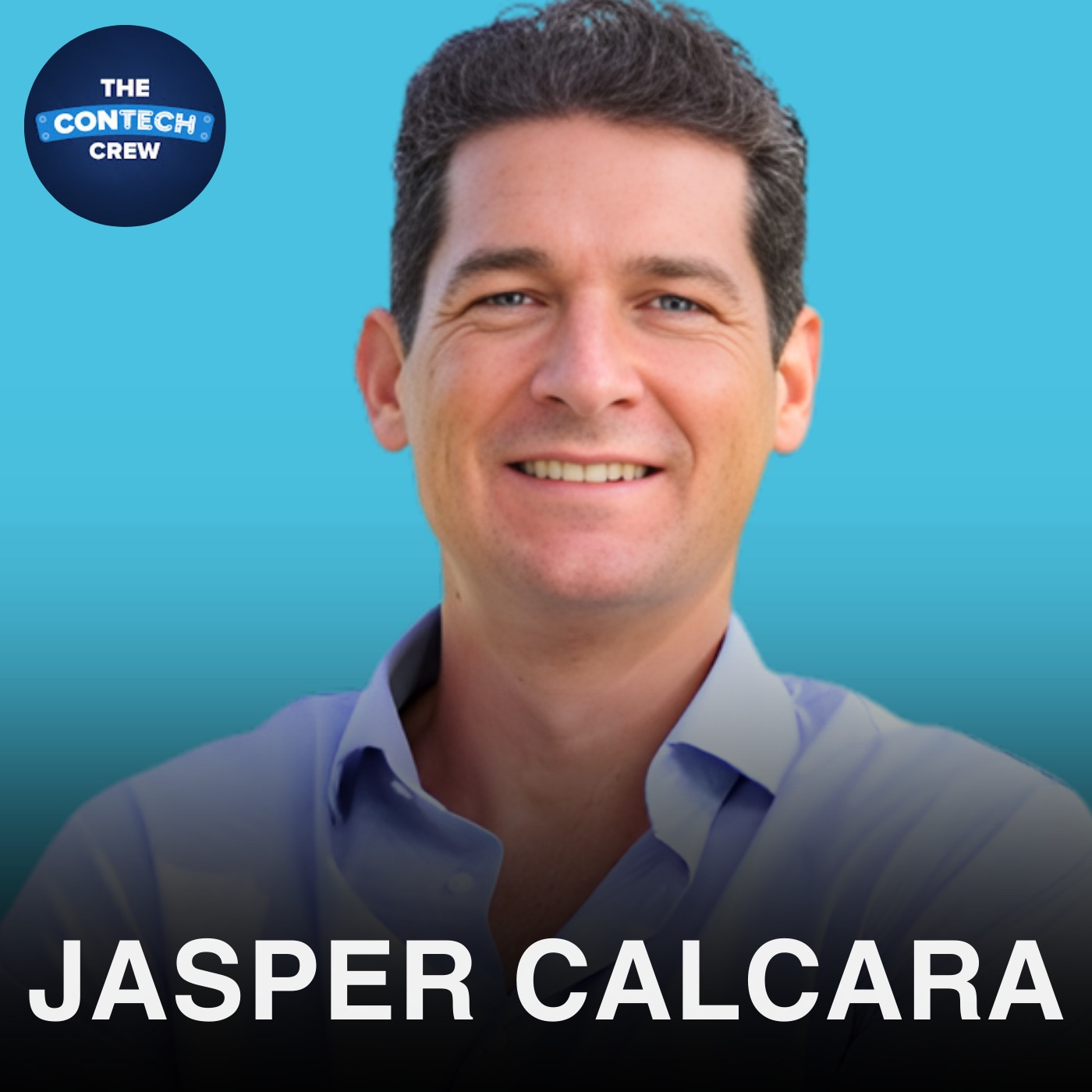
The Construction Safety for Project Leaders to Save Lives and Prevent Tragedies with Jasper Calcara
· 37 min
Kapitelklicken springt direkt hin
Shownotes
<p>In this episode of <em>The ConTech Crew</em>, host <a href="linkedin.com/in/ironmanofit/"; rel="nofollow">Jeff Sample</a> explores the “Wild Wild West” of construction engineering with <a href="linkedin.com/in/jaspercalcara/"; rel="nofollow">Jasper Calcara</a> of <a href="linkedin.com/company/d-h-charles-engineering/&…; rel="nofollow">D.H. Charles Engineering</a>. From Olympic downhill inspections to life-threatening trench collapses and sheared structural columns, Jasper shares what it means to be the “sheriff” in an industry where seconds matter and safety is everything.</p><p>Construction engineering is one of the most overlooked and most dangerous aspects of the building industry. While architects and structural engineers design permanent structures, construction engineers operate in the high-risk, fast-paced world of temporary works: scaffolding, excavation shoring, crane picks, structural stabilization, and emergency site interventions.</p><p><br></p><h3>Key Takeaways</h3><ul><li>Why construction engineering (temporary works) is one of the most dangerous and under-supported disciplines in construction</li><li>What really happens behind the scenes on massive projects like the Bay Bridge and the Olympics</li><li>The hidden dangers of trench work and why even a 5-foot excavation can be deadly</li><li>How technology and custom-built systems can improve safety, response time, and team collaboration</li><li>Why modern, accessible education is critical as experienced construction knowledge retires out of the workforce</li></ul><p><br></p><h3>Timestamps</h3><p>[] – Episode Introduction</p><p>[] – Meet the “Engineering Sheriff”</p><p>[] – What Is Construction Engineering?</p><p>[] – The Bay Bridge & The Scope of Temporary Works</p><p>[] – Olympic-Level Engineering</p><p>[] – Risk, Liability & The Wild West of Construction</p><p>[] – Building Technology for Seconds That Matter</p><p>[] – The Hidden Dangers of Below-Ground Work</p><p>[] – Reinventing Construction Education</p><p>[] – A Wake-Up Call: When No One Knows the Risk</p><p>[] – A Critical Moment for the Industry</p><p>[] – Closing Thoughts & Where to Connect</p><p><br></p><h3>Follow Jasper Calcara:</h3><ul><li><strong>LinkedIn:</strong> <a href="linkedin.com/in/jaspercalcara/"; rel="nofollow">linkedin.com/in/jaspercalcara/</a></l… (Company):</strong> <a href="charlesengineering.com/"; rel="nofollow">charlesengineering.com/</a></li>&l… (Company): </strong><a href="linkedin.com/company/d-h-charles-engineering/&…; rel="nofollow">linkedin.com/company/d-h-charles-engineering/&… the Host:</h3><ul><li><strong>LinkedIn:</strong> <a href="linkedin.com/in/ironmanofit/"; rel="nofollow">linkedin.com/in/ironmanofit/</a></li&… The ConTech Crew:</h3><ul><li><strong>Website:</strong><a href="thecontechcrew.com"; rel="nofollow"><strong> </strong></a><a href="thecontechcrew.com/"; rel="nofollow">thecontechcrew.com/</a>; </li><li><strong>YouTube:</strong><a href="youtube.com/channel/ConTechCrew"; rel="nofollow"><strong> </strong></a><a href="youtube.com/channel/UCBDRThvRmSpyTZmMWY4EAjg&q…; rel="nofollow">youtube.com/channel/UCBDRThvRmSpyTZmMWY4EAjg&l…; </li><li><strong>LinkedIn:</strong> <a href="linkedin.com/company/the-contechcrew/"; rel="nofollow">linkedin.com/company/the-contechcrew/</a>; </li><li><strong>Facebook: </strong><a href="facebook.com/TheConTechCrew/"; rel="nofollow">facebook.com/TheConTechCrew/</a>; </li><li><strong>Instagram: </strong><a href="instagram.com/thecontechcrew/?hl=en"; rel="nofollow">instagram.com/thecontechcrew/?hl=en</a>; </li><li><strong>Tiktok: </strong><a href="tiktok.com/@thecontechcrew"; rel="nofollow">tiktok.com/@thecontechcrew</a>; </li><li><strong>X: </strong><a href="x.com/TheConTechCrew"; rel="nofollow">x.com/TheConTechCrew</a>; </li></ul>
Transkriptvom Podcast bereitgestellt · Zeitmarken springen hin
[SPEAKER_01]: On this week's show, Construction Engineering Cowboys, the Wild Wild West, with Jasper Calcara, the new share of the panel. [SPEAKER_01]: From DH Charles Engineering. [SPEAKER_01]: All right, Nathan Wood. [SPEAKER_01]: Good to see you back. [SPEAKER_01]: How you doing, man? [SPEAKER_02]: I'm doing the Snowdance over here.
[SPEAKER_02]: I heard there might actually be a storm or two up there. [SPEAKER_01]: I, you know, I won't call it a cycle, but I, and I won't call it a comeback, but at least we got some of that. [SPEAKER_01]: That white money that rains from the sky that brings me so much joy. [SPEAKER_01]: So. [SPEAKER_01]: Hopefully you get to sneak out a little later.
[SPEAKER_01]: I like the, got to call it out for those watching on YouTube. [SPEAKER_01]: The Plexus Patriot is in the back, but the true Captain America is up front. [SPEAKER_01]: So, got to love it. [SPEAKER_01]: I like the addition. [SPEAKER_02]: And our Charlie Don Lego format as it only could be.
[SPEAKER_01]: Yes, right? [SPEAKER_01]: In the, hey, got to have Legos are for business now. [SPEAKER_01]: to see you know they're for adults too. [SPEAKER_01]: And Jasper, you're shaking your head over there. [SPEAKER_01]: Welcome to the show. [SPEAKER_00]: Thank you. [SPEAKER_00]: Appreciate it. [SPEAKER_00]: Glad to be here.
[SPEAKER_01]: Yeah. [SPEAKER_01]: We're going to get in this sheriff thing. [SPEAKER_01]: We're going to go down a rabbit hole. [SPEAKER_01]: We're going to have a little fun before we do. [SPEAKER_01]: All right. [SPEAKER_01]: You guys know this. [SPEAKER_01]: The sheriff's going to tell you we're on youtube.com for slash at the content crew.
[SPEAKER_01]: Follow us. [SPEAKER_01]: Get the shorts. [SPEAKER_01]: You're going to dig it. [SPEAKER_01]: Share them with your friends. [SPEAKER_01]: Share the show with your friends. [SPEAKER_01]: Remember, the person you might help. [SPEAKER_01]: Might be the person that's causing your problems. [SPEAKER_01]: So share the show with them.
[SPEAKER_01]: Maybe they'll get a little insight or maybe they'll just know a little bit more about what us geeks over here Did and follow everybody on our social media. [SPEAKER_01]: Remember to connect with the guests. [SPEAKER_01]: It really brings home the valley. [SPEAKER_01]: I right so Jasper the new engineering Share actually give everybody an idea of who you are and a little bit of your arc of Of your world in the industry [SPEAKER_00]: Yeah, well, that's an interesting new title.
[SPEAKER_00]: It fits a little bit. [SPEAKER_00]: I think based on some of the highlights of my career, but yeah, I mean, I grew up in the Bay Area and just put in time between my parents, my, they're both musicians. [SPEAKER_00]: My dad was a work construction in San Francisco, so kind of early on. [SPEAKER_00]: I was exposed to, you know, to that field.
[SPEAKER_00]: But also the music and the creativity, you know, both those, you know, really left the lasting impression on me and played a big role in my career. [SPEAKER_00]: grew up crossing the Golden Gate bridges, one of my favorite structures in the world. [SPEAKER_00]: As I got older, I'd stay across the bay and see the Berkeley campus and started dreaming of going there, and luckily that dream came true.
[SPEAKER_00]: So I studied civil engineering, structural emphasis, construction engineering is not taught in primary curriculum. [SPEAKER_00]: It's pretty unknown, it's expanding a little bit. [SPEAKER_00]: but I got hired right out of school to work for kind of a startup in this area. [SPEAKER_00]: Don Charles, he had worked for backdoor kind of all over the world.
[SPEAKER_00]: And then went back to Santa Rosa, California to just start his family and his own firm. [SPEAKER_00]: So as he and I in a granny and at behind his house and I was all of a sudden immersed in this world of construction engineering. [SPEAKER_01]: I mean, I like this musicians and creativity.
[SPEAKER_01]: We talked a little bit and Nathan referenced Charlie done about the Legos and we've gone back and forth over time about how construction really is like music. [SPEAKER_01]: Takes all these different parts and pieces. [SPEAKER_01]: And I think [SPEAKER_01]: We focus so much on the job site when we're talking about that, but honestly it's like the architects and engineers are composing the sheet music and what we're going to do and then like you say construction engineering getting out there and mixing the two so I like the analogy so.
[SPEAKER_01]: quick start up, you know, it's an engineering company startup. [SPEAKER_01]: So a little different than the startup's my art listeners might be thinking of. [SPEAKER_01]: This is a true foundational startup in that world. [SPEAKER_01]: What, you know, how was that growth and process? [SPEAKER_01]: It seems like, you know, from the pre call, you got some freedom, you weren't to share it back then, right?
[SPEAKER_01]: You were the wild, wild way. [SPEAKER_00]: And no, I know, I was definitely a student, but it was just an incredible match. [SPEAKER_00]: Dawn, the founder and myself. [SPEAKER_00]: Most people in engineering, structures, especially 10 to go get their master's degree. [SPEAKER_00]: I was ready to get out in the world.
[SPEAKER_00]: I came from humble beginnings. [SPEAKER_00]: I was really driven and eager to make a life for myself. [SPEAKER_00]: And he gave me that opportunity. [SPEAKER_00]: And he was just such an incredible mentor, but he gave me the freedom to help drive us in so many new directions. [SPEAKER_00]: When I started, he still doing half the drawings by hand and calculations written out, you know, after cramping, from writing out at 30-page calculations like Dawn, we are changing this.
[SPEAKER_00]: We're moving into the next centuries and evolve that way, but also just, um, he kind of threw me in the fire. [SPEAKER_00]: He really did, and that's what our industry is, is you never know what call you're going to get, and I would get that, hey, Jasper, figure this out. [SPEAKER_00]: call.
[SPEAKER_00]: Just the perfect fit for what I love. [SPEAKER_00]: I love it, challenge. [SPEAKER_00]: I love teamwork. [SPEAKER_00]: I love to be creative. [SPEAKER_00]: So I didn't even know that this was for me until I was in it. [SPEAKER_00]: And it just, it was just kind of skyrocketed right from the beginning.
[SPEAKER_02]: I'm super curious, and I've never heard of this construction engineering term in context for you, Jasper. [SPEAKER_02]: I come also from a civil engineering background and made that decision late in college that I knew I didn't want to be a structural engineer because with computers these days, you're just going to be a bunch of numbers in a screen and it's not as fun as being a G.C.
[SPEAKER_02]: And this idea of construction engineering seems like it's kind of a blend of the two, or I guess you're like, how new is the term itself or the field and how do you describe [SPEAKER_00]: Well, if you don't mind, I'll kind of take you back in time a few hundred years quick though. [SPEAKER_00]: So in college, I took an architecture class.
[SPEAKER_00]: I ended up writing a term paper on Bruno Lasky who built a duomo in Florence. [SPEAKER_00]: This famous dome. [SPEAKER_00]: First of it's kind, largest structure. [SPEAKER_00]: He kind of resurrected old technology that had been lost since ancient Rome. [SPEAKER_00]: And he's he's the one credited for starting the Renaissance.
[SPEAKER_00]: Anyways, I wrote this paper about him knowing nothing about his history and what the paper in up evolving into is that he invented so many incredible technologies to build something that's never been built. [SPEAKER_00]: He invented to these cranes in this process and ultimately did build something that had never been built before.
[SPEAKER_00]: So, you know, that's the first time I'd ever even thought of that, but I had no idea. [SPEAKER_00]: No idea that would end up being my entire. [SPEAKER_00]: career. [SPEAKER_00]: So, you know, it's been around forever. [SPEAKER_00]: You were asked to build things that have never been built before.
[SPEAKER_00]: And the technologies to build them are not the ones of the primary focus. [SPEAKER_00]: So, they end up being something that's kind of left till the last minute. [SPEAKER_00]: And then we're asked to be called in. [SPEAKER_00]: So, temporary works, construction engineering, whatever term you want.
[SPEAKER_00]: To use that's kind of the world that I was thrown into. [SPEAKER_00]: Explain some of the things you would build in that so because I know we've got a couple of folks listening that are like what would that even consist of I would probably break it down into a few categories and and these categories kind of grew as our lines of work when I first started we were doing a handful of things and I like to put it like this so one of our biggest project to work done was the building and the new bay bridge [SPEAKER_00]: in the San Francisco Bay area.
[SPEAKER_00]: Essentially, we wanted to position ourselves so that no matter where they were in the scope of that project, they could call one firm to help them because, you know, they're digging a hole at the bottom. [SPEAKER_00]: They got to support the excavation, right? [SPEAKER_00]: Then they're pouring the concrete foundation.
[SPEAKER_00]: They got to stabilize that concrete. [SPEAKER_00]: Then the towers are going up. [SPEAKER_00]: There's cranes lifting cages. [SPEAKER_00]: you're getting up to the span. [SPEAKER_00]: So at every stage of construction, there's a challenge it has to be addressed, whether it's for access and safety, whether it's, you know, forming and holding, you know, concrete or whatever it may be, it could be sliding in giant section of bridge over to phase the traffic, right?
[SPEAKER_00]: So that's just an example of where on one project from top to bottom, [SPEAKER_00]: hundreds and hundreds of hundreds of individual engineering challenges that is just very under-supported expertise, unfortunately. [SPEAKER_02]: Yeah, so I guess I never would have thought the former, yeah, engineering around the concrete and the crane that's potentially picking things up around it, yeah, it could be the same engineer that's doing both of those calculations.
[SPEAKER_02]: That's interesting. [SPEAKER_01]: Yeah, and it doesn't seem like it's necessarily the safest of what it is really one of the most dangerous parts of construction. [SPEAKER_00]: Right. [SPEAKER_00]: You're at the forefront of everything happening. [SPEAKER_00]: It's all fast pace. [SPEAKER_00]: You've got tradesmen that are moving between jobs and they're trusting.
[SPEAKER_00]: They're supervisors are trusting the engineer that put them in this positions. [SPEAKER_00]: You know, they're dangling hundreds of feet above. [SPEAKER_00]: The water in many cases, you know, they're down a hundred feet below the ground. [SPEAKER_00]: So they're really putting their lives in your hands.
[SPEAKER_00]: And of course, seriously, it's a foundation of what I do, it's safe and everything we do is safety, but it's also built with this extreme pressure to get it done quick and get it done cheap. [SPEAKER_01]: Yeah, because I mean, if you think about it, the architects and the engineers have this time to make sure it's structurally sound, time to make sure that when it's finished, it's done.
[SPEAKER_01]: You're talking about the overlooked part of getting the underground up and, you know, like you said, trades people hanging from places. [SPEAKER_01]: I mean, you think all the way back, if I'm not mistaken, like the Bay Bridge is where they came up with the netty. [SPEAKER_01]: originally during the construction.
[SPEAKER_01]: It said, no, we're not going to let people fall. [SPEAKER_01]: We're going to put this below. [SPEAKER_01]: And they said, this is going to cost a lot of money. [SPEAKER_01]: And he said, I don't care how much money is one person worth. [SPEAKER_01]: And it did it ended up catching a lot of people.
[SPEAKER_01]: I didn't, you know, it's not, they weren't unheard, but they weren't dead. [SPEAKER_01]: And we've come a long way, since then. [SPEAKER_01]: I mean, when I put in [SPEAKER_01]: piece that you do. [SPEAKER_01]: But I can't think of any big project doesn't need it. [SPEAKER_01]: So what kind of projects have you been on over time?
[SPEAKER_00]: We work all over North America. [SPEAKER_00]: So as we knew that the need was so high. [SPEAKER_00]: So we just started kind of moving our way across the country and then up in the Canada. [SPEAKER_00]: So essentially any project could be a five foot hole in the ground or it's, you know, a new 500 foot tall Ferris wheel in Las Vegas, right?
[SPEAKER_00]: You never know what the next call is going to be. [SPEAKER_00]: So, you know, I could jump into some of the more interesting exciting ones personally, it's fresh in my mind because it's the Olympics right now. [SPEAKER_00]: And I've been watching a lot of those events. [SPEAKER_00]: So early in my career, I was lucky enough to lead the design and inspection of over 300 temporary structures on the Olympics.
[SPEAKER_00]: So we're talking camera towers, bridges, bleachers, supports system if you if you were to watch on on TV right now you'd see all of these structures right you're building temporary cities in the case of the get torn down after the Olympics. [SPEAKER_00]: So we were tasked with that it was such an incredibly exciting dynamic.
[SPEAKER_00]: experience, but I always tell people the most exciting I've ever done on a side visit was for that. [SPEAKER_00]: I was sent up to the top of the men's downhill course with a snowboard to inspect all the scaffolds, a camera towers all the way down. [SPEAKER_00]: They take me to the top of the normal lift.
[SPEAKER_00]: It's so windy. [SPEAKER_00]: We get off and there's an extra lift built from there to the top of like this little peak of a mountain. [SPEAKER_00]: And they're like technically the winds are too high. [SPEAKER_00]: We have to shut this down but we're on a [SPEAKER_00]: time restraint, you got to get up there.
[SPEAKER_00]: So Robin, who's one of my engineers still with me, we get up there, we're getting blown around, we're set on this straight down sheet of ice essentially. [SPEAKER_00]: I have never been blown uphill. [SPEAKER_00]: Every time you try to stop the wind would push you uphill, you know, I just remember like this system, I can't believe I'm doing this.
[SPEAKER_00]: I can't believe of opportunity to go down the men's down, of course, and then inspect all these structures. [SPEAKER_00]: So this is an example of it, you just never know what you're going to be involved in. [SPEAKER_01]: But before we go past that we can't leave it here because you guys can't see and have known for years that I live near Beaver Creek, Colorado.
[SPEAKER_01]: And that is where the bend is downhill, of course, here the one in North America that they now ski on the regular circuit. [SPEAKER_01]: You have no idea when he says, it's not as, they don't want snow. [SPEAKER_01]: They want absolute blue ice to go as absolutely as fast as they can. [SPEAKER_01]: They just want a little grains that they can sink that sharp edge into and they do it's so exposed where you ride.
[SPEAKER_01]: So you got to admit, I mean, us skiers, we have four edges. [SPEAKER_01]: He's got two. [SPEAKER_01]: And that is scary, my man. [SPEAKER_01]: Scary. [SPEAKER_02]: I don't think I told you. [SPEAKER_02]: I went back to the snowboard this year and that is the one part I do not like is yeah when it's a nice patch there is not much safety net there like what kind of liability you taking on who's hiring you typically is that the owner is the designer like help us understand kind of contractually how you fit in this whole mess so typically a general contract has been awarded a project let's say it's a bridge building whatever it is a retrofit they'll oftentimes then higher [SPEAKER_00]: So we have a great relationship with a lot of those specialty subs in the scaffolding world.
[SPEAKER_00]: We work with a ton of scaffolding company because they're one of the first calls for access or structural shoring. [SPEAKER_00]: So we'll get the call after everything's in order, like, okay, here's the job, here's the project get going. [SPEAKER_00]: Same thing with the below ground industry, which I'm very involved in.
[SPEAKER_00]: Work directly for them or directly for the general themselves. [SPEAKER_00]: Don't call us with the scope of work. [SPEAKER_00]: We've got to build this. [SPEAKER_00]: Hopefully they're given us days and not hours to turn things around, or maybe once in a while, a few weeks or months, but typically, it's really like last second.
[SPEAKER_00]: They're on site. [SPEAKER_00]: They need to get something engineered. [SPEAKER_02]: Guessing most often, they're probably construction manager at risk where the GC, I mean, they're taking on all the risk anyways, so they're kind of saying, hey, if we're going to protect our risk, we're going to hire in the best and protect that risk.
[SPEAKER_02]: So yeah, they make sense. [SPEAKER_00]: Yeah, I mean, risk is a huge part of what we do. [SPEAKER_00]: You have to have a risk tolerance. [SPEAKER_00]: And of course, from the legal standpoint, we go on in homage, I don't want it, because it's one of the most miserable topics. [SPEAKER_00]: But yeah, I mean, the legal system does not really protect us very well.
[SPEAKER_00]: These types of lawsuits that can occur. [SPEAKER_00]: But in the end, he always just really stay focused, collaborate. [SPEAKER_00]: You're all working for the same end goal. [SPEAKER_00]: And we just don't let the fear stop us. [SPEAKER_00]: because if we were just constantly feared of the risk in the potential outcome, we would never get anywhere.
[SPEAKER_01]: Yeah, another thing would ever get built. [SPEAKER_01]: And I think that's a beauty. [SPEAKER_01]: That's why we called the Wild Wild West, and we called you the Sheriff, because there's a level of, you know, it didn't matter if you were the Sheriff or not, it was still a little dangerous out there and you're still taking your life and you're on Anzotan.
[SPEAKER_01]: So that's the tongue and cheek fun with it. [SPEAKER_01]: But I also thought was interesting in the, you know, as we let up this freedom and this moonest [SPEAKER_01]: you were able to double down and build a few other things in the process. [SPEAKER_01]: You know, you chopped earlier that, hey, you know, I think it was Don.
[SPEAKER_01]: You said that started at Don Charles said, Don, we're not doing it that way anymore. [SPEAKER_01]: So talk about some of the flexibility and things you've been able to build from a technology perspective and I think you built some other things as well. [SPEAKER_00]: Yeah. [SPEAKER_00]: So early on, I've always had opinion about technology and my number one goal was whatever I was going to build, whatever process, whatever it was, it was going to allow me and my team to do what they're best at and they enjoy the most most valuable, right?
[SPEAKER_00]: Like just no brainer. [SPEAKER_00]: So let's automate anything possible that we don't need to do manually that we can give us more time because we're talking seconds in my industry. [SPEAKER_00]: Right, and I'm very proud of our reputation where we're known as, you know, the ones that call back the quickest and we have a very experienced staff that's not by accident, focus, constantly it didn't matter if it was the the way our documents looked or the technology we've invested in so early on it was just moving into stuff like email, right, instructional analysis tools and auto CAD and getting all those things looking good.
[SPEAKER_00]: the process moving smoothly. [SPEAKER_00]: Then we would start to what we call design aids and templates and stuff. [SPEAKER_00]: You're writing calculations and excel to speed up a process. [SPEAKER_00]: Again, saving minutes here in there. [SPEAKER_00]: Then when I found over time as I grew the team and we moved geographically into different areas of the country, my goal was how can I make this team feel like we're all sitting in one office?
[SPEAKER_00]: Right? [SPEAKER_00]: It's such a dynamic industry that if you don't feel like you're connected and contrast the person on the other phone, including your customer, but we've tried to start with my team, that was the biggest struggle. [SPEAKER_00]: So I developed project management software from scratch that allowed us to not only organize our projects super efficiently, but allow us our team to work together to manage all these complex jobs and the man's the documents.
[SPEAKER_00]: And that product is just, you know, revolutionized the way that we operate and, you know, really allowed us to continue to grow. [SPEAKER_01]: I love that purpose-built solution, right? [SPEAKER_01]: You started with that problem is in this industry that you're in. [SPEAKER_01]: Fear, risk, connection is important knowing that you have a team that has your back that feels like they're right there.
[SPEAKER_01]: And, and then you solved for it. [SPEAKER_01]: But then, [SPEAKER_01]: You hit it multiple times, you're like, we're going to tighten up the process. [SPEAKER_01]: We're going to make sure we know business wise what we're doing. [SPEAKER_01]: That's why I feel like the solutions worked for you over time.
[SPEAKER_01]: And made sense, right? [SPEAKER_01]: It wasn't like you were jumping, you have seconds. [SPEAKER_01]: So you're going to pick something that you're going to take a lot of risk on. [SPEAKER_01]: You're picking something that you know that's going to work. [SPEAKER_01]: Changing the way you do something to get a few extra minutes to think.
[SPEAKER_01]: So now you've kind of moved on because you talked about this and by the way, I got to say like the scaffolding thing plays right near and dear to my heart, you know, I started with a Masonry contracting company. [SPEAKER_01]: We specialized in some of that and I didn't understand why that was needed to be engineered or why you should do those certain things and then one time the bottom fell out and scaffolding and go anywhere.
[SPEAKER_01]: And the people were safe and you realize, you know, I had somebody show me some pictures and a safety thing and say, look at all the people that's why you take that extra time to engineer things correctly and it's why when it doesn't happen. [SPEAKER_01]: So talk about that experience with underground work and now you're leaning back into the industry.
[SPEAKER_00]: Yeah, so I've always, we've always taken a really aggressive stance of being involved, right? [SPEAKER_00]: Because it is a small industry and educating everybody, contractors, or your subs or whatever, is that [SPEAKER_00]: most important goal towards increasing safety and efficiency and everything else.
[SPEAKER_00]: We would always go to this associate, the meetings would always go to these different organizations and they've grown. [SPEAKER_00]: I mean, I've been in this nearly 30 years and we're talking about if you say the Wild West. [SPEAKER_00]: I mean, there are people copying and pasting stamps on documents from somebody else and shooting around him.
[SPEAKER_00]: It really, really was a mess. [SPEAKER_00]: And I'm so proud to have been [SPEAKER_00]: evolve in a stage where not only the technology in the products, but the focus on our process has really allowed us to push this industry into a much safer and more effective direction. [SPEAKER_00]: So for below-ground construction, again, you can be killed in a 5 foot 6 foot deep trench.
[SPEAKER_00]: I mean, the way to that soil claps on you see these poor labor is they're I'm just going to jump down and get that pipe fixed real quick and you know, and the soil's on top of them before they can think about it, right? [SPEAKER_00]: So it's just everybody can understand if they get down in a 60 foot deep hole and they look up and feel claustrophobic how scary that is, but people don't appreciate how dangerous it is that, you know, even shallow excavations.
[SPEAKER_00]: So we really support that industry when it comes to the products that are out there because everything in construction areas about you can't go fabricate something custom every job. [SPEAKER_00]: So rental and reuse is the key. [SPEAKER_00]: Focus is a whole industry built around it. [SPEAKER_00]: There's an exhibition showing rental industry, scaffold rental industry, that rents products purely for the need on that specific project site.
[SPEAKER_00]: Right. [SPEAKER_00]: So that's really where we've been focused as an industry is educating the contractor. [SPEAKER_00]: What product do you need? [SPEAKER_00]: When do you need it? [SPEAKER_00]: And how freaking serious this is? [SPEAKER_00]: You'll protect your workers. [SPEAKER_00]: And it's been, you know, it's an incredibly, you know, supportive and competitive but supportive.
[SPEAKER_02]: Let's start with education too, right? [SPEAKER_02]: I mean, so much as getting up front of the confined space, like what are the situations that when you see yourself in, know what at least the initial reaction is. [SPEAKER_02]: I think this, like when to call the experts versus, you know, what things to look out for.
[SPEAKER_02]: I got you guys, is there content out there? [SPEAKER_02]: Are you creating content? [SPEAKER_02]: How are you guys getting the word out? [SPEAKER_02]: Like from a safety standpoint about all the rest factors in the field. [SPEAKER_02]: Good. [SPEAKER_00]: And that's been the most interesting part of the span of my career.
[SPEAKER_00]: So at the beginning, it was just educating on the bare minimum, just protect your workers. [SPEAKER_00]: Then it was, oh, here's the products that are available and start to use them. [SPEAKER_00]: What's this thing called slide-routed Germany? [SPEAKER_00]: And now it's on products all over North America, not the world.
[SPEAKER_00]: So it was really just bare bones. [SPEAKER_00]: What is safety? [SPEAKER_00]: How do we understand the codes? [SPEAKER_00]: How do we protect our workers? [SPEAKER_00]: Then it was, how do we introduce and use these really new technologies? [SPEAKER_00]: But the challenge was as like investing in education was always very low on the part of this.
[SPEAKER_00]: I've been trying to sell it education as a value for so long and a lot of companies are willing to invest in a product, right, that has value or personnel. [SPEAKER_00]: I'd always get to know when I was like, hey, I got this idea for education program. [SPEAKER_00]: So finally, again, we've evolved to the point where I brought up the same idea to a group of people in the industry say, hey, if I release this education program, would you subscribe to it?
[SPEAKER_00]: And I got enough yeses that said, let's give this a try. [SPEAKER_00]: So yeah, I started and it focused on the blowground industry and developed a series of education classes on how to read plans and board logs and soils and specs to help navigate before [SPEAKER_00]: So yeah, it's been really real received.
[SPEAKER_00]: It's been a super fulfilling project. [SPEAKER_00]: And I hope it not only, you know, we will probably expand but these products over time, but just I hope it motivates the industry to invest in more education. [SPEAKER_01]: You mentioned the trenches, et cetera, and I didn't know about those dangers either until I joined this podcast.
[SPEAKER_01]: And, you know, Rob McKinney, our own Kahnap guru safety, came from the safety side. [SPEAKER_01]: he would point it out to me, and I'd say, well, it looks fine. [SPEAKER_01]: He's like, no, no, no, no. [SPEAKER_01]: You have to understand the calculation that has to be done, because where you're piling that dirt on the side of the trench, depending on the type of material, et cetera, et cetera, and the stability of that tre, and boom, you're done, and it was cool because he was like, well, late, you're a skier, you think about avalanches, battle lengths to the same thing.
[SPEAKER_01]: It's very similar, and you're like, [SPEAKER_01]: Oh my gosh, there's only five feet on a wall on either side of me and I'm in a trench on the way up. [SPEAKER_01]: I'm in a gully. [SPEAKER_01]: I'm really, that's really dangerous because they're steep and I can trigger it. [SPEAKER_01]: It's the same thing.
[SPEAKER_01]: So you're talking about, you know, getting that education wider to more people because right, it kind of relies on a few people who know it. [SPEAKER_01]: So you're talking about democratizing that to more people and you've kind of productized it now, right? [SPEAKER_00]: Yeah, so it with the industry that I was introducing it to.
[SPEAKER_00]: They've really, I can bring a lot of feedback. [SPEAKER_00]: I value that so much and appreciate their commitment to it. [SPEAKER_00]: It's spread through this group of the industry. [SPEAKER_00]: And now I just want to, you know, eventually spread it through the general. [SPEAKER_00]: I mean, and I say anybody who holds a shovel or operates an excavator in the world can gain value from this.
[SPEAKER_00]: It's just so unders. [SPEAKER_00]: supported. [SPEAKER_00]: I was talking to a contractor in South America where they just got billions of dollars of below ground work coming up and just no education whatsoever. [SPEAKER_00]: So, you know, that would be my global goal. [SPEAKER_00]: But right now, if I can help one person get a little safer on one job, right?
[SPEAKER_00]: And I know that sounds cheesy, but it is. [SPEAKER_00]: This is truth. [SPEAKER_00]: You're just trying to really help one person at a time. [SPEAKER_00]: And this is a little bit wider reach. [SPEAKER_01]: Yeah, I mean it's funny because that spreads right when we started this technology thing we wanted to go to every event and we just wanted one person in the crowd to be inspired to think about doing things a little differently a little bit more efficiently and safely right because that actually you know that's why Rob was what he was it's like he just wanted people to be safe.
[SPEAKER_01]: And he wanted it to find a way to get it there. [SPEAKER_01]: And I think now this product, this availability, is it like online courses? [SPEAKER_01]: What is it like? [SPEAKER_01]: Because I want people to listen in because that's also part of the technology advancement. [SPEAKER_01]: Is you created a project management system that though made people feel like air in the room.
[SPEAKER_01]: This is not sitting the room and put the VHS in and watched the silly safety tape that everybody falls asleep on. [SPEAKER_01]: What's it like? [SPEAKER_00]: Yeah, yeah. [SPEAKER_00]: I mean, honestly, I just try to pay attention to what people find engaging, you know, when I go talk, I did go kind of on a talking circuit earlier in my career to talk a lot of the same content in person in a multi hour frame work and I had a lot of contours come to me and say that was I learned more in that hour than I've learned ever blah blah blah.
[SPEAKER_00]: So I really learned early like, okay, there is a message here. [SPEAKER_00]: how do I get it out there? [SPEAKER_00]: And now that people's attention span has just plummeted so much, I'm like, how do I get this highly technical information out there? [SPEAKER_00]: So anyways, I decided to do them in half an hour segments, broken up into like three to five, seven minutes with quizzes and a lot of graphics to just kind of keep them very engaging, you know, how to keep my energy up and presenting these topics because I do love them so much.
[SPEAKER_00]: You know, so I think that it's the combination of the visuals, the quizzes, and the accessibility, where I always told them, look, you're never going to get all this in one watch. [SPEAKER_00]: But then you can always revisit it, right? [SPEAKER_00]: You have this next project, you're like, what's the coffee dam?
[SPEAKER_00]: I don't remember that, and then you can go revisit the program on that. [SPEAKER_00]: So it was really just about making it super accessible, digestible, and hopefully somewhat entertaining once in a while. [SPEAKER_00]: The feedback's been good so far, and you know, I can never just start.
[SPEAKER_02]: Yeah, I think it was Saul Khan with Khan Academy said it perfectly around, it was his magic of the ex-Demperaneous, I think is the word of just off the top of your head explanation to like it's your understanding of how you know it and just for some reason, that resonates with the audience with the list or so much better than any perfected AI, bought, chat, thing, like that may be the perfect grammar, but you miss that sort of that cognitive connection with the person that's talking, so yeah, [SPEAKER_02]: That's awesome.
[SPEAKER_02]: It takes work too. [SPEAKER_02]: It takes time to put those together. [SPEAKER_00]: Yeah, and I love to touch super quick, because you mentioned AI and it's just the everybody's obsessed with it right now. [SPEAKER_00]: AI is in the industry that has so little published documentation. [SPEAKER_00]: AI is going to get it all wrong, right?
[SPEAKER_00]: So if you start searching anything about construction engineering process or even understanding nuances of the code, it can really drive you into unsafe territory. [SPEAKER_00]: Eventually, it's going to catch on even my education program, probably absorbs some day into it, but at this point, it just doesn't have the resource to give answers that you can depend on.
[SPEAKER_00]: So I always just really want, I always caution people, and any industry you're using AI, understand, well, what's, where's it's the learning from? [SPEAKER_00]: And in our industry, it's just so void of publicly published process and content and programs that it's slow. [SPEAKER_00]: It's going to be slow climb for that industry to be supported.
[SPEAKER_01]: We also talk a lot and it was just talking with Jonathan Marshall earlier and it's, you know, the kind and wicked environments, right? [SPEAKER_01]: AI is built for kind environments. [SPEAKER_01]: It's built for an opportunity to get to everything we know. [SPEAKER_01]: wicked environments is what we know in construction and it is not good at wicked environments.
[SPEAKER_01]: That's just not what it's and may never be really that good at it because it can analyze risk quickly, but I can see a time where it maybe tell you something's coming. [SPEAKER_01]: It's probably too late. [SPEAKER_01]: You got to know ahead of it. [SPEAKER_01]: Maybe it can help us with calculations, etc.
[SPEAKER_01]: ahead, do a little quicker whatnot. [SPEAKER_01]: But what I do like about the the training piece is [SPEAKER_01]: We've always said this. [SPEAKER_01]: You said it short attention spans. [SPEAKER_01]: There's an opportunity for a traits person to be in a trench one day, like you said, hanging being on a scaffolding the the next day, you know, and even being somewhat, you know, repelling, so to speak, you know, be hanging.
[SPEAKER_01]: So how can they be expected to remember all of that every time? [SPEAKER_01]: So if you have it [SPEAKER_01]: the heck was that that guy told me? [SPEAKER_01]: All right, let me just go grab it and just go back through it and just quickly, yeah, I might jump over a few that I'm like, oh yeah, I get that the soil, the this, wait, what was that about?
[SPEAKER_01]: Oh, I didn't, I didn't think about if it was raining or not. [SPEAKER_01]: I don't know, I make it, because obviously like I'm making stuff up, but it's such a powerful medium to teach people with and to use as a, again, go back to it. [SPEAKER_01]: We say this with people on estimating things.
[SPEAKER_01]: Would it be nice if you had a refresher course, so you can use these as refreshers as well? [SPEAKER_01]: Yeah, and I mean, I just I just think about I don't think people think enough about How many traits people in this environment are being deployed on a daily basis into wicked dangerous environments and They're relying on people like you, Jefford if to save [SPEAKER_00]: Well, they just don't, they're not aware, I'll give you a perfect example, okay.
[SPEAKER_00]: There was a job that I literally thought the building was going to come down on us, okay. [SPEAKER_00]: This is an example of where my eyes were open to how trusting the crew is to somebody else having figured it out. [SPEAKER_00]: So I got a call late Friday afternoon. [SPEAKER_00]: They're always the toughest and worst calls.
[SPEAKER_00]: We've always make jokes about it in the office. [SPEAKER_00]: And I show up to this project. [SPEAKER_00]: It's a hundred-year-old eight story concrete and brick building. [SPEAKER_00]: and I'm they're leading me towards the basement. [SPEAKER_00]: I'm hearing Jack Hammers, the floors are vibrating, it's dusty, it's dark, and then all of a sudden in the middle this big expansive room with crew all around me blasting concrete.
[SPEAKER_00]: There's a huge structural calm completely shared through a crack all the way through it. [SPEAKER_00]: And I am like, you guys need to stop what you're doing at the hell out of this building. [SPEAKER_00]: What is going on? [SPEAKER_00]: We went up a couple floors and another structural calm completely shattered.
[SPEAKER_00]: So it was just an example of where I couldn't believe that you're getting to this point and then you're calling an engineer, right? [SPEAKER_00]: And the other is you just never know what kind of fire you're going to walk into. [SPEAKER_00]: So I learned that was an early, an early project and I learned a ton from it.
[SPEAKER_00]: But that was the key, like just slap in the face. [SPEAKER_00]: Who's protecting these people? [SPEAKER_00]: A lot of time. [SPEAKER_00]: people don't know what to look for, or they soon somebody else did it. [SPEAKER_00]: So that's the education piece. [SPEAKER_00]: I want to make people aware.
[SPEAKER_01]: Yeah, I'm walking into places yet and going, I wouldn't know, right? [SPEAKER_01]: I'd have to trust you. [SPEAKER_01]: Go ahead, Nathan. [SPEAKER_01]: Sorry. [SPEAKER_02]: But that's real. [SPEAKER_02]: I think until you hit that point of failure. [SPEAKER_02]: I mean, that's the reality of things.
[SPEAKER_02]: Until you have those New Orleans collapse type incidents and things like that happen, [SPEAKER_02]: People aren't going to wake up, but that's that hope never let a good crisis go to waste kind of thing like how do you combine both the education with that sense of urgency to kind of remind folks like hey like that may be in the back of your mind because now we like to remember those things, but that did happen and these are the reasons why and these are the things to look out for.
[SPEAKER_02]: And to use that as that kind of eye grabbing like, hey, don't forget about this, and this is why you should remember this thing, you know, it's going to stick in your memory that much more when you associate the education with those really visceral memories. [SPEAKER_00]: And I'm not the only one alone in this.
[SPEAKER_00]: I mean, there's this incredible industry of really passionate people. [SPEAKER_00]: trying to support safety, you know, so, you know, I'm not saying the only one with any kind of, it's an incredible industry. [SPEAKER_00]: There's a lot of people that just really care about supporting those the workers out there.
[SPEAKER_02]: I wish Robin can use here. [SPEAKER_02]: I know you'd have a lot more to say. [SPEAKER_01]: Yeah, right. [SPEAKER_01]: I know I'm going to send this one to him when it's done because he's definitely connected with that, but it's going to take and just where I think that's what's interesting is it's going to take not just one but a lot of people.
[SPEAKER_01]: And there are more of them out there. [SPEAKER_01]: And then with the new environment we have to spread this stuff faster, it has really created a kind of a collision path to be safer. [SPEAKER_01]: More people can know [SPEAKER_01]: this information now. [SPEAKER_01]: I think that's a powerful moment for you and for this industry of keeping people safe, right?
[SPEAKER_01]: We've said this all and all, and again, you guys are going to hear it on the episode before this with the news where we said, you know, we don't want to call construction and alternative career path, especially for tradespeople, but we also have an obligation to make it a safe career path.
[SPEAKER_01]: for people. [SPEAKER_01]: And that's what's going to take is the combination of nobody, nobody accepting these failures on the jobs and everybody leaning in to keep them safe. [SPEAKER_01]: Because then we can go out and freely bring in my own kids and other people's kids into this place later to be electricians, to be plumbers, to work in the concrete business, etc.
[SPEAKER_01]: So we got to thank you for doing it out there. [SPEAKER_00]: Yeah, well, you also touch on a super quick important point, which is how this generations are used to getting content. [SPEAKER_00]: They're used to be able to go to YouTube and get a tutorial to fix something at their fingertips.
[SPEAKER_00]: They have to wait and ask Dad, right? [SPEAKER_00]: So it's the same situation for them entering the construction environment is that they don't have to. [SPEAKER_00]: They are given this tool to go look at any time they want. [SPEAKER_00]: So I hope because we're at a critical staging construction, it's growing so fast and there's a lot of knowledge based retiring out.
[SPEAKER_00]: I'm seeing it every day. [SPEAKER_00]: The knowledge is walking out the door because it's huge rush of new young employees being put in really critical positions. [SPEAKER_00]: And they just need those resources. [SPEAKER_00]: And they love this type of resource. [SPEAKER_00]: So I'm really hopeful that the community at large leans into creating more education content in this fashion, because they don't want it, no one wants to sit through 10, 12-hour day of safety training, right?
[SPEAKER_00]: It's tough. [SPEAKER_00]: We're heading the right direction, but I think people need to understand that it's really a critical moment as we're transitioning here and that it's an opportunity for everybody, honestly. [SPEAKER_01]: Well, I agree with you and I will double down and that was the mic drop for sure because, you know, if we don't provide it, they will try to go find it because they are educated.
[SPEAKER_01]: We said it earlier. [SPEAKER_01]: There's not a lot out there, but in the AI world that's consumed it. [SPEAKER_01]: There's not a lot of places to go to get the good information. [SPEAKER_01]: They're going to try and go get it and they're just going to get bad information. [SPEAKER_01]: And so it takes people like you putting the good stuff out there.
[SPEAKER_01]: So they can find it and keep more and more people safe. [SPEAKER_01]: On that note, Jasper, where can people go find out more about this? [SPEAKER_01]: Because I think I got quite a few GCCMs and others out there. [SPEAKER_01]: And our tradespeople that are going to come looking for where can they find out more about you and what you guys are doing.
[SPEAKER_00]: Yeah, I mean, you can find me on our... [SPEAKER_00]: Company website, which is trialsengineering.com, my personal LinkedIn, you know, just searching my name, Jasper Calcare, it'll pop up. [SPEAKER_00]: And I've always been like an open phone policy with my customers. [SPEAKER_00]: I call me.
[SPEAKER_00]: You got a question about safety. [SPEAKER_00]: I mean, I'm getting to a point, hopefully, that I can't answer every call, but that there's content out there or my team, who's incredible, is available to support them. [SPEAKER_00]: But I always urge customers just call, just call, we're here to help, we're here to [SPEAKER_00]: We just want you to be hit in the right direction.
[SPEAKER_00]: So that's the easiest way, just any one of those. [SPEAKER_00]: But LinkedIn probably is a little bit more information about me in the program that's expanding. [SPEAKER_01]: Yeah, and we will have that in the show. [SPEAKER_01]: Thanks for you guys as well. [SPEAKER_01]: But definitely check out Jasper and what he's up to.
[SPEAKER_01]: Thanks, it was so great that you reached out. [SPEAKER_01]: And we got a chance to talk. [SPEAKER_01]: I know this was something new for me going in. [SPEAKER_01]: He had took a few calls to figure it out. [SPEAKER_01]: So I really appreciate you being here with us today. [SPEAKER_00]: No, it was a ton of fun.
[SPEAKER_00]: I really appreciate both of you having me on. [SPEAKER_01]: Thanks. [SPEAKER_01]: Nathan Wood. [SPEAKER_01]: Always a pleasure Nathan Wood. [SPEAKER_01]: Oh, man. [SPEAKER_01]: It was good time. [SPEAKER_01]: I learned a lot. [SPEAKER_01]: Thanks, guys. [SPEAKER_01]: And thank you for tuning in the day to geek out for our interview with Jasper Calcara.
[SPEAKER_01]: To read all our new stories to learn more about our guests and to listen to this show, visit the contentcrew.com. [SPEAKER_01]: This is the content crew signing out. [SPEAKER_01]: Until next time, enjoy the ride and geek out.
