

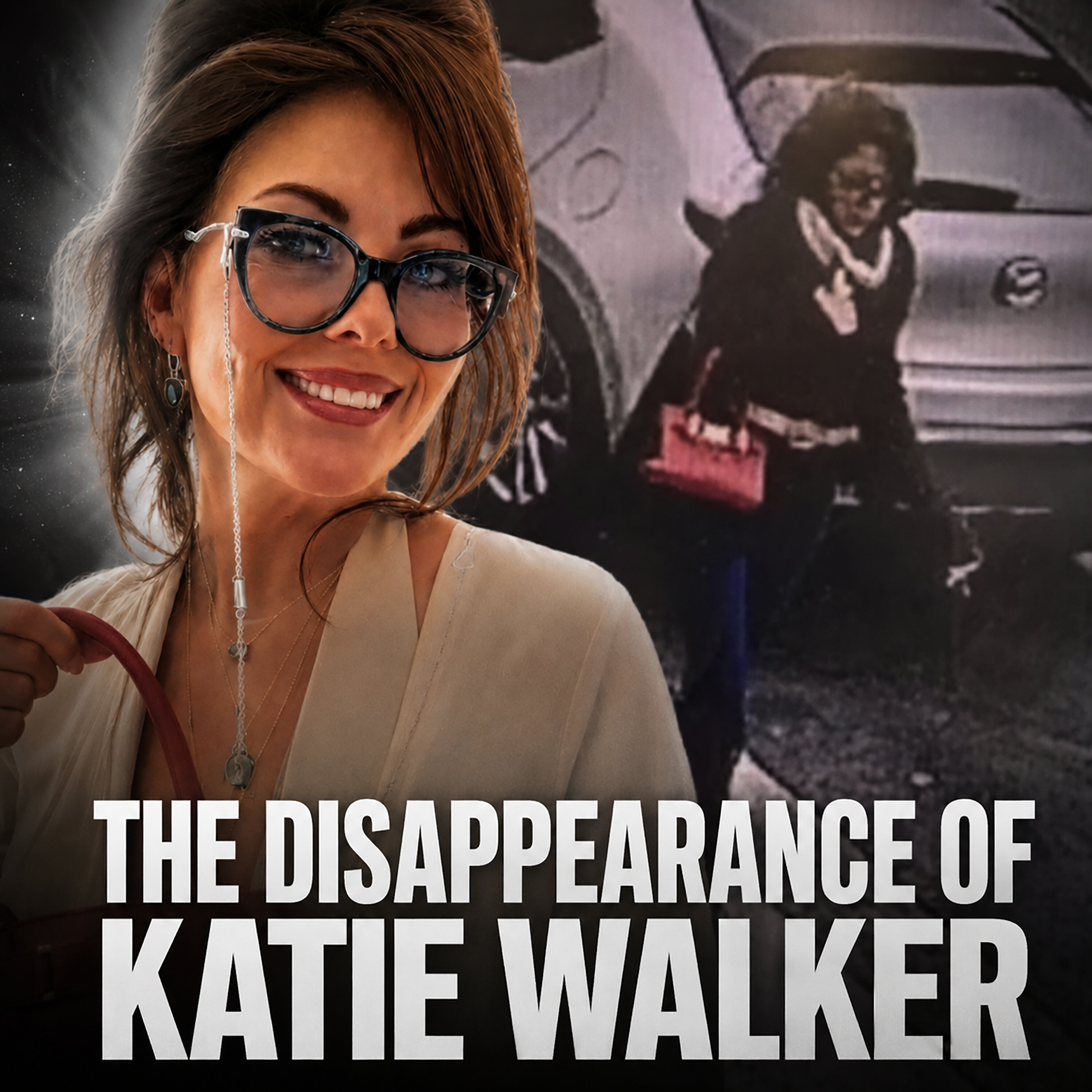
The Disappearance of Katie Walker
Katie Walker And The Parliamentary Inquiry
Mittwoch, 21. Oktober 2026 · 25 min
Kapitelklicken springt direkt hin
Shownotes
In this podcast you hear what happened last week as I attended the NSW Parliamentary Inquiry into unsolved murders and long-term missing persons cases where Katie Walker was used an example into present day police failures. The entire day was heartbreaking, infuriating and eye opening into what Katie is sadly now part of.
I also speak to Sally Leydon, the daughter of missing person Marion Barter, who you some of you may know from podcasts The Lady Vanishes or The Missing Matter, about proposed police reform.
See omnystudio.com/listener for privacy information.
Transkriptvom Podcast bereitgestellt · Zeitmarken springen hin
I did want to start by asking, have you ever lost something that's important to you? Have you lost your keys? Might be your prescription sunglasses. You might have lost your mobile phone. But I want you to stop and think for a moment, if you lost your mum, what would you do? Where would you go? And how would you continue to live life?
Susan was born in May 1956. Tragically and unexpectedly, she was murdered at the age of 33 in 1989. We struggled to get over that. She was beautiful. She was vivacious. She was articulate and didn't deserve that ending.
The man you just heard speaking there after Sally Layden, who is the daughter of long-term missing person Marion Barter, was Gary Keeley. Gary is the brother of Susan Keeley, who is a 33-year-old mum of two who was last seen on Friday the 1st of December 1989 in Bellingen, New South Wales. And the audio you just heard was from the New South Wales Parliamentary Inquiry into unsolved murders and long-term missing persons cases in New South Wales between 1965 and 2010 that I attended on Friday in Sydney.
And that was the inquiry I mentioned in my previous podcast where Katie Walker's story was mentioned, which I will get to shortly. But as I sat there, meters away from Gary, a complete stranger with a tear in my eye, listening as he broke down detailing the sheer desperation he still has after all of these years for answers and how the police and their, and I quote, hapless, hopeless, and not up to standard investigation failed his sister. I was filled with so much silent rage and that silent rage only grew as Gary then explained the reason the police never gave Susan a proper investigation is because Just like what's happened with Katie Walker, the police made what Gary says was perceptions of Susan's lifestyle and they decided
she'd simply left of her own accord and a search just wasn't worth their time or effort.
Opinion expressed that the general investigation into Susan's disappearance was flawed and was not treated with the seriousness that it deserved. Taking into account all the details of the report of her disappearance And the fact that she left her eight-year-old child alone would indicate that Susan had met with foul play.
Her disappearance should have been treated as a suspected homicide from the outset. It is now nearly 35 years since Susan disappeared, and during that time both our parents have died, not knowing what happened to their daughter. Her mother died just over a year ago at the age of 96. And on her deathbed, she said, Gary, don't give up.
All day on Friday, I sat there and listened to family member after family member detailing not just how the police had failed their loved ones, but how they'd also just continually dismissed them and their pleas for help.
Because I rang up and I was told I was obsessed, so I stopped ringing because I'm like, If that's what they think, then there's no way they're going to help me, are they?
You were told by the police.
Yeah, that I was obsessed by my OIC. So then I felt, like, stupid. Like, so I thought, I can't talk to him. He's not taking me seriously anymore. So that was the end of that sort of relationship I thought we had.
The voice you just heard there is Helen Cooper, who is the sister of Elaine Johnston. who went missing in 1980 at age 16 alongside her best friend, Anna Joel, who was 17 at the time. And back then, the police treated these girls as runaways and they did no investigation. And they actually didn't even file a missing persons report when they were reported missing by their families. And it took the police 35 years before they eventually spoke to any of their school friends. And the police didn't do that because they thought, all right, let's finally look at this case. They only did that because of Helen's perseverance to get answers after over three decades, despite them also calling Helen obsessed.
But I was told that if I went and done anything, any investigations, and I found out anything about my sister to let him know, and then he'll go do a statement. I did tell him about some intel I had at the time and he virtually sort of encouraged me to go to their place to do the interview. And then if I found out any information and they'll take it further, my words were, I'm a civilian. And he said, well, we don't have the funding. We don't have the budget.
They are just two of the endless examples from that parliamentary inquiry, which highlights decades of police just failures. And although it was meant to be about historic cases, as the police believe they are doing better now, Sally Layden, as I said earlier, the daughter of missing person, Marion Barter, as she then got up there to speak, she used Katie as one of the most recent examples of how nothing has changed.
Good afternoon. I am Sally Layden. I am the daughter of Mariam Barta and I am doing the oath today. I swear that the evidence now about to be given by me shall be the truth, the whole truth, nothing but the truth. So help me God. I'm grateful again for the opportunity to speak about a topic which I am deeply connected to and passionate in ensuring that the necessary changes are made in this space. I understand that this New South Wales Parliamentary Inquiry is in relation to cases from 1965 to 2010. However, to make these changes, we must also look at current day and what is still happening in this space. I'm going to be completely honest.
I am extremely troubled by what I'm hearing from families of missing loved ones still, families whose loved ones went missing in August, in May this year. The narratives are still the same.
Katie Walker.
missing from the Tamarara Beach area of Sydney on May 23rd this year. I've been informed by Katie's family via Joshua Fox, who is helping the family on the case, that police allege Katie has suicided, that she simply walked off the cliff wearing her stiletto high heels, holding her vintage red Versace handbag, neither of which have been located, and Katie is still missing today. A mother of two With Katie's family and friends located overseas, they are finding it extremely difficult to communicate with police to get the answers and the questions and suggestions of investigation they have suggested to be looked into. She matters.
Over the years, while fighting for her mother, Sally has also started an advocacy platform and a podcast called The Missing Matter. And after we recently connected, Sally was actually the only reason I was there on Friday and knew about it. And over the last week or so, as Sally and I have chatted, we've just been so frustrated by the similarities between her mother Marion's disappearance and Katie's, but actually not just Katie's, but most missing people now I think about, you know, the police, they decided Katie ended her life because of assumptions they made on her personal life and state of mind from, you know, what was happening and their relationship statuses and two divorces and Moments ago, you heard Gary say how the police made
the assumption his sister chose to leave and they made those, and I quote, perceptions of her lifestyle based on the fact that she liked to have a drink and occasionally smoke weed with her girlfriends. And here's a snippet of audio from Sally two years ago now explaining how her mother, Marion, also fell victim to what I actually now just see is small-minded, lazy, and questionably misogynistic policing.
Is there has been a narrative about my mum focused on how many times she was married and divorced, quitting her job, selling her home very quickly at a loss, or the fact that she changed her name to Flora Bella Ramakel. But those details, taken out of context, do not tell the true story. What they may point to is something far more concerning, a woman who may have been under influence, under pressure, or in a situation she did not fully control. My mum was a loving mother.
a dedicated teacher and a woman who valued her relationships. She did not simply walk away from her life and she did not abandon her family. Someone knows something. For nearly three decades, I've searched for answers. We've followed leads, spoken to investigators and held on to hope.
Another similarity between Katie's disappearance, Mari, disappearance and even Elaine Johnson's, whose sister you heard from a moment ago, is all of those disappearances weren't just discarded by the police, but they required citizen-led investigations and podcasts like this and media coverage to try and find answers to eventually try and get justice. which is something I spoke to Sally about the day before the inquiry last week as she arrived in Sydney.
It shouldn't be left up to people to do podcasts, people to go and, you know, volunteer their time like Sarah to come and help in the missing space. It shouldn't be up to me as a daughter of a missing person to keep fighting.
With your mum's case, the developments that were made a few years ago never would have happened if not for you. teaming up with journalists to make a podcast i needed to do that yeah.
You know like and we got criticized for that too heavily you know we hate the podcast was a pretty common phrase i would hear from the police and i understand it from their point of view like i understand that it can contaminate evidence and things like that but at the same time they wouldn't actually have the evidence if i didn't do the podcast so um you know we everything we found um once i had a backing behind me and i could expose myself on a high level and people were going oh my god i didn't know that that lady was missing that's when people started to check in and what i've heard from other people who are in my space now helping me and have helped me immensely was that i asked for help that
was one of the key differences that they found um And I was talking on the podcast with the journalist. So it was me with the journos actually doing it in real time. And, you know, that's definitely what makes a difference sometimes. I think people feel connected with that. And, you know, it's a real story. It's not just a.
And they feel part of it. Like the amount of people out there who... want to help and like doing their own digging and.
Yeah and I've always been very adamant that you know anybody that sent me a message would get a response from me and I ended up with like RSI in my wrist because I was getting thousands of messages pretty much every day and I made it my absolute effort I'm like if you've taken time to help me and think about something I don't care if it's silly or not I will still read it I will pass it on I will do whatever and we will investigate everything we possibly can.
And Sally's podcast has had over 20 million downloads and it's led to huge breakthroughs in her mother's case. And it's led to a prime suspect who's been publicly named, but still the police won't take it to trial.
Because they sit there and say, oh, well, you know, we would never try and prosecute unless we can win. And I was telling that to somebody the other day and they said, well, that's kind of like an Olympic swimmer saying, well, I'm not going to train. to win a race unless I know I'm going to win. And I went, that's very true, isn't it? Like, you know, if you've got an opportunity to take something before a court and a jury to let them decide on the evidence.
I mean, in my mum's case, we've got like 43 pieces of circumstantial evidence that can be linked together. in the case and it's just been overseen and pushed to the side there's been nothing we've had a you know Laura Richards I don't know if you've ever heard of Laura but um she used to work for New Scotland Yard and has a podcast called Crime Analyst and I'm happy to give her a plug because she does great work as well and um but she she's qualified to make these decisions and when she was working with me I've done I don't know I think we did about probably 11 episodes on her own podcast about my mum's case and she was just baffled, you know, with everything that's been presented and everything we've found that, you know,
we're still sitting here and I'm getting told that the person who the coroner referred to as, you know, significant, a person of significant interest in my mum's case and gave evidence for, I think, nine, ten days at the inquest. She's just really shocked to know that, you know, There's just nothing that's been done. And, you know, when we asked the police earlier this year when the million dollars was announced, you know, have you questioned him again since the inquest? And they said, oh, well, his exercise is right to silence.
You have so much evidence that all points to this one person.
Just a bit baffled.
Yeah, and they say, well, if we're not going to win, we're not going to vote.
And Sally hasn't just experienced the pain of a loved one disappearing. But she's also experienced the heartbreaking effects of what happens in the days and months and years that follow by the family who are left in the dark with no answers and no one to turn to once they realize the police don't care.
Three and a half years after my mom disappeared, my brother took his own life. Her parents, my grandparents, also passed away believing what they had been told, that my mom had chosen to start a new life and that she did not want anyone to know where she.
Is or what she was doing.
That belief was not just wrong, it had a catastrophic consequence. It shaped how people responded. It delayed urgency and it left our family carrying not only grief but misunderstanding. No family should have to endure that.
What would it mean to you if someone was to come forward with that information?
How important is that?
You know, I've been living this ride for 29 years. What it would mean for me is that my children can actually have some peace with this. They've never met my mother, but this has impacted them hugely. I've got them crying to me saying, when will this end? Please, mum, you need to stop because they're worried about my health and my well-being because they see how stressed I get and my hair falling out. I'm on heart medication.
It's a lot.
When it came to Friday's parliamentary inquiry, I do want to point out that the intention wasn't for this public forum of attacking the police, but it was to hopefully bring change and a chance for the police to understand the ramifications of their actions, their words, their dismissal and theories.
And for all those in charge to actually ask, are we properly trained for cases like this?
And you said an interesting point to me over there that one of the things you want to change... that you're pushing is that the police are not psychologists they're not trained to speak on anyone's mental health they have no they've got.
No education they come out of the police academy and you know god bless them there's a lot of there's a lot of trauma being a cop like i get it they have to see a lot of things and hear a lot of things and deal with a lot of things but one thing they're not is they're not properly trained to make assessments on someone whether they are you know suicidal they're making assumptions based on what they see and the evidence that they have and sometimes that evidence is not clear and sometimes that evidence is very vague but those assumptions are still made and that's that's what we've got to change we've got to you know bring that to the table and I'm not saying that's the fault of the police or the general duties police
officers but that that expectation should not be put on them by the government either.
It feels like the whole system needs changing.
It needs a rework. And I think the problem that I see after 29 years lived experience in this space is that the recruits come in from Goulburn in this state and they get spread out to wherever they're going to do their training on hand. And they're getting trained by people who have been trained by the last person who tell them that this is the way it is.
So unless we actually change that narrative and change the thought process, everyone's going to keep getting trained by the trainer who's been trained by the previous trainer. And we're really not going to make any changes because the brain needs to think differently when we're working with a missing persons case. And that's one of my biggest beefs with the whole system is that, you know, when you ring and speak to a police officer, you just want to know that they've heard you, that they're listening and that they're doing something. And When you don't hear anything back, it's torturous.
And I just want to publicly say here, I do not think the police are inherently bad. There are incredible officers out there who would and do leave no stone unturned and see what they do as an honour and a privilege for the families. But as we've heard time and time again, and as I've experienced this through this series, through speaking with Katie's families, there are officers out there who aren't like that and they don't have the time or don't want to put in the time into cases once they've made up their own minds based off, again, circumstantial evidence and their own theories that come from what I believe are misogynistic perceptions of lifestyle. And that's the issue.
And I think, well, I don't think I know overall that the police as a whole are under-resourced. And with cases like these and Katie's, you know, the officers whose hands they fall into are massively under-qualified. Like they don't have the training on how to appropriately speak to families and they don't have the skills to investigate things at a certain level. And by the sounds of what I learned on Friday, they also just don't have anyone more superior they can pass things onto once it's apparent it's out of their capabilities.
You have spoken about necessary changes. In the time we've got remaining, could you sort of elaborate on those? Some of the things that you would like to see happen, like the most critical things you would like to see happen in this space when it comes to missing persons cases, and in particular, how the police liaise, what they do at the beginning and how they continue or how they haven't liaise. Could you add in that regard?
Look, and I've said it at the last hearing too, we learnt that the homicide team in New South Wales only have 36 staff which I find quite shocking. And that really needs to be addressed from, you know, a government level as well to say, you need to give them more. Like, I really feel for the police. They have a shocking job. They do a lot of hard stuff. But, you know, not answering calls, getting auto replies that they're on leave, but not informing families they're on leave when something is happening or something's bubbling or we're waiting to hear from them, that's not good enough. We appreciate and we understand their hard efforts and where they're facing as well, but it comes from a level of multi-levels. It needs
to come from Parliament. It needs to come from the government. We all need to work together. I said that at the beginning, the same with the families. We all have to come together and make a change. My biggest kind of beef, I guess, with missing persons cases is it shouldn't fall, a missing persons case should not fall back to general duties police at the location where the person went missing because they're not trained enough they're coming out of the you know academy these people joni and i were talking about it they're not they're they're not um you know university trained people to make it make a decision whether someone has suicided like why why do these police officers what's the expectation put on them by the
police to actually make these decisions like it shouldn't fall back to them it should be falling under the one blanket so that the people who are working and managing that are educated, they are understanding of what the families are requiring and what's necessary because the stress that comes with it is next level.
And is that necessary because then you get a standardised approach? So you get the best approach in every circumstance regardless of who someone is, where they are, how they've disappeared. There's a standard approach when someone goes missing that then escalates if it becomes suspicious. Is that what we need?
And look, I think we talk about this a lot too, that it's such an old school society, the police force. You've got people up here who have been in the force for 50, 60 years. And there was a situation in my case where the head of the department, and the coroner has suppressed his name, so I won't say it, but he wrote to the AFP saying, I believe Sally is seeking a scapegoat for this situation. I believe her mother was located as recently as last month. That happened 13 years after my mum went missing. That's problematic in itself, but the fact that he's the boss of So what are all the people under him thinking when they're reading that going, well, if he's saying that, that must be the case. And the language and the dismissal of someone
who has a missing person. I mean, I recently spoke to someone from Search and Rescue and I questioned him about whether he had looked into one of the cases I've just mentioned and he rolled his eyes at me. And I'm like, why are you rolling your eyes? Like you're in this position to help us. The families will pull out any stop to work out what's happened. They are missing.
When I first discovered Katie Walker's disappearance, I honestly thought, and if you go back to the first episodes, I would just do one or two posts on my platforms to help bring awareness. And as those posts kind of turned into a podcast, which turned into a series with this content, as you know, leading to new information and leads, I've again often questioned like Where will this go if the police don't take action on the information we're receiving and passing on? And, you know, we're still pushing for them to actually take action. But on Friday, as I sat there in parliament, listening to family after family, I realized that Katie is sadly just part of something so much bigger and part of this world I had no
idea about, which is full of people who have been failed by the police. And I've spent decades searching for answers. And I'm still hopeful that through this podcast, we can find out what happened to Katie Walker. But I'm also now hoping that this series can help bring those proposed changes that we heard in parliament forward, because the more people aware of this and just what the police do and haven't done, and the more people pushing the change, I suppose, the more likely it is to eventually happen.
