

The Projection Booth· Staffel 1· Folge 801
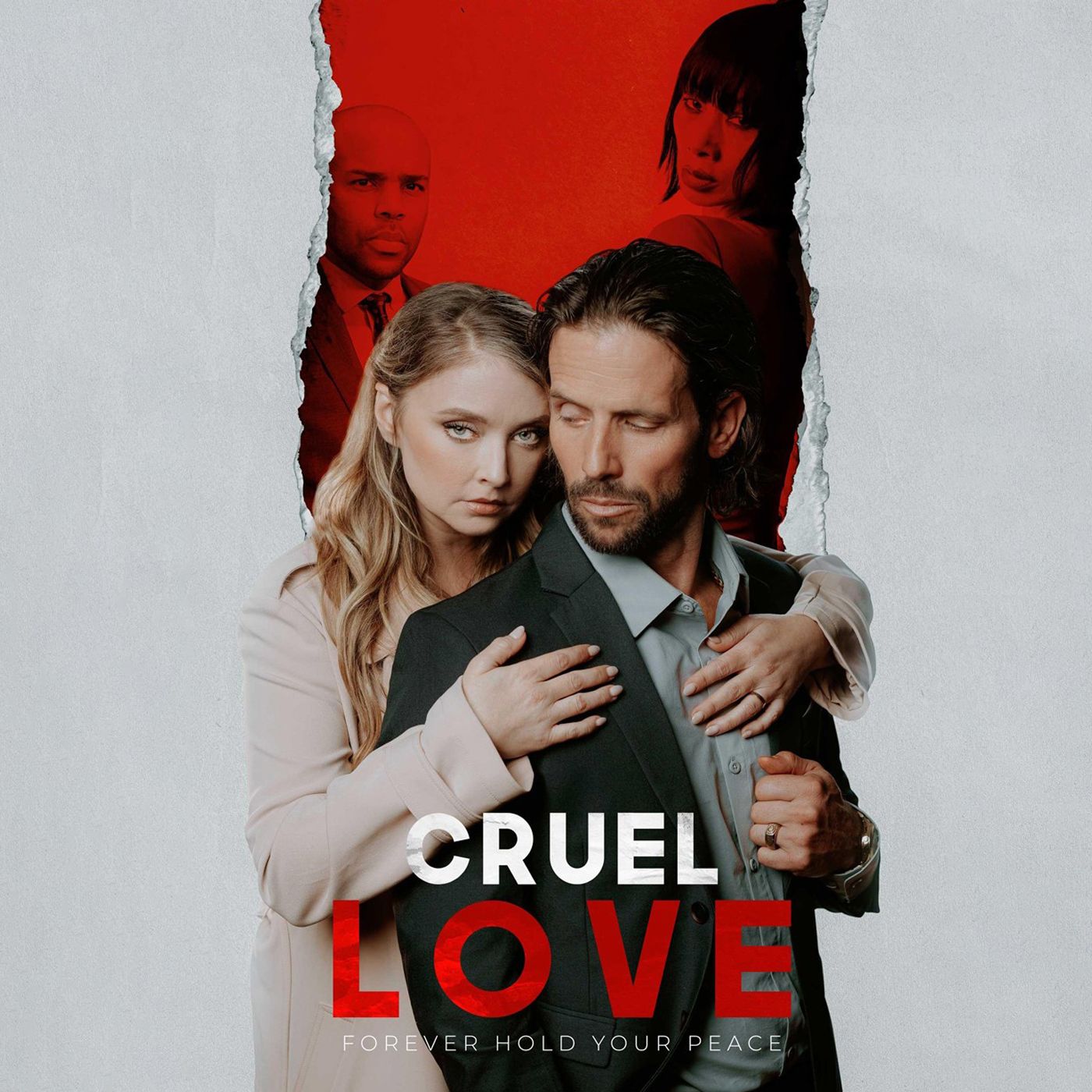
Special Report: Cruel Love (2026)
Montag, 2. November 2026 · 41 min
Kapitelklicken springt direkt hin
Shownotes
She has already buried her husband. Then a charming stranger comes to her aid during a robbery, and she lets him in. That's when the con begins. Cruel Love (2026), Nick Lyon's new thriller, now streaming, turns real marriage fraud into what star Elisabeth Harnois calls "a cautionary tale with an element of emotional horror." Lyon tells Mike how he and the late Christian Oliver made it their first co-production, how Ron Peer's twist-and-turn script grew out of real cons that exploit fiancé visas and even the Violence Against Women Act, and why he added a rainy Los Angeles opening in post to set a modern noir mood. Detroit-born Harnois builds Julia from grief: a woman who lost the love of her life before the movie starts and decides to trust again. Bai Ling, who tells reporters she landed from the moon, plays Mei Li, a role first written as a Russian named Lyudmila; Lyon's only job, he says, was pulling her back a little. A friendly argument breaks out over half a shot that didn't make the cut, and Lyon explains why even a favorite moment sometimes has to go. Oliver died in January 2024, before the film's release, and Harnois hopes it brings new eyes to his work. Plus: Lyon's FrightFest horror film Do You Want to Play? (2026), his next, about Arctic ice cores hiding insects you don't want on your spine, and Bai Ling's directing debut, My Quarantine Romance with Toilet Paper, in which she plays Charlie Chaplin.
Follow Cruel Love on Instagram (instagram.com/cruellovemovie) and rent or buy it from the film's official website (cruellovemovie.com).
Become a supporter of this podcast: spreaker.com/podcast/the-projection-booth--551….
Become a supporter of The Projection Booth at patreon.com/projectionbooth
The Projection Booth is part of the Weirding Way Media podcast network. Explore more of our shows at weirdingwaymedia.com.
Transkriptvom Podcast bereitgestellt · Zeitmarken springen hin
Hold your ears, folks.
It's showtime.
People pay good money to see this movie.
When they go out to a theater, they want cold sodas, hot popcorn, and no monsters in the projection booth.
Everyone pretend podcasting isn't boring.
Turn it off.
Turn it off. Turn it off.
Julia, Eric was a long time ago. You deserve to find love again, even if it's only temporary.
I feel like I need to move on.
Hey!
Somebody help!
He's in my purse!
Do you know who he is?
I really don't.
Thank you.
What's he like?
He's wonderful. He's kind and tender and hot.
He's kind of sexy in like a.
Dark, foreigner kind of way. I think I'm falling in love.
Does he feel the same way about you?
How do you get housed like this?
I want to have children with you.
There's something off about him.
Ivan, we need to talk.
That video is pretty incriminating.
This isn't real.
Have you been abusing Ivan?
I can't believe you would even ask me this.
You're a good person and I'm not.
If there is anyone who has thoughts why these two should not be united, speak now or forever hold your peace.
Hey folks, welcome to a special episode of The Projection Booth. I'm your host, Mike White. On this episode, we are hearing from Nick Lyon, Elizabeth Harnoy, and Bai Ling, all about the new film Cruel Love. It was definitely a very interesting interview. I hope you have a good time listening to it. Thanks so much. Nick, let's start with you.
I'm very curious. How did this project come together?
This came together several years ago. Christian and I, we had done four movies together prior, including one with Elizabeth. And then we had. Talked about starting to do productions on our own with the two of us partnering up, and this was the first of those. And so we came about the script and wanted something that could be done on a budget.
And yeah, and that's where it started. Founded an investor that bravely entered the project. So that's the rest of the story. It was our first co-production.
Had you worked with Ron Peer before?
Oh, yeah.
Yeah, my first feature film, I Love You Baby, which I shot in Germany, in German language with Maximilian Schell. Yeah, yeah. And yeah, I speak German. I studied in.
Ja, ja.
No, so no. And so my first feature was in Germany called I Love You Baby, like a neo-noir thriller. So it was very Ron Peer, twist and turn, con man movie. And so on this one, and then we had done On Fire together, and we've worked together through the years on numerous things, you know, trying to get things set up. But On Fire, we ended up getting filmed, and then this one, I brought Ron on to write the story, to work with me on it, and to write the screenplay, because I really like his kind of twisty-turny style. He likes to plant little seeds, and then you don't know where the story's going. quite and he's very good at.
That and it's so funny elizabeth i my wife has been doing a re-watch of all of cold case and we just saw your episode my twins.
Episode isn't it yeah people have to remind me sometimes and often it's in the context of a podcast where um and i appreciate that's why i love doing podcasts so much because you're talking to people who really, they know the material more than you do in a lot of ways. And I have such respect for that. Or they know someone who knows the material more than you do.
I forgot that I had done that. I knew that I did Cold Case, but that was one of the better guest stars I ever did because I got to play twins. And it kind of set me up for working in a weird way, it put me on the radar of that sort of a CBS, Brockheimer TV show universe where I eventually ended up in a much more leading role type of way. But they do really, they really do identify talent early on, on their projects. And then they kind of build out from that. So that was one of those really, really fun opportunities at the young person that, you know, you do it and you never think, hey, that's going to turn into something else later.
later did i do the hindsight bias of connecting the dots and going oh yeah maybe that's because of that and because of that because of that but yeah cool case is a great show it was one of those long lasting um you know before we had really high numbers on those types of shows you know it's really hard to find these days i have to apologize up front and i'm just going to say it now i know because you're saying you can edit this i have three miniature dachshunds i had nowhere I don't have soundproofing.
I have thought about putting soundproofing into this apartment, but I don't have soundproofing on the outside where I keep them. And this happens to be our office. So if you hear a little barking, it's just them saying hi to our neighbors walking by on the marina. I apologize if that interrupts anything. But yeah, that's what you're hearing. That's kind of distracting.
But yeah, no.
Yeah, cold case. That's so funny that she remembered that. That's very, very... Feels like yesterday and a long time ago at the same time.
And I'm actually calling you from right around Detroit, and I think you're from this area. Yes, I am.
I was born in Detroit. I grew up to, I would say, for the first three years of my life, just on the safe side of the eight miles. So when you're talking, like my mom, I grew up, my mom's family was a poor family. My mom was a big Catholic family, had, you know, they had 10 children. They had, over a large period of time, same parents, beautiful Catholic family. My first home as a child was in the backyard of my grandparents' house just off of 8 Mile. The backyard connected to the other street, and our house was on the opposite street. So I got to walk to my grandmother's house every day for pancakes or pancakes. chicken and biscuits every morning or whatever, you know, it was a great way to grow up until my
mom decided she didn't want to be in the cold climate anymore and moved south. I always have Michigan in my heart, Midwestern.
Or through and through.
And I was curious how you, you have been acting for, for so long. And I'm curious when it comes to approaching a character, how do you kind of get into somebody else's skin? Like how would you find like a Julia?
For Julia, it, I get really vulnerable and candid. Julia came to me at a time in my life when I was already feeling a very large level of what women feel in this industry, which is you reach a certain age. And even though you don't feel that you are to the public, you and you may not appear that age. I've always been told I look, you know, much younger than I am. That's can be a blessing and a curse. You're still going through those life experiences.
tell you, yeah, I'm a woman. I was watching Ride or Die, that new show. What do they call it? A woman of a certain age. There's an acronym for it.
A WACA.
A woman of a certain age. And I don't have any problem with being a woman of a certain age because when women like that on that show are representing women of a certain age, that's great. And I would love to be one of those women. But what's great is that I'm finally coming into my comfort zone of playing people who are actually my age, because since I was a young person, I came into the industry playing younger than I am. I was fine and good at it, but I always loved the notion of being able to really be heart and soul, able to connect to what a character, not just because I'm a good actress, but because I could cry those tears with that person whose character I'm playing. And in this case, this character, having
lost a partner at a point in their lives where they're building their lives. You know, in the story, she's coming out of having lost her husband to cancer and they were just building a whole life together. They had these huge plans to have this business together and everything was just, you know, potentially going to be, you know, what they call sunshine and rainbows and, you know, the happily ever after. But really the happily ever after is the awful beginning in this film. You know, that's what makes it interesting, but that's also what makes it for a woman a really challenging. role because she had to, she, she had to go kind of given up. I'm not given up on, on my work. I know I'm good at work. And I guess, you know, Nick and I
talked about this. He's a great director. We've had our conversations about where she may or may not have come from emotionally before we started. But for me, it was very much like, you know, at this point, I've lost the love of my life before this movie's already started. So I don't care so much about how beautiful I look, if I'm the thinnest I've ever been, if I look the best I've ever looked. That's not the most important thing in the world. What I know I'm good at is my job. And I throw myself into my work.
And that's what I'm good at. And I'm going to do that. And that's what's going to keep me focused and good and able to survive this incredible lot. When it happened to let my guard down for a moment and get robbed, which no spoilers at this point, people may have seen the film, but I ended up getting robbed and attacked and a person, a heroic type person comes and helps me. I'm not the kind of person that would necessarily respond to, you know, figured out how to protect myself and get on with my life. But somehow it's still as a female, you see is, who's hurting deep down, you still want that help. And you're in an emergency, you really want that help. And so I let this person into my life. And it takes
us on a story that's just both beautiful, but also heartbreaking, because you want to believe in their love. And you want to believe that a woman can have that. And that's just the female perspective of it. There's so much more than that. There's this political side of it that's like, you know, what happens to women in these situations. But as an actress playing the character of Julia, for me, it was so important to just dive into what it would feel like to already start from a place of loss and trying to rebuild and then have that all taken away really quickly, but then have this hand reach out, this kind hand reach out and decide, you know what?
I haven't given up. I haven't become this hardened soul. I am going to trust again. And I'm going to welcome this hand into my life only to perhaps not get what I expect, you know, from, from being an open heart. So I don't know if Nick would agree or disagree with that, but that's what kind of, honestly.
The vulnerability to was definitely something that was very important that, that, and you carried it very well. Like the transition comes, she would, just know exactly what she was going to do with each scene every day. It was pretty impressive, I'd say, because it's like she knew instinctually where her character needed to be in each scene.
Thank you.
That means a lot.
But we talked a lot, and he had a lot of trust in me, and I had a lot of trust in him. It might not have always felt that way. We joke about it because... good minds always have a little bit of like a back and forth and a challenge, but only reason I only do that with people who I know, like me and I can have those kinds of back and forths with, you know, like, um, and, and, and that was one part he never questioned me on.
And I felt like I had to come in, like I did have to come in with a story for us to go, well, I would, otherwise you watch this movie and you go, why would this woman have this happen and be so welcoming to this man and not, be just a big dumb idiot because that's not what people are more complex than that. And they come from places that are much more complicated than that. And their pain is much more complicated than that. You learn about that pain a little bit later, but that's part of the, the, the hierarchy of knowledge and the, and how, how we decide to distribute information and how Nick decided to distribute the information throughout the story, you know, but yeah, it's, A woman my age, it was not hard to lean
into the insecurities and vulnerabilities of a.
Woman my age.
Well, Ms. Ling, you don't seem to age. I mean, I first saw you back in, speaking of Detroit, a Detroit-set film of The Crow. I think that was the first time I saw one of your American films.
The Crow?
Where was The Crow? Was I in The Crow?
No, I was.
I thought you were talking to me and you said Miss Thing. I'm like, Miss Thing? Oh, that's a whole new language.
I was not about to call you Miss Thing. We don't know each other. We don't know each other that well.
I was like, wow, he's all fancy all of a sudden.
Sorry, Ling.
Sorry, bye.
The crow, yes.
Yeah, I was curious by Ling what it was like making that transition from Chinese films to American films back in the 90s and late 80s.
I don't think that any transition in my life or time or age mean anything. People ask me who I am. I say I'm a fire, I'm wind, I'm air, I'm earth, I'm water. So I'm the element of earth, of this life, this universe. I'm just having to jump into this body as a spirit and leaving this body God designed for me to live in. So therefore, there's no time for me.
There's no limitation. There's no... more transition or boundary or world or universe or different countries. For me, it's just spirit. I keep telling people, they ask me where I came from. I say I landed from the moon. I always say that. The TMZ used to follow me. Where are you? I say I landed from the moon. They say, you go back?
I say, yeah, weekend. I go change my wardrobe. They say, can we go? I say, yeah, there's very difficult test you have to pass. And they ask, what's the language in the moon? I say, we don't talk. We just kiss. Because all this language stuff, to me, I'm learning. I don't like language, but I'm learning it. It's extra. It's not important. So I'm tapping into this essence as a female energy. For up right here, Nick and Elizabeth talking about the role of this film, I feel like I'm really an other element, other energy jumped into that. They need me. They need my service. Fire is unpredictable. It's powerful.
It's force. I somehow got here. Either I'm an eyesore or a flyer. I don't fit in this universe. I don't fit in human life. I'm just there to do my job. There's no bullshit, no black and white. I see through. She's very advanced. I'm going to say yes or no. If you don't listen to me, I'm going to shoot you. It's just very simple in her world.
That's what I pack in this horse. It's not human. So you're talking about transforming characters, your age, your space, except from China, 89. For me, everything is yesterday. I'm just born.
I'm a new baby.
So I don't know what's happening, what's going on. I think for our mind, our mind is like a computer. If I'm a computer, it's empty. I mean, you've erased everything. So everything you're asking, I just download. If I need something, you come to me. So it's a very simple life for me, very empty. Therefore, I have this magic. Whatever the director wanted, I can actually go. I don't need preparation.
I'm just here directly, forcefully, powerfully, charismaticly. I think Nick, whatever, Oliver, so basically convinced me to do this movie. I have another project that I rejected. I think instinctively, I feel, it's a human story. We need this force to be opposite of Elizabeth or other good parts and to do some justice with humans for her. She's not a villain.
She's a perfect human being. I'm going to fight for what I want. You guys are all racist. You don't like me. I think we're from Asia or East Europe. We're all bad people. No, I'm a good people. I protect my needs. And this guy will fall in love with this rich woman. No way. I'm going to get it. I'm going to get what I want. I'm going to do what I can. So for her, it's so justified as a human that she just protects whatever she can get in this alien, the powerful world which is against her.
and all those leading men. So I'm here to fight that, to show that power, that magic that we can. As a human, there's no, to me, it's like a rainbow of color. That's life. Any color is beautiful. If I'm not the red one, the blue one, but she shines brightly in her own way. So that's how I approach life, approach film. I'm grateful that filmmaking like Naked Gaming is part of it all. Normally it's for males. You know, she's deadly. I'm so proud I served the role with the guidance of Nick. I appreciate he gave me all this freedom. We never talk about this character at all.
I was doing my whole hair and makeup, but he was just watching like that. And he so knows his vision. Whatever I do, he's watching. He knows he has the scissors, he has the cup. I just go crazy. Sometimes I feel the force. So I sense it. And I feel very comfortable that director knows what you want to be completely freedom. Let me be vulnerable. Let me be free.
The freedom I love. But in the end, so he has the boundary to control within the frame. So I enjoy that so much. Also, what you see on screen is because what he allowed me and encouraged me because we're vulnerable, right? But he made me feel so safe and so great. I can do anything. I need appreciation, like how I walk, my hair stuff. I just go because I feel he wanted my contribution. Well, I love that collaboration with Nick. So I feel like we can do any character that I'll be completely free in my magic.
There's no limitation. He doesn't scare me. I don't feel fear. So I feel so safe of doing this. Therefore, the magic will come out naturally.
Nick, what were some of your biggest challenges doing this film?
For me?
No, I was saying to Nick. But I'd be curious. from you too, by the way.
As always, it's... I mean, this one was... It's always dealing with short schedule, not enough time. Those are the typical things. And I move pretty fast. But still balancing quality... with speed because, you know, so trying to still keep the quality while working fast is always the challenge and setting things up and blocking things correctly so that you can get a balance of the two. And, you know, it's kind of like, what was I saying? You know, it can pick one of the three triangles, fast, cheap, or good. And you can pick two of them. So I guess it's trying to get all three. trying to get all three and it, you know, all three sides enough to where you have the quality, you have the speed to be able to finish it. And also, but
overall it was, and then doing the post-production was pretty challenging because of what happened to Christian that, that became, you know, a little bit of a challenge that like quite a bit, you know, it was just like, wow. Yeah. But otherwise, you know, like, for example, like Bailing, I knew exactly what I was going to get because she, I mean, I cast it because I go, okay, she would really work. I was like, if anything, all I got to do is pull her back a little bit sometimes, you know, because she's the force of nature that's going to come at me.
When you said Bailing, I was like, oh, for that character, 100%. I could see it.
And it was supposed to be a Russian named Ludmilla. Then we changed it to Mei Li.
I remember you saying it, Russia. I was like, no, I think Bailing is better.
I was all about it.
I was like, that is something different. And also it just like takes it even more like just more unpredictable in a way, you know?
Oh, yeah, I know. And she has that because she's a force of nature already. It's like you can't really control her, but you can pull her back.
You know how to get it in check. You told him.
I remember, yeah, for Russian girl, yeah, I said, I don't look like that. They changed Mei Li. Mei Li means beautiful. They got the perfect name. For me, the challenge, to answer you, I was watched basically last minute jumping to this film. I think they're already shooting or something. So it's how can I do the maps in the limited, minimized, and screen time, which maybe you caught a couple of wonderful scenes from me with Christine. Of course, it's a choice.
How can I, because there's a transition, I don't want to give away when you lose time to the character. It's kind of in a way to be subtle, to show some different color, which will totally surprise the audience. So that's the, I always, I like the subtlety of characters, not just one color. I want to give her color as human. People can relate, people can feel for, and also there's the humor. So I just, as much as the little limited part or whatever he gave to me, the director, I'm trying to give whatever the color I can because I have freedom. I just, basically, I have a passion. I love my part. Therefore, you can play well when you have passion. You jump all the way with your heart. So there's not much really challenge. Just
figure out what can I do for my character.
But there were no scenes removed. There was a half of a shot.
Why are you cutting? Why are you cutting those?
Because it would have made it harder for us to.
It would have been too... It didn't balance right.
I feel we'll make her vulnerable because her man is just a rich woman, right? She's not poor. So I think it's very.
I don't disagree, but I think in terms of the... Well, he doesn't know what we're talking about, but in terms of the... It's an exposure shot, right? Is that what you're talking about?
If you thing.
We're in the bedroom.
It doesn't. Oh, the bedroom. That was all there.
Spares. I meet her. So good thing. When come in, meet her, go to work. So dangerous thing. I want to see it. What's not there?
It's all about the pacing, about the flow, about everything. One little card, you take it out, it changes the overall pace of a film. I feel like I feel like it plays well the way it is right now. And those are just decisions that between me and the editor, we look at it and go, okay, does this reflect good on the story or bad on the story? Or is it out of place in the story? Sometimes you just got to do that. Sometimes you got to take your favorite shot ever in the whole scene and you have to cut it. Because you'll find that you're wagging the tail around the dog or the dog around the dog around the tail. If you're, if you're trying to edit in the film around one scene, because you're trying
to hold onto it, it, it, it blocks, it blocks everything else. So sometimes you just have to get rid of those things and whether you like it or not. And it's like, yeah, sometimes your favorite.
You have cut it. It's painful sometimes.
Yeah, no, you don't want to cut anything, but then it's like, okay, this is like.
Converse side of that, I will say that there were a lot of things that we thought that we didn't get. And in the beauty of our great editor, we really felt after our screening that we were able to have on a large screen. And I don't know when you saw the film what your experience was, but I didn't feel a great loss. At least I didn't. And I know Nick and I spoke about it. For things that we knew were missing, intellectually, we knew we weren't able to get, we had And this is just the flip side of what we're talking about here. It's the only reason I bring it up. It's beautiful when you realize that you have a certain level of trust and a certain level of things on film that you know you've gotten,
even though you haven't gotten necessarily a shot list. Or maybe something happened that made it so that certain shots are unusable and you're going to have to do some zoom ins and cut some certain things out that don't match the continuity or whatever it is. it felt so seamless in a way that I would not have, it would not have been so obvious to trust that on wrap day because of how hard it is to do these lower budget films in a short period of time.
And we're very ambitious and Nick knows they're very ambitious films and, and we want them to be just as big and good. The next movie you go to see, because we feel we have that.
And he does.
And we do.
So when we, when we lose those shots and then all of a sudden we realize, Hey, We still have this movie and these beats are still playing. We know we didn't lose that much. What I'm saying is there was that moment where we did feel a little bit like, oh, wait, we didn't get that. Is that going to matter? And then in the end, it's like, no, it didn't matter at all. It didn't matter at all.
What I want to say is the nature of filmmaking, you know, we're all participating. One of the elements that can make conditions, right? Different sources. In the end, it's the director's vision, whatever they decide. There's no argument. You know, we work on this special project. It's really powerful. Dealing with a lot of substance very deep. And our characters are very extreme in good or bad ways. So it's the director's choice. I'm happy to respect that, just doing my job. In the end, it's not my decision. So I'm happy.
Elizabeth, you mentioned a screening that you went to see this. When was that and where was that?
We had a small screening. It wasn't small, actually. We screened the film just for the people that worked on it.
Some other, Ed Barco, they did a special ECR.
And at Glen Glen Studios, where actually, historically, I never told Nick this, but that was where my first, my senior thesis film when I was in college, that's where I mixed my senior thesis film was at the Glen Glen studio. So it was this huge, like full circle moment to go there and have them screen, you know, a feature that we did, um, on their big screen, as opposed to being in their little mixing studio for free, getting a free mixing job. Um, but it was great.
It was great to see it on the big screen. The audience really responded and it was beautiful. It actually, it was beautiful. It played in that noir that had that noir aesthetic that, that Nick and I talked about the whole time that I was so excited about, you know, it had that feeling that we, I'm a film geek.
He knew it when, you know, the whole time, because we would talk about stuff like this, like, you know, all this, this single white female, but this sort.
Of one with, I'm going to blink, you know, which one I'm talking about that we kept comparing it to the beginning of the film, the with.
You think about it, I want to talk about when I first watched the movie on the screen, I was shocked. I was shocked at how good, you know, I did not make student movies. The quality of the film, you have to study as an independent filmmaker or anybody want to get into movie business. That quality is that good, that sharp, that professional. Like compared to any movie I've watched, like Hulk. like the sound the quality everything it just for me it's like a Hollywood movie so I'm proud.
Yeah yeah but it had that that noir modern noir aesthetic we're going for right 100% the first shot gave up. The very first shot felt that way.
Yeah, I mean, that was all after the, after, in the post, I put in, like, the rainy, the rainy, the rainy L.A. starting with a little bit darker and then, but it's nice because this was, it kind of, it doesn't really fit into, it starts off like a domestic, you know, a domestic thriller and then you kind of quickly realize that, wait a minute, this is a little bit different. You, It's like, yeah, there's a little bit different than just a straight up domestic thriller because there's, it has its Ron Purisms, which is, you know, pulling in with a con. And that's where it really all came from, was like being conned and then doing some studies and research on this and knowing some people that this happened to, where it's like people getting married, doing
marriage fraud, whatever. The reason that actually all the stuff in that is somewhat true and it is used by people and it's been used by men to basically not need their host, a fiance visa or whatever you want to call it. It works both ways that women do it to men and men do it to women in order to get more legal protections actually than.
One more abuse of something that is.
Yeah, the violence against women at Guava, it can be used for good and it can be used for bad. And that's kind of where it initially started, you know, just as an idea, a concept. Like, oh, how screwed up would that be to be stuck in that situation?
I think it's very fun about real life, you know, those surprising in life. That's what happens. Nothing's forever the same way you look at it. So this film shot exactly. But those moments do beautiful when you enjoy the love, you know, wherever you're there, even between. So that's a moment of life I like personally, whether good or bad, but you are there. Thank you for that.
Losing violin.
Oh, there you are. She's back.
I think it is.
In talking about the movie, it's like it's easy to not want to give away those big, those are sort of reveals within the story. Yeah, spoiler alert, those things, because those things, the lessons that you learn with this story, I always say it's a cautionary tale with an element of emotional horror. Because for a female or a male, if it happened to you, it would be not a bloody, gory horror and become that. But it is a horror film in terms of the thing that comes.
Out of it.
But you don't want to give away those actual things, those mechanisms that are allowing that to happen.
I said, in my opinion, there's nothing learned in life. You experience good or bad. It's part of nature. Like a four-seater. But you just have to go through. Sometimes you're going to fall. Sometimes you're going to win, like a lottery. But that's part of life. It's really very matter-of-factly displayed in this movie, good or bad. That's how it is, life. So nothing to learn from me. It's all up to your feet to enjoy whatever you can.
Yeah.
Nick, where's the best place for people to see this film?
It's on Amazon and Apple, but you can find the links to it at cruellovemovie.com. CruelLoveMovie.com. You just type it all together. CruelLoveMovie.com. There's links to everything there on Amazon, Apple. I think it's on Fossum. It'll be on everything, everywhere.
Yeah, you can stream it on Apple and on Amazon.
Also, you can follow me. I am by the Instagram. I post a lot of behind the scenes or not in the film and clips, links of the interviews, everything. You can follow me. I am by the Instagram to watch it, to see more behind the scenes. Or a Cruel Love Movie. What's the name of the Instagram? CruelLoveMovie.com.
Yeah.
No, Cruel Love Movie Instagram, right?
Oh, yeah. Yeah.
Cruel Love Film. Cruel Love Film. At Cruel Love Movie. All those.
Yeah, I have a Twitter. It's all there. I hope you link our interview to all that Cruel Love Movie everywhere. So people can read it, watch.
I will be sure to link to that in the show description. So, yeah, definitely. Nick, you got your next project lined up?
Well, I'm about to premiere the film I did. I've done two films after this, or three, I don't know, maybe three. So, but I have one that's about to premiere at Fright Fest called Do You Want to Play? The horror film. It's a little horror film, yeah, so... And so I'm flying out this week to London to go to Fright Fest. So I'm excited about that.
Oh, yeah.
And then I have another one called The Vessel, which is a horror film, but it all takes place on our vessel in the Arctic, where they've dug up some ice cores. And inside the ice cores are little insects that you don't want to get connected to your spine.
Do you shoot that in Los Angeles or in.
Uh, we're, we're probably going to on the vessel. Yeah. I would shoot it. Cause I've shot so many movies on boats. Like I know, I know how to do, you know, like both and not need to be on the ocean because like with visual effects, you can do so much, but, um, so, so it's kind of designed to be on, you know, like I could shoot it in LA if I wanted to, but we'll probably go somewhere where there's some incentive. Right.
I didn't know if you had done it yet.
That's all I know.
It gets it together and does some decent incentives.
You know? Right.
And Elizabeth, how about you? What do you have lined up next?
I have one project I've been offered and I'm trying to figure out if I can make it work. And another one that an avail check, and I'm trying to see if I can make it work. Can't name names yet because they're still up in the air. Two different things potentially right now, focusing very much on getting eyes on this movie because it's, I do believe in it.
I think it has a great story to tell and a great, you know, we didn't talk a lot about it in this interview, but it's a great legacy film for a young man who loved making film and who was talented as a producer, actor, and as a creative mind in general. And it would be wonderful if we could bring more attention to not just this great film, but to the work of Christian Oliver.
So, you know, Fantastic. And Bailing, I know you are always working. What do you have coming up that you're looking forward to?
Well, I've done so many movies. I don't even remember a hundred. Also, scheduling. I don't know when she will figure it out. And also, besides that, I have my own project. I made a director debut. I didn't want to during the COVID. It's called My Quarantine Romance with Paula Picker. It's a post-production process. I'm very excited. It's a comedy. It's a crazy comedy. It's crazy. I composed music and wrote 11 songs. I starred in it. I played Charlie Chaplin in it. Charlie Chaplin in it. I basically identically look like him. I'm excited about that. And also my book I'm writing now, it's called My Outrageous Romance in Hollywood. I'm single, right? It's my love affair with all the The big rock star, movie star, the
real love affair that I have with, so I'm writing that book.
Very excited.
That's going to be, I know, but it's too late.
Your time I don't need.
I'm the mission for you. Can you see it through?
Is this what I say?
Accept what I do. You're safe. Numbered days are few. The lights promised to you are a good way of keeping it on.
Collapsed days are born.
I pretend to respond. No love for the lost. No love for me. for the lost. You're saved. Mourning the loss that you've paid to unsaved. You're saved. Counting the cost that you've paid to unsaved. You're saved. You're safe Counting the cost that you.
Pay You'll see Money in the losses You'll pay to oneself You'll.
See Counting the costs You'll pay to oneself You'll see Money in the losses You'll pay to oneself You'll see Counting the costs You'll pay to oneself You'll see Money in the losses You're safe
