

Kapitelklicken springt direkt hin
Shownotes
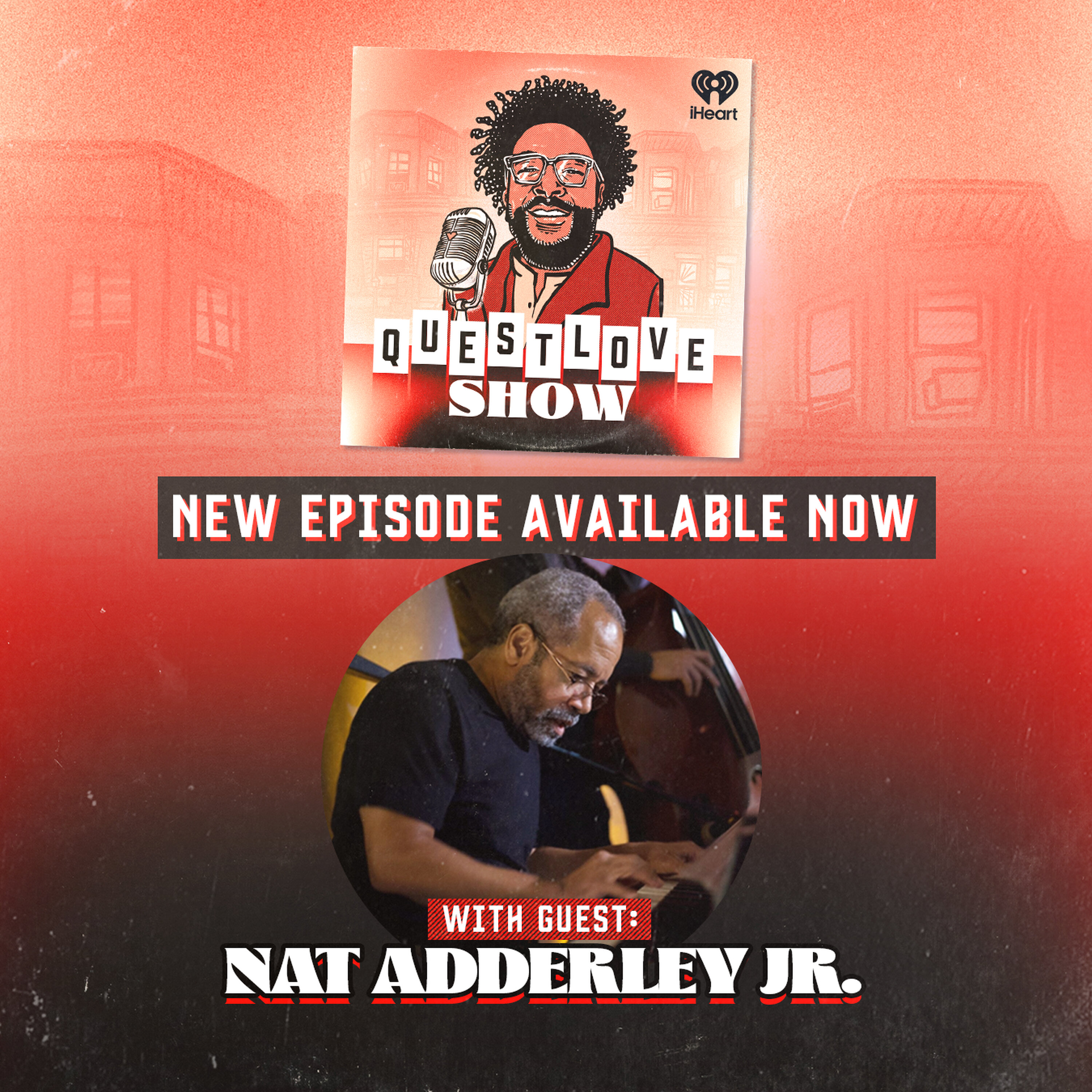
For Nat Adderley Jr., serving as Luther Vandross’ musical director and longtime pianist was one chapter in a remarkable musical life—and a partnership that helped shape the sound of modern R&B. In conversation with Questlove, Nat looks back on making “Never Too Much,” flying in from Houston to play “A House Is Not a Home,” and trying to talk Luther out of recording the Carpenters’ version of “Superstar.” As Vandross is inducted into the Rock & Roll Hall of Fame, Nat recalls the grandeur of Luther’s stage shows and the loss of drummer Yogi Horton. He also reflects on how his arrangement of “If This World Were Mine” found new life in Kendrick Lamar’s “Luther.”
The funny, unpredictable conversation also touches on Nat’s new album, Took So Long—his first as a leader and a return to the Jazz roots that run through his family and his work. In a personal full-circle moment, Questlove tells Nat how a protest song Nat recorded at 15 with his uncle Cannonball Adderley changed his life.
See omnystudio.com/listener for privacy information.
Transkriptvom Podcast bereitgestellt · Zeitmarken springen hin
The Questlove Show is a production of iHeartRadio. Welcome to another episode of the Questlove Show. I'm going to do something a little different. Let's go back in time. It's 1982. And for those that follow the show and follow me and whatnot, you know my story and my lineage and my family and all that. But actually my father started giving me formal drum lessons in drumming school in Philadelphia in 82 when I was 11. And my teacher and I are having a conversation. He puts a record on for me and he's like, I want you to listen to this. And all right, so imagine that someone's pulling out a record And they play this for you. So this is the record that my drum teacher plays for me.
And what's notable is the actual introduction of the record. Now I'm 12 years old listening to this.
I haven't.
Uh-uh. Wait, no, no.
No, come on.
You got to get your flowers. No, man. You got to get your flowers.
Okay, I can't hear this. I can't hear this. I can't hear this.
Is that on? Yeah, okay, okay. I'll take it down. I'll take it down. So clearly we're dealing with another Amir here, a person that can't take his flowers. I can't hear this. Okay, I stopped it just to make you comfortable. No, but this is what you don't know. Like that made an impression on me. And then when I came back the next week, he played me other compositions of yours. And I'm like, you know, as someone who's born in the 70s, I arrived on this earth kind of equipped with the Jackson 5, but the Jackson 5 were so polished that I never went in the mind state of like, oh, this is someone my age or younger than me singing. However, anyone else who was a kid that was making music music that was non-bubblegum
and serious. I don't know, it took reverence to. And the thing is, is that I want to know, before I even introduce who you are, this is my cold open. I'll get to the introduction later. But the name of the song is called The Price You Got to Pay to Be Free. I want to know what circumstances occurred in your life that as a 14-year-old, you had to bear the weight of the world on your shoulders to write. Like, this is not just a cutesy song by a preteen.
These are like much needed words, especially after the fallout of 1968, the assassinations of Martin Luther King, the Malcolm X and Mecca Evers and everyone, like the bloodshed of the 60s. And now it's 1970 and you sing the song where It's rare to hear anger. You know, at the most, Curtis Mayfield will present the situation. Marvin Gaye might scoff at the government or whatever. I mean, you're 14 years old and you're allowed to sing the word bullshit.
I won't hear that until five years later when Ronald Isley says the same thing on Fight the Power. What circumstances made you write that song? You should be very proud of that song. I know you're trying to duck and dodge, you know, and everyone hates their first recordings, but that made an impression on me. So what made you write it?
Wow.
And you got to talk with the microphone, make sure.
Hello.
I will get to your introduction after you, because I got it. That song is the entry of my 12-year-old mind saying, I got to be just as serious as a musician. And that's what led me here. This is why I wanted you here.
Wow. Hello, Amir.
How you doing? See, you thought it was going to be a whole nother show. You weren't expecting this.
Oh, I was not. I was not.
We're different here. Wow.
Well, I'll tell you. Well, I was, obviously I was listening to that. That was my favorites of Curtis, Marvin, back at the time. But I got to tell you, man, at the time, You want to know what made me right there? That was what made me.
Your life experiences from.
Yeah, what made me right there, because I was listening. That was my favorite music at that time. I was living. I was living in the world. I was experiencing what I was experiencing. But the main thing and the main reason I would say that I was experiencing it was because I was loving that music. I was experiencing the world...
through that music and listening to those lyrics more than I was experiencing it through my everyday life. I was living a blessed life. And school and music school and my friends, you know, I wasn't living those lyrics that I was hearing. I was living in Teaneck, New Jersey.
Other kids your age are like, I mean, there's boogie fever and bubblegum soul and dancing machine. Literally, you're speaking of like the bloodshed, the anger that the nation feels.
Yes.
And it was enough to make your uncles very serious.
Sure, sure. I'm trying to tell you that's what was in my heart and in my brain. But what I'm saying is that once that happened, I... Absolutely ignored all of that. It became, and I don't say this often because we don't talk about it often. That was a shock. I haven't heard that in years. I don't listen to it.
Nobody puts it on. We don't discuss it. Man, you don't understand. We just met. Right. I'm sorry for it. We don't talk about it.
Really?
Man, very briefly, if you knew me, if you were backstage with me all those Luther Vandross years, you would know we don't talk about my dad and uncle ever backstage. They know that we just don't do that. We talk about everything I've done since then.
I got you.
I would say everything else.
So people just start with never too much and- Basically- Don't realize- Yeah, yes.
I don't know why, but that's just something that we never talk about. My friends from high school, my friends in the neighborhood, I think we learned early on to just never bring that up. That's just something that I just never wanted to talk about, and that is- When that started, that record is, I would say, when that started.
This is so funny. My best buddy from high school, he just called me on the way over here. He's expecting me to call him. Hello, Steven. He's expecting me to call him when I leave here because I haven't talked to him in forever. He learned when I was 15 and came back from that that we don't talk about that. This is not something.
You're really about living in the present.
I never talked about that. I went to school. I hung out with my friends in TNA. We ran around. I chased the girls. I did what high school... Kids do, which we won't discuss here.
Wait. You answered my question.
Did I?
Now let me take care of business.
Good.
Okay. Our guest today. Seriously. Did we do that? Okay. Our guest today is giving us the honor of letting us give him his flowers. It's so funny how when this used on the other foot, because very much like the last four minutes I just witnessed, In my 10 years at this platform, I'm world famous for ducking and dodging compliments and memories and your first albums and all those things. And so I understand you're being slightly uncomfortable in revisiting parts of your past. However, I also think it's important as people that we celebrate ourselves. And you celebrating yourself will be an example to someone watching that like, okay, Like I had to watch a few people get their flowers and be comfortable with it. It's hard. I know
it's hard to receive love, but you deserve it. I will say that our guest today really is an unsung hero. I'm a person that is an extreme record credit. I don't want to. He's going to hate this episode. You're not going to hate this episode.
I don't want to.
Okay.
He's looking at me. I don't want to. Look. Turn away. Turn away.
You got it.
Okay.
Would it help if it's just.
Will he stop?
I'm not. Let me just, let me say what your name is so that the people know. Our guest today helped craft what, I guess I could say it's elegant soul, educated soul, if you will. Of course, it goes without saying that his masterful collaborations with the one and only, I have to say that Luther Ronzoni, Luther Ronzoni Vandross.
That is his name.
Is unparalleled. And I have so many questions about things behind the scenes and the crafting of these classic albums, also touring. And the fact that songwriting, producing, and arranging, he's been doing this since as a child. I was going to go with another song, which he was 11 years old. What I just played to you was when he was 15. But he's made many appearances. Speaking of his lineage, not to scoff at, of course, his father is his namesake. And his uncle is the legendary Julian Cannonball Adderley. And it's just not lost on me, the humor of... His debut album, which came out last year, humorously titled Took So Long. Yes, it did take so long.
And for someone that's been crafting music since 11, I too wonder why it took forever to come up with the idea of your own solo material. This is definitely one of my dream interviews. I promise to make this very comfortable. Nat Adelie Jr., thank you for doing me the honor and the pleasure of having you on this platform.
Thank you, man.
I'm going to ask you an easy question.
Thank you, man.
What was your first musical memory in life? Your first time that your memory will let you remember something musical?
All right. Well, you just mentioned it, so I'll go there.
Okay. What is it?
It is sitting in the basement, messing around with some chords, some fourth chords that you know what I'm talking about. The audience may not, but they were.
These are music experts.
Fourth. Just parallel fourths. And my uncle was upstairs. I was 11 or so. They were upstairs and Cannonball came down, thought that sounded cute, and came down four and 11 year olds.
Were you playing like heart and soul or just like.
I don't know what it was, just parallel force. He came down, thought it sounded cute for an 11-year-old. And the next thing I knew, they did indeed record that song that I was messing around with.
Oh, wait. I wasn't expecting that. I thought it was just like encourage you to go on and.
Practice, young man. No, and you asked me for my earliest memory, and that would be my earliest... Musical memory, I guess, was that before I even started taking lessons? I think so, because I did start at the piano just plunking around. I did have an ear early on for picking out tunes that I heard. I could find them on the piano. I don't know how young I was, six or seven or something like that, picking out by ear.
So anyway, so that may have been my earliest memory.
What does your house look like? What is it to grow up in Nat Adderley Sr.
's household?
Like, is this a thing where like, oh, miles might come by or like.
Well, not miles. Well, uh... Dion might stop by. Nancy.
Jersey president.
Might stop by. Yeah, yeah, the Jersey folks. But not for music necessarily being on. It was because the peanut was happening around the table.
Game night.
Oh, yeah, yeah. The cards were flying around and cussing and hollering.
I'll cut you.
Oh, yeah. Oh, my gosh. It was horrible.
Who typically would be in these card games?
Oh, oh, oh, Nancy, Holland, my mama and daddy, and Cannon, if he was there, they all go cooking. My sister and I are getting up. trying to get breakfast, trying.
To go to school.
And they're still playing? They're still playing. They're still playing cards. And we're like, can we get some breakfast? It's time to go to school, Mom. Can we get an egg or something this morning? The bus is outside waiting. It's time to go to school. So anyway, so it was... Kind of like that. Not music all over the place like you might think. It was that.
This is a better answer.
It was like that or games. We loved Scrabble for watching them on TV or playing them. If it wasn't cards, it was Scrabble or those kind of games.
Speaking of which, ladies and gentlemen, the next move is on the Do You Want More channel. My game show. All right. Plug. I got to do that. Thank you so much for that. I hear a lot about Jersey. I've heard Sissy Houston's version of Jersey. I've heard like pre-riot Jersey. What was it like? Like you mentioned T-Neck.
In my mind, that was the coolest logo on an Isley Brothers record. But what was T-Neck, New Jersey like? Was it just like New York light? Like, okay, it's 20 minutes away from the city and we can get there or.
No, it was our own little... I mean, growing up, Teaneck was huge. Going back now, it's amazing. It feels so small.
But back then, it was.
Back then, it was the world. I mean, speaking of the Isleys, there were two blocks around the corner. Tanya was a couple of grades ahead.
Your sister's older?
Tanya Isley.
Oh, Tanya, okay.
Tanya Isley was a couple of grades ahead. Okay. Riondo, we called him Dodo. He was a couple of grades behind me. Tanya had a boyfriend in Englewood. It was really Teaneck and Englewood. So a bunch of folks lived in Englewood also. And she had a boyfriend in Englewood. So the Englewood girls came to Teaneck High to look for Tanya to beat her up. Anyway. Okay. Okay. Did he ask me to describe T-Nake and Englewood growing up?
I got what I, I got what, it's worth the price of admission. You did ask, didn't you? I'm with it.
So it was a bunch of fun.
You know, you and the music are also becoming of age in which like James Brown's introducing like a lot of revolutionary ideas that never been in music before. Some jazz artists might have to add a little funk into their repertoire and not swing as much. Actually, your uncles were, in my opinion, good at adapting to that based on the amount of sampling that we did from their 70s work.
But in general, and as a young person, were you living a duplicitous life? Did you have to be serious jazz, but then behind their backs, also listen to James Brown and the stuff that people your age would listen to?
I would say there were actually no restrictions in my life. I mean, we loved all the gospel. We dug all the James Browns. Definitely had all that going on. All the jazz. Obviously, you know, we did both sides of that. I was doing the European thing. I was taking the lessons, all that. So that was going on all day. I mean, I didn't quit taking the lessons until past high school.
In terms of studying classical music? Yeah, I was still doing that. I guess I quit after 10th grade. I was still, yeah.
Is it because you mastered it?
Let me see. I was going to Juilliard until prep division. Yeah. Until Manhattan School of Music took over their building uptown. So I stayed with my teacher and the building. Okay. My teacher stayed uptown because I was in Teaneck. Got you. By the George Washington Bridge. So I stayed with my teacher and the building. So I stayed with Manhattan School of Music. And then, so that was going on in my house.
And this is just high school years.
You're taking events. Until 10th grade. And then I guess I quit. I went to music and art. You know, with Lisa Fisher and Marcus Miller and Ray Chu and all that.
I'm curious about something. So there's also a sect of musicians. And these are usually people that are born between 45 and 55 that come on the show that are by this time, like, you know, by the time 1971 rolls around, you know, they're teenagers, 16, 17, 18 years old. And they all have kind of a come to Jesus moment when they describe like the first time they heard music of my mind, because it was such a, a sprawling difference.
Was there an album or something that just cracked your head open in terms of like, have a purpose in life to create and do this?
I can't think of that. I just remember growing up, I just loved the Beatles and Motown. I just remember at the time and I wish I was, I mean, when I first started writing, I said, ooh, I just came along a little bit too late. I just love the Motown. I just love Smokey and the Temptations. I just love those songs. You know, I said, that's the period that I really, really loved. And, you know, and the Beatles. And I love the Philly stuff coming out of that. So, no, I just loved all that stuff.
And then Stevie and stuff. You know, and then the jazz. I mean, my first thing I loved and recognized was McCoy and Coltrane and And then so, you know, it was just all mixed up. No, there wasn't one particular thing I want to say. Then I just fell in love with Herbie and Chick back then. No, no one particular thing.
At what point did you realize like the lineage you came from? Like at one point, it's just like your uncle and your dad. And oh, this person's here and that person's here. But at what point did you realize, like, this is a very rare situation that I'm in, in which.
You're not getting it yet.
You just never realized it?
I came back from recording The Price You Got to Pay to Be Free and ignored that for the rest of time and just went about my teenage life, never mentioning that. I went to college and. And I started using my middle name. There are a couple of people from my freshman year that still call me Eddie. That's my middle name. Edwin is my middle name.
So would you have preferred not to have been thrusted on stage like, here's my 11-year-old. Hit it.
Oh, I don't. I can't say. I don't know about all that. I'm just saying that I'm me. It all became a part of who I am. I can't say all that. I mean, I went to college. I joined a band. All that became a part of who I am as a person, how I think politically. Obviously, that's part of who I am. That certainly is a part of who I became as a. as a college student, oh my gosh, I wanted to major. That is a whole part of who I am. That was who I wanted to graduate as. I didn't end up doing that, but that was what I wanted to be. So anyway, and then, oh my gosh, that defined who I became as a musician. I was still a jazz person, I guess, in college. But joining the band, when did I join the band with Luther? It's still early with me in
my memory. You know I'm on this.
81, you would have been. Let me see.
Let me see. When did I meet? Well, I met Luther in a band in the basement of the Apollo Theater.
Were you part of Listen, My Brother? Yes. You were part of that? Yes.
That's where I met Luther, yes.
So here's the weird thing. I don't know how much you know about my history. You know, six years ago, I got to, out of nowhere, reluctantly at the time, to direct a movie called Summer of Soul, which was about the Harlem Cultural Festival.
Summer of Soul.
And, you know, I'm going through all the producer's notes. Like, literally, the basement is a time capsule. of that period in 1969 with all the notes, all the production notes, all the producer notes, all the correspondence back and forth, everything's in one thing. And the one thing I discovered, you know, because it was supposed to be six weekends of entertainment and whatnot. And the one thing I discovered was that the camera crew that is going to film these six weeks of the Harlem cultural festival, they're only, available for the first five weeks. So then there's a whole round of correspondence of, well, who's going to have to eat the sacrifice and not be taped and preserved for history because we don't have a camera crew. And so there's
a decision that, okay, we're going to dedicate a day or a weekend to all the local acts in New York City to perform. And we just won't, we'll Photographed them, but they won't be preserved on tape because the camera crew has given a commitment already to this brand new television show that's making its debut on PBS, which is called Sesame Street. And so they decide, initially, Listen My Brother and other local area acts were going to be on the first weekend of of Harlem Cultural Festival, but then they decided, wait a minute, because we got the Fifth Dimension now and they just committed, how about we put them in that slot and then we'll put the local people the last week of it. And so you guys never, I've seen photos of Liz and my brother
performing at the Harlem Cultural Festival, but there's no audio or video of it. But of course, the other thing is that you guys wind up being on the pilot of Sesame Street. performing the number song or whatever.
ABC.
Yeah, whatever song it was. How did that idea come about, like, as far as this 20-person, 20 groups with more than 20 members? Like, was that just normal back then, or?
Oh, I don't know. Well, Voices of East Harlem was the first one.
Oh.
Oh, my God.
I did not know that one. That's major.
Yeah, that was first, and they were more popular, I guess, at the time.
Yes.
But then Listen to My Brother, to me.
Mm-hmm.
All the singers came out of that one.
Who notable was in Voices of Arlo?
Robin Clark and Fonzie.
Fonzie Thornton, the great Fonzie Thornton.
And some more. I can't, you know, this is early. I can't think, but you know, at the time I thought at the time Fonzie was the one, I mean, and there was, there were a couple more. Luther wasn't even the one at the time that I was thinking was going to be the the breakout star.
Fonzie had a reputation, even in Philly circles. Like, my dad was an oldies doo-wop singer, like, in the 50s, and then, like, he tried to sustain his career in the 70s, so he was still kind of in the circles of Philadelphia stuff, and I always heard the name Fonzie Thornton.
Right, right, sure.
Like, even me not having a clue, but that name always, you know, there was a, my dad's best friend was a producer by the name of Billy Jackson. And he was part of the A & R staff at Columbia at the time. So I always heard this name, Fonzie Thornton. So I have one question about your uncle. Because even as you speak, the one thing that I noticed about your dad and your uncle, they were amazingly communicative to their audience when they would play.
Sure, sure.
The in-between song banter, to me, was even more iconic. than the songs that they did. And especially with the Zodiac album. How, it was rare, besides Earth, Wind & Fire, you just didn't hear people talk about like metaphysics and astrology and all those things. Just offstage, was that always your uncle?
Oh, you should have heard him at home.
That's what I mean. Was it like that 24-7?
Oh, if there were more hours in the day.
Unsolicited advice.
Oh, my gosh. Talking your ear off. All day long. Oh, Lord. Yeah.
Was your father just the same? Oh, yeah.
Both of them. Both of them. Then they continued. And of course, when Cannonball passed, then it was my dad and he was just a continuation. Okay. Nonstop.
You briefly spoke of like those, like these names that I would later see all on album credits and whatnot. You know, New York at this time, and especially in the 70s, is bubbling under with these musicians or these area musicians, New York, New Jersey, Nile Rodgers, Marcus Miller, Tom Brown, like a various, can you describe what the circuit was like back then? Like if I wanted to get you on a gig in 1974, 75 or whatever, like how would I, I mean, now I could just DM somebody on their social media and instantly get them.
How do you know that you're wanted for a gig or needed for a gig? Like what's the network like back then?
Well, you did call me. I got called even in Houston back then, or even when I was in New Haven back then. I could get the calls. So we did have a little community. We knew where each other was. It didn't matter if you lived in town or not. So that was easy.
Yeah. You know, the 80s made it easy for technology. Like, okay... If you jumped to 86 or whatever, the DX7 was portable enough to throw in your trunk or whatever to get. But if you're gigging in the 70s.
I wasn't carrying stuff around then.
So you didn't have to carry a 73 or 88 Rhodes or figure out how to get a Wurlitzer to a gig or.
I don't remember gigging like that. Doing that now, unfortunately.
Okay. So back then you weren't the.
I have a. heavy thing I'm carrying around with my old self. I'm lugging a keyboard around to the gig. But no, back then, I don't remember doing that. Okay. You know, everything was there. And I wasn't going around to gigs. There was a piano there, you know, all the time for gigs. But for the sessions... Mm-hmm.
But what if you wanted to add color to your repertoire? Like, I know there's the Rhodes and there's the piano.
Everything was really there, I would say. At the time, man, I wasn't doing that. I was calling a programmer at the time. Oh, man, I was big time back then. I wasn't a little slouchy, little... Oh, I need a gig?
Okay, so you weren't there.
Yeah, no, man. Not like now.
But even then, okay, so answer me.
Now I'm slapping stuff around. Yeah, no, man. Back then, I was big time back then.
You're still big time. But listen, one of your arrangement creations is one song of the year last year. Like, that's amazing. Even if this world of mine wasn't your composition or that, I'm just saying.
I did get arranged. Okay, I didn't.
Yeah, like you helped arrange the song that year. Got Kendrick Lamar, his biggest song.
Yeah, but I don't get anything for.
The last year. Well, but I'm getting word out there that without this man, if this world were mine's arrangement, wouldn't... Okay. This is how you spread the word.
Okay, good, okay.
But, okay, I do want to know.
A lot of people see this, right?
Yes.
Okay. Millions of people see this. Yes. Did y'all all hear that? The world now knows. Luther from last year, that was.
Yes.
The original, If This World Were Mine. Yes, yes. We're going to get to that. That was my arrangement for last year. He said that, not me.
Okay.
That's why you're here.
Oh, okay. All right.
Okay.
And there are four people here that are the audience for- But there are.
Four million people inside that box.
Ah, there you go. There you go.
What was the DX7 pre-85?
That still is a thing. I'll never forget that. DX7. That still is a thing. I mean, but I define you like- We used that keyboard, didn't we?
There are three artists, I believe, that knew how to program it right. So it didn't sound cheap. I could tell cats that would just play the factory settings.
Oh, okay.
And then people that would actually figure out how to craft patches so that it has warmth.
A little bit?
Okay, here's the deal.
You know more than me. Just by um, you can program it more than I can. I can tell you that right now. I'll take that. I don't know where the button is to turn it on. I don't.
Okay. Okay.
Okay.
Okay. All right. First of all, were you a part of the Cotillion Records era Luther albums in terms of him recording or did you come aboard? Specifically during.
When was.
78, 79. Yeah, yeah, yeah.
I mean, before the.
Before Epic, yeah.
Yeah, yeah, the first two Luther... Oh, sure, man, I did those, yeah. I think Carlos has the arranging, but yeah. So the first one, Luther does call me, and I go and meet them in the studio, and we do that record. Nothing happens, but that was great. I was playing piano.
Okay.
You know, on that one. Uh, then again, a few years later, the second one, he called me for that one.
Mm-hmm.
And Carlos, uh, doesn't call us, was enlisting my brother also.
Were you part of any of the, the change sessions, like searching? Change? No.
Okay. Not change. Uh, that happened after the second, uh, Luther.
Okay.
Uh, so, but I did do that record as well. Okay. Uh, and I think second time around was on that one. You know, it appeared on some, a Luther, Luther record later on. Anyway, so no, but nothing really happened with that. So I didn't hear anything. Uh, then he did those change records and Luther blew up, made a little noise, made a little noise then. And so then, uh, the next thing, so we're never too much is around the corner. Uh, how are you guys preparing? Well, by then, uh, I moved to Houston, uh, and, uh, have a kid. And, and the next thing I know, Luther, uh, He's singing background with Roberta.
Roberta Flack.
Roberta comes through Houston, calls me up, and says, I'm coming over. We hang out. And he calls me up and says, he comes over to the house, and I have a great picture of him with my first daughter hanging out. He's holding her, and she's screaming her face off because I give her to him.
Right.
He says, I'm going back in the studio. You got to come up. Says, okay, of course. And we do four cuts. I said, okay, whatever. And I go back to Houston. Then he calls me up again from Houston.
Wait, stop. Stop. You can't say we just did four cuts.
We do four more cuts and nothing happens.
You're not going to gloss over four cuts.
Okay, well, you want to know what they are?
These are major cuts.
Don't you know that? Something or whatever. These are defining cuts. I've been working some other stuff. I don't know.
Whatever it was.
Okay. Then he calls me back and does two more cuts. I said, okay, I'll come up and do two more. Okay, whatever. He flies me up from Houston. And I said, okay, I'll fly up from Houston. Okay, crazy. But I fly up and do them. And that was never too much. I remember still, like it was yesterday, I don't remember anything.
I never had a good memory. And now I'm on some medication that really is messing with my memory. That's why I can't play because, I mean, I'm here because my daughter has told me, oh, dad, you're fine to talk.
And you are.
I'm fine to talk, you know, because otherwise I would be, I was nervous about coming because my memory is weird. But my daughter said, oh, you're fine. You're talking is fine.
Yes.
I just can't remember when I get to bar five.
Okay.
I can't remember what the chord is. Okay. By bar seven, I remember what the card was in bar five.
It was in bar five, and then you.
But my daughter said, you're fine. Go do the podcast. You're fine. I said, okay, if you all say so. So I'm here. But I remember those sets. I remember never too much like it was yesterday. I remember Marcus.
Tell me all that you remember about that.
Oh, Marcus said... I count it off. One, two, three. Marcus said, boo. Boo? Huh?
Right.
Boo? I don't see that on the chart. Anyway... So those two, I remember that session anyways. So then about two months later, he calls me up and says, I have one more song for this record. One more song. And I said, Luther, I know some piano, but let me give you some numbers. Let me give you a couple of phone numbers in New York. Don't call me.
Don't fly me up from Houston to play one song. That's ridiculous. Let me give you some phone numbers. He says, no, you got to come play this one song. I said, that's crazy. He says, no, your ticket's at the airport. I don't care what you're doing. Come and play the one song. Oh, my gosh. Okay, let me make these arrangements.
So you know what the one song was that he flew me. Make a guess what that one song, he said, you got to come play the one song. I mean... On that record, on that record, he says, you got to come play this one song.
I guess you're speaking of....
House is Not at Home.
I got my cover wrong. I almost said Superstar. Yes, House is Not at Home.
He said I had to come play House is Not at Home. Yes. So I came up to play that one song, and he flew me home. I just heard it on the radio the other day.
As it should be.
Just the other day, I said.
Now, can I ask you questions about these sessions?
Okay, so now you can ask me the question. Thank you.
Okay. Welcome to the fifth hour of the Today Show. Now I'm playing. All right, so my question is, I'm always curious about when I see credits for rhythm arrangers, string arrangers, vocal arrangers, horn arrangers, background vocal arrangers. Like at one point, Michael Jackson albums are even more pronounced.
There's percussion arrangements and all those things. Is giving a ranger credits kind of the industry standard back then to keep you from wanting to ask, hey, so as far as the division of labor around here, Am I a producer too, or am I not? Why was it so necessary to define? Because in my mind, I would like to think that all creative decisions that went into crafting that sound, you know Luther's song, the first two seconds you hear it. Marcus is very distinctive, and I know Michael had a lot to do with that in the engineering as far as his thumb is concerned. Your lush arrangements, the patches you use, these are things that are part of the DNA of what, it's a very elegant soul sound that Leon Silvers and Kashif aren't doing. And Prince
is not doing. And whoever is just in that, you know, other producers at the time. Stevie Wonder's not doing. Ray Parker Jr. 's not doing so Luther's sound is very specific so I would like to think if that creative process were happening today then those albums would have been produced by Luther Vandross Marcus Miller and Nat Adderley Jr., Why was it so important to sort of divide the line of like rhythm arranger? Because you're a musician's union member. Like, would that be more money if you are listed as rhythm arranger or string arranger? Because you got credit for like these very specific things. And in my mind, you just helped co-produce it.
Yeah.
Did I open up a can of worms?
A little bit. I'm sorry. A little bit. That's what you do.
Well, okay, this is what I want to specifically know. If you are arranging a song, how long do you have... Now, you're just saying, like, I came up and played it. But no, you're also arranging these things. So how long do you have to turn the carpenters from what the carpenters is?
Oh, you picked that one. Well, Luther needed charts to come in and read. I mean, I guess some people... Come in, I guess everybody works differently. We had charts. Somebody had to do charts.
Chord charts are like specific?
Chord charts, whatever's needed. I mean, I guess, I mean, every song is different and certainly every idiom is absolutely different.
So even Buddy Williams has to have drum charts to know? Yeah.
Every tune is different.
Okay.
Sometimes the drummer will have the same chart as the keyboard player. Sometimes I may give the drummer his own thing because maybe he may just need a roadmap.
Right.
Maybe he needs a roadmap with some hits. Maybe his roadmap is the same as the piano. Okay. So, yeah, every song is different, but they will usually need charts. Some tunes maybe.
Not. Gotcha.
Maybe not, yeah. But usually, you know, I'm going to come in with a chart for every tune. And so that is the rhythm arrangement. For the rhythm arrangement means bass, drums, guitar, keyboards, percussion, whatever's in that first session. That's the rhythm arrangement. Then, you know, of course, sometimes the percussion comes afterwards. You know, the guitar could. come afterwards as an overdub. What may come as an overdub? Some keyboard stuff may come as an overdub, may come as part of the rhythm arrangement, but that could come as a part of what comes later.
So it may come as part of what the other arranger may get credit for.
Now, that may be.
The rhythm arrangement Arranger may be the arranger, so it may be the one arranger.
I'm raising my hand to ask permission to interrupt you. Okay, so you're telling me that Never Too Much might have been cut without a guitar in the initial tracking of the rhythm?
Could have been. It wasn't, but it could have been. Okay, because I was.
Going to say, without that guitar, I would not have confidence that this is our song. Because those two, to.
Me, is- That just couldn't have been. That I can't imagine.
Okay.
Couldn't have been. But some other cut I could find where maybe the guitar came later. Most of ours, I mean, we always cut the guitar at the same time.
Got you. Okay, so there are two very specific songs I want to ask about, and not just about their crafting, but Never Too Much is such- A staple. You know this already.
Unbelievable.
You know there's no black wedding.
Who knew at the time that never too much... I certainly... Who knew at the time that that was going to be what it has become? I didn't know.
Okay, but you guys lucked onto something. Because.
One take, I remember it like it was yesterday.
But I want to know, who would dare try to install odd time signatures and counts in such a danceable song? Because this song is just made for two-step. It's made for two-step. Yet you have all these.
Then to put that five bar in there.
Yeah, it's a nightmare for cover bands. I've never heard a cover band not come out injured like a car accident with that song. If Never Too Much is playing, me and my boys are on standby like, check this out.
And- I can, to this day, I can't imagine what kind of space Luther was in. when he sat down.
So those were his ideas?
Luther wrote that. I mean, we can make a claim different times. Me and Marcus both. I wasn't there when Marcus and Luther sat down and I just showed up at the session for some of those Marcus and Luther. And Marcus just showed up at the session with some of me and Luther's tunes. So I don't know what happened.
I know that some of our tunes... You know, or some of, I mean, in other words, you know what I'm saying, some of Luther's tunes.
Right.
Yeah. What's the Luther? So amazing. Oh, yeah. I know. I put that right there in so amazing. You know what I'm saying?
But with some.
But I didn't do never too much. No. Luther, every single thing. I didn't.
Okay.
I didn't do nothing. Luther brought everything into that. I can't imagine where that came from.
Okay. That was the universe guiding you guys. Were you technically also the MD on Luther's tours? When it's time to tour these records, are you his MD? Are you his musical director? Are you touring with him?
If Luther ever tried to call another MD, I would have sent the mafia.
Okay. So I really got questions for you now.
Oh my gosh. He wouldn't have lived another day.
I'm glad you said that.
If he had tried.
Because this means you are eyewitness for all these tours. So this is what I want to know. All right. So the Luther show.
So I've already cussed once in this podcast.
It's fine.
So we know we are right.
Yes, we are right.
Okay.
Okay. So the quote unquote, the Luther show.
I've even called you a motherfucker on this podcast.
As you should, because you're an Adderley. I'll take it. The Luther show was always a staple in the Thompson household. My mom and dad would go routinely to each show. And the one thing I always noticed, and side note, side note is that I'm really, really good friends with the one and only Shep Gordon. So just, I'm coming in the door to let you know how I know my Lutherology from his side of things. And so the thing is, is that like the way that my mom would come home to describe Luther shows, and how elegant it was and what dress Lisa Fisher wore and how the lights looked glistening on them and all those things and the choreography and all those things. You know, now we live in a time in which there are like
creative directors that we hire for artists to put things together. Was that the case back then? And how much meticulous micromanaging was put into the live presentation of these albums on tour? Like, was this all Luther's brainchild and every sequence, every light gel, every instrument, the mixing, was he that?
Every detail you just said.
Okay.
Lord have mercy. Except for the music. I would just say he didn't come over to me.
To say speed up or slow down?
He didn't come over to me. Not even really that, because we would, You know, people would come and say, you'll sound just like the record. You know, jazz music, we don't really go for that as musicians, even what I'm doing now. I don't go for just like the record. I don't go for just like we played the song last night. But for the Luther show, we always kind of went for just like the record, and people would Say that. Y'all sound just like the record, and that was a good thing for some reason. It was.
Well, because people want to preserve that memory.
I guess so.
And how I remember it when I first heard it, that's how I want to hear it.
I guess so. That wouldn't be a thing for me. I don't know why people love that. I wouldn't necessarily, but anyway.
I come from hip-hop, which is also like... Michelle and Diego Chela coined a term called ventriloquism, which is like... And that's kind of what... The roots are like, you know, like the way that we'll loop something and sample it. I feel like we were selling a moment in time. But here's the thing, though. Your whole disposition now is actually where we should be. Like, I'm a sentimental person, so I'm always looking in the rear view mirror and loving the past. And you are clearly like, it's about today, about now, which is where we should be. So for the record, even though I'm protesting you not going down memory lane in the way that I'd like you to, I do also appreciate that it is important to be
Right here in the now. Yeah.
But to answer your question, the Luther, but as far as the choreography, as far as the show.
Oh, yeah.
I mean, we know we do and people do it today. But back then that was very unique. Nobody was doing that. Luther, nobody was carrying around that kind of stuff. I mean, we in fact, I would say we simplified the show in later years because in the beginning we had the. We had an elevator up and down. We were carrying around a baby grand piano with the ballet dancer on top of the piano dancing around. I could hardly play.
Because she's doing pirouettes. She's doing pirouettes with the ballet thing with the tutu flying around on top of the piano. I'm trying to play superstar. I'm missing notes and shit.
I have two difficult questions to ask about this period in your creative journey. I'll ask the lighter one first. Okay, so Babyface has been on the show. El DeBarge has been on the show. Jesse Johnson of the time has been on the show. En Vogue has not been on the show. And based on the way you just frowned right now, I'm not even going there.
I didn't frown.
What are you talking about?
What are you talking about?
Like if Quincy Jones's iron side could be played right now, that would happen. But I got to know, I got to know this question and I'll make it easy for you. You don't have to implicate yourself or anything. You don't have to gossip or nothing, but from one to 10, From one to ten. One being a walk in the park.
Ten being... Don't you ask me that question. I have a feeling that the 1987-88 tour of Luther and Anita Baker... No! Shit. Oh, God. Was that 13?
Oh, my God.
Was that 14? I'm not answering that question.
And that's it. I.
The reason why I wanted to ask is because, and I'm not going to ask you a question. You know, the deal wasn't established when they were opening for Luther. DeBarge was quasi-established when they were opening for Luther, but Luther was Luther, and they were opening for him. Same for Jesse Johnson. However, the only reason why I wanted to ask you this is because this is the first time in which, like, Luther and Anita are... Neck and neck.
And really, to tell the truth, she put some major numbers on the board. And I always wonder, like, who decided? Was it a flip of the coin? Like, you go first, I go first. So from 1 to 10, are you telling me your number is 92 and you can't answer this question?
Who decided?
Of how?
I have no idea.
If it was hard to get through that tour.
If it was hard to get through that tour?
Yeah.
It wasn't hard for me to get through the tour.
You're Pleading the Fifth?
Okay.
Okay, I'm going to ask you a second question that's really.
I had no problem getting through the tour.
I got you. You specifically had no problem getting through the tour. Okay, I'm fine with that.
I smiled at everybody. Hi, how are you?
You're saying a lot right now, and I get it.
Hi, how are you?
You minding your business? Had nothing to do with it?
Actually, I never said, hi, how are you? I never... Okay, so look. One particular area that's special to me that... I might have been too young. And really, you know, there was no internet back then. I had no people to ask.
As sentimental as I am about music history, I'm also like an artifact collector. So, you know, I own Buddy Williams' snare drum from the first three albums. But I have a question to ask you. And this is so hard for me to ask because really all I can go on is like one Jet article. Can you please just walk me through the Yogi Horton situation? I read Jet one day, and I'm only asking this because Yogi did one of the first drum instructional videos. So I learned a lot from him. And then when I read that he unalived himself in New York City right before a show, Right.
I want to know what happened. Was the show canceled? We did the show. Who was called in to play drums?
Brian Brick? Brian? Yeah. We did the show that night. We had the rehearsal that afternoon. So what happened that morning? From what you can say, what happened? Oh, I wanted to cancel the show, of course. But it was sold out and I was told by Higher ups.
The show must go on.
Oh, the show must go on. We're sold out. I'm like, oh, Lord. So I got on the phone and got the replacement.
What type of person was he? Was he just going through life?
Oh, man. He was, yeah, sure. He was having issues. I don't remember any particular problems that day. He fell out. I know he was going through some stuff, but I think he just... He fell, man. There was no... I mean, people tried to come up with crazy stories and stuff. No, there was nothing crazy. He probably fell. He didn't commit suicide or anything like that. You think it was an accident?
Crazy story that somebody heard. He didn't get pushed or anything crazy like that. That's crazy. No, it was an accident and he fell. I'm sure he was... angry or excited or very worked up that time of night or something. It was an accident.
And what time did it happen?
Late at night, two in the morning or something. I'm not sure, but late that night before.
Besides a small jet article, it was like, that's what I heard. And it was just never heard of or talked of again.
And I always wanted to know. You know, we go way back. Yogi and I, he's from Teaneck also. So we were actually in rival bands growing up. In high school, he was actually in a band in Englewood. We were, oh, Lord. I was, it's been a long time. I was in the Soul Commuters, and he was in the Deltas.
Okay.
I'm not looking at you. Are you laughing over there?
Not at all. Oh, okay. Okay.
Or he could be talking to his wife over here.
I don't know. I don't know who he's talking to.
People usually laugh when I say I was in the Soul Commuters. Okay. Anyway, so, yeah, so we were in rival bands at the time, and we were, and actually, and, you know, Yogi at the time, when we were talking sessions back then, I was doing good sessions, but Yogi was the cat back then. He was doing a lot of sessions.
I know.
So actually, when we first went on tour, Yogi was the cat. I was the musical director for Luther. But Yogi was much more successful doing sessions at the time. So we were a little bit clashy in the beginning. Yogi was a little bit. difficult for me taking direction because he was more successful. Yeah, you know, we were cool.
And from Tina, I mean, we were already rivals anyway, you know, so, you know, and he was older, you know, he was two or three years older than me. So it was like that, you know, but very quickly, you know, we were, you know, we were cool. We're always cool. Buddy, you're mentioning Buddy, you know, I mean, you didn't mention, I mean, I was on one, I was a member of a group that you don't know about called Natural Essence.
Buddy was the drummer.
Okay.
Francisco Centeno, I don't know if you know him, was the bassist. Okay. You don't know him. Earl McIntyre was the trombonist. Okay. You don't know him. And so we had a record out, and we did that record. I thought it was pretty good. Most people thought it was pretty good, but we put that record out, and then I went to college and ignored that. If I was a member of that group, I would not speak to me To this day.
That's how tight it was.
Remember, we were working around town, working around New York. We had a thing going, and then I just said, see y'all. I decided I wanted to go to college, and I just.
Didn't want to work it.
Is this the Yale period?
Yeah.
I didn't want to work it. I wanted to go to college, and I just said bye. I mean, I could have done some stuff, of course, when I first went to I was away every weekend. I was doing Ashford and Simpson at the time. So I was away every weekend.
What was that like?
That was... Oh, I still... Hey, Val. I just... Jake, we gotta get her on the show yeah oh that's my heart heart I mean I.
Mean I was a regular at their restaurant but really often times they will come to your oh man if you come there if you come there to eat They will come in with a microphone and put the thing. And that's the.
Are you serious?
I mean.
Oh, I am a background singer at the table, at the sugar bar.
Sometimes I just want to have some turkey meatloaf and.
Oh, I'm a frustrated... Ask anybody. I'm a frustrated background singer since I was a kid. Oh, ask anybody.
I would go in the 90s when the sugar bar was popping. Like... it'd be warning. Like if we sit you down and we happen to be on stage, you might have to sing around or two or whatever. And yeah.
So let's, Oh, let's go tonight and get two mics.
There you go. So you were also doing Ashford and Simpson at the time and, Well.
That was my first big, that was me and Francisco and Buddy. So before Luther, I think that's how that and the Listen My Brother gig solidified it. I think that's how Luther felt comfortable calling me to be his first MD. His MD. Yeah, I guess, I don't know why he called me to, Well, he called me to do the first record, so I guess he was comfortable to call me to do the first sessions.
I just forgot something.
What am I saying?
Well, we were talking about Aspen and Simpson, but there's another question I have for you.
That was our first big gig. We were still in high school.
Okay.
And we were rehearsing the band, Natural Essence, that I'm telling you about. We rehearsed on the sixth floor of a building on 87th Street, Walter Booker. Cannonball's bassist, my desk bassist, lived on the sixth floor of a building on 87th Street. And Nick and Valerie's manager lived on the fourth floor. So when Valerie Simpson came out with her first records, which had Silly Wasn't I?
Silly Wasn't, yeah.
Her first record. And so she was looking for a band to do her first gig at the Troubadour in Los Angeles. She was looking for some young folks, I guess, because they're such mentors.
And cheap.
You know. Oh, that's all right. That's all right. That's all right.
Let's keep it in mind. And cheap.
That's all right. They were looking for a band. And so Nick asked for his manager, said, I hear there's some kids upstairs. I hear they're pretty good. So next thing I know, here come Nick and Valerie upstairs to our rehearsal. They come up in rehearsal, and they hire me and Buddy and Francisco to And they hired us to go and be Valerie's first band at the Troubadour in Los Angeles. That was me and Buddy and Francisco.
That was our first professional big gig. We were in high school in, I guess, 12th grade. So that was our first big. So when I went to college, I was out every weekend with Valerie.
How long did you stay with them?
I would say that whole first year and even. Into the second, I don't know. And then it became Nick and Valerie. And I was still working with them.
So you were there for like the I want to be selfish years and give me something real, like those first few albums?
Up until something. And then, oh my goodness, they didn't work that much. At some point, they called me to go out. And I said, oh my gosh, stop. Nick called me, and I said, Nick, I can't go. I can't go this time. I'll never graduate. I'm about to not graduate anyway. I will never get this degree if I can't go anymore. I got three years under my belt.
You got to see it through.
I got to see this through. I'm not going to go, but I tell you, Ray can do it, though.
Ray Chu.
I had already hired Ray Chu. As the second keyboard, yeah. I said, go ahead and have Ray do it.
Are you on their albums as well or just the tours?
I was on the records at the time. I was on the records doing second keyboard. Valerie was playing piano. And so I was doing, so I said, go ahead and have Ray do it. Next thing I know, Ray is blown up and I have a college degree. Right. And Ray is doing all that. And I'm in Houston with my babies and, Luckily, next thing I know, Luther called, and I got that going, so it worked out. But at some point, I was in there, Lord have mercy, what have I done? I have a college degree, and I have given my gig to Ray Chu, and he is blown up.
Right.
And my ass is down here in a Houston apartment with babies, with lovely babies.
Right. Yale is nothing to scoff at. But why was it so important that you get your receipt, your degree, when you were clearly, it was almost like you escaped the South to get free in the North. And then you're like, all right, I'm going to go back to, did you need your degree?
He still don't get it, does he?
I don't get it.
He still don't get it.
Ah, damn. Music is just an afterthought to you?
I didn't want it, man. I don't want to be. Let me put it like this. When I went to Houston, when I first got there, I took a job as an accountant for eight months. That was my gig. I got up every morning and did that. Well, when I went to school, I wanted to be a lawyer. Look at my high school yearbook. Everybody in my high school said, Nat, go ahead to college. Go ahead and do your thing and get over this bullshit. You're going to come back to music. Go ahead and finish this law bullshit that you're talking about. You're going to come back to music one day and call us when you finish. Because this is crazy.
So my first question I should have asked you was, when you were eight years old, what was your dream to be? I'm just assuming you came out as Adderley. You have two of the bright, not even one, you have two North Stars.
I didn't know.
Was there a pressure to live up to?
Well, they weren't home, really. I mean, you know, at that age, they were not home. My dad was not... I mean, he was on the road all the time. Yeah. At that point, he started being home more, I guess, when I was 12 or 13, something like that. I mean, he wasn't gone all the time. I told you, there were stories. I mean, getting up and... I mean, they were home sometime, but gone way more than home. So 12 or 13, home more.
So... No.
And then I say writing the song, no, my life was more about being just a normal kid. And that's what I would say my dad was going for. I mean, our block, our lives, my school, my life. I mean, I was in music school.
So none of that was enjoyable to you?
Well, sure. Well, I spent hours. The doors that opened.
The people you met, and the history you made, none of.
That was like... That was so fleeting, though. That wasn't my life. What, the history of what? What, going out the... I mean, I spent hours at the piano practicing. So I guess that was, I don't know, enjoyable. I don't know. That was life. I wouldn't say it was enjoyable or not enjoyable. I guess it was enjoyable sitting and practicing hours.
It was enjoyable being alone because that's me, and it's genetic, too, because I make kids that way, too, and I make grandkids that way. I mean, my kids make even the kids that don't come out that way.
Right.
Make kids.
Hi, Amelia.
Make kids that way that like to go in their room and be by themselves. So, yeah, I guess I enjoy sitting at the piano for that amount of time.
And it's too overwhelming for you to think, like, something that came from your creativity, your chakra, is forever. Like, music to me is just a Polaroid shot.
Sure.
Oh, I love it now. Oh, do I love hearing something on the radio? Yeah. Of course, something that I did that comes on the radio or being in the studio and finishing it. Oh, that's great. Just oh, it's done. Oh, thank you, Jesus. It's done. Let me walk out the studio.
Yeah.
But as.
A kid going out for the one day, I hardly remember writing it. How long did it take to write it? Yeah, fun, fun, but I don't remember that. Then I remember going out and hanging with the boys afterwards. Going out that one day. Getting on the plane? No, I don't remember that. I remember the other. I don't remember. No, I don't remember the other 364 days that year. That's not a memory for me, making that music or living that. No, the childhood is more the memory. Being on the block, my friends, going to music and art and hanging out and not coming home for until night and and my mother fussing at me about uh call if you're not gonna come home call me so i'm not worried about you okay are you kidding me and my father being on the
phone because he's not home call your mother i'm gonna have to call i'm gonna kill you when i get home call it's all right you're not gonna come home but call her right you know things like that i mean that's my memory so um So no, that's not it. And I'm telling you why.
And I can accept that.
Okay. And then so I went to college. I didn't want to be a musician. I got to Houston and I was an accounting clerk for eight months until- What was.
It about the city of Houston that called you?
I married somebody. You fell in love? My first wife was- Got you.
Okay.
Was a Houstonite. So we went there to have our first kid and had a second one.
There.
And so I lived in that area for seven years until we got divorced and I moved back to New York and the rest is history. And I got married again and had two more. And that's why the 90s are absolute blur. I had two more and my wife got a McDonald's and became a long more story. Let me stop there. She may be waiting for, I hope she's gone. I hope she went back to To New Jersey.
She dropped me off.
I got you.
I hope she went back to Jersey. Anyway, so in Houston, I worked for seven months, eight months, until a singer in town found out I was in town, called me up to come play piano bar for her from five to seven every day. So I was working from nine to five.
In Houston?
In Houston as an accounting clerk at Barber Steamship Company. I was as an accounting clerk from nine to five. And then I would go, well, I started getting off at five. I went in at eight. I started working from eight to four so I could get to the piano bar from five to seven and accompany the singer.
I found myself making the same money for those two hours, five to seven, I was making all day as an accountant with the tips. And so I quit the job. As an accounting clerk from eight to four and continued the piano bar job. In Houston. In Houston. And I've been a musician ever since. I never, that was my last straight job. That was in, I guess I had my kid in 79. That was in 1980.
Okay.
So the summer of 1980 was the last time I've had a job, not as a musician.
I'm going to ask you just rapid fire questions that, because I'm satisfied with the interview, but I do know that I will get murdered by the comments if I don't just ask some basic things that I'm sure that we wanted to know, which is real quick. Assuming that you're also part of the rhythm section and the personnel chosen to produce... work on luther's uh personal north stars he's made a brouhaha over you know like him wanting to work with diana wanting to work with dion wanting to work with uh aretha am i assuming that you're on the jump to it records and the get it right sessions and the whatever uh what a guy or or how many times can we say goodbye whatever whatever songs dion work did on her record Were the rhythm sections,
was that cut separate from, at any point, are you having to have interactions with Aretha Franklin in the studio as you're playing, whatever, Love Me Right or My Daydream? I think you guys did a cover of It's Your Thing. I grew up with 3,000 records, so I remember everything as a kid.
Wow.
What were those sessions like? Like the jump to it sessions, which....
Oh God, is this another? I remember music. I don't remember anything, but it's so weird. I'm so blessed with that. I don't know why that is because I don't remember anything from childhood. My younger sister was three and a half years younger, has to remind me of Everything from childhood. I don't remember stuff, but music I remember. So the Aretha. Oh, I used to love. Remember this one? If she don't want your love.
Yes, of course.
Oh, I love that one. Yeah, I did that.
Oh, yeah.
Aretha. Flex. I mean, I remember all that.
This leads me to a part two of this Aretha thing. Now, never too much, we've already established, classic song, works on the dance floor, everything. I always felt, now, here's the thing. You know, there's Luther the balladeer, and then what I would say, Luther the non-balladeer. And his very specific style of non-ballad songs, the fast songs, You know, like, Bad Boy was a shuffle song. You know, there's even a point where, like, what I would call, like, the Luther shuffle of, like, give me the reason, stop to love, have the same sort of boom, boom, ding, boom, boom, ding. Like, that feel. Fast songs. But compared to what's in the marketplace, you know, like, what Jammin' Lewis are doing, like, it's
hard to DJ those things.
Right, right, right.
But they're such a staple. in terms of his canon, his repertoire, and all those things. And you're giving get it right to Aretha and jump to it. How hard was it to really give Luther a funk bomb that is at least in the same territory as Never Too Much? Because, yeah, okay, I'll let you slide, what's cool, You know, Stop the Love was.
It did well.
It's over now. It's over now. I would say it's probably the only fast song in which.
That got up in there.
That got life on the dance floor. But was it.
I don't know.
Was it hard to try to give him an up-tempo bop there?
I don't know how anybody... I know where I was at with Give Me the Reason. Okay. I just was... Into the British thing. You don't hear that? I mean, that's where I was. Good. That didn't come out obvious. Maybe I shouldn't say it now. You should.
It's history.
It's unique to Luther, but.
No one else is doing it. And it's almost like DJs need six or seven other songs that feel the same in order to.
Well, it just never worked. And we talk about it all the time now with Luther being so huge now, with this being Luther's year now, you know. Yeah. We always talk about, I wish they'd find something else. And so my family, we always talk about Stop to Love, obviously, because it was number one here for a couple of weeks.
Yeah.
So we always say, well, I wish they'd go find Stop to Love. But, no, it doesn't sound like– A DJ could fit it in somewhere. It's not danceable here. But that was, well, that came from- It was still loved and received.
Yeah.
Well, that came from Give Me the Reason. Give Me the Reason came from me sitting there and it was, I don't know, what was that? The fourth was, that was that record. Right. So that was me just was- I was copying London, Great Britain, great. Nobody ever thought about that good. So I was listening to British and let me give him, he's big over there, let me give him something British. Great, it doesn't sound like that.
And we just did that. And the bass was not quantized. I don't know if you, I read that somewhere. I read that in a review somewhere. The drums were, you know, the basses.
But the bass was split last.
The bass was live. Okay. Okay. And that did what it did.
Right.
And it was fine. And, gosh, it did very well in London. So then that did very well. Grammy number hit even.
Yes.
So then the deal was. Oh, actually, that was for a movie. That was for a movie. That was for a movie.
Right.
So then the deal was, oh, we got to do something like that.
So Stop the Love is his twin. I got it.
The answer to that. And that was quantized. And I saw a review. Oh, they learned how to quantize everything. Stop the Love is the... Right. The better, the correct.
Improved version.
The improved version of Give Me the Reason.
What was the hardest song to make during that initial period?
By the way, Better Love was the answer to Never Too Much, you know.
Of course. Yes.
I mean, Better Love was Luther coming through Houston again.
Okay.
Coming to the apartment. Never Too Much was out. Said, oh, we got to do another Never Too Much. And he showed me Better Love. Nat, you got to finish this. Go finish that. Oh, okay.
Hip Hop Heads, Better Love would be the Young Guns. Better love, if you're a rock and roll person.
No better love.
Yeah, no better love.
No better love.
Exactly.
Did very well. Thank you very much.
There you go.
Love it, love it, love it.
Okay, because the cover song is such a staple in the Luther world. Is there a cover attempt that you guys tried that maybe mid-session you're like, nah.
A cover?
A cover song. I mean, you guys pretty much have, your covers are so distinct that a lot of us think that They're the originals. So, I mean, you know, like each song has, each album has its own cover song.
I do not remember.
Is there a song that just wound up on the cutting floor of like, we did a cover of blah, blah, blah, blah, blah on?
No, but I know a song that I wanted to be on the cutting.
What?
I know a song.
What don't you like?
Oh, no, I like it enough now, I guess, but I know what song I did not want to do when he called me and wanted to do it. Superstar?
Yes. Dog.
Yes.
I feel like Fonte. Shout out to Fonte.
Speak on it.
Well, wait. This is what I want to know about Superstar. Wait, wait.
Superstar? What do you call it?
But wait.
No.
But wait.
Before you give me the story.
You like soup. Don't you? You want to do that? No, Luther, no. That's not a good idea.
Dude.
Let's do close to you. How about that one? If you like the carpenters, let's do close to you.
Ah, yes. Okay.
I didn't like that idea at all.
Thank you for giving me that. You gave me something.
Is this how my face looked when you said the thing?
Yeah. When I said it, I was like, you and Bill Withers almost have the same mannerisms whenever I talk to you. Getting a tender answer out of him is almost like a boxing round of 15 matches. And finally, I got one punch in. Yes, you gave me something. Okay, the thing with Superstar is, though, this is what I always wanted to know, is for those that didn't know better, it's like the intro is just two lines of the Stevie Wonder pinned, until you come back to me, that's what I'm gonna do, from Aretha Franklin. Just as an intro.
Of which, I'm assuming you guys had to pay full scale for it, even though you're not doing the entire song, you're just doing... So it's almost like some hip hop shit where, all right, I just want to take these two songs. I want to tell you, baby, the changes I've been going through. At any point, was it just like, hey, why don't we just come up with just a different intro?
And so we don't have to pay full scale for just using 15 seconds. Like the 15 seconds, Stevie Wonder will get credited for And Clarence Paul and the writers of Until You Come Back to Me. Why was it so important that those two be meshed together?
Luther would never not do something for a reason like that.
Who talks him off the ledge? Are you the ledge talker? Is Marcus the ledge talker? Who's the person that says, hey, you sure about that? Nobody.
Nobody.
No one puts baby in the corner.
No one is ever able to talk Luthor off of any ledge.
Got you.
That would, trying to talk him off of a ledge would just make him.
Jump further off of the ledge. So you don't know a Jedi mind trick? Never tried it. Sometimes I make a person think that my idea is their idea.
Never tried it. It's too late. I never tried it. It's too late.
Okay.
Damn, I'll try that. Because I do intend to go lift him out the grave and whoop his... Because I am very upset with him anyway. Because, you know, we never toured Asia at all. We never went to Japan or China.
Never.
Not once.
Why not?
He didn't... Because the record company was never willing to... Pay for him to bring all his shit on a plane or boat over to China and lug it all around the damn country, excuse me, to, you know, the elevator and the dancers and the piano and the.
He wouldn't do a scaled down version of it.
He would not do it. I said, Luther, how about me and you go the first time?
Yeah, piano voice.
Just me and you go the first time and set it up, and then we can go and bring all your shit. He never wanted to do all that. So every time I get a royalty check now, I'm thinking, what would this be if we just went over there one time? There you go. What about a second time?
What would it be?
So when I go and lift him out of his grave just to punch him three or four times, I have an extra few things to... I'm writing a list.
Am I going to see you at the Rock and Roll Hall of Fame when he gets inducted?
Are you going to see... I will be there. You'll be there?
Because I'm one of the members that.
I haven't decided. I guess I should go. I have a... Oh, I have a weekend. I have a great gig. I really want to go do in Los Cabos. Okay. They want me to bring my trio down to Los Cabos for the weekend. I would love to go, but it's the same weekend. I haven't decided. Okay.
I'm hoping I see you there.
Whether I should be there. I guess I should.
I think you should.
Okay. I haven't been invited. I shouldn't need to be invited. I haven't decided.
I know a few people. I will make a phone call.
No.
Look, I really appreciate this uncomfortable exercise. This is not just a Kendrick Lamar Luther moment. I mean, we can go Kanye slow jams. We can go all over the place with your work. But, yeah, for me to hear my drum teacher play me a song in which he's telling me, like, Yeah, there's an 11-year-old taking a solo on the piano, and I'm 11, and I'm like, I can do this? So I guess I will say that my drum teacher was probably using that intro song almost as a portal for me to dream, which we weren't necessarily, parents want a safety. Get a job, go to college.
Get a good job, get good money. And it's risky to dream. And yeah, I got to say that I think I specifically just wanted you on this show because to bring that Jules Benner and West Philadelphia drum lessons moment full circle that I get to speak to the person that just planted the tiniest seed of like, wow, a kid wrote that song, a kid my age. And, you know, and then it brought me to my destiny.
And yeah, you make cool stuff. So I thank you.
Thank you very much, man. Let me just say, man, I just got to say, man, I mean, to know, I mean, I knew, I knew, but I know more. Thank you. Thank you, Carolyn, so much. Thank you. And just to know, man, more who you are. I mean, I knew, but man, just to catch up a little bit more, man.
We're two friends kicking it.
Well, my favorite thing, man, I understand everything. My political leanings, first of all. And I told you, I mean, I was not available in the 90s. I wasn't even available in the 2000s. Yeah. But to go back, man, so much respect, man. Thank you. Man, I love it, love it. And I understand everything. I don't need to look. I understand every word. Thank you so much for putting out music and lyrics that I can listen to. And I understand everything and love it. And it's intelligent. And all that is.
You're the seed of all that. Now we're going to spend the next five minutes over using compliments as a weapon. All right. We're out, y'all. I'll see you on the next go around. Thank you.
Thank you very much.
Thank you. The Questlove Show is hosted by me, Amir Questlove Thompson. The executive producers are Sean G.
Brian Calhoun, and me. Produced by Brittany Benjamin and Jake Payne. Produced for iHeart by Noel Brown. Edited by Alex Conroy. iHeart video support by Mark Canton. Logos, graphics, and animation by Nick Aloi. Additional support by Lance Coleman. Special thanks to Kathy Wong. Special thanks to Sugar Steve Mandela.
Please subscribe, rate, review, and share the Questlove show wherever you stream your podcast. Make sure you follow us on socials. That's at QLS. Check out hundreds and hundreds of QLS episodes, including the Questlove Supreme shows in our podcast archives. The Questlove show is a production of iHeartRadio.
