

The Shakespeare Library· Staffel 31· Folge 5
The Tragedy of Macbeth Act IV
Donnerstag, 8. Oktober 2026 · 28 min
Kapitelklicken springt direkt hin
Shownotes
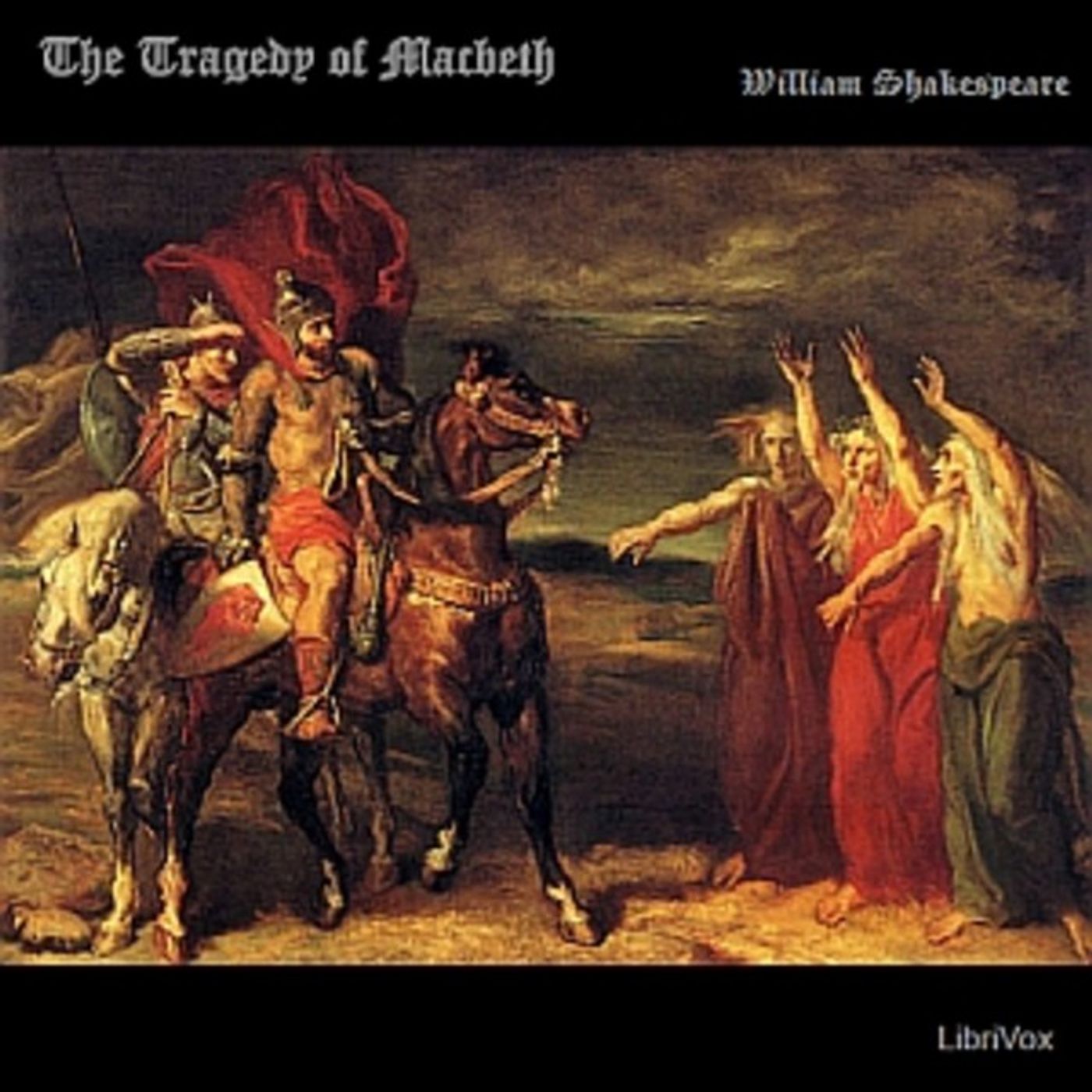
In which the witches brew their dark enchantments and conjure prophetic apparitions that portend uneasy tidings to the ambitious Macbeth, whose restless fears drive him to ruthless resolutions. Meanwhile, in far Scotland and England’s court, loyal hearts contend with grief and suspicion, weaving plots of vengeance and hope amidst the shadow of tyranny.
Transkriptvom Podcast bereitgestellt · Zeitmarken springen hin
Act four of the Tragedy of Macbeth by William Shakespeare. This is a LibriVox recording. All LibriVox recordings are in the public domain. For more information or to volunteer, please visit LibriVox dot org. Act four, Scene one, a cavern in the middle, a boiling cauldron, thunder enter the three witches.
Thrice, the brinded cat hath mewed thrice, and once the hedge pig wind.
Harpier cries Tis time, Tis time.
Round about the cauldron, Go in the poisoned entrails. Throw toad that under cold stone days and nights has thirty one sweltered venom, sleeping gut. Boil thou first in the charm.
Put double double toil and trouble, fire, burn, cauldron, bubble.
Filet of a fenny snake in the cauldron, boil and bake, eye of newt and toe of fraud, wool of bat and tongue of dog, adders, fork and blind worms, sting lizard's leg and owlet's wing for a charm of powerful trouble like a hell broth. Boil and bubble, double double toil and.
Trouble, fire, burn and cauldron, bubble, scale of dragon, tooth of wolf, which is mummy maw, and goof of the ravened saltsy shark, root of Hemma digged in the.
Dark, liver of blaspheming jew, goll of goat, and slips of ew silvered in the moon's eclipse, nose of turk and Tartar's lips finger a birth strangled babe, ditch delivered by a drab. Make the gruel thick and slab. Add there to a tiger's children. For the ingredients of our cauldron.
Double double toil and trouble, fire, burn and cauldron bubble.
Cool it with a baboon's blood. Then the charm is firm and good.
Enter Heckety to the other three witches.
Oh well done. I commend your pains, and everyone shall share in the games. And now about the cauldron, sing like elves and fairies in a ring, enchanting all that you put.
In music and a song, black spirits, et cetera.
Heckety retires by the pricking of my thumbs. Something wicked this way comes open locks whoever knocks?
Enter Macbeth, How now you secret black in midnight hags? What is it you do?
Indeed, without a name.
I conjure you by that which you profess, howe'er you come to know it. Answer me, though you untie the winds and let them fight against the churches, Though the yesty waves confound and swallow heavy gation up, though bladed corn be lodged and trees blown down, though castles topple on their waters, heads, though palaces and pyramids do slope their heads to their foundations, Though the treasure of nature's Germans tumble altogether, even till destructions sicken.
Answer me to what I ask you speak, demand will answer.
Say if thou'st rather hear it from our mouths or from our.
Masters column, let me see them.
Poor and sow's blood that hath eaten her nine faarh grease at sweeten from the murderer's gibbet, Throw into the flame.
Come high, lo thyself off, defly show.
Thunder first apparition, an armed head.
Tell me thou unknown power.
He knows thy thought, hear his speech, But say.
Thou Macbeth, Macbeth, Macbeth, beware, macduff, beware the thane of Fife.
Dismiss me enough.
Descends what's so?
Are thou art for thy good? Caution thanks thou hast harped my fear aright, But one word more.
He will not be commanded. Here's another more potent than the first thunder.
Second apparition, a bloody child.
Macbeth, Macbeth, Macbeth.
Had I three years, i'd hear thee.
Be bloody, bold and resolute, love to scone the power of man.
Them none of women born.
Shall hum Macbeth descends.
Then live mac duff Ha. What need I fear of thee? But yet I'll make assurance, double sure, and take a bond of fate. Thou shalt not live, that I may tell pale hearted fear it lies and sleep in spite of thunder thunder.
Third apparition, a child crowned with a tree in his hand.
What is this that rises like the issue of a king and wears upon his baby brow the round and top of sovereignty?
Listen, but speaking not to it?
Be lme mettle proud, and take no care who chafs, who frets, or where conspires are Macbeth shall never vanquished, be until great Burnhamwood to high Dusney Hill shall come against him?
Descends, That will never be Who can impress the forest? Bid the tree, unfixes, earth bound root, sweet boadments, good Rebellion's head rise is never till the wood of Burnham rise, and our high placed Macbeth shall live the lease of nature, pay his breath to time immortal custom. Yet my heart throbs to know one thing. Tell me, if your art can tell so much, shall Banquo's issue ever reign in this kingdom?
Seek to know no more.
I will be satisfied. Deny me this and an eternal curse fall on you. Let me know why sinks that cauldron? And what noise is this?
Oh boys, show, show shoe, show his eyes, and grieve his heart come like shadows.
So depart a show of eight kings, the last with a glass in his hand, ghost of Banquo following.
Thou art too, like the spirit of Banquo. Down thy crown, Do seer mine eyeb and thy hair. Thou other gold bound brow is like the first. A third is like the former, filthy hags. Why do you show me this? A fourth start eyes? What will the line stretch out to the crack of doom?
Another?
Yet a seventh I'll see no more. And yet the eighth appears, who bears a glass which shows me many more and some. I see that twofold balls and treble scepters carry horrible sight. Now I see tis true. For the blood bolted Banquo smiles upon me and points at them.
For his apparitions. Vanish.
What is this so?
I sir, all this is so? But why stans Macbeth thus amazedly? Come sisters, cheer me up his sprites and show the best of our delights. I'll charm the air to give a sound. Why you perform your antich round that this great king may kindly say our duties. Did his welcome pay music?
The witches dance and then vanish with hecate?
Where are they gone? Let this pernicious hours die? I accused in the calendar. Come in without there, enter Lennox.
What is your grass as well?
Saw you the weird sisters?
No, my lord, came they not by you? No, indeed, my Lord.
Infected be the heir? Whereon they ride? And damned all those that trust them. I did hear the galloping of horse?
Who was it?
Came by these two or three? My lord? That bring your word? Macduff is fled to England, fled to England.
Ay, my good lord, time thou anticipatest my dread exploits the flighty purpose never is o'ertook unless the deed go with it. From this moment the very firstlings of my heart shall be the firstlings of my hand, And even now to crown my thoughts with acts, be it thought and done. The castle of Macduff, I will surprise, seize upon Fife, Give to the edge of the sword, his wife, his babes, and all unfortunate souls that trace him in his line. No boasting like a fool, this deed I'll do before this purpose. Cool, but no more sights. Where are these gentlemen? Come? Bring me where they are excellent?
Act four, Scene two, Fife Macduff's castle. Enter Lady Macduff, her son and Ross.
What had he done to make him fly the land?
You must have patience, madam, He had none.
His flight was madness. When our actions do not our fears do make us traitors.
You know not whether it was his wisdom or his fear.
Wisdom to leave his wife, to leave his babes, his mansion, and his titles in a place from whence himself does fly. He loves us not. He wants the natural touch for the poor wren, the most diminutive of birds, will fight her young ones in her nest against the owl. All is the fear, and nothing is the love, as little as the wisdom, where the flight so runs against all reason.
My dearest cousin, I pray you school yourself. But for your husband. He is noble, wise, judicious, and best knows the fits of the season. I dare not speak much further, But cruel are the times when we are traitors and do not know ourselves, when we hold rumor from what we fear, yet know not what we fear, But float upon a wild and violent sea. Each way and move.
I take my leave of you. Shall not be long, but I'll be here again. Things that the worst will cease, or else climb upward to what they were before. My pretty cousin, blessing upon.
You fathered he is, and yet he's fatherless.
I am so much a fool. Should I stay longer, it would be my disgrace in your discomfort. I take my leave at once.
Exit, Sarah, your father's dead. And what will you do now? How will you live?
As birds?
Do? Mother?
What with worms and flies?
With what I get?
I mean?
And so do they?
Poor bird, thoubt'st never fear the nat, nor lime, the pitch boone, nor the gin.
Why should I mother?
Poor birds?
They are not set? For my father is not dead.
For all your saying, yes, he is dead, How wilt thou do for a father?
Nay? How will you do for a husband?
Why I can buy me twenty at any.
Market, then you'll buy him to sell again?
Thou speak'st with all thy wit? And yet if faith had wit enough? For thee?
Was my father a trader?
Mother?
I that he was?
What is a trader?
Why one that swears and lies?
And be all traitors that do so?
Every one that does so is a traitor and must be hanged.
And must they all be hanged that swear and lie?
Every one who must hang them? Why the honest men?
Then the liars and swears are fools, For there are liars and swears in now to beat the honest men and hang up them?
Now, God help thee, poor monkey. But how would thou do for a.
Father if he were dead?
You'll weep for him?
If you would not, it were a good sign that I should quickly have a new father.
Poor prattler, how thou talkst.
Enter a messenger.
Bless you, fair dame. I am not to you known, though in your state of honor I am perfect. I doubt some danger does approach you nearly if you will take a homely man's advice be not found here, hence with your little ones to fright you thus methings, I am too savage to do worse to you withoul cruelty, which is too nigh your person. Heaven preserve you. I dare abide no longer.
Exit Whither should I fly? I have done no harm, but I remember now I am in this earthly world, where to do harm is often laudable. To do good sometime account a dangerous folly. Why then, alas do I put up that womanly defense to say I have done no harm?
Enter murderers?
What are these faces?
Where's your husband?
I hope in no place so unsanctified, where such as thou mayst find him.
He's a traitor, thou liest, thou shag haired villain.
Watch you egg stabbing him, young fry of treachery.
He has killed me.
Mother, run away, I pray you dies. Exit Lady macduff, crying murder. Excient murderers following.
Her, Bring me where they are excient.
Act four, Scene three, England, before the King's Palace, enter Malcolm and macduff.
Let us seek out some desolate shade, and there weep our sad bosoms empty.
Let us rather hold fast the mortal sword, and like good men, bestride our downfallen birthdom. Each new morn, new widows howl, no orphans cry, new sorrows strike heaven on the face. Then it resounds as if it felt with Scotland, and yelled out like syllable of Dolar.
What I believe, I'll wail what no believe, and what I can redress. As I shall find the time to friend, I will what you have spoke. It may be so perchance this tyrant, whose sole name blisters our tongues, was once thought honest. You have loved him well he hath not touched you yet. I am young, but something you may deserve of him through me and wisdom to offer up a weak or innocent lamb to appease an angry god.
I am not treacherous, but Macbeth is a good and virtuous nature may recoil in an imperial charge. But I shall crave your pardon that which you are My thoughts cannot transpose. Angels are bright still, though the brightest fell, though all things foul would wear the brows of grace. Yet grace must still look.
So I have lost my hopes.
Perchance, even there where I did find my doubts. Why in that rawness left you wife and child, those precious motives, those strong knots of love, without leave taking. I pray you Let not my jealousies be your dishonors, but mine own safeties. You may be rightly just whatever I shall think.
Bleed, bleed, poor country, great tyranny, lathe all thy basest sure for goodness, dare not check thee wear thou thy wrongs. The title is afeared fare thee well, Lord, I would not be the villain that thou think'st for the whole space that is in the tyrant's grasp, and the rich east to boot, be not offended.
I speak not as in absolute fear of you. I think our country sinks beneath the yoke, it weeps, it bleeds, and each new day a gash is added to her wounds. I think withal there would be hands uplifted in my right. And here from gracious England have I offer of goodly thousands. But for all this, when I shall tread upon the tyrant's head, or wear it on my sword, yet my poor country shall have more vices than it had before, more suffer, and more sundry ways than ever by him that shall succeed.
What should he be?
It is myself, I mean, in whom I know all the particulars advice so grafted, that when they shall be opened, black Macbeth will seem as pure as snow, and the poor state esteem him as a lamb, being compared with my confinaless harms.
Not in the legions of horrid hell can come a devil more damned in evils to top Macbeth.
I grant him bloody, luxurious, avaricious, false, deceitful, sudden, malicious, smacking of every sin that has a name. But there's no bottom, none in my voluptuousness. Your wives, your daughters, your matrons, and your maids could not fill up the cistern of my lust and my desire, all continent impediments.
Would o'erbear that did oppose my will? Better Macbeth than such an.
One to reign boundless intemperance in nature is a tyranny. It hath been the untimely emptying of the happy throne and of many kings. But fear not yet to take upon you what is yours. You may convey your pleasures and a spacious plenty, and yet seem cold the time you may so hoodwink we have willing dames. Enough, there cannot be that vulture in you to devour so many as will to greatness dedicate themselves. Finding it so inclined.
With this, there grows in my most ill composed affection such as staunchless avarice, that wuri king I should cut off the nobles for their lands, desire his jewels, and this other's house, and my more having would be as a sauce to make me hunger. More, that I should forge quarrels unjust against the good and loyal, destroying them for wealth.
This avarice sticks deeper, grows with more pernicious root than summer seeming lust. And it hath been the sword of our slain kings. Yet do not fear Scotland hath poisons to fill up your will of your mere own. All these are portable, with other graces weighed.
But I have none the king becoming graces as justice, verity, temperance, stableness, bounty, perseverance, mercy, loneliness, devotion, patience, courage, fortitude. I have no relish of them, but abound in the division of each several crime, acting it many ways. Nay had I power, I should pour the sweet milk of concord into hell uproar the universal peace confound all unity.
On earth, Oh Scotland, Scotland.
If such a one be fit to govern, speak I am as I have spoken.
Fit to govern. No not to live, Oh nation miserable with an untitled tyrant, bloody sceptid. When shalt thou see thy wholesome days again, since that the truest issue of thy throne, by his own interdiction, stands accursed, and dost blaspheme his breed? The royal father was a most sainted king. The queen that bore thee oftener upon her knees, that on her feet died every day she lived fare thee well these evils, thou repeatst upon thyself, hath banished me from Scotland. O my breast, thy hope ends here.
Mark doth this noble passion child of integrity, hath from my soul wiped the black scruples reconciled my thoughts to Thy good truth and honor, devilish Macbeth. By many of these trains, hath sought to win me into His power, and modest wisdom plucks me from overcredulous haste. But God above deal between THEE and me. For even now I put myself to Thy direction, and unspeak mine own detraction.
Here abjure the taints and blames I laid upon myself, for strangers to my nature. I am yet unknown to woman, never was forsworn, scarcely have coveted what was mine own. At no time broke my faith. Would not betray a devil to his fellow, and delight no less in truth than life. My first false speaking was this upon myself.
What I am truly is Thine, and my poor countries to command whither Indeed, before Thy here approach old Seaward with ten thousand warlike men already at a point were setting forth. Now will together and the chance of goodness be like our warranted quarrel. Why are you silent.
Such welcome and unwelcome things at once? Tis hard to reconcile.
Enter a doctor.
Well more, Anon comes the King forth, I pray you.
Ay, sir, there are a crew of wretched souls that stay his cure. Their malady convinces the great essay of art. But at his touch such sanctity hath Heaven given his hand. They presently amend.
I thank you, doctor, Exit doctor.
What's the disease?
He means tis called the evil? A most miraculous work in this good king, which often, since my here remain in England, I have seen him do. How he solicits Heaven himself best knows. But strangely visited people, all sworn and ulcerous, pitiful to the eye, the mere despair of surgery he cures, hanging a golden stamp about their necks, put on with holy prayers, and tis spoken to the succeeding royalty. He leaves the healing benediction with this strange virtue.
He hath a heavenly gift of prophecy, and sundry blessings hang about his throne that speak him full of grace.
Enter Ross, see who comes here.
My countrymen, But yet I know him?
Not my have a gentle cousin welcome hither.
I know him? Now, Good God betimes remove the means that makes us strangers, Sir.
Amen stand Scotland what it did alas poor country, almost afraid to know itself. It cannot be called our mother, but our grave. Where nothing but who knows nothing is once seen to smile, Where sighs and groans and shrieks that rend the air are made not marked, where violent sorrow seems a modern ecstasy. The dead man's knell is there, scarce asked for? Who and good men's lives expire before the flowers in their caps dying? Or e'd they sicken?
Oh? Relation too nice and yet too true?
What's the newest grief?
That of an hour's age? Doth hiss the speaker? Each minute seems a new one.
How does my wife why well? And all my children well too? The tyrant has not battered at their peace?
No, they were well at peace when I did leave them.
But not a niggard of your speech, how ghost.
When I came hither to transport the tidings which I have heavily borne, there ran a rumor of many worthy fellows that were out, which was, to my belief, witnessed the rather for that I saw the Tyrant's power afoot. Now is the time of help your eye in Scotland would create soldiers, make our women fight to doff their dire distresses.
Be it their comfort. We are coming thither. Gracious England hath lent us good seaward and ten thousand men and older, and a better soldier none that Christendom gives out.
Would I could answer this comfort with the like? But I have words that would be howled out in the desert air where hearings should not latch them?
What concerned they are the general cause? Or is it a fee grief due to some single.
Breast, No mind, that's honest, But in it shares some woe, though the main part pertains to you alone.
If it be mine, keep it not from me, quickly let me have it.
Let not your ears despise my tongue forever, which shall possess them with the heaviest sound that ever yet they heard.
Hum, I guess at it.
Your castle is surprised, your wife and babe savagely slaughtered. To relate the manner were on the quarry of these murdered dear to add the death.
Of you.
Heaven, what man? Now, pull your hat upon your brows, give sorrow words the grief that does not speak whispers the oar fraught heart and bits it break my children too.
Wife, children, servants, all that could be found, and I.
Must be from fence. My wife killed two.
I have said, be comforted. Let us make medicines of our great revenge to cure this deadly grief.
He has no children, all my pretty ones? Did you say? All?
Oh?
Well, kite all what all my pretty chickens and their damn it one fell swoop?
Dispute it like a man.
I shall do so, but I must also feel it as a man. I cannot but remember such things were that were most precious to me? Did Heaven look on and not take their part? Ah, sinful macduff. They were all struck for thee not that I am, not for their own demerits, but for mine. Fell slaughter on their souls. Have adress them.
Now, be this the wetstone of your sword. Let grief convert to anger blunt, not the heart enrage it.
Oh.
I could play the woman with mine eyes and braggard with my tongue, But gentle heavens cut short all into mission. Front to front. Bring thou this fiend of Scotland, and myself within my sword's length set him. If escape, Heaven forgive him too.
This tune goes manly. Come we go to the King. Our power is ready, Our lack is nothing but our leave. Macbeth is ripe for shaking, And the powers above put on their instruments, receive what ye may. The night is long that never finds the
Day excillent and of Act four of the Tragedy of Macbeth by William Shakespeare.
