

TheThinkingAtheist· Folge 913
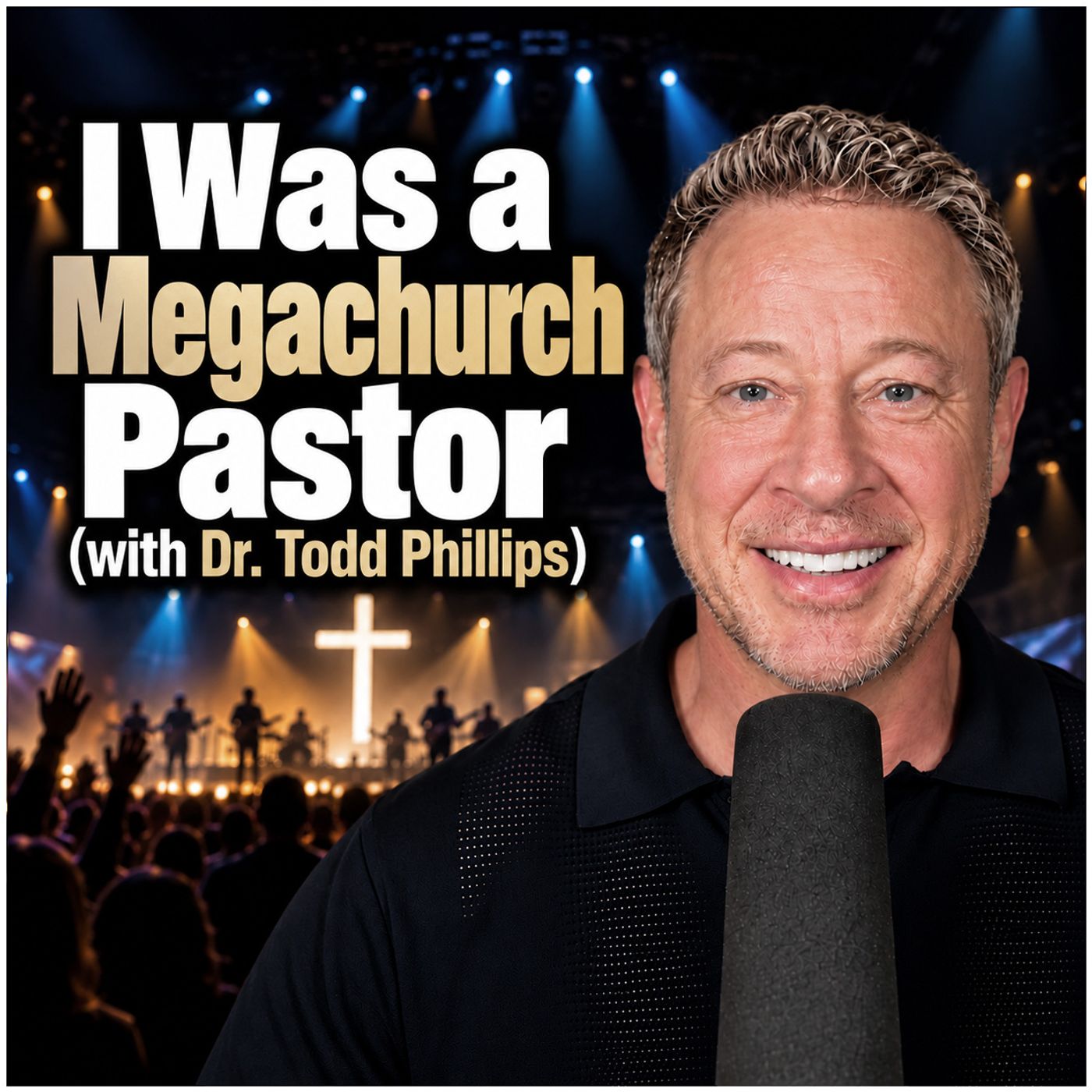
I Was a Megachurch Pastor (with Dr. Todd Phillips)
Dienstag, 3. November 2026 · 49 min
Kapitelklicken springt direkt hin
Shownotes
Dr. Todd Phillips was once all-in as an evangelical megachurch pastor. Then the doubts crept in, and everything changed. He joins us to tell his story.
DECON/RECON (skool.com/deconrecon/about)
Todd's YouTube (youtube.com/@drtoddphillips)
VIDEO of this conversation
Become a supporter of this podcast: spreaker.com/podcast/thethinkingatheist--32703….
Transkriptvom Podcast bereitgestellt · Zeitmarken springen hin
Here we go.
Stand by.
Three, two, one.
The thinking atheist. It's not a person. It's a symbol. An idea.
The population of atheists in this country is going through the roof.
Rejecting faith. Pursuing knowledge. challenging the sacred if i tell.
The truth it's because i tell the truth not because i put my hand on a book and made a wish.
And working together for a more rational world.
Take the risk of thinking for yourself much more happiness truth beauty and wisdom will come to you that way assume nothing question everything and start thinking this is the thinking atheist podcast hosted by Seth Andrews.
There is video of the conversation here, and if you would like to watch it, see some of the visuals from my guest back from his religious days, the YouTube link is in the description box of the show. It's always fascinating to hear the story of pastors who leave the pulpit, right? And then to find out how long they were doubting before they left the pulpits. How did their sermons change? What was happening under the surface? Were they lying? to their congregations while they found a way out.
I want to talk about this with my special guest, former pastor Todd Phillips. Welcome. Nice to see you.
Thanks, Seth. I appreciate the invitation. I'm all excited to spend some time with you.
All right.
Former pastor, give me the backstory. What type of church, denomination, your background?
Yeah, so I wasn't a Christian, didn't become a Christian until I was 24. And then I My first church was a Southern Baptist church in Austin, Texas. And my entire theology was kind of framed around that Southern Baptist church, Hyde Park Baptist church in Austin. And it really developed the seeds for not only my passion to go out and share Jesus with the world, but to go get a seminary degree and eventually start preaching.
And it just.
It was such a radical transformation experience for me. And it really was. I obviously think differently about the source of that radical transformation today, but it really did profoundly impact me. So I kind of dove all in. It's a bit my personality anyway. So that Southern Baptist Church, in the first few months I was there, I went forward to officially, you know, at the end of a sermon, accept Christ, although I had done that just a few weeks before. And then weeks after that, I went forward.
at the end of a sermon, at the invitation to be baptized. A couple months after that, the next step was to go forward at the end of a church service and accept my call to ministry. So I was very passionate about that and felt that I needed to make that public. And my background and my story was kind of the bad, from the Southern Baptist perspective, was bad kid gone good. So at 24, I was just really struggling in life, trying to make sense of life.
I mean, I was going to ask you, you know, Texas, we've got a teenage, young 20-something, pre-Christianity. So what were you when you were a kid?
Yeah, we didn't, I mean, we didn't connect with the church at all. I actually, the extent of church services that I went to as my aunt, my dad left when I was six months old. I'm an only child. It was just me and my mom. And my grandparents moved in next door to kind of help raise me. and my aunt, my mom's sister was the religious one in the family. And so every Christmas and Easter, we went to a Methodist church to do the candlelight service.
And I don't remember a single thing about those things other than lighting the candles at the end of the service. And my cousin, Steve was kind of like my brother. We'd put our candles together, make a bigger flame. And that was the, that was the coolest part of the, of the service, but that was it two times a year. And, um, I, uh, I assumed there was a God. I really did. Everybody around me just kind of talked as if there was, and so I just assumed that was the case, but didn't ponder that extensively as a kid.
It's funny. You've got the look, Todd. You've got that pastor look. I've been told the same thing. I've been told the same thing. And I've been told I sound like a pastor because I think one thing that church leaders are usually, usually pretty good at is expressing themselves, consolidating down ideas, using language, storytelling, et cetera. You're on the stage, you're communicating, you're expressing, you're trying to activate people in their mind, in their heart, in their spirits.
And so pastors are very often better communicators than the average Joe. And so anybody who Anybody who's able to string a few vowels and consonants together, you're like, hmm, you sound like clergy. Do you hear that quite a bit?
I do. I really do. And the irony of that is I've been away from the stage, so to speak, for, my gosh, I mean, let's see, 10, 11 years now. And I had a pretty rough last couple of years. And so I thought I would never teach, write, speak. again, I kind of buried that guy about 10 or 11 years ago. Last time I was in a mega church pulpit was about the mid teens, 2013, 14, right around there. And, um, it's, it's been a struggle cause that's my skillset is my, I would still say it's my passion. I love teaching.
I love sharing my stories. I love writing. And, um, the last several years have been very difficult until I got on social media this year in 2026. Um, very depressing because I went through the process of deconstruction over the last 10 years, but it was only in the last three years that I would call myself agnostic or an agnostic atheist. Now I kind of call myself a non-resistant non-believer. That's kind of my, I guess you got to come up with ways to express or explain yourself online.
So that's how I describe myself now, but it was not an easy process. When I was not just a pastor, just as a Christian, I was I mean, Seth, I was, it sounds like you and I were in similar spaces. I was just all in. I was, there was not a, there was not a part of me. I mean, I had just two tanks on. I just deep dove from the time that I became a Christian and I just went all in. I, you know, it, it wasn't enough to go to church. Wasn't enough to surrender to the ministry. I, I got a master's degree in divinity. I took a bunch of years of Hebrew and Greek. I eventually went to Princeton and Dallas seminary to get my doctorate. My dissertation was at Dallas. Um, I, uh, I felt the calling of God on my life was to share Christ
and to get people out of hell and into heaven all over the world. I traveled over 40 countries. I mean, I was just so in. And I'm smiling a bit now, but it's just, at some level, it's to not shed tears. Like, it's so close to me. Just last year, just as recent as 12 months ago, I was just struggling. I mean, just, for me, you know, losing heaven and losing The potential to see my family and friends again and waking up every day with a passion and a mission in life and feeling that the God of the universe, the creator, was guiding my every step and my every word and action.
I really believed that with everything that I was. The deconstruction process for me was a nine-year, really long, arduous, isolating process. struggle for me. It's a very costly thing. To the point where last year, I was just talking about this with someone else yesterday. I hadn't shared it until recently, but I was on the phone with my mother as soon as last year, as recent as last year, in tears, just going, I don't know who else to talk to. I don't want to wake up each morning.
I'm in this real deep, isolated depression. I wouldn't do anything drastic to myself, but I literally get up, you know, those few seconds in the morning before you know what's going on in the day and before you remember anything about what happened before. Like just pleasant, just naive to the whole reality. And then your brain clicks and all of a sudden you realize the weight of the world is now on you again. Every morning for eight or nine months, I remember getting up and just going, man, I've got to be conscious for 16 more hours before I get to go to bed again. And just blow this stuff off for a while. I mean, I was in a dark place, which is one of the reasons I got on social media. My daughter suggested it.
For many, it's a grieving thing. And of course, there are those who say, why would you grieve giving up a mythology?
Why?
You know, you grow up, man. And, you know, it's not really as much for me. It was not as much about the letters in the Bible as it was about identity. community. This is my social net. These are the people. This is what I've always known. If I'm not this, who am I? Kind of a drift, wondering about how much I would lose. I'm sure you went through quite a bit of that. In your biography, it says you were a mega church pastor. So the church in Austin, mega church?
Well, I started there, but the last two churches I served in the last 10 years of pastoral work, it was Lake Point Church in Dallas area. It was about 10 10,000, 12,000 people at the time I was there. Prior to that, for seven years in the Washington, D.C. area at McLean Bible Church, it was for a while the largest church on the East Coast. It isn't now.
But it's one of those contemporary deals, kind of a Hillsong vibe, you know, you know, got the singers, everybody's pretty. You've got the lights and the fog and the sensory overload kind of thing.
Yeah, I would say to, you know, 80 percent of that. Yeah, it was we were we were not a health and wealth kind of gospel preaching church. These were Bible like McLean was McLean Bible Church. Lake Point really was a Southern Baptist church, although it didn't have it in its name. So very biblical literalist, very evangelistically focused, surrendering all of your life and your lifestyle to God. It's all about God, not about you. You know, your actions and deeds are like filthy rags, except for the love of Christ. And he's the one that makes you whole. And I preached that for 20 years.
Was the omission of Baptist kind of a marketing thing? like when I was in broadcasting Christian radio, we didn't say overtly a lot of God and Jesus and whatnot, because we were trying to be an open tent and then people would come and participate and we'd sneak up on him. So, you know, Baptist for a lot of people has a lot of baggage. So when I think about your church, I think, wow, you know, it sounds a lot more contemporary if you remove the word. I don't know. Was that a strategy thing?
Yeah, they had done that before I got there, but I would say I could, I can safely say it was a strategy. The pastor had been there for, you know, 25 something years. And he was very, he was very into the Rick Warren, you know, seeker church movement and really structured or restructured Lake Point church around that paradigm.
Even at McLean Bible church, although it was much more conservative feeling in the DC area, Bible church is considered by many non-denominational. So even though it is a denomination at some level, in my opinion, You know, McLean Bible Church and just Lake Point Church were the titles. But yeah, they both had a Southern Baptist flair to them, and their theology was very, very conservative.
For my listeners and viewers who aren't familiar with Rick Warren, he's the founder of a massive, massive megachurch called Saddleback. He's also the author of a book that I think has sold like 40 million copies called Purpose Driven Life. And it's interesting because another former pastor, Dan Barker, actually wrote a book where he turned that title on its ear, Life Driven Purpose. And he was talking about, well, where does your purpose come from if it's not handed to you by a religion, a culture, a pastor, a God? And, you know, he had some really good things to say.
That's a whole other conversation. So you are behind the, you didn't even have a podium then, if you guys are doing kind of the hip church. Were you the hip pastor? Hey, check me out. No tie, blue jeans. Hey, check out my tattoos. Were you that guy?
Yeah, not so extreme. I was somewhat middle of the road. No tats. Yeah, but casual clothes on Sunday morning. Now, at McLean Bible Church, I was required to wear a suit by the elders on the Sunday morning services, but every other service I could be casual.
So are you at this point thinking, this doesn't make sense, but I'm supposed to preach it to people? Because that's a common story I hear.
For me, it was a little different. I never, fortunately, and I certainly could understand pastors doing this differently or feeling forced to do it differently because their career and their paycheck and their provision for their family is on the line. But I just never preached anything I didn't believe.
What happened to me was I had a two-year contract at Lake Point, 2011 to 2013. And I had, if you'll allow me to back up back to 2005, I went to, first I went to Southwestern Baptist Theological Seminary and got my Master of Divinity. And Southwestern Baptist Theological Seminary is an indoctrination school. It is not a church of higher learning. It is not critical thinking. I'm unashamed to say that. And it's just clearly the case. So I was taught how to be a Southern Baptist and how to defend the Bible from a Southern Baptist perspective.
Then at Dallas seminary later on was also an indoctrination school for Bible churches, basically conservative theology, Princeton in the middle of both of those. I did a three year doctoral cohort at Princeton from 2003 to 2005 in those three years. Although it didn't affect me at the time consciously, um, the Princeton, it was the first higher learning institution that really taught me a habit of mind is what they called.
It was a way to think about things, a way to critique things. It, it, It didn't have an overt agenda theologically. It was just trying to teach you how to think about the Bible and about Christianity and comparative religions, et cetera. And it really did affect me. A couple of things happened there. There were only 10 people in the cohort that I was in the doctoral cohort. And, and I really, I say this tongue in cheek, but it's probably true. I think I can handle myself in most rooms intellectually. When I got there, I was the 10th smartest guy in that room. Like it, it, it was, it was really, It was crazy. I remember within the first hour of meeting these guys, I was like, I think they're all wrong because they're liberal theologically. They don't
believe the miracles of the Bible. They're probably not even saved. But I can't defend myself with these guys. These guys are just too smart. And so I spent three years at Princeton just taking notes and listening. It was a very good thing for me. And although it didn't affect my Christianity until later, now let's jump back to Lake Point at 2011 to 2013. And did I preach anything that I didn't believe? No, but I started applying some of that critical framework from Princeton in that 2011 to 2013 timeframe at Lake Point. They just, a couple of things just kind of snuck up on me. The infallibility of the Bible, I was taught that there were no contradictions, that it was true from beginning to end, that the
Bible was univocal. It spoke with one voice from God through men from Genesis to Revelation. There's one theology, one story, one redemptive arc. And I just don't believe that's true any longer, but I did then. But I started asking questions about inerrancy while I was still at Lake Point. Now, I couldn't spend a lot of time with it because I signed a doctrinal statement at the church. This is what I believe. And so inerrancy wasn't up for discussion, although it was up for discussion here. So while I was at Lake Point, I started realizing that I was having questions about certain topics and I just wouldn't teach on them. I had a two-year contract. And a lot of it, I think, was subconscious, but I just wouldn't
go down that route or I wouldn't touch Old Testament passages. I just focused on New Testament, talked about the gospel, the grace of God through Jesus. And I really focused on evangelistic messages while I was there. And I would say Christian living messages. When I left there in 2013, though, those wheels were turning. And so 2013 was really the beginning when I no longer had to be certain every Sunday in the pulpit. That was the beginning of my deconstruction.
Then I started asking questions about inerrancy. And in 2013, I was like, this is the first time in my Christian experience I can actually ask questions and I can hang out with them for months or a year or two years if I want to. And my career is not tied to it. And those were really the seeds of my deconstruction happened at Princeton. But I started actively questioning in 2013.
When we come back, I ask the question, how many people on staff at the church knew that you were not all in on this religion? We'll talk about that and much more next. I know it is November. I know everybody's mind is elsewhere. But just put it on your calendar. I got word that the Florida Freethought event has been scheduled. And yes, tickets are on sale. This is going to be February 26th through the 28th at the Hilton Orlando. Florida Freethought is one of my favorite events of the year. Genetically Modified Skeptic is going to be there. Hemet Meta. Fish Stark of the American Humanist Association, Callie Moore, Dr. Sarah Bronson, and a costume party Friday night.
So much fun. Freeflow.org for details. F-R-E-E-F-L-O dot org. Continuing my conversation with former megachurch pastor Dr. Todd Phillips. So had you whispered even the idea that maybe it's not all accurate? to a fellow staffer at the church? Would the alarm bells have gone off?
You know, I think they would have, if I would have ever said that. I don't think I was quite, I will say this, I wasn't really, and Seth, maybe you'll relate, I wasn't fully aware of the depth of questioning that I was really about to engage in, because I was so used to, look, there's 2,000 years of Christian tradition. All of my seminary professors think a certain way, except for Princeton. the church fathers think a certain way.
My pastors think a certain way. I mean, who am I? You know, I, I, I did, I spent a lot of time with the, I can't trust my own thinking and my own reasoning. God's thoughts are not my thoughts. His ways are higher than mine. Who am I to judge God? Every time I hit an old Testament passage that was, you know, troublesome and the cognitive dissonance kind of kicked in. And I was like, well, that's not a deficiency in God. It's not a deficiency in the Bible.
It's a deficiency in me and my reasoning. I mean, that, that really did define everything for me. Um, I really had the lens of perfect God, perfect word. And so anything that deviated from perfect God, perfect word was a deficiency in my reasoning, my judgment, my intellect. It was sin in my life, maybe.
We always had a way out. It's an attack of Satan. God is testing my faith. I need to build my faith. muscle you know we used to talk about it in terms of strength right faith is like a muscle the more you exercise it the stronger it becomes and in the lord works in mysterious ways he has used the foolish things to shame the wise trust not in your own understanding this is all language that we both used to speak dot.
Yeah, and believed it. I mean, I just, I really deferred to that principle and that paradigm, which was one of the most challenging things when I went through deconstruction and realized that, wow, I don't, I can't, I don't have a book. And this was sad to realize. I don't have a book to tell me what to do and how to behave. So, you know, and I can't trust myself. So now that I don't have God, what do I do? And it took quite a while to realize just how far down that rabbit hole I had gone and the lack of self-confidence in my own reasoning ability.
just how much that had affected me.
Personal question you can answer or skip. Many times leaving the faith has a great relational cost, family, friends, etc. How much did you pay when you got out?
Well, it was a nine-year process. And so my whole goal of going through deconstruction was to be a better Christian. It really was. It was to start just applying my intellect and my reasoning skills and questions I had always had and just kind of push back. I was finally allowed to pursue that. It wasn't until three, four, five years ago where I started sharing that reality with some people.
And it was interesting because the churches that I was in were so large that you know, you talk to one person and even though it's been years, I mean, it was, it was shocking how quickly word got around that, that I was questioning things or that I considered myself an agnostic, or I wasn't sure if I was a Christian any longer. And it, it cost me, it, it didn't cost me, it didn't cost me family relationships. I'm very fortunate there. What it did cost me was career relationships, friends within the church, um, I shouldn't have been, I don't think, but I was. I was shocked at the level of isolation that I experienced when I started being even minimally open about my agnosticism or my questions. And
that's what took me to the point of last year where I was just so depressed. I was so isolated. I felt like I was on an island. I had lost a lot of friends that really mattered to me. These weren't These were meaningful relationships in my life. And I think one other thing that I was shocked about in that, speaking of the cost of my deconstruction was that the people that I, it's interesting, right? The people you think are going to be upset or not. And the people you don't think are going to be upset at all. And they're going to be accepting and unconditional are it's, it's very interesting to go through this. But one of the things I was most, I don't know, confused by was the lack of, I think what I
would call genuine inquiry from people that were in the Christian world about why I chose to do this, you know, and because it was a nine year, very arduous process. I mean, I spent nine years questioning the claims of Christianity and I'm no longer convinced it's actually a very boring story. But their assumption is, like we were talking about before, it's Satan got a hold of me. I wanted to sin. There's some sin in my life I'm not sharing with somebody. I had church hurt. There's every other of the many myriad reasons other than I just investigated it and found it unconvincing. And I was just shocked at the number of Christians that I really respected who had no interest in me or my process. They
were just very, very quick to leap to those other assumptions. I think that was the strangest part of this whole process. I thought I'd be having lots of very deep, ongoing, meaningful conversations with people who I had known for years and years and years, and that by and large didn't happen.
I was surprised at how many people would give me a book. They would, hey, let's have lunch, right? Because they were in rescue mode. And they're like, read this book. This will help you understand. And I think it was Shannon Q, who's a fellow activist, who had said something along the lines of, why do you need a book to explain the book? Like, why didn't God explain it correctly in the first place? But you talk about how people treat you when you sort of deconstruct or ask questions or you evolve your theology. I'm reminded that we had a local pastor, the late Carlton Pearson of Higher Dimensions Church, He got to a point in his faith where he thought a loving, omni-God, an omni-benevolent God would never, ever,
ever create hell. So he erased hell from his theology and began to preach that God genuinely does love everyone. It was a humanitarian flavor of Christianity. And the whole city turned on him. I mean, churches were preaching sermons against him. There was a mega pastor, Rob Bell. You know, he came forward and said, I no longer believe in hell.
I don't think God would have, and people turned on him. And we can see the consequences, right? I mean, there are, It's understandable why a lot of people keep their traps shut, especially if they are neck deep in what has become a career in identity. Because if you get cast out of the religion, then how do you pay your mortgage and your car payment and your utilities? And how do you insure the kids and pay for college and all these other things? All of these consequences are standing right here in front of you. And we can understand why a lot of people just say nothing, go along and get along, right?
Oh, absolutely. You know, it was interesting. I really thought, speaking of, you know, career and paychecks and all that, I really just assumed, and this didn't happen. I assumed that, you know, as I left pastoral work in the mid-teens, and then I went into international work through 2020, Christian-based, faith-based international mission and humanitarian work. Until 2020. And when 2020 was over, the project was completed in Liberia, in West Africa, where we were working. And I just, I really did assume that, that my strengths, my skillset would kind of shift into a more secular environment. And I had a friend of mine tell me, look, if you, if you take this step of leaving pastoral work, you're
going to be shocked at just how difficult it can be to try to restart, you know, at your age with your career. Um, people are reticent to hire former pastors. It doesn't matter if you had a $ 25 million budget and 300 staff, it's just not going to convert into a, a, a secular kind of environment. And I just, I did assume I had a lot of confidence in myself. I assume that's probably not true. It was true. You know, it, it, uh, it, it, it cost me financially. It cost me relationally. Um, it cost my sense of purpose and meaning, as I mentioned before, it's a, yeah, I remember reading Rob Bell's book, by the way. Is it Love Wins? And I remember thinking, man, we can't get this out into our church. You know,
this is heretical. I remember thinking the way about Rob Bell that other people thought. I remember thinking, man, he is off the deep end. And now that I went through it, I look at it back and go, wow. It was a very costly process for him. And now I believe he was right. So, you know, things change.
Speaking here with former pastor Todd Phillips, who is the founder of Decon Recon, and I'm going to come back to that in just a few because it's a cool name. There is a misconception among many in the atheist culture or among, I don't know, skeptics, etc., that pastors are just grifters. Ah, yeah, they found a great scam. They get to go in, they live tax-free, you get your personage exemption. and you get the power and the fame and all that stuff, and you're just a big grifter.
And those people have obviously not been embedded in at least enough churches to have a fair view of what clergy is so often like. I mean, the pastors that I grew up with were true believers. They were kind. They did their best to be honest. They were on call 24-7. You know, they're doing this and that and counseling and hospital visits and charity work. And then they're having to prep their sermons and do all this other stuff.
They were committed because they were true believers and they were lovely human beings. You, the former pastor, I would like you to back me up, Todd, right? They're not all scamming everybody else, right?
Yeah, I think, well, I would say my experience was, you know, People think, well, you're in the megachurch, you're making a ton of money. That just wasn't the case for me. I also know that there was limits to the salaries and structures that they set up for the elders ran that show. And, you know, I felt like it was a balanced effort, salary and responsibilities, etc.
I got to jump in, though, Todd, because when you say megachurch, we're thinking Osteen, right? He's got the $ 10 million mansion and a net worth of 50 mil, etc. You say megachurch, that's where people go.
Yeah and i have a lot of people saying that right because i use that as my kind of my online you know former megachurch pastor and i obviously do that to to it's it's an attention getter um the joel osteens of the world are there the benny hens are out there i mean there's there's all the televangelists and these megachurch pastors and many of them do make a ton of money and i think it's Well, I won't go into what I think about all that. I think it's not good. The vast majority of people that I was involved with at Lake Point, at McLean Bible Church, other large church pastors that I knew, the majority, 95% of them, you know, believed everything that they were preaching from the pulpit, were committed in their faith. in their
surrender to full-time ministry and took it extremely seriously. Not as a career, it was a lifestyle. It was their entire identity. And yeah, I do want to defend either small or large church pastors. The vast majority of them are in it for the reasons they believe they're there. They're called by God to surrender their lives for this purpose.
Yeah. Todd, as a former pastor, again, you can take this or leave it, but we got to talk about abuse within the church. We have people who are in positions of power and influence, that power dynamic that pastors and youth pastors, children's pastors, et cetera, do have. And we are seeing abuse. I mean, every time I log on to the world, it seems like there's a new headline about some type of abuse that has taken place within the church. The Catholic Church gets most of the press on this, but the truth is it's rampant across the board. Have you dealt with the problem of abuse in churches?
I was very, in both of the large, very large churches I was in in the last 10 years or so of my pastoral work, I was very fortunate. We just, we didn't have any major issue come up within the church.
Didn't have like a Hillsong type scandal pop up that you had to deal with?
It just didn't happen either in front of, you know, in public or behind the scenes. Now, It could have happened with the elders and the senior pastor within the churches that I was in, but I was unaware of it. And I assumed that that didn't happen. I was pretty involved at a pretty high level in decision-making. And when challenges arose in the church, I was at the table.
That's not to say that it's not, and I will use this word rampant. I will say this, that although I didn't deal with a sexual abuse issue or anything like that within those last two churches or any for that matter, I just never I was very fortunate in the churches I was in. I will say that what I did discover and what I am concerned about and what I look back on in my own life, I was very free with the expression from my mouth from the stage in front of thousands of people that God told me certain things. And without really fully understanding the implications of that, I used those terms relatively freely and believed that I was telling the truth. And when I look back on it now, these kind of cult of personalities,
I will say that's a major deal in mega churches, right? There's a huge, huge focus on the guy up on the stage or in the pulpit every Sunday. And people confuse that person. They have a direct line to God and they defer and afford a tremendous amount of authority in the lives of the people around you based on the fact that you are God's man. And I think that is an inherently abusive situation. I think just it right there, regardless of how it plays out, affords authority, gives authority to a person that should not have the level of authority that that gives them, that they're speaking for God. And it causes people to submit their intellect and their reasoning skills and their critique of what they're
seeing in front of them to this idea that this is God's man. And so- That's a dangerous, it is an inherently dangerous structure. And the more people under a single human being in a megachurch like that, the more potential there is for abuse.
I know we're a decade or more out of your experience, and the climate has certainly been changing. Did any of your churches go political?
You know, it was remarkable. McLean Bible Church was in Washington, D.C., So Lon Solomon was the senior pastor. So just to give you an idea, we called it Big Church. So McLean Bible Church had about 10,000 people on the weekends. And then I was in charge of Frontline, which had about 4,000 people. So it was a church within a church.
And I also preached at McLean. So I preached at both services. But Lon was the senior pastor and had been there for about 30 years. And I was the teaching pastor. That's how he identified me. And He, interestingly enough, although he, I think, in his personal life was very conservative politically, the only two items that he discussed from the stage, actually it was abortion and I can't even remember the other one.
Probably homosexuality, if I had to guess.
Abortion and homosexuality, yeah. So he addressed those two issues from the stage, but other than that would never breathe a political line from the pulpit. His theory was strategic. He wanted to be the only place in D.C. that didn't bleed politics from the stage. And I thought that was a very intelligent move for whatever his purposes were. Yeah.
And then in Lake Point, when I was there, we were not political at all. It has become a very political kind of a MAGA church, MAGA, M-A-G-A church. And in my opinion, become a very dangerous place, too.
Okay, my guest has created a landing zone for people who are sort of struggling through this deconstruction thing. We're going to talk about that in just a second. So glad you are here, so glad you are listening, and so glad for your support on Patreon. patreon.com slash Seth Andrews. If you like what you hear, be a part of it.
And I thank you so much for your support. Continuing now with my guest, Dr. Todd Phillips. Tell me about Decon Recon. I mean, it's a fun thing to say. What is it? What does it do?
Yeah.
So, you know, I talked about the, the level of isolation and depression I went through for the last several years. I, um, I can go back to Christmas of last year and just tell you a quick story. My youngest daughter, Rainy, she's a wonderful young lady. She's a nurse now, just graduated in December of last year. And we were sitting down after her graduation and having dinner. And she goes, dad, you know, basically you don't look real good. You're not, you're not doing very well. You've talked to me the last few times we've gotten together and you just feel real isolated. And she goes, I know this sounds crazy, but I want you to download the TikTok app. And I hadn't been on social media in six years. It
had been since 2020. I'm just not on it. And so I'm like, I don't want to download any app, TikTok or anything else. And she goes, look, she goes, it's been a long time. You're worried about these tens of thousands of people that, you know, used to, that got saved because of your, you know, you preaching from the pulpit or, you know, whatever your concerns are. She goes, okay, I get it. She goes, but it's, it's been, it's been a lot of years. People move on. She goes, everybody's got their own lives. They're on their own journey.
You know, you're thinking a bit too much about this right now. You're not doing well and you're just not doing anything about it because you're worried about all these other people that have moved on. Now, they may be upset when they see your social media or whatever, but don't worry about that. Just download the TikTok app and just throw a video up. And she goes, you're telling me you can't find anybody in Austin that will sit down with you for four hours and talk about, you know, theology and philosophy over scotch. She goes, you can find those people on TikTok. And I'm like, oh gosh. So we got done with dinner. Two or three weeks later, I'm sitting on my couch, January 12th. I'll never forget it.
I'm like, man, I just got my phone out and I downloaded TikTok. And I hit the little button and it's a funny video to watch for me now because I'm just like rubbing my eyes and I'm kind of depressed. And I'm just like, hey, I used to be a former mega church pastor. My name's Todd. I'm looking for some people to connect to. I've just been struggling. I mean, it's a really depressing video. And she goes, just post every day for a month. And you'll find half a dozen stats that'll sit on Zoom with you around the world and talk about theology and philosophy. So out of desperation and depression, I did it. And I decided to post every day. So I just posted random stuff for a month. And real quickly, I got some messages from
some different people like, hey, let's hang out. So I would get on Zoom calls with them. well, in the midst of all this, then there started to be some followers, you know? And I'm like, well, this is strange. Now there was a lot of people coming at me that, that were those old churchgoers, right? I, I got a lot, I got hit hard, um, those first few months, but I was surprised at how much I didn't care. You know, for me, it was, it was almost like, man, I, I, this is a fresh breath for me. I I'm just breathing a little life into me. I've got some people to talk to and I'm not ruminating in my head. And, um, Anyway, that's what happened in January. Now, eight, 10 months later, somebody told me to put my videos on Instagram because
TikTok's a little sketchy and you never know what's going to happen to them, so you ought to back your videos on Instagram. And then that actually got bigger than TikTok. And then Instagram told me to click to post on Facebook. So really, there's no plan here. I just did what the app was telling me to do. And then I started a YouTube channel a few months ago. But the reason I tell you all that is that I just didn't start this to get a following or to find a new career or anything. It was, it was an act of desperation to find some friends. I was lonely.
And about a few months ago, I realized that a lot of people said like tons of people were getting on the comment section and DMing me going, man, I'm isolated. I'm alone. I'm suffering. I don't know where to go. I'm in the Bible belt. I can't turn anywhere. My career and everything is tied to being a Christian. I don't want to go to church, but I go to church now because I'm a real estate professional and nobody will, you know, work with me if I'm not a Christian.
I mean, just all this stuff. I'm like, wow, there's so many people going through what I did. And so a couple of months ago, eight weeks, maybe something like that. I was talking to a friend of mine. I said, look, what about a, like an online community? And again, I'm sure this has happened thousands of times. You've been doing this for a long time, Seth. I'm sure you've seen dozens of these, but I just couldn't find any communities online that were kind of behind a paywall so that there wouldn't be any trolls, you know, because, and give people a safe space to work through their questions. And my goal is not to I don't care if they stay Christian or get out of Christianity or stay LDS or get out of it. Wherever they want to go,
they go. But it's a safe space for people to start asking questions and process deconstruction, regardless of where they end up. I don't want people to be in pain for years like I was. I don't want them to feel isolated like I was. So Decon Recon is an online community that gives people the space they need in a highly, and I do mean highly moderated environment. I'm in there every day. I protect the environment. If anybody is problematic, I liberally block people from the community. The cool thing about it, though, is there's been one person in the last eight weeks. I'm sure this will be problematic maybe down the road when it gets larger, but one person in the last eight weeks that's been somewhat
had an interesting take on something that I thought was kind of against our policy. Other than that, tremendous deference and kindness and I got to tell you, it was for other people to give other people a safe space, but I'm probably the one that's getting the most out of my conversations. I do a live every Sunday and tons of people get on there and we have great conversations.
I DM people back and forth and there's a lot of really cool posts and everybody's talking about different subjects. Again, they seem to really be enjoying it and saying that it's the thing that they were looking for. It's the thing I wish I had five years ago. I mean, that's really what it is. What did I need five years ago? Let's make that.
I thought that way about this community that I host. Back in 2009, we didn't have much of anything. I think there was Atheist Nexus, which was more of a bulletin board slash website. There was Talk Origins, which was really data-centered. As far as online community and people and taking the journey and telling stories, I was starving to death.
And it's amazing. A lot of people will discount big online space as far as community and connection, but I do not. I mean, you know, there's some sketch places online, but there's some sketch places in the real world, face-to-face, eye-to-eye, voice-to-voice. There's just sketch places, but I don't discount this at all.
I think even the connection that you and I are having now, the conversation, in many ways it wouldn't have been possible a few decades ago, and I think that's just remarkable. Do you have any thoughts, like as we get close to drawing to a close, I want to make sure I get the website too for Decon Recon, but what would you say to somebody who is harboring doubts?
Maybe they clicked in out of curiosity. Former pastor, okay, fine. What would you say to somebody who either doesn't get it or maybe they're starting to question everything?
Yeah, just to anyone that's watching this right now that's questioning any of the claims of Christianity. I'm primarily focused on people who are out of evangelical Christianity specifically, but we're finding people like in our Deacon Recon community from LDS, from Muslim, Muslims and all, all different faith traditions. They're just trying to ask questions and they need a safe space.
But I would say this, the worst thing, and I'm, and I feel very strongly about this. The worst thing that a person can do when they're asking questions about this is do it in isolations. Just sit up here and ruminate about those questions and just allow that fear or that uncertainty, that trepidation about sharing with someone to take over. Find a place. Connect with Seth's community. Come to Decon Recon. Find a place for a period of time where you can start asking those questions and just take a deep breath and know you're not going to pay a high cost for it. Being in isolation and just trying to struggle through this on your own is the worst decision you can make. All it does is extend the pain, extend the process unnecessarily, and doesn't allow
you to express yourself in community and in conversation, which is really the key. And I would also say for people that were struggling the way that I was until recently, I sure wish not only would I have found community earlier, but I would have gone to counseling. I just, I just, I don't know, ego. I don't know what it was.
I just should have gone to counseling earlier. I was struggling. I needed someone that could professionally kind of help me understand, for example, the psychology of religious belief, how cognitive dissonance works, why these things happen in our brains, why we look for patterns and why it's so costly when we, this is not an intellectual exercise of beliefs. It's an identity exercise, as you mentioned before, Seth. And Don't go through it alone.
Find somewhere to connect. And at least just having one person, one other individual that's accepting of your current circumstances that can allow you to speak and just express yourself is priceless.
Yeah, the platform you are developing sounds remarkable. How do people find it?
Yeah, the best way is to go school, S-K-O-O-L, school.com slash deconrecon. And if you go to the school site, S-K-O-O-L, if you go there and just search Deacon Recon, that's another way to find it. And also all of my social media channels, you can find me on Facebook, Instagram, TikTok, YouTube, just Dr. Todd Phillips, D-R Todd Phillips. And the link to my community is everywhere. It's my passion. It's really my purpose right now.
And just in case somebody has any trouble, I will link it in the description box of our conversation today. It's an honor to be able to talk to you. It's nice to meet a fellow deconstructor. I know we're all on the journey, right? We don't have all the answers, but we feel free enough now to ask the questions.
And I think your story is remarkable and it's remarkably courageous. I know that seems weird to receive that, but I look at you and I think that's a big deal. And I think a lot of people will take courage from your story. So Todd Phillips, it's been an honor. Thank you.
Thank you, Seth. And I'm going to say one thing real quick about you. When I started going through the process, your videos, I just can't express quite the depth of gratitude I have for you. You and a few other people. I mean, you're like Alex O'Connor and you. I mean, Matt Dillahunty. Really, you and Alex. You guys had a huge impact. On my ability to start asking honest questions, even though I wasn't able to speak them, I was able to watch your videos, walk through some of the ideas that I had. And at some level, because of your background and I started to understand your story and some of the similarities, it just allowed me to go, man, there's another guy that I'm watching right now that's just
a little bit further. It was actually a lot further, but a little bit further down the path. And he's okay. You know, he Maybe he's struggling, who knows, but he's okay. He's sharing the story really with other people and helping people like me in the process. So I just wanted to tell you, thanks.
Oh, it's huge for me. That's such a gift. I think all of us want to be relevant. I want it to matter. And sometimes you're not sure. So, you know, you wake up in the morning and you produce and you flap your gums and do your thing and you think, does it really make a difference? So to hear that, that's a tremendous gift to me. I so appreciate it, Todd.
I hope we get a chance to maybe shake hands or hug in person. I'll buy you a coffee, and we'll talk more about all this stuff. Todd Phillips, thanks again.
Thank you.
Follow The Thinking Atheist on Facebook and Twitter.
For a complete archive of podcasts
And videos, products like mugs and T-shirts featuring The Thinking Atheist logo, links to Atheist pages and resources, and details on upcoming Freethought events and conventions, log on to our website, thethinkingatheist.com.
