

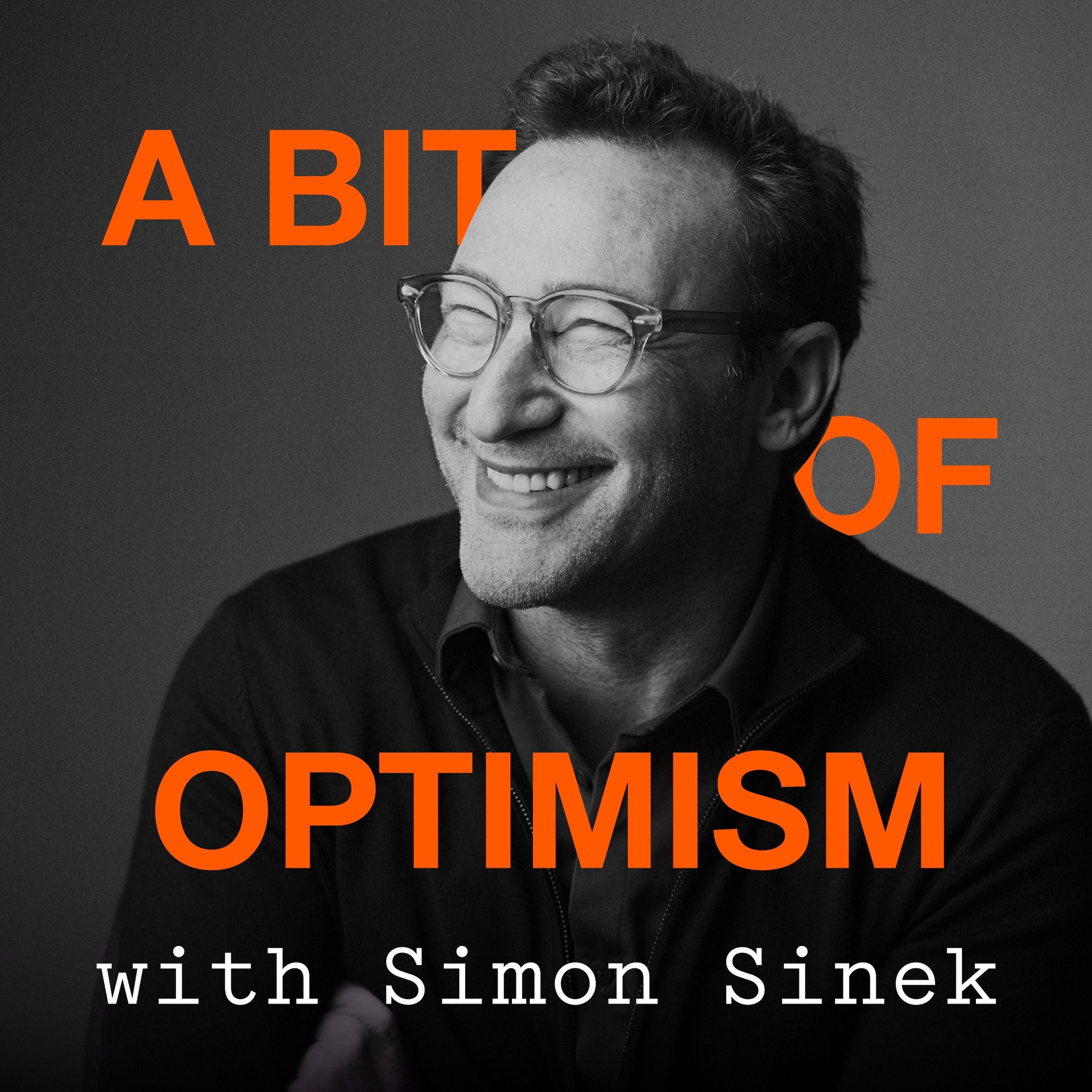
A Bit of Optimism· Folge 201
How Losing Everything Taught Her to Help Everyone: Joan Howard’s Story
Dienstag, 9. Dezember 2025 · 51 min
Kapitelklicken springt direkt hin
Shownotes
Life can change in an instant. One day you’re shopping at Saks Fifth Avenue, and the next you’re sitting in your car with everything you own, and everyone you love, wondering what happens now.
Joan Howard grew up in Beverly Hills with every advantage until a series of crises left her homeless and living in her car with her mother and three dogs. What helped her rebuild wasn't luck or charity. It was kindness, consistency, and one simple weekly practice of being in service to others.
Today, Joan is a long-time volunteer for Food on Foot, the very organization that helped her decades ago. Food on Foot is more than a meal line—it’s a community built on dignity, kindness, and practical support for people experiencing homelessness in Los Angeles. Their model helps people find work, save money, build confidence, and move forward with independence.
In this episode, we talk about what homelessness actually looks like, why service can be transformative, and how organizations like Food on Foot help people not just get back on their feet, but build a future.
This is A Bit of Optimism.
---------------------------
To learn more about Food on Foot, visit their website!
foodonfoot.org
---------------------------
Transkriptvom Podcast bereitgestellt · Zeitmarken springen hin
I was talking to her and she said I didn't think I'd be able to stand up today. I didn't think I could go on And she said I came here and she said all these people She said I have money in the bank. I can rebuild But these people have nothing and she said it makes me feel so connected It gives me such a sense of community. It gives me such a sense of right and And and justice. She said what you're doing here. She said I can't even believe all these people are thanking me forgiving me giving the bag of chips or she said it's food and she said it's nothing And yet it's probably saved my life Joan grew up in Beverly Hills She was a trust fund baby without a care in the world On a day like any other
She was attempting to pay for her shopping at Sachs Fifth Avenue when her credit card was rejected her trust fund had been drained She had no more money None She also had no college degree no skill set had never held a job in her life She never needed to and now with nothing she would find herself Homeless I talk a lot about the value of service of showing up to give How helping others is the best way to help yourself Joan Howard's story is that story on steroids She talks fast. She talks a lot She goes off on tangents, but her passion my god her passion to help others is absolutely Inspiring She now works for the very organization that saved her life over 20 years ago an organization called food on foot
Their mission is to help people who for various reasons find themselves homeless In shelters couch surfing or on the street and perhaps one of the most amazing things they do is help people get a job Get a home Pay their own rent and do more than survive. They help them thrive In a time when government and private funding are harder and harder to come by Joan proves that being nice is not what saves lives But being kind does This is a bit of optimism Your Story is remarkable I came and volunteered at Food on foot Which was a wonderful and inspiring day and you and I were introduced And one of I think was the director who said you have to know Joan's story That's actually Greg Currents he's the
Chairman of our board. Yeah, which you should know about food on foot is the board is very active They come on Sunday, which is nice. It's it's what I like best about it So I know them all very well. So let's tell people what food on foot is first And I was invited as a volunteer To come and stand behind tables and take donated everything from Can food to Well, that's pretty much my fault. What's that the stuff you saw it's my fault. Oh, yes So you you you help get there was there was clothing there was hygiene materials toothbrushes and sanitary products and Sort of I was amazed at the amount of stuff that had been donated and I think it's different every week because you Take whatever you get from donations and then the volunteers they hand stand behind the tables
And the homeless lineup every week in the same same parking lot and they take what they need and it's a safe streamlined process for people who are interested in finding out What people in need Are doing because they can have conversations with them but more importantly they see that there is no one Carteria for being on the street or in need. We have ages all races all ethnicities I think it's on education and it's also a safe one It does challenge it does challenge our notion of You know, quote unquote, who is homeless? I think most people's experience of homeless is seeing somebody on the side of the street And that is one kind of homelessness Um, but people I mean I met a young woman who there was a victim of domestic domestic abuse
She was forced out of her house took her kid Uh, to escape didn't have the money to because he wouldn't allow her to work Uh, she got out and is living on friends couches So she's not on the street per se where somebody living in their car But they they don't have a home to go to 90% of our people are in some way homeless in that their couch surfing or in their car and a tent and a tarp and a shelter A lot of them are rough sleeping right now in the street because the tent communities have been eradicated Uh, but the problem is we have no place to put them California, Los Angeles especially has a A reputation for providing services and I don't want you to think we don't Because we are nothing short of amazing in the city
But the problem is the The tsunami of need especially since the wildfires Oh, yeah, when we get the older people and the people who've never been on the street before I was amazed how many elderly people they were that came through that day. That's it And that's my personal thing while I haven't had much sleeps that it since it happened because we had a lot of calls At food on foot and when it comes for services I answer and I always answer So I'm always trying to network, but the story is that I hear It's an education and we're constantly having to pivot and change and fit Some kind of relevance into what we're doing because we're very practical We don't we don't bring stuff that people don't need we don't provide services the line that you saw
The food on foot service Line it's not just a food service line. It's a food and service line We basically give them the best we can We get everything from true classic teas and and bomb the socks that are absolutely brand new And they're wonderful to donate To books from the libraries Brand new from their book sales to all kinds of food I get to give Everything we get we give the other thing which I think again just dispelling What people think Misunderstandings of of the difficulties in the plights, which is you would think you know and true classic is a sponsor of our podcast And I was amazed they had sent pallets of t-shirts to you guys. I mean the generosity 52 pallets But the thing that I thought was so interesting when I saw the amount of stuff that was there
I mean like they had stacks and stacks of t-shirts and people could take what they needed and you would think You know that and I've seen I've seen wealthy people line up, you know for free stuff And they want one of everything that they don't need and what I and you don't see that people Could have taken more and most people took one of what they needed. They took a t-shirt a toothbrush They didn't take ten they they weren't putting their hands in and the reasons they have to carry it They have to carry it all so they don't want excess. They want just what they need because they have to carry it They're survivors. Yeah And what is so admirable about them is they endure Uh, not just the psychological effect of being on the street or being homeless or being lesser
As people look at them and treat them that way But when they come to food on foot what I get because I'm out in the street so much during the week Is that they come to food on foot not just for what they get because of the way they're treated the way you treat them When you serve or when you give things out We have everything from from people coming every week with families To people who have never experienced anything like this before and we are a very safe place It's a cornucopia of an education about people who are in need Because we make it very safe. It's very streamlined But what I find Best about food on foot is how we change and pivot Every time something happens Because I'm out there and we have our ear to the ground. We fit put our finger on the pulse of what's going on out there
We figure out what is needed. We have UCLA twice a month We have social services. We were able to get social service the social service agencies to come on a Sunday when they wouldn't Uh legal aid we have the phones we have different services all the stuff that we give out Is just basically a bridge to build trust Build trust back for people who frankly don't have it. Let's be and let's be clear the program is designed to help people get back on their feet Well, we're talking about the food line. Yeah, which is basically About about services and for people who could not do our jobs in housing program our jobs in housing program because we are private And we're small right, but we're very mighty we've been going over 20 years in this location 27
So so because there were some of the people who were working behind the tables with us were themselves homeless Just walk me through it. So somebody comes into the program Um, she says I want help getting back on my feet. I want to be independent. I don't want to So we basically walk me through the walk me through the life cycle of someone who goes through them is the gate And basically she puts them through their paces to see if they're able if they're ready to hold a job because a lot of people are not right A lot of people need way more help than we can give them right they need mental health they need Detox that there's a lot of stuff going on there and then assuming someone's qualified qualified and able to hold down a full time
They come on Sunday and they go through the workshops they help out at the serving they're given their gift cards and If they haven't already been able to get a job we will get them one Then toward 10 to 20 weeks depending on how long that takes we put them in housing We pay for that we pretty much support them so that they don't have to use their checks They bank their checks. Hopefully they get five six thousand dollars by the end then during that time Now this is the difference between what we were doing before During this time now instead of helping out at the serving now that they've gotten into housing and they're working 40 hours a week We take them into a spot where we have a lot of volunteers
We also had mentors all the way through people who donate their time and mentor But this is more important and it's part of why I think that we're going to succeed beyond my wildest dreams We are targeting education for them specifically for the unique individual what they want to do Be specific Let's take somebody who who comes in, you know, and then she says I want help. Okay So we figure out so let's let's let's call let's give her a name give me that think think of somebody who's Mary Mary is working as a maid. Okay, Mary's working as a maid. She's got she's done that before. Yeah, but she wants to do more right But right now that's just about all she's qualified for right so she looks around she gets a job we get her a job
We put her in housing She comes back every Sunday we subsidizing the housing for the time being right always okay always so she's she's she's able to work and keep that money to live Yes, no, she keeps her she banks her checks. She banks her checks. We help we pal Okay, so you teach her how to Save that money too. That's what the workshops are for. I got it. Okay, she's banking her paychecks You're helping her with food and rent. Yeah, go on So then we move into the phase where instead of the green shirt and she's at the table We put her in a separate separate class with people who are now in housing And they're working 40 hour week week So that's a lot So basically the first part of that is Classes in just basically learning about what they might want to do and that's an addition to the fact that she's still out there as a made
Making living and then she's also taking classes with you on Sundays only on Sundays and then at what point Does she I don't I want to graduate the program and she has independence while she is working through until when she saves five six thousand dollars Okay, so she has to save five or six thousand dollars and then She stays in the same home you've given her she she takes over the lease So so this is and after that time we also put if she wants to further do further education because we are doing this education program in the middle of it instead of having the work for us Right because we don't want that we want them to do better to go work in yeah So we have one girl is going after her GED another girl who wants to get her masters. This is how how
How far ranging the people who come to us are we don't have just one person we have one one woman A graduated autistic children. She's she's interested in teaching them. Yeah, we have another girl who wants to Go into some kind of nursing. Yeah, we have a man who wasn't is in construction now But he wants to learn about computers and C++ and the rest There's just a wide economy and we want to be able and we've got volunteers lined up now on Sundays Yeah to help them look for scholarships for us to help them To connect that was helping them get back on their feet. Not just get back on their feet. Go forward It's not getting back on your feet. You don't stay in one place anymore. Yeah, you have to go forward always forward
Yeah, it is so important what we're doing the first phase of this we build a community We build a family feeling where they know each other they know us they can trust us They have a mentor during those first first weeks with us So they know they have a base where they're safe And that is everything because these people have not had that so let me change tax now You The reason I wanted to talk to you. Yeah, this the the I'm just talking about food on foot was was just simply as a So the people understand what you do But you have a unique understanding and a unique empathy For the people who are coming through Because I was there because over 20 years ago it happened to me and I was the last person
I would ever think would be homeless. So where did you grow? I grew up Beverly Hills Rippen Beverly Hills Well, I grew up the first 11 years of my life. I was in Houston, Texas. My mother. We had money And my mother moved out here. She was a registered nurse My dad dug one as a baby and we moved out here and I was by coastal because I was I was training And dance and I thought that was going to be great. So I went down to Texas for my grandmother's Birth Dan got run over by truck. So first 180 in my life I had a lot of 180s, but that doesn't mean I wasn't a spoiled brat My mother on the other hand was on every street corner with a sign She looked like an old-fashioned Betty Crocker. She was always protesting something
Peacefully, but I mean she was she was usually the last one arrested because she looked like a housewife So you grew up with money? I did I did and Okay, so Uh I had a lot of money and then I didn't I was in sacks. I pulled out my credit card and they denied it They denied all my credit cards and I was in my forties. Okay, so you lived an adult life with money. Yeah Never occurred to me anything when I didn't even know how to write a check. That's how stupid I was and I was stupid Okay, so Long story short I scrambled my mother had Alzheimer's at the time and I was taking care of her and I loved her very much Um, and it was also relief that she stayed home I got sick. Oh, hold on back up back up
You know money hold on. Okay, you're living it like you're living a good life You don't think about homeless people you're you're you're one of the halves not the have-nots Yeah, you're living a good life. You're in your forties You're in sacks with having you spending money life is good You run the credit card the credit card is denied. What happened to the money? My uncle I was on a trust fund my uncle was an investment banker everybody's money was even better. He got a brain tumor And no, I'm not mad at him. I was mad at myself. So he took the trust fund He took everybody's trust. He took everybody's money all the trust fund. So you're invested in some pyramid scheme that he never would have if he'd been sane
So he gambled all your money. Yeah, I was going to trust one way. So so you went from rich to zero Oh, yes Like actually the car was taken the bank came to the door Everything was gone except the furniture. Thank God. I liked antiques I sold them and I was able to get us into an apartment I started working really for the first time in my life And I wasn't any good at anything But luckily I was doing inventory in the middle of the night in Northridge I was doing all kinds of odd jobs because I loved my mother very much and I had nice neighbors who would look after her In the evenings and I would I would work at night. Where were you living? I was living in Sherman Oaks So you had a you had a home. I had sort of an apartment
And I was doing audience But I did with the audience was I I started out audience. Okay, it's the lowest form of extra work The kids would come in which actually train me for what I'm doing now A lot of actors would come in and you just simply sit in judge judy or deal or no deal or one of the court shows And you would get minimum wage and get cash Literally sitting in an audience you're literally paid to fill it to fill an audience and clap and fillers And that's what I did until a woman called Adrian Corey who was very good at what she did Pulled me out and said why don't you do the Jerry Lewis telephone because you seem to have a good memory because I was helping out one day So I did and she put me as a coordinator and so I coordinated audiences at all the studios with her
I got the seat fin fillers. I booked. I wrote her checks. I Anytime somebody went into an audience who wasn't supposed to go in because they wouldn't get paid I would go in and pull them out because I had a good good eye And I learned about kids who were sleeping in their cars sleep people sleeping under bushes. They were actors And these are just people who are in the audience with you So you're getting to know these other seat fillers because as you said it is a minimum wage job. And then I got sick I was keeping my head above water the rent was paid I got sick. I Got a word form of cancer. It's usually curable, but it wasn't I was in a study with 35 people because I tried chemo and it it I couldn't take it
I'm little. I can't even take a aspirin. It's not like I'm the anti addict. I just I was never Anything that I could do can't even drink My whole family's like that. Anyway, so they put me in a study immunotherapy Knocked out my immune system, but it saved my life and I Honestly, don't think I would have done it except I love my mother so much and she was not someone who could ever Survive in a nursing home. What do you mean you wouldn't have done it?
I don't think I would have gone through what I went through with the treatment because it was harsh and harmful And I nearly died and I went down to 80 pounds I wouldn't have gone through it except I love my mother so much and we did have three geriatric dogs and she depended on me so But I was too sick to do anything and I couldn't pay the rent And the manager at our apartment said well honey. I'm not gonna evict you But can you just move so I said oh sure? Oh sure. I'll find something I didn't have credit. This is how stupid I was. I didn't have credit. I had no job. I couldn't even stand up So we wound up in my mother's old LTD that stopped running when we got to Sherman Oaks rouse parking lot
and the night manager was really good to us. He let us go in and clean up and He fed me with the old deli stuff at rouse Luckily, he's retired. He'd be in trouble But and I tried everywhere to get services. I was living in my car You and your mom and three dogs and I was going everywhere trying to get help I signed up everywhere section everywhere There was nowhere. I didn't go nowhere nowhere But there weren't the services then that there are now they were there But not like there are now they're really as dependous now Still, they're not enough, but anyway, so I'd gone everywhere I could I didn't know what to do. I couldn't stand up I didn't have cancer anymore, but I couldn't stand up and it was the homeless around my car
Who adopted me Specifically the alcoholics who said to me you should go over to Hollywood to that chicken line over there There's a guy who's a real nut and he'd probably help you So I was so desperate. I didn't know what else to do because I was So I went I went over to Hollywood. I got in in J. Goldinger's line who founded food on foot And it is his genius that laid the foundation that we have today You went I got in the chicken line for food In order to talk and see if there were any services there was I saw no services and this guy comes up to me J. Goldinger and he says So I just said just so that people are clear, which is one of the things that The organization does is it gives it gives hot meals gives a hot meal
It gives a hot meal and it gives a lot of takeaway shell stable items. So anyway, I went over And I'm standing in line listing in the wind and he came up to me and said So what's your story you anorexic you're drug addict what you're skinny. What's going on here? I burst into tears He said okay, okay, okay, enough of that. He said he said Go through the line Don't leave when the serving is over and I'm going to take you back and meet your mother. Don't go He was like that with people probably like you were um So at the end of the serving I got into his SUV He met mama and saw the dogs. So this is a remarkably clean car. What's going on here He talked to the people around my car He talked to the night manager
And then he came back and he gave me his card and he said I want you to go find a place to live tomorrow And I'm gonna pay for it for a year I didn't know any better So I went to a woman Connie um who took would take three dogs and I told her what had happened At an apartment house and she said oh honey, this is a scam And so she called him and he showed up With the food on foot Car and he said I'm going to rent this place months to months for a year He was legitimate and he did and he turned him and he said now you have to be in my food line You're not eligible for the job's housing But you've got to be in the food line every Sunday and I want an email from you every every week about your life
So when you says in the food line meaning volunteering to help no in the food line Oh to actually how to eat to eat yes, I'm a subsequent and then he said I want you to take a look around at the street He said I want you to take a look and tell me everything you see and write me every week which I did Twice a week sometimes this was the condition of him paying your rent. Yeah, yeah, and I did so Long story short He fixed the car He got me a vacuum cleaner. He paid for nursing from my mother And he gave me the sport I needed he was also kind of a mentor My mother died in my arms at 98 listening Frank Sinatra In that apartment with the three dogs that her feet they outlasted her and I got back on my feet
I started doing audience stuff again and Working through and so I went back to him and I said okay Jay How can I repay you when he said he's to pay it forward to some degree Anybody who has never been homeless and has not come close close to being homeless which has nothing to do with wealth But you know, you have enough that you don't think about being homeless That we are all a little bit. I don't know how to put it. We're all a little bit assholes like the way that you know I was a definite asshole. So you for example, you know You know people who say well the homeless are lazy try being homeless. It's the most unlazy thing you can get up You got bugs all of you dirty and you're in a place to use the talent and you have to go you have to go find food
You have to go find The amount of work you have to do to just stay alive If you're lazy and no two services are next to each other and no two services are next to each other so these these these these Narratives that people who don't deal with homelessness other than seeing it and and and and having it be a nuisance in our lives You know, there's a narrative that we have and this is why I do it and and when I heard your story of somebody who came from wealth Who was a trust fund baby And then had nothing and was now living with her mother and three dogs in a car. It's that story of The and it's a story right now Simon is all over this city In every age group and I promise you like you're living a good life and life happens around you
We saw it happen with with lockdown like we're all fine and then all of a sudden the world is completely different and and How ill prepared we are for what the world has to provide that what the world what happens to us in the world We're not I was stupid in so many of the ways I lived my life That's why I wanted you here, which is your story is is But I met someone if somebody saw you sitting on the street or living in your car the narrative of you drug addict and a rexick lazy all of these things, but you weren't no I wasn't but I still wasn't able to do it. You had bad luck. I had someone reach out a hand and help me up and he also mentored me in a way because I've come from a long line of manic depresses and I have depression and
He was very big about when people got into the program to do one random act of kindness He didn't require anything else during the week except find a job but one random act of kindness To help someone in some way really look at them and this is not just giving them a sandwich. You don't want Or the rest of your coffee or a water bottle This is listening to them something that takes something out of yourself and that's what he drew out of me And I discovered my mother and myself which surprised me But what he taught me was He saved my life son He gave me the focus so that I was not depressed when my mother died He gave me tools to use That uniquely fit me That I could help people and help myself at the same time
And it's not some kind of of bad thing or an addiction that doesn't work It works with everybody. You'll find outreach workers right and left to do it Why did he help you? Because he was like that. There's lots of people who needed help He kind of for to pay everyone's rent No, but he just had this guy girl about people Who would come through He gave me the opportunity and he gave me the foundation And then when I push my way into his charity He allowed it because it worked for him I he used to say you got to work ethic like no other Joe Tell me about somebody who came and worked the line on a Sunday Who stood behind the table and handed out donated goods and had never done anything like this before
There was a woman whose house burned down During the fires She has money but she lost everything that is a memory memory memory of the past which is really Kits you in the gut And I was talking to her and she said I didn't think I'd be able to stand up today I didn't think I could go on And she said I came here and she said all these people She said I have money in the bank. I can rebuild But these people have nothing And she said it makes me feel so connected It gives me such a sense of community It gives me such a sense of right And and and justice She said what you're doing here She said I can't even believe all these people who are thanking me Forgiving me giving the bag of chips or she said it's food
And she said it's nothing And yet it's probably saved my life I had a conversation with the homeless person in New York City Um It was somebody who was young and didn't look like She was couch surfing like that's had some really hard times, you know And I and she didn't look like You know the stereotypical homeless person, you know And talking to her she was telling me that the hardest part Wasn't the food donations or the few dollars that somebody would put in a cup It's that People would treat her as less than human They would ignore her They wouldn't make eye contact with her And she said the the part that destroyed her soul Wasn't actually The fact that she was Without a home and sleeping in friends couches
And trying to scrounge things together It was she Destroyed her her confidence that she was she became less than she started to believe the way she was treated And that's what we do every week at food on foot I'm on call for the people in line I Literally food on foot is only there on Sunday Visible But everybody works behind the scenes but what I do during the week Yeah I figure out what they need because they tell me And I'm out in the streets I'm out I'm out at other charities I'm out at support days events Finding out what's going on just just this last Tuesday I was downtown at a support day at the LA Public Library And the Metro was there And they were offering bus passes And so I tackled Amelia and gave her a near full about what we do
And she said oh I can come we can do that there It's the humanity right I mean again I'm thinking of somebody else It was a homeless guy outside my office I knew his name I knew his story I knew why he was homeless He used to be a high-flying guy And he was an idiot He admits that he is an idiot And he lost all his money And he couldn't make ends meet And a smart guy And you know he valued more than anything Than I just knew his name would say good morning to him And you know And I think that's one of the things that And even when I came to volunteer And work the tables You know to make eye contact with somebody And say hi what's your name You know And just Have a safe life every time you do that Simon
You know You save a life I Occasionally Because I'm not often In all the circles and too busy behind the scenes But I will go and I will thank people for coming Because uh And we're not talking volunteers You're talking people Coming and asking for things No I'm talking about the volunteers I'm talking about the people who donate money And who are there To see what homelessness is And to feel better about themselves But I thank them There's nothing wrong with that No but it's There's nothing wrong with that That's a wonderful thing Yeah It's a good human thing But Basically what I Always do I try to do is to Let them know the impact they've made on these people's lives Because these are people
Regular people Who are not spitting on them or looking down their noses Or treating them as if they're dirt These are people who are asking What would you like Would you like this Would you like that Well take an extra It's okay Let's go into the incident into into into difficult land politicians Run on the platform of clearing out Homeless camps and and here in Los Angeles I mean entire blocks Yeah I know Are occupied by homeless people's lives Well that would be all right That would be all right if they had a place to put them Here's the problem with that And it is a problem I think you know from human experience that A great segment of our society believes the world is flat They're going to fall off it at any minute
That is not just people who have their criteria for wealth or whatever You have people in the street who cling to things And they are pack rats So it's too much So they have whole communities of excess Now if we were practical And we put a dumpster next to it And we provided them with some hope for the future The whole problem with I have to say we're doing a great job in in Hollywood We really are We really are with getting people off the street And providing them with that What's Hollywood doing that they're not doing on Skit Road Because we have Hollywood forward And quite frankly Mike Foley who's the head of Food on Foot has been intrinsic And in in jumping up and down And telling them like you guys
We all have to hold hands We're not going to do this by ourselves We can't be so exclusive We've got to share information And we've got to band together and partner And he's he's so smart And I mean you saw how well how well organized we are At Food on Foot it was not that way You're I mean not to go off on a tangent But you're highlighting something which drives me crazy About not for profit organizations and charities Because they compete against each other They compete against each other And it's going to get much much much much worse And I'm terrified It's drives me nuts I will tell you right now I'm terrified Because what's happening now What's happening now You don't want people on the street
That is not what you want You don't want them You want them to have a restroom You want them to have some access And we should be able to put them into shelters Whatever the sisters are so badly managed Most of them The ones that are best managed Hope The mission I have to say they do it better than Any other organization I've seen But they are dependent a lot On the government money As are all these huge organizations Government money and right now it's being cut off And that means we are totally private We have never taken government funding Because we do not operate in a small little area If you're from Bacayama If you're from Long Beach or San Diego You hear about us You're homeless, you want to work
We will take you Has zero government funding No Absolutely none Wow Because it's a mess Hey guys Can you tell me a story of a single person You have met along your journey Whether it was a time when you were homeless Or a time Afterwards Can you tell me that Their story Touches you more than every one else That you carry You carry their name with you Uncle Willie Uncle Willie, tell me about Uncle Willie What is it about Uncle Willie's story?
Uncle Willie is the son of a supreme Down in Rossin's Springs And he used to have a kids show He got on heroin And he kept trying and trying and trying to kick it And he came to food on foot And It has nothing to do with me But he was at a point Where he really really really Wanted to be in housing Wanted help And as I said Somebody didn't answer the phone I do I do So Uncle Willie came He said, John, I got to get in shelter He said, he said, I went through treatment But he said, they don't give you any help When they put you through treatment They want you to go right back in So they can get more government money He said, I need He said, I need shelter And so I contacted him With the shelter that were remain nameless
I'm gonna hold on I'm gonna back up for a second there The treatment centers get government money Because they're everything's compartmentalized And they get government money for each person they treat So they don't There's an incentive There's an incentive not to keep you in the system Because then you get more government money Yeah The problem is the follow through in the support You can't throw people in housing Any people Without giving them support And government agencies do not have It's not their fault They don't have the social workers And the outreach workers Who can They have 300 cases each How can they do this?
Okay, so back to Uncle Willie So he's a heroin addict He genuinely wants to get clean And he did And after he got clean He called me and said, help me get into shelter Help me, Joan I said, okay So I got him into a shelter That I thought was good A lot of these charities are businesses And they lean on endorsements And what people see So they have one shelter That's like it's a small world tour I call it And everything's perfect, it's clean Everybody's happy, yada, yada Everybody's been rehearsed And everybody gives a good story Then you have all the other shelters Uncle Willie got in one all the other shelters And I had been...
This is way back This is way back I've known him 15 years And he called me up and he said, Joan He said, I have to room with this guy And he said, he's a cutter And he has AIDS And he said, we share a bathroom And he said in the shelter And he said, he bleeds all over the place And he said, I've asked him to move me And they say, I'm the problem I said, how are you the problem He said, well, he said And he's mental And he said, I can't keep this up And he said, I'm afraid He said, because he was older Then, and he was afraid And he said, I'm cleaning up the toilet I'm cleaning up the bathroom All the time, it's blood everywhere I said, okay I said, we gotta get you somewhere else But before that happened
He was thrown out of the shelter Because he got angry And he said, you can't do this to me The secret about all these shelters is You can't get into any kind of Disagreement in them Even if you're not at fault Because if you're part of it They will oust you And then you have A thing on your That under your name and social security number That says you're a problem And they won't take you And that's the truth Hopefully it's changing But that is what has been happening And you tell me how you put a lot of people Who were treated like animals on the street You put them in shelter And you don't have any staff there at all at night And they were not They're just peer counselors or us Security guard with two weeks training
And expect everything to be okay It's not You need someone to be able to pour oil on the water Night is when it happens After hours is when it happens That's why I answer all evening long So Uncle Willie is now thrown out He has no place to go He networks I get him a bus ticket back to Detroit Where he has relatives He calls me from Detroit And he says, Joan, he said, I'm going to come back I'm in better shape Like he said, I'm stable It's been a year And he said the problem is He said, all my relatives are using And I don't want to deal with it So he comes back I get him a really great case worker Because she's a friend And she really, really does care Unfortunately, she burnt out She worked for Lasso
That happens a lot Because they outreach workers are tremendous But they're up against They have quotas It's like any business And there's so much they can't do And they have too many people And there's not enough that they can do for them And you have mental You have You have What is it about Uncle Willie that You carry his money?
Uncle Willie kept kept going And he kept calling me He kept calling me And so finally We got him a place to live Downtown he has a place And he came through And he helps other people Lots of people came through Lots of people help other people What is it about Uncle Willie? Because he was such a heroin addict He fell so far down He was in a ditch Do you work with others who've been in a really bad shape?
No No Not a man who's been on heroin Since he was 20 years old and he's now 60 Wow No And he is the one who said to me When I first met him He says, I like you I said, why? He said, because you always tell me the truth And the truth is the only thing that keeps you standing when you hit bottom So he was in line last week He comes in line He brought a guy With him from downtown Who was homeless And he said, this is Joan Oh, he said the famous Joan He said, why does everybody like her?
And Uncle Willie said, because she's the one When everybody else turns their back on you She'll still be there for you So that's why I do it Because these people endure and they're admirable And I get more truth on the street When I go around to all these different charities and explore And find out what works and what doesn't And I'm not against any of them But I see the fallacies and what The services that Oh, just so much And I see what goes on The people I depend on the most The people who are on the ground Who are being served But this role of truth I find very interesting Right Which is you say when Because they can handle it The way they can handle it The way that Uncle Willie described you is
When you're at your worst She'll tell you the truth And Jay Was Very honest with you One would think that for people who are struggling That Being nice That does work But nice is a surface term, isn't it When anybody ever says Oh, you should meet me so nice I go Oh, boy Tell me you're good Tell me you're honest Tell me you're kind Tell me you're fair Tell me you're decent Don't tell me you're nice That's a social term It's like glitter But don't we need to lift people up who are struggling Exactly, be kind But sometimes the truth is difficult to hear It depends When you got yourself Back on your feet And you've had a home and a job What was the reason you decided to continue to volunteer As opposed to just go
Build a life and live a life I was good at it And I liked the people I helped I liked them genuinely And I saw them not treated well But I want to know How did this spoiled little rich girl Find such empathy For people who are always had And it should have been It must be a gene that pops out When you're 50 something Didn't grow up like you They didn't live like you And here you are Yeah, well Actually someone said that to me Well, we need a social worker Really understands Hollywood And you know Has lived experience And he said you know And I said He said like you I said I'm from Beverly Hills It's talent You know how people operate with people If they're good with people And they care And they want to help
You have all these people out there And you just know There are so many wonderful people Out there in the street Helping you have no idea I'm not an anomaly I'm just Usual it's just that I don't stop And it's not a job I'm a volunteer It's a vocation How much does the service Help them get healthy again Like do people Is there a higher likelihood That they're going to get healthy Like where does the service come from Because they have someone to go to But like you Or somebody in the job program Yes exactly Or they're more likely to succeed In the job program Program When they also volunteer That was the reason There was a random act of kindness Required by J. Goldinger It's no longer required
Because it's more fully fleshed out now Right, right But there it is There it is This to me is the insight on all of this Which is you're more likely to help yourself Solve your problem When you live a life of service And helping other people Well, there's something else It's going on That I hope will happen Randy Wyatt I think you met her She's absolutely wonderful She has two kids in her own She wants to start A program At food on foot to help youth A lot of different organizations Are doing this But I think I think they think Food on foot Way I think we're better at it Okay I'm prejudiced You have so much emphasis on kids Using fentanyl Because they say God I mean I grew up in the just say no era
Of everybody said Yes During the Reagan era Because I'm an old person In the 70s In high school And what I saw was I most of my friends died I was always a designated driver Because I'm not kidding you I can't even Asperg nuts me out You give me some of coding I'm going to be out for a week But What I see with today's youth Look, I would never want to go back And be a teenager Or hormones go crazy I wouldn't go through that again For all the teen China Let me Let me have my face Like I sure pay on fine But for For most people For most youngsters You hit a point Where your hormones go wild And I don't care Your ins You don't know Your focus is not Always the best And you don't And your parents
Haven't taken out a license To raise your right They haven't learned A lot of parents just Let kids Just out there So the co-critory is Don't join a gang Don't go to a rave and try Help somebody So we're trying to institute a program Where we get together Groups of kids And let them Help other people And see that it's fun This is not a downer Did you have a downer when you went Not at a lovely time No, you had a wonderful time And also the people in our line Who have nothing Have a good time I get that all week I get I come to food on foot To feel better about myself Because I'm treated well How do you deal with burnout And the emotional labor I don't get burnout Of outreach I don't get burnout
And what I do I get burnout in my own life And then I just pick up the phone And talk to somebody who's I have a lot worse than I am In their lives And uh Basically, maybe I help them Maybe I don't But I always get practically The same thing Nine times out of 10 I said I can't help you Dear God, I wish I could And you know what they say But you listen to me You answered the phone Nobody else answers the phone Nobody else talks to me That's nothing And it saves my life every week What is the one thing someone can do today To help their Homeless or unhoused community Kind When I At the beginning of food on foot It wasn't quite as heartfelt as it is now Right at the beginning when I was first What does kindness look like
When you say there's one thing we can do today You say because What does kindness look like Your face That helps What does that mean It means you look at people kindly You smile at them And you put yourself forward In order to be interested in them If somebody asks And you have nothing Look because nobody carries change anymore in this Smile So if you get something bad back I think people are uncomfortable to say no And so they turn away and ignore somebody Ignore that you don't exist And so if somebody has nothing to give in that moment I always say the same thing What should they What should What does kindness look like in those moments Well for me it's I'm so sorry I don't have any money to give you
I'm poor too However Maybe you might explore this And this what's going on with you Now I talk to them You don't have to do that Basically all you have to do is say I'm so sorry And smile and go on A little bit of humanity It's a small thing But it works And it's like osmosis It's really like osmosis One kind smile It really does translate I'm not kidding you when I say You probably save a life By coming to food on foot and smiling at somebody I know I've been told that many times During the week when I'm out there And I am out there Joan thank you so much for coming in Well thank you for coming in You are a saint Oh no God no Please please We're not a religious experience And we're not a cult
You were saint like No No I was originally supposed to be a nun My grandmother decided I was the youngest child of the youngest child So I was supposed to be a nun And my mother said oh no Well if you refuse to be a saint Then just thank you for It's somebody who cares The way you care and the way everybody should Thank you for caring to such an extreme level That it shows Simon do me a favor Please Let people know That I'm at food on foot for a reason If anybody likes anything that I said Because out of everything I've seen I'm telling you I've seen hundreds This one works And it should be all over this nation For anyone who lives in Los Angeles Come down and volunteer at food on foot Go to their website
foodonfoot.org Register Come and volunteer If you have a company Or if you don't have a company You just have means You can donate money You can donate stuff That they need Again go to the website See what they need what you can give I've done it It is inspiring And it I think it forces all of us to recognize That everybody has a story And you don't necessarily know what that story is And for us to guess what somebody's story is Is very You're going to get it wrong most of the time And I think the lesson here is If we all had a little empathy I mean that's all it is It's empathy If we all had a little empathy To recognize that everybody is a story And if we had a little less judgment A little more concern and care
You'd be amazed how much you can help And if you don't live in Los Angeles Please either steal their model And set one up in your city Or Or if you have means Please donate some way shape or form Joan If you won't be a saint At least accept that you are an inspiration A bit of optimism is a production Of the optimism company Lovingly produced by our team Lindsay Garbenius Phoebe Bradford And Devon Johnson Subscribe wherever you enjoy listening to podcasts And if you want even more cool stuff Visit SimonCinic.com Thanks for listening Take care of yourself Take care of each other
