

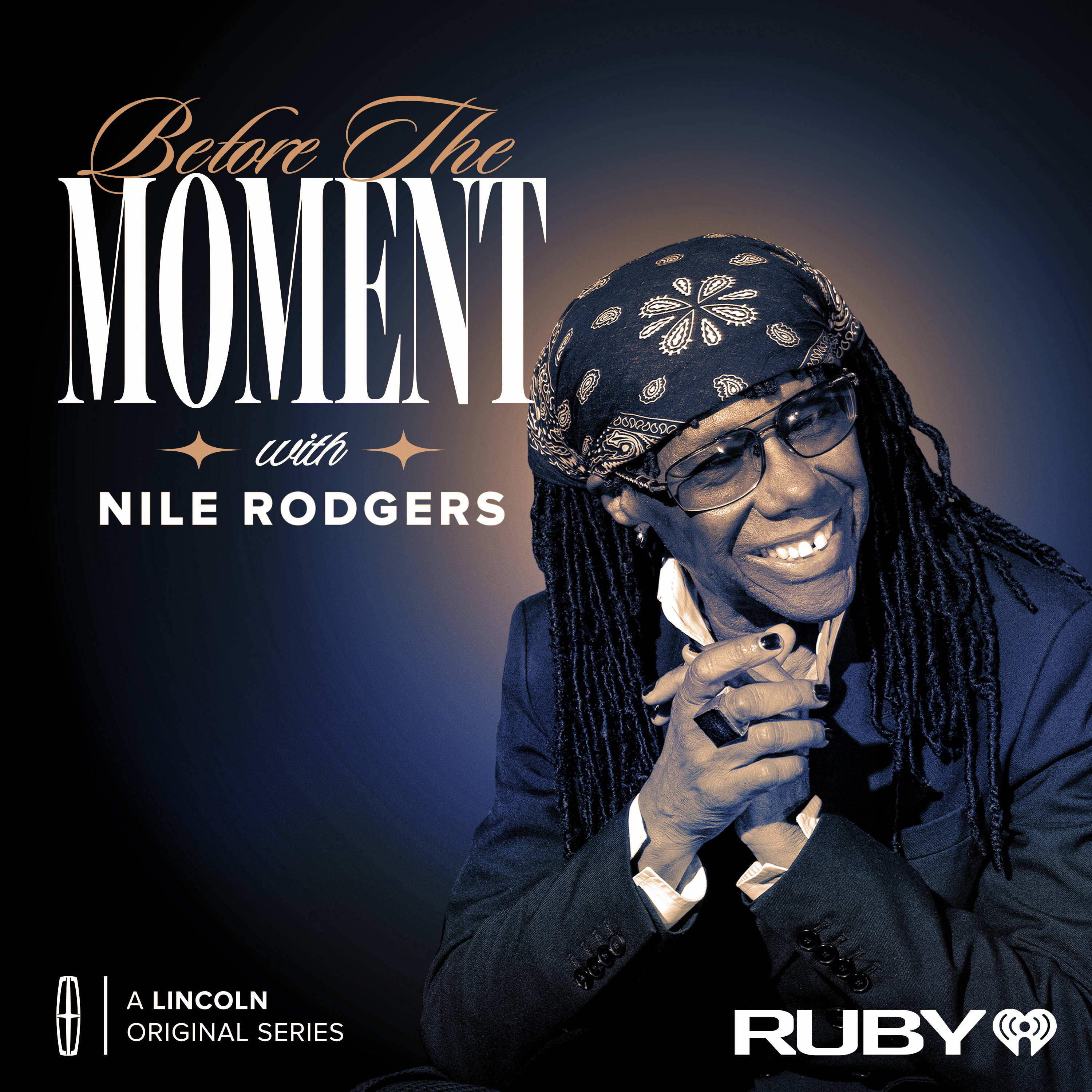
Before The Moment with Nile Rodgers· Staffel 1· Folge 1
Alex Warren: From Sleeping in a Car to the Grammys
Dienstag, 15. September 2026 · 34 min
Kapitelklicken springt direkt hin
Shownotes
Alex Warren’s ascent to stardom has been nothing short of meteoric; his smash hit “Ordinary” spent 10 weeks at No. 1 on the Billboard Hot 100 and he earned a Grammy Nomination for Best New Artist. He’s spent the last year going on an arena tour and collaborating with artists like Jelly Roll, ROSÉ and even Nile Rodgers. But that’s just part of the story. Alex lost his father very young and in the wake of his passing, his world crumbled. As his home life fell apart, Alex eventually got kicked out and spent much of his teenage years homeless. Everything changed when he met Kouvr, his now-wife and the inspiration for his song “Ordinary.” She supported him as he navigated the world as a content creator and musician. Through all that, Alex found his voice.
See omnystudio.com/listener for privacy information.
Transkriptvom Podcast bereitgestellt · Zeitmarken springen hin
A lifetime spent making music is a lifetime made up of individual moments. And no moment is more important than the one before the big change. That turning point where a hobby becomes a profession, when struggle becomes success, when pretty good becomes legendary.
I'm Nile Rodgers.
Co-founder of the band Chic and producer of pop hits with some of the industry's top artists. I'm driving around the country in my Lincoln Navigator SUV, talking to some of the coolest, most interesting people in music to discuss their journey before the moment. Today, I'm in Los Angeles to meet up with rising star Alex Warren. This young man's ascent to stardom has been nothing short of meteoric.
You had to be living on a rock to not have heard a smash hit, Ordinary, which spent.
10 weeks at number one on the Billboard Hot 100. I know hits, and that's a hit. He toured arenas, earned a Grammy nomination, and collaborated with artists like Jelly Roll, Rosé, and even an up-and-comer named Nile Rodgers. I can't wait to talk to him. Our first guest today is Alex Warren.
What's up?
And I know his before-the-moment story is... unbelievable, and it's something that I know I'm going to relate to because I've already read a lot about you, and I've listened to the album. The only way I could say is I listened to the album hippie style, right?
Yeah.
Except without the weed.
We should try it with the weed and see what it's like. I've never listened to my album live. That would be so interesting.
No, I'm going to have 32 years sober in a couple of days.
Congratulations, dude.
My goodness gracious.
Yeah, unreal, right?
Wow.
Your next album is probably one of the most consistent pieces of music that I've heard in years. Thanks, man.
It is so good, man.
It means a lot coming from you.
Holy shit.
No, I heard your part. It was the coolest day of my life.
I was on tour.
I don't even remember where I was. I was just running around going.
No fucking way.
It was the coolest thing ever.
I loved it. So that's it. Thank you.
It took us a few months to even get the track list down because we were battling with it.
I could tell.
Dude, thank you. That means the world. Seriously, I feel like a lot of times, especially in today's day of music, when we make an album, you're kind of just like, everyone's like, oh, well, people don't pay attention to that. And I was like, no, this is important. This tells a story. When you go to listen to an album from top to bottom, it's not just the feeling you get from each song, but it's how do they play into each other. When my favorite album came out, I'd hop in the car with my wife and we'd drive around my neighborhood in a full circle for 45 minutes to hear the full album. And that, to me, you get the story.
Bravo, bro. Dude. Bravo.
I think there's a moment in an artist's trajectory where music stops being a curiosity and becomes something bigger.
Whoa.
Yeah.
We're storytellers.
Yeah.
We want to sort of know what's behind the closed door. Right.
Do you need answers to your questions? Always. I.
I'm like a kid when I play music and I make music and I'm constantly asking questions. Whether it's an instrument I haven't played or it's a melody that seems foreign, I get excited about it. If you've ever been in the booth or you had someone else in the booth and they're getting frustrated because they can't get that melody right and they keep going flat or sharp or they're hitting the wrong note. And most of the times I've seen people and they're just angry. They need to take breaks.
And I find it amusing and fun because... I feel like it's now my brain going towards something that's never gone before, which kind of brings that six-year-old kid who got that Fender guitar when he went for Christmas and all of a sudden he wanted to do talent shows half naked because he was in love with the Naked Brothers band at six years old. And to me, it's just fun because now I feel like you know this.
Every night you play a show and it's the same set, but it's not the same show. And at a certain point, your brain kind of goes on autopilot.
Right.
From when I'm in the studio or if I'm making music, that's where that curiosity kind of comes back. I haven't lost it yet. But I'm also on my sophomore album. And you obviously are.
The expert here. You know, I came up in the 60s.
And so that decade going into the decade of me breaking, I think, was probably very different than the decade before you broke.
Yeah.
For sure.
What would you think would be the major difference? I don't even know.
I think for me, especially in this generation right now, you have, it's so accessible.
It feels like it's really accessible.
I feel like growing up in my decade, at least, music seems like it wasn't something that anyone could do. You could always make music. You could always go to your local talent show. But when it came to playing on TV or the radio, it seemed like it was almost impossible. You had to either sell not your soul but you had to give everything to a label or you had to hop on one of those tv shows where they you try out and they give you a record label deal and a cash prize and all of a sudden you've made it you know and that seemed like the only two ways growing up and then all of a sudden you had like justin bieber and all these people you know on a youtube video and i was like what the hell is a youtube video right
and where did this person come from and they're a global pop star and All of a sudden, I think a lot of kids, including myself, who dreamt of being a musician, it seemed like almost it could have been a possibility. And then you had Shawn Mendes. And you had Ed Sheeran going from pubs to then selling records in a store to then being one of the biggest streaming artists ever. It's pretty crazy how quickly it's changed in the last 10 to 15 years. So I think that especially now, even the last five compared to the last 15 compared to the last 40, I think it's just more and more accessible to every single person who, you could be a six-year-old kid, you get a guitar for Christmas, and your mom posts a video of you
singing on TikTok, and all of a sudden you have a shot.
Do you think that we now have.
Greater bandwidth for music? Like, in other words, we could listen and accept and internalize more music now that we have the capacity? Look at what's happening in film. Like, box office records are setting when films are coming out. For the last few years, they've been telling us that it's going the other way.
Right.
How could that be? How could it be going the other way? And now every other week.
It's the biggest.
I think about this all the time. I'm not even kidding. Like every single day I think about this. I think that, I think Adele does it perfectly. She comes back whenever she has something to say and people are anticipating her message. But how does an artist who's breaking now create longevity there's album artists there's singles artists there's art artists who put out an album and it does really well and then it kind of disappears and like what makes the longevity but also are people listening to the full album and I think right now people are starting to get back into I want substance I want to listen I want to be told a story where I think during COVID and right after that it was very much the
singles game like people drop a single all year every single month Um, for charts and now I think everyone's being like, they want analog, they want albums, they want to feel something. They want to feel the story. People are like, people want to have that experience of I'm a fan and I want a piece of you in some way, whether it's a vinyl or a CD or it's, uh, it's going to a show and getting a ticket and like people are asking for the ticket steps. You don't need to take stuff anymore. And so it's just so cool to me where I feel like it's starting to become a thing where it's like, it's a fun thing to go do with your family and your friends. People make these, my wife makes these boxes after she goes
to a concert. She went to Taylor Swift and she got this box and she framed her tickets and her bracelets and the picture of us together. And it's like a whole memory thing. I feel like three or four years ago, that wasn't a thing. So I think the album is coming back and I think a lot of things are coming back.
You know, it's cool that you said that I feel like the ultimate fanboy because at home, I still have my $ 1 ticket stub From when I saw Sly and the Family Stone in Central Park.
No way.
Because $ 1 was general admission. $ 2 was like sitting in the loge.
Do you have it framed or anything?
No, no.
You just have it laying around? Yeah.
No way.
I have a box of like-size stuff. So there's ticket stubs. There's backstage passes. For a while, I used to stand security at a couple of– because I was in martial arts school and they just hired, this guy was really smart. Like instead of getting like hardcore bodyguards. He's got some kung fu ninjas.
Kung fu dudes, right.
That's crazy.
Yeah, so we would stand security at a lot of concerts. I mean, I've stood security for everybody from Hendrix to sister Betty Shabazz, Malcolm X's wife.
Holy crap. True story.
So what's really interesting is that the way it worked for you was not necessarily the way it worked for me.
But I think the same thing is that there's a love for music. I think regardless, nowadays you can fake it with social media following and whatnot. But at the end of the day your true colors when you step on a stage will show you know if you don't work hard at your craft and you get comfortable and maybe you had a lucky moment on the internet and you don't care and you go into it cocky like No matter how many streams, no matter what, if I walk into a room full of musicians, I even walk down the street in Nashville, 99.9% of those musicians are 10 times better than I will ever be in my entire life.
It's amazing, right?
I will never even be a percentage as good as them. And that's the idea that you have to have with music. You will never be the best person there. And I think that's really exciting for me as well, because there's always something to learn from someone. And the one mistake you'll probably see with this new gen especially is just how a social media moment could probably change that. And I just hope that everyone puts in the work that you have to.
So this brings us to Before the Moment, brought to you by our friends at Lincoln. Did you ever have a single moment that really changed you?
I love that question because there's so many things I could point to. And I think the biggest thing for me was I was sleeping in a car, and I had met my wife on the internet. And she had lived 2,000 miles away in Hawaii. And I had this dream of being a musician. And everyone I had known was kind of like, you're not good at music. You should probably have other things, a backup plan, whatever. And when I was homeless, I would go into these bathrooms, and I would sing covers of my favorite songs. And I would post them on the internet, like TikTok. And they wouldn't do well. And I was pretty depressed. pretty bummed about life I felt like I didn't have anyone close to me and my wife had flown out to
visit and she found out I was sleeping in a car she didn't know and she was like you know fuck it let's do it and she slept in a car with me and for the first time in my life I realized that in a life full of what I thought was things happening to me something was finally happening for me and everyone when I would sing would tell me to stop singing and every time I sang to my girlfriend now wife um She would always ask me to sing. It was always, can I sing for you?
And she would always be like, I like it when you sing. Can you sing to me? And it was for the first time in my life I felt like I could actually do that. She empowered me to be able to do that. And she also made sure I wasn't alone sleeping in a car, which I will never forget. I was 18 years old.
Who would do that?
Dude, that's like the most romantic show I've ever heard.
It's the coolest thing ever.
What's her name?
Her name's Culver.
Wow.
It's a big upset. I read all my songs about her.
Wow.
Every single love song is the song that you're on. Her birthstone is an emerald, and she's got green eyes.
Oh, okay. What about you?
I've got to ask you that question. That's a hard one.
Man, mine is very strange.
When I was younger, I made a living playing classical guitar, playing Spanish guitar. So I went to hear the maestro Andres Segovia play. play at Lincoln Center our big you know the main symphony space in New York he played the program and he played it very well I just found a few days ago that Segovia the maestro he used to practice four hours a day even at.
94 years old wow I used to practice a lot but I didn't practice like that so everybody in my class they were all so thrilled you know it's like we were all walking back towards the subway and I get.
To the subway and I see this young black musician, actually young.
What am I talking about?
He was a hell of a lot older than me. I was a teenager, 20 years old, something like that. He was maybe about 30 years old and he was playing his butt off. He was killing it. I think he was playing like Carcassi or Luis Milan or something.
He was killing it.
And I realized that there were no famous black classical guitar players on this earth. And that day I thought to myself, wow, I'm chasing a dream that can only have a bad ending. So I started to study jazz and started studying pop. And a few months later, I was working on Sesame Street and gigging and working at the Apollo Theater and doing all these things that I just thought were impossible.
It was weird. Wow. Weird, right? It was a moment of clarity.
What a bittersweet ending.
That was a.
Huge change in my life because I then landed someplace great.
Right. So I want to.
Talk about your artistic approach to a song and you could just pick any song. I would like to know about the song ordinary, but yeah, I.
Think our approach with ordinary, our approach with every song, but specifically ordinary was a, a unique one. I bet there's plenty of times where you could probably, when you think of a verse and how it was written and the random things that happened to you that day, that kind of led to it. Um, ordinary for us, it started with the arpeggiation of a guitar. It was a rubber bridge guitar that we had picked up somewhere down the road from here. And it was like this $ 300 guitar and, One of my friends started arpeggiating on that guitar, and it was just so fun to kind of mess around with lyrics. We were so obsessed with the idea for this song is the way I met my wife was so unordinary. When I was sleeping in a car
and she chose to sleep with me, that's not something that normally happens. And so we were trying to name things that aren't ordinary. And I live by the soul of the chorus is for you and the verses are for me. And the verses specifically for us, we were we were sleep deprived, trying to drink as much coffee as possible. And the coffee machine at the studio we were working at was just watered down. And so when we started singing the verse, it was, we were making a joke saying the coffee machine was watered down and it ended up turning into the holy waters watered down when we were comparing, you know, the relationship I found with my wife and currently people who aren't really getting married anymore, you know, and falling out of religion or,
or however it is, you know, as, as time goes on and as, culture evolves and things like that, we've noticed that, at least at that time, that my friends' little brothers weren't dating anymore. And people were just hooking up. And I was a romantic kid. I don't know about you, but I felt like music, for me specifically, was a way of kind of like, I would send a girl a song and be like, this is how I feel about you. And it was just a voice recording of me literally singing into a voice memo on an iPhone.
And I.
Don't know. I feel like now when I write, I imagine 13-year-old, 14-year-old me texting this girl in middle school saying, this is how I feel about you, and it's a song that I've written that's devoting your love to them. And so a lot of times my songwriting is either a full devotion to my wife and something I'd be proud for her to know that I feel about her or a message that I hope I can get to my parents one day if I see them again.
Singing songs to girls randomly and saying, this is how I feel about you. And to me, because your voice has got a vibe, Thank you. I mean, I think that they were probably pretty taken.
No, bro.
I was, I don't know what I was. I was, I was a heavily bullied kid. And also it took me a long time to find my voice growing up. I, I had really bad habits. Like I really couldn't sing. I wasn't talented at singing when I, when I was a kid and it took me a long time of setting up a, you know, when the Mac first came out and you could record yourself in like a, the software that they had. And, I would sing to it and then I would hear it back and I'd be like, wow, I'm flat. And I'd play a piano and I'd press an A and then I'd sing an A and I'm like, that doesn't sound right. And so as time goes on every day for hours and hours every day, I would play a chord or play a note and I would hope that I could match that note in my voice.
And then eventually it started working.
So I've heard a lot about this, man. Tell me about BookTok.
Dude, there's this group of people who post books like TikToks to the books that they're reading and kind of like make a cinematic universe out of it. And my wife is my number one supporter. Like it's the coolest thing in the world. I could literally be face down in a ditch and she's like, get up, dude, you got this. Like it's insane. And when the song initially wasn't doing very well, it was just one of those things where she was like, okay, what do I have to do? How do I help you? She's an influencer.
She's like, I'll post about it. She's like, I'm going to do all these things. And she would start spam videos with just my song on it. Every time I have a song and she picks her favorite, she leaks it for me. So that way it goes on the internet. When I wrote Ordinary, it was November of 2024. And I had written it. I'm like, you know what?
This is awesome.
I want this song to come out ASAP. And so I'm like, hey, I want to do this. And the label, I think everyone was a little bit standoffish. They're like, it's a ballad. And 2024, 2025 ballads aren't really radio songs. They're not on the charts. They're like, you know, at the end of the day, a label is a business.
And so like, you know, a smart financial decision is not to put out a ballot at the top of the year and you should come out with something strong, a radio record. And I was like, well, what does that mean? And they liked this song that, you know, I had not written. And I have a pretty strong belief on the fact that I have to write every song.
And I was like, no, like this, this song, I have so much faith in and I want to put it out. And, you know, at the end of the day, they were like, look, if you can figure out a way to get this popular, you can put it out. And I was like, I'm going to show you right now.
I go on.
TikTok and for two weeks, I post four times a day, four times a day on TikTok for two weeks and no one gave a shit. No one cared. The posts weren't doing well. And I was like, oh, my God, the label might be right. The song might not be the one to put out. And my wife and her friend were reading these books at the time. And she listened to the song. And she's like, this sounds exactly like the soundtrack to my book I'm reading. And I go, what do you mean? And she's like, well, when I read books, they're like movies in my head. And your song sounds like the soundtrack to that movie. And I was like, that's the coolest thing I've ever heard in my entire life. And her friend was like, yeah, you should post it and tell BookTok that this sounds like
the soundtrack to their book. And I was like, what is BookTok? I was like, you know what? Yeah, I will. I post the TikTok that day and it blows up. The song blows up. Everyone is like, oh my God, you're so right.
This is it.
And I, to this day, ordinary would not have done anything and I would have not been able to put it out if BookTok didn't back it up and if my wife and her friend didn't back it up. So pretty crazy how like just one thing, Right. I mean, we could point to nine different things in our careers where it's just one thing all of a sudden. If that one thing didn't happen, then I wouldn't be here.
So what you're talking about right now is what I've been talking about since the beginning of my career, and I call it convergence. I always say that you have to have the great song to begin with, right? That goes without saying. But there's these things outside of you that make everything happen. Right.
And you have nothing to do with it.
Other than the fact that you did a song and these other forces somehow came into contact with each other and helped propel you to this place that you couldn't believe that you would get there.
It's just insane. And I mean, it makes sense too. If you love that song, right? There's 8 billion people in the world. There's a chance that a lot of other people like it, but how do you get in front of them?
Right.
That's the question that everyone asks.
Yep. Were they pushing for a song that they were like, hey, Alex, this is the cut we should go with.
I had never fought for an idea of mine at that time. I was like, you know what, the label knows best, all these different things. And, you know, I think this really was like one of the times where I was like, you know what, I need to, I need to say that this is the thing, you know, and I need to stand tall on this. And for the first two weeks, it really just wasn't, it was not looking good on my side for, that's for sure.
And I bet there's a lot of conversations about, you know, pivots and stuff like that. And for me, I was like, I'm, I committed to this, and I love this song. I believe in this song so much. It's the best song I've ever written. I would play it for every single person. And I don't know if you do this. When I play the music, I look straight at them. Some people avoid it. Some people are like, oh, yeah, I don't want to see you react. If I played you my album right now, I'd stare straight at you the entire time.
And it's because I want to see whether or not you're liking it and what your reaction is to one song or the other. And I watch everyone's reactions to every song, and then I watch their reaction to Ordinary. And it was just completely different. People go, oh, my god. That song is so crazy. They would say these things, and I'm like, and the people I'm around think this is the record. And so I did the TikTok thing, but I also then flew to the UK and the Nordics, and I did some shows. And I was like, you know what? This song, I'm going to blow this song up here and then bring it to America.
That's cool.
I know. So now you have a song, which is. Every recording artist, that's our dream, right? Now we have a song that is a viable hit. We have a following on some level. What else do you have in your world that we would like?
And I think you know where I'm coming from.
No, 100%. What's the next thing? Well, when it happened, when Ordinary happened specifically, it was... It was interesting because on paper, it didn't look like a hit. It was not popping off on the internet the way that most of the hits at that time were trajectorizing. You looked at a lot of the songs that were in the top five, and they had blown up on TikTok to the point where there's millions of creates, and mine was only at 20,000, which is a lot, but compared to that.
But then on the first streaming day, it tripled what I'd normally done, and everyone was a bit confused. I got calls from my label going.
What happened?
How did that happen?
Like, seriously.
And I was like, I was like, I have no idea. Like, I truly thought someone was messing with me and someone like fully did something. And I was like, I have no idea what happened. And the next day it held. And usually there's like a 50% drop and it held. And then the next day it held. And then the next day after that it held. And I was like, what is happening? I just kept posting those TikToks. I kept going. And I blinked. And then five months later, it's on the radio everywhere. And you walk outside. And again, it wasn't like one of those things where overnight, you had the biggest song in the world. It was like five to eight months. I'd walk outside and I'd be like, is that my song? And I didn't know what was happening.
I'd be in the airport and it was playing. And all of a sudden people came up to me and they're like, can I have a picture with you? And I was like, yeah, sure. They're like, I love your music.
I was like, what?
Like, it was just one of those things where like, I had not, I've never been used to that. And so all of a sudden, nine months, a year, a year and now it's been about a year and six months. I believe it's been a year and six months since ordinary came out, which it feels like it's been five.
Right.
And all of a sudden I'm still hearing it and it's just the strangest things. And, and after that I had put out an album and that did better than what I ever thought it would be because of that song. And, you know, to this day it's still in the charts and I'm like, it doesn't feel, it doesn't feel like it's kind.
Of like switched over yet.
I still feel like at a certain, I still feel like I'm, clawing at one I'm trying to trying to make it even though I do think that virtually it's been a successful song and a successful album there's part of me that still feels like I'm kind of like okay well now I gotta now I gotta prove to people like it was at first it was I need a hit so I can show everyone I can do music and then you got and you're like okay well now I need to make my album go number one so that everyone knows like I can do this and it's like okay well everyone's saying that it was just a fluke because this and now I have to do it again and it's like I think as an artist for me especially it's like just having the confidence to
realize that.
You're good.
It happened, you're fine. And that's something that I've been really trying to learn on and trying to do better at is understanding that I'm constantly in this fight or flight mode based on just being homeless and where I was before and realizing that I'm gonna miss all this awesome opportunities and people and experiences if I don't chill.
The fuck out.
When you're an artist, the world around you becomes interesting and you can talk about it in ways that actually can mean something to other people who are not homeless, who are not struggling, who actually could have the time of their lives because we figure out a way to focus on things that are relevant to everyone. Anyway, like you said, I'm making records for everybody.
Right.
It's funny, man.
There's so many things about you that I'm really getting into how you said, The chorus is for you.
The verses are for me.
Yeah.
My philosophy with Chic was because when we started, it was all about the 12-inch record, the long playing record. And we used to say that a song is an excuse to go to a chorus, and a chorus is an excuse to go to the breakdown.
Yes.
And it was all about the breakdown.
I just think it's just like, especially for us, when we write a bridge, it's like there's always a breakdown. And I think it's an important part of a story, right? You know, a song is a story, and the verse is setting the scene. And for me, at least, it's allowing me to be personal and vulnerable with the audience, whether it's about my wife and I'm being vulnerable about her, or it's about, you know, my parents, I'm being vulnerable to them. And the chorus is something anthemic that everyone can yell. And when you have the bridge or into a down chorus breakdown, to me, it's the part of the story that you had the climax and now you have the recollection, the ability for you to then think about what's gone on. It's been such a crazy two
minutes so far. We've gone through so much terrain and somehow I think we need a second to breathe. But then once we have that, we're able to understand where we've been and now a crescendo comes. And it's almost like a cinematic piece in a way where each song tells that beautiful story, whether it's loss or love.
So basically you're talking about track development.
Yeah.
I'm now wondering about the track development of your life because you're obviously not sleeping in cars anymore unless you guys just do it for fun.
She wants to go camping.
It's the same thing.
So now that your life is taking a different path, how do you feel about that?
I filmed a video this morning on my phone, and it's so funny that you said that. I'm leaving for tour for six weeks, and I filmed these videos for my kids. I don't have any yet.
But I do.
I film this video and I want my kids. So I never got to know my dad. My dad passed away when I was a kid.
Wow.
And he knew he was dying and he left me these videos. And so every time I get bored or maybe I miss him or maybe something reminds me of him, I watch a video. And I watched this 30-minute video of him going around doing a tour of the house on a camcorder. And I watched this 30-minute video of him opening drawers because it was so cool to think that, like my dad, I own drawers and I can open a drawer. And I have the same... plates as him or the same different things. And it's just, I could listen to him talk and it just puts me back.
And the idea that I could do that for my children one day. And so I just filmed these videos and I just had a very big recollection where I own a home now with my wife. And I was like, I'm happy. For the first time in my life, the last year and a half has made me just happy. I used to be so scared and so terrified and I have a wife that cares about me. I have friends who I love. I have a career that I'm so scared to lose. right it's it's so nice to know that i'm happy so how.
Did it feel when you knew that you were a grammy nominated.
Artist i i've often forget that I'm Grammy nominated sometimes. And it's nice to kind of like, whenever I do something, people introduce me as Grammy nominated. And I'm like, someone needs to put that on my tombstone when I die.
That's sick.
I need to put, I don't know. My credit score was my flex, but now I think it's going to be that. But yeah, it was the validation, everything I needed. Like I truly, it was the coolest thing in the world. And the Grammys are the, the, for me, at least the idea that I, A kid who went through all that could be nominated for a Grammy is the coolest thing in the world. And I also think it's such an inspiration to so many other people who maybe are getting out of abusive homes or have lost parents or who are homeless at one point. You know, the Hollywood life seems such a difficult one to get into and seems very almost impossible for someone like that to get into.
And for me, it's just so cool to think that just being nominated for and being able to perform there was an opportunity for so many kids to maybe think that they could do it as well.
Alex, I got to say, thank you so much for doing my inaugural show.
Dude, it's been an honor, dude. It's an honor to be here.
I just can't wait to see your trajectory and where you go. Obviously, I've been in this game my whole life. And it's my honor to see people who are really talented, who are so clever and have We have so much in common. I have to mention that my dad died really young as well.
I'm so sorry.
I had a very, very, what would seemingly look like a tough childhood, but in fact it was wonderful for me. It allowed me to experiment and grow. And I'm really happy to meet.
You, bro.
Dude, me too.
Seriously, thank you so much. Don't mean to knock over the mic.
No, I will happily knock over anything now. Shake your hand. Seriously, my God. Thank you so much.
I love it. Alex's work is unbelievably open and vulnerable. And I have to say that, you know, his straight upness, if that's a word, with me was just touching. It made me feel proud to know him. And, you know, think about it from my point of view. To know that the next generation of artists coming up still have those same morals, that same quality of character, that same commitment to truth and honesty.
Because when I started out, I had to.
Come up with something that was uniquely my story, but that people could relate to. When I was younger, I worked for Frank Sinatra when I was around 14 years old.
I used to work at the Van Nuys Airport.
And he used to always say to me, hey, kid, you know why they call it show business? No, Mr.
Sinatra, why?
Because you got to put on a show to do the business. So Alex decided he was going to put on a show to do the business.
He went to.
TikTok, which was current technology, and he used that in a way that was clever, inventive, and uniquely his own.
And that was awesome.
It was a pleasure chatting with Alex and revisiting the chapter before everything changed. On our next episode, we'll talk with legendary R & B icon Miguel.
See you soon. Let's roll. Peace out.
This has been Before the Moment, a Lincoln original series, a Ruby production by iHeartMedia.com.
Brought to you by Lincoln.
Be sure to follow the show wherever you get your podcasts.
And if you liked what you heard, leave us a rating and review. I'm Niall Rogers. Thanks for listening. We'll see you next time.
