

Kapitelklicken springt direkt hin
Shownotes
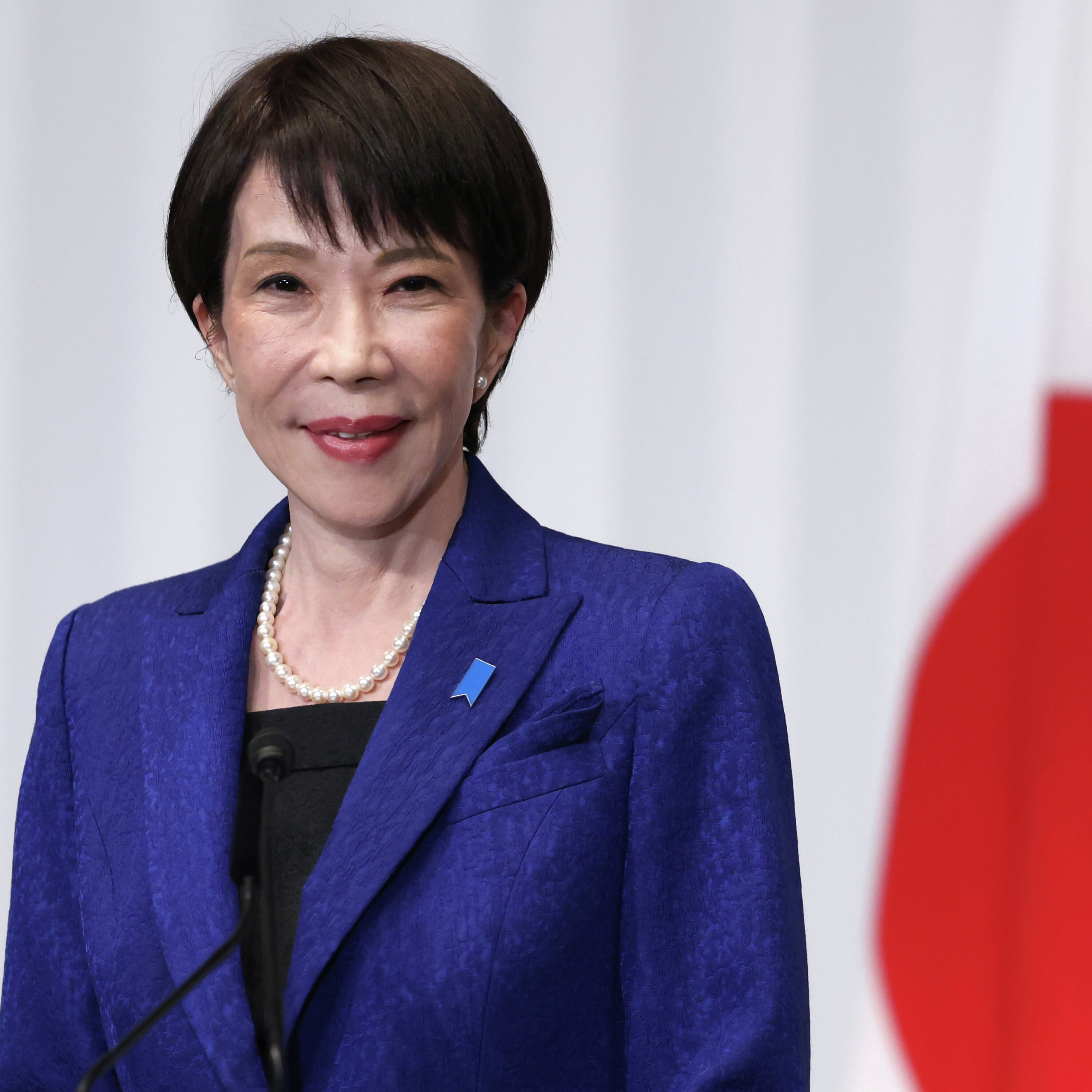
Japanese Prime Minister Sanae Takaichi wants to put Japan back in the fast lane, with huge investments in everything from AI to space technology. But can she generate the growth to justify the spending without unsettling markets and voters?
On today’s Big Take Asia podcast, host K. Oanh Ha talks to Bloomberg’s Paul Jackson about Takaichi’s first-year scorecard and the economic and political pressures that could determine whether her agenda succeeds.
Read more: Japan Is Still Figuring Out How a Female Prime Minister Should Lead (bloomberg.com/news/features/2026-10-16/japan-p…)
Further listening: Japan Hikes Rates, Reshaping Carry Trade (podcasts.apple.com/us/podcast/japan-hikes-rate…)
We have a special Bloomberg subscription offer for podcast listeners atBloomberg.com/podcastoffer. (bloomberg.com/subscriptions/podcasts)
Host: K. Oanh Ha; Guest: Paul Jackson; Produced by Naomi Ng; Edited by Crispina Robert and Julia Weaver; Engineering by Greg Tock.
See omnystudio.com/listener for privacy information.
Transkriptvom Podcast bereitgestellt · Zeitmarken springen hin
Bloomberg Audio Studios.
Podcasts. Radio. News. I think Asanaya Takeuchi is one of the strongest, most charismatic leaders we've seen in post-war Japan.
Paul Jackson covers Japan's economy and government for Bloomberg in Tokyo. I sat down with him to discuss a major milestone for Japan. This week marks one year since Sanae Takeichi made history as the country's first female prime minister. In your view, what's been the defining feature of her tenure?
I think she's marked a move towards a more forthright, confident and conservative leadership that speaks to a Japan that stands up for itself. She's got a style that's based on a very direct, a responsive relationship with voters rather than a style that depends on consensus built within party politics.
And she's thinking big. Paul says Takeichi has made it clear she wants to build a stronger Japan through eye-popping investments in key industries like AI, shipbuilding and aerospace.
What Takeichi is saying is we need to put public money into these industries to make sure we're front of the pack. She sees Japan as still lacking in dynamism compared to how Japan was back in the 80s, when at one point some economists thought it would even overtake the United States to become the largest economy in the world.
It's an ambitious bet that's had global markets and the Bank of Japan on edge. And Paul says her ability to pull it off has massive implications for Japan's financial future.
She's looking for a huge increase in domestic investment. And she set this target of reaching 370 trillion yen's worth of investment within 14 years. The problem is Japan can't afford to pay 370 trillion yen, but at the same time, it's going to have to put 20 or 30% of the money down in order to get the private sector to start investing too.
This is The Big Take Asia from Bloomberg News. I'm Wan Ha. Every week, we take you inside some of the world's biggest and most powerful economies and the markets, tycoons, and businesses that drive this ever-shifting region. Today on the show, one year of Prime Minister Sanae Takeuchi. We look at whether she's delivered on her promises of a stronger Japan and how her policies could shake up the global economy.
Take us back to October of last year when Takeuchi came into office. What was the economy that she inherited back then? And what does her economic scorecard look like now, a year later?
Well, the economy was growing reasonably sluggishly with weak prices and deflation for decades and very kind of limp growth. I would say that in terms of economic growth, there has been no major change under her leadership. She's still got a lot to prove on that score. In terms of inflation, she came in, the inflation was around about 3%, and currently we're at about 2%, although that is going to creep up over the coming months. So that's been good for voters, but at the same time, they're still getting used to this idea of prices going up, which is something that they haven't been used to for a couple of generations.
Would you say that inflation has been the hallmark of her economic agenda?
Inflation is a key element of her economic agenda. Since the early 90s, one of the key objectives of Japanese policy has been to rekindle inflation. It's a very strange concept for countries elsewhere in the world where you wanted to try and control it and keep it down. But in Japan, the implosion of the economy after the asset bubble burst in the early 90s meant that The economy was in kind of stasis, a lack of growth, a lack of movement in prices, a lack of movement in wages.
So bringing back inflation has long been seen as the key cure for getting Japan moving again. And to a larger extent, that has now been achieved.
Now, Takeichi was a protege of Shinzo Abe. Japan's longest-serving prime minister whose signature economic program, Abenomics, pulled the country out of decades of economic stagnation. To what degree has she embraced Abenomics?
Takeichi is definitely an heir to the Abenomics ideas about how to restore growth and dynamism in Japan's economy. I would say that in one key respect, she has moved on from the Abenomics model She used to say that raising interest rates was dumb. And while she's been leader in Japan, interest rates have more than doubled. Bank of Japan has raised interest rates three times. So this idea that she's totally against and is acting as a brake on interest rates going up is not entirely true. She's evolved her thinking interest rates can go up. She probably wants them to go up more slowly than perhaps the Bank of Japan. but she's not stopping them going up.
But there's still this idea that she would like the Bank of Japan to go slowly in normalizing policy. And there have been some key moments during her time as prime minister when it's been seen that her administration is perhaps overstepping the mark and perhaps infringing on the Bank of Japan's independence. And there have been some market reactions to those moments.
Now, Takeichi's spending plan is a centerpiece of her economic agenda. The numbers, right, are huge. $ 135 billion stimulus package. She also unveiled a $ 2 trillion investment roadmap into key areas such as AI, and that's going to stretch over more than a decade. What is she trying to solve here with this massive shopping list?
So, Takeichi has identified 17 key areas. It's like chips, AI, infrastructure, energy, defense, space, technology, robotics, many specific products as well that she's earmarking money for. Essentially, she's looking for a huge increase in domestic investment. And she says this is really the critical problem of Japan's economy.
is there's not enough investment in Japan. Other advanced economies have grown, other emerging economies have grown at a much faster pace. The problem is, is in order to get companies to invest domestically, you've got to put some money on the table to get things going. So that is the key part of the plan that we're still not sure about.
Yeah, I mean, the private sector obviously has to play ball has to really be behind this. Is there a sense that the private sector and also the Bank of Japan, are they buying in at this point?
Well, I think it's too early a stage to know for sure. There have been projects previously involving firms with Japan throwing in maybe a third of investment and then this being matched by the private sector. I believe that the government is working to release some kind of roadmap by the end of this year to show how it all plays out over the next five years. And I think that's the moment when we'll get more of a feel for whether the private sector is going to buy in or not.
Now, there was a big snap election in February that Takeichi won, and she won big, right? It seemed to be an endorsement of her policies. How popular are these policies with her base?
So Takeichi is very good at drawing people back into the fold. back towards the ruling party by promising to take action on immigration and to have stricter enforcement on foreigners living in Japan. And that really resonated with people. Another key element, I would say, in the election victories that opposition parties kept winning votes on and the ruling party losing votes on was cutting The sales tax. Now, ultimately, it is a key generator of tax revenue, and it has helped stabilize Japan's finances to a certain degree. So lowering the sales tax, after all this pain of decades of trying to bring it in and raise it, was for LDP, ruling party politicians, off the table. You could not do that. Takeichi turned the tables on that way
of thinking and said, no, this is what the people want. Give them what they want. Lower it on the key items that people feel at the checkout counter in the supermarket. Those are the kinds of changes that politicians can make that have an instant impact on voters' feelings.
Still, lowering taxes means less government revenue that she needs to fund her massive spending plans. And this is a country that already has one of the highest debt burdens in the developed world. How does she respond to the critics and their concerns of this ballooning debt?
Well, this shopping list that Takeuchi has, it does add up to quite a lot. The sales tax itself, that reduction is going to be about 10 trillion yen over two years. Meanwhile, she's got to pay this money for this investment program. I mean, that could be between 5 and 10 trillion yen a year on top of that.
Then we've got defense spending. So there's plenty for investors to be worried about. Now, what Takeichi is arguing is that the dynamics of Japan's economy have changed. They've moved on because now we have inflation, we have nominal growth in the economy. So as the economy grows, you can still lower the debt ratio while spending more. And this is a dynamic that is created through inflation. If you have deflation, If you are living like Japan was for decades before, you cannot do this. And the debt dynamics are getting worse all the time.
We are seeing markets also push back a bit, right? Bond yields have climbed, which means the government could face higher borrowing costs. What are investors worried about?
Well, investors, I think, are worried about two things here. They're wondering about too much spending taking place and the finances getting out of control. also have been worried about inflation getting out of control. And one of the takeaways of human history is once inflation accelerates, it gets harder and harder to rein it in and to cool it down.
And that means much higher interest rates later on. And so the idea is you've got to keep on top of it. If you don't keep on top of it, it gets way more expensive and way more painful to deal with it later.
After the break, Takeichi is navigating a more complex world, caught between Washington and Beijing. And will Japanese voters stick with her long enough for her plans to pay off?
Thank you.
Soon after Sanae Takeichi took office last year, she found herself in a firestorm with Beijing. In parliament, Takeichi hinted that Japan could get involved militarily if China tried to take Taiwan by force.
This really crossed a red line for China. And China has taken a wave of action to try and isolate Takeichi and make her retract those comments. These include limitations on critical mineral supplies, telling Chinese tourists to stop going to Japan. There's been a big drop-off of the number of Chinese going to Japan. And also to kind of freeze her out diplomatically, not to meet her or talk with her. So in terms of those relations, they are the frostiest they've been for a long time. On the one hand, that has made dealing with China very, very complicated.
On the other hand, I think it has helped to generate some of the domestic public support for her because it's a woman standing up against the mighty China and saying, no, I'm just saying what we've always said and I'm not taking my words back. And that's a very brave move that doesn't sound like the usual consensus-seeking Japan. She's not kindling tensions or trying to inflame things. But she's determined to take her time and wait till that moment can come when there can be a kind of narrowing of differences.
Now, managing China is one challenge. Managing President Trump is another. How has Takeuchi navigated that relationship over the past year?
With Donald Trump, he has a surprise package. There's all kinds of new demands that new things that can come up. Keeping Japan on Donald Trump's radar has been a key concern, I think, for Takeuchi. And Donald Trump, of course, gets angry about things quite easily. One of the things is this controversial war in the Middle East. That put dozens and dozens of countries and allies around the world in a very, very difficult position. And of course, Japan is one of them. He's wanting support. He's wanting support. ships and soldiers and supplies in the area to help the U.S.
Japan is constrained constitutionally in terms of how it can get involved when there is conflict there. There are a number of problems this creates, both economically and politically. Japan doesn't really have much energy beyond renewables, so it's importing all its oil, essentially, and most of it comes from the Middle East, and most of it goes... through the Strait of Hormuz. Now, if you look at how she's dealt with that, she's released oil reserves in Japan, and she kind of did that before even an international consensus was announced on that. She's also helped find alternative supplies of oil. And this is where the US has come in as a major supplier of oil. Now, if you look at trade data from February, you will see that
Japan was getting about 7% of its crude from the United States before the conflict started. Well, if you look at the latest trade figures, about a third of Japan's oil is now coming from the U.S.
One source of friction has been the weak yen, which Trump argues gives Japanese exporters an unfair advantage. There has been some pressure from the U.S. to get the Bank of Japan to raise its policy interest rates.
Well, I think the key event that marks a change in the degree of pressure came in July this year when the United States joined with Japan in a joint intervention to help prop up the yen. Now, supporting the yen, that was the first time in about 28 years that the US had done something like that. So for Japan, it's a very rare move. But like anything, with the US these days, it's part of a deal. And it seemed to most observers fairly clear that part of the deal was raising interest rates in September. And lo and behold, that's what happened. Now, of course, the Bank of Japan is never going to say it raised interest rates because of some deal. And it had plenty of reason to raise interest rates in September as well.
So you've got A gigantic spending plan. You've got Japan finding its way geopolitically. In the end, though, it always comes down to how voters at home are feeling, right? Do Japanese citizens feel that their lives have gotten better with Takeuchi in office?
Well, that's the million-dollar question, if you like. I think it's still early days for them to really feel there's been a significant change. But there have been subsidies to bring down utility bills. this cut in the sales tax won't take force until April next year. So I think that's going to be a key moment when people are really going to notice a difference in their everyday lives.
I think if you look at where the ruling party was a year ago and its fortunes now, they're in an unbelievably good place. I for the ruling party in such a short amount of time. And she's made that happen. So that political capital is going to last for sure for the coming months. And her support levels are still relatively high, much better than her predecessors. And so that speaks to this political capital that she has to carry on with her agenda over the coming months. But as you know, that kind of support this month doesn't mean you're going to still be in such a good place six months down the line.
This is The Big Take Asia from Bloomberg News. I'm Wan Ha. To get more from The Big Take and unlimited access to all of Bloomberg.com, subscribe today at Bloomberg.com slash podcast offer. If you liked the episode, make sure to subscribe and review The Big Take Asia wherever you listen to podcasts. It really helps people find the show.
Thanks for listening. See you next time.
