

Chat_180 - Invalid Checksum: How I Almost Lost My Bitcoin Stack with STACKTOTHEFUTURE
Sonntag, 1. November 2026 · 1 h 54
Kapitelklicken springt direkt hin
Shownotes
<p>"There's a lot of emphasis on the moment at how AI is making everything less secure, and that is a part of the story. Of course, any tool, any powerful tool has its advantages and disadvantages or has the thing bad guys can use it, good guys can use it. But the power that I think this actually gives the individual for doing stuff like recovery, I think that in the long run, there's going to be way more people who use this to recover their funds than people who use it and manage to steal someone else's funds. Because of the information you can give it, I got it to interview me: how did I store the seed words? Did I do it in columns or did I do it in rows? Did I mix it? All that stuff I can choose selectively to give to the AI, whereas an attacker, they're basically going in with a kind of like a blank slate and trying to do an attack from relatively low amounts of knowledge in terms of your setup." </p>
<p>~ STACKTOTHEFUTURE </p>
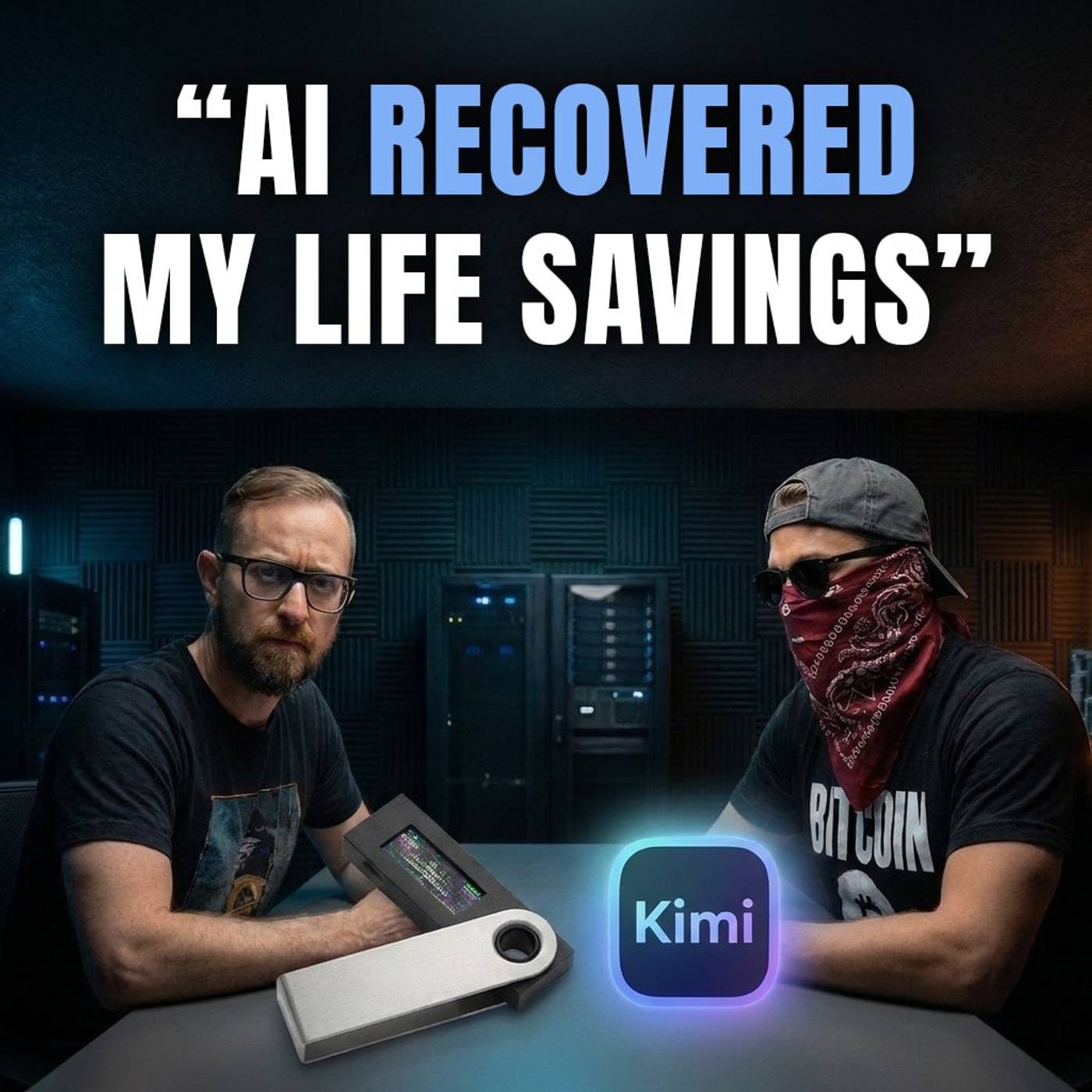
<p>In this Chat, I sit down with my producer and good friend STACKTOTHEFUTURE to unpack how he almost lost half his Bitcoin stack to hardware wallet failures. First from the Coldcard entropy bug scare, then from a degraded Ledger screen and an “invalid checksum” seed. </p>
<p>We walk through his AI-assisted recovery process, why tools like BTCRecover and careful prompting can let you fix mistakes without trusting anyone with your keys, and how this led him to build Keybackup, an open-source printable paper backup for Bitcoin wallets. </p>
<p>Along the way we dive into AI as a net security positive, self-custody tradeoffs, wallet UX for normies, and the Opsec tradeoffs of being public about Bitcoin. </p>
<p>Guest Links </p>
<p>STACKTOTHEFUTURE on X (Link: <a href="twitter.com/stack2thefuture">https://t…;) </p>
<p>KeyBackup's Website (Link: <a href="keybackup.org/">https://keybackup.org/…;) </p>
<p><strong>Chapters</strong></p>
<p>() - Introduction </p>
<p>() - Pearcast and AI workflow </p>
<p>() - STACKTOTHEFUTURE joins the show </p>
<p>() - Coldcard vulnerability and Ledger screen fail </p>
<p>() - More supply chain attacks and fake wallet apps </p>
<p>() - Invalid checksum & AI-assisted recovery </p>
<p>() - Red-teaming code and the singularity stack </p>
<p>() - Upgrading paper seed backups with keybackup </p>
<p>() - Opsec, physical security, and PO boxes </p>
<p><strong>Affiliate Links</strong></p>
<ul>
<li>Become sovereign, hold your keys, be censorship resistant with the BitBox hardware wallet. Get 5% off everything in the store with code GUY. (Link: <a href="bitbox.swiss/guy/">https://bitbox.swis…;)</li>
<li>Get 10% off the best Bitcoin board game in the world, HODLUP, or any of the other great games from The Free Market Kids. Use code GUY10 at checkout for 10% off your cart. (Link: <a href="freemarketkids.com/collections/games-1"&g…;)</li>
</ul>
<p><strong>Host Links</strong></p>
<ul>
<li>Guy on Nostr (Link: <a href="tinyurl.com/2xc96ney">http://tinyurl.c…;)</li>
<li>Guy on X (Link: <a href="twitter.com/theguyswann">https://twitt…;)</li>
<li>Guy on Instagram (Link: <a href="instagram.com/theguyswann">https://www…;)</li>
<li>Guy on TikTok (Link: <a href="tiktok.com/@theguyswann">https://www.t…;)</li>
<li>Guy's Take on YouTube (Link: <a href="youtube.com/@GuysTake">https://www.you…;)</li>
<li>Guy Swann on YouTube (Link: <a href="youtube.com/@theguyswann">https://www.…;)</li>
<li>Bitcoin Audible on X (Link: <a href="twitter.com/BitcoinAudible">https://tw…;)</li>
<li>The Guy Swann Network Broadcast Room on Keet (Link: <a href="tinyurl.com/3na6v839">https://tinyurl.…;)</li>
</ul>
Transkriptvom Podcast bereitgestellt · Zeitmarken springen hin
There's a lot of emphasis on the moment at like how AI is making everything like less secure and all of this kind of stuff. And that is a part of the story. Like, of course, like any tool, any powerful tool has its like advantages and disadvantages or has the thing, you know, like bad guys can use it, good guys can use it.
But the power that I think this actually gives the individual for doing stuff like recovery, like I think that in the long run, there's going to be way more people who use this to recover their funds than people who use it and manage to steal someone else's fund. because the information you can give it, like I got it to interview me, like how did I store the seed words?
Like did I do it in columns or did I do it in rows? Did I mix it, et cetera? All that stuff I can choose selectively to give to the AI. Whereas an attacker, they're basically going in with a kind of like a blank slate and trying to do an attack from, you know, relatively low amounts of like knowledge in terms of your setup.
What is up, guys? Welcome back to Bitcoin Audible. I'm Guy Swang, the guy who has read more about Bitcoin than anybody else you know. And we've got a fantastic conversation today with my producer, actually. And a really good friend, great guy. If you don't know him, Stack to the Future on Twitter and socials.
You got to follow him if you're not. But during the whole cold card incident, he had a bit of a scare. And it was one that I know all too well, like that feeling and that sense. And I know a lot of people have this where something, they think something terrible has happened or they don't know exactly how to get around it or adjust to something unexpected happening.
And this was just a really, really interesting recovery story and an interesting case of exactly what went wrong and why. And I just think it's incredibly useful to break down these situations, whether they ended in a good story or a happy ending or a terrible ending, just because they're examples, right?
You know, the whole idea is that we learn from each other and understand the nuance of all of these things by learning by other people's edge cases rather than having to all learn the same hard lessons ourselves. And I thought this would just be a really, really fun conversation. And it's good to actually get to sit down and hang out with my producer, not in the context of sending him work or vice versa.
Great conversation. Really good. Glad we got to catch up. and I hope you guys really enjoy this one. This episode is brought to you by the Bitbox hardware wallet, by the way, and it's a fantastic open source from top to bottom hardware wallet. It's been around and tried and true through a lot of storms and all the things, and it's been a wonderful, wonderful little tool of mine, and I highly recommend it to people.
I've got a 5% discount with code GUY. Link in details will be right down in the show notes. So check it out. It's also a great way to support the show, just to use my link when you're getting yourself a hardware wallet. With that, let's get into today's episode with Stack to the Future, and it is titled Invalid Checksum, How I Almost Lost My Bitcoin Stack.
Where I have gotten to with Pearcast, I'm 100% convinced that I did. that I it it took two weeks of my life to kind of build out the the things that I've been distracted with most recently um and of course it took three years to build paracore and you know all of that stuff but I'm finally experiencing what it's like on the other on the backside of having it um and I'm like no I definitely should have like this is this is the way I should have done it um yeah Like this is such a huge unlock.
I'm going to be able to do videos so quick. I've already got a temporary or like a first draft of the mobile version of Pearcast. And so what I'm going to do because it will, you know, it just syncs and ports straight through Pearcore or whatever is I want to be able to record on my desktop and then pick up with my phone, go outside and keep recording into the same timeline.
That helps a lot. That helps a lot. I think that there's a, I think that there's, there's quite as, I feel like there's videos when you just kind of like have a variety of like locations and stuff, it's a bit more kind of varied. They seem to do better and people, I don't know, they're just more people.
They're more engaging. Yeah. More engaging. They're more fun for me to like go out and just like, I got forced myself in one of them. There's just like go walking out in the woods. and it was just fun to do a video like that and it's also just kind of like boring to be watching minute one and then minute 15 of a video and you're looking at the same thing and the same person in the same situation you know like there's just no visual engagement or variety in it like why are you gonna have video if you're not if nothing's gonna be happening why do you need video for 90 of that right yeah do you watch julie i think he's called julian figaro yeah he's got the I think he's called the exit plan his channel
and like I really love the way that he does his videos we shot the shit at one of the conferences and said we should do a project or a video together and then we totally forgot we should just do that randomly we should get him on actually that would be a great one we should just talk about oh my god I bet he's doing like all sorts of AI stuff with his like production flow and I am all about like how to make how to use AI to be more productive.
Like I am, that has been like my, my number one thing, which is hilarious because I've not been very productive because I've been so focused on building stuff with AI to be more productive. But I'm, I'm, I'm really getting there and I'm super stoked. Booting up and working on the episodes this morning was, I haven't been this invigorated about it in a while.
So it's got me pretty jazzed again. And it's all mine. It's all peer to peer. Fuck them. fuck the platform they're done with that shit Jesus but yeah well dude we should probably add we should probably leave some of that shit in but welcome to the show man this is you've been on the show like at least once right I don't I don't know if I have so this is I think my first time being on Bitcoin well shit welcome to the show man long time producer first time first time guest that's awesome so we had a interesting few conversations right around the cold card incident.
And you had a bit of a scare. And I think there's a lot of lessons to pull from it. Because I've run into a bunch of similar things, and it's crazy the number of times I've felt like I have done something terrible. Like I've made a serious, serious error and lost something only to finally be reassured 24 hours later, you know, like to finally recover or do whatever it is that I needed to do.
And I think I gave a little bit of a scare to a relative of mine. I set her up previously with a Jade wallet and had her savings on it. and I've kind of like walked her through and she's gotten Bitcoin a couple more times, but she was very uncomfortable with it. The, the Jade was, it's like a little bit, it's not, it's just a little bit past kind of like the warm-y zone and she is not a very technical person. And then it was being real finicky with Bluetooth for some reason. The, that device in particular, like my Jade, I didn't really have much problem. It seemed to connect really well um but for some reason her phone or her jade was just being like real finicky and as soon as it wouldn't happen like the first time she's like oh god what do i do like she would
like kind of lock up you know like so even like the slightest thing like bluetooth doesn't connect she's like something's wrong and uh and so uh i set her up and switched over all this stuff um and but she had like a moment because i couldn't get the jade to connect and then i i wrote down a copy of her pin for the jade because we're like she just wanted to make sure that we've got you know extra backups and stuff and uh we have been communicating regularly on it i send her texts every six months and be like you got your you got your c phrase you know where it is you know like keep it safe um and uh when i uh broke out her jade i had forgotten that i had the pin number back in like my stash of like password pins and all that stuff that was like physical
and I didn't bring it so we couldn't get into her jade and she was like oh no what does that mean like you know we're trying to like move and consolidate everything because she had purchased a little bit from me but I had kept it because she didn't know how to get she couldn't get back into her jade um and so I didn't have it we actually had to restore from seed out at a coffee shop but she did remember to bring her seed phrase um that she had like stashed away in her like you know hitting your little wallet below the wallet in their purse and you know all that stuff um which is kind of dangerous but you know generally speaking we we were doing a bunch of stuff with the bitcoin but it was funny we we did get it and i just did it in sparrow but all i could think was
like god the panic most people would have like the the sheer panic and like how do you know what to do like i i booted up sparrow and you know scanned all the derivation pads but i saw her face when we were sitting right there she never would have touched she would have been scared to ever loving like if i wasn't there they would not nothing would happen nothing would happen yeah she and that was just a recovery from seed that was just a recovery from seed yeah it was just trying to get some stuff off a jade wallet like which is not a terrible wallet you know like a Jade's great. I love my Jade.
And Bitbox is definitely more user-friendly, I think, typically speaking, than Jade. The hardware wallets are finally getting better, but I'm surprised by how many that I thought of previously as having really good user experience, but they were definitely Bitcoin techie user experiences. And then when I sit down with a normie, I'm like, oh, Jesus.
I understand immediately why they're so intimidated. my stuff. And it's, and it's why I would have like, I recommended the cold card because I love the, the things about the verification from ledger. And in fact, I just talked about this in the video we were working on was the ledger hack was the, Oh, you can't see into the device.
And so somebody implanted something into the device that stole your seed phrase that just watched the screen and cold cards like, Oh, we're not going to let all that happen. We're going to let you look in the device so you can see if it's changed or whatever. It's like, oh, but we forgot how to make entropy.
We're just not even going to generate a cold card. We're just going to generate a seed from one to seven. You know, like we'll just, whatever. Somebody will guess it at some point. But so you had your funds. Were you on the cold card Mark IV? What was your general setup that got you in the panic mode?
I had a cold card. I was in the exact risk group, basically, for the cold card hack. I was like, bang, like in the center of everything. Had the Mark III. Hadn't used a passphrase. I can't remember, actually, if the firmware version was for anyone with a Mark III, but I think whatever. It was anything after 2022, I think.
Yeah, I was basically right in that risk category, essentially. And I so when that whole thing happened I was basically like I was freaking out I mean I saw the new like thankfully I kind of saw the news come in early um I think I saw I saw a a tweet from someone I think it might have been Groobles someone like that and he said like he'd been hacked I think um and basically was like you know my funds have got swept because you know you hear these stories and normally it's like uh is there something to it is someone just done something wrong like oftentimes you know people do something wrong and then they're like oh i i got hacked and it turns out like they did something wrong they didn't want to there was a heavy user error involved in that hack yeah exactly exactly
but in this case i was like okay um there's something's going on here like something bad is actually happening uh and at that point i went and basically checked my funds had not at that point been swept uh so i thought right okay my funds are fine like uh but you know i needed to move them as soon as possible so i kind of went through that like emergency process of like i need to move these funds so for the cold card thing um i was i think honestly you know because like i live in like a u.s time zone right i think if that had been different like if i'd have been living or been visiting like europe at that point i'd have been screwed right because this i think the attack happened somewhere in the evening of uh like u.s time so i and i and it was like out you
know you had to like a matter of kind of well possibly even less than hours you know to do a couple hours a couple hours yeah right so so i got kind of lucky with um just the fact that i managed to kind of like uh figure it out in time essentially um but then after that i was like okay I need to, like, I started looking at my setup generally because I've been one of these people who I've been wanting to set up multisig for a long time and just not done it.
And I knew that, like, at some point, you know, I needed to do it. And I thought, right, okay, this is kind of like the warning shot, essentially. Like, I wanted, I already, I knew these funds. I was very aware, like, I have these funds on a call card and I didn't use a passphrase because I was kind of like, you know, much more, not like new to Bitcoin, but I guess just a bit more complacent.
like the funds weren't worth as much when I put it on there. So I didn't kind of go to those lengths. So eventually I kind of came to the realization, right. Okay. This is, this is the time. The warning shots been fired. Like I need to move my funds to a multi-sig. So I started going through that process, like setting up funds on a multi-sig. And as I was going through it, like, you know, you have to do a lot of learning. Like it's one of those things, like it takes a little bit of time to get there, which I did. And then by the time I was kind of ready to move the funds, this was on like an old ledger wallet that i had in the sense that i had the i had the device and i had the the pin code which i had kind of like stored in in uh in like a password manager the
pin code for the device so i was like okay i've got what i need i can get into the device so i got the i got the ledger out it was all ready to move it and i sent the funds sorry i didn't i didn't send the funds this was precisely the problem so i basically i i uh i tried to put the pin into the device that I had and it wasn't accepting the pin. So this was kind of like the first issue was that the pin wasn't being accepted. So I was like, all right, okay. It's not, you know, a huge concern.
Like I need to try and try and, uh, this most of your stash. It was about half. Yeah. It was about half, about half. Yeah. So I, I was like, okay, I need to resolve the, the, you know, I need to basically do a recovery. So I thought, okay, this is why you have the recovery words. Like for situations like this, I didn't know why the pin was wrong. Uh, but I thought, okay, It's not a big concern.
I have the recovery. And I hadn't used a passcode on the device. This was actually the reason I wanted to move the funds off this device specifically was because I knew that I hadn't used a passcode for that one as well. Sorry, a passphrase. So if I didn't have a passphrase set up, I was worried basically that another entropy bug would emerge from Ledger at some point.
And I thought, like, I don't want to be vulnerable to that. So I kind of called my family members who had the words. So I'd split the words up basically, because obviously like if you are not using a passphrase, you know, you shouldn't have the 12 words stored somewhere. You want to split the words, right?
Which is why I always, poor man's multi-stake essentially. Yeah. Which is why I always also kind of used 24 rather than 12 words. Because if you split 12 words in two, like, you know, your individual protection is rough. Yeah. Yeah. Because you like theoretically, you could brute force. if you've got if you find six words of 12 you could brute force six it'd take a long time but you could do it whereas if you find you know two sets of if you find one set of 12 words of a 24 word seed essentially it has the same entropy it's just as hard for someone to crack it right so it's good luck so i i'd done the right thing in that sense so i basically i called the family members who had the uh the the seed words i said right okay can you give me the seed and i said and while
While I was on the phone, I was like, by the way, can you just like check? Because I've also written the actual pin code for the device. I said, can you just send me the pin code that you've got written down as well? Because I know like my pin code is wrong. Turned out that they gave me the pin code and I was like, okay, I had this number as a zero and they have it as an eight.
Something like that. I think it was between a zero and eight. I can't remember which way around. So I was like, okay, right. So now I've got the pin code. I don't really need the C words. So I was like, oh, you know what? Like, I don't really need the C words, actually. Like, I can just use the pin code here.
I went back to the device, booted it up, the ledger. And if people are listening to who are ledger users, well, first of all, if you're a ledger user and you kind of bought one, like, from a few years back, I would say, like, just check it and see if it's still working because this is a known issue. And I don't think it's been very well communicated, honestly.
Like, people are just kind of discovering this, but I feel like ledger needs to be more vocal about it and kind of preempt that people are going to have this issue. essentially there's a screen kind of degradation issue on the old ledger so i had the nano s from that i think it was two uh this must have been from around 2017 i think um okay so i i basically i turned the the device on and it was just completely scrambled everything like it was really difficult to tell but you could just about read the the numbers but it was it was really dim in parts so the parts were okay but in general like the the screen wasn't great so i turned it put the pin code in and like started essentially to do the process to move the funds.
And I think it was, I went into the device kind of like the first time with the correct pin. And when I went to actually send the money out to the multi-sig, I was kind of all prepared for everything. I was about to send the money out. And, you know, one of the main kind of reasons you have like a hardware device is so you can double check the address.
So you're sending the address and you want to make sure that it's not sending to a malicious address. so the device has that and a lot of people kind of skip it they just you know they just click okay whatever comes up on the screen but i was like okay this is half my stash i need to be pretty sure that the money that i'm about to send out here is uh like you know i'm not being attacked in any way but because of the screen issue on the device i couldn't read the um i couldn't like read the address and i was like this is dangerous like i don't want to be sending out to an address here that I can't verify.
So I thought, you know, what's, like I still have the C words, so I'm not going to worry about this. So I kind of turned the device off, unblocked it, called my family members and said, look, I need to do this as like a recovery. Please send me the C words. So they sent me the C words. I have my 24. Yeah, dude, just interjection on that.
Like not being able to see what's on your screen in a situation like that is so, is so unbelievably frustrating and extra dangerous because it's exactly those points that scammers go hard. They really try to feel like any malware or anything that you get. I had an episode, the episode we did with American HODL and K-Center, or whatever, is I mentioned somebody was talking about somebody who heard the advice of downloading Sparrow Wallet.
and you know they're like i gotta i gotta like do all this stuff or whatever i gotta make sure that it's like properly transferred and uh but sparrow wallet does not have a mobile they don't have like ios but there is one in the store even though it's been reported you know dozens of times i've got who knows who knows how many times i've reported it as soon as this happened i was like Jesus Christ.
But he downloaded the Sparrow wallet from iOS and sent his money to it. And it was like six Bitcoin life savings. Man, that is rough. Gone like that. Yeah, I mean, it is. Yeah, it's very crazy to me how these apps managed to actually make it into the app store at all. You would think that, you know, I guess like Google or Apple are at least looking just like they should just have like some kind of just a red list like okay if anything to do with bitcoin let's just have a human look at it and make sure this isn't trying to spoof something you would think that that would take five minutes for someone to do yeah not only that oh shit you can have ai do it now um but not only that but like i've had to like to get a
developer account i've had to like do so much like kyc and all this stuff i've tried to protect like home address and, you know, that sort of stuff from just being exposed to another freaking thing on another freaking service. But largely, like they go out of their way to make sure that they can identify.
But I don't understand how the Sparrow wallet is some like, oh, we'll never catch this guy. You know, like they should have a specific business entity. They should have a specific address and names and all this stuff. And they don't make it easy to go around that. like somebody has to work really hard to not be identified um in the app or in the developer system but this is kind of like uh endemic at the moment i mean some of these recent things have taken place like the the supply chain attack of ledger recently i'm like you know someone bought this company and you know it's either the people who were around the company before or the current or the people who bought it but i the fact that they had like a nda on like telling people that
the company was bought that was bought to steal everybody's coins but also like that that is suspicious but if someone bought the company like could it have been the previous owners who bugged their own devices before they got bought out and was like we're getting bought out in a few months guys like this is our exit plan so i don't know like i'm not entirely sure whether like where the blame is going to fall but in any case it seems pretty clear that this is going to be a matter of just like you bring the guy who owned the company before you bring the guy who owned the company after and you basically figure out like okay at what point were these devices bugged you can put you can tell that from when they were delivered etc you can tell from the order book it should be
really easy to figure out who who committed this crime but it seems like we're kind of living in a world where like this is becoming mainstream right these hacks are i don't know in my opinion it's spooky. The attacks that have happened and it all happening at once, I think it's spooky. And you see the lengths that governments and stuff are going to get hold of people's Bitcoin.
Wouldn't surprise me if, I'm not saying the government themselves are doing it necessarily, but if they have someone's back and say, look, we're going to turn a blind eye to this because we're broke and we need some Bitcoin. There's definitely not a very good incentive alignment for protection. There's an incentive alignment for fear and keeping people away from sovereignty.
So it doesn't even have to be like they sent the scammers a memo. It literally is just like behind the scenes in the FBI or whatever. It's like, this isn't really something that we need to spend a lot of resources on. The politicians and the congressional budgets don't really care if we spend much on this.
And you want to know why? It's because it would be very nice. It's convenient for all of us if self-custody looks scary. So we'll put this investigation on the back burner and get to it in 2032 maybe. Right. But I mean, you know, even if we look back to this almost, for me, this seemed to start with FTX.
It was a very obvious op And if they willing to do that with FTX like a major exchange and and kind of like very clearly there was something spooky going on there why shouldn we expect that the spookiness is going to continue in other ways like they've you they've played that card right they played the exchange kind of card like maybe multiple times because even the exchange hacks before them not just money stealing money but like exchange hacks before that have some spooky vibes it's almost like they have all of these these cards to play exchange hack exchange you know stealing money like and now we're kind of getting into the self-custody thing for you know entropy attack you know possibly possibly not could be like something spooky going on and then also like
implants seems like every avenue is being considered now to basically like get people's bitcoin into you know bad people's hands like whether or not it's government so yeah it's um we're living through crazy times for sure. Well, I'll tell you, all the motivation, all the motivation in the work towards keeping it out of scammers and thieves' hands, very little of it is coming from the government and very much all and as much of it as probably can be publicly discerned is coming from just a bunch of Bitcoiners with AI credits.
You know, like it's just, it's nothing but Bitcoin companies. I like government's not gonna come save us or fix all the catch all the bad guys um in fact the best investigations as to who has done a lot have been just random people on random bitcoiners just doing doing what they do and talking to services that like we had somebody log in that was checking these things just before these addresses got emptied and it happens to align with like 20% of the hack, you know, and spreading information around well before I'm sure police or even like, I'm sure, yeah, yeah, we'll file a report.
Exactly, exactly. I mean, I would be very interested to see what happens with these because with these recent hacks, if that's true, and it does seem like there is some truth to that, that someone was checking the addresses before they were hacked, that's just an obvious giveaway. And, you know, likewise with this thing that's happened with the ledger implants, that there's got to be a paper trail for this stuff.
And we saw with FTX and Sam Bankman-Fried, we saw that justice kind of was corrupted in that case. We know that this guy was basically protected by powerful people. So if we assume that's going to continue, I'm expecting that we're going to see less and less kind of accountability for these things that happen.
And that's just my prediction. I think that when people get desperate, governments get desperate, like bad things happen and scams become kind of like more commonplace because once money, when money really goes into that kind of losing value on an exponential scale to the point where it's becoming worthless, like you either have to do something to get the money, which like, you know, people don't want to do stuff as we know, rather just like figure out ways to steal stuff like this is kind of how we should expect things to go in a way so i think that like you know we really need to um have even more and i think it's going to get bigger than this personally i mean we can maybe get into this later in the conversation
but i i think that there's so many avenues for this to go and i'm the the movement i don't want to say the movement away from self-custody because i think i think that's kind of unfair to to say it But I think that just the idea that people are having custodians, even like no matter how sweet that deal looks.
And even in the face of, OK, like, you know, it's difficult to self-custody. Like, you know, there's technical aspects. There's a lot of work you've got to do. But I personally think people just need to recognize that this is something that we've got to do. Like this is this is a part of living now in the same way that you learn how to drive or you, you know, you learn how to wield a weapon or anything.
you need to learn how to self-custody because yes, it's, yes, it's difficult, but I just think it's kind of weak source to sit back and go, Oh, well, it's difficult. So therefore there'll be a bunch of people who will learn an institution. And right. It's like, okay, if we're going to do that, then we might as well give up on the whole project.
The whole point is that the whole point is that there's a new technology that comes with acquiring new skills. It's just comes part and parcel with that. So, yeah. But the, one of the really dangerous things is just that, you know, the language of government is violence. And so whenever it becomes convenient, especially when people are upset with the government, which is basically always these days, it's actually very beneficial for them to monopolize defense and safety and then make things not safe to, to allow violence, to allow theft, to allow crime to happen, because people clamoring beg for more government.
And so they can arbitrarily expand things and just, it's always, there's not enough money, right? So it just becomes more power. It's not about whether or not the government's doing anything. It's like with 1% is spent on policing, it doesn't really matter. They want to expand that 99% and double that size.
And they're just going to take away the 1% because it's the thing that's going to hurt the people the most. And if it's ever convenient for them, it doesn't it just doesn't matter it's just incentives it doesn't it doesn't matter how good a people you have like they'll excuse it away and it'll happen every fucking time um and the only way around that is self-custody is second amendment like which i put in the exact same category you learn how to use a gun you learn how to protect yourself don't assume the police are going to be here because you know like who else you're going to call to you know show up three hours after something happens so they can shrug their shoulders and tell you they're
going to file a report um yeah i mean this is kind of the way the world is is rigged in a way it's it's rigged towards people with power trying to get more power and what's the best way of getting more power it's kind of like taking away people's like self-sovereignty so that they are reliant upon you it's like you can either increase your own power or you can decrease the power of everyone else so that that divide between the powerful and the non-powerful is great and they kind of operating on all fronts at the moment so when we see this in the macro and the micro in a sense like this is kind of the way that like the u.s has always been it's always been about military strength like the u.s is a global hegemon because of its military strength primarily like yes it's
also the kind of global reserve currency but that is only coming as this kind of side product of its global hegemony like that comes as a side part of that it's like we've got enough guns and weapons and military power that we can force the world to be this way economically. Whereas like, you know, so that kind of like is happening at this global like geopolitical scale.
And it's also happening on a kind of governmental scale. It's like, how can governments have as much power as possible and kind of decrease the power of the individual to the point where you have reliance upon them? And like, yes, like you said, at least in America, you have like a second amendment and stuff.
But in Europe, like, I don't know if it's all countries. I think there are maybe some countries that have like some very, very basic like gun rights laws, I think Switzerland might, but certainly in the UK and other places, like most of Europe, you can't have a weapon. So the government immediately has that power imbalance right there and then.
So that just kind of then you start from that point. They create dependency and then they can use your dependence on that to basically force your hand on demanding more government. They can literally purposefully be incompetent on the thing that you're now dependent on so that you beg and, and attempt to get more government involvement. And that's a, and they can take your money. Like your money, your money is kind of like, yes, like governments is in their nature to just extract resources from people. Like that's kind of what government is. It's like, you know, they offer you a few, they sprinkle a few things into the mix to make you think that, you know, they're doing something good for you. Like,
oh, we'll give you some healthcare, we'll give you some education. But really, those are just kind of the sprinklings to say, like, we're going to have the image of kind of like legitimacy. Like, they want the illusion of legitimacy. And the way to do that is to just sprinkle a few kind of like trinkets in so that people, to keep people happy.
It's like a PR firm for violence. Oh, that's good. Yeah, I like that. It's a PR firm for violence, right? Is that they put very in-your-face things and things that they try to get as close to you as possible, like sending you a freaking check in the mail or depositing money into your bank account when it's like an IRS refund or whatever.
Like, look at all these things that we're giving you. And anything on the surface that they actually do is good. I'm 100% certain that there's zero, absolutely none. No institution, no government system, no government program that isn't 90% fraud and 10% things really in front of you that they can point at.
So that when you attack the 90% of the fraud, they say, what about these kids who don't have lunch at school? And it's like that was what they spent the 10% on because that's what the PR firm needs to keep the 90% running. And that's the whole machine. Top to bottom, front to back, the whole fucking thing is fraud with a 10% that the PR firm manages to keep everything in front of you.
in the game is to run the politics so that you can make sure that that 10% is being projected to get more power. Yeah. Like, and that's what the whole game, it's the whole game. I agree that that's, that's pretty much how it works. So, okay. So that was a, I was telling the story. I was telling the story.
Oh, that was great. I really enjoyed that. That was a nice segue. So we, we kind of kept people on a, on a cliffhanger. So to finish what happened with the ledger thing. So yeah, I ended up trying to send this transaction. It didn't work because I couldn't see the address. I then got the seed words. So I got the two sets of 12 seed words.
And I was like, okay, I'm going to do the recovery. Put the seed words in and I got into Sparrow and I got invalid checksum. So at that point, I knew there was a problem. and this is when we talked right because i think it was just when i figured this out and then we had a call and i was kind of just like you know i was just like i was just white and i was like okay exactly so i got it yeah so well yeah you were actually very like chill about the whole thing and i guess in retrospect like knowing that like the problem is you never really know right like if you put your c words and you try to do recovery and something's wrong you're like okay well have i got one word wrong have i got two words wrong have i my worry was that maybe i had accidentally
because the seeds have been kept as two separate sets of 12 that perhaps i'd accidentally got the wrong two sets so i got 12 words from one wallet 12 from another etc luckily i'm very good at keeping everything i've done so even if i've used a wallet and i'm and i get rid of the wallet and there's not there's no balance in it i'm this kind of paranoid freak that just keeps the seed words anyway and puts it in like an old folder because like i even satoshi said that there's no reason to get rid of all the keys just keep them yeah there's a great quote from satoshi back in like 2010 or something yeah so i'd actually done that so my initial instinct was okay maybe i've swapped out words etc and then kind of like i was already thinking this is going to be like a a problem that
i'm going to employ ai to help me with and someone had done this recently i had already read an article of someone who had done kind of like who had cracked an old wallet using ai and so i was already like okay i know it's possible but the fact that that story kind of became so big and a lot of people were talking about i was like i know it's possible but is it very rare and unlikely and actually you gave me a really really good idea about this which was you said when you're building this out because obviously like you know it's risky building stuff with al is because you don't want to like you can't give it the c words you have to kind of get it to build something that you put the c words into ideally you can run offline and i'll kind of get into how that works
in a minute but um essentially you said to me create a wallet or use an existing kind of you know just pocket change wallet give it the c c words and give it one c word wrong get it to write the program or give it you know multiple you know one or two words wrong or whatever get it to write the program that will handle it and then do that And I think my confidence you know started to get a little bit of a boost when I did that because i basically i had a wallet that just had like you know five dollars or whatever in it and i put um i gave it the seed words i gave it one word wrong and i also um got it to interview me on the on my specific problem so i basically went to kimmy this is when kimmy k3 had just come
out and i basically said interview me about everything to do with how i've stored these keys and it was asking great questions. It said like, you know, did you write them all in one list? Did you write it in two columns of, did you write the 24 words as like, you know, four columns of six or did you do it as three columns of eight?
Like, which, you know, do you have any other C words that it could have got mixed up with? It was really good. And I already kind of prompted it, like, you know, ask me how I, you know, noted the words down. So I gave it a bit of information, but just said anything I've not considered, ask me about it.
That's going to help you to perform this task. So anyway, it basically wrote me a program which i was able to run separately so in the case of doing the test run i didn't bother like disconnecting the wi-fi and stuff because i was like it's five dollars i don't really care like being connected while i do this uh but it worked immediately like i i basically just um it gave me essentially just like two uh it gave me like a .md file like two .md files and it just said another another aspect of it was do i know the xpub which i did know the xpub because i I was able to pull it out of, like with difficulty, I was able to pull that out of Ledger Live.
Oh, okay. But essentially it kind of was like, if you, you know, one MD file, give me an XPUB, other MD file, give me all of the words, like numbered as you understood them. You can check without the internet. You got that XPUB? Exactly. So it literally used those files. It picked up the stuff I'd done in there.
I ran the program and within, like this one took a matter of seconds and it was immediately just like, boom, this is the incorrect word. because it was able to use the xpub to find like a matching seed um and i was like okay well it worked for this hopefully it can work for mine so i spent well paul's actually i got to realize like invalid checksum for anybody who doesn't know your 24th word and this is actually true of like the end of a bitcoin address whoops uh the end of a bitcoin address as well is the i think it's like the last eight characters or six characters or something like that is a checksum, which means that it's a hash of the whole thing, like going back. So if there's anything at all
wrong in those last six, or if there's anything wrong in the, in the first part, they won't match up. It will just be an invalid address. And this was actually created way back in like 2011 or something, because you can actually punch one character wrong or paste or one character wrong or one character missing in an address field, and you'd still be able to send Bitcoin to it, even though you could not create a private key.
And so they added the checksum on the end so that the end and this part, just like a normal hash of any file, they have to match. So if anything's different, but you still got those six right at the end, then the rest of the address has to be aligned with those six. And in the exact same way, a seed phrase, the 24th word in a seed phrase is actually just a checksum.
It's a piece of a hash of the rest of the 23 words. So it means that something is wrong in those 23 words. He could have accidentally booted that up and let's say he was sending money to it. He could have accidentally typed in the wrong seed words and then sent money to it. And well, I guess you have the seed word, so I guess that doesn't matter.
But regardless, the whole idea is that you just know there's something wrong with those 23. or I guess the 24th, you knew something's wrong in one of those things because the seed itself is not valid. The end does not prove or verify the fact that all the beginning of it is accurate. So that's what it means when it says invalid checksum.
You just know that one piece of information somewhere is wrong, but you don't know what. Okay, sorry. That's true. I actually have a question for you on that. You might know the answer to. What I've noticed when you put in the 23 words, if you go into Sparrow and you put in like, you just pick 23 words of a seed, the checksum can be a selection of words.
It's not just one specific one, right? Like, it's not just there's one word. Like, I noticed that maybe there was probably about, like, 10 to 15. I don't know exactly how many words there was, but there was multiple that the last one could be. It's not a single word in the kind of mnemonic word list.
Do you know the answer to that? I don't know. I don't know. Because, yeah, I think that basically, you know, if your words 1 to 23 are the same, I think there's a number of 24 words. Obviously, there's one checksum, but I don't know. We're doing it live. We're doing it live. We're doing it live. Possible word for standard 24 word, fixing the first 23 leaves exactly eight possible final words that pass the checksum check.
Okay. I guess it kind of makes sense because it's a range and the 24 words don't actually encompass all of the possible ranges of keys. Like the multiple is different for those 24 words versus the entire key space. So I guess that makes, so it's two to three, it's three bits that are off. So it's eight possible values.
They're all valid checksums. So you could technically have different words and still have a valid checksum. There's something in this as well, Guy. If you divide 2048, which is the number of words on the word list, by eight it's 256 so i guess that's something to do with the 256 that number can't be an accident right there must be a reason it's eight no yeah that's got to be that i think that's literally just kind of because it's the multiple because it's because you have uh you're just a handful of bits off but you are you're literally because it's 250 number i think it's because it's 256 256, oh man, we need to, like, this is an interesting question to explore.
There's a reason it's 256, right? Because it's 256 bits of entropy is the entire thing. So I guess that, like, when you break that down to just, like, the single last word, there's something in it. Yeah, I would like to break down what the exact specific math is and what those relationships are, but there's no way that's not coincidental.
Guys take coming soon. That is coincidental. There we go. Okay, so yeah, anyway, invalid checks didn't work. So I basically wrote the test program. It worked great. And then I basically had it do the kind of like the live run. The other thing I did, which is another suggestion by you, was to take the code that Kimmy had produced and give it to another model to basically audit it and make sure that one, it wasn't doing anything kind of malicious, and two, that it was just doing a good job.
And it did notice one kind of issue, which was that basically it was kind of like if the XPUB existed, it also asks, by the way, for like one of the addresses, like ideally the first address that was produced by the wallet. Because that's another way you can check if the seed is correct. You don't necessarily need the XPUB.
So if you have a receive address, it will do it. And I believe that earlier the address works better because I think that then when you're recreating it, it doesn't have to cycle through every single one and say, okay, was it this address? I was about to say, it is like deterministic in order. So if it's like the thousandth address or whatever, you need to actually check.
You have to try that deep to find out if that's the right one. Yeah, so it's basically like the first address, I think is pretty much as, you know, near enough as good as the XPUB. And then after that, it gets kind of like, you know, increasingly more timely to do it. But I had the, so I had the first address and I had the XPUB.
And when I used the other model, I think I was using maybe Opus or something like that. And it basically said, ah, well, you know, if you've given it an XPUB, it's not using the first Bitcoin address. And you have both. So if you've got a kind of error in the XPUB, if you've got a character wrong or whatever, you don't have a fallback option.
And it might actually be able to find it. So that's another really useful thing was just getting another model to just review it. And then I just gave essentially the feedback back and said, rebuild it, keep this in mind. And it fixed it. So it created the program. and I was I was I was still freaking out at this point this had been like a day on you know like pure adrenaline I was literally when I say I was literally shaking I mean it it's not I believe it I believe it man I know what that feels like I know this is how crazy it was my heart was beating like so fast I was like I think I'm gonna have to have a heart I think I'm gonna have a heart attack and my my my wife has like a little mini trampoline like for you know doing like uh like exercises and
I was like, I need to go and just bounce on this trampoline for like 20 minutes because... You get my rhythm down. Yeah, like I need to match what my heart is doing with my actual body because otherwise I'm just going to pass out. So it was that bad. So I went into the next room and I left it going. By the way, I ran this when I ran the live test, turned off the Wi-Fi literally like completely.
I had this program, had all of the stuff there, and I basically just hit enter in the terminal. It was like, boom, there it goes. The script is running and I just went off. And I was expecting this might take a bit of time. So I was like, okay, maybe I'll have to leave overnight or something. But I literally went into the kitchen, I washed the dishes, I came back and it had found a match and it literally just printed my entire seed phrase there.
And it said, oh, you know, word 14, it was supposed to be ritual and I had rival or something like that. it was basically a slight error in how I'd recorded the word. And I was like elated at this point. I was like, oh my God, this is just incredible. I couldn't believe it. It feels crazy. It feels crazy that you just like, you built an app to recover a seed phrase and it found that shit while you went and did the dishes.
Yeah, it's literally like the most, this is the most useful thing. I think the whole thing, by the way, cost me like $1.30 in Kimmy credits to basically save like half of my stack. And half your stack was like five. So you got like $4 back. You got like 80% of your money. It only cost you 20% to recover.
100% profit. So yeah, it was absolutely wild. So I got it. But I had another issue after that though, which was that like I had Ledger. In the time I've been using Ledger, it started with like a legacy wallet and then it moved to like a native Segwit one. and when it came back um i kind of like went to try and try and get the funds and i was on spiral boom like put in all the seed words and in the wallet and it was like zero balance and i'd say i'm not sure i've told you this part of the story guy but i i went on there and i was like it's got zero balance but i but obviously i could see some of the recent transactions and i was like what are these like all of the money has been like it's gone it's to zero but i was like it's been it's
been taken out and i was like where is it so i started looking through the mempool to see like where has this money gone and uh this all this money has gone out and i was like when was that and guess guess which guess which day it was that the money had gone out was it the cold card day it was the the day of the cold card hack and i realized that like the entire balance had been sweat. And I was like, oh my God, what has gone on here? And I think like what I'd done without realizing it is that I'd actually used this previously and put half of the funds from that wallet onto cold card. So what I'd seen is the money, I was kind of tracing the money. So I'd seen it go out of my ledger onto the cold card. And when I'd kind of continue going through the
transactions, I was actually looking, the final transaction was me moving it from my cold card, sweeping it from there. It was the one of the original Mark III sweep. Yes, it was my own sweep, but I didn't recognize, I kind of chased the transaction. You don't memorize your addresses? No. You don't memorize all of them?
I don't memorize them. No. Lazy. I have the first 400 of every wallet, always, right here. You'll be, okay, you're set. You're set for this guy. So anyway, I was like, okay, I've been swept. Like my first thought was I've been swept, right? And then I kind of realized, okay, I sat down. I tried to be calm with it.
I was like, okay, no, that was me sweeping the funds. In the end, what I realized is that what I'd done is I'd swept. I've kind of moved one of my older wallets all onto that cold card, but the native SegWit. Oh, I think I'd moved the native SegWit off, and the other wallet was still there. I can't remember which way it was around.
And you'd switched to like P2S. page or something yeah so basically like sparrow had defaulted to uh i think it defaulted to native segway and i ended up needing to do some kind of like import key store thing and switching it to a different derivation path so there was still a process which obviously like i just kind of like was speaking to kimmy still and saying like okay like you know i've got into the wallet the funds out there and uh what it had done is like i've given it two xpubs and used the first one and it had kind of ignored the second because it knew they were both the same but it treated it as if the first one was the funds turned out the first one wasn't the fund the first one didn't contain
the funds but it obviously was like generated by the private key so i was still able to then just kind of like figure it out get the right derivation path and move the funds but the whole ordeal was just absolutely crazy um i mean it was it was weird having read this other article um about someone gone through having gone through this process and then being like having to go through that myself yeah but yeah it was it was a it was a scary time but in retrospect i think that like your approach or your attitude to it was right it was like okay there's obviously just some minor mistake and i think for most people if they find themselves in that position probably going to be just a relatively minor thing that now thankfully with ai you can you can do this yeah and you can
do it without having to trust somebody else you know like i've had a number of people send me stuff like physically, like mail me hard drives to go through and try to find keys. And like, that's a huge amount of trust, you know, like, and, and like, I, I'm, I'm honored that like some people have asked me to help recover stuff and literally given me seed phrases and stuff to, to help figure things out.
And I've been able to help wherever I can help. Um, uh, and I only stole two of people's stashes out of like 12. So I'm doing, I'm a good trustworthy, you know, 80% positive score on that. But, but like, that's an enormous amount of trust. You know, like you're, you're, I'm literally people have given me seed phrases and like, I feel uncomfortable.
I feel like Jesus Christ. Cause like, I'm now a point of failure, you know, that somebody has given me. That's why I've been loving going to multi-sig and stuff because I can be a key that can be a backup for somebody and I can't take it, you know, like somebody can't bust into my house and put a gun to my head and be like, I want your aunt's coins. And it's like, can't, I can't help you. You know, like, I don't want to be a, I want to be a point of help for everybody, not a point of failure where if they get me, they're going to get my whole family. Um, and, uh, but to be able to do that, that you could do the entire recovery process like yourself, you built a script, like that's so that's so cool and you did it without even having to trust the model
you had another model check yeah i had another model and you ran the script offline you know unplugged your wi-fi and everything which is just that's the way to do it because you just know you're getting you know you're you know you're testing the right thing and you're not like reaching out to the web and there's no man in the middle anything it's nothing like you're You have exactly the piece of information that should be the input and the piece of information that should be the output.
And you have a script in the middle. And it's, we live in crazy times. This is such an accelerant. This is such an, AI is so crazy. It is, I mean, like all of this stuff, like none of this would have been possible before. I mean, I'm. A year ago, a year ago. Well, imagine how many people will have given up on this, who will have kind of been, they've had their seed phrase wrong and through the years, like from, you know, basically like 2009 to about 2021, who would have just been like, there's no way for me to do this.
The seed phrase is wrong. I can't get the funds back. That's it. Like, this is why you should, you know, this is why you should always kind of like just keep as much as you can, like of the wallets you have, even if you think a wallet's lost, like, you know, AI is becoming so good at solving these. And especially like with this thing, I will actually shout out, there's a project on GitHub called BTC Recover.
and someone has created a project specifically for doing this. I actually only found out about it literally right after I'd kind of gone through the process of building it myself. But if I was to do it again, I would basically just download that entire repo and then I would just point AI at that and say, just use this and fill in any gaps kind of thing so that people have got other tools to do it.
But like you said, it's one of those things that you really need to do it yourself. and like thankfully AI has given us tools to do that. I mean, I had people, because when I put the tweet out saying that, you know, like I didn't have access, can anyone like help or advise? I mean, I had people reach out to me in comments saying like, oh, I'll do a recovery for you, but I, you know, my price is 30%.
And it's like, if you are actually desperate and you don't know how to use these tools and you know, you've got like hundreds of thousands of dollars, millions of dollars, whatever you've got. Yeah, like you probably will be like, well, you know what? Like if I got to pay 300 grand to someone in order to get 700 grand back, that's worth it.
But it's like, thankfully with AI, you're able to do these things yourself. That's a fee. That's a fee for a knowledge gap. And AI shrinks that gap so hard, so hard, like knowledge or skill and, and information, Information arbitrage is going to be insanely difficult to capitalize on in the age of AI because it's going to shrink that gap.
And what I think it will be about delivery. It will be about like the way, the ease of the end user, because anybody with like a little bit of capability and a little bit of motivation to just like push, push through and spend the time figuring it out is going to, is probably going to be able to figure it out with AI.
And you can actually do it in such a way that you don't even have to trust like the model itself. um yeah but it's yeah it really is amazing it's changed it so much but i mean the thing is so this is the thing there's a lot of emphasis on the moment like how ai is making everything like less secure and all of this kind of stuff and that is a part of the story like of course like any tool any powerful tool has its like advantages and disadvantages or has the thing you know like bad guys can use it good guys can use it but the the power that i think this actually gives the individual for doing stuff like recovery. Like I think that in the long run, there's going to be way more people who use this to recover their funds than people who use it and manage to steal
someone else's fund. Because the information you can give it, like I got it to interview me, like how did I store the seed words? Like did I do it in columns or did I do it in rows? Did I mix it, et cetera? All that stuff I can choose selectively to give to the AI. Whereas an attacker, they're basically going in with a kind of like a blank slate and trying to do an attack from, relatively low amounts of knowledge in terms of your setup. So you're always going to be able to do it easier. Well, I think we've already hit that point that AI is a greater net positive.
And it's not because people have used it to recover coins with it. But how have we plugged all the bugs? How have we found and done all the red teaming? Has more Bitcoin been stolen or have more Bitcoin susceptible to a vulnerability that got patched been protected. I would, I would easily say I would, I would be very, very safe in saying that the latter is, is the winner already is that there were vulnerabilities that got patched and coins that got protected that would have been at risk within a week or a couple of weeks, or if they clicked on the wrong email or something.
And, and you think about just in general, like that's just going to continue like we're definitely in the everything gets hacked phase of all of this right we are in the great hackening um and that's going to keep getting worse so it will it will be a mess and the fight might land on ai has stolen more than it has protected uh from from time to time but i think after a year or two it will just kind of unequivocally be like we wouldn't have been able to build and respond to any of these things and patch all of these bugs without it we already can't you can't move fast enough without ai you have to use it to to patch everything um it will be interesting to see how like whether ai actually has like ends up
having some kind of a meaningful part in how people do their like not just how people like learn about this but like could ai plug into the self-custody like model somewhere like obviously like the the obvious assumption is like oh the obvious kind of like way to look at it is like oh, well, no, because it's got to be connected to the internet.
Obviously, unless you're doing it kind of like self-hosted, but assuming you're connected to the internet, it's a bad idea. But there might be ways that we can actually use this for stuff. I haven't quite thought that through, but there might be ways that if you have a multisig and you're not giving it like C words or whatever, but could it help you to, for example, construct a way to how you bring all those pieces together to sign a transaction?
Could you give it some selective knowledge So that let's say you say to a family member, hey, this AI has the knowledge about how to bring together my multi-sig. All it has is the knowledge of the setup. It doesn't have any knowledge of the keys, et cetera. And you give people a way to communicate with your AI to kind of help them recover in terms of like inheritance and stuff.
You know, I think all of that is yet to be seen, but I could see some interesting stuff coming, you know, like coming to the fore. A hundred percent. No, I totally think, like I've been increasingly I've gone in this we haven't talked much in the last month like hiatus sort of situation where I've kind of gone deep into the weeds and just like vibe coded AI everything for like the last I literally like a month or two um I have begun to see I feel like at least in my own situation how this is all going to be integrated I don't have a computer now that I'm not talking to, that I'm not like, like literally verbally, verbally talking to, to do stuff. Um, and it has become like my predominant way. And I have,
uh, all of my computers talking to each other in a chat app that I've held by this pair core. So I, which is just a great way to test keys and conversations and thinking and all that stuff. So So it was useful purely for the purposes of debugging things. But it also made everything work much faster because in the chat, I actually have agent controls where I'm like, okay, this is a turn order and this is everybody's purpose.
So Claude is the initial planner. Kimmy on my mini is the one that red teams and picks out what's wrong with it and assumes that it's broken and then goes through. and I have like a prompt, right? Like this is your purpose in this room and this is how you're going to respond to everything that Claude does and you're second in line.
So Claude is always going to respond first. Kimmy Mini is going to respond second. And then Kimmy on my Zorin, on my Linux machine, is Red Team partner for Kimmy on my Mini. So after Kimmy writes up a report, it will verify and then run the actual processes between my Mac Mini and my Linux machine, prove out how to break it or how to fix it.
And then run additional tests and see if they can find anything else or if they can spoof a key or if they can, you know, take an old signature and make it look like it's fresh, you know, that sort of thing. And then they drop their reports back to Claude and Claude finally does the implementation. And so, like, I'm able to do that just because I have, like just very simple ordering operations inside the chat app.
But the thing is, is like my computers are doing well. I can, I literally have like a thing that I'd just be like, okay, I gave it a bunch of tokens. And I can just be like, just run for two hours and just try to find something wrong. Just like keep trying to sync stuff, find out why it's going slow.
Why did it, you know, why is it syncing slow? Try to stream from the device. And if it doesn't stream immediately, mark what the delay is exactly from the Linux timecode to the Mac mini timecode and sort out what happened Who had a queue for giving chunks over that nobody needed and like why were we waiting in line behind that And so all that stuff And because of that I genuinely I increasingly thinking because it already become this way in my life very very quickly is that we won do anything without without AI it will be like a car it'll be like a vehicle in general is that they didn't obsolete legs but like if you're going anywhere of any distance you need a bike you need a car you need to rent a car for a couple of
minutes from somebody if you don't have a car available you need a plane you have a private jet you have a space shuttle doesn't matter you've got a vehicle and it is the only reason that all the things that we are doing are actually possible if vehicles didn't exist 99.9 of jobs not viable. Like the whole economy just doesn't work anymore because it's all based on the outsized exponential advantage of having vehicles to travel and then spread out geographically.
The exact same thing I think will be true for AI. AI is the extension of the mind. While I am doing shit, I can have a musing about an idea or a something and I can literally just spin up an agent. That's what I do. I just start a random project. I brain dump the whole idea. And I say, do a preliminary investigation, find alternatives, see if somebody's already built this and how they did it. Bring back a report, source and verify everything. Don't make assumptions about what actually happened. Go find the actual code or the actual project. You get a postmortem if it's something that failed. And I will let it go for just 20 minutes while I am doing something else. And then I will come back to it and read it and decide whether it's an idea worth engaging in.
And I can do that dozens of times throughout my day. And because of that, I am able to take on hundreds, like the thousands of things that collectively each one of us will be able to tackle. Because like your project that I know you don't want to talk about on the show, but your project is a perfect example. You're like, I'm annoyed. This is not the way it should be. You should be able to do this for free. And this is the decent value add, but everybody charges for this stupid shit that should be done for free and is easy to do. And so you're literally building a service around that. And you would never have been able to actually engage and be like, okay, well, let's just try it. Let's just try it and do it. Um, like this is what that is. It is a accelerant
that lets you go 100 times faster and 100 times farther in every general little idea that you come up with to make the selection of what to spend time and energy on that much better. And the idea that some AI is just going to be super fucking smart, it's going to come up with all the ideas, it's just stupid. All the ideas and value judgments, all information comes at the edge.
The AI model is not going to have information that you have because you literally have information from a particular situation, a particular thing that you want to do and a thing that In the context of your environment and your knowledge, knowledge always comes from the edge. And so you're always going to be applying AI in a way that the broader generalities of the whole ecosystem or whatever, maybe somebody else at some other edge will come up with the same idea.
But then it becomes a race of who can get 100 times faster and 100 times farther quicker. Like who can do it? Because we're going to be tackling millions. like people think oh we're going to lose jobs because there's a million problems that we're trying to solve today and like 990 000 of them can now solve by ai no what you're missing is that we're going to now be tackling a billion problems we're going to be tackling a thousand a million times as many problems as we are currently tackling because all of this shit was it was economically useless it's like oh yeah i'm not even gonna fucking build a pyramid that's economically retarded like who's gonna actually spend the money to do that well when you can
actually take human thought and turn it into literally you you compress the cost um you collide the cost of human thought to the cost of electricity to a compute token in a computer and that you can literally explore a thousand ideas before the end of the day just the capacity to read output and make a judgment and like it's everything is going to expand so far and so fast in so many different directions and ai will be ubiquitous like it will be ubiquitous like vehicles like you just you're gonna have a vehicle for most of the stuff that you do or places that you travel or things that you're trying to accomplish and if you don't specifically have a vehicle like you just walk to the grocery store because you're like walking to the grocery store the grocery store
will only be stock shelves because of the fucking vehicles like like it will all be tied into each other in the exact same way that everything touches the internet but it just is going to make everything speed up so much and we're going to accomplish and try to fix so many more problems that there will be no shortage of work. To the contrary, there will be a thousand times more things that we should or might want to tackle. And it will simply be that you have to find somebody who cares enough to put the electricity and the time and the life energy to solving that one problem because there's way more problems. We're going to have way more problems and way more things that we could do, then we even have people on earth. Like it's just going to be crazy.
I mean, this kind of ties into the read that you did recently about the singularity idea. What was that read called? Remind me. Singularity stack. Yeah. Like the idea of kind of everything coming down to just the unit of energy. Because we already talked about this a lot. I love that analogy. It's like the amount of, you know, that Bitcoin kind of brings in everything. Ultimately, it's kind of like an energy-based it's an energy-based kind of currency like it's mined from energy it's moved around by like you know miners who want to put transactions in blocks who are using energy and like the amazing thing is like ai is kind of it's essentially using the same like raw material shall we call it that using energy it's like how much like computing power are
you going to put into this thing and it just becomes everything ultimately kind of becomes this competitive landscape between what's the best use of energy. And it's amazing, like you kind of got the currency like happening on one side, it's like, okay, well, let's use the energy to make the money. And then also, let's use the energy to do the information work in society.
And it's going to be crazy to see what comes out the other side of that, because there's going to be, I mean, I can imagine a million things in my mind about like, how AI could be used, but ultimately, like, you know, some stuff is going to be more valuable than other stuff. And we'll see how that all like pans out. But it does seem that the interesting thing is it's almost like a self perpetual loop, because as we're moving towards this world where everything is just being kind of built from energy, if everyone's like, okay, well, AI is really awesome. And I would love to, for example, have, let's say a website that you go on and you can basically just speak to it and say, this is the product I want. And you can speak to it and then say, hit go. And then it can basically
send it to you because you've got some factory somewhere that's assembling, you know, that's 3D printing the parts to create the thing that you just spoke into existence and then sending it to you. That might be an awesome idea, but it might be like, well, it's energy, like people aren't willing to pay the price to build something like that because of the energy cost. Well, then the problem becomes, how do you get energy at a lower cost? And I think that the thing that AI is ultimately like the highest use of it is going to be, how do we get cheaper energy so that we can do more cool stuff with it? And once you set AI on that problem, once that becomes the biggest problem in society, which I think it almost is anyway. Like, like historically, it's compressing the
distance between, between the energy, the, the, the raw input and the raw output. Like we're just knocking rungs out of this thing and like, just they're getting closer and closer and closer. And that's what all this technology is literally doing is, is it's bringing the output as close to the input as possible. Precisely, man. Yeah. It's going to get crazy because even some of the things that I'm thinking about, sometimes I have these thoughts about, okay, well, what if let's say, for example, AI was so cool. I knew what everyone was doing to a degree. I mean, obviously, yeah, data protection is a thing and everything, but it's already the case now, right? If someone goes on Google Maps and they're like, I want to go from here to here, Google knows who you are.
They know where you want to go to. And I was like, well, maybe if people start pulling their data together, someone else, for example, who's doing that route, rather than using some kind of dedicated ride-sharing app or whatever, it can just be like, oh, hey, do you want to go with this person? We know this other person is traveling that distance as well. And the app could almost just materialize and you can just be talking to a bot and you're like, oh, how do I get from here to here? And it's like, oh, by the way, we know that someone's doing that trip right now. They're on Rube. We know from Google Maps, like, should we see if they can pick you up? But then I'm like, but even that will probably be obsoleted really fast because like AI will just leapfrog it all
together and you'll go straight from what you want to do. And it will create the perfect way to do it. That might not be the most effective way to do it. Like you don't know what's going to be the most effective way because it's all going to be dependent on what's the energy cost to do it. You know what I mean? Like it's like everything's like transportation is going to go like this. Like it might be that trains, you don't have a set train time, you know, train timetable, for example, you just get, you'd say where you want to go and the train goes the route depending on where the people want to go. And it's just figuring it all out. You know, like it's really, everything is going to be so transformed by this that it's almost like, even as ideas come into my mind about how
it's going to be used. I'm like, well, no, that's, that's kind of pre AI thinking. I'm, I'm using pre AI thought to think about this problem, but AI is going to come up with an even more like logical or like an even more kind of, yeah, like useful solution. When you can put thought into the actual process of production, things change very quickly, you know, and, and when that thought can go further and far further, far faster than And I love the, just that simple analogy and the, the singularity stack of, you know, in, uh, was 1830, it costs three hours of labor to get an hour of light.
1830, three hours of labor. Light was an insane luxury. That's crazy to think about. Like reading by the light of a candle would have been like rich people stuff. Like, it's just like, it's dark and we have light. Like we are gods. and then in 1900 it had fallen at 13 minutes and today it's 0.07 seconds seconds it's a 15 million percent increase in the value of our labor per a unit of light so much so that we have like a i have like a trillion tiny little light bulbs in this screen right now and we're just like chatting um like i've got i've got a i got a light for the room to get my my backdrop right we got lights all over the house or whatever i'm i'm paying for this like 30 fold just sitting here um and uh
the singularity stack the idea is that like for all of human history a unit of human thought cost a human of human life like one unit of lifetime produced one unit of thought and now we can compress those patterns and execute. We can compute the patterns with information externally and we can do them faster so that now one unit of human thought can maybe produce, depending on what and how it's using all of the various machines around it, we can do hundreds, thousands, tens of thousands of units of human thought, of of patterned human thought can be computed onto problems uh per one unit of human time and that's i think the the way to think about this um is that and you know if you want to like
really get out there like with the whole we're a collective organism if humanity if like the the social sphere is a sort of collective organism thing, right? And we are all people and we're building, you know, blood vessels with through our roads and we're building immune systems with the, the police and government and they all have individual failures and we have chronic diseases and we have contradictory ideas that, that cause problems in it. And we were trying to build a neural network and it just happens, it runs on the same thing that our neural network runs on, electricity.
And we were trying to build it externally to collect, to basically work between everyone and take all of our individual thoughts and knowledge and compress it together. What might it look like other than a giant web of thousands and thousands of hyper dense collective neural networks that are all being like directed at each individual problem at the edge yeah that we we start to collect at the center and then we pull it back out to fix a problem an edge problem fix an edge problem fix an edge problem and in that same analogy is that like people like oh they i was going to kill us it's like okay well did the human brain kill all the the human cells no the organism doesn't kill the cells the cells are what make the organism
like that's a really really good way of looking we're part of the whole yeah and the ai isn't there without the cells grabbing that edge information and and just because oh we can have we can have robots do that too it's like well yeah but but it's literally it's human thought in compressed into a concept but the the notion the the thing that you talked about with um an AI in the wallet.
I actually think the last few weeks have convinced me that my prediction or idea that we're going to have highly, highly specialized models that are very, very small and easy to run. I'm much more convinced about it now that we might have a wallet AI that is just kind of a very basic general, but it's extremely good for security policy, safety practices, transaction construction, all of this stuff. And it's specifically because of JEV, because of Skyfall, and then because of DESA. These are three models that have come out very recently. JEV is the one that's the decision-making model that can basically do frontier-level decision-making in a certain scope of category of tasks.
and like type of reasoning. And it does it at a hundredth of the size and like a hundred times faster. But it only works in that space. And if you use it ahead of using frontier models, you can save like 99% of your tokens or something because it will literally do so many things in extremely high quality output or decision-making that it saves a ton of like pointless thinking and regurgitating and cycling through a frontier model, thinking stupid thoughts back in itself, you know?
It basically leaps over that. Then Skyfall is one that was geared toward long-term thinking and CAD. So basically, when I do this first thing or this second thing, how does it relate to the sixth, seventh, and eighth thing that we're likely going to create? Because right now, LLMs and all the big general frontier models are very short-term thinking.
They're very reactionary. When the problem comes up, they attack that problem, but they don't, they very rarely and still very poorly think in the whole grand scheme of what the goal is, what our general mission is, how is this going to affect all of these other different areas? like the big picture long-term view of how how can we take pain now that might pay off properly later is still not in the scope it's still just like hyper high time preference reactionary stuff skyfall is one that you can literally just engineer stuff and it can and it can literally build like an engine from the idea of like make me an engine and it will make it will take considerations of every single piece and how it relates to the whole properly and builds you out
the whole thing then there's dessa um and these are all like like weeks old at most dessa i think like three days old uh skyfall i think is like a week maybe um uh and dessa is uh uh jack dorsey's uh company uh i guess i guess block is the one that actually did this um but there's like a vision of it for AI and it's actually come it come from an old AI company that they like kind of pulled into their thing and they built Dessa which is a large language model that doesn't know text it has no text there's no code there's no anything it is trained entirely on human speech audio and it knows how to speak English wow okay so is this Jack Dorsey has has pioneered this um yeah, yeah, he's running the team or whatever,
owns the company with the team that they've been using this different approach. And crazier is that this thing can be run on a tiny device. This is a very small and hyper-efficient model and it talks more naturally than any frontier model out there. And what's crazy is it's, I couldn't remember the name of it when I was working on the video earlier, but it's full duplex, which means that it it takes input while it's giving output so it will literally interrupt it will empathize it will laugh in the middle of a sentence that you say like it it knows it it's the only model out there that understands sarcasm sarcasm is the one thing that has confused every model and conflict and like every all frontier models have fallen to the great power
of sarcasm, Dessa finally understands sarcasm because it only understands it in the context of audio. But this is a tiny model that has outpaced, that can obliterate all frontier models because they're trained on text and it is done entirely in voice. And this is exactly the sort of thing that the dichotomy between specialized intelligence and general intelligence, the economics will never not be true.
The economics will never not be true. that general intelligence costs more energy than specialized intelligence at the exact same task, which means we're going to have billions of models, which means we need people at the edge using and helping general and using general intelligence to help use specialized intelligence and building data sets and very specific individual knowledge and value judgments to build specialized, to further specialized intelligence so that we can actually increase, Like the economics will never not be that specialization pays off.
And as we get closer to the cost of energy for all of these things, it's going to be more true, not less true, more true because you can't cover it up in red tape between one and the other that kind of like evens out the flow. No, general intelligence is going to cost 10 more than 10 times or 100 times more than specialized intelligence.
And we're going to have a benchmark of exactly how much the multiple is. and because of that I think we will have security conscious models that sit on computers and sit inside of things that we're doing and their entire job is to watch for red flags to respond to things that are happening to help set up or make sure that behaviors in the wallet are aligning in exactly the same way that the checksum made sure that you didn't punch in the wrong seed yeah i mean i i still wonder though when you like i mean again it's it's difficult to imagine these things in advance because this is all just like emerging so much but i still wonder when we're talking about ai having a role in self-custody because you know one of the most important things
is for example you know like um like air gapping and all this kind of things and offline backups all the rest of it like my i guess the thing that i wonder is like how the ai is going to play a part in that without being a security risk itself because if you've got a lot just if you've got to like have access to your ai model that has some role in your self custody if you've got to air gap your access to the model somehow you're kind of back at square one that you might as well you know air gap the access to the keys themselves kind of thing so it's and i'm sure it will come into i'm not saying it won't it's just i can't see it yet yeah i would be inclined like if i had to just i mean i'm just sitting here making predictions like i i know the future but um the if i had to
predict i would think that air gapping and keeping your keys off the device that policy will not change like that that notion will not change um but that your device that you will have local run AI that is geared around protecting the device and that it will be a very thin and specialized, like you have a secure element.
Like think of the amount of resources that have been put into the secure element, like to make that hardened, to make sure that every good phone has one that, you know, like every time there's a bug or like, like how do we harden this thing as secure as possible so that people can store passwords so that we can have pass keys so that we can like encrypt things in every single thing i have tls and ssh all these things that's an enormous amount of resources that is enormous stack of work from millions of different people who have contributed and put to the point where secure elements are secure elements i don't see why there wouldn't be a secure ai chip like a secure model sitting right next to it in the phone that's basically
it's just it's just always they're putting up defenses and that it's very small and very lean i mean like transcription transcription models and jack no i've done nothing now um like putting in the i couldn't even see the resource use change i do a bunch of benchmarks with the little things that i'm building because every time i'm like oh maybe there's an ai model i like add it and then be like holy crap this thing seemed like five times as much cpu let's not do that one um so I'll benchmark a lot of these things on the transcription and like forced alignment stuff.
It happens so freaking if I pause recording and it's just like, it's just like, there's all the text and it's all forced aligned to the audio that I'm messing around with. And it's like, Hey, I don't even notice it. It just, it's just in the normal operation of stuff. I think that's the sort of thing I would like to believe.
And if it's not done, that's probably how paranoid I am is I'll try to go that way. It's like, okay, well, how do I train a freaking model? But because of that, because I have that inclination, if it's economically efficient at all to do that, to go that route, I think it happens. Yeah. But there might be just a much better way to do it.
Like much simpler, more naive, but robust way to do it. you know um as they say going making something uh bigger and more complex is and any intelligent fool can do it but to make something simpler and smaller and work better uh takes a touch of true true genius and and real effort it's a good point though because just thinking about it like again and I'm also just streaming here, but let's say you did have a small AI model on some kind of a hardware wallet.
You have a hardware wallet that has an AI model on it. Let's say that you've used that to generate keys or the rest of it, but you can also, for example, maybe you could use it to help you with recovery. So this stuff that I'm talking about, let's say you've got a multi-sig, maybe you could kind of put in there certain information about recovering the other keys from a multisig, for example.
Although I guess then if you did get, if an attacker did get access to that device, then they would be able to potentially follow a trail to the other. So maybe that's not, that probably is not a good use of it. But yeah. Oh, that's just implementation details. We'll work it out in post. We'll figure it out.
We'll, yeah, we'll figure it all out. I'll just do that with CG. Don't worry about it. But before we get there, since we're still somewhat analog on this, can I talk about keybackup.org? Yeah, I do. Have you seen it yet, Guy? No, I didn't. I can't remember if I sent you this one. Okay. Keybackup.org.
Interestingly, I was working on this before this whole thing kind of went down with me losing access to my Bitcoin and everything because I feel like hardware wallets are not giving very good ways of storing your keys. They give you like a little card and it's like, write your Z-words down. It says ledger on it or whatever it is.
Yeah. And they're all different sizes and I have a different one for every brand and stuff And it like a little bit like Exactly and they don have like important information So what i like again i was building this before the call card hack um actually happened but i was also kind of thinking to myself like like we should know from your paper backups like what firmware was the device using like what's the um what's the model like if something happens within you know entropy bug or whatever can you check from a paper backup like am i vulnerable etc because a lot of people were saying oh you know i'm i'm i'm in this other place i don't have access to my hardware wallet i've only got a backup or whatever great it'd be good to be able
to know that so i created this kind of document it's a four-page document and it's basically for kind of like really strong um backup so it has things like for example the the date that you set it up oh this is great how you did the entropy so for example did you use the device entropy Did you roll dice?
A lot of people during the cold card thing, they were like, hey, I can't remember how I did it. Did I roll dice or not? Did I import the seed or not? So you can literally check a box. Was it a device? Was it dice? Was it imported? The master fingerprint, I don't know why. Like with hardware wallets, they're not having the master fingerprint at a minimum as something you record, because that's going to help you to identify that with your hot wallets.
So if you import your Xpub or whatever and you're using something, you need to know like okay well which device does this thing like relate to and if you record your master fingerprint you know okay that's for this particular wallet because otherwise stuff kind of comes apart you know you've labeled your your wasabi wallet you've labeled it you know whatever it is like guy's wallet and then your device you know that it's a a ledger or a cold card or a bit bar you know whatever it is and it's like the two can become kind of like separated so like master fingerprint is an easy way of just kind of connecting everything uh there's also a section for for example like multi-sig wallet so you can put in the other kind of like the name of the wallet
the other the descriptor um like the descriptor checksum and the derivation path and you can say like is it a two of three is a you know three or five whatever it is so you can kind of like you can record whether um like that is part of like a multi-sig um and you know that that's that's another way of doing it. So if I've got a paper backup, yeah, I might, like, maybe I'm using it for a single SIG, but maybe it's part of a multi-SIG and I want to record that information as well. Um, so it's kind of got all this information. The other thing it's got on there is like for the seed words, this would have saved, uh, actually I'll get, I'll get to that. So the seed words, you just enter the seed words, really easy boxes. Um, just put it for putting those in.
Um, you can also record the seed word number. So actually, sorry. Yeah, this is something that would have saved me is putting the number so like rather than just recording the word itself you can record the number of that mnemonic seed word so in my case this would have saved me because i would have seen that there was a mismatch between the word and the number so it kind of gives you a second option if you've recorded the word incorrectly um i love the handwriting key yes so sorry i'll get to that one skipping sorry i was i was going through it while you were talking so yeah so page three is for a passphrase and it kind of gives the option if you're not using a passphrase destroy it so obviously if you've like rolled your seed or something you don't care for having a passphrase
like just destroy it um or if it's in use but it's for like a multi-sig it kind of you know you want to keep those together if it's multi-sig and passphrase i know some people don't think you should use a passphrase if it's multi-sig personally my my kind of like belief right now is like if you have not rolled your own seed even if it's for a multi-sig use a passphrase but i know that's kind of like debatable so it gives the option to do that or keep the passphrase separately if it's single sig um and then you know you can kind of type you can put in your passphrase you can also kind of like tick to say whether it's exactly the the characters used like or if it's kind of like you've recorded it in um cap hills for legibility only so maybe you want a lowercase
one but you want to record it in uppercase or vice versa kind of gives the option to kind of record it like that way. If you've used mix, then you can just say exactly as characters used. Personally, for me, I like to have my passphrases lowercase. So it's easy to put them in on the device. But I like to record them uppercase, because I can read them better with my own handwriting. So I've got a nice handy box that just says literally, capitals is for legibility only real passphrases lowercase, really simple, like you can't kind of mix that up.
again you don't have to use necessarily all of these features or all these kind of yeah these options like it might be that some of them you're just like this isn't for me but just gives a really good way of getting it I was about to say I would just just noting and thinking about this people can fill out forms yes you know and if you just give them exactly like, listen, just fill this stuff out. And here are the three most important things. And here's the six other useful things that, you know, you can maybe benefit from. And like, you do it for insurance. You do it for, you know, you do it for anything that matters. And this is actually pretty clever. I would like to have a more compact way to, to store it rather than like full sheets
of paper, you know, but this is great. I feel you. But also like, you know, we, people do their taxes or whatever, every year, and you've got like 20 pages. And I kind of think of like for your life savings, you know, in a lot of people's case, like having four sheets of paper is, it's not, it's not much to ask. And a lot of it, you know, for example, the last page, like you mentioned, like it's got like a handwriting key on there some of this stuff is definitely like just it's for the extreme person like for me this is like the like cold card was all about the high you know the kind of like extreme end of users you know obviously like yeah in retrospect they fucked it with the the entropy but like the i've tried to kind of apply that mentality at least of having
something that's just like this is for kind of like a not necessarily like an advanced user there's nothing advanced about it but like if you want to have peace of mind that you've got a really strong backup and you're willing to sit and spend the time you do it so the last page has like a handwriting key there so you can literally record your zero to your o you know your one and your l etc you can record all those so that like you know i love that because so many people be like well i can read my own handwriting and then two years later when they're recovering their seed they're like uh well i definitely i mean i definitely couldn't i i couldn't in fact that's an interesting thing. I was trying to figure out how I managed to get a correct mnemonic seed word,
even though it was like incorrect for my particular seed, like how that happened. And the only thing I can think of how I did that, managed to get another valid word, is that at some point, I think I was transferring my words from like, you know, the cardware wallet thing that was sent to another piece of paper. And I think what I must have done is I couldn't read my own handwriting. And then I went to the mnemonic c word list and when which one does it look like oh it must be that and then oh this says r and i at the beginning and it's got uh that thing that looks like a u but oh it maybe it's a v because it's got an al at the end precisely rival totally rival that shit was ritual right so i think that's what i did so that's kind of why i put like the handwriting key on here as
well as useful and then and then there's also like a recovery test log so you can see when was this last tested did it pass or not so that like you know this wallet was working at this date and if you're like oh too much time has passed here you know you could potentially like set a reminder for yourself test the wallet again in one year etc so yes it is it's a very boring form this is not something that you're going to get and be like oh this is a super nice you know user experience it literally is like doing a tax form but it's going to have maximum like information there so that you can like but if you have to fill it out when you when you have your money stolen from you, why don't you fill it out while you're keeping your money safe too? And if it's going to,
if it's going to save you. And this is a printed form, right? Like it's not this, the idea, you, you know, you don't want to be like typing this on your computer or anything. Um, you print out the form, you do it all by hand. The other two things I'm thinking about doing for this is potentially put in like, um, it might be a little bit laborious, but like something.
Okay. So there's two ideas. One is potentially having something that would help you if you do have to do some recovery like recording the first receive address like you could potentially do that and then that would help in a recovery scenario the other thing i was thinking is potentially also just having like uh the device pin the reason i've not put the device pin recording on here is because really your backup should be in replacement of a hardware wallet not kind of like something you shouldn't go to it while you have your wallet yes your wallet should be like a backup of that Because the thing is, if you put the device pin on here, and then you've kept it geographically separate from your hardware wallet,
but then suddenly you take a flight, you go and visit your family or whatever, now they're both together, that's kind of like a risk. So that's the reason I've kept it off for now, but there might be some reason to do it potentially if you absolutely know these two things are never going to be together.
But anyway, the reason I say all this is this is totally open source. Anyone can contribute to it, and it's free. Anyone can just go and download it. So go to keybackup.org and you can just download the form. And it also even has like a, this is probably a bit gimmicky. It's not probably necessary for this, but you can even like verify the, you can even kind of like verify the hash to make sure that the document is valid and stuff.
It's just a little thing that I kind of wanted to do in there for fun, really. But yeah, it's a great, it's a really, really good form. Personally, for me, I won't do a backup without using this now. And I think that this document will help a lot of people. So I hope that people will get some use for it.
This is a testament to why you are the producer. Because this is the most type A personality shit I've ever seen in my life. Like I almost had, I almost lost Bitcoin. And I screwed up my backup plan. So I created a form to fill out that has four pages of everything that could possibly relate to my backup of when it happened.
and I'm going to have a file folder sorted and indexed and I'm going to know exactly where it is. This is such a you thing to do and I love it. This is great. You've gone through that experience of thinking you've lost funds and stuff and the stress of that, you're just like, you know what? I would have put myself through a lot of pain not to be feeling that I've just lost half my life's savings.
If you just knew, you'd go get your piece of paper. Get your staple paper. so easy to do man like i mean i really thought i had everything figured out with this backup i was like you know i've always been really good with my backups i've always been like very very like conscious of doing it and when it when i screwed it up i was like if i've screwed this up and you know what i'm like i'm i'm very very like kind of that way inclined very like organized with stuff and i was like if i screwed this up anyone can so yeah i i will only use this backup now like honestly it's uh it feels like a different experience it's writing down writing down your c words now on a piece of card from a harbor wallet it feels it genuinely feels wrong
i love it um well dude i said what that was that uh where is it key backup.org okay i'll have the link in the show notes um and i actually have to have to roll i think food is here and the dogs are freaking out that's all good i'm i'm suffocating a little bit behind my disguise here anyway well it's really good nobody has any idea who you are no no well i mean this the thing is like you know you're gonna die of covid any minute now you're gonna suffocate and it'll be all be all because of covid what hashtag wear a mask but no it's like i i don't i don't mind like people kind of like like there's there's people out there who kind of know my identity and stuff but I get increasingly nervous about stuff,
especially with everything that's happening like in Europe right now. Like, you know, France is crazy and it's starting to kick off in other places. Like some places in Asia, it's not great. Like people kind of get in, like people are being recognized like for having Bitcoin and stuff. And like, I think that that as like, if we're serious about where fiat is going, which is like just amounting to basically just becoming dirt, then it's going to just that kind of like that security trade-off like people are going to want your bitcoin and people are going to go to greater and greater lengths to find it and i i don't mean to freak you out about this because you are the face of bitcoin oh no i'm screwed i
can see one day that's why that's why my practice is practice aim three to five times a day. Yeah. Just get it out. Well, that's all right for you because you're in America. Yeah, in the US. I can do that. If you're in the cucked parts of the world, which is most of it, then you don't have that option.
So I think like, and I can see one day people really using these models. It's already getting pretty crazy now with people like doing, going to great lengths to attack self-custody. When people start putting models and saying like, who's posted about Bitcoin? Who's talked about it? Who's been talking about it during these pivotal years where it was kind of like not worth as much as it is now. And, you know, then trying to kind of like tap into other ways of finding you, like it's going to get pretty wild. So I think that like, um, yeah, people know me in real life and I'm quite happy. Like when I'm, you know, conferences and stuff like that to like introduce myself and meet people. I'm not one of the people who just wears, wears a disguise
all the time, but yeah, I, I try to just kind of, um, it's not a bad idea. It's like the 80, 20 kind of rule right it's like do the do the 20 of things that maybe have 80 the results so so that's why yeah what i try to do my thing uh that i'll recommend everybody to do especially if they are public in any way get a po box or like a ups mailbox or whatever put your business address at that work through your business and anytime you were dealing with anything even related to Bitcoin.
Ship to that address. In fact, do it with everything. Do it with everything. Just make it a daily habit of running out and getting stuff. And especially if you have like, you know, separate worlds, like you can have like your Bitcoin world and your fiat world. But everywhere you can, just get your home address off of it.
Try to get your name off of it if you can. i thought i thought i thought like i mean because i don't know exactly how much it is for a po box maybe it's like not that much i know in the uk it's it can be quite expensive to do it but like personally for me if if i needed to do that i would just go down to my local like corner store or whatever and just say to them hey do you mind if i get something sent here i'll give you like i'll give you like a tip or something i'll just i'll give you five bucks to just receive my package oh yeah like a trusted source yeah that'd be great yeah business address from a friend you can always just do these little things oh my god that would be a great oh my god
that would be a great freaking service for a bitcoin space for like the Colorado space or whatever to basically let people of course it also a bit of a bit of a honeypot there maybe it is but it's probably more secure to accept packages because it's really about address not like you're storing keys there yeah but to give people a delivery I think they do I think a lot of the spaces they stock the hardware while it's there so you don't even need to get them sent there. Yeah. I just mean for general, general services and packaging and shipments and all that stuff is to basically do that with like UPS. You know what they should do?
They should have a printer to print the key backup.org document. Cause my only thing when I was getting it printed was I don't have a printer. So I had to go to the print store to do it. And then I was like, now, you know, obviously it's, it's kind of diminishing levels of, you know, uh, kind of a security exposure or whatever. But even doing that, I was like, you know someone hands you the things in bitcoin and they might kind of like clock you and be like you know i mean i live in mexico so it's not the it's not the safest place to uh kind of like scream and shout about that stuff right like you're probably all right in a lot of places but anywhere that you can be more private when it's not going to really cost you anything i think you
can it can help to do it yeah well that's awesome man um i'm very glad i'm very glad i was confident that it was going to be figured out and you get your keys back. You were. Well, I appreciate your help in the process as well. You gave me some good advice that I employed to get those funds back. Awesome.
Yeah, appreciate it, man. Hell yeah. I love success stories because there's way too many horror stories. Yeah, especially right now. There's way too many horror stories. That's why I want to do this episode because it was a success story. It has a happy freaking ending. And now we're going to build everything that we want with AI and my sync is from my pair drive app is almost done I have a so if you can see that number right there so I'm syncing my photos back up I did not realize that I iPhone literally doesn't like I don't have my photos and my videos of like my kids on my phone or at least I only have like a small portion of it the rest of it's in iCloud I have like 1.5 terabytes and I've only got a terabyte on this phone
And it only taking up 200 gigs So like 800 gigs of that at least is missing Then even more I had no idea it was on iCloud If I had lost access to my iCloud pictures that I took on this phone would not be on this phone. And I'd be like, what the hell? And so I finally was like, all right, well, I'll just make, I know Paracore works.
I know we've got like PairDrive, all this stuff like sorted out. So I just booted up a mobile version. and all it does is, like right now, is just sync my videos and photos. I have 45,463 items to sync. I use my camera and I take a lot of pictures of kids. But I'm at 43,603 on the sync. So it's almost done.
But is that going to, you have like some, you have a server rack or something? My Linux machine. oh it's just just my linux machine and then it goes to a pair drive folder and so everything i have installed with pair drive i can look at my photos you can but isn't it is it one location that has the actual file itself and the others are kind of temporarily like tapping into that or or do you sync across your device however however i want um so i'll have probably i'll probably have like the most recent year and maybe all my favorites or something on my Mac mini because I don't have enough hard drive space to get all of it probably um and I'll do something similar with my uh MacBook Pro um but my start nine I think I'm gonna plug in some extra
hard drives into it and actually have a second backup but my brother's also setting up a uh a unit so that he can plug into my pair drive my spaces and we're gonna start like finally really testing and user practice like syncing and having joint things and i'm gonna back up all my photos on his and he's gonna back up all his own mine just so that we can kind of have that like okay it's truly distributed we know where it is we know which devices are like like have it so that so we don't lose it and it's easy to access and it's very quick snappy because you have multiple peers feeding it at all times um what you want to do is you want to ride the ai wave and use it so that you can build Pear Drive.
And then you want to hope for the AI crash immediately after it built so that you can then buy the like storage again for cheap Absolutely Storage I want to get that I want to get that Ram I want to get that sweet sweet Ram and, uh, and some really nice hard drives. No. Yeah. Um, but we're getting there.
I'm excited. I'm so excited. I'm excited. I think it's going to be awesome. I think it's going to be awesome. I mean, you're building some cool stuff. I'm excited to, uh, like sharing that process of like getting it going and getting it off the ground i'm interested to do some testing with you soon so hell yeah i am well dude have yourself a i guess you're you're towards the end of the night here are you in uh i think i'm an hour behind you okay okay well have a wonderful evening and you man i'm gonna go get some food and relax and then spend two hours walking my daughter because she won't go to sleep and break my back and then I'll have a rough day tomorrow and then we'll do it all over again enjoy man thank you for having me on yeah dude yeah dude
thanks for hanging out uh we'll catch up in fact I actually would like to talk again tomorrow um when I get this episode that I'm working on right now done uh just because I think our workflow is ready to update a little bit cool and how I'm I'm doing this so we'll we'll talk tomorrow we'll talk All right, brother.
Bye. Thanks, boss. Later, man. All right, guys. I got a lot to do. I hope you enjoyed that episode. Don't forget to follow Stack to the Future as well as myself on social and all the places. Check out the GitHub as well. It should be listed under me as TheGuySwan on GitHub. And I'll have the link to the Key Backup website.
And don't forget to grab yourself a bit box with my discount code. great way to help out the show and a wonderful hardware wallet open source off the bottom with that i will catch you on the next one and until then that's our two sets you
