

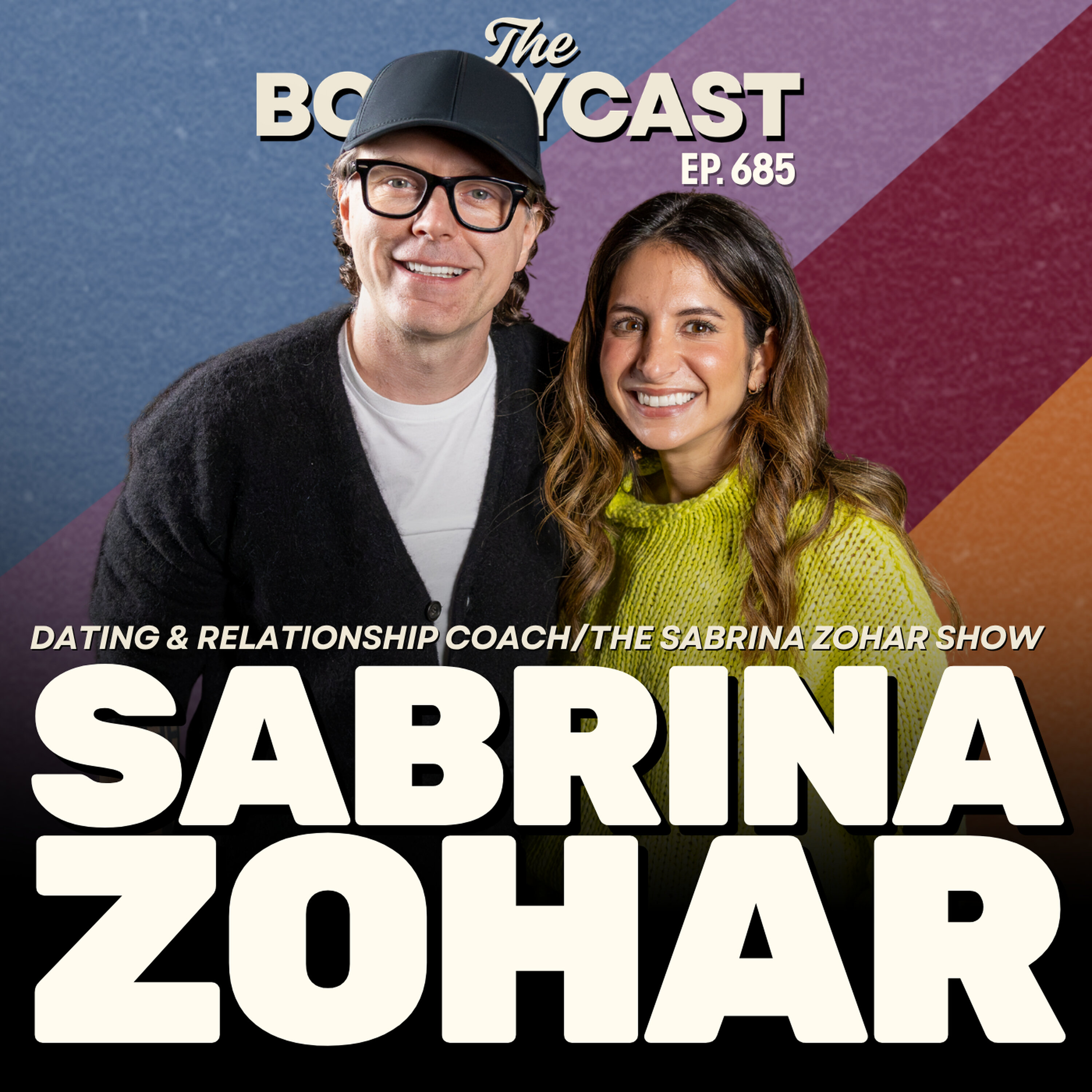
Bobby Bones Presents: The BobbyCast
#685 - Relationship Coach Sabrina Zohar on What Everyone Gets Wrong About Love, Almost Being Kidnapped at 7 & Her Failed Shark Tank Experience!
Samstag, 10. Oktober 2026 · 59 min
Kapitelklicken springt direkt hin
Shownotes
Relationship coach, author, and podcast host Sabrina Zohar (instagram.com/thesabrinazoharshow) joins Bobby to talk about what people get wrong about dating, love, and relationships. She breaks down the biggest dating red flags, why people sabotage healthy relationships, and how our childhood experiences shape the way we connect with others. Bobby also opens up about his own attachment style, past relationship struggles, and how meeting his wife changed his perspective on love.Sabrina shares the terrifying story of nearly being kidnapped at seven years old, her complicated relationship with her father, and how getting sent home from Shark Tank eventually led her down an unexpected career path. Plus, she opens up about her life-changing experience with ketamine therapy, the lessons behind her book Why Am I Like This?, and why understanding yourself might be the most important part of finding the right relationship!
Watch The BobbyCast on Netflix.com/bobbycast!
Follow on Instagram: @TheBobbyCast (instagram.com/thebobbycast)
Follow on TikTok: @TheBobbyCast (tiktok.com/@thebobbycast)
See omnystudio.com/listener for privacy information.
Transkriptvom Podcast bereitgestellt · Zeitmarken springen hin
My girlfriend came over and she was like dude you talk a lot about dating in like all the content you create and i just started making tiktoks and then that blew up and i started my podcast and then i got certified so now i have three certifications in dating and relationships intimacy nervous system and part work.
So Hey guys, Bobby here. I'm going to talk with Sabrina Zohar. She's a dating and relationship coach and host of the podcast, The Sabrina Zohar Show. And now she's got a new book called Why Am I Like This? All about breaking patterns and figuring out why we do the things we do. So we'll talk attachment styles and breaking toxic cycles and childhood wounds and her story. And I think you're going to like this. Here she is, Sabrina Zohar. And all the things that you get asked by people or content that you make, what is the most common relationship question that so many people get wrong?
And you know that because you keep getting asked it by people over and over again.
So there's a few, but the one that kind of sticks out is less about a specific situation.
And it actually is the saddest part for me. It's what do I do?
And the reason I say that that makes me sad is because people are asking somebody on the internet, a stranger, to tell them what to do with their life instead of trusting that intrinsically you know what it is that you need to do. Outside of that, I think the biggest thing that I see in dating right now is people have this aversion to rejection. They are so terrified of someone not liking them, someone thinking that they're too much.
So if I'm too much, go find less. Like if the way that I present myself doesn't work for you, then you're not somebody that I can feel safer on being authentically myself. And I think a lot of people are treating relationships like transactions right now. We're so scared of I'm never going to find another person. that people are putting people on a pedestal they never asked to be on and holding onto people for months, if not years beyond that. And then 99.9% of the time, it's because of the story that they've created, not actually about the person. Because like, who is this person? You went on three dates with them and it's been six months and you can't, you still can't function. That's more just
regulation because you don't feel safe. That has nothing to do with the person. And so I think that's really what I see is a lot of people not having an aversion to feeling like any kind of discomfort. So they rather stay intellectual of like, no, no, no, you just tell me why they don't want to be with me because that'll make the pain go away. Now that just prolongs the inevitable because you actually have to sit with the feeling that like you feel dismissed, you don't feel prioritized, or you don't feel like this person was choosing you. And that's okay, but face that shit and start to deal with that because that's how you'll actually find the right person for you.
Do you get people asking if they're aging out?
All the time, all the time.
What's a common age that people think they're aging out?
You know how sad? I've had 23-year-olds ask me if it's too late for them.
Is that because of where they grow up?
Society, right?
Because I think we have– the pendulum swung now like trad wives are back and all of a sudden it's like cool to be like I want to be taking– I want to be a kept woman. I'm like, wait, what? This is like the freest we've ever been.
Why are we going backwards?
And so I think a lot of people think if I don't meet them young, I'm never going to. Then you get into the late 20s. That's when like the fear and the panic of like– especially if you want children, which I understand. I hold so much space for that. Then once you get into the 30s, it's like, no, there's no one left. It's either single parents or I'm going to be alone forever. Beyond that, 40s, 50s, 60s becomes like, woe is me.
There's no one out there.
And I think a lot of people don't realize like you exist. Someone else amazing exists. You might just not have met them yet. And the biggest thing is the person that's right for you is probably going to be in a package you didn't expect. Like when you met your wife, now she's your wife.
She is.
Was she somebody that you were like, oh, my God, this is what I've been waiting for all my life? Like, what was that experience like for you when you met her?
I didn't meet people and think that I would date or marry them. Fair. And I definitely wasn't, whoa, it was me. I just accepted that I don't think there is anyone that can break me from my poor habits. And I met her and she didn't break me from it immediately. She just didn't care. And so I can remember, she hates it when I tell the story, but so she is from Oklahoma and my PR person, not mine, but ABC's because I did American Idol for four years and Dancing with the Stars. And that same person that was with me, she was from Oklahoma and she knew my wife back in Oklahoma. And so I met my wife through her in the most normal LA meeting ever of all my meetings. And so– because she had moved out.
She went back to grad school. And so I met her, and then she just did not care. And I was like, man, she doesn't care at all, which, of course, if I'm being pushed away, then I'm more interested. And then once she was interested in me, I was like, why are you interested in me? And she was like, what do you mean? I said, yeah, are you just using me?
Or like– because I have some fame and success. She's like, I live in L.A. If you want to see my DMs, if I wanted somebody close to that fame and success, I can get them.
Feel that?
And I was like, dang.
It humbled you. Yeah.
And so my wife was the one that made me challenge myself to breaking those habits, but I never expected it to be that.
Fair.
So I was not looking and it wasn't, I don't believe just stop looking and you'll find it. I just had prioritized putting my time in other places.
I think– that's why I hate the saying it will happen when you least expect it.
It's like no, no, no, no, no. You still have to put effort. You still have to like meet people. It will happen when you release control to the outcome. Because like when I met my partner, we met on Hinge. My dog had just passed away. I was not in a place. He had lost his sister earlier in the year. I lost my dog. We were both coming from this like grief place. I was down visiting my sister looking for apartments and I was like, I'll get laid, right?
Like I meet this guy.
He's cute. We went on a date.
We went hiking. We went back. We hooked up like five times. Went out to dinner and I was like, I'm never going to see this guy again. This is great. This is a great night for me. And he like right before we at dinner, he was like, oh, you know, did you have fun? And I just stopped and I was like, I'm going to spare you the time. I had a really great night. I don't normally do casual.
I don't do hookups. I don't do friends with benefits. I was like, honestly, I hadn't been laid in months. Tonight I really needed that. But if you're going to call me again, that's because we're going to build something. If not, please don't waste my fucking time.
And he was like, okay.
And like the next day he texted me and he was like, I'm still smiling from last night.
Can I see you?
And I remember being like, okay, like sure. And if you ask him why, and people have asked him, he's like, because she was more afraid of losing herself than she was afraid of me, of losing me. And to me, that's a really powerful place of like, I want you in my life, but I don't need you in my life.
And that feels where you're like, oh. okay, so like this, we could just connect.
And if we actually have a connection, we can grow that and it feels safe because it feels really overwhelming when you meet someone and you're like, oh shit, you're only okay if I call you or like you, you're not good if I don't text you for a day. That's a very different dynamic. And so I think when you release control to the outcome, because on paper, in my old anxious days and his avoidance, we would never have worked ever, ever, ever. But that's why proximity and timing matter, not more than.
Love, but they will be the reason a relationship works out.
Because if you had met your wife maybe 10 years prior and you were in a totally different place in your life.
She'd have been 11, but yeah.
Oh, that would have been creepy.
No, I'm kidding. She's not that young, but she is younger.
Oh, yeah, yeah, yeah. We'll talk about that later. I do have age gaps videos. But if you had met five years prior, even a year, right, where you're in a different place, your bandwidth, your capacity is not there to receive somebody, it doesn't matter how much you love them or think they're amazing, you're not ready to receive that.
And so I had to learn that lesson the hard way. But Ryan, on paper, if you looked at all the men I dated, he was very different. And that was a good thing. It's because it's what I needed versus what I necessarily thought I wanted. And so I think to me, that's why I say it comes.
In a different package.
It's because like you gave up and you're like, you know, listen, if I don't ever meet anyone, I'm okay. I love my life and I'm living life for me. That's probably when you'll meet somebody.
Can you take the pressure off?
Yeah, I didn't feel any pressure and she was wildly independent and did not care. And I thought that's pretty cool. Right? Yeah. I had a joke I would do in my standup for a long time where I would say, you know, my wife is extremely smart, smarter than I am, funnier than I am. I feel lucky because she never would have dated me when I was in high school. And I said, I'm lucky because she was five.
And you're like, yeah.
So you don't live here? No. Where do you live? LA. What are you doing here?
Seeing you.
But not just seeing me.
No, I had one other recording.
Man, you could have lied. That would have been awesome if you had lied.
I came just for you.
Yeah. So this is a new book. Why am I like this? Do you like it?
I love it.
Do you feel good about yourself when you're done with it?
Oh, fuck yeah.
Good. Yeah. I don't. So that's refreshing to hear that someone enjoys their work. I would always like when I would see my artist friends have their music, they'd create an album and they'd record it and they'd like it after and I'd be blown away. Like, how do you like the stuff that you do? Because I hate the stuff that I do.
Trust me. Whenever I create out things, I'm like, I'm terrible. My partner's like, oh, my God, your core beliefs. I'm like, yeah, no, that's why I wrote about it. What's hard is seeing other people's opinions. That's been the hard thing of people that just like don't like you for who you are. And then they have no problem telling you that. But I'm really proud of what I made. So it's also very much me. It's like all my shitty childhood trauma.
In fact, I almost got kidnapped as a kid. Like, it's all this amalgamation of like my sleeping my way through Manhattan to teach other people not to do that.
Interesting. There's like three places I would go there. I'd first like to say the good thing about writing a book is that people can't give you instant feedback. It's not like a song or an Instagram post or tweet because they have to read it. It takes a while. And most of the time they won't even do that.
But congratulations. It's super cool. When you finish this thing and you get it out, I know it's coming out October 13th. Is that right?
Yeah.
Really, congratulations.
Thank you.
How long ago did you start this?
Two and a half years ago.
And okay, talk about the kidnapping thing first, because I don't know about that.
Yeah. So when I was eight years old, my sister had a bike that she took from her friend's house, like just like it was an adult bike. And so clearly too big for me. And growing up, like I grew up in South Florida. And so there was the perception of safety being in like a gated community. And so my mom instilled the living fear of God in me of like, don't trust strangers. Don't ever like be alone, like just always run. And I snuck out in the morning.
It was like 7 a.m. And I was like, oh, I'm going to go ride this bike. Like I really, really want to like go out and have some fun. And like everyone was asleep. And I was just like cruising. And I remember for like three minutes just feeling so alive and just like going in circles and being like, oh, I got this. And all of a sudden in the corner of my eye, it's like the house is here.
I'm like a good separation from it. So like it would take me a minute to like get back. I just started biking and I look over and I see this like old white car with these two massive dudes in it. Like something just didn't feel right. It felt very sinister. And I was like, I've never seen this car before. We were in a cul-de-sac, so you kind of know like who's coming in and out of your place.
And I was like, this is not right. And so I started biking a little faster and like had to cut through the neighbor's yard to get back to mine. And I started seeing them speed up and I was like, oh, this isn't good. And I'm like racing, racing, racing. They speed up all the way. They stop in front of the house and I'm like coming into the house and the guy just gets out and he's like 6'5, long brown hair, like.
This big dude.
And he barrels towards me, just like walking right for me. And I kick off the bike. My foot got stuck. And so I couldn't get it off. And I kicked it, which propelled him back and caught me a second. And as I go to reach the door, he comes for me. I slam the door shut and lock it. And I look out the window and I see him just go, fuck.
And he bolts back into the car and they drive off. And I was so shaken. And the worst part was when I went to my parents to tell them, my mom said that was a dream and told me to.
Go back to bed.
And so for 25 years, 26 years, I thought I dreamt it. And when I was writing this, I was kind of going back of like, where did I learn this distrust from people and like to not trust myself? And I was casually talking to my sister and I was like, do you, did.
I like ever have this?
And she's like, oh yeah, I remember.
Like you took the bike and you came in and mom told you you were dreaming and that you almost got taken. And I was like, It was the moment where I was like, holy shit, this actually happened.
She validated that it really did happen. Yeah.
Because I genuinely believed I made it up because for so long I was like, it was a dream. But I vividly remember it. Like every detail.
I remember the car.
I remember what he was like, the outfit. I just remember all of it seared into my head. And that moment was that of like, you can't trust yourself if the people around you are also telling you that what you're seeing is not the reality.
Do you think your mom really thought it was a dream?
I think my mom, my dad, she was my mom was terrified of my dad. And so I think he woke up and he was annoyed that I woke them up. And I think for her, she was like, just just go back to bed.
Like, it's fine.
When I talk to her now, she doesn't even like she doesn't understand how she wasn't there for me because all of my life, like stranger danger come to me. If anybody ever does anything like I'm your mother, I'll take care of you.
But she wasn't there.
And so that instilled so much within me. And then now she apologized profusely because she's like, you know, if I were in my right mind, I would have protected you. What scares me is to think of like, did they go and do this to somebody else?
Yeah. How'd that bad news car get in the gated community?
Great question. There was some punks that worked at the front gate and like they would just kind of let people in without actually checking. And I think they just or it was because it means an opportunity. Right. If these guys were just driving around and I just so happened to be the only kid, there was no one out because it was 7 a.m.
On a Saturday morning. There's nobody out. It could have just been the perfect storm.
When I moved here, I'd had some security issues in Austin where I lived. I got jumped and had my house broken into and a lot of things once my career started to take off. But I moved here and I moved into a gated community. because my company was like, hey, you need to live a little more protected, because it's pretty vulnerable. And I lived there for about six months, and I would wake up at like 3.30 in the morning, because I had to go do my morning show. And I look, there's cops everywhere. And I hear a helicopter, and a guy, probably eight houses down, had murdered his wife in the gated community.
Oh, shit.
Yeah. And literally, we were in walls. A lot of good that did anybody. And then he went and hid in the woods for, like a 24 hours, but they wouldn't let anybody out of their house because they were searching for that guy. They ended up finding him. He was like hidden, like underneath or beside a tree or something, but he left his baby. Didn't kill it, but killed the wife.
It's the perception of safety, right? We think that, or you're like, oh, there's a gate, there's a community. That doesn't mean that bad things can't happen. And my mom always taught me, she was like, do you think bad people always look bad? Like they look totally normal. They look like the rest of us. They don't always come in the creepy van with the serial killer glasses. And that was, I mean, it's interesting because for so long, at least for me, I, you know, trust your gut.
We say that all the time and you're like, okay, but how can I trust my gut if when I actually saved my own life, nobody was there to validate that. And so it took a lot of work for me to accept it, to be okay with it, and to forgive the people that were there for not protecting me in the ways that I needed.
I was talking to somebody on my team that consumed a lot of your content. And she was talking about some of your videos. She needs your help.
I'm here.
Yeah, I know. I know. I know. And we were talking about it. And so I had an understanding of what I thought your book was. But are those stories in the book like that? So then what was the purpose of the book?
The book essentially is because for so many of us, we ask, why am I like this? And we think that there's this one big T, but what we don't realize is it's like death by a thousand paper cuts. Because that one instance, the reason I shared it is because that one situation taught me not to trust myself, taught me to doubt, taught me to second guess. And so if I don't actually acknowledge where I learned this from and the situations that created that, Then I'm just kidding myself going through life being like, oh, it's because I had a shitty boyfriend in high school. It's like, go deeper, go further. Someone taught you this. But the reality is like for me, this book, it's not a dating book. It's not a relationship book. It's a life book.
It's about you coming home to yourself because we learned all of this somewhere. But it's not about shame or blame. It's about holding two conflicting thoughts that like you can love your parents and think they are the best, but they were limited and maybe just didn't teach you what you needed or attuned to your needs in the way that you did need. But if we don't address that, you're just gaslighting yourself. You're kidding yourself. You're going in circles.
And I think so many people are stuck, especially in dating and relationships, because they want to look for something that's a direct correlation without understanding that, like, we're some of all of our parts. And you have to really start to get curious about what are the patterns that you're starting to see and where did you learn this from and how old do you feel? Because those are going to be the things that unlock for you to be like, oh, that's why I date these types of people.
That's why I keep doing these types of things, because I learned that from somewhere.
So you live in Florida. You moved to New York when?
I lived in Florida. I moved to New York when I was 19. I just turned 19. Why? We had always gone to New York. My dad had businesses. My dad started all the porn theaters in Midtown in the 80s.
Really?
Yeah. And he had a gay club in New York. And so we were there all the time, every month.
So were people naked in your house then? Because that feels like a pretty free house.
That's the irony.
It was very conflicting. My dad was very free and whatever. And then my mom was a super prude and was like, don't ever touch a boy. Don't let anybody be.
Next to you.
So it was very polarizing information. My dad did it more so like that's where the money was. And so he was like, all right, I'll trail that.
How do you get in that business though?
Great question. To this day, I don't really know.
It was part of him.
He said when he came into the States, like that was what happened in the 70s and 80s. And he was like, I had the opportunity. I had the means and I opened it. And he had, I think, eight or nine in Midtown.
Did he make good money doing that? If he lived in a gated community, I would assume.
He said they were making so much money they didn't know what to do with it. But that's before Giuliani. Giuliani comes in, closes everything.
Yeah, he definitely cleaned it up. Yeah, so then that's... Ah, that Giuliani.
To this day, if you talk to my dad, he's like, fuck that guy. And he just, he ruined it. But like at the same time, thank you. Like you cleaned up New York. But I grew up with a very free, like he had the gay club and there was all the, like they had drag queens. And so I would go and hang out with the girls and do their makeup and the outfits. But what was really hard was like losing so many of them because of AIDS. And in that time... Every time I'd go to New York, he would take us on a trip. I'd go and be like, where's Angel? And he was like, oh, I'm so sorry.
You're not going to see her again. And I couldn't, at 9, 10 years old, comprehend what that meant. But it was opening my eyes. And so I knew I loved New York. My sister moved to New York. My brother moved to New York. And so for me, it was like, OK, I'm going to New York.
Let's take a quick pause for a message from our sponsor.
And we're back on The Bobbycast. Were the theaters there when you moved up there?
No.
They were gone. They were gone.
By the time they moved down to Florida to have me, everything was closed. So 1990, when they had me, he was done and he was like, I don't want to do this anymore.
When did you learn what he did?
Pretty early on. So he had the club up until I was 25. So the theaters were closed by the time I was like my siblings. When they were born, they were born in Jersey. He had the theaters then. By the time I was in, those had been closed. And then he just had the club and he would go to New York all the time for it. And then he always, my dad was an entrepreneur. He always opened this and this and this and this. But he also cheated on my mom the entire marriage and wasn't really there for us.
Are you still, are they both alive?
Both of them are alive.
Are you still close to them? Are they together?
No, thank God not.
I don't talk to my dad. So this book is the kind of final nail in the coffin for that.
Why the final nail?
He's narcissistic, like a pretty classic textbook. And he said I made him look bad.
And so.
Oh, because he read what you wrote about him.
No, no, no, no.
He will never do that. People told him. And so his girlfriend saw me on another podcast that I said he hit us. And when she told him, he said that I made him sound bad. And I owe him an apology.
But did he ever say, no, I didn't hit them?
He, at first he said I didn't. And then he goes, okay, so well, but I wasn't an alcoholic when I did it. And I was like, that doesn't make it better. I was like, he was just very like the belt all the time. Like he would always, that's how he would threaten us. Or like he would just, he just didn't have any emotional control. And to him, he thought that's discipline.
And then now you learn that's abuse.
Was he taught that was discipline? And that's what he just rolled down? Not that that's an excuse.
Yes, and.
Like his mom was pretty harsh on him.
He was the oldest of siblings.
Can I understand where it comes from? Yes. Do I understand to this day still not even being like, hey, I'm sorry, or I never meant to hurt you like that?
That's where I think he loses me.
Because my mom is... She'll apologize for apologizing. And like all she wants to do is make amends. For him, it's very like, I'm your father. You were a bad kid. You earned it. You deserved it.
And it's like, okay.
Do you think you guys will have a relationship ever?
I don't think so.
But you don't know so. Are you open to it?
My crystal ball is in the shop, so I can't give you an exact answer, but I'm... I will only be open to it if he makes an amends. Like if he actually owns up and says, you're right, I did do this and I should not have acted like that. I'm down to have a conversation. But right now as it stands, I owe him the apology. And I don't think that that's space for reconciliation.
He feels like you owe him the apology. When I wrote my last book, I had written the whole thing and I felt like it was only fine. I don't know if you've heard, but I hate my work. Everything I do, I hate it all. But I wrote this book and I was like, eh, it's okay. Kind of felt like at parts it was a bit hypocritical. And then I actually wrote the first chapter last because my real dad left when I was five years old and I went and tracked him down and met him in the first chapter of my book. And so I went and lied about why I was back in Arkansas because it really was just to meet him. And that was the whole first chapter was me kind of pursuing something that I was afraid of. And then the closure of
the chapter was everything's fine. We're not friends. We're not close, but we did it. And I don't think we'll ever have any sort of reconciliation, but I'm fine. But also he's not like a villain to me. I think I said that he's not like a Bane or the Joker anymore because I think I had that built in my head.
But I didn't have a relationship. You actually had a relationship with your dad.
That was what was the hardest part. We were the closest because my brother's the oldest and my sister than me. And my brother was the fuck up. Like he was the one that got arrested. He got sent away. It was like he was the problem child if you look at it in that sense. But like he was just a kid.
Like he was 16. Then my sister followed his suit and just was like, I hate this family.
I'm out.
And there was me.
And so my dad and I were close. And then one day, once he started really like going out with other women, like he brought that around us. Like I would have to go to these women's house. I would watch him go into the bedroom with them. But then he would say, we're just friends. Don't tell your mom. And so it was this weird dynamic of being like, I don't understand what's happening. But like, I guess I can't talk to anybody about it. And then when my parents divorced, he disowned us multiple times. And like over the years, like if you just say no to him, like he told me I had to go to a wedding with him.
And I was like, oh, I'm so sorry.
I can't. That was it.
That was it.
How dare you say no. And so just as you get older, you're like, I don't really want to deal with this. I'm not saying people should be estranged from their families. That's not the answer. But the point of having repair is that you need to take accountability. Otherwise, you're not going to be able to have repair. And so if I'm dealing with somebody who won't take accountability and ownership, then what are we doing?
How does your mom feel about that?
She understands it.
My mom is my best friend. And she knows who I'm dealing with. And I don't think he's a bad person. I would never villainize him. But I also just don't think that's somebody I really want in my life right now.
If I can't be authentic.
Do you think your dad's a big reason you are like you are?
For sure.
I wouldn't be here if I wasn't for that.
What do you mean? How?
The parts of me that I love are sometimes also the parts of me that I hate, right? Like I have this incredible work ethic. Why? Because all of my life it was give and take with money. So that created this like I have to go out and kill what I eat. So without him, I don't know where I'd be. I don't even try to pretend I would.
But I do know that if I had a dad that actually loved me for who I was and like celebrated me and didn't try to make it as if like I'm too much but not enough.
Who knows, right? Maybe I would just be more confident in myself in different areas of life.
Maybe I would be able to show up differently. Like to this day, I've got all of the success and all of these things. I get one comment of people hating how I speak or talking shit about me. I'm crying for three hours because it's that voice that comes right back being like, you're not good enough.
I knew you were going to, you're an idiot.
You're a fuck up. You're so stupid. What would life be like without that?
Do you do attachment styles?
No, of course.
You do?
Oh yeah.
What are you? Anxious.
What about you? Well, now we're insecure.
I guess mine would be with who. Okay.
What's the pattern?
My wife has shifted my patterns. I was 39 when I met her. I never thought I would get married. And so I kind of given up on not life. I just thought I'm not going to meet anybody that I think I don't feel like I felt like I could be loved. And so... She shifted that. You tell me what my style is. I'll tell you.
I was going to say, tell me the behavior.
Yeah, I'll tell you the behavior. I never had like a real relationship. I never said I love you to anybody in my whole life. So my mom died in her 40s. She was a drug addict. And my grandma adopted me and didn't know my dad. And so I worked extremely hard, but mine was out of insecurity and fear. And I never got in a relationship. I had small times where I would, you know, have a girlfriend or whatever, but nothing serious. I never told anybody I loved them.
And then my wife came along and she was the first and only person I've ever told that to. Now I say it all the time. I walk down the street. You, love you. My baby all the time. Yeah. Um, so yeah, I just didn't expect it. And now I'm here. I think I was avoidant. I'm already giving you.
Some, some, I was going to say, I'm like, based on the, like, what happened when people would get close?
Were you trying to remove yourself?
I would, I would sabotage things.
Can I reframe that actually?
So go ahead. Sabotage.
When we think about like self-sabotage. Sabotage would imply that like when we think about the actual word that you're doing that to intentionally hurt yourself, but really it's more so protection because you learned somewhere that that was a protective mechanism. And if you shut down, if you didn't communicate, because if you knew that in your environment, you didn't have people that were going to attune to you, it's actually a protector. So I look at it as self-protection as opposed to self-sabotage. It's maladaptive, but nonetheless, you're not doing that to hurt yourself intentionally.
I think I'm secure avoidant and was for a long time. And I still probably am in a lot of areas. Just not with her all the time. Sometimes it comes back and you can feel it. I can feel it.
Of course, because you're human.
And it just it feels very familiar and also a little bit gross and a little bit comfortable at the same time because I did it my whole life.
My partner is more avoidant and I'm the more anxious because like for me, it was very like outwards, like show me love. Please don't leave me like I need you to validate me. And he's the type that's like 10 to 15 business days, like leave me alone. I don't want to talk like bye. And so I can understand your dynamic because very similarly now he's like super expressive and open, still has the avoidance because like there's parts of you. Are you familiar with IFS?
No. Is that a government agency that investigates something? Might as well be.
Internal Family Systems. So it's a type of therapy. And so Dick Schwartz created this. And so like did you see the movie Inside Out?
Yes.
That's parts work.
Great.
Love that movie.
Yeah.
And so really what that shows us is like you have all these different parts, right? There's however old you are. That's how many Bobbies there are. For me, there's 36 years of Sabrina's. And so the avoidant part doesn't ever go away. That is a protector part. That is somebody that came out because there was the little boy that wanted love, that wanted to be cared for, that wanted to be like. Everything that's natural that should be given to a child that's unconditional, he didn't get. All those aspects.
Or maybe he got bits and bobs of them. So he learned, you know what? This is too painful. Get rid of it. Let's create this protector part of like, I don't need it.
Fine.
It's fine. I'll shut down. I'll go inwards.
I don't need any of this. I can only rely on myself.
And so those parts don't ever just go away, but we learn how to live with them so that they don't take over.
And have awareness of them. Yeah. I think for me, I've been in a lot of therapy. Yeah. I have a really good amount of awareness now because, again, I can feel it when the old comes creeping back in. I think mine, too, was I felt like everybody would leave because everybody left or died. But that's leaving, right?
And as a kid who's moving around and living with different people and being adopted, you just are like, well, everybody's eventually going to peace out anyway. So I'm going to go ahead and build these walls. And only I'm in these walls. And these walls will only protect me.
Doesn't it make so much sense though?
Oh, completely. Right?
Like when we think about that, you're like how smart and brilliant that child was to create that because he did technically keep you safe. But the problem is that now that we're adults, we're using this old– that's why I call it the bullshit blueprint. We're using this old mechanism and these coping mechanisms that first of all, zero to 18 months, you're nonverbal. So for 18-ish months, right, depending on the child, you're just picking up facial expressions, intonation, people are here, they're not, is it safe, is it not, all of these different variables. The problem is that then we bring that into our adult life. And so now you're trying to have adult relationships with a map with half the streets are missing and you're trying to figure
out your way home. And oftentimes home for a lot of us wasn't safe. And so we will always default to what's familiar because your brain is designed to keep you safe, not to help you grow. That's just how we are wired as humans. And so it makes so much sense that we would do that. And I think a lot of people, they see it as, which is probably not you because you've been through so much therapy and you've done so much work. But I think a lot of people look at it as like, I want to get rid of it.
And it's like, no.
Good luck. You got to learn how to live with it, how to listen to it, how to be there, how to support that version of you. And sometimes it sounds a little psycho when you're like, are you talking to yourself?
Yeah, I am.
But if you don't be the adult that you didn't get to have at that version, then that's just going to keep coming back over and over because it's trying to keep you safe.
What would your partner say about you as someone he's in a relationship with? I just met him, right? Yeah. Yeah.
I mean, I'll speak for him.
I think he would say he admires my strength, though he knows I'm really anxious. Like I still have my core beliefs. I still have my insecurities because I'm a human. But I do think he'd be really fucking proud of how far I've come because I've taken some shit.
Right.
We've all had our stuff. We all have a big T's and little T traumas. But I won't let that define me anymore. But I still have so much more work to do. And I don't think that's a bad thing.
Do you talk about attachment styles in your book? Yeah. In what capacity?
I had to do a level set, right? Because people that are reading the book might have no idea what they are. And so like, if you're very advanced in therapy, you're going to read that and be like, okay, I understand that. I know what fight, flight, freeze, and fawn is. I know what the different attachment styles are. But the way that what I did was I kind of created this web of like, okay, where did you learn this?
How old do you feel? What's coming up for you? And then how do you actually dismantle this? And so I bring it along the journey of like, your attachment style is not to, first of all, it's not to villainize other people. So many people on the internet love to do the like my avoidant. It's like they're not a fucking Furby. Like this is a human being with a lived experience that doesn't necessarily mean that you're going to have ownership over them with the way that you talk.
And too many people are using attachment styles to understand everyone else besides themselves. Or I was like, get out of jail free card. Well, it's because I'm anxious. I was like, okay. And what are you doing with that? And so for me, it's like it's knowledge is power. But at the same time, if you just keep trying to intellectualize, you're not actually feeling and then we're defeating the purpose. So I use it as like, okay, here you understand it now. Let's move on from it. And I feel like so much of the content that I see, especially on TikTok, is keeping us stuck. And like my dismissive avoidant does this and they do this and they do this.
And it's like we're treating.
People as if they're caricatures and not as like humans with complex emotions and feelings. And so I try to dismantle that so that people will stop seeing it through black and white and start to understand that humans are shades of gray.
How do you get to be a dating coach or relationship coach? What's the official term? What would you like to be called?
Dating and relationship coach.
What do you write at the doctor when they go profession?
Self.
I just like self-employed.
Oh, that's so much easier than what I was trying to figure out. Yeah, that's good.
I just, me. It all, honestly, it started, so I had a clothing line prior to this. I went to school for fashion. Like, I minored in psychology. Like, I took tons of courses, but I knew I never wanted to get licensed because I have a mouth on me.
And I was like, oh, that's not.
Going to work.
And I was supposed to be in Shark Tank. And I was on set. And like, this is it, 2022. Like, Zohar, you're up next.
Like, you ready?
And then they sent me.
For the clothing line.
For the clothing line.
Okay.
And then they sent me home.
And I hit my rock bottom and I wanted to take my life that night. And it was just like a really, really bad time. And a guy that I had one date with called me and talked to me off the ledge. Never saw him again. But it was just a moment where it like all of the everything aligned of like, wait a minute. People are in your life for a reason. It doesn't mean that they have to be in there forever. And so then my girlfriend came over and she was like, dude, you talk a lot about dating in like all of the content you create.
And I was helping her any kind of like coaching people with business stuff. I kind of bootstrap. And she's like, I think you should create content on it. And I just started making tech talks. And then that blew up and I started my podcast and then I got certified. So now I have three certifications in dating and relationships, intimacy, nervous system and parts work.
Did you have a single video that popped so hard that one gave you confidence and two kind of launched what you were doing?
Yeah.
What were you doing in the video?
Run if someone says one of these three things.
And it was all my exes are crazy because that person doesn't take accountability and ownership. And then I can't remember what the other two were. But that was the first I got like six million plays. And I was like, oh, this can actually be something. The irony is I met my partner two months after I started creating content. So I wasn't anybody like I didn't have a name. It's not like I was anything. And he always told me, like, just promise me you won't say my name. And I was like, OK, so I called him tech guy. And so that just became a thing. And then as we start now, he works with me in my company. So cats out of the bag. His name is Ryan.
But now we've just kind of progressed in that relationship.
Talk off to the Bobby cast. We'll be right back. This is the Bobby cast. The all my exes are crazy. also happens in other capacities that set off red flags for me. If I'm interviewing someone and like, yeah, my last couple of bosses sucked, that's a parallel. It's the same type of person that says that. And almost every time, you know, sucked is the person who's talking about how bad their bosses were. And the same person who talks about all their exes were crazy. It's someone who often shifts blame, generally speaking, to somebody else. And they're eventually going to do that to me. Like, that's what I see when I'm interviewing someone. Now, if you have one boss that kind of sucked, we've all had one. But
when you've had two or three of your last bosses and they just didn't get you. Yeah. I feel like that's that version. That's the dating. That's the professional version of the dating. All my exes suck.
Well, because when you hear all of my exes are crazy, you're like, oh, and you didn't do anything? So it's interesting because talk about not taking accountability and ownership. That was the hardest lesson I think I learned when I was on this journey was not that it's my fault, but baby, you.
Played a part.
Like you allowed this shit. You didn't have boundaries. You didn't speak up. You didn't say what you needed. You didn't walk away. I'm not blaming myself for it. But if I don't take ownership of it, well, then I'm always a perpetual victim and you cannot– And when I say this, I think we know what I mean by you can't help a victim, not an actual person that was victimized in a circumstance, but somebody that always sees themselves in the center of like, woe is me. There's no helping that person because they don't see that they have agency and choice. And they just think everything life is happening to me when it's like it's actually happening for you if you open up your eyes and actually fucking see it for what it is. And so when
I hear that instantly, I know I'm like, we're running the other way or I don't do drama. When I hear that, I'm like, you're.
The one who starts it.
Yeah. Yeah. I don't do drama. That also puts up the little flag because people that don't do drama don't need to say they don't do drama. The least dramatic people in my life don't need to tell me they're the least dramatic people.
Well, it's like people that talk about how rich they are and you're like, if you are that wealth, you don't need to talk about it.
You just move in a different way.
When you're super secure, you don't talk about it all the time because it's like, are you trying to convince me or yourself? So I look at those little subtle things and I think that's what changed my dating life was because once I started getting away from the glitz and the glam of like, oh, they're so hot and they're fun and we laughed for hours and it's like, cool, that could be one thing. But is that the person that's going to be there like when someone gets sick?
Or you need to take your kid to the hospital, God forbid, or something that you lose all of your money. Who is going to be by your side? That's the type of stuff that we need to be looking at. And I think so many people are approaching dating in a way that's like, what can you do for me as opposed to how can I be in this connection with you and grow a life together?
When you go to New York at 19, did you go up with any money at all?
No, I had $ 500 to my name and I lived in my friend's I lived on her couch for like six months while I got my shit together.
What is that like for a 19-year-old? Did you go crazy?
No, I thought it was awesome.
I didn't know.
To me, it was freedom. It was like, oh my God, I get to do something different. I worked at a hair salon. I worked at Lululemon. I worked like three jobs. I tried to go to college, knew it wasn't for me. My mom helped me pay for like acting school, which was like $ 500 a month.
And she was just like, I'll do something to help you get to where you want to be.
And then I like moved in with an ex because I thought that would be easier because we split rent. And it was like one of those types of things that like I learned this through every experience. I didn't have any money my whole entire existence of New York. Like I was just eating. That's why I couldn't travel.
I couldn't do things because I was always just enough to cover expenses and rent to the point where like my dog passed away because I missed a medication for him and he got a Lyme disease. And it was like it's the guilt that I carry within me for so long because I I couldn't do what I needed to do because I just wasn't able to take care of myself. The spoiler alert for anyone listening is like, once you make money, those feelings don't go away. You still feel like you're going to lose everything. You don't have enough. Are you doing enough? Is this, is this going to work? Because that's a deeper route because I never had safety and money is safety.
And it scared the living shit out of me.
How long were you in New York?
12 years.
Then you moved to LA?
Then I moved to LA.
Why? Why?
My sister was moving to LA. My brother lived in LA or sorry, my sister was moving to San Diego. And so she lives in Encinitas and my brother was in LA and I was just done 12 years of winter. And I was like dating in LA and New York was just, it wasn't any better in LA, but I didn't know that at the time. And I just wanted something different. I had my clothing line. We were originally, we made the fabric in LA, shipped it to New York, cut and sewed in New York. And it just didn't make any sense. I was paying so much money to bring things back and forth. So I moved manufacturing to all until LA. But when I moved to LA, I moved to Venice. Nope, not a great idea during COVID.
It was not safe. And I was a nobody. And moving to LA, when you.
Know no one, you have no money, you have no social following, like you are just a person, trying to build authentic connections is one of the hardest things that I've ever had to do. Did you ever live in LA?
I spent a lot of time in LA, but I would get out as fast as I could. Fair. It just felt different. I grew up in Arkansas, very rural, but then I lived in Austin, loved it. Nashville's pretty cool. There's a little bit of L.A. and Nashville now where it's very transactional at times. And you got to kind of look over your shoulder and you also got to see why your friends are being your friends. But I would find in L.A. that it felt pretty icky. Now, I never got to experience the good part, to be fair.
I didn't get to create a friend group. So I would go out and be there shooting a TV show for a month or a couple months. or a week. And then I would come back. So I didn't get to have people I was close to. So I just remember being carsick and always feeling like somebody was trying to get something from me. But to be fair, I did not invest enough time there as a person to meet other people.
You're not missing much because now we've been back for a year and a half.
Yeah.
I have maybe three friends that I can be like– if I called them right now, they would answer. The rest of the people, you're constantly wondering. You're like, oh, you only need something from me.
Got it.
Okay.
You're only– you need me to post something for you or you need me to show up at this party because you want to say that I'm there or you like that you get to say that you're my friend. Even people that like– it's not out of malice. A lot of the people there, it's just very– it's a very like– I look at life as a longer table, not a higher fence.
And I think that it's the opposite in L.A. People in L.A.
Automatically assume like, no, no, you're going to take market share for me. And it's like, dude, there's plenty to go around. There are plenty of ear balls that will listen to all of us. It's not like just because I have a podcast doesn't mean you can't. And I find that people what I've learned in L.A. is if somebody tells you, I'll let you know, we'll see or maybe never going to see that person ever. Like those are the codes. Like if you're like, oh yeah, I'll let you know.
It's like, eh, they're not coming.
It's just not going to happen. Maybe you're like, nah, they're not coming. And then we'll see. You're like, they're definitely not coming. And that's just, or people will cancel last minute. And you're like, I've had parties where it's like, hey guys, please show up. Like we only have 30 spots and like 10 people show up. And you're like, dude, are you fucking kidding me? Like I spent so much money and time. Like, why don't you guys show up?
It's a land of people constantly seeking to find themselves. And I find that in New York.
Very different.
In New York, you go to a coffee shop and you meet someone and you hit it off.
You're exchanging.
You're going out for drinks like you're going out the next day. You're going to kick it. That might become your next best friend.
Not in L.A. And dating is a whole nother story.
Why do you still have out there then?
I have a book launching right now and it made sense because so many things are happening there. But we are right now traveling the country to see if we want to move and where we'd want to move to because I don't feel fulfilled yet. I don't feel like I have my community and I need nature. Like I can't walk my dog. I don't feel safe in my neighborhood.
There's always a homeless person or someone like trying to start shit or a fire started down the street from my house because like they decided to redecorate. Like it's not safe and you can feel that palpably. And it's just not the same. I think pre-COVID versus post is a very different place.
So then what's home for you?
I'm trying to create that internally for me because I don't think that's a place yet. New York is the closest to home because I can let my freak flag fly.
I talk fast.
I curse a lot. And in New York, I've never been made to feel like there was something wrong with me. Whereas anywhere else I go, people constantly like, you know, you speak fast. It's like, oh, you know, I've never heard that.
Thank you for pointing.
What do I do with that?
I don't know what to say.
Whereas in New York, like I just never felt that. And so I would say that's the closest to home. But I don't know if home is necessarily a place for me as.
It is a feeling.
Let's take a quick pause for a message from our sponsor. And we're back on the Bobbycast.
When people finish your book. Yeah. Because I like last page in books. Like when I'm done, I like to finish and go, okay, how do I feel about that book? Because I enjoy reading. How do you feel like people will feel about your book when they last page it and they finish it?
I'm hoping seen.
That's my biggest goal is because I know for a long time, like, I felt like there was something fundamentally wrong with me. I genuinely believed everybody else has it figured out but me. And, like, you just can't see, but it's in there. It's the fucked up. All of it is tangled. And I'm hoping that by the end of it, listen, there are going to be people that are like, oh, I hated it. I'm sure, right? I curse a ton in there. Like, it's very much me.
But then I think there are going to be people that are like, this was the best fucking thing I read because I'm hoping that they can understand that. that the journey of healing doesn't end. Like you're always going to be continuing. But if you can feel seen for a minute of like, wow, somebody, I'm not alone. There is somebody else that has experienced this and they changed their life and they came out the other side.
I could do that too.
Have you done any of the awkward where you read it out loud? Have you done those yet? I hate those. I haven't.
I've done it more like on lives on TikTok, but I usually read my hot mess stories more than anything of like the time I'd sent a guy 173 texts because he wanted to end it after two months.
You did that? Yes.
That's how I start the book.
That's good. That's a good start.
I'm a hot mess. Like I or the time that I hooked up with a guy while he answered the phone and made plans while we were in the middle of it and I didn't say anything and I was mortified and then I still kept seeing him after. That's what I mean by like you can grow and evolve and change. You don't have to be a therapist clinically to have these experiences to be able to connect with people and share them because I don't know. I don't resonate with people if they had a silver spoon. Like I resonate with people that have been through shit and have come out the other side because that shows me a grit and determination that I feel.
Like I have within myself.
What are your DMs like? Hectic.
It's a lot of, there's a lot of beautiful messages that I'm so grateful for of like, you changed my life or like this. Oh my God, you finally explained something I didn't know. There's then there's some that are like, I hate you. And you're like. Thank you.
Because I trigger people.
Like I say, I say, I say what it is that you need to hear.
Not necessarily what you want to hear.
And then there's the ones that just make me sad of like a message I will get of like, here's the text. What does it mean?
And you're like, oh, I don't think you need me to decode this. Like, you know what this means.
This person just told you they don't like you and they want to see you again. I don't think I need to explain it. And so I think there's a lot of people that are really struggling and they're turning to anybody that they feel like will listen to them to give them some relief from the pain. But I don't think that I'm the person that can necessarily give that.
How often do you do your podcast?
Every week we have an episode.
So it's just mostly me. It's a lot of me.
We have guests all like neuroscientists on to explain things.
I saw that you had scientists or therapists or I saw neuro on there as well. What do you talk about on your podcast, long form? Really, it's just.
The ins and outs of the different aspects of dating and relationships and now I'm starting to morph out because I'm like, hey, we can't just keep talking about the same thing, right? Like we get it. Take the shine off of them. I understand.
Please go slow.
Like we've been– it's been four years that we have talked about every aspect. Every stone has been turned. Now I'm really going into like what about the physiology of relationships? anxiety, like your blood sugar or different things that saved my life that like now I can sleep through the night because my blood sugar is managed and I thought it was my childhood trauma and it ended up just being the shit I was eating before bed. Things like that that I think people underestimate. Not everything is trauma. Sometimes it really just is like, oh, you probably shouldn't have soda right before bed and things like that. I learned that the hard way. Or like have some more protein in your day, just basic things that you're like, oh,
like drink water and go get fresh air. I like to, for me, I love the neuroscience of it because I think our brain is really interesting. Like understanding the prefrontal cortex and the amygdala and how all of these things play together and the intermittent reinforcement and the dopamine loops. Like that to me is really fascinating because I like to rig the system. Do you like that stuff?
I do. The brain is like the ocean to me though. Endless. Just, we don't know. Like we know parts of it. And even then where it's constantly contradicting what we knew two years ago. So I'm fascinated by it. And even within myself, like I started going to therapy in my 20s. I didn't grow up with therapy at all. It was part of my insurance. And I thought it'd be a funny bit for me to go do therapy. That's why I started.
And I really got a lot from it. And I've done it all at this point, except like I did EMDR, loved it. Like I have different versions and seasons that I benefited greatly from it. What I haven't done though is ketamine.
That's my favorite.
Have you done it?
I did. That's how I met my little.
So when you say brain, I think of like what I haven't done yet. And I have friends that have done it. And it revolutionized their lives.
Changed my life.
And they say the same thing. And I think a little bit of me is afraid of that vulnerability. So when I say I haven't done it, it's because I've chosen not to do it. It's not because it's not available anymore. But I'm so interested in that and how there's almost like a new imprint.
The thing about ketamine is the actual medicine, whatever you want to call it, the actual medicine, that's not like, sure, does ketamine have rewiring capabilities? We know that there's science that shows if you do it, I think it's like twice a week for three weeks consistently, that's how you can rewire, quote unquote. For me personally, ketamine was, it was 2019. I had just gone through the worst breakup of my life. And this is a story in the book because I wanted to explain like not everyone has to do a journey if you don't want to. But like if you do, it's available. I felt really stuck.
And I was like, OK, I'm doing all the talk therapy. I'm doing it. I'm doing it. What I love about ketamine is it creates a barrier. And so you feel like a spectator in a museum. So you're not like when I saw my little I wasn't feeling like I was eight years old, but I felt like an adult watching it being like, oh, my God, you poor thing.
And so I was able to connect with her in a different way because it takes away kind of all the noise. But you have to have an intention when you go in because if you just go in being like, I'm just going to see what happened, you might as well go to a party. Like you're floating and all of a sudden you're like, nothing. But when you're really intentional of like, where am I stuck? What am I holding on to? What do I need to see that I may not have seen yet? Whatever, right? You come up with whatever feels like it. That's when it does its job. It's like 20 minutes. It is not this long.
It's ayahuasca. That's like 15 hours. You're not throwing up. There's none of that. It's not intense. But the feelings and the emotions, you will cry in a way that you've never expected to cry because you're finally seeing things that your subconscious was like, not today. And so it opened up this little window for me to be like, oh, that's where she's stuck. Oh, that's what she thinks. Oh, my God, that's what she thinks of me. Now I get to go back and save her. And so like I had done probably 15 ketamine treatments at this point.
Now I could do it without. But it's a beautiful exploration for you to be able to see. especially with what you went through as a kid and like the bigger T traumas that might be really hard for you to see. It takes away that buffer so that you're not feeling that same feeling, but you're able to see it in a different lens. So I would highly recommend it when you're ready.
I think a little bit of me too. And this is a fear I had when I really got into therapy was I didn't want to lose my edge that made me productive because it was the only time I felt valid and successful was through productivity and whatever I was creating. And so it's a bit of that as well. If I go and I have this aha life moment and I like, am I just going to want to lay around and eat Waffle House all day and not work and And I know that is irrational because I've already had that with myself over the last decade. Because I don't want to go to therapy and fix myself so much. That's what I thought. If I fix myself so much, I'm not going to have this broken butt, this superpower. Because it can be both. It can be
a broken part of you and something that really creates something awesome at the same time. But I think a little bit it's that. And then a little bit, too, it's just I have so much drug history in my family where it's.
Like– I get that.
I'll love it. That's why I've never had a drink of alcohol, but I want to get drunk every day. I want to do every drug. And I haven't because I know I will love it. I'll be the best at it. I'll be the best drug taker ever.
I was going to say, that's a different story, right? Obviously, if you know that there's a familial history where you're like, oh, I might actually... I personally, I don't love the feeling because I like to be in control. And so that's why substance bothers me because I'm like, oh, I'm floating. I don't want to fucking feel this. It kind of means a different experience, especially when you do it therapeutically.
You're like, no, no, I don't know that I want to keep doing this. Take me out. Tap out. I'm good. Because it's intense. You're seeing and feeling things and you're like, fuck, I thought I had dealt with this. But it was interesting. As you know, on the other side of it, you're like, don't worry. That part still exists. The like, I have to work really hard because... your nervous system was wired in a place that like, you're not going to get rid of that. But I think if you are ready, it's like making sure that you do it. Obviously, it's like a doctor having after the having a session the next day to be able to work through it is really important, not just doing it on your own. Because if you don't have somebody that you can actually integrate
it with, it might as well not have done it. Because you want to be able to integrate the material, the learnings and all that. So that's why I always scheduled a therapy session the next day after it, because your brain is still open, and you could start to rewire from there. But It's not a magic pill. I can tell you that. I've done so many of them at this point and I still do it. And you're like, okay, I saw the same vision that I know is still an issue. But maybe sometimes you hear something different or you explore something different. That's really what it's there for.
But those parts of me now, they just become clearer. So like now I know that perfectionist, the girl that's like, the other day, I was sitting at home and my partner, he's like, please relax. Get off your phone. You get one day. It's a whole week you've been working 24-7. I felt uncomfortable being Because there's always a shoe that's going to drop. There's always someone that's going to yell.
There's always an issue. But being able to just be is actually like the craziest experience when you're an adult and you've never been able to do that. But like I've done how many ketamine treatments that still hasn't changed that. So like you won't lose your edge. Don't worry. You'll still be good.
But I might be a ketamine addict.
You might.
Oh, it doesn't sound like that much fun to be honest.
Anything. I don't relax ever.
I hear you.
Ever.
Game sees game.
I know.
Yeah.
Like I would love to smoke weed.
Weed makes me more anxious.
I would love to drink whiskey. Yeah, yeah.
I know what you mean.
Just anything, just to find anything to just take me down a notch. There was a time where I had a lot of security issues. And I mentioned earlier, like I got jumped, I got my house broken into. I've had a lot of death threats just for whatever reason. And so I was taking sleeping pills because I was getting sick all the time. And I never wanted, I don't even like to take medicine because I'm afraid of getting addicted to anything. And I would just stay sick.
My doctor's like, you're not sleeping. If you're not sleeping, you're going to get sick. And so we tried a lot of stuff and I took sleeping pills. And I just, I wouldn't remember nights because I would take them and then I'd go, well, let me just keep working for a little bit. I can outlast this. And then I would not remember nights and I would see that I FaceTime people and I would see that I drove off with a gas pump in my car once. So I was doing this and I would take them when I was flying and I just did not want to wake up like in a jail cell because I pooped in an airplane aisle or something. I didn't remember it.
That's a fair concern. I'm not going to lie. But here's the thing. As beautiful as ketamine is, I could put money on it. Because I love working with people one-on-one. It's a beautiful thing. It's obviously not scalable because there's only so many people you can work with. I could bring you into a meditation that would probably replicate ketamine, but you would have to be ready for it.
You would have to be ready for me to.
Bring you to that place, and that's the only thing that the medicine does.
Can you meditate– Not well.
Same.
I have to do guided like I like a walking meditation.
I can fuck that up.
A guided meditation, things like that. But like I said, it's a practice that I've had to implement because.
I have ADHD. So my brain is everywhere and nowhere.
But when I do the meditations, like one of my my therapist will do that with me or my coach will do that with me. It's the one place where it's like I get to actually focus on the things that I've been pushing down this whole time. Because that voice of like, you have to work, you have to work, you have to work. If you actually get curious, I'm sure you have, but like when you get curious about that voice of like, hey, what are you scared of happening if I don't? What do you think will happen if I don't? What have you made this mean about you if we don't actually do that? That's what this medicine helps you understand. And that's what's underneath it. But those protector parts are like, no, no, no, don't feel
any of that feeling like a loser, feeling like you're not approved of, feeling like no one's going to love you for who you are. Let's just focus on here. This is how you earn your love. It's again, a maladaptive coping mechanism. I will say this. If you ever want to do it, I'll do it with you. Not the ketamine, but I'll bring you under. I'll take you into a meditation.
I've really tried hard to meditate. Not hard enough or I would have done it. It's very difficult. I've not committed to the level I think that I would need to to be successful because I'm not someone that says, I can't do it. It doesn't work for me. I think I haven't prioritized it. So as of now, I have not been able to benefit from it. I have tried.
The closest thing that I can do to meditation, there are two things. One is reading because I'm not going to take in what I'm reading unless I'm focused only on it. And for me, that's the closest I've ever gotten meditating is if I have a mantra or a word or whatever I'm visualizing and I'm only focused on it.
Because that's the point, right? Is to remove everything out and to remove everything out, you have to focus on one thing. Right. In the versions that I've done.
I was going to say, because meditation for me has been also about being okay as the thoughts come in that you don't have to act on them.
That's fair. And I think that's been taught to me too. I've had to really boil it down because it's just focus on this. And if everything comes in, that's fine. Just stay focused and don't let them bother you. Yeah.
Or like a cloud, right? Like, okay, I thought about that.
Great.
But the difference is when I do the meditations with my clients, I'm guiding you through it. You're talking to me. And so it's not like a, and you're just sitting there. It's like, no, no, no, no.
I'm going to ask you. I'm going to prompt you. I'm going to be like, okay, what are they saying?
Grab them. Will they let you touch you? Will they let you hold them? Will they let you say this to them? What do they want you to know?
That's interesting. It feels like EMDR a little bit when I did that.
A little bit. EMDR did not work for me, but everybody's different. Every modality works for different people, but it's just been, I don't know. I love inner child work and I love being able to connect because I've learned that when that part of you thinks they need to drive the car, like, yeah, when, so I had a cease and desist on my podcast name and that fucking sucked.
What was the name originally?
Do the work.
And what do the works seasoned assisted you? Is there another podcast? Another podcast. Really?
He was like some dude in another city that owned the trademark. And when I started my show, I never thought I would be anything. So, like, I don't know. I didn't think about it. And I lost myself. And why was I– God, welcome to ADHD brain.
I'm like, why was I telling you this story?
Oh, duh. Yeah.
When I had the cease and desist and I got the name and I remember being in my coaching session like losing my marbles and it hit me in that moment. The seven-year-old in me was like, how am I going to make money? How am I going to figure this out? And I was like, wait, this has never been your responsibility.
Like you should go be a kid.
I have to be the one.
That's why I love this work is because it allows you to be like, yeah, okay, I got this. I'm the adult.
I'm the person.
I'm the protector. Not the seven-year-old in me that thinks that they need to because that's the part that's coming from fear. And that's not fair because our amygdala stopped growing at six years old.
That's the fear center.
So it didn't get to really adapt and to form and to grow as an adult because that's just how our brain works.
For those that are watching on Netflix, this is the book here. Why Am I Like This?
Yeah.
For those that are listening, that's the name of it. You can search it up. Why Am I Like This? Congratulations. I hope you get from it what you deserve to get from it.
Thank you.
Yeah.
Super cool. Thanks, Bobby. What about the foreword? Did you read it? Did you okay it? Yeah. Yeah.
I love Dr.
Armani.
She's amazing.
Did you offer notes on it or just accept it as is?
When she sent it, I cried when I read it. There were there was a couple of things that we like cut out. We'd be like, I don't know if I should say this, but just like things that had nothing to do with it. But for the most part, I was like, wow, she really like she gets me.
She got me. She understood me.
And so it was really it was nice to have a clinical psychologist understand the work I do, because I get a lot of people that attack me for not being a therapist and saying I shouldn't be talking about these things. I'm not trying to replace a therapist by any means. I think it's the most incredible experience to have.
But I also don't think that because I'm not licensed doesn't mean I don't have the ability to be able to talk about these things.
Congratulations. You're super fun.
Thank you.
We never met.
No.
And when do you go home?
Tonight.
Oh, you do?
Yeah.
All the way back to L.A., the dreaded land of mean. I'll let you know. You guys check out the book. Sabrina, thank you so much for coming by.
Thanks for having me, Bobby.
Thanks for listening to a Bobbycast production.
