

But Why: A Podcast for Curious Kids· Folge 302
Why are there Bigfoot-like creatures all over the world?
Freitag, 16. Oktober 2026 · 40 min
Kapitelklicken springt direkt hin
Shownotes
Have you heard of legendary creatures like Bigfoot, Yeti or the Loch Ness Monster? Maybe you’re on the lookout for them. Maybe you’re scared of them. Maybe you don’t believe in them at all! These creatures are sometimes called cryptids–hidden animals whose existence has never been proven. We’ve gotten a lot of questions about these mysterious and mostly made-up figures. So in this episode, we talk with cryptid expert (and skeptic) Daniel Loxton, co-author of “Abominable Science: Origins of the Yeti, Nessie, and Other Famous Cryptids.” We talk about Bigfoot, Yeti, Nessie, Champ (our local lake monster here in Vermont!), mermaids and more! After listening to this episode, you decide: are cryptids fact, fiction, or something in between?
Download our learning guides: PDF (npr.brightspotcdn.com/34/e7/ab1487bc4a39b81590…) | Google Slide (docs.google.com/presentation/d/1KT-ud207_w_6QS…) | Transcript (npr.brightspotcdn.com/35/dc/da86cc0f481dbf25b5…)
Transkriptvom Podcast bereitgestellt · Zeitmarken springen hin
Jane This is But Why: A Podcast for Curious Kids, from Vermont
Public. I'm Jane Lindholm. On this show, we take questions from curious kids just like you all over the world, and we find answers. Have you ever heard of the Loch Ness Monster? It's a giant aquatic creature that some people believe lives in a very deep lake, or loch, in Scotland. According to the lore, Nessie is said to be a reptile or a dinosaur that has survived since prehistoric times. There's no evidence that proves the Loch Ness Monster exists, and a lot of evidence against its existence. But still, a lot of people believe--or want to believe--in this mysterious creature from the deep. Here in Vermont, where But Why is based, we have our own lake monster, Champ, who theoretically lives in Lake Champlain, a very large
and, in some places, quite deep lake that runs along the border between Vermont and New York and pokes up a little bit into Quebec in Canada. Champ is legendary here. One of our local baseball teams is called the Lake Monsters. There are businesses and signs and stickers celebrating Champ, and national TV news crews and monster hunters have visited the region looking for evidence of our beloved and mysterious creature.
I was a kid during the heyday of Champ excitement. For show and tell, kids in my elementary school would frequently bring in pictures they claimed they had taken of Champ. And during my childhood, both New York and Vermont actually passed laws protecting Champ from harm, should anyone ever actually find Champ. I had my own Champ hopes and dreams too. Once, when I was crossing the lake on a ferry, which is a kind of boat or ship that carries people and often cars and vehicles and even cargo across a water body. Anyway, I was on this ferry, and a ring I was wearing that was very special to me slipped off my finger and fell into the water. I was so sad, so I started thinking that maybe someday Champ would dive to the bottom
of the lake, find my precious jewelry, and on a day that I was taking that very same ferry across the lake, Champ would emerge from the water with my ring secured between its upper and lower teeth, or fangs, or whatever it has, and give the ring back to me. I'm only a little embarrassed to tell you that I still have that daydream sometimes. So anyway, I've long been fascinated by the idea of a mysterious creature that no one has ever been able to prove the existence of. And guess what?
I'm not the only one interested in this stuff. We've gotten a lot of questions from you about what are sometimes called cryptids, animals that are rumored or claimed to be real, but whose existence has never been proven by science. So today we're going to learn more about cryptids and answer some of your questions. I found a great guest for us to talk to, who knows a lot about the mythology and folklore that has built up around these creatures.
Daniel Loxton I'm Daniel Loxton. I am the co-author of a
book called Abominable Science, which is about the cultural history of cryptids.
Jane Daniel lives in British Columbia, Canada, and on top of
being an author, he's also an illustrator and an editor. He used to be the editor of a magazine for kids called Junior Skeptic, that focused on helping kids evaluate paranormal claims, myths, and conspiracy theories. Daniel still spends a lot of time doing research on stories about weird happenings and weird creatures, and he's been fascinated by this stuff since he was a kid too.
Daniel Loxton I had a very strong childhood interest in
weird mysteries, and I initially believed everything I read, which was hard not to do when I was a kid because only mystery mongering books were available. You just couldn't find a really critical or science-based look at these kinds of mysteries. So every book you had in the school library, they said all the mysteries are true, or who knows, make up your own mind.
But nobody would help you get to the bottom of anything. And then I also had some family history involving monsters. My parents claim to be witnesses of a big sea serpent, legendary sea serpent that is reputed to live near where we live, called Cadborosaurus.
Jane At first, he believed all these stories about mysterious
creatures, but as he got older, Daniel became more of a skeptic. Being skeptical means you approach something with questions. A skeptic wants to see evidence before believing a story or an idea.
Daniel Loxton You want to get to the bottom of it if there's a
way to do that.
Jane Daniel's a skeptic when it comes to things like paranormal
activity or mysterious creatures.
Daniel Loxton I want to be actually able to get some
information and understand what is behind these stories? Where did these stories come from?
Jane So Daniel's going to help us explore all of your questions
about cryptids. But before we got to the actual creatures themselves, I needed Daniel to explain that word, cryptid. It was not a word I knew until maybe 10 years ago, well into adulthood.
Daniel Loxton Cryptid comes from...it's derived from the
word cryptozoology, which is a made-up word. It means the study of hidden animals.
Jane Because crypto means hidden, the the root of the word
crypto is hidden.
Daniel Loxton And zoo means animals. Ology means the study.
So that was coined to take the place of older terms like fabulous zoology and things like that. For as long as people have been around on the earth, they've been interested in animals because you know we share their share their environment, and some of them can be fierce or dangerous. Some of them can be good eating. Some of them can tell us when to plant our crops, and they're just interesting. Some of them are very strange. They do things much different than we do. So we're always interested in animals, and that has always included, going back thousands of years, stories of animals that we're not familiar with from our environment. So travelers' tales from far off lands and whatever may live in
the deep ocean or the deep dark woods, where even the bravest hunters don't like to go. And so those stories have always been around, and this idea in about the mid 20th century of trying to make that pursuit more scientific, less rumor-based, and that came to be called cryptozoology. So then, cryptids are the things that cryptozoologists want to find.
So we usually think of that as you know, under the definition of cryptozoology, we think of that as a hidden animal. Except these are undiscovered animals. We don't have them, so we aren't actually studying animals. We're studying stories, a collection of stories about things that might exist.
Jane That's interesting because then what you're saying is, when
we think about these creatures, these hidden creatures, you're saying what we're studying or what we're experiencing are stories and not creatures. So are you telling us right now, before we've even entered the episode that cryptids, these fantastical hidden creatures, aren't real?
Daniel Loxton Well, in one sense, the answer for every
single one of them is we don't know because we haven't discovered them. But when we do look at stories in kind of a more rigorous way, what we want to know is where did the story come from? Did it change over time? Does it offer us any information that we could check? And so, for a lot of these creatures, we have looked really hard, and so some of them we can be pretty sure don't exist.
Jane Let's talk about some of the specific creatures, and one
of the most famous, and one of the ones that a lot of kids want to ask about, is an animal that we often call Bigfoot, or some people call Bigfoot.
Julian My name is Julian, and I'm from Brookline,
Massachusetts, and I'm six years old. Is Bigfoot real?
Eida Hi, my name is Eida, and I'm seven years old. I live in
Folsom, California, and my question is: Is Bigfoot real?
Anouk My name is Anouk. I'm six years old. I'm from Montreal,
and my question is: Is Bigfoot real?
Stella Hello, my name is Stella, and I am seven years
old, and I live in North Bend, Washington. And my question is, who made up Bigfoot?
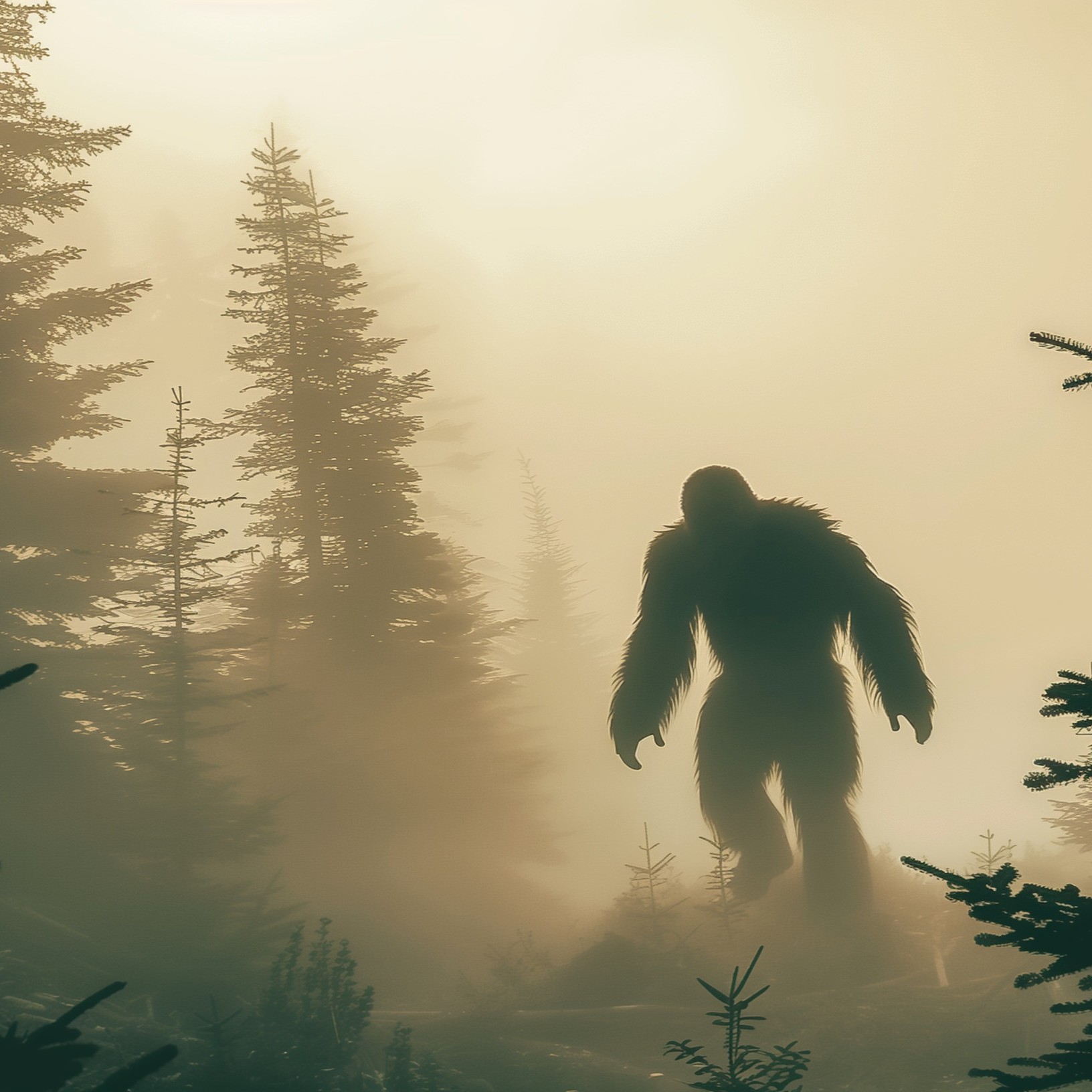
Daniel Loxton First of all, Bigfoot is supposed to be a big,
hairy animal, larger than a human, that walks on two legs. It lives in the forest. It has great big feet and leaves great big footprints. We have a lot of stories about people who feel they've seen a Bigfoot, and we have a lot of these clues that we have to interpret, like big footprints that people have taken plaster casts of. There's a little bit of very famous film footage that is supposed to show a Bigfoot. But again, the first question I would want to ask is where does this story come from?
And as it turns out, some of the creatures we're going to talk about have origins that are lost in the in the mists of time. But Bigfoot is not very old. Bigfoot only goes back to the 1950s. The legend is inspired by older First Nations lore here on the Pacific Coast, particularly in a valley around a town called Harrison Hot Springs. Now, back in the 1920s, there was a schoolteacher, and he worked with the First Nations people, and he heard a lot of their stories. And a lot of the stories there in around Harrison involved these creatures that, I actually don't know how to pronounce it in the original language, but it gets anglicized, turned into an English word, Sasquatch. Sasquatches at the time, the
stories that the schoolteacher were hearing, they were big wild men. They weren't like gorillas. They could speak the local indigenous language. They would sometimes kidnap princesses and carry them off to their villages. They had houses and fire. They were wild men of the mountains. Anyway, he thought these were really interesting stories, so he published them in a magazine called Macleans in the 1920s. And so they went around, and then there was a provincial celebration happening here in B.C., and Harrison Hot Springs decided to fund a Sasquatch hunt and put up a statue, and this got tons and tons of press. At which point, people started coming out and saying, "Oh yeah, I've seen one of these," and telling the
newspapers that, "Oh yeah, many years ago I had an encounter with a Sasquatch myself." And some of these stories changed the look of what a Sasquatch was, the idea of a Sasquatch, to make it something more like a gorilla.
Jane Oh, so they got hairier in the stories.
Daniel Loxton They got hairier. They got more like a natural
animal that you might see just roaming around the landscape. This got a ton of press, and the story jumps down to America, and in the U.S., there's a spot in California where this roadwork crew started finding giant footprints around their bulldozers and whatnot, and this gave rise to the name Bigfoot.
Now we know that these footprints were a prank. The case that gave Bigfoot its name was a prank, and so the idea that we have of Bigfoot now it is rooted in Indigenous Stories.
Jane So similar to Bigfoot is a creature who's called a yeti.
Grace My name is Grace, and I live in Huntersville, North
Carolina, and my age is five. And I want to know, are yetis real?
Daniel Loxton Yetis are an older legend, and they seem to
be based on a real animal, but not the kind of animal that you maybe expect. They seem to be based on brown bears, so basically grizzly bears that live in the Himalayas. And the problem when we're dealing with English language writers and researchers dealing with stories from other countries around the world where they speak different languages, is that things get lost in translation. And people who, out in their villages up in the mountains, understand the local animals they're dealing with, even if they speak the same language as people in the cities who are not dealing with those animals, misunderstandings can get baked in. And so, yeah, the yeti seems to be mostly that, a misunderstanding of brown bears.
Jane When I think about yetis in popular culture now, they're
not brown; they're white. So this has been in the creation of these stories, the creature has changed, and it has changed color, and all of the lore around it has changed as well?
Daniel Loxton That's right. That's exactly right. So, in the
original sighting reports, it was a shaggy, dark-haired animal.
Jane So, we were talking about yeti, which is you know a
creature that lives in very snowy areas, and currently we think of as white, but is this sort of shaggy human-like creature. And Bigfoot from the Pacific Northwest originally. And now there are Bigfoot stories from all over North America, and Cooper is wondering:
Cooper Why are there so many Bigfoot-like creatures all over
the world?
Daniel Loxton That's a terrific question. There are a couple of
answers, and I think we could say with confidence, that people have been telling stories like that since long before we had writing, and one of the first stories we have, the Epic of Gilgamesh, has a wild man in it. And the reasons are two, I think. One, Bigfoot type creatures: ogres, giants— they're probably the easiest kind of monster to imagine, because they're like us, only bigger and fiercer and wilder.
And also, throughout human history, there have been people who lived alone out in the wilderness. There are people who got driven out of societies, or they live in the wilderness as bandits, or they live as hermits. And so, wild men, sometimes very dangerous ones, living in the woods and the mountains, that's just a thing. And also we all have general monster myths as well, because there are fierce animals, and for most of human history, we only knew about the animals that lived in our valley or our country. And places like the deep sea, we just couldn't investigate. We had no idea what lived down there, and so if people drown or they get lost in the woods or they get eaten by wolves, it's easy to imagine
that they fell prey to some kind of a monster.
Jane Coming up, we're going to dive into the deep dark water to
talk about the Loch Ness Monster and Champ, Vermont's lake monster. And what about mermaids?
BREAK BREAK
Jane This is But Why. I'm Jane Lindholm. Today we're talking
about the legendary creatures we love and sometimes fear, called cryptids, hidden animals that some people think actually exist. We're talking with author and lifelong cryptid enthusiast and skeptic, Daniel Loxton. Let's talk about water creatures. For most of human history, we didn't really have the technological capability to explore deep water. So there are a lot of stories of lake and sea monsters and hidden creatures, including that very famous Loch Ness Monster I mentioned at the beginning.
Avery My name is Avery, and I'm seven years old, and I live in
Cleveland, Tennessee. And my question is, are Loch Ness Monsters real?
Caleb Hi, my the Loch Ness Monster real?
Daniel Loxton So this one breaks my heart. I'm pretty sure
there's no Loch Ness Monster, but it is a very interesting story. Again, the legend is not very old. It goes back to 1933, and it just didn't exist before then. And then there was a sighting that got into the newspaper. Somebody had seen something peculiar, and this inspired a whole bunch of sightings. People were kind of in the mood for monsters at the time because people were worried about the beginning of World War II, and a huge blockbuster film had seized imaginations of moviegoers all over the world, called King Kong. And in King Kong they go to a place called Skull Island, which is full of dinosaurs. There's creatures in the water. There's all kinds of fantastic beasts, and so I think people were kind of in the mood
for it. Cadborosaurus, here in in B.C., was born the exact same summer as the Loch Ness Monster. One thing to know about Loch Ness is that during the ice age, like about 10,000 years ago, it was a solid ice cube. It was buried under like a mile of ice.
Jane So it would be hard to have a dinosaur that survived
from dinosaur days to today, to still be somehow breeding in the lake.
Daniel Loxton It would be. And also the photograph that gives
us the familiar kind of arcing neck idea of what Nessie is, we now know that that was a fake. That was another prank. And the kind of animal that people imagined as Loch Ness Monster, which is a plesiosaur, a large marine reptile, sea reptile that lived at the same time as the dinosaurs. Those were tropical animals, and Scotland is not tropical, not today.
Jane Here in Vermont, where I am and where I grew up, we also
have a lake monster, and its name is Champ, named after Lake Champlain.
Luka Hi, my name is Luka. I live in Wells, Vermont, and my
question is: Is there any way Champy is really real?
Daniel Loxton I would connect it with The Great Sea Serpent of
the North Atlantic. And so hundreds of years ago, sailing ships are going back and forth across the Atlantic from Europe to North America, and those are very dangerous voyages, and people saw of a lot of things out in the water. The seas were much wilder then. There were countless thousands of whales.
There were, you know, there were some large species that are extinct now, like Steller's sea cow. And this idea started around Norway, that there were gigantic serpents that would go in and out of the water in a bunch of coils, and we see these like on old maps and things like that. As people moved across the Atlantic, and then started settling the east coast, and then started moving inland, and then settling the west coast, we brought those legends with us. Stories travel with us. And so any large body of water, if you have the idea of a sea serpent in your mind, it's likely that eventually somebody's going to see one. And it doesn't have to be any one thing. If you have an idea in mind, almost anything can become that thing. So we
know that people have mistaken, for example, birds for the Loch Ness Monster, or seals sometimes. Seals swim up the river, sometimes. Logs, all kinds of things. Anything: waves, boat wakes. The best evidence for Champ is a famous photograph called the Mansi photograph. It's enough to get me excited. It got me very excited as a kid, but there's only one frame, and it doesn't tell us very much. It's just an interesting shape, and the most likely explanation is probably that it was something like a gnarled stick or part of a tree.
Jane Which is a disappointment.
Daniel Loxton We don't know for sure, though. We don't know for
sure.
Jane Well, that's a good question because. Let's stick to
ocean creatures and sea creatures. We've been talking about some of these creatures that were believed maybe to have migrated from the oceans into some of our lakes in the ice ages, but what about deep sea creatures in the oceans today? Like maybe the Kraken or a giant squid.
Aariv Hi, But Why. My name is Aariv. I live in Bangalore. Did
the Kraken ever exist in real life? And I am nearly eight years old.
Luke My name is Luke Fullerton. I'm from Toronto, Canada. I'm
six years old. My question is: Is the Kraken real?
Stella Hello, I'm Saj, and I'm five years old, and I'm from
North Carolina, and I want to know about the Kraken and other mythological sea creatures.
Daniel Loxton The Kraken is a great example. Once again, the
story is a little complicated. It's one of those ones that is lost in the history of the myths of time. Kraken-like stories have existed for thousands of years. One reason is that people living near the sea would sometimes encounter cephalopods, which are the group that includes octopuses and squid. And once again, with imagination, like some some cephalopods are are large, and and can be dangerous for people swimming and things like that, people have been hurt by, for example, Humboldt squid are quite fierce and quite large.
And so people who you know fishermen and people who worked near the sea, they would encounter these animals, and they knew there were tentacly creatures. From there, it's easy to imagine even bigger ones, and so we have these ancient stories recorded by Greeks and Romans of cephalopods that were like legit monsters-you know, big enough to come up and fight people on land, big enough to sink ships, and that idea, which didn't yet have the name Kraken, is also related to a similar idea that you know goes to our deep ignorance about what is in the water even today, which is the the island that is really a monster, and this is an idea. We see in One Thousand and OneArabian Nights. We see this in the the stories of Sinbad the
Sailor. The Greeks had this idea. The Romans had these this idea, and later, as these ideas spread around through people, the Scandinavians, the Vikings, the Norse up up north took those ideas as well, and they gave us the word Kraken, which is kind of a combination of the idea of a tentacly thing that is also maybe as big as an island. These are vast monsters. The kind of kind of monster that could like sink a sink an armada of ships, maybe you know, like and these people they encountered a lot of danger in the North Atlantic. So the kinds of monsters that could endanger ships, they made a lot of sense for for that culture to be telling those kinds of stories. We don't know how much the Kraken legend is really inspired by in by certain
species, but the two that that are discussed most often are the giant squid, and also another one which is shorter but even bulkier, the colossal squid, and these are these are enormous animals, like you know, eyes the size of a dinner plate, you know, a body length maybe you know as the length of a small car, and then tentacles that can go out, you know, 30 feet or more to catch prey. We know there are a lot of these animals down in the ocean, but until recent years, like when I was a kid, no one had ever photographed one-not alive, and certainly not down in their natural habitat because they rarely come to the surface. They're deep sea animals.
Jane Yeah.
Daniel Loxton But the entire population of sperm whales on
the earth gobble those things up all day, every day, as their as their food, and so there's got to be a lot of them down there for sperm whales to find, and they're distributed all over the world, and we just occasionally get lucky that a sick or dying one will wash up on shore somewhere, and then we can study them. We've only recently been able to film them in their own habitat, and rarely, partly because they're deep sea animals with huge eyes for detecting tiny amounts of light, which they use to find bioluminescent prey. But when we go down with our robots and our deep sea submarines, we have to turn on our spotlights to be able to see anything, and all the giant squids all run away. So we've had to get better techniques for
attracting them in and using different wavelengths of light to try and film them, and and so on, but yeah, we're still in early research for giant and colossal squids.
Jane But haven't some people pointed to things like the giant
and colossal squids and another ocean animal, a fish called a coelacanth, which was believed to be extinct and then was discovered not to be extinct? Again, I remember as a child, learning about this and thinking, "What?" And sometimes people say, "Well, how could you say that the Loch Ness Monster or the Kraken or Bigfoot doesn't exist when we have evidence that animals we thought might be mythological or thought might be extinct are real and still living today?"
Daniel Loxton Yes, absolutely. And the short answer is, we
can't know that. So there are animals a lot like Bigfoot now. Human beings are one. Gorillas are another. Orangutans, chimpanzees, and there have been animals even more like Bigfoot in the past, there was a creature called Gigantopithecus that was something like an orangutan, twice the size of a gorilla, kind of thing, like a big animal. As far as we know, they're extinct. We have no reason to think they're not. But all it would take for us to learn otherwise would be to find one, and that's what happened with the coelacanth. We just had no fossil records of of them for millions and millions of years.
We just had no evidence that they were still around until a knowledgeable woman was walking through a fish market and thought, "Wait a minute!" And then she talks to the locals, and the locals are like, "Oh yeah, we catch those sometimes." So somebody knew there were coelacanths around. It's just science that did not.
Jane Yeah, that's so interesting too. We've done we
did an episode a while back about worms, and one of the worm experts we talked to said, "Listen, just because something isn't in the scientific record doesn't mean it's not known." It might mean that scientists, and often that meant white scientists, white men from European countries or North America now, didn't know about it. But it doesn't mean that local communities don't know about it. A lot of animals are known to their local communities and just not officially in the scientific record. And I just want to make that point, not about cryptids, but just that you're right, there are a lot of animals--real animals--that aren't in the scientific record, but that doesn't make them not real--or not known.
Daniel Loxton Exactly, exactly. And and this actually does tie
directly into cryptids, as part of the logic of cryptozoology you could think of as as essentially ethnozoology, the idea that if you want to know what animals live in a place, you could go to the people who live there and ask them what animals live here,. And working scientists have used this strategy to learn all kinds of things about plants and animals that science had not yet identified, but locals knew all about it. The problem for cryptozoology is that when people do go and talk to the locals in places around the world, they often have been irresponsible about it. So, like there are legends about a big sauropod dinosaur continuing to exist in Africa. A real scientist went and investigated
some of these stories, but he got mad when locals told him it wasn't real, and he demanded that they tell him the truth, or he wouldn't give them gifts and medicine that they needed in their village, and so eventually they just got fed up and said, "Yeah, okay, you're totally right. This thing is, we see it all the time." And so, yeah, you have to be really careful when you're doing that sort of thing. And most cryptozoology is an amateur affair. It's not trained scientists.
Jane Is there a difference between a mythological creature
and a cryptid?
Daniel Loxton Traditionally yes. People were specifically
looking for animals that had not been discovered yet., whereas lots of mythological creatures are not natural beings; they're connected to the heavens or the spirit realm, or they're demons, or you know magical creatures of one sort or another. And these are blurry over time. So, for example, the legend of unicorns, which in the past have sometimes been called the Monoceros--
Jane Mono: one Ceros: horn.
Daniel Loxton Yes. These originated in travelers' tales
in ancient Greece and Rome, coming from India, about a very fierce animal that they had out in India that had only one horn. But by the time we get into the Middle Ages and the Renaissance, the unicorn had taken on spiritual meaning for Europeans. The horn became magical. It could protect against poisons.
Only only the purest maiden could capture a unicorn. It was strongly associated with religious ideas about purity and and the sacred.
Jane I think the creature that we have the most questions about
is one of those that sort of straddles that idea between mythology and is it real, could it be alive. And that's the question of the mermaid.
Ali Hello, my name is Ali. I'm nine years old. I live in
Huntsville, Alabama, and my question is: Are mermaids real?
Anuva Hello, my name's Anuva. I'm eight years old, and I live
in Sterling, Virginia.
Elliot My name is Elliot.
Ayla My name is Ayla. I'm from Waterville, New York, and I'm
eight years old.
Emily My name is Emily, and I'm four years old, and I live in
Lancaster.
Layla I'm Layla. I live in Brooklyn, New York, and I'm
eight years old.
Saga My name is Saga. I'm six years old, and I live in London.
Monty Hi, my name is Monty. I'm six years old. I live in
Newhall, California.
Tatum My name is Tatum. I'm six years old, and I live in Denver,
Colorado.
Zoe My name is Zoe. I'm six years old. Are mermaids real?
Izzie Hi, my name is Izzie. I'm six and a half years old. I live
in San Clemente, California. Do mermaids exist?
Daniel Loxton The idea of a mermaid is another one that goes
back to classical antiquity, back to ancient Greece and Rome, and and even before, in other cultures around Mesopotamia. Humans have often had the idea that the kinds of animals that we see on the land are kind of reflected in animals that we see under the sea. So these kinds of stories about half-man, half-fish creatures have been around for thousands of years, but they're also tied in with cryptozoology, early cryptozoology, going back hundreds of years. So, like one of the main authors that is associated with the the history of the great sea serpent was also recording stories of mermaids, and they were all just treated the same. These are just things that people report. And so by a weird coincidence, maybe
one of the most successful cryptozoological expeditions of all time was chasing mermaids, and they did get to the bottom of it, and it's an interesting story. So in parts of New Guinea, people in in the towns would tell visiting investigators, "Oh yeah, people up the coast they see mermaids all the time." And they heard enough of these stories that these cryptozoologists put together a couple of expeditions to go up the coast in a big boat and talk to people and make observations and take photos and whatnot, and they actually were able to completely nail it down where the locals are saying, "Hey, there is the mermaid." And they were able to swim with the mermaid and document it and and and positively identify it. And
what it was was a dugong, which is an animal like a manatee. So case solved. The Ri, a particular variety of mermaid, was definitely a dugong.
Jane So before we leave the topic of cryptids and these
creatures and whether they're real and whether they're not, how do you think we should all be thinking of them? I mean, for many of us, we just love the idea. For some of us, we say, "Nope, sorry, not real, not a chance. I do not believe, and I don't want to hear the stories. This is just either scary or it doesn't feel real." For others, though, I mean, you know, we know people who've said, "No, what I saw was real. I have seen this, and you are telling me that my experience is not real."
So there's all this breadth of experience and different ideas around it. How do you think we should think about cryptids and these creatures, and as we move through the world and grow up?
Daniel Loxton I'd say it depends. If you think about
stories like vampires, if vampires were real, that would be a bummer. That would be frightening. I would not like it one bit. If it turns out that the Loch Ness Monster doesn't exist, and we have pretty good reason to think it doesn't because it's a contained body of water and it's been investigated so much, and so, if there was a monster, we should have evidence by now. For me, like I said earlier, that's kind of heartbreaking. I love Nessie. I want that to be real. And then it gets a little complicated because, well, take the example of Ogo Pogo. We have a big lake in British Columbia called Lake Okanagan, and it is reputed to have a sea serpent, much like Champ. It's an older legend. It predates Loch Ness Monster. At
least it goes back to at least the late 19th century. It is based directly, it's taken from, appropriated from, local First Nations sacred figures. And that local nation is quite mad about it. They don't like figures from their own sacred stories being misused to to sell fridge magnets and cartoon plushies and whatnot. And so when we think about these stories, we should also think about where they're due cultural respect, and and then because this whole area is again about stories, we have to also expect that stories evolve.
Jane Yes, stories evolve and change over time. It's
fascinating to hear about stories that have deep roots in Indigenous culture, blending with hoaxes or tricks and with modern cultural phenomena, like a blockbuster movie about a giant ape inspiring an uptick in excitement in people wanting to believe that their areas have real-life monsters too! What do you think about all of this?
That's it for today's episode. Thanks to Daniel Loxston, co-author of "Abominable Science: Origins of the Yeti, Nessie, and Other Famous Cryptids," for all of the fascinating stories and knowledge he shared with us today. As always, if you have a question about anything, have an adult record you asking on a smartphone using an app like Voice Memos. Try to be in a very quiet place so that we can hear your voice and your question clearly. Then have your adult email the file to questions@butwhykids.org. Our show is produced by Sarah Baik, Melody Bodette and me, Jane Lindholm, at Vermont Public, and distributed by PRX. Our video producer is Joey Palumbo. And our theme music is by Luke Reynolds. If you like our show, please have your adults help you
give us a thumbs up or a review on whatever podcast platform you use to listen to us. It helps other kids and families find us. Speaking of which, we would love it if you would share with other kids and families that you like, But Why. We'll be back in two weeks with an all-new episode. Until then, stay curious!
