

Local Voices for Sustainability
How Do You Protect a Disappearing Island in a Changing Climate?
Montag, 8. September 2025 · 29 min
Kapitelklicken springt direkt hin
Shownotes
What does it mean to live on an island that may one day vanish? How can communities adapt to climate change, and what does staying – or leaving – really mean? In this episode, ICLEI Europe (iclei-europe.org) speaks with Dr. Catharina Greve about Neuwerk, a tiny island in northern Germany where climate change is no abstraction – storm surges, rising seas, and shifting tides define daily life. Greve introduces the RescueME (resilientculturallandscapes.eu) project, which explores how cultural landscapes like Neuwerk can (or cannot) be preserved, and how residents are shaping their own future.
From horse-drawn carts crossing tidal flats to “serious games” – where locals and policymakers test out future scenarios – this conversation dives deep into resilience, wilderness, and the tough choices communities face when home itself is at risk.
Explore the work being done by ICLEI Europe's Resilience and Climate Adaptation team here (iclei-europe.org/topics/resilience-and-climate…).
Transkriptvom Podcast bereitgestellt · Zeitmarken springen hin
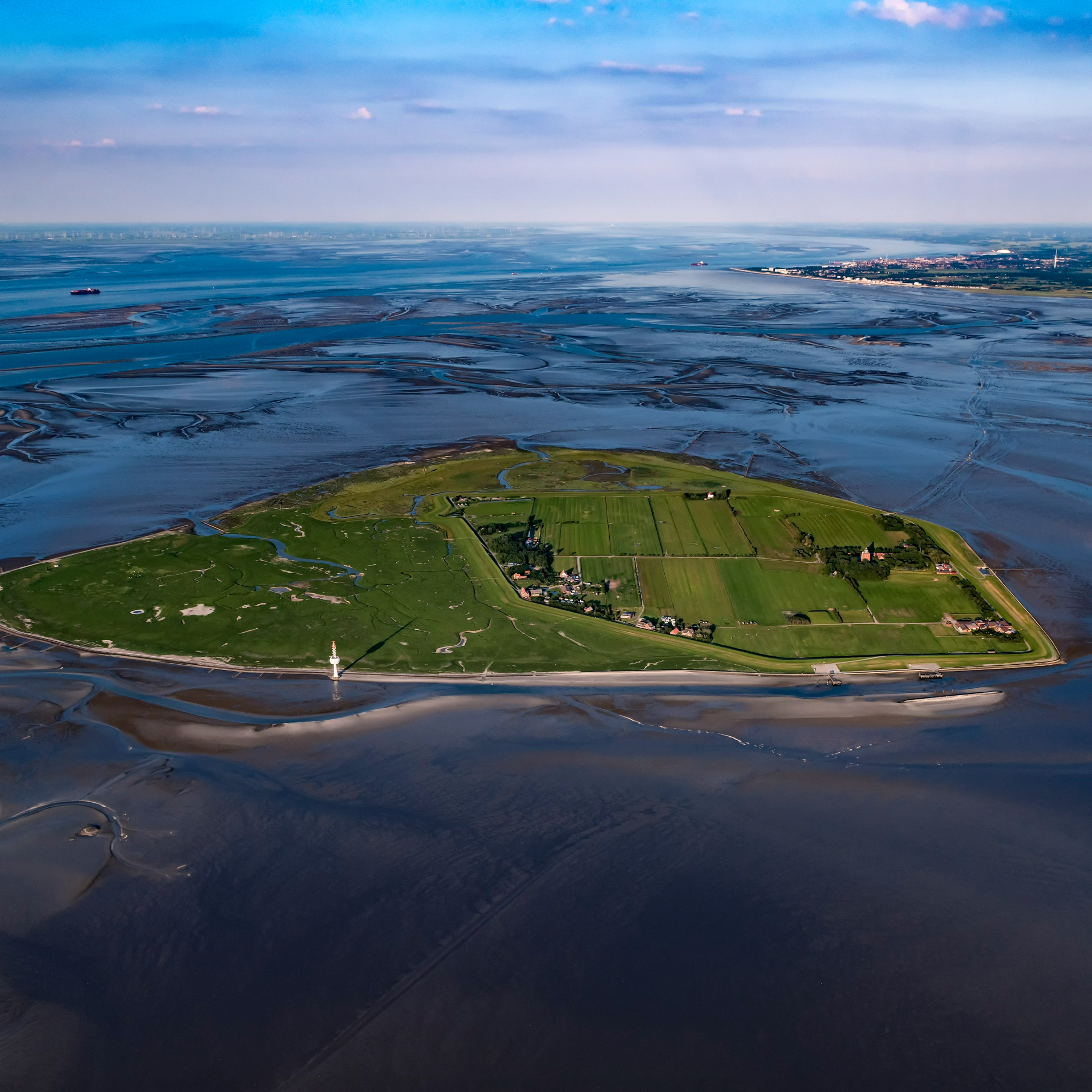
Hello and welcome to Local Voices for Sustainability, the ICLA Europe Podcast. I'm Laura Schubert. In each episode, we sit down with one of our member cities to explore their path toward a more sustainable future, one topic or challenge at a time. Today on the show, we're heading to a different kind of landscape, an island, one shaped by tides, tradition and the rising pressures of climate change. Just three kilometers squared, the island of Neuwirk is found in the Vaden Sea, the unique tidal flats region that forms part of the North Sea.
Neuwirk sits just 13 kilometers off the German coast, near the town of Kukshaven and about 120 kilometers from central Hamburg. It might sound remote, but administratively it's part of the city of Hamburg. 1 of Ekla Europe's member cities. Joining me to talk about sustainability efforts on and around the island is Doctor Kati Grave, Project Officer for the Rescue Me project at the National Park Authority of the Hamburg Vadensee National Park. The authority is part of Buchea Hamburg's Department of Environment, Climate, Energy and Agriculture, and, though based in Hamburg, is responsible for managing the distant coastal landscapes and ecosystems around Novich Kati. It's a pleasure to have you on
the show. Welcome. Thank you very much. Happy to be here. So I thought we could start with Noirwerk itself. What is it that makes the island so special? I think for one, it is Hamburg's only island. So Hamburg is actually located on the Elba River. As you already said, it's 100 kilometre away from Novak.
It's pretty far away. And sometimes this exclave is kind of forgotten, so it seems. But as you already said that it was about 3.3 square kilometres, so it's quite small and it has developed after the last Ice Age with the dynamic processes of the Woden Sea. So the waves and the tides, they have formed a lot of the North Sea regions.
And so while the sea level was receding at that times due to the wave and tide actions, these little sand island formed. So I was first actually notified in about 900 AC after Christ. So then they discovered the sand island and called it the island just like have no name, just an island. And it's sort of like has got also the influence is not just from the tides and the waves, but of course also from the massive Elbe river system, which goes far inland and transports a lot of material towards the North Sea.
It's in its way, it has been formed geologically, but it's also unique because it's the only island of Hamburg. Just to get a little bit of the context how it has developed. So it was first also mentioned like in the 900 something, but then also because it's the entrance to the Elba River and it's geopolitically important to that area, you know, with all the shipping going in and out. And of course people would like to control the entrance to the Elba River.
So they decided to build what they call a VAC, like a tower on the island, and that was supposed to mark the entrance to the Elba River. The tower is about 40 meters above sea level. And when you've got no fog, you can see pretty far out into the North Sea. So that's strategically really important.
So, and then it was just a sand island. So it was not really protected by any kind of like coastal structures at that stage. So people use it as a trade area for fishers and then use it for grass summer grazing. But usually in the winter you couldn't live there because of the coastal storms, too dangerous, too many people have actually died and and storm surges.
But by the mid 16th century, they started to build very simple protective structures and that of course with the North Sea dikes became more prominent and were built all along the North Seacoast. And they also were built on the island of Novak. And could you just remind our listeners, for anyone who is not familiar with it, what is a dike? A dike is kind of a artificial protection structure. It shows a very gentle slope towards the seaside so that the waves that run up during a storm kind of like not broken, but more like the energy, it's being diminished by the gentle slope of it.
While the land side, So the inner side basically of the dike system is a bit more steep. But it's important to just has got a very particular core made of certain kind of materials in terms of like a sand clay mixture that's very stable, usually in lower sex and the HDSV host and you've got sheep grazing on it or Novak, you don't have sheep, but you can't have cows grazing on it because they're too heavy.
Oh, OK. So, yeah, so those dogs are really important. Nice. So it really sounds like Norberg is one of these places that's been shaped quite equally by both people and nature. Absolutely. It sounds like it's facing some climate challenges of its own. Could you tell us what's on the top of your mind right now in terms of climate challenges?
Well, I'm always just looking from the point of view of sort of like more like a geomorphologist and just go like, well, sea level has been rising since the last Ice Age, so we have to deal with it. So some of it comes naturally, but it also now is human induced. So we don't know where it goes. We can only do some modeling and see, OK, well if this continues then we'll assume sea level rise will will rise like 50 centimeters to a meter.
Sometimes you have got like a time horizon, but it's not really fixed, but at least you can look in terms of the height of the dykes. So while Schlischholzstein, the other state and lower sex near, they've got what they call climate dikes. So they have adjusted the height of the dikes to be able to cope with sea level.
While Novak doesn't have a climate dike. And because it's so small, it's pretty difficult to raise the dike because if you raise it, you need to widen it. So to have a good solid base. Yeah. So that's a bit difficult. The dike system sounds like that's definitely a major climate concern. Are there other climate challenges that the island is facing? So the dike systems are there to protect the cultural part of the island, so the assets where the people live, the houses, OK, the tower and so on.
But we also have to think about the natural environment. So with the rising temperatures in the water, we might get more invasive species. But also when you think of like the onesie when the tide recedes and you've got aptide and the basically the sea floor is kind of like darkish. And then when the sun warms it up, it gets too warm for some of those little creatures that live there.
And so they die of basically heat stroke, as do we when it gets too hot. Yes, of course. Yeah. So that's, that's another thing. But but I think we need to also think about that nature can adapt not to everything, but to a lot of things. So we do hope that the tidal flats will grow. So we'll rise with sea level. It has done so in the last 10,000 years, depends on this, on the pace the sea level is rising. So that might be some concern, so. I want to talk about the people side of things a little bit for a moment.
I understand that tourism is sort of a sizable aspect on the island. You know, people coming to see the the lighthouse people to coming to admire the the biodiversity across the island. Does the presence of this touristic population, does it make building resilience easier or more challenging, or is it kind of a mix of both?
I would definitely agree it's a mix of both and tourism has played a major role in the income for the Islanders for the last century and a bit. So that's when it's taken over. So it's the main income. It's great that people come and come back. You know, they've come for decades with their kids and the kids grow up and they come back.
So it's kind of like you have a love for the island. However, because the season is pretty short so you can't get there all year round by ferry. Also, the ferry has to go from Cooks Half and approaches the island through the tidal river. The location of the tidal river of the water depth does change, so every year you have to find a new way and show where the way is to the ferry so it doesn't get stuck.
So last year was pretty difficult sometimes to get to the island to be honest. The ferry was cancelled a lot, but then you do have also a way of getting the horse cart to the island. Horse cart. Yes, horse carts. I know horse carts are amazing. I love it. So you can go from a beach near Cook's Hutton and you have a horse cart with nine people on it and you're right through on the on the sea floor at low tide. Wow, OK.
And it's just amazing. It's like 10 kilometer horse cart right to the island and you are out there in the middle of the Wadden Sea and it's so quiet and it's so nice and you just hear some birds and it's just a, it's just a nice feeling and it's amazing. And of course horse cart and ferry depend on the tide. So the horse carts can only go a low tide or basically they have to go 4 hours before low tide and the ferry can only go before high tide.
So it's very limited. It changes every day and so it does not suit the tourists sometimes when they want to arrive. So it's a bit tricky to get to the island. So that does actually limit the number of tourists that can go to the island. And in that way I think we probably don't have the same problem some other places with over tourism can have because there's only so many people who can go there.
There's only four hotels on the island and they only open between Easter and October, so there's no fairy in winter. There's horse carts in winter but it's pretty cold. And do people live there year round? They kind of do, but apparently the I haven't been there in winter. So the island gets quite deserted in winter because the local residents who live there permanently do actually go on a holiday because they've worked for seven months straight. And so they take time off.
And quite a few of them do actually also have some residents in Cook's Half, which is the nearest town, because they, if you plan a doctor visit, it's really challenging. You need to get there, you need to get back. And you can't do that usually in a tidal cycle. It's really relying on nature fully.
Yes, completely for everything. It, it, it's a topic that I think that we've definitely brought up in the past on the show. So listeners, if they're frequent enough, they will be familiar with the idea of building resiliency. But is there anything further you could maybe give us about that process of trying to develop it on the island? To be honest, a lot of Islanders on small islands are resilience, are very resilient already.
They have to be just because they have to be so adaptable. They have to plan how to get the food, they have to plan for getting to the doctor. So they are way more resilient than town people who just go out and have everything in front of the doorstep. I think they also take things as they come. I know that in Novak, the residents, they do want to talk about sea level rise and storm surges. So that's what we're going to talk with them in a serious game as well.
So we invite them to join us to do a serious game and and see what's on their mind, what's going to happen, what their concerns are in regards to what the city of Hamburg can help them with. So the problem is sometimes they're so far away from Hamburg. We do have a Ranger there so they can talk to him.
He's there all summer. But still sometimes they want to talk about accessibility to the island or what's going to happen. And and you also have got a bit of over ageing. So there's a lot of people close to retirement and one of them already is intending to sell his what we call the estate. So it stayed more like they've got some grazing areas plus a hotel plus the house where they live. So it's more like an estate than just a hotel. And you know, often the kids don't want to take over the business because it's so full on. So they want a bit more work life balance. Yeah, But on the other hand, I'm just going like with changes in how people work, maybe there is an option of people saying I'm just going to the island just to
get away from all the bustle. So just go away and just relax and have the peace and quiet and just hear the birds and go for walks. And, you know, there's no traffic on the island. So it just I'm. OK, well that sounds lovely. Yes, it is lovely. I think you have to be made for being living on a small island.
A moment ago you mentioned the project, and the project in question is of course, the Rescue Me project, which I mentioned in the introduction. I understand that a part of this project is this idea of a cultural landscape. Could you tell us what a cultural landscape is? Well, it's pretty much like a cultural landscape.
Like a landscape is just something that like is naturally there. So it's being shaped by all kinds of physical processes. And if it's waves and tides or weather. And I think a cultural landscape is something that humans need for agricultural purposes. So for example, terraces, they're built so they can actually farm on the slopes of a hill, or they build dams to collect water and produce electricity, or you drain a swampy area to build houses or canal estates.
And so Novak in that way is changed because we've got the dike system. So you cut out some natural processes. So you bring the culture with you to be able to live there. But there's still some natural areas, like you're surrounded by a natural environment of the wooden sea, which we also call the wilderness zone.
But then you've got this little cultural landscape in the middle of it. And, and basically I always say people are also part of the environment, but sometimes we we change things and that can get have have a negative effect. So if you build dike system, it's great because you can live there and you protect your assets.
But then it can change the dynamic of of the natural environment and that sometimes maybe doesn't go the way you want it to go. So that can happen as well. Cultural environment is more where we live and where we shape it so that we can live in it, with it, but also make use of what it gives us to survive, like food and water.
I mean, it sounds like a cultural landscape is it can be anything. It can be anywhere. It can be anything. It's not necessarily a, you know, a term that is applicable to a certain kind of place like my my, my neighborhood consisting of, you know, 5 houses. This, in a way, sounds like it could potentially be a cultural landscape.
Yes, I think because sometimes you change the landscapes, because when you build, you want to build on a flat area, you often want to change things. You need roads, you need space for agricultural purposes. You need lots. Yeah, I think human needs lots of space. Sometimes you have to more think about where do we actually still find wilderness and you still find it in the Warden Sea, because what can you do there? Yes, you can fish and you can collect mussels, but a lot of the tidal flats are not inhabitable for us, thank God, so they just stay the way they are. Yeah, exactly.
Some of these, some of these things, it's for the best, yes, but it's it's not for us. So just on the topic of of the Rescue Me project, I'm curious, could you just give us a brief kind of overview about what the what the goal of the project is? So the goal for Hamburg, I can only speak for Hamburg.
We would like to look at the resilient, the resilience of the island and in regards to what do we need to consider for the future. So we looked at in terms of what are the hazards. So we define the hazards in a way that we said we want to look into storm surges in sea level rise because we think that's the most prevalent in the area that we need to think about South rainfall events.
You can probably install another pump and pump out the water quicker. Heat is more like a natural one. But in terms of the cultural coast landscapes, it's definitely say level rise and storm surge that we need to consider with the Islanders and, and resilience is talking to the residents in terms of what could happen, go through it in terms of when it could happen, but also say like, do they want to stay on the island or do they want to leave eventually?
I think resilience is OK, this is going to happen. We have to accept that. What can we do? What can we do about it? What can we do with it? So yes, we can do some kind of engineering, but is that really going to work? So we don't know. And I think the Islanders are resilient, but it's like a matter of like, how can we support them in that process?
We want to go, how can we help you so in that way. So the city of Hamburg is actually buying one of those estates. OK, yes, so that's a process as well. So people are going to retire and one wants to leave the island, the other person might want to stay there because they just love it, but they don't want to have the run the hotel anymore because they've done it for 10s of years and go like they are exhausted.
But Hamburg has decided to put a lot of money into restoring the tower, which is 700 years old, and to make it a hotel again. So the city wants to have the island inhabited so that they're people there, and then they can enjoy it. Throughout our conversation, the residents of the island have come up a few times, so I'm really curious to hear, within the framing of the Rescue Me project, how is it that the project has gone about working with and integrating the insight or the perspectives of the local community?
So for example, we had an intern and she was a student from a university and she wanted to do her masters thesis and working with us, she actually done 2 questionnaires last year and this year asking the Islanders about what are their concern because she was not the government. It's sometimes easier to talk to the people because sometimes the government is not seen very favorably.
And then she went around, took the time, spoke to some people even while they're working, waited for two hours and made the effort to talk to everyone. There's only 22 residents there. And also to ask them, like, how do you see yourself being resilient? And she said the climate change aspect did come up, but not as, my God is going to happen.
I have to pack up and leave. But also, she asked them, would you be resilient when something happens and you have to stay on the island? There's no one. You have to stay here for five days. You have no water, you have no electricity. Are you prepared for that? You know, these things that basically the government is telling everyone now, have you got like X amount of liters of water at home?
And it turned out that they are quite resilient in that way, even though they are a tight knit community. And and that's the thing, like they might sometimes not like their neighbors, but if it comes to a problem, they stick together. I think they stick together way better than townspeople because they know each other.
They've been known each other for decades. And so they know they have to stick together to be able to get through it. Yeah. So in these efforts to get the perspectives of those living on the island, have there been opportunities where they have been invited to the mainland to have conversations or have you always gone to them? Initially we've gone to them and basically just told the spokespersons of the Island in terms of, well, you've got the project and this is what's going on. However, it is sometimes not a good time to go there because they are really busy between Easter and October, so getting them to workshops is just pretty much impossible. And then in winter there might be a way. So we have now the series games
coming up and we definitely want someone from the Island. You mentioned the series games. What's that? Yes. So the series games is developed by Fraunhofer. It's a common tool to have some kind of situation and then everyone can either take on a role or you can take the role that you are. So like the government or the Ranger or the Hammer Pot Authority, they can take their own role and have their own expertise and they come together and you've got a situation and you talk about it. What are we going to do?
What's the plan if this happens? What do we have to look after at the the serious games we want to explore? Say, OK, if we do this, what might happen in 20 years time? What might happen in 50 years time? We want to have them thinking about if we intervene in one way or the other, where would it go? OK.
So you're scenario building and getting their feedback based on, you know, these prospective results that could come up. Yes, and I think the Islanders sometimes observe way more than we could. But our Ranger is there like 10 out of 14 days, so he knows a lot as well. But if you are in the office in Hamburg, you sometimes miss out on that one and you also sometimes need to get the people in one room to actually talk about it.
I like the way that you've framed it or Frauenhofer has framed it as as being games. Like yes, it gives it kind of a different vibe to it. It seems a little bit more approachable, or dare I say fun. Even it's. Absolutely. I've done a series games with major incidents group about pollution and it was amazing to see if something happens like you need to, you need phone numbers, you need communication lines, you need to be able to reach people. And, and I think that's very important to know because sometimes you've got to oh, OK, if something happens, we just go in the tower and just wait there. No, there's probably things would need to be done. You need to know if it's during time, where people still on the island, how many people are
there, how many people need to get in the tower? How much water do we need? We have electricity. Is there anyone who needs help like aging or the towers? Not barrier free. It's got steps. So I think being prepared in a game is really good and you sometimes talk about things you like. Oh, I've never thought of that. And that's a good fun about it.
Very interesting. So I want to look ahead to the future now. And I'm curious to know, do you think that there are things that you've observed or learned so far through your work on the island that you think other vulnerable coastal communities or areas could learn from? I think the the remoteness caught me.
Even if I live in the next state to Hamburg, most of the islands are easily reached by ferry. They're not so dependable on the tides. And I found that this island's very dependable on tides and and also on the private sector to get to the island and from so there's no public transport as such. And I think that's the same for other mode areas if it's like a mountain village.
I've lived in Australia for quite some time and we had the big fires and the biggest problem in one of these massive fires in 2009 was that it was just one Rd. in. And if you've got trees falling on it, you can't get out thinking about in a like in a serious, really serious game, thinking about what's going to happen.
So it's not that the storm will only hit Novak, the storm will hit the North Seacoast. They need to be thinking about how can we help ourselves. And I think that is also something that city people should learn and be a bit more patient. With Islanders, it's a bit sometimes a bit more about not life and death that sounds so dramatic but puts things into perspective, how spoiled we are in the city. So this has brought us to the second-half of our episode, and here I'm going to introduce to you some short questions. This is a little section that we like to call our hot takes. OK?
These are basically questions where I'm looking for a short instinctual response. OK. OK, ready. Yes. OK. So to begin with, what percentage, more or less of people living in Hamburg do you think know about the island of Novak? Think it's just a quick thinking like I think less than 50%. Less than 50%. I think yeah, okay.
Might be wrong, but yeah. Well, interesting. Tell us something you've enjoyed about your experience visiting and working on the island. All the remoteness and the tidal cycle, it's a very dynamic landscape and it's changing every day and it's just beautiful. It's just flat, Gray and beautiful. Is there another cultural landscape that you've visited that has really stood out to you?
Also in a in a tidy area, I love Mont St. Michel. This is kind of like also an island. It's not as remote, it's not as far away, but very dynamic in terms of the tides. And also they built a dam to get over there. But now they, I'm not quite sure when, but they actually removed this barrier so that the tide can flow again.
Yeah. So it's just things to think about. Do you think cultural landscapes get enough attention when it comes to climate adaptation? I think in terms of climate adaptation, we think of cultural landscapes first, because also we do like to preserve our history. And I'm a big fan of preserving actually all towns and that kind of stuff if you can.
But then when you see, for example, the fires in Spain and all these towns which have just been demolished and the loss of cultural inheritance, there is sometimes things like what we already lost in the last, you know, thousands of years. I think it's great if we can preserve it. So for example the the tower such a landmark and 700 years.
What are three particular things? I think you just answered one just now when you mentioned the the tower. What are three things about Novak that you think are really worth protecting? So definitely the tower I'm always thinking myself of. Like I love the environment, but I do love the cultural aspect within the environment. I think what we call the East End fall and it's salt marshes and they're fantastic.
They are actually outside of the dike so that you get flooded during storms. But they're such a natural protective structure. Think about that a little bit more in regards to how can we use these natural protective features of salt marshes to help the island be longer inhabitable. And the other thing that I love about Novak is just the the way to get there with a horse cart.
Yeah. And I hope not too many people retire, because horse cart drive is definitely worthwhile. Oh, nice. Can you tell us any traditions or pieces of history that you've discovered about Novak that you would like to share with us? I think actually a piece of history is this way of horse cut. I think the the way the people adapted to get with the horse cut to and from the island. I think it's the it's kind of like what do they call it? The way of doing things World Heritage. So like, you know, brewing coffee or whatever. In a certain way, I think that some people have got these intangible.
Intangible heritage, yes. Yeah. So, so this is the question like could could the horse cut rides to the islands? Intangible cultural heritage? There are some other areas where you can write with a horse cut, but I think that's just more for pleasure. This is really a mode of transport that I think is kind of intangible cultural heritage aspect.
So my last question for you is also future looking. If you were to visit the island 10 years from now, what differences would you hope to see? I would actually hope that some of the plans that were there come to fruition, so for example, the towers being restored, but also maybe there has been some area where building has been burned down and it's been a lot of discussion to rebuild some housing elements there.
So I think if the island wants to survive from the residents point of view, but from the politicians as well as from the National Park, there needs to be some accommodation for the people who work in the hotel areas there, who work for the school camps. So it's really hard to actually live there without having some proper accommodation.
It's not that we want to built, you can't build much in national parks. There's a lot of restrictions there, but some areas have been identified, so we'll be actually good to get that going. So you want to expand some rooms into the former attic. The volunteers can actually have their own room there because there's a lot of volunteers working on the island which don't have proper accommodation.
And I think you need don't need to offer them the Ritz, you need to offer them some nice room. I think it's a great experience for young people to do like a year of voluntary work, but in this kind of community. Yes, I'm sure. And a bit more what to say? Not, not the accessibility, definitely not like the German train system, like, you know, Oh, it's cancelled. Oh.
More reliability would be good, just. A bit more reliable, yeah, reliability would be great and still have the horse cuts going. That will be fantastic. Well, Katya, that brings us to the end of our show. You've, you've answered all of my questions. This has been positively illuminating to hear that there are so many possibilities and so many interesting solutions being implemented on an island as small as Novak is is really interesting to hear. Thank you so much for for joining us on the show. You're welcome.
Thank you so much for having me. Listeners, if you're interested in learning more about the risks that coastlines across Europe are currently facing as a result of the climate emergency, I invite you to check out Rescue Me's very own Atlas Tool. Even if your city is not on the coast, this is still an interesting resource that shows the range of solutions that can be implemented to build more resilient coastal areas.
So go check it out. That's all for today's episode. Thanks so much for joining us and until next time.
