

Local Voices for Sustainability
How Paris is growing into a garden city
Mittwoch, 12. November 2025 · 25 min
Kapitelklicken springt direkt hin
Shownotes
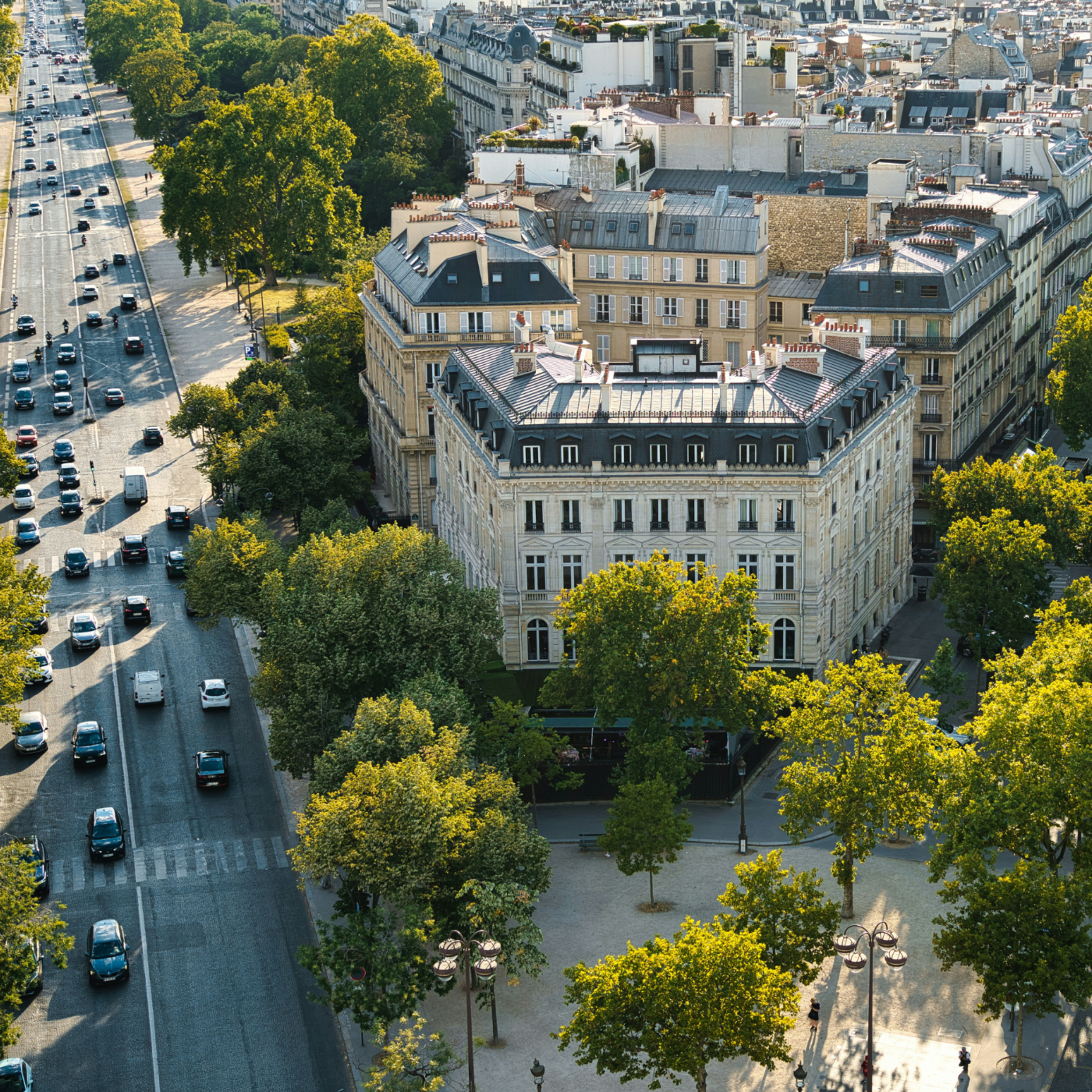
Paris is transforming into a greener, more liveable city—one street and biodiversity corridor at a time. In this episode, we sit down with Celeste Rouberol from the City of Paris about how the French capital is reimagining urban life through nature, from its ambitious Biodiversity Plan to new community-led green spaces.
Learn about Paris' role as a Lighthouse City in the UNP+ project, here (urbannatureplans.eu/pilot-cities/paris-france).
Learn about the EU's Nature Restoration Regulation, here (environment.ec.europa.eu/topics/nature-and-bio…).
Transkriptvom Podcast bereitgestellt · Zeitmarken springen hin
Hello and welcome to Local Voices for Sustainability, the ECLA Europe Podcast. I'm your host, Laura Schubert. Autumn has arrived in Paris, like much of Europe, and with it, the city begins to shift. Trees are changing color, and there's a crispness in the air. But in a dense urban environment like Paris, these seasonal signals can be easily overlooked when green space is limited. Nature's transitions don't always reach daily life unless a city makes space for them.
And that's exactly what Paris, an E Clay member city since 2022, has been doing. Over the past decade, it's become a leader in reintroducing biodiversity and prioritizing urban nature. From new green corridors to pedestrian friendly streetscapes, the city is working to make nature not just visible, but accessible to all.
Joining me today is someone deeply involved in this transition. Celeste Roberol is the international projects and outreach manager at the Agency for Urban Ecology for the City of Paris. In her role, she helps Parisians connect with nature in their everyday surroundings, all with the goal of helping to advance a global transition toward greener, more sustainable urban spaces. Celeste, welcome to the show.
Well, thank you for having me. I'm very excited to be here. Across Europe, cities are being called on to develop what is known as Urban Nature Plans, strategic city level plans to restore and expand nature in urban areas. These plans are also a key part of the E US Nature Restoration Regulation and aim to bring more biodiversity into cities while also improving quality of life for residents.
Paris has been ahead of the curve here. Over the last 10 years, the city has become a leader in urban biodiversity. Earlier this year, Parisians voted to turn 500 of the city's streets into green pedestrian areas, bringing the total of converted streets to over 10%. To start us off Celeste, can you tell us a bit about Paris's journey? How has the city come to prioritize urban nature, and how is it communicating the benefits of this work to residents? Well, thank you for the question. It's actually been a long process. The first biodiversity plan was adopted in Paris in 2011, so almost now 15 years ago.
And what happened is that there was a mental shift. Nature became more than just decorative, like a nice to have. It became a structural priority for our urban planning. I think what happened is that nobody expected Paris to be a leader in this field because everybody loves the city out how it is. You know, it's, it's beautiful.
People have this romantic image of Paris. It's a very touristic area. The challenge that was presented to us was how to retrofit a city with historical challenges into a city adapted to climate change, and that's a whole new paradigm. And can you tell us then about some of the milestones that have shaped biodiversity and nature in Paris? Yes.
So as early as 2014, three has began a large scale greening program of the schoolyards. We call this OS ES schoolyards and it's a very basic idea. It's greening those schoolyards, it's represents a lot of square meters in the city, and it represents a lot of time where our kids spend their days.
So we started like this and then we formally made this link between climate adaptation and biodiversity in our 2018 Paris Climate Action Plan. This developed into a tree plan in 2021 and allowed us to plant 150,000 trees by the end of 2025. It's an all around action, OK? So there's not one single thing or plan shaping biodiversity in Paris. It's rather each department pitching in in different ways, like integrated sustainability management in action. Do I have that right?
Exactly. And the newest biodiversity strategy, the 2025 Biodiversity Plan, is exactly that. It's a call for action for all departments, not just green spaces, not where I work, but also urban planning. Also public tenders, education, sports. Everybody needs to be on board if we are to deliver. Because not only the green spaces department is responsible for planting trees, for example, it will be the mobility department actually redoing public works, redoing the roads, and making sure we have actual space to plant our trees, Just one example. So it emphasizes how we need to work together to deliver on these very ambitious objectives.
Yes. So we've talked a bit about the big picture planning behind Paris's sustainability efforts, but on a more practical level, I keep coming across certain terms when talking about urban nature, things like biodiversity corridors and green infrastructure. You said it yourself just a moment ago, actually.
I think that these phrases sound important, but they can also feel a bit abstract, especially if you're not someone who works in urban planning or in environmental policy. So can you help us understand what they actually mean? In a city like Paris, what do biodiversity corridors and green infrastructure actually look like on the ground?
Yes, I can, especially since I myself had to discover it when I joined the green spaces department. I am not an urban planner. These terms are not so easy to understand. Maybe at first, but it's really doable. My colleagues really spent a lot of time trying to explain these tools that we play and work with at Green Spaces for Paris. It was the first very densely populated area, like urban area, to implement green and blue corridors strategy in France. What does that mean?
It's basically creating a green path around the City, made out of parks, woods, in our case, former railway sites, green walls, green roofs. This continuous path has to allow for species to move and reproduce and allow for genetic diversity both for fauna and flora. Those are biodiversity's corridors and they, they link the city. They, they make it so that, for example, 11 specie can jump from a tree pit to a park and hopefully join the railway belt and travel across the city.
You know, it's, it's a very practical thing actually for the green corridor, we actually have two woods on both sides of the city, West and east. So those act as two almost reservoirs of biodiversity. But they do need to be connected. So in Paris, once again, we are lucky enough to have this former railway belt that was unused for a number of years and was actually heavily used as a transit corridor for fauna and flora.
So this is like a basic of the green corridor, but it gets much more dense now because we've added these parks that we had for a long time and now these new green patches around the city. All of this form like a map. When I think about a map of Paris, of course you have a sizable river running through the city.
How are those green corridors connected when you have this blue corridor running right through it? For the blue corridor, it's obviously around the river sun, but we also have canals running in the city and we are trying to complete this map with ponds and other humid areas. The idea is to have no disconnection.
Yeah, so all species can move smoothly up and down, side by side, throughout the city. That's it. Blue Corros in Paris. Yeah, it's the river Sand, but it's also those 3 canals. It's lakes in the woods and more than 180 ponds and rain gardens all over the city. So it's like an indispensable network of habitats for species that allows them to find food, lodging and space, and basically conditions for reproduction. And out of curiosity, this sounds like an incredible network.
There are so many corridors. Is this something that existed in the same sort of capacity 10 to 20 years ago, or do you see it rather as something that's kind of amped up in recent years? Well, both the big elements were there. I mean, the big woods were there, the river sand. But it's also about the quality of these habitats. We are renaturing our woods that that may sound a little bit strange because those are woods, but they're not like massive forest.
They're very, very heavily used woods for recreative purposes. So we had actually roads running through those woods. Now we are taking off the asphalt and trying to renaturize this path. Same for the river Sand. The river sand is a huge waterway. It's, it's, it's an artery to the city. And we've been working really a lot and not only the city of Paris, but all the stakeholders who are responsible for the quality of the water to restore the quality of the sun.
We've seen actually really exciting improvements on the quality of the water. It has improved so much so that in the 1970s you could find three to four species of fish in this water and now we're up to like 303233. So this is like a massive improvement. And the swimming in the sand was, well, it was twofold.
It was first, it was a promise that was that was made to Parisian a long time ago and was finally kept. Yes, we wanted to improve the water for biodiversity reasons, but also for climate adaptation reasons. It's very hot in the city, it's very hot in Paris in during heat waves and swimming in the sand. And having done it personally this summer is a wonderful experience.
It's really exciting. It's interesting to hear you say how Parisians are getting excited about or involved in these changes in terms of green and blue spaces. I'm curious to know, do you think that Parisians in general are interested in urban greening? I think they are because they feel the consequences of these extreme weather events more and more.
You know, when it's hot in the city, it's very hot in the city. So people are starting to understand the link between having more green under your window in a park close by and the actual quality of life. And obviously COVID was a big moment for this. A lot of people were stuck in very small apartments in Paris during COVID and they really suffered a lot. All of this obviously made a lot of sense for people that we need to adapt the city, both for climate reasons, for biodiversity reasons, but most of all for quality of life. And is the city employing any particular strategies or approaches to reach local communities to get them involved in the process?
Yes, the city focuses a lot on citizen participation because we cannot do everything on our own. The city of Paris as a public administration has this long standing and heritage of doing a lot of everything on its own, but it's obviously not going to work for the future. So we tend to focus our transformations into like underserved communities in priority for social justice reasons because we are well aware of the differences in access to green spaces or even just how people can go on holidays outside of the city.
It's, you know, that's not accessible for everyone. So we try to make sure that everybody has a say in what what the city will look like in the future and what services they can access and how we can shape this city together. This can be done through public consultations, citizen assemblies, or even participatory budgeting efforts.
People can submit projects and vote for them in the participatory budgets. The €11 million were spent in the last mandate to finance about 300 nature related projects around the city, big and small. Big project at city level, at district level, at really community levels. So it's a big thing and people can take action. You know, they can do it for themselves through community gardens, greening permits, greening their own courtyards. There are tons of free and accessible workshops you can take at our resource centers around the city. There's a lot that people can do on their own with help of the city, but also to transform the city in the way they want. So the capacity building opportunities are there, but so is the financing.
People just need to reach out and apply for it. Yes, we also try to reach out directly to people because we know like if you just wait behind your desk for people to find you, that's that's never the greatest option. But we do try to go ahead and talk to people directly. And This is why we have like an educational farm, we have House of gardening tours of the city, just to explain in practice why the city is changing, why we made such choices.
What do people think about that type of tree or that type of greening? It's really a constant, ongoing conversation. And are you finding that you're getting any negative feedback from people who are seeing these transformations and they don't like the way that it's impacting their lives? Maybe it's taking away their parking space for example. Definitely there will always be negative feedback. There is, I'm happy to say, more positive feedback that negative feedback.
OK, maybe let me take an example the school streets. That's a great example of a project that really captured the minds of local people. It's essentially quite an easy idea. It's you close down a really small St. In Paris, streets where schools are located are usually quite small, so it's not like a main Ave. You close down a school St. to car traffic, you green about 1/3 of the street.
Why only one third? Because you need access for emergency services is that you redo the entire up the street into a more climate friendly material, usually lighter. And that's it. It just, it creates space for families, for kids to talk to talk to teachers and, you know, you can drop your kid to school and not be afraid of cars.
And this has been incredibly popular. So this is something to tell you that, yeah, people can give positive feedback, but it also takes time. They need to make sure that what you're doing actually has value for them. So as you know, bringing new green spaces into neighborhoods, especially where nature has historically been missing, can sometimes lead to what's called green gentrification. The fear is that by making an area more attractive, it can also become less affordable for the communities that it means to benefit.
How is Paris thinking about this issue? How can cities bring nature into neighborhoods while also avoiding the risk of displacement? Yeah, that's that's a huge concern for us. I talked earlier about transforming neighborhoods for all, but that means ensuring continuous access to all, not moving people away. That's why in our environmental health strategy, we clearly stated the objective of of reducing social and territorial inequalities by targeting lower income areas in priority for investment.
That doesn't mean that you shouldn't transform and, and green these neighborhoods and improve people's lives. So you have to do it in a way that you know you don't create gentrification, but you also actually create a better life condition. Yeah, that's a tricky balance. It's, it's a very tricky balance and and we at the city of Paris are sure that the ecological transition will not happen without social justice. We know that climate change and it's effects impact disproportionately the poorest and it's really unfair because they obviously contribute less to its causes. And in Paris very specifically, we know that the northeastern districts are overexposed to heat, but also air pollution from the Ring Rd. and energy
insecurity in the summer and in the winter. So we strive to adapt the city by investing massively in adaptation in these areas. So what that means is that the urban nature policies are constructed with residents, but also NGOs, local districts, to make sure that they respond as much as possible to what people want and actually need.
So what does that look like in practice? In the 18th district, we Co designed a park called Chapel Shaabun with a game app where people could actually design the park and they could see, OK, I want a community garden, I want a sports area. But you only have limited space. So how do you do this? And we try to make sure that these spaces are created and designed as common goods, accessible to all, not exclusive amenities.
Common good. I like that. I would say ecological projects combating energy, food and housing insecurity have to go hand in hand with strong social policies. In Paris, we have significant safeguards to tie greening projects to affordable housing and social mix requirements in the Bio Climatic local Urban Master plan. So now the city has 25% of housing stock made of social housing.
Paris has also implemented rent control to limit displacement in newly green areas and we are also regulating short term touristic rentals that tend to diminish the health of stock. Interesting. So social justice is really going hand in hand with urban greening. So what advice would you give to other cities that are just getting started with urban nature restoration or are developing their own urban nature plans?
Well, in our case, we started with a vision. We had a really strong political vision to transform our city into a Garden City. Not a city with gardens beautifully fenced, but a Garden City where nature would take a lot more space. That was the vision. Then you have to build consensus, you have to discuss again and again because you're asking a huge change for people and you cannot do this alone and it will not happen all at once.
Second thing I would do is collect the right data, map your biodiversity and climate vulnerabilities and this would help you see the priorities more clearly. You know where to start. Maybe Co design with people, engage with your residence and community groups from the beginning. Like making urban nature into your city has to be a collective challenge.
You have to involve everyone, citizens, institutions, local stakeholders. You have to talk to people, explain your vision. So I have one final question before we switch gears for the last segment of our show. And it's for those individuals listening, those people who don't work for a city, but they care about urban biodiversity and they want to support it. What's something that they can do at a local or personal level that can still really make a difference? Well, they can start looking.
They can start just looking outside the window and just, you know, start educating yourself. OK. Are you seeing a pigeon? Are you sure it's a pigeon? Maybe it's something else. If you're interested, if you're curious, then you can look it up. Maybe if you start looking it up you will end on the city's website or on the burst protection leaks website.
And maybe you'll go to a workshop and maybe you'll meet other people and you'll get involved in a local NGO or something. It's, it always starts with this fascination, this interest, this curiosity. And then the moment you get curious, you want to protect. It's quite a human behavior, I think. And what we need I, I will be talking as a person who works for a city is we need nature enthusiasts, We need help.
And we have some, we have great partners, but our community gardens will only be thriving if people are actually involved. And yeah, that's it. That's small changes. Maybe you just screen your own balcony. If you don't have a balcony, maybe you choose local plants, regional plants for your household.
Maybe you don't buy this cactus or something. It's this little changes can go a long way, and they can be the beginning of something a lot, lot bigger. Nice. SO if people have a spark of interest, they need to go on and feed that interest with knowledge and participate in local opportunities so that that spark can ignite into something bigger to really make a difference. Yeah.
Nice. So we've now arrived at the lightning round of our show, which we call Hot Takes. I'll ask you a few rapid fire questions and I'm looking for your first instinctual response. Are you ready? Yes, got it. OK if. Someone had only one afternoon to explore urban nature in Paris. Where should they go?
I would take them to the former railway belt, La Pit de Santio. It's amazing. OK. And can you give us just a little taste about why it's so nice? It's so nice because it was hidden for a long time, it was closed. Now we are opening parts of it. Just to give you my personal take on it, my dad has been living in the city for a really long time. I took him on a tour just this year and he had no idea this place existed.
It's a beautiful area of wild nature that runs for 32 kilometers around Paris. You cannot walk for the 32 kilometers yet, but it really is an amazing place. What's the most surprising wildlife encounter you've had in the city? Me personally, that would be a fox I saw once in the palaces cemetery.
Fox Nice Has the city ever considered turning the rooftops of famous landmarks like the Louvre or other buildings or other museums into urban gardens? We don't own the Louvre, so we would like to do it, but we can't. OK, fair. But we've actually transformed a lot of our own buildings into green roofs and we encourage private stakeholders to do it as much as we can. We do more than encouraging it.
Actually, we kind of require it through our master plan. If I could personally green the Louvre, I would. Nice. If Paris could have an official city animal, what would it be and why? I think it would be the Sparrow. Everybody knows these tiny little sparrows that you see across Paris. It's in a lot of movies and a lot of books.
Their population is actually in very sharp decline. And we have been implementing programs to trying to try to limit this. But yes, sparrows need your help. Nice, the Sparrow. I'll think about that the next time I visit the city. Did the Olympics create new opportunities to bring nature into the city, or did they compete with them?
Oh, no, it gave us like an incredible deadline. And it was such a boost for us to green the city even faster. But you know, the Olympics, they stopped after a while. And you have to make sure that the heritage is actually used by real people. And one example of this is the LA Chapel Blvd. It's been completely green into a beautiful Blvd. This is here to stay.
That's so nice, great to hear. If you had to describe urban biodiversity in Paris in just one word, what would it be? Rich. Oh, that's nice. It's much richer than people think. Well, that is a very positive note to end things on. And that brings us to the end of our show. Celeste, I'd like to thank you so much for joining us and sharing your insights. It's been a pleasure having you with us. Thank you so much.
It's been really, really fun. And to our listeners, if you'd like to learn more about urban nature in Paris or dive deeper into the urban nature plans process or the implications of the nature restoration regulation for cities, you'll find links and resources in the show notes. Thanks for tuning in to Local Voices for Sustainability and see you next time.
