

Local Voices for Sustainability
How Nantes is planting a sustainable future in its soil
Dienstag, 24. März 2026 · 24 min
Kapitelklicken springt direkt hin
Shownotes
Is soil just dirt – or one of a city’s most critical assets? In this episode, we head to Nantes to uncover how soil underpins climate resilience, biodiversity, and urban growth. Director of Territorial Strategy, Clément Le Bras-Thomas, reveals why putting soil at the heart of planning could transform Europe’s cities.
Learn more about the SPADES project (spades4soils.eu) and the impact it is having in cities like Nantes and Gothenburg, and regions like Transylvania and Lombardy.
Transkriptvom Podcast bereitgestellt · Zeitmarken springen hin
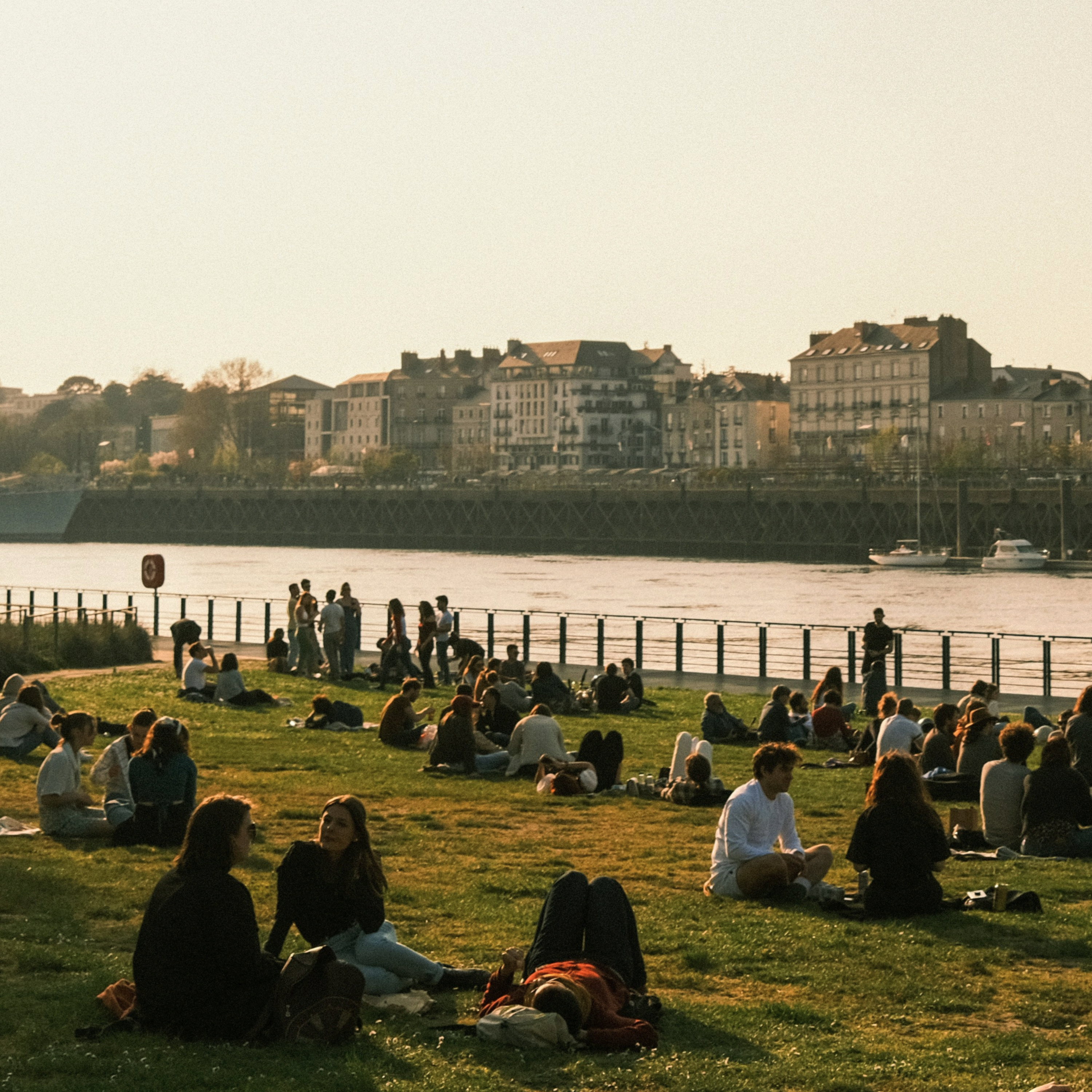
Hello and welcome to Local Voices for Sustainability, the iclay Europe podcast. I'm your host, Lucy Mears. In each episode we explore the urban sustainability challenges and triumphs taking place in ICLAY member cities across Europe. In this episode we head to Nantes, a city on the banks of the Loire River in western France, shaped by its maritime past and home to around 700,000 residents. In recent years, Nantes has changed a lot. The city has redeveloped large urban areas whilst also protecting the fragile ecosystems of the Loire estuary. As the city changes, attention is shifting to something often overlooked, the soil beneath our feet. Soil isn't just dirt, it's a key part of the city's ecosystem, helping absorb water, store
carbon and support biodiversity. And this brings us to today's central question, why does soil matter in cities and how can it guide sustainable urban planning? Joining us today is Clement Le Bras Tomas, director of territorial strategy for Nant Metropole. Clement is in charge of urban planning and land and real estate strategy. He works closely with the other departments in Nantes and in the municipalities to design and implement A sustainable and inclusive territorial strategy.
Clement, welcome to the show. Thank you very much for having me. So, Clement, I'm going to jump right in. Urban planning, as we know, involves lots of visible decisions, from where to build to how to design streets and parks. But beneath all of that, the ground itself plays a crucial role. Why is soil so important for good urban planning? Thank you for the question.
So soil is now at the heart of the discussions on sustainable spatial planning. And this is quite a shift in perspective and some might say it is a paradigm shift in sustainable planning. Indeed, during France's and Europe's development phase, soils were mainly seen as the support for human activities. We have hopefully moved from that perspective and now in France.
For more than 25 years, French local authorities have been required to seek a more efficient use of land and preserve agricultural and natural areas. And more recently, the French Parliament adopted a Climate and Resilience Act in 2021 and has strengthened the objective. Planning must now aim at 0 land take by 2050.
So it it moved from the support of human activities and then the protection of agricultural and natural areas. And now it's about soil. And I would say soil is important for five reasons. First, living soils is a key component of ecosystems. Second, high quality arable soils are obviously essential for a large share of agriculture and in the case of northern France or for viticulture.
We also know that soils can store carbon and therefore contribute to the fight against the CO2 emissions. And with greater surface of living soils, we can increase the number of trees in the cities and thus improve the adaptation of cities to heat waves. And finally, living soils make the sponge city possible.
And what is a sponge city? The sponge city is a city where the water cycle functions properly with soils absorbing and filtering rainwater. So this ceiling soils acts here as a tool for flood prevention. So these are 5 reasons why soil is such an important issue on on planning nowadays. OK. So this move to focus on soil really shows it's multifaceted nature.
And I'm particularly interested in the fourth reason you mentioned regarding adaptation to heat waves. Could you expand on how soil plays a key role in heat resilience? We have worked with our urban agency because we are, we work in the metropolis with stakeholders and and expertise agencies. We know that we have urban heat spots and the degree of the importance of the mineral city of the sealed city leads to a very hotter cities. And we know that in the forthcoming years the climate of Nantes will reach the climate of Portugal. And so this is quite new for France because we we have been a very temperate, quite rainy and cold part of France. We've had in the last summer's heat waves to 40°, so having more de sealed soil and trees
will help us decrease the heat and help us adapt to that new climate condition. I will come back to you a little later about de sealing, but before that I'd like to hear about the guiding principles followed by Nantes. Last year, the EU passed the soil monitoring law, giving cities better tools to track soil health and prevent degradation. For a city like Nantes, this information can inform planning in practical ways, with over half the metropolitan area made-up of natural and agricultural land. As you've already mentioned, what guiding principles help shape land use decisions across the territory? Well, throughout its history, not like many of the urban areas in France and Europe grew by
consuming surrounding farmland in the process of centrifugal urban sprawl. And this sprawl was particularly significant since World War 2, when housing and economic recovery were crucial goals. And the amount of farmland consumed during that period, the second part of the 20th century, was far greater than the actual population growth.
And we haven't had measurement tools to steer that strategy that projectry. And in the year 2000, before the European Soil Monitoring Law, French parliament adopted a urban Renewal Act, which created tools like the Local Urban Plan. This is the tool that regulates land use in France. And lawmakers tasked local authorities with the goal of curbing urban sprawl. And in Nantes in 2019, the 24 municipalities regrouped in the metropolis adopted their first common metropolitan urban plan. We have 3 strategic guidelines in this plan shaping in nature metropolis by committing to 0 net intake. So it's, it's at the heart of the strategy, organizing A compact metropolis and prioritizing urban renewal over extension.
And we used many tools to implement that strategy, high highly protective regulations on natural and agricultural areas. One tool that we helped invent in France, it's a mandatory percentage of permeable surface within projects. Anytime we have a project, you have to respond to that percentage. And we have also rules on rainwater on site, rainwater management based on nature based solutions for rain absorption. And zeroing in on the topic of rain for a moment, could you give us a picture of the way rain is managed in Nantes? Well, there's been a PhD thesis on how Nantes deals with the rain.
We are quite a rainy city, so we have to prevent floods. There are hard laws and regulations on the flood prevention in France, in the South of France. It's never enough. We have to to act strongly on the de ceiling and on on site rainwater management. So we know that it helps absorb rainwater. And so in each new project you have to prove that your project will not lead to more flood risk.
So it's nature based because we have the priorities on the sealed soil absorbing rainwater. And when it's not possible, you have environmental components of the project or elements of the project to keep the rainwater, I would say a short blue in French of the rainwater that will flow in the end. But that helps keep each project responsible for that flood prevention. It's not the the sole responsibility of the local authority.
So each new project has to think about that flood prevention. I just wanted to clarify the process of de sealing. Is de sealing purely the function of removing pavement and concrete areas, or does it encompass something else as well? The goal we have is to curb urban sprawl to lead to a more more compact cities that will not take on agricultural and natural land.
That's the protective side of it. And you can gain living soils by the ceiling. So the ceiling is mainly removing concrete and removing pavement. It's not always this. You also have agricultural land or or urban soils that we improve and we remove polluted soils and that leads to what we call renaturation. It's more than DC Link, it's restoring the environmental functions and qualities of the soil. As a pilot City of Spades project, which aims to put soil at the heart of urban planning, Non Metropole is exploring innovative approaches.
Could you share with us some of the interesting outputs of the project? Well, the implications of that paradigm shift, the zero net land take and and soil restoration is quite complex for cities. We are lucky to to be in the space program with the the National Geological Service, France. With BRGM we organized an exploratory workshop in Nantes to help draw the map of the different solutions from planning to urban intervention and more nature related policies. It helps not simplify, but understand the complexity and where we can have levers to accelerate the DC link process. OK, so you mentioned planning and urban interventions. My understanding is that planning is about starting from scratch with new spaces, whereas
interventions relate to adaptation. Is that correct? Planning is more about common rules in the local urban plan and intervention are more local intervention in a street, on a school, on the housing project. And can you share a specific example of a very successful urban intervention in the Nant area?
We have had a very extensive car park in the centre of Nantes, next to the swimming pool of Nantes, Petitoland, Little Holland and this this was for many decades one of the major car parks of Nantes and this year we we will be deceiving most of this area to create a new park in the centre of Nantes. Another example is the island of North, because N is crossed from east to West by the Lua River and we have an island that once was dedicated to the naval industry. In the plans, we will create new parks on soils that were once industrial and polluted soils.
You mentioned Non's maritime past. Is honouring this heritage a key consideration in the city's urban planning? Yes, actually it's at the the heart of the urban transformation strategy in Nant and in the metropolis. We have still ongoing activities companies like a naval group that still employs many people in the north urban area and in the island of Nantes where all the activities moved to the coast.
We kept the history and we prevented the demolition of that heritage. And so we we are always trying to take care of that history in Nantes and to keep it in the the landscape. It's an important part of the complexity. It's always easier to start from scratch, but that's not how we see a respectful urban landscape, I guess. Of course, every city's soil story is different, but I'm sure many of the challenges are shared. Have there been any soil related challenges in Nantes where learning from other cities was particularly useful? Working with other cities always helpful and with other levels of governance.
We have a three tier system in France. We have the the the municipalities and metropolis. We have department level and regions and all these levels contribute to good urban planning or spatial planning and we work very closely to the department in North Department of Lua Atlantic. We share tools, we share analysis on soil and land use and we we have an ongoing dialogue with neighbors in Ren of the capital of Brittany.
The Ren Metropolis has adopted a road map that's called desirable land Sobriety. So it's quite ambitious. Norton Ren are I guess sister cities and we we always try to improve our strategies and we have a great dialogue on on the land use and the ceiling. Did you say desirable land sobriety? Yes, I said that.
Could you explain what that means? Ren and Nantes had an ambitious vision on on curbing of urban sprawl and reducing land take And the desirable parts is important because this shift requires efforts on on many actors, many stakeholders. It means more complexities, more maybe heights. And to make it desirable and not just a break on projects or something that comes from the state or from the parliament, we need to have a positive perspective on our zero net land take strategies.
And it's desirable because it helps to have a better, a better way of life or the inhabitants with the cities that adapts to climate change, with more parks and connections with the geography of the territory and not just a very mineral city. It is desirable. It's it's not just another break that we put on Urban Development.
I see. So, based on your experience, what lessons or opportunities could help make soil considerations a more central part of planning decisions both within Nant and beyond? There are several factors that can help place soils in the heart of the decision making process. First, I would say improving knowledge and awareness of the importance of the functions of soils. Absorbing rainwater cooling the city, but this require continued capacity building within the metropolis linked to that awareness raising issue.
Unfortunately, climate emergency will lead to a more a greater place of of soils in decision making processes because cities and good urban planning will need to help adapt cities to to these new conditions. And finally, I believe in integration in national and European legal framework. We can have cities that like Nantes or Rennes.
We had our own challenges on stopping the consumption of farmland. And with a clear legal framework at the national and European level, it will help sharing the strategy and the trajectory. Legislative frameworks are not always perfect. The Climate and Resilience Act in France is not perfect. The soil monitoring law is not perfect as well, but it puts the local authorities on the right path to more sustainable planning.
From what you've described, it sounds like there's a sense of empowerment and accountability at the local level regarding this sense of responsibility with individual projects. It's not an easy message because municipalities approve the philosophy of curbing urban sprawl, of having Perry urban agriculture and but when you are faced to an environmental problem, you you need an extra effort and the legal framework in France has strengthened year after year.
And so now zero net Lintake is part of that movement and it's trans partisan. Now every mayor and municipalities know that it's a priority to stop urban sprawl and to protect environment. You have a subsidiarity framework, you have a quantitative goals at national level. And then each region in France had to adapt the strategy to the governance and the local actors and and now the local urban plans have to to integrate the zero net long take trajectory and we will face many challenges and and questions and debate. It's a nice face because it's now a very operational and grounded.
It sounds like a very positive set up for the future, which leads me to my next question. How do you see the insights and tools developed through the space project shaping urban planning and land use decisions in non Metropole in the years ahead? Well, the space project, it's strength, it's the first time we are involved in the European level research project. And what I like about it, it's that it will strengthen the connection between peers in cities across Europe and that's quite new.
As I said, we'll try to exchange with other cities, but neighbors like Ren or Breast, the cities in Brittany and in the West of France. And it will help us share expertise on very complex issues. And it will help because we are in the face of evolving the local urban plans in France in the forthcoming years.
And to move towards better integration of the functions of soil, we will need all the thinking and debates. We'll need to to to be inspired by what others are are doing across Europe. Do you have an insight or tool from the project that you're particularly passionate about or perhaps invested in that you'd like to see used by cities that are not part of the Spades project?
What I I find very interesting in space is that the first research programs or projects in in France were really on the scientific knowledge of soil. And now it's more about political science and the decision making process and how we will help the municipalities and stakeholders to share the trajectory and to help us convinced that some projects have to be deprioritized. That will be very helpful to, to talk about governance in this project.
I think it's, it's the new step. It's of Parliament importance to know better scientifically about soils, but now how elected local officials will tackle this problems to the next step. So it's one thing to have the science available and another to get the buy in. It is. OK, Clement, That's it for the first part of this episode.
Now we're shifting gears into our lightning round, which is something we like to call hot takes. This is short questions, fast answers, and no overthinking. Are you ready? I am. Soil is an essential part of all spatial processes. Yes or no? Yes, but we have to help everybody to realize that. If you were showing Nant to a first time visitor, which place best represents the city spirit today? It's.
A difficult question. I would say the island of Nantes because it's a mix of our history, maritime history and the the future of urban planning. If Nantes Soil could talk, what would it want city planners to know? That's it's important in itself. It's it's part of the ecosystem and the environmental framework of the of the territory. Depaving or de sealing soil produces removed pavement. How does Nant manage or recycle this material? It's a great question because in the moment we are working with private stakeholders, private actors in Nantes and the metropolis on circular urbanism and TO help us build capacities to deconstruct and to recycle all this material and to reinject it on project.
Oh, so you repurpose it then for different uses? Yeah, you, you can remove it, depollute it, remove all the pollutions and reuse it in the city. And the philosophy of the circular planning to to see these this deceiling and and all that the urban transformation leads to, to see that as resources for for the future of the city. Final question, where do you think Nant has been most daring in recent years?
I would say the protection of trees in the in the road map that we adopted in 2024, we've been very ambitious on the protection and the plantation of trees in not. It's a key part of the adaptation to climate change. And we have one rule that is inspired from Canada, from Quebec, it's the 3:30 and 300 rule.
We need to see 3 trees from each house or each home, have 30% of neighborhood covered by trees or or parks and have a park at 300 meters away from each home. And not very ambitious, but it's a it's a health issue nowadays. And when was this goal? Set. It was set in. April 2024. So, OK, so it's quite new.
Then quite news two years ago. But in Canada, it was put in place many years ago. So we know that it can't be done. So we'll try. Wonderful. Well, Clement, that's. A wrap. We've reached the end of our show. Thank you so much for joining us and for giving our listeners an insight into the often overlooked but vital role of soil in city planning and nature preservation. Thank you very much.
Listeners, if you. Take away just one idea from today's conversation. It's this soil isn't just dirt. It's infrastructure, climate protection and a foundation for sustainable cities. If you'd like. To learn more about the projects mentioned in this episode, you'll find links and resources in the show notes.
That's all for now. See you next time on Local Voices for Sustainability.
