

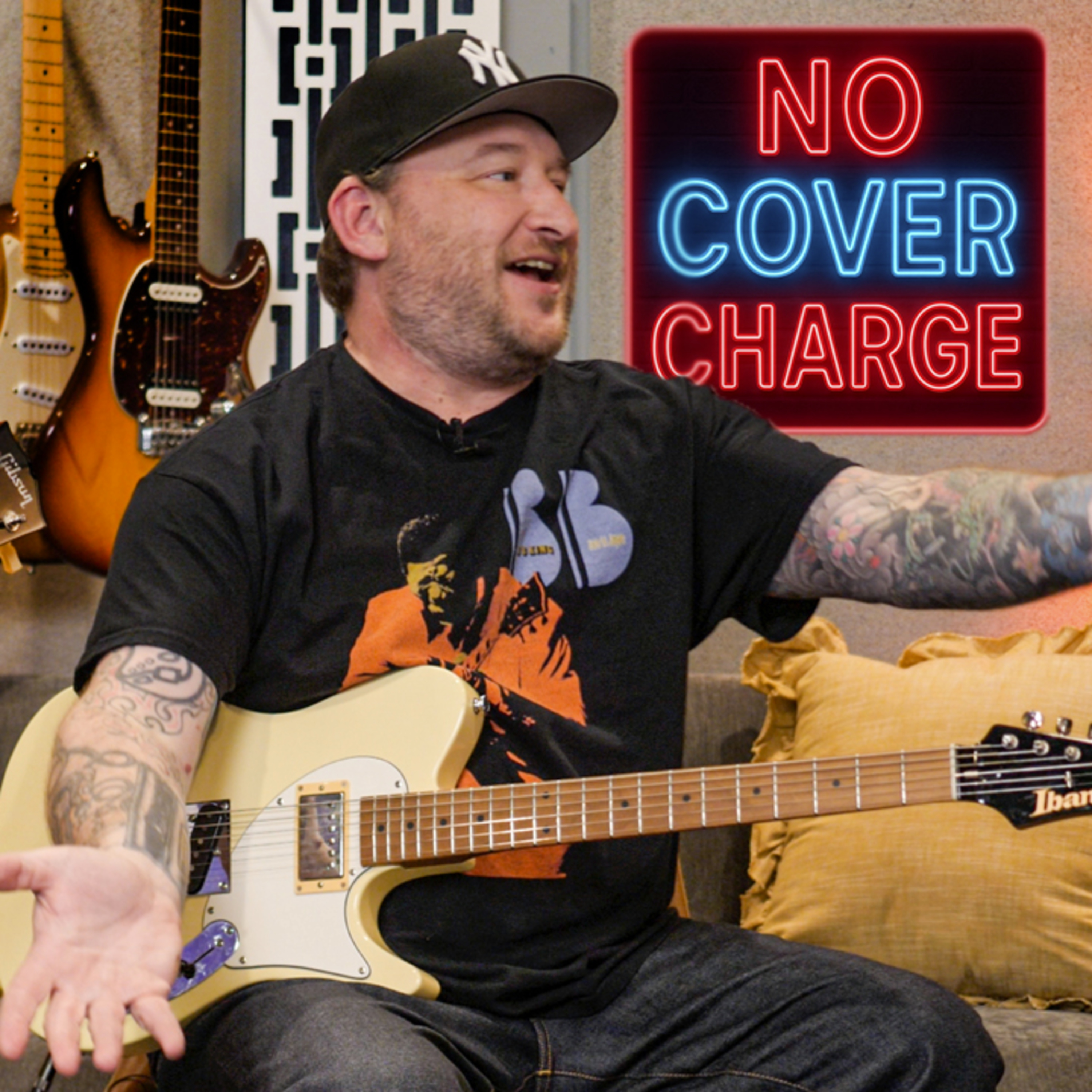
No Cover Charge Podcast· Staffel 1· Folge 12
Episode 12 - Josh Smith
Dienstag, 18. November 2025 · 1 h 05
Kapitelklicken springt direkt hin
Shownotes
Join Tyler Larson (@MusicisWin (studio.youtube.com/channel/UCshiNtfJ7Dj3nlh41a…)) and Jared James Nichols (@JJNicholsMusic (studio.youtube.com/channel/UCzbfeZRfm79klg5WCS…)) as they sit down with blues titan Josh Smith (@JoshSmithGuitar (studio.youtube.com/channel/UCwtnTQ5g7aMj8eyY1K…)) for one of the most inspiring guitarist deep-dives we’ve ever filmed, for real! In this episode of The No Cover Charge Podcast, Josh opens up about tone chasing, creativity, gear myths, BB King’s 100th birthday album, insane string gauges (yes… 13s in standard tuning), improvisation, career evolution, and the mindset required to survive as a lifelong musician. Expect jaw-dropping playing, hilarious moments, killer stories from the road and studio, and some of the most honest guitar philosophy you’ll hear anywhere. If you love guitar, blues, tone, Telecasters, or just watching masters talk shop—this episode is for you.
Subscribe on Apple Podcasts (podcasts.apple.com/us/podcast/no-cover-charge-…)
The No Cover Charge Podcast on Spotify (open.spotify.com/show/1etwgleKExKzncMWSeSqe6?s…)
Instagram (instagram.com/nocoverchargepodcast)
TikTok (tiktok.com/@nocoverchargepod)
Facebook (facebook.com/profile.php?id=61579811813164)
The No Cover Charge Podcast with Tyler Larson & Jared James Nichols is your all-access backstage pass to the world of guitar—and there's never a cover at the proverbial door. Hosted by two of the most passionate guitarists you'll find, Tyler and Jared deliver a mix of electrifying interviews with legendary guitarists, laugh-out-loud tales from the road, deep dives into guitar culture, and no-holds-barred gear talk.Whether you're a lifelong shredder or just love music, you'll find something unexpected in every episode—a hidden gem, a new perspective, an epic jam, or a story that'll stick with you. It’s always a good time, and best of all? No cover charge.Plug in and hang out.
TIMESTAMPS
- Welcome to the first NIGHT pod!
- The jam warm-up
- Tyler predicts the World Series
- Who is the Shohei Ohtani of guitar?
- Electronic drums, The Who, and live performance quirks
- MIDI guitars and gear rabbit holes
- Improvisation vs. noodling
- Playing in time: the secret almost everyone learns late
- Following intuition and musical breadcrumbs
- What makes great solos connect
- Three-way rhythmic improvisation experiment
- Josh’s year producing the BB King 100th album
- Tracking 33 songs and wrangling 40 guest artists
- Paul Rodgers tracks Night Life on the BB King sessions
- Josh Smith uses 13 GAUGE STRINGS
- Trying Josh’s guitar out… ouch
- Roy Lanham and forgotten guitar influences
- Josh demonstrates how his style evolved
- Becoming yourself instead of copying your heroes
- Why the Telecaster unlocks Josh’s true voice
- The Telecaster is the ultimate apocalypse-proof guitar
- Tone is personal—and your gear should inspire you
- Amp vs. guitar: the eternal debate
- Josh’s new signature Ibanez Flat V2
- Life updates and reevaluating the dream
Transkriptvom Podcast bereitgestellt · Zeitmarken springen hin
If you notice in this room, if you're watching the no Cover Charge podcast. Are you really watching? Which you can do on YouTube or Spotify. Did you know there's a video player? I didn't know that until I saw us on Spotify and it actually freaked me out a little bit. That was cool. Anyway, it's a dimly lit room, maybe.
Oh, spoof night pod. This is the night pod. Bro, our first podcast done after 5:00 PM. After hours. Waiting for our friend the incredible Josh Smith. I need to come up with better adjectives. I saw some comments saying stop calling everyone amazing and incredible and genius. What, are you supposed to lie? Because they are amazing, incredible and genius. You have to be an amazing, incredible honestly, Josh, except if you're us.
Dude, I've said this about few of our guests. Like, they're like aliens. They're freaky, they're scary. He has. 13 gauge strings on his guitar. That I got to ask him about that. He was over my house, actually, about this time last year, rehearsing with Joe Bonamassa's band. No slouches allowed in that band.
No slouches allowed with Joe Man. If you're playing guitar with Joe, then you don't really have to say anything other than that he. Seems like the kind of guy that you think you got him figured out, like, oh, I know what this guy does with the guitar. You know, that's an easy thing that we all try and do is you kind of just like peg people, but with Josh.
That river runs deep, my man. Can't wait to have him over here in just a few minutes on the No Cover Charge podcast. Do you guys want to get to know each other like we can jam a little bit? You guys want jam a little bit? The. The. The. The. The. Thanks for coming man. Oh, thanks guys. You know, I've been watching some of the episodes. It's been cool to see you guys getting into this. Almost like a year ago today, maybe. Was it only a year ago?
Maybe July is when we first got in touch. Here we are again. What's changed in the last year for you? Are the Yankees eliminated the Red Sox? I knew you're going to. I'm going to start with that. Let's start there. I don't know. I don't have our Red Sox at this time. Yeah. So we both came up short this year, but at least the Yankees beat your teams. Yeah, we can.
We can. I can hang my hat on that. We can always earmark our time together based on what's going on in the MLB. So the Dodgers are probably going to win the World Series, is that? Well, it looks like Toronto's going to win. They're up three games to two. Oh boy, I thought the show Hey Magic was going to carry him but.
I thought so too, but man, Toronto is a resilient team this year. That's true. And they took us out, you know? Yeah, not that I'm pulling for him, but. Who's the Shohei Ohtani of guitar? Who's the Shohei Ohtani of guitar that can do what's the equivalent of being able to pitch and to hit Yes on guitar? To me, maybe that would be like if you're an insane songwriter and improviser.
Yeah, yeah. Or is it multi instrument like the best ever? That's a good question. I don't know who's the best multi instrumentalist of all time. That's the question. I don't know. I don't know that. Who's the Who's the on the list? Of multi instrumentalists. Prince. Yeah, Prince would be up there.
For sure. Like Paul McCartney. Yeah. Paul McCartney. He's Paul McCartney as far as being a performer and a writer. He's like a threat. It's an all time, so we'll say. Dual friend people are going to bombard it and be like how could you not say? Who's Wolfgang Van Halen has been recording all this stuff by himself and cloning himself in his videos. Pretty great.
That's hilarious. Do you play other instruments? Nah. Yeah. Same, I feel like editing video is sort of an instrument that I've learned. It's editing musical instrument. Also, I have a huge appreciation for piano if I could pick an instrument to play. At all. It would be the piano. Do you play other instruments?
No, man, I pick my way through bass. Of course we all do. Josh goes oh bass if it's. Got strings on it. I can fake my way exactly. Right. But as far as actually playing, no. I've played, you know, I will say like on sessions, there are sessions where I've played, I fake mandolin, I fake banjo, I fake pedal steel or lap steel.
I've played bass on sessions for sure, but never keyboards or anything like that. I can play certain drum grooves. Oh wait, what kind of groove was? It I can play a shuffle like a Blues shuffle. Drums is the most fun instrument I would. Argue to I want it to be a drummer straight up before I even play guitar because it looks so fun.
Why didn't you? My dad was like, there's no way you're. Playing loud drums, that's usually how it goes. He's like, get a guitar he didn't play, but he's like, it has a knob for volume. You can play that. And I was like. Yeah, you can play unplugged. Exactly. The question is, would you want to learn drums?
Let's say you're 15 years old right now and you only had the option to use one of those silence kits. Oh. Would you still choose to play the drums or would you go differently? No, if that was my only option that yeah, it's funny. We we played a show with The Who or just like a last month. I've heard of The Who. Yeah, dude.
And so they had that whole hullabaloo with with Ringo's son Blues of the gig and he was already playing, you know, electronic drums because they keep this because Pete has hearing thing, Roger has hearing thing. They keep the volume way down. So the new drummer was playing electronic drums and the stage volume was so low.
But what's funny was I went out front during soundcheck and they sounded great. Like Roger was singing good, Pete was playing. It was really cool. They're super nice, but the drummer, they're playing something right? And he goes to he hits a symbol and he goes to where you would like go to catch it to shut off the ring. And he triggered another hit.
How harsh? Yeah, exactly. And I could see the look on his face, like fuck these fake ass drums, you know what I mean? Like. 'Cause he has to use them, it's not. He has to. He has. To honestly though, it would be like if we play guitar like and it was just through like a only a sample sound or something have. You ever played one of those guitars with the like, noodly strings on them?
It's sort of like a ukulele. I've seen the bass version of that. Jacob Collier played one and it's kind of like the slimy little looking stringed instrument. There's MIDI versions of that I'm. So speaking. Of the old school MIDI guitars, that's with strings, but the ones where it had a button for every note on the fret board.
Dude, I saw one of those recently. Yeah, It Was Gnarly is for sale here in town. I haven't really gone to many music stores or been like looking. Normally I'd be looking for certain things or for stuff for my studio even, but I never even been in there the last year. I'd just been on the road or in other studios around the world working.
And so he had no gear acquisition this year, I don't think since I saw you last. I did have a tour this year of my own, which was the first one since before COVID. So that that like energized me a lot to play. It was like, you know, five weeks of, I mean, we played every day. There was 5-6 nights a week.
I played seventeen nights in a row without a day off. And that's something I. Followed it on. Instagram, I've done that since I was a 20 year old. You know, I hadn't done stuff like that since I was 20. And it was like, it was hard, but it, it was nice because you know, a week into that tour, it was like, oh, there I am.
Finally I'm back. Like, there's my chops, there's me. And that was nice. You were thirsty for that feeling. When we chatted, you were like, I'm kind of, kind of pent up. For it doesn't matter how much you sit here by yourself an improv, you need to be doing it like with other people in a, in that setting, you know what I mean, to really kind of be, I don't know, to be at your your peak of your powers, I guess, you know. So you still like when you think about improv, is there like certain things that you do on the guitar when you're not in the setting of playing that kind of keep that muscle working? Or is it just like, you just turn it off and then when you get in it, you're like, here I
am, I'm back in the field? I don't know. I mean, whenever I pick up a guitar, I'm sure you're the guys are the same. I'm improvising. I never just sit around and like noodle. No. Yeah, even if I'm noodling, I'm hearing changes. I'm playing a groove, whether it's, you know, a vamp or not or changes.
I'm hearing that. I'm hearing a groove, I'm hearing changes. So I'm always like, soloing, not just noodling. Yeah. But even that is so different than doing it with other musicians where you're reactive 100%, you know, to what's going on and also dynamic. Like we never, when we're sitting here playing by ourselves, play with dynamics.
No, you're just on breaking it down. For you know what I mean by. Breaking it down for. It's very recent that I'd noticed all my favorite guitar players and people that I would get to meet, and these really people I admired, they would all just sit down and be playing music in time. And it's such a silly revelation, but it is a revelation that maybe not a lot of players consider. And you don't have to know jazz that doesn't. Mean play through the changes.
What does that mean to you? We get so like locked into these these like things that we've learned that we love to play that are like this is my I play this and this when there's this chord comes, I play this kind of thing around this is happening. I go here and I do this and that's great. But often we ignore like our brain has always given us something like, you know, if you start playing whatever the groove you just, you guys just played for me, my brain is immediately telling me to play something.
Even when you're in the car and something comes on on the radio, I'm immediately besides enjoying it, I'm normally hearing like, oh, what could I do on this? Where do I go? That's the sickness all guitar players have is they start hearing a song, hearing that. Yeah, you know, or if it's not blowing over it, it's even hearing like, oh, what's going on there? Oh, maybe I would add whatever a part or a or a downbeat chanks or this or that, like I'm hearing something over that that thing that I'm listening to.
And I I think sometimes it's easy to kind of neglect or ignore that that narrative of but man, that's gold. Like it's literally it's your instincts are telling you like, Bam, play this, you know, and instead we go right for let me play my Jimmy Page lick #7 that I play right in this spot or my, you know, Albert. King this put it back in the bag. But it is one of those things I feel like as a guitar, we like to go with your intuition.
Sometimes is scary where you're like, oh, I'm going to go with my gut. I don't know if this is going to work when I know my other lick is going to, you know what I'm trying to say. But it's like the fearlessness jumping off. Sometimes I feel like that's the the best part. I see it like like bread crumbs or like Indiana Jones when he's when he travels overseas and the airplane leaves the dots behind them.
I see it like go follow this and. You see the whole trip though sometimes or like pretty far ahead large. Chunks. Yeah, you see large chunks and it's mostly reactionary. It's it's more than I'm quick to. If I play something, I immediately know what I have to play after that. Besides, like, you know, the, the obvious that Albert King's we became my the heroes.
I remember hearing like Dickie Betts and you could always like kind of listen to his solo, even if you'd never heard it before and you'd hear 1 lick and you'd know what lick was next just because it made so much sense. If he played Bo do Daddy and do Daddy and he was going to play Bo do Daddy and he's going to answer it, you know what I mean? And and those type of solos were always the ones that I enjoyed the most because, and I think also those are the type of solos that get the people who don't play guitar to really enjoy them.
Exactly. It's sort of like a great song lyric that you. It's so obvious when the thought is said. It's like, why didn't I think about it? That's exactly how I feel. And so I can never say it. Yeah. And it's so simple. And it's just like a guitar line. It's like, oh, well, duh, but it's so simple. But there it is.
And no one ever really said it like. That I did this one of those guitar camps. It was like George Lynch and Paul Gilbert and all these like Greg Cock was there and we were playing over come together. Everyone was just burning, dude. And I remember I was thinking in my head, I was like, I was next. I was like, I don't really have anything to say. You know, sometimes you're like, what do I even say? So I went.
So I was just playing the melody and it was like people were like, dude, yeah. But it was like I played like the simplest thing I could think, but it latched on with the people that weren't the guitar, you know what I mean? The service of the song we should try and improvise right now, but only play rhythmically. OK.
So how do you mean like no lead like? So that we're all going to, I mean we'll have harmony but no lead playing. So let's see if we can distinguish 3 different rhythmic. Parts. All right, what do you want to start? With we don't all want to play. This is, you know, for people who get together and jam.
They're just playing like a. What would be the simplest? Right. So I mean, if if you're holding diamonds like that and he's strumming, then I'm automatically going to play something that doesn't sustain. Yeah, dude. And I want to move on. Here I go. The. So diamonds meaning whole notes. Diamonds meaning whole notes this is. Where Josh is coming in with that kind of like that producer brain a little bit because like, I feel like you're fleshing it out like a track, which is amazing. And that's the way.
Well, you're reacting to what's going on. So yes, if I was in the studio, I would be thinking along the same lines. What about your production? That's a good kind of segue into that whole world of yours. Well, this year it's been literally the year of this, yeah. I noticed that shirt I sent you.
It's funny, I bought 7 new B.B. King to where the rest of this year because my whole year is awesome. B.B. King. The year of King. This year he would have turned 100 years old. Just last month, September 16th and starting in January, Joe and I started working on this tribute to BB100 hundredth album.
The family actually approached us to to make it, which is super cool. So it's like if the official B.B. King 100th birthday record, it has literally everybody possible on this. We're like. How much is like, how long have you been working on it or how much can? You spend there's 33 songs on it. She's like 40 guests. How could you even narrow it down? There's probably everyone in the world you just like. Well, I mean, some people said no, which was shocking. You know some of the people?
I asked. Most said yes. It's B.B. King, you know what I mean? There's some huger names that haven't been announced yet that I should probably can't say. And you're producing with the Joe is? That Joe and I produced it together and. What an undertaking, man. Yeah. So basically how it started was like with a list of guests that we wanted to have just, you know, wish list basically. And then I wrote a list of, to me, what were the most important BB songs that we had to do.
And for me, that means not just the most obvious ones, just, but the greatest ones, like the ones that are that matter a lot to me. And then Joe, of course, would throw in the ones that mattered to him if I missed something. And we came up with this list, you know, So then we went in the studio just kind of by ourselves, me and Joe and Lamar.
And actually Travis played bass because we did it in LA. So Calvin couldn't come and play bass. And Jeff Babco played keys because we, we were, it was on break for tour. So Reese was here in Nashville. So we did the first two days. It was just two days of sessions. We tracked 24 songs. Oh my goodness. Yeah, I mean, now this is Blues.
Come in like prepared, obviously. This is like the back of your hand. Yeah, you. Know how many one takers were there? Many that's awesome, but also I did a lot of preprint preparation just myself, like for each song, I had like a little note to to myself for like what I was going to tell everybody just so I made sure we hit like the things that were important.
I wasn't super concerned with like 100% sound alike. It was more like, well, if this drum fill happens, that's iconic. I have to make sure I'm that I mention it to Lamar. So I had little notes for each song and an arrangement kind of just written out for each song, and we just went in and knocked them all out and nobody was soloing because we figured it was going to be all soloists, guests, you know? So it's just Joe and I playing rhythm guitar and Babco playing organ and piano, and Travis playing bass and Lamar playing drums.
And we tracked all these songs, all in the original keys because I kind of had. For each song, I had like one or two artists written next to him that I thought could do him in the original keys. O Then we started reaching out to artists like, hey, we're doing this thing. We thought about this song for you.
What do you think? And honestly, I, I'm still shocked at how right we got that. Like so many of them wanted the songs that I kind of earmarked for. Them the producer. Year. Yeah, that's the IT. Didn't, wouldn't, didn't always work that way. Some came back at me and we're like, hey, can I do this song?
Oh, we hadn't tracked that one. OK, we'll go back and do it. So we did. We had other sessions as we went on where like like Buddy Guy asked for, he wanted to do Sweet Little Angel and he wanted a specific key and we had already tracked a different key. So we went and tracked the song again. I guess man.
Yeah, sorry buddy, I can't. One take, buddy. Yeah, put a Cape. On like Paul Rogers from Bad Company I had it's funny, we tracked Nightlife, which is the song that Willie Nelson wrote, but Bebe made it his like he did many versions of nightlife and my favorite was there's two versions. There's the Blues is king version, live version, which is amazing.
And then there's this version from the 70s that has Joe Sample and the, and you know, The Crusaders on it. And if they do a medley of, of nightlife and please send me someone to love and it's amazing. So we tracked that version and I thought, man, Paul Rogers would kill this. So we asked Paul Rogers and he said nightlife is my favorite, but I want to do the Blues is king version. So we went back in and tracked the Blues is King. Version, but for you it's like I can only imagine the honor so it's like no matter what you're like, oh, you want me to recut it the different version it's cool it's. Great.
Anytime someone had a very specific version they wanted. To me, that was awesome. Yeah, you're like, this is sick. They're going to be dialed in. They want to really do it. They're. Going to be on the project. They want to do this version of this song. So that was really cool and it was, I mean, a massive undertaking because we were on the road all year.
I'm. 1 billion emails. It's a billion. Well, it was all the artists and then management, their engineers, wherever they were going to track their bit. If I couldn't come to them so often they were tracking their bit remotely. So I was having to communicate with people and get them in Pro Tools session or a rough.
If they don't track in Pro Tools, make sure it's from zero and on the grid so that they, you know, they get it back to me and it all works. And I, I'm, I'm on Pro Tools on my laptop constantly, often people sending me back back stuff that didn't follow instructions and having to fix, you know, and, and get. This like 4 milliseconds off.
Oh, this is kind of bad. Lots of that, you know, having to line it up and hope it's how they. What they intended it. Yeah, you know those a lot of that. All in a day's work of a producer. It was a big project that's done. Now it's mastered. Amazing. The first 11 songs have come out already, but I'm got to do some killer.
Like I went to George Manson's place and recorded him, just the stories from him all day and spending the day with him. Then we went out to eat just the two of us, and it was like, I'll, I'll never forget this day. I brought him one of these actually at one of my models because he's an Ivanez. And I was like, dude, I'm literally part of the reason I I'm with Ibanez is because you are with Ibanez here. Please have one of my guitars.
Dude, I gotta bring this up. Like, I don't want to forget about it, but like, can we just talk about the strings for a minute? Yeah, I have to. Yeah, what's? Up dude. I have to bro. Josh Smith heads will know, but you use what the lightest gauge right? 7 gauge strings the. Light. Is that Billy Gibbons? The light I'm up to seven and.
1/2 Nice, nice. Yeah, quite the contrary, right? Yeah, but that's part of the the sound thing for me too. Like I needed stuff that that sounded good with these strings which not everything. Does the reason I bring it up is because when you were tuning your guitar, your guitar electric unplugged without anything was louder than me.
It was. It was loud. Tuned down 1/2 step. I was like, oh crap, we got to tune down. Man. Yeah, so I'm using 13 through 58 in standard tuning. I've used that same gauge and set up since since I was 15. And obviously Stevie was the the reason. One of the reasons. Another reason was I once sat in. I probably told that story when?
We were talking about that. And someone handed me a guitar to sit in and it had that setup on it and it I couldn't play and it pissed me off. Like to to know? Can I, can I just, can I try something? Yeah. Can I, can I borrow that? No, it's noticeable. The G string is no joke. The G string. With the pinky is the most noticeable. That's the one, yeah.
Let me just let me just play it really quick. The one thing that freaks me out and I think a lot of people don't understand with. Sorry to be passing on your guitar. That's. Fine with with some of these guitars is the way that Josh plays, man, when you do bends and stuff like that, no one can tell how heavy the strings are. Except I mean, it's it's it's comfy though, Josh, it's head heavy, brother.
Hey, you sound. Fucking. Good on that man. Well, you know what it does though is because we have this kindred thing with Stevie that when I pick it up all of a sudden all of like the my being wants to flip and I it's so heavy though bro. I'm I'm not used to it but it feels awesome. It feels good. You know, there's, there's lots of good things about the heavy strings and I've gotten arguments about it and things and it's a person.
And a lot of fights. It's a personal thing, absolutely, because just like we talked about with any other gear, I have people come at me with it. Why are you doing that? You know, B.B. King didn't play those. He didn't need them. Billy Gibbons. Look, listen to him. Listen to Steve Vai, you know, and it's like.
Nothing to do with you. They want to do it's me, this is me, it's what I like, you know, it's what I oh. But Rick Biato's video proved that they sound exactly the same. Did you know you don't actually need a guitar to get a pickup sound and. This is the thing. I don't understand where any of these conversations go, because that's the beauty about guitar is that everyone's different. Everyone has individual flavors and people can't seem to accept that.
Yeah, I just food. I don't. Want to man? At the end of the day, the biggest reason that I stuck with these strings and continue to play them, besides the tone that I prefer that they give me and the intonation stability and tuning stability, the real main reason that I stick with these strings is because of of the mindset they require me to have to play every day with them.
There's no half assing it. You got to pick. There's no phoning it in when you get to the gig and you're on a bad day and you don't feel like playing. I can't do that. I have to play and I like that. You got to be at the top of your game at all the time. Let me go. Like it's like, you know, you got to play, man. You got to play or else nothing comes out. Bad ass.
Yeah, it's a great mindset. Who are the unsung guitar heroes that we should know about? One that I've always loved that most people don't know is this California guy, Roy Lanham from the 50s. He was, he was a good friend of Leo Fenders. He was one of the early Fender endorsers, kind of like Speedy West and stuff.
But he was a real jazzer. But he was, you know, playing on a jazz master and stuff because Leo was giving him guitars and he was a big influence on Danny Gatton, who is one of my biggest influences. That's how I I heard about him. Someone gave me a tape that had Danny Gatton on one side and Roy Lanham on on the other side. And Roy Lanham was in a band called Sons of The Pioneers and also the Whipper Wills in the 50s. Like, you know, Bakersfield country, jazz type stuff. Dude, this guy's one of the best players I've ever heard. What are some of Roy Landing?
Yeah, I was. About to say like what was the how did you take? Well, like Danny, well, Danny Gatton got a lot of stuff from him. So like not like the the banjo Y stuff. It was more like the harmony stuff and the like Danny would play stuff on on G he would play like he got that from him for sure. And and like 251 stuff that that I heard Danny play like stuff like that's straight from Roy Lanham. He got that.
Roy was just really melodic and and creative with with harmony. He did a lot of like chord melody but not like Joe Pass chord melody like more like country. Country dude Melody. Yeah, and he was just really killer stuff. He did a song called Song of India that Danny then did with the Redneck Jazz Project.
And I had never heard his the Roy version. And then when I heard it, it was like this big connecting the dots moment of like, shit, this is where Danny Gatton got some of this stuff. It's kind of crazy when you think about guys like that and Jimmy Bryant and Speedy West and all that stuff when it was like guitar and pedal steel and like that Leo Fender, Paul Bigsby era and like how it was all emerging and those guys were all in the same kind of fold.
So like that first lick you played, that Danny Gatton thing, it's like you feel like you could hear that on a pedal steel or like, it's so crazy, man, when that stuff all melded together. Yeah, I mean, there were so many players from that era like Joe Mathis and and stuff like that, like just crazy. Technically amazing players, you know, just way ahead of its time like.
Did you get into like chicken picking and country stuff early on or did that come after bluesy stuff? The way after Blues and rock, even after jazz, like chicken picking came directly because of Danny Gatton. Like, only because of Danny Gatton. Like I for me first it was definitely like Albert King and Stevie and Hendrix, BB, Freddie King, Otis Rush, magic sand Blues. Like that was my beginnings.
And then jazz kind of started to creep in first like Charlie Parker and Coltrane, but then also like Fusion, like Robin Ford and Larry Carlton and you know, from the guitar side of it. But then Danny, when someone handed me that tape of Danny, How? Old are you? 15, maybe 1415 and that tape just floored me because he had so much facility and then there was all this technique that literally you couldn't play the things he was playing unless you also did the the technique.
Yeah, yeah, yeah. Unless you like started to hybrid pick, you couldn't play what he's playing. It just wasn't possible. Or the open strings and the trilling and the this and the that. And so that changed the way I played almost overnight once I started to, to, to work on some of his things. And for me, that was a big part of when I started to feel like my voice started to emerge because I started with like Stevie, Stevie, Stevie wanting to be Stevie Ray Vaughan.
And then I started to work in some of this jazz stuff that I was liking. And it was like, Oh, this is cool. But then when I started to work in the the Danny techniques and was started hybrid picking everything and started incorporating kind of drones and open strings and and and just all those things together, that was when I felt like, oh, this sounds like, like me.
That's. Awesome man. Can you demonstrate if I play like a Texas shuffle? Demonstrate where you started and then how you incorporate. Things So when I started, my hand was like anchored on the on the guitar like this. And it was like like straight up, you know, normal. But then maybe as I started to get into more harmony, it would be like.
But then. But then Danny started to come in. I started to combine like the open string runs and the stuff and the jazz. So he would go like. Wow man, dude, that is. It's so cool. Instantly recognizable and. And you were doing it, you know, to perfection, I think, as far as paying homage to that and making it your own in the process. But the open string cascading thing, it's something we saw with Tommy Emmanuel does that so well. He does so much like he does everything so. Easy.
I'm saying the one thing, like when I was just watching you play now, right away I was like, yeah, Because I felt like I was like Jimmy Vaughn, Stevie Vaughn, all that cool Texas stuff. And now. So, you know, like I started to add a little harmony and then I was like, oh, now it's getting like, interesting.
Then when you went like Danny Gatton, it was like, OK, cool. This guy is just like assaulting the fret board man. It's like, but now it's like a playground, man. It almost felt even though it was technically the most complex, it felt the most musical. But it felt like. It's the most me. It's the most you authentic, so that's part of it too.
And and it's it felt fresh. Well, I mean, and that was extreme example because I'm doing 123. It's like, let me just it's more of a mix of all of that all the time. You know what I mean? I. Still think that's an effective demonstration of where you start versus where you can go versus because a lot of people. Kind of.
Stop in that middle area and then build their voice from there just because of the technical part. Well, the voice was always, I mean, I don't know how you feel about your voice, you know, as an artist, but I just remember being pretty self aware at like 16 of like, man, I can't just sound like. Stevie Ray.
Well. Dude, you know I. I felt the same way. And like, probably like yourself, it was like there was a moment in time for me that I was like, if I can sound like I didn't care about anyone that didn't sound like Stevie or they didn't bend a certain way like Albert King, if they didn't, I go, oh, I don't even care.
I'd write it off. Oh. Dude, I like, I mean, and I love Robin Ford with all my heart, but at 15 I didn't like Robin Ford. I didn't care because it was too slick and he didn't bend enough strings and I wanted Albert King. Josh, if I didn't hear someone do that, if I didn't hear that, the microtone that I wanted, yeah, I'm good.
I was at a Blues Festival playing with my band and I had my hat on and my Stevie Ray Strat and we played, you know, set. That was probably, you know, 2530% Stevie Ray Vaughn tunes and I, you know, came off stage. That was great. And I'm a kid, you know, with a group of adults playing. And then another band came on on the other stage and it was like 60 year old dudes with a hat and Stevie Ray Vaughn strap playing Stevie Ray Vaughn note for note and I. And that was like, that's it, That's it. Like I, is that what I sound like and what I look like? Oh, wait a minute.
I also, yeah man, that's not. Even that's not even the same kind of pain as just having a bad gig. That's like having a good gig, but then your gig meant slightly less to you after seeing because you're like, it's not special. It's not unique to you. Yeah, exactly. It's OK if you want to get up there and jam like, well, some cover bands are some of my favorite bands.
Yeah, who do it well. But. No, but I fulfill us. I was always kind of this, this shit is always been so important to me. I knew we then like that's it. This is my life. This is all I'm going to do. You're a lifer. So also it was like like, OK, I need to quickly get on to the next step, like it's time to to take the next ladder rung up, you know, like figure out how the how you will start to arrive at not just playing like your heroes, being one of them.
If you can, how do you become a guy like that? Dude, I remember too, like I had a similar experience when I was doing the Stevie Thing and one of my friends was like, I was like, how did it sound after like a gig or a jam or whatever, He's like, dude, that one solo that sounded so close to like Stevie Ray Vaughan and like, I was like, yeah, OK, cool.
And then like afterwards I was like, well, how do I sound like me? Because like, am I just going to try and do that? And it's funny, you see some of these people that were just like us. And I'm not trying to downplay anyone on any level, but you'll see someone and they'll be dressed like someone and they'll be almost like cosplaying another guitar player.
And I don't have any hate for that because I, that was me. But you start to say to yourself, you're like, jeez, man, they have a lot of talent and clearly they know what they're doing. So hopefully they'll be able to take that. But dude, but that's, I mean, like, like I said, I was wearing the hat and all that.
That's part of the reason I stopped, you know, with the I wear a hat now, but not a Stevie. No, you got your own hat. There's a very specific hat that you're not allowed to wear unless you're. One of the biggest reasons I play a Tele style guitar now and not a Strat style guitar because when I still, when I pick up, if I picked up your Strat that was sitting right there, I would instantly play not just Stevie, but it's on my mind When I pick up a Strat, I would think more Stevie, I would think more Hendrix, I would think more Curtis Mayfield.
I would think of these certain things that I associate with Strats. If I picked up a Les Paul style guitar or 335 especially, I would play automatically things that I associate with B.B. King or Larry Carlton or Otis Rush. When I play this guitar, I don't think about any of that shit. I just play.
And the telly, that was the epiphany because at first when I was a kid and I was comparing telly to Strat, I didn't like Telly's at all. Like I was like, this guitar is bright and the tuning isn't as good as a Strat and it's not as comfortable as a Strat to play all night long and all of these things. There's compromises in this guitar and I didn't understand it.
And now those are the things that make me love this guitar more than any are those those shortcomings, those compromises, the hardness of it. It's what makes it such a magical instrument that's able to literally be molded into anything you put in your in you put it in some other player's hands like Julian Lodge, and he sounds like like Julian Lodge, you know, just on a telly and but he doesn't sound like Danny Gatton or Brent Mason or, you know, like not at all.
You know, I mean, that's why it's the simplest instrument, but in my. Opinion It actually is the most versatile solid body electric guitar ever made, without question. We we said this and we got into this subject last time we chatted. Jared, what do you think? The telly is the ultimate guitar, according to Josh Smith, who I may defer to.
He's. Pretty good, but. What do you think about the ultimate guitar? Is it going to be any specific? I know I mean. The one in your hands, man. Well, here's the thing. I think when you look at like the way that Josh just said it with the Telecaster, like they basically got that thing perfect from day 1A Telecaster I feel like is like a post apocalyptic guitar. Like yeah, you'll find a Telecaster. Approach guitar.
Yeah, dude, survive. Kind of man. I mean, I've seen telecasters. I've seen someone drunk fall down stairs and watch the telecaster spin. He picked it up and he still played it. As much as I love and worship a lot of Gibson's and a lot of like Les Paul's and stuff, the limitations of it are what make it so special. Where like Josh said, when you think about it, it's like even an escort.
They're so simple, but the amount of sounds and it's so player touch sensitive, whoever plays it, it's going to sound completely. Different. It's the only guitar that if I got hired for a job, if someone called me and said, hey, I need you to play guitar, can you be here in an hour? You grab a tally.
Hang up and they tell me it pays good and to be here and I don't know what the gig is. I will grab because this guitar will do whatever. When I pick up this guitar, I start to play like this, or when I pick up this guitar, I play like this. When you pick up that guitar, you play like yourself. That is like a revelation to any guitar player. I that's the truth is if you find a guitar that speaks to you and Simply put, inspires you to play and inspires you to to really do it, that's the whole name of the game. That's the dude that's the whole name of the game with gear in general that I think sometimes gets overlooked because everybody loves gear and gets obsessed with gear because it's fucking awesome.
But but but but it's in service of like the gig. You know what I mean? So I always find it hysterical and it'll be probably in the comments of this video when people critique or give you comments on I preferred your tone when you play this guitar or man, I went to your gig and why do why do you need so many pedals on your pedal board or why you have that much reverb on or whatever the comment is.
And, and I always come away from that thinking, wait a minute, wait a minute, wait a minute. You just told me you came to my gig. You paid money to come to my gig. So you have an interest in hearing me do what I do. Do you think you would have enjoyed the show more or less if I didn't like my rig and I was like feeling compromised or unhappy?
Percent, man. Also give me your number because I'm at the check with you for every pig now. I mean, dude, I've had legitimately people walk up to me after a show and they'd be like, you're playing that Epiphone guitar, man, and I'm sitting there and I'm just going, dude, like that's your take away?
Was the name on the headstock that's. I get it with this people who didn't understand why I went with Ibanez or listening with their eyes or just listening with prejudice. Like that guitar is made in Japan, yes, so fucking what? That's amazing. Yeah, and it, did you hear it? Did you listen to it?
Yeah, like, like literally, I've done the AB test. I did it when we were building my first model with with my guitars. I did it until I couldn't hear the difference at all. And also you're the driver, brother, like you are the one that's going to be making all the sounds with it. And if you're like you said, if you're comfortable with the rig and it Simply put, inspires you to play at your best and give the people what they want.
Gonna give them a better show. That's it. If that's they're gonna end up enjoying it more if you're happy with what you got. How many times have you picked up an old, like, let's say it's an old guitar or something that's supposed to be amazing, could be a new guitar, and you're just are feeling left just with so much.
You're like, dude, I'm not feeling this at all. Yeah, it happens. All the time. It happens all the time. Or a pedal. No, it's not hitting it right. For me mostly it's the most hit or miss or mirror amps. Like it's instantaneous. I know you're an AM guy bro. Well, when I plug into an AM, it's either yes or no instantaneously.
Causeway, you feel it? Yeah, Causeway, it's the way it feels under my fingers and if it has enough headroom and it will enable me to do what I have to do. And I know right away if it will let me allow me to do what I want to. Do it's the ultimate feel for that, for like, that speaks highly of how you feel with that guitar. Dude, and during COVID when I was doing my YouTube videos and I asked all the people I interviewed the would you rather have a shitty guitar and a great amp or a shitty amp and a great guitar?
You know, it was split 5050. Wow. But I'm always like, give me the crappy guitar in a great amp because I cannot. It doesn't matter if I have my #1 and I'm playing through the worst amp on the planet. That's terrible no matter what. You know what I mean? Like. Well, I might be on the other side of that equation, Joe. Really.
Yeah, it's. Been 50 it was literally I I think I did 55 or 60 of those interviews. I did it for a year straight every week and it was split. Here's. Parameters. So if we're talking the quality level is acceptable on both sides, then I think you're right. So if an acceptable quality guitar into an incredible amp, meaning like it's going to stay in tune, sure.
Because the way I always interpreted that question is if I pick up a guitar and it won't stay in tune and it just sure, then it doesn't matter if I'm playing through your rig and and Joe's on stage, I'm just not going to sound. I'm not going to be confident to hit certain stuff. Yeah. So that's the way I interpret.
The a question functionally playable guitar. Yeah. OK. So with that in mind, yeah, probably amp is the right, but guitars look cool man. I would have to say guitar. Players are we AMP players? Dude, I'd have to say amp too, because especially you guys, both, you know, I just using my fingers especially there's certain things that if I don't have like a amp, that's like talking back to me.
If I do have that amp, I feel like it's magic, it's untouchable and you're like I can play anything in my brain and anything I want to come out. But if that amp is gated me and it's like it's chopped me in half, Yeah, you're left here on devices. You start trying to play harder and like, you know, you're trying to compensate.
No, I, I, I'm with Josh on that. But like, I mean, you've got like a Dano on the wall there or like a Harmony Strata toner. These are technically shit guitars, crab guitars, but they can I. Gave them that guitar, guitar they. They can, but I mean, you know what I'm saying? Inspire you to play cool stuff, but not if you're also pairing it with this amp that sounds like, you know, a JC 120. You know not to shit on that amp. Yeah, this one's say 800, we're good. Is this an acceptable amp, would you say like plug in? It's not a hell no.
It's not a hell no. It's not a me amp. Normal amp, yeah, it's not a me amp. Like if I was gonna grab an amp for this situation it would be a Fendery type. Like this this. Yeah, Princeton or something like that, but yeah. So no matter the platform though, you can demonstrate these sort of Tele style that you're looking for.
This guitar is slightly more like a modified Telecaster. This is a prototype for the flat 5/2 that just came out OK. So this isn't the same 1 you had last year? No so much. Less is a new one. You had a black one last your. Model I'm gonna just call the flat 5/1. It's black. It's a ash body with this neck, Maple neck and regular Tele setup, you know, neck pickup. And this was a prototype for the two that just came out, which is a different color has a rosewood board, but so this is in the middle.
This is an Alder body like the new one, but with the Maple neck on it. So it's in theory it's like a mid late 50s Fender, like a 5758 Alder body, Maple neck. And then with the humbucker in here, and actually this humbucker in here is purposely not perfectly balanced. I wanted this guitar when we were prototyping it, and now that it's out, I wanted it to feel more like a vintage telly that you dropped a humbucker in that as opposed to one that you wound perfectly to go with that bridge pickup.
You know what I mean? Because there's something magic about modified Telecasters. Like if you've ever heard Jeff Beck and Keith Richards, you know what I'm talking about. They didn't go around trying to find the perfect PAF that measured out exactly like, like their bridge pickup. They dropped that shit in there and it just sounded cool, you know? So this neck pickup is a little hot and thick, you know. So I mean, it's perfectly jazzy enough to play jazz on and then the middle position, it's a little different than a straight telly, but this is where you of course get all the like Steve Cropper stuff and then.
The. You know, I mean, that's only a telly does that sound, because it's got no middle pickup, so it's just going neck and bridge and that's that sound, you know what I mean? And then of course, only a telly does this sound. Josh, you seem like a a guy kind of like me too. And I know Tyler does it a little bit, but I'm always writing these volume tones.
I'm always writing volume. Tone is more specific based on the song and the part, but volume I'm writing constantly. All the fluctuation and that, yeah. Clean it up. Yeah, well, the Strat, Strat, I'm writing the pickups constantly, right Strat you'll see me change in the middle of a phrase maybe 2-3 times.
Yeah, yeah, go neck bridge, neck bridge and. And part of the that's part of the cool thing about Strat too, is sometimes you, you flick it and then get stuck in the one of the in between positions and it you're improvising and all of a sudden that section of the lick sounds glassy. And then you quickly go down back to the bridge, like that's a cool thing about Strat. Every now and then it works out for you. So why humbucker in the neck?
Is there any specifics? Because I, I just wanted this well #1 to differentiate the flat V2 from the flat V1 to flat 5/1. I wanted Yeah, I. In AT style guitar, what's the reason for that versus the other way around for example? Well, because this is, I mean, this is the Telecaster magic is the Telecaster brakes.
That's the sauce. You know what I mean? You need that Tele bridge to get that in between sound and to get the twang. You know what I mean? And I mean, and it's not just for twang. I mean that Tele bridge is also. It's also the sound of metal you know you want it to be. Yeah, but it's also like the sound of like, like Prince playing, you know, on the owner, Like lots of punk is on on the telly, you know what I mean?
The Telecaster is the ultimate guitar. You need a better amp than guitar if you're choosing one. What other hot takes have we established with Josh? The Telecaster is the ultimate guitar for me, for you, at least in terms of expression. And it doesn't matter sort of what the the headstock, all the gear, everything is in service to your musicianship. I think that's the biggest take away, man. It's hard to wrap your mind.
How many pieces of gear and guitars will you go through before you really internalize that lesson? I don't know, It's different for everybody. Because like, there was a time when when you didn't know that. No, there was definitely a time when I didn't know that. And I mean, just to, you know, put the other side of the coin, like I, my pedal boards are normally more complex than most because I like gear. Like I have MIDI switching and you know, sometimes a few things on there that are specialized for certain moments in this and that 'cause I do, I stay up on gear. I like to know what's going on and what's new. And I like to know, you know, why people are using certain things and, and whatever often
more than you would need for a simple Blues gig. You know what I mean? And that's kind of where part of those comments that I made earlier come from. I remember Blues guys giving me shit for my pedal board back in the day. Like dude, pluck straight into the amp or you made me need one pedal. Put it in, scream it out, or. Whatever we haven't had.
Almost every person we've chatted with has shared a story of being accosted because of their gear. I think it's AI think it's a natural thing and also, you know, I think that a lot of people, it takes a lot of time and a lot like you seem like a tinkerer to me. I love to tinker. That's kind of at the heart and soul of what it is. We keep looking at it and we keep messing with it to try and get the sounds.
It's the same with pedals. I feel like swapping stuff on your guitar. Well, I just love trying to make something better. Yeah, it could be better. And you go, man, if you put that pick up and it's not going to be right with the bridge, it's going to give you a different pop. You know what I'm saying?
I. Appreciate those little nuances though. I think one of the best compliments I ever got from another guitar player, he comments. He's like, dude, your delay tales were epic. Should be on a T-shirt. I almost started welling up. I was like thank you, I worked on those millisecond timings. You heard that?
You heard that? I really, I wasn't sure on the mix if I was going to sell for 51% or 50. And thank you for noticing. I really. Appreciate it. But we also do get a little a little wacky with certain things like I remember like going through like Josh, you've probably done this, but like trying out 10 different fuzz pedals.
Oh yeah, sure. And you're like, Nope, Nope, Nope, Nope. OK, OK, but let me keep you know what I mean. It's just, it's part of the. Well, I remember when I kind of settled on my philosophy, I guess you you would say for for getting my tone and how much of that had to do with compression that I became super strict on then examining every link in my chain to eliminate compression like as much as possible. So if I was only adding gain compression, if I wanted it like as an effect as this or that.
But otherwise, I was trying to get rid of it, trying to get rid of compression, trying to maximize dynamic range. Yeah. And flexibility so that I could have as much control as possible. So I dove into that, Like, let me find the cables that that give me that feeling that I like, you know, let me find the pickups that give me the feeling like that, that do that.
And then the pedals, you know, that's why normally, like if you look at my pedal board, most of my drive pedals are probably louder than your drive pedals because I've spec them out that way. I like ones that have just extreme amounts of headroom. And also probably my volume knobs on most of my drive pedals are all the way up.
That's awesome. On all of them because I I think they. Sound. They sound better that way. You know. And it's an easy way if you ever like accidentally put them in the bag and then knobs get mixed up. It's. Like that's true. I'm in a good place in in personal life. Like life is really not. I just turned 46 couple weeks ago and I feel like, you know, it's, this is a weird business when you decide to, to give your life to something like we have.
And there's so many ups and downs and left turns, you know, where you're readjusting. Basically, you're the dream that you've had since you were a kid. You, you change dreams like that or, or you accept new outcomes and new things. And right now I'm at a place where it's like, I look around and I, I'm, I'm really happy. Like I, I'm playing guitar for a living still. My family is in really good situation. Like everybody's healthy and my kids are actually like grown, you know, like my stepdaughter, my daughter, she's 33 now. My son just turned 20, is.
He recording your YouTube practice sessions yet? Or my son. No, I didn't know. I put him on that last. Year, I remember you said, because I tried to get him to do that. See, he's actually in Japan right now. He stayed at the house and he's exploring Japan. He's figuring out his things. Over in.
Japan and I'm playing my own music the least that I have in the last 20 years, but also like personally, like things are really great, Like I I'm my bills are paid. I feel like I'm more well known than ever, which is weird. You know, it's all. Because of, you know, your work with us. It is, yeah, for sure.
It has nothing to do with your hard. Work, you know? Yeah. You're living the dream and like I like that you said that you just constantly have to readjust your dream and kind of what it is. Yeah, this dream was not my dream, the one that I'm living right now. I think a lot of people will resonate with that because it's like I always say, if I have a guitar in my hands, I'm happy, man. Yes, you know, and I think that you share that. We all share that, and I think a lot of people that are watching it share that too, where it's like, yeah, this isn't really what I ever planned.
Of course not. But it's still better than the worst day I could be doing on some other job, you know, without question, the one. True talent of a successful musician is that we know exactly what we're not supposed to be doing. Yeah, 100%. We may not know our true musical path, but we know what we're not supposed to be and. I mean, OK, so I've been playing guitar since I was six years old.
I've been playing gig since I was 12 years old. You know, all I did was live, breathe, sleep, the Blues, the guitar, start putting out records when I was 13 in the van touring around the country. And you know, you get to this weird this. It's a weird thing for whatever the so-called child prodigy bullshit.
But people start telling you how your life is going to go. You're going to be a fucking legend and you're going to be all going to cover guitar magazines. And, and so you buy in, you start to buy into this is what my life is going to be. This is what I want to accomplish, blah, blah, blah, blah, blah.
And then things go by, you know, and things change and you adjust. But I was also like coming up in this time where I saw there like there was some possibility for those things that come true. So like, because I had friends, like, you know, back in the day, Derek Trucks, we, we play together all the time when we were kids.
We're both from Florida. We've known each other since we were 12 years old, you know. And Joe, you know, Joe was out there a few years before us because he's a couple years older than us and we saw him on the news. You know what I mean? Eric Gales. He was out there a couple years before us too, because Eric's a few years older than Joe even. Actually, it was his birthday yesterday. Happy birthday, Eric.
You know, And then there was other was like Monster Mike Welch and myself and Johnny Lang and Kenny Wayne Shepherd and the coolest thing about looking around at at that, this whole scene from my generation there, we're all still like playing music professionally, basically the same age, you know what I mean? We all knew.
Of each other. We all knew of each other, you know what I mean? But I was like, there was a time 20 years ago when after I'd been doing it for a while, I kind of hit the wall and gave up because I was jealous as fuck of Johnny Lang and Kenny, Wayne Shepherd and Derek, because it was like, these were my friends and peers and they had Stein.
It started to turn the corner and I hadn't, you know what I mean? And that's when I changed my path and my dream. It's when I got married and we moved to LA. And then I started to do different things and I started to do sessions and learn more things about the guitar and, you know, be on the road playing music. That necessarily wasn't my cup of tea and Start learning about tones.
It wasn't my thing and learning techniques and be growing as a musician, which is now served me as I've become a producer and these types of things. I certainly I would not be the guitar player that I am now. They're sitting here with you now. If I hadn't made those left turns, you know what I mean? I'd still be plugging away, you know, playing. I'd be the old me.
Probably. Where does that insane drive to make those left turn after left turn come from? Well, most of it is driven by necessity. I mean, it's driven by personal, like what's going on in your life. I got married and wanted them being a responsible adult, at least to some to some degree. And I wasn't at first. It was hard, man.
I had no bearing or background for how to make a living doing anything other than playing my gig, you know, So it was like I had to learn like sessions was hard. I didn't have any idea how to do them. You know what I mean? I, I just, the only time I'd ever been in the studio before I moved to LA was to record my music, you know what I mean? So like it was learning how to do those jobs getting. Thrown in the deep end, but.
I was dude Landau recommended me for one of my first sessions, so I'm going in there for fucking one of the greatest session guitar players in the history of universe, and I have no idea what I'm going to do. You know what I mean? Because I didn't. They put a chart in front of you, a chord chart, and I played the chords correctly.
I thought I was done. Like it said, G minor CDI played, G minor CD nailed that shit. No, you got to write a part, man. You got to come up with something magic on the play. Didn't know how to do any of those. Right. The greatest guitar part ever. Come on man. It's easy man. That speaks volumes, though, of like your dedication to the guitar and how you were able to just like, come back, throw yourself. And that's something, man.
And being like so uncomfortable, but also being like, I'm gonna figure it out. It changed everything about me now, being the guitar player I am now. I wouldn't be even close to what I am now if I didn't have to do all those things. Those sessions, the growing pains. Oh yeah, the tone searching even like like getting to a session and asking them, asking me to get a specific tone and realizing shit, I never even learned how to get. I don't know how to get tone like the edge. Like what?
I don't know how to program a delay to do dotted eighth note. You know what I mean? And 1/4 note at the same time. I've never done that before or, or they want Tom Petty or Beatles and I hated Vox amps, fucking hated them. Now I love them, you know what I mean? But it was it was driven by like trying to to the work and and learn new things. Learn.
The language as he went. And those were all the left turns that have kind of led me to this new reality. But. LED you into this room right here. But if you asked me at 14, yeah, I wouldn't have done any of those things. I would never been producing records or producing or that BB. King's 100th birthday record. Right, like I and.
Being able to do all that. Man, things just change and you react to them and you you just roll with it. And then also you start to figure out things that are more important than the original dream because you didn't even realize you they would be, you know, and they become more important you. Can never predict what that dream would be, but what is one thing left on your Ledger that you want to accomplish musically?
Musically, yeah. What's most important for me musically is to not stop growing. And that's hard. And you work so much, which is a great problem. But what's driven me most of my life is the the want to be better tomorrow than today to figure out something new to bring in to my little world. I like that feeling of like, man, I, I'm better.
I'm a better player this week than I was last week. Or I got some new shit in my bag. You know, I got some new ideas. I got a new this. I don't want to lose that like that. That is what has driven me more than anything else is is like that push to like continue growing. I don't. I'm scared that I will lose that, that I don't want to lose. Well, as long as we're around, we'll keep reminding you of it. You won't lose it around.
I love this thing, man. I know we all do, I'm sure. I mean, it's still the only thing that I don't. I'm not a depressive guy, you know, knock on wood. Like I'm normally pretty even keeled like. But that being said, if I'm down, this thing still brings me out of it like that. I hope that never goes away because it's like how many people have something that lucky that they can rely on. It's like a superpower, man.
It is like a superpower.
