

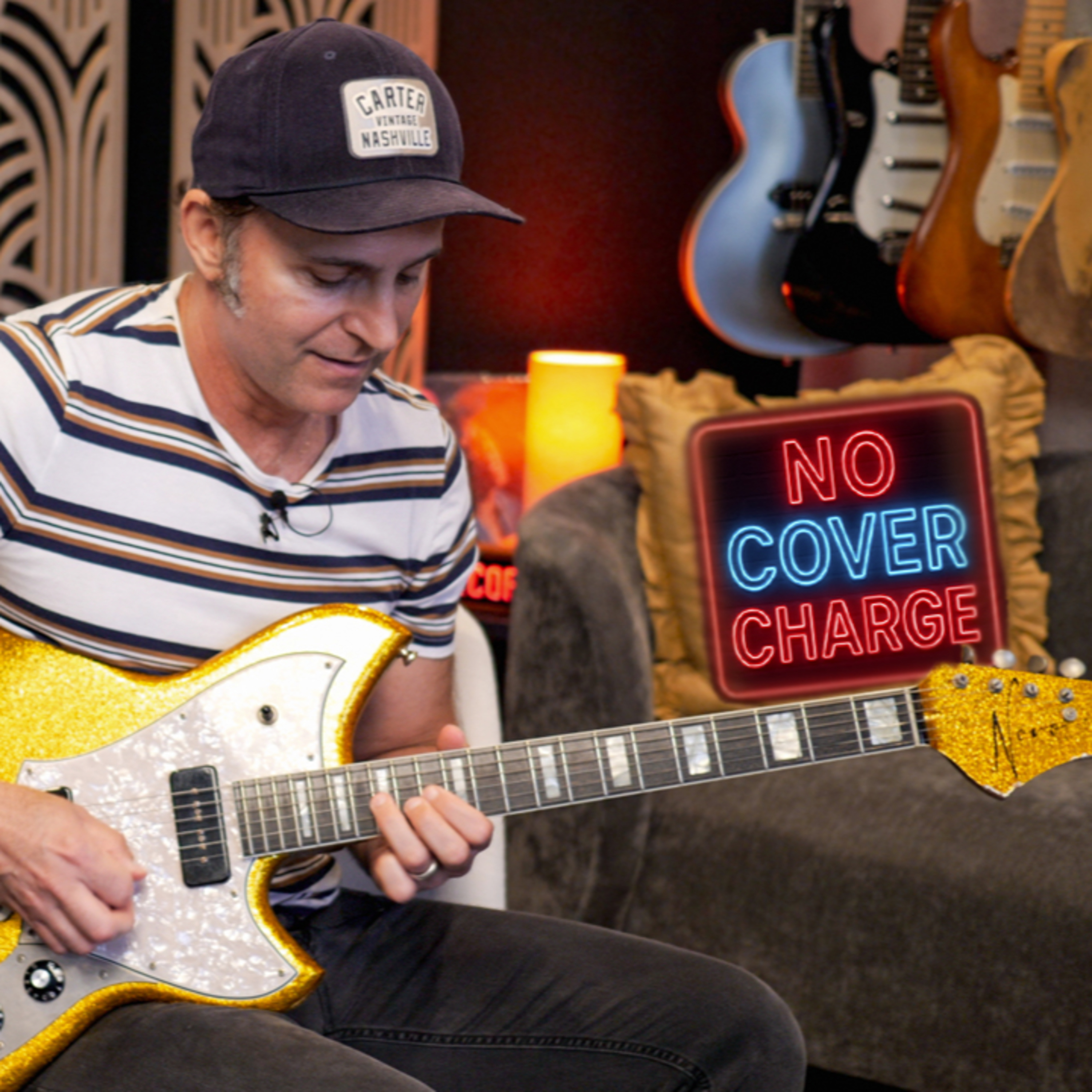
No Cover Charge Podcast· Staffel 1· Folge 10
Episode 10 - Dweezil Zappa
Montag, 3. November 2025 · 1 h 18
Kapitelklicken springt direkt hin
Shownotes
Guitar legend Dweezil Zappa (@thedweezilzappa (studio.youtube.com/channel/UCVkBBRhDVFXUdEqUJw…)) joins Tyler Larson (@MusicisWin (studio.youtube.com/channel/UCshiNtfJ7Dj3nlh41a…)) and Jared James Nichols (@JJNicholsMusic (studio.youtube.com/channel/UCzbfeZRfm79klg5WCS…)) on The No Cover Charge Podcast for an epic deep dive into guitar tone, technique, creativity, and life lessons from growing up Zappa. Dweezil shares rare insights on his dad Frank Zappa’s genius, the art of improvisation, tone chasing, recording tricks, and why the “mad scientist” mindset is the key to musical freedom. Expect jaw-dropping guitar demonstrations, stories from the road, and thought-provoking conversations every guitarist will love.For all things Dweezil, go to dweezilzappa.comDweezil's fan engagement platform builder: rewardmusic.comCheck out Jared on tour: jaredjamesnichols.com
Subscribe on Apple Podcasts (podcasts.apple.com/us/podcast/no-cover-charge-…)
The No Cover Charge Podcast on Spotify (open.spotify.com/show/1etwgleKExKzncMWSeSqe6?s…)
Instagram (instagram.com/nocoverchargepodcast)
TikTok (tiktok.com/@nocoverchargepod)
Facebook (facebook.com/profile.php?id=61579811813164)
TIMESTAMPS
- Hey Dweezil!
- Building a house, studio, and a new chapter
- Dweezil’s YouTube channel and creative freedom
- The science behind amp tone experiments
- The Sundragon amp test gone wild
- How volume changes your playing
- Taking breaks and musical resets
- Rediscovering inspiration after time off
- Dweezil’s guitar fundamentals and interval tips
- How to navigate the fretboard with confidence
- Turning wrong notes into right ones
- Improvisation and the art of risk-taking
- “Play your phone number” guitar technique explained
- How to create melodies from numbers
- Building a personal improvisation system
- Expanding your playing with permutations
- Using melodic minor and outside sounds
- Finding flow and emotional connection on stage
- Listening vs. overplaying
- What Dweezil learned from his dad Frank Zappa
- The story behind “The Black Page”
- Jared’s questions from tour
- Desert island gear picks
- The amp that melts faces
- The one pedal Dweezil can’t live without
- Favorite recorded guitar tone ever
- Inside jokes behind Frank Zappa’s song titles
- Tube tone myths and recording reality
- Jamming with Steve Vai and Chick Corea
- The legacy of Randy Rhoads
- How Zappa and Rhoads shaped modern guitar
- RewardMusic.com and empowering independent
artists
- Closing thoughts and guitar wisdom
The No Cover Charge Podcast with Tyler Larson & Jared James Nichols is your all-access backstage pass to the world of guitar—and there's never a cover at the proverbial door. Hosted by two of the most passionate guitarists you'll find, Tyler and Jared deliver a mix of electrifying interviews with legendary guitarists, laugh-out-loud tales from the road, deep dives into guitar culture, and no-holds-barred gear talk.Whether you're a lifelong shredder or just love music, you'll find something unexpected in every episode—a hidden gem, a new perspective, an epic jam, or a story that'll stick with you. It’s always a good time, and best of all? No cover charge.
Plug in and hang out.
Transkriptvom Podcast bereitgestellt · Zeitmarken springen hin
Hey Dweezel, what's up? I probably got the mic off. No, it should. It should limit there. Oh, you got a compressor? Dweezel ZAP is on the No Cover Charge podcast. Today he joined us. He's actually building a house here in Nashville, so I had the pleasure of having him over while he was in town looking at battle plans and blueprints for his home and Jared where.
Were you? You know, I don't know where I was. I was on tour somewhere. I think you were in Europe. Yeah, probably Dweezel. I missed you. I was actually really bummed. You guys know what FOMO is? The fear of missing out. Yeah, you're going to see that about me from time to time. He gets to hang out with Diesel and I got to go load gear.
Yeah. So you were in Europe during the filming of this episode, but we did bring you in for questions. Or Z. This is going to happen from time to time, so always be on the lookout for Jared on tour. We should mention that you're going to be touring throughout the end of 2025. Yes, And depending on when you're watching this episode, Jared's probably on a stage right now. I might be and I might be close to you. So check out the link in the description for that. But Dwiesel Zappa, I had such an awesome time with him. Your questions were the perfect balance between what we were getting into was just absolute mad scientist guitar wizardry is how I would sum it up.
I'm glad I wasn't here because I might not have been able to see straight. Feel like he could go anywhere with music. I can't wait. I can't wait to watch this. Without further ado, Dweezel Zappa. I've barely played at all in the last month so. Dweezel Zappa, thank you for visiting my home. Sure.
Soon to be close to your home, Yes. You're coming to Nashville to build a house in a studio. I take it that's sort of required for any guitar player building a house. First question is so where's the studio going to be man? Near the house. Near it, OK. Perfect. Yeah. You know, I'm ready for a change. Not necessarily because of music or anything, but my wife and I are just like, you know what, let's do something different. Let's have some space and let's have some chickens and bees and grow some of our own food and like, just enjoy a different way of life.
You're not the first person to mention keeping bees as like an aspiration for their themselves. What? What is it about bees? Well, I think, you know, if you do a little bit of research into it, we definitely need them for. Yes, I know that they're great for the environment. Yeah. Well, and, and for food and for other things, but they're also kind of one of these things that you look at and you say, well, how is it that EMF radiation is like doing terrible things to bees?
And if it does that to them, what's it doing to them? You know, so. They're like a barometer for our. Own health area in the coal mine, you know you know, but honey's good, so it's nice too it's nice I was. Going to say, what are we going to talk about the honey man? Yeah, you know you're going to give me some honeycombs when you move here.
Sure. OK, great. Yeah, this is just the kind of thing where sometimes you get into just a point in time where you've done enough things, lived in a a certain way for a long time. And it's like, well, new chapter. Yeah, I wanted a new adventure. We connected on social media and that seems to be part of your new chapter or new adventure because you have your own YouTube channel, extensively covered. Stuff that to anyone who's been on the platform for a while, would be like, oh, I would kill to have this guitar or this access to this thing.
So it's really cool how you're sharing all of your knowledge and the paraphernalia that's come along your desk. I appreciate that. I appreciate. That you and crispy crispy video, might I add, just like it's hard to do this stuff and I really appreciate the work you're putting in there. Well, I think thank you.
I really, I'm new to it, but I look at it as a similar creation process to music. You know, there's no rules in in the way that this stuff goes. I mean, some people try to make it so that you have to, oh, you got to have everybody has to have the same thumbnail and everybody has to do this and that. But at the end of the day, the, the process of making short films or mini documentaries about things that you're interested in, to me, it's a it's fun and interesting to go down that rabbit hole.
And then I see stuff like what you're doing and what a lot of people in the world of, let's say the guitar community on there. And there's so many different people who are good at different things and having a, a unique perspective and being able to have it be entertaining while you're talking about something that you're sharing that you have enthusiasm for. You know, not everybody does it in a way that you want to continue to watch all the time, you know, So I think your channel's great for that because you have a sense of humor. It's a dry sense of humor with a lot of stuff, but it's you, you're just doing things that like if you're a guitar player and you like checking stuff out,
it's a great resource. You know, it's a, it's a perfect platform for doing that, but then taking it to other levels. So I'm in the process of making this one video right now which I've never seen anybody do something like this. That's always a great place to start for a video idea. It's like, well, I've never seen this one before.
Yeah, so I'm doing this video for the Jimmy Page amplifier line, the Sundragon amplifiers. Cool. So I got all three of the amps that they make in the studio, and I do an exhaustive test with multiple mics and reamping and doing all this stuff. But I said I want to be able to do this in real time and let somebody hear what happens when I'm turning the knob. Wait a minute.
That's going to be tricky because I have to have continuous audio recording so that you can hear what I'm talking about while I'm turning the knobs. And then if I want to play something, I've got to be able to record and start and stop. You can't do that with just one system. You have to have two recording devices, so that and everything has to be In Sync.
Yeah. So this is a very complicated test that I put together that has. Like a mad experiment, if you will. Yes, it's it's beyond. That's kind of what we treat our studios like you're our bedrooms or wherever we're making our music. Sometimes you can get into that flow state of we can't really explain why we're adjusting this mid range of the EQ at 2:00 in the morning in our underwear, but we're doing it because it makes a difference to us.
I said let's do it in a scientific way and I put the loudest amp that they make the Super dragon in. Perfectly named. Yeah, in a, in a a spot. And I'm like, OK, let's imagine you're 15 feet away and this amp is on stage. It's like this is what would happen to your face if you're in the front row.
Melted. Yeah, so I did it that way and it's kind of crazy because the small amp that I was testing, which is this thing called the Nymph is, you know, you hear it in the room. I didn't change the record level. So you hear it, it's like OK, moderate level. The next one's like the Supro, like his first album. They have the standard Yep recreation a little bit louder. But then when the Super dragon comes on, the mic is distorted and like the room is shaking.
Oh my gosh. So it's and the the DB meter taps out at 1:31 and puts an alarm. It's like it's telling you basically your. HEAD is going to explode. Yeah, so these I. Didn't know there was a tap out part of a DB. Meter, yeah, like the alarm goes. So the thing about it is I haven't ever seen anybody do it in a scientific way like that. But also then you're having musical examples and then you think, what is the value of that massive volume in the studio versus a tiny amp?
You know, like now we'll see what that will be like, what's more musical, and certainly what's more convenient to record with. And does it affect your playing in any way? They all do all three of the amps and so it's going to be fun to to see how that one comes out because I really went down like the deepest rabbit hole I've ever gone on for anything. Well, I went on a little bit of a Dweezil Zappa rabbit hole because I know you said you, you literally started this by saying, well, I haven't played in a month. It's pretty sweet.
So breaks are essential. But speaking educationally for guitar players in in this perspective, what do you think are your greatest strengths that you can always rely on when you're coming back from a break? I will take time off mostly because I just have a backlog of other things and if I don't have to do rehearsals or playing shows, I almost don't ever play guitar at all. You know, I've had periods of time, like when I wasn't on the road from 2020 to 2024, I might have played guitar for less than 20 hours.
So. But the thing about that is my dad used to do that too. If he wasn't going on tour, he didn't play at all. He would write music because he could sit at the piano or he could just sit at a page and write the music and hear it in his head, which is remarkable. My ability to maintain the the chops needed to play the stuff it it. Even if I've toured for two months playing complicated stuff, if I take a week off, I don't remember how to play most of it.
It's all muscle memory that I build up at the time. But it didn't always used to be that way. It's just that there's so many complicated things I've had to learn. I just don't have the storage space. When I started playing guitar, I really didn't know musical terms or anything. I just was experimenting with what was the sound that I like.
And I didn't have a way to play the backing tracks. You know, I was 12. I didn't have a DAW. You didn't, you know, at that point, you know, So I would just hit a drone note and then I would listen to a note and then I'd be like, well, that doesn't sound as good, you know, but is it, is it useful? Or maybe?
And I started to realize, well, everything's just a half step away from a chord tone that that we recognize as a useful item, you know, so somebody might hear this and not like that, but I actually like that sound. And I then later, years later, I explore like, well, why do I like that sound? So this Tri tone kind of sound, you know, it like if you have full on triads, a Tri tone apart, it's got this powerful sound you hear in classical music, you know.
So I like this kind of sound where I will take like, sorry, let me give it a little more gain like, but I could do that in like a Blues context. Wait, wait, hold on. We'll get back to the that you're pulling the B string down. I've never seen that one. Yeah, it's nice. That kind of thing. I love that. Yeah.
But that's a, you know, the sound of a flat 5. That's why. Because you were the reason I noticed it first was because of the the tonality, but then I was like, what's your your finger doing? But yeah, that's cool. So you're not only emphasizing the note on just your improvisation, but it becomes like the star of the show, just you're playing.
Yeah. So if you want to zone in on a specific tonality that you like and you want to emphasize it and use it for, as Jimmy Page would say, light and shade or light and, you know, dark. But he's, you know, he's got a point there. Like you, you want to color in and give people a different feeling from from what you're doing with the emotion of it or just the color of the tones you're choosing, you know, so, but that's just one example of if I like the sound of something, I'll kind of explore what it is and know what the names of the intervals are so I can at least try to incorporate it somehow.
And so that's a good thing for people that are just starting. If you don't know the note names, it's probably a good idea to start at least knowing where your octaves are. So a good thing would be something like this. So that is the same A note, but in three octaves there. So it's here at the 5th fret, then on the D string at the 7th, and then again on the high E string.
These are obviously octaves of each other at the 5th fret. But if you start knowing where your octaves are and then you say, wait a minute, if this note is an A and this note is an A, now you have like some unisons and you can start maneuvering yourself around the neck and going, wait, that's an A there too. And that's an A there too.
So you can get yourself up the neck, but you'll know, like if you at least anchor some of the notes that you know what they are like an A, you can still then start figuring out where to go from that A note, you know, as opposed to. And a lot of people get lost as soon as they get out of position. And, you know, I call it the bad 60s band, You know when people do that.
There's nothing. Worse. Yeah, because they they do the. Oh man, you're good at that. Uncanny. Yeah. So, so they get out of position, they're like, I'm going back to home base. Yeah, I'm going to go right back down. Yeah. But you'll if you start to know where all the locations are to play that give you a chance to extend your idea, you won't have to like dip your toe in the water and be like, I don't know where I am. This doesn't sound good.
But other thing to know about that is like, let's say you do hit a note that's bad. If you hit it again, now it's intentional and you can create something for the audience to go, oh, he's doing that on purpose. So I've seen and heard and been part of this concept and experienced it myself. Can we possibly demonstrate it in real time what it's like to hit a wrong note into a right one? So I'll just play like a one to flat 7. So if you hit this note right, like that's not what people generally want to hear over that. But if you do it enough times, you get the that's basically people try to do these enclosures where they get a movement and they hit a couple wrong notes in between the right ones.
But if you're doing it on a strong beat, you can land it. OK, you know, and that's where this stuff comes in. Now this what I just played was not a great musical example of like, yes, this is the way to do it. But this is shows you what happens if you're in that scenario. You're only 1/2 step away from a chord tone. So if you do it again.
And then it's like those are all those like little permutations of different notes, you know, it's like A and then like a. You know, so I will try to bend time. You could see my face actually being bent as I tried to keep time, which I thought was a joy. That's really what I love about doing these shows like this podcast and really just collaborating with people is testing the different limits and the different parts of your musicianship in ways that when we talk about stuff like this, it's nerdy, but it's really the stuff that I wake up in the morning.
I'm like, hmm, thinking about that harmonic major and how it can actually be, you know, is that a weird thing? Have you ever woken up and be thinking about just the most random musical thing, or just can't stop thinking about an idea when you go to bed and then you wake up and it's still there? I developed like a system for giving myself opportunities to spark new ideas while I'm playing. And oddly enough, I saw somebody else try to say that, you know, hey, do this thing, you know, play your phone number. This guy Aaron from Intervals, right? That was I showed that to him when I was interviewing. Him.
He stole your content idea. Well, he, he, he totally like played it off like it was his own idea. OK, OK. But we see you, Aaron, from Intervals. Yeah, but the the the idea behind play your phone number, which is. So like the phone number becomes tablature. Well, here's the concept. Here's the concept.
If I like to put together systems of twos and threes that you could have subdivisions with. So like my dad has music where you you might have a rhythm that would be da da da da da da da DA1212312123. So when I started learning a lot of these things that have subdivisions and try to figure out how can I improvise in a way where I can start playing and internalize what that is and keep an idea flowing. I had to figure out, well, could I do it on one string, 2 strings, three strings?
What's the best way to do something like that? So if we just take a 5 and I show you that you can do it on one string and I break it up by having a position shift. So if I'm going to do a 5, I could do 12123, right? So, so you could have this hypnotic thing that you could build as a theme and the drums can get into a bass.
People can start playing with you and then you can start shifting it. You could turn that into a three and then a two and now you have like a weird crossover. Or you can start adding another two or another three to this stuff. So you can have a 5 turn into A7 like 1212312. Right. So, but then you can switch before back and forth between fives and sevens, OK. And so the idea was like, all right, well, if you learn how to just take the numbers that you want to learn to put them in a sequence, maybe try to think of writing a melody to your phone number.
So instead of like giving out your actual phone number, let's use this one. You know, you know the Tommy 2 tone song like 867-5309, right? So if I was going to play an 8A6 and A7, I'm going to just do it in the most basic way right now. So 8 can just be two fours, right? So let's just say we're in the key of A and we do 1234.
There's a four, right? 1234, So that's eight, right? So you go right, yes. So you think of it in terms of melody, but also the amount of notes. And we're not going to think about a time signature. We're just going to think about sequencing the. Number of the phone number. Yeah. So. So you have an 8 there, right?
So 6 is going to be next. So you play, you play the eight. OK, play it one time, right? Because it's the one number in your, you know, in your phone number, in this case 867. So A6, how how would you think about what's the first way you would think about playing is that could be 123123. So like, right, that has a certain flow to it, right?
So then 867 Now here's the thing. Like do you want to do it on one string, 2 strings or three strings? OK. So I have a way to, to do it on three strings. That's really cool because it, it starts to sound like something where you have no idea where the notes are coming from. Let's say I'm going to do a 5 + a two.
So it's going to be 1212312, right? So the way that I would do this on three strings is I would take it, let's say from here I'll go 1/2. So I'm going to do a pick pull off, and then I'm going to go up, up, up right here, SO12123 and then I'm going to do 1/2. So now if I was going to play 867, it starts to sound like a composed idea, right? But this could be freely improvised because you're going to be able to use these as movable cells anywhere on the neck. 867 then 5, we could do a 5 as a 12312 or 12123 or a lot of players play it as 1234512345 but let's keep it with like a two and a three, right.
So we'll have like a like I was showing you before. So if I do this. So let's see how much of this you can pick up quickly. So yeah. And then I'm thinking about those in fours. Yep, there you go. Now here's here's the tricky 1. So now the seven. Now think of it like this. In this pentatonic box, there's those notes that we all know.
But let's imagine that there's all these notes available here, and there's all these notes available here, right? So what we're going to do is we're going to borrow some notes from the 5th fret or the 7th fret within the standard pentatonic, which basically gives you like the Dorian sound in a minute. Exactly.
But so here's the thing, I'm going to just take 3 notes from the 7th fret right here, this D triad. So I'm going to first start here on G, right? And I'm going to do G to E and then I'm going to do this D triad. So it's 12123. But the way I'm picking it is a down stroke pull off and then up, up, up. But try to strum it as there you go. Yeah, yeah.
And so then you need two more notes to make it a 7, so I do. Oh, of course you do that. Yeah, that's a little. Individually picked the the D triad, try to make that like you're just strumming there you go and and you can just do a downstroke pull off for that if you want yeah, so. Yeah, that's more like efficient, I think.
Yeah, there you go. Now see if you can play 867 like that. You can imagine that when you're soloing and improvising, you can create these, well, just complex melodies. Just knowing that this is going to be for this number. Yeah, this. But if you if you just bar it across like you're playing the chord, you'll probably have an easier time, yeah.
Oh, that's much easier. There you go. OK, much better. This becomes a formula that you can follow to compose, to create an exercise, to do anything that's. Musically. Constructive. Yeah, but imagine that you could rewrite this melody in any scale mode whatever. You could do millions of permutations of this.
So this, if you start to develop a system for yourself where you can add a melody to a number in your head, you can start to create things that sound like precomposed ideas, but they're fully freely improvised as as you're doing it, you know? Yeah. So I start to. Become a sequencer. Yeah, I. Start mixing things up and doing stuff.
You know, there's a lick that I play pretty frequently that people are always wondering about because I do this mixing up of these ideas where it's like, so it just moves around. Hell yeah, this kind of idea. But you know, when you hear that without seeing it, you kind of wonder like, where are those notes coming from? And a lot of them are because they're these shapes that I'm doing that kind of picking where I will just bar across three strings and get 3 notes.
You know, one note per string on three strings and. You can transcribe it based on what you're playing in, and sometimes it sounds really cool up there, but maybe it's not accessible in whatever key you're in there. So it's like, oh, this actually sounds really meaty down on the 4th fret. Yeah. You can move it anywhere but but if you try to finish off the whole idea of the phone number and see if you can come up with your own version of A5 after. Like do the 867 right and then make your own 5 after that? 12345.
Yeah, yeah, you can do that. So. So try to do the whole thing. Yeah, there you go. It's hurting me. Yeah, it's hurting me. But it's like my muscle memory or something is growing a guitar speaking. Yeah, but see already if. You're using it as an improvising tool. It could be cool. Like, just as a framework, you know, memorizing it on the spot is also fun.
Yeah, but the idea is really cool. The. Killer man A lot. Of times when people learn a scale, they play it forwards and backwards, but they don't try to then play any other patterns with it. I'm just saying like if I'm doing like Dorian, 3 notes per string and then you go backwards. So if all you do is practice that, when it comes time to improvise, that's what you're going to do. What a concept to.
To make it musical by changing the note choices. So let's say you do it this way and then you change. You know, instead of it being 123 ascending, you're doing 231. And if you do that kind of. Becomes little musical tools. Right. So you're still playing the scale, but you're actually sort of resequencing it, and you can do it other ways. So that kind of stuff is an effective thing to do, to take what you already know and expand into new territory. And I feel like as a guitar player, I can't continually learn a whole bunch of new stuff, but I can take what I do know and use it differently.
Yeah, You think about something that takes so long to learn, and I think about this with making stuff, it's like, how can I really get the most out of all this energy I put in? And that's a great way to frame it is I have all of this that I've learned. It can't just be this one. It can't just be this, you know, There's got to be more ways.
If I wanted to just take threes and keep them all on the 7th fret, I would have this. But what I'm doing is just up up, up up, up, up, up, up, up, you know? I'm not trying to individually pick those. So the way this works, if I wanted to go 4 fives right here 12123121231212312123 so and. Then you're you're sticking in the aim natural minor and then this.
Yep. Yeah, that's awesome. Dude, so, so those are things that you can move around. And so it could be like you can have these things that can move anywhere. And then then if you want to get real stupid with it, you can make enclosures. So I can take a couple of notes that are out of the key and then I could do something like this. So this thing, it's like falling down the stairs. Yes, it is.
Yeah, but it's a cool sound, you know. But that's The thing is like you can take this. These are all like little sounds that you see on the fret board, kind of. Yeah, they're comparing sounds however you want to look at them, but. Yeah, like cells and permutations. Yeah, that's what you said. And so, but I could take weird shapes, just random and I could decide to just play that and then go into a chord tone, you know, so I could take random shapes of any size. And it just doesn't matter because it's a, a perpetual motion machine with a specific rhythm. So if you have as an audience, you're hearing da da da da da da da da, da, da, da, it doesn't matter what the notes are until you land on something, right?
So you can build. Your intention can be masked. Yeah, I like the sound of the melodic minor scale, but the melodic minor scale is basically the major scale with a minor third in it. Apparently it's different going down than going up. Well, and depending on what school of thought you subscribe. To yeah, it can't be, but so like, you know, this kind of sound right here.
Where's the like, even more wrong way to use it? So like if let's say you're just in a minor again, I don't know what this turns us into. Somebody who's like a theory nerd will be like, oh, that's this sound. You know, it's probably going to be something like Phrygian dominant or something that I don't know the name of, but I take that melodic minor scale and I just play it starting off the G So like this kind of sound.
So you get a a sound that you can mix and match from. I like that. So you can get some weird sounds out of it, but I will take that and I'll just try it in different spots all over the place. That's what I try to do is just see if there's something that I already know how to use and just move it somewhere else and see what it sounds like, you know? It's basically taking fragments of things that are already under my fingers and just shifting them into a new position so that when I'm playing, I don't have to think about doing something totally unknown.
I just go, well, I know what this is in one place, but if I just move that same thing somewhere else, I still can navigate. And then if I don't like the sound of it, I can go back to the home base of the whole thing anyway, right? But that's just kind of what happens. I have other things like that where I'll take like this kind of sound.
Which sounds good in Blues situations. It's got like a little bit of an odd twist to it, but you can also play it from different spots. And I mean even here. You look at these as inversions or different scale positions? Or do you look at them as connecting points? Or I just look at. Them as yeah kind of as connecting cells, but I know that they're made out of a specific arpeggio.
You know in this case it's this five note. Well, it's actually 4 notes till it gets to the repeat. So I usually use it in groups of fives, you know, so that kind of thing. But it's basically like a minor 6 chord, you know? It's got this so you know it backwards in front, but the way it comes out is just like, oh, I'm in a minor and I want to sound a little outside, bam, there it is. But that's like how it comes in your mind, because I've asked this question to people who are great improvisers over the years and everybody says the same thing where it's Victor Wooten said at best where he's like, I have the tools in the toolbox. I hope I never have to use them.
They aren't riding in the passenger seat with me. They're in the trunk. Like I don't want the tools, but I have them. So it's, it's like cool to hear you describe like it's the minor 6. Actually, it's this connecting point. Actually, it's this arpeggio actually, when you're describing the same thing four different ways.
So I think that's the amount of understanding that is helpful to have when you're really trying to compose your best music or really, you know, enjoy this thing. Yeah. The other thing that's important if you're doing a lot of improvisational stuff is like you might start off on a path that you don't like and you can't, you can't indicate to the audience that you're not enjoying it. You have to either.
You just go somewhere else that suddenly becomes better than that. And from that point on, you take it to a new place. But you can't get in your head and say, oh, this is garbage, I got to stop. And then it just becomes a bad version of whatever you're doing. You have to find a way to redeem yourself, you know? And the thing about it is cover.
Yeah. The thing about it is I think most audiences will notice something can take a step from a place that's ambiguous or not great to a place that's glorious and very good. And as long as you're willing to leave that behind you and not be like in your head, like, oh, this part wasn't good. You have to be present and say this part is good. Let's go from here.
Great. You know? And so that's like a bit of a mindset thing that when people are just getting into playing in front of an audience, they get really concerned that, oh, everybody's going to know. Most of the time they don't know, you know, and sometimes they might like the thing. There's often times when people go, that's the best I've ever heard.
You play and you in your mind is like, that's the. Worst. That's the worst I've ever sounded. But you would never. Why that happens? But The thing is, they might have actually connected with it in a way that you wouldn't because you're listening in a different way. As a guitar player, often times you're driven by technique and you're not listening for the musical connection part.
You know, that's one of the hardest things when you're on stage. Like, I actually have a piece of tape on my pedal board. My friend Tim Miller used to do this, too. He told me about it. He says I just put a piece of tape that says listen. Oh, that's great. You know, and The funny thing is this. Is a constant neon reminder.
The funny thing is, as much as it's there, it's really hard to do because you, you mentally you're, you're, you can run your fingers until you hear something that you like, but that's not necessarily going to benefit the music or the audience. Never really does. And you never leave the the performance feeling fulfilled. Yeah, at least I have.
I've been on stage way fewer times than you have, and that's an understatement. But every time I go up there, it's like every 3rd or 4th time I forget to listen and I get off the stage and I'm like, why didn't I have as much? I mean, I played well, I think, and it's all good, but. Oh, didn't really like get into that, you know, and with someone more experienced, you still need a piece of tape on there to.
Remind you it's very hard and so it does become the thing where like as when you're playing with people that you're comfortable playing with, you can almost have this mental telepathy, like they kind of know where you like to go and and vice versa. So it's much harder to then play with people you don't know and feel any of that camaraderie. And it's, it's harder to just connect in that way. So I totally understand what you're saying because no matter how well you played, if you're not really able to fully connect, it just feels performative in a way. Like you're like, well, I, I did the job, you know, and but that's The thing is like it, you have to have enough opportunities to develop a
vocabulary with the people that you're playing with. So that when it does like really kick off and you guys are doing something that's unique to your musicianship, the audience can get into that. They can really feel when it's taking flight and that's the moment that it's the most satisfying. Step on the gas and ride it, yeah. Yeah, and it doesn't happen all the time, but you try to have at least one moment like that in any show, you know? If you can have more than that, great, you know, but you still have to pay attention enough and work together to try to build something into that.
And so if you're a risk taker, it everything's not going to hit all the time, but you might hit on something that's amazing that you can never do again. Which is, you know, part of the joy of playing live, I would imagine. Yeah, and that's what my dad was all about with his guitar playing is he just thought of everything as a spontaneous composition. And he he actually saw and he described it as air sculptures he would be playing and he would envision creating something out of the the sound molecules that are moving in the room, you know, So it's a different way.
If you think about music that way, you're definitely going to play different, right. And he was a drummer to begin with. So he had this internal pulse that was death defying. Like he could play crazy other things against something and always know where he was and the band would have to just hold on tight, you know?
And they were the best musicians in the world. I'm talking like Vinnie Caliuta on the drums and those two going off and and doing rhythmic, you know, interplay. It's nuts. And is that what the black page? The famous? I'm not a drummer, but this is a percussion sight reading nightmare. Yeah. So the Black Page was a piece of music that was constructed for the drum kit as a a piece of music on its own, a solo drum piece.
But it was written for Terry Bozio to try to play when Terry was in my dad's band. And he was 21 at the time, you know, So you got to think about like, a lot of these guys that were in my dad's band, like the drummers especially, all were really young when they got in the band, which is kind of remarkable when they're the person that has to drive the bus for the whole show. Exactly.
You know. So I mean, even Chad Wackerman was really young, probably like 20 years old when he and those guys all could read and they could, you know, really internalize these complex rhythms. Because a lot of the stuff in the Black page has like nested tuplets and things where you might have a really slow feel that you have to jam all these notes into it and make sure you lock the downbeat. And so it's drummers lose their mind trying to learn this thing because it's really complex.
Still is like the most notorious drum piece I can think of. It's yeah, it's up there. But the cool thing is there's a melody to it as well. And so the thing that we were talking about before where we do the whole like, write up melody to the phone number, if you took rhythms first and then wrote a melody to, let's say, the black page, you could attempt to rewrite that melody because it's specific rhythms.
But I don't think you would ever get a better note choice than the one that my dad settled on. But The thing is, it would be an interesting exercise to try to take those rhythms and create new melodic phrases out of them, because there's so many cool things within. It my partner in crime, Jared is not available because he's in Europe.
So yes, this is this happens from time to time, but he sends his best wishes. Yes, thank you. That's his new baby, Jet. Very nice. Hey Dweezil and Tyler, Jared and Jet here. Hope you guys are great. I'm sorry I can't be there but I got a few questions. First things first, Desert island guitar and amp. What are they?
Your desert island island guitar amp. And when he says what are they? He's. I think he's asking both of us, yes, that must be it. Because that was going to be a well, can we have more than one can? I go dry. Wet, yeah. I gravitate towards a Marshally kind of sound because a lot of my favorite records were made with that kind of thing. So the amp that's the easiest to to play that has all the tones, it is kind of a challenge because it could be between 2:00.
I have a Carstens amp that. Carstens never heard. It's a beautiful amp that this particular one, even though it's the Billy Corgan model, to me it doesn't really sound like Billy Corgan's music. This amp goes in so many other directions that I mean, it can do Van Halen, it can do Marshally kind of stuff. So it's it's very versatile in a lot of ways, but I like that particular one.
That's the Grace amp. But I did just recently play that Nymph amp from Sundragon which is super. Cool, we're going to have to go to check out that YouTube video with the Sundragon the nymph. Yeah, the Nymph is a one Watt amp that's this big. When's that coming out? I believe they're in production now.
OK, great. So people are going to be able to check these out. Check. Out those nymphs. Yeah, I I'm feeling like those are, are two good choices, but I have so many to choose from from sewer, you know, the John sewer stuff. And there's a hook amp that I really love the this the captain amp that I have. So, but there is a new amp actually that I'm going to test that I have played a little bit and it does one thing that other amps don't do easily, which is get this amazing feedback that you could control at a low volume. And the amp company's called dope. It's a crazy, it's a crazy looking Cam. So you know, this is a hard question because I've recently been playing a lot of amps in my
studio, but the one that you know kind of is a go to has been the Carstens lately. Next question for you from Jared. What is the one guitar pedal that you can't live without? Well, I love the Dynaflanger, which is a very unique piece of equipment that my dad found a use for that nobody else ever did.
And it creates this doubling sound that when you think of a double, you know, people are like, Oh yeah, you could use like a micro pitch, or you could use a chorus or a short delay. But typically those have an LFO that is a constant thing that is something that is a predictable element. But in a real double, you're talking about time changes and pitch changes. So if you were going to do an overdub, you'd be encountering those things.
And that's what makes it sound cool and move in the speakers. And it's not uniform. So the dynaflanger is called a dynaflanger because of the dynamic element of it. So how hard you hit the strings will make it react. So my dad found a way that it has a short delay and it it can do flanging and phasing but it does modulation.
Basically it'll knock it out of tune. You put it on one side and leave the other side stable, but it'll knock it out of tune, sharp, then flat and then back. But based on how hard you hit and it also has a short delay of like probably 17 to 20 milliseconds. Yeah. So you get this cool stereo image that's doing this just like it feels like it's alive, like it's a moving animated thing when you play on this sound. And then Dynaflange when you when you add a wah into it, it makes it go even further out of tune because you're adding more gain to pass the threshold of the pitch part. Is that an MXR?
Like. Dynacomp, Dynaflange. It's something. Different. It was made by a company in the early 70s called Mike Mix and they're, it's a rack unit, but it they now have pedals that do it not from Mike Mix, but from like a bunch of other companies that kind of do it, emulate it. Yeah. One of the best ones that emulates it is the Maris pedal Polymoon that does it. One more question from Jared for you. What is your favorite recorded guitar tone ever? Hope you guys are doing great.
Cheers. Yeah, tough question there, I would say. Favorite recorded guitar tone ever? What comes to mind Now you don't have to be went to this. Answer my My Dad's song Watermelon and Easter Hay is one of the most emotive guitar solos. There's a clean solo and a distorted solo and both what he's playing and the way he's playing it and the sound is impactful on an emotional level more than other things. But of course, you know, I love Eruption, you know, I love, you know, flying high again.
I mean, it's like there's, there's tons of stuff, you know, I could pick favorites from all my favorite players. But you know, the first one that came to mind was Watermelon and Easter. Hey. This is a really small tangent, but the titles of some of your dad's songs, he's a creative guy, we can all agree on that, but did any of them, did you ever have any insight into that?
Well, I mean some of the stuff comes from inside jokes and some stuff is just. Are there any inside jokes that we don't know about that are allowed to be shared? Probably, but I can't think of 1 like so there's because there's. A song I wouldn't know to ask like what is? This so there's a song called Redunzel RDNZL and it's an instrumental and it's a really, you know, it's a it's a crazy, it's got a lot of crazy parts, but it's a beautiful melody and stuff. But the joke of the name Redunzel, it was my dad had a nickname for my mom.
It was based on instead of Rapunzel, it was Redunzel because she was redundantly saying some of the same things. And he would be like, OK, OK, Redunzel, you know? We're Redunzel, yeah. So that's one inside joke. I have a couple of videos now that I'd like your reaction to. OK, we just kind of need some more context here.
I've paired these two against each other. That's one of the best licks. This is my that's my favorite lick and you you crush it. So this is you playing back-to-back a real rig and the fractal, right. And you're saying, can I can you hear the difference? Could you hear the difference through my TV speakers?
The point is, when you record something in the studio, what it becomes after it's recorded is often fairly different or sometimes significantly different. But when it comes to Eruption, the original sound was not recorded with all the reverb on it. It was recorded dry and they added all that stuff.
So the the sound of the guitar dry is a very different animal. I don't think anybody at this point in time could disagree that there are a lot of tools out there that sound great and they're fun to play and they can work in a lot of different scenarios for recording you, you know, you're going to have people that are tube snobs that say, oh, only this could ever be the tone or that they. Don't they realize how much they're missing out on with that attitude?
Yeah, it's. Weird. I mean, like, take a black dog for example. He didn't play through an amp, but somebody's like, that's a Marshall, that's a this. He played through 1170 sixes that were distorted through a console, and there's no amp involved. Is that right? Yeah, I didn't know that. Yeah, I thought it was like a Telecaster and some sort of super situation.
Nope, Nope. So it's a direct sound. Wow, that's cool. You know, so it's got a weird fun to it, which is cool. It sounds great. And he would do stuff like that and my dad would do direct recordings and sometimes line out of an amp and, and all these these different things, like if it sounds good, it sounds good.
I don't care if it has tubes or not, you know? Especially in the art of engineering sound and creating records, that's just such a different thing than I'm going to dial in my live tone for my clinic, you know? It's way, way different. And that's the joy that I love most about. That's why I'm obsessive about my studio space and everything is where it needs to be because it's so much fun to just create something in here.
Like, like we're talking about just being a mad scientist. That's the way you find your voice, whatever that may be. Yeah. I mean, if you really think about your studio as a sound laboratory and you have fun with that, if you're inclined to do that and you enjoy that pursuit, there's kind of nothing more fun.
And I can't in that space, I can't emphasize enough. I've always felt this way. If I had my, you know, literally when I first started playing guitar, I would have my little corner with my desk and my shitty speakers. And you know, that might as well been AF15 Cockpit. I love guitar. What can I say?
I got another another clip for you. I want to talk about just kind of want to know what's, what's going through your head. I played that lick earlier when I was showing you. Isn't that so funny? And G there, that was like a yeah. What what goes through your mind? And I asked Greg cock this on the first episode of this podcast. But when you're about to solo and trade with one of the best and this has been your whole life. So not just Steve vibe, but in this particular instance, he's got the soul patch.
So you know, he's like prime Steve vibe. So what what's going through your mind and how do you think on your feet? What's your improvisational? Mind in a situation like a jam situation, I try to make it a conversation as best I can. So if I hear him play something and I can think fast enough to do something in a similar way, I will repeat back what I just heard in whatever capacity I have. And then I might dialect.
I might then send him a phrase and see what he says, you know. So in that case, it was a similar thing. He had done something just before I played where it was like a sweet picking thing and it was had a little bit of an outside feel. So my answer was a sweet picking thing with an outside feel. And so it's really just thinking on your feet as much as you can to respond to what you're hearing. And I'm not great at it.
I can do it to the best of my ability. I would like to be able to have more vocabulary and more things to choose from. So I've been in situations where like Chick Carrillo sat in with us and. Heard of him? Improvisation player we did a tour with Returned Forever, and every night he would come to the side of the stage and he would like a puppy dog, be like, hey, let me, let me. I got some ideas.
I got some ideas, can I come play with you? So we'd say, yeah, come on out, that's amazing. But he played on this keyboard that would lose its pitch center. It was an analog keyboard that would go out of tune. So at a certain point in his solo, he's playing stuff that's like crazy. I'm like, what key is this? Like, what is he doing?
It's like Alan Holdsworth on steroids. But because the thing has gone out of tune and he's trying to find. It's like Alan Holdsworth if you're leaning on his bridge a little bit. But then I'm like having an answer to that stuff and I'm just like, you know, how am I going to play something that sounds like this? Whatever, you know?
So I'm trying to do stuff where, you know, I mean, it just can sound terrible, but it's like, you know, taking an idea, I'm moving it around because that's what the stuff sounded like. You know, he was playing stuff and he's like, where can I go with this? Because it's out of tune and it's, it's doing something. So there's these different things that we ended up playing that sounded like alien robot speak, but that was very hard to do because it was like suddenly I'm like, I'm running out of ideas because I'm just trying to put my fingers in places that are, I've never put them, you know, to like answer him. So that that's a much harder thing to force yourself to try to play in response to something
that's completely outside your, you know, wheelhouse. So that was that was a big challenge in that case. But stylistically, if I'm really diametrically opposite of somebody, I think that's usually an advantage. And so if somebody is like doing something crazy, I might just play it one note. Right.
You know, that usually gets the the equal or greater crowd response that I might add. Yeah, let's go with this final video here. Yeah, so, so you get a little bit. Of that's a moment, that's a guitar moment in that set. You definitely heard me do like that kind of stuff where I'm taking what I showed you, which is that whole thing down here. But if I'm in F#, I'm up here doing a different variation. And so if I'm going to do like any of the, you know, Randy Rosa, you know, because you remember, he had that soul, all that stuff, you know, and that's kind of like a Zack Wylde thing too, you know?
Yeah, well, sometimes people, if there is a person who heard Zack Wylde first before Randy Rhodes, which it can happen, Yeah, you're like, you put that together, you hear Andy Rhodes, you're like, oh, wow, that's I thought that totally was as Zach Wylde has his many own Zach Wylde isms. But that one I definitely associate to Randy and it's cool to see that lineage of the lick. Yeah, there's, there's a few things like that, you know, and there's even times where I will play like a tip of the hat to Randy Rhodes.
Like in almost every show I've ever done, I think I've always played one Randy Rhodes like just, you know, as a tip of the cap. And it's usually this. Yeah, You know, that whole thing was just the, it's just this. Is the same shape. Yeah, but just moving down and half step. Oh, I see, I see. Yeah, where is he picking it? It's palm muted and it's picking and pull off sometimes so. He like smears the string, but this stuff. Things that he could put in between the chords, his rhythmic ideas.
In the same way that Edward Van Halen is amazing at filling the spaces, Randy had his own thing. Like if you really listen to like what he did live on Flying High again and some of these songs, there's so many cool things and he would play it different, you know, he didn't do it the same every time.
That's the the sign of a a player that is freely living in that song at the moment to be able to just add new things, fill the holes differently, definitely. And he did that. And it's just such a shame that we don't have more from. Him. Would you say he might be your your biggest influence? I know you this was on Wikipedia, but Eddie Van Halen put out your first single when you were 12.
Yeah, well, so. Like I would say maybe he was your biggest influence if you want to say who that is, but Randy Rhodes seems like a really good shout to just mention because I feel like he he's appreciated. I don't know he's properly rated, but I want to say he's underrated. I think he's underrated for if you put it in a context of songwriting, like riff construction, studio technique in terms of orchestration and and doing things on the guitar to create like an orchestral sense of the thing almost in the way that Brian May would do it.
You know, Randy had all these different layers of stuff, but it all worked for what it was and it was all different. It wasn't like uniformly perfectly played. So he would triple track a solo and sometimes one of the performances had different notes in it, you know, So it's like harmonized on certain notes, but maybe not totally on purpose and that kind of stuff. Those little deviations make it super cool and interesting. And for me, I just think that when he was in his early 20s, writing all these songs like Goodbye to Romance, the chord progression, the things that he did on it, you know? All the chord progressions, actually, as a guitar player learning from records and things like that, I would learn just before I can throw out
Metallica, Led Zeppelin, ACDC, Jimi Hendrix. Hendricks had some different chord changes and different, but I still kind of recognize a lot of the harmonic structure of the songs. Metallica, it was like I could get away with power chords. There wasn't a lot of harmonic stuff I needed to worry about. ACDC, give me a break.
Like that's going to be all day. I'm good. But when I would listen to this kind of music where it makes a huge difference if I play this or this, but I'm in this kind of context or this, so I can't just play whatever, I have to play triad, The triad, which normally I'm like, what? What is that? Am I playing acoustic guitar?
So all these worlds were clashing when I listened to him play and I didn't realize my ear was just getting stretched. Right. And he would add the diminished stuff in there and classical elements. But it was. Accessible. It was Ozzy, you know? Yeah, he did an amazing job creating the. We're fan bullying over Randy Rhodes. Nobody's ever done this.
Totally. The thing is like even a song like little dolls or something, if you really break that down, that's not one that has one of his like, you know, crazy monster solos in it. But the it's probably the most harmonies like vocals and stuff on any Aussie song. And it's like almost Beatles territory but with this, like with evil guitar. Yeah, evil is the perfect word for that. So it's it's cool.
I love that there was this heavy melodic content, but also a guitar sound that you just were like, Oh my God, you know, these riffs and the pinch harmonics and the way that he did pinch harmonics was different than Edward. You know, he really had his own thing. And his pick slides were totally different too, because.
Different tone and the pick slides, yeah. That was The thing is his have like this, like you're sliding on glass kind of sound. I saw you do that on Rick Biano, Rick Biatos interview that you did on his channel, which was great. And you were talking about the pick sliding and how you going to get like got to get the momentum to flow into it. You got to stop right here.
And there's really that sort of nuance is what makes guitar playing and what makes the fingerprint of a guitar player. It's important, but you also learn that some stuff doesn't sound right unless you have the right frequencies in your sound to make it actually work. Because a PIX slide only sounds big if there's enough high end and if there's enough surface that's interacting with the string, it has to grab the string and kind of, you know, ride the ridges of the string.
If the pick is too hard, it will slide on it and it will sound almost more like the Randy kind of pick slide where it's. So is this a Jazz 3? No, this is, this is just some random like super thin, you know, like triangle pick. But this is thin enough where even on this guitar you know you can hear it like it wants to dig into the string.
And mine is a tortox so it's it's a different hire. Like this is definitely not a Van Halen style sound. So like, you know, I can still get a Van Halen it. Sounds like it though. But let's see if I can do it with that pic, because it might might not have the same sound. Put on that heavy the left one and see if it changes anything.
This it doesn't have the sound of this this sounds. Way different. Like this one just sounds like it's a monster. You know, it's a jet engine, but it's, you know, if you really listen to them back-to-back, it's a subtle difference, but this one just has more power to the sound of it when it's, you know, that kind of thing.
But it's because it's really thin. Well, this sort of tone comparison is what I've learned. People are truly interested. So that might actually be the most popular thing that everyone takes away from this. But I do want to mention you were bringing this up and I was like, save it for the podcast. Save it.
So talk to me about rewardmusic.com, this project. Is it a company? A product? Well, it's a platform that's made for specifically for independent artists. So you're an independent artist, you're, you're a creator. You make your own stuff. Let's say you wanted to make a record, but you didn't want to be on a label because labels are offering terrible deals to people. I don't.
Even consider a record deal right in this day and age, in this economy. Yeah. So if the Internet was created today, you'd be able to recognize that you need a little slice of your own to say, hey, this is where all my stuff is. So that's a website, right? But a lot of people look at a website and say, well, you know, here, come to my website and they immediately send you to their Facebook, to their Instagram, to their Twitter or whatever it's called now. And you know they they send you away from their own website. Come here to leave.
Right. But the biggest companies in the world don't do that with their website. You're there to shop and stay there. So the thought of like, how could we make a AA1 stop tool for an artist, especially an independent artist, to be able to make whatever they want to make and sell it and integrate it with all the tools that you would need.
In terms of like how if somebody's going to interact with you and give you their e-mail, you should be able to have an e-mail service within your website to be able to go ahead and reach out to them and other people. But have it also do other things that are effective when you're touring, like notify them that you're within 500 miles of a show and. Basic things that you would think are you? Know, but instead of having to add like, you know, five other services to it's all built into one place. So a Long story short is it's a business hub for independent artists.
It's an easy way to make your own website on this platform. It's what I use for my website. But you know, it's the kind of thing that if you're just starting, if you're a kid, that's like, I want to make music. I don't know how to reach an audience. That's a real challenge. If you put it into perspective of, OK, first of all, if this is what you want to do, you need to do it because you love it and you're just going to keep doing it even if somebody said you, you can't do it anymore.
That's like some people are just wired to want to make music. If it's in, if it's because you're following a trend or want to be famous or whatever, you might still find a way to do it, but you're going to connect more with more people if it's authentic to who you are and it's because you have a love for what it is. People can feel that connection from people doing the thing that they love and and seeing that somebody has talent for it. But as an independent artist, you need to be able to have that connection with somebody and say, hey, look, I'm doing this, I'm working really hard.
I would love it if you could help spread the word. And the best way to do that is from a single place where they know that they can find you instead of having to go 10/12/50. Pain to I'm learning this now because I have my own YouTube channel and I work on the podcast too with Jared and just the amount, the sheer amount of time you have to dedicated to find success.
Even at this stage when I've got millions of subscribers and all these, you know, things and Dweezils in my house, it's just a hustle. What kind of advice would you give to somebody that says, hey, I really love making music and I want to find a way to build an audience? What do I need? Which I get this question.
It might be the thing I'm asked most other than how many guitars do you have? Yeah, you need a way for people, if they like you, to be in touch with you and you to have the ability to directly communicate with them and basically have permission based marketing. If they're going to give you their e-mail, they're saying, OK, yeah, I want to know more about you, but you need to tell the story of who you are and build that relationship with them.
And the hardest thing to do is make your stuff and then have to promote it. You have to wear all these hats these days as the artist. And that can be distracting from the thing that you actually want to do, which is make the music. So at the end of the day, if you're doing everything you possibly can, what you really need from your audience is a way to contact them directly and say, hey, look, I would love it if you want to support me directly, build that relationship that way. There's so many different answers, and the answers that people give from my position, like other content creators, etcetera, are usually so cryptic and what people want are actionable things.
So I can answer 1000 different ways philosophically, but literally it's just distributing yourself and putting the content in front of people. And with how many platforms and things there are now, it's just tough to literally have the time to put Everything Everywhere without seemingly having a team.
I have no team, right? It's just me. There's not enough hours in the day to do all those things and then also do your best work. You know, that's the challenge is if you want to make music because you love it and you want to build an audience. Unfortunately, what's required of an artist these days is they have to do everything like what you're talking about. They have to be their own video editor. They have to be their own marketing team. They have to do all this stuff and it takes hours and hours to make that stuff and put it out there, and then you're exhausted.
It's hard to make music. But let's say this is still what you want to do. How do you actually make that monetizable to an audience that works in the artist's favor? Everything out there is trying to take something out of your pocket, but then every everything that you would want to do to market is well, you know, spend money on this ad or do this. Thing, boost this post, it'll surely work. Yeah, when people ask me like, well, how do I get started? Or some, you know, parents are like, oh, my son really likes playing music.
You know what? What kind of advice do you have? You know, I always say, well, first you got to love it and just stick with it because you love it and. Common. And that and that will translate to an audience. They will know that you're doing this because it's an authentic thing that you want to share with them. But then to build that relationship with an audience, you have to be out doing things.
They have to notice you somehow, but then they have to know how they can reach you directly because as an independent artist, that's your lifeline. You have to have an A way to work directly with your fan base, know what they like and be able to deliver something that they can like and have this reciprocal relationship. So I struggled with that myself, and during the time when I wasn't touring from 2020 to 2024, me and some friends put a platform together.
So this is like a real pain point for you. You're like, what the heck? I've been touring for all this time and now I got to like figure this part. Of it out you know you try to find a way to collect emails and have a way to then have that be in one place and then be able to say hey I'm going to be within 200 miles of you because you know we're on tour and just wanted to let you know you know because if you have this relationship that's personalized to whatever ability you can create because we used to do shows and after every show we'd sign autographs at the merch booth we'd meet probably half the audience or more every night you know and you would want that relationship that you're
building the goodwill to be a continuous thing so maybe if they are also part of your community on your website you were able to then further. So you have a platform that you built with. Friends and friends, you know. It's called Reward Music, but it's made specifically for independent artists to be able to build a single place where they can look at it as their own piece of the Internet.
It's not only your website, it's basically like a community area. It's like a business hub that you have everything. People could join your community and they could meet other people that have similar interests. And your website is designed with this tool. Yeah, so my website if you go check. Out Weasel.
Zappa dot. Com yeah, you can see it. But if you're the kind of person that is looking for these kind of tools to be all in one place, I'm going to have to check that out. Yeah, it's it's it's made for the independent artist who needs all the tools in one place. And that's what we did during that period of time.
But we never did like a giant promotion of it as a a big launch because what we wanted to do initially was have a couple of friends use it and give us some feedback and say, like, I've used it for a a year and this is what I've been able to do with it versus what I've earned from Spotify, what I've earned from Apple Music. You know, when people put all their stuff out, it's easy to get distribution from all kinds of. Services.
Anybody will take your stuff. Right. But the question is how do you get repeat business and how do you build that relationship? With a real community. So you need to have a way to do it and you need to actually feed into it. And so that's, there just wasn't a tool out there that gave you all the options.
And this has quite a lot to offer. So anybody that's actually trying to do this and build a way to, you know, put everything all in one place, it's a tool they should look at. Well, we'll have a link in the show notes for it. Well, thanks, yeah. I don't know if there's anything we haven't yet covered for this particular show. I'm so honored that you spent your time here to do this. I think this could be a semi regular thing once you're in Nashville more often.
I'd love to keep making some cool stuff with you. And you know, I got some, I got some music. It's got tons of space for guitar solos on it to think about like original music and sure, all this stuff that I'm working on and just really taking advantage of this Music City. Well, that would be great.
I would also love to pick your brain about, you know, some of the experience that you've had over the years with YouTube in general, because you know, anybody that's doing any of this kind of stuff. We all lament the idea that you could work really hard on something and the algorithm just decides Nope, you know, and so so so.
Gut punch. But then you have something that you you throw together and somehow it reaches a bigger audience. So what do you do in those situations? How do you keep yourself motivated to keep doing all this stuff when there's no predictable way to steer the things to the audience that that you want to reach? When you have that answer, just just call me. Don't, don't, don't share it with anyone yet.
