

Kapitelklicken springt direkt hin
Shownotes
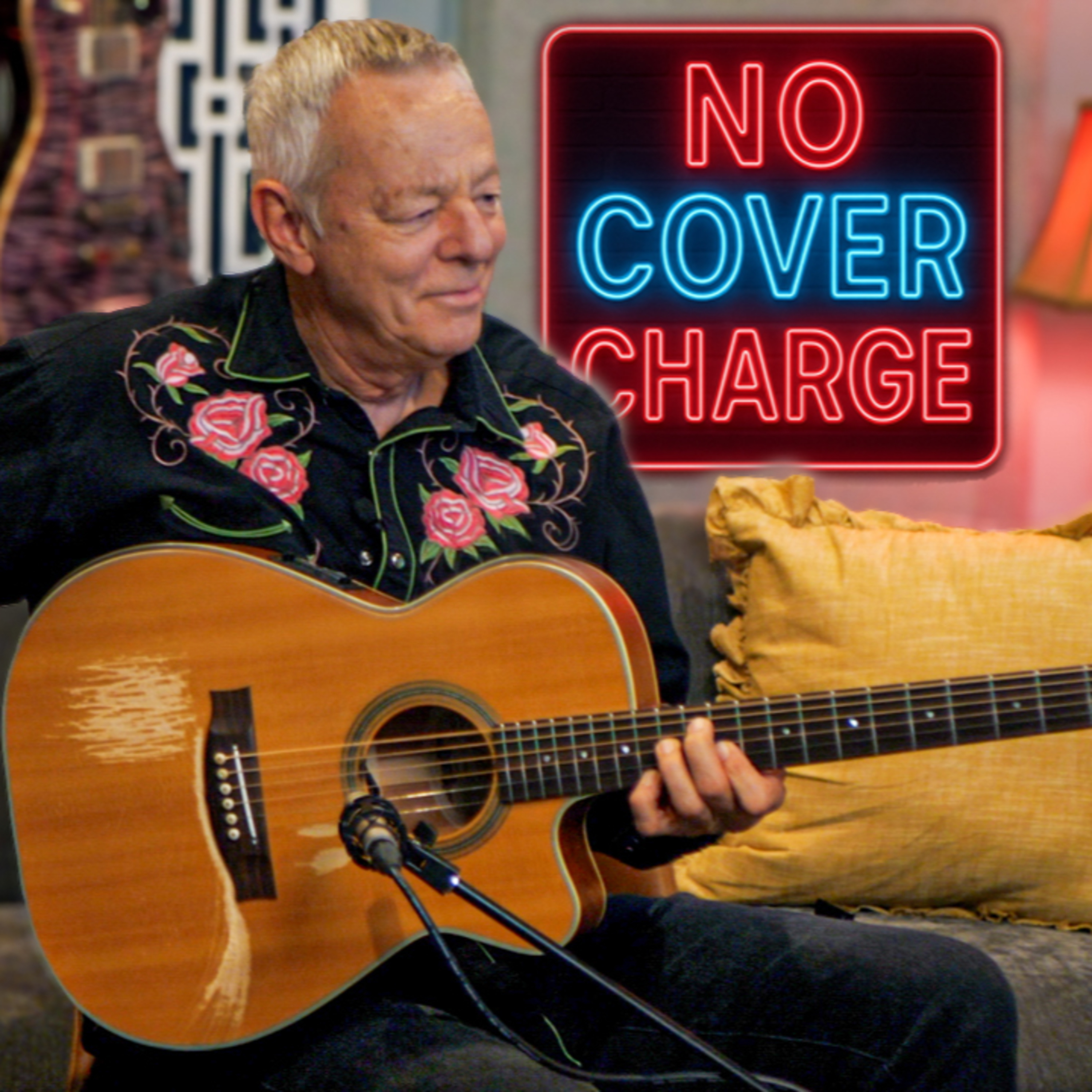
Join Tyler Larson and Jared James Nichols on The No Cover Charge Podcast as they sit down with the legendary Tommy Emmanuel — one of the greatest acoustic guitar players of all time. Tommy opens up about his musical philosophy, the art of performance, his relationship with Chet Atkins, and how he built a lifelong career brick by brick. Expect stories, wisdom, humor, and jaw-dropping playing from one of the most inspiring musicians on the planet.
Check out Tommy Emmanuel on tour! (tommyemmanuel.com/tour)
Subscribe on YouTube (youtube.com/@NoCoverChargePodcast)
Subscribe on Spotify (open.spotify.com/show/1etwgleKExKzncMWSeSqe6?s…)
Subscribe on Apple Podcasts (podcasts.apple.com/us/podcast/no-cover-charge-…)
Follow on Instagram (instagram.com/nocoverchargepodcast)
Follow on TikTok (tiktok.com/@nocoverchargepod)
Follow on Facebook (facebook.com/profile.php?id=61579811813164)
The No Cover Charge Podcast with Tyler Larson & Jared James Nichols is your all-access backstage pass to the world of guitar—and there's never a cover at the proverbial door. Hosted by two of the most passionate guitarists you'll find, Tyler and Jared deliver a mix of electrifying interviews with legendary guitarists, laugh-out-loud tales from the road, deep dives into guitar culture, and no-holds-barred gear talk.Whether you're a lifelong shredder or just love music, you'll find something unexpected in every episode—a hidden gem, a new perspective, an epic jam, or a story that'll stick with you. It’s always a good time, and best of all? No cover charge.
Plug in and hang out.
Transkriptvom Podcast bereitgestellt · Zeitmarken springen hin
Welcome to the No Cover Charge podcast. My name is Tyler Larson, here with the powerful Jared James Nichols the Gentle. The gentle Giant. You can call me Gentle I. Like that, say that because we're going to have a very gentle. Oh, here we go. We are putting our electric guitars away and baking out our acoustic guitars because we are joined by probably the greatest acoustic guitar player of all time. You know, Wayne's World, we're not worthy. Tommy Emanuel, this Australian king. Do they have kings in Australia?
How does it go? Well, they do if Tommy's from there. The King of the Wizard King. He has played more shows, I think, than anyone I'll ever meet by himself a lot of the time, which is just an entirely. Different. He's a Titan man. Art of performance. He's an entire orchestra in a box and a really nice guy. I've had the pleasure to meet him a couple times. I'm sure you've met him.
Before. But just can't wait to have him over. He's going to be here in about 25 minutes. I better get that acoustic out and brush up a little bit here. Uh oh. Tommy Emanuel. Yeah. Here we go. The. The. Put on your high heeled sneakers as we go in tonight. Put on your eyes because we're going out tonight. You better wear some boxing gloves, baby. Well, in case some fool might want to fight. Yes, that was.
Amazing. People are going to say, did you guys improvise? And we'll say no. We just made stuff up. That was the most fun 145 I've ever played about you boys. There you go, brother. I mean, we've never played together before, so I'm not sure who's doing what. And because this is a podcast and I'm the guest, I immediately jumped in and started soloing, right? So that was pretty arrogant of me. Oh, come on.
But. We invited you. No, yeah, but then, then, then we started trading. So we're just normal guys playing the guitar. Yeah, totally. And, and it's up to us to listen to each other and the nature of the beast that we were playing here, there. There can always be a little bit of this, you know, it's like some players can be like playing all over you because they're excited to be playing with you, you know, and they're not listening to they're not really listening to where it's going and what and what what's going on. I always think this way, like if you're, you're going to play a solo, then then this gentleman and, and, and me, it's up to us to to not, not get in the way of your frequencies. And just, you know, so the
moment you start playing down low or single note stuff, I immediately start taking away frequencies that are not necessary. You know, you've, you've got a, you've got that down there going on. So I start going. I'm I'm, I'm, I'm creating something within this that doesn't get in the way of you soloing. And then when I solo, I don't dilly dally. I'm like, here it comes.
You know, I'm I've gone one to five, you know, I'm in 5th gear now. And here we go, you know, and if I needed to to make you go, oh quiet, I'm going to build the solo that would that would take some, you know, some massaging. Well, it would take some talking. How about when they're on when I come in, you guys come right there. You know what I mean?
Yeah, just as a just let's jam now like we did just then it's really about. OK, you take the lead and I'll hold back now. You take the lead and I'll hold back. Now I'm coming in and, and, and I'm I'm counting on you doing the same thing of holding back and, and being in a supportive role when it's when it's on stage and it's other place. It's really about we got to listen carefully because your frequency is this and your frequency is that and my frequency is this.
And I try to find a way of not doing that with frequencies. Like the other day I was playing with a young lady who plays great like jazz fiddle and that kind of stuff. And we were playing these tunes and most of the kind of gypsy jazz style guys will play, they'll play like that. I was going because I didn't need to be going because that's where she was going. You know what I mean?
Yeah, yeah, yeah. So it's all good. I'll go. Here's the groove, then here's the bass player. It didn't need it. It didn't need me to go Maybe maybe once or twice in in three or four times around, I could go. Something to be said for the simplicity being the best. And the maturity of being able to do that and not have to show your hand all the time. Yeah, and, and try and fill every, every space. Young folks who haven't had a lot of time to learn all this stuff will tend to do that because they think they they have to.
And we've all done that, right? But when you get a little experienced and you realize, especially with the guys that you really admire and you watch them play and you go, well, he's not doing very much. I always feel that way the. Realization when you're like, oh. Yeah, because this guy is playing a solo and he wants to be heard, you know? You know, And so, yeah, the older I get, the the more I play sometimes and the less I play a lot, you know? What about in a solo sense?
How do you think about? The band are in my head, right? OK, so, and I build into my show plenty of songs that I can improvise in. I can take a solo as long as I want, you know what I mean? Or I can just play a couple of times around if I, if that's enough for me tonight, you know, and, and the band never stopped. So, you know, I may be playing.
Let's see. There's a tune of mine called the Sanitarium Shuffle and there's a lot going on in the song, but there's a breakdown section in the middle where there's, there's, there's room for improvisation, right? Like I used to play the first part of the solo and I would, I would keep the bass going, right?
And then I might I did a key change. Now I'm back to the tune. Yeah, So I could when I go into the improvisation, I I'm, I'm, I'm hearing, right? I'm, I'm hearing that in my head. So I'm. I feel like I listen to you sing The when you're playing everything you're doing. I can I can hear you almost in your head.
You're already singing a line. And, and so, you know, I'm always looking for that vocal approach and, and all that sort of stuff. It was a passage that he was trying to accent and say this. Check this out. It's like a melodic statement most of the time. All right. What size are your guitar strings? Because you bend them like they're. They're 16 to 90.
My eyes just crossed. I was like, what? I tell people that the lamp in my house is from the Titanic. He's. Got a huge like, yeah. This one's from the old ship. They're 12 to 54. And the way that you bend them and you were doing the all that stuff, yo. Gorgeous. Yeah, you bend, bend up three strings.
That's like a total pedal steel. Yeah, and a Wang bar thing. Yeah. So cool. You almost get a volume swell out of that somehow. There's no volume pedal that you have built into that guitar, right? It's in here how? Did you do that? It's in here. Yeah, man. I think he's got, he's like Inspector Gadget, but it's all built into him, you know what I mean? That's.
Pretty good Inspector Gadget, I love it. I want to show you a couple things here. Is this blackmail stuff? Yeah, this is some blackmail, but. What are you showing me? Oh, is it somewhere of the rainbow? It is. Yeah. Well, that's how I played it that day. That was in my house out in Nolensville.
Beautiful fluke. There you go. This is the video that put you on my radar is how I discovered your your music. And I think that could be true for a lot of guitar players. In fact, you. Think so. Yeah, this is an iconic video in the in the Internet world. It's just when I shot at home. Yeah, it's. It's there's a funny how that happened, different songs that you did but from the session, but this in particular, these different harmonics and just the overall arrangement. Well, I stole a lot of good ideas from Chet Atkins and Lenny Bro for a start.
Right? So it was, it was Chet Atkins who first made that, first made that beautiful sound. And we're like, how, you know, you never heard anybody do that. You've heard people go, you know, like that and people playing this way, playing harmonics that way. And then you've you've seen people go all that sort of thing, right? And then you've got we've got all those open harmonics as well, right?
So Czech did a version of Summer over the rainbow on his album Czech Goes to the Movies. So it's in the 60s and it's a really beautiful arrangement. I think the bridge part was John Knowles idea that it's. Just two different strength friends. You're changing but it. Makes such a difference. And I love that because I never heard anybody do that because I'm a, I'm a, a performer and a, and an artist up there trying to do something that that doesn't sound like everybody else. I'm always looking for that, for something different, you know, So that that really caught my attention. But what Chet did was the first time around when the melody starts, it was the bass playing the melody, bass guitar going right.
He played this. And then he played and then we went off into Chet Land One. Thing Chet didn't do though was the finger point that she. Oh, no, We'll see. That's. You can't take yourself too seriously or please, I'm going to do all this now. And, you know, it's like, here we go. Check this out. Yeah.
Yeah. And it's the same as the stuff I used to do with guitar Boogie, right? I do. I tell this elaborate story about what I. You know, that where the song came from, and my brother and I played it and we did this and all that. Sorry. And I started right. The crowd like, yeah, you know, Right. And this goes on for quite a while. And it's like, what's he going to do? And then I yeah.
And then I go. You know, and this is all on stage, you know, you know all that. And this just goes on and, and all it is, is in the name of entertainment. I'm just trying to entertain people with things they don't expect because, you know, surprise equals entertainment. But I also think it shows in the playing, the humor, the sense of the humanity and you're playing, you know, things like that. It it reminds us that we all just are human and you're watching a guy.
Perform. There are always serious songs in my show. When when I want to perform a song that that and I tell the story of it, like Lewis and Clark or something like that. I don't mess with it. I just play it because I wrote it this way, people know it this way. I don't need to say look at the lipstick. I can put on it and make it all pretty. You know, I don't do any of that when I play Angelina. Everybody knows that song and they want to hear me play it. Thank God.
I'm, I'm really happy, but I don't mess with it. And Angelina's my daughter and I I don't want to be, you know, having her call me, say, dad, you played too much improv in, you know, you ruined it. I'm not Angelina. Lenina. Lenina. Lenina, Right? We got another. That was in Rome earlier this year, in April of this year.
There he goes. Mateo is, I think, one of the coolest people on the planet. Let alone just incredible. Guitar player, it's cool to see you very unlikely duo in a sense just because of your tracks, but at the exact same time a perfect unison. And I put this clip up because I love Mateo, but also I want to talk about your rhythmic abilities because I think it sort of ties into what you were talking about with improvisation, even if the notes are a little bit outside or what have you, if the rhythm is.
Yeah, you can just skate around for a bit if you're slipping. Rhythm guitar was how I started playing the guitar. Rhythm guitar is my business, you know what I mean? My brother Phil only wanted to play lead later on in life. He, he, he was forced by me to play rhythm so I could take some solos too, you know, because all of a sudden I had something to say. Phil was always a great example as a person to me. My, my, my beautiful brother.
You know, he'd say, you know, we, we'd come off stage after and the crowd's gone wild and you blah, blah, blah. And you think, oh, you know, right, we're going to have some champagne. And he'd say, was my rhythm OK? You know what I mean? That's his first thought. What a what a beautiful soul. The thing that I've learned through my life is that I appreciate it and I play better if I play with someone whose time is good, right?
Or if I'm playing with someone who rushes, then I, I'm, I'm going to be hesitant to take any solos because I'm going to be going slow down. Listen to me. I'm, this is going to be going on in my head, you know, whereas when I play with someone who has a good groove that I'm trying to achieve in my accompaniment, I feel like I can do anything, you know? And that's what's that's what's missing with a lot of players. They're so intent on either being impressive or thinking that they they've got to, they've got to hound you along, you know?
And it's like, no way. You know, when I played the first time I played with Chet Atkins, he made me sound so good by what he was playing, you know what I mean? And so when I play with other players, I try to let them know you can jump off the Cliff and I'll be right here. Coincidentally, this is the best I've ever sounded.
Thanks a lot. It's a true sentiment of how much you serve the music. How would you suggest a player to really, especially in the modern era? What would you suggest to them? You could. Sing with it or you could back a singer, right? And so the rhythm guitar doesn't need to be busy, doesn't need, you know what I mean? When you think of like, you think about Carole King's It's Too Late, Baby or whatever, you know, it doesn't need me to go be a listener first.
I think that that helps some of the records that I really love where I think people have done amazing parts because they've been tasteful and the right thing. I always try to point these out to young guys who are big into millions of notes and lots of changes and all that. And you know, and and then they're like, how is it that the audience go crazy when you just play guitar boogie?
You know, it's three chords and a few notes. You know, it's like, well, there's a bit of, there's a bit of space for them to actually listen to what's. Digest what's happening? Yeah. And then I fire some stuff at them, right? Because that's what they're waiting for, you know? This is a bit like the story of my life as a performer.
Because even though I play solo and all that sort of stuff, I always walk the line of, of playing too much sometimes because that's what people, they want to see you on the out on the limb. They want to see you reaching for you. You know what I mean? They don't want to see you going, oh, look at this.
I've been playing this for 50 years and it's nothing. Isn't that great? Now get off the stage and let me up. I enjoy playing at home and, and playing and practicing for myself and all that, but it's nothing compared to, you know, playing here with you guys and, and it's nothing compared to playing for an audience.
That's why I'm here. That's what I live for, you know, and sometimes I, of course, you know, people, people who will, will say, Holy smoke you, you know, you played a solo for 20 minutes and you know, and, and, and I can't. And when you got to the end, you came back to the melody. It was still the same time. How did you do that?
You know, and stuff like that, you know? So people want to see both. I think people want to want to see you play your song with all your heart. People want to see you push yourself and, and people want to hear you do something that they've never heard you do before or, or you know, I'm always taking a lot of risks and that's good for entertainment. And it's good, good for me because sometimes I do things and I go, I've got to remember that, you know, it just came out well.
Speaking of risk taking and strange beautiful sounds, I'd like to you to tell me what's going on here. It's in. That's in Seoul, Korea. The audience are clapping. Hear them clap, clap, clap, clap. Were they helping you keep time? Were they? Helping you? Or were they not? Their their time is good there, yeah. So this is a different guitar, but equally worn in. It's exactly the same same pickup mic system. OK, you know, so basically I'm a drummer who plays the guitar and then and there I'm playing all the drummers part on on the guitar, right?
So if you slow that down, that's pretty fast. So, so you think? Right. So you got all these kind of drama things and I was doing this kind of thing. It's just I'm just making stuff up. That is so cool influence. From that kind of thing come from. Oh, people like Steve Gadd. You know, I listened to Steve Gadd a lot when I was young and hearing him play the Mozambique, which is, you know, that this, this here, right?
So why do I do that, right? Because I can do this. Yeah, boys, you know, in the middle of £9 hammer, I, I, I do a breakdown and they say take it boys, and now I get. So why do I do that? Because no one else does. Yeah, you know, And I'm a bass player and I'm, I'm a drummer, you know? So I put the two together.
What went into creating that marking there? Was it the pick? That's how you did it, or did you? Chisel my my wire cutters yeah, I just. In that part there is that a different percussive that's. That's for this big gnarly pick that I use when I play a drum solo. I go, oh, like that and you've never heard that sound come out of guitar and in the PA goes like that, like a dragon roaring or something. That's like holy hell.
And then you've got you've got you can never have too much cowbell. Then you you guys could go and then that's dum dum dum dum du du. That's that's two more drums. Yeah. Cool, Dan. Are you still chasing tones? Are you still finding? Are you out finding things where all of a sudden you just do something and you go, how did, where did that come from? And they fall out.
That's exactly how I found every sound I make. It's amazing. It's just experimenting. Do you know how I started playing drum solo on an acoustic guitar? Here's Here's a true story. My brother Phil and I were playing at a jazz club, which is a good joke in itself. There wasn't any jazz, but, but the place was packed with people four nights on a row, you know.
And so we're playing Santana's Europa really loud, like as loud as ACDC. And this people are digging it. And Phil is got his strap there and he's got a role in space echo and he's got pedals and he's like, you know, really going out. And I'm using my old Tacamini with the, with the, with the pickup in it.
This is like 1981 or 82 or something like that. And, and I'm going and he's going, he's off, he's going and he's doing Wang and Wang. All of a sudden, bang, he breaks, he breaks a string, right? And the guitar goes all out, all out of tune, right? A Strat, right, all out of tune. And, and we're building it to the, it's been going for 20 minutes.
And it's now like at this level where the roof's going to lift off and bang, he breaks a string and he just goes take it and walks off. And I'm like, so I, I'm now we're down to a guy's strumming. So I start and, and it sounded good because we were playing loud. So I, I grabbed the, the mid range and spiked it out.
Yeah, yeah. And then I and I kept going and, and then I started banging on here and it's like, oh, there's a bass drum, you know, And I invented it right then and there. In the moment. Fire. Heat of the moment. Did he fix the string? Did he put it back? On he put it on and came back and kept finished this thing yeah, he. Planned this whole.
Thing you got to remember, I didn't start in folk clubs and acoustic venues. I played in pubs and clubs where bands played right, right, and I played loud and I gave it hell, right. So this was my training ground a long time ago and really in Australia you had to hit people with everything you got. You got to play loud, fast, hard and play things they know and, and take them with you.
If you bore them, they're going to throw something at you, you know? They'll let you know, yeah. If you can hang in an Australian pub, you can hang anywhere. Yeah, absolutely. And that was especially, and, you know, the nights and, and here's a real kind of look inside my soul. There were literally hundreds of nights where I was almost in tears with frustration because I knew I was a concert player and I knew where I belonged.
I just didn't know how I was going to get there. And how many more times can I go and play in these shitty places that you know what I mean? Yeah. And how'd? You overcome that I just. Booked a hall and took a chance on it and enough people came for me to do it again. And then I got booked in a place where people started really coming to listen, you know, because my dream was to be a concert player in a in good venues where there was great sound and good lights and and, and people could come and and see it and experience it.
That that was I knew that's where I belonged. Which leads me to tell you that when young people at asking me about how did you get blah, blah, blah, how did you do that and all that? So it's like I, I say to them, well, what's your vision for where? Where do you belong? Do you know where you want to be? You know what I mean?
I'm not saying you're going to get there next year, but where do you see yourself? Because that's important. When I was young, like 16/17/18, I was touring with a country music show, making really crap money, playing to really shitty audiences, all that sort of stuff. Right in my head, I'm going to be, I'm going to end up in a band in Sydney, I'm going to be a studio player.
And that, that was my vision of where I belong. I got there eventually, you know, and then when I was there and I fell in love with songwriting and I wrote a few songs and got a few things on the radio and I was so encouraged. And then, you know, people like Larry Carlton would would release an album and there'd be one really great commercial song.
And I said, see, there is hope yet. Instrumental, you know, and I remember in in the in the late 80s when Joe Satriani came out with always with me, always with you, you know, I heard that on the major rock station in Sydney and I said thank you, Joe, thank you God, this is. That's really brilliant advice. You may have a vision for yourself at one point in your life, and you start chasing that vision and manifesting it as best you can, but you find that it leads you to a new vision after that search has begun.
And. So you can't really even the. The point is to go. Yeah. And the other thing is, is that you don't know at the time that you need this other experience. So this vision up here will be much better. You'll be better by the time you got there because you've been a songwriter, you've played on hit records, You know what a good song is, you blah, blah, blah, all that. And you slowly build that until there you are. Also, seems like you have an unbreakable spirit. Oh, well, thank you.
That's important because I'm more passionate about what I'm doing now than I ever have. Been that's that's so beautiful, men. Because I'm living my, my dream and, and I built it. I built it by hand. You know what I mean? I built it brick by brick and I love it and it it's here for a a good, a good reason.
When people come to my show, they're going to get something that they can they can only get at my show. I mean, there's a lot better players out there than than than me. But there's, there's something about the, the, the genuine love that I, that I, I have for playing this instrument for people, that is enough.
I mean, I'm just sitting here and I want to go home and practice and play it. I'm inspired. You are home, so get going. Do you know the story of how I got on the Opry? I don't. It's a Saturday and we we've been working all week on on different songs and stuff. And Chet says, have you ever been to the Opry? And I said no.
And he said I'm going to take you tonight. So, but first we're going to go to Cracker Barrel. So so we went out to Cracker Barrel out there near the Opry. We go backstage and it was like the parting of the Red Sea. Chet walks in and people were like, Oh my God, it's Chet Atkins, you know, and that, you know, and there's a big crowd of people there. We come in and we go upside stage and and Ricky Skaggs and Kentucky Thunder on and they're great. And anyway, they finish their their song and the one of the producer guys comes running up.
Hey, Chet, great to see you. You know, Chet hadn't been on the Opry for a long time, you know, And Chet says, yeah, this is my friend Tommy from Australia. You should have him on the show. And the guy, the guy looks at me and says next Saturday. No way. That's how I got on the Opry, just like that.
Did you go home and practice? Did you? Here's what happened. Well he well one of the best parts of this story is Ricky Skaggs came straight up to say hello to Chet and Chet grabbed his hand and grabbed my hand and put them put my our hands here and said this is Tommy. You 2 need to know each other. And he started his networking me with with all the people that that he knew would be the right people for me to so. Clearly, Chet was absolutely gracious in all ways. He was unbelievable.
The funny part of this story is, so I'm booked to do the Opry the following Saturday, right? So during the week, 10 times a day, Chet's like, why are you going to be in the Opry? You know? You know, I haven't been on the Opry for a long time. And, you know, and then by the third day, he's like, yeah, I think I'm going to come and do it with you, OK. So.
So we start, we start rehearsing Waltzing Matilda, the Australian side, because he loved Waltzing Matilda. The, the, the day that I met Chet, one of the first things he said to me is that do you know Waltzing Matilda? And I said, yeah, he said, could you play it for me? So we, we rehearsed it up. So it's the Saturday night for the Opry and I, and Porter Wagner is hosting the show and he introduces me and here and he says we here in the South are famous for our hospitality. So let's give a warm welcome to this boy from down under. His name is Tom Emmanuel.
Emmanuel. And he brings brings me out and says a few words and he's really great on stage. Porto Wagner was such a natural anyway. So I I then play what guitar boogie? Because that's what Chet said. You've got to play guitar boogie, play that first. So I play it and the audience just light up and I'm like, holy shit, I'm on the opera, you know? And anyway, so I finished the song and then I talk about Chet and then I and here he is and he walks out and everybody goes nuts, right?
They go nuts and stand up and give him a big ovation and he comes out and he's smiling at me like, see? I told you. I lead off and we go into Walsing Matilda and this is the serendipitous part of this story. About 60 people in the balcony stood up and waved Australian flags. They were there from Australia. Yeah, they must have been tourists and they were carrying Australian flag.
We went into Wolsey. Matilda. Here I am with my hero. No, but these people down here don't know me from Adam, but those people up there do, you know? And it was just like, wow. That's magical. See, This is why we're we love playing music because stuff like that only happens when you when you love music and you and you, you pour yourself into it.
Those imagine you couldn't have planned that in a million. Years. Has that happened throughout your career? These like another full circle. Another. Full, unbelievable. One of the great full circle stories is this. So my, my brother Phil, rest his soul, he's he's crazy about a band called the Helicasters, you know, And of course, John Jorgensen was one of the great songwriters and players in that band. Anyway, Phil plays this song for me called back on Terra Firma and it's a great melody and it's a good part for both of us because we were this is this is about 95 around that time. And I, I wanted for for him and I to do an album together and I I got the budget approved through Sony because I'm going to produce it right.
And so I got it all together. And Phil comes with back on Terra Firma. Wow. You know, I hear the song and I go, absolutely. Turned out that was the name of the album and the whole thing, right? So Fast forward to the year 2000 when we had the Olympic Games in Sydney, right? So I'm here in Nashville working on, on, on some stuff and I get asked come and play for the closing ceremonies of the Olympic Games in Sydney, my hometown, you know?
That's to How many people were you playing to like a? It was 3.3 billion was the biggest audience, No 3.75 billion and it's the biggest audience in television history. So I'm so thrilled. And I said, well, I can't do this by myself. I have to share this with my my brother. And I said, and I know the song that we should do that. So they let me put it together and, and Chet's grandson Jonathan, remastered the backing track and cut it down to two minutes and 46 seconds, which is what every artist. That's the time allotted to every artist, right? So we had a backing track.
We're gonna play live over the top of it, right? Yeah, so I'm here in Nashville. I do the edit and everything. Now I'm going to get on a plane, fly to LA and then LA to Sydney to go do the Olympic Games, right? Playing this song. I get to the airport and I'm in line and there's a guy standing in front of me, tall like this, with long blonde hair. And I thought, is that?
And I looked around and it was John Jorgensen. No. Way. Yeah, right. We get on the plane and we're sitting beside each other. Can you believe it? I tell him, have a guess where I'm going. And he said, well, you probably you're going to. Lai said, oh, I'm going further than that. He said, oh, you're going back to Australia.
I said, yeah, I'm going to play at the Olympic Games closing ceremony. Oh, wow. Yeah, I said, and Phil's going to play with you. Oh, great. And we're playing back on Terra Firma and he's just like, he cried and he was just so full of emotion. I just finished a long tour where I I started in Malaysia, Thailand, Singapore, Hong Kong, Bangkok, Taipei, 10 shows in China and then six shows in Japan. And then I came home and I'm supposed to be on a break, but I've got an album coming called Living in the Light and my second song from that album dropped this week and in two days we had 94,000 views.
And there's a lot that means a lot for an old cigar box player like me. I love bluegrass just as much as I love classical music, just as love as I much as I love Blues. I like all genres of music. In fact, there's a, there's a photograph if, if you're a real bluegrass nut, there's a photograph that, that you'll love.
And it's what last year when I played on hardly strictly Bluegrass, that show in San Francisco, right? It was a massive crowd, right? And, and so I, I had a good spot, new prime time, you know, one in the afternoon or something. And I came out there and I thought, well, I've only got 45 minutes.
I'm just going to hammer the hell out of them. So I came out, I started with guitar boogie and the crowd are going nuts. And these, you know, 10,000 people out there and they go like that and somebody snapped a shot down there and the word strictly didn't come out. There was someone's hand in the way.
And when you look at the shot, here's here's me playing my my guitar and dancing around playing guitar boogie and the the words is hardly bluegrass. That's. Great. But, you know, I love bluegrass music so much. And, and some of my best friends like Brian Sutton and, and Trey Hensley and, and the Sierra Hall and Molly and everybody, they're all, you know, dear, dear friends of mine and people that I I love and admire so much, you know, and. It's a really awesome community.
As I'm meeting more and more guitar players here, Nashville in particular. The town feels small, but the musicianship, it spans so deep across all these different genres. It's what I was trying to tell people 40 years ago, you know, when they were like, oh, you got to go to New York and I said there are people in Nashville who'll kick your butt around the block, so go there, you know, is that? Still the case, you think?
Yes. My words, it's music, it's Music City, you know, I mean, it's everything. There's great art here, there's great dance groups, there's great choirs, there's great classical music, there's opera. Next week I'm playing the rhyme and and you know, that's like what a privilege to play there. I dreamt, I mean when I was a kid I listened to records of the Opry and I wore out the record.
Not many people have heard this but Hank Williams had a radio show called the Health and Happiness Show and he would open with hear my song as I ride along. Just a happy, roving cowboy herding the dark clouds out of the sky, keeping the heavens blue and the Steeler go, you know, all that and that I wore those records out.
That was my childhood. It's amazing. Was coming from here, you know?
