

Smart Bear Live· Folge 10
E10 w/ Jessica Malnik: Plateaued at six figures, but still hungry
Sonntag, 18. Oktober 2026 · 1 h 11
Kapitelklicken springt direkt hin
Shownotes
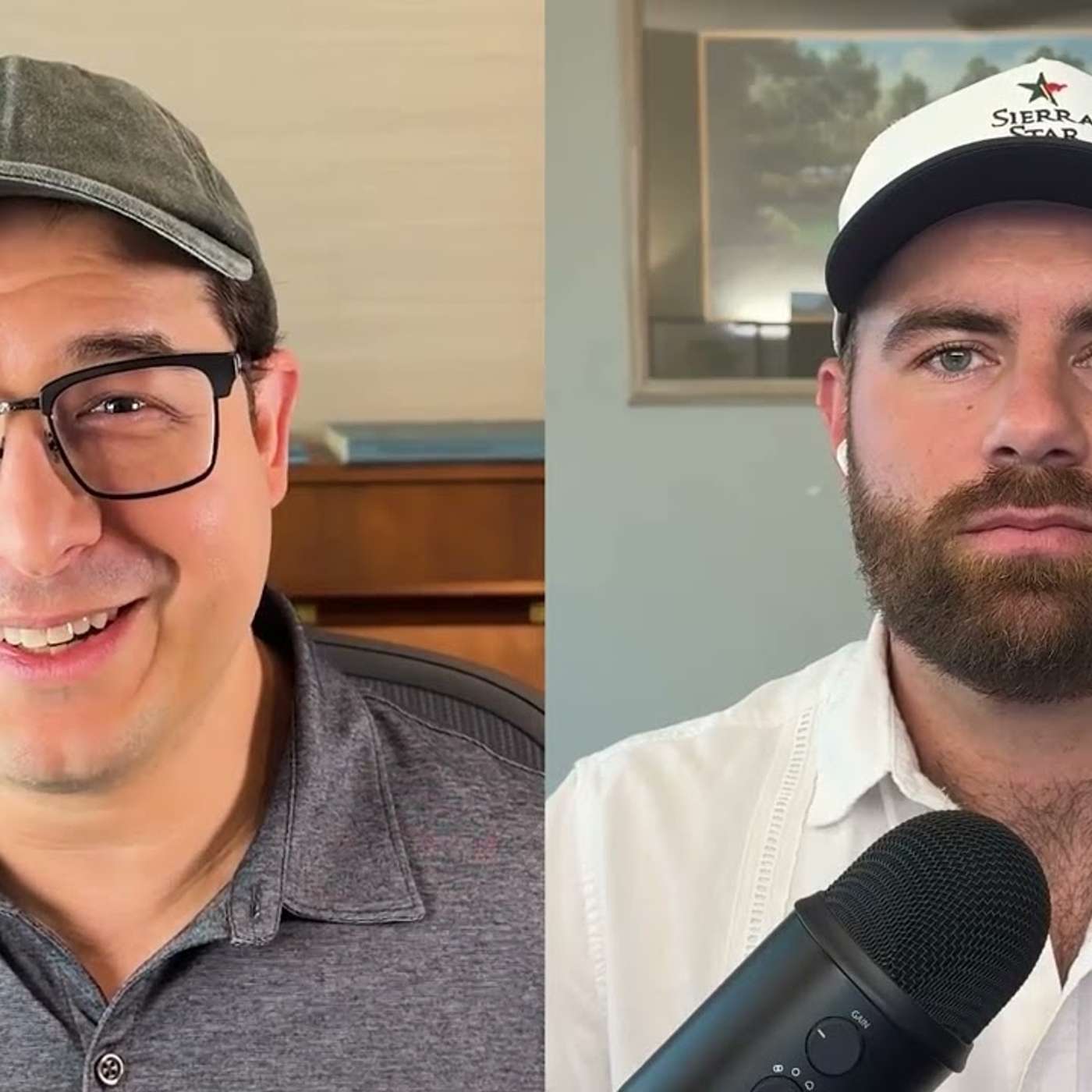
Brett Lindenberg’s startup Mindstamp puts six figures of profit in his pocket every year, helping businesses create interactive videos for training and sales. But growth has leveled off, and he’s having trouble changing that.Does he niche down to one kind of customer, or stay general and change how he reaches the market? Either way, most of the buyers he wants have never heard of interactive video.
Cohost Jessica Malnik and I dig in: A candid working session including:
- the cheaper plan that has him fishing in bad waters
- why his best buyers aren’t searching for him
- SOC 2, and why Mindstamp should never issue the certificate
- certifications people care about at the identity level
- teaching better interactive video as the marketing
=================
ME ME ME!!!
=================
Subscribe on YouTube (youtube.com/@asmartbear)
Subscribe via Podcast (smartbearlive.com)
📘 Get my book (hiddenmultipliers.com) 📘
My bio + 20 years of articles (longform.asmartbear.com)
Twitter (twitter.com/asmartbear) | LinkedIn (linkedin.com/in/jasoncohen)
=============================
STARRING BRETT LINDENBERG
=============================
Mindstamp (mindstamp.com)
Twitter (twitter.com/balindenberg) | LinkedIn (linkedin.com/in/brettlindenberg)
==================================
WITH COHOST JESSICA MALNIK
==================================
Homepage (jessicamalnik.com)
Subscribe on Newsletter (jessicamalnik.com/newsletter)
Subscribe on YouTube (youtube.com/@JMalnik)
The Remote Work Tribe (theremoteworktribe.com)
Twitter (twitter.com/jessicamalnik) | LinkedIn (linkedin.com/in/jessicamalnik)
================================
REFERENCED IN THIS EPISODE
================================
“The Iterative-Hypothesis customer development method” (longform.asmartbear.com/customer-development)
“Not Business Advice” books—Alex West (alexwest.co/books)
TIMESTAMPS
• () - Plateaued SaaS: niche down or stay general?
• () - Too general, or just customizable?
• () - Who sticks? Medical continuing education
• () - A cheaper plan is fishing in bad waters
• () - Where do your best customers go?
• () - Nobody knows interactive video exists
• () - Making videos for customers as a service
• () - Certification partners: the SOC 2 case
• () - Win certifiers who want to stand out
• () - Content marketing: teach better videos
• () - 90-day plan: interview your customers
• () - Box-tickers vs. buyers who really care
• () - Energized, with hypotheses to test
Transkriptvom Podcast bereitgestellt · Zeitmarken springen hin
Jason Cohen (00:00) The star of today's episode of SmartBear Live is a bootstrap founder who spent nine years building a solid SaaS product that put six figures of profit into his pocket every year. But growth has started to level off, and he sees two completely opposite ways of restarting growth. One way is to niche down into a single type of customer, and the second way is to stay general and change how he reaches the market. And who knows, maybe the best way is neither one of those.
Brett Lindenberg (Mindstamp) (00:24) We've been, um, kind of plateaued, growing slowly, slower than I want to for the last couple years.
Jason Cohen (00:29) What's the conversion rate to sale? 20 to 30%. Why do you think it's so low? Um… So today we are gonna
Jason Cohen (00:36) help him build a 90-day plan to start growing again. And who is this we, you might ask. I'm Jason Cohen, known online to SmartBear. I've built four startups in the last 25 years, two of which are now unicorns. I bootstrapped, I've raised hundreds of millions of dollars. I've written hundreds of articles you can read online. And recently I published a book called Hidden Multipliers, which are all my best ideas about how to grow your business. But you can look at all that later because joining me to help our star founder is the great Jessica Malnik.
Jason Cohen (01:04) She runs her own consulting company that helps businesses with their positioning, like finding their wedge and building a 90-day plan around it, which is exactly what we want to do today. So welcome Jessica.
Jason Cohen (01:15) So together Jessica and I are gonna help the star of the show, Brett Lindenberg with his company Mindstamp. Mindstamp lets you turn any video into something clickable. So training videos, sales videos, that sort of thing gets used instead of just watched. And Brett, thank you for being vulnerable and opening up your business and even yourself. It's brave to do that and it's generous for everyone else. So we all thank you for that.
Jessica (01:37) Thank you.
Brett Lindenberg (Mindstamp) (01:38) And thank Jessica for taking the time to help me out today.
Jason Cohen (01:42) So Brett, perhaps you can kick us off by filling us in, not the complete history of the company, but just what we need to know to figure out the best way to grow from here.
Brett Lindenberg (Mindstamp) (01:48) So Mindstamp is an
Brett Lindenberg (Mindstamp) (01:49) interactive video platform.
Brett Lindenberg (Mindstamp) (01:51) What that means is that we take any video and turn it into a two-way experience. If you've ever gotten a driving ticket, you've watched a video and taken a quiz at the end, we put that quiz directly in the video so you can verify that they're understanding, they're taking the action that you're wanting them to. Um, so training, marketing, sales, we turn any video into a two-way experience.
Jason Cohen (02:08) Obviously, things are going well. You've built this nice business. The product is, is, is loved by customers. In that sense, nothing's wrong, and yet it's not entirely clear, like what would be the smartest or most strategic way to expand from here. So you wanna hum a few more bars about w- how you're thinking about that, since that's what we're gonna solve today. So we've been, um, kinda plateaued, growing slowly, slower than I
Brett Lindenberg (Mindstamp) (02:29) want to for the last couple years. Obviously, as a interactive video, I mentioned the training example. COVID was a huge boost to us, right? 2021, 2022, um, everybody's moving all of their content online. They can't meet in person.
Jason Cohen (02:41) They're trying to
Brett Lindenberg (Mindstamp) (02:42) do training online. And so we were just getting, you know, a ton of inbound interest. We built up a lot of SEO during that time, and that's continued to pay off, but obviously interest has slowed down.
Brett Lindenberg (Mindstamp) (02:52) We've made some company decisions like raising prices for our quality of life, not chasing kind of lower-tier customers anymore, and we're kind of in a frustrating spot right now where I have a lot of energy, um, energy and enthusiasm to give this business, and I'm just not seeing those levers, those multipliers to actually, like, produce an output. Try a million different things, put a bunch of different energy and little growth sprints are what I've come up with so far, and just
Brett Lindenberg (Mindstamp) (03:16) not see a repeatable growth lever. Um, and so it's kind of at the point of like, hey, is this business capped where it's at? You know, and it's a good business as it is, and we c- I can continue to kinda just run it without putting all this energy, enthusiasm into it. Or what I would prefer is to continue to pour myself into it and really double, triple, quadruple this business while still maintaining kind of the lifestyle that I have now, right? I like, I like to be-- we're a very small team.
Brett Lindenberg (Mindstamp) (03:42) It's primarily just me running it with a team of, um, you know, contractors and help on demand, and I'd like to keep it that way. I don't like to manage employees. I don't want to deal with hiring or people. Um, but I'm, I've got all this energy. You know, I have a eighteen-month-old son now, and I feel like the fire has never been stronger, um, and another one on the way. It's like, what can I do in the next six months to determine whether this is, you know, going to be something that I dedicate the next five years to, or if it's something that
Brett Lindenberg (Mindstamp) (04:08) I should start to transition to something, you know, where I could put my efforts elsewhere.
Jessica (04:11) Uh, that's super helpful context. Um, Brett, a couple of questions I had for you. You mentioned you raised prices to kind of focus in on, like, one segment of your customer base. Who was kind of the customer seg- segment? Before that price increase, um, who is it today? And kind of walk me through who was kind of the ideal person, um, or, uh, your ideal customer, and what their core unique value
Jessica (04:35) prop is that they get from it.
Brett Lindenberg (Mindstamp) (04:37) Yeah. So I'd say one big issue that we have is that we're too generalized, right? We cover interactive video for everything, training, marketing, sales, communications, lead capture, VSLs, right? We've built the platform endlessly to do it all based on customer requests. The use case that we obviously nail is training, right? Instead of, like I said, watching a video and then taking a quiz elsewhere, put that quiz right in the video, hook it into your, you know, system automations. Um, it just, it just works,
Brett Lindenberg (Mindstamp) (05:03) and we can prove that they're,
Jason Cohen (05:04) they watched the video, if they understood it, and
Brett Lindenberg (Mindstamp) (05:06) they took the action you wanted to, if they need to. So I'd say about 70% of our, 60 to 70% of our customers are training based right now in one way, shape, or form. It could be external training. Like, um, we have companies that use it for offering certification to real estate agents in the world. You know, that's not an internal company training, it's something that they offer as a product. And then there's also people using it internally, um, as well to train
Brett Lindenberg (Mindstamp) (05:30) their, their team and audience. I'd say where we can justify the higher prices are on those external training clients, right? Because it's between them, it makes them money. Whereas an internal, if you're just looking to train your department, unless it's enterprise-wide, our higher price point doesn't really make sense. It starts to lose its ROI. But if we help you make money by offering these trainings that are engaging, interactive, um, sleek, dare I say, um, that's
Brett Lindenberg (Mindstamp) (05:55) where people are willing to forego for money because it's coming right back to them again. Yeah, it's always so much better to
Jason Cohen (06:01) make a product that makes someone money, just as you said, right? Um- Right. When you say training, I, I also think gov- uh, compliance, which isn't the same thing, but it's similar, and it's definitely something where you need interactivity to show that they engage with the compliance and didn't just check the box that they watched the video. Is that something you're seeing or no?
Brett Lindenberg (Mindstamp) (06:18) Yeah, definitely. Compliance training is a big one. Um, just so that they have that auditable record that says, "Hey, they watched this. They answered it correctly. Here's proof that they, we taught them this in the event that something else ever happens." So compliance training, sexual harassment training, um, a lot of continuing education, right? Like the medical field, and I think in like the legal field, you have to have some amount of continuing education every year to stay current.
Brett Lindenberg (Mindstamp) (06:42) Yeah.
Brett Lindenberg (Mindstamp) (06:42) And so people use Mindstamp for that as well. But what I don't understand
Jason Cohen (06:46) is I know there's a lot of software that does this. Like at WP Engine, we have compliance training. We use software. Like I know this already exists. There's something like, uh, driver's licenses. There's Aceable. Like, these companies exist already, so are you just a catchall of people who either don't know or don't want those companies? Like, why does someone use Mindstamp instead of one of the incumbents? Um, there's definitely d- many
Brett Lindenberg (Mindstamp) (07:04) different ways to train, obviously. I think the appeal of video that's interactive, right? That's kind of just a… Interactivity and engagement is, uh, is the, the crux of the training world, I'd say from what I know. Um- Yes, but again, we have
Jason Cohen (07:16) compliance videos, and it's interactive, and, and there's
Jason Cohen (07:18) software that just does it. Like, that's what- that's why we use it. So my question is why would someone use Mindstamp as opposed to a competitor of Mindstamp? Not bec- I mean, obviously it's useful, I know. But you have competitors, so why does someone pick Mindstamp when there's a competitor? Why would they do that?
Brett Lindenberg (Mindstamp) (07:31) The irony is that it's because we're, I think, mostly more extensible. We can meet their custom, custom solutions, uh, better than just an out-of-the-box solution. Why is that ironic? Uh, because that's the problem
Brett Lindenberg (Mindstamp) (07:43) is that we're too general. We've, we built all of this, you know, super wide. Oh, well, being too general and
Jason Cohen (07:48) being customizable are not the same thing 'Cause I, I hear you. You're, you're maybe
Jason Cohen (07:54) serving too many audiences. Fair enough. We can address that today hopefully. But being customizable isn't the same thing as serving a bunch of people, even if the niche was hyper-specific. This is only training for lawyers in New Jersey. Okay, but maybe the reason you win
Brett Lindenberg (Mindstamp) (08:08) is customizability for that, right?
Brett Lindenberg (Mindstamp) (08:10) Yeah, that makes sense.
Jason Cohen (08:11) So you're saying an edge you have is it's very customizable, and the question is maybe
Jason Cohen (08:15) who wants that the most? 'Cause maybe that's a way to, to narrow it down, or maybe not. Maybe going general is good. I don't know. Yeah, Jessica.
Jessica (08:21) I heard a couple things, and obviously external training and compliance are still massive markets. Um, specifically, have you done any sort of like cohort analysis to really understand like if
Jessica (08:35) there's a specific vertical within? So like you mentioned medical, you mentioned legal. Is there a specific niche or a handful of niches where they tend to be super sticky? Maybe they, you know, they stick around for a long time and also they, you know, pay even more, use it more, refer other people. Have you kind of done any sort of cohort analysis to understand a little bit deeper into individual segments?
Brett Lindenberg (Mindstamp) (08:56) Probably not super effectively. You know, we don't have tens of thousands of customers. We're working with a fairly small sample size, and each one is different. I'd say I have noticed just anecdotally a lot of stickiness in the medical sector, especially like the continuing education world. That is somewhere that they're willing to pay. Again, this is from a small sample size, so a couple canceling tomorrow could change the answer here. But the medical field is, is
Brett Lindenberg (Mindstamp) (09:20) somewhere that I've seen a little bit of repeatable stickiness.
Jessica (09:23) Walk me through a little bit with some of these kind of medical c- uh, continuing education customers. Also, how they actually, you know, what is kind of the core pain point they come to you with? How do they kind of use the product? Is it different from other customer bases?
Brett Lindenberg (Mindstamp) (09:39) We've tried a bunch of paid marketing and paid efforts like cold email, and they just haven't worked for various reasons, so all of our leads come from word of mouth or organic SEO, primarily SEO, some referrals as well.
Brett Lindenberg (Mindstamp) (09:49) But they find us and use us in their curriculum. You know, they typically have like a, a login site, a gated site that people pay for, and they're offering interactive video as like an edge compared to their static competitors that are just offering flashcards or documents or something like that. It's a selling point for them, you know, that they'll have on their website, "Oh, we have interactive video," and it's like, "Oh, that's just a better, a better way to learn, so you should buy our product because we're offering you more compared to competitors." Um, but they'll typically
Brett Lindenberg (Mindstamp) (10:19) just do a really basic flow. You know, our, our most popular customers aren't doing all those things, the extensibility, customizability. Uh, they'll all need maybe one or two things in that, but they're not, like, maxing it out. Like, uh, I can think of one med- continuing education medical customer that just, um, takes the videos and puts three or four questions throughout them, right? Just measures that they're watching and understanding, and can issue their certificate based on that, that they watched it, completed it, got the answers correct, right?
Jason Cohen (10:45) So if it's SEO, maybe they just fell into you and there's not really a reason. Are you cheaper than the alternatives? I'm still trying to figure out- So the, the interactive
Brett Lindenberg (Mindstamp) (10:52) video market has consolidated a lot since, like, 2020. Uh, a couple of the big players, especially in the enterprise space, have bought- gotten bought. Like Wirewax was boughten by Vimeo, um, rolled into Vimeo. It seems like Vimeo's mostly neglected that, 'cause we get a lot of people interested in moving off of them now, and that comes with a higher price tag. So we're cheaper than Vimeo, more expensive than everybody else, is basically our, our market positioning. And there's probably two Three other, uh, competitors,
Brett Lindenberg (Mindstamp) (11:19) each with their own twist. You know, some work on, some are focused on, um, shoppable interactive video or storytelling interactive video, where you're putting branching experiences together. But, you know, we, we offer, we offer all those things that they do, but I think we focus a little bit more on the training and, uh, quizzing aspect. And then there's kind of free and open source alternatives like, um, H5P, which is free, uh, but it's not gonna look as nice, it's not gonna be as polished, so it's not something they're gonna send to a
Brett Lindenberg (Mindstamp) (11:46) external client that's paying them. One other kind of follow-on
Jessica (11:49) question I have that seems random but is very much related: how often are you actually talking to customers, either through support or through on Zoom, on the phone, maybe even in person, um, as well? And, like, do you have any sort of cadence around that? Uh, every day, vary-varying levels a day.
Brett Lindenberg (Mindstamp) (12:06) You know, I do the demos. That'll typically be, like, two to five per week, um, sometimes more, sometimes less. Customer support, whether that's email or a Zoom or sending them a Loom. Um, you know, I'd say I'm very in touch with our active customers and understanding what they need and supporting them very well. That's one of the big things that if you look at our reviews, you know, you get awesome support, so we're certainly not, like, s-sending them down a canned response.
Jason Cohen (12:32) That's not talking to a customer, though.
Jason Cohen (12:33) I mean, you are literally talking to a customer, but I think the idea was to understand their desires, their needs, what kinds of stuff they need next, why did they pick you, why not the competition. So those kind of conversations, maybe you do it in a demo, hopefully a little bit. Not in tech support, though. You said two to five demos a week. What's the conversion rate to sale? Uh, it's probably 20% to 30%, somewhere in that range. Why do you think it's so low? Um, I would guess that price is something to do with it.
Brett Lindenberg (Mindstamp) (13:01) Um, you know, when people- Oh, 'cause you're more expensive
Jason Cohen (13:04) than everybody but Vimeo?
Brett Lindenberg (Mindstamp) (13:05) Yeah, and just, you know, relative, you know. We just added a lower price plan. I said I'd, know I raised prices, but we just added a lower super gated plan to try to capture these people that are willing to spend the 50 bucks a month for their one video, but they're, the $299 a month plan. You know, we had it previously, up until last week, we were at $99, $299, $499 as a monthly with bigger annual discounts. Um, but that jump from $99 to $299 was a lot for a lot of
Brett Lindenberg (Mindstamp) (13:31) people, and that was fairly low in terms of usage on our platform. We positioned the $99 as just getting started, and they're like, "Oh, I can't… This isn't a $3,600 a year, uh, thing for me." And so I think we lost a lot of people there. So what you're describing with things like pricing, what you've
Jason Cohen (13:46) done recently, is to go more broad. You're like, "Oh, I want more different c- different customers, customers who don't actually value me as much, so I'll charge less, and that will get customers that don't value my product very much." That's a going broad strategy to people who are worse, and literally, 'cause they, they, they don't value what you do that much. So that's what you're doing, but what's interesting is when I hear your language up until this point, you've, you've almost
Jason Cohen (14:10) self-denigrated going broad. You, like, like, like, like what I'm hearing from you is, "I wanna, I wanna specialize in a niche 'cause it's a bad idea to go broad." I'm not saying it is a bad idea. I'm saying that's what I'm hearing from you so far. So it's almost like you're telling me you think a better strategy would be to be specific, and yet what you're doing is going broad. Does that ring true at all?
Brett Lindenberg (Mindstamp) (14:30) I, I'd agree with that, yeah. I, I think, uh, in the ideal world, I would find a re- repeatable
Brett Lindenberg (Mindstamp) (14:34) specific lever and, you know, niche
Brett Lindenberg (Mindstamp) (14:36) and ICP that I can just go all in on, and I haven't found that, and I think the frustration is leading… You know, it's a, an act of like, "Can we please just get some new customers in the door that we can maybe learn from? Can, that we can-
Jason Cohen (14:48) Even if they're worse. Um- You're saying you don't win them 'cause they, they're
Jason Cohen (14:53) like, "I don't need you that much." So that means they're worse, like just objectively.
Brett Lindenberg (Mindstamp) (14:56) That's true.
Jason Cohen (14:57) So it's different if the strategy was, well, what happens is they come in and, um, and they stay, and sometimes they upgrade. That's totally different. We see that a lot at WP Engine. Of course, most of our customers are smaller customers just by N, you know? Um, but what happens is the
Brett Lindenberg (Mindstamp) (15:14) cancellation rate is less than 2% per month, not five and six.
Jason Cohen (15:19) So actually their lifetime is, is pretty long. And sometimes they do upgrade. Not a lot, but if you have a lot
Jason Cohen (15:24) of them and they're fine and happy and getting value, it, it doesn't take that much upgrading to be like, "Oh yeah, that's k- almost like a bonus and it's fine." Or something like a Shopify where they come in, a lot churn, but the ones that stay grow like crazy, which I doubt your customers do. I doubt you have a lot of customers that grow like crazy, like not enough that, that, that that strategy makes sense. So those kinds of strategies don't make sense to me unless you're telling me, "Oh yeah, they start with one video and then like 20% of the time you come back in two years and they're at 20 videos and they're on the high plan." Um, not all the, not most
Jason Cohen (15:54) of the time, but like a good amount of the time. Then I would say, "Great. That's a, that's a strategy for growth." But I'd say if, if ch- if churn is 6% and like, yeah, it happens every now and then, but not really,
Jason Cohen (16:05) you're just fishing in bad waters. And you're doing that because you're like, "Well, I didn't find anywhere else to fish," which is a reason. That is a reason. But to your, to your point, uh, when you said, "Look, I have kids, I wanna use my time well,"
Jason Cohen (16:18) I would think you'd either want to spend the time with family or other th- things like that, um, or with something that's like a high- a customer that's getting a lot of value, they're happy, they're staying, they're profitable. In other words, something that's just a great, healthy relationship, and I mean healthy both emotionally and financially, you know? And, and, and it doesn't sound like these, th- this other pool is that.
Jason Cohen (16:40) Like it would be better to have fewer customers, but they're the better kind so that you're very profitable and doing whatever you want with your time. That's… I mean, just based on your own goals you said at the beginning, you know, 'cause you didn't, you didn't say, "My goal is to get 100,000 customers," in which case, okay, then get a lot of small customers if that's your goal, right? But you didn't say that.
Brett Lindenberg (Mindstamp) (16:58) Right. So just with the goals you said,
Jason Cohen (17:00) if I were you, trying those waters to find out how easy is it, how cheap is it, do they upgrade, sounds really smart.
Jason Cohen (17:07) But what you're telling me so far is, "Oh, that's just a bad pool." But may- maybe I, maybe you could convince me otherwise. That's just what I'm hearing.
Jason Cohen (17:15) You were starting to identify with Jessica some of the good waters.
Jason Cohen (17:18) So I wonder if saying, "Hmm, more of that, please," like maybe there's even other in, in other verticals besides that, maybe not, but, uh, that, that are worth plumbing. But I bet Jessica could help plum- plumb a little better of like, well, if we already know some of the, some of the size and shape of what's good, um, we should try to go get them. And if we don't know how, like let's go figure out how, right?
Jessica (17:38) You mentioned really, really early on three things that kind of got my attention. One, you tend to have pretty steady customers in continued education for medical. Um, you also mentioned legal, and then you also mentioned that you have some competitors who are open source.
Jessica (17:53) Of the people who you kind of
Jessica (17:54) just mentioned in this sort of pool that you were kind of thinking maybe aren't the best, how many of them are picking you and then just immediately turning to the free open source option? And also, of your better customers in medical and in legal, where would they be going if your company did not exist? Um, okay, so question one was
Brett Lindenberg (Mindstamp) (18:14) how many people are talking to us and then going for the free, uh, open source version? Um, that's hard to tell. Um, I'd say it's not, you know, only if people basically scream about price and say, "I could never even pay your lowest tier," you know, the ninety-nine dollar a month. At which point I, I happily refer them like, "Hey, that's… I totally understand. Um, you know, go ahead and check out. You can create interactivities for free with H5P." And that'll be, like, a lot of independent teachers, um, solopreneurs that
Brett Lindenberg (Mindstamp) (18:41) just can't stomach the cost of our-- The, the two companies that I'm thinking of in the
Brett Lindenberg (Mindstamp) (18:45) medical and legal field right now both have pretty custom workflows that I'm not sure any other platform would support, and we have them and they're sticky because we support those. Like, one uses our JavaScript SDK within their mobile app to control the rest of their page and flow. The other one uses kind of complex reporting pipelines with, like, HubSpot and automation and web hooks and all these things to connect their… When somebody buys their training, watches it,
Brett Lindenberg (Mindstamp) (19:08) they get delivered personalized. I'm not sure that our competitors would support that. I don't know what they'd have to do. Maybe a custom solution. Um, but they'd probably be looking at, like, Vimeo, you know, at a higher priced, uh, Vimeo plan if we didn't exist. Does Vimeo do those things?
Brett Lindenberg (Mindstamp) (19:24) I don't believe so. I don't, I don't believe that they- So, so they wouldn't be
Jason Cohen (19:27) able to use Vimeo to do it. That's not… So that's not an alternative. Well, unless the alternative is they simply can't do whatever it is they wanted. They would just give up on their, on their dreams.
Brett Lindenberg (Mindstamp) (19:35) They could probably do some custom development around the Vimeo interactivity to achieve, but it would take- Well, is it possible with Vimeo
Jason Cohen (19:40) or not possible with Vimeo?
Brett Lindenberg (Mindstamp) (19:42) Uh, without extra work, I'd say no.
Jason Cohen (19:44) Well, they did extra work with you 'cause they used your JavaScript API. So the question is, can they do it with Vimeo or not? Uh, no.
Jason Cohen (19:50) Really?
Brett Lindenberg (Mindstamp) (19:52) I assume so. I assume not.
Jason Cohen (19:54) Oh, you don't know. So this is a similar question to what Jessica asked. When you have one of these perfect customers and they do cancel, where do they go?
Brett Lindenberg (Mindstamp) (20:02) Their reason for canceling for the most part is budget or a project is over. This is an experimental marketing thing. We- I'm trying to think of- Then that's not an ideal customer … four.
Jason Cohen (20:11) The ideal customer is not doing experimental marketing things. We described who your best customers are. They're in the medical field, it's continuing, maybe it's custom. When one of them cancel, the last one of those that canceled w- went where? Um, answer is I don't
Brett Lindenberg (Mindstamp) (20:24) know, to be honest.
Jason Cohen (20:27) Yeah.
Jason Cohen (20:27) Like, one of the nice things about WP Engine is when pe- if people cancel and go somewhere, we can tell 'cause we can look at their website and see where it is which is kind of nice. But yeah, it can be hard to tell. Um, sometimes in a cancellation exit interview you can find out. Do you ever do those?
Jason Cohen (20:40) Yeah. I al- you know, I always email,
Brett Lindenberg (Mindstamp) (20:43) especially higher tiered customers. Anybody- Yeah … pretty much everybody gets an email from me personally asking like- Okay. And so what did they s- so
Jason Cohen (20:48) what did they say they went to? What's an example of a ideal customer and where they went? Uh, we had one two weeks ago,
Brett Lindenberg (Mindstamp) (20:54) and they said that they already run their community, um, they're doing training, like offering training, and they already run their community on another platform, and that other platform basically suffices their need to not pay for our subscription.
Jessica (21:05) Makes sense. And so why did they subscribe to you in the first place since they
Jason Cohen (21:08) were already on this platform?
Brett Lindenberg (Mindstamp) (21:09) I don't know that they were already on the platform. I think that they might have just moved to it and decided to con- Oh … consolidate everything in-house.
Brett Lindenberg (Mindstamp) (21:14) Okay.
Jason Cohen (21:15) That's fair, and, and of course that's no cause for alarm because almost no one's gonna do that. So what's an example of someone who went to a competitor? Um, I can't really think of anybody
Brett Lindenberg (Mindstamp) (21:24) that's explicitly told us that they're going like, "Hey, we're moving our interactive videos over to another interactive video platform." It's always some sort of like, "These other tools take care of our need. This is too expensive," or, "We can solve this need in another way." is the general feedback upon cancellation.
Jessica (21:40) What are the other ways that people are, when they cancel, solving this need? Is it literally… 'Cause it sounds to me like maybe is it all, like, consolidation, um, across, like, another tool? And if so, w- do you know which tools those are and how you can maybe, like, carve out a wedge specifically to that does that better? Um, no specific, like,
Brett Lindenberg (Mindstamp) (22:02) repeatable tools come in mind. It's not like, "Oh, we lost another one to XYZ." Um, typically from what I h- what I hear and remember is the premium for interactive video just did not justify the, the cost or the, the return, right? They're like, "Oh, we're gonna go back to paper and pencil almost," right? "We'll just do these quizzes in a standard way 'cause we're not seeing… The client doesn't wanna pay for this or blah, blah, blah."
Brett Lindenberg (Mindstamp) (22:25) I keep saying it's a niche thing. Like, when I talk about, okay, it would be great to find these medical companies that could use interactive video, but most of them don't even know it exists. And, like, when we tried our, our cold email and outbound campaigns, everyone's like, "This is awesome. Let's get on a demo. Let me think about how I'd use this," or, "I don't have any videos to put in this," right? Like, it's such a, it was such a cold start versus the inbound interest of, hey, I've been…
Brett Lindenberg (Mindstamp) (22:48) Either I'm interested or I've been assigned to be interested in interactive video, and I found your solution, and it looks like it can support our needs. Like, I want a demo. I definitely understand if someone customizes it so much
Jason Cohen (22:58) that they're using an API and
Brett Lindenberg (Mindstamp) (23:00) et cetera, that makes sense
Jason Cohen (23:01) why they'd stay forever. I mean, unless literally the project ended You gotta, you can't just go somewhere. That makes a lot of sense to me. So perhaps that's the ideal customer. That's one of the attributes is this, is this hyper-customization, because then how could they leave? Now, of course, it's gonna be hard to find one of those, but then they're ideal. Um, so that kind of makes sense to me.
Jason Cohen (23:21) It's interesting that a lot of people said, "I think this is neat, but I don't have videos." Like, why did that person get on the demo call if they don't even have a video? Like, are they trying to live vicariously that way, or just trying to think, "Hmm, I wonder if I could start this whole new project?" So they're not really serious, but they are genuinely curious. They're just, this is not one of their top three priorities, so they're just not gonna do it, and, and they didn't filter themselves out.
Jason Cohen (23:43) Maybe something like that, or what, what do you think that… What, like, what's going on in their
Jason Cohen (23:46) minds, taking this call that they, for a product they don't want? Yeah, cool new technology, you
Brett Lindenberg (Mindstamp) (23:51) know, that, that might give them an edge in some way that's worth, I'll hop on a 20-minute call with you, you can demonstrate it, try to sell to me, but at the end of the day, I'm not, I don't have any immediate plans to use this, right? Be- it's cool, it's awesome, but I don't, you know, have any content, um, I don't have manager buy-in, right? So maybe in that sense we're targeting the wrong, getting the wrong people on calls.
Brett Lindenberg (Mindstamp) (24:12) I don't think that that's good long term. I want a sustainable outbound lever. I'm willing to do it, but we just couldn't, couldn't find it when we tried it.
Jessica (24:19) You have a pretty good brand awareness for maybe one segment of your audience and maybe one segment of your customer base, um, in the segment that maybe isn't as valuable, but you maybe are lacking in brand awareness from kind of the continued education, medical, legal side that is going to need those customizations where they are way more sticky for you. I know in that space, 'cause
Jessica (24:43) I've done a little bit of work in kind of legal tech, um, there's a lot of, like, trade shows and conferences, and I suspect they're probably the same in the medical field. Have you ever tried to, you know, go to a trade show and either sponsor a booth, sponsor a talk, or even just, um, do guerrilla marketing there?
Brett Lindenberg (Mindstamp) (25:02) Shamefully, no, I have not, and I have been looking in the past couple weeks of, hey, what can I do? 'Cause I feel like- We've made such good improvements and, and stronger messaging, and these experiences that we're putting together, like quick aside here for the… We've always had this content problem, right? Where people like interactive video, but they
Jason Cohen (25:19) don't have the content.
Brett Lindenberg (Mindstamp) (25:20) And we tried-- We're agnostic. You can put any video into Mindstamp. You don't have to film it or anything like that. Um, but we've started, as I've
Brett Lindenberg (Mindstamp) (25:27) been building this new website, I'm like, instead of just telling people what Mindstamp is, I want them to fully experience it. I've been spinning up this kind of video creation engine where we can take in prompts and produce these cool interactive videos that are awesome. You know, they're not a hundred percent perfect, but they're awesome. And that got me thinking like, if I could put this at a trade show, at a booth or at a QR code and let people try this in real time, like specifically make one,
Brett Lindenberg (Mindstamp) (25:51) hammer one out about the conference or about specific companies that are going to be there. You know, I can brand it pretty much automatedly create this interactive video that lets you explore their catalog and products. And if I can put that in front of them rather than a generic demo, will that convert a little bit better or at least get them seriously thinking about it of, "Hey, you made an interactive product quiz for my company with my branding, and it's here and live. I can show it to my boss, or
Brett Lindenberg (Mindstamp) (26:17) I can, you know, take this to the team away." Like, will that increase our output? Well, it's certainly a better
Jason Cohen (26:22) demo because it's always better to demo with the customer's data. But ultimately, if they can't implement it, then it's still the same outcome, which is we don't have time for this project. If they hadn't already decided that this is a project, you're trying to convince them to create a project category that didn't even exist before. That's a really tough sell. Possible- Yeah. Just really tough. You know, better is, like you said, we already have a video archive that we want
Jason Cohen (26:46) to do this with or whatever. Or they have made a major decision that they're going to do this in video, and the only question is how. But that decision's already been made. That's good because then they're just comparing you versus Vimeo versus open source or whatever. And, uh, and you're trying to say, "No, it should be me, not the expensive dinosaur Vimeo and not the AI plus open source, because if you think, uh, I'm expensive, you should see how free, how expensive free is,"
Jason Cohen (27:09) kind of a thing, you know? I mean, clearly, your ideal customer has already made this
Jason Cohen (27:13) decision categorically, and now the question is why you, right? And the answer is stuff like customization and things like that, right?
Brett Lindenberg (Mindstamp) (27:19) Yeah.
Jason Cohen (27:20) But having said all that, if the biggest limiter is They do want it. They would even pay for it, but they don't know how to make video, and that's the big limit. It would be a big deal for you to go, "Well, then I'll make it." Like, that's a huge decision.
Jason Cohen (27:37) It's hard. I know you're gonna use AI, I know all that, but, like, it's, it's hard and a big thing. But also you'd pay for that. Like, of course, making a video is not free. So if they really wanted to do this, but they're unable to make a video and that's why, and you can solve that for them, you can solve the objection, there might be a set of people who would be ideal if only they could make videos and you can make them for them. So for example, I'm imagining something like we already have training, but that's
Jason Cohen (28:01) in the form of presentations and then people give them. So we have the presentations. Maybe we even have a, a audio recording or video recording of a human being giving the presentation. We have that, but what we want is this kind of self-paced and interactive video so that people, we, you know, they can actually fill out form, I don't know, whatever reasons. It's more scalable and it's twenty-four/seven. Maybe you can say, "Well, look, what if these videos were in 40 languages automatically?" You know, 'cause your training
Jason Cohen (28:28) department doesn't do that. But we could do that.
Brett Lindenberg (Mindstamp) (28:31) Yeah. Um, b- because AI.
Jason Cohen (28:33) So I wonder if there's some kind of story here around you making content. Of course, this would be, this is stuff you would charge for. This is a product. But it would simultaneously give some people over the objection of we don't have the content or the videos, and man, if they
Jason Cohen (28:46) could upload a presentation and a video comes out, and then you push another money button and it comes out in all these languages
Jason Cohen (28:54) I mean I don't know if people want that, but if they did, that would be crazy, and then you can't just go to V- Vimeo. That doesn't work.
Brett Lindenberg (Mindstamp) (29:02) Yeah, I've, I've, I've… We've tried doing that. I think I probably tried too big in the first place. Um, like what you just said, a lot of people do put exported PowerPoints directly into Mindstamp and put quizzing and, like, next buttons to them, right?
Brett Lindenberg (Mindstamp) (29:15) Yeah.
Brett Lindenberg (Mindstamp) (29:15) Just the slides as-
Brett Lindenberg (Mindstamp) (29:16) Yes … exported as an MP4. Um, what I've tried to do was kind of go a little bit bigger and use, like, these AI talking, uh, avatar heads. You know, like, "Hey, document to video. Upload your training, and we'll create this video,"
Brett Lindenberg (Mindstamp) (29:28) and that's extremely slow, extremely expensive, and it just looks frankly terrible, right?
Brett Lindenberg (Mindstamp) (29:33) Can we go three levels below that and turn a PowerPoint into an interactive video with a background track and continue buttons? Um, and that's definitely something that we need to do. Like, the… It's more possible than ever to create the content for them. Or the quizzes, right? If you have the content, can
Jason Cohen (29:49) AI help make the quizzes?
Brett Lindenberg (Mindstamp) (29:50) Yeah, that's, that's something we offer today, and people like it, like the AI quiz builder. Just press turn this into a quiz. One click. How many questions?
Brett Lindenberg (Mindstamp) (29:56) Yeah.
Brett Lindenberg (Mindstamp) (29:56) Okay, you're done. So, um, we, we offer that today and would use that in the same, in the same regards. We do have some customers where we- they hire us to make the vid- not the video content, but layer in the interactivity for them, and that just ends up, you know… When they can have a, a better experience with their first video or their first couple videos- Yeah
Brett Lindenberg (Mindstamp) (30:16) they do tend to, like, it tends to stick longer, right? If we build them an awesome experience as the experts.
Jason Cohen (30:21) So here's a weird question. I know you don't want to be a contractor and I'm not… or a consultant. I'm not saying you should. If you were to offer, like, "Hey, look, we have a starting package of 20 grand to put together 10 videos, and then after that it's blah, blah, blah, blah, blah, blah, blah," and it's, like, more like, more like you're hiring an agency to make videos, and you also have the platform that it goes on. Do you think people would take you up on that?
Brett Lindenberg (Mindstamp) (30:41) Probably some. Um, people do… You know, I am talking to a client right now that wants us to produce videos for them.
Brett Lindenberg (Mindstamp) (30:48) Right.
Jason Cohen (30:48) And I don't know the, the
Brett Lindenberg (Mindstamp) (30:50) scope and the professionalism, whether it's, like, a simple PowerPoint MP4 or screenshots MP4 or an Apple commercial in downtown Manhattan, which of course we can't, we can't do, and that's not going to be- Right um, what they get. But I'd be happy to do that. Like, if we can get a little
Brett Lindenberg (Mindstamp) (31:04) bit of, a little bit of margin, make it work our, worth our time and the learnings that come with creating these videos and then turn that into recurring revenue, like do the work up front, recurring revenue on the back, I'd be super happy to do that.
Jason Cohen (31:16) Interesting. Well, that might be something to float, but you'd wanna know how would this, how would this come about. So you already have a virtual team that you work with a- as, as you need things. Um, and so this could be a good use of a more virtual team, right? 'Cause you don't necessarily wanna hire a whole bunch of people right away to make videos. But, but if you're, if you're testing in the sense of, you know, a customer or two, making videos for them and putting
Jason Cohen (31:43) together some, some help for that, 'cause of course they're paying for it, so, so you can turn around and pay for that too. It would be interesting. You know, a lot of times in SaaS, people are allergic to anything that's, that is consulting work, whether it's hourly or project. Um, mainly because they've read articles by VCs who are allergic to it because they don't want to see that in a gross margin because they're thinking about raising money and stuff. Even the VCs, though, are incorrect.
Jason Cohen (32:06) And some data to show that is if you look at the public SaaS companies, so this is at scale and maximum margins and all this stuff, um, the median amount of money from professional services is eleven percent. Even when you look at like the, the kind of classic success stories in SaaS, they do professional services though. Like services are useful. So the way I like to think of it is like, because you could ask, "But I don't want to turn into a services company. How do I know I'm not?" And it's
Jason Cohen (32:31) just as you said, if the answer is it's kind of like onboarding and getting successful with the product and, you know, saying yes, and then you have this really long LTV customer because they're so successful, that shows you it's professional services and not a consulting company. It's a way to get solid customers on the platform forever and make them really happy and successful. That's how you know. Whereas if it's like, "Hey, if we stop consulting for them, they would just instantly leave," then you know you're a consulting company and not a product company.
Jason Cohen (33:01) It really is the training department who's either doing educational stuff or governance, which is similar, where they want interactivity either because it's tracking in some way or just convenient, especially if it… And the more customized it is, the more sticky they are, both because they've invested in your platform and, and how else would they do it? But also someone that does do that investment really cares about this, so that's good.
Jason Cohen (33:22) So there's who knows which one's which, you know, what, what's… Which one's driving which one. It doesn't matter.
Jason Cohen (33:27) So you said medical. Is there other industries besides the medical industry where you're seeing a lot of that? Like Like, is it HR also or no? 'Cause they often have… Again,
Jason Cohen (33:36) there's, there's stuff you just- Like, we just- There's just stuff you get off the shelf to do this. Like, it's, you don't need to
Brett Lindenberg (Mindstamp) (33:41) customize a lot of stuff for HR.
Brett Lindenberg (Mindstamp) (33:43) Yeah. Um, HR, they, they can
Brett Lindenberg (Mindstamp) (33:46) kind of bleed together too. Some people don't have a dedicated training department, so it's HR- Yeah … making the sexual harassment course. You know, I do want, I have some growth sprints written down, and one of them is finding all of those companies that produce that off-the-shelf content that people use to train, you know, they're not filming their own, uh, harassment videos, and try to partner with them in some way to, you know, you take, you take half the MRR for the first year, um, if you can upsell somebody on, on this, and then we take them as a client after that.
Brett Lindenberg (Mindstamp) (34:13) Those people have the customers that I want, right? The, the people that are buying training content in some way, shape, or form, I want them to at least consider Mindstamp.
Jessica (34:21) Have you ever thought about kind of teaming up with or specializing in, you know, two, three, or even up to 10 certifications that you have to have recurring, you know, documentation, recurring training, where you become the go-to partner? And I'm gonna give the probably the worst example of this, of, like, OSHA, but probably
Jessica (34:44) the worst example ever. Maybe ideally something a little bit more niche than that. Um, and you become the de facto partner for those certifications, and they get wrapped in your product as part of that. Have you ever kind of
Brett Lindenberg (Mindstamp) (34:57) thought about that? 'Cause that can solve a lot of
Jessica (34:58) your problems because then you're no longer having to have, having to go for the one-on-one training budget type of thing inside. It's just basically you're servicing people who need to renew a license or a certification every year or every two years or every five years.
Brett Lindenberg (Mindstamp) (35:13) So you're saying, like, a, a, an agency that offers a certification and we could be a new way to obtain that certification, so just getting individual- It could be that, or it could ideally be going to the
Jessica (35:24) certification institute themselves. And ideally, I'm like, I'm gonna use probably a bad example again, but, like, you know, if you wanna be a drone pilot or, but, like, specifically in the roofing industry, I know there's a certification for that. Have you ever thought about going to the company that offers that certification, partner, becoming their number one partner, and then having, making sure that whenever that company, whenever their customers and their partners need to renew their license,
Jessica (35:51) they're using your platform and you're taking a cut of that?
Brett Lindenberg (Mindstamp) (35:54) I haven't. I guess I'm, I'm wondering what their incentive would be to, instead of offering it themselves, if there's money changing hands, why would they wanna put us in the middle of it? Versus what I was thinking when you first said that of, hey, we can actually go to these and provide, um, them approved certification videos, right? Or the, they might produce, provide the video, but we'll provide the actual certification based on their principles, and we could charge the end user for that. You pay $20 to get access to this certification video that gives you your certification. You're, you're not gonna be able to certify anybody You're not, you're,
Jason Cohen (36:26) you're not accredited for that. Uh, y- yeah. Certification would be stuff like I'm a real estate agent
Brett Lindenberg (Mindstamp) (36:31) and, you know, I'm, uh, I gotta
Jason Cohen (36:32) do whatever so that the realtor, so that I can put realtor registered trademark after my name. You're not gonna be able to be the determinant of that.
Jessica (36:40) But couldn't you take a cut if you partner with the certification company- Right
Jessica (36:45) and basically at that point be like, "Hey, they need… 'cause all those cust- all of their customers need to get recertified every year over two years. You're suddenly offering this value to that certification company. Or could you be that one where it's like, "Hey, we know it takes a lot of time to create and manage all of the certification things. We'll do that on the back end, whether it's right, way, bold or not." And suddenly you're, you know, printing off transaction fees or a monthly subscription fee from that. I don't know if that's doable or if you even thought of that.
Jessica (37:16) Feel free to weigh in. Um, but that just seems to me like could be a way to solve a lot of your problems and get very sticky customers.
Brett Lindenberg (Mindstamp) (37:23) Yeah.
Jason Cohen (37:23) Let me, let me make it real concrete. Um, many, many companies get SOC 2 compliant.
Jason Cohen (37:28) Even in the indie developer world, y- the people ask on Twitter, "Hey, uh, I have customers asking about SOC 2 compliance. Should I do it?" And there's a, there's companies that help you become compliant, and that can be low thousands of dollars or tens of thousands of dollars and so on. At WP Engine, we have a whole c- uh, compliance group, a, uh, governance compliance group
Jason Cohen (37:48) inside the security team because we have multiple compliance things, et cetera, and also it's a big company, whatever. But there's tons of agencies that just help smaller companies do it since obviously you don't wanna hire your own unless you, unless it's, uh, at scale. SOC 2 is not a standard in the sense of, oh, if I do these 10 things, I'm SOC 2 compliant. That's not how it works. The way it works is SOC 2 is basically saying you need to document your processes In
Jason Cohen (38:13) all these different areas. But notice it doesn't say, "And also your process has to be this or that." It doesn't say that. It just says you have to document it. And you have this, then you have this audit doc- report that says what it is. However, among those things are things like, are you keeping your folks trained in things like security?
Jason Cohen (38:32) So inside your SOC 2 list of processes might say something like, "Every year, all employees must, you know, take the blah blah security course." You know, everyone has to have watched it, and that needs to be interactive so we can make sure they did watch it. And then, and then it gets into a sheet somewhere that they'd watched it.
Jason Cohen (38:50) And so every year, everyone has to watch it and be ticked off, and that's part of our SOC 2 compliance is that we said everyone does this. Does that prove everyone's even paying attention? Well, we all know the answer to that, but the point is, you've gone
Jason Cohen (39:02) through these motions and have this process, so you've tried, right? You've, you've made a good attempt. Should Mindstamp give you some sort of SOC 2 certification?
Jason Cohen (39:11) Absolutely never. You're not qualified to, you never will. You don't want insurance just in case you did, but
Jason Cohen (39:16) you were wrong, and now they sue you, and so you're, you
Jason Cohen (39:19) need insurance for that. This is not the life you, you have chosen, okay? But that part where it said, "It's part of our SOC 2 stated process that everyone needs to have watched this, interact with it, and that goes into a system somewhere proving it," that's the part where that's Mindstamp. Mindstamp is the system by which people receive the video,
Jason Cohen (39:38) interact with it, and it's logged somewhere, you know, uh, that, that it happened. That's the part where you're SOC 2. So I think what Jessica is saying, I don't wanna put words in her mouth, but I think what she was saying is, right, so there are these consult… There's many c- uh, uh, agencies, consulting companies where for two, five, ten grand, they'll take a small business and help them set up a SOC 2 thing, which includes things like this. You could go to those agencies
Jason Cohen (40:04) And say, "Hey, for the bits and pieces where there's a video that needs the log of it, you know, right, use me." 'Cause you could use Vimeo, but they're expensive, and you could use this other thing, but reasons. But look at me. I do the thing. I log it into the thing. It's real fun and easy. I'm nice to work with. And like you said, maybe there's some kind of rev share or the… Or maybe not, I don't know. But maybe there's some reason to pick you.
Jason Cohen (40:23) And so they're gonna be doing this for 100 customers a year, 500 customers a year, putting you in each time. Now, who pays what, why? Like you said, should they just have a massive account with you or should each customer? I don't really… I don't know. Maybe each of their clients should have a direct relationship with you with these videos so that that client can potentially put up more videos as more of their SOC 2 or other kinds of processes that they apparently are now putting in place, it seems.
Jason Cohen (40:48) So in fact, I would even say a company who has decided, "We need to get SOC 2 compliant," that's a company that's… It's where it's possible they would need to be a Mindstamp customer. 'Cause it's possible they need people to watch a damn video as part of that. So that's a moment where they've switching from, "I never needed
Brett Lindenberg (Mindstamp) (41:05) to do that," into, "Wait, I
Jason Cohen (41:07) need to do that," which makes it a perfect moment for you to get them as a customer. So whether you're trying to find those moments directly, which is possible, 'cause you
Jason Cohen (41:16) could look at SOC 2, like you're looking at all these keywords. What about SOC 2, right? That, "Hey, for SOC 2 compliance, you need people to interact with a video. That's us." So yeah, I
Jason Cohen (41:25) wouldn't try to be the certifier. I don't, I don't even, it- like, that's cra- to me, that's crazy. Um, but, but- I, I, I didn't
Brett Lindenberg (Mindstamp) (41:31) mean it like that, like I'm gonna give out a certification.
Brett Lindenberg (Mindstamp) (41:33) I meant that we partner with them- No, but like- … to design the certification
Brett Lindenberg (Mindstamp) (41:36) course in Mindstamp, basically. No, they already have the certification course.
Jason Cohen (41:39) That's what they're doing. That's their service that
Jason Cohen (41:42) they already provide. You're not gonna design how to get SOC 2 certified or what the security course is. You have no expertise to s- to contribute there. What you might do is help them with the video. What you definitely do is you're like, "No, I have the technology to deliver this in the way that's needed for the entire value," which is stuff like, and I recorded it, and people interacted it, proving, quote-unquote, that they , that they understood it, right?
Jessica (42:05) SOC 2 is a great example of that. Um, but yeah, there are probably dozens or hundreds of certifications that have continued education requirements- Yes
Jessica (42:16) … where if you and all of those people have training companies and training affiliates and things like that or the direct certification themself, that I bet you could slot into even just a few of those and become the platform that hosts the videos, um, for those things and the, the interactive elements
Jessica (42:35) of that, A, and then you don't have the nightmares of having to create your own certifications, which, yeah, don't do that.
Brett Lindenberg (Mindstamp) (42:42) Yeah, so anybody that serves an audience that has to watch a video- Yes … to complete some sort
Brett Lindenberg (Mindstamp) (42:48) of… They, they have, they're, they're mandated to watch this. It's not a optional, it's not a marketing thing. You ha- they have to watch this, and we have to prove that you watched it and have an auditable log. Yeah, I wouldn't say it's
Jason Cohen (42:58) they watch it, because then they can look at… Then they can just look at a YouTube video. They have to interact with
Jason Cohen (43:03) the video in order for the certification to be passed.
Brett Lindenberg (Mindstamp) (43:07) Right. So replacing the watch video and then prove your knowledge at the end.
Jason Cohen (43:12) It's not at the end. It's all along the way. They tell a story, and then you're supposed to say what, you know, as a manager, what are you supposed to do in this situation? You know, that kind of stuff. Um, there's all kinds of things that, that, that's in the course that, that make you interact with it in different ways and sort of quote-unquote, "prove that you, that you understand." You know, of course prove is in quotes.
Jason Cohen (43:31) We know.
Jason Cohen (43:32) But you know, whatever, right? There's something that's not watching. So I wouldn't say that, uh, uh, something where you need to watch a video. That's where you add nothing over YouTube. It's where you have to interact with the video. Like, you, you necessarily have to, or else you can't be certified. Prove understanding.
Jason Cohen (43:49) It could be understanding, but not necessarily.
Jessica (43:52) Have you ever looked or even had any customers in, like, the construction industry? Um, so I wonder if, because that's another industry where I just from my own kinda background, um, working for a couple of clients in that space, where a lot of them
Jessica (44:08) do require ongoing licenses, and it's not just a watch our video. You need to take a quiz. You need to showcase and do this every single year to be able to still perform the job duties. I know for a fact that's also the case in legal, which it sounds like you already have some customers in that space to, like, stay current with the bar, um, in individual states. I'm wondering, you know, if there's an angle there also with your programmatic SEO thing, going back
Jessica (44:33) to what you said in the last hour, have you thought about looking at long-tail keywords for all of those types of compliance things and seeing if you can slot in with all of the companies that help get people certified and become either, you know, their white label
Jason Cohen (44:48) partner or, you know, I don't know
Jessica (44:50) if it's white label or if you just, you know, take a cut and you're in there or you're, you know, they just refer customers to you. Um, but something like that could be something as well.
Brett Lindenberg (Mindstamp) (45:00) Yeah, definitely. I haven't done too much research, um, but that's definitely an intention of finding more. I'd imagine that there's specific, very specific long-tail certification names and training courses and things like that, that if we're not capturing the traffic, you know, the individual traffic, we can find the people offering those as well and try to wedge in. Uh, we don't have many people in the construction training world or certification. We do have on like the lead gen world, we've got people making, you know, uh, watch this video
Brett Lindenberg (Mindstamp) (45:30) about roofing and fill out the details about your home and get a quote, um, with some automation, that kind of thing, but nothing in the certification world that I, that I can really tell.
Jason Cohen (45:38) Yeah, you're also not fishing there, right? And, and even now you're talking about SEO. That's not how You gotta go to the certific- certifiers and see if they'll, i- i- if anyone's interested in upping their game and how they do the certification. And that's not SEO. Yep. They're not, they're not searching for that. That's a tr- that's trade
Jessica (45:59) shows, that's conferences. Kinda going back to that point as well- Yeah … it's like if you have any thought, if you've ever kinda thought about doing that, I suspect you might be able to land a lot of whales, especially if you decide to go the certification route just by having partner- just by, you know, going to the stake dinners,
Jessica (46:16) doing kind of the happy hours. You maybe don't even need a booth, although maybe getting a booth is useful as well, just to be able to start to kind of get your name out there with all of those companies 'cause then once you get one or two of them, they all talk to each other. And if you think about a certifier,
Jason Cohen (46:31) how the hell do I stand out? "Hey, what do you do?" "I help people get SOC 2 certified." "Ah. And what do you do?" "I help people get SOC 2 certified." "Ooh, and, and how are you super unique and different?" And the answer has gotta be nothing. Like, right? What, what the hell could you even say? So maybe you hold onto something. "Well, I specialize in this i- industry." That's not a bad answer. Or maybe certain locality. That's not a terrible answer. But man, there can't be
Jason Cohen (46:57) that many good answers. So you could provide them with an answer. You know, "Oh yeah, a lot of people will get you certified, but we have a whole tech platform that takes stuff that otherwise is kind of boring training that, that wink, wink, nobody really looks at, and we turn it into something where actually it's interactive so it's more interesting, it's more effective, and also, you know, you've automated all the busy work of did they, did they see it? And so actually, actually,
Jason Cohen (47:23) um, you really are certified. Like this is actually better, and that's what, that's what our certification process is like." That's a better answer if I, if I asked what about the SOC 2 certification.
Jessica (47:33) Yeah.
Brett Lindenberg (Mindstamp) (47:33) I'd imagine that would end up being some of the video production and planning that we talked about earlier if they truly want to separate that experience from competitors, too. You know, they all have videos,
Brett Lindenberg (Mindstamp) (47:43) and if we're, if we're really gonna make it a, a real life learning game that engages people, that's not just taking their current video and adding some questions in, right? So it would need that second arm of, "Hey, we help you create this amazing experience." Yeah, exactly, and that's, that's why
Jason Cohen (47:55) I was, I, I, I had an aversion to, um, "Oh, we need to find people that need to watch videos." No, 'cause that's YouTube. "Well, watch videos and ask at the end whether they understood." No, that's YouTube and then a form or quiz. Like, no. That, you're… There's no reason to buy you if that's what I need. If I'm satisfied with that, I don't need to pay you a lot for that. I put the video on YouTube unlisted, and then I g- make a form out of Quizlet and I'm done.
Jason Cohen (48:23) So not that you couldn't do that. Of course you could. I'm just saying that, that we're not describing the perfect customer if we're, if we're, if we're characterizing it that way, right? The perfect customer is what you just said. "Oh, we have a whole video thing. Maybe it's choose your own adventure, maybe not, but certainly it's all kinds of stuff along the way. And if I need that, if I want that-" Then there is no YouTube or Quizlet combination that can do that. It's not possible to do it that way. So that makes me the perfect customer. And so who wants that? Well, first of all, a client who's serious about
Jason Cohen (48:53) wanting that compliance. So in other words, there's people who are like, "Look, we have to check a box. I don't care. What's the easiest, cheapest way to check the box?" Well, then that's not a perfect customer for you 'cause they don't care actually. You're not delivering value to them 'cause they don't care. The perfect customer is the one who says, "No, I need my people to take the damn security. Like, we have this security video on purpose. Like, this happens to us. We get phished in our s- in our support team. They need to look at this. I need my people to see this." Ah, n- now we're talking.
Jason Cohen (49:20) This is a person that actually wants your videos to be effective, wants all that stuff. Now we're cooking. That's your ideal customer. And once again, you're gonna have customers that are not ideal. Great. No problem. We're just trying to hone in on the ideal ones that you're gonna focus on, right? Um, you'll get the other ones too. They're like, "Yeah, sure. That's fine. Whatever." But Yeah.
Jessica (49:40) Yeah.
Brett Lindenberg (Mindstamp) (49:41) I mean, what, what I'm hearing right now and thinking about as you're talking is, um, partners in this sense. Like, we need to find partners that want a differentiator, right?
Jason Cohen (49:50) 'Cause there's a million ways to, uh, administer SOC 2 compliance,
Brett Lindenberg (Mindstamp) (49:53) the quiz, Quizlet, YouTube. If we, we need the people that truly want to create a different, a better, different experience, and that's probably not just putting questions into video.
Brett Lindenberg (Mindstamp) (50:02) It's probably going above and beyond. Maybe the questions in the video is better than what they have now and better what their competitors have, um, in certain industries.
Brett Lindenberg (Mindstamp) (50:10) But like, you know, when I th- when I say both these legal and medical clients that I mentioned earlier, both of those are offering them those differentiators.
Jason Cohen (50:17) Yes.
Brett Lindenberg (Mindstamp) (50:17) 'Cause all their other competitors
Brett Lindenberg (Mindstamp) (50:18) probably have simple videos and quizzes- Yeah … but they have interactive ones.
Jessica (50:22) Yeah.
Jason Cohen (50:23) You know?
Jason Cohen (50:23) That's what sets them apart.
Jason Cohen (50:25) Right. You create a differentiator for them. Exactly. And you said it earlier, too, where it, it's their revenue or it increases their revenue. And maybe that's one of the ways it increases their revenue is that it's differentiating and, and so on, right? So yeah, exactly. Um, and where to find them is interesting. So like, again, the conferences are a good way because this kind of interactive speaking way is a good way to, to do that. Um, I would think SEO is one of the worst ways because it requires someone to already have the thought and care so much that they search around, and that just
Jason Cohen (50:53) doesn't sound very good to me. Um, evangelism is hard, but the good news about evangelism is when you convince someone, you get… You win them for life because you're the one that showed them the way, and now they trust you and want to give you y- their business almost out of reciprocity. So conferences are one way. I'm even thinking of things like podcasts or other kinds of, uh, uh, influencers is kind of a funny word 'cause it- that sounds more consumer. But there's, there is, there is, there are such a thing as business influencers, right?
Jason Cohen (51:20) And, and on YouTube and on with their LinkedIn, and it's like, whatever.
Jason Cohen (51:23) I, I'm not sure.
Jason Cohen (51:24) It probably depends on the vertical, like, you know. And, and Jessica's gonna, uh, you know, have a lot more to say about this, I'm sure. But, um, that's where you do evangelism. You know, we found that, you know, if sometimes people realize, wait a minute, the interactive video itself can be a differentiator that dramatically increases people's retention.
Jason Cohen (51:43) Or maybe you have data or even anecdata, that'd be okay, of stories you could tell where, "Oh yeah, this company had videos, but guess what? No one watched them." No kidding. Oh, what a surprise. They, they just turned on the video, they watched to the, they watched to the end, which no they didn't. They did, you know, they were doing other shit. And then guess what? Like, then they got hacked because they got phished even though the phishing video just said, but they didn't really watch the video, so they got phished anyways, and the whole thing's a farce.
Jason Cohen (52:10) Like, the reason you have these videos is 'cause you need people to actually learn the stuff. And so what we found is when you, when you have interactive and it's actually pretty good and da, da, da, da, da, um, it's
Brett Lindenberg (Mindstamp) (52:20) more effective And, you know,
Jason Cohen (52:23) and, and, and then you don't get phished and in support, like this is a really big deal. And so what we found is when we work with certain, uh, w- I don't know if you call them agencies, implementers, whatever the right word is, you know, w- when those, when the mm came in and started using our videos, they just started getting so much better results.
Jason Cohen (52:39) Now they're just landing new customer after new customer of their own because they can tell the story, and they just win customers 'cause their competitors don't understand that, don't have that story to tell. So what we found is we've like supercharged those, again, um, they're probably not called agencies, whatever they're called. We supercharge them with our product, and they, they just win customers more easily. Now you tell that on the right podcast or video or conference to other people who are in that p- position, telling them that story, painting that picture of how they're gonna win their clients better or how, if it's
Jason Cohen (53:08) a, if it's the company itself, the client itself, how are, how, how do they have lower risk or lower problems 'cause they're actually doing training properly. Um, or maybe there's something around you're already spending the time to train people. It's just not effective. So you're spending the… You, you have the cost and not the benefit. That's stupid. When you have these videos, you have the same cost, which is the, the… Whether you pay us $500 a month is almost irrelevant. The cost is that it's hour… it,
Jason Cohen (53:33) it's thousands of people hours, tens of thousands of people hours looking at the damn videos. That's the cost.
Jason Cohen (53:37) You know?
Jason Cohen (53:38) Not the 500 bucks. So if for 500 bucks a month you t- you turn those 100, those, those 10,000 hours of watching videos and make it effective, that's a eas- that's an easy ROI, and that's what our clients see. You know, so you're not telling those stories over SEO or blog posts even. You're telling them like this, and then, you know, hopefully a few people are like, "Okay, that
Jason Cohen (53:57) could be a much more effective way if, i- if there's an ev- more of an evangelistic sale like this." I've seen companies personally in a lot of different
Jessica (54:04) niches sort of run that strategy
Jessica (54:07) with, you know, somewhere between two and 10 partners and scale
Jessica (54:12) massively just be- by becoming the go-to partner in that community.
Jason Cohen (54:18) Yeah, and you know what that makes me think too? If, if part of the issue is, hey, we wanna make more or better videos, especially if they're interactive, and making interactive good videos is a different thing than just making videos. If all that's true Then that could be an area where you have content to share, even content marketing. Like, you keep saying SEO for things like just interactive video and here's software. But if the blocker for a lot of people is making the video, sure, you could do that in professional services, but the
Jason Cohen (54:47) other way is you could tell other people how to do it. So if there's 5,000 people who could make a video, and rather than just, than only selling the software, which of course ultimately what you want them to do is to go use your software. But if what you're doing for the community is showing them how to make interactive videos better, that really is contributing to the community. It's making them smarter and better, period. And the idea is, of course, and so all the techniques I'm telling you, of course, work here 'cause
Jason Cohen (55:12) you're gonna tell them techniques that your software, like, just has that built in and whatever, right? So it's like, yeah, maybe you could construct your own stack, but obviously you should just, you know, use Mindstamp. Um, so now you are in fact contributing to the information to the community and making them better with the idea of reciprocity that they should use Mindstamp to, to do those things. Um, in economics, it's, it's, uh, there's, there's, there's w- there's names of, of this, but basically when there's a complementary thing, like o- often when, when, when product
Jason Cohen (55:43) A goes up, then product B automatically is up, goes up. And so one way for product B to work is advertise B, but another way is to increase A and just have the tide rise for themselves, right? Um, so like in the WordPress community, we all do this with WordPress, the open source project, right? 'Cause when O- WordPress, the open source project rises, anyone that does services, products, hosting this, that around WordPress benefits. So by all of us, you know, caring about the WordPress world, oh, then all WordPress products, uh, companies benefit.
Jason Cohen (56:12) So in the same way, like you can advertise and have content around tech of the videos, but the complementary good, as it's sometimes called, is making the videos, making inter- good interactive videos. If you have 100 things about making good interactive videos, that could increase sales of Mindstamp in a way where promoting that doesn't feel like an ad anymore.
Jason Cohen (56:34) Like you go to these big groups and you're like, "Buy Mindstamp," that's an ad, which you could maybe p- pay for. But if it's like, "Hey, I have all this information about how to train better through interactive videos. Here's the video information." P.S., like, host it with Mindstamp, please.
Jason Cohen (56:50) That's a totally different thing.
Brett Lindenberg (Mindstamp) (56:52) Right. That's, that's a, a, a, an advertisement but a free gift to the community of, "Hey, for this training organization, here's a 20-minute overview on how to use interactive video for training." Yeah. "Here's the common hiccups. Here's blah, blah, blah." Exactly. Um, and it just happens to use Mindstamp.
Jason Cohen (57:07) Right.
Brett Lindenberg (Mindstamp) (57:07) But it's a, it's a wealth of knowledge that we've gathered and given to them- Yeah … for free. And you give examples. And we had a client where they started like this, they
Jason Cohen (57:13) did it like that, and the numbers were like that, right? That's effectively a case study, but because you're teaching someone how to make a better video, it's educational content also, and that makes it okay to promote it in, in a gr- in a community and stuff like that. Or better SEO. Like, if you had, if you had, uh, 100 YouTube video… Okay, that's a lot. If you had 10 YouTube videos even about how to make better interactive videos, you know,
Jason Cohen (57:36) and also all made by Mindstamp, and your logo's in the corner and blah, blah, blah, right? That might be much more effective than training videos about Mindstamp on YouTube, which nobody wants to see except for customers, right?
Brett Lindenberg (Mindstamp) (57:46) Right.
Jason Cohen (57:47) So again, in- instead of SEO for just interactive video, although this is interactive video, but it's more about how do I make interactive video? Oh, P.S., Mindstamp is how you should host that. That attitude and that, you know, what's, what's forward, what's first, what's primary in this video or in this content, and then, oh, by the way, Mindstamp.
Jason Cohen (58:05) Of course, it's an ad
Brett Lindenberg (Mindstamp) (58:06) effectively, but it's
Jason Cohen (58:09) informative and educational with reciprocity on the back end.
Jason Cohen (58:14) That still works really well nowadays. Even when people know that's what it is. That, that, which is actually kinda nice, right? 'Cause when it's an ad, everyone's like, "Ugh." Um, if you pretended like it wasn't an ad, then it's disingenuous. People hate it again. But when you don't pretend, and you're just like, "Hey, I'm the founder of Mindstamp. We, um, you know, we've got thousands of clients o- over the years that, um, that make interactive videos, so we've seen what works and what doesn't, and I wanna share another one of the tricks that we've seen."
Jason Cohen (58:40) It's like right up front you're like, "Yeah, no, yes, I know, but that's why I know this stuff. Let me show you this trick." And then for the next five, 10, 15 minutes, you give genuinely good advice. And then at the end, "So, you know, don't forget, we, uh, you know, we run the software that does that, so maybe check us out." Like, like, you've earned that,
Jason Cohen (58:58) and no one thinks that's weird because, because you spent almost the whole time giving good stuff. And if every video's like that, then you effectively have an ad and call to action at the front and b- and tail. And as long as you're giving them good stuff in the middle,
Jason Cohen (59:10) everyone's like, "Yeah, yeah, okay. I, I, I know." It's, it works. It's fine.
Brett Lindenberg (Mindstamp) (59:13) People get it.
Jason Cohen (59:13) It's all right.
Brett Lindenberg (Mindstamp) (59:16) Yeah, and we can speak to, like, just time being in the industry. You know, we're, what is it? Eight, nine years in now almost at this point, and
Brett Lindenberg (Mindstamp) (59:22) we've seen a lot of stuff. We've, we have information that people wanna know that are coming to this for the first time or just revisiting it. Um- Right. I- i- interestingly, the, the,
Jason Cohen (59:32) the fact that you sell it, you sell a thing, is the thing that gives you credibility. Right. Why do you know how to make an interactive video better than anyone else? 'Cause you've been doing it for nine years. You've seen everything. You've seen things go well and poorly et cetera, for nine years. You know everything.
Brett Lindenberg (Mindstamp) (59:49) Probably also try to do something like that at some sort of conference or trade show as well where these people are gathered. Oh, yeah.
Jason Cohen (59:55) You know?
Brett Lindenberg (Mindstamp) (59:55) Just, "Hey, here's your, here's your 20-minute speak- Oh my God. You get on stage … on an interactive video, what it is, how OVC," and then just build
Brett Lindenberg (Mindstamp) (01:00:01) that credibility right away.
Brett Lindenberg (Mindstamp) (01:00:03) Yeah. And just y- it, it, man, once you have 20 videos, you could
Jason Cohen (01:00:06) just take, like you'll know which content is most popular, so then you just pick the best three things out of there that people love the most, and that's your 20-minute talk. Your 20-minute talk becomes three-minute intro, five minutes on each thing that you know is, is like badass stuff people love, three-minute outro. That's your 20 minute.
Brett Lindenberg (Mindstamp) (01:00:24) Yeah. That, I gotta do that. Yeah.
Jessica (01:00:25) I feel like the one thing that I'm still kind of a little bit unclear about is I would, in, within the first 30 days of this 90-day plan, see if you can get, go through your customer base of current customers ideally, and then also some past people who have turned out. Figure out how many of them are already somewhat tied to some sort of certification, um, component. See if you can get even three or five of them onto a phone call or a Zoom call.
Jessica (01:00:56) Record it with AI, of course. Ask for their permission. Um, put all of that information into the LLM of your choice. Um, I personally am a huge fan of Cloud Code for this. Um, start looking at all the patterns of that. You're gonna probably learn more from just three or five of those with your existing customers, and then utilize that data to then go map out, okay, what are the five or 10 adjacent certifications, whether it's, you know, SOC 2, something else in the medical or the legal field whatsoever,
Jessica (01:01:27) and then go find and then go ask those customers what conferences and trade shows they go to. Use that to inform day six, day 31 through day 90. D- were you saying put three or
Jason Cohen (01:01:38) five customers in one room and interview everyone like a council? Or- Uh, do them all individually.
Brett Lindenberg (Mindstamp) (01:01:43) Yeah.
Jason Cohen (01:01:43) Of course I've… I'm a long, long time, um, advocate of customer interviews, and I have my own customer interview system, which of course there's a blog post, there's AI skills now to do it. It's also in my book,
Jason Cohen (01:01:53) blah, blah, blah.
Jason Cohen (01:01:53) So, but all that is available to anybody who wants to see, so we don't need to go through that at the moment in detail. But part of that system is to first decide, what am I trying to get out of this conversation in the first place? We, we've already talked about some of those things, but I mean you write it down. You're trying to find what kinds of certifications or things are we talking about.
Jason Cohen (01:02:10) Why did they pick you
Jason Cohen (01:02:11) instead of a competitor? Because I feel like we never got a great answer other than customization, which might be the only answer, but I think there's a lot more to understand there. You have these goals, then you make
Jason Cohen (01:02:20) hypotheses about what you think is true about those things, then you make questions that don't lead the witness for those hypotheses. And again, that's all written out separately for that process.
Jason Cohen (01:02:27) One of these hypotheses we made on this call is that people want you to help them make
Brett Lindenberg (Mindstamp) (01:02:32) better interactive videos.
Jason Cohen (01:02:34) If no one wants you to do that, then all this whole idea is n- worthless. Or maybe it's just that it's a different audience that wants it, and none of your current customers are the right audience. That's possible. But just do people want any of that crap? If the answer is yeah, they're hungry for it, okay, well that's just another vote in favor of that idea. If the answer is nobody wants that, I would say, hmm, then either it's a terrible idea or it's a good idea for a different audience that you need to go also find and then test
Jason Cohen (01:02:58) to see whether that hypothesis is right in that audience, you know? So that's another good one.
Jason Cohen (01:03:03) Ideally, you would do this with three or five existing customers and three or five potential customers.
Brett Lindenberg (Mindstamp) (01:03:10) Well, I've got a lot of homework I feel like from this. You know, another thing I should… We should personally be aware of every single recurring certification or continuing education, um, that exists in the United States and possibly around the world, and try to find, you know, start from that end of all of them and also start from our existing customers that are offering these certifications. Why are they offering these specific ones? Why did they come to… Why does interactive video make a difference? Does it make a difference for this real estate certification?
Brett Lindenberg (Mindstamp) (01:03:39) Are there other companies offering this? What are the other adjacent ones?
Brett Lindenberg (Mindstamp) (01:03:42) You know, find out where, where are those certifications? Where do those people that issue those go and hang out? At trade shows, online, wherever it is, and why, you know. Gotta know that they all exist, and then also why are our customers using Mindstamp to sell those? What, why are we a differentiator for these, and how can we be a differentiator for the other people or companies involved in these?
Brett Lindenberg (Mindstamp) (01:04:03) And obviously, some certifications might come in a higher price tag industry. You know, a, a two thousand dollar certification versus a ten dollar certification. Can we crack those at the top?
Jason Cohen (01:04:13) And just listen to what I said about WP Engine. We have a whole governance team. We're way beyond two K for a certification. We're spending millions of dollars a year for governance. And not all of that's going to video hosting, right? But the point is like, wait, what? Way be- Like you're still thinking far too little when you think about a two
Brett Lindenberg (Mindstamp) (01:04:35) thousand dollar certification.
Jason Cohen (01:04:37) That's not what… That's way too small, uh, about what's happening
Jason Cohen (01:04:42) 'cause it's the time and effort that the companies are putting in. That's the expense.
Jason Cohen (01:04:47) I think I really like this thing that we kinda touched on a little bit earlier, which is there's compliance where I'm ticking a box and I actually don't care, and there's compliance where, no, I really need people genuinely to understand this stuff. It's the latter that's gonna be more valuable 'cause they are- need to invest in something that actually works, which is part of what interactive video offers.
Jason Cohen (01:05:06) So while I would take any customer, that's, that's again, a, a bullet point of the perfect customer, okay, I'll take anybody. But that's better. And so of these certifications, you could ask the same thing. There are some of these certifications where the person getting certified, they're ticking a box, but they don't really care. Like going to driving school. Maybe real estate, although you don't wanna do illegal things and get sued, so maybe they do care. I don't really know. That'd be part of your customer interviews.
Jason Cohen (01:05:32) I, I don't know. Um, but there's, there's
Jason Cohen (01:05:35) some that people don't care, and there's others where, yeah, they really care. Maybe those certifications where the company actually cares That would be maybe better, better waters to fish in.
Brett Lindenberg (Mindstamp) (01:05:47) And that pairs with the, the services and content production. You know, if you truly want your, your training material- Right … to be better, we can- Right … make it better through these combination, you know?
Brett Lindenberg (Mindstamp) (01:05:56) Not just interactive video- Yeah … but a well-produced
Brett Lindenberg (Mindstamp) (01:05:58) interactive video that keeps people engaged truly.
Jason Cohen (01:06:00) Yeah.
Jason Cohen (01:06:01) You need the customer to really care about that. Now we're all in agreement.
Brett Lindenberg (Mindstamp) (01:06:05) So they have to have something
Brett Lindenberg (Mindstamp) (01:06:05) to lose as training goes wrong. You know, a trucking company that doesn't train- Yeah their driver correctly, and then they're gonna get sued and lose a bunch of product.
Jason Cohen (01:06:13) Bam. Yeah.
Jessica (01:06:14) I would add obviously to that, yeah, if they obviously, you know, really, really care and really need to care, number one. But I'd maybe say a second tier, like right below it, and ideally if it overlaps with the first tier, would be ones where the certification has some sort of status or identity component tied to it, where the person
Jessica (01:06:32) getting certified or the person who is trying to get recertified really, really cares about it at the identity level, 'cause that gets really, really sticky. Um, and oftentimes- Right … you can charge a lot more money for it.
Jason Cohen (01:06:42) So if I get Cisco router certified, it's not that impressive. But there are other things which are much more impressive. And actually, some of these things
Jason Cohen (01:06:50) like SOC and ISO I, I don't know if
Jason Cohen (01:06:53) it's impressive, but what companies do is they say, "We are certified." And they're like, "So when you're on this plan, the enterprise plan, you get…" Well, now they can't not be-- They can't get decertified. They're literally selling the fact that they are certified. So whether that's identity,
Jason Cohen (01:07:09) it's, it's sort of like what you're saying. But yeah, if there's personal identity or something like that where it is that tied to like what they're literally selling.
Jason Cohen (01:07:15) It's obviously always overwhelming to get a big pile of things to, to do or to think about. Are you feeling like energized about any of it or any part of it, or is it just overwhelming and not energizing? Is it actually kind of feels defeating that there's a lot to do or like how are you feeling about it?
Brett Lindenberg (Mindstamp) (01:07:31) I'm energized for sure. Um, I like that in the second
Jason Cohen (01:07:33) half of the conversation, I think we've moved like a lot higher picture than, you know, what's,
Brett Lindenberg (Mindstamp) (01:07:38) oh, the forty-nine dollar a month plan or this level of churn.
Brett Lindenberg (Mindstamp) (01:07:40) Like this is the true, true north star, right? Being a differentiator for these other companies, offering something different, offering better training, offering truly, uh, not just, "Hey, use our tech to make your stuff better," but can we create a really better experience for you and your customers? I, you know, I've, I've known
Brett Lindenberg (Mindstamp) (01:07:59) I need to go to these trade shows and talk in person. Um, I think the teaching, the true teaching aspect like helps me rationalize that more in my head versus I'm just going to go to a booth and try to get you to buy my stuff, versus I can teach you how to, you know, create interactive videos, create engaging training content. I'll share my knowledge, and you'll think of me later. Um, you know, I like actionable data and just the idea of, hey, I'm going to go right after this, find every single certification that's done on a yearly basis
Brett Lindenberg (Mindstamp) (01:08:28) in the US and classify those and start making a plan to do that. But yeah, I, I feel, I feel energized. I really appreciate you guys taking the time. You know, it's been very, very helpful, and I know that you've been paying attention and thinking hard about these questions and pushing back on when I don't make sense.
Brett Lindenberg (Mindstamp) (01:08:44) So I don't get that too much, you know, as a, as a team of one plus some, some digital, so. Well, none, none of us really do
Jason Cohen (01:08:51) because even when there's teams,
Jason Cohen (01:08:52) we're all inside the same jar together, and we can't read the label on the outside of the jar. We all need outside help. In fact, I need to come on here as a guest myself and get grilled about the podcast because I want the podcast to do well and I don't know what I'm doing. So, so I, I need this too. Um, yeah, I love this. Uh, empowering people who actually
Jason Cohen (01:09:11) want to make genuinely great new interactive videos, winning them over through educational
Jason Cohen (01:09:16) content, not just direct ads, therefore enriching their life in terms of them becoming better and improving their business because they're winning clients or doing better for their clients both. And, and in fact, more people will learn more stuff. That makes the whole world better anyway. Like the, the upshot of all this is that the world is better. Like, to me, this, this feels very aligned, and so I really like it. Uh, Jessica, any, uh, any final thoughts here?
Jessica (01:09:40) This is a question more for Brett, but what are you-- But you mentioned kind of finding all the certifications. What do you have an idea of just a couple of- hypotheses just from this conversation right now that you absolutely know you're going to want to test and verify?
Brett Lindenberg (Mindstamp) (01:09:57) One hypothesis, and it's a rough one, I want to know if my existing customers or leads have a need for transforming, creating video content from existing material that we could empower in some way, whether that's by hand or in an automated way. Uh, are people not using Mindstamp or interactive video in the first place because they're stuck with a document? My hypothesis is the answer is yes, but how do I not lead them, not ask, "Hey, do you wanna turn your
Brett Lindenberg (Mindstamp) (01:10:23) Word doc into an interactive video that measures knowledge?" You know,
Brett Lindenberg (Mindstamp) (01:10:26) that's, that's kinda my asking and marketing style, and that's not gonna be correct in, in this sense.
Brett Lindenberg (Mindstamp) (01:10:32) Um, it's exciting. Um, there's a guy on Twitter that wrote those 13 books about his company. I don't know if you saw them. I think his name was Alex West, and he, he was very honest, raw, like about, um, the whole rise and downfall. And I really enjoyed that because he really positioned business like what we do as small businesses, individual businesses, as a game. Like, he really enjoyed playing the game. And that, he got to me at a good time when I read those, where I was kinda feeling frustrated with the business, and I repositioned my
Brett Lindenberg (Mindstamp) (01:11:00) thinking to, "Wow, I get to wake up and play this game every morning."
