

The Projection Booth· Staffel 1· Folge 781
Special Report: Into the Sky (2026)
Donnerstag, 22. Oktober 2026 · 26 min
Kapitelklicken springt direkt hin
Shownotes
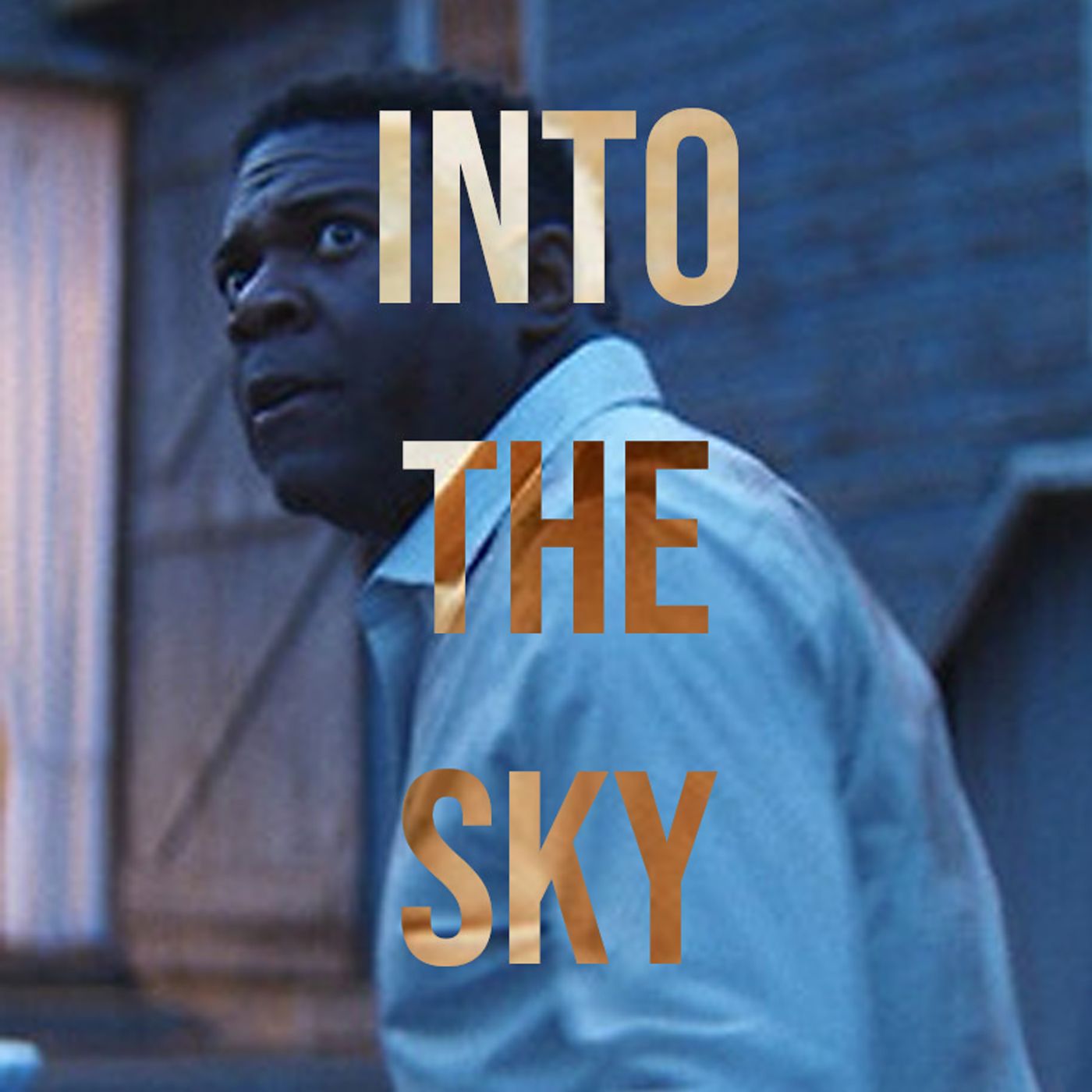
A man comes home from an alien abduction to find a tenant living in his house. Into the Sky (2026), a Fantastic Fest world premiere starring Sam Richardson, Sofia Black-D'Elia, and David Cross, pairs that premise with classic rom-com bones: the meet-cute, the estranged spouse, the big wedding. Drew Mylrea and Evan Wolf Buxbaum make their feature directing debut with an idea a decade in the making.
Mike talks with them about a script that sat for six years after Evan called it terrible, a wedding scene inspired by the barn where Drew officiated Evan's own, cast improv that changed how they shot, a fruit-based code for settling disputes behind the monitor, and hoisting actors skyward on wires during short Catskill summer nights.
Follow Into the Sky on Instagram (instagram.com/intotheskymovie) and visit the film's official website (intotheskymovie.com) for the merch raffle.
Become a supporter of this podcast: spreaker.com/podcast/the-projection-booth--551….
Become a supporter of The Projection Booth at patreon.com/projectionbooth
The Projection Booth is part of the Weirding Way Media podcast network. Explore more of our shows at weirdingwaymedia.com.
Transkriptvom Podcast bereitgestellt · Zeitmarken springen hin
Hold your ears, folks. It's showtime. People pay good money to see this movie.
When they go out to a theater, they want cold sodas, hot popcorn, and no monsters in the projection booth.
Everyone pretend podcasting isn't boring. Turn it off.
Hey folks, welcome to a special episode of The Projection Booth. I'm your host, Mike White. Today I'm talking with the co-writers and co-directors Drew Malria and Alvin Buxbaum about their sci-fi rom-com Into the Sky. Drew and Evan have been writing partners for a decade and their alien abduction comedy stars Sam Richardson and David Cross, Sophia Bush, and John Bass as ordinary people determined to pretend that abduction never happened.
Into the Sky had its world premiere at Fantastic Fest, with wider distribution still being worked out. Visit intotheskymovie.com for more information and find out where it is going to be playing near you. Had a great time talking with Drew and Evan, and I hope you have a great time listening. Enjoy. Evan and Drew, I am super excited to talk with you guys. I want to know, how do you guys know each other?
Evan and I have been working together for 10 years.
And we met filming a soap commercial.
Evan was producing and I was shooting a soap commercial in Los Angeles, and we had to spend about 10 hours in a 4x4 shower together, filming beauty shots of soap. And somewhere in that 10 hours, we started asking each other, whispering really, because we were so close, is this really what you want to do with the rest of your life?
No, of course not. I'm a writer.
What?
Me too.
I'm a writer too.
Oh my God.
What are you working on? And so we just, we were filming soap and we pitched each other ideas for about five hours and we Never dropped the conversation, and we've been working together ever since.
Before you got into the soap commercial business, how'd you get into filmmaking?
We both come from the DIY, ground-up indie film world. I made my first feature when I was 29 in the desert of New Mexico. Scrapped it all together however I possibly could. begging and pleading from family and friends of friends and friends of family and anyone who would listen to someone trying to get into the business. And made that first feature and then got more and more into writing. Met Drew really soon after that, the aforementioned hour meeting. And have since then, we've done a lot of writing. We've had a couple of TV shows in development.
We have done a lot of commercial work. as I'm sure is quite often the case. And now, 10 years later, I've gotten this project off the ground. Yeah, I had a similar journey, but a little different.
My mom is a fitness guru, and growing up, she made these fitness DVDs and VHS tapes. And I was kind of interested in film, and she realized if she bought a camera, she could basically use me to film all of her fitness routines.
And so in middle.
School, she forced myself and my friends to pick up cameras that she got and she made us film her in backyards, on a beach. I grew up in Santa Cruz doing these fitness routines that she would then sell.
As DVDs and VHS tapes. So basically the answer is child labor. Yeah, exactly.
So we had these cameras, my friends and I, and we just started using them to make movies. We started doing Kung Fu and then we realized we could cast all the cool jocks that we weren't really friends with and all the pretty girls in high school if we made them act in our movies. And we just started making films and from there I went to UCLA and I actually did study theater directing there because I wanted to work with actors as much as possible. But throughout that, just still always just shooting our own stuff, always wanting to make the biggest ambition, the most ambitious feature we possibly could.
And that's how I got into it.
You had the idea for Into the Sky first. And when was that?
The idea came about 10 years ago. It was, I'm obsessed with aliens. So I'll take the credit there for the original idea because I thought, oh my gosh, if I was abducted by aliens, I probably wouldn't want to tell anyone in my life because if I did, no one would believe me. And I thought that was such an interesting jumping off point, right? Usually you have the character who is being abducted by aliens and wants the world to know. But I thought, how interesting would it be if this was happening to someone and they reacted like a normal person, which is to say they would pretend it wasn't happening because they wanted to get along with their lives. And I thought that was a really cool dynamic that we hadn't seen in.
A science fiction movie before.
So that was the original idea. That was like the jumping off point. And I wrote a really bad script and sent it to Evan. And he said, this is terrible.
And we.
kept working on it over the course of, I don't know, three or four years before we got here.
Well, yeah, it was about eight years ago that Drew handed me the script and I had the reaction that Drew just said, and then basically didn't hear about it for six years. And we did a bunch of other stuff. We had, like I said, we were developing TV shows, we had all kinds of other stuff. And then about three years ago, he resurfaced with this script and said, hey, I just submitted this to the blacklist, got a bunch of eights and nines. And I was like, oh, I guess I should read it again. Six years in. And read it, and it was obviously a very different script.
It had gotten so good, and then Drew and I dove in and spent the next two years honing it in, developing it a bit more, and getting it to where it is today.
Is that kind of the typical process as far as, like, Drew will send you something, you'll say, this sucks, and then it'll come back later on?
Well, I hope not, because that would mean we need another 10 years to make our next movie. So I hope that this was an outlier. But no, I think this was just one of those things where sometimes there are those projects that are just in your bones. And this was like Drew's In Your Bones project. And I think for our next project, it'll probably be different. Who knows?
Maybe it'll be something that was in my bones. Maybe it'll be something that's a little more shot, slightly less deeply placed, not a 10-year-old idea. But hopefully we make another movie in less than a decade.
The kind of approach that has worked for us has always been If one of us is super passionate about something, heck.
Yeah, you own it, you take it.
So I think the original idea that was that for me, but even on set, if we're directing a scene together, if one of us is like, oh, I have an idea, I'm really into it. It's like, okay, run with that. And I'm going to support you in any way that we can. Sometimes that means Evan's got an idea for a script that I'm then coming in and working on.
And then sometimes it's We'll brainstorm together and write in the room together. Whoever's feeling the most passionate in the moment, we just try to support the other person. Go.
When you were getting those eights and nines from the blacklist and you bring it back to Evan, what was the shape of the script? I know you said that there was a lot of work that was done, but how does that compare to what we see in Into the Sky?
The shape of the script was, it definitely was a rom-com with the science fiction and horror elements. They had that classic rom-com framing, right?
That everyone knows and loved.
The setup, the meet-cute, it had all of that. What it didn't have was the big wedding. It didn't have the big abduction at the end. The humor was definitely not as sharp or articulated. When you have a first or second draft, the characters weren't super dialed in.
And so that was something that was like, we really worked on together.
And Evan would take a Bobby, I would take a Nico, we would talk to each other as the characters and just really try to sharpen all of those scenes, sharpen the dynamics. The wedding was a late ad because Evan asked me to officiate his wedding, which took place in an idyllic upstate barn. And it was, I went to this wedding and I thought it was just that there were all of these people in suits in this barn, and this was just such a scene. And that's when we wrote the wedding into the movie because I hadn't seen anything like it on film.
Which is just really a long way of saying that this film is in many ways Drew's critique of my wedding.
Is that what this is? This whole thing has just been all about shape?
That's it. That's it. It's Drew's drawn-out, creative... critique of my upstate of my charming upstate way very.
Charming you also have some just amazing actors in here how beholden are you to the script versus the what Sam he's freaking fantastic or David Cross these guys are just masters of comedy how much do they bring to the party.
They brought a ton there was improv throughout when we were on set I think part of our guiding principle especially when you know you have a script like this that's unabashedly fun where you want to just bring the audience in and say, hey, let's have a good time. We're going to take two hours right now. Let's fucking go.
Let's just have a good time. And I think we thought if we could foster that environment on set, both with the cast we were so fortunate to get and with the way in which we ran the set that we would be in a good place. So that's essentially how we did it. We were doing a lot of rewriting while we were going in partnership with Sam, with Sophia, with David. And then on set, We'd take a couple takes.
We'd get it as written. And then usually Sam would be like, all right, can we unhook a little? And be like, yeah, let's go. We would usually take two or three takes afterwards where people would just unhook. And so many of our actors were so good at that. John Rudnitsky was like, every take, he would just put some sauce on it in the end. And there's so many things that are amazing in the edit room. We honestly found ourselves being like, okay, which one of these eight things that are all amazing serves the story the best?
Because they all make us laugh. But which one is in character?
And I think that we definitely changed our approach a little bit. We had planned on doing a lot more traveling master shots and more very specific cinematography that landed in a certain spot.
And things were like mini-wanderers and stuff like that. But once we kind of saw.
The energy and how loose Sam and David and Sophia could be with the material and how good it was, we realized we kind of had to change the way that we were going to shoot the movie a little bit to accommodate for that so that we could use the best of what was being come up with on the day versus what we had in the script.
We touched a little bit about how you guys went back and forth with writing, but how do you operate when it comes to directing as co-directors?
We take the same principle of if you're passionate about it, go.
I think in general, like, I'm a little more, I'm the one who's going to go out and do the really bad storyboards.
So we have a game.
Plan on the day. And then I find that so helpful because then I'll just pitch that to Evan.
I'll be like, Hey, what do you think if we did it this way? And then he'll be like, okay, great. But what if we added a little bit here?
Yeah. And then we just start, we kind of just start rolling and we'll whisper to each other behind the monitor. We try not to talk at the actors at the same time because that can be really confusing. But we also don't really have conflicting notes often. We'll have a little huddle and then someone will take point and make adjustments.
But also when you're working with actors like Sam and like David, it's really kind of just about giving them like space to do their things sometimes.
I see your artwork, Drew. Your storyboards have to be amazing.
Thank you so much. I don't know if the listeners can see this, but I drew a stick figure of an upside-down person, an unmistakable craft in the sky. It just sells, right?
We have complementing skill sets, which is to say, Drew is really good at the things that I'm really not good at. And in some cases, vice versa. Drew is much more skilled than me in the visual world. If you needed someone to hold a camera, it's not me. I'll just tell you that. So Drew's just much more fluent in that world.
And.
I tend to focus on sort of deep character stuff. My mom was a theater director for many years. I've come from a very like theater-y world. Obviously, Drew does as well to a certain degree. So I tend to get really in those weeds. And I think those skills complement each other. And then Drew said on set, we've been working on all these things for so long together that we're basically just two halves of one brain. Our notes were usually the same anyway. And we would find ways to just make sure that we were thinking up on that and expressing it as a single point of contact with the actors. We had a whole system. One of the hardest things I think when you're co-directing obviously is you do things come up in real time that
are surprising. Production is nonstop surprise. No matter what you do, you go into the great plan and things change. And when you're in a partnership, you have to have a way to respond to those things in real time without showing people a non-unified front, right? So we had a great system we developed that was all about fruit. So we just had a certain amount of, we had fruits that meant different things, like how strongly we felt about something.
And so in a second, I can be like, dude, I'm like yucca on this, which meant I don't really care. What is yucca? It doesn't even have flavor. Or dude, this is a peach for me. I need this. This I'm like, this is very important to me. It's a dire moment. So we like, we could judge each other's importance, how much they were thinking, how much we cared about certain things. And so we could defer to each other in real time without causing any ripples. I thought that was a great system that worked for us.
Code words are fun. I've heard from a couple of the actors on set. They're like, these guys are just obsessed with fruit. I don't know what's going on.
Hashtag, this podcast is brought to you by the Georgia Farmers Association. Peaches for everyone.
What were some of the biggest problems you guys had to solve during the making of this?
Oh man, Mike, we had to solve several problems. We got these two tentpole alien abductions, the second abduction, but you got a lot of people going up into the sky. We had a lot of locations and we wanted to film it all basically on location upstate in real places. So, you know, it's just, it really became about, okay, how do we do this in the time we have, which isn't a lot with the money we have, which isn't enough, which is, classic but i'd say the yeah the biggest problem that we have was just thinking on our feet how are we going to do these abductions where we know we only have two or three takes and i think that meant for us we just need to plan ahead of time when it comes to the technical sequences
in the film just over plan so we're able to roll with the punches on set and we're also so we don't spend a lot of time doing this technical stuff when we have these really awesome comedy actors who are going to breathe life into the scene.
You know what I mean?
And not letting that consume us in any way.
So those were, yeah, those were some of the challenges. Obviously, pulling people up into the sky on wires on this budget was a nonstop adventure.
It was.
incredible to be a part of and some of the most incredible memories i have on set were from when we are like pulling people legitimately up into the sky because we do until they get about 20 feet in the sky it's all real but that presented a whole host of challenges obviously night times was an unexpected challenge we shot this in the summer in the town of catskill in upstate new york and something we hadn't really planned on was nights were really short And there's a lot of nighttime in this movie. And so we would find ourselves waiting for the sun to go down.
Boom.
We would start shooting and we would just burn the candle right until the minute we heard birds start chirping. And that's when we knew we were fucked. Cause like when the birds started chirping, we were like, sun's coming in five minutes. And so I just have this memory, this haunting memory of every time I heard a bird chirp, I was like, Oh God, here we are.
Tell me about the post-process. You talked a little bit about how you had to make those choices in the editing, but how was that working together in the editing room? Who was your editor?
It was a totally blessed edit in a way because we're co-directors. Our editor was Meg Mancini, who has done a lot of work on the TV show The Bear. So she knew a thing or two about blending drama with comedy, and she was excellent. And the way that we approached editing was trying to harness the co-directing superpower that we had, which is to say, I feel like the hardest thing about making any sort of artistic project is having perspective, right?
You're so in the weeds.
You know every single decision you made, you're tormented by the things that went wrong, and you lose perspective.
So what we.
Decided to do on this project was Evan was going to take the assembly with Meg and he was going to spend two weeks editing with Meg while I just pissed off.
And he did.
He took the assembly that she had and totally tightened it up, got the takes in there. He did the first director's pass and then I came in with completely fresh eyes having spent some time away from the shoot and then I could kind of come in and just see what they had done with a fresh set of eyes and do my pass. And we, we each did our own pass and that kind of made the movie.
It's kind of tightened up the movie and made it. So we knew the jokes were landing because we had taken that time. And then we just started working together and we were in the room for what, Ev, for.
A month and a half. After that first two, another four.
Yeah.
After that first two weeks. And it was great.
Editing's really fun. Until you start doing test screenings, which we did. And we did two big, not big, we didn't, we was friends and family, but we tried to be scientific with it. We had a huge QR code that would play after the movie that people would then scan with their phone so they could take a survey about the film before we did any q a so we could try to get some stats we tried to look at okay how are people feeling about every character how are people feeling about the plot are people getting confused and that was like really helpful to do those two big tests.
And we learned a lot especially with the comedy because you know with the comedy you lose perspective after 14 weeks of seeing the same jokes. And I would say if there were a hot tip section here, my hot tip would be if anyone's going to do screenings, have people give you written feedback before they talk. This is something I learned a long time ago, and it's so helpful because once they talk, everybody mind melts. But if you get their written responses before people talk, you have the unfiltered responses of people that maybe wouldn't want to say it in the room.
I know the film just is playing at Fantastic Fest. What's the fate next? What's going on with the movie after that?
First off, Fantastic Fest, what an amazing festival. The reception has been incredible. The audiences are incredible. Austin, such an amazing city, could not be happier and more thankful to have premiered at Fantastic. Just such a wonderful festival. In terms of what's coming up now, we have a sales team and they are crafting a strategy of how to get this into theaters across the country. And I know that will include some other festivals, but we don't know that as of yet. So there will definitely be more screenings.
There will be more festivals. I think we're just going to align it with sort of the strategy of getting this to sale.
And where's the best place for people to keep up with the movie?
They can follow us on Instagram. We're IntoTheSkyMovie on Instagram and also IntoTheSkyMovie.com. We have an ongoing raffle. If you give us an email, we're giving away very tasteful merch from the movie. We have Village Pizza. two t-shirts we're giving out. And we're also giving out really cool We're Not Alone bracelets that you see Jade and give Bobby in the movie. So if you sign up for a little bit of spam, you're probably going to get something cool coming your way because we made a lot of merch and we're pretty happy with it.
Fantastic. I will definitely be signing up for the newsletter. I expect some good spam coming in.
You're getting merch, Mike. It's coming your way.
I absolutely loved this movie. I was super happy to be able to see this, and I'm super happy to talk with you guys. Thank you so much.
Thanks for having us, Mike.
It was great.
Yeah, thank you so much for having us. Appreciate it.
I saw the light They returned last night unanswered Questions torture me.
Like how they unlock the door.
Why is my rectum sore?
Why do I twitch when I watch AT? Alien abduction pro happens all the time. They came and scratched their itch Left me crying in a ditch It's all so cruel and cold They put my life on hold This crap is getting old Hailing abduction probe You.
Know, they stuck a microchip.
In the hole between my hips, such a gross indignity. Involuntary cornholation, courtesy of the alien nation. Why do they always come for me? Alien abduction probe Happens all over the globe They came and scratched their itch Left me crying in a ditch It's all so cruel to cope They put my life on hold This crap is getting old Alien abduction probe.
Let me probe you one time, Roxanne.
Let me probe you one time.
So late at night, I wait alone Staring at the twilight zone With a sawed-off shotgun.
In my hand.
Drinking cheek wine and getting plastered Waiting for those gray green bastards It's the only way to.
Make them understand.
This crap is getting old. Alien abduction probe.
