

Kapitelklicken springt direkt hin
Shownotes
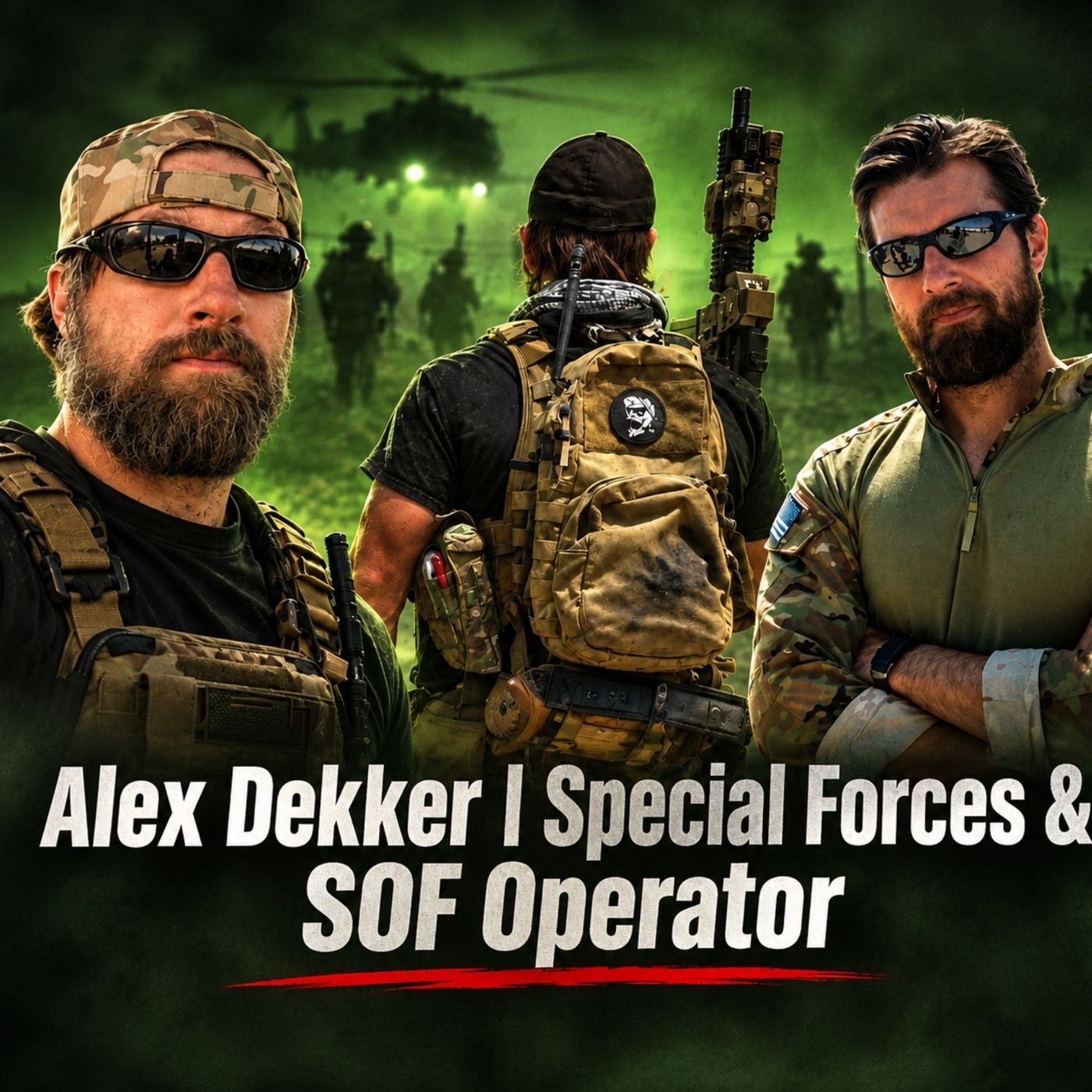
Alex Dekker looks back on his path from conventional infantry in Ramadi to 5th Special Forces Group, combat in Afghanistan, the Special Forces Combat Diver course, the fight against ISIS, and his final decade in a more specialized Army special operations unit. We also discuss his transition out of the military and how his experiences in Special Forces, intelligence, archaeology, and the Middle East shaped his debut novel, Desert Heist.
Grab Alex's book here: a.co/d/00h03vHa
Find Alex here: alexdekkerofficial.com
Today's Sponsors:
VAER Watches ⬇️
vaerwatches.com/theteamhouse
get a free watch roll with your purchase.
20% for active duty, veteran, leo, & first responders
GhostBed ⬇️
ghostbed.com/house
FOR 10% off!
BaerSkin Tactical ⬇️
Text 'HOUSE' to 39612 to get a free rain jacket when you purchase 2 hoodies!
Mars Men⬇️
For a limited time, our listeners get 50% off for life plus Free Shipping AND 3 Free Gifts at Men Go To Mars dot com. That’s MenGoToMars.com for 50% Off AND 3 Free Gifts when you checkout.
For ad free video and audio and access to live streams...
Subscribe to our Patreon! ⬇️
patreon.com/TheTeamHouse
___________________________________________________
GRAB JACK'S NEW BOOK "THE MOST DANGEROUS MAN"
⬇️⬇️⬇️⬇️⬇️
penguinrandomhouse.com/books/803651/the-most-d…
Subscribe to the new EYES ON podcast here:⬇️
youtube.com/@EyesOnGeopoliticsPod/featured
"Karl Casey @ White Bat Audio"
– Start
– Alex Dekker’s Interest in Archaeology
– Growing Up as an Army Brat
– His Father’s Career in Military Intelligence
– Why Special Operations Was Always the Goal
– Starting Out in the Conventional Army
– Deploying to Ramadi With 1st Infantry Division
– Seeing Special Forces in Iraq for the First Time
– What Conventional Infantry Life Was Really Like
– Leaving the Army & Going Back to College
– Returning on an 18X Contract
– Passing SFAS & Starting the Q Course
– Learning Arabic for 5th Special Forces Group
– Joining a Combat Dive Team
– Deploying to Afghanistan Six Weeks After Arriving
– His First Special Forces Deployment
– The Taliban Ambush That Nearly Killed Him
– Taking Over After the Team Was Wounded
– Fighting Through the Ambush With Shrapnel in His Leg
– Recovering & Returning to Afghanistan With a Cane
– Preparing for Combat Diver School After Being Wounded
– Inside the Special Forces Combat Diver Course
– Drown Proofing & Learning Not to Panic Underwater
– The 5th Group Guys Watching Everyone Else Deploy Somewhere Nice
– Sitting in Kuwait as the ISIS War Begins
– The Early U.S. Response to ISIS in Iraq
– Training While Waiting for the Mission to Expand
– Returning Home & Preparing for the Next Deployment
– Becoming an 18 Fox Intelligence Sergeant
– Targeting, Intelligence & Building the Battlefield Picture
– Working the Syria Problem as an 18 Fox
– Training Partner Forces Against ISIS
– Why ISIS Struggled Against Professional Forces
– What Special Forces Is Actually Designed to Do
– Looking for the Next Step Beyond 5th Group
– Moving Into a More Specialized Army Special Operations Unit
– What He Can Say About the Final Decade of His Career
– Retiring From the Secret Side of the Military
– The Honor Foundation & Transitioning Special Operators
– Why Networking Matters More Than Blind Job Applications
– Meeting His Wife, a Former CIA Operations Officer
– Leaving Two Secretive Careers Behind
– Why Intelligence Officers Struggle With Transition Too
– Writing Desert Heist in Three Months
– Finding a Literary Agent
– Combining Indiana Jones, Special Forces & Real History
– Building Characters From Real ODA Personalities
– Why Veterans Sometimes Miss the Chaos
– The Lost City at the Center of Desert Heist
– Green Berets, Russian Mercenaries & the Bigger Conspiracy
– Turning Desert Heist Into a Series
– What to Expect From the Next Nate Wilde Book
– Where to Find Alex & Desert Heist
– Jack & Alex Compare the Fiction Publishing Process
– Planning Storylines Several Books in Advance
– What Comes Next for Both Series
– Keeping Survival & Combat Realistic in Fiction
– Closing Thoughts
Become a supporter of this podcast: spreaker.com/podcast/the-team-house--5960890/s….
Transkriptvom Podcast bereitgestellt · Zeitmarken springen hin
Hey, Jack.
What's going on?
Guess who our new presenting sponsor is. Tell us about it.
We've heard a lot over the last few years about whether it's possible to build things in America. Our presenting sponsor today, Vera Watches, is putting that question to the test. Vera was founded in Venice, California in 2016 with a simple goal, to rebuild U.S. watchmaking while producing watches tough enough to withstand the toughest outdoor environments. Today, Vera is the largest independent watch assembler in America. assembling watches in California, Arizona, Rhode Island, and Alabama, while also manufacturing its leather straps in Illinois and Florida. Every rear watch is built for active use with a guaranteed waterproof warranty, scratch-resistant sapphire crystals, and high-quality materials and components throughout. That combination has helped
Vair earn more than 10,000 five-star customer reviews, including thousands from people who rely on their watches every day in demanding professional environments. All of us here at the team house have been wearing our Vair watches for a while now, and you can check mine out right here. This is the Meridian Diver watch in navy blue. It's a very classy watch. And this is the actual rubber dive watch band if you wanted to take it in salt water.
But it also comes with a normal silver band and a nylon band if you prefer that. And D, what kind of watch are you wearing there?
I have the C4 Tactical Field Watch. It's solar powered too. I'm loving it. And it's funny because I had this laying on my coffee table the other day, actually. And my homie came in and to watch football or whatever. And he's a watch guy. And he's like, Oh, is that that fair one? He, I'm not even making this up.
Like I'm not even bullshitting. I'm like, Holy shit.
Yeah.
Like they're going to be presenting sponsor for the team house. And they sent us all a bunch of watches. Like, yo, I love this watch. And I, I literally sold the watch. I sent them the link, the team house link. And I'm like, yo, buy a watch from this, from this link. Because if you do buy a watch from that link, which is very watches.com slash the team house, you want, you purchase a watch, you get, A free watch roll that you could fill up with three watches so you could travel with your watches and stuff like that. It's really cool. It's leather.
Yeah.
And I was so excited when he was like, yo, is that that Vare watch? I see it all the time. I was like so amped that he came up with that.
Yeah, it's nice.
I really like the like nice big watch face.
You can find them at vairwatches.com slash the team house. That's V-A-E-R watches.com slash the team house. And if you use our link, you'll get a free watch roll with $ 59 with your purchase. Also, Vair does offer a 20% discount for active duty military veterans and law enforcement and first responders. So you could check that out at any time if you are any one of those. Yeah, I'm excited about the sponsorship. So I really hope people go and check out Vair.
Yeah, absolutely.
Absolutely.
Hello, everyone. Welcome to the team house. I'm Jack Murphy. And our guest on today's show is Alex Decker. He is the author of Desert Heist. You can go and pick this novel up today. It's out now. Alex served in 5th Special Forces Group and Army Special Operations Command and has a interest in archaeology. I mean, I noticed in your bio that you majored in intelligence, but I I guess just off the bat, where does the archaeology interest come from?
Yeah, that's a great question. So I love history. I've always loved history, archaeology in particular. I think, you know, you can't, you can never ignore the influence of fiction. So like a lot of people, I think Indiana Jones turned me on to it when I was a kid. And yeah, I think I saw Raiders of the Lost Ark and I was hooked, looked into archaeology, learned that it wasn't, wasn't all just punching Nazis in the face and, you know, discovering lost treasures, but it was still pretty cool.
And so I found it super fascinating and just kind of always have. So, you know, I say that I've had a lot of time for hobbies in the last like 20 years or so, but if I had a hobby, it's probably studying history and reading historical nonfiction, things like that. So archaeology sort of goes hand in hand with all that.
Are you one of these dudes that like volunteers to go out to dig sites and like sift through I have.
Yeah, I haven't in a long time, but I used to for sure. Yeah, it's just fascinating to be around. I love going to ancient sites anyhow. And whenever I travel, whether it's for in the military or independently, I always try to go to interesting places and visit some of these locations. So as much time as I can spend with them, the better.
So to kind of rewind a little bit, tell us a bit about where you grew up and sort of what was the path that sort of took you to the military?
Yeah. So I, like a lot of people in the military, I was an Army brat. So the transition to the military was a pretty simple one. I grew up all around, lived overseas. I think I moved probably over a dozen times in my 18 years at home. So I think the military was probably always a foregone conclusion for me.
Like a lot of people that are my age or our age or similar in that GWAT era, 9-11 happened while I was in high school. And that was kind of the impetus to say, OK, I want to do something sooner rather than later. And so original plan was let's go to college. And I went to college for about a year, hated it. Felt like I was sitting around doing nothing. So I actually dropped out and enlisted.
And that kind of started me on the whole path forward.
Cool.
So, I mean, what MOS did you come into the Army on?
So I was originally... So I came in. I originally went Reserve under 31 Bravo as an MP. Figured out what that was. Was... was not a good thing what I wanted to do. And then, so I made the transition over to 11 Bravo and then from 11 Bravo, you know, 18 Echo, 18 Fox, 18 Zulu.
Gotcha. Yeah.
I just have the whole, the whole smattering of MOSs.
So what did your folks do in the military?
So my dad was a, an MI officer. So he was military intelligence. Then he was a foreign area officer. So he was defense attache. Ended up. Oh, cool. Yeah. So he ended up being the army attache over in Israel for a bit. And then, the defense attache in Africa.
So, so that didn't, you know, immediately interest you though when you joined?
I think, I think going special operations is always kind of the route that I wanted to go. I think I had it in my head and again, I'm going to, I'll probably hit on it more, more than I am for a second time here, but the importance of fiction, I like grew up with these stories, reading these books, watching these movies and, you know, kind of, Uh, I think I saw like predator in fifth grade, you know, and commando and it was like, all right, I want to go do this kind of stuff. I think super bad-ass. And, uh, so that was always kind of a goal I think was to, to go down that route for sure. Um, I think I, I had originally planned on like finishing college at that point. I ended up going back and finishing, but, uh,
I planned on finishing at that point. Um, I, I just, I, I had this kind of concept, you know, especially whenever Afghanistan was going on and then Iraq kicking off and it sounds super ridiculous now, but I had this, this concern that the wars would be over and I would have missed them and not been able to do my part. And, you know, if anybody told us they'd go on for 20 years, maybe I would have taken my time. I don't know, probably not, but definitely, definitely pushed me in that direction. And then once I, once I got in the military and I kind of learned about, especially into special operations and learned kind of that difference and what it is that an enlisted guy does and what an officer does and especially in special operations and officer, how your,
your operational time is very, very limited. You know, I think I had made the right choice and didn't have any desire to switch.
So you came in as 11 Bravo infantry. Did you do some time in the conventional forces or were you able to like volunteer for SFAS and basic training or how did that work out?
So I actually did some conventional time. I did a year-long deployment to Iraq, which was also another one that was terrible. It was by far my worst deployment. You know, give it up to the grunts and the regular Army and the Marines and all these guys. I learned a lot about, you know, throughout my career. I'm very grateful for having that conventional Army experience because it really does make you appreciate some things that maybe like 18 x-rays, let's make an x-rays and yeah, it'd be a rough day and they'd be complaining about how terrible things are.
And it's like, Hey man, you're not raking rocks on a fob in Iraq because your platoon sergeant thinks you need to stay busy while you're not on, on missions, you know? And so it definitely gave me like a perspective there.
What unit was that?
Let's see, 04 to 07.
Oh no, I mean, what, what unit were you with?
Oh, uh, first idea. I was out of Fort Riley.
Okay.
And, um.
And where in Iraq did they send you?
Uh, so Ramadi. So I was in Ramadi like 05, 06.
I mean, that was a hot area.
That was a hot area.
Yeah.
And, um, you know, I can remember, again, a couple of things that stick out. I remember seeing the real, the seals rolling around and I remember seeing, uh, SF rolling around. And I think at the time it was like, uh, I might be getting it wrong, but I think it was like a four vehicle convoy minimum to leave the wire, you know, and there was this whole, all these things that go on and I've ever seen the SF guys just rolling out and like two vehicles and, you know, going out and doing whatever they were doing, you know, guys have backwards baseball caps and stuff. And I thought, man, it looks like there, as I'm sitting there at the clearing barrel, waiting for someone to clear my rifle, you know,
I thought these guys are having a much better time than I am. Um, and, uh, and for sure they were. And so, uh, the other thing too, is, you know, we talk about that it's those conventional units that handled a brunt of everything. Right. And so like, I remember, you know, whether you're driving around on route Michigan or Tampa or wherever, or you're doing a patrol and you're, it always kind of felt like you were living at a cop outside in the tent. Like you always felt like you're just waiting to get attacked, you know? And, uh, I always thought of the defensive and then I can remember switching over to special forces and it was the opposite.
You're always on the offensive. You always had the initiative, whereas things were a little more serious. It was a little bit more like, you know, war is kind of like an arena and we're the best at it. And just a complete and total different shift in mindset, which I obviously enjoy a lot more, too.
Yeah, you hear that from a lot of the guys, which is understandable, dudes who served in a conventional unit, EOD or combat engineer or infantry, that they want to take the fight to the enemy. And they didn't feel like they were really doing that in those units. But I mean, on the other hand, like you said, the conventional forces do the brunt of the work.
They do.
Yeah. I mean, what was your unit doing other than your platoon sergeant having you on? I think in the... I've heard that... you know, they used to call it in the old days, like fatigue labor or fatigue duty, which is literally what you, you know, you described, like just keep them from getting in trouble.
Exactly.
Yeah.
Keep them from thinking too much and idle hands and all of that. Yeah. So we were, you know, we had a couple of different things. That's the other thing too, is that, uh, you know, when you're a lower enlisted, you don't know what you're doing half the time or why you're doing things half the time, I guess you just kind of do them. And so I can remember, uh, you know, I was involved in, uh, like the major clearing operation, um, Murfreesboro, I think it was called. And I had no idea until years later. I think I picked up a book. I might have been like the sheriff of Ramadi or something. I'm reading through it. I was like, I was there during that time. Oh, is that why we did all that stuff? Like I had
no idea, you know? And so it just, you know, you're a lot of times you're treated like a mushroom, you know, kept in the dark and fed shit. Yeah. That's kind of the thing. So, but, you know, we did patrols. We did presence patrols. We lived out of combat outposts or down in the government center or downtown.
And it felt like a lot of just being there and a lot of presence. We worked a little bit with like the Iraqi police and things like that. So a smattering of different things, but definitely interesting time. And like I said, not one that I enjoyed, one that I'm grateful for because of the perspective it lent me for years later.
Yeah, this is one of those deployments where like your DCUs are rotting off your body by the time you get home.
All right. Yeah.
Yeah, yeah. So, I mean, when you did redeploy back to the States, I take it you put your hand up pretty fast to go to selection.
You know what? I actually took a break and went back to school.
Oh, really?
You had a break in service?
What's that? I had a break in service.
Oh, interesting. Okay.
And so I thought, I was like, all right, that was not the best experience. I'm going to go back to school. do that. And as I was going to school, as I was starting to finish up, um, I, uh, started thinking more back about, you know, I should have just gone into selection. I should have just done it then.
And so I had a buddy who was actually a recruiter who was able to, um, essentially hook me up with an 18 x-ray contract. So I go back in 18 x-ray prior service with that pipeline, uh, airborne and then, uh, SFAS and, and go that route. So, And off I was, and I kind of had a plan. I knew where I wanted to go. I knew I wanted to go to fifth group, so I volunteered for Arabic. You know, I volunteered. I figured I'd get fifth group, which I did, because a lot of guys who didn't get it, a lot of guys are Russian speakers and, you know, whatever else got fifth group as well.
Yeah, there's no way that you were not going to get fifth group in Arabic if you requested it.
For sure, 100%.
So, I mean, your major in college was, was it intelligence studies?
No. So I was, I originally went for archaeology and then I ended up switching when I went back to political science. Intelligence was, I went back for grad school, grad school at Georgetown for biology.
Okay. So, yeah, I mean, that's great. I mean, the x-ray program is a great deal, especially I think for people who have previous work experience or got some college or, Kind of like in that sort of vein.
We joke that it's the great pipeline for prior service Marines. So many prior service Marines you get going through.
Yeah, yeah.
No, after I got out of the military and I was going to college, I'd meet those guys. And they're getting their degree and they're like, yeah, I'm going to go back in. I'm going to do SF. I'm like, dude, are you crazy? What are you talking about?
Yeah.
Uh, but yeah, they have, they have that dream. So, I mean, it's, it's a, it is a great opportunity for them to jump on.
Yeah, for sure.
Um, okay. So you go back in, uh, you didn't have a big enough break in service that you had to go back through basic training and all that stuff again. So you're kind of going like straight to airborne school and then selection.
Yep. Essentially. Yeah. So did that. I was fortunate enough to get one shot through selection. Um, And then I, I picked 18 echo, which is also what I got. Um, and so once at the Q course had, uh, you know, as good a time in the Q course as everybody else does. And, uh, and then graduated. I, and I, I ended up, um, shooting myself in the foot. I did Arabic so well that I got picked up for, they were trying out that 18 Lima program, but essentially like an additional year of language school. And, uh, so I got to do that.
So I, I, Did you get to go to DLI or was that right there at SWCC?
No, it was at SWCC. They had the idea of like importing the DLI.
You got screwed, bro. Yeah.
Importing the DLI to SWCC and then finding instructors to teach it. I think the whole thing ended up being a mess and they tanked it after a couple of years or whatever. But as a result, you know, that Arabic always stuck with me. Yeah.
That's great.
So you were a 3.3 in Arabic?
2.2.
Still notoriously hard.
That's still very good. Yeah. But I could do, you know, I could, whatever I needed to accomplish, I could accomplish. But I don't have quite a vocabulary. I could talk.
Yeah, yeah.
That's how you like to do like course instruction with, you know, soldiers over there.
For sure. Yeah, I was able to hold meetings and do things like that. So it was good.
That's great.
And then, of course, being fifth group, I got a chance to practice it. And essentially, I experienced immersion for a fair amount of the time. So that also, I think, really helps make it stick in your head.
So, uh, which, uh, battalion company team do you get, uh, assigned to when you got the group?
So I showed up, um, so that was an echo and I showed up with another echo. Um, we went to a Charlie company, third battalion, and there was two slots, um, for echoes. Um, one of them was on a dive team. Um, I was, uh, 25 or 26, whatever it was. The other guy I think was like 36 or 37. So I think they were looking at the two of us and they were like, young guy, you're going to the dive team. So I, uh, showed up at the dive team and, uh, I met my, met my team Sergeant, uh, which is everything I had expected a dive team Sergeant to be. And, uh, you know, he asked me, he was like, I only have one question. Do you want to be a combat diver? I was like, ah, I never really thought about it, but like, I'll give him
a shot.
You know?
And he was like, yeah, I know you will. You don't really have a choice. Um, And so I showed up and kind of into the dream scenario everybody wants because I went straight to a team. I didn't get put on a B team or, you know, SIGDET or something like that. And we were leaving for Afghanistan in a couple of weeks to go do the commando mission.
So it was like a great on-ramp into SF, you know, trial by fire for sure. I think I showed up and he was like, you know, hey, we're doing this. we're going to get all your stuff packed. I showed up, I was, uh, I ended up showed up as the senior echo. And so it was like, get all the combo stuff packed, get down to SIG debt and make sure all the crypto is good. Um, you know, we're doing a jump next week and you're going to be the shoot NCOIC or what, you know, just all the, just piled it all on and very fast learning. But, uh, but as a by-product to that, I got comfortable with everything pretty quick. So, uh, definitely a good intro.
So how fast were you guys out the door?
I want to say six or seven weeks, something.
Along that line. Oh, wow.
Okay.
Yeah. So you're flying. And you could get dive qualified later because there wasn't a lot of water where you were going.
No, there was not. So I came back and I did. I went through the whole pre-scuba process.
Yeah, yeah. No, I'll ask you about that. You talk about that in the book too a bit about dive school. But tell us about that first deployment with SF doing the commando mission.
It was good. Uh, you know, it was a, um, uh, a good introduction to SF and how it does things in a completely different turnaround from what I was used to with my previous experience. We were essentially the hammer. We'd have other teams that are out there doing VSO mission or things like that. If they had a problem here or some intel, there's Taliban presence here or, you know, a target there. Uh, we would just load up our commandos and flying at night and just do, you know, a couple, a couple of raids a week. And, um, you get very comfortable with that whole process and, uh, um, and kind of, kind of, kind of work out all those, all those kinks. So that's like, Oh, you're a fluid, nice operating machine, you know? Um, and so it was,
it was great. It, uh, that deployment was, I also got injured on that deployment. Um, and so, I ended up getting medevaced during that trip, um, down out to launch tool. I spent, um, about a month in launch tool, came back stateside, did some recovery stateside, but was actually able to come back and, and join the team towards the tail end of the deployment.
So, um, Oh, wow.
Was this a, you know, like a combat operation or like an accident?
It was. So we were, um, we had, some intel about a like a mid-level taliban guy um and so we did the the normal mission that we usually do um and there was just there i think what happened was there was a larger presence than we had anticipated and so we ran up against some pretty steep resistance we also when we landed we had kind of two two main efforts and they uh the idea was to land in close proximity the landing didn't didn't allow that the reality on the ground as is often the case was unmarked LZs. And so we were kind of separated in this village. And as we were moving to Linka, we had our, you know, some of the challenges of working with the partner force. We had our Afghan commandos
and they had sent kind of a recon element forward, lost communication with them. And so they didn't want to advance farther because they were afraid of like a friendly fire incident, but we were in kind of a bad spot. And so we're telling them like, look, we can't stay here. We got to move, let's go. And as we're trying to get them moving, it just, it was enough time that it allowed, you know, some of the bad guys to maneuver on us to a point, an advantageous point.
And I opened up with a couple of, thrown a couple of grenades. I had a grenade land about three feet from me and went off and kind of shredded my right leg. And I took some of my left and some of my back and then opened up with a pretty, pretty close, you know, probably about five, five, six, seven meters with a couple of, you know, two or three, something heavy, like a PKM and then a couple of AKs.
And they just, you know, we had, I think four Americans in the element and then our, our, our commandos. And I think in the opening salvo, everybody was injured at least. And so, you know, it was a bad, bad experience. I remember feeling like I just got hit with a baseball bat, you know, I don't really understand what just occurred. Um, and there was a couple of guys that were worse off than I was. And so we, you know, we're able to take, take cover behind a wall, return fire, um, you know, call it in and then try to basically extricate ourself out of this scenario, drag our wounded out. Um, which again was another, uh, you know, it was me, it was our, I think our senior Bravo or senior Delta. And then, um, one of our
Navy EOD guys. And so, uh, I instantly went from being the junior guy on the team to the only guy that was, uh, able to be cognizant and kind of make calls. And so I'm like calling it in. I'm trying to get us out of there. Um, you know, we're our, our senior Bravo got, you know, managed to get out of the, out of the kill zone and then collapsed. And within, you know, a minute or two, our Delta had, I think four tourniquets on him cause he was just hit all over. Um, and so he's actively there, you know, trying to try to save his life. Um, and, uh, I can remember our American interpreter that we had, I remember picking him up and walking him out and thinking for sure that, you know, we were going to, one
of those rounds that was coming was going to catch us.
It didn't.
We were very fortunate, got out of the area, found our way down into a wadi, equally, you know, suspicious. And because now you don't know where anything is and, you know, it's just, it's just dense foliage. And we ended up finding like a little, a shelter kind of down in that wadi where we were able to bring the wounded inside. kind of put the wounded commandos in a perimeter of some kind. And then, uh, you know, go between doing, doing first aid on everyone to, uh, try to walk the other element onto our location. They had contact in different parts of the village. So they were fighting their way to us. You know, it's probably, I don't know, about maybe an hour and a half until, until they were able to get to us. And then
we were able to fight our way out of that wadi down to an emergency HLZ and, and get everybody out. So, uh, Yeah, definitely like one of those nights that sticks with you in a bad and good way. Because, you know, you're trying to look at the positive outlook of things. And I was able to make a recovery and, you know, continue to have a career in Special Forces. But I also, that was my first SF deployment and I had many after.
But that was something I could take with me and say, okay, I've been in the worst circumstances. I did okay. I rose to the occasion. I did what I needed to do. Um, you know, I was a team guy that I was supposed to be. I know that moving forward, if something else happens, I'll be able to do that again. Um, so, you know, like a curse and a blessing.
I mean, yeah, it's wild that you were ambulatory throughout that, uh, taking shrapnel in the legs.
Yeah. You know, so I remember, uh, I was, I mean, at first you're just angry. I saw Brad was super angry. I think I just loaded in a fresh mag, put it on auto, just, I saw silhouettes that were firing. I just sprayed a mag, you know, sprayed a second mag. You start thinking about what you're doing and, you know, we got out of there. Adrenaline's pumping. It wasn't until we got to that little farmhouse in the wadi that, uh, you know, my leg really started hurting. And I was like, okay, I think that I originally, I thought maybe it kicked some rocks up and some rocks had hit me and, you know, you don't know. Um, and so that's when I realized that, okay, I think maybe it's a little worse than I thought it was. Um, but I didn't
have any fast bleeders or anything like that. So I was able to slap a bandage on it and just kind of keep, keep going, try to, you know, we had, um, a guy who had taken shrapnel in the face and his eyes were, you know, um, and some shrapnel in his eyes. And yeah, I can remember, uh, I can remember that night. I'll tell you, I, the appreciation I got for 18 deltas that night, especially good 18 deltas is one that sticks with me. It has always stuck with me as well, because, worst case scenario, our 18 Delta was, was injured and he's over there doing field surgery by headlamp, um, you know, actively saving, uh, you know, our, our guy's life. And I'm trying to address some other wounds on people. And I remember asking him, you know,
I'd be like, I'm like, what do I do for his eyes? And he's like, nothing you can do for his eyes, man. Keep going. Check for other bleeders, check for, you know, just cool as a cucumber, very calm, uh, just, uh, ultimate respect for 18 Delta as training, they go through the training, they continuously go through and how those guys are, Able to rise to the occasion. Zero bedside manner. Never any bedside. You don't want them for clinical stuff, but in an emergency, those guys are top notch.
The operator feels no pain.
Operator feels no pain.
It's funny. The other day I was walking around. It was super nice, like 65 sunny, not much wind. And like literally within 10 minutes, the temperature dropped about 10 degrees. The wind picked up like crazy. And as luck would have it, I had a bare skinned, hoodie in my car ready to rock I ran to my car grabbed it put it on and it was the perfect hoodie for what I needed for that time it was flexible easy wasn't super bulky obviously the weather doesn't wait for you you know so it I was so lucky to have the bearskin hoodie in my car they have this thing called micro fleece the bearskin micro fleece it's warmer than your average hoodie and it's lighter than anything it's it's pretty cool it blocks wind retains heat it looks
right anywhere 12 pockets inside including a secure inner pocket that keeps your card and cash protected you always know where your wallet is and your money is it's pretty sweet the crazy part is I was told I read it up too when they told us they were going to sponsor the podcast that over 1 million units have been sold they have 40,000 5 star reviews on Trustpilot Mountain IQ called it one of the best hoodies in the world and honestly I'm a hoodie guy I'm loving it frankly Right now, you can get it too. Buy any two Bearskin hoodies and get the rain jacket thrown in for free. Text HOUSE to 36912, and Bearskin will send you a link directly. That's HOUSE to 36912. If you're on the move, they'll hold the deal for you,
so whenever you're ready to use it, you can use it. That's, again, text HOUSE, H-O-U-S-E, to 36912. Thank you, Bearskin, for sponsoring this episode, and you can also find links in the description and the show notes too. Thanks, guys.
Hey guys, I'm Jack Murphy here at the team house and today I want to tell you about the sponsor for tonight's show, Mars Men. This is a natural testosterone support supplement. I take it, I've been taking it for about the last five weeks now and I'm starting to notice a difference. You take five of these pills each day and each one of these cans lasts you a month I think you need to use them for a couple months to get the full effect of them but I'm about five weeks in and I'm starting to notice a difference already increased energy better performance in the gym all of those things I've you know quite frankly in the past I've had a problem with testosterone, as a lot of military veterans do, as a lot of men
who are going into their 40s do. And this is actually something that seems to be helping me get my levels back up even higher. So I'd highly recommend checking them out. It has eight different substances in it that help boost your testosterone count. If you guys will go and check them out, we'd really appreciate it. So would the sponsor. And For a limited time, our listeners get 50% off for life plus free shipping and three free gifts at mengotomars.com. That's mengotomars.com for 50% off and three free gifts when you check out. After you purchase, they will ask you where you heard about them. Please show support for the show and tell them that the team house sent you. Thank you, everyone.
Shopping for a mattress can get overwhelming fast. Too many options, too many opinions, and no clear way to tell what's actually right for you. That's why Ghostbed built their online mattress quiz. It's quick, it's simple, and it helps narrow down the right Ghostbed mattress based on how you actually sleep.
You answer a few questions about things like your sleep position, whether you tend to sleep hot, and the feel you prefer. And the quiz gives you a clear recommendation from the Ghostbed collection. And if you're shopping with a partner, you could take it together. The quiz factors in both of your preferences, so you're not guessing or compromising blindly. It's an easy way to land on a mattress that works for both of you without overthinking it. Behind the quiz is a family-run brand with more than 20 years of experience making high-quality mattresses. Plus, you'll get these best deals with GhostBed because the mattresses are priced up to 50% less than comparable brands. And there's no pressure either. Every
mattress comes with a 101-night sleep trial and long warranty and fast, free shipping. Most orders arrive in two to five business days. Right now, as a Team House listener, you can take an extra 10% off your order. Just go to ghostbed.com slash house and use the promo code house at checkout. That's ghostbed.com slash house, code house, for an extra 10% off site-wide. Some terms and exclusions apply.
See site for details. Ghostbed, we love you. Thank you for sponsoring this show.
No, that is incredible.
Yeah.
You said you did some recovery stateside and you actually went back to Afghanistan on the tail end of that deployment.
I did. So I was a launch tool for about a month, had a couple of surgeries and stuff there. And then they I was in a good spot to move, went back, did some recovery there. And then, you know, I I was I graduated from walking from a wheelchair to walking with crutches to walking with a cane. I figured the cane was good enough. And so I went to, you know, I went to the commander's office essentially. I was like, all right, like team's still there. You know, not having a good time thing about the team being there, me not being there. I was like, give me back on the first thing smoking. I'll go play house mouse.
I'll watch the radio or something. I just want to get back to the team. And, you know, it was kind of like, all right, calm down. You know, let's, let's, you know, let's figure this out. And they ended up coming up with a, like a battery of tests, physical tests that I should, go through to that. I could redeploy to combat zones. I don't really have something in place for that time. Um, I think I probably failed most of them. I think they just green lit it anyway and said, okay, it's probably better for him and the team if he's back there. And so I got my, you know, four months supply of, uh, you know, meds and had my cane and, uh, flew, uh, flew commercial part of the way and then hopped on a plane
and flew back in and got to meet back up with the team. So, wow.
That's awesome.
Yeah, it was great. It was, we could have asked for anything better in that regard. And then, you know, the recovery process, the 18 deltas again, I'll sing their praises. You know, they were there for, for, for my recovery and to help me like gain function and strength and all that kind of stuff. And kind of like my physical therapists in that regard. And it took a little while for me to, you know, walk without a limp and then to be able to run again, um, and do all that. Um, but again, eventually recovered to what, what I call my new a hundred percent, uh, to be able to keep on going.
So, yeah, I was going to ask, I mean, you had to get ready for dive school and I mean, that's one of the tougher schools in the entire military physically speaking. Yeah.
So we used to, everybody used to laugh and call, uh, my, my right leg, my Nemo fin, um, which if you haven't seen Finding Nemo, he's got kind of a gimp fin. So it was kind of the running joke. But what was challenging was I was always, like most guys in the organizations, pretty athletic and a pretty good runner and a good swimmer. And that changed a little bit. And so I wasn't as fast as I was. I wasn't as strong as I was, but I was good enough.
And so Um, when it came to swimming, I would finish, you know, somewhere around the middle of the pack, um, which was good enough. And when it came to all the land-based stuff, like running, I finished at the end of the pack. Um, but I finished and I finished in time. Um, so dive school, you have to do, uh, you know, five miler and 40 minutes, uh, the, the soft standard, you suck standard, whatever it is. Um, uh, and then running and doing it in Key West is a, uh, So now you run along the coastline and you have a headwind both ways for however that works. And I think I probably finished that. I think my time was like 39 minutes and 52 seconds or something. I mean, I just finished the land portion, but I finished. And,
you know, the other stuff, again, the water-based stuff, you know, was about the middle of the pack, which was an okay place to be as far as getting through dive school, so.
How long after that deployment was it that they sent you to the dive course?
I guess probably maybe about a year, maybe a little over a year after that.
Did you do another deployment in between?
I didn't. We were on whatever that rotation was at that point. We didn't have one yet. Shortly after we did. I think I got back from dive school and then I think it was another maybe two or three months or something like that along those lines, but deployed again.
So, so tell folks a little bit about, uh, the combat diver course, because I think some people don't understand that special forces has dive teams or what they do.
Yeah. So they do. Um, the, the, the difference, I guess, you know, like talk about like special force combat diver and was that compared to a seal? I mean, seals are meant to be kind of a maritime amphibious, you know, they, they do, um, vehicle boarding search and seizures you know they all the udt all the udt stuff and things like that sf uses it as an infiltration method and that's kind of the idea um we've done some cross training where we've practiced those things but that's not that's not what we're meant to do the idea is that you can um look at the core special forces mission of unconventional warfare you're going into a denied area you're working with a partner force or resistance force to coerce, disrupt,
or overthrow government or occupying power. So there's a lot of, you know, covert and low visibility stuff in that, right? And so the idea is that how do you get in undetected? And that's why, you know, do you jump in? Do you, you know, ride in the back of a sheep farmer's truck or whatever it might be? Diving, when you consider how much of the world is coastline, diving is a feasible method to get in. Um, and so that's kind of the idea of putting these teams through, um, through that. And then it's, it's grown in recent years where now it's not just diving, but, uh, like water infiltration. Um, and so you have like WIC teams, um, that just train on, they're not necessarily diving, but they get in
by boat and they practice that kind of stuff as well. So that's, that's kind of the idea of it. The combat diver course is down in Key West, Florida. It's, I think it varies a little bit, but it's usually about six weeks, I think. Um, and the, the focus is really on that. So you go through all the, first off it's, it's diving. It's, you know, a lot of it's scuba diving and then you do your closed circuit, but they take, the army is able to suck the fun out of everything. So they take something that, you know, people in their sixties do for fun on vacation and they turn it into something that's excruciating and, uh, unenjoyable.
And so, um, you know, you go through a cool week where that's all the kind of standard stuff where people have seen where you're, you know, uh, Tied at the ankles, tied with your wrists behind your back, and you do the drown-proofing bobbing. You do weight belt swims and ditch and don, ditching your equipment and recovering it.
And it's all these tests to show that you can accomplish these things, that you're comfortable in the water, that you won't panic. Because when you start getting into farther sections of dives, club becomes important because the ocean is very unforgiving. So you've got to be appropriately trained for that.
I mean, the other thing is that because you're special forces that you can go to other countries and train them as combat divers.
For sure.
Yeah.
I've never had a chance to do that. I never actually got a chance to do a J-set. But we've had guys that go work with the Maritime Commandos. in Lebanon or wherever it might be, whoever they work with, and they're able to train those partners as well.
I knew a guy in one of the National Guard groups, and he had a pretty cush gig going where every summer they'd go down to Jamaica and and train some Jamaican military or police dive unit.
Yeah.
That reminds me of when I went to the 18 Fox course and we were gearing up for Syria. And so you build this intelligence estimate, you know, and it's kind of like your big thing at the end of the course. And so I'm doing mine on Syria. And when you go to these schools, obviously you are around guys from different groups. And, you know, I remember seeing like the seventh group guy doing his on Brazil and the 10th group guy doing his on Norway. And I was like, how, how do we have the same job?
Cause everything, everything we do is Iraq, Afghanistan, Syria. We live in these terrible places and, you know, these guys are going to the Singapore or whatever. Maybe I chose poorly when I chose fifth group.
I don't know. I, so you get back from dive school and you said you deployed like three months later.
I think so. Yeah. Yeah. Where were you going this time? Um, so I think, so we were meant to go, um, I think to Jordan for a J set. And it was kind of, you know, the front end of the ISIS stuff. And so we kind of got, I think like 48 hours out. They're like, you guys are packed. You got a plane. You're not going there. You're going to go to Kuwait and then you're going to go to Iraq and, you know, we'll use you for whatever we got to use you for. And we ended up sitting around in Kuwait for quite a while with a lot of other ODAs. And then, you know, there's like a boots on ground cap at the time. And so they were like filtering people into Iraq and there, but, um, yeah, it was, it was an interesting, interesting time. It was
one of those things where the, um, that base was not built to have a bunch of ODAs with time on their hands running around. So that was, that was an interesting portion as well. Yeah.
So this, well, I'm guessing this was like 2014 and, uh, I believe if I remember correctly, that the fifth group commander kind of got very proactive and forward deploying the teams. Um, but like the administration had not necessarily yet authorized, which is completely fine for a military commander to prepare his forces for what's expected. Um, but I think what you may be experienced there was some of like the back and forth, um, with the white house about like, what are we doing about this ISIS thing?
That's certainly what it seemed like. Yeah. And so it was, it was interesting to see just, uh, you know, what, what ODAs do when they have a lot of time on their hands and nobody likes that.
And, uh, guys were getting in trouble out there in Kuwait.
Uh, you know, it was just, there was, there's arguments in the chow hall, you know, they, they started making like, uh, like rules started going up about like no ranger panties in the chow hall, you know, no combat tops in the chow hall, no sunglasses on the head. And, you know, it felt maybe a little bit targeted. And I think a lot of guys took it that way.
Yeah. Yeah. I mean, if the guys are there long enough, like you end up with like a sheet of rules for how to use the shower, how to use the coffee maker. And it's like, Oh my God. Exactly. Yeah. And so did you guys, uh, make it to Iraq eventually?
Eventually. Yeah. Yeah.
And so what, I mean, could you tell us a little bit about like what that was like in those early days of, uh, the fight against ISIS and how that kind of like spooled up and escalated? Yeah.
You know, um, it's one of those things where, you know, there's people of strategy, people of whatever the political strategy is, and it affects, you know, what you do on the ground. And that's one of those instances where there's not like a lot of times, I think, especially during like those days where you immediately felt it on the ground. This is one of those times where you did immediately feel it, where there's a lot of restrictions. There's a lot of things that you couldn't do Um, you know, there were teams that were going out and, uh, uh, I'd go to go check out a unit and maybe get turned around, um, by some local militias or things. And, um, you know, couldn't, couldn't engage in or do anything about it. And so
I think there's probably, probably a bit of a frustrating time. Um, I don't know. I, the, the political side of things, I try to, I try to stay less, less involved in those and just focus on what, what I'm able to control within my sphere of influence. And so, You know, we just did what we could do, where we could do it.
Was that mostly like strike cell and JTAC type stuff?
There was a lot of that. There's a lot of preparation, too. You know, and that's especially, you know, you talk about being stuck in Kuwait for all that time. That was, I think, how we and a lot of other teams tried to fill the time was take advantage of the ranges that are out there, take advantage of the training and just get yourself. as sharp. And I will say again, on a positive note, cause I always look for these, the positive silver linings. Uh, that was probably the, the, the tightest team that I've been on as far as, uh, like tactically extremely sharp. Everyone knew exactly what they were doing, what the next guy was doing. And we didn't be able to run, you know, uh, unlimited iterations of whatever
we wanted. And so, um, if nothing else, it was a good, it was a good training time.
Yeah. I, I, And what else was I going to ask you about? So were you there when Missoula fell and all that?
So, no, not that was what year was that?
2014, maybe.
I don't think so. We weren't we weren't I wasn't or we weren't involved in that. I don't know if we were in country or in theater when that happened, though. I don't remember when, I don't remember when.
Yeah.
Cause yeah, Miss Sewell went and then, uh, they were moving on or bill. And that's when I think the administration finally was like, okay, we have to get involved in this reluctantly.
Yeah.
Yeah, for sure.
Um, anything else about that, that deployment before you guys rotated back home?
Uh, you know, nothing really, you know, when we were, Back in Kuwait, we lost a kickball match to an aviation unit. I think that's the last thing we did before they finally told us we could go home.
So what were you guys up to when you got back to Fort Campbell?
That's a good question. That's a lot of great questions. My memory timeline of how everything unfolded over those years.
I know. It all blends together.
A little shaky. I think I went to the 18 Fox course around that time.
Okay.
It's like anything else. When you go back, it was in those deployments. It's like, okay, you get back, you're reset for a little bit. And then, um, you know, you have that narrow window of what schools can I go to? I have to knock out my professional military education on this level or whatever it is, but like, what do I want to go to or need to go to? And you try to pack all those in before you start gearing back up and doing pre-mission training for the next, the next thing. And it was, it was pretty busy during those times. Um, uh, you know, we were, it was a lot of, if it wasn't, um, you know, Afghanistan or Iraq focused. It was gearing up towards Syria. And even if it wasn't Syria, it was
Syria adjacent to a country to start. So, you know, there was just a lot of things. It was busy. And there, I think it was around that time. Again, I don't want to, I don't want to get it wrong, but I think like fifth group started outsourcing some of its J sets to other groups or national guard teams because they didn't have enough. And like, there's, we're just getting bled dry. There was, you're deploying every year. And, you know, I think it was, if it wasn't one-to-one, it was pretty, pretty close ratio.
Do you want to tell people about the 18 Fox course? Because that's another thing that probably the public doesn't understand as far as some of the capabilities that the teams bring to the table.
Yeah. So, you know, special forces team, operational attachment alpha ODA is meant to be kind of a self-sustaining unit. Again, within that unconventional warfare mission, the idea is you can drop them off to go work with a guerrilla force or whatever it might be, and they can have everything they needed with all the functions and stuff. And, you know, they can get supported and supplied by, you know, a larger force outside of the country or whatever that might be.
And so, Within that, you have specific jobs. And the job of the 18th Fox, he's Special Forces Intelligence Sergeant. And that's kind of your intelligence hub for the team, for military folks, it's like your S2 essentially. And not that you're necessarily doing hands-on collection, so to speak, but that everything flows through you. So your 18th Fox is a guy that's reading all the intelligence reports. He's, you know, depending on what you're doing, if you're going after a terrorist cell or, you know, whatever your construct is, link analysis charts, try to figure out who everybody is, how they connect, where the players are, try to help build those enemy sit temps to understand like what the situation is,
where's the enemy, where's the friendly, and then kind of put all of that together to understand what's going on in the broader picture. And then also how the team fits in and use that to kind of drive where the team is going and what the team's missions are going to be. It's kind of like the collection manager and a targeter and an analyst kind of all rolled into one, essentially. And so if you enjoy that kind of stuff, which I did, it's a great job. It's super interesting. You kind of understand. the bigger picture of everything going on and how it plugs in and how you plug in and you can help drive those missions.
And I very much enjoyed being an 18 Fox.
And that's a position for kind of a more senior guy or seasoned guy on the team. And sort of like for the enlisted guys, that's like a stepping stone I mean, it's a step up, a step upwards towards, you know, your role becoming a team sergeant down the line.
For sure. I think traditionally or doctrinally, maybe I think the 18 Fox is supposed to be like the assistant operations sergeant, like the assistant team sergeant. It doesn't always work that way. You know, it's usually really seems like a lot of times, a lot of teams that go on seniority. But that was kind of the idea of how it was created. It used to be the Oh, and I course operations and intelligence course. And so, um, kind of a ramp up, like you said, it's not entry level entry level. You can be a weapons guy, an engineer, a medic or a combo guy. And then you do a little bit of time in there. I think the qualifications vary, but, um, you do that for a little bit and then you can go to the,
to the 18 Fox course.
Um, yeah. So where did you first go as an 18 Fox?
So 18, so 18 Fox time was all, was all, um, focused on Syria and the Syria problem, um, and all of that, which is fascinating. And it was interesting because that was probably the closest thing, um, that I saw at my time at group to like a true unconventional warfare mission set. Um, everything else was kind of, uh, a little bit of plug and play for a lot of it, you know, maybe like the, the VSOs, village stability operations, I think were a little bit more than I've had a chance to do one of those. Um, But it's the first thing that I saw that was really geared towards where you're, you're really taking people that don't maybe probably don't have any military experience. They, you know, we're selling falafel a year ago and, and now they're
doing this. And so you have to teach them and train them and equip them. And then, you know, we are, our thing was counter ISIS. So you're focusing them against the ISIS fight essentially. So it was, it was a very, very cool experience to be able to, to, to, do things within that realm of it that, um, cause the idea, you know, the people get a lot of, a lot of ideas about special forces and they think special forces are meant to be kind of like Rangers essentially, um, where you're just a direct action element and that's a part of it, but that's not the point. The UW is the point, which is what makes them special and specific.
And so, uh, to get a chance to do something more closely aligned to that was great.
Yeah. And so did you end up in northeast Syria with the partner forces?
So we focused on some different stuff. I actually don't know how much of it I can talk about because there was some weird sensitivities there. But we focused a little bit. We got to focus on some of the southern portion as well and do some interesting things along in that like counter ISIS fight that had some good broad points. you know, strategic and regional impacts.
Like the train and equip type stuff. Yeah. What was your impression of, you know, sort of that ISIS problem that you described and how fifth group and the larger special operations community was going to meet it?
So, you know, you, I had the advantage of, you know, being able to see things on the ground and talk to the people and understand those networks and things like that to see where the picture was ranging, maybe more than you do at a distance, which is always kind of the case. And I can remember saying it then that ISIS is a terrible problem. It needs to be eliminated.
I don't know what happens next because in a counter ISIS fight, you had the US, you had the Syrian government, you had the Russians. You had Turkey, you had the Kurds, you had the Syrian defense forces, and most of these don't like each other. And so they all have this common enemy that they're addressing. What happens when that common enemy is gone? What kind of political quagmire does that turn into? That's essentially what we saw. Yeah.
As time went on, what was sort of your perception about how that fight against ISIS was going? Are there any key moments of progress? Any breakthroughs?
I think the thing about ISIS was that they created the caliphate and all of these things. They had this big PR push and campaign, but they weren't like an organized fighting force like the Taliban was or is. They were a little bit whenever they were met with an actual professional force, it generally didn't go, didn't go well for them and didn't go well for them pretty, pretty quickly, you know? And so I think restraint ended up being the thing that allowed them to thrive for so long.
And had there been no restraint from the outset or had you just thrown a full force at them, I think it probably would have collapsed pretty quickly. That's kind of what it seems. And I think looking back, you can kind of see that and say, okay, there's, there was enough, um, you know, they were, they, they were able to thrive because they were given the space to thrive, not because they were doing things that allow, you know, so no, absolutely. I, any other moments from that period of your life that, uh, that you can talk about as far as, you know, running around the periphery of Syria? Uh, you know, I think it was just, again, a, a good experience and one that I learned a lot. And I also learned things on a little bit more of a,
strategic level, I guess, and how those work and how they, how they operate and the role that SF plays and, you know, the role that SF plays, maybe the role that SF should play and how, how willing we are as a, as a country and a government to let SF play that role. You know, I think tomorrow, today or tomorrow, I think is like the, the anniversary, right?
The 25th anniversary of, the fifth group teams inserting into Afghanistan in 2001, um, to do, you know, one of those last true unconventional warfare mission sets that we, that we've seen. And, uh, they crushed it, a handful of green berets and then some other elements as well, but, uh, really had the Taliban on the run in a very short period of time by doing what the mission set is and how powerful of a tool that is, um, one used correctly. Yeah.
I mean, there's definitely, uh, a, bigger story maybe to tell about Syria. I mean, you had JSOC involved, you had a conventional military, conventional artillery involved. Rangers were over there for a while. But yeah, I mean, this is a, this is a debate that has been in special forces, I think since its inception of like the UW mission and how it's going to work and how SF teams are employed.
Yeah, for sure. And I think it's ongoing and yeah, Now it seems the conversation has turned back to that and maybe a little more serious manner as we move out of the GWAT and into the strategic competition. And where do special operations sit within a conventional fight? And for special forces, that's where they sit and that's where they would be used to their most effect.
Yeah. I mean, I think there's maybe a little bit of consternation on the surface that in a future fight, uh, special operations would not be the main element. They would not be the main effort. There'd be the supporting element, but I mean, that's what they were during world war two. They were the Jedbergs, they were the OSS. And so that, that's not a bad mission at all.
No. And they can have outsized strategic effects when used, when used correctly. And that's, that's kind of the idea for sure.
Um, so what was next for you in your career?
So I, uh, Around that time, I can recall seeing that the global war on terrorism deployments can start slowing down a little bit. You've kind of seen the writing on the wall. I don't know what conventional, or I guess not conventional, but what a life at group would look like whenever you didn't have that. And I wasn't sure that I was keen to find out. I also, I can recall in, in 18 Fox course, actually going to a lot of the different government agencies and, uh, you know, state department and everybody else as well. And being asked repeatedly who we were or explained that we're army special forces. And they didn't really, there's a lot of people didn't really understand that and didn't understand what
Green Berets do or what the mission was. Um, and that's kind of when it dawned on me that these are the people that advise the people that make the decisions. And if they don't know who we are, then probably people, the chain don't know much about us or what we do either.
Right.
Um, and so I, I, at that point had kind of decided that maybe I wanted to look for a place I could go, um, that they did know or that they would, um, you know, give, give that serious thought to, to, to, to employ in these, in these, uh, broader strategic type ways. And so, um, I, We did some different opportunities at some different uh, specialized units, um, had one come to my attention that I didn't understand a lot about. And so, uh, took a leap of faith, went to that, that selection course, uh, made it, and then spent the last, uh, about decade of my career in that organization.
And it was, what can you tell us about that as far as like, um, I guess specifically like how that differed from being an 18 Fox.
Oh, quite a bit. Um, yeah, it, it differed, it differed in a lot of ways. Um, and one of them was that as an 18 Fox, you're, you're still doing things that are very, um, like very, very team driven and very, you're, you're, gathering all that information, you're creating these intelligent products, you're building these pictures, and then your team is going out and doing it. So it's like an instant kind of circular rinse and repeat type thing.
This was a bit different in that that wasn't part of the job. There's people that do that kind of stuff. Your job is to go out and do work. And so not to say that having those 18 Fox skills didn't come in handy, because they certainly did. those 18 Fox skills came in handy for, for writing desert heist. Um, you know, it's, it's useful for a lot of, a lot of different things, um, but a very different experience for sure.
So the difference was like kind of getting your hands directly on like the human stuff.
Um, kind of, uh, not even, it's a different, I'll say this. I didn't really know anything about the organization. Um, when I learned about the organization after I didn't really know much about the organization until I honestly had gone through the entire process. Um, and when I learned about the, the organization at that point, I learned that it's different than a lot of the preconceived notions that people have. Sure.
So you can do some, but you can do some interesting stuff and it was definitely a great experience and definitely rewarding one.
So you found what you were looking for there.
I'd say so. Yeah. Yeah.
Um, And about how long were you there?
About a decade.
Okay. So yeah, you were there the entire second half of your career.
Yeah.
So I actually recently retired this year.
Okay.
Cool.
Anything else you want to say about that? I mean, that's a big blank spot on your resume, unfortunately.
It's a blank spot.
But that's, so, I mean, I understand there's certain things you can't really get.
Into, but it's, I'll say this. It's one of those things where I got a chance to do a lot of great stuff and get some good wins for America. There's still guys out there getting good wins for America. I think anything that I say is going to jeopardize that or their safety or whatever else. I just try to leave it at that, essentially. There's good people out there doing good stuff. America can rest easy on that front.
Maybe it would be cool to or interesting for folks if you can talk a little bit about like that retirement process, because I've heard stories about how difficult it is to come off of. I mean, we call it DASR, but I mean, there's, you know, like essentially you're on the secret roster of the U.S. military. And I've heard guys say, you know, coming off of that and going into the civilian world and having this big black spot on your resume, it's sometimes kind of difficult.
I think coming out of the retirement process is difficult anyway. I think, you know, there are things put in place, whether it's the, I forget the name now. The Army has like the Army, oh, TAP, I think, the transition. Yeah, yeah, yeah. So, you know, they have that and I went through that. And you can debate its efficacy. The intention is good. Um, I think it just, it, it varies on how useful it is for people. Um, going through the retirement process was a lot like the rest of the experience, which is you're, you're kind of on your own to kind of figure that out and to get things going. Fortunately, there are great, you know, organizations like, uh, Honor Foundation, SOTIF, all these things, um, that you can, that you can
jump on and they, they really bridge that gap and fill it. And, You know, help you figure out what your next goals are, you know, how to get a resume put together, what that looks like. And if you say, you know, look, I have certain experiences I can't talk about. Okay, well, then let's find a way to talk about what we can and put that in a structure that's going to make sense to a potential employer that's reading it. So shameless plug for those organizations, those guys.
We've had a couple guys that work at the Honor Foundation on the podcast before. And I mean, that's an organization that does incredible work, I think, for guys who are retiring and veterans. That stuff didn't exist when I got out of the military. I went to that two-day, three-day TAPS workshop, which is completely worthless. The story I tell people when this is a true story is they have a computer, or back in those days, they had a computer at TAPS. You'd put in your MOS into it and it would tell you what kind of jobs you're qualified for. Okay, so go to the computer. I type in 18 Bravo, slam enter. One job comes up, security guard.
There you go.
So yes, the Honor Foundation is great that they take those experiences and help you kind of like shape that and format into something that's digestible by the civilian world because whoever it is. I mean, people coming out of special forces have way more to offer than, you know, being a security guard at a checkout counter somewhere. I mean, come on.
Right. And they also, they offer that, the network, right? Because that's essentially how you get jobs. I, you know, I had looked around at other jobs and I've had people, you know, buddies of mine that got out around the same time or a little bit earlier that looked at jobs and they'd They'd blind apply, right? They'd see the job listing and you put it out there and you send it a resume and fill out whatever and get rejected by everybody. A 20-year special operator with tons of experience, guys have degrees, advanced degrees, MBAs. They're getting turned down by some of the top defense contractors for mid-level jobs and things. And that's you learn a little bit about how it really is who you know. And a lot
of these jobs are seemingly created for people they know. And so I think there's like a, some kind of federal law or something where you have to list certain jobs.
Yeah.
But that job's already assigned to somebody. They're just going through them.
They make the requirements so specific that they only match one person.
Exactly. So getting into these kinds of groups, expanding your network, and then they find the guy that you talk to that gets you the job type thing. They're also really great for that.
And was this when you went to graduate school? After retirement?
No, I went while I was in.
Oh, okay. So yeah. I mean, good for you, man, that you were able to, you know, have a career like that and also pound out graduate school.
So the last, the last year of retiring from the army is pretty, pretty low key. You know, there's a lot to do, but it's, there's, If you're resourceful, you finally have some downtime. If you can do certain things. And so I was able to get it knocked out.
And you're married at this time?
Mm-hmm.
It says in your flap here that your wife is a former CIA ops officer.
She is, yeah.
So you guys meet on the job somewhere, I take it?
We did meet on the job. We met overseas, yeah.
That's awesome.
Yeah. We met overseas and pretty quickly it was, okay, you know, we're going to do this. We're going to build a life together. What does that look like? And it looks like that's a very difficult thing to do when I'm in my job and she's in her job. Sure. They require us to go to places and do different things and, you know, not very compatible. So she was about mid-career. I was close to retirement. So we said, okay, I'm going to retire. She's going to get out and then we'll try to, build this, build this life together of these jobs.
If it's okay. I mean, if you wouldn't tell us a little bit about how that went, because I mean, that's a big transition for both of you guys.
It's, it's a huge transition. It's interesting. It's nice because, uh, you know, some of the closest relationships I think you ever have are with guys on your team or guys in your platoon or, or whatever it is. Um, because they're, they're there, they experience it, they're with you. we got to experience each other's stuff and understand what they're doing.
She knew where I come from and what I do. And so there's no, there's no mysteries there. So it makes it a lot easier. It's almost like you have that, that she's not just my wife with all the things to come along with that. She also kind of like the bro who has been there and understands those things and where you're coming from. And there's those experiences. So that part of it is great. It's a transition. When you do a job like this for decades, two decades. Um, I think it's, it's not a, uh, there's no revelation there.
Every military veteran that gets out, retires, gets out earlier or whatever, does a couple of years and gets out, whatever it is, that transition is, is daunting and can be, can be difficult and, uh, very jarring. The same is true of people in the intelligence community. You know, they don't get think there is an intelligence officer's day or whatever, but I don't think it's widely celebrated like Veterans Day.
They go through a lot of different stuff. They serve in war zones. They do things. They don't get kind of the same Uh, there's no soda for honor foundation, you know, for.
They, they also don't have like the badges and awards and stuff like that, that people come out of the military with.
Right. So, you know, you leave, you just leave and that's it. And generally don't, yeah, you don't have any of those, any of those types of things. So on that side, it's also jaunting. The good news is that we can kind of talk about it together and, uh.
Yeah, yeah.
No, when you explain it like that, it totally makes sense because I mean, imagine if you married a, you know, a woman you met in grad school and at some point you're having to explain to her, I was on a special forces team and then I was in this compartmentalized unit. Like, man, that's going to be very hard.
That's an uphill battle for them to understand. Um, so I can see that, you know, you guys were able to flow into it a little bit easier.
Yeah, it's, it's, it's definitely nice. Definitely a plus.
And, uh, uh, And it goes both ways because you know a little bit about her job also.
For sure. For sure. So having those shared experiences, I think, probably makes it easier.
So where did you land after you transitioned out of the military? What did you do for work?
So I had a couple of years back, I had a wall in between deployments, which is where I actually wrote Desert Heist.
Oh, really?
I've been gone for so long. My dwell time was shot. I think the waiver was, I don't even know what level, but basically they were like, go home, do absolutely nothing. Like don't even bother coming to work. Just like decompress, chill. We're going to get in trouble. And, uh, so I went home and was instantly bored and I just had this idea for a story. And so I sat down and I wrote desert heist in about three months, give or take. And I put it away and, uh, didn't really think about it again. Um, And I, when I met my wife, um, well, as we got to know each other, it came up that I had written this book and so she wanted to read it. And so I was, I was kind of like, I don't know, you know, it's, that's kind of, that's kind of a
vulnerable thing to do as, as I know, you know, um, and, uh, okay. So as I let her read it and she was like, this is actually pretty good. You should do something with it. And we don't once read, once I pulled the trigger and made the decision, okay, I'm going to retire. And, and, um, we started looking at, well, what is that process for, um, getting a book published? What does that even, you know, so I, first off, I let a couple of guys at the unit read it and I got some pretty good feedback. And one of them wound up giving it to, um, a literary agency that they just had a connection with.
And they were like, oh, this is great. We mostly do nonfiction, but we really like this. We think it could be something. And that was kind of, oh, maybe there is something here that could happen with this book. And so I Googled how do you get a literary agent, looked up query letters, figured out all that, went to the bookstore and picked up Jack Carr and Vince Flynn and Mark Graney and Brad Taylor and uh, James Rollins and Dan Brown and look to all their good, the acknowledgements, you know, who are their literary agents. Okay. I'm going to reach out to these guys and just kind of shoot my shot. Um, heard back from a couple, heard some nose, heard some interest, heard some silence. Um, and then my agent now, well, so I had, I had,
had interest from the one agency. I was like, all right, I'm going to go with these guys, I think, but I'll give out a broad. Okay. If anybody's interested, this is kind of the last call. And I did.
You said they mostly do nonfiction, but they were interested. Was that like Osprey or Casemate or one of those?
No, they were, I don't want to say their name, I guess, but they did a lot of like nonfiction, a lot of biographies, a lot of, you know, whether it's like Dan Crenshaw's book or Nancy Pelosi or whoever type stuff. And so I reached out. So I sent that email out to people I hadn't heard from. And my agent now shot back and she was like, I think this must have got pushed to my inbox, like the bottom of my inbox. Can you send me the manuscript?
I'll read it over the weekend. And if I like it, I'll let you know. And I think it was Sunday. I got an email from her. She was like, let's talk. We talked on Monday and she was like, great. Love the book. Let's do it.
That's awesome.
And so it was like, okay, this is, I don't understand anything about the publishing world, but this seems like a good thing. And she said, you know, I have somebody in mind that I want to give it to, which needs to be the right time. And that person's busy right now. And it was about six or seven months later. And then I got a call and it was, you know, I have Emily Bessler here. She is really interested in your book. Do you have time to talk to her? And so I did. I had a great conversation with Emily and that was kind of going from there.
So it then became, what am I going to do for work after I retire? I think I'm going to write books is the long way of saying that. And so I signed a book deal with Emily Bessler Books. And then a couple of months later, my agent called again and Michael Joseph, an imprint of Penguin Random House UK was interested in, and they ended up buying the UK rights. And so it also came out overseas in a lot of places. And so that really became a reality of I'm fortunate that I have a military retirement.
I have a disability. I have things that help essentially make up a salary. Anyhow, can I write full time? And it turns out that I can. And so that's, that's kind of career number two.
So you had, uh, been, you know, it sounds like you had basically a complete draft to kind of like give to them, like, Hey, take a, take a look at this. Um, I mean, and you said that you kind of wrote this out of boredom in between deployments, which I totally understand you're going like a hundred miles an hour, and then you just stopped the zero. And it's like, what do I do with myself?
Right.
But I mean, beyond that, beyond the boredom, I mean, this also came from somewhere inside yourself. Like what, what was this inspired by? Uh, what it, Why did it come out of you?
That's a great question. Apparently, I have a creative streak and I have these stories and I love the history aspect of it. I've always loved Indiana Jones. I've always loved that good high adventure type thing. I had this idea of twofold. One, what if that adventure was grounded in in real like deep, real history, kind of like a Dan Brown novel is where you don't know where the fiction stops or the nonfiction stops and the fiction starts.
And then what if the person or the people were doing this had a background that allowed them to make their way through this adventure and to get their way out of places, you know, they're not, they're not one man wrecking machines or killing armies or indestructible, but they have, enough of a background and skills, they can plausibly carry their own weight and, and, and, and work their way through this stuff. And so that I had that concept in my head and having spent the first, you know, part of my career at fifth group, I'm a Arabic speaker, I've been to middle East a lot. Um, so I thought that'd be a good location for it. If I had heard these stories of the lost city of Ubar.
And so that just seemed to be a good focal point for what they're going after. As I started building that together, um, you know, the rest of it kind of came out. What came out naturally was the character of Nate Wild working with his old SF buddies and the interactions and the camaraderie, and they kind of get back together and what that looks like. You know, you spend so long on an ODA or a troop or whatever it might be, and you just, that becomes second nature.
And so, I get a lot of feedback from people like, Oh, these characters seem so lifelike. And I liked the, the, the, you know, the way they interact with each other. And it's like, well, it's cause it's, it's fiction, but it's not really fiction because I've seen this play out a thousand times. You know, I, I know, uh, exactly what the, the Bravo is going to say to the Charlie to give him crap about whatever it is. Um, because I've seen it, I've seen it play out. And so, um, that was very natural and very fun to write. Um, What I didn't realize, because I hadn't experienced it yet, I just knew people who had, was kind of the underlying tones of transition, essentially, where these guys leave the
military behind for one reason or another, and they're doing okay, but they're not doing great. They have some problems, and they don't really know them or have the self-awareness to identify them like a lot of us don't. But they're there, and what they need is to come back together and kind of start– relying on one another to get through these issues.
Part of your book is about getting the team back together.
It is. It's about getting the team back together and it's about them all searching for something they need. They're getting something out of it. To hop on this journey is kind of ridiculous. They're doing it because they're drawn back in for one reason or another. Part of it is they miss that camaraderie. Part of it is they're looking for something within themselves. Part of it is I've loved about the operational psychologists that talk about people in high-stress jobs and soft in particular, and they become kind of numb to a lot of these extremes. And so when they're living in chaos, whether it's deployments or training for deployments or jumping or diving or any of these high stress things, that becomes kind of their new normal
baseline where they live their life essentially. And whenever that's removed and it's just peace and quiet, that's where they have problems. And they always kind of start trying to find their way back into that chaos one way or the other. A lot of it's creating their own problems, whatever that looks like. Um, and so for these guys find their way back to the chaos is okay. Yeah.
I'll go on this adventure. Absolutely. Let me get a chance to go do this again. It's been missing from my life this whole time. So, uh, there's kind of that aspect to it as well.
So the listeners have it. Do you want to kind of complete the synopsis of the story because you started it, but the second, you know, what are these guys trying to accomplish? What's the mission in, in desert heist?
Sure. So Nate wild, he's a green beret. They have kind of a, a, a rough deployment where they lose a lot of their teammates and it just kind of disillusions him. So he leaves the military, leaves that world behind, and he has this passion for history and archaeology. And so he goes to follow along to try to complete his advanced degree and get a PhD in archaeology. His dissertation is based on this lost city of Ubar, or it's known as Arama the Pilgrim's Atlantis of the Sands.
And it's essentially this supposed fabled lost city in the Arabian desert. He's heard about it from a Saudi officer that he was working with back in the day. He believes it exists. He's dived deep into the readings of Bertrand Thomas and Sinjin Philby and Theisinger and all these other guys who believe the city exists and searched for it.
And so he decides, this is what my dissertation will be. This is what I'm going to go after. He essentially gets told by the university that he, one, doesn't quite have enough to go on, and two, There's a lot of stuff going on in the Middle East right now. Getting a permit to go do this is probably going to be difficult. Decides he's going to do it anyway.
Going into that dangerous situation, he's planning to go through Yemen into Saudi Arabia. He's going to need some guys that he trusts to go along with him. He enlists some of his former teammates to go on this adventure with him. They join him. They go. There's some other aspects of play. The Ruskies are Yeah, there's a Russian mercenary who doesn't want him poking around in the desert for one reason or another. There's some larger geopolitical aspects at play. Nate thinks he's finding a lost city. Nate is being hunted by an unknown entity and he has no idea that he's involved in this larger geopolitical kind of structure that's going on. So that's in a nutshell, that's kind of the book is Former Green Beret, searching
for a lost city in the desert, get some of his teammates to go along with them and high adventure ensues.
And so what was the rest of the publication process like? You have an agent, you have an editor that's interested in it. Was there a lot of work to get it to the finish line?
Yeah. So we go through the edits with the editor first. So in my case with Emily Bessler and there wasn't too much structural changes. There was just some tweaks here or there. There were some questions, right? Because there are things that are native to the subculture of Army Special Forces. And so there's some of those questions and things like that, but not too much. The copy editors had more to say just as far as more of those questions as well.
And so it was kind of a learning moment for both of us back and forth on learning how copy editing works or learning about what life in the special operations is like and what these things are called and things like that. So it was interesting. It was a lot of fun. The edits were a lot of fun. The copy edits, I think, are the first time that I felt like I was working. The copy edits was, okay, this is a job and this is maybe not the most enjoyable part of the job and I just need to get through it and do all that. So we did a round of edits, a couple rounds of copy edits.
And then from there, it's in the hands of, Atria, Simon and Schuster. And, you know, I was able to, uh, to consult and, um, go back and forth a little bit about, uh, cover design and, and provide kind of the, the, the synopsis on the cover jacket. And, um, uh, kind of really, really go from there. So, uh, pretty, pretty interesting learning on it. Um, the second book is now I just sent the, uh, Emily's edits back to her recently.
And so doing, doing the process the second time around is, uh, interesting. That's a much quicker pace. you have all the time in the world for that first book. The second one, when it's like, okay, the next one's coming out exactly a year after the first, everything's kind of accelerated. So it's been interesting too.
Is it going to be a sequel?
It is, yeah. The second one in the Nate Wilde series. So ideally the Nate Wilde series will continue as long as people are interested in reading them.
What are you willing to reveal about the second book?
Ooh, okay. I'll say that It takes place in a different geographical portion of the world, which Nate Wild is less experienced in, so I guess he needs to contend with that. It's not another he's hunting for a lost treasure. There is a deep history portion that's involved, but he gets pulled into it rather than being the one that's kind of leading the charge or having the initiative for it.
And.
The title reveal and cover reveal, I think, happened next week. Oh, cool.
Okay. So it'll be available, at least the promo, the preview will be available when a lot of people are listening to this podcast. And Desert Heist, if you see it here, is out now. You guys can go and find it on Amazon or wherever books are sold. Anything else you want to tell people about the book, Alex? Sure.
So Um, one of the things that I've, I've heard said and, and, uh, throughout the entire publishing process. And then as I've gone on different podcasts or people have read it is that it doesn't fit neatly into one particular category. If you're looking at like a military thriller, it's not just a military thriller. If you're looking at kind of a historical fiction mystery, kind of like a Dan Brown, it's not really that either. It's sort of a fusion of that. And so what you can expect when you read it is there's going to be this historical mystery that Nate Wilde is kind of unraveling as he goes. He's using his skills as a former 18 Fox to kind of do that, to kind of build this picture and put it all together and kind of
solve that mystery. But his past profession and the past profession of of his former teammates, allow them to do things that expand it into whenever there is some of those more tenuous situations or some, some action pieces. That's going to be a lot more like a military thriller. So kind of just like a fusion, a fusion of the genres a little bit.
Yeah, no, that's cool. And where can people find you? Are you on social media at all?
I am. I, my handle on most social media is ALX Decker. Alex Decker was taken. Um, and then I have a website, alexdeckerofficial.com. Um, so you can find me there and then desert heist. And when the next book is out and available, um, you can get those really anywhere books are sold, Amazon, um, and Barnes and Noble anywhere else.
Cool.
Cool.
I'm looking forward to it. Um, yeah, great. I mean, anything else before we get going, Alex, anything I didn't ask that you wish I had?
No. Um, I'm curious, how was your publishing process with the most dangerous man?
Oh, uh, geez, that was, yeah. Same thing as you. I wrote it very quickly. The draft, I probably wrote in like three months. Um, and it was sort of, uh, a little bit of the other way around that the publisher I think was looking for like, you know, action adventure, uh, military fiction stuff. And my agent brought it to me. Um, like, would you be interested in this? And, I pitched them like maybe like 12 different premises and this sort of take on the most dangerous game was the one they were the most interested in. Um, so jumped on that and I was returning the fiction for the first time in like maybe nine years. So I had a lot of energy for it, you know, and that's why I wrote it very quickly. Uh, and after that, I mean, yeah,
the copy editing process, the, you know, was pretty straightforward. My editor, um, was he had some good suggestions that got incorporated into the book. So it was pretty seamless for the most part. But as you know, I mean, by the time you get to the publication date, like you have just looked at that book so many times from so many different, you're just like sick of seeing it. Like, oh my God, just get this away from me.
I joked that by the end of it, I hate my own books. I don't want to read this thing again. I've read it 50 times.
I don't want to see it again.
The only thing that's worse than reading a book multiple times is reading a book that you wrote multiple times. I completely agree with that.
I've heard actors in interviews say, I would never watch one of my own movies. What are you, crazy? A year working on it? No, I don't want to see it.
I've heard that as well. It's interesting too because we're sitting here talking about Desert Heist I'm in the editing process, um, of the second book and, and getting that out the door. And I'm in the process of writing the third. So as you talk about these things, it's, I'm already, my head is already two books ahead. Um, and we haven't even released the second one to be able to talk about it. It's like, it's a very.
Interesting, um, it's a good problem to have though.
It is a good problem. It's a great problem to have. And it's also nice because I have these things planned out so far in advance that, um, every book is its own standalone adventure, but there is a series trajectory. And one of those is kind of the, um, the lost history that Nate wild is uncovering. And so what I'm able to do is because I have it. So I know where the series is going for the next dozen or so books. Um, I'm able to put things in the early books that will then come into play several books down the line later. So there's things in, in desert heist that you'll read that, won't hold any significance until you get to book six or whatever. And then you'll realize, if you go back and look at it,
you'll realize it was there the whole time.
That's cool.
It just didn't hold the meaning, but now it will. So it's fun to be able to do that and weave.
It in as well. Yeah, yeah.
No, it's good that you're thinking about all of that. Writing a series and how to do that is a skill that I'm still working on.
Are we going to see a next sequel?
Yeah.
There's the draft I finished last month. Um, it just needs a publisher now. Uh, I can't get a straight yes or no from my publisher. I have no problem putting them on blast because, uh, they've been ghosting me for so long. So yeah, I think, uh, are you going to be at voucher con?
I am. Yeah.
Okay. I'll see you there. Uh, awesome. Yeah.
Yeah.
So I'm going to be hunting around for a new publisher, I think. Um, but, um, yeah, the, the book is coming one way or the other. Nice.
That's great. And it's the same character and everything, right? Yeah. It just falls off. Yeah.
It's the same character, but this one is in Russia for the most part.
Okay.
I like the premise of the first one because it's not quite the same, but you look at everything through your lens of experience. And so I always think like horror movies, you know, if you had a horror movie, but the guy was a Navy SEAL or a Green Beret or a Ranger or whatever, how would that turn out?
This is like a fun... this guy gets put in this spot, but yeah, yeah.
Yeah.
He's the guy he's, he's not the guy that you'll want if you're, if you're on the other end of it.
Yeah. And I kind of incorporate some of those like things that you learn in seer school and stuff like that, like to make like some elaborate trap out in the wilderness, like that takes days and days of your time and energy that you don't, you have neither of while you're out there, you know, to like build a bow and arrow.
That's like days of work, you know, the fletching for the arrows and everything. So, I kind of kept it pretty grounded as far as like that's concerned. You know, I think he uses like a piece of wood as a club and sharpen some sticks into some spears. It sets up like a very basic Pungi pit trap at one point in the book. But I mean, I, I didn't do anything like super elaborate, like Arnie does at the end of predator. Don't get me wrong. It's a great movie. Great movie.
But yeah, he accomplished a lot in a very small amount of time. Yeah. Yeah.
Uh, Cool, man. So yeah, I'll see you in Canada next week then. I'm sure we'll run in. I'll shoot you my contact info anyways, so you have it. And for everyone who joined us on the show today, thank you. Hope you go pick up the book. Again, it's Desert Heist, out now. And Alex, thanks for joining us on the show.
Hey, thanks for having me.
We've heard a lot over the last few years about whether it's possible to build things in America. Our presenting sponsor today, Vera Watches, is putting that question to the test. Vera was founded in Venice, California in 2016 with a simple goal, to rebuild U.S. watchmaking while producing watches tough enough to withstand the toughest outdoor environments. Today, Vera is the largest independent watch assembler in America, assembling watches in California, Arizona, Rhode Island, and Alabama, while also manufacturing its leather straps in Illinois and Florida. Every VeriWatch is built for active use with a guaranteed waterproof warranty, scratch resistant, sapphire crystals, and high quality materials and components throughout. That combination has
helped Veri earn more than 10,000 five-star customer reviews, including thousands from people who rely on their watches every day in demanding professional environments. All of us here at the team house have been wearing our VeriWatches for a while now, and you can check mine out right here. This is the Meridian Diver Watch in navy blue. It's a very classy watch. And this is the actual rubber dive watch band if you wanted to take it in salt water.
But it also comes with a normal silver band and a nylon band if you prefer that. And D, what kind of watch are you wearing there?
I have the C4 Tactical Field Watch. It's solar powered too. I'm loving it, and it's funny because I had this laying on my coffee table the other day, actually, and my homie came in to watch football or whatever, and he's a watch guy, and he's like, oh, is that that Vare one? I'm not even making this up. I'm not even bullshitting. I'm like, holy shit, yeah, they're going to be presenting sponsor for the team house, and they sent us all a bunch of watches. He's like, yo, I love this watch, and I literally sold the watch.
I sent him the link, the team house link, and I'm like, yo, buy a watch from this link. Because if you do buy a watch from that link, which is varewatches.com slash the team house, when you purchase a watch, you get a free watch roll that you can fill up with three watches. So you can travel with your watches and stuff like that. It's really cool. It's leather.
Yeah.
And I was so excited when he was like, yo, is that that Vare watch? I see it all the time. I was so amped that he came up with that.
Yeah, it's nice.
I really like the nice big watch face.
You can find them at vairwatches.com slash the team house. That's V-A-E-R watches.com slash the team house. And if you use our link, you'll get a free watch roll with $ 59 with your purchase. Also, Vair does offer a 20% discount for active duty military veterans and law enforcement and first responders. So you could check that out at any time if you are any one of those. Yeah, I'm excited about the sponsorship. So I really hope people go and check out Vair.
Yeah, absolutely. Absolutely.
