

Kapitelklicken springt direkt hin
Shownotes
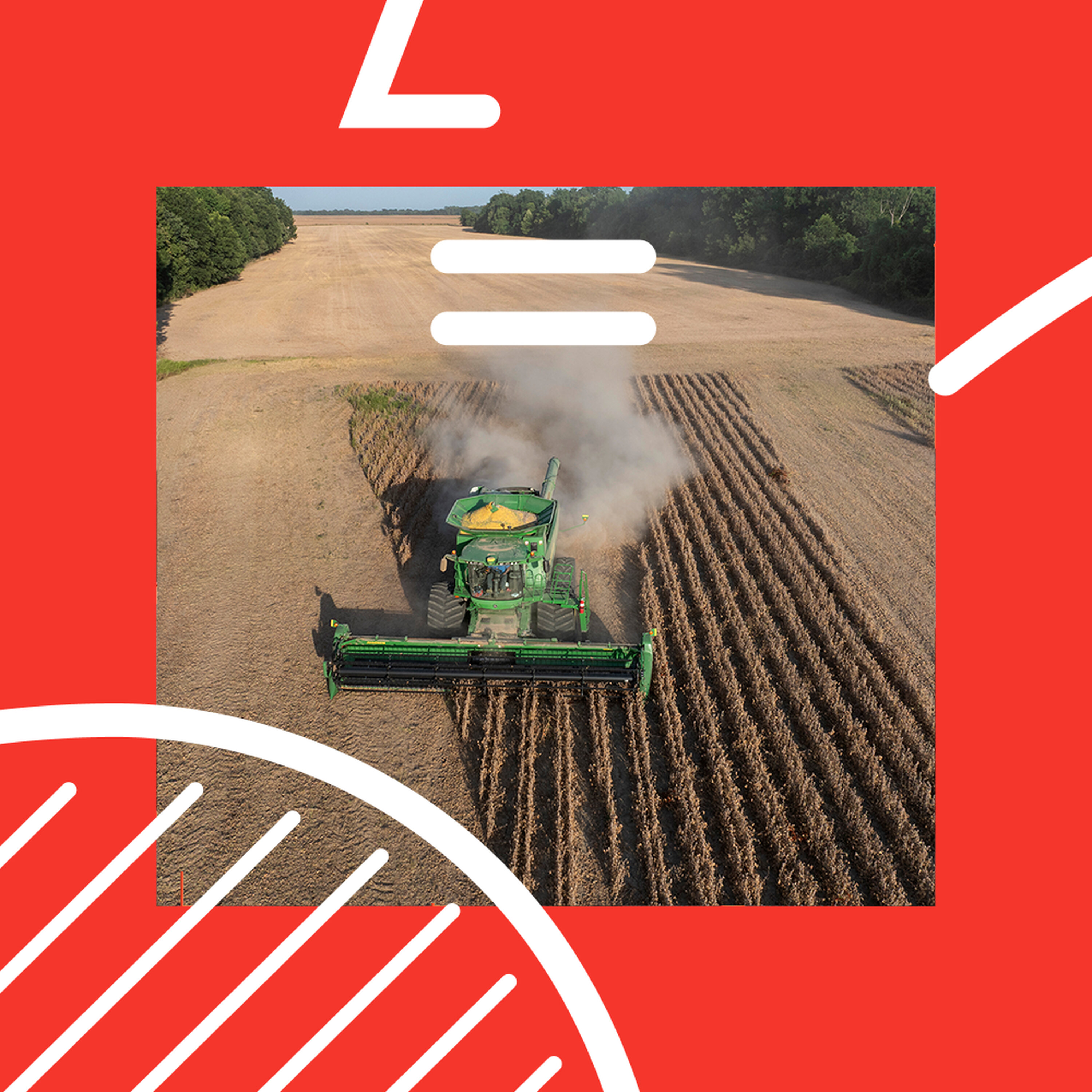
Donald Trump’s wars, both the global trade version and the real one on Iran, are increasing costs for America’s farmers -- traditional followers of the Republican president who just might be reconsidering their allegiance. Stephanie Flanders speaks with Bloomberg’s Steven Dennis and former US Department of Agriculture chief economist Joe Glauber about why deep red farm states like Kansas are suddenly looking competitive, and whether economic frustration could produce a lasting shift in rural America.
See omnystudio.com/listener for privacy information.
Transkriptvom Podcast bereitgestellt · Zeitmarken springen hin
Bloomberg Audio Studios.
Podcasts. Radio. News.
If you look at a Senate map of America, Democrats have none of these interior states. No seats. These states have been completely red for the past decade, and you're starting to see these cracks, and that could portend some really big changes to America in politics, how the economy works, health care, lots of things in a few years.
I'm Stephanie Flanders, head of government and economics at Bloomberg, and this is Trumponomics, the podcast that looks at everything in the economic world of Donald Trump. This week we ask, what's the matter with Kansas? That was the title of a best-selling book more than 20 years ago, which zeroed in on how Republicans had cemented their political support in America's heartland, even among working class voters whose economic interests supposedly the Democrats had championed. But recently, it's the Republicans who've been asking what on earth is happening, with state polls showing that a Democratic challenger might win a Senate seat in Kansas for the first time since the early 1930s. Now, On Trumponomics, we're not usually so focused on the polls
and the individual races, but one month away from the midterm elections, it's hard to miss that significant chunks of rural America seem to be, at least for the moment, in play for Democrats for the first time in a very long time. And economics does appear to be a large part of the answer. Farmers and rural workers are often as reliably Republican as they come, but the negative hit from trade wars and federal spending cuts, and above all, recently soaring diesel prices as a result of the Iran war in Donald Trump's second term, all appear to have led at least some of those voters to think again.
So what exactly is the matter with farmers and farming communities?
And is it temporary? Or are we going to see.
More lasting cracks in that coalition that's elected Republicans in the prairies for so many decades? I thought that was worth getting into. I've been meaning to talk about farmers for a while on this program. I'm going to be helped today by Stephen Dennis, Congressional Reporter for Bloomberg, and one of my colleagues who was involved in a recent fascinating on-the-ground piece from Kansas.
Steve, thank you very much for doing this.
It's great to be here.
And Joe Glauber, who's a.
Senior Research Fellow now at the International Food Policy Research Institute and Visiting Scholar at.
The American Enterprise Institute.
And perhaps most importantly, he was previously chief economist at the Department of Agriculture, where he worked for many years.
Joe, thank you very much for coming on Trumpanomics.
Thank you.
So, Stephen, just remind us, why have people been talking a lot, I would say, in the last week or so about some of these prairie states where previously you wouldn't have thought they'd be very interesting, even in a year like this where you think that maybe things are not going to be very easy for the president?
Yeah, so if you think about these states, and I would throw Nebraska and Iowa into this mix of unusual battlegrounds this year. states where Democrats haven't competed well in a long time, a lot of Trump policies, economic policies, are hurting these states more than other states. These states rely much more on diesel. People are more likely to drive trucks. They're more likely to have farm equipment that needs diesel. When diesel's at record prices, as it has been the last few weeks, the pain in these areas is higher. You also have the trade wars that affect farmers and farm states more than other places. They have a lot of imported fertilizer that those prices have been going up. So their input costs are going up. Their
markets are stressed because of retaliatory tariffs or retaliatory actions by other countries. You also have a lot of sort of lower middle class, working class folks for whom gas prices, diesel prices, are very important and hurt them particularly high. So there's sort of like a quadruple whammy that's hitting these states and hitting Republicans in these states who are extremely strong Trump supporters in Washington at a time when Trump's approval ratings have plummeted. So it's really hard for them to have a lot of distance from the president, even when they might want to. So basically in Kansas, you have Roger Marshall, just a first term Senator. He's turned out to be a pretty weak campaigner. There are
a lot of issues that have hurt him politically. And then the Democrats have recruited much better candidates than they have in the past. It's not like the democratic brand has seen some great Renaissance. They are running more independent minded candidates and they really got a star recruit in Kansas.
They have this pastor, Adam Hamilton, who is preaching exactly that. His first ad was standing in a Kansas farm field and saying, we're not like the West Coast, we're not like the East Coast, we need to bring people together and be in the middle. And he doesn't talk about being a Democrat in his ads, and that's worked for him.
If you think about Kansas, it's got about 25% of the electorate is Democrats, so that's very low, about double that of Republicans, but there are a lot of independents. And he's cleaning up among these independents, and he's even winning some Republican voters who are disaffected with Trump. So amazingly, he's been winning in some of these polls. This is probably not the tipping point state. This state is not going to determine who wins the Senate majority in all likelihood.
The Democrats need to win four states. If they win Kansas, they've probably picked up four somewhere else. But it really does have a huge impact down the line, especially if Democrats take power in 2028. Suddenly the aperture for what a Democratic president and a Democratic trifecta could do on taxes, on spending, on health care, gets a lot wider. So this fight is a really important fight for the direction of America. And you're starting to see money starting to flow into Kansas, $ 10 million over the weekend from the Republicans.
starting to see some Democratic money flow in as well. And so it's really interesting. If you look at a Senate map of America, Democrats have none of these interior states, no seats. These states have been completely red for the past decade, and you're starting to see these cracks, and that could portend some really big changes to America and politics, how the economy works, health care, lots of things in a few years.
I want to sort of rewind a bit on the economics. And I guess also, since we don't talk about it that much on this program, just spend a little bit of time thinking about the economic life of a farmer and the farming communities, because it can definitely be very different and affected by very different factors than... the kind of urban America that we spend most of our time talking about. So Joe, I know you've spent your life thinking about this and I know you also spend a lot of time thinking about agricultural issues as they affect developing countries and particularly the impact of the Iran crisis on farmers around the world. But just thinking about the US and thinking about for the last 18 months, so
not just since the Iran crisis, what are the forces that have most affected agriculture agricultural incomes and revenues over the last year and a half?
How have they been doing?
It's interesting. Agriculture, you tend to treat it as monolithic or here's what the agricultural sector is doing. It really has been a two tails in the sense of the livestock sector has done pretty well. Animal agriculture, beef prices have been at record highs. They're doing pretty well. But the crop side has been struggling and been struggling on the cash side at least. Revenues have been down. They've fallen a lot since 2022 when they were hit record highs, right?
As we were coming out of COVID and the Russian invasion of Ukraine, we saw grain prices go to record highs. Farmers were doing really well despite high energy and high fertilizer prices. What happened over the next four years is that prices for those grains really plummeted. And largely because the world responded to high prices by planting more crops.
And we had good crops and prices came down. Fertilizer prices came down as well. Energy prices came down, but not as much. And as a consequence, those margins between what they get in terms of cash receipts from selling their products and what they're paying in terms of energy costs and fertilizer costs, those margins have shrunk. And, you know, if you were just looking at cash profits, that is the receipts they get for selling it and what they pay for it, they have been quite low. What has happened, though, is the government's come back in and supplemented those cash receipts with large government payments. And we're having, I think, what will probably be record high payments this year from the government, accounting for almost 30%, 33%. of net farm
income coming from government payments.
Just on that, we had a quick look at the numbers with the US economists. That's about double what the normal share would be.
Is that right?
That's right. They're typically in the 10% range, but just with the standard safety net programs, the price and income support programs that have been around The temporary programs that were passed back in the 1930s that are still with us today. But on top of that, there's been a lot of supplemental payments, in part due to the trade wars, in part due to these poor margins that both the administration has provided and now also Congress has come back in.
So look at the overall health of the economy. All the aggregate indicators say pretty good. But farmers, on the other hand, are looking at what they were receiving in the market, and that's not looking good. And I think that their concern is looking, they got a lot of money from the government this year and last year, but will that money be there in the future at a time when they're looking at, again, continued high price. And this recent bout with diesel prices, as Stephen mentioned, I think is exactly that. It really hits them very hard.
And fertilizer prices as well have been at very elevated levels.
And- You mentioned about the tariffs.
There's a complicated, because as you said, in the livestock area, that's actually pushed up prices in part because of higher barriers now with Mexico and other places. But you've also had the cost of imports increase dramatically, imported equipment that we don't make in America anymore. And I guess there was also the retaliation by other countries to the trade war sometimes hit the agricultural sector.
Both of those things. The liberation date tariffs is originally configured, hit a lot of inputs. And so particularly for countries like Switzerland, who actually we import a lot of pesticides and other things from countries, all those prices were high. The administration came back in late 2025 and early 2026 and gave some tariff relief on some of those imported inputs.
But that has been one segment of it. The other thing has been, again, the counter retaliation, particularly China, which has been one of our top three markets and at times number one market for the last 15 years. They really just cut back on buying anything. And so for some of our commodities, like soybeans in particular, that's 50% of what we export, almost one out of every acre that's planted in the U.S., that crop goes to China.
Last year, exports were cut in half. This year, they're back because of this deal that the administration has worked out with China. But they're nowhere near where we were exporting just three or four years ago. So farmers are looking at that. There's been a lot of talk about all these new trade agreements, but I don't think there's been any gains seen from any of that yet. And I think that's also laying on these guys. And then the last thing is immigration, which farm labor is also a very important component, particularly less so in Kansas, maybe.
But if you're talking about a dairy farm or a large dairy farm, which relies heavily on immigrant labor or fruits and vegetable industries or meat processing, those areas, these immigration policies have had some impacts. And so there's a lot of concerns, I think, out there in farm country about these policies.
Stephen, there's been quite a big offset in terms of increased subsidies and payments to farmers. You're often sitting in Congress and you're watching what people are talking about in Congress. How much has it been discussed in Congress over the last year? I mean, there's been so much to keep track of. But is it just recently that they're kind of waking up to how difficult it's been? Or actually, would you say there has been a sort of steady drumbeat and that's actually why you've had all these payments?
No, I've seen a lot of almost panic from farm state Republicans starting last year. Chuck Grassley, the senior senator from Iowa at one point last year, was worried that we would see a rash of suicides happening. Because input costs were going up, he was worried that there would be a rash of bankruptcies in Iowa. He was like, I hope we act before it's too late. He remembers the 80s where there were a lot of suicides and a lot of farmer bankruptcies then. And he was like, we've got to do something. I also talked to John Bozeman, who chairs the Ag Committee. For months, he and other Republican senators wanted to have an extra $ 20 billion, maybe $ 15 billion bailout package for farmers. It's been hard for Republicans, though,
to do anything in Congress. They don't agree amongst themselves. They have very narrow majorities. There are a lot of Republicans who don't want to spend more money. And so a lot of things end up being in Trump's executive order pen, is how a lot of things happen in Washington these days. I've asked John Thune, the Republican leader, many times over the past six months, are you going to do anything on affordability? Are you going to do anything to get the farm bill done? Are you going to get these farm bailout money that a lot of the farm state senators want? And he's talked about pushing these things, but as far as getting a lot of these things to the floor and passed... I think that's one of the stories of if the Republicans lose Congress
is they literally ran out of gas. They just couldn't pass bills. They couldn't agree amongst themselves on what to do on affordability, what to do for farm country. Think about E15. This is ethanol, 15% in your fuel tank when you gas up your car. That's a very hot issue. And it divides Republicans between farm state Republicans like Kansas the Dakotas, Iowa.
Sorry, can you just explain for people who ethanol is one of those things that you only hear about in America?
Yeah, so ethanol is a lot of the corn crop in America is converted into ethanol. And then it's sent to refineries where they add it to gasoline. And so if you go to a typical American fuel pump, it'll say 10% ethanol. Most of the fuel pumps I go to say, 10% ethanol. And there's been a huge push for years to increase that 10% to 15% and make it national. And this has been resisted by the oil companies.
Is that entirely to support the agricultural community? Is there any sort of scientific reason why you would want to do that, or efficiency reason?
The argument by people like Chuck Grassley and other farm state senators is that this is a national security thing. We have homegrown fuel, we become more energy independent, and that's good for America. That's been their argument all along. It's also good for farm country by creating more demand for corn. And there's a lot of farmers who grow a lot of corn, including Chuck Grassley. But you have Texas senators like Ted Cruz, who is representing the oil patch, and they don't like E15 because that raises their costs and means they sell less oil. At any rate, this has been a long-running fight over many years. The Senate Farm Bill includes E15. I believe the House Farm Bill did not after a big fight, so they didn't get
it done. But then the president is trying to get it done via executive order to try to appeal to these farmers. that they're going to be able to sell more of their crops. So these are like, there are many of these smaller fights or in these states, they're not that small. We have another fight about mandatory country of origin labeling. When you go to the supermarket, is the ground beef going to say where it was made?
And so there's a big fight in the Senate over this. And Roger Marshall cast a vote in committee very recently. against requiring this label, which is opposed by meatpackers and a lot of the big industrial beef operations, which include a lot of operations in Kansas.
And Marshall's the incumbent.
And Marshall's the incumbent. He's under pressure. And he basically sided with the sort of the big beef industry, which doesn't like the fact that they'd have to do a lot of and it would be expensive in their eyes to comply with the regulations over sort of the smaller beef operators who want to have that differentiator and say, look, this is American beef. Consumers might buy it more often at the supermarket if they saw that label. So this was a fight that has upset some of the farmers in Kansas who spoke to our reporters there and said, hey, this is a reason why I'm considering not voting for this guy.
Stepping back again, Joe, you said at the start, we obviously have seen it in the numbers as well, that that share of farmers' incomes that was due to government subsidies had gone up significantly. Has that offset the hit from tariffs and from other things? Has it done anything to ease the pressure on the diesel or the impact of the higher costs of diesel?
I mean, that's been so dramatic.
I think it's up, what, 70% since the Iran war started.
Certainly, if you listen to the rhetoric of farm groups, no. But I think with any sort of the measures that we're looking at, aggregate measures, the U.S. Department of Agriculture culture puts out on farm income. Again, you can't treat the sector as monolithic, but the aggregate measures are all up.
And you would think if farmers were really hurting that we would see this big decline in land prices. They haven't. They aren't increasing at 5% like they were a few years ago annually, but they're still increasing. The other thing is that bankruptcies are a bad statistic to look at just because farmers don't use the bankruptcy code when they're in trouble. The problem is foreclosures. And if you look at the number of loans that are non-performing, they have gone up, but they're still at such low levels compared to even 2020, and particularly compared to what they were in the 1980s when Chuck Grassley was so worried. But in all fairness to farmers, again, they're looking at their cash flows and saying, we're losing money on the cash
side of this. But for these government payments, we would be really struggling. And so I'm sympathetic to it because a lot of this money that's come in has been ad hoc supplemental payments that you're getting it this year. There's no guarantee you're going to get it next year. But as Stephen knows, it's hard to bet against that logic when you see it. support come in almost every other year for it seems like so.
So you draw the line between the livestock and crops but steven made that sort of mention that there was that dynamic in kansas i wonder whether the difference between the small farmers and the really the sort of the big industrial farmers is probably a much bigger distinction in these kind of contexts have the small farmers done much worse out of the last year and a.
Half the hard thing about all this is that The agricultural sector is highly skewed, right? So you have 15 some odd percent of the farms accounting for 85% of the production. So if you look at the 85% that aren't producing very much, most of those guys are either retired, so they have retirement income, or they have off-farm income.
large off-farm income. So it's more of a resident lifestyle type decision. I don't want to be so blanket on that because obviously you're going to find some.
Is that the Chuck Grassington or Scott Besson? Scott Besson also always claims to be a farmer.
Yeah. Yeah, exactly. Okay. For those who... where agriculture is their main occupation, yeah, I think that it's just hard to make money if you're really small. It's hard to make money if you're a grain farmer, if you're growing wheat or growing corn or growing soybeans. To make money, you need to have a lot of land. And if you're growing fruits and vegetables, that's a different story. If you have an orchard, that's a different story. The profit margins per acre are much, much higher. Again, Very diverse.
But yeah, generally, the larger farmers are the ones who are accounting for the largest share of government payments. Why? Because payments are largely based on land and it's almost tautological.
So we have now given people, I think, a fascinating window into the economics and some of the sort of day-to-day challenges of farmers and rural communities. Stephen, I might give the last word to you because you've been so focused on some of these I can't help remembering in some of my history lessons around sort of the 1890s populism in the US, and it was William Jennings Bryan who was in Kansas, and there was a sort of moment where the rural workers were kind of on the same side as the sort of new industrial working class workers.
That was clearly something that's long gone, and Democrats have definitely not.
Been felt to have been on the side of the rural community for a long time.
Do you think any of what we've discussed poses a lasting challenge to that sort of Republican support in these prairie states? Or are we just looking at what really is just a peculiarly toxic combination of policies the last year and a half?
Yeah, I think it's like the unanswered question. The Democrats first have to win these races for people to remember this cycle. Beyond now, Josh Turek, who is running, the Democrat running in Iowa against Ashley Hinson in neighboring Iowa, that's a very close race as well. Probably $ 200 million will be spent in that race. Josh Turek is talking about a revival of prairie populism, and I think there's a real chance of that. The Democrats, in order for them to be a real governing party again and having a national impact and not just being a coastal party, which they kind of are now, they need to figure this out. They need to figure out how to win among these rural voters who are under stress now, but
sometimes they're not. And, you know, if you look about how people like Adam Hamilton are running, They're doing something different than the National Democrats.
And they're running, as you pointed out, they're actually not really, I mean, he considered being an independent candidate. They're staying well clear of the Democrat brand name.
Yeah.
And instead, they're staying away from some of the social issues that have gotten Democrats in more trouble. They're emphasizing economic issues. And they're also, you know, in Adam Hamilton's case, doing something Democrats haven't done in a long time, which is talk about religion. talk about morality, talk about ethics, talk about Jesus on the campaign trail. That's not really been something that Democrats have done. And Hamilton is talking about those issues when it comes to things like food stamps, talking about that when it comes to things like rural health care. And rural health care is a big problem in America. And so he's saying, hey, maybe we should do something about that. And the other guy just voted
to cut health care. and give tax cuts to the wealthy. I mean, that's the kind of argument. If you poll people, should there be tax cuts for the wealthy or cuts in healthcare? Both of those things are unpopular. And that's when you talked at the beginning about that book, What's the Matter with Kansas? It was sort of like, why aren't these people voting the way they think on things like tax cuts for the wealthy and healthcare for rural voters.
In a typical kind of patronizing Democrat way.
Oh, yes. But there's a potentially fertile ground in states like Kansas for a revival of that prairie populism that the Democrats in the FDR revolution did win a lot of these seats. And frankly, they won a lot of these heartland seats as recently as 15, 20 years ago. And If there's ever a moment where they're going to win them, it's going to be right now when these states are under stress, when farmers are going out to harvest, having to finally buy that big diesel purchase. Some of them have been putting off their diesel purchases in hopes that the prices would come down. They now have to go buy it at $ 6 a gallon. That's going to be what they're thinking about as early voting starts. That's
not a position that the Republicans want to be in.
As the granddaughter of someone born in a small town in Iowa, not only about a few years after William Jennings Bryan ran for president, I will be particularly interested in what happens in these states in a month's time. But Joe Galbraith, Stephen Dennis, you both really know your stuff.
Thanks very much.
It's great to be here. Thank you.
Thanks a lot. Thank you.
Thanks for listening to Trumponomics from Bloomberg. It was hosted by me, Stephanie Flanders, and I was joined this week by Stephen Dennis and Joe Glauber. Trumponomics was produced by Sam Asadi and Moses Ander, with editorial guidance from Megan O'Neill in Bloomberg Economics. Sound design was by Blake Maples and Kelly Gary. Amy Keene is the executive producer of Talk Podcasts, and Cheryl Brumley is head of podcasts at Bloomberg.
And to help others find and enjoy Trumponomics, rate and review us highly wherever you listen.
