

We're Not So Different· Folge 296
Ep 296 - October Mailbag: Dungeon Master Timur
Donnerstag, 22. Oktober 2026 · 1 h 11
Kapitelklicken springt direkt hin
Shownotes
due to technical difficulties, the Army of Darkness review episode will be out next week, sorry about that!
folks, we're diving back into the patron mailbag to answer a bunch of questions from our patrons. this time we talk about spooooooky stories, best Medieval D&D dungeon master, Egyptian flood mitigation technology, celestial events, verified relics, and much more.
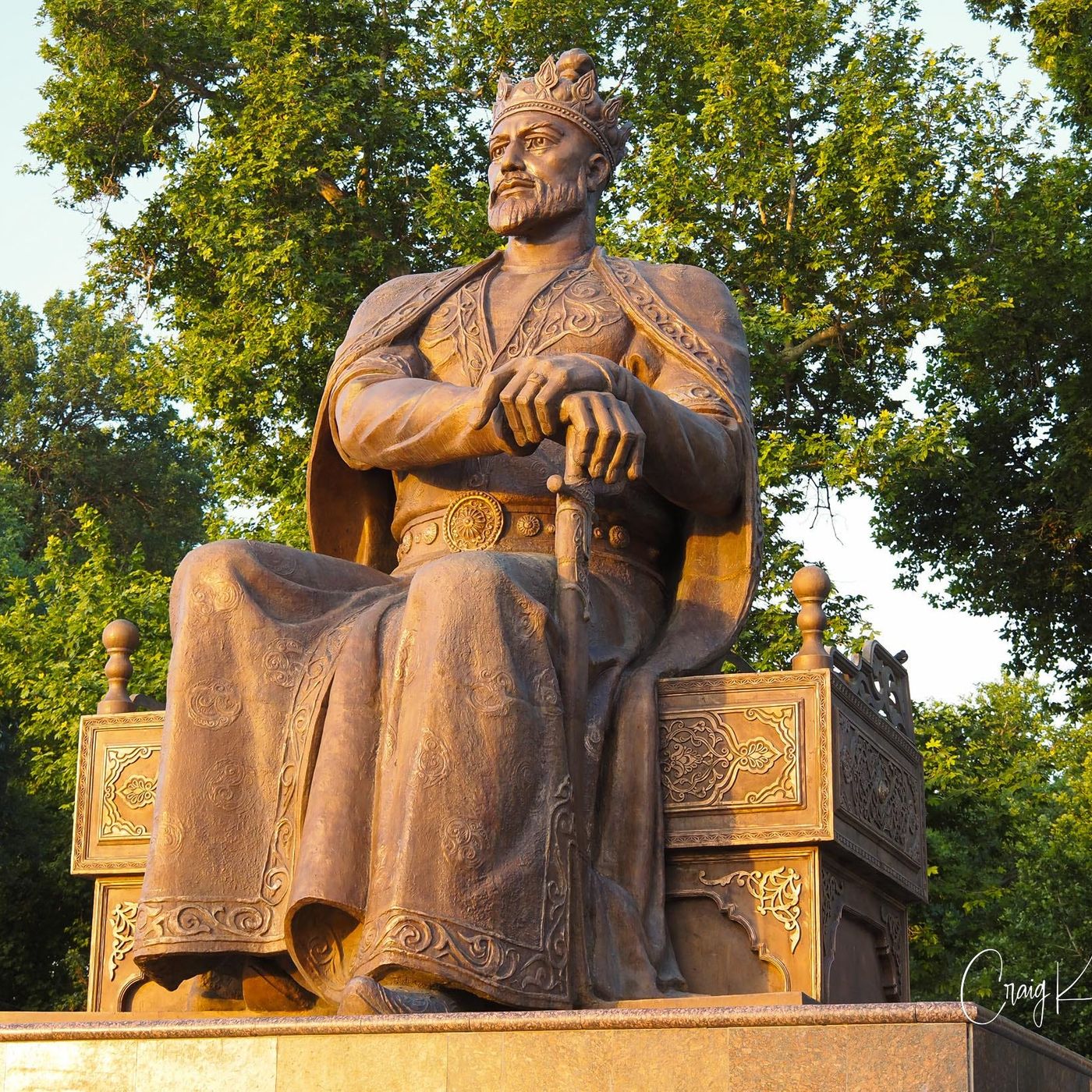
cover image is a statue of Timur in Samarkand, Uzbekistan. to read more about Great Chess or Tamerlane Chess, check this out: thecollector.com/tamerlane-chess-history
Transkriptvom Podcast bereitgestellt · Zeitmarken springen hin
We all heard that, right? We heard recording in progress. Gentle listeners, you're good bitch. Okay, listen. Luke and I just did an entire episode for ourselves. You know what? One for ourselves, Luke. Think of it that way. Because somebody who holds a PhD on this podcast didn't press record. Accurately. So, who's to say? Who's to say what happened? What that means?
I don't know. You know?
We're all, you know, it's all part of a rich tapestry. You know, I think we really have to consider such things. Anyway, we will re-record Army of Darkness chap later in the week. uh is what we'll do but i do um oh i did have an amusing thing though um that i was going to say other than that so i go downstairs gentle listener and i'm at my i'm at my parents house i'm back in tacoma two five three for life etc um so i'm at my parents and i was like okay well i'm gonna go get another cup of coffee before we record again and um like I go downstairs and my parents are like, what happened? Because they just heard me going, no, no, like through the floor or whatever. But then the amusing thing that I
was going to say is and then also so my parents have this kind of like collection of cats, which they've like domesticated to varying degrees because there's just like all these feral cats about. So there's Felix and there's Skippy. But then there's also this one that they have named Pie Wacket because it's one of the names of the familiars in the Witchfinder General. You know, like the there's like Vinegar Tom, Sack and Sugar. But Pie Wacket is like one of the names of the familiars that Matthew Hopkins, the Witchfinder General, like gets out of some witch in huge quotes in Essex. So, yeah. So they have a Pie Wacket. And he's kind of, like, unimpressed with the fact that I'm in my parents' house. But, like, I'm
trying to get him to, like, warm up to me. So we were having some pie-whacket time. Yeah. Yeah.
I was naming it after your favorite character in Witchfinder General.
That's right. That's right. I'm constantly considering getting a tattoo of Vinegar Tom. from that like vinegar tom looks like a kind of like cross between a little bull and a wiener dog yeah and vinegar tom is yeah shout out shout out to uh what are their names uh hold on i'm gonna get them all out uh which so uh their imps are holt ilma illa mauser illa mauser is great pie whack it jamara Peak in the Crown, Grizzled Greedy Gut, Sack and Sugar, News, which is N-E-W-E-S, and Vinegar Tom. They're good. They're good.
I've never seen Witchfinder General.
Okay, hold on. I'm going to send this image over in the chat. Hold up. You're going to want to see this shit. Oh, don't do that. Yeah. Check this shit out. This is real shit. This is real life, buddy. And by real life, I mean it's not Matthew Hopkins, like, tortured this woman until they said these things. But, you know, it's still... It's still Japes. It's still... Look at these little guys. I think also Jamara is a very good name for a pet. Things of this nature. So, yeah.
Look at these guys. Huh! Yeah.
Vinegar Tom, man.
Yeah, Vinegar Tom is showing up and out.
What a long guy.
He's a really long guy. I also like how there's the black hair that is called Sack and Sugar, and it's one guy, but he's called Sack and Sugar.
Yeah.
I think that's good. That's good.
Sack with an E.
Sack with an E. You know. It was quite funny when I was working on... with the ghost book, everything from this era, like the kind of early modern period, there's like a, you know, all these books I was reading online and I get a lot of them through online archive. Shout out to whom I donate regularly because I use so much of their stuff since they have such a great collection of things that are no longer in copyright. So it's like, you can read all these 18th century, 17th century tracks, but it was driving me fucking insane because they had kept cataloging it as being in like, when they were said that they kept calling it, like, Middle English, and I was like, no, it isn't. It's Modern English. They just don't have regularized spelling yet. Like,
there's no, there's, like, I assure you, this is not fucking Chaucer, right? And there was no way to, like, flag it up about being, like, you cataloged this incorrectly, but it was, like, driving me insane. I was like, people are going to think that that's Middle English, and then they're going to get the shock of their lives when they see actual Middle English. Right? Like, Just because they still have the long S's doesn't mean that it's Middle English, bud. That's all I'm saying.
I love the long S.
Looks like an F. I love the long S. Yeah, I love the long S. It's a real flex, I think. I'd say that. Well, anyway, do you want to do another podcast? We're recording this time. How about that? Fuck me. Jesus Christ. It's not like this is my job or anything. Right? I wouldn't worry about it. I wouldn't worry about it.
Well, I mean, it happens.
Yeah, apparently.
I mean, I've done it before. It happens. It happens.
It happens.
Alright, uh, yeah, let's go. We were gonna do, um, Army of Darkness, but, uh, you know, recording the same jokes over again is, um.
Yeah, we're gonna give it a couple days.
Yeah, uh, gotta, yeah, gotta give it a bit.
Um....
Okay, uh, yeah, so here we go. Hello, and welcome back to We're Not So Different, a podcast about how, uh. I can't believe we haven't named something Piwacket before now.
Yeah, I know. I know. Like a friend of the show, Piwacket. I'll try to get you a picture of Piwacket later. He's a handsome lad. A large chap. If you will. Oh, I also realized I didn't send over those pictures of Rocco and Wolfgang, which we'll have to do. But, yeah. Yep. MUSIC PLAYS.
Yeah, all right, folks. Today we are doing... It's time for more mail. In this case, it's spooky mail.
Spooky mail!
Yeah, we answer a couple of Patreon questions at the start of most episodes and do a mailbag once a month because we have so many great questions from our amazing patrons. This time we're going to answer questions about spooky stories urban dictionary-style names for sex positions in the Middle Ages, fireworks, pre-modern Egyptian flood mitigation efforts, celestial events, real relics, and much more.
Enjoy.
First question we have is from the Pope of Chili Town. Your Eminency, it's so nice to have you join the Patreon.
Thank you for deigning to speak with us. I hope that your pontificate is going well.
The only rings I'll kiss are the bean-stained rings of the Pope. Who says, Spooky season has me wondering, do people in the Middle Ages have anything analogous to horror as we understand it today? Fictional stories meant to scare people, but, you know, for fun. Would depictions of hell, demons, and ghosts have scratched that itch?
Yeah, I feel like this is one of the big differentiations of the medieval versus the early modern is that you see a lot less about like spooky demonology in the Middle Ages. Demons are kind of like a possibility, but we tend to see that demons are more closely associated with the practice of magic than they are with any form of like, fucking around right like um the things that are gonna go bump in the night the things that are gonna like be around being spooky are usually ghosts yeah Um, and now this, uh, it's like one of these things where we definitely see, um, at least from the early middle ages forward, like Pope Gregory the Great, for example, he's very interested in promulgating the concept of ghosts. Then when we have the invention of purgatory, um,
then we see more and more ghosts because it kind of explains how they can be about. And like, that's the thing that's haunting stuff. Like that's the thing that's going on. The demon stuff comes in very particularly in the early modern period. Because the Protestants are arguing that ghosts can't be real. Right. And so it's just like the witch thing. Right. So and indeed, the two things are bound up with each other. So it's like often when people say, oh, they think they've seen a ghost.
One of the things that Protestants will say is, no, you haven't. What you've seen is either a demon, A, or B, it's something that's been conjured up by a witch. Hmm. you're seeing something that a witch has like intentionally done in order to get you to think that there's a ghost when there are no ghosts. And then everyone kind of just gets bored of that and it turns out they like ghosts and then ghosts kind of come back a little bit. Because the human longs in its heart to have a ghost. I think this is the thing.
It's like there have been within Christian cosmology at least two attempts to say that ghosts can't be real. The first is that during the early days of Christianity, And then the second one is during the Reformation. And neither have stuck. But it's a quite interesting thing because, however, I do think that kind of we're seeing a resurgence of an interest in demons as like a possible haunting mechanism at the moment. And I think maybe we can link this to paranormal activity. Who remembers paranormal activity? Yeah.
from a few years ago. I went into that thing and there was demonology. Also, it made no sense in terms of demonology either. Don't start me. A priest would never, if they thought there was a demon, a priest would never reject helping you. That's not how they're built. God bless them. I think that there is this growing understanding of that. I listen to a cozy horror podcast where there's a lady who has a nice voice who writes little ghost stories that take place in Wellesley, Massachusetts, and it's called Ghosts and the Birbs, and it's a really nice thing to listen to when you're gardening, right? But I was noticing, even though she seems to have come from a Catholic milieu, and she will kind of, like,
talk about that sometimes, because it's, you know, Massachusetts. Mm-hmm. her understanding of ghosts is actually like at the end, she decides it's like kind of scarier to be like demons. And so everything is kind of a demon and not a ghost. And I'm like, this is Protestant nonsense. I'm like really worked up about it. So I'm like, I'm like, it's dewatered. No, I want it to be a ghost.
I don't want it to be a demon. So it's quite funny. I have like this reaction to it. I just, I really want a ghost. Much like medieval people would prefer there to be a ghost. And that is an answer to that question, I think. Sorry, everyone. I took us on a ride. I took us on a real ride there. Yeah. There you go.
Um, yeah, it's, uh, there are, uh, a couple of years ago we did, uh, the violent Abby ghost stories for an episode around Halloween. There's stuff like that. Um, I think their ghost stories just seem to, uh, they're weird. They, they seem, they seem to be trying to impart a different message to us. Like, modern ghost stories like are sometimes funny or they're there to scare you or you know it's there to like talk about some crazy past event or something like that but um.
It's uh they're looking for help most of the time yeah they're they're yeah they're looking for help and they are um.
And they are, like, they're very didactic. They are there to impart a story for you. And the story is typically that if a ghost is roaming around, that means they fucked up or someone fucked them over. And something needs to be done about this, whether, like, you know, that is an exorcism or, you know, writing a wrong or masses or whatever that is.
A lot of writing a wrong. Which I think is really nice, because it's like... I do think that it's good to be like, oh yeah, this stuff matters, and not being a massive piece of shit is actually kind of important. So shout out to Ghost Stories in the Middle Ages for doing that, I would say.
Yeah, it's... You get that, and then you get the Memento Mori type stuff, which is more of a reaction to the Black Death itself, but I mean. I don't really know how you break the Black Death apart from horror, because... Yeah, yeah, yeah, completely, yeah. Doesn't get any more horrible than that, in my opinion. But yeah, Papa Chili Town, thank you for that question. And yeah, we're going to do 10 today. If you want to.
Ask us questions like these. Please do subscribe to Patreon, patreon.com slash WNSDpod. It is $ 5 a month. Access to the Discord. Ability to ask us questions. You can check out the bonus episodes. We've got a new one coming on Friday about the Aryan heresy and Aryanism.
Hell yeah.
Eleanor chatted the ear off of an Orthodox bishop.
An Orthodox priest, yeah.
About this, and so we're going to talk about that. So check it out. That'll be out on Friday. Anyway, yeah, on to more questions. This one is from Damien, who says, Many of the names we have for sexual positions are quite American-coded, like cowgirl, or refer to rather modern things, like a deck chair. do we know whether medieval people had names for the various sex positions beyond that? That's sodomy and you're going to hell. I mean, if not, could you suggest some appropriate medieval alternatives to the ones we know today?
Okay. So the major one that we know, um, is, uh, is doggy style, which is, it is essentially doggy style. They say in retrum cano. Um, like, you know, like from the back, like a dog essentially. Uh, and it's very bad and you're not supposed to do it. It's very bad. And you're not supposed to do it because, um, the thing of it is part of the reason we use the term missionary now is that it is the official, like Christian approved way of begging. Um, because, uh, what it does is it this is according to medieval people, not me, listen, I didn't do this shit, okay? So, like, what I'm about to say, don't get mad at Eleanor about it, get mad at the church. They believe that missionary is important because they say that it reinforces the
correct social hierarchy where men are dominant over women. So, the man has to be on top So that is what is that is what is acceptable. Right. So, for example, you'll see a lot of pushback to women getting on top. And they're like, so in the first place, you're going to have a girl if that happens. Which would be terrible. Right.
Just the worst thing that could ever happen.
The worst thing that could possibly happen is having a daughter. Right. So, I mean, because obviously that's not why you're banging. Obviously, you're banging so that you can have a boy. Duh. We all know this. Um, but also, uh, the thing that is going to happen is also that girl is going to be like some kind of monster who thinks that she's, um, an equal to men because she was conceived, um, with a girl on top. So, um, so, uh, like they're, so they will reference like women being on top of, they don't have a name for it. So, and in particular, like that, that is the thing is that a lot of this very unfortunately is kind of like that sodomy and you're going to hell. I mean, it's not technically sodomy,
but it's bad. Right. Where they're like, don't you do it. Don't you fucking do it. Right. So you're like, that's like the problem. So they don't have names for it because, well, actually I take this back. I just said they don't have names for it. There might be fucking names for it, but no one's writing it down. Right. Because we would need the church to write it down. Because, like, most of our evidence for sexual stuff at the time, like, comes from the church. It's, like, it's straight up hostile.
And that's how it is. So they very well might have been, like, oh, yeah, that shit is, like, you know, the reverse knight or something. You know, like, how would you know?
The Florentine vice.
Yeah, what is it?
Wasn't the Florentine virus, wasn't that just generally being gay?
That's just being gay, yeah.
So there you go, there's one that is very specific to the Middle Ages and to a specific place. If you're gay.
Yeah, Florentine. And that's why they had to come up with the sodomy police later, is that... everyone knew that you could just like go to, you could go to Florence and you could get sloppy head. And then Florence like went into damage control because they're like, we can't be known as like sloppy head central. And I'm like, why not? What's wrong with that?
Yeah.
So, okay. Like, wow. I guess it's illegal to have fun. And they were like, it is literally illegal to have fun.
And they were like, yes.
Yeah, that's correct.
Don't you have anything better to do? No, I do not. I actually get paid quite handsomely to do this.
Exactly right. And so that's what's up. That's what's up over there. I know it's disappointing. I know we want more fun with sex positions, but it's basically doggy style and also the Florentine vice. Yeah, basically.
Yeah. the lesbos vice they were just friends vice well.
It's interesting because it's like with they really don't know what to do with lesbians right they're kind of like you know with much like today you know like people really can't get their heads around the idea of nothing being penetrated during sex so it's sort of like they know it's bad and like you'll kind of like get told off like you know they'll separate the nuns etc etc you know as we have seen but it is also very clear that they don't have like a rubric or a way of like dealing with it or understanding it because they're like, I mean, but what do they do?
It's just like a lot of, but what are they doing? And it's like, all right guys. All right. Calm down. You know? So it's, it's quite amusing. It's quite amusing to watch them do that. So yeah. Yeah. Unless you're a Muslim, in which case they're like, fucking lesbians rule high five high five they're like these chicks kick ass yeah man yeah man chicks are hot i'd also be fucking chicks like you know it's like all right cool okay all right guys like uh problematic in another way but all right keep your dick.
Up you know Problematic. But, you know, you do you.
Whatever gets us there, you know?
Damien, thank you very much for the question. Next we have one from Joss the Texcan. Which five medieval historical figures do you think would have the most fun playing Dungeons & Dragons or a similar tabletop RPG? Which of them would be the best DM? I don't know about best DM, but we do have an actual answer for this. Tim, you're the Mongol-Turkic warlord who had his own empire. He apparently found ordinary chess too easy and people too easy to beat, and so he invented great chess. It was played on a huge 10x11 board with 28 pieces each, and he invented new pieces including camels, giraffes, elephants, war engines, and they all had unique moves. And so, like, it's proof positive that medieval men loved their stupid little map games.
Hell yeah.
And they were going to play it. Yeah. I don't... Who else would really like this?
I feel like this is kind of going to be one of the... It's like, we've got to sit down and we've got to think about... like who likes to make a story. Yeah. Yeah. So, you know, like I bet Dante would be a good one. Yeah. Chaucer.
Chaucer would probably be really good at that.
John Mandeville, the travel guide dude. Oh, right. Yeah. And, you know, because like what he does is so like the like in John Mandeville, it's like Um, they say that he kind of like leaves England in 1322 and he goes to like Turkey and Tartary and Persia. And, but also they're like, and also the land of the Amazons and stuff. So it's like, so obviously it's made up or whatever. So I think that Sir John Mandeville would be like a really good one because he's great at talking about creatures and things. Yeah.
Um, I, I'm trying to think like, um, maybe some like, maybe some of the like ecstatic, uh, the, the, the visionary types like, uh, you know, like, um, uh, Hildegard or like Marguerite Perrette or someone like that, you know, who, who like get into this like very mystical stuff that, that kind of, that kind of blurs into like fantasy and like, even like science fiction is like, we understand it now. Um, and, uh, like, uh, I'm trying to think.
I would say Avalar, but I think it would have to be 100% Bible-based for him to give a damn. And, you know, like, so it's going to be.
What about, like, Christian de Troyes? Christian de Troyes, who does all, like, the Arthuriana, right?
Oh, yeah.
I would fucking hang out with Christian de Troyes, like, playing D & D. That'd be quite funny, right? Yeah.
What's his name? The other guy, the Arthuriana guy from the 12th century or 13th century. Not Mallory, the other one. Fuck, what's his name? Jeffrey something. It doesn't matter. Anyway, yeah, like any of those guys, I.
I think you mean Crutchard Duflois. Just double checking.
No, it's a guy. Arthuriana, like a segment of that time period is named after him. Fuck, his name's like Jeffery.
Like we're doing so good.
I'm this is fucking what is going on this is driving me insane.
I'm trying to look it up real fast because I'm just like I always think of you know but you know it's a difficult one to do anyway yeah yeah I hate it I like I like because he does like the night of the cart and things like.
That I was thinking of Jeffrey of Monmouth.
That's who I was thinking of. Jeffrey of Monmouth would rule actually. No, that's a good.
Yeah. Um, I think anybody who, uh, is sufficiently involved in, um, like storytelling, bards are going to be very good at this. There's a reason that is a, that, that is a, an arch type. Um, any, anyone who's doing oral storytelling, um, especially if their entire culture is oral storytelling, is going to be fucking incredible at this. It's... Like, yeah. Oh, who was I going to say?
I like how they're like five and we're like, how about ten, bitch?
Yeah, they're going to do a lot. And I'm going to spend a lot of time trying to remember who Geoffrey of Monmouth is. Yeah, that's a lot.
Geoffrey of Monmouth wrote the Historia Regnum Anglorum, the History of the Kings of England, which is what cements Arthur as part of the official way of.
Talking about England.
The matter of Britain.
Yeah exactly so like he also talks about like brutus coming to england from the giants and things like that so i mean.
It's a good one right yeah he's the guy he's the guy one of the guys you can tell is like oh yeah you guys have been obsessed with with with roman origins for a long ass time that is not new um yeah anyway uh josh thank you for the question um i uh.
Timur.
My answer is Timur. Great chess is just so fucking funny to me. I invented it. It has camels. It's like, alright, cool.
We'll make him Dungeon Master for sure.
He's illiterate.
He's got the juice.
Illiterate, but love the arts and science. Probably not five feet tall. People called him lame to his face because he had a very pronounced limp.
Nice. He's got time. He's got time.
Illiterate, just responsible for a renaissance. He's just a fun guy. Anyway, Joss, thank you very much for the question. Next, we've got one from Vast and Drugless Tozies. Did people make fun of the type of person who was really into King Arthur like we do Swifties? I think, but I can definitely say that they do it in the early modern period.
That is 100% certainty. I don't know about in the Middle Ages because Miguel de Cervantes, Don Quixote, that's all Don Quixote is. It's being like, look how stupid this is. Why are you still talking about this? It doesn't matter if you're a knight or not. It's just a word that we attach to things. People think it makes them feel special and it's just like shaking people like, it does not matter. Yeah, that is.
You know, like, yeah, yeah, that was 100%.
I think that there is definitely, like, something that we can see also if we're kind of having a look at the way varying tales are told and what happens I think that there tends to be a preference among like courtly culture for Arthuriana for obvious reasons and you know ordinary people especially towards the end of the middle ages are more interested in stuff like Robin Hood stories you know things like that Pierce Plattman you know they want things that kind of reflect their life a little bit more so I think that there is we could say something here about I think the tendency of people to kind of get over it and be like I've heard it all before it's a bit dull right like that's possible to say um But yeah, yeah. Like, I mean,
it's very difficult. Again, this is one of these things that's very difficult for us to know because it requires some, somebody to write it down. Right. And this sort of people who can write things down are not like, unless you're Cervantes, like they're not, they're not like talking shit because they're like, Oh, I don't like, actually we can't, I'm writing for an audience of courtly people and I can't piss them off by saying that like their fave is boring. Right. Like you can't, you can't call the King basic and then also sell him, something.
No that right that's what we talked about avalard he did that with sandini he was like he's not real you weird fucks and they were like get out get out of our fucking.
Monastery yeah yeah yeah and it's like yeah but on the other hand you know i think that there is an argument to be made i think and i which i'm quite sympathetic to is that with all of this stuff it kind of it doesn't matter whether or not it's like quote unquote real like what matters is how people respond to it uh so like i get it but it's just that avalard's ahead of his time Yeah.
Yeah. And then just because, just because I had the Wikipedia page open because I was trying to think of him earlier, uh, William of Newburgh, who is writing, uh, in 1190 after Jeffrey of Monmouth, he's, he basically like read Monmouth to filth and he was like, you know, everything he, everything he wrote about Arthur and his predecessors from Vertigern onward was made up partly by himself and partly by others. So like, it is, um, Yeah. I don't think you see it in the same way because I don't think they categorize fandom, for lack of a better word. And yes, they had it back then. It just didn't look the same. They didn't categorize it because it didn't have the same meaning. Like nowadays, like fandom
is balled up in a lot of other things that they had separately, like religious devotions. they they was like a big thing for them and now a lot of stuff of like modern fandom is like building these communities and like calling anyone who says anything bad about them heretical and stuff like that and that is just like that's just recreating that's recreating organized religion from third principles like yeah it's um you know so you you um what am i trying to say so like you you know you you do have it but it just doesn't look quite the same just like how the Inferno looks like a novel and everything. And it seems like this kind of thing, but also like Dante, it's not yet to the point where you can abstract it far enough
away to have like a fictional character going through it. It has to be Dante having a dream. Like they haven't gotten to the point where they, where, where like they've invented that level of forethought or at least not as a literary device at that level, but yeah.
Um, yeah, yeah, yeah. Correct. You know? Yeah.
They get, uh, Swifties, you know, and, and just like how every, uh, woman between the ages of five and 55 has like a favorite, like a quasi indie late 20 something, 30 something, uh, musician a female musician that they love um you know yeah that's right everybody had their own favorite shout out.
Kathleen hannah shout out kathleen hannah.
Yeah i i have no opinion on any of them they're all as great or awful as you uh as.
You like thank you that's that's called feminism thank.
You that's right yep my my feminism includes not getting beat up over taylor swift um Yeah, Vast and Chuglistosies, thank you for the question. You know, just if you see somebody liking Arthur too much, make fun of them. Ask them if they don't know who K is. They're not a real fan.
Oh, yeah, ask their opinion on K.
Oh, you like King Arthur? Name every man.
I've got a good recommendation if you're interested in Arthuriana, too, for a book. So Amy Jeffs, whose work is really great, and also I don't fucking know how she writes as much as she does. It makes me want to kill myself. But she has got a great new book out called Arthur, A New History or Arthur, A New Life, where she does her own retelling of a lot of the Arthur stories in a particular order where she's got kind of like favorite things in there. And it's really, really good.
And also she's done these great... uh, line of graphic prints herself in it, which is really excellent. And I think it's really fun because, you know, the thing about Arthuriana is that it is really like very DIY and like anything that you do with it does become canon because of how that's how it works. And so I was like, it's actually kind of exciting because she's like made this whole new canon because that's available with Arthuriana.
So that's fun. So yeah, I don't know if you, if you're interested in Arthuriana, do check that out. It's really good. Yeah. Nice. Yeah.
Cool. Yeah. Vast Chocolatosis, thank you for the question. Next, we got one from Pearl River Flow. Since it's that time of year, blowing things up, I would like to know if fireworks made it out of China in the medieval era. And if so, what did Europeans think of them? Were they public spectacles or part of festivals or proclamations?
Did they have to be imported or did they figure out how to make them in Europe? So one thing from when we did the episode, we talked a lot about gunpowder. is that fireworks did make it out of China, first to India, and that was by like 1,000 or so CE. And for the most part, they were not imported. The thing about gunpowder is that everybody already had the stuff to properly use gunpowder on hand. However, you needed the the recipe and then like once you did that you could iterate from things because like once you have a crossbow you can do like a a triple crossbow and you could do like an organ gun and stuff like that um and so um once the recipe essentially once the recipe for saltpeter and then the recipe for
like the overall mixture like how many parts of each thing you needed once that came over and i think that made it to england the rest the recipes were recorded in like 1287 in england or something and it's like 1260 at the very latest in the levant um so like once you got that like it was pretty much like okay we could figure it out and then they started refining the saltpeter and everything um and that gave it different colors and that's essentially also how the uh the the people of india figured it out as well and so Once you got the recipe, you would just apply it to whatever, like you'd be like, okay, I'm going to do some fire arrows and some flaming, you know, whatever. And, um, oh, and it, and it
burns a cool, like purple or yellow color. So like, uh, we're going to blow that up and, and show it off on the display for the Kings. Um, and, uh, as far as I know, Europeans, just like everybody else who first encountered this stuff was fucking terrified of it the first time it came around. Like it was not, it would not, for a while it would not have been a public spectacle. This would have been something you ran as far away from as you possibly could.
Um, we do know though, that at least, um, by the kind of like, uh, later medieval period, it is beginning to show up, um, particularly, um, during mystery plays.
Interesting.
So they will use it during, they'll do a little pyrotechnic display. And they will be all like, oh, yeah, we have these recollections of mystery plays where they'll be like, oh, the whole church was filled with sparks.
Yeah.
So it seems like they're mostly just kind of using like gunpowder. Yeah. Is what it seems like. And then they'll be like, oh, it makes this cool sparking thing. And like that's kind of good enough. And we've got really good records from the early modern period for it. Unsurprisingly, you know, where things are just getting a little bit more usage. And of course, they're getting a little bit more usage because we're also kind of seeing them used more heavily within a weapons context, obviously. And a big thing that they were really into, especially in like the 16th century, was something called the fiery dragon, where they would stuff a dragon pinata. Well, not pinata. It would be like metal or something. It would be something that
didn't burn. And they would stuff it full of fireworks, and then it would look like it was breathing fire.
Yeah.
And that was, like, a big one for festivals and that sort of thing. So, yeah, like, it's around. It's around. Yeah. But way more in the early modern period. But, like, that's not a surprise to anyone. It's always, you know, the spectacle is always bigger in the early modern period. It's like, you're going to have fewer rights, but there's going to be, like, more random stuff. Like, that's the thing about the early modern period, isn't it? Right.
Yeah, it's um like you uh they they were real good at doing alchemy to figure out like how to make stuff burn in really weird colors like that was hell yeah we've been we've been humans have been good at that for a while um so yeah it's um yeah It's something we like.
We like it. It's one of these weird little guy things. Again, we long for a ghost and we long for a pyrotechnic display. We like that shit.
Pearl Riverflow, thank you for the question. Next we've got one from Magatha Clefsty who says, beyond some of the more known or direct examples, which particular people from the Middle Ages would we likely understand as trans or understand themselves as such, uh, based on what we know about them. Um, you know, like, uh, who is, who is the big egg? Who, who's showing big egg energy?
Who's, who's, who's got egg energy? Who's, who, who shall we crack? Um, so it's interesting because it's like, um, a lot of monks. Yeah. Like it happens very often with monks. We see like a lot of trans guys. Hmm. in the monasteries, and they come up all the time where they'll be like, oh, damn, turns out fucking Brother John did not have a dick, right? Like, after Brother John's death. And this is much celebrated, and they think it really recommends people. You know, in the same way, like, I was just saying that Muslims are like, it's fucking awesome when chicks are lesbian. It's because they're like, oh, because they're behaving like a man. So that's considered good.
And so it is quite celebrated if you are behaving... like a man they're like okay well this really recommends you hell yeah i absolutely love to see this right like that's something that we definitely see a lot of um in the middle ages um the thing is the well-known examples are well known because like that's what we got um that's what that's what we're trying to work with and again it's one of these things where it's like the the records just don't work in our favor in that it's like it does seem to be that it's something that happens on a fairly regular basis and as a result of that it's not really remarked upon sort of regularly it's more of like oh yeah well that's like a familial matter you know that that's where
you know this is what we understand to be true it's like you know and if it's something that's kind of like going on in your village or whatever you're just like me you know they just they're not necessarily going to write it down and they're definitely not going to write it down because like you know these people are going to be DL like a lot of the time you know it's like they are very very specifically interested in in, like, you know, they are very interested in passing. Yeah. Like, the thing that they want to do is pass because it could, in theory, be dangerous if somebody gets pissed off about it, right? You're going to get called a sodomite, you know, like, that kind of a thing if you get found out, especially if
you are NTF, you know, as we would kind of understand it. Like, if you're a trans woman, they're going to be more pissed off about it. Because they're going to be like, oh, why are you acting like a woman? It's gross to act like a woman. Being a woman is gross. Why would you choose to be a woman? And it was ever thus. It's just like now where we tend to focus on trans women because we find it unseemly that anyone would be a woman. It's like, well, why would you be a woman if you have an option of not being a woman? Kind of a misunderstanding of how everything works. So we do tend to know a bit more about trans men just because they like it.
They like trans men. but yeah we're getting more and more scholarship on this you can look out for the work of Tess Wingard she's really good on this rising superstar Tess Wingard in this area but yeah I mean it's still kind of like you know Eleanor like all of the like the ones you've heard of those are the ones right like I can't give you a lot more than that.
Joan of Arc was technically executed for wearing men's clothes, you know, like whatever the circumstances of that or her reasoning for doing that, that was why she, you know, I mean like that. So that's like a pretty, a pretty good reason why like you would think people would really want to pass. Like passing is the biggest, the biggest thing here.
Yeah, absolutely. So it's like, you know, we're working on passing. It's one of these things. We know that trans people are about the shop, but it's just like you get to hear from so few people and you definitely don't get. Then the number one thing that is going to keep you from hearing from people, too, is if they are engaged in something with it, which is dangerous.
Yeah.
Right. If they're engaged in something which is going to be dangerous for their life and livelihood, they're not going to tell you about it. Right. They're going to be very interested in making sure you don't know who they are. So, yeah, it's disappointing, but it is true, you know. Yep. Yep.
Magatha, thank you very much for the question. Next, we have one from a weeb for Sumer is Ikibu, who says the Sacramento Valley has some of the richest soils on Earth due to annual flood cycles, depositing lots of fertility. But in the 19th century, the repeated flooding of cities like Sacto led them to channelize the whole system and cut off the fertility source. How did ancient Egyptians mitigate the harm to structures and settlements caused by flooding? Did they just evacuate to the highlands when the floods came and rebuild every year as the water receded? So, okay.
So in Egypt, in pre-modern Egypt, it was, you basically have the area around, like a few miles in either direction around the Nile area. And everything outside of that is basically desert. There's a couple of oases here and there. Um, but for the most part, all of your cities are going to be along the Nile as it goes down all the way into, you know, like, like further into central Africa. Um, And the thing about most of those cities and settlements along the Nile is that they were not situated directly beside it or on the Nile. They were slightly away from it because one thing that the ancient Egyptians were really, really good at was like doing flood channeling. anti-flooding technology and things like that. From at
least 1000 BCE, they began building stone and rammed earth walls along the Nile. And now the Nile is, so it's basically, it basically stays in the same place. If you don't know this, a lot of rivers, they change their direction over time. Famously, I think it's the yellow, it's either the yellow or the Yangtze changes river, uh, changes course very, very often all the time. And it has been responsible for, I don't know, like four or five changes of the mandate of heaven. Um, but, uh, in Egypt, the Nile doesn't really move like that. It's a, it's a very big river. It does have an annual flood cycle, but, um, it doesn't it doesn't whip around like its course doesn't rapidly shift that much. Um, so
a lot of the flooding was, it was more like, okay, this is like when we have to, um, this is when we have to get everything planted. This is when we have to, you know, have the soil and get it right. They have to have their flood channeling appropriate. They, um, they had extensive irrigation works that would deliver water, uh, down the way. Um, They would use old flood channels that had dried up called wanots. They would use those to direct water where they needed it to go. And I mean, this is how they got everywhere. But the settlements and the cities would be slightly away from the Nile.
So that even like in really bad flooding, I mean, it would definitely affect things and it would be a problem. Oh, yeah. it was, they didn't build so close as to be like, well, we had a really bad flood and that killed 80,000 people, you know, which did happen in.
China for time to time. And I think that one of the big differences we see is like just a difference in terms of population where it's like, don't get me wrong, like Egypt is very populous, but not as populous as China. Like, come on, like, let's be so real. And so one of the big things that is kind of to their advantage and what they're able to work with and kind of, play with as a result of it is they do not need to build cities directly next to like they don't they're not building cities directly next to the Nile in the way that we would understand it like it'll usually be like up some cliffs if it's next to the Nile or like you know a little bit further where they're like we are going far from the banks of this because they know that
it's going to flood and indeed they are dependent on that happening they're like that's what we want to happen So they just don't fucking build that way. And like one of the troubles that we have in America is that we are kind of like coming at it from this very modern, like we are going to master the element, like with the power of modernity, we will master the element.
and we are going to be able to just, like, I wouldn't worry about it, dog. Like, it's just not going to kill us. It's not going to, we'll put a bunch of cement up, right? Whereas Egyptians are like, okay, well, this is what's happening. This is how we need to organize life. And you just can't build a big city next to a river like that. Yeah. Dangerous, right? So, and like, that's, it's just a different way of thinking about it. Like they just wouldn't do that. Yeah. Yeah.
Now, I mean, there were, as, as time went on and, and as these things sometimes broke down because, um, you know, they've had, they've had a very advanced system for a long time, but it was not, um, But, you know, it did break down from time to time and they would be subject to flooding like that. But the more often, the thing that was more likely there for their cities was to be covered in sand. And in a lot of cases to be essentially permanently covered in sand, not to be discovered until a long time later. But, yeah, it's, they had a very, they had a very sophisticated system for this. They do. uh, flood management. Um, and they, uh, the annual flooding ceased in 1970 when, uh, the Aswan high dam was completed. And, um, it's just, uh, you know,
it took, uh, it took until 1970 for them to be able to control, uh, the flooding of the Nile. And so even though it didn't, you know, destroy them all the time, it was, um.
It's annoying it's annoying as fuck like you know it's like you would still rather live next to the nile right like you don't want to be like carting things it is like one of these things right where it's kind of like part of what they they had to do is just kind of organize their lives in such a way where it was like okay well we don't have cities next to it that's where like the peasants are but it's like everybody wants to be next to they want to be next to the nile so yeah it's it's a nice thing that they figured out right yeah yeah.
Yeah and uh yeah they um They were some of the first to figure out how to do advanced irrigation and everything like that. So, yeah, it's just they were good at avoiding the floods and the Nile didn't move so much that it was a problem. If the Nile moved like the Yangtze or whatever.
It would probably be a whole different pedal.
That would be a much bigger problem.
But, yeah, I mean.
All their cities were located along the furl area of the Nile, but very few of them were located on the river itself, as far as I know. Yeah. Weepersumer is in Ikebu. Thank you very much for the question. We got two more. First, from Bardic Inspiration, who says, given that we just had a solar eclipse in France, I'm wondering what people in the past thought of these celestial events. I'm sure astronomers and people who studied the stars knew it was up, but what was your average student in the field thinking? Were they used for political advantage?
Well, that's a good question.
I think it depends a lot on where you are and their understanding, the general understanding of things. Because, I mean, for most of them, they probably would have been like, it is a sign from God, but what the sign indicated... is probably going to be much more up to interpretation because if it's somebody who's having like a real good year, like randomly, they could be like, Oh, it's a sign of God's favor for me. But if like famously, when you see a comment, that means like things are going to change and that's bad.
Yeah.
You know, like at 1066, there was a comment and there were, you know, supposedly like very profound comments in these various years that, you know, were portents of doom. So, I mean, I really like, I really think it depends. Like if you got like a sign during like the 1300s, you're probably like, yeah, God's mad at us because we die and then there's a plague and then we die some more and then, you know, and then it rains for a hundred days. And yeah.
Yeah. And I guess that like a way, I think that we have to consider is that they also do a lot of like, you know, hindsight stuff. So it's like, yeah, the fact that like Haley's comment is on the Bayeux tapestry, it's because like, they're like, oh, so that's what that meant. So it's like, you know, they'll do like a retroactive understanding of it. They'll be like, so clearly that meant that this was going to happen. And it's like, I did it? You know, but they're going to interpret it that way because it's like, you know, it's just like a hindsight is 20-20 thing. You go, oh, well, that must have referred to X, right? And we do tend to see that, you know, it's very much in the eye of like whoever the fuck like is the beholder, right?
So it's like, for example, when we see people try to explain the black death the church is going to tell you it's your fault um kings are going to tell you it's the church's fault um you know like it's say they're they're all going to kind of like pass the bug in terms of like what it means and so it just depends on who you ask and it's like if you've already got a shitty king you'll be like okay this is probably like another sign that like god hates this fucking guy or whatever but it's like also it's they they They do tend to kind of like talk about these things as being like, oh, it's a sign of like whatever I feel like it being a sign. Right. But at the same time, they're not going to do anything. Yeah. Right. Like it's not like.
It's a lot of ex post facto justifications for things that you've already done or for things that happened. But you want to attribute to God's divine will in one way or the other.
Let's be so for fucking real. These guys don't really topple kings or anything like that, even if they would like to. It's just not something that necessarily happens. It's not China. They don't have a mandate of heaven. And it's also not the early modern period. They don't have a concept of divine right. They do think that probably if you're a king, it's likely because God is like, oh, this guy should be king because how else would it have fucking happened? But like part of that is just sort of accepting that Kings while out sometimes that they fucking suck. Right. And it's like, it would be good if Kings didn't suck. Right. And if they did some, if they did nice things for their people, that'd be ideal.
But like basically the, almost the entire history of the church in the middle ages is them like trying really fucking hard to wrestle Kings into being decent people with greater or lesser success. Yeah. So, yeah, it's all ex post facto, as you say, Luke. And it's one of these things where they might interpret it in a particular way.
We're only going to get very successful people's idea of what that is. You know, we're only going to get to hear like. from the the most high up individuals about like what it all means right and so it's it's difficult to kind of like get a handle on in the way that we would want like it's not gonna you know it's it could be very dangerous for you if you start going around making predictions like that's how they get eleanor cobham um during the wars of the roses right it's like she casts um i mean she's she's doing a lot of magic That is quite dodgy.
Shout out. Shout out Eleanor Cobham. Like it's illegal for women. It's illegal for women to have hobbies in the Middle Ages. Right. So but if you cast the king's horoscope, which is something that she does, that's treason.
Yeah.
Right. Like they will kill you for that. They will. But they will kill you for doing things like that. So like that's that's like you're you're trying to do kind of predictive stuff with the church takes a very dim view on. And, um, the, those who govern take an even dimmer view because they're like, don't you fucking do that? Like, you know, so it's, it's, it's dangerous.
So we don't get to hear that much. Yeah. Yeah.
It's, um, it's just not, uh, you know, like we don't hear a note. We don't hear much from what the average person thinks anyway. And I mean, for the most part, they're probably going to be like, okay.
Yeah.
Like that is, um, you know, it's like a sign of God or something like that. Or my priest said it was, you know, like it's going to be something like that because, you know, God's mad at us or God's happy with us or, you know, something, something to that effect.
Yep. Yep. You know, a lot of reasons to be mad at us to be fair. So it's, you know, it's fine. Yeah.
Uh, Bardic Inspiration, thank you very much for the question. Last one we have is from FinalVal who says, do you believe any particular relics are likely to be the real thing? How skeptical or cynical was the average medieval person's approach to various items associated with saints or Jesus himself, especially when there's multiple of something that can't exist in duplicate? Well, there are some relics that we do know are real because of various circumstances. A very famous one is the Holy Dexter, which is the right hand of Stephen I of Hungary, who was the first Christian king of Hungary.
and uh he it was stolen he died in like 1037 it was stolen in 1084 and we know this because uh the guy who stole it uh like took it from like his his burial place like he literally went in and stole the hand and and ran off with it um and uh it became the subject of an entire cult uh out in um out in the.
It's now in Romania. But yeah, that's definitely a real one. Back in 1860s in Northern England, they found the treasures of St. Cuthbert, who was an early Christian... an early Christian saint who was buried on Lindisfarne, and they disinterred him 11 years after his death, and they found that his body had not decomposed, probably because it was some kind of accidental bog burial. And so at that point, they either put a bunch of things in there with him, Or they were already in there and they left them untouched.
And yeah, it was found in 1827. And yeah, there's a cross that was on his chest, an ivory comb. There were some vestments. So yeah, that's like, those are definitely real. And either were like, I mean, that's definitely St. Cuthbert's body unless somebody else got in there and we don't know about it.
Well, I mean, like art. I mean, the relics for a lot of the medieval saints are just legit, right? Yeah.
Because the problem is the, like, breast milk of Mary kind of thing.
Where it's like, oh, I'm sorry. Yeah, it's like, if what you've got is a medieval or early modern saint, that's their relic, right?
Probably, yeah.
For the most part. Like, I mean, there are exceptions to this rule. For example, St. Adalbert of Prague. Yeah. The Poles claim they have him.
Yeah.
The Poles claim they have him. The Czechs claim that they took him back. everyone is unwilling to agree on this point. Um, but like it's one way or another, someone's got his body. One of those bodies is correct. One of those bodies is correct. Fundamentally. Yeah. Hands down. Um, relics of St. Francis of Assisi. Real. Yeah. Relics of Claire of Assisi. Real. Um, Catherine of Siena. Real. Right.
You know, so it's like these ones, like these medieval saints. Yeah.
If you have like a body, like a, if you have like a physical body, um, It's probably, I mean, it's probably real. Like unless somebody, unless it's like a, like a fake body or something, which I mean, I guess it could technically happen, but yeah, like, I mean, there are a lot of skulls that are missing teeth because those teeth were pulled to be stuck in like the, the chair leg of an altar in, you know, fucking Charlotte, North Carolina or whatever.
Well, and it's, like, it is quite funny, too, because it's, like, then you'll get some, like, so, for example, quite famously, like, um, in Cologne, you have, like, um, the relics of Saint Ursula's martyrs. So, like, the legend of Saint Ursula is that she's kind of, like, an early Christian saint, um, and, like, she gets sent out to marry someone, even though she doesn't want to, but she's, like, brings, like, 2,000 hot chicks with her, as one does, and then they're all, um, massacred by uh pagans um or something like that and um there we don't know where exactly all of these skeletons have come from we think that there must have been like a battlefield or something outside of cologne in the roman era and it they have hundreds upon hundreds
upon hundreds of fucking skeletons right who have been identified as saint ursula and her martyrs they're skeletons, but they're, you know, they're probably not there. So that's probably incorrect. But it, if it is like a named person that like from the medieval period, it's probably correct. If it's anything legendary, that's when we start to get into trouble. Right.
If it's, if it's like, you know, the proto, like the, the, the saints of like the Roman persecutions, probably not. But I mean, that also makes sense because it's like.
Why would you have their bodies?
And it's like, why are we talking about the body of, like, St. Margaret, who quite famously, one of her miracles, is that she survives being eaten by the devil in the form of a dragon. Like, you know, like, yeah, that's not Jesus' foreskin. That's not Mary's breast milk. There are seven heads of John the Baptist, right? Like, those are the ones that get you in trouble. Like, the ones that get you in trouble are the Holy Lance. The ones that get you in trouble are all of these ones that are just like very particularly like legendia. Right. Um, so if, but that is definitely going to be like a medieval saints body though. Like if it's, if it's like a, like, I mean, I'm sure they've got Bernard of Clairvaux's body somewhere.
Oh yeah.
Yeah. Right. Like, you know, those are the ones that they keep an eye on.
He was in Clairvaux Abbey and they moved him. Actually, I don't think they have his body anymore because I think the church was burned during the revolution, the French revolution, the first one. I think there are two points here. I think one is that if it's a legendary or prominently named biblical figure, I would say it's almost certainly not real. As Eleanor said, there are seven heads of John the Baptist, 21 foreskins of Jesus, several gallons of Mary's breast milk. 170 000 pieces of the true cross and and 10 uh lance of longernesses um like that stuff is fake and as eleanor mentioned the lance of longiness on the first crusade um in 1098 when they took antioch you know supposedly uh they they find the
um they they find the uh lance of longiness the lance that pierced the side of christ uh during the crucifixion um And this enraptures many of the soldiers and the camp followers in the army. However, there were doubts among a lot of the more prominent clerics there because many of them had gone with Adhemar of Lepuy when they were in Constantinople to see what looked like an actual relic of the... spear of Longinus, which like looked more period accurate than the one that was produced and blah, blah, blah. However, belief among the men was so strong that Adhemar of Lepuy suppressed his own doubts about it and held it aloft as a reliquary that they marched behind when they went out to fight the Muslim relief force that came.
So the belief of it was so powerful and so palpable that Adhemar of Lepuy was like, yeah, it's real. And then after the fact, he died three days later and he revealed like all of his doubts to like these different people. And then there was a trial by fire where the guy who found it was burned. Peter Bartholomew was burned and he died 12 days later of sepsis from the burns. Although he said it wasn't from that.
He said it wasn't that.
Because he was a holy guy. But yeah, it's– that's a good example because like– Yeah. there was enough cognitive dissonance for enough people that it overwhelmed doubts of even some of the more intelligent and worldly scholars among the clerics on the crusade. But some of them, owing to either political reasons because they didn't like Peter or whatever, they were very skeptical of it. And I mean, it almost certainly was a forgery because like, It was a contemporary spear point that had been found. It just didn't match at all. And it was found under the most doubtful circumstances. So yeah, some of them are real. But if it's something mentioned in the Bible or if it's someone incredibly famous... Uh, I don't know. And especially if
they say it's something from Jesus, absolutely the fuck not. There's no chance.
No, no, not chance. And I mean, I guess the thing is to keep in mind, though, too, because the story from Antioch is important because it also shows us that, like, you know, they understand. They've got an important and, like, nuanced understanding of what relics are and how they can be used. And what becomes clear from that story is that even if you don't necessarily believe it, you understand why it is expedient at this point in time to be like, yeah, sure. But if it's going to help us out of this situation, who cares? They have nuanced ways of relating to these things. And they are not so black and white as we would have them be.
They're like, yeah, it would be really useful. yeah actually if this uh if this was like because because we need something because everyone's going crazy in here and we're we all might die at any second so i'm afraid we're just gonna have to go with it right yeah and yeah they're complex enough to be able to to handle that right.
Yeah and even then they as we were talking about in the last question there was a a comet that that uh passed through the night sky and and hit the earth in the direction of um The Muslim camp, and that was later retconned to say that, like, that was because God favored us and that's why they broke apart and blah, blah, blah. Yeah, so, like, they could definitely, like, they can definitely process these things and also, like, some of them have the ability to be like, that is probably a forgery. But it's going to depend on circumstances and stuff like that. And even sometimes when they know it's a forgery, they swallow their doubts because everybody's going to die and everybody needs to look at something. And
it's better to do that than just be like, well, there's no hope. Everybody go die.
OK. Yeah. Right. Like it's like what is useful? You know, they are complex people. They are complex people and they are able to understand what belief might do. You know. Yeah. Yeah. Yeah.
Well, the final vowel. Thank you very much for the question. And thank you all, everyone, for listening. That is going to do it for us today.
Yes.
Eleanor, what do you have going on?
Ah, bitch, not much. I'm in Tacoma. Look, I don't know. Like, if you see me at Java Jive, what's up? I might go do karaoke this week. I don't know. I don't know. I'm just trying to, like, kick it, see the fam. So not a whole lot is going on over at my end, I suppose. Yeah, so good for me. Good for me. Look at me doing that. You can tell I'm on holiday because I'm working right now. This is my version of going on holiday is like only, only recording this podcast. So yeah. Yeah.
You can find me at the usual places. Luke is amazing. You find my old show, people's history of the old Republic. If you want to hear me talk about star Wars, but anyway, thank y'all very much for listening and we'll see you next time.
Hey, keep it sloppy. Whoa.
