

Weekly Spooky | Scary Stories for Halloween
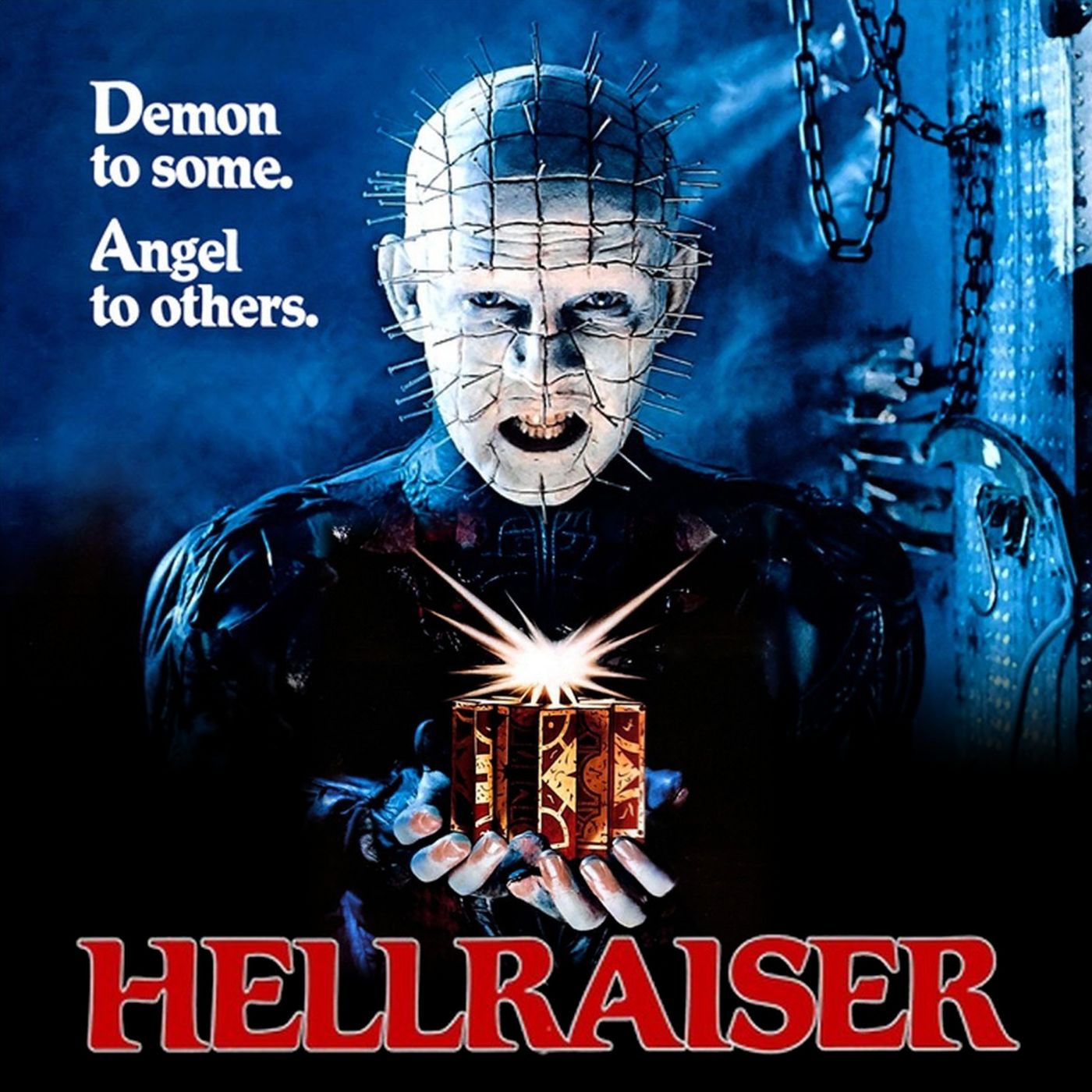
Cutting Deep into Horror | Hellraiser (1987): Pinhead, Desire & Body Horror
Freitag, 9. Oktober 2026 · 1 h 28
Kapitelklicken springt direkt hin
Shownotes
Hellraiser (1987) turns desire into body horror. Henrique and Rachael revisit Clive Barker's original film, from Pinhead and the Cenobites to the Lament Configuration puzzle box. Are these beings evil, or do they operate beyond human morality? Cutting Deep into Horror explores Julia's obsession with Frank and the betrayal at the heart of a crumbling marriage. We unpack the ending, religious imagery, practical effects, and Christopher Young's haunting score. Add this horror classic to your Halloween watchlist, then open the box with us for a movie discussion about pleasure, pain, and control.
Bonus episodes & support: weeklyspooky.com/join
More scary stories: weeklyspooky.com
Story submissions: WeeklySpooky@gmail.com
Transkriptvom Podcast bereitgestellt · Zeitmarken springen hin
Welcome to your heck.
Okay.
Oh, wow.
That's a lot of blood. And can we address the.
Blood to some, hemoglobin to others.
Well, yeah, that's kind of how, like, synonyms work.
But.
Come along now. We must attach chains to your eyelids. So that you may file your W-7-4 tax form.
Oh, God, no!
A form only invented in heck.
Ah, no! Not heck.
No.
Taxes are the worst.
They're pretty bad. Yeah. Oh, God.
This podcast is about why horror scares us. What deep, dark, secret, scary cinema shines a light on. The discussions are frank and involve conversations about abuse, trauma, and mental health. There are also spoilers, so keep that in mind too. Now, sharpen your machetes and straight razors, because this is Cutting Deep into Horror.
Hello, my spookies, and welcome back to Cutting Deep into Horror. I am, of course, your host, Enrique Couto, here with my co-host, Rachel Rodolphe. Rachel, how are you?
I'm doing good.
Good. Well, spooky season is already rolling along, so we wanted to do a little, I guess, a little appeal to the classics.
Yeah.
For October. Yeah. Because... I don't know. It's a classic. That's one of those tricky things, though. People were arguing that 80s movies were classics when I was a late teenager, which would have not even been... They were barely 20 years old?
Yeah.
Yeah, they were really young. Because this film we're covering tonight, Hellraiser, from 1987, so it's one year younger than me.
It's the same age as me.
That means it's almost 40 years old. Okay.
I'm going to go just lay down in the dirt now.
No, why? Because your back hurting? That's the only thing that gets it to stop. But this is obviously considered a classic in the realm of horror and the kind of franchise horror era that started in the late 70s for the most part with Halloween. Halloween spawned sequels, then Friday the 13th spawned sequels, then Nightmare on Elm Street spawned sequels, Child's Place, spawned sequels. Hellraiser obviously spawned many sequels, even Critters, Wishmaster, Candyman. It got to a point where that was the goal.
Yeah.
If you made a horror film was that it would be a franchise and that you would have lots and lots of movies. And while Hellraiser didn't quite have the success of Nightmare on Elm Street or Friday the 13th or Halloween as far as it's I believe it was after part four, Hellraiser went straight to video.
Oh, that's pretty early on.
Yeah. Child's Play went straight to video. I want to say part five was the last one that was in theaters or might've been part four. Nightmare on Elm Street never went straight to video. Friday never went to straight to home video. Halloween never went straight to home video. Critters went pretty much immediately straight to home video. I think after part two.
Yeah.
Candyman was straight to video parts two and three, I believe. Two might've been in theaters briefly. Wishmaster, I think the first one was the only one that was in theaters. So anyway, but Hellraiser, so Hellraiser has that kind of delineation of being a major horror franchise that ended up going direct to video and becoming really low budget really quickly. Yeah.
And having some later sequels that are maligned for making no sense and in the series or whatever you want to call it. And also having a couple of really questionable later sequels and then a quasi remake from a few years back.
Yeah.
But we're talking as always, when we talk about any horror film, that is the start of a franchise. We are only talking about the first film as a self-contained thing.
Yeah.
For the most part.
Yeah.
Anything that's referencing the later films is just trivia. And yeah.
Yeah, because if we were to try to discuss the Hellraiser franchise in totality, we'd be here a while.
Eh, maybe not.
Well, I guess it does depend.
I think that there's a lot to like about some of those later Hellraiser sequels.
Oh, yeah.
But there are some fair criticisms. Like, there's one of them that a lot of people felt like it was just a detective script.
I remember that one, and I actually kind of liked that one.
I did, too. But a lot of people, like, I feel like they just crammed Pinhead into it. I found no evidence that's literally what happened, but I understand why people would want to think that. Yeah. And there are a lot of examples in not really as much horror, but in movies in general and movie series where that happens.
Die Hard 2 was based on a different book than Die Hard, the first Die Hard film. They adapted a different novel and changed the character to John McClane. Die Hard 3 was a spec script that had been floating around Hollywood for a decade and That they took and then made it John McClane. Oh, cool. So it does happen.
Yeah.
But yeah, there's a lot to get into with Hellraiser. Of course, it's Clive Barker's first film as a director, although he did not direct many films.
Yeah, because it's this and well, did he direct Candyman?
No. No. No.
And Candyman was very loosely. It was a very small film. story that Candyman was based on the original Candyman we went over it he was Irish yeah it didn't take place in Chicago it was like very different it's still an interesting short story the movie I think is excellent we've talked about it on the show but but with Hellraiser I think Barker maybe maybe only got back into the director's chair maybe two more times for some reason his Wikipedia is not giving me a list of movies he directed that's how few I guess he Directed that they feel like they don't need to list them. He lists his books like crazy because he wrote so many books.
Because in the 90s especially, Clive Barker was like the guy you read to show you were way cooler than Stephen King. Because Stephen King was like, that's what normies are afraid of. I'm into Clive Barker. I'm into torture and weird psychosexual stuff.
Yeah. The really dark shit.
Yeah.
Oh, wow. Okay. So he directed a few more than I realized, although these two I think are shorts. Hellraiser first, and then Nightbreed in 1990, which became legendary for having the producers mess with it. And then eventually the actual director's cut was slowly being circulated. And then maybe five years ago, the cabal cut, as they called it, finally got put out into the world. I think Nightbreed's all right.
It's not a great horror film, not a bad horror film. And then his final feature as director, I don't, forgot, I just watched this one for the first time three weeks ago, is Lord of Illusions, which I know you haven't seen for sure, but I liked it fine. But yeah, he did really make a huge splash as a director.
And there were claims that he barely directed Hellraiser. Oh, really? I don't think that they're really that accurate. It's kind of when people try to claim that Tobey Hooper didn't direct Poltergeist. I'm like, why are you being so negative about Well, people try this. So the claim on Poltergeist is that Toby Hooper was there and directing, but that Steven Spielberg actually directed it. And there are all these claims that aren't really true that Spielberg couldn't direct Poltergeist because of some contractual thing. So he hired Toby Hooper, but then he was like influencing him or whatever. And his influence is all over the movie, but I don't, that I've never heard anybody who worked on it say
that Toby wasn't day in and day out working on it. But to give you context, there are about 40 films that, maybe a little less, that are based on novels, novellas, or short stories by Clive Barker. So he's definitely had a lot of pieces produced.
Yeah.
And supposedly he wanted to do Hellraiser himself because he was unhappy with the way others had turned out.
Yeah, that's what I've heard. The story I've heard.
Where'd you hear that?
Internet.
Well, then it's true.
It has to be true.
That's the way it works. Yeah. But yeah, so, and Hellraiser's always been seen as Pinhead- Being the, depending on who you'd ask, especially back when I was a kid, it being Freddy, Jason and Pinhead or Freddy, Jason and Leatherface.
Yeah.
Pinhead was always in there, even though in reality, the movies were a lot smaller scale and a lot less ubiquitous in some ways. But Pinhead was ubiquitous.
Yeah.
Which is extra funny because he's barely in the film, the first film.
Yeah.
And I don't know if you knew this, but for those, first of all, for those who don't, who've never seen Hellraiser before. that's bizarre, but you need to get a, get ahead and watching that. I believe it's on to be, and I'm just, I'm double checking now, but it's pretty readily available to watch.
Yeah.
It's free to watch on to be Pluto TV, Amazon prime video with your subscription plex that you can rent it anywhere you rent your movie so it's readily available yeah but originally the wife character was meant to be the recurring character if there were.
Sequels really what was her name julia.
Julia yeah originally she was meant to be the reoccurring evil That's.
Really interesting because especially on this watch through, I noticed how she and Frank are truly the villains, the bad guys. The Cenobites obviously are not good guys.
Well, it depends on how you look at it.
Well, yeah.
Demons to some, angels to others.
Well, their whole thing in the first film is that you can only get them by summoning them in a very specific way.
Yeah.
So why would you claim you're innocent? If you were trying to solve the lament or whatever.
The lament configuration.
Yeah.
But Peter Atkins, a screenwriter, recalled plans to build a continuing series, but it was based entirely around Julia. But Pinhead's popularity completely changed that mindset. And Claire Higgins, who played Julia, she was in the second film, but she didn't want to be a recurring horror villain.
Okay.
So it kind of pushed it away. Okay.
Yeah.
Very interesting. As we were watching it, I just noticed, especially for the first, I'd say, two acts, the film is almost more of a family drama.
I think it's a marriage drama. That's two sides of the same spiky coin. But I think it's a marriage drama because it's about their marriage falling apart and his wife being obsessed with Frank. while Frank is obsessed with pleasure, for lack of a better term. The story of Hellraiser is basically, I'm not going to mince words because I've always found Hellraiser funnier if you describe it really plainly.
It's about a guy who is so into dirty, kinky, weird, blasphemous sex that he decides that the next way to really get his rocks off is to summon demons to to tear him apart basically yeah so he gets torn apart ends up stuck in an attic in his old childhood home meanwhile his brother who is larry who is not a bad dude at all he's about as square as it gets yeah and his wife julia who is secretly twisted they're moving into this house Larry accidentally bleeds upstairs.
The blood actually kind of summons Frank back, suggesting that somehow Frank wasn't actually killed by the Cenobites we briefly see at the beginning who have come to tear his soul apart. And now Frank is trying to get more and more blood to become more powerful. And while all this is happening, Larry's daughter is stuck in the middle.
Yeah.
That's really what the movie is. I mean, the Cenobites are a major point, but they're more of a sticking point, not a story point.
Exactly.
The Cenobites are the, the, the supernatural element, but they leave Frank to be Frank for most of the film. And Frank is terrifying. He's a skinless monster who has no sense of right or wrong. Yeah. Only of what he wants and what amuses him.
Yeah.
He's pretty much, I would say, like the ultimate definition of a hedonist.
I was just going to say that. Frank is what happens when you take hedonism to the ultimate extreme. And they do a really good job of showing you, you know, within the first five minutes of the film, what that is, what that entails. And it's not great.
No, it's not. Depends on whose side you're on. But yeah, that's pretty much the rundown. Because the other thing is a lot of people forget much like other film series, franchise startups, that this is not like the other Hellraiser movies. And it's not even just horror franchises. The first Rambo movie, people forget what First Blood is actually like. It's totally different than you're thinking if you're remembering a kind of amalgamation of all the other Rambo movies as one. So what was, well, my first time watching Hellraiser was on cable. Oh, fun.
I was probably six. I'm serious. It was the first horror film. And I can't claim 100% that it was the first Hellraiser. I can only say that was when I was exposed to Hellraiser. But it was one of the first horror films to give me a nightmare. I had a nightmare about Pinhead when I was very young.
Oh, yeah. Pinhead is terrifying as a character.
If you're afraid of that kind of thing. If you're afraid of British people. Well, yeah. But that was my first time basically seeing it. What about you?
Definitely the first time was watching it with you. This would have been 10 years ago, but I'd always been curious about the Hellraiser franchise just because the entire premise sounded so different from other horror franchises that I would hear about. And so I was kind of like really intrigued by that. When you gave me the chance to like, you were like, well, let's pick out some horror movies to watch. And when I finally said, let's watch Hellraiser.
And you were like, hell yeah. And it was everything that I expected and but also defied expectations because I'd obviously heard through pop culture more about like the sequels and just the general, like you said, the amalgamation of Of the whole franchise rather than just what this one movie was.
And the themes are pretty consistent, even though the films are super different from each other. The themes of sin and vengeance and decadence and death and sex and all that's in almost all of them to some extent, especially the early ones. And yeah, definitely. I think it carved its way into horror very fairly. by being an interesting, albeit a strange, stab at horror at the time. It was 1987. The slasher movie was still king, although it was dying off a bit. And then you get Pinhead and Hellraiser, something I don't think people were really expecting so much. But when we get back, we'll talk more about the gruesome specifics of Hellraiser after this.
So the first time we watched the film, and even watching it again this time with you, the thing that really caught me is how quickly the whole lore is established without any long exposition or anything. I just, pretty quickly, we see Frank getting the box, we see him solving the box, and then within five minutes he's torn apart.
So we understand, maybe not the fine details, but we kind of understand the rules of this world pretty early on.
Yeah.
He's clearly traveling the world looking for something.
Yeah.
Meets up with this odd, nondescript Asian gentleman who sells him the box and seems very happy to sell it to him.
Yeah.
And then he's in a room alone, surrounded by candles, trying to solve this puzzle box, which I always thought was a nice touch. Especially considering I believe the 80s was like the height of the Rubik's Cube.
Yeah.
So I think that's funny because it's a little it's a box.
It is.
Yeah.
Just a little just a thing. And I've especially this time watching it through again, but I've always noticed like how to solve the box. You kind of sit there and just caress it and touch it and everything. And it looks really sexual. The whole movie is sexual. But even solving the box, something as simple as solving a puzzle box. It's got this sensuousness to it.
I think that's just you just putting that on there because you're weird. No, you're not wrong. I always got the sense that the real secret of solving the puzzle box was that it comes from almost letting it co-opt you a little bit.
Yeah.
Yeah.
Like you let it tell you how to touch it almost.
Yeah.
It's like you have to listen to this darker voice somewhere that would tell you how to open it. Of course, as we progress, Watch the movie more later on. It gets opened by somebody who doesn't realize what it is, which could have just been a fluke. Although then if you pay, if you count the later sequels, it's that there was some kind of predestined thing with, oh gosh, what's her name?
Kirstie?
Kirstie.
But yeah, I don't know.
No, no.
Like you said at the beginning, we're just taking this movie as itself. If you were to take the whole lore, then yeah, there is like this predestination, like fate sort of thing going on. But when you take this film for what it is, it kind of seems like the only amount of fate would be that it would be your fate to suffer the consequences if you go trying to solve the box. There isn't any predestination of necessarily who opens the box. It's just once it's in your hands, you succumb to touching it and then opening it.
What the Cenobites even say, you opened it, we came. Yeah. That's like the entirety of their argument, of their reason.
Exactly.
And their gig is to torment.
Yeah.
To cause suffering of the flesh. The famous line was demons to some angels to others.
Yeah.
And I like that because I feel like that is ambiguous.
Mm-hmm.
They don't really spell out what that means or entails, whether it means that there are people who want to be murdered horribly or tormented horribly. Yeah. Or if it means, I guess my point is, is it that punishment is freedom? Is it that being punished is good? If you're bad, if you're evil, if you're wicked, that it's good to be punished, therefore angels to some. Okay. Or is it what you get, angels to some, I don't know who that would be, demons to everyone who encounters them.
Yeah.
Because there is this whole argument, this whole concept that the Cenobites are morally neutral.
Yeah.
I don't know how you feel about that.
I think that I could see it more than other people. characters in horror franchises especially with this first movie but they do kind of turn heel a bit but then again they never really actually make any promises their only promise is if you solve the box they'll.
Come yeah that's it potentially if you unsolve it they go away yeah sort of yeah well that's I would say that they're very maybe I don't know if there are any other major franchise villains that are Potentially neutral, morally speaking. Freddy Krueger's straight needle. I mean, Jason's a cold-blooded killer. Yeah, he's supposed to be like a traumatized child or something, but he's still killing. Leatherface kills and knows it, even though he's mentally all over the place, depending on which... But he takes the joy in the killing and stuff like that. He's the most cold-blooded of all of them, almost, next to Freddy Krueger, as far as he just kills because he likes to kill.
Yeah.
Yeah, so see what I mean? I don't know, but the Cenobites could be morally neutral.
I guess you could argue, if you want to go there, that the alien is morally neutral, because it's just a creature.
Yeah, maybe, but I think that morally neutral requires an observation, and since it's a monster and it's the antagonist... Yeah, that makes sense. Because what I mean is, when you look at the Cenobites, the way they talk... It makes them sound like they're explorers that operate beyond the ordinary confines of good and evil. Yes. Right? Yes. So there's that idea that what they do is provide experiences humans can't understand. Mm-hmm. And maybe that's what they mean by angels to some, demons to others, because it's up to your interpretation, which is why I'm saying they're neutral. Yeah.
Because it is always ultimately up to the interpretation.
Yeah. Well, yeah. But then- The counter argument would be Kirstie, because she summons them by accident. They still are going to kill her and torment her for eternity and tear her soul apart. And her torment will be legendary even in hell. All the great quotes from the film. But they then do go after her even after they make a deal with her.
Yeah.
But see, that's what I'm thinking, though, is they don't ever actually confirm with her that they'll let her go. If she gives them Frank, it's more just, we want to take Frank, so we'll see what happens when you take us to him sort of thing.
Yeah.
They seem to imply it, but it's like they come after her in a technicality.
Yeah.
So that's one of the things I've always found the most interesting about the Cenobites is that level of kind of ambiguity. Mm-hmm. Are they evil or are they something else entirely? Because they're clearly not neighbors.
Yeah.
There's something up with them.
Yeah.
I don't know. What was your first... Because I don't really remember a time before I knew Hellraiser because I was so young. What was your first... You had seen Pinhead and stuff.
Mm-hmm.
And you'd seen maybe clips and this or that. What was your first impression when you first saw the Cenobites come out? When you saw Chatter and... Butterball. Butterball. Yeah. What was your first reaction?
My first... Well, my first reaction was... Honestly, I could understand why Pinhead and the female Cenobite were like the poster children. Because Chatter and Butterball are still terrifying, but those two on their own just really make it. And the more that Penn had talked as the mouthpiece of all of the Cenobites, I realized, oh, this is one of my favorite villains in horror because of how complex they are and how morally ambiguous they are. I want to say at that point we'd watched Nightmare on Elm Street and Halloween and.
Texas Chainsaw Massacre, but we hadn't watched Child's Play or Candyman yet. So, yeah, and Candyman's a little morally ambiguous, not nearly on this level, but he's got that whole tortured artist. In the movie, he was a slave, so there's a little bit of him taking power back sort of thing.
Yeah, I don't know if I'd call him, I agree, I don't know if I'd call him morally ambiguous. But he certainly has a empathetic origin.
Yeah, there you go.
Which Jason has an empathetic origin.
Yes.
Freddie does not have an empathetic origin. Chucky does not have an empathetic origin. Leatherface, you could argue depending on which, well, because he doesn't have an origin unless you go into later movies.
Yeah.
And there are versions of his backstory where he was a kidnapped baby. Well, kidnaps is a strong word. A taken baby. or adopted baby that he was mentally stunted or duh. So then he's just doing whatever he's taught because, and he's just growing up around people who are completely perverted as far as the concept of right and wrong and evil and murder. And yeah. Yeah. So he has a little bit of an empathetic background. You could almost give the alien, like you were saying, an empathetic background, except it really does just exist. At least in the first movie, again, only looking at one movie, it does exist to just destroy, right? So it would be, I think it'd be different if it wasn't on their ship.
Yeah.
What's a little bit different.
It would be different if it's well, but you'd want to stick with just the first movie though. Cause the, all the sequels of alien is yeah, they do find the planet and they're still just as horrendous. And deadly.
Yeah, you can dabble with it. It's more because that could eat up an entire show all by itself if we dived into all of the alien films.
Yeah, so I'm going to put that can of worms away.
We should do aliens sometime, though.
We really should. I would love that. I'll put that in our list of movies to cover eventually.
If you want.
But yeah, so that's what really struck me is the complexity and the moral ambiguity of And again, going back to Clive Barker did a great job of giving you just enough lore to get you hooked. And throughout the whole movie, you get the feeling that there is so much more to the Cenobites and the puzzle box and the world that they inhabit. There's so much more to it.
And you get little tastes. But he does a great job of staying restrained with the world building so that when it doesn't overtake the movie. The movie really is mostly about Larry and Julia.
Yeah. And their family dynamic. Yeah. And Julia's obsession with Frank. Well, and before, so to stay on the Cenobites just a little bit longer, do you know what the term Cenobite means?
No.
It refers to a member of a communal religious order.
Oh, okay.
So then when you look at them with their very disciplined behavior, They're all clearly dressed a specific way, ceremonial. It suggests a kind of priesthood.
It does.
So then if you want to go even deeper with it, they're self-mutilation, possibly self. Self because of them as one unit.
Right.
They might mutilate each other. But it is almost like religious mortification. I don't know if you're familiar with the practice of religious mortification. Yeah, I'm familiar with that, yeah. Which is often... In many faiths, it's a way to experience suffering as a route beyond ordinary existence.
Yeah.
So that's something that's interesting too. But then the question becomes, so are they transformed in some way? Obviously they are beyond living in death, life and death. There's a part where she says, go to hell. And they're like, no. Yeah.
Basically already there.
Sweetheart. Been there, done that, took pictures, bought the t-shirt. But so is it spiritual transformation or is it more just, torture given, like, ceremonial garb.
Okay. I. When I first watched the movie, and as I've watched it, I do get the idea, the feeling that it is a religious... Undertone? What was the phrase that you were torturing themselves?
Oh, mortification.
Yeah, religious mortification. I've gotten that vibe from it that just they were already... So into torture that they were pulled into suffering. that was so beyond human experience that it became almost like ecstasy. That's kind of like the vibe that I got.
Well, with the major S & M influence that the movie definitely has rolling through it. And Clive Barker was never shy about saying he was, I believe, a gay man he's definitely most of his lovers have been men like he's known live live in lovers and stuff his whole life i don't know he could be bisexual doesn't really matter but he definitely was like hanging in those scenes in the 70s and 80s which would influence it he himself always identified punk catholicism and snm clubs as major influences on the cenobites.
Directly I can see that a million percent.
But yeah, there is that question of, is it just that have they discovered something beyond human existence or beyond human experience? Or if you wanted to go on the other side, it could be that they've actually just simply lost something that's essentially human inside them. And that's something I've always bounced around. I don't have a, I don't have, these are just thoughts. I don't have a concept necessarily.
Well, and then you could also ask, are they beings that have just come about to give suffering its own corporeal form?
Could be, but they're so beyond the suffering that humans understand. So that's where it gets a little confusing for me. On one hand, they could be the personification of suffering, but they're beyond suffering almost. Yeah. So I don't know. That one's a little hard to kind of dig up. But of course, what was it? I wrote it down somewhere.
In a more recent interview, Barker did say he initially wanted to title the film Sadomasochists from Beyond the Grave.
I'd watch that.
Who wouldn't? But yeah, so there's a lot more to unpack about Hellraiser, and we'll get to it right after this.
So we get introduced to Frank and then pretty quickly get introduced to his brother, Larry. Yeah. And Julia.
And Larry, I want to mention, played by the legendary Andrew Robinson, one of the finest character actors ever. And he's still around, too. For some reason, I thought he'd passed away recently, and I'm happy to see he has not. He's 84 years old.
Oh, good for him.
But he... was famous for playing the serial killer Scorpio in Dirty Harry that kind of made him a household name.
Oh, cool.
And then he played one of my favorite Star Trek characters of all time, Garak, in Star Trek Deep Space Nine. But he's just a really fascinating performer, actor. He's written a few books in his day. He wrote a book called, I cannot remember the name of it right now, A Stitch in Time, I think, which was a book written as if it was written by Garak from Deep Space Nine.
He wrote it himself.
That's fun.
So he's done a lot of really cool work. I don't know. I've just always found him really fascinating. But anyway, he's a great addition because Larry is really milquetoast. He's not totally milquetoast. He does seem to have an edge to him at times.
He does.
But correct me if I'm wrong. So he's married to Julia. Obviously, this is a second marriage. In part because Julia looks a little bit younger, but more so because once his daughter's around, once Kirstie's around, it's very clear that they are not related, that they're trying to get along. Yes. So to me, it seemed like Larry is mostly just reactionary toward Julia. That Julia is clearly has an undercurrent of being unhappy, has an undercurrent of being, oh, what do you call it? Restless. Yes. And I think that's what puts Larry in kind of a position because it seems like whenever his character is around other people or whatever, he's a pretty affable person. He's pretty funny. He's pretty easy to get along with. His daughter seems to adore him.
Oh, yeah.
Which suggests that he must be pretty kindly. His daughter is, I would say, probably 20.
Yeah.
Because she's been away at college. And the film is all about them moving, well, him and Julia moving into this house that he grew up in. Because it sounds like they may have hit some financial issues or personal issues when they lived in Brooklyn.
Yeah.
Yeah, but for some reason it has become clear that it's better for them to move into his childhood home. And it's especially convenient because his brother Frank had been living there for a while, but they haven't heard from Frank.
Well, squatting.
Squatting, yeah.
Because it's not like he kept the electricity on or anything. He just slept there and, you know.
Just kept his shit there.
Kept his gross photos and stuff there. And he basically tells her that they're going to move in there, I'm guessing in part because the house is paid for, but also. He has a new job or he got transferred. They don't make it clear. It doesn't sound like he'd been unemployed for a long time or anything. No. But he basically and they don't say exactly where it is. We assume it's somewhere else just outside of New York City is the vibe I get by how they were saying, what about Brooklyn? It makes me think it was like this is Long Island or Westchester or a place that's just outside of New York. You do have to take a long bus ride to get to New York City, but you are still technically basically outside New York. Yeah.
But he mentions about Julia that this is a great place for her to start up again for her work. So suggesting that maybe she had hit some personal issues. Mm-hmm. There does seem to be this undercurrent that she doesn't want to live there, but that he's clearly doing this to benefit her. Yeah. But we don't get a lot of expansion on that.
Yeah.
And I like it that way, that they come in and there's obviously tension because moving is not fun.
Yeah, it's very stressful.
But- There's also this, yeah, like you said, there's this tension of him trying to offer this olive branch of this is going to be good for both of us. This will be good, not just for me, this will be good for you. And she just turns up her nose at it. Yeah, but this isn't what I want. So why does it even matter? Yeah.
Sort of thing. Well, but she also won't admit what she wants. And we find out very quickly when we see a flashback that Frank, the terminally hedonistic monster family member, Had shown up the day before their wedding or within a week of their wedding, something like that.
Very shortly before their wedding.
And basically seduced Julia. And then they began having this on again, off again thing. Yeah. Which is extra fascinating because Frank is dismissive and cruel and intense.
Mm-hmm.
And Larry is... the opposite he wants her to be happy he would do anything to make her.
Happy he's dedicated there's constant moments where he's asking what do you need what can i do like yeah for you no problem you got it he's very dedicated to her and very into their marriage and she has this kind of darkness but then the other funny thing is this is another deeper dichotomy of hellraiser a voice found really fascinating.
Julia's attitude is that she will be freed by frank Right?
Right.
Because she's trapped.
Yeah.
But Frank is literal prison. Frank is literal control. That's his kink. He's a sadist. So it's one of those freedom through slavery type deals, which I always found really an interesting story point and an interesting kind of area, I don't know, to kind of go through in the film. Oh, yeah.
It's really interesting seeing the way she, you know, seeing the way she interacts with Larry. just a frigid ice queen.
Yeah, she's so cold toward him. And he's honestly, we just rewatched it. I don't really remember him ever getting overly crappy with her either.
It seems like he really is kind of sweet. Yeah, the only time he kind of even vaguely raises his voice to her is literally when she is trying to seduce him so that Frank can kill him.
Yeah.
And then she kind of freaks out a little bit when she kind of comes to terms with the fact that's what's going to happen and then she's freaking out while he's on top of her and then he pulls back and he's just well one minute you're all over me and the next minute you're telling me to stop what's going on yeah and i can't and you can't even blame.
Him no well you can't you can't blame him at all the only other time he seems to get kind of stern with her is when it involves kirsty yes with kirsty because the first so Frank is introduced, he's a corpse with no flesh that's slowly, whatever, reconstituting. Julia has to bring him more blood. So she's picking up dudes and bringing them to the house, and then they think they're going to get lucky, and then they get real unlucky. Yeah. And it's pretty hideous, it's pretty grotesque.
It's one of the heights of grotesqueness the film gets to without the Cenobites being directly involved.
Yeah.
And.
Meanwhile, Larry's just existing and Frank has been suggesting throughout he would kill Larry and his attitude about when he's kind of, it's time to bring Larry up here. It's so matter of fact, there's no consideration at all. He would just do it, which is really fascinating about him. But then like when Kirstie's around, when they're moving in and everything, what is the first thing he does? He says hi to Kirstie. He's. He's really something I picked up on a lot this most recent viewing. This is an empty nest kind of situation.
Oh, a million percent.
Which I think makes him more frustrated with Julia because he's like, well, now's the time for us to just enjoy living. together. My daughter's moved out. She's at college. But the first time we even speak to Christy, he's on the, or see her speak, he's on the phone with her saying, I thought you were going to stay with us. And she's like, no, I found a room while I'm around or whatever.
And he's trying so hard to get her to move back in.
And That's one of the things I find fascinating. So then she comes over and the first thing he tells her is like, Julia is not handling things very well. She's very stressed out by the move and stuff. So just try to be gentle with her.
Just try to include her a bit more.
But that's literally his entire stance is he's just trying to be kind to her. We're good. Go easy on her. So that's where they're at. Yeah. And then later on to talk about how Larry is. They have this dinner where they have friends over, mutual friends. And one of the guys who's there is Kirstie's age. And I get the sense he's a kid of a family friend or something.
He just knows him. But he's very outwardly flirting with Kirstie. Everybody can tell he's flirting with Kirstie.
Oh, yeah.
Larry's never, he's not bothered by it. He's not annoyed by it. He really has, it seems to me, and tell me if I'm wrong, it seems to me like he has a very healthy attitude about, my daughter's a woman now. She's grown up. Oh, absolutely. If she was to have another glass of wine and go home with this guy.
Yeah, who am I to stop her?
That's her choice as long as she doesn't drive because you don't want her driving while she's drunk. Which goes to show the more I think about the movie, the more I think that Larry's level of perfection is definitely, and by perfection, just like he lacks the kinds of flaws you would expect from that character yes he's not jealous yeah he's not controlling not even of his own daughter he's very understanding of you're in college now or all that stuff it can only be purposeful to make it so much worse that anybody would want to betray him the way julia wants to in the way frank wants to when it's like larry's perfectly good guy yeah He's the.
Kind of guy I would just go down to the bar and have a beer with.
But he wouldn't because he'd be like, my wife's expecting me home at seven. Yeah, exactly. He wouldn't, yeah. And it seems to me like all of the strife in his life is Julia.
I know. And it makes it so much harder as she just, as they move in and she keeps having flashbacks and all these memories of her.
Missing Frank. Well, because they're finding his stuff around the house before she finds Julia. The ultimate stuff, which is the remains of him. Yeah.
Yeah.
But yeah, they find pictures of him and she's thinking about him and their experiences. And it's, you know, the phrase shit rolls downhill.
Yes.
So we see these flashbacks of her and Frank getting it on and then him being just an absolute asshole to her afterward.
Oh, yeah.
What does she turn around and do? And her poor husband is, oh, honey, I made some lemonade and I made a sandwich for you. I'm going to go down to the shop. And she's like, ah, fuck you. Oh, so shit really does roll downhill.
There's that whole sequence when she's in the bathroom feeling upset about the guys that she's helped kill and stuff. And he's just like, are you okay? She's like, I'm not feeling well. And then he's like, well, is there anything you need? And she goes, a brandy. And he's like coming right up. All he wants to do is help.
Which actually, now that we're saying it all out loud, feeds into the fact that he probably was a phenomenal dad. Yeah. Because he's paternal as all get out.
Yeah.
He really is.
Because all he ever wants to do is make her more comfortable, make her happy, make her feel whatever thing. In a way, that's the only controlling element of him is just that he wants to be there.
Yeah.
So, of course, that means he's got to get his fucking skin peeled off. Pardon my French. Ooh, yeah.
Yeah. It is always the good ones, isn't it?
Yeah. And the kind of B story is just Kirstie.
Yeah.
Living and trying to figure out what her adult life is like, trying to understand her dad's devotion to Julia because she doesn't outwardly hate Julia that we see. But she does seem frustrated with her. She's like, it's always something. There's always some drama with Julia. Julia's not feeling well.
She's so high maintenance.
Yeah.
Julia's not feeling well. Oh, Julia doesn't like moving because everybody else loves moving. Yeah. Julia doesn't like it when her parents die. Yeah. Julia's just a person. She's just a person. Nobody likes these things, but some of them aren't as big a deal as others. But everything is all about her. Yeah. But then ironically, Frank in his...
deep desire to dismiss basically everybody somehow makes her feel more wanted than anything. Because if he is going to have her, he has to have her entirely. Yes. Which is, again, leaning into that whole slavery is freedom thing, which is very BDSM. Oh, yeah. So I don't know, but I definitely, the more I watch it, the more I'm like, gosh, Larry doesn't have any undercurrents, unless I really missed them, because we just rewatched it. And I was wide awake and fully paying attention the whole movie.
Yeah.
Well, and that's because we did a couple years ago. We've rewatched this, but we rewatched this the other night. And I just the whole time I was like, oh, man, Larry. Oh, man. Poor guy. I just feel bad for him more and more.
He's just trying his best to take care of everybody around him. Yeah.
And.
We don't, I don't know. Do they say, I think they met.
Yeah.
They mentioned that her mother's dead. Yes. Kirstie's mother is dead.
They don't mention like how long or, but it is enough to know. And he was clearly from the little bit that we get, cause moving the mattress and that's what kind of sets off a bunch of the events, moving the mattress. He had to have a couple of guys, big burly guys help him move it. And when Kirstie comes by the big girly burly guys, they see her.
She's a good looking girl. And, They start making comments to Frank. Oh, she really takes after her mom. And he says, well, she's dead. Oh, yeah.
He does. He just says her mother's dead.
And kills the vibe. And again, that's the only time that he shuts people down is when they're like legitimately being.
Yeah.
And those dudes were annoying from the beginning. They're like asking for beer. While they're working for him, they're not doing a good job. He's having to help them the whole time.
Yeah.
And he gets injured because they're not doing their job.
Because they're not paying attention to anything. And yeah, it's a lot. My vibe was that he married Julia probably give or take 10 years ago.
Yeah.
That would be my vibe because when they do the flashback, she just has a different hairstyle and she comes off just younger. Yeah. In a way, he's not quite so frigid and so standoffish. And then the time goes by. Clearly, Her and Kirstie didn't bond very much. Kirstie definitely wants out of the house, but still has an incredible affinity for her father. She just wants out of the house.
And maybe it was because Julia was a nightmare to live with for her.
Or maybe little Bernie just needs to fly.
I don't know. Julia makes me think.
It was probably Julia.
But yeah, so that leads into a really funny anecdote about the making of the film. But we'll get to that right after this. So when the film was being made, there was some claims that, as I mentioned, Clive Barker did not really direct the film.
Okay.
The claim was that in reality, the film was directed by the editor of Hellraiser, Tony Randell. And the reason that name may sound familiar is not because he's not Tony Randall, the actor. But because Tony Randell went on to direct Hellraiser 2.
Oh, gotcha.
And a lot of other films. Tony Randell, and he was... IMDb is saying he was an uncredited editor on the first one. Maybe that is the case. But he's a very experienced editor. He's edited more than 100 films. Still editing movies to this day. But as far as directing, he has done... Let's see. His first feature was Hellraiser 2.
Then he did Children of the Night, which is a vampire movie that I actually like quite a bit. Then he directed Amityville 1992, It's About Time, which is my favorite of the Amityville sequels. Then he did a film called Ticks, which I've also been a huge fan of. And he directed a boatload of segments on Beyond Belief Factor Fiction. Oh, fun. So he did a bunch of stuff, but some people have claimed that he was secretly directing the movie. Randell does not. Okay. In fact, he says that what happened was the, some of the studio people that were financing Hellraiser got nervous because they were looking at the dailies and their exact response was, is this entire movie just people talking in a stairway? Which I
think makes sense because there is a lot of scenes where In that stairway. Yeah, and a lot of dialogue because it is a marriage drama. But Randell was the one who supposedly either was looking at the footage. It's been a while since I heard the story, but he was either looking at the footage himself as an editor or he was visiting set regularly. And he was the one that came to them, according to him, and just said, no, this is good stuff. He's getting really good stuff. The effects are really good. And they did end up amping the effects up. Because the Cenobites arrived and stuff, they decided to make it way crazier. That's why all those shots of the walls cracking apart. and stuff. A lot of that was decided later on to be done. But
it is a testament to the film's errors as a just kind of a marriage drama, family drama, that the... producers could look at the dailies and be like, so does everybody just talk in a staircase in this movie? Because there are a lot of scenes in the staircase. And ever since I heard that, every time I watch it, I do unintentionally think about, wow, there are a lot of scenes in staircases. In the one staircase, rather. Because the house is a three-level house. Yeah. So there's a lot of that staircase travel stuff. But I always like to bring that up because now when you watch Hellraiser, anyone listening, you will immediately think of how many times are they in the staircases.
We should start counting.
Gosh, it's probably obscene.
I'd like to see the script breakdown for that.
I'm sure it just says interior staircase, but, you know, and night, maybe, or day.
I don't know. I don't know. Well, but speaking of the effects, though.
Yeah.
Because that is one of the things that was legendary to me. Like, hearing about it was, oh, man, the effects of Hellraiser are so insane. Like, And it did impress me the first time I saw it, Frank's regeneration sequence.
Oh, yeah.
But what caught me this time is the score during that sequence. The entire score of the movie is just gorgeous, I feel. But for that sequence especially, it's got this drama and almost a romantic quality to it that really plays with your expectations because what's happening on screen is so viscerally disgusting.
I always got the sense that it was meant to be seductive because the whole concept is seductive for lack of a better term. But the music, the score has always been heavily loved and rightfully so. Apparently there was an original score being made before Christopher Young came in and did the main score. And the abandoned music from the film has gotten a lot of chatter over the years.
Christopher Young, the composer of Hellraiser, said that his firsthand recollection was that Coyle was the other composer's name. Coyle's experience with the technical demands of scoring a feature was just way too difficult. It was very difficult for him. But then some people in the legend space claim that it's because the music was too scary. But Christopher Young says that wasn't quite what was going on. It was that the demands were too much for the composer. And I don't know of Coyle's other work, so I can't really speak to it. But no, the music is definitely a standout.
Yeah, I would have to. Christopher Young, I'd be curious to see what other films he scored. Just because it was like the whole thing was really moving. And I really liked the. use of silence in particular scenes too. Like especially the scene toward the end where Frank is chasing Kirstie through the house and suddenly the score goes silent and we really just pay so much attention to the tension between those two. Really artfully done.
Christopher Young has had in a very long career of compositions just an immense amount Avenging Angel, DEFCON 4. You wouldn't know those movies. Nightmare on Elm Street 2. Okay. He did the later, the 80s Twilight Zone series. Invaders from Mars, which was for Tobey Hooper. Then Hellraiser. Then he's...
I'm cutting out a bunch. He did the music for Hellraiser 2 as well. The Fly Part 2. Hider in the House, which is one of my favorite kind of silly horror movies. And it goes on and on. The Dark Half with George Romero. Tales from the Hood. Species Virtuosity. He's got literally... 139 credits on IMDb as recent as 2026. Wow.
So he's still doing a lot.
Yeah. He's been a very sought after composer for almost four decades or no more than four decades.
Yeah.
Damn. And coil, who is, I just found his credit is only credited as coil. I guess it's not his last name. I guess that's just his name. Apparently I think he was a band member in, I cannot find, why is it not giving me more info? I think he was in a, oh, okay, so now I get it now. Coyle was an experimental music group in London at the time. I see.
Okay, that makes sense.
So yeah, they were just not prepared for the level of work that a composition could be. I'll tell you right now, most pro composers, really solid professional composers that you're working on smaller budgets, their turnaround is three to four weeks for the entire film score.
Damn.
When you're on really big movies, you might have months and months, but generally it's very short. And I've talked to musicians who are not film composers who have definitely been like, what? When they hear they could have two or three weeks, but then people who've composed a lot, two weeks, three weeks seems totally normal to them. So maybe that was part of it. Just freaking them out.
Cause I don't know. Yeah.
It is a totally different time span than say writing an album or something where you could take all the time you want.
Yeah.
Theoretically.
Yeah.
So, but yeah, the music is very, it's phenomenal.
It is. It is. But also phenomenal is, well, phenomenal is a weird way to put it, but the sequence where Frank comes back to life still really holds up to this day. And you and I were like, as we were watching it, I was trying to guess how some of the shots were done.
Oh, yeah. With the reverse motion. Yeah.
Yeah.
Backwards melting, backwards pulling liquids away, things like that. Very kind of classic movie trickery.
Yeah. Or his kind of muscles reforming where it was clearly wax had been melted, but they just filmed it, filmed it in reverse.
Yeah.
That was kind of cool.
It's classic.
But Julia can look at all this and she's still just remembering all the hot and sexy times they had together.
Well, she was scared as shit until he said, it's Frank.
Yeah, and then it all just kind of comes back to her.
Well, it's also worth mentioning that Frank is portrayed by three different people.
Yes.
In the film because of the level of transformation he goes through. Yes. So I'm trying to find the... Well, he's performed by two different actors and then he's performed by the actor who plays Larry.
Yeah.
Because Larry ends up being him. Yes.
So.
Or he ends up being Larry.
Well, it depends on how you look at it.
Tomato, potato.
Go on.
I said what I said. But yeah, initially Julia is very terrified when this mass of keeping bones and viscera starts coming to life in front of her. But then he starts talking and she realizes it's Frank. And that's when she kind of starts hatching this scheme with him. But You had a really interesting thought last night. As Frank, as she lures victims and Frank feeds and he gains more and more of his body back, there's a scene where they're like, he's sitting there smoking a cigarette and he says that now that he's got nerve endings again, this is the first time he's been able to taste anything in a really long time. But That just means that when the Cenobites do finally find him, he is able to fully experience all of the pain they have
in store for him all over again.
Yeah, once he steals Larry's skin, the skin starts to take, and then the Cenobites show up and rip him apart all over again. So because of his desire to have skin, he pretty much gets to suffer the fate of the flesh again. once more.
All over again. So it does have kind of those layers of the more you desire for something, the more control it can have over you.
Yeah, definitely. I would say that's pretty fair.
So yeah, but as things are developing, Kirstie starts to get a sense of something's going on. She has a nightmare about it.
Yeah, about something horrible happening to her father. Yeah.
And this is She calls, like, in a panic. And just how dismissive Julia is continues to drive home, like, how much Kirstie cares for her dad and how little Julia cares. Because, yeah, it's weird to be an adult, a grown adult, and call up your dad in the middle of the night and be like, I had a horrible nightmare. Are you okay? But at the same time, like, you got to be a little understanding. But Julia was not.
At all. Yeah, yeah. Has very little care for anyone.
But as Kirstie, you had mentioned that Kirstie was flirting with that one guy at the party. She does eventually, that's when she has a nightmare, she's back at home with him.
Yeah.
So as I was thinking about it, I thought that was really interesting because sometimes I think it's easy to make this a moral or a sexual purity thing. kind of story but that's not really it's not that simple because Kirstie is an adult. She drinks and she goes home with Steve. She's got her own adult life. That isn't necessarily what attracts the Cenobites to her. What brings the Cenobites to her is literally just opening the puzzle box. Yeah, I think that's another reason that I've really enjoyed this movie.
is the moral ambiguity and just the depth to Kirstie's character. Because she clearly cares for her dad. Even if she doesn't get along with Julia, she really does try her best to make her feel included up until the moment she realizes that she's cheating on her dad.
I think that's putting it lightly.
When she's working in the pet store and that weird vagrant guy is there, she's not super mean to him, even when he's really weird and off-putting to her. So she's got this sense of being very empathetic toward other people that I really like.
Yeah, I would agree with that, for sure.
And it makes her a really relatable character. But, yeah, as she. Realizes what's going on with Julia because her dad told her, try to make Julia feel more included. So Kirstie goes over unannounced one day to kind of stop in and see how Julia's doing and notices her taking some strange guy into the house. And that's not all because then she sees... This strange guy getting attacked by Julia and some monstrous body thing.
Yeah. Yeah. I mean, that's a way to put it.
I would freak out. I don't know about you.
Depends on the day of the week. What I had for lunch. That kind of thing.
But, Julia, this is when we realize... that she's also smart and she's resourceful. Because as this is going down, she realizes, she sees the puzzle box and she realizes that Frank wants it. So she grabs it and throws it out the window so that he can't get it. Because anything that Frank wants, she doesn't want him to have it. And I think it's also worth mentioning that she doesn't initially realize, just like Julia, she doesn't initially realize who Frank is. It's not until he starts being really creepy and handsy and says, come to daddy, it's your uncle Frankie. That's when she realizes. And that's important that plays into the end of the movie because she doesn't really realize what Frank has done to her dad
until he says, come to daddy.
Yeah.
Before that, when he's in, we never see, we only have it suggested that Frank is killed. or not Frank is killed, that Larry is killed and Frank takes his skin until she shows up and sees him and he seems just off his hairline. There's blood at his hairline.
His eyes are a different color.
His eyes are dark brown instead of blue, which is a big one. And the whole sequence where he's talking to her and comforting her and she does believe it's him is, is a really great testament to how scary the idea of having that level of trust in someone and them being not only not who you thought they were, but the epitome of a bad actor. Yeah. Because much like Frank could look at Larry as just whatever, I'm going to use his skin to be back. He looks the same way at his own niece as just whatever.
This is another flesh vessel that can be used for whatever I may need. And that alone is terrifying because we know that there's no limit to the depravity that he's interested in.
Yeah.
With that in mind, we'll take a quick break and come back with more Cenobite-y goodness.
So, Kirstie has thrown the puzzle box out the window.
Right.
And thinking fast, she runs out the house, grabs the box and hightails it. And in shock, wakes up in the hospital later. And this is where the movie, the tone of the movie starts to turn.
Yeah.
And just a little bit. Because she wakes up in the hospital and the doctor wants an explanation of where she got the box.
Right.
And she can't tell him. So he's like, okay, well, you just stay here. I don't know why a doctor would leave a patient unattended with just a random object that they found, but they decide that's a great idea. So she starts playing with the puzzle box and caressing it. And again, we get this feeling that it may be guiding her in the way that she interacts with it.
But even when she's touching it. It's got this sensual sexualness to it. And as she touches it, little lights shimmer all around, and then a portal, a doorway, opens. And we get a small taste of the world that the Cenobites come from. It's not fully expanded like it is in Hellraiser 2, but it's just enough of that taste of Kind of the weird, twisted darkness that is there.
Yeah, we get little echoes of it, mainly because they didn't have a lot of budget to work with. Yeah. So it's pretty sparse, but it's well executed when they do it. Apparently, I did a little checking during the break. Barker described the lament configuration as representing the puzzle of desire. Okay.
And that the box could be easily read as seduction. Because it's beautiful, tactile, mysterious, and requires, and this is a quote, intimate manipulation with the hands. Okay.
Well, it does require an intimate manipulation with the hands.
Right.
And.
That's what you were saying already. I was agreeing with you.
No, I was agreeing too.
With me agreeing with you? Yeah. Okay.
Triple agree.
All right.
I get as. Kirstie's touching it as Frank's touching the box. Yeah, it's very sensual. And then we get a juxtaposition of the portal opening to this dank, dark labyrinth. And as Chrissy explores, because maybe this is a way to escape, she gets chased by some sort of creature. And I liked... Just from a creature sort of standpoint, I liked this thing because it's very clearly not of this world, but it's also very clearly not one of the Cenobites.
Okay, yeah, I would agree.
So it operates on a different level, even from them. And so it becomes, for a moment, like a very different kind of threat. But once she escapes that threat, this is when she... turns around and she makes her way back into the hospital. But now that she has opened and interacted with the puzzle box, now the Cenobites can find her because that's the whole agreement. Once you solve the box, they come to get you. And so now she's faced with being dragged away for torment beyond even comprehension.
Yeah.
Well, and one thought that just crossed my brain is in a way it's almost like forbidden knowledge. Once you solve, if you get so curious that you have to solve the box, you know that nothing good, let's go for, from Kirstie's perspective, she knows that nothing good can come from this box.
Yeah.
Because it appeared to be important to this monstrosity and yeah.
Yeah.
A whole lot of yeesh there. But the curiosity gets the better of her, and once you've solved and opened the box, you never will be the same. Even if you escape not physically scathed, just seeing the Cenobites, seeing the lights and the rumblings and these mutilated beings. Yeah, yeah. You're never going to see life the same ever again.
So in a way, it's like a forbidden knowledge, eating the apple, Adam and Eve kind of deal.
No, I like that.
I like that.
And that does, the forbidden knowledge kind of slant to it does play a bit more, especially into the direct sequel, like the second one. Because that's why Kirstie eventually makes her way back to Leviathan, is because she has that knowledge and there's kind of not much more you can do with it other than continue pursuing it in your own way. Yeah.
In that way, it's corrupting. It is. It is.
And it's interesting because we do throughout the entire series, and this is going on a bit of a tangent away from just this singular movie, but throughout the entire series, we do see that everyone has something that will corrupt them. For Frank, it was hedonism. And eventually for Kirstie, it's something else, possibly revenge. Further on down the line, justice.
The sense of unbridled justice.
I would call it vengeance.
Vengeance, yes.
I feel like justice is too soft.
Yes, vengeance. So, yeah, everybody's got something. Everybody's got something that will corrupt them or that can be used against them. So it's just interesting in that regard to think of it that way, that it's the key that could unlock that.
Yeah, well, and the fact is, It may only have been marketed even to Frank as just being beyond anything, because that would be accurate. It's beyond anything that people know.
Well, and that's the very first line of the film. And the very last line of the film is the merchant talking about the box. What's your pleasure, sir? That's the thesis statement there is that what drew Frank in was trying to seek the ultimate pleasure. But obviously that didn't turn out great because there's balance to everything. So getting the ultimate pleasure, you also got to experience the ultimate pain.
And it depends on how you look at the ending too. Okay.
Yeah.
Because I kind of look at the ending as like the box gets, you know, I guess recirculated gets taken back.
Into the world. I meant the ending of the antagonist, which is Frank.
Oh, I see what you're saying.
The full blown ending story. Because so she opens the box and they're ready to tear her soul apart and all this stuff. And she tells them, what about Frank? He escaped you. And they're like, no, he didn't. No one has ever escaped us, which also plays into the motivation in part two, where they won't let go of her.
No one has ever seen the Cenobites and escaped.
Yeah.
So that's when she makes the bargain. I can take you to Frank if you'll let me go. And they are just like, take us to him. Yeah. So and that's where the film really gets into delivering a just desserts kind of deal.
Mm hmm.
No, I because now. Well, now not only are we really hoping that Kirstie can get away from the Cenobites, because she's cool, she's a nice character, and we want her to live, but also we are starting, like, we have a feeling that something bad has happened to her dad, but she doesn't necessarily know that yet.
Yeah, well, the last thing she's going to assume is that somebody's wearing his flesh.
Yeah, that's generally not in anyone's bingo card.
That's generally not accomplishable.
Yeah.
It took a massive team of scientists to do it in face-off, and that was just the face. It's true.
But, so, as an audience, not only are we rooting for her because we want her to survive, we're also starting to root for Frank to get what's coming to him.
Yeah, the Cenobites are definitely going to bring his comeuppance, but now, when she shows up back at the house and realizes... all of this and realizes that her father's been killed, it shifts. And that was something that really hit me this last time watching it. It shifts from her just wanting to survive and throw Frank under the bus because clearly he's in league with something horrible and Julia on top of that, who's clearly worse than she ever imagined. But now that her father's been killed, there is a, now is when the vengeance comes into play. Before, it was more of just kind of, this is your fault, so this is your problem. But now it's, no, I cannot wait to hand you over to these beings. And
when the box, when she brings the Cenobites to him and Frank realizes what's going on and realizes that they're coming to collect, he's scared and angry and he tries to attack Kirstie. And the Cenobites get him with the chains.
Yeah.
And this is where really we establish what the Cenobites would be famous for from here on out, which is the chain foo, the sheer amount of chain murder and chain torment as hooks dig into his hands and his arms.
Yeah, his face.
Yeah.
And when they finally pull his face to the point where it is almost the shape of a football... He looks at the camera and delivers one of the most famous lines that isn't delivered from Pinhead in the entire series. He just takes a beat and as he licks his lips, he says, Jesus wept.
Yeah.
Which is quite a statement.
Yeah, quite a quote there.
Yeah.
I'm curious because you're kind of the interview reader guy. Has Clive Barker ever said like why he... chose that line?
I wondered that too. From what I recall, there are a few different reasonings. It's from John 1135, which is just Jesus wept.
Yeah, the shortest sentence in the Bible.
Yeah, and in the Gospel of John, Jesus arrives after the death of Lazarus. Even though Jesus is about to raise Lazarus from the dead, that's kind of Lazarus' whole claim to fame, he sees the grief around him and cries. The phrase therefore carries associations with death, grief, compassion, and then possibly resurrection.
Okay.
Okay. Yeah. So apparently, though, Andrew Robinson claims that he came up with saying Jesus wept. He claims that in the script it said, fuck you or fuck off. Now, of course, that's according to IMDb trivia, so it could be totally a lie. But he claims that he thought of saying, why don't I say Jesus wept? Which I could see a well-read actor like him improvising that line, especially because it is famous for being the shortest part of the Bible, the shortest passage of the Bible. Yeah.
He said he remembered Jesus wept being an expression from his childhood. So it wasn't necessarily thought of immediately as a biblical reference so much as a thing that he heard people say.
Okay.
But in the film it does, it feels obscenely appropriate. Frank has literally died. He's been resurrected through blood, and now he's going to be destroyed again. Yeah.
No, it's incredibly fitting.
Yeah. And then, of course, if you wanted to take it the opposite literal way and less figurative, it could be that Jesus weeps for what's happening or for Frank's resurrection, or even that Jesus wept over him finally accomplishing what he'd always wanted. in experiencing this ultimate torment pleasure thing. Okay.
Those are other ways you could look at it.
Yeah.
And cause Frank's delivery of it, it does come off more mockingly. It doesn't really come off as like he's praying or begging or anything like that. He says it with kind of a smirk.
Yeah.
It's almost smile contemptuous.
Well, and that's why a lot of people say that the ending is, is a bit different than, than people might initially assume that in a way, this was Frank finally getting what he'd wanted. So he was happy because he didn't just experience things beyond comprehension. He experienced resurrection, rebirth, and then absorbing the blood and everything would be definitely beyond anything he'd ever experienced before. Okay.
Yeah.
So now the Cenobites show up and, and, do their Cenobite thing to him and he gets to experience it again. In a way, the ultimate sensation would be having it happen twice. Yeah. Because no one ever has it happen twice. Everybody dies.
Yeah.
And then that's it. Okay. Maybe. I don't know.
Yeah, no, I get that. That does put like a totally different, a totally different spin on his demise, but I kind of like it more.
Yeah. There are a lot of ways to read it. I think it was intentionally played with the expression on his face, even through all that makeup, the way he his expression comes through pretty well. It's definitely more than just a line. Yeah.
But of course, now that Frank is gone, Kirstie's got a problem because the Cenobites are still there.
Yeah, and they don't seem to want to leave yet, even though the bean dip is empty.
Yeah.
And we'll dig into that right after this. Not the bean dip. Although, because I told you, we'd already ran out.
So now that Chrissy has to get away from the Cenobites, she has to banish them. But Steve, her boyfriend... he came to kind of check on her so she's also got to try and help him escape now too yeah which is great but i liked that kirsty does like she ends up being the one saving him like he helps but even when the monster the engineer the the monster from the labyrinth like starts pursuing them like she's the one that kind of like saves him and pushes him out of the way right and the whole time she's managing to figure out how to reverse the puzzle box so that when they come up against the cenobites she can banish them or send them back This is really the only part of the mythology that like gets
a little confusing as not like a super confusing, but they never really explain very much like how she is able to banish them. But she is able to banish them. But when the final banishing happens and the house like implodes, she goes to burn the box in the rubble. And then we see the creepy homeless guy that has been following her around. He goes and walks into the fire and grabs the puzzle box and transforms into a skeleton dragon and flies away. And then we go back to the Oriental market and we hear the merchant say, what's your pleasure? And it implies that the cycle happens all over again. And that's the first time that we watched the movie, and even now watching it again, that's one of the things that really has such a big draw
for me is that it does feel like the lament configuration, the puzzle box, the Cenobites, it is cyclical and could happen again once the right person gets their hands on the box, like, all of this could happen.
All over again. Yeah, there's like a system in place. The puzzle box gets retrieved and then gets offered again for whatever reason there might be. It makes sense. How else would people keep opening it and summoning the Cenobites? How would the Cenobites continue to travel the bizarre places they do and encounter the people they need to if there wasn't some kind of a plan in there somewhere?
Yeah, yeah.
So.
No, but I really liked having the bookend of that line. And I know I mentioned it before, but having that bookend of the line really does drive home kind of the thesis of the movie, which is that the search for the ultimate pleasure is going to, could ultimately lead to finding the ultimate pain because they're two sides of the same coin.
Yeah.
But yeah, so, and I personally, because we've watched a lot of the sequels together. Sure.
Nearly all of them, yeah. Yeah.
And I personally, I don't despise all of the sequels. I think most of them are pretty fun, actually. But this one for me, I can see why it's a classic and why it became so beloved so quickly.
Yeah.
Is because it does hit some similar vibes to slasher movies and stuff like that, but it is so wholly different in its own right as far as the Cenobites and the villains and the way that the family drama is just so much of the central part of the movie really sets it apart.
And a lot of that was budgetary. The film only had a $ 900, 000 budget to work with. Wow. Nobody wanted to fund a big budget horror movie with a first time director, even if it was Clive Barker.
Yeah.
He had zero experience making films. He had written a couple of films and a lot of novels and stuff, but he'd never done a film as a director at all. He really was in and over his head a little bit, but that's why the budget was so low. But it did over $ 30 million at the box office.
Damn.
Good for them. Now, I know that it was filmed a lot in, was it in London or was it?
It was all filmed in London.
All filmed in London. So it was released in London or in England first, right?
In Europe? Yeah, they did a premiere in London first. Yeah.
Okay.
But Clive Barker was established in London. He is British. Yeah. So he was born in London. So that was not super unusual.
Okay.
I was just curious because I was looking at the IMDB page.
Yeah, it says it was released on my first birthday in London, September 10th, 1987.
Ah, happy birthday!
Then.
Then.
That's what I meant.
Fair enough. But yeah, so Hellraiser, definitely a film that gives you plenty to chew on.
Yeah.
I highly recommend, if you haven't checking it out, that you should, and I'm glad that I'm glad that you introduced it to me so early on in my horror education because it gave me a lot to think about and it helps set me up to appreciate a bunch of other horror movies too.
Yeah. It's been its own league at that era for sure. And there's, like I said, that's why it had that staying power that, and because against all odds, Pinhead ended up becoming something everybody wanted to see again and again, his makeup design with the, the, nails all the way across his face. He wasn't called Pinhead in the first one.
He was just called Lead Cenobite.
Yeah.
And the pins on his face, that was the inspiration for that came from a method for applying, for working on prosthetics and makeup where you just make somebody's head as a grid.
Oh, really?
So you can put things there. And then the idea came to put pins in the crossing of each grid. So it was just a lucky accident of sorts.
Oh, that's really cool. That's, Interesting. Interesting that a little, I don't know, a little design choice could lead to such a big franchise character.
Yeah. And made Doug Bradley a household name. Before that, I think he was mostly just a play actor. I mean, it was between playing the lead Cenobite and playing one of the movers. I'm serious. Oh, really? That was what he was offered. And he almost went with the mover because the mover had more lines. For real, that's how it works.
Yeah.
Well, he... Pick the right one, I would say.
Probably. I would say. But yeah, so definitely a great addition to your spooky season watch. Hellraiser, while not a literal Halloween movie, is a movie that definitely fits in Halloween very well. What's a movie that fits into Halloween even better and is a very Halloween movie is 1978's Halloween.
Ah, look at that.
John Carpenter's original classic that spawned. So many sequels and even a remake-ish trilogy. Well, two remake, a remake, a sequel to the remake, and then a kind of remake sequel trilogy. Halloween has had a very long life in cinema and it's not going anywhere anytime soon. It's available to watch on Plex, free with ads, AMC Plus with your subscription. And of course you can rent or buy it anywhere you rent or buy your films. That'll be what we're talking about next time on cutting deep as spooky season gets thicker and thicker. Yeah. So with that all being said, if you guys enjoyed the show, which I hope you did, I hope you'll catch us when we come back in a week or two and make sure you subscribe on your favorite podcasting app. If you
want to send us an email, we would love to hear from you at weekly spooky at gmail.com. Send us, your thoughts on the films we've talked about films we should talk about, et cetera. We'd be happy to read it and yeah, make sure you're subscribed because so many pieces of Halloween content are going to be releasing this spooky season. It's going to be obscene and maybe even hard to keep up with to listen to. Cause I can tell you it's hard to keep up with recording.
And if you want to support us in direct way, head to weekly spooky.com slash join for, for as little as $ 1 a month, you can get two bonus shows every month, my undying gratitude and know you're directly supporting the spooky, but now we're going to get out of here until next time. Thank you all for listening. Rach, you could have the final Cenobite-y word.
Yeah, I got nothing.
That'll work.
