

Kapitelklicken springt direkt hin
Shownotes
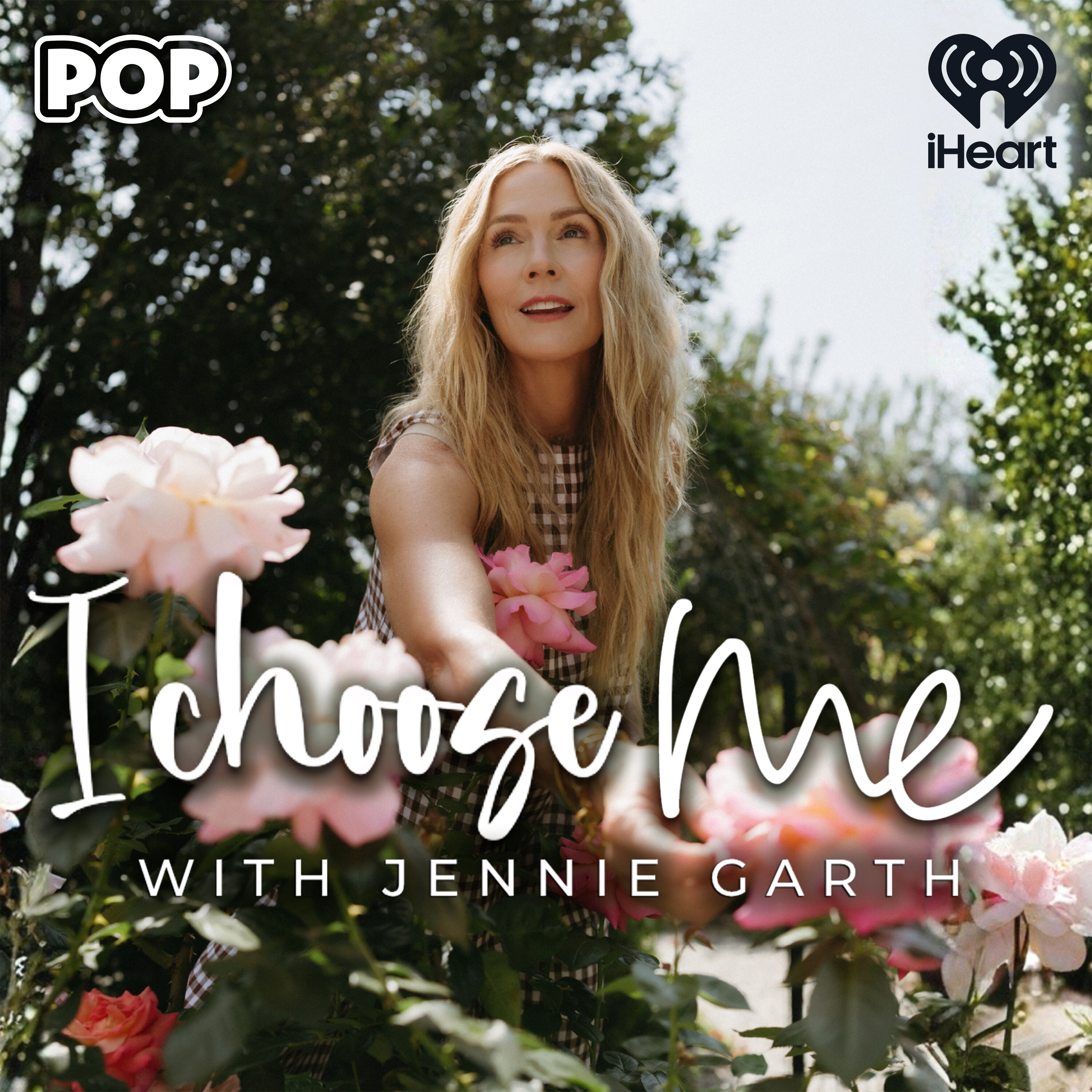
Jennie sits down with Dr. John Whyte, American Medical Association CEO and former WebMD chief medical officer, to find out why 2 a.m. Google spirals leave you more terrified than informed, what women over 50 should NOT dismiss as "just aging," and the internet hack that ended in permanent hearing loss. *do NOT do this at home!*
Call the I Choose Me Hotline at 844 - 5JENNIE (844 - 553-6643)
Follow @IChooseMewithJennieGarth on Instagram and TikTok
Follow @JennieGarth on Instagram, TikTok, and Facebook
See omnystudio.com/listener for privacy information.
Transkriptvom Podcast bereitgestellt · Zeitmarken springen hin
You're listening to I Choose Me with Jenny Garland. Welcome to I Choose Me. Okay, yes, we have all done this. We have a headache or some other health symptom that's caught our attention. And so what do we do? We Google search. What is wrong with me? Could this be serious?
What do we get back?
We get back multiple scary diagnosis. And then we go down a rabbit hole of what ifs. We have become what my guest today refers to as cyberchondriacs. I don't know what that is, but I think I am one of them. So today, my guest knows something about all of that. Dr. John White is a board-certified internist and CEO of the American Medical Association, whose last job was chief medical officer for WebMD.
That is huge.
He's on a mission to help us search our symptoms online without freaking out. Thank goodness you're here.
Hello, Dr.
White.
Hello. Thank you for having me.
I'm so pleased that you're here. This is such a great topic for us to discuss. I'll be honest, I have definitely Googled what's wrong with me. And you say, so have a billion others. And you also say that information isn't knowledge. In fact, in your TED Talk, you discuss why Googling our symptoms leads us more confused. Please explain all of this to me.
Sure. And everyone Googles their symptoms. Everyone's putting it into a chatbot nowadays, and that's okay. But what you have to do, Jen, is you have to put it into context. And what I mean by that is, You know, a chatbot or Google's not going to know everything about you. What you put in determines partly what you get out.
And you can go down this rabbit hole where you keep searching more and more information. And you're actually not getting more informed. You're getting less informed and then more anxious about everything. So what I say is, sure, go ahead and get more information. because information can be power. But you also wanna bring that to an expert, your doctor, who can help you put it in the right context.
You were WebMD's chief medical officer. So I'm curious, how did you come to see this side of it?
Yeah, and up until recently, I still saw patients, which was nice. So my wife would say it's very humbling because when you go see patients as a doctor, nobody cares that I work at WebMD or doing other things. They want to know, you know, am I getting my GLP-1 or why do I still have knee pain? But, you know, I grew up at this time where the physician-patient relationship is changing. It's more of a partnership. I embrace the fact that you're coming in and telling me about your symptoms and what you think it may be, because that's actually going to, Help us have the better conversation and get to the point quicker. So if you're seeing a physician or someone else who's not doing that with you, it might be time to think about finding
someone else because you want to have a partner in your care. And it's not the old way where the doctor tells you to do something. They never really listen that much anyway. But now at least we can have a real conversation. Mm-hmm. Yes.
I'm wondering, though, how can we get clarity instead of confusion? When we do go and search, I have a terrible headache or it's 2 a.m. I just found a weird mole. You know, what can we do to get the right information or what should we do instead of Googling it? Right.
And that happens. It's always late at night where people find the mole or, as you said, the headache. And it is very concerning. And I get it. It's hard to get a doctor. At that hour, you might be able to get a telehealth visit, but still that can require some work. So it's okay that people are searching for this information. But at the same time, what I've been telling Jenny is for people to search their health information like they search their financial information. And what I mean by that, you don't listen to just any influencer that tells you to invest in crypto. Or better yet, here's a hot secret tip for you of how to get rich. No, what do you do? You look for other sources of information.
Do a little more digging.
You ask some more questions. Usually you ask an expert or someone you trust because it's your money and that's really important. But what I would argue, your health is even more important. Absolutely. And too often- The attitude is I find what's the harm? Why not try it? And the problem is there can be some harm. So it's okay to search the information, to look for other corroborated sources that will tell you, yes, this information is likely accurate or maybe it's not. But then you have to go to that trusted source that is a physician that's going to help you put it all into context.
Yes, that makes such sense. You know, as a doctor, you spend your days helping other people to take care of themselves. You are also the CEO of the AMA. You are all about helping other people with their health care. I'm curious, what do you actually do for your own health? And what do you let slide?
Yeah. No, I love that question. And I had a feeling you were going to ask me something like that. And I've actually written some books about take control your cancer, take control your diabetes. And sometimes I'm like, I have to lose some weight and follow my own advice. I'd say what I don't do well is I tend to be a snacker at night. And I do have two young boys That shouldn't be an excuse. But, you know, they like to snack at night. So a lot of times I say if I could just stop eating after 8 p.m., that would be great. And, you know, I'm trying better on there. But that's an area where, you know, I have to work harder. It's the same thing where I've always wanted to be physically active and exercise. It's
harder as we get older. We come up with 10,000 excuses. But I kind of have recommitted to that. recently what i am good at is kind of portion control in terms of what i put on the plate i think that's one area where i've learned over the years um to be very conscious about.
So you're talking you you watch what you eat especially your portions because in america our portions are i know.
Yeah supersized absolutely.
It's wild And you're saying also that getting exercise is very, very important to you.
I have focused more on sleep in recent years, too. And that's what everyone is talking about. I don't always get eight hours, but I tend to try to at least get seven. And I have made it a priority. And I know that's something that we all do as we get older. And we joke about that, like, you know, after 9 o'clock, we're not going out. We're, you know, meeting dinner at 5, not that early. But what I would say, Jenny, is I wish people thought about that sooner because we do know how important sleep is. And when we're young, it's the thing we are willing to get rid of first, right?
Right.
Either because we're working hard or we want to meet friends or we're doing things with family. And then it's 11, 12 o'clock. And you're getting up then at, you know, at 6 a.m. or 6.30. That's not enough time for your body to reset, for your brain to reset and recharge. And that's one of the most important things that people can do to improve their health is focus more on quality sleep.
You say, so you would recommend six to eight hours? What do you?
Usually most people will say like seven to nine. You know, some people can be a little less, but that's where I shoot for. And that's really what I recommend to patients in that seven to nine timeframe. Now, that doesn't mean every day there are going to be days where just life gets in the way, but that should be your goal on most days of the week. And that doesn't count averaging, sleeping more on the weekend and then sleeping four hours during the week. It doesn't quite work that way.
It's so important. I've heard people say, oh, I sleep for five hours a night and that works for me. Like that's enough sleep.
Yeah. What do you think of that? Believe it or not, there is a genetic variant where people can function on four or five hours of sleep. That's not most people. The problem that's happening there, people are using that as a badge of honor, right? Like I'm so strong. I'm so tough. Oh, you weaklings need seven, eight hours. I only need four or five. But that's not the reality.
People need seven to eight hours and your body actually tells you when you're not sleeping well.
Yeah. And if you don't listen to your body well enough yet, get a, I have a ring. My sister has a watch thing that really tracks your sleep and it's been so fascinating to sort of understand what's going on while you're sleeping. And if you're getting that right amount of quality sleep and being able to track it is so great. Yeah.
I really enjoy wearables. I wear a watch. I've worn a ring, I think you need that feedback. You don't want to become overwhelmed by the amount of data. And some people do that. And I'll tell you, sometimes as a physician, I say to a patient, you know, how did you sleep last night? They look at their phone.
I want to say, just tell me, like, if you're sleepy right now, you didn't get enough sleep. So there is some measure that we don't need, you know, the data as some of us are so focused on. But what I do like, it is nice to also know what depth of sleep you're getting in terms of REM versus non-REM sleep. It's nice to know the number of steps that you're getting that you're looking at on trends.
People are notorious for overestimating how active they are during the day. They think they're getting 7,000 to 8,000 steps. Studies have shown this. And they're actually getting about 3,500 on average. So there's a big disconnect. And I like it because it can give you feedback.
Right. And then when you have feedback, you can go forward from there and make changes where you need to.
I'm actually, have you tried these continuous glucose monitors that you can get over the counter? It's like the shape of a quarter. You put it on your arm for two weeks and it gives you your blood sugar over time. And what I like about it is it helps you understand kind of your reaction to food. So you see, that bagel, that scone is not really that healthy.
Are you speaking to me right now?
Yeah, that's right. Scone is a fancy word for a bagel. And some of those cereals, they're not healthy. But it gives you that feedback. And then you see, well, okay, when I eat yogurt, I have a more steady blood sugar level, which is what you want. And what I really learned from it is we tend not to say– to be active right after a meal. But what I've seen is if you have a meal and then you go for a walk, it helps keep your blood sugar pretty stable. And that's what we want to aim for, which goes to your point about let's give you feedback, let's give you information so you can take better care of yourself. Right.
That's why I love it so much because I feel like I'm in charge a little bit more. I at least have the information instead of guessing.
That's right.
Blood sugar level monitor.
Yeah. Okay.
I got to get that. You say that not every symptom should be ignored.
Yeah.
What is something women over 50 accept as just aging, normal aging, and what should they actually get checked?
Yeah. You know, one of the biggest things, particularly for women, is fatigue. You feel... tired and you just think that's a normal part of aging or I'm working too hard. Having fatigue on a daily basis is not a normal part of aging. Sometimes as we get older, our thyroid stops working. That's something to check. In women, as they get older, fatigue can also be a sign of heart disease.
People don't think of it that way, but it can be a sign of early heart disease. And then we know premenopausal, perimenopausal symptoms actually can also change hormone levels that can also cause fatigue. So that's something that you shouldn't dismiss as just getting older. Exhaustion.
Yeah, I can remember in my postmenopausal era how I felt exhausted and I had done nothing. And it just sort of like, you know, kept building every day. I would just be like, what is wrong with me? I'm so tired and I didn't do anything today.
That's exactly right. And, you know, cancer often can present as fatigue as well. And as we get older, incidence of cancer increases. There's an element of age to it. So that's one thing. And I love how you said early on, it's listen to your body. I always say that to patients. You know your body the best. Listen to your body. If your body is telling you something, that you're having it on a daily basis, not just once in a while, but daily, like you said, this exhaustion, that's not normal. You need to get it checked out.
Your body is sending you a message, and you shouldn't ignore it.
So if I do go to the doctor to get that checked out, what am I looking for the doctor? What kind of information am I looking for my doctor?
Thyroid levels for women is going to be menopausal.
So full blood work.
Yeah, because the other thing is I want to look at your blood counts. Sometimes anemia can present as fatigue. That often can be the case. That can be an increased bleeding for women. It could also be signs of cancer as well. I want to look at your electrolytes. Even you could be fatigued. Actually, it could be early signs of diabetes. You have high blood sugar and then low blood sugar, and then you're just tired. So you really have to have, based on the symptoms, an approach.
And I would start with labs and then the physical exam as well.
I've heard of women who go to the doctor to get labs and they don't do the hormonal lab checks.
Yeah.
Like they leave those off of, it's just, they give them the run of the mill.
Yeah.
You know, RX for black work.
That's not enough. No. I will tell you, historically, we didn't have great ways to measure some hormones. Sometimes there's things called these diurnal variations and they vary during the day. So sometimes it's hard to tell, like what's a random cortisol level? Sometimes that's hard to measure. It's the same thing in men and testosterone, but we have better ways, better assays of measuring it. And to be honest, Jenny, some doctors just didn't grow up learning that and acknowledging that.
So that's why this is a great way to search Google and the internet. Use generative tools to say, what should I talk to my doctor about? What tests do I need?
Yeah, like type in, I'm 54, a 54-year-old female. What should I ask my doctor when I go see him next time?
That's right, or that I'm really tired. Now, one thing I would say to your audience is, If you're going to upload labs into these tools, take your name and identifying information off of it because you shouldn't assume anything remains private. Most of these tools say they can train on you. It's just a good idea to remove your identifying information. And it's not a bad idea to put your lab tests in and ask them for some general interpretation.
Yeah, that's a good idea. I think I've put mine in before and did not remove my name. So I'm going to do that.
Time. Especially when you're, some of these tools keep it as memory. So then they know who you are. Yeah.
They keep my conversations. When I use AI, it kind of keeps the conversation going. So it doesn't forget who they're talking. They don't forget who they're talking to.
No, I know. And it's kind of nice some days. And then other days I've learned you can delete those chats too. So it doesn't have to remember everything. Okay.
Tell me in your experience, what is the craziest thing that someone has done for their health that they learned from the internet. I'm sure you have stories.
And sadly, they're not good ones. So I did have a patient that came in to urgent care with ear pain. And I still remember this. What had happened is she had wax in her ear and that can be uncomfortable. And she microwaved hydrogen peroxide because she saw that on the internet. to melt the wax in her ear. And unfortunately, it caused an extremely severe burn where she had to go for reconstruction at ENT and plastic surgery. And, you know, sadly, Jenny, I should have said when I said to her, why?
I should have said it quite that way. And she said, I saw it on the internet. And there is a role for hydrogen peroxide when it's diluted. And you know, there are this thing called candling, where sometimes people will do that to get rid of wax. But someone else on the internet said that if you heat the hydrogen peroxide, it's going to melt the wax. And yes, it melts the wax, but it also melts part of your ear canal.
So a really unfortunate story. You know, I've had a patient during residency where she had breast cancer. And there were these stories that shark cartilage was going to improve breast cancer. It doesn't, and it didn't. And this woman ultimately forgone chemotherapy, and she ultimately died in a very short period of time of breast cancer. She thought she was doing the right thing, and her chemotherapy was harmful, was poison to her body, so she wanted to try this other therapy, and it didn't work. That's why it's so important to really trust your physician. Sure, inform yourself, look for information, Don't go overboard and make yourself super anxious, but get some facts that that the key thing. And
treat it like your financial information. And don't just be willing because that was the attitude. Jenny, what's the harm? Yeah. Why not try it? Like what could microwaving hydrogen peroxide do? Well, she's going to have a hearing deficit for the rest of her life. Oh, man.
Note to self, don't take advice from people's hacks or tutorials on the line.
Yeah. And some is common sense. Then we do have to remind people. Oh, man. Okay.
On the reverse, what is something that people panic about that's completely normal?
Yeah. People often will panic about one or two points above a normal level in a lab. So, you know, people will say like my chloride, which is something taken on a basic metabolic panel. Okay, if it's a little higher or a little low, I wouldn't panic about those things. I would always repeat an abnormal test because some lab ranges are different. So if you have something just a little high, it can be okay. Those are the things where people don't, you know, need to panic if their lab is just a little off. You kind of alluded to the beginning. People panic about headaches all the time.
And headaches can be serious. But the overwhelming majority of headaches aren't serious. So you do want to make sure it's evaluated, but you don't want to come in with the idea that you have a brain tumor. And that still happens for a lot of people. They really do panic over the idea of a headache.
What do you think about GLP-1s? What's your honest take?
I think there's value.
There's value, yes.
For GLP-1. Certainly if people are overweight, if they've had diabetes. Here's kind of my challenge at times with the GLP-1s. People start on GLP-1s, they have significant weight loss, but they haven't changed anything. They're still eating unhealthy. They're still not going to the gym. And they feel like, why do I have to, Dr. White? I've lost 30 pounds and I feel good. Why do I have to now do those things? And my point to them, is food is still medicine. It still has many benefits and you want to eat a healthy diet. GLP-1s can actually result in muscle loss. You actually want to build muscle. They make you lose weight everywhere. And then do you want to be on a medication for the rest of your life?
And if you don't adopt healthy habits and you try to come off the GLP-1, you're going to regain the weight. And we've seen that. So that's where I think some patients aren't making the changes that they need to make. But there certainly is value for many patients with the GLP-1s. Yes.
Okay, so say a woman goes to the doctor and her doctor kind of dismisses or brushes off some of her concerns regarding whether she's in perimenopause or menopause. How should she speak to her doctor in order to be clearly heard and taken seriously?
And sadly, that is common. It still happens. You know, I get it. People have 10, 12 minutes to spend with the patient. And most doctors don't want to, you know, just hear the story. They want to cut to the chase. And I think, you know, we have to be our own advocates. So what I often tell people is to come with your list of questions and write them down.
Yes, write them down.
Yes. I have patients and I like this. They give me the list. when I walk in the room. And I liked that. And I say to them, which are the key ones? So I make sure I address.
Because no matter what, you think of your problems and then you go to the doctor and you forget everything. Yeah. And you have no idea what to ask them.
That's why you have to write it down. Yes. And I have said to family members, don't leave the room. Don't get up until those answers are done. And then sadly, sometimes it's not the right fit with the doctor and you need to find a different one. If someone's not addressing the concerns that you have, then they're not the right person. But you want to come with the questions ahead.
You want to come with them written down so you know. You want to come with, I love the idea that you feel you need to have these tests or this is what you want to talk about. More and more physicians embrace that. And that's kind of relationship that you want. Absolutely.
It's kind of a collaborative thing. I mean, you as the patient have the instincts and the symptoms and the doctor has expertise and the knowledge.
That's right.
I think it's definitely a team effort in order to just get yourself handled.
Absolutely.
What's the question that patients never ask the doctor that they should?
You know, really what patients sometimes don't get to quick enough is what's really bothering them, right? And that's what they need to bring forth as well in terms of why are they really there? What's the concern that they have?
And if you... Tend to forget things.
Write it down. Yeah. Okay.
What is a health rule? I put the air quotes around the rule. What's a health rule that you used to believe and have since changed your mind about?
Yeah. So one health rule that I used to believe is that you had to have 10,000 steps a day. Like we have a whole campaign. around 10,000 steps a day. And then really learned in good data that suggests, you know, even 7,000 to 8,000 steps a day can be good. And if you're at 3,000 steps a day, then getting to 4,000 steps a day and building over time is good.
So I kind of moved away from that role as well as that you had to have three meals a day, right? And that basically was the gist. So sometimes I do intermittent fasting. Sometimes I might skip a meal or I might just have smaller meals throughout the day. So some of it's dependent upon your lifestyle as well. So try to move away from those two hard and fast rules.
I love what you said before about food is medicine.
Yeah.
And we don't think about that. We certainly don't think about that when we're just fed, you know, fast food commercials and convenience food.
There's a great phrase in French. I'm not going to say it in French. It says, show me what you eat and I'll tell you who you are. And what I like about that, because if you show me all these unhealthy foods that you're eating, candies, sandwiches, lunch meats, other things, I'm going to have a sense of how healthy or unhealthy you are. You are. Because that really demonstrates to us the role of food and this broader concept of food is medicine. So is the food going to help you keep your blood sugar under control, help you build bone mineral density, help you with inflammation? Or is it going to be something that's going to make your blood sugar go sky high? Is it something that perhaps could be carcinogenic in terms of promoting cancer? Those
are the types of things that you want to think about before you put things in your mouth. And that's not how we think about things here. But that's a mindset that has to change because food really is medicine.
Yes, I fully believe that. I mean, I eat really clean. And I do think of food as fuel.
Yeah.
So that helps me. But I still get those cravings for some bread. You know, or some cookie dough.
Yeah. Bread's my weakness. Yeah. But you're consciously choosing that.
Yes. It's not an all the time thing. It's like a once in a while.
And you don't deny yourself, right? That's what makes people, you know, abandon healthy eating because they feel like they can never have this. But the other big change I tell people is you have to stop buying the foods that you're trying to avoid. And a lot of times people say, but that's for their kids. That's for their spouse.
I'm sure your wife buys your boys snacks.
That's you got that.
And you're like, well, it's in there.
So. And when you're looking to eat something, if there's only potato chips in your pantry and, and, you know, cookies, that's what you're going to eat. But if there's wheat crackers, if there's other, you know, some, the, I eat these fiber cookies, uh, That's going to be the healthier choice. Oh, man.
But don't put them on the shelf next to each other because the fiber cookies are going to lose every time.
Yeah, because we don't need enough fiber. And sometimes it's hard for people to do so. So what I found is there actually are these wafers, these fiber wafers that I find that you can buy that actually help you get to the amount of fiber that you should be having.
Hot topic conversations around protein and fiber.
Which one?
If you had to pick one, which would you hold out on? Which would you like say, this is the.
One you need to focus on? You know, it's hard because everyone is talking about protein nowadays. You know, I was just looking online and, you know, celebrities are coming out with protein soda. I mean, proteins in everything. Proteins in rice. Right. I'm getting stressed over, does this product have protein? I think we're overdoing it a little and you can have too much protein. But what I like about protein is typically we have not focused enough on protein and protein helps with muscle mass. Protein helps you make, it makes you feel fuller sooner. And that's important too.
So we don't eat a whole bunch of sugar and carbs. So I'd say protein gets the edge. Fiber though is still important too because fiber is going to help in terms of our GI mobility and symptoms. That's also going to help with blood sugar control. So there's a role for both. And that's what we want people to think about a complete healthy diet. It's not just one thing Or the others. And I think some days we're a little too focused on protein. Yeah.
And also, what about like factory made protein? How do you know you can trust it?
That's a great question. It is a challenge. Absolutely.
Because there's a million protein companies out there putting, like you said, protein in everything.
That's right. And protein and cereal. And you really don't know. You really have to do a little bit of your homework. You have to use your common sense. You want to think about whole foods. That's always a better choice. And you want to do a little bit of research as well. Yeah.
You got to listen to your instincts. And if you need more information, get it. Find it. It's out there for you. But you have to weed through all the jibber-jabber to find the good stuff.
Okay.
Bottom line, I'm not feeling good today. Something's off.
What should I do? Yeah. And this goes back to an earlier point that we said, you want to listen to your body so you don't push yourself. So if you're working, if you can, you try to stay home from work and you should have an environment nowadays that encourages that. You don't want to make other people sick.
You want to take the day off if you can in terms of some other duties that you might have. Most things can wait. I get it. That's not always the case with caregiving responsibilities, parenting responsibilities. But if it's persisting for three days or so, that's usually kind of my limit. Then I think people usually need to get checked.
Everyone can have a bad day. You have a virus that is going around. you ate something that didn't agree with you, but if it's going on two or three days, that's the time to get checked out. And what you don't want to do, Jenny, is you don't want to push yourself. You don't want to try to be superhuman and be like, I'll just muscle through this.
That's what we do though. Let's be honest.
That's not helping anyone.
No. Well, I think, you know, there's just such a, You have such a base of knowledge, given all your experience in the medical industry. And as a doctor, I'm just so happy that we were able to talk today and share some of this great information. And I'm going to be honest with you, I'm probably still going to search a symptom here and there. But now maybe I won't panic as much. And I'll remember what you said that just... Look at it, listen to my instincts, and know when it's time to call the doctor. And more importantly, what to go in there prepared to ask your doctor so that your 11 minutes aren't wasted saying, oh, I feel great. Yeah, I've got no problems.
You got your questions ready.
Yeah. Well, thank you so much, Dr.
White. Thanks for having me.
Even doctors need to take care of themselves.
They do.
So, Dr. John White, what was your last I choose me moment?
My last I choose me moment was actually this morning, Jenny. So what happened is my 8 a.m. meeting got canceled. So I dropped my son off from school and I was getting ready to go into the office.
Don't you love that when you get a cancellation?
Yes. It doesn't happen much. So it's really exciting. And it's not me doing a cancellation. It got canceled. So I said, you know what? I'm going to go to the gym instead. Whoa. Because I hadn't been able to go in a couple of days. And I did a little detour. And I went to the gym for 40 minutes. Didn't have a full hour or everything. And I felt good about it. And I got in a little later to the office than normally I would. But I chose me to focus on in the morning. I don't do that enough. And I thought to myself, oh, I need to do this more often.
So. Well, I'm very happy that you chose yourself this morning.
Well, thank you.
Stay healthy. Help us all stay healthy with all your great work. I'm trying. Thank you so much.
Sure. Thank you.
