

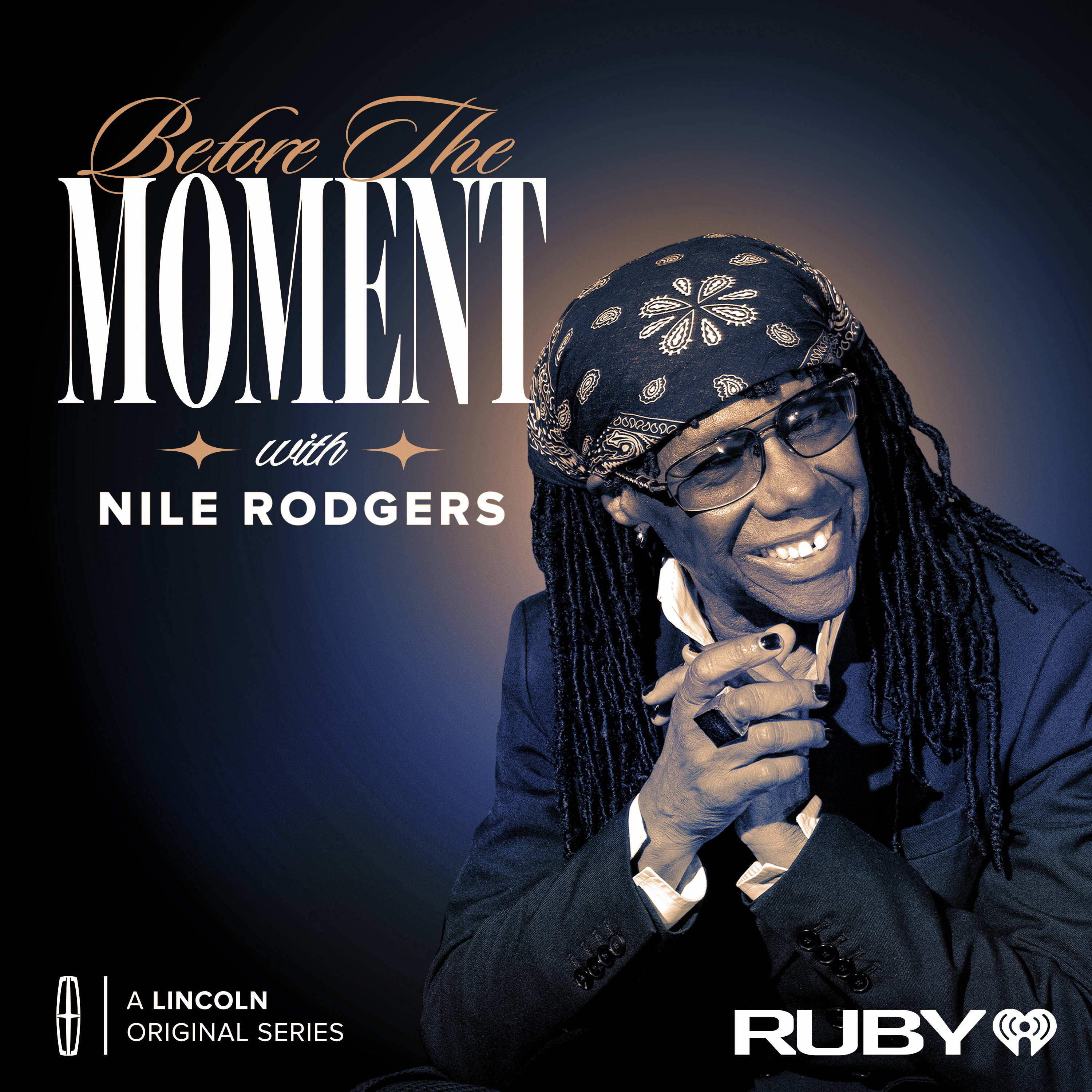
Before The Moment with Nile Rodgers· Staffel 1· Folge 4
SIENNA SPIRO: I Sing Just to Know I'm Alive
Dienstag, 27. Oktober 2026 · 32 min
Kapitelklicken springt direkt hin
Shownotes
Listening to SIENNA SPIRO’s breakout hit, “Die on This Hill,” feels a bit like going back in time. Her music is steeped in the sounds of the 60’s, with elements of jazz, soul, and pop. There’s something very old-school about her, right down to her aesthetic. With a voice that contains so much depth and texture, she carries a lifetime of emotion packed into every song she sings. For an artist who’s just burst onto the scene, it’s remarkable how big an impression she’s already made.
See omnystudio.com/listener for privacy information.
Transkriptvom Podcast bereitgestellt · Zeitmarken springen hin
A lifetime spent making music is a lifetime made up of individual moments. And no moment is more important than the one before the big change. That turning point where a hobby becomes a profession, when struggle becomes success, when pretty good becomes legendary.
I'm Nile Rodgers.
Co-founder of the band Chic and producer of pop hits with some of the industry's top artists. I'm driving around the country in my Lincoln Navigator SUV, talking to some of the coolest, most interesting people in music to discuss their journey before the moment. Listening to Sienna Spiral's breakout hit, Die on This Hill, feels like going back in time for me.
She is extraordinary.
Her music is steeped in the sounds of the era that I came up in, with elements of jazz, soul, and pop.
There's something very old.
School about it, right down to her aesthetic.
There's so much soul and texture to it.
All these elements add up to something that feels like a lifetime of emotion packed into one song. She is the real deal and I can't wait to sit down with her. Nice to meet you. My name is Niall Rogers. I'm so happy you're here.
Thank you.
I'm like an instant fan.
Not just because of what I've heard you do, but what I believe.
Is the inevitability of a future. Wow.
Thank you so much.
Your song, Great Expectations, has a lyric that I'm fascinated with. I sing just to know I'm alive.
How did that come to you?
I wrote my album.
And I wanted it to be 10 tracks and I only had nine tracks. And I had about three days to like finish my last song. And so we went in one day, nothing happened. Went another day, like kept trying, was just like pushing and I had one last day to write something. And I was just so frustrated, you know, when you're just forcing something and forcing anything is just like the worst feeling in the world. So I was just kept pushing it and I work with this incredible musician, Omar, who I did my whole album with, who's also an incredible guitarist. And he just told me to go home and think about what I actually wanted to say.
Because I was.
Going in, I was just saying some fake shit. I was just saying some stuff that wasn't genuine. None of it was really authentic, which I believe is the reason why it wasn't working. And so I went home and... I was just like looking through anything that I used to find inspiring. And I was just sitting there all night, like laying awake, thinking about the reason I, I guess I make music and I was listening to all my songs.
And I guess like that, you know, when I really thought about it, that is, I think for my generation, like feeling present and feeling like in your body and connected to things is so difficult because everything is so disconnected. You know, most interactions you have every day are on the phone. And then I guess, that lyric just came to me. It felt like it just like came out of the sky and it perfectly embodied, I think, my entire life. It's like the, you know, singing is really the way I feel like a real person and feel, you know, tangible. So I guess that's where it came from.
Your lyrics, what I love about you, it's right away I felt at home. I mean, it felt very, sometimes I hate saying old school, I don't mind saying it about myself, but there was something comforting. That's what I love. It's really cool. And you deliver it so well.
Thank you so much. I guess all songs are stories in a way. Well, they come from stories.
One of my favorite stories about you is the story of, well, actually two of them, La Freak, where that came from, about Studio 54. I won't make you tell it again because I know you've probably told it a million times, but, you know, I write a lot about, like, my life and like internal thoughts I have, which sometimes can feel quite insular and like an echo chamber. But what I really love about, you know, you and when you talk about your songs is I guess how you pick up on like moments not many other people would pick up on.
Like that story, you know, even the Diana Ross, I'm coming out.
Yeah.
I guess I would have just never gone to that in my brain. Seeing a bunch of people dressing up like Diana Ross and then going, what if Diana Ross was coming out? And I just think that's, you know, even though, you know, maybe that's not the direct story you're telling in the song, where that story came from, I think is what makes a song so special and universal.
Have you always been, I guess, like, quite aware of those moments in life and like still to this day.
Yeah.
Um, you know, that's the reason why I go out walking every day. I find people interesting.
I find things interesting.
That's probably why I find your music so interesting because I mean, you, you speak to my soul in a strange way. And I think, and it's not just because of the stylizations of your music. Um, It's your voice, the way you come off. You know, there's something about your style. You bring something to the party that I haven't seen for a while. So, you know, I'm a little bit older than you. I came up in the 60s.
Of course, I love it. But why do you gravitate towards that era? I could hear it in your style. I could see it in your vibe. I could feel it when you talk to me. What is it about the 60s that moves you?
I love the sixties. I got my hair up.
My dad also grew up in the sixties and he showed me, I guess like when we were younger, he would play all the music that he grew up to. So that was like our pop music for the first like 10 years of my life.
I just.
Always was hearing, you know, Marvin Gaye, Elvis, Frank Sinatra. you know, The Rat Pack, Teddy Pendergrass, Harold Melvin and the Blue Notes, Aretha, Nina, Billie Holiday, all of those artists. And I guess I felt so, I felt so connected to the way they sang. You know, I've always loved singing and I always used to kind of try and emulate the way some of those artists would sing. Like Frank Sinatra, I'd always try and just copy the way he'd sing, the way he'd like throw his voice. Same with Aretha, same with, you know, Nina. And I guess I just love I love how much character is in it and how, I guess, individual and personal the music from, not just the music actually, I guess the culture from that era. I feel really jealous that I wasn't alive
for it. I'd be interested, like knowing what that was like and seeing the way, I guess, culture and art has progressed today.
How do you kind of, how do you find it?
Wait a minute.
I'm sorry. I have so many questions. Sorry.
You're not nervous, are you?
I am nervous.
You are? I am.
I feel like insecure about my experience. I know I shouldn't, but sometimes I feel like things have just gone really quickly. And I haven't, you know, I'm 20.
I haven't really lived my life yet.
And then sitting in front of somebody that has lived an enormous life, is intimidating. And sometimes I feel like talking about myself is just not as interesting. So that's why I feel a bit nervous. I'll try and ignore it though.
Please do. Because I.
Find what comes out of your, this is going to sound pretty funky, but I find that what comes out of your head and your mouth pretty interesting to me.
Really? Honestly, yeah. Yeah, really.
It feels familiar to me because when I listen to your song, I can call out the chord changes.
I can hear where you're going and things like that.
And for me, that's interesting as opposed to songs that I just hear with the exact same chord progressions over and over and over and over again.
But your stuff isn't like that at all.
So I came up in the era where you had to convince a DJ to play your record. But social media now is amazing. The world is open to you. How did social media really have an effect on your career?
I guess it's kind of like a double-edged sword. Social media, in one way, it's great and it's amazing. And it's amazing what it can do. You know, I probably wouldn't have a career right now or maybe it wouldn't have gone as quickly as it had if there wasn't such thing as social media. So in that way, I think it's amazing. I think it's amazing how much you can find every day and how many people that I guess wouldn't have the chance for people to hear their music to show it. But in another way, I really think that knowing so much and seeing so much can sometimes be a bit distracting for the brain. I think for me making music, it feels like I'm just translating something.
It feels like you just have to be really in touch with something and it just comes through. And I think when you are so available to access and available to hearing other people's opinions and what other people think and what other people are doing, it can sometimes like skew your brain a bit. So there's been times where I feel, I start feeling a bit lost and I can't really hear myself and I can't really trust my gut because I can see so much, I guess, so many opinions and so much feedback. So in that way, I think, you know, that can be quite damaging to music and, you know, things could all just start sounding the same if everyone was just listening to what some random people on the internet are thinking.
It's interesting because, you know, I never thought about that because when I came up, the only people that would hear our music, certainly in the earliest phases, were people that were either around our recording studio or if we took out a test pressing, which is, I can't believe, man, our worlds are so different.
We would take a test pressing out to a hot club and like we just.
sit there under the DJ and just hope that they would listen to it and give us a minute where they would play it. They'd listen to it and see, okay, let's see if this is cool. And our stuff, when we came with it, we knew that it was weird. When you referenced Diana Ross earlier, it's such a wacky story.
One day we were doing a gig and we turned around and my partner said, damn, is that Diana Ross?
And I said, yeah. He said, wow, Diana Ross came to see Chic? This is cool. And then he said to me, he said, that's like the queen coming to see you. Yeah.
And my little head went, and I wrote a fanfare for the queen. So when you think of the song, I'm Coming Out, right?
Check it out. It goes, I'm coming out, but underneath I'm going, Wow.
Wow.
Of course.
Wow.
You have the best brain in the world. You know, now it sounds just like a pop song to people. They don't hear the fanfare necessarily. So that's another thing about your music that's so How do I say? Alluring, attractive.
It's sucking me in because it feels familiar to me. Your harmonizations don't sound like the average records that I've listened to lately.
As soon as I heard you, I went like, okay, she's different.
Thank you.
I want to hear about your first show.
My first show? Yeah.
My first show, obviously I sang in school for my life, but my first ever... in the world show was when I was 10. And I sang at a pub called the Georgian Devonshire. And I was so nervous. I was 10, so they let me in only to sing my song and they kicked me out right after. But I remember I was so nervous. So I got my sister, Talia, to sing a song before me. She wasn't planning on singing, but I made her sing, so.
How old was she?
God, I don't even know. She was probably.
18, 19. So I made her sing a song. And then I remember I wrote, I've been writing since I was 10, so I wrote this song called Lady in the Mirror.
Kind of ripped Michael Jackson a little bit.
But I wrote this song called Lady in the Mirror, and I made this little track with it, with my singing teacher. So I just pressed it. And I remember I sang this song, and there was like five people in there.
And I'd never....
I remember that feeling. I had the memory of a fish. I don't remember anything, but I remember that so well. And I remember how myself I felt, and I felt like I understood myself and understood what I needed to do. But yeah, I loved it. And it was just in a random pub in Chiswick.
So does that take us back to I sing just to know I'm alive?
100%.
100% in my whole life.
Wow.
So Sienna, what were the challenges of recording and being away from home?
I guess, I guess trying to like navigate how to be an adult. I was 16 and being in rooms with people that were older than me and trying to relate to people and trying to, I guess, understand, understand things really quickly was probably Probably one of the challenges, I just didn't understand how to do it.
So I made a lot of mistakes, I feel like.
No, I always believe that mistakes are our great teachers because if we do something right, we do feel good for that moment, at least me. I feel great like, oh man, we killed it that night. But when I make a mistake and it's an obvious one, I lament it and I think about it and I'm all over it a lot. And I go, damn, how do I fix this? So that never happens again or that it gets better and better and better.
So the mistakes for me are my great teachers.
When I saw you the first time and there was just one dude on the keyboard and you just walked up to that microphone and you sang with complete confidence and You didn't, I've been doing this all my life and I've seen many artists, they get a little nervous, whatever, whatever, whatever, whatever. You just walk right up to the microphone and it's like bang. And I was like, go girl, do your thing.
It was great.
It was amazing. Thank you.
Do you still get nervous?
Nervous? Hell no.
No.
Of playing music?
Yeah.
I love it.
Do you not like feeling nervous?
No, I don't get nervous. You know, not even like a feeling, not even a tiny bit.
You know, I'm scared of not getting nervous.
No, no.
And I'll tell you why, because, um, I think that the reason why I don't get nervous is because the only thing that I could be nervous about is making a mistake. When I make a mistake, I stopped my band and we start all over again. I, we have a blast. Um, I have so much fun when we screw up. You have no idea. I want to talk to you about your album, Visitor. What is so fascinating to you about impermanence? Why explore an entire album on that theme?
I think it's just something I realized and then couldn't let go of. We're all temporary. Everything about us, everything we do is temporary. and I just got terrified of that. I was actually sitting at Smalls in New York, and Ian from The Roots came up with his, I think, quartet, and he started a set.
It was amazing.
And then he started this piece, and he was talking about it, and he was like, this piece is about the temporary natures of life. I was listening to it, and I was just thinking about it, and it just kept going round in my head. And, you know, the word visitor was brought up to me, and it's something I have heard most days of my life and then I associated it to myself and realized how much it affected me and how much it stopped me from doing so many things and how closed off it made me.
And I think that speaks to my age and my generation, you know, sometimes not doing anything because it's not going to be, it's not going to be long term, it's short term. It's a short term pleasure. It's, you know, something that won't last and I feel like that it just it fascinated me how how much it is around us and how much it was affecting everything I was doing so you know I wrote the whole album about it I wrote album about time and you know what we do with our time and how I feel like you know the way the world is today and how fast paced it is and how much we don't even acknowledge anything around us how I felt in my relationships in my life and you know how I felt temporary to the people around me and how that made me
scared and how much I wanted to last and make an impact on people and felt that was important. And then I guess the last song on the album is a song called Mono Nowhere, which is a Japanese phrase that means the gentle sadness of knowing everything beautiful is temporary and loving it more because it won't last.
And when I found that, I.
Was so inspired, I guess, to change the way I looked at things and to change myself and to change how I approached everything in my life. I guess it was like a perfect closer to an album talking about how scary and how terrible impermanence was.
Talking about how actually.
it's important that things are in permanent because nothing would feel special and enjoying, you know, learning to love with, with knowing it's not going to last.
It just, it felt like something I had to write.
It felt like something that just had to come out and the thing that inspired me the most and the thing that I, I guess, thought about in depth the most and, and that represented me perfectly at the time.
I feel like I'm so happy that I'm doing this, this podcast because So much of this is touching my heart. When I was younger, I was very, very, very into martial arts. And I remember one night, my Shifu took us to dinner, as.
He would often do.
And we were sitting there and he just, he said, the only thing that's guaranteed in life is pain and suffering. He said, so the truly happy person is the person who enjoys those fleeting moments of happiness to the full. And we looked at him and says, fleeting moments of happiness to the full?
He said, yeah.
He says, because just think about it. Tonight you guys were working and working and working and working. You weren't really that happy, right? You were getting your asses kicked and blah, blah, blah. It was tough and so and so. But now we're all sitting here together just as a group of guys who worked out and stuff like that.
And we all are brothers and we're together. We love each other. He says, aren't we happy right now?
Wow.
He says, enjoy yourself because tomorrow you're going to be working your asses off and probably tomorrow you have a couple of fights and lose.
And we were like, okay. That was beautiful.
You're getting all heavy on us. And we're like, oh, it's 17, 18 years old. But I understood that. And to this moment, I still live by those principles. And it seems like that's where you're coming from because, you know, it is... I think it is important to understand that things are temporary and the way that we go about it, if we're lucky as artists, we sometimes do things that do last forever, which is pretty damn good.
It's pretty amazing, actually.
So do you feel like you're a visitor in the lifespan of your audience?
100%. I think that is, well, yes and no.
Technically, I do just genuinely feel like a visitor and I'm actually okay with that and I love that. But I think when I perform is when I feel the least like a visitor. It's when I feel the most at home. It's when I feel the most myself. I guess sometimes at the end of shows, I get really bittersweet about it. I've had the best time. But I think knowing it's going to end just sours it a bit for me. And that was something I had to change my mind on a lot when performing, because I would ruin a lot of shows for myself.
I would.
Leave the show, I would criticize it, I would get annoyed, I would be upset that it was over, and I would ruin the whole other hour that I experienced of it.
So you were doing show after show, you were frustrated, But then something changed. That brings us to our before the moment brought to you by our friends at Lincoln. Was there ever a moment you decided, hmm, now I think I want to try and do things differently?
I love performing. I love singing. I love singing in front of people. It makes me feel amazing.
And I remember I did a show in Indianapolis and it was like my first ever it was we were opening for an artist called Teddy Swims and it was me Eddie who you're talking about who was on the keys who I've played with since school and then my sister and you know she kind of spoke to me and my sister has genuinely been probably the most influential person in my life I feel like I've gotten all of all of my maybe I wouldn't use the word wisdom but understanding through her and she kind of sat me down after the show and spoke to me and was just I guess asked about if this was actually you know kind of kind of kind of gave me a similar talk to what your martial arts teacher spoke to you about and how unhappy I would have I
would be if I kept doing this after every show and so I guess I just changed after that show and I started enjoying it inside I guess not thinking so much about how temporary all of it was and how the mistakes were terrible. They were actually amazing and taught us and allowed us to, I guess, continue with the show. But what you said is so true. The songs you've made have lasted so long and are probably going to surpass your lifetime and my lifetime and probably my younger sister's lifetime as well. One of the things that drew me to music so much is that you can make something that's timeless and to create a piece of art that I feel is so universal enough and personal enough that it can connect to generations beyond you.
And I think that's also why I'm so inspired by 60s music and 50s music because it was way before my time and it's still something that I can completely feel and connect to.
Without even being alive in that time.
Right, that's what we always talk about, complex simplicity.
How do we talk about these things that mean so much on so many levels, but it just comes out as, oh, I'll freak out.
Yes. It's like.
Like, how do you sum up a whole lifetime of feelings and thoughts in like a few words?
Right.
I actually had that with one of the songs off the album, the song The Visitor. It was around the time where I went to see Smalls and a friend told me like, about this art exhibition called The Visitor. And I decided I wanted to write a song called The Visitor about that whole, basically summing up everything, I guess we just spoke about impermanence. And I had to write it nine times, just rewrote, and it was completely different songs the whole time. But I guess like how summing up, I guess, a lifetime of feelings into the most simple way is so hard. I hate people that are down to just settle and just, yeah, that's cool.
When did you know that you were finished with Visitor?
I guess it's just a feeling. You know, you can always keep going back. You could always.
Add another section, add another part. But I guess when you listen to something back and it gives you any type of emotion... Mm-hmm. Because there's been points, there were some songs on the album that were just like adding, adding, adding, adding. And to me, like, you know, sometimes like less is more.
You know, I'm not super gifted, like playing instruments. I can play a bit of piano. I've been taking, you know, lessons every day now. I feel like I understand music. So I'm trying to, you know, have an incredible band. and they're playing and they're adding new parts and adding new parts and you know a song that was once giving me like a song like he's not my baby I'm his you know that song I remember the first time I heard that when it was was nothing it was just on piano or whatever it was on as a demo and I heard it and it just it it gave me a feeling and I was like okay amazing great like I'm gonna get everyone to play on.
It horns strings.
Band new line new line more vocals more vocals And the more I was adding, the more I was like, don't feel anything. So I guess, you know, when I felt, well, I had to be done at a certain point, but when I felt like I had to be done was when every song still gave me the same feeling as when I first heard it or first finished it.
The way I feel when I'm talking to you, which is a good feeling, by the way, please don't take it the wrong way. The way I feel... is like I've just discovered gold or something, like I found like treasure. When I first heard your voice, I first listened to your album, I was like going, wow, this is an artist.
Now it feels like I'm going to put a heavy burden on you, but I just felt like this is an artist that's going to change the world.
Not sure about that.
Thank you. That's how I felt. So you don't have to feel that way, but that's how I felt.
That's very kind.
Thank you.
I want to say thank you for coming to the show. I want to say thank you for being the artist that you are. Thank you for giving me, in this short period of time that I've become aware of who you are, giving me something to look forward to.
I cannot wait to hear your next stuff.
I can't wait to see you, like, in a couple of years we roll up on each other and you go, yo, now, what you have to yo.
No thank you so much for having me I know I've been a bit nervous because you you've changed music and you've changed what me and people my age are allowed to do in music now and it was very humbling to be to be in front of you so thank you so.
Much Oh, please. Thank you. Thank you.
Thank you, boss.
The reason why I appreciate Sienna so much is because when I just watch her walk into a room, have total command over that microphone, and also over our emotions, it's something that I really missed. In today's world, there are a lot of artists who have that capability, but we don't get a chance to see them.
Sienna brings it to life.
So when I listen to her, of course, I gravitate towards the words.
I gravitate towards the message.
But really what pulls me in is her artistic precision, her ability to just go in and nail a song. She's as good as it gets, and I love her for that. On our next episode, we'll be talking to another icon of music. And I'm Niall Rogers. Thank you for coming along with me for the ride.
See you soon. Peace.
This has been Before the Moment, a Lincoln original series, a Ruby production by iHeartMedia, brought to you by Lincoln.
Be sure to follow the show wherever you get your podcasts. And if you liked what you heard, leave us a rating and review. I'm Niall Rogers. Thanks for listening. We'll see you next time.
