

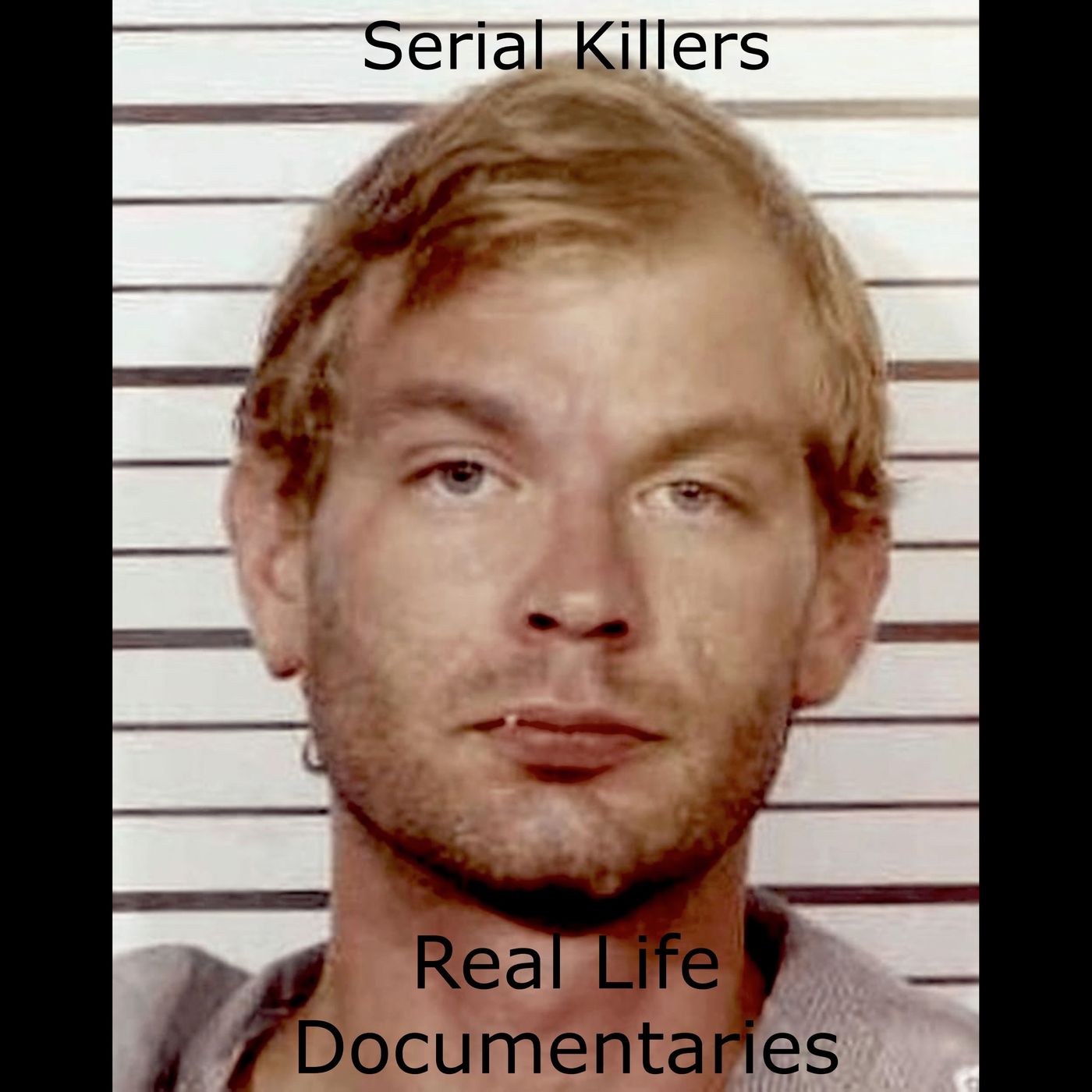
Serial Killers: Real Life Documentaries
Serial Killer Documentary - FBI Investigates America's Most Sadistic Serial Killer
Freitag, 30. Oktober 2026 · 50 min
Kapitelklicken springt direkt hin
Shownotes
Serial Killer Documentary - FBI Investigates America's Most Sadistic Serial Killer
Transkriptvom Podcast bereitgestellt · Zeitmarken springen hin
Early Sunday morning on August 7th, 1966, near the small town of Everman, Texas, just a few miles south of Fort Worth, a farmer spotted a car abandoned on the side of the road. The trunk had been left ajar. When he opened it, he saw the dead bodies of two young boys. This tragic discovery marked the beginning of a series of crimes and trials that would span nearly three decades and ultimately transform Texas law. On Monday, October 26, 1993, one of the most famous trials in the history of Texas would bring a defiant killer face to face with a team of small town prosecutors. It would be the biggest case of their lives.
If all that was standing between this violent and dangerous man and society was my group of prosecutors and investigators, we had a big responsibility to make sure we got it done right.
Almost three decades earlier, in 1966, the Everman, Texas Sheriff's Department responded to the scene of a terrible crime. A local farmer had discovered the bodies of two young boys in the trunk of an abandoned car. The local sheriff was baffled by the execution-style murders In this episode, some of the names have been changed to protect the identity of the victims and their families. The farmer who discovered the bodies said he knew the youngsters. Both boys, Richard Bond and his cousin Matthew Duncan, grew up in Everman.
Authorities learned that the last time their parents saw them was Saturday night, heading off to meet Richard's girlfriend, 17-year-old Laura Smith. Investigators feared she was kidnapped or worse. News of the shooting traveled quickly. That same morning, 100 miles away in the small town of Rosebud, a distraught young man surrendered to the local sheriff. His name was Roy Dale Green, and he said he had to make a confession.
Green told Rosebud Sheriff Brady Pamplin that all three youngsters had been kidnapped and tortured by a local bully named Kenneth McDuff. It was not the first time Sheriff Pamplin had heard McDuff's name. He had previously locked him up for burglary, robbery, and assault at the age of 17. Today, 25 years later, Sheriff Brady Pamplin's son, Larry Pamplin, is the retired sheriff of Falls County. A young deputy at the time, he remembers the day Roy Dale Green walked into his father's office.
My dad had been in law enforcement all of his life, and he said that Kenneth McDuff was probably the most vicious, violent individual that he had ever come into contact with.
Green told the sheriff he and McDuff were cruising the small town of Everman, when they saw two boys and a girl standing by a car near a baseball field. McDuff told Green that he wanted to find a girl he could rape and kill. And he told Green if he told anyone, he'd kill him too. Green said when they approached the baseball field, McDuff got out of the car with a gun in his hand and walked up to the three teens. Green waited by the car. He said he didn't believe Macduff really planned to kill anyone.
He thought he was just fooling around, trying to scare them a bit. But it was clear to the frightened teams that Macduff wasn't kidding. He held them at gunpoint and took their wallets.
Come on back here.
As Green watched, he ordered the three youngsters to get into the trunk of their car.
Come on, man.
Get in there.
Hurry up.
You're next.
Come on. Come on. Here we go.
Here we go.
When McDuff told Green he'd have to kill the teens because they had gotten a good look at his face, Green said he still thought McDuff was joking.
Yeah, we're going to kill him.
Take the car, drop, follow me.
All right.
All right, where are we going?
And he just went along with the game.
All right.
All right. Macduff drove the car with the three teens in the trunk and Roydale Green followed in Macduff's car. They didn't stop until they reached a secluded area on the far side of town. Finally, on a dark back road, Macduff pulled over. He opened the trunk, told the two boys to lay still, and ordered Laura out of the car.
Green said Macduff told him to put Laura in the trunk of Macduff's car. That's right.
What are you doing, man?
Both boys were shot repeatedly in the face.
My father just could not visualize any individual, you know, especially a person 21 years old being so hardcore and so violent and having no sign of a conscience. that they would repeatedly shoot the two little boys in the head.
Green said McDuff told him to erase their tire tracks while he wiped the car clean of fingerprints.
And then McDuff got into his own car along with Roydale Green, the little girl being in the trunk, drove on down the gravel road actually into Johnson County. And at that point in time, stopped the vehicle and raped the little girl. And Green raped the little girl. Macduff raped her again. and then choked her to death on the gravel road with Green holding her ankles.
And then, according to Green, they threw the body over a fence and covered it with brush. Sheriff Pamplin launched a massive search to find the body of Laura Smith. Roy Dale Green tried to help, but the area was unfamiliar to him, and he couldn't remember where they'd left the body. At the same time, a manhunt was launched to find Kenneth McDuff. Investigators had information that McDuff would be out on a date that night with a girl from Bremen, Texas. They waited at the girl's house, hoping he would arrive.
You know, it's been a number of years, but if I remember correctly, it was like 11.30 p.m. exactly when all hell broke loose.
When McDuff saw the lawman, he tried to back out. But the sheriff's opened fire, shooting out his tires and radiator, crippling the car.
McDuff was taken.
Unhurt.
It took days of searching before the body of Laura Smith was found and her family could bury her. Kenneth McDuff and Roy Dale Green went to trial in October of 1966. The first case to be tried was for the murder of Matthew Duncan. The prosecutors were confident they could get a capital conviction. They had a body, evidence linking McDuff to the victim, and an eyewitness. Former prosecutor Charlie Butts recalls that Roydale Green's cooperation alone would not be enough to convict McDuff of the murder.
Then we had the problem in Texas of corroborating an accomplice. An accomplice witness, and certainly he was, needs to be corroborated with some evidence that tends to show that he's telling the truth or tends to connect the person he is saying is guilty.
Key pieces of evidence enabled the prosecutors to corroborate Green's testimony. Two wallets belonging to the victims were found in a field and Kenneth McDuff's burned and bloody shirt were found buried on property belonging to his older brother. In return for his testimony, the prosecutors would not pursue the death penalty for Roy Dale Green's role in the murders. But McDuff would get no plea bargain, and he didn't want one.
He denied any part of the crime. And his biggest supporter was.
His mother, Addie McDuff.
She had a long history of denying any of her son's troubles. And when she supported her son Kenneth in blaming Green for the murders, the prosecutors exploited what they considered to be the weakest element of McDuff's defense.
Then he made a mistake of laying it all off on Green. He said that he had taken a nap or something and claimed that Green had gone off and done all these things and You could look at Grant and tell that kid couldn't even conceive of doing that, let alone carry it out by himself.
Has the jury reached a verdict?
But McDuff claimed he was innocent. The police were out to frame him. Now the jury would have to make the decision to convict Kenneth McDuff for murder or to set him free. In November 1966 in Fort Worth, Texas, 21-year-old Kenneth Allen McDuff was convicted for the murder of 15-year-old Matthew Duncan. The jury sentenced him to death in the electric chair for the execution-style slaying. McDuff showed little emotion.
After the trial for the murder of Matthew Duncan, the prosecutors saw no cause to try McDuff for the murders of the other two teenagers. Kenneth McDuff had been sentenced to die in the electric chair. Texas author Gary LaVerne covered McDuff's murderous career for his book, Bad Boy from Rosebud.
There was some security there because he had been convicted of one and had been sentenced to death. And at least there was a notion in Texas at the time that surely nothing could be more final than a death penalty.
Huntsville Prison, Texas. Macduff was on death row, waiting. His first execution date was stayed, then his second. By April 1970, Macduff was still in his 20s. He was awaiting his third scheduled execution date, but he was confident that this date, too, would be canceled. Then in 1972, the Supreme Court made its landmark decision in the case of Furman versus Georgia.
The court ruled that the death penalty as it was currently practiced was unconstitutional. Minorities and those with low incomes were not receiving equal treatment in the courts. As a result of the ruling, McDuff's sentence was reduced to life imprisonment. And under Texas law at that time, that meant eventually this triple murderer would have the right to apply for parole.
Eight years later in 1980, McDuff came up for parole. At the time, three parole board members would hear an inmate's case and it would take two votes to pass. McDuff's good behavior in prison convinced one of the members, but the other two voted it down. By the late 80s, Texas prisons were getting dangerously overcrowded, while little money was being spent to build new ones. The parole review system was taking the heat.
The people of Texas did not want to vote new taxes to expand government. And expanding a prison system is an expansion of state government. So political leaders at the time responded by instructing the Board of Pardons and Parole to literally release thousands of people every month. And as time went on, more and more violent criminals were being paroled under a perfectly legal process.
By the time McDuff was up for parole once again in 1989, his application was just one file stacked on top of a mountain of others. After 15 denials for parole, Kenneth McDuff incredibly got his letter of release. It didn't take long for word to reach the sheriff's office in his hometown. Sheriff Brady Pamplin, who'd arrested McDuff in 1966 for the shooting of the three teenagers, had retired. And his son Larry was now the new sheriff of Falls County.
When I first found out that Kenneth Allen McDuff had been released from prison, the first thing I did was call Parnell McNamara in Waco, Texas, Deputy U.S. Marshal, Parnell and his brother Mike, both are marshals, and we've been friends ever since we were little bitty boys. And I called Parnell and told him, I said, Parnell, you're not going to believe this, but they've released Kenneth McDuff. And I don't know if it'll be three days, three weeks, three months, but sooner or later, the bodies of young girls, young ladies, or boys are going to start turning up.
Now, a second generation of Texas lawmen feared they would be dealing with Kenneth McDuff. Parnell McNamara and his brother Mike are the sons of a lawman who helped put away McDuff in the 1960s. Today, they are investigators with the U.S. Marshal Service.
And I remember just sitting there in total disbelief. I absolutely could not believe that anyone in their right mind would have ever paroled a serial killer, someone who had brutally murdered three young people like he had. A total disbelief.
On October 11, 1989, Kenneth McDuff was escorted out of Ramsey Prison. Although he had been sentenced to die 23 years earlier, he was now a free man. McDuff returned to the town of Rosebud, Texas, where he grew up. People in his hometown were terrified when they learned he had been released. The town began to shut down. Doors were locked, shades drawn. Attendance at the schools dropped.
There were reports of families not letting their children out, of bus drivers being told to be careful because McDuff is out. And that's the sad irony of all of this. When he was in school, he caused school officials trouble, even as a young kid. Now, he's been in prison for 23 years, he's let out, and bus drivers have to be careful all over again. It was a very bizarre event in the history of Central Texas.
The citizens of Rosebud were much relieved when Kenneth McDuff moved away from home. In the spring of 1991, McDuff enrolled in the Texas State Technical College at Waco and moved into a dormitory on campus. He received financial aid as part of his rehabilitation program, and for the next year, he regularly reported to his parole officer. But authorities would soon learn that McDuff was far from rehabilitated. On March 1st, 1992, Waco police responded to a call that a clerk from a convenience store had disappeared. 22-year-old Melissa Northrup was working alone on the overnight shift at a Quickback. Her husband told police that he had just been on the phone with her when a customer walked in. He called back
a few minutes later, but got no answer. Police found Melissa's purse under the counter, and her car was missing from the parking lot. Waco police did a routine check of cars at a nearby motel. They found a car that the manager confirmed did not belong to a guest. Investigators found a wallet in the car. It contained a social security card and a driver's license, both belonging to Kenneth McDuff. Investigators looked for McDuff at his college, but no one had seen him for several weeks. Students said he was a heavy drug user, and prostitutes visited his dorm.
Room.
Waco police could not locate McDuff, but investigators were soon called back to the college. A student had found a naked, decomposed body in a shallow grave in a wooded area behind McDuff's dormitory. But this would not be the body of Melissa Northwood. It was yet another victim. With McDuff on the loose, local investigators had to act fast. They feared that after 23 years, Kenneth McDuff was once again on a killing spree. On March 25th, 1992, a woman's body was found buried in a shallow grave behind the Texas State Technical College at Waco. This victim would turn out to be Valencia K. Joshua, According to a student witness, she was last seen on campus looking for Kenneth McDuff.
Weeks earlier, Kenneth McDuff's car was found abandoned near the Clickbank store where another missing woman, Melissa Northrup, was last seen. But in both cases, the investigation had produced only the most circumstantial evidence. And with McDuff on the run, local investigators sought the help of U.S. Attorney Bill Johnston.
Our concern was, now, but who's he killing now? Who's he going to kill tonight? And we really felt strongly that he was on a spree.
Johnston knew that if he could charge McDuff with a federal violation, he could coordinate a statewide effort to apprehend McDuff. And he could bring in the full investigative talents of U.S. Marshals Parnell and Mike McNamara.
I wanted to find a way for Mike and Parnell McNamara to get involved in this thing. I'd seen them on many manhunts.
I knew how good they were.
And I just wanted some hook to drag them in with.
It was McDuff's well-known drug use that opened the door. The federal investigators found a young man who said McDuff had given him LSD. This was enough to write a federal drug warrant, and a task force was formed.
U.S.
Marshal Mike McNamara.
We contacted every agency that we possibly could. And in a very short period of time, every law enforcement agency in the central Texas area was involved in this manhunt.
The McNamara brothers began interviewing anyone who ever associated with McDuff. And when they tracked down a man named Alva Hank Worley to a Temple Motel... They knew they were on to something. Worley said he didn't know anything about the Melissa Northrup abduction or the Valencia K. Joshua killing.
Worley did not respond like a normal person would to our interviews. When we explained to him what McDuff had done in 1966, Worley seemed oblivious to it. It didn't seem to either register with him or bother him in the least. So when we left the motel where Worley was living, everyone in the car agreed that something was wrong with Worley, that he wasn't acting right.
Over a period of weeks, the McNamaras returned to the motel to talk to Worley, trying to break him down. Eventually, Worley agreed to come into the Bell County Sheriff's Department and give a complete statement. He claimed he knew nothing about Northrop or Joshua, but Worley said he had information about a missing persons case currently under investigation by Austin police.
Hank Worley told us that on the night of December 29, 1991, that he and McDuff were in Austin, and they passed by a car wash.
Macduff pulled into one of the car wash bays and told Worley to stay with the car. According to Worley, Macduff went to the next bay where a young woman was washing her car. Worley said Macduff returned to his vehicle, holding her by the throat. He said McDuff raped and killed her, but he claimed he didn't participate in the murder.
In the abandoned car, Austin police found a purse and identification belonging to the victim, Colleen Reed. A surveillance photo at a nearby ATM machine helped narrow the time of her disappearance to sometime after 9.15 p.m., Worley claimed he could not remember where McDuff had disposed of her body.
Now investigators finally had an eyewitness, the same kind of weak, suggestible accomplice that helped put McDuff away 30 years earlier in the murder of the three teenagers. But they still had to find McDuff. Over 12 state and federal agencies participated in the.
Hunt for him. And when there seemed to be no trace of McDuff in Texas, the search went nationwide. All the major networks and news organizations ran stories on the fugitive. A hotline was set up. And on May 3rd, they received a tip.
And the call was that a fellow that drives A trash truck, a garbage truck in Kansas City thinks McDuff might be up there with him. Of course, we thought, you've got to be kidding. I mean, Kansas City, he might as well have said the moon to us because we were convinced he would probably stay in areas he was familiar with.
The tipster said another driver going by the name of Richard Fowler looked like McDuff. Luckily, this Mr. Fowler had been arrested for soliciting in Kansas City. and Kansas City police had a sole index fingerprint on file. That one fingerprint belonged to Kenneth McDuff. At 1.30 in the afternoon on Monday, May 4th, McDuff, now on the run as Richard Fowler, was driving his garbage truck to the Kansas City dump.
How you doing?
Step out of the truck for me.
Police, posing as truck inspectors, waved him down for what he thought was a routine check. McDuff came out of his truck with his log and was too surprised to run when they cuffed him. Kenneth McDuff was flown back to Texas under heavy guard. The burden was now on the prosecutors to make sure McDuff never again walked the streets of Central Texas. The body of Melissa Northrup, the Quick-Pack store clerk, had recently been found in an abandoned quarry in Dallas County. her car stuck in the woods nearby.
The body of Colleen Reed, the woman abducted from the car wash, was still missing. Prosecutors had an eyewitness, but without a body, murder would be difficult to prove. For the homicide of Valencia Joshua, there was no eyewitness and no physical evidence pointing to McDuff. Of the three cases, elected prosecutor of McLennan County, John Segrist, decided to first try McDuff for the murder of Melissa Northrup.
Our strategy was to tie him as many times as we could to the victim, to the scene of the crimes, to the scene where the body was found, to the motive for murder, to anything we could possibly find to make those ties and reinforce the ties as many times as you possibly could. Because hopefully we could build a case that was strong enough and the circumstances were such that this jury could say that beyond a reasonable doubt, this was the man responsible.
First Assistant Crawford Long, a forensic expert, would present what little physical evidence they had and concentrate on trying to prove McDuff's pattern of behavior to the jury.
When you're presenting a case of circumstantial evidence, the problem is the jury likes to hear a person come in and say, I saw that person do the crime. I saw the defendant kill the person. In a circumstantial case, you're not going to have that. You're going to have small bits and pieces of evidence when taken all together will point out the defendant as the killer.
First Assistant Freeman would bring McDuff's associates to the stand to provide testimony about his movements on the day of the murder and the violent nature of his behavior.
Generally, a person's character is not admissible to prove their conduct. However, the law in Texas provides it can be used to prove motive and to prove identity. We had a case that was built like a domino house.
A domino house built around a man who knew how to cover his tracks. Even his friends said he understood a single hair could send him to prison. He took great care wiping off fingerprints. But ultimately, no crime scene can be left perfectly clean. And there were some foreign hairs found in Melissa Northrup's abandoned car. Though DNA tests were ordered on the hair, A portion of the test became contaminated by the lab contracted to perform the analysis, and the prosecutors couldn't present any of the DNA evidence in court. The small-town prosecutors would have to prove to the Houston jury it was McDuff and only McDuff who killed Melissa Northrup. But without an eyewitness and no conclusive forensic evidence, McDuff's attorneys could make a convincing argument that
their client was innocent. The prosecution had no direct evidence linking Kenneth McDuff to the murder of Melissa Northrup. Kenneth McDuff's trial for the murder of Melissa Northrup began in Houston in February of 1993.
All rise.
Court of the Honorable Judge Hagedorn is now in session. Thank you. the prosecutor made his opening statement to the 12-member jury. He began with a detailed account of the events leading up to Melissa Northrup's kidnapping and murder. He described how Macduff's car broke down near Highway 35 and New Road in Waco, that Macduff had spent the day trying to raise money to smoke crack, and, as Macduff had said to a friend, get a woman.
Of that convenience store in Texas.
Just before four in the morning, the prosecutor told the jury, Macduff left the car in the parking lot of the New Road Inn. At this point, there are no eyewitnesses, but the prosecution sets the scenario that Macduff walked to the nearby QuickPak convenience store. A prosecution would show that Macduff had worked briefly at a different QuickPak store and he knew how it operated. He knew it had no security cameras. He knew the night clerk was alone. He knew there was cash in the register. Sir, come on around.
And he left no evidence, not a single fingerprint.
The End.
The prosecutor told the jury that Melissa Northrup's car was found near Dallas a few days after she had disappeared. A short while later, her body was found floating in a gravel pit by a couple of fishermen. Her hands and feet had been tied with shoestrings. There were no fingerprints, no confessions, nothing personal left at the crime scene except a few hairs. The prosecution's strategy was twofold. To build their circumstantial case, they needed to track Kenneth McDuff's every move on the day and night Northrup disappeared. Secondly, they needed to prove a pattern of violence. Nothing but the truth, so help you God?
I do.
Hoping to establish McDuff's violent, unpredictable behavior, the prosecution questioned his associates on the stand. My name is Stephen Dowdy. The problem was these witnesses had criminal records of drug use, prostitution, and other crimes, and the prosecutors had to convince the jury their testimony was truthful. And before the prosecution's key witness could take the stand, the prosecutors would have to convince the judge to allow his testimony. The judge asked the jury to step out of the courtroom before he would hear the state's argument for calling Alva Hank Worley Worley was a witness to the abduction and murder of Colleen Reed. The prosecutors needed Worley's testimony to show a pattern between the Reed and the Northrop case. The pattern
of the hunt, the capture, the torture, and the hiding of the two bodies.
We were able to show the judge what we believe was 22 characteristics that were consistent with the Melissa Northrop case. The judge agreed that there were at least 15 consistencies between those two cases. For example, both were young, white, Caucasian females. Both were short and weighed approximately 100 pounds.
Both had their purses left behind. Both took place along Interstate 35 corridor.
Although the Colleen Reed case had not yet come to trial, the judge ruled that Hank Worley The eyewitness to Reed's alleged abduction from the car wash and her murder could tell the court what he had seen. According to Texas law, a witness could provide testimony to show the modus operandi of the accused. Now the prosecutors could show the jury how McDuff kidnapped and murdered his victims. What in particular did Mr. McDuff say?
He said he was going to take himself a girl that night.
McDuff's friends were generally slow-witted people that McDuff felt he needed to have around him to reinforce his superiority complex. What he didn't figure on was that these people would have a conscience and would break down.
Please tell us what else happened.
Worley said McDuff liked to talk about snatching women and he saw him do it to Colleen Reed at the Austin car wash. He got out of the car.
And he walked around the wall and he grabbed the girl by the throat and then he brought her back over to the car.
What did he intend to do with her? Well, he said that he was gonna get rid of her Use her up or get rid of her. Worley said McDuff tied her feet and hands with shoelaces, just like the shoelaces found on the body of Melissa Northrup.
Yes, sir.
Having failed to prevent Worley's damaging testimony from being heard by the jury, the defense now had only one recourse, to discredit the witness. McDuff's attorney vehemently attacked Worley as a liar and a rapist. Isn't that true?
In fact, you stated at one time, I tried to untie her.
I told her I would try.
To help her.
She wanted me to stay back there with her because she knew I would not hurt her. That's right.
And you helped her by raping her. Isn't that correct?
I did not rape her. Are you telling the jury that she voluntarily had sex with you? She knew that I wasn't going to hurt her.
So long as I was back there with her, I wasn't going to hurt her.
The defense's attack on Worley was a blow to the prosecution, and there was still another weakness in the case. There was no eyewitness placing McDuff at the gravel pits in Combine, Texas, where Melissa Northrup's body was found. But then, a surprise witness came forward.
I got a note from my investigator that there was, they received a phone call from a young lady in Dallas County, who lived very near the gravel pits where Melissa Northrup's body was found, and she wanted to talk to us.
Sherry Robinson testified that on March 2nd, 36 hours after Melissa Northrup was abducted from the Quick-Pack store, a dirty and disheveled McDuff came to her door late at night asking for food.
I heard a light tap at the door and I opened the door and I stood there.
And he said he was hungry.
And him and his old lady had just gotten into an argument.
And you know, he asked me if I had a sandwich.
I don't have a sandwich.
I have a bowl of beans.
That'd be fine.
That'd be fine.
Okay.
Well, I got the bowl of beans, and I gave it to him.
And he went on his way.
Robinson had placed McDuff within two miles of the location where Northrop's body was found. Stunned by Robinson's testimony, McDuff demanded to tell his side of the story. Though his defense lawyers argued against it, McDuff was confident he could convince the jury of his innocence. His attorney was so upset, he asked the judge to be taken off the case.
But the judge denied his request.
We had hoped that McDuff would take the witness stand. Even the judge took him back into chambers and told him, you're making a bad move.
McDuff took the stand. He believed he only needed the chance to tell his side of the story. And once he did, the jury would see that he was an innocent man. I do. Against the advice of his lawyers and the judge, Kenneth McDuff took the stand and professed his innocence.
Mr.
McDuff, did you on March 1st, 1992, abduct and murder Ms.
Melissa Ann Northrup?
No, I had nothing to do with that. On Saturday, I went out and I bought some beer and I was already.
McDuff began to recount a long and winding journey on the day of the murder.
Saturday night.
He.
Barely let his lawyer get a word in edgewise.
I was already starting to drink... Before we get into that.
Why.
Don't you let me finish this again?
No, I want to ask you another question.
It was Saturday night, I bought the beer and I was.
McDuff claimed his car trouble at the New Road Inn was just a coincidence.
And, uh.
He said he spent the early morning pushing his car with another car up to the motel. He testified that at about 5 a.m., he went back to the dorm of the Texas State Technical College and went to sleep. He said he took off the next day, afraid of trouble from his parole officer because he was doing drugs.
Now the prosecutor had his chance to question McDuff. He asked him if he had abducted Northrup from the quick pack.
Would you state your name?
Used her car to drive her to a remote area about 100 miles north of Waco and eventually abandoned the car near a quarry where her body was found.
Well, if it would have been me, I wouldn't have drove that car that far if I was going to commit. I mean, it just don't make sense to me.
So what you're telling the jury, it's your tough luck that you happen to be at The very place where Melissa Northrup was kidnapped.
At the time she was kidnapped.
Look, I think the facts show that I was there after that event. I had to push that car for 45 minutes, okay? If I had walked from where my car broke down to the quick pack and then walked back again. I mean, we're talking about a whole lot of time here.
The prosecutor had no more questions. For the first time, McDuff admitted having been at the Quickback store. He seemed to have become entangled in his own incredible story and inadvertently blurted out the truth. The defense attorney told the jury that the case had little to do with law or evidence. It depended on fear, hatred, and a willingness to despise the defendant. In the state's closing, the prosecutors argued the pattern was clear, that the evidence shows the defendant was every person's nightmare. The evidence shows that he's a monster that comes out of the dark and snatches innocent people. The jury was out for just over three hours.
Will the defendant rise? mcduff fit the definition that most people would have of a true sociopath in that he showed no emotion whatsoever except anger.
Kenneth mcduff this court finds you guilty of the kidnapping and murder of melissa northrup this court is adjourned.
He showed no emotion whatsoever. One of the prosecutors of the 1966 trial described his eyes as dead eyes, that they were black and like a shark.
With the kidnapping and murder of Melissa Northrup, McDuff would get the death sentence. Confident they could win again, the prosecutors indicted McDuff for the murder of Colleen Reed. And once again, the verdict was guilty and the sentence, death. Certainly the citizens of Texas were in an outrage that their parole board ever released McDuff in the first place while serving a life sentence for the 1966 murder. It inspired Texas voters to fund a $ 2 billion building program for new prisons. The governor at the time, Ann Richards, was able to spearhead a number of reforms that became known as the McDuff Laws. including a new definition of life in prison, as 45 years behind bars before coming up for parole. Assistant U.S. Attorney Bill Johnston moved on
to other cases, but kept his eye on some unfinished business in the McDuff case. The body of Colleen Reed and two other victims had not been found.
His time for execution was like a month or two away when we felt like.
Let's try.
Let's make a push here.
McDuff had admitted to a regular visitor that he had killed two other women in addition to Colleen Reed and Melissa Northrup. He told the visitor where he had buried their bodies. But for some reason, McDuff refused to talk about Colleen Reed.
He didn't want to. And what he said was, they won't need me anymore. Well, I mean, this is a guy that's going to be executed in three weeks. I wasn't sure quite what he thought anybody needed him for.
Then prison officials promised McDuff whatever he said, he would be treated no differently, no better, but no worse. And McDuff revealed a remote location by.
The Brazos River.
Where even after following McDuff's directions, investigators were having no luck. In a last-minute decision, prison officials brought McDuff, chained and shackled, to the Brazos River site.
I didn't like him being so personally involved. I didn't want him to have that satisfaction. But it turned out that it had to be. There was just no way to do it without him.
Once he arrived at the site, McDuff told investigators where to look for the grave of Colleen Reed.
Whoa!
Stop!
Stop!
Finally, Colleen's remains were revealed. Kenneth McDuff's appeals finally ran out on November 17, 1998. On that day, he was administered a lethal injection.
His last words were, release me. And that summarizes the murderous life of Kenneth Allen Macduff. To the very end, he considered himself the victim. He considered himself the object of oppression.
Kenneth Allen Macduff murdered and disposed of his victims with deadly precision and chilling premeditation. When investigators found the shallow grave of Valencia K. Joshua, They also found a second grave nearby, but this one was empty. Fortunately, McDuff was arrested before he had the chance to find his next victim.
Thank you.
