

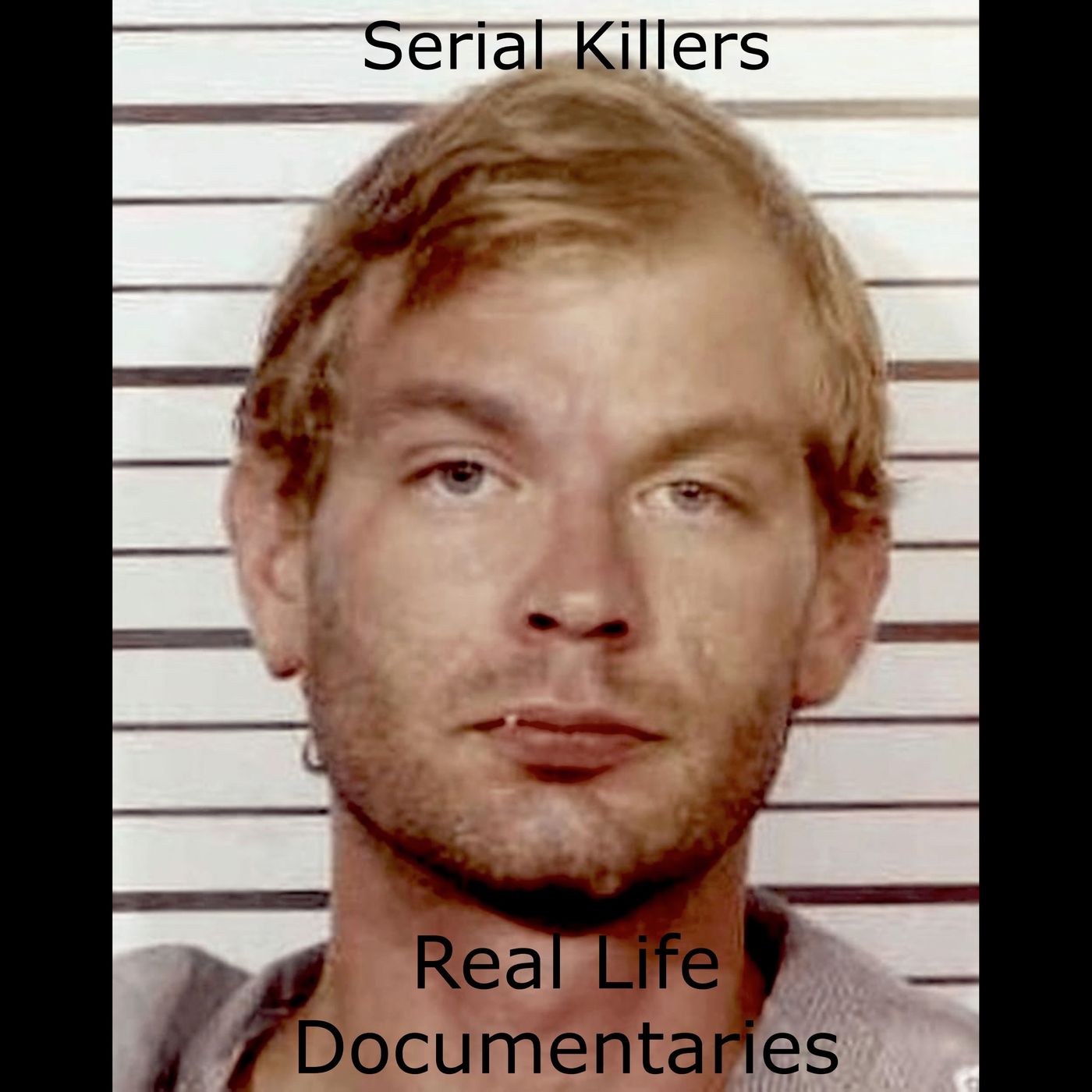
Serial Killers: Real Life Documentaries
True Crime Documentary - The Dark World of Jessie Con-ui
Donnerstag, 29. Oktober 2026 · 45 min
Kapitelklicken springt direkt hin
Shownotes
True Crime Documentary - The Dark World of Jessie Con-ui
Transkriptvom Podcast bereitgestellt · Zeitmarken springen hin
In the United States of America, some of the world's most infamous criminals are behind bars. Locked up and heavily guarded in a maximum security prison is the vicious killer, Jesse Conway.
He is one of the most dangerous, violent prisoners in the Bureau of Prisons.
He has the track record to prove it.
You could just sense evil on different inmates. He would have been one of those inmates.
Conway got involved with a faction of the notorious Mexican Mafia.
He's killed for this gang. He's killed a friend for this gang. He not only thinks he's above the law when he's in society, he thinks he's above the law when he's in prison.
He actually stabbed an inmate, then assaulted another inmate using a metal food tray.
He committed a crime so atrocious it sent shockwaves throughout the entire U.S.
Prison system.
The murder case of Officer Williams ranks as one of the most horrific murders of prison history.
Jesse Conway was laying in wait to strike, attacking him, punching him, kicking him, stabbing him.
This was the worst thing I've ever seen in my entire career.
He's willing to kill you because you looked at him.
The wrong way.
Hanwee is going to murder whoever he needs to murder.
He had no regard for human life. He had no regard for anything or anyone.
Near the city of Scranton, Pennsylvania, is the U.S. Penitentiary, Canaan. It holds around 1,500 inmates.
It's a level three prison. It's the next stop before maximum security. All the inmates in that prison are either facing 25 to life, many murders within their high-profile inmates.
My name's Brian Soodle. I was a lieutenant at USP Cannon. Stressful. Stressful. Dangerous, gang-ridden, the Major League of Corrections. You're responsible for staff members, and you're responsible for every inmate and their safety. You have to ensure that they're breathing every day. That's why we have standing counts, so we know every inmate's alive.
It's no joke.
The prisons are run by the prison administrators, but there's no doubt about it that the inmates have a lot to do with that. You may have one officer on a yard with several hundred inmates, so you can't fool yourself. The inmates have a large control of that.
You have to assume every inmate is dangerous. No matter how hard they work for you, no matter how decent they speak to you, they can cause some serious damage. They are inherently dangerous. and they aren't your friend.
One of the most shocking crimes ever committed against a corrections officer occurred at Canaan by inmate Jesse Conway.
You can't doubt how serious of an individual he is. Wherever he's housed, correctional officers have to be on their toes. I think they have to expect anything.
Someone like Conway has that kind of mindset where he's just willing to kill anybody.
He is inherently evil to his core, in his soul.
Pretty much his whole life he's been violent.
If given the opportunity, I don't think there would be any doubt that he would attempt to kill again.
January 17th, 1977. Jesse Conwee was born in Manila, the capital of the Philippines. He grew up in one of its largest slums.
Jesse Conwee had a sister and two brothers. When Jesse Conwee was a little boy, his family struggled because they didn't have running water and they had to rely on a local church to support them for their needs.
His father would often abuse his mother. which the children sometimes would hear. Ultimately, the father left when he was pretty young.
Even though he's only three, there's some research that indicates that children can make memories as early as the age of three. So witnessing domestic violence can certainly result in developmental problems, problems with impulsivity, depression, anxiety, embarrassment, shame. So there's already a potential for negative outcomes by him witnessing his father beating on his mother.
The family had a pretty tremendous loss at a young age for Jesse. He was only about four and a half when his younger brother, who he was very close with, passed away. His mom then met a gentleman who became his stepfather.
So quite the tumultuous time in Jesse's life.
Conway's mother's new partner was an American serviceman she met while running a barbecue stand outside a U.S. Air Force base in Manila. When he was nine, Conway's family relocated to America, settling in the city of Rome, New York. But the fresh start soon turned sour for him.
That was a very difficult time frame for him to adjust to America. The English language, he struggled there and was picked on by kids in school. From a developmental standpoint, he had a lot of uphill battles because of that move from the Philippines to the United States.
When we hear stories like that, we're thinking, wow, what a chance at the American dream. His life is going to be great now and all for the better. And while that's plausible, we also have to remember that for a child to be taken out of their environment, as horrible as that environment may be, there's still familiarity and comfort in that environment. Conway is drastically uprooted. He was ostracized and he was bullied. The ramifications of that are just kind of reinforcing that he doesn't have a place in the world. that seems to potentially have a negative effect on him in childhood as well as later on in life.
When Conwee was 16, his family moved again, this time across the country to Phoenix, Arizona.
Conwee, now he's being uprooted again, so this is him having to start from scratch and fit in and avoid being bullied.
Conwee didn't react well.
He was experimenting with drugs, skipping school to the point he was expelled.
He was having a lot of problems at home with.
His stepfather at the time, and as a result of them having constant confrontation, Jesse was, well, kicked out.
While his older.
Brother joined the Air Force and went on to have a decorated career, Conway drifted into crime.
Jesse tried to enlist in the military, however he was rejected.
Over the course of his young life, Jesse Conway faced a lot of adversity. But every time he possibly had a chance to right himself, there wasn't something there to help him find the right path. And that only led to a path of self-destruction, drug use, violence. And by the time he was 19, he found himself in the prison system.
In 1996, Conway was convicted of two counts of theft and sent to the Arizona State Prison Complex in Winslow.
That's when he first got to know the New Mexican Mafia, which it was a gang that he idolized.
The New Mexican Mafia came from the original Mexican Mafia prison gang that grew out of the Californian penitentiaries in the 1950s.
Race plays a big thing in prison, so people have to understand that. If you think the race stuff on the street's bad, go to prison.
The Mexican inmates, they needed protection from the black and white inmates.
They grouped together to protect themselves.
The Californian Mexican Mafia grew to become one of America's most powerful criminal organizations. An offshoot developed in Arizona. with their own distinctive tattoo. It was this gang that became known as the New Mexican Mafia.
As the prison systems in Arizona grew, the New Mexican Mafia were recruiting quite heavily, mainly because they had rivalry with what we call the old Mexican Mafia, taking over the Hispanic population, taking over the drug activity within the prison.
Despite being Filipino in origin, Conway affiliated with the New Mexican.
Mafia while serving his sentence in Arizona.
The Arizona Mexican Mafia wanted to increase their numbers. That was their game plan from the beginning. They're a little more loose on the recruitment. That's the way it goes down inside a prison system. Those that are strongest survive. Those that are weak are used.
What gangs provide is a sense of false support and a sense of belonging. And that's why you see a lot of adolescents who are kind of astray in life join gangs. For some of these youths, joining a gang is their only sense of identity.
Locked up in Winslow Prison at 19, Conwee quickly gained a reputation for trouble.
He developed a plan to stab four inmates.
However, before he could carry the plan out, a prison informant notified jail staff of the plan.
Ultimately, the plan was foiled.
Jesse Conway was eventually convicted of making threats. You could tell even at that point that Jesse Conway was not by any means a model prisoner.
Just eight months later, Conway was back in trouble with prison authorities.
While in Winslow State Penitentiary, Conway assaulted an inmate using a metal food tray.
As a result of that, he had to.
Attend a disciplinary hearing to which he pled guilty to the charge of assaulting another person with a weapon.
It's very interesting because you will sometimes see inmates come into prison with no history of violence and all of a sudden start to commit violent crimes. Now, with Khan, we we have to remember that he could have had a predisposition to violence, as evidenced by his father, who used to beat his mother. He also had a very, very harsh disciplinarian stepfather. He also had turned to drugs, which can be an increased risk factor towards violence. So, Conway may have been predisposed to commit violence and then his affiliation with the gang just fostered that.
Conway's transgressions added to his sentence in prison, but in December 2001, After being in for six and a half years, he was released.
Jesse Conway does get out of prison, but with the understanding that he does have to get on the right path. And so he does get gainfully employed. He does find drug and alcohol treatment.
Conway got a job as an assistant manager at a drugstore. He was also regularly drug tested and had 34 consecutive clean tests over a year.
It does seem like there might be some hope, but he is also still tied in heavily with leadership within the New Mexican Mafia.
The New Mexican Mafia's criminal activity stretched beyond prison onto the streets. This meant there was another reason for Conway to stay clean.
There was a strict policy, believe it or not, amongst the leadership of the gang, that no drugs to be used whatsoever.
But they're still involved in doing gang business, dealing drugs, extortion.
While publicly, Conway gave the appearance of toeing the line. He was heavily involved in the gang, working for a man named Carlos Garcia.
Garcia was a made member of the New Mexican Mafia. Garcia was using Conway and two of his associates to basically run errands for himself and the gang, such as general tasks, collecting money, delivering drugs.
Garcia's influence on Conway is very typical of gang culture. You see kind of older, more seasoned members who take younger members under their wing. This is seemingly for protection and brotherhood and nurturance and guidance, but it's under the guise of manipulation is really what it is. So for Conway, he could be viewing Garcia as this is my friend, this is somebody who wants me to do well, but really Conway is just serving a purpose which is furthering the interests of the gang.
What Conway didn't know is that Garcia was lying to him and was keeping all the money for himself. He also told Conway that he would not be able to be a made member of the gang because they weren't currently accepting any new membership into their ranks.
However, that was a blatant lie.
In fact, it was Garcia himself who was playing a dangerous game with the gang.
It was imperative that members of the gang keep in contact with leadership, and Garcia was.
Not doing that.
He stopped attending meetings, and he developed a secret plan.
To move to Texas.
And as a result, the gang leadership greenlit his murder.
The New Mexican Mafia is known to be a very violent gang. They consider themselves blood in, blood out, which means you have to kill somebody to get in the gang, and the only way you leave is if they kill you.
And this was Conway's opportunity to prove himself.
Conway was told if he helped to take out Garcia, he could become a made member of the New Mexican Mafia.
Conway, he's not only willing to go above and beyond for his gang, he's willing to turn on one of the people that actually took him under his wing via murder.
Garcia was paranoid, so it was Conway's job to lure his mentor out into the open where he could be killed.
Conway contacted Garcia. and said he was having a problem with his partner.
The guy said to him, well, I have an extra apartment, you can come stay.
At one of them.
I'm at the laundromat, you can come by, I'll give you the key.
So now they knew where he was.
When they met there, while Coen Wee distracted Garcia, two of his associates shot Garcia in the back several times. Garcia was able to flee, however, was soon caught up to by Conway and one of his associates, where they finished the job killing him.
Now we're really starting to see Conway's true colors. He's capable of a lot more than we thought. He's capable of manipulation. He's the one that lured Garcia to the scene. He's the one that actually executed the shot. Prior to this, that we know of, he had never murdered anyone. So now we're seeing a side of Conway that is probably going to only get worse from here because he's crossed a lot of lines that there is no coming back from.
Right as Conway escalated his involvement with the gang and became a made member, the police began to zero in on the New Mexican Mafia and their criminal activities.
Law enforcement had created the task force and they were closely monitoring all activities of the New Mexican Mafia. And in fact, they were able to develop an informant inside the gang. Now, this confidential informant set up several staged meetings where he was able to create conversations where gang members were talking with Conway about drug trafficking and even talking about the murder of Garcia.
Recorded conversations incriminated Conway being involved in Garcia's murder. They also suggested he and other members were plotting more killings, so police had to move quickly to prevent them.
The police set up some drug deals with the gang where Conway was involved in picking up the drugs and bringing them to another dealer.
However, he was picking them up from undercover police officers.
They followed him, and then he would deliver the narcotics, unfortunately for him, to a different set of undercover police officers.
Conway was arrested.
Conway faced conspiracy federal narcotics charges and was also arrested for the murder of Garcia.
Conway did not admit to murdering Garcia, but pled guilty to the drugs charges.
Conway received an 11-year sentence He was sent to federal prison.
In 2008, Conway was four years into serving his sentence for the drugs offenses when his trial for the murder of Carlos Garcia came around. Just before it started, he then changed his plea to guilty.
The only way he was going to admit to the murder was they wanted to give him the death penalty then, but they offered him 25 years to life, and he agreed to take that penalty and admitted at that time he committed the murder.
This meant Conway could still be paroled with good behavior, but he didn't seem to pay much attention to that.
While Conway was serving time in Victorville Federal Prison in California, his cell was searched by an officer who subsequently found contraband. Conway followed the officer out of the cell and threatened him at that point by saying, be careful who you're with because you just might get hurt. After a disciplinary hearing within the prison, he was found guilty of.
Threatening another person.
Conway was transferred to Pollock State Penitentiary.
While Conway was serving time in Pollock in Louisiana, he actually stabbed.
An inmate with a shank. However, the inmate survived that incident.
As a result, Conway was moved again. This time, he went to the federal prison in Coleman, Florida.
I was working at Coleman Federal Prison at the time. I investigated crimes in federal prisons. I also worked on identifying gang members and any kind of problematic inmates that we might have. Conway, before he went to the yard, I actually interviewed him. And his attitude during the interview was very disrespectful. I remember thinking about him because he's got such a history that I felt he was dangerous and that he would kill someone.
In Florida, Conway had no fellow members of the New Mexican Mafia with him, but he was still an unsettling presence in the prison.
We had a.
Small group of Asian inmates, and he used to hang around with them. I don't even think the guys around him liked him. I think they were just afraid of him. He's willing to kill you because you looked at him the wrong way, and you.
Could see that in him.
He was feared.
He was feared.
He was not with us long, maybe a couple months, and he got into trouble. He threatened an officer at the prison where I was.
Conway now has a sense of bravado. He's murdered someone close to him. He's in prison. And now he thinks that the rules don't apply to him.
I know the staff didn't like him because, you know, he was just an all-around bad guy. You know, we felt that he would carry out his threat with that officer. With his past history of assaultive behavior, I felt like that should have been enough to transfer him to the ADX, the lockdown prison.
But the Bureau of Prisons didn't.
Agree with me.
Conway wasn't sent to the super maximum security prison in Florence, Colorado. Instead, he was transferred to the high security prison, Canaan Penitentiary, in Pennsylvania.
Conway was a ticking time bomb in the prison. It just was a matter of when he would go off and where he would be.
So we're here overlooking United States Penitentiary at Canaan. This is just outside of the small town of Waymark, and it houses a considerable number of inmates and employs quite a few people here in the area, both as service folks, but obviously corrections officers as well.
Brian Sudel served as a Lieutenant Correctional Officer at Canaan.
My job was pretty much just to ensure everything during the day was completed. Overseeing officers in the housing units, ensuring their safety, safety of inmates alike.
Brian didn't know much about Conway when he arrived at Canaan in October 2011. Today, Brian can barely bring himself to speak his name.
I never met the inmate until he was placed in the special housing unit. He came down to shoot for being drunk when he got sanctioned. That's normal. Inmates drink all the time. You get caught with a little bit of hooch, you go to the hole for a couple weeks, you come back out. This was his first offense at Gannon.
He was cleared to go back to the compound.
Conway kept a much lower profile than he had at his previous prisons.
This guy was a nobody. He was a loner, gang member on a California-Mexican mafia yard. He had no friends. They allowed him to stay there. Well, I didn't know his prior behavior in other institutions before. I didn't know about his past behavior because I never looked at it because he never caused me any kind of concern or grief to where I did have to go and look at his past behavior. The problem is that those quiet inmates, we don't really look into them. That's what you do as a staff member. You don't go messing with the inmates that are doing their time. We want them to just do their time.
February 25, 2013. 34-year-old Correctional Officer Eric Williams arrived for his evening shift. He had been working at Canaan for the last year and a half.
What I know about Eric Williams is that he was dedicated to his community, wanting to serve in this capacity as a federal corrections officer, too. So he was very well liked by those he worked with, but also by so many in the community.
Eric had a ton of friends. Eric and I are from the same valley. We did a lot of same activities. He was already prior law enforcement. He was a police officer on the street before he did this. He was a hard worker. He was a really good officer.
Eric Williams had a good reputation amongst inmates as well and was known to not have a problem with any particular prisoner.
I think he had done some of the prison ministry even before coming to the Bureau of Prisons.
And trying to help inmates.
So he was.
Known to be a nice guy.
Eric was very mild-mannered. He wasn't quick to excite. Even when stuff was going on, he was still even. That's what you want in a correctional officer. When he spoke to inmates, very even.
Being a correction officer is such a horrifically stressful job. We have to remember that these individuals are choosing to risk their lives every day, every time they enter their workplace. That's not a normal job for everybody else. But on top of that, correction officers are verbally abused, if not physically abused, all day, all the time. It's extremely stressful.
There is very little sunlight. There's lack of windows. It's very loud. It smells horrific. You know that you're dealing with individuals who have done horrific things. Correction officers actually tend to have a lot of mental health issues as a result, understandably so, when you consider that they are spending the majority of their life in such a toxic, stressful environment.
Eric Williams and other correctional officers had been searching cells as part of a crackdown on inmate-made weapons.
We were having a lot of contraband issues, and the warden wanted more searching, getting these weapons off the compound.
Shanks are a very large problem in the prison systems, basically because they're easy to hide and they're easy to make. And they're usually filed down pieces of metal. They're made to be sharp, sometimes even hard plastic. or plexiglass, any hard substance that they can kind of file down to make a point.
They cut this material. They rip metal off somewhere. They take it to a sidewalk. If you ever go on a recreation yard, I would walk around and you'd see the lines on the concrete from where they were sharpened on them. Looked like somebody was playing hopscotch. It's the life we live. It's the danger. Everybody's got one. If you're not thinking everybody's got one, you're in the wrong place.
While correctional officers finished up the search of cells in other blocks, Eric Williams was by himself in C1 Block, where Conway's cell was located.
Eric Williams, at the time, he was working alone in general population, so the inmates were free to move around. At that time of the night, they were getting ready to lock the inmates in their cells.
And he probably was going.
Up to the upper tier, walking up the stairs to start locking the cell doors.
For Jesse Conway. This was premeditated, and he was laying in wait to strike.
That dude was waiting for him at the top of the step. Eric was knocked down the stairs, and Eric flew ass over T. Kelly down the steps. And when Eric hit the bottom, his radio came off, and he had no communications to me whatsoever. He had no way to call me for help.
Nothing.
Conway immediately went after Eric Williams. with two homemade knives.
Eric Williams, it.
Was such a hopeless situation for him, taken by surprise. He was overmatched by Jesse Conway's physicality. Attacking him, punching him, kicking him, stabbing him.
Stabbed him hundreds of times. Bastard sat off the floor like he was a piece of meat.
After his continuous onslaught on Eric, Conway... decided to take a breather.
Jesse Conway stopped, left to get a drink of water and take a break, and then return to the brutalization, horrific display of evil and violence on Mr.
Williams.
For him to walk off and get a glass of water and then come back and continue the assault like he did, it shows a total disregard for human life.
The officer was no longer a threat to him.
It was 11 minutes without any intervening from those standing by. Those prisoners didn't help, and they could have potentially stepped in to save Eric Williams' life.
There's a duress button in their cells. but not one of them pushed up on him. I was a unit over, not even 50 yards away from Eric being killed.
Eric was just left there until another officer doing his rounds came across his colleague unconscious. He immediately radioed for help.
Well, we responded. That radio transmission, I still can hear him now. Screaming for help. Found Eric unresponsive in the middle of the floor and he was beaten. His head trauma was the worst thing I've ever seen in my entire career. And my first thing was to get him out of there.
Somehow, Eric Williams still had a faint pulse.
As officers rushed Eric to the medical unit, Brian saw that the prisoners were currently in their cells, but none of them were secured. He feared a potential prison riot.
The doors weren't locked yet. The unit was still open. When I got in there, I yelled, I'm going to kill one of you motherfuckers. You know, I played it off like it was just to scare them, but no, I really meant it. I have 39 lives to protect. If you come out, you're going to lose yours. We went around and we locked the doors. I remember being at Conway's cell and seeing him through the door. And he kind of just melted into the darkness as I pushed up against the door and they locked it. I didn't see him hurt. I didn't see him nothing. I didn't see no weapons. I didn't see no blood. I didn't see anything. I was just concerned with getting these doors locked to take the danger away. Because once the
danger's away, I can calm it down.
When he reached the prison's trauma room, Eric Williams was remarkably still alive, but he succumbed to his grave injuries and died soon after.
The sequence of events that took place with the murder of Officer Williams, I think it has to go down as one of the more horrific, violent killings that has probably ever been recorded in a correctional setting.
This attack was so brutal. It involved over 200 stabbings, being stomped in the face. This was sadistic. This was torturous. Absolute hell for this poor officer. I can't imagine what he went through. That really highlights how dangerous Conway is.
Officers had no idea who committed the crime and searched the cell block looking for inmates who showed signs of having been in a frenzied struggle.
They discovered Jesse Conway with injuries to his hands, indicating that he was the aggressor, but he also was found with a shank as well.
The inmate Conway, he admitted to the officer that he had attacked Officer Williams.
So I got to the cell. Conway was standing there. I can't believe I said his name. I looked in the cell. There was a weapon in the sink, and he had a weapon. So I told him to throw him in the sink and submit to restraints. And he goes, no. He goes, I heard what you said down there, that I was going to kill one of these motherfuckers. I said, listen, man, it's all over now. There's cameras everywhere. You didn't come out to sell the fight, so it's professional from here on out. He goes, you give me your word? I said, yep, I give you my word. So he submitted the restraints.
The officers took Conway away from the block to a special holding cell.
He starts talking, and he says, I had to do what I had to do because I was tired of your people's disrespect. I looked at him and I said, hey, I suggest you choose to remain silent.
Whenever you have an inmate that's involved in something like murdering an officer, they will move that inmate right away to another federal prison. The prison itself doesn't want to get caught up in anything where there's any kind of retaliation. or the inmate can say the officers are retaliating against me.
Jesse Conway was transferred from USP Canaan to the federal corrections facility in Allenwood, not terribly far away, but it is a maximum security prison, which in hindsight seems like the best place where he could have been to prevent such a heinous attack that occurred at Canaan.
News of the tragic events at Canaan Prison broke out.
This really did end up being wall-to-wall coverage.
The community was certainly plunged into shock and disbelief that something like this could happen in the federal prison where a member of the community had gone in for a regular work day and wasn't able to go home to their families.
The horror, especially, of how heinous the attack was, too.
He died doing the job. We all know that this can come from this job You don't expect that. Then I had to look Eric's family in the face. Mr. and Mrs. Williams, the sweetest people you'll ever meet. They didn't deserve this.
In the time following, Conway would claim Eric Williams regularly disrespected him and ordered his cell to be shaken down without reason.
He says that Eric targeted him. OK, I sent that shakedown crew around, not Eric. That's what you call disrespect. You're pretty weak. You're a pretty weak man.
The attack was 11 minutes long. It was extremely brutal. The disrespect is an excuse. It's the convenient prison excuse because everyone will understand it. It's a bravado excuse so that other inmates will know you don't disrespect Conwee. But also, it appears that Conwee actually enjoyed the murder, and disrespect was his way of making it appear more acceptable.
In April 2013, a month after Eric Williams' murder, Conway was transferred to America's highest security prison, the Federal Supermax in Florence, Colorado.
Inmates like him wouldn't even be housed with other inmates. The inmates that go there are the most violent ones. They don't come out of their cells unless they're restrained. And that's a big thing when it comes to violent inmates, because if they're restrained, they can't hurt nobody.
We say they earned it.
It wasn't until four years later that Conway stood trial for the murder of Eric Williams at the federal courthouse in Scranton, Pennsylvania. He was facing the death penalty.
So the guilt phase of the Jesse Conway trial was over in just a matter of days because there was no defense, no witnesses were put on the stand, and the jury convicted him pretty clearly. However, the next phase took quite a while, several weeks, in fact, for the penalty phase, where the defense attorneys tried to convince jurors that there's a reason to spare Jesse Conway's life.
Conway's attorneys cited his difficult childhood, and he made a statement.
Expressing remorse.
Conway, I think this is him mimicking what an appropriate human response would be. He wants the world to view him as somebody who wishes he could take it back, but I don't think that's actually the case here. I think at this point, he's really not pleading for actual mercy, and he's really not actually taking responsibility for his actions.
He's pleading for his own fate.
During the penalty phase of the trial, Prosecutors said to jurors that if a picture is worth a thousand words, then that video of that vicious attack on Eric Williams was worth a million words.
It was pretty tense inside the courtroom.
There were family members, there were colleagues of Eric Williams in there, and they were all there with the hopes that justice would be served and that Jesse Conway would be then sentenced to death.
The jury was 11 to 1 in favor of the death penalty, but it had to be a unanimous decision. Jesse Conway had escaped execution. He was sentenced to life without the possibility of parole.
The Williams family, their heart was cut out.
Their heart was cut out.
Jesse Conway was sentenced to life in prison, which he had already been serving. It was a lot of anger, a lot of heartbreak for the family members and the prison colleagues of Eric Williams.
They had fully.
Expected there was enough evidence there to convince the jury. But because he would face life in prison, it was as if nothing had happened. Nothing resulted from that loss of life.
Determined his death wouldn't be in vain, Eric Williams' parents fought for better safety measures for correctional officers. In 2016, President Barack Obama signed into law the Eric Williams Correctional Officer Protection Act that allows corrections officers to carry pepper spray.
Barack coughed some radio. Eric had nothing to defend himself. Finally, officers have pepper spray. When you get into a fistfight with an inmate, you have to understand you're fighting for your life.
Since pepper spray and Moore's stab vest have been introduced, injuries to correctional.
Officers have fallen.
We are always going to be understaffed. Now, in the penitentiaries, they put two officers in the units at 24-7. They did do that. That helps. That helps because there's two guys in there now. You know, if it wasn't for the Williams family, we'd probably still be fighting. I just wish I could have done more. I wish I could have saved her kid.
Double murderer Jesse Conwee is still incarcerated in the Florence Admax prison.
It's the most maximum security prison in the United States. I toured that prison and it's so secure, it's unbelievable. I think Conwee is the only member of the New Mexican Mafia that is housed in Florence, Colorado. I remember walking into a pod or a prison system, and you could just sense evil on different inmates. Jesse Kunyui, he would have been one of those inmates.
I'm sure his traumatic childhood played a role in it, but most humans with traumatic childhoods don't go on to murder two people. He had multiple opportunities throughout his life to change the course of his path, and he chose otherwise. and the level of depravity. Conway's actions were extremely evil, and that tells me that he likely, too, is an evil person.
He had no regard for human life. He came across that way when you interviewed him. He had no regard for anything or anyone.
Once you kill, you're a killer. That's it. Whether it's staff or inmate, you don't belong ever walking the compound again. He should never walk amongst living humans again. be left in his box for the rest of his life. He is one of the most evil men I've ever met.
