

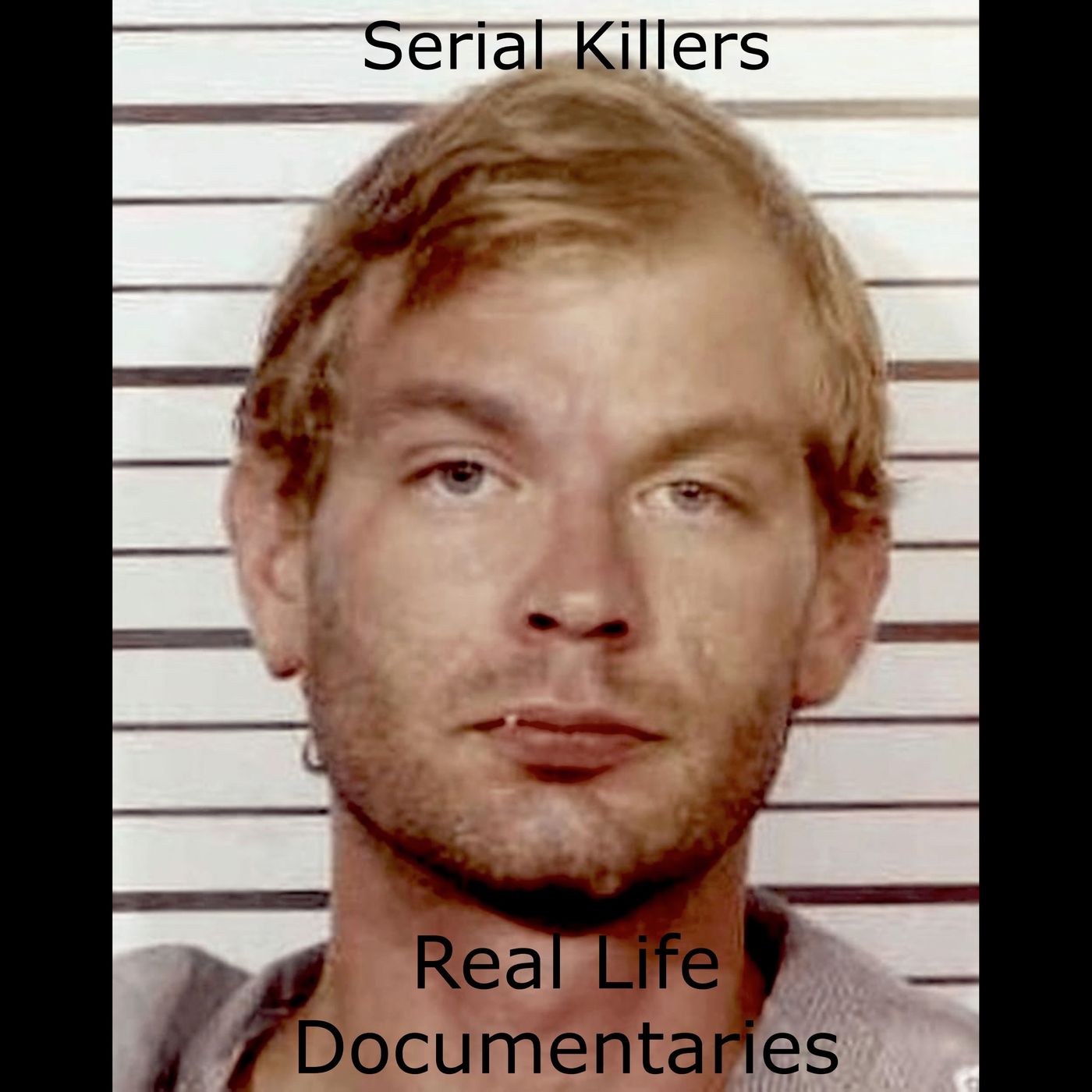
Serial Killers: Real Life Documentaries
Serial Killer Documentary - The Casanova Killer called 'more brutal than Bundy'
Samstag, 31. Oktober 2026 · 46 min
Kapitelklicken springt direkt hin
Shownotes
Serial Killer Documentary - The Casanova Killer called 'more brutal than Bundy'
Transkriptvom Podcast bereitgestellt · Zeitmarken springen hin
He had eyes cold as steel. It's like he was looking right through you. He was a con artist. Smooth talker. Could con you out of your wallet, your watch, your car.
There was nothing that would make you think he was a killer. He wanted to be a famous mass murderer.
He killed men, women, boys, girls. He didn't discriminate. If he decided to kill you, you'd have had it. Just about everywhere he went, they left a body.
The Casanova killer. I fell in love with him for maybe an instant.
He didn't want to admit that he was gay, and he killed them.
He killed 33 or 35 people. We were able to document 18.
I'm almost certain there are other victims out there. He made tapes of his escapades.
Thank you for watching.
The year was 1974. Richard Nixon became the first U.S. president forced to resign. Stephen King published his debut novel, and I Shot the Sheriff was on the top of the charts. 1974 also marked the start of serial killer season in America. But this is the serial killer story that hasn't been told. Not like this. Paul John Knowles, PJK, The man dubbed the Casanova Killer. Some describe him as charming, attractive, and intelligent, for sure. It was during the summer of 1974 that Paul John Knowles crisscrossed the country stealing cars.
He'd rape, strangle, and slay victims. He swipes their credit cards and their prized possessions. Then he'd take on the identity of his victims.
I worked for people who paid me and were professional criminals. Knowles was a criminal, a repeated criminal. Should have been a professional criminal, but he was an amateur. Pleasant. He was always pleasant. He didn't use curse words. He wasn't rude. He was polite. He was sort of passive to some extent.
There was nothing that would make you think he was a killer. When I first met him as a burglar, he was just a loser. guy that can't stay out of jail.
Paul John Knowles wanted infamy, but notoriety never followed. PJK failed. No one talks about PJK when they mention Ted Bundy, John Wayne Gacy, or the son of Sam. But this serial killer knew his fate, and he planned for it by recording confessions of his killings.
He was coming back from Key West, or somewhere in the Keys, and he calls me when he gets to Miami, and he says he's got to talk to me. It's important he's got to talk to me. And I met him sometime around 9 o'clock at night at a bar, and that's where he tells me he's a mass murderer. Right away. I said, okay. He said, I'm a mass murderer.
Brace yourself. And I said, okay. And I laughed at him, I think. He had nothing in his background that would, you know, reflect a person who would go around killing people. I said, what do you want to do with this? You want to surrender, go to jail? I'll help you get, you know, turn you in. No, no, I don't want to do that. I want to have it documented. I want a book. I want some record made.
After five months on the run, the alleged Casanova was shot and killed by police. But PJK kept a log. recording the details of his murders on secret tapes left to his lawyer. He claimed to take 35 lives. But here's the thing. Investigators can only account for 18 deaths. And at least one victim got away.
My name is Barbara Maybe Abel. My maiden name was Maybe, and I married an Abel.
Barbara's twin sister, Beverly, suffered from cerebral palsy. The two women were living together when a serial killer showed up in their West Palm Beach home.
If I would have met Paul John Knowles at a nightclub, I would have gone out with him. He was very good-looking. For an instance, I thought it was my ex-husband. I only marry good-looking guys. And here I am in the same house that the kidnapping happened. So in 1974, on November the 14th, the day I'm never going to forget as long as I live, I knew something was wrong.
And he said, don't turn around or I'll shoot you. And of course, I decided I'd turn around And I couldn't believe what I did next. Walked him all the way through the house, this little cute house.
And.
Something made me go into the bedroom where Beverly was. She was tied up with a sheet, and she had a gag over her face, and blood was coming out of the gag.
I'm sorry.
This maniac's in the bedroom with me, and he just finished tying up my son in the other bedroom. And I said, get the gag from out of her mouth. My God, she's got cerebral palsy. She's handicapped. What did you do to my sister? I said, did you rape her? And he says, I didn't do anything. I didn't hurt her.
And I said, if you raped her, I said, I'm going to kill you. He said, that's my sister. And I knelt down beside the bed and talked to her. And I said, we're OK. I said, I'll give him the money and the keys to the car, and then he can go, okay? So she just nodded her head yes, and I kissed her. And he wanted to take me on I-95 or the turnpike or wherever he wanted to take me. We went from West Palm Beach all the way up to Fort Pierce, which is at least 60, 70 miles up north. He gives some hotel room, and we go, and he said, just pretend like we're married.
It didn't even cross my mind that I would be raped. He had raped me repeatedly over and over, but it wasn't rape in my mind because the man wasn't normal. He was not normal that way, sexually. It wasn't like a real man. He wasn't like a real man. He was trying, but couldn't do anything.
Impotent.
When he tied me up, he always made it real loose. And then the last time, he didn't know that he left the keys on the nightstand. He didn't know that he did that. He just locked the door and went his way. So I started sawing my sheet thing off, and I got myself loose. It wasn't even 15 minutes later, and the whole world was right there by my side.
God bless them. I know what the paparazzi is now for all these stars. It's like, it was that bad. Then they take me like I'm a criminal and I go to the Fort Pierce police station. I'm thinking, oh, I need to save him because he's really, really sick. Thinking he only killed like one person. So, whoa, did I even?
I didn't know.
I was a copywriter. I know that's what saved my life. I had no idea how many he had murdered. He tried to keep telling me and I wasn't listening. I mean, who wants to hear that? And I was telling him, why do you want to write a book? He wanted to be famous. Famous for what? Murdering a person? I fell in love with him for maybe an instant. I did whatever I had to do.
Barbara gave PJK an eight-hour head start. He took off in her car. What Barbara experienced was PJK's signature brutality, kidnapping, rape, torture, and then stealing her possessions. The only difference? Barbara lived. PJK's first known murder was 65-year-old Alice Curtis in Jacksonville. He forced his way in her home and gagged her, just like he'd done to Barbara. but Alice choked to death.
He killed twice more near Jacksonville, strangled a woman in Atlantic Beach, killed a teenager in Bibb County, Georgia, and strangled a 24-year-old in Moosella with a telephone cord. One of his most merciless acts of rage happened in Milledgeville, Georgia. A father and daughter in an absolute nightmare.
Worked a lot of murders, but that was the bloodiest crime scene I'd ever seen. I can still see the blood. I can see it in the bed. I can see him with all his stab wounds. And I was asking the coroner when we were at the funeral home during the autopsy what were all those marks. Come to find out he had stabbed him so many times that he broke the tips off the scissors. And those were the stab marks from where the tips were broken on the scissors.
He was stabbed so many times he bled through the mattress.
He strangled the daughter and I believe they said that he tried to have sex with the body after she was killed. It was a gruesome thing.
Mr.
Carr and Mr. Knowles met at a bar here in Macon, and they went to his home in Milliesville. And nobody knows the real reason. There's some speculation, but nobody knows the speculation. It might have been a gay encounter.
But he didn't want to admit that he was gay. That's right, he killed her. It's just like committing a burglary. He commits a burglary, and therefore, when he commits the burglary, he has to kill the witness. So if you have a homosexual act, then he has to kill the homosexual. One thing the women said, he was a dud. A big handsome guy, one could wine and dine you, he could get you to the bedroom, but then he couldn't perform.
I didn't think he was a Casanova killer, I just thought he was a murderer.
But the name, Casanova Killer, stuck anyway. After the car murders, PJK would slip up. He had ditched a car from one of his previous victims, a Chevy. When investigators found it, they learned the Casanova Killer had not covered his tracks. He left a paper trail of his deadly path.
He killed people all over the country. California, Nevada, Florida, Georgia, Mississippi, Alabama. Connecticut. What he would do is, when he would kill somebody, he would take their vehicle, along with their credit cards and things like that. He would use their credit cards for a while, and then he'd kill somebody else and get their credit cards and their car.
It was mid-November when a state trooper pulled Knowles over. Not wasting any time, Knowles took the trooper hostage. He flagged down another driver, James Meyer, and then he took off with both men, using Meyer's Ford as a getaway car. This was the beginning of the end for PJK.
They stop at a gas station. Knowles gets out, and the police officer, Campbell, and the other victim are sitting in the car and don't do anything. It's a four-door sedan. They don't make any effort. They make no effort to get out. They just call for help.
They do nothing.
The next day, Knowles is driving the car himself. There's nobody else in the car. A police officer spots the car. They set up a roadblock. When they try to stop him, Knowles smashes into the roadblock but he's able to get out of the car, and he runs into the woods and knows he's uncapable. He said, I'm too tired to fight.
And he gives up. He's bleeding. He's upset. He's injured. He's got a scratch on his leg, and his face is cut, and he's beat. So the murderer gives up.
Police had their mass murderer, but not his final victims. Still missing, Trooper Campbell and James Meyer. PJK wasn't talking But he recorded confessions. Now, only one man controlled PJK's diary. And that man, Attorney Sheldon Yavitz, was keeping those tapes locked away.
He made tape recordings of his killings. And the reason it was given that he did that is that he wanted to be the most famous mass murderer in history. and he wanted to have a recording device of it. Apparently, he described in great detail how he killed different people.
Mr.
Yavitz was refusing to turn over the tapes because he said it was attorney-client privilege.
And they said, well, you've got to tell us where he is. You've got to know where the bodies are. I said, I can't tell you. So they were very upset about that. They assumed they were dead already. There was no issue in anybody's mind that they were alive. But we don't want them out there decaying. woods. I said, I don't represent the dead. My wife said I was nasty.
I said, I don't represent the dead. They were very upset about that. And they bring me before the judge and they say, we want the tape. And I said, I can't produce the tape. So they threw me in jail. I was in contempt of court. My wife had gone up with me to Georgia and she's in jail. She invokes the Fifth Amendment against self-incrimination, but she didn't know anything.
And now she's in jail. And with your wife in jail, it's a real hassle. I mean, she wasn't very happy. She was pretty upset. So under those circumstances, I said, and I looked at it this way. If I'm turning over a tape to free my wife, then they can't complain that I've done anything. They're extorting me.
It turns out investigators didn't need those tapes to find more victims. A hunter stumbled upon PJK's last conquest, and it was horrific. The missing trooper and businessman were left for dead in the woods. What investigators didn't know is that the end was near for PJK.
They have one cuff on each hand, and they're tied to him around the tree, and they're dead. He shot them in the head, top of the head. Knowles says that Myers said to him, that's the other victim, make your own luck. That was his last words. Knowles always remembered that.
After they captured him, everywhere he went, they had a driver, law enforcement riding shotgun, two law enforcement guys in the back, Knowles in the middle, handcuffed and shackled. Ronnie Angel was a GBI in the car. Knowles had agreed to take him to where the pistol was that he used to kill the businessman and the Florida trooper. Knowles was in the back seat, handcuffed.
He got the handcuffs loose, reached over the seat, grabbed Earl Lee's gun, tried to get it out of the holster, shot a hole through the seat. Ron Angel pulled his weapon.
And shot him.
Good riddance. I mean, it's a bad thing to say about somebody, but evil people, good riddance. He won't ever kill anybody else.
And just like that, PJK went from being held captive to dead, his murder spree finally ending with his own death. But his story didn't die with him, at least not right away. Police had his kill tapes, and they'd started combing across the country counting victims. He'd murdered and raped both men and women in Florida, Georgia, Ohio, Nevada, Texas, Virginia, and Connecticut. And he'd talked about it all on tape.
Knowles contended that he killed 33 or 35 people, and he didn't know for sure which. We were able to document 18.
He wanted, when he died, that his crimes be made known and the proceeds would go to his mother. It's his confession. He's describing what he did, who he killed, where he killed him. There's 14 on the tape. There's two in Milledgeville, Georgia, and the civilian with the police officer. That's what makes the 18. And it became evidence of the grand jury. And it never left the grand jury.
But no one ever got to hear the tape. It doesn't exist. It may physically exist, but it's not playable.
The court had him, and... Seems like to me they had a flood in the basement somewhere or water got in there and damaged it. I would love to have listened to them to try to understand why he did what he did. You don't kill 16, 17, 18, 29, 30, 35 people. You just don't do it. I'm almost certain there are other victims out there that are related to his activity.
Now that I know that he killed over 35 people, men, women, and children, I was thinking, you know, like, what made that person become a murderer, a serial killer? What on God's earth? I researched his background and stuff later on. It took me years to do that. What would make him turn into a murderer? What would happen in somebody's life that was so horrible that would make them turn into crime? What would make him go berserk and start murdering?
What could be so horrific in your life that somebody would do that?
The original confession tapes vanished, but hearing from the Casanova killer himself may be the only way to know. A court-appointed psychologist spoke with Knowles, revealing what goes on inside the mind of a killer.
Paul John Knowles made kill tapes. He recorded the details of his murders.
The tapes were handed.
Over to the court.
And locked away in Macon. According to investigators, both fire and a flood damaged countless court records. PJK's kill tapes are presumed to be lost forever. But there's a second set of tapes, and for the first time ever, they provided a telling look into the mind of a serial killer in his own words.
What's the worst thing that ever happened to you in your life?
The tapes are not the only way to get inside the mind of this serial killer. PJK left behind letters, notes, drawings, and accounts from the women he loved. Among those women he let inside his mind was a British journalist who he picked up in an Atlanta hotel bar. Sandy Fox was a different kind of prey for PJK, the kind who might be able to offer the one thing he desired more than all the others— In her book, Natural Born Killer, she writes about life on the road with PJK.
Sandy Fox passed away in 2005, but through narration, her journey is brought back to life.
I will never know for certain whether he would have killed me that last night, the one when I said goodbye so determinedly. His pattern was to kill approximately every 10 days, and he fulfilled it at the weekend. I learned a little of Knowles' life. He had been institutionalized from the age of eight. A stolen bicycle had led him to a lifetime of foster homes, reformatories and prison.
A great life for a child, a life of uniforms, discipline and few possessions. And like many others going through the system, he learned to live the harsh way, to life cheat and steal. and all the while to dream of glory, easy money, and escape.
What's the best thing that ever happened to me in my life? Nothing good's happened to me.
I'm a criminal.
I've been a criminal since I was a kid.
You really are saying that you believe you have a criminal right? Well, it's been through the roof. My life has been more involved in the criminal sense than we'll see it happen.
I realized there was a lack of, maybe not a lack of love, but a lack of caring. So I had no doubt that they loved me, but they just.
Didn't give a damn.
Well, if you love somebody, how can you.
Not give a damn? Well, perhaps they did give a damn, but they just didn't... know how to show it.
Most of PJK's family passed away a long time ago, but his brother Clifton is willing to provide a look into the childhood of a serial killer.
We were so poor.
There was seven of us living in three rooms. It was like a great room where Mom and Dad slept in. A little bedroom and a kitchen.
We had an outhouse.
You know, when you're a child, And certain horrendous things happen to you. You tend to block them out. In today's climate, today's climate, we would all be taken out of the home. We would all be taken out of the home and probably fostered out. There was a lot of physical abuse. My father would call them, he'd call them whipping. I called them beatings myself. You know, when you leave black and blue marks on a kid from a bill, that's a beating. And the old man was beating Paul with his fist. And he was about to beat him to death. He got well enough, he ran away again.
Every day is a party.
You know, I just rode around town.
Went to the shooting galleries, penny arcades. Just whatever didn't go on, I was sleeping in the morning.
Then they called me.
Paul John Knowles was sent away to the infamous Dozier School for Boys. A 2013 investigation revealed that at least 50 bodies were buried on the grounds of the school. To date, more than 500 former students have alleged brutal beatings and a culture of abuse.
Florida School for Boys, which is Dozier School for Boys. I call it Florida School for Boys.
And he stayed in and out of there until he got old enough to go to Rayford, Florida State Prison. I call it Rayford, but it was Florida State Prison. And it was the same thing. Never stayed out over six months. It institutionalized him instead of reforming him. He didn't go in a killer. He was just a wayward soul that got tired of the beatings when he was a young'un and got away from it the best way he knew how at the time. And one thing led to another, one thing led to another. This state of Florida has a hand in this too. They will deny it.
The hell won't have it. But the state of Florida has a responsibility in this too.
He had been in prison in Rayford. And I had been retained by his girlfriend, Angela Kovac, also known as Samuels, to get him a parole. She was a small, short woman. And I made a note somewhere that she wasn't very attractive. And she was older than him. And I couldn't understand the appeal, except that she had money. And she was a meal ticket out.
Three women had loved Paul John Knowles. His mother, for whom he had such a passionate love that he went out and killed to make her rich. And for whom, finally, I suppose, he gave his own life. Jackie Knight, who knew his faults and weaknesses, but stood by him staunchly, and Angela Kovic, his last chance.
He was going to go to California. That was the basis of the parole, and marry Angela Kovic. She was still married, so we had to wait until she got divorced.
He was released from Florida Penitentiary in like the spring of 1974, and he went to California to visit the young lady out there, and they were going to be married. And when he got out there, she had talked with a psychic or something and told him that there was this bad guy that was going to come into her future.
And she broke off whatever it was, and he came east and started killing folks.
Came back to Georgia, came back to Florida, and that's when he started on his kidnapping, raping, murder spree. Well, it seems like something triggered him to start.
His attempts at love had all failed him. His mother, Bonnie Knowles, who he adored, had allowed his father to send him away. The loves conducted by mail with Jackie and Angela were both childish and swaggering, the letters filled with sexual boasts. There are only two things I like to do on a rainy day, he had written Angela, sleep and make love. And I very seldom get sleepy.
The lined paper was smothered with kisses, the envelopes with crayon drawings. Nothing came out of these relationships because they were based on fantasy.
He called me to pick him up at the airport. He told me one little thing about what happened out there. That the lady out there was seeing a black man. And Paul beat him half to death. That's what he told me. And evidently, Paul was a little bit racist too. And so that's why he beat the black guy about half to death. He was thinking that there was going to be a a relationship for him. And he got out there and he found out that it wasn't what he thought it was. And I think that that's what set it off.
His failed relationship with Angela Kovic started the murder spree. But over the course of the next five months, Paul John Knowles kept returning to the same woman, former girlfriend Jackie Knight. He'd stop and stay at her house in between killings. Jackie claims she had no idea that's where he'd go.
Around my children, babysitting my children while I'd go shopping or have.
To go pay bills. He would do this.
He would babysit my kids.
You'd think if I'd known he was killing these people, I'd let my kids be involved. It was an embarrassment to me and my family that I could have been so naive to have gotten involved in someone like this. And I'm just afraid, you know, they probably thought I might have been involved in some way or knew something in some way.
I didn't know anything that was going down in Macon or anywhere. I know he'd be gone for two weeks, he'd come back. He'd stay three or four days, he'd be gone again. He'd sleep on my couch. He would see to it that the kids had Christmas. He would see to it that they was well taken care of when it come to school. He took those kids as his own.
So he embarked on his journey, a 20,000 mile round trip on which he saw the vast grandeur of America. Perhaps we wondered why, when there was so much, he had so little. After his capture, he told his lawyer he had let his victims know their fate beforehand. He charmed them into acquiescence by telling them he must tie them up in order to get away. I never wanted to hurt them, he said. He could not understand their terror, and when killed them, he felt no remorse.
If you could change your life from the point you're at right now, where would you go back to to.
Make the change?
Well, actually, if I had to live over again, I wouldn't.
You wouldn't do what? I wouldn't live again. It's been that bad.
There's no way I'd go through another year of it.
I never did decide to go back.
I decided I wasn't going back. It's just a chance of faith that I.
Am going back.
I had no intention of living.
How do you mean that?
I fully intended to.
Be shot before.
I think in his heart he knew what was the end result, what was going to happen. And he was trying to set mom and daddy up with a book deal or something and give them the rights for anything to happen with the tapes.
Maybe that he just... wanted to die. But on the other hand, he was enjoying his celebrity status. Women liked him now. He was somewhat of a hero, you know, in a strange sort of way. He wanted, when he died, that his crimes be made known and that his story be made known and that there be a book or a movie or something done. And the proceeds would go to his mother. I didn't tell him that a murderer or a criminal like that cannot profit from his crimes.
that eventually, if he had any victims, they'd sue the estate, and the estate would be wiped out. There wouldn't be any profit to it.
Paul John Knowles was as much a victim as any of the 18 people killed, with a compassion that in no way diminishes my sorrow for the dead and my sympathy for those who mourn them. May his poor, demented soul Rest in peace.
They took him out and killed him. They took him out and killed him. Do you think they planned to do that?
We'll let God be the judge of that. We'll let God be the judge of that. It took a while to get over it, but eventually it just faded away. I always knew, I always knew, I tell my wife, that this day would come.
This day would come. Something just told me that it would. What about this day? The interview. That somebody would have some questions. Is there anything you've been waiting to say? On this day. The two girls. He didn't do it.
PJK's brother is talking about the Anderson sisters. Those two little girls are believed to be PJK's second and third victims. But it's not a clear-cut case.
And when the girls went missing, it just totally changed everything. Millette liked to play with baby dolls. If you've seen her, she always has a baby doll. And that was a book reader. We called her the bookworm because you see her and she had a book. Everybody said Paul Knowles was in the area at the time the girls went missing.
About five, six years later, we put the tombstone down there at the cemetery. I just knew they was gone and they never come back.
Instead of a final resting place, These gravestones mark heartache and uncertainty. The girls' bodies were never found. Despite court documents that indicated PJK offered specific details about them on his infamous kill tapes.
He gave a direction how to find them. Something about two palm trees supposed to be connected like a heart. And they went out in search and they never did find them. Find the area or nothing. I don't think we'll ever get closure out of it because it's been too long. And if anybody really knew anything, I would think by this time it would bother them so much on their mind that they would come out and say something.
And I just don't think there's nobody out there that knows. I think it's time to let it go.
This is it. The Anderson sisters are on the list of at least 18 victims murdered by Paul John Knowles, but it's clear that list is probably incomplete. Debbie Griffin disappeared while hitchhiking in Bibb County during PJK's killing spree in October 1974. This FBI file names him as a suspect, but the investigation has never been closed. These images from the case file show evidence of her grisly death, her body tossed in the woods, undiscovered until nearly a year later. But, like others, she's never been officially added to his victims list.
There's a lot of cold cases that they're trying to solve. They just solve one I don't know, say a couple of years ago in Houston County, that the body was found several years after all this took place in 74. And through the tapes or transcripts, they were able to identify that he did, in fact, kill that one.
Well, I'll tell you what I have at home. I have a picture that was blowed up of him. And I have it out in my backyard. And I take my BB gun and I shoot him.
It's just a picture.
Betty Wisecup's daughter, Ima Jean, is the most recent victim officially added to Paul John Knowles' kill list more than 35 years after her death.
Ima liked to go swimming. She liked boys. She liked to go to the sandpit. Normal things most 13-year-olds like. So she had left to go to the sandpit. I worked and her stepdad worked. So we weren't home during the day. Well, I figured that she was so unhappy that maybe she just decided to go live her own life.
But we did searches and things for Social Security, never could find anything. But I had never dreamed that she was killed by a serial killer. Surprised the hell out of me, because I wasn't expecting it. Just took the cells right out.
A tip from a former family friend prompted investigators to ask the family for DNA samples in 2011. Their DNA matched the unidentified body of PJK's fifth victim. It was Ima.
Some hikers found her, but they never connected anybody with anything. until they did that DNA.
She disappeared in 1974.
Uh-huh.
And you didn't know Paul John Knowles was involved until 2011. That's right. All those years.
No.
He had said it on the tape.
Mm-hmm.
No one told you that he had said that on the tape. They didn't realize. That's because the Casanova killer got her name wrong. He called Ima Alma on the kill tape.
The detectives said, I'm going to tell you that we found your sister and that she was deceased. I can tell you what happened, how we know how it happened, and who did it. They had a story from Knowles that he had confessed to doing it. They had it on audio. He had said that he went back in the woods like 10 days later, and the wild animals had drug her body. And he took her jawbone and buried it somewhere else. And that jawbone was not in those bones. The jawbone was missing. At the time, it was like I was numb. I mean, it hurt. I cried because in my heart she was dead. But to hear it and really be confirmed, like, hit you really hard, you know.
To me, I don't care if he rots in hell myself. For six months, he went up and down Georgia and Florida. And he was called a Casanova killer because he had a way to worm his way into someone's life and they wouldn't think anything about him. I took it a lot harder because when you sit around and think about things, then you think, well, if I hadn't have been working, maybe I would have been home and then maybe it wouldn't have happened. So you start to put the blame on yourself, which you don't really know if that would have done it or not.
40 years, and finally, Imogene's family has answers. But if PJK killed as many people as he claimed... More than a dozen other families are still waiting.
You just got to be strong and keep on going and you don't give up. What you do is you put it out in the papers every now and then. You print up posters and put them posters out there, even if it's been 10, 15 years ago. Because if you can get it out, maybe somebody might click to say, well, hey, yeah, I know about this. Sometimes you got to fresh people's memories.
When you hear a The name Paul John Knowles. What goes through your mind?
How many people have still not been identified as victims of Knowles? Serial killers, they.
Kill a lot of people.
You find some, some you don't. I heard the old saying, leopards don't change their spots, killers don't change their M.O.s. I'm really surprised that he, quote, has not gotten the notoriety that Ted Bundy got or Charles Manson got. He wanted notoriety, but he never got it. I'm almost certain there are other victims out there that are related to his activity. How many, I don't know. The people in Florida are working on a cool case that they're trying to linked to him, and I'm sure there are bodies in the woods somewhere that he left there. Again, he was just probably the most brutal person I ever dealt with.
Just about everywhere he went, he left a body.
Credit card receipts show Paul John Knowles crisscrossing the country over the course of five months. He made more than 100 stops through at least 40 states. So what happened to the other victims? Maybe there are only 18, but there are also a lot of unsolved murders along that path. Law enforcement agencies in at least three states tell us they're now reexamining cases After we asked about potential connections to Paul John Knowles, the so-called Casanova wasn't really a notorious lover. Instead, he was just a thief, a liar, and a cold-blooded killer. He may be long dead, but the investigation into his murderous spree now has new life.
He was a con artist. He could con you out of your wallet, your watch, your car. He was a smooth talker. Some people identified him as a ladies man.
He was brutal.
He was mean.
He was vicious. He's just thank God we don't have a whole lot of them around. There are serial killers out there but I don't know what makes a person do what he did.
I had a dog. It was a nice dog. Sort of a muck, but it was a nice, pleasant dog. One day, the dog kills a duck, and then it kills a second duck. The ducks trusted the dogs. They weren't worried about them. They didn't run from them, and he started killing them. What he had become was a mad dog. And I think that's basically what Knowles became.
He became a mad dog where he just killed people.
