

Kapitelklicken springt direkt hin
Shownotes
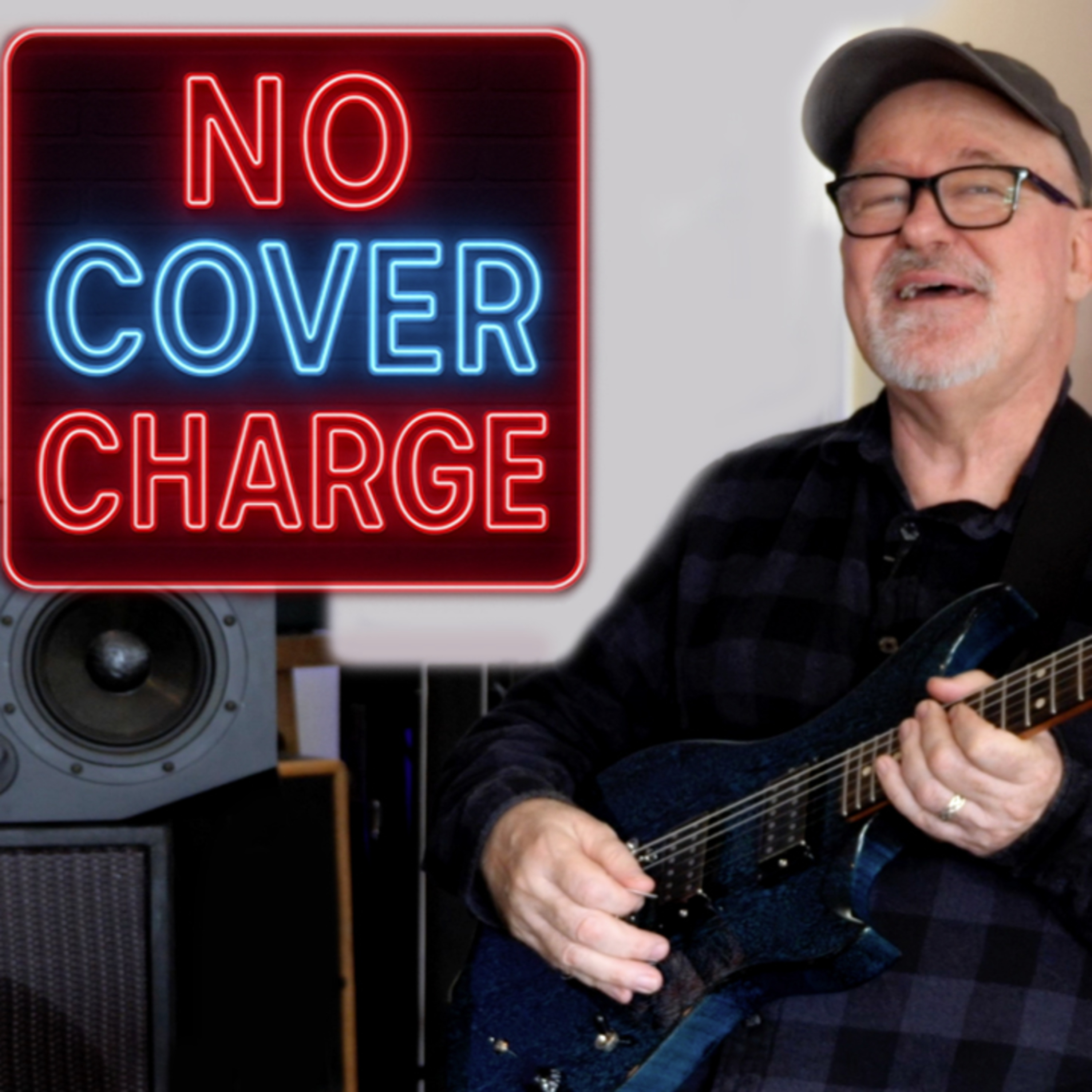
Legendary Los Angeles session guitarist Tim Pierce joins Tyler Larson and Jared James Nichols for a deep, honest conversation about feel, pocket, creativity, and surviving a lifetime in music. Tim has spent decades recording for some of the most iconic artists and albums of all time, including Michael Jackson, Eric Clapton, Bruce Springsteen, Bon Jovi, Elton John, and countless others. From playing with the biggest musicians in the world to navigating social media pressure, perfectionism, and the real grind behind great guitar parts, Tim breaks down what truly matters — groove, service to the song, and staying human.
Expect stories from decades of studio work, insights on rhythm vs. virtuosity, why imperfection is powerful, and practical wisdom for guitarists trying to build something real in today’s music world.
If you care about feel over flash, this episode is required listening. We got a little flashy, too, though ;)
Subscribe on Apple Podcasts (podcasts.apple.com/us/podcast/no-cover-charge-…)
The No Cover Charge Podcast on Spotify (open.spotify.com/show/1etwgleKExKzncMWSeSqe6?s…)
Instagram (instagram.com/nocoverchargepodcast)
TikTok (tiktok.com/@nocoverchargepod)
Facebook (facebook.com/profile.php?id=61579811813164)
The No Cover Charge Podcast with Tyler Larson & Jared James Nichols is your all-access backstage pass to the world of guitar—and there's never a cover at the proverbial door. Hosted by two of the most passionate guitarists you'll find, Tyler and Jared deliver a mix of electrifying interviews with legendary guitarists, laugh-out-loud tales from the road, deep dives into guitar culture, and no-holds-barred gear talk.
Whether you're a lifelong shredder or just love music, you'll find something unexpected in every episode—a hidden gem, a new perspective, an epic jam, or a story that'll stick with you. It’s always a good time, and best of all? No cover charge.
Plug in and hang out.
Transkriptvom Podcast bereitgestellt · Zeitmarken springen hin
Tuner's right this. Is a tuner, yeah, just press, press the you see that on off thing right in the center there. Oh, press it harder. Harder. Harder, Tyler. Longer. It will stay on. Oh, cool, Yeah. The. So what I meant to do was what are? You trying to do that one? That was awesome. Wow guys.
What a journey it's been to get to this room, Jared. Hey, thanks for having us over to your home. Well, you went to the store this this morning and they knew your names already. And I have pictures with them. Would you like to talk to the pilot? And the pilot said, yeah, I'll get you there on time.
A great joy to be here with the great Tim Pierce. Absolutely, and an honor. Well, I watch your show and I listen to your show and I know it well. I love it. It's a it's a great community that we get to be part of. And I do get people to come visit. I'm going to do some more this year. I mean, I visited Oz Noy in New York and I had Phil X here and some other people.
It's been really nice to host people and to to interview some people. I plan on doing more of that this year, so, but I'm fine here by myself. And you know, it's funny, I I had mark of the Cherry here, you know, a few years ago. I had Matthias Asado here a few years ago. So I've been doing this a long time and I need to get some of these people back.
Yeah, this is the time of year, right? Everybody starts knocking on your door and they're like, Tim, it's Nam. Including us. Yeah, hello, Some of those people. Your plans for the NAMM show have changed, You know from one, one time to the next, you go to 1 show. It's a certain thing that's going on in your life.
Where we are with Nam these days in a post COVID world, there was some ups and downs. I feel like we're all finally back and ready and raring to go. The Internet world has fleshed itself out more than ever before. So everybody I think is on a more even playing field than ever before as far as the understanding of of what we're all doing here, what we're supposed to get out of this.
What all I get out of it is this right here, hanging with like minded people and enjoying music, whatever Ave. that may be, whether it's talking guitar or just the everyday tribulations of being a musician. Are there any conversations that you find yourself having might resonate with some people out there well?
You brought up a point. It used to be because I'm from a different era where when I moved to LA, there were no cell phones, no computers. No, you literally had to be in a room with people to make music. So everybody was joining other people in rooms to make music. And there was a thing where you people who got great at what they did, they tended to hide the recipes for their greatness, be it what the gear they were using or what they were doing. There were a few people who taught. And but if if people were more protective. And the thing I love about today is it's the opposite. You literally tell people everything. You share everything.
And the point for us now, and it really is a better world in a lot of ways because you build your own business instead of signing to a record label, you put out your own music, you find your own audience. The infrastructure you build is for yourself. And it's a much better way to go because if you're tied to a record company or a management company or something like that, they're not necessarily going to spend 100% of their resources on you.
And when you're doing it yourself, you are. So that's the best thing about the new world. And you're right, Nam is, is a place for your audience, your your followers, your people, to show you how much they appreciate you and you can tell them how much you appreciate them. So I love it for that.
After playing for so many decades, how do you still stay inspired to be like we walked in today and like you were ready to go, man? Yeah, three rings set up for us. He was like this one's this, this one's this. Well, thank you. I, I do live in agony some of the time and it is, it is pleasure and pain because, you know, last night when I set up these three rigs, it was like, oh gosh. I know you were on your hands and knees doing this. I'd much rather be watching.
Obviously. So people need to know that being an artist or creating something, there's a great part of it that there's a lot of drudgery. There's a lot of time when you're in the weeds. There's time when you're bored. But what you reveal after several days of maybe fighting and pushing and being in the weeds and drudgery and boredom and agony, you keep pushing and then you reach this place where you have somebody to show.
And that's what people see. And there's nothing wrong with that. You know, I wouldn't mind. You know, I've done videos where I show people, you know, 18 solos that I did and I picked the one I like. You can show people the struggle, but in general, as a performer, you're going to show them the tip of the iceberg so they're just don't be afraid to be in agony.
That agony, I think, has affected the mental psyche of certain guitar players, meaning if you don't play it perfectly, don't post it. And that yields some behavior that has been frowned upon that we don't necessarily need to dive into. But the whole misrepresentation of yourself and the ability to do that now is easier.
And yet we are becoming, as things get easier, we find out as consumers what's going on with our own eyeballs. And that pressure, I think is what led to all of this chicanery with trying to be, I don't know if it's comparing yourself and that rushing feeling of anxiety that you can't measure up to someone else posts which may or may not been real. As we've learned, that sort of cyclical maelstrom of chaos is really something that if you have the right person to tell you no, no, don't worry about that, then that's great. Or if you're like us and we've been run over 100 times and we've learned, Oh no, that's fine. It's.
Absolutely. But for the other people, the majority who don't have a supportive word in their ear, they only have what's represented to them on the screens, it can make it difficult to really embrace your true artistry, whatever talent level, technically or otherwise, that tends to be. And that can really rob people of the joy of these things in the music.
And it's it's kind of sad because that kind of thing doesn't scale. It won't last. No, you can't, you know, get away with things forever. But when it comes to guitar, I just have such. It's surprising to me because I like to echo your sentiment. I get so much of A reward when I finally finish the thing, whatever that thing may be. And that sort of dopamine hit is way better than any refresh pull you can do.
Well, you've mentioned a couple of things that you've mentioned music, and for me, guitar was always in service of a greater concept was which was the song and the singer. You know, the great guitar solo on Stairway to Heaven was surrounded by Stairway to Heaven. But what you have in social media is often the only way to rise to the top is to play twice as fast as the fastest players in the world. And frankly, to me, I would rather hear something slower in the context of a song most of the time. But that's just because of my upbringing. But I understand and I will never criticize somebody who is, you know, playing 64th notes at, you know, 200 PPN. That's a little slow, but yeah.
Can we compose some sort of beautiful sounding jam? The. The. But I like music and I like, I like to hear a pocket and a song and a groove and it's OK to be in the middle. And I think it is better for longevity because if you live at the edge of virtuosity, there's a certain point in life when that will diminish by 10%. And that's a hard place to come down from. But yeah, people should make sure they enjoy music. In addition to get her.
I did a solo record years ago, and I wanted to reach the wives and the girlfriends more than the musician. Nice. You know so. That's a funny like put on your whiteboard when you're going into the writing room. Who are my wives? Girlfriends. Is there a time though, like let's say back in the 80s when you saw what was happening and you said to yourself, you said this is like a little bit of a rat race. What's the goal?
Absolutely. The the lucky thing that happened for me, I had chops that worked well in the 80s, but there was, you know, I could never be Eddie Van Halen or when Steve I came along. But what happened in music, where Nirvana showed up, they needed they the music industry. I worked all the time because I had enough studio skills to be versatile and remember what I just played and edited and altered and reinstalled and all that stuff.
But I also knew how to sound like a band player with heart. Yeah. And when music got simple in 1992 or 1993 or 1991, whenever that was, yeah, I was right there ready for it because I was the studio player who could sound legit playing the simple parts. That's great. Yeah, that's a skill in itself that you don't tend to build up when you think you're going to become a session player. You're like, well, I have to be able to flash on the screen almost like what we're talking about with social media. You need those top level, top of the iceberg skills to get through the door sometimes.
Am I right about that? Like or and then people will be like actually plays a really in tune D chord also. It's pocket. It's, you know, the guitar players that got hired had a good feel. It's primarily your pocket, the way what you play feels. And they can tell you to play cleaner or suggest another part.
But if you have a great feel, you're in rhythm feel. Where did your pocket come from? Playing with great drummers who kept telling me to lay back. I spent the 80s with drummers, great drummers who kept telling me to lay back, and the 90s to. And then about the year 2000, when everybody was on the grid, I was told that I was playing too far back to bring it forward. You're like.
And now I feel like I'm too on top because I did a session, just a session with a friend of mine and I listen to the parts I need to bring it back again. Wow, yeah. Do you, do you analyze your playing at this stage, looking at waveforms like that and? No, I could hear it. Yeah. Yeah, I could hear it.
Yeah. Yeah, yeah. I mean, I love seeing. I love being exactly on the grid because that's where we live all the time. Yeah. But in this, on this particular day, I was. I was too in front for the room. Thank you so much, Caffeine. Yeah, you had some, always some espresso that you so kindly made us earlier.
Yeah. Are you in a espresso in the morning, guy? Start practicing. Is that your routine? No, my mornings are slow and I am productive but only part of the time and that's my secret to having fun. I I try and get as much possible during the day, but I love taking a break and you know, having some fun. So I push every day and my wife lets me push the first time of Saturday and Sunday too.
That's fantastic. I just push a little bit every day and it all adds up basically. Is there something you're working on right now especially that is like got you fired up and all? Yeah, because Larry Carlton asked me to sit in on Monday night as a secret surprise guest at the Baked Potato. Oh, wow. And at first I felt panic and fear in my stomach. And then I said, give me the easy songs. And they agreed.
But Travis said, would you like to play 335? And I said OK, and then I, I've been practicing the tricky part of room 335, which requires some quick key changes. And so I've been practicing that. It's been really fun and it's easy. And back to your point, I'm glad you brought me here to this point again. These guys when they play, OK, I've seen Larry the Baked potato and other people too.
It's not about being perfect. It's about being human. And there is no expectation. Like I even saw a friend of mine with his band the other night at the baked potato, everybody super high level arrangement of a fairy fusion song, great players. They got lost in the middle of the song and he had to stop the song.
It was the greatest moment of the night to in the audience, you know, And they're they're going, oh, what happened? And he said, yeah, I told you this was going to be a rehearsal because they have rehearsed. I'm telling you, it was the greatest moment. Yeah. My whole thing has flipped. Yeah. I don't want perfection. I want to see heart and humanity. So I'm with you.
It took me a long time to get there. Like in that jam. I never would have gone. That was the best point. I think that's. The part I heard now that's. The part where I started losing my pocket because I was like, what? What is he doing? It it, it didn't end well. That was great, but it's like. I still was the most human perfect part in my opinion. Right.
So it's. Which you cannot fabricate, by the way. You can only reach that by going for it. And if you're never going for it because you're too afraid that it's not the way it's supposed to be because of external sources or what other people are up to, gosh, it's such a robbery of yourself. It's funny too, because we were talking about this in a earlier pod, but I said like, feel is everything.
And I don't mean that as like a Blues thing or it's like just music in general. It's all about the feel. It's all about where you're putting everything. It doesn't matter genre, whatever it is. But like to your point, that's what makes us human. That's what makes it special, is the fact that like some of my favorite moments, I'll listen to stuff and it's like somebody flubs and you're like, and then it becomes.
And then you like try to learn the flub and you're like, how well I have to mess up to actually do it correctly. Like there's there's a note that Eddie Van Halen misses in the very intro of Ain't Talking About Love. He misses AB string. And when I learned that riff, I was like, it doesn't sound right.
And then I missed the B string on accident. I was like, it's like the hair on my neck set up. I was like, that's what he did when he was doing the intro and they kept it. And that's why I like that intro. It's like when someone pushes the fret down too much on a coordinates out of tune a little bit and you hear the. It's like sounds like vomit all your guitar neck. It's too too high.
You over bent it. And that's a great thing about guitar. I dare say that if you were learning violin, you know, the squeaks and squawks and imperfections are not that welcome. But on the guitar, it just become then you're Keith Richards. It's like. Squeaks and squawks. Yeah, yeah. Great. That's funny.
Can we for? That can we demonstrate to put a bow on that feel subject playing ahead and behind. Absolutely. And what that feels like, yeah. So we can let people know like what's wrong? Yeah, just give me any place some rhythm and I'll I'll go for it. I like those demeram pebbles. Those are sweet. Man, broad quality.
Yeah, Thanks. One's really good. Too. Far back better. That's perfect. That was good too. Too far back. See, that's the thing I'm trying on purpose to lay back too far a few times, but yeah, that's really it. But the other thing about guitar is people don't mind if you play on top if if it's because it sounds like excitement. But the best players can kind of choose when that's going to happen.
And certain drummers like Kenny Aronoff used to play with him all the time, and he would always play his fills a little on top. And So what you heard back was excitement before every bridge, every chorus, every verse, because the fill would speed up a little bit. So it's not necessarily the greatest sin, but we've got to be able to be aware of it and choose.
And it can also enable the musicians around you to unlock their best parts of themselves if you're giving them that foundation. Well, and what I always say is that when I play rhythm, I try and get inside the drum kit because you know, the most fantastic thing about sitting next to a drummer is the stuff that you don't necessarily hear in the track, but the way he's he's hitting his high hat and the internal stuff that's happening, you don't quite hear.
You can get inside that as a rhythm guitar player, become part of the drum kit. You're there and maybe 1 drummer is playing more on top than the other drummers. Had to do that too. Like Josh Freeze, he had to at a certain point play right on the grid and all the rock records he did, he was right on the grid. So you would adapt your style to him in a different way than say, somebody like Matt Chamberlain, who would lay, lay back a little more?
It's funny to like as you started to back off, I'm just sitting here listening and I'm almost thinking of it like as a voice and I'm hearing it like you're singing it. And when you started to get like right on the money, it was just like melted together, right? And it's like this beautiful thing where like, yeah, you don't think about like what lick I'm playing or it goes beyond that.
You're like, no, it's how it's all laying together to make muse. You know what? I. Mean and I'm still working on it. I'd like to get better at it. I'm the guys that like if you play with Ray Parker Junior, this legendary guy, when he was like 16, he was doing Motown Records. They would hire him just because of his feel. He couldn't necessarily read the chart, but they just had to have him on the record playing a simple part because his feel was just so perfect and it still is.
There are people like that out there. Madison Cunningham has that. You listen to her play. I did a like a three-way jam with her for AUA thing and she has a pocket that I could spend my life trying. To where does that fit into guitar, in particular the rhythm side fitting into the melodic side?
Because sometimes I'll find certain chord progressions and harmony will dictate pocket of mine. You know? Ideally you have the same pocket no matter what you're playing, but I'll get more excited about certain things and maybe lock in quicker. Do you have any sorts? I guess that's your genre preference. I guess, I guess whatever you put up, whatever track you put up, if it's an amazing keyboard, MIDI synth generated track, it's going to be more on top of you know, it's going to be more on the grid and you can actually play a little bit ahead of the beat at times and be part of the excitement there. The thing about great singers is they ignore the pocket. That's why when I, you know,
when I play on a song, I often have to turn the vocalist off because they, you know, a great like Frank Sinatra, it's just he's completely abandoning. He's pulling against it. And that's what makes it feel so good. You can't get away with that as a musician as much as you can with a singer. But some vocalist I have to turn off because they're stretching against it and it's usually back. How would you suggest someone to actually like work on their I was?
Just going to say, what are you? What are your? Pocket exercises. Yeah, I, I think if you went to old Motown Records and played along like just, you know, if you could play, play it by yourself and then listen to the record and see if you can make, make the parts they're playing sound legitimate. Play along with those records and then play by yourself and see, I'm actually surprised.
I didn't expect it. It's a really hard thing to get let this like he played it. That gentleman who played this, it's my girl. Yeah, my girl. There are others too. I mean, certain people, Danny Korchmar, like all the rhythm guitar parts on the Henley Records have that crazy pocket from a great rhythm player, the Ray Parker Junior stuff. Just explore, you know, older music basically. Older music with not any sort of grid necessarily. No.
And, and, but like, even like Eddie's pocket, his rhythm pocket is phenomenal. Yes, but that's a rock version of that. Still has a little jazzy swing though when you analyze it. Well, and I always say about John Bonham, everything he does swings, even if it the threes are really small. The reason every good drum part is so great is that he's swinging.
Everything he turns, everything he play, he turned. Everything he plays is a shuffle. It's just it might be the tiniest increment of fast threes. Yeah, 1313. When people would ask you if you're running a session and they do the thing that we were talking about, but you're getting paid for it, so it's okay.
The sort of dance monkey. All right, go do it like this. No, no, do it like this. That's I know for you really vitalizing to get pushed in that way as a session player, did you find little tricks and tools that would expedite some of these sessions and these demands? You're already laughing so I know you have something, but I remember Lee Sklar had the the fake number on his base.
Anything along those lines that? I got pushed pretty hard and one time a producer was a dear friend of mine. He kept asking me for these tweaks and microscopic changes and I said I won't say his name, but he's still he's AI love him. I love this guy. I said the only way this is going to happen is if you leave the room.
And so he left and I did it with the artist who had no preconceptions about microscopically manage my part. He understood he left the room. Occasionally I would be brought to that breaking point. I might just say to people, you need to tell me exactly what you want because we can't go any further unless I'll say this is on you right now.
I've tried 17 things. This is on you right now. But mostly what it is is getting mad, hiding your anger, hiding your resentment and breathing and eventually giving them what they want and letting it go. It happened in every session. I learned at a certain point that every session had a point of resentment, strong anger that would come when somebody, you play your heart out on five different things.
They reject it all. You're going to feel bad. Yeah. And you're going to be mad. And you just hide that and you just try and serve. It's service, you know? And at a certain point in life, like, I can't do it anymore because I don't have to do it anymore. So I don't do it anymore. Yeah, Right. And but I did it.
And certain musicians can't do it in their 20s, but I could do it in my 20s and I did it all along. But certain people, they can only really do their own thing. And I respect both sides of it. Can you recall an exact minutia that was being argued about? Like what? What would it be like? You're doing this and they're like, no, can you go or would it be something even more?
Edgar Winter has been in this room managing my guitar parts and he is such an amazing musician that he I want this note to be longer, this note to be shorter. Almost there. You know, the rift needs to to be bound and make that a little longer, but the little shorter and can you make it a little cleaner?
And that's good. And the first time you did, it's great. But the second time you did is, I mean, it's literally, you know, inch by inch. And I'm not going to, you know, he's earned, you know? The redo. Yeah, I'm, I'm in service 100% at that in that moment. But but if it's somebody who is not a musician, then it gets a little harder to survive that.
To please them yeah, that might actually be the most satisfying when you can get the non musician to be like oh I. Prided myself. Like that's the hit song maybe? I don't know. Yeah, I mean, sometimes you can ask them, well, let's put something up that what's a, what's a guitar part that you like?
And then they they hear that and you go, oh, I can do that in my sleep. Yeah, that's. That's what you want, Yeah. Exactly, they just don't know how to explain it was. There ever a point, Tim, where you like early on, you know, because there's a lot of younger players that are trying to get a footing, where you got humbled and you went, I need to go do my homework.
It was. There was 20 years of that. Yeah. I mean, I've literally learned on the job. When I was a teenager, I only cared about soloing. And I moved here and I had almost no rhythm chops. And I would think, oh, you'd want me to just go because this was the early 80s, and do it perfectly for three minutes. So that was part of it.
Pocket was part of it. But yeah, it's I moved here and everybody was so good that I just started to rise. The the humility. It's like I would go into a session. I sat next to Dan Huff. I sat next to Steve Lukather, sat next to Tom Bukovac, sat next to Michael Thompson is another one. Michael Landau. And these guys are all freaks, so devoted to every aspect of the instrument.
I never, I always felt inferior. Always. But you learn, that's how you learn. Absolutely. Michael Thompson helped me with the stereo delay sound. I mean, the, the, the speed at which these guys create parts is amazing. And their stamina, where after three hours they're ready to dive in again and give you 110%. The main thing that that really blew my mind was the stamina of these guys, you know?
They could just go forever. Yeah, live in the shed. Yeah, yeah, humble pie. And it still is in a different way, You know, it's. Never changes the. Story of my life. Humility is a good place to live. But I feel like that's why you are who you are and you've had such successes is you're able to take things like that and continue to grow.
Well, and I made that mistake because my I would orchestrate guitar parts and I worked doing that endless hours for people and I'd so I would take a part and make it simpler and then simpler and simpler and a certain point I started under playing too much as a studio musician. My one regret is that I should have kept the wild, overplaying, ambitious side more active. You know, that's, that's my only regret. There is a danger that when you're an ensemble player and you're playing, you know, behind singers that you will just never explode and.
People get the moment. Want the guitar player to explode? Yeah, yeah, yeah, they want. You to explode the the button. Yeah, they want you to go crazy. Yeah. And if you spend all your time, you know, not doing that, it can be a danger. That's my one regret. OK. I don't think I've ever asked you, Tim, who your influences really are, where as we've talked about all of your session accolades and who you've performed with and played with and been recorded by and but as far as your guitar playing upbringing, where did that start that led you to the session part of? It.
I'll do this quickly. Yeah, yeah. I know you have an abridged version for us, but I haven't. Give us the clip. So by the time I was three years old, I was I fell in love with Top 40 radio on AM radio. So there's like a little speaker coming out of a clock radio, somebody's bathroom, and Led Zeppelin song comes out of it.
It sounds like the biggest thing in the world. Now, in the early 60s, it would have been The Beach Boys, everything that was on the radio in the early 60s and then The Beatles. But then are you experienced Jimi Hendrix? But before that, it was B.B. King and Eric Clapton and Johnny Weyer, Mark Farner, then even Crosby, Stills National and Stephen Stills and that just kind of killer, you know, narcotic.
Kind of. I'm over here getting excited. Yeah, so it was everybody and everything in the 60s, but I mean, ZZ Top, I saw them. I mean did. You see OG ZZ Top. I did. I saw him open playing Rio Grande mud. Shot it. That's why I'm open for like, Sly and the Family Stone. What? Was your favorite song from that set?
Did you have one? Just got paid. Just got come. On Chevrolet, you know, oh man it. Must have been amazing. That's on the first record, I think, Chevrolet. It seems like there's a million in places you could draw inspiration from, but it's always so funny, like I've been inspired by you, you, all these people in my life, and you can still formative Time is where it all sort of stems from.
Do you guys ever have a thing? I've noticed this a lot recently where you like, you go back to that certain first stuff, right? Like I resonate with what you're saying with that music and you listen to it now and you listen to it and it sounds a little different. You hear parts you've never heard before and you hear things and you go, I didn't know Hendrix did that on. Are you experienced?
I didn't ever hear that. You know what I'm saying? Or you hear it with different ears. And it's a beautiful thing because you like learn again. It's like hearing it the first time. Well, yeah. And you remember, personally, I remember it wrong a lot of the time. Yeah. And then you go, you know, the the thing everybody comes to is you think the Led Zeppelin guitar sound is huge, but you realize it's a skinny little guitar sound on the top of the biggest bass and drums you've ever heard. And that's a secret, yes.
And what you know there's. So there's lots of surprises when you go back after you've learned some stuff and listen to thing. I don't know if every guitar player truly reaches that point, and I think that's why they quit is because you don't find that one piece of music or something that gives us this feeling that causes us to turn on the cameras or press record or what have you.
Keep playing this thing and I wonder if it it's not always a guitar player that does it for you. For me, I think I heard EVE 6 Inside Out when I was like 8 years old, or Lenny Kravitz. There was a song called Super Soul Fighter and there's barely, yeah, there's barely any guitar in that. But it's just this wall.
And I'm like, oh, that that's music that that is giving me a feeling. I'm going to use guitar to get that feeling. It's true. And so, Jared, who were your influences? Well, I heard things my dad would play me, things that he was into. So he was like that era. So it was the first stuff I heard was Cream Mountain, Grand Funk, Wes Bruce and Lang, of course, Zeppelin.
But then it was like Robin Trower and Ted Nugent and all this like really, really exciting Blues rock. So when I heard like guitar, I was like, it sounded like a stick of dynamite going off. And it was like, man. And then when my friends played guitar, I was like, and then I was sewing to Zeppelin. I was like, I should just play drums because everybody plays guitar.
But then I picked up a guitar and I distinctly remember doing the like, that sound, right? And it was like, OK, that's that. Like pulled on it. And then that's all it took. But that was actually the first riff he ever played when he picked up a guitar. First, if I ever played with this one, Sir, it's like this is this. Black Sabbath, Yeah, that was the first one. And I was like, whoa.
Richie Blackmore, I forgot him. Deep Purple. I was insanely in love with everything. Deep Purple did it. Just insane. Big time. Yeah, was there a certain? Lich reminded me. In any of those early obsession phases. Well, I mean, of course, you know, and that so it was the you. Know there's a couple licks like that that it's not like you're going to transpose them and play them all over the place, but when you play them in the exact spot oh.
And Band of Gypsies, I'm sorry to interrupt, but it's coming. Go on Band of Gypsies. It's just like I listened to that like 400 times. And even though I don't play that way, I I want it to. Now talk about pocket. You isolate Hendrix and he's constantly moving back forward. It's just elastic. It's like a rubber band.
Unbelievable. Yeah. It's unbelievable to hear Hendrix in the Experience, then with the Gypsies, with Buddy Mile, with how a rhythm section can change how a player plays. He sounds like two different eras of himself. He was only made music, put out music for like 3 years. But it's like that guy that could have been 10 years from then.
Jimi Hendrix compared to the albums. The Allman Brothers. So I am interrupting. You. No, it's great. It's coming. It's coming. Back in Memory of Elizabeth Reed, like my favorite record of all time is Wichita Alignment by Glen Campbell. Oh yeah, OK. But then this, my second favorite is In Memory of Elizabeth Reed record basically.
But I mean anyway. What about that record? Made you. It's just beautiful. I mean, it's like just this, you know, it made me float. It was almost like when dinosaurs ruled the world because, like, those guys were going up there. They're like, man, we're just plugging in and we're playing. And you listen to it. Yeah.
And it's like, where's this? How did you guys tune? Yeah, What tuned? We didn't. Make a Les Paul sound that sweet on the bridge pickup. Right. And all of a sudden you can't. It's like, it's crazy, man. And then another band. And then I promise I won't interrupt you. We're going on a tangent. This is.
This is the. So in the mid late 60s, Three Dog Night was my so it's way before your time, but songs and singing and and pocket and groove. Insane. So just had to mention them. It was more about the music and the songs and guitar and service of that. I see. So but every era is different. Like all have musicians here and I'll make references to the 90s and they won't even know who I'm talking about. Right.
The 90s, yeah. You know, it just changes so quickly depending on when you're born. I had a conversation with a friend the other day. We were talking about ZZ Top and I was playing some old ZZ stuff and I said, yeah, it's crazy. See how most younger generation these, even if it's not, you know, let's say LaGrange or something like that, these deep cuts off these records, they've never heard this music, right? Unless it was played for them, they don't know this music. So it's almost like you can't get mad at people when you're like, you don't like, they're like, how would I ever hear, you know what I mean?
Yeah, Tejas or any of these records, whatever. It's hard to realize that not everyone has the same taste as you when you're so sure of it. Well, when we have these in our hands, man, we are so sure of like. I remember I made a a YouTube video and it was asking, I found, you know, younger looking people or really just any people, and I said, do you know who Jimi Hendrix is and half and I. Was like I heard an amazing.
Story I thought for sure would be like 99.9%. There was a they were doing a Best of Hendrix record. I can't remember if it was someone told me the story that was there. And one of the interns came in and they were getting ready to start this record the the the talk for the record. And they said, yeah.
Does anyone know if Mr. Hendricks is actually going to come for this meeting or not? And everyone kind of looked up he. Does the family was there Ghostbusters and. Everyone just kind of looked up and was like, we can start the meeting. You won't be attending. Yeah, we at this point you have to forgive everything because everything is moving so fast now that we're you just do your thing and watch everything.
It is moving fast, but do we have to keep up? No. Who's telling us that we have to go fast? No, I don't feel like. We were kind of intentionally talking about that earlier. It's a choice. It's really like, it's almost like a lifestyle choice. It's like if you want to get in the race with anything, whether it's with technology, with gear or whatever it is, that's like a choice now.
And like I was saying to you, Tim, I was like, I just prefer to do my thing. And I understand that it's there. It's just I don't really have the capacity or the. Well, I don't think you need it. I think that the going fast thing is actually just an attitude that people can adopt based on absolutely nothing.
It's just external pressures that aren't actually manifested unless you're going to let them affect you. What I mean by not going fast is like go at the pace that you are working hard, but it doesn't have to be the same speed. I would equate this to posting things at the same regularity as somebody else, or measuring the length of your content or how fast your licks are. You know, all of these things, these comparison things, and I don't know why.
Maybe it's just a head of Nam and I'm about to be comparing myself to a lot of people. But I think that that is truly a death knell of your artistic creativity. And the further you can get away from the comparison and the closer you get to the adoration, if you want to call it that, just the the love and joy of it, it makes all of the stresses of this business that can pile up go down.
I agree totally. The quieter I make my life, the more I get done and the what I want to get done is a five year arc. It's not a one month arc or a one year arc. I want to get some real stuff done and I know I can look at four or five years and go, if I just slowly push this rock uphill, I can get there.
You're absolutely right. Otherwise you're just putting out fires. Like if you're, you know, if let's say you're a YouTube and you're getting gear videos done twice a week and you're busy. What is the opportunity cost of what you maybe really could be doing to further your real love of music or your own business or whatever?
If you're in service of clients all the time or companies, what are you losing by doing that? You're making money. You're filling your calendar. But I totally agree with that. I've learned that boredom or not knowing what to do for an hour or a day leads to the greatest ideas and the ideas that are most meaningful for changing your life and building something real. What you're saying right there is really impactful to me because it's so easy to say and we give ourselves this, our own advice and we also still don't take it. You could say that about music or many. I know what I need to do, but you. Get sucked into it, and then you pull yourself out and you. It's like, it's just like, you
have to be aware of. Yeah. Like, you realize, oh, I've scheduled three interviews today and I have a gig tonight. Shouldn't have done that. Yeah, I'm going to bet you. Yeah. But then, you know, you go through it and you try and not put yourself there again. But the thing about guitar that always amazes me is the most satisfying thing is the sound of it. Which means.
Gorgeous. That's the beauty of it. That to me is the ultimate Joe Walsh. You know, it's like it's just the ultimate. I think it's also like heart sometimes with with it, like I'm listening to what you guys are saying about it and we put these like it's like false timelines on. Lane, It's somebody else's timeline.
Yeah, it has worked for somebody, but it probably won't for. You and it's just not realistic. It's that's not like in order to do that, like what like you said to him, it's like you have to find what fulfills you and artistically what you're trying to say and do and just hone in on that because everything else is kind of just noise.
It's amazing. I love watching on my phone some of these players and I go, man, that's unbelievable. I can only imagine how much time they spent learning how to do that. That's great. And then I come back to my guitar and I go and I go all that feels good anyway, but sometimes you just have to let it go by. It's almost like watching cars.
You go, I wonder where everybody's going. Yeah, I don't know, going there. I'm just going. To go over here. Yeah, good advice. Good to these guys. The. The. There is a volume pedal here. Might as well use it. Tyler, you did the the best pedal board management of the whole. Did I? I was. Did you know what you were walking into or something?
I was stepping into it actually. He was like, Oh yeah, let me click this Halo on. Andy Timmons stuff is really good. Oh my gosh, that's the one piece of gear you couldn't live without as a session player. Your. Career the can't say tuner. No, no. It would be a Fender of oxide lamp. I mean it for a while it was a particular amp, It was my divided by 13 RSA 23.
Basically because I could get the perfect edge of breakup on it. I could trust it in every situation. Man, well, it's been such a privilege. We have to talk to you all we have. To do it again, but what a what a treat to be here with you. And we're really honored and honored, man. Really appreciate your time.
Yeah, you're legenders. Too. Well, thank you. We can't wait for what's in store next. It's true. We'll keep going and it'll be. We'll do it slow, and you should too. Oh yeah, You know, the best part about this stuff is I feel like I learned stuff. So do. I like watching these back and I I'm like oh shit I was there for that but I forgot about it.
I'm so grateful that they get captured on. Yeah, I mean, part of my regret part is I was so busy doing sessions. I was just tired all the time. And I yeah, I just didn't, you know, just recovering from being tired all the time and burned out. You got to go past the burn, a point of burnout all the time.
But now I'm like you. It's like everything I'm exposed to. It's like, well, I can either choose to feel inadequate or I can just learn.
