

No Cover Charge Podcast· Staffel 1· Folge 25
Episode 25 - Dweezil Zappa's WEIRD Guitars
Montag, 16. Februar 2026 · 1 h 00
Kapitelklicken springt direkt hin
Shownotes
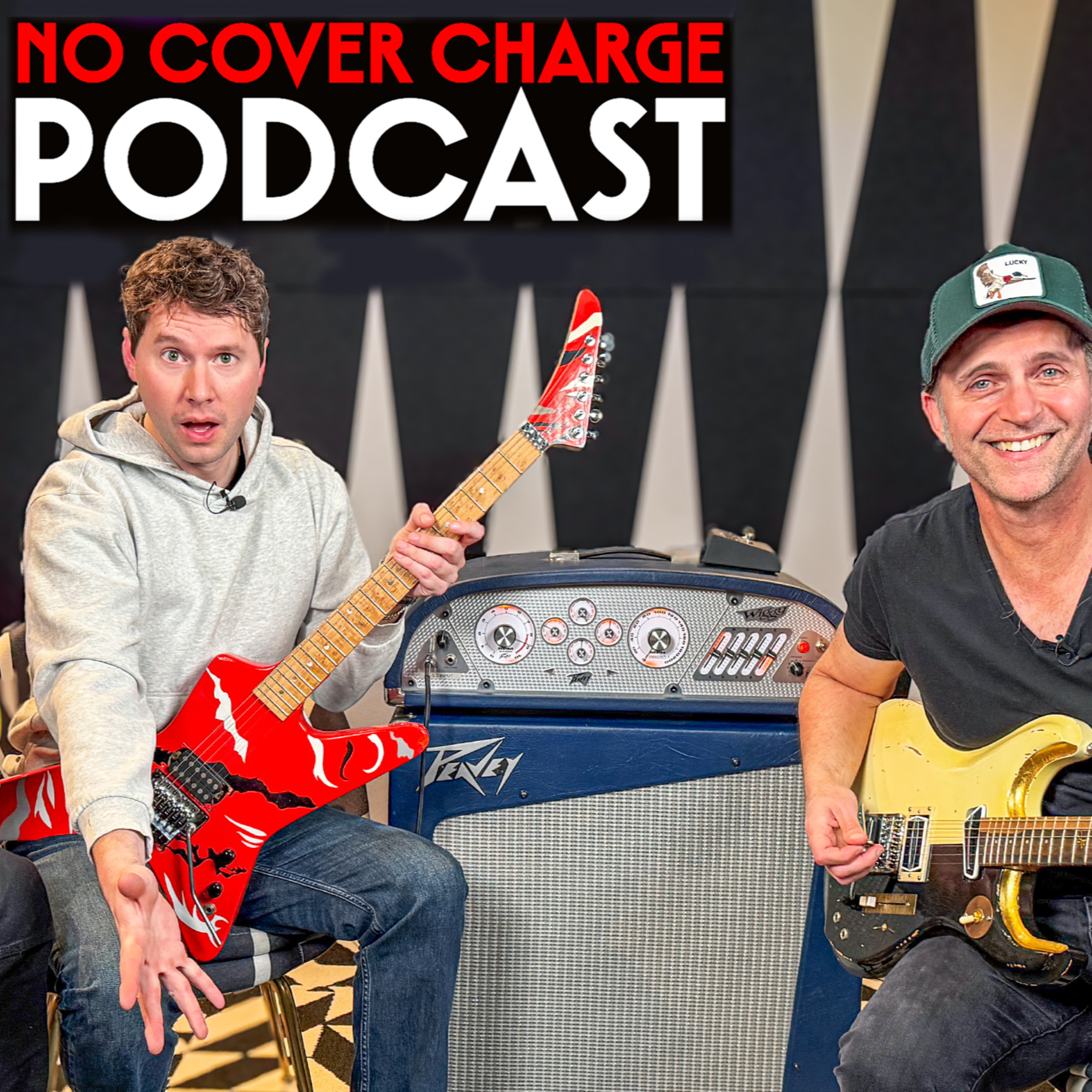
What happens when Dweezil Zappa opens the vault? 🤯 In Episode 25 of The No Cover Charge Podcast, Tyler Larson and Jared James Nichols step inside Dweezil’s studio to explore his wildest, weirdest, one-of-one guitars — including a half-fretless SG experiment, microtonal monsters, the heavily-modded "Shut Up and Play Yer Guitar" Les Paul from Frank Zappa, and the Kramer gifted to him by Eddie Van Halen himself.
From microtonal fretboards and built-in sustain systems to a bizarre Peavey amp designed like an Aston Martin dashboard, this episode is a deep dive into experimental guitar design, tone shaping, feedback control, and the creative mind of a true innovator.
If you love rare guitars, boutique gear, Zappa history, and next-level tone experiments — this one’s for you.
For all things Dweezil, check out
dweezilzappa.com
Subscribe on Apple Podcasts (podcasts.apple.com/us/podcast/no-cover-charge-…)
The No Cover Charge Podcast on Spotify (open.spotify.com/show/1etwgleKExKzncMWSeSqe6?s…)
Instagram (instagram.com/nocoverchargepodcast)
TikTok (tiktok.com/@nocoverchargepod)
Facebook (facebook.com/profile.php?id=61579811813164)
The No Cover Charge Podcast with Tyler Larson & Jared James Nichols is your all-access backstage pass to the world of guitar—and there's never a cover at the proverbial door. Hosted by two of the most passionate guitarists you'll find, Tyler and Jared deliver a mix of electrifying interviews with legendary guitarists, laugh-out-loud tales from the road, deep dives into guitar culture, and no-holds-barred gear talk.
Whether you're a lifelong shredder or just love music, you'll find something unexpected in every episode—a hidden gem, a new perspective, an epic jam, or a story that'll stick with you. It’s always a good time, and best of all? No cover charge.
Plug in and hang out.
Transkriptvom Podcast bereitgestellt · Zeitmarken springen hin
We have Andrew and Eric running things behind the scenes. Thank you, darling. We're here in Dweezel Zappa's studio, Jared in California somewhere. Yeah, Secret layer. I honestly feel like I'm in kind of a villainous cavern. Well, you know what's crazy about this is there's a switch in the control room that I can lower this whole ceiling down. Really almost like the trash compactor instead Star Wars. So this is normally where we record drums and we have the ability to totally, completely changed the shape of the room and the tone of the drums.
Yet another episode on the road of the No Cover Charge podcast, and we're doing a sort of joint episode on your channel and on our YouTube channel, so you can find more of what you're about to see on Dweezl's channel. I don't know what to expect. You kind of prompted us with this Dweezl. You, you texted or we chat on the phone.
I got some weird guitars. That's kind of where you left it. We're going to. Transform beyond that to I'm I've pulled out many one of one guitars, things you won't see on the street anywhere. Yeah. This is the spot we. Had a weird gear episode. This is. This is not weird gear, this is. Oh, it's weird.
OK, weird beer Part 2. This is this is like Dweezl's weird gear. Episode This is the stuff that I think to myself, I need a guitar that'll do this, but nobody else does. Yeah, now I put in a couple that are a little bit more straightforward, but for the most part you're going to be experiencing guitars that should frustrate the hell out of you because you will not know what to do with them. So on this podcast that you're watching now, it's going to be a pretty deep dive into a lot of these instruments Do Weasel is going to demonstrate primarily the instruments potential. I would say we'll see where this footage ends up, but then on your channel it's going to be a much more concentrated attack of the guitars by Jared and myself,
right? So. Oh boy. And this amplifier. Yeah, I think it should be an equal opportunity offender. Experience. This amp, it was made by PV. They actually put this out in the 90s. I designed it with two guys that worked at PV at the time. One guy, James Brown, who was one of the guys that worked on Edward Van Halen's 5150. Wow.
First came out through PV and the other guy was John Fields. And this amp is a solid-state amp, but it does things no other amp does. And people seem to like the look of it, but they didn't know how to use it because it's labeled weird because it's based on the dashboard of an old Aston Martin. So you have things like oil and temperature and battery and stuff like that.
And people like I don't even understand. James Bond would love this amp. For sure it has. This EQ section that is, you know, you look at it and go, oh, it'll be like, you know, a Boss graphic equalizer. It's nothing like a guitar graphic equalizer. It's it's frequency ranges that you typically don't use for the guitar. But that means you can make wild sounds out of this. Are there some of these out in the wild? There's a lot of mountain wild cool right now if you try to look one up and we we could.
We'll pop one up. I bet you can find one for like under 500 bucks. Dude, I'm about to go up. I was about to say I might need to get one before the episode goes up. We don't. We don't endorse price gouging or whatever that is where you amp up the price. But even if you're not even a guitar player per SE, just having this in your place and convince your significant other it might go well in a living room. I love it.
I love the cabinet too. Cabinet looks super hip and. We will grab a guitar, we'll plug it in and the first one maybe we'll kind of get some idea of how the amp works. But as each guitar. Goes on. We'll just keep making weird sounds with, all right? First guitar. This one was like a fever dream mixed with a dumpster fire. This this idea was what if I made a guitar that had only the low strings fretted and the high strings fretless? OK.
And. What if I did that to an already made SG and put a sustained device in it so that you could? That's really. Cool. Notes that would just go and go and go. Wow, would you like to see a creature like that? I absolutely need to all. Right, let's. I feel like I'm at the freak show. I don't. Want to I need to see?
It what if? Here it is. This is exactly what I just described. And that's. It is. Is that a pickup right by the neck joint? Yeah, so here's the crazy part. When you have a sustainiac in the guitar, it creates this rolling magnetic field that you can feel and the string is kind of just rolling over, right?
But there can be crosstalk things that happen where you will end up with noises that you don't want. If you have other kinds of magnetic interference, you end up not having the neck pickup. You can get a a neck pickup sound out of it that's not like a thin single coil. But you can't have the throaty because you actually remove your actual pickup from your guitar. You don't have access to the same thing. So I tried to defeat that by putting a pickup in front of it to see if I could get a different neck pickup and run it in parallel to the guitar so I can still have a neck pickup sound along with the sound that it created. And did it work?
I did not make it work yet. OK, so I was. Confused because the sustainiac is not normally where I would think it is. Which is that? This. Is like, what kind of sustainiac is that? But this is something else. This is the sustainiac. Yes, this is the sustain go through if you want. So this is kind of like a fail at the moment. And the pickup that was in here underneath this didn't sound that great just on its own right there somehow. It was really kind of flubby sounding. So I then said, well, what if I try to do something that's not the same kind of magnetic thing?
What if I do a contact pickup, like something that you would put on like a marimba? OK, you know, Yeah. So there's also a piezo pickup in the bridge. Now this bridge is, if you notice it's split, Yes, when you play fretless, you have to play on the fretline to make it in tune. But if you want to play chords, you cannot do that and have them be anywhere near in tune because they're not going to be intonated.
They're too far away from the frontline. I needed to make this so I could flatten the strings even further towards the nut. So I had to cut it in half and move it so I could then put my fingers where I want and intonate the guitar for the finger position. There's a lot going on with this guitar. I'm. Over here, like sweating.
I'm like where? Do you start with it? So what we can do is we can plug it in. Let me just make sure it's working correctly because it does have two batteries in it and I got to make sure that So try to play some stuff you know with some some chords and then go ahead. Go. Ahead. I'm in dude, I'm in.
mute the things that you don't. Oh yeah, So you have to. OK. Because it's not. Polyphonic. Oh, I see. OK, All right, now check it out. So that's got like this kind of squish and like a cool kind of like corrosive distortion, yeah. Now acidic. Yeah, now check this out. I'm going to start playing with these sliders It's so.
Weird. One thing I know about fretless is our normal vibrato doesn't work like we intend. Well, dude, it's like you're going to hit it, like you're going to fret it and you're like, Nope. Did you put like a glue? Is that like a? There's sort of this marine glue stuff that hardens to make it stiffer on the top I feel like. If I had that guitar for like an hour, I would like come up with the coolest stuff.
Yeah, there's some crazy, crazy. Yeah, sick dude. He emerges from the darkness from the darkness. Should I play this for a second and see what let's let's see what it sounds like. That'll be great. That'll be a good. One my, my brain is already like blasted. I'm like, yeah. Let's see what I can make this do.
That is so sick. That amp sounds so sick. I'm going to go on Reverb and buy one that's a. Really cool amp. No, that is so sick. Where can I buy one of those guitars? Well, I, I think you'd have to get an SG and then you'd have to go to Echo Park, Gabe, Echo Park did the the initial fret job on this thing and put in one of his pickups and.
Shout out to Gabe man. Yeah, Gabe does great stuff. Thank you, Gabe. All right, so let's move on to the next guitar, shall we? All. Right, this guitar has been acting up lately, and it also has two batteries in it to run all of the electronics. This is my dad's. Shut up and play a guitar Les Paul. And this one weighs about £1,000,000. Oh.
My goodness. As Johnny Guitar Watson would say, that's heavy. Weighs £1,000,000. This thing is super cool, but it might misbehave because the last few times I've played it, it was making all kinds of weird noises because. So what's going on there on the bottom? So there used to be a multi pin device where he played this through some kind of a synthesizer thing, but that's. Yeah, it looks like it's mini.
Yeah, that's out of the play now. But what you basically have is this turns on the electronics, and when that's off, it operates pretty much like a normal guitar. But when it's on, this is a Rotary. Oh cool. You can hear that this is basically like stepped positions on a wall pedal. And then depending on which pickup you're on, these knobs will change the the value of it.
So you can make it narrow or wider with this and so you get a lot of different sounds. This will be the volume knob. This has a push pull which gives you a little bit more gain. And I say a little, but it's a lot. It will it will make it probably push too hard into this. I've noticed that sometimes if you have active electronics with this, it kind of there's like maybe an impedance thing that happens where some things it just has a weird relationship with. But we'll see how it goes, I think. Jared, we'll see how it goes, but I'm. Going to see how it goes, you guys. Oh.
I had to help you with that. Oh yeah, she's got some. She's got some weight to. Fall through the earth if you're not careful. Yeah. It's funny, any like Les Paul, you look at this knob configuration and it gives you the ultimate anxiety. You're like, something's wrong. Yeah, something's happening.
OK. Guys, so let's see if it's you might have. yeah. So there's a lot to take in with. There's a lot to take in with this instrument. Take it away from me. This thing's cool. Wow. So was that on the higher end of the road? I'm not, I'm not telling you anywhere where I was bro. I I took a map expedition that I don't know where I went. Wow.
Yeah, that'll do something. That turns off all the electronics. Yep, and that's on to OK. I like it with this. And then this will control the rotor. Yeah, but if you go to the neck pickup, you get a totally different sound and the Rotary will also change it. Here, play So basically he had it set up where he could find the frequency that he wanted. It's kind of like this where if you were on stage and you wanted to find the frequency node, that would make it have more sustained and you add gain just in that area. That's why the wall is like 1/2 cocked. Or you can narrow or widen the queue. Right, right, right.
And so, you know, if you have, it's not really working exactly as it normally does. There's something you know. There's a little bit of, yeah. Yeah, wow. I love that. So what's the lore of this guitar? So my dad found this on a rack at Manny's Music in New York City and probably 1976, and then he added all the electronics.
It used to have different pickups in it, but this is the guitar that you would see on the cover of Shut Up and Play a Guitar, which is my dad's classic guitar series where he made albums that were just guitar solos and he cut them together with interstitial things that would go like weird drum fells or weird speaking, you know, things.
I always felt like I was listening to the radio sometimes, like some of my favorite albums like that take me outside. It's like a real experience and a trip on an an adventure in an album like that. Whereas, you know, sometimes albums can go song to song, but it was like a full on, don't necessarily want to start in the middle, like I want to start right here and go through the whole broadcast. Yeah, that is definitely the way that you could have a guided tour of my dad's best styles of playing. But this guitar is on there quite a bit and you can hear a lot of mid rangey stuff.
But it was his preferred guitar probably in the early 80s up until maybe 8687. Then he switched to this other guitar that was made by Performance Guitars, which was like a butterscotch Strat. But this thing was so heavy, he would often sit and play it well on a stool, you know? But before that, he was playing the SG quite a bit, which was way lighter. But this just has so many cool tones, and he was able to dial in that feedback stuff, you know? So we demonstrated, because we're not so close to the speaker, which is across the room, we demonstrated that if you find the right set of frequencies, no matter where you are, you can get a proximity style feedback, which is what he was a master at.
And so sometimes it's not a huge amount of gain. Like the notes that you play start to bloom and they sound like they have more gain because of the proximity feedback, right? But the notes themselves without it don't have massive amounts of gain. That's so cool because it allows so much articulation with that comfort of the gain and the feedback and the fun of that too, which is very unique and. That's The thing is like if you're a player that is into spontaneity, you know, the spontaneity of of playing and and sort of creating on the spot while you're listening to the band and you're basically having a musical conversation. If you introduce the fact that you can have surprise elements because the amp will take off or
notes will ring out in a way that you didn't expect. That just lends it to that, that place where you were in the zone and you just you're waiting for those moments and it just builds this excitement in what you're doing, but also for the listener. And my dad loved that. That was the whole point of, you know, he called his guitar solos air sculptures, you know, so he was building things with air molecules and you could see him and he'd be like the DNA.
Molecules swirling around, coming together from all different directions. You know, there's a lot of people that make a lot of faces when they play guitar, but my dad really didn't do that. But he would stand there and he would play and he'd be looking off, you know, and you'd see it's just his reaction to what he's hearing in the moment and reacting to. Yeah, that guitar's quick.
Guitar brings it out for sure. Yeah, it's a cool one. This one's going to be your least favorite. OK, so notice anything different about it? There's some, oh dude, wait, all the frets. So what is going on? So this has micro tonal frets so you're going to be able to play like Arabic and Indian style things if you want to? Yep.
What if we don't want to? Well, you have no choice, all right? Yeah. So one of the things that is really spectacularly amusing about this is that from C, from A to C, you have all these extra notes in between. So you'll be able to, you'll be able to hear some stuff. I'm going to let you guys play.
Let me just do that thing. And then I'll see if I can make something sound good on it. It's made by a performance guitar in Hollywood. These guys made all kinds of stuff. They made guitars for my dad. They made guitars for Steve Vai, Warren De Martini. Wow. So Cooney is the main guy over there and he's still around doing it.
How old is that guitar? This one is probably like 15 years old, but I have a, an Eric Johnson Stratocaster that I also did this kind of fret stuff too. But this one, I thought you'd like it just because it's banana yellow and it just really, you know, you it, it kind of brightens up the mood. I enjoy. I enjoy this so far, yeah.
This is about to be your worst nightmare. All right, let me see it in his. Hand. Yeah, let's see what happens to him. I'm getting out of the way. OK. normal riffage. You definitely write some crazy cool. Like if you put can I get some beef? like when I first started to play guitar and I was like really damning hard like in like. There were 4 seconds where your parents were like, sounds pretty.
Oh, no. Yeah, you go. Yeah, dude, he's got. No, simple, man. That's that's the key. So that right there is almost like Nancy Sinatra. The you know these Yeah. Some weird shit in there that's cool as shit. Yeah. This is a finger exercise guitar. If you can do it on this guitar, you can do it on any dude. If you have like someone that you really didn't like and they're like dude, come on, let me jam with the band 100% man. Let her load you up.
Just give him that guitar. Got a great guitar, Yeah, you're. Like instant Steven Seagal. Before you put that away, can I just try something super quick? I feel like I have to play bad riffs on this just to demonstrate. sounds right. The do weasel test, which is the AGD chords because those are apparently in tune. Oh yeah Let's see what we have next. Let's see.
A1 of 1 special guitar. It's not playing that well. The neck needs to be adjusted, but look at this beast. That has a fader on it. This is the volume knob. This was my Hikaru Studio guitars that I had custom made by TP Customs in England and this guy did an amazing job putting this thing together. It's got little benders.
Little. Baby benders, this one kind of isn't working right, but you know, it'll still bend like 1/2 step, but it just this part is not staying where it needs to. This you can move around. It does have a piezo pickup in it, so I could have it separate or I could blend it with this. At the moment we probably don't need to blend it into this because we're not really going for that sound, but unfortunately even without it plugged in, you can hear it's it's buzzing down. Sure, sure, sure.
So some of the notes aren't going to come out the way that they should, but it has these like Charlie Christian style pickups. It's a really bizarre guitar. I just said, hey, you know, I want to get like the Ramones kind of MO's right thing. Let's make it like a black and white deli cookie. Let's put a fader because it's a studio guitar. Yeah, and let's do some gold leaf in these little. That is funky, man.
Yeah. And so it's it's beautifully crafted. The wood is is really nice. Look at these tuners. I like it. Beautiful. You like? It all, the guy did an amazing job. It's just somehow I need to get the neck adjusted and get this dealt with a little bit. But let's go ahead and. We'll find out what. Looks.
Cool, but two inputs. Which one do you? Feel like I had a Dan. The first one is the one that you're going to plug into. Feel like I had like a Dan Electra at one point that kind of looked like this. Yeah, like a baritone one or something. Yeah. OK, let's see what we all right, so the the red knob might also need to be done, but.
play like a any kind of a triad like an A chord. The top Bender will this one will bend the the G string cool guitar. I love that, plays really great. I hear what you're saying with the the adjustment, but otherwise it's a feels. Great. The cool thing about my perspective here is I can't see what you're doing. Yeah, so behind you.
So I don't really have. You don't know it's. Like we're still getting the same First you gotta. Turn it up, push the fade or I. Was like, where's the volume? this like, you know, a fuzz and then this weird twang in it. Oh yeah. And it's look at. I'm just moving it constantly while you're playing and trying to find what's really resonating.
That is so cool. Gets him the way of a hand position, you know so. That's what I, yeah, I found myself going like that a little bit. But it I just love the look of it too. It's kind of hard to beat on the looks. The look factor is. Black and white cookie. Let's go for the next one. A normal for.
Both look and we're like. A normal guitar for for most things, but it's the Jimmy Page Les Paul. I don't know if you've ever played one with these. No, I haven't. Switches. Oh, they're switches underneath the Picard. So you've got something like 21 different sounds that you can make with this guitar because you can push.
Poles. Four of them. Yeah. So you have all kinds of things that you can do to make it in and out of phase, series, parallel, all kinds of. Stuff. What a gorgeous Les Paul dude. And when you play it, you'll be like, wait a minute, that's not a Les Paul neck. So looks. Kind of thin. It is. It's very thin.
So apparently this is based on the one that was his favorite one, which could be wrong about this, but I think he got it from Joe Walsh. Yep. So this is a pretty nice guitar. Very nice guitar. Oh, that is thin. Yeah. OK, now let's see man. sound that sounds like a normal Les Paul and then listen to what the amp does to it.
OK, sorry, come we're not in the lead mode, but I'll go into that after we get. Let's dial in some frequencies here that just make this start to really It's. Rules with a Les Paul, you get some things that it just it it vibes with it so well and you find the certain places where you can dig in and it has like this squish and then it also has this like nasty aggression and like I was saying earlier, like this corrosive distortion. it's pretty cool, right dude? The The combination of things that make it saturate in the mid range, yeah, in a crazy way, this.
Will be interesting to hear all this stuff back. I It's a beast. I love, Yeah. Yeah. But that's not what you expect when you look at this. No, not at all. And the way it just makes each guitar have its own personality is what I designed it for with these guys, and I love it. But like I said, I've seen people do reviews of it where they call it the worst amp ever made. Wow.
I mean, you have to own that amp that in my opinion, yeah, yeah, the worst or the best of anything ever made is I'd likely own it we're. We're almost to the end of this epic journey. This is an epic journey and I wish it would never end well, but my cameras have been. Up through a lot. Twice. All right, I'm going to put this one back, but look at this beast. Oh my.
What is that? It's a Moser guitar body that is Les Paul Junior with a fretless Fender style neck. Now my dad had this neck made in probably 1974 and he used it on some different stuff and then I put it on this guitar and it just says always lived on here because it's it's the most wrong combination that you could probably ever.
It just looks like so wrong. Yeah, and the color and everything. Everything about it. Is, but it's so cool. Understated though, in a way. Like it's, it's wrong, but it's, it's right. It's like a nice piece of fur. If someone showed me like an AI rendition of a guitar went to weasel, I'd be like dude, they screwed up the guitar my. Neck is shining though.
I I like. Yeah, well, this one you'll feel like you can actually maneuver on. This one doesn't have a sustainiac in it, but you can move, maneuver around, but it's a little harder to to play in tune. Yeah, go Jared first. I like him to be the Guinea pig. All right. Let Jared mess it all up. Brother, it's great.
For me, All right, turn it up. I'm going to start like from a more neutral spot now. Try it on the neck pickup and see because you'll hear a difference, OK? sounds from the amp itself. We have no pedals, although we have one on the floor. If you wanted even more gain, you could step It's cool, right? It's amazing.
Oh my God, yeah, I think I found my new favorite amp. I think you did. Does this work with a like does this have a clean some sort? Of you want a clean sound. Just to see if we can, yeah. Well, that's not fun. What's that one on the like? Go from that to just to demonstrate where we're at from. Sure.
You feel like you're like. I know the note is. There, but somebody give me a spark. But The thing is like as I'm moving all these things, you can hear all the mid range and the the really cool frequencies of the lower mids that yeah, but when you're playing those low notes and it sounded like a synthesizer, I know it's insane and you have tons of gain even without any extra pedals, but it's this kind of chewy fuzz kind of thing, you know?
One of my favorite players is Leslie West. Yeah, it's got that. I feel like you can get, you can carve that out of it, which is really sick. It's like you can have all these different ranges with your volume now. Yeah, it really reacts. And that's really cool. Check this one out. All right, so this one, this one has a story.
I'll let you plug it in. But it's so it's a star shaped guitar, right? It originally started its life as a Kramer guitar. I was playing in a school talent show and my guitar was going out of tune and Edward Van Halen came to the sound check of my talent show and he said your guitar is going out of tune. So he drove home and got this guitar. He brought it back.
You can kind of see in the back here just this like a little cream color. This the guitar used to be a cream colored guitar with an orange lightning bolt like Shazam. And so he brought it back and it had at the time a thing called a rocking Jur tremolo system, which was a precursor to Floyd Rose.
But it stayed in tune better than my guitar was staying in tune. And he showed me how to play Running With the Devil. He put the guitar, it was over. It was strapped over me, but he stood behind me and he played it so I could see exactly how he played it that was on this guitar. So this thing is like the the craziest thing, but I painted it when I was 13 and I made it like a Van Halen style paint job with the Schwinn bicycle paint and all that stuff it. Still looks like you just did it yesterday. He literally was at the talent show and he said, hey man, your guitar is going out of tune and he drove home and he got that guitar for you.
Yeah. And then then when I said, hey, you can have your guitar back, oh, he says, no, you can keep it, you know? And so it was the craziest, coolest experience. And so you guys get a chance to play this thing. It has a different pickup in it than it started its life with. This is a Tom Anderson pickup.
Cool. But yeah, it should. This needs to be tightened up. But otherwise it should work like a normal. That's. Like a standard Eddie Van Halen level for the Windy bar, right? Just kind of dangle in there. The funny part too is it has a sticker that I put on it in the back it says corporate. Rock still sucks. I actually love that sitting here, bro. Yeah, that's perfect.
I put that on there back in probably 1983, Really. Yeah. Dude, how cool is that? Thanks for letting me play it. Was cream colored. Look at that guy dangling in there. The dangle bar. The other funny thing is see this little chip here. Yeah, Jared just did that. Well, there's a guy named Thomas Nordeg who used to work on tour with my dad, and then he eventually became a guitar tech for a lot of people, including Steve.
Yeah, so. And. He did on his scooter. Now there's two things about Thomas and his scooter. He's obsessed with scooters and he's also obsessed with Velcro. A long time ago, he had an accident where he was on a scooter and he got hospitalized and somebody had visited him and said, hey, well, you know, I, I wish I could have brought you a whole bunch of Velcro.
And he said, what's Velcro? And then they knew something was wrong and he had bleeding on the brain. And it was only because. He didn't know what Velcro was. Oh my goodness. Because he was so obsessed. So they Velcro saved his life there. But the thing about Thomas is he he picked this guitar up from performance. It had some work done to it and it wasn't in a case he had it on his scooter.
I don't know if he had a strapped around. His back. It fell off and it hit. Thomas hit the edge this guitar hopefully. Of all guitars you have. It survived. It's pretty sweet. It's. Super sweet. Yeah, it's got a dude. Is that you neck play what you played when you were 13? Well, let's see if I can remember what kind of some of the stuff like I you. Said Running with the Devil.
I did do that, but we also played. The first thing I ever recorded was my mother was a space cadet, the single My Mother's Space Cadet. And the flip side was crunchy water, but I played this guitar on that and so the original riff to that. But this guitar has always been such a cool thing. I can look at it and just be like, oh, that's the time when he stood you know?
Sounds exactly. So that's the original neck and everything, right? This is a different neck. I do have the original neck but. That neck's super comfy. Yeah, this was made by performance. It's a really nice bird's eye, you know? But yeah, you know, you can get the rock kind of vibes in this. Yes, Sir. At that time there was no MTV.
There was no, you didn't have anything like what we have now with YouTube or the Internet or anything. So the only way you got into people's records was you bought them and you sat and you listened and you listened with reading the liner notes and you and your friends, you would talk about it every little bit. And so at the point where I had the experience to meet Edward Van Halen, it was such a random thing because he had called our house and wanted to talk to my dad. They ended up he came over and they talked about building studios because he was about to build 5150. And so we got to playing guitars and he ended up producing that Space Cadet record and, and some things, but the entire time as a 12 year old.
And I'd only been playing guitar for like 9 months at that point, you know, so I can barely play the guitar. And he was like a superhero, you know, so I would see that. And you know, you only have the, the, the vision in your mind of what that is. So you can't even comprehend how powerful that is as a 12 year. Like this is the coolest thing.
It's like what people would have if they wanted to meet Muhammad Ali or something like that. You know? It's like he was this actual superhero and I got to learn some really super cool shit for. Sure, so you learned a lot of super cool shit. Yeah, it was like, you can't, you can't duplicate that. It was really cool.
How often do you take all of these strange guitars out that you've allowed us to play today? Like what's the average use per year? Some of them are out all the time and most of them are hidden away and I haven't played them for many years. That's awesome that we got to display these. Seriously, I've never seen any of these guitars. Obviously they're one of ones.
Is that true? They're all one of ones. They're all very unique, very rare. And above all, I think the Ant might have stolen the show. Is that possible? I mean besides I think all the guitars were sick. The last few were obviously so cool with the stories. Yes, but that amp dude. I will send you a message when I get my.
Wait, we gotta we gotta wait to post this until we buy up. All the stock let me buy them all really quick and then I'll yeah in the market on Reverb. That's so cool. And then then you can make your very own video saying how terrible it. Is never buy this amp. It's like when you find something you like to eat.
Don't ever eat there. So what? What, out of all these guitars, is your highest rated? If you take out the sentimental value and you just are talking about the creative aspects of it, probably the one that I want to get better AT and I want to play the most is the half fretless. 1. That one, yeah.
To me, honestly, of all the guitars, besides what you said with the sentimental issues, that's the guitar to me that I keep thinking back at. Well, we have this. Yeah, take us out with some sort of half fretless jam, will you Sir? Let's see. Let's see what we can do.
