

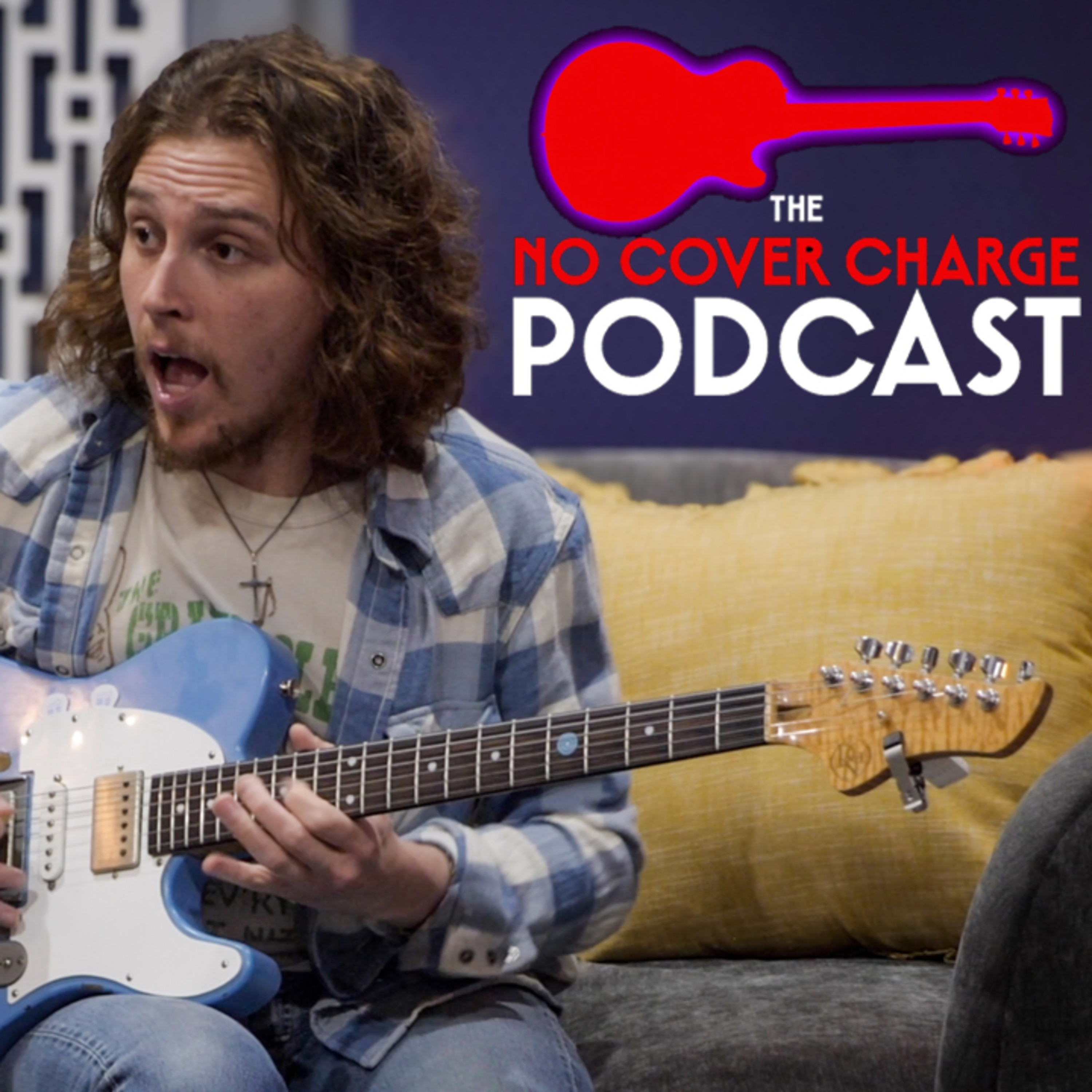
No Cover Charge Podcast· Staffel 1· Folge 29
Episode 29 - Daniel Donato
Montag, 16. März 2026 · 51 min
Kapitelklicken springt direkt hin
Shownotes
The cosmic country king Daniel Donato joins Tyler Larson and Jared James Nichols on Episode 29 of the No Cover Charge Podcast for a deep dive into guitar, tone, and the philosophy behind his genre-blending sound. Daniel shares stories from his early days playing Nashville’s Broadway circuit, the players who shaped his style, and how rhythm guitar, Telecaster tone, and improvisation all play a role in his musical identity.
The conversation moves from gear and pedals to songwriting, touring life, and the spiritual side of playing music. Along the way, the guys jam, break down iconic influences, and explore how great guitarists balance technique, feel, and individuality.If you love guitar, country, jam bands, tone talk, and honest conversations about the craft of music, this episode is packed with insight and inspiration.
Thank you to Neural DSP for sponsoring this episode! Use code *nocovercharge* for 30% off select plugins: bit.ly/NEURALnocovercharge
Subscribe on Apple Podcasts (podcasts.apple.com/us/podcast/no-cover-charge-…)
The No Cover Charge Podcast on Spotify (open.spotify.com/show/1etwgleKExKzncMWSeSqe6?s…)
Instagram (instagram.com/nocoverchargepodcast)
TikTok (tiktok.com/@nocoverchargepod)
Facebook (facebook.com/profile.php?id=61579811813164)
The No Cover Charge Podcast with Tyler Larson & Jared James Nichols is your all-access backstage pass to the world of guitar—and there's never a cover at the proverbial door. Hosted by two of the most passionate guitarists you'll find, Tyler and Jared deliver a mix of electrifying interviews with legendary guitarists, laugh-out-loud tales from the road, deep dives into guitar culture, and no-holds-barred gear talk.
Whether you're a lifelong shredder or just love music, you'll find something unexpected in every episode—a hidden gem, a new perspective, an epic jam, or a story that'll stick with you. It’s always a good time, and best of all? No cover charge.
Plug in and hang out.
Transkriptvom Podcast bereitgestellt · Zeitmarken springen hin
What we should talk about at some point in the pod, yeah, is like we need to have a little bit of like a reflection like section. We've had so many good. Oh, that's gorgeous. We've had so many amazing guitar players that now every time I pick up a guitar, like I think about these dudes like this is better for us I think than them.
It's really good. Oh, that's gorgeous, dog. This is the gold foil preset on Mateus Asado's DSP plug in. this is the cool thing with these these plugins is it will give you a different relationship with your guitar every time you switch the plugin. That's a good point. Like with this guitar, when I was playing it just the other day, I was playing a kind of more rowdy chicken picking, and now I'm in this.
Is that called position 4, right? Yeah. Now I'm in this position 4, which I always like kind of go for the quintessential strategy. Sure, but it makes me a. use the code and no cover charge. Get a nice discount on any Neural DSP plug in, excluding John Mayer. John but. You know, maybe, maybe one day, you Always wanted to play Lace.
Try some out. I'd love to play that today. You will. Oh, dude. Yeah, I've never played Lace Sensors before. He got that guitar. Wait, it's a 80? 9. 89, yeah. Yeah, these are. The pickups are worth more than guitar I think. Yeah, that's like red, white and blue too. Yeah, that's cool as. Fuck, I have a set.
You do. Yeah, unopened. Oh wow. Is there a format you guys pursue or? We pursue no formats. We have no formats. Do we just go? He's like an editing genius. Oh good, he's going to make you look like the Superman. Of who do you want to? Who do you want to be? You want to be Thanos. You want to be the Flash, you want to be.
Yeah, I love Tony Soprano. Oh, he's a hero. He's. He's both. It's kind of like, that's something about that Bob Dylan biopic. He's both the antagonist and protagonist. Yeah. Love those characters. Me too. Yeah. Tony Soprano strikes me as that, too, you know? You know, he's a total maniacal murderer. Yes.
Still a family man to some degree. Loves his kids. You know he doesn't have his wife, but. You don't know why you're rooting for them because they're so terrible, and yet here we are. They're so like me. But music biopics, you mentioned that the Dylan one, I just saw that one recently. You can always tell when musicians are on are the ones coordinating things.
Like when they were coming together in the studio in Bohemian Rhapsody and I was like, Oh yeah, this feels like a band. And then other movies. Feels like they might have just typed this into ChatGPT and said what do musicians do dude? I saw this one movie. It was like years ago. It was like Hendrix.
And Oh yeah. There were parts in there where I was like, yeah, this was like directed by someone that's like never been around. Exactly. That's exactly what I'm talking. Because like, at one point he was playing right-handed guitar, dude. He was playing like. Was that the guy from Outkast? Yeah, but they were doing like Purple Haze and I remember like they're playing the riff and he's up there like.
And I was like, what? The dude at least make it look like he's like playing. What? Isn't that what JD did in the first biopic? Yes, dude, Yeah, you would be great in that role. But both of you guys? Oh yeah, we could be fantastic. Take our talents to the silver screen. I mean, yeah, JD, someone I would love to get on here.
Shout out to JD. He's done a bunch of stuff with with all the biopics. And JD always he, he was the first musician that turned me on to the idea of of specifically listening to records for something like he when he told me about the Beano album, I never thought to listen to records like for something like that.
JD has a remarkable skill of being able to play things note for note. And he told me about whole lot of love with the. Yeah, dude, we were talking about that like a week ago and I was like, isn't there like a weird, There's like a rub. It's always amazing when players do learn things. Note for note.
He was one of the first guys I heard, like nail that Eric Clapton thing. Dialing in the nuances of players fingers. Where do you stop with that though? Like when do you become them? And you're like, what am I do? Who am I? Right you were you all along that that was I've I've learned I feel like I've learned to believe that recently.
OK, I studied JD when I was 141516. Were you doing that over at the? Was that at Western World? Yeah, Roberts at Roberts. I've never seen him go through phases. Like I remember the Mike Bloomfield phase and he was telling me about Newport and Paul Butterfield Blues Band. And then he would show me like this. I remember one time he they were doing Ghost Riders and they would go Ghost Riders in the Sky and they would go into this break section I was doing.
I remember because it sounded a little bit like Norwegian would to me. He was like, he told me about that scale. And then in between songs he would hit like she's like, if you ever listen to the Grateful Dead tune on their live recordings, you can hear Jerry always picking out something. And I remember being really young and hearing JD go on. Where'd that come from, you know? Yeah.
And then he told Val, You know why it's regal. And then you know the different areas of Clapton and it usually stop at the Strat era. I remember where most people me with Clapton though. That was a Clapton line. There's a 90s Clapton record, Passenger I think, or Pilgrim by Eric Clapton. Clapton, Hendrix, B you know, like all that stuff. Was the country thing like really heavy set in? That was here in JD, it was here in him on the. that stuff.
And then all the major mixing the minor with the, IT was such a whirlwind of a sound and he was playing through Blackface Deluxe that had just the perfect amount of rake off like no battles. Just straight up. Straight if, yeah, but that's like a that's. Danger dude, if you're. Doing that's a certain kind of horse to wrangle. Yeah.
And he, he, he was on it like it was. He was Buffalo Bill. I'll tell you what, man, whenever I see a player, I think I might have said this before, whenever I hear a player that knows their instrument and they know their guitar, like the the the touch and the tone, but also they're just like plugged straight into like old school gear, like whether it's like a cranked Plexi or like a blackface, whatever it is, and they're wrangling it.
That's a dangerous person right there, man. So back then dangerous. Did you do that? Were you doing? That I was dangerous at a young age. They called me Dangerous Dan down there. Did they really checks out. That's hilarious, man. I'm seeing you down there. Yeah. That was your. Oh, yeah. Was that like your first kind of regular gig? Roberts, Western World on Broadway. Or yeah, before then I was, I had like a regular round I would make and I learned so much from all these different musicians I was able to play with in that time. And James Mitchell played at Roberts on Saturdays before Don Kelly would play, and he was playing with Monty Good at that time.
And James was doing brilliant bebop lines, jazz lines and outside stuff over Western swing song like Eye to Red or something like. And then like all this Jerry Reed stuff he was doing like the Southern Nights. Yeah, Jerry Reed read so great. The counterpoint Jerry Reed stuff. Well, this is how it all ties in.
You know, James would take like take that, All through the IT was all through the Don Kelly band because JD Simo played with Don Kelly, Red Volkhart, Johnny Highland. Yeah. Brett Mason. If I've already said Brett Mason, I should say it twice. Yeah, because I've learned all those players and then a ton of other players that people might not know, Danny Muhammad and and Rod Riley.
Porter Mcclister also played with Don and Luke McCreary is now playing with Don because the Don Kelly fan had this amazing catalog of songs and then all these just brilliant guitar players that would be around for three to seven years at a time, you know, and they all had their own takes on things.
And all these videos were came online. And I remember when I first started hearing Luke play and like he did exactly what I did and in his way. But what? And he does it beautifully and viciously and persistently. But he learned a lot of those riffs that differentiated everybody. In all the while, I was also just obsessed with old time country music because the first night I played on stage, I went home that night and I started learning about who Roy Nichols was and James Burton because of Merle Haggard, you know, dude that thing sounds. Great.
Yeah, thanks. What is going on with that axe there? Well, right now, physics. You got new strings we. That's about all I know about it. Was that tone through the humbucker? That single coil. Yeah, I was going to say that thing sound. These are coil taps functionally, but they tap to an overwhelmed single coil. Cool.
Interesting. Which is what you want in a single bridge tally, you know? Yeah, everyone point the bridge tally sound and ultimately all the overwhelmed neck pickup telly sounds point to a humbucker solution like, IE Danny Gatton with the Charlie Christian. I mean, Roy Buchanan probably has the best neck pickup tone on a telly that I've ever heard. But I think a lot of that horsepower is also coming from the wattage of of those.
I think the Twin Reverbs he was playing through really loud. Yeah, yeah. Don told me stories about back when Merchants down on Broadway was before it was a restaurant, used to apparently I was never there, but said he went and saw Danny Gatton play there, you know, and he said it was, it was so loud, like literally nobody could stay in the room.
Literally everyone's just watching from like outside or listening. They're like, yeah, that's pretty good, I think. Yes, this is dandy CDG and guitars and this is the that's your baby, right Epoch? Yeah, it's a guitar, baby. Guitar baby. It does differ from a standard tally in a lot of ways. At my time down at Roberts, I played a journeyman tally.
AC foam green one. I should. Have I remember that one brought them? Here today. Oh yeah, I remember that guitar, bro. Yeah. That was very much a a traditional tally, aside from one modification of the bridge, right did a double cut on the walls, which is what Don Rich did on his tallies. So you can really. on that telly.
It's like a model. It's like a Model T, something like that. It was the design of it was brilliant in its simplicity and also in its innovation, tradition and dynamic and accountability to come down onto the player. That's where I first discovered that was with JD and I saw all the different ways you can make a telly sound as it is in its initial state.
It's only so dynamic I see, especially when it comes to effects that weren't as popular in guitars when the Telecaster was released. And humbuckers have a have a great versatility for for one reason or another. So cosmic country was was the inception of of needing to evolve where I was. And Dan came in with the timing of an Angel. It was perfect timing.
And he was just the guy to hop on the phone with for three or four hours and, and, and talk about different Tele bridges and talk about what, what is it that sounds so great when Danny Gatten's playing through Joe Barton pickups, you know, in relation. And then I see JD play and he just has standard telly pickups and that's in a legendary tone.
And so really getting in on it with him. And because the telly sound is is is a sound. Yes. What would you describe it in one sentence? What is the telly sound? It's American. It's the sound of. America and the sound of like American just sounds like a bald. Eagle. Yeah. Even the chicken the same the even the the the the the art form, the actual like translation of some of those right hand banjo's techniques to guitar via James Burton. George Gruen was telling me at one time the telly was designed the original with the original design of the Leo Fender pickups were designed for flat wound strings. James Burton at the time prior to his conversations and and designs with Ernie Ball, he was
putting a a banjo string on his telly. Oh, Yep. Right, so. You can get an unwound G So even like fundamentally, you know, Ernie Ball is a fantastic company. You know, I love them. I've worked with them since I was 18 years old. I think I. We crossed paths at the very first NAMM show I went to and you were playing in the Ernie Ball booth thinking it might have actually been in Nashville. Back when they had him in Nashville, Yeah. And I was like, that dude rules.
And then I didn't see you again for a while. Are you still rocking? Ernie Ball. Yeah, you're in our Ernie. Ball guys, you're on the back of those strings for life. Like how you kicked in the like sub bass at the end? Was that another? Source Audio. Whoa. I need that. Yeah, this is the. One can I play that? Absolutely.
Dude that's gnarly. Wow. Yeah. you might need to go get one of those. I gotta get. One of those it's great for. Fat funky stuff down on the edge there. Yeah, you get that. Low octave, but it also snaps it doesn't like. Get muddies, it's great. Like this? Like this? Pedal has a million things, but I really only use it for this right and I'm just like yeah, I'm gonna go ahead and tape the knobs right there well, I mean there's. A point where you start stuff.
So cool. Now that like, yeah, you can get lost in the sauce quick, man, I always. Took that from a thanks. Thank you. Oh yes, I remember one time I was at a session with James when I was really young and Tom Bukovac was there and he had gotten that's when the M Sixes M Threes were kind of new. And within a year I saw them go on everybody's board, you know, and it was all the wet effects kind of got delegated.
It's like, OK, we can, we can digitize those, you know, but like OverDrive and stuff like that, like that all runs through my tube amp, as does my compressor and my reverb. And so that's like a stake to me. It's. And then everything else runs into a stereo wet channel into the house and and in our ears because there's no. Effects loops in old amps or some Fender amps. Some Marshalls don't have them like some people don't like effects loops in general in their amps, so I've never. I don't think I've ever been in an environment where my efforts were them with how much it of a hassle it was at the time. Yeah, the dividend wasn't large enough. Yeah, you weren't getting.
Any return also I. Feel like with like. Overdrives and things like that, they just react different straight up, like right even to it. Could be the pickup or the amp like that sounds a little different than. Like the way this. Title response to yours versus this one. It'll sound different, so there's a lot of things to consider a time. And John Mayer like the archetype plug in. Apparently the the response is is similar to that of an analog. But I do know like I've had the same Pro Reverb since I was about 16 years old, and it just sounds better when I'm not running a bunch of yeah.
I just got one. Yeah, I was about to say you just got one. Literally, that's why. I'm looking at it, yeah. It's weird because. Not always. The Pro Reverb, I think I got the best out of it when it was at like 4 1/2 or five. So yeah, they're all amps are very different and they all have like a sort of set it and forget it mode that then people work away from to find their own little slice.
But we all end up gravitating back towards the center of like, what's awesome about it? Yeah, well. Said when I plug into certain. Amps like, let's say it's like a Plexi or something like that right away. Sometimes my instinct is I'm like, oh wow, I'm really naked and it's almost like uncomfortable.
And then it's like you have to learn the amp. Yeah. It's like, oh, my first instinct is like, well, let me put an OverDrive on it or like, you know, to like boost the front end. And it's like sometimes it's like no, just get comfortable with what that is. Just make this. Note sound really good instead of being like let.
Me throw like 6 pedals on it right away to get like away from what's freaking me out. There is one. Night right before I I started full time with Don. There was a transitionary period when JD was still doing some shows and I was Don played five nights a week down there and I got a call to go in. I was already downtown and I wasn't called to play, you know, so I didn't have any of my gear with me. But I went down and and Kenny was Kenny Vaughn was playing the shift before I was and he was kind enough to give me a really cool telly that had a looked like a Strat net pickup in it and a standard telly bridge and his Princeton Reverb. And I was used to playing that gig with Don on a pro Reverb, you know, And so I, I say all
that to say that I very much relate to that. That's The thing is like the necessity of the moment. What? What you really need? Very little yes, like if we need. To go like we can go, Yeah, it's very easy now. Though you could just bring a Helix. I use the Helix for my acoustic board live and it's it's unbelievable. Yeah.
How easy that is. Yeah. It sounds amazing. Yeah. Yeah. So how does it different time? How does it work? Into I'd like to talk about some of your music and you just got back from tour. We're always. Playing new songs all the time and before the songs get recorded, historically every song has been played several times.
Like at least 20 times. Cool. Get the vibes, yeah. Yeah, yeah. Yeah. How do you play it? You know, I have to play a song live sometimes 3/5 times before I ever become aware of how hard or how not hard I'm playing, right. And to really dial in on the dial in on a rhythm part that works in the chorus, you know, while you're singing, you know, and the road is, is these tours are such, they're such blessed opportunities to to to be in a exploratory state, you know, especially with a lot of the composed stuff we do. And is there an example?
Of a song changing from when you wrote it to what it became. Oh yeah, dance in the desert. OK, absolutely. Do you remember like? How it started and where it ended up, you know it started. On acoustic guitar, you know, the way we play a song as as guitarists that we write is different than how someone who maybe is playing keyboard is writing a song or somebody who. Knows enough chords.
To sing out a song, but they're not going to be cutting guitar on it if they were to cut it, you know? Yeah, that's a real staple of your rhythm playing. Is that very it's it's not thin because that that tone is is light, I would say, but it's thick. Yeah. You have a Really. Distinctive. It's really and you.
Put the phaser on there sometimes with that effect. And I don't know if cosmic country is a genre, a phrase that you made-up, but I associate that only with you. And it is a genre. At first I thought it was your band, you know, cosmic country, but it's a genre that you play that brings people together in a a modern way.
It's psychedelic, man. It's got all the elements of live music that I love and it's participatory with the crowd and I love it. Thanks. I feel like it's. Dude, it's like modern American jam band music. And I don't. I say jam band in a really fucking jam band is a jam band. Is an honor. I mean that in like.
A communal way? Yes, exactly. It's very. Unifying communicate in the word community have they have the same prefix, you know, and all that starts to before we communicate anything, even musically, it happens in the arena of our mind. And then what? What proceeds from that is an action, whether it be a communication with a note or a word. And that's how we tell our story to the world and hopefully unify with one another just as we are here today. So I the thing that's like so psychedelic to me is that it's within the music, all the, the, the unity is happening. It's it's this communal experience that everybody gets to be a a creator and a a witness are of at the same time and.
So I see a lot this hey. When I started getting environments like that, I needed humbuckers so. I'm going to need some. Humbuckers for the commune here in an. Over around middle pickup, you know, part of the something that's very interesting to me is, is Trey Anastasio in like like 9497. There's like this. Shout to my friend Ed Admire for telling me about this. I got a wah pedal in the in the last year or so and I I never used wah and it was this weird thing for me. It was like I identified as like, I don't do that. Yeah, wah's like a.
It's a vibe Trey and and. What he's doing, he turned my friend had turned me on to some great wah recordings, but it it led me down to YouTube rabbit holed around. I was like, what's this guy's right hand look like? Like it. It's so chill and it just sounds to me like he's almost holding. If I were to hold the pick to to single note with a single note intention, there's.
Going to be about that. Much. It sounds to me like when he's playing rhythm, it's almost like he's hunkering down on it. cowboy. Guitar and Western string guitar I saw down at Roberts. This is still on rhythm land, you know, like You can like you can. Feel it. Yeah, I don't know. What it is? But there's like this extra thickness to it or something.
Maybe that's what I hear in your playing. I love rhythm I. I think about rhythm so much, it sort of excites me the most. Now about guitars, rhythm. Krongbin, Mark Spears. I believe his rhythm playing is Otherworld. Oh yeah. He's so he's. So cool. And Corey? Corey Wong, yeah. And on the whole, bluegrass. Side of things too, because that allowed me to discover the heritage of where all The Walking Luther Perkins Hank Thompson lines yeah so like it's like an. Extended turn around that you're teasing all that all. That like chromatic.
Rhythm or. Melodic implication. Because rhythm. Guitar playing, great rhythm. Guitar playing is sort of melodic by nature, because great rhythm on guitar in particular, you can hear each note of the chord and then it allows you to pick discern little melodies out of that, like just what you were playing.
There was no soaring melody, but there was a lot of melodies happening within that and I think that's what constitutes great rhythm. Well said. It's almost like you have these beautiful paintings in here and they're all in different squares and rectangles. You know, I look at Rhythm as that framework.
So it's like all those pictures are they share something is that their frame is similar. It's at least the same shape to some degree, but it's the content within, which is when I equate to lead melodic information. Bob Weir, you could listen for a lifetime curiously and and hear different nuances in his playing all the time.
It's like when people say they go and watch a movie. So I didn't see that that time. You know, it's like the fifth time you've watched Wolf of Wall Street. You know, you know, that's how Bob is. And you know, Bob is a lot like Eric Johnson in the sense of where the he might take a take AG and then they'll work on the versions of it by placing the 3rd and the 5th in a a different part of the voicing. So if I have my GDP, my 153.
those themes are all influences of mine. And I I feel like plus, I I love Corey. I love Trey in the way that they can just do a pocket rhythm where the guitar more or less is simulating something like into a clavinet effect, you know, and in the Western style Ranger dog and, you know, the guitar is, is simulating A snare drum almost in the sense like the way a mandolin would, right.
But because when those songs were being played, they didn't have drums with sing along songs yet, you know, so they need some two and four. Yeah. So there's a there's a lot of potential in combining that cowboy, you know, back in the saddle again. I. Love that era my song friend. Is a friend. That's like, that's the thing within the. Parameters of country and cosmic like. Love it.
I love rhythms. The Claw. Have we ever actually defined the claw? Because it looks your hand turns into a claw. That's where it comes from. But it's like honky tonk piano. Yeah, you. Know yes, it's. Like an attitude. Man, yeah, the claw is just an attitude. It is, it is and Johnny. Highland has like one of the best.
Oh yeah. Different, you know, it's an attitude. Yeah, yeah, yeah. Where's? Your. Music theory knowledge versus your learning by ear knowledge. Where do those two worlds enter? It happened at the same. Time, really. There's great timing. I remember like the first song I learned by ear was like the day after JJD told me to do it and it was Get rhythm when you.
Get the Blues. Hey, get rhythm when I you know, I literally remember that week I was in music theory class and that song is an F. And we were working. On on the the bass Clef with like doing voice reading and reading all that and all really great timing. I started formulating, you know what F to B flat is in a descending, ascending sense, what the relationship is there, how you can manipulate it. If you want to do a four minor, you do a flat 6 substitution. We just had a guy.
Canton, who knows? I think every bit of music theory, yeah, he loves it. I know some people who who? Don't know one ounce of music theory who are equally masterful musicians. Yeah, So I've. I've never been compelled one way or the other. I just find whatever excites me. If that seems to be theoretical, then I'll go down that whole, but I don't think there's a one-size-fits-all if the design of your mind.
Has the potential to indulge in that. Then you know, you want to make sure that you keep it balanced and and worship the right part of the music, which I think is always the human spark. It's like our buddy Joe Bonamassa, like he's 13 playing on TV. It's still moves my soul. And all these years later, still, like every time I've heard him play, it touches my soul right away. It's like, and I remember him through, you know, doing rig rundowns.
Rig rundowns when he had the the Buddha amps, you know, growing up, there were some players IJD like at the time didn't know a lot of like superimposed lines like that. I've talked to him about this since then. It was something he started pursuing after once Simo started, which was his first project after Roberts.
We started learning more. Theory and doing altered scales and things like that. But I remember he was, he was playing from very, from a language that he never had to learn. You know, it was just in him and it had to get out. And it it, it got out into the world. And it was so inspiring to me. And there were other players that were older than him, you know, that have been on Broadway for a long time, playing in bands. And they would go in and kind of watch me in the back. You don't play until, Oh, that's the Nashville. The Nashville poses this.
Yeah, totally. Oh man, just so just last night, like I'm learning, I'm learning. I'm playing with my buddy Graham Lash at the Capitol Theatre this Thursday and Friday. Amazing, I get to. Dive into some. Brilliant Dead songs. So So I'm. I and one thing I also try to do is I try to remember that really I remember this so clearly.
I was 12 years old in my childhood bedroom and I was playing through a little custom 10 Watt amp and I had a Squire Mini Stratocaster and my dad brought in this this this old distortion unit or a fax processor unit and all these different presets. I remember there was one called Van Halen. Yes, that's the first.
One I got to turn on, I think it was a GE80. Seven. It's still in my living room. That's funny and. It was the. First time I played through OverDrive and I felt the same thing that I felt when I heard records. So there was something in me all all this time that never had to learn theory that that never had to play gigs.
Can I just try to stay connected to whatever spirit essence that is? And when I play, especially now because it's my whole life. Oh, yeah. You know. And so I have to remember that there's a part of me that's not of this world that can connect with music and use music as a way to communicate both to myself and to other people. And it's a very sacred part internally. It's the part that Victor Wooten refers to in his books, or Kenny Warner refers to an effortless pastor. And also like what Steven Pressfield talks about her, it's the same thing Ron Doss and Alan Watts talk about. It's not even a thing I have to practice. It's just a thing.
I if I'm if, if I'm lucky enough, I'll just remember to tell myself to have fun. Yes, really. I blind to it, you know dude. Yes. I always think that way too. And you'll listen back to when you're not thinking about things and you'll go, yeah, it probably wasn't that great. Or you'll think, you know, oh, I'm sure it was OK. And then you go, wait a minute.
My whole guard was down. Like I, I didn't have. It was almost like my ego went away and I was just playing. And all of a sudden you go, what was that like? I just, you know what I mean? Like you flow in and out everyone who has. Any form really, that they create within and, and do it over periods of their life where they change. So you have, you have a vessel, a form, a platform in which you're, you're persistently sacrificing and contributing to and expressing yourself.
And then yet you change. Like, you know, I never had kissed a girl when I first played guitar. You know what I mean? There's the smoke on the water. Tablature. That's what I was all day long. Oh hell, I was getting. Like McDonald's BBQ sauce, I'd be up from there eating chicken Nuggets in my room just.
Let's go. That's a good. Way to see it though man is like every day is day one. Yeah. If you want it to be it. It's just, it's hard for me sometimes because I, it's like, we've done a lot of things that my dad says this. He was like, little dad would have freaked out, you know, And it's like it's such a blessing because it's like you can live in two realities at the same time.
You can live in the reality of being a child to the music while also being a a, a growing and and developing person with the music simultaneously. And I feel like the best players, they play from a place of fun. And you can just feel that like you don't have to learn it. I'm getting goosebumps just saying it.
You hear Louie Armstrong fire. Oh man, you know, and it's almost like the suffering in their lives. They they like had to surrender to the fun in them because it gave them all that gave them a real moment of of overcoming the world. Think about you guys like. Even when we talk about, oh, I use this tone or I use this guitar or this pedal and all this stuff, at the end of time it's just tools to say things. I sure do love this one though.
I love it, but you know what I mean? It's like it's one of those things where it's like just getting out of your own way or just getting out of the way of whatever and just just just do it. Just do it. Don't be. Afraid it's just it's. Here I think about it all the time when I'm on. Stage. It's also I The first time I ever felt the feeling was when I heard that Paradise City guitar solo.
big, like the big the, the, the Stevie slide down. I heard it that was. One thing that was happening, but I felt it, you know, and then the desire to be the desire row is of like, how can I generate that feeling for myself with my own friend? Still, there's times. When I'll put something on I haven't heard in years from when I was a kid and I go, holy shit, it's better than I remember.
Or you hear it different, right? Both. You do. Child slight return came on I just fast forwarded to win the yeah they go on the right symbol yes that was the same with me I. Would just Fast forward and yellow and black CD player and all my CDs ended up skipping because I would just rewind them back to and was going all right and then back to the solo and listen to that until I fell asleep. We did all.
Along the watchtower at Warren Haynes Christmas Jam in Nashville in December. Cool. And Dwayne Trucks and Kevin Scott and I were doing a a trio set. Cool. You know Kevin, that I love Kevin. Yeah. He rips. Yeah. And he's jammed with Kevin. Yeah. Oh, you have. Incredible. He's ferocious like he, he, he's a monster. He's yeah.
He's like a bear. He was dialed. Way back for our our show. But he was like, I could do anything I want if I wanted. Yeah, he's, he's almost like. A muscle car, he's like just hit the ignition baby and like you want to, you want to shift. Gears it's going to be loud that 8 by 10. On its side, on stage, it was like because I. Listened to all along the.
Watchtower and it'd been, you know, years and I went and listened, you know, and it got me down listening to like Rainbow Rd. with Hendricks and like it'd been a little while since I just had a cup of coffee, sat outside and listened to Hendricks and like at least since like the wired headphone days, you know, of his like years ago in middle school, you know, and it's like, man, I it was hearing him again, what felt like the first time, and it felt just like it did the first time I did. It's like certain players make you feel ways that like only they do.
This is still like top. But for different reasons. And you've been through a different life and you have different, you know what I'm trying to say, since that music tends. To be the music that taught you a lot of your And you know, it's an influence on you. So you can look, we should. Let's jam a little Watchtower if you want. Oh yeah, just a little.
Bam on that. It's like by itself every. Every note is wrong if you just play them by itself. I know and. Then, but you play. It in succession. It's like coffee yard. Yeah, it's a little bit like ancho. When you're young, it's fine, nothing you like. And like you get older, the palate sophisticates a little bit, you know? Yeah, I can handle.
All that salt, now the bonus scratcher. Did you bring the the bonus? Scratcher dude. Blues rock back. Scratcher. I mean, come on. You have to play you. Got to. I'll let you use it before you go if you got an itch. That's so. Fun you got like. That's so hilarious, you. Scratch your back and you got. We have a.
Cosmic country socks too, do you? Oh yeah, What's the? Vibe of them USA made socks. That's cool. Are you wearing them? Right. No, I don't. I wish. You, I'll say you go. Let's go. So what's on the? Agenda for you going forward, man. What's what's coming up? We're doing the second. Leg of our winter tour starting with three nights in Raleigh, North Carolina in three nights in the same.
Place or yeah that's awesome dude that's that's some real fans to do that that's great we've been playing there a. Number of years now and we got outlaw country crews we're doing that'll be fun. Cool. Yeah, he's cosmic Country's starting to we're starting to venture out into into different opportunities that are we're always just so focused on what we do with our headlining tours that there's different parts of the year.
You know where you do you do festivals when you're a band our size, you know, just more flex. There's there's more like plasticity in the summer to do different things. So we're going on the road with with Molly Tuttle for a couple shows 8 shows and then Marty Stewart as well fabulous and his fabulous superlatives amazing with cousin Kenny and Chris Scroggs and handsome Harry and we also have camp cosmic coming up at the caverns for two nights our third year.
Oh cool, Underground. Those caves, yeah, little ways away, That's down in Pelham there. And we're playing the Beacon Theater on April 4th, 2 days from my 31st birthday. Congratulations. Thanks. And you know, just putting out, we got 2 records coming out this year. Trying to find the balance of I want to get back to being a student of the guitar in a more disciplined way than I was when I was really young. I, I can't, I wouldn't do this now, but I used to do like the Steve Vai 30 hour workout.
And did you finish it? Oh yeah, freak show access. Dude, I remember that. In the magazine I was like, I'm going to do it. I get like 7 hours. I went to like the 4th. Chromatic one and by then I was like stretching here so I'm. Trying to study like some Ted Green chords right now. Do all that. And so a lot's coming up, you know, a lot of things, both Just continuing, man. Yeah, just continue.
What are your? Favorite Ted Green. My favorite Ted greens. I learned the drop twos from him. It's a major 7th. Chord. But it sounds minor, right? So I use this one a lot for a lot of time. Whatever I want. Brother, it's a power chord. E power chord. And then this is gorgeous. Natural. 6th or is it or is it AC major set?
I was about to say this. It's. Sort of an E minor. It's 1/6, right? But it depends. Bro if if if you walked. On stage, though, you just went. And then you come on. That's the vibe setter, dude. It is a vibe setter. Yeah, and all of a sudden it. Just sets you your mind just goes a big one on a very. Basic level for me was as opposed to was the Clapton. Oh yeah, yeah, absolutely.
Dropping that on that F# all day, that's Royal Albert Hall Crossroads right there. I started to do 2. With with the western strip I. Think I got it from like Leslie. West or somebody, but they would do this drop you guys can tell me so like E7 right? Oh great. You know what I'm saying with that?
Drop in the base every. Yeah. But I hear that, and I go. Joe does that too. That's part of the yeah, yeah. He's all about. It and then the Clapton or the the Johnson stuff he does. That's a whole vibe. Too, Dude, we'll have to do it. Again sometime. Thanks for coming bro. Thanks. Thanks for having me.
