

No Cover Charge Podcast· Staffel 1· Folge 30
Episode 30 - Joe Bonamassa's INSANE Guitar Collection
Montag, 23. März 2026 · 1 h 06
Kapitelklicken springt direkt hin
Shownotes
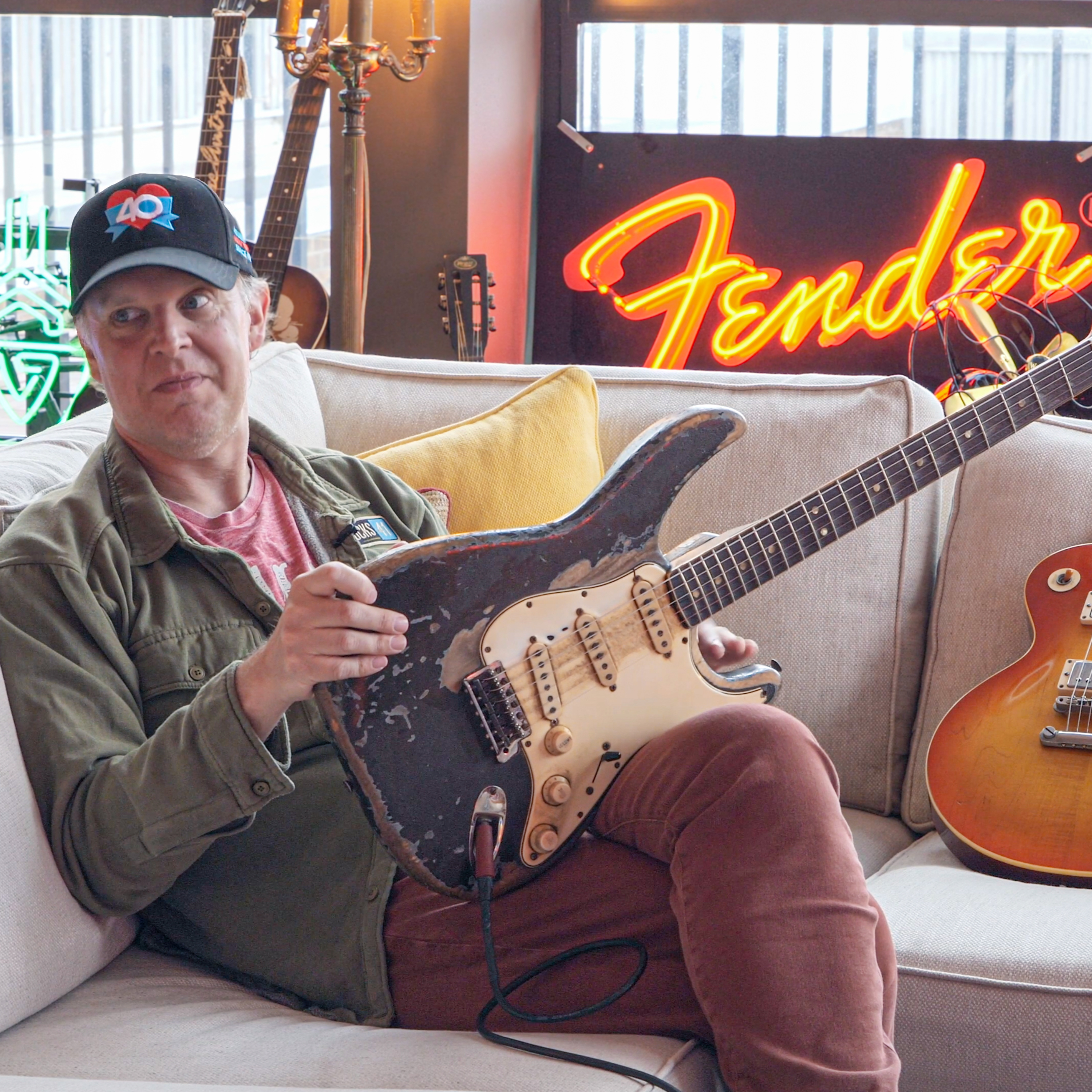
Step inside Nerdville East with Joe Bonamassa for one of the most in-depth guitar conversations with the guitar legend yet. In Episode 30 of The No Cover Charge Podcast, Tyler Larson and Jared James Nichols talk vintage tone, legendary Les Pauls, rare Fender finds, and the real truth behind guitar collecting.From pristine 1959 bursts to historic road-worn Strats, Joe breaks down what actually matters in great guitars, how gear myths get started, and why “hearing with your eyes” might be more real than you think. Plus—cigars, stories from the road, and behind-the-scenes access to one of the most insane guitar collections on the planet.If you love guitar tone, vintage gear, blues rock, or just great musician hangouts, this episode is a must.
Thank you to the sponsor of our show, Roswell Pro AudioCheck out their microphones: bit.ly/RoswellProAudio
Subscribe on Apple Podcasts (podcasts.apple.com/us/podcast/no-cover-charge-…)
The No Cover Charge Podcast on Spotify (open.spotify.com/show/1etwgleKExKzncMWSeSqe6?s…)
Instagram (instagram.com/nocoverchargepodcast)
TikTok (tiktok.com/@nocoverchargepod)
Facebook (facebook.com/profile.php?id=61579811813164)
The No Cover Charge Podcast with Tyler Larson & Jared James Nichols is your all-access backstage pass to the world of guitar—and there's never a cover at the proverbial door. Hosted by two of the most passionate guitarists you'll find, Tyler and Jared deliver a mix of electrifying interviews with legendary guitarists, laugh-out-loud tales from the road, deep dives into guitar culture, and no-holds-barred gear talk.
Whether you're a lifelong shredder or just love music, you'll find something unexpected in every episode—a hidden gem, a new perspective, an epic jam, or a story that'll stick with you. It’s always a good time, and best of all? No cover charge.
Plug in and hang out.
Transkriptvom Podcast bereitgestellt · Zeitmarken springen hin
And then I was just thinking about how many amazing players we've had on and how lucky are we. Did. We're extremely lucky We are here with our third visit to Joe Bonamassa's home, second home of his. We're going to Nerdville in Nashville. Nerdville. Nash. Does he call it Nerdville E? What does he call it? Or does he say Gotham?
Hey, we'll go there too, I'm sure. Oh yeah, yeah, the trifecta. The first one that I went to was the one here in Nashville. Joe is like he's like our our Tri Potter. The Tri Potter. That's exactly right. Joe is becoming a regular here on the show, and we can't be more thankful for spending some time with him. So what I think we can also recognize about the show is how good it sounds.
Oh my goodness. Listen, this show, First off, every week, it's like Tyler is like a mad scientist just tweaking. It's almost like us with our tones, right? He's POD tone tweaking. And yeah, it's dude. It sounds so. Good. Most of the reason it sounds so good is through meticulous and massive amounts of failure figuring out what not to do. But we also have some really great gear that we use to record the guitars in particular, Yes, which are Roswell Pro Audio. Bam.
Like that Joe episode when we were at his house in California, we miked up Gary Moore amps for the first time. That they've been miked up probably since Gary played them. Or with Roswell's. Yeah, the Roswell Pro Audio microphones, the cab mics in particular, what we use, you can see the colored mics all sprinkled around the NCC studio here. Thank you to them.
They're sponsoring this video and we're going to bring a couple mics over to Nerdville. Won't you come along OK? Which 1646566? Yes, all a little bit different. And then I got a small box 50s. OK, which are? Flexi and the UDL 34 is not 6L. Six I'll just try I'm. Just going to try. Dude, just give it a try, dude.
Motherfucker. There is a difference. This fucking guy I I made. Him. He is he is he goes. Just try. Is he? Giving you a little taste. He goes first. Taste is for us. Yeah, exactly the difference between. That's clean. The reissues and the the old ones, the original ones. Put your head between your knees, man. They're they're.
They're tired. You're. Going to make a purchase dude. Dude. I like it that sounds I I've played some Dumble Dumble Tweedle DS and they're they were good but very dainty. This one, it's not as much gain. 25 watts Greenbacks got a long enough. Cable. Bro yeah, I got just 40 feet. I'll turn the air conditioning off. I was going to say we should smoke a cigar, but it might be too windy.
There's a cigar. There's a cigar bar that's. We might just need to. Run around the corner. We might need to go there. Yeah. Anyways, back. On yeah, yeah, I mean like the the the the biggest, the biggest thing with with with all of this is, is how I mean it's like is it does it work for you? You know, and, and like a 57 Les Paul, you know, we're fortunate enough to have been around it our whole lives and people have been very generous with us as far as like, I'm here, try this, play this for take this for a week or whatever you get to, you know, use these as daily drivers.
And and then then formulated, you know, an educated opinion and an informed opinion about what you prefer. You know, skinny frets, small, you know, big, small frets, big frets, you know, neck angles. You can you start seeing the differences in the pitches. And you know, some people make blanket statements about, well, I don't like 57 actually.
What 50 sevens have you played? Why? I played a Murphy lab at, at Guitar Center. I'm like, well, well, then you haven't played because not all 50 sevens are created equal. The the early ones are different than the than the later ones. And then the, the 50 eights are different, you know, and, and it's like, you know, if you're talking about Les Paul, like a lot of 50 sevens, there's chances are you can get an all mahogany 1.
There's so many different, you know, different things that you, it's hard to make blanket statements, you know, even in, even in terms of, of, of Fender guitars. I mean, it's the same thing. It's like early 57, late 57. It's like, you know, but if you're lucky enough to have access to it or yeah, have played it.
So we've arrived at Nerdville E I've seen the signs now. We were trying to remember what you called. Next, call it East. Yeah, it's east. Yeah, I should have named the New York 1 Nerdville East, but but but this predated New York by four years. And technically, we're east of Nerdville. We're east of the original location.
This is Nerdville East, so we've Nerdville Gotham is the one in new. York Nerdville Gotham is in New York. We've checked two of three Nerdville locations off our list. Jared for the No Cover Charge podcast and you actually went to our little studio space, so. Joe's just waiting for me to text him when we're in New York or he's there and be like, Joe, can we come to the? Last stop is Gotham so.
Very few people have seen all three locations. It's a very exclusive list, like a stamp card. Like, like New York is very understated, you know, compared to what we're, you know, what's what's happening here. It's it's, you know, this is, you have to understand like, you know, this place, like my home in LA is, it's 2500 square feet.
So it's a big bigger space, but it doesn't feel that big because of all the signs and amps. And, but you have to remember our logistical hub for touring is Nashville. So all the stuff I find on the road ends up here at some point. And then, you know, we have the processing plant that out, you know, that we used to be down at soundtrack and now it's, you know, and there's, and there's a storage locker full of extra stuff. But you know.
Well, the premise we came up with today was to crack some cases, see what's inside, dude, I think we had we can start with this like it's already out of the case, but. Is this the cleanest 59? This is the cleanest I've ever seen. And I just got it and I bought it from the son of the original owner.
I do think people hear with their eyes. That's a huge thing. I think that that is the biggest thing bro. They hear with their eyes and I and I I. I do the exact same thing. I have an original tube screamer TS8O8 and the reissues are just as good but I hear with my fucking. Wait a minute man, it doesn't have enough scuffs on it.
And, and I got it. I like, I look down at the IT gives me the warm and fuzz. It's like, you know, like the difference. I mean, this guitar is a 59 now the difference, but this is the serial number reads mid 59. So that's right in the sweet spot. And some of these would have double whites so that, you know, as far as the, the, the, the, the cork sniffers like me, all of mid 59. That's what you want.
And my blonde one's the same thing. So it's like, it's like you get the thick top and you know, it's, it's the, the neck and everything. But you know, I also have an early 1960 that's identical to this. Yeah, one says in 1961, says 1959. And and the price difference is crazy because people they want the 59.
Have you ever been blindfolded and, you know, looked away and done that kind of test with any of your guitars like that, where they're so close? And do you think you could feel a difference? I can definitely tell the difference between a a late 60 Les Paul and A and a 59 and 58. I mean the the the next, it feels way different blindfolded can definitely tell that. But as far as you know, sometimes even like a like the biggest neck that I have on a Les Paul, a vintage Les Paul is my double O 1960, the Royal Albert one. Yeah, it's the biggest, biggest neck, even bigger than the 58, so.
I think also a lot of people now when we hear about like whether it's Gibson custom or whatever and it's like, oh, I like a 57 profile. It's like I've played 57 Les Pauls. Even some of your stuff where you go, well, this oh, it is getting windy, dude. And. Like my cushions may blow off so. Amazing.
This is great, man. Yeah. How long did this take? Five months. It's supposed to take two weeks. Joe, you know, like whether you like it or not, you're like the triple factor. This podcast every time I bring hope you're OK. With it, I'm happy to be an honorary member of the team. You literally are. That you already have a pretty solid platform I would say, but if you ever need to get the word out about something, apparently this is the place to do it.
Hey, Joe, you did OK, man. You're all right. I just, I say kids don't do what I do because I got because I got to unwind this shit at some. Yeah, well, not today. Oh, no, we're not getting into licensing issues. It it weren't one of the more famous 60 burst time, I'll let you guys stop. Yeah, you know.
OK, that right there, dude. Oh, good. Oh, that's good. I'll tell you the the the shorter neck tendon on the 60 burst, the later 60 ones, it does something. They they, they have a, they have a thing. That that treble pickup as well. I don't know if it's a little more bitey. They bite. Got a little bite?
The front pickups are, the front pickups are, are they, they're more hollow, kind of like Stratty and then here we'll take that. Well, they they say that those 33 fives burst killers. Let's see here. Hold on there, we. Go. It's like you put on a clown, but dude, that's some transparent. That's a great way to say it.
It's more transparent. Seriously, it sounds like you just popped on a pedal and made everything about that better. And there and there you have it. My best sound in Les Paul is that I play on stage every single night. Is my 3:35 nice? Dude, what's the neck pickup on that thing? I. Don't even. I don't know.
I don't even know. I like the neck pickup on this better, but we're splitting hairs, you know. But but the lead is better. Bro. That's the sound, that's the shit, that's the sound. But you know, I mean the amp is a a a big factor, the Tweedle Dee which. I think sounds incredible. I, I will say that, that, and I told this to, to Matt and Drew when I, when I got one because I got put on a list and they're like, hey, there's only 10 of them so far.
You want me like, yeah, I'll take 1. And I like what they're doing to preserve Alexander's name and they're pretty reasonably priced about the about as much as a tweed Deluxe, right? You know, which is that's what really what it is. But it's new. Yeah. And I when I plugged that in and I said, guys, that is the most impressive new amp I've heard barn on in that thing rips. And I mean, we're talking about two knobs. It's got 2 knobs, 2 knobs, volume and tone turn up to 3 or 4.
And it sounds. Big, big. So, but yeah, there's a, there's your burst market, there's your burst market. Hey Ted, your your guitar sounds pretty good bro. Nice one, Ted, I was. Going to say we should smoke a cigar but it might be too windy. There's a cigar. There's a cigar bar that's. We might just need to. Go around the corner.
We might need to go there, yeah. Yeah, yeah, I mean, like the the, the, the biggest, the biggest thing with with, with all of this is, is how I mean, it's like, is it, does it work for you? You know, and, and like a 57 Les Paul, you know, we're fortunate enough to have been around it our whole lives and people have been very generous with us as far as like, I'm here, try this, play this for take this for a week or whatever you get to, you know, use these as daily drivers. And, and then then formulated, you know, an educated opinion and an informed opinion about what you prefer. You know, skinny frets, small, you know, big, small frets, big frets, you know, neck angles.
You can you start seeing the differences in the pitches. And you know, some people make blanket statements about, well, I don't like 57 actually. Well, what 57's have you played? Well, I played a Murphy lab at, at Guitar Center. I'm like, well, well, then you haven't played because not all 57's are created equal. The, the early ones are different than the, than the later ones.
And then the, the 50 eights are different, you know, and, and it's like, you know, if you're talking about Les ball, like a lot of 50 sevens, there's chances are you can get an all mahogany one. There's so many different, you know, different things that you, it's hard to make blanket statements, you know, even in, even in terms of, of, of Fender guitars. I mean, it's the same thing.
It's like early 57, late 57. It's like, you know, but if you're lucky enough to have access to it or have played it, yeah, this is a 59 what they call.net 335. And I got this recently, literally 2 days ago in Durham, NC and you know, like really like how do you find it? It's like, well, they find me. They just this is an e-mail through the the website going, hey, you know, it was a store called Sound Pure in Durham, NC and they can sign this in from Charles Miller, which is Ted's, Ted's son.
And you know, it's they knew, you know, they saw I was coming to the D pack. Here comes, here comes Shamu the guitar. We're going to want to see this, Mr. Shamu. Here comes the circus. Here comes the here comes the checkbook. Yeah. And, and I went and looked at it and I was like, yeah, I made them an offer.
And they were, they were cool with that. And it's, you know, I'm I'm kind of vacillating. I'm like like my collecting is slowed down significantly. AI just that, you know, saturation point. So, I mean, a guitar like this is, is kind of, it's conflicting, you know? Yeah, dude, you know, five years ago I'd be like, oh man, let's just throw it in the pile of other, you know, most of my stuff is meant like this stuff.
But I'm like, it's a lot of money to spend on a, on a guitar that, you know, probably will never see the road. It's just, it's just too preserved, you know? My ego isn't, you know, big enough to where I'm going to like, I'm just going to beat it up, you know? Well, like I was saying to you, it's so clean.
It's so clean that do you really want to do that? Yeah, I mean, this nickel is like untouched. So I. Can see your fingerprint on. It. Yeah, exactly. It's crazy. And so there's that and there's this one is this one's pretty cool and it's preserved. And then I just got this one this this one came out of Portland. And I have a little collection, probably half a dozen of these things with names in the fingerboards. And this would have been a custom order. And Carl Rolla, and he just recently passed away. And there's a picture of him with this like a cowboy hat and a gun.
He's got like, like a whole, he had a whole like he was, he was a Roy Rogers thing. But I mean, this is a 1966. It looks like it was made yesterday. And and, you know, I mean, it's to me, these are not for everyone because it's it's folk art, you know, but it also is, you know, you know, Gibson like today will make would have made you would would make you anything if you just waited, you know, like, you know, it's like, Hey, I want to put my name in the Fingerboard. Carl Rola.
And they did. And he waited, and he got it. Do you get disoriented when you play fret boards with, you know, non traditional fret markers? Yeah, it's a little weird at first. Messes me up a little bit. It's a little weird. They look cool in photographs. I have AI have AJ 200, Yeah, that has a guy's name in it.
And and I also have a Birdland that has the same thing, 59 Birdland, but you know, on the on the signature models. Yeah, they said they, they purposely put the E in Joe in the 12th fret and the A in Bonamassa on the 5th fret. I'm just, I doubt that. What I don't think? That's, that's what Gembar said. I was so pissed.
I was so pissed that this thing never found a forever home. And I was like, how clean this thing is? It's like clean and straight. Nobody wanted to keep it. Why? I don't know. I mean, it's just, it's fucking awesome. I love it's got a great weight dude. Good weight. When did you get this guitar originally? I bought that 2011.
You got to give it the smell. I'm sorry. It's like it's like I'm a grandma, you know? And they like have to like pinch the kids cheek. I'm like I started to smell it and I can't help my impulse. Yeah, I bought that originally from Gary Dick at Gary's Classic Guitars in Cincinnati. Yeah, yeah, yeah.
And it came from Cincinnati. The guitar was originally from Cincinnati and that's why I named it Johnny Fear. Gorgeous. That was back when this this stuff was fun. What do you mean by that? The prices back when this stuff was fun. A guitar like this now is probably north of $350,000. Wow. Back when this was fun, more fun. This was about 120.
OK, which is still a lot of money. I remember when these were 15,000. Now they're 75 or 80. It's, you know, I mean, yeah, that means there's a demand, there's a good demand. So the prices go up. But but yeah, I mean, like a lot of my collection, if you see like yellow tags, I bought those back back in the day when the stuff was fun.
So it's like, you know, I tell people it's like, oh, I paid X amount of dollars for that. And they're like, how did you get all the good deals? I'm like, I go, this is this goes back to 2008 nine. Yeah, the financial crash of O8, these things were super expensive in like O six O 7 and then AI mean it was a free fall, you know, and they're almost as expensive as they are now. And then and then everybody just collected went OK, we're done. And they dumped out of this asset class that they thought they were accumulating.
And then it then it became not fun for the people who spent way too much money on them, but but fun for, you know, people like me that were just getting into it. And I still have issues. I still have issues with with values because people ask me all the time, like, what do you, what do you, how much is that worth on like?
And I and I always default to, you know? My barometer of 10 years ago, you know, if you can get the, the, the kind of, the kind of numbers that, that people are talking about, mazel tov. Good for you. I was lucky, you know, because a lot of my burst acquisition happened back in the day. Now, I, I, I sold this guitar probably in 2017 and then, and then it kept coming back and back and back and I got pissed off and I bought it, bought it back last year for more than I originally paid for it.
But with the trade, I got back into it for actually less than what I paid for it in 2000. Well, is that it was actually a sweet story you're telling. You were kind of describing this guitar like a lost kid or lost animal like that you needed to help. Yeah, and it's like, it's like, you know, I mean, it's like OO7 it's O 7589 That's, that's, that's the serial number. And it's like, you know, I thought when I got rid of it, it found its forever home.
And then it turned out its forever home was with me and, and that's it. And it's like, this is the one, you know, I, you know, right now we're in the middle of a tour. We just played last night in God knows where. Greenville, SC. And Joe's running on like no sleep. And he came to hang. Out, yeah, exactly. Each year the both touring rigs are out. So all the Les Paul's are, you know, the Nashville ones that are here, they're they're all committed. So this but this is the one I keep at home. Yeah.
Case of emergency case. There's there's no guitar players left in Nashville and the widdly widdlys are are required at on some session and I happen to be here and when every other guitar player in Nashville has suddenly disappeared. And it's just Joe. We need the widleys. In the Johnny fever, he's like I have risen the. Bat and I get a call from the mayor and going listen, the city we're we're we're really in a desperate hour. We don't know if if the city will survive. We really need 16 bars of Willy Willy. We need 16 bars of disgusting.
Willy Willy country fried Miranda Lambert saw you know what I. Mean you're our only. Help. I'm there. Brad Paisley, They're all gone. It's only you. Yeah. What about Brent? No, Gone. I'm gone. You're our. Only help. It's it's, it's, it's, it's, it's either me or Armageddon and I'll bring Johnny Fever and and, and God save us.
All didn't Clapton like wasn't like the Blues Breaker 60 a 60. Well, the rumor, I mean, nobody really knows where it is or there's that rumor that I knew where it was. I've never seen it right. Like the one the classic Blues breaker Les Paul to to my eyes looks, but they're all blurry pictures. You know, I mean that looks that fade looks 59 ish. Definitely the cream guitar is a 60, right? And that was the one he got from Andy Sommers, which that was one of these because you could see if you could see pictures of it, it had the pickup covers of pop and had to reflect their knobs and it still look very cherry.
You know, this is this is what they call a a tomato soup or or in some circles, a clown burst. I don't like the clown burst thing. I don't. I don't get it. It's, you know, like we pay a lot of money for sunburst Les Pauls. You want a sunburst Les Paul? That's a that's. Striking. Because what you know, what what was happening is the aniline dyes that they were using in 5859, if they're sticking in the window, the music store, it would fade and it would, and it would just look natural and you know, the stage lights would fade them and stuff like that.
So by the end of 60, they, they changed the die so they didn't fade like you can, you can stick this thing out in the sun and around the back will fade right? But but but the top. One dude, do you really think I just asking for my own personal knowledge? Do you think popping covers off is really something that's worth exploring ever?
You know, I, there's a, you get a little bit more output, a little bit. It's an aesthetic thing. You know, people you don't have to get double double whites or zebras. You know my my thing is is if covers are popped I usually leave them but I'm not going to pop these. No. You know what I mean? It's even if you know, even if it's like these are double blacks.
Did you just say you were already you already saw it? Yeah, you could. You could if you just look around the screw here. You can see a little. You can see the colour of the bottom. So if you see white, it's double whites, you know, or zebra. It's like you're some 330 fives. You know, in this in this era right here have double whites, but you're not going to pop the covers on a mint guitar. It just.
Doesn't, no. Why, you know, Gary Moore pop covers. He he you know, I think Greenie was the only guitar he didn't, you know, because it's 335. He had a 64335 popped, you know, The strike was popped, you know, but it just depends. The first time I ever saw that was Jimmy Page, like Royal Albert Hall, early Led Zeppelin, when that DVD came out, how the West was won and he had a popped bridge pickup on his. I guess it was the number one.
And I remember I was like, what the fuck is it? It looks cool, but you know it's yet again. Sometimes if you, if you pop them, they start, they start feeding back and squealing. I've had that happen. And then if you put cover on, it's like, I don't know why. Dude, have you ever had to actually like, put a little wax on any of these pickups? I've never had a wax upon anything that's good. Some of them squeal.
Yeah, Martino squeals. It's super high gain or super high volume. I've I've seen them where the guitar, you know, like the normally this reads less than that, but that was kind of random. They weren't measuring, you know. But I've also seen a 10 point something in the front on a 59 and an 8.2 in the back. It just depends.
So do you have a ongoing mental catalog of what's at each Nerdville location? I do, you do. Yeah, I, I kind of do. We had an incident a couple of months ago. We just those we're still waiting on deck furniture. That's why my deck is a vacant. Looks amazing though. Well, yeah, it came out great.
Brand new deck. The first attempt at the deck furniture was an epic bail because I ordered all this. Table up here. This stuff, big umbrella and they go to deliver it and they're like, we can't get it up the stairs, we'd have to crane it over. You actually said that when we were walking. I said, how did you? Get all this stuff up here.
Dude, imagine having a crane in You're here forever. Now like unless you get a crane. Well, I mean the elevator. I have an elevator. Oh, you have an elevator? Oh, that's great. Yeah, but most of it came up. That'll help. What was the mishap? Yeah, the, well, the mishap, it's not a mishap, it's a Cadillac. Problem was this is when you know you need to stop acquiring things.
I the the deck project was like all of the everything, all the furniture was pushed all the way to one side. There was, there was for three months, there was tarps over everything. And I came back here and I put everything kind of back and redid some displays and went in the, the guitar closet and in the other room.
And I pulled out not one, not 2, not 3, but four strats from 1955 to 1958. Cool. That didn't realize I had owned and I was like, yeah, there's that's a problem. That's it's not that didn't make you feel great. That didn't. Well, it made me feel great because I I just acquired 4. Yeah. Yeah, actually you won four strats from yourself. To be honest with you, it's like, you're like when you have no recollection where this stuff comes from. That's, that's the time you got to stop. It's it's just.
Enough. But you bought them all. I did. So you just. Yeah, because I'll sometimes find gear if it's sent to me, for example, for demonstration purposes. But you going to buy the stuff and then forgetting that you have it is another level of. Some of these things go back 20, you know, is, is is is, you know, two days to 20 years.
But also, dude, let's not forget that in the midst of all this cool stuff and these different locations with stuff, you are working. I work. You're on tour. It's cool to come back to, but it's it's it's like your mindset, it's like it's not you're just sitting around going Oh yeah, there's that and there's that. It's like you're coming in at all times of the year, potentially only at a certain week here, a week there. It's not like you can literally sit there and go Oh yeah, I got, you know what I mean?
Depending on when you're. Watching this video, Joe is probably on tour right now. We go on tour, I mean, when there was stuff to buy and and and it was fun and I would come back with crates full of stuff. Dude, what was your favorite buy? What was your favorite thing that you found where you just your eyes lit up and you just went holy shit. Well, the the my favorite purchase was the one that meant the most to me and the guitar is not here. He was at the Ryman is is the the Howard Reed Strat. That was the one that meant the most because I was, I dreamed I had the guitar on my wall.
And when I was in like like 10 years old, like some people had Farrah Fawcett, I had I had the Howard Reeds draft. That explains everything. And, and then I got an opportunity to buy it from Bill Blackburn through Grunes in 2011. And coincidentally, I picked it up this day at the day that I, I played the Ryman for the first time. So, and then I, you know, the guitars in the case and I can't even believe I'm in the same room with this thing. And there was some fans upstairs at the green Grunes. And I was like, just give me a second, you know, And I picked it, picked up the Strat, and I figured I said, you have a reasonable expectation of what the Strat weighs 10 lbs what, heavier than this?
Holy cow. Hold up though, did you play it that night? Yeah, I did. OK. That story is like legendary. Yeah, I mean, I played it that night and then it's the first black Strat ever made. And and it was at the IT was at the Rock and Roll Hall of Fame for 17 years. I loaned it to the Ryman for their, their, their Rotunda.
And every time we play the Ryman, I get it out and I and I and I put a little sign on the on the on the stand. I owe you 155 blackstrat. And then that was so that that really meant the way I mean, like, you know, I mean, I've, I've pulled some crazy stuff out of out of that, you know, you know, the, the, the Marshall stack.
I remember that story. The Marshall, well, the, the one in the, in the, as you come into this place, I, I remember getting in Springfield, Mass, you know, and it was like a winter's day. And then here we have it stacked outside the Symphony hall. It still happens. It just doesn't happen as much. And it doesn't have to because it's like, why would I want? Yeah, you're good.
I'm good, you know. But also, dude, I can say this personally how gracious you are with all of this gear. There's been many times more than I can count of you going, Oh yeah, just take it, Take it and try it. See what it's all about. Like you were saying, getting them into hands. And I remember, you know, I was here once and he had that 64 ES 335.
And I was like, man, this is cool. And you're like, take it for a while. Yeah, just take it. It's like it's one thing to have all this stuff, but it's also another thing to share it as well as let it be used as intended and take it on tour. Not not that I keep looking at that thing. It just looks like a brand new guitar.
Yeah, it's, yeah, you know, I mean, but you know, you can use these in the studio and not, you know, I mean, they should be used, you know, and you know, one of the things about that I've I've always found with with guitar collecting versus playing is sometimes the mint stuff isn't the best playing.
Can I grab that guitar over there? Can you talk about the what the lefty is? Yeah, go. Dude, come on. He wore it out, bro. He wore this guitar. It looks like it was in a fire drag through mud. I mean, I've never seen look at the knobs on the pickguard like. Oh yeah, it's it's one of the worst worn out things I've ever seen. That thing mess me up.
And by and by the way, this there's for the for the for your video, there's there's tons there's I'll, I'll send you a link of, of Lefty playing this with The Rolling Stones. No way. So was that his only guitar, you think? Yeah, I mean, I have pictures of Lefty playing this guitar when it was meant, and it's charcoal frost. That's the color, yeah.
And you're now, if you're saying yourself, Joe, what's up with the horn? Somebody cut the horn. Somebody cut the horn. Well, why is there paint in the horn? And Lefty had played this guitar just like this upside down. Well, he's a lefty for years. I mean, for up until he passed away in the 90s. Be a be an offender, you know, connoisseur.
I'm like, OK, well, that's, that's cool. And it's a 1966 bound neck charcoal frost strap, which just as a guitar is rare, tell bound neck strap in charcoal frost, which is not typical color. So OK, I never seen a horn like this either. I said, well, it's this guitar. There's the pictures of lefty playing on records and never say never, never say you got the only one of anything because in the last week a second 66 Strat built for the NAMM show as a lefty. But righty has the same cutaway, same dimension, same year, same cutaway.
And it's not a coincidence. Lefty and whoever in San Jose didn't get together and go, hey, did you did? How did you cut your Strat? Nope. And so, so and the pickguards are cut identical, the horns identical. Something weird was happening in 66 and this was one of those things. But it just he it looks like it's been in a fire, but it but it's not it's it's just it's this is years of checkerboard lounge. Dude, the stories, literally the stories that thing could tell. My friend Toronto Cannon is a wonderful Blues guitar player and singer.
Hit me to this because do you want Lefty Dizzy's 66 Strand? I'm like, yes I do. What was the Fender Custom shop like? When did that come into formation? Because like how would a he get a custom Fender job like this? Well, Fender was doing like some the Custom Shop. Mike Stevens started out in 1989. So this was always just like a.
But again, with just like the Gibson's we were talking about earlier, if you, you know, if you ordered it and waited. And waited. You know. They just make whatever you want though. Or they make a run of something you know. Dude that thing sounds cool though. It's got a vibe. And by the way, a big props to Nick at Joe Glazier's shop. He had to.
I'm sure he had to do so. Who had his work cut out for him? He had a project. Dude, he secretly hates you because you bring him these sick guitars and you go. Can you make this thing play again? Well, you know, you know, Charlie and I like a lot of those things that we buy together, this being one of them.
Go to glazier for frets and stuff like that. And and I and I always tell Nick, I said, you know, Nick, I'm next time I come in. And I finally did. I said, you know, I collect mint guitars. I swear, I swear to God. I swear I haven't. And, you know, you just never see them because they don't need work because they're mint. But he he loves these kind of things because it's it's you know, I mean, it's history, but it's also when I got it, I mean, the frets were worn through through through the fret into the neck.
Couldn't get a chord out of it right. But now guess what? It's playing, dude. So it sounds. Good. Joe takes that guitar. He's like, hey Nick, can you put some tires on it for me? And then he sees it and it's just thrashed. It's just it's, you know, but he played it. He wore out the contours on the other side of the body. He played it so much.
This this is worn. Is that the most worn Strat you've ever seen? It's the most worn, yeah. And it's also got like that indentation out of the back. Got this. I don't know. Carved out? Like what is he doing with that? Was that like maybe he had a buckle? Or maybe he had to. Be a buckle. I mean dude, the same guy played that thing for decades.
Decade. Wore it the same way, I bet you know. Yeah, and and you know like in towards the end half the binding was broken off on the on the well for him it was the base side, but the treble side. I didn't care if he's playing it any. It looks like it's got a Mustang tuner for any year or something.
Oh yeah, and it's. It's got like last tuner. It's just like I want to work. Yeah, but think about it, man. The dude was just playing and he's like, I got to keep my guitar up. That's what I want my guitar to look like by the time I'm done with it. It's funny, you know, like we talk about like, you know, we live in the age of, of aging, you know, artificially.
And it's, you know, I mean, like people like me go crazy for stuff like that because it's preserve. Yeah. But then there's people that pay a lot of money to get some of the stuff that looks like that beat up to look like this. Yep. And well, obviously two different brands, but but it's amazing what happens with with with new guitars.
We actually play some effing gigs. You actually use them, you start to go wow, use. Them what a concept. Hey, why does your guitar have like checking on it, man, how did you do that? Oh well, it's been. I've had it for a couple of weeks. I mean a few decades. Three months in, a trailer through every climate in Europe.
I actually brought this to several different windows and left it for days on end to get this. You know, it's funny that people don't realize this either. A lot of times when a guitar is played like that, it's it's going to be aged though, to the point where maybe some things are actually kind of wrong with it.
You're like, oh man, this doesn't feel right. And it's like, well, yeah, somebody played this juice. In the pickup slot. Somebody played the shit out of it. Let me check on my cushions. Oh yeah dude, that cushion just rolled. Are they making a break for the the ledge? Joe, can I hit a note on this thing?
Yeah, yeah, they're fine. I'll sort. Them out bro. Look at the. Oh, it's, it's, it's completely crazy, but it does sound good though. It sounds fucking cool. What you got there? This is 1 owner 1964 Sonic Blue strap and it's Sonic over Daphne. Some of them are Sonic over White and this is Sonic over Daphne. Dude, custom color strats are tend to be a dicey, you know, game.
It gets a little bit like. Is it real or real? Yeah, this, this is a real 1. Where'd that one come? Do you remember? This came out of North Carolina. Wow. Another. 1 Sea foam When did that start that color? Foam green would be much more green than this. Yeah, that's. What I thought about the same time, you know, custom color.
Lake class and blue is another one. Candy Apple. Candy Apple, Shoreline. Then you have Inca silver. There's, you know, there's a teal green. What a time to be alive and pick out a guitar man. But the. The custom colors were not popular as far as I understand. Is that right? And then they kind of like weren't sought after. And now obviously, they're the most sought after. They're always more money.
Even at point of purchase, they're always more money. Especially if you $10.00 for extra $10.00 for gold parts, you know and. Extra 10 bucks. Which would have been a wise investment on. Most a very wise investment. 10 bucks. And they had a custom color chart if I want a Sonic blue and they're all do Co colors. So it it it they'd match cars.
Exactly. So that there was, there was Fords that were painted this color, you know, but if you, you ordered it and you waited, you, you got, you got your Strat or, you know, some music stores would stock them. It's like, oh, I, I want to, you know, blue or gold or, you know, burgundy mist or something like that.
And it's, you know. What's the rarest color that ever came charcoal. Well. Well, you said this is 2 colors. This is this is Sonic over Daphne. So the the the the the. Bottom code is. The bottom code is. Daphne, which is not a normal thing, right? Not a normal thing. OK, so I would say. That might be the rare. Of of of Sonic blue strats.
This is the rare of the two, yeah. Sure. Add a dollar, you know. If it's your favorite color, add 10. The rarest color is shell pink. Really. It's only a couple of known proven shell pink Fender guitars, not even Strat. Do you have any or no? They didn't make enough of them compared to the other colors.
They made very few. Yeah, that would be and and and sometimes shell pink is difficult to you know, it's like, is it just faded Fiesta? But you know, you could if you look at a real shell pink guitar, you'll see difference. It's it's like, it's like if somebody added like, you know, you know, just just one of those, you know, creamers to, to to tea it just. It just hits it a little.
It just hits it a little bit little. Heart in the espresso. Yeah. What year was that one again? This is 64. That's cool, looks like somebody maybe had their name on it or? Something they did. Yeah. And it's long gone, which is sad because they put these little mailbox letters on. It's cool as shit.
And then there's some people the first thing to do is pop them off. You're like, why it doesn't, you know, like, like, like for the, the the Picard on Ted Miller is polarizing. It's like, well, some people like the some people like the paint it on name. Some people don't. It's like, well, it's there, I'm not going to take it off. Yeah, that's it.
It's part of the history, part of the history. Of the guitar, I'm trying to think of the green black Strat that you have. That's sort of. Oh, the green sunburst. Yeah, that that's my favorite guitar I think that you own. That I've seen you play come from norms. Yeah. What year is that? Guitar.
That's a 64 as well. OK, I was thinking. About, but it's not factory. It was an old reference. Yeah, yeah, it's actually over the the the green sunburst is over the original sunburst I. Figured oh wow, that's cool. And, you know, some people would be like would have painstakingly taken that. I mean, you just ruin it.
You know, it's like, but I'm starting to see knockoffs of that, people copying the. It's seriously, I wanted the moment I saw it, I was like, is that new or is it old? I thought it was new because the color and it's like found out is old. And. 64 is that your favorite Strat year if you had this pick? Favorite Rosewood year is a 63.
OK. Favorite year overall is a 55. My favorite neck, you know, but I'm also lucky enough to own every single year so I I could spend time with them, you know? It blows my mind how much I ask you about like Gibson stuff, but I remember when you told me you're like, well dude, I know the Fender stuff better and I know the.
Fenders stuff better. OK, so you had to rank your knowledge fenders at the top? My bullshit meters is I, I, you hand me a bad custom color, I just hand it right back to you. I could see it. I don't I don't I don't need a digital forensics. I don't need experts. I'd just be like, I have my eyes go to the flaws and I'm like, thanks. You know, I, I'm not I I've had really good luck with with guitar collecting.
I, you know, obviously I have all the books like everybody else. I do not. This one's my personal favorite, right? Yeah. No, the book. I just I just played on his his new. Album you did. That's cool. I love what we always, we always pick up something off Joe's coffee table and he's like, well, it's.
Like when he had the when he had the Tommy Boland and I was like, you mean this guitar? That's cool. Yeah, Harry's a friend. That's awesome. There's a Dumble book also in case. The Dumble book, which was disavowed by Dumble. Really. It's actually collectible and an expensive book. It's part and parcel to the same. Careful with that thing.
It's it's it's part and parcel of the same thing that goes along with the hype of the amps I see. Joe, I'm not going to lie, this might be a good one for me and a lot of the viewers. How your guitar works. Yeah, this is kind of my this is more my pace. It's. Not bad. All of this, all of the memorabilia stuff, that's that's me cleaning out all. Going to shops.
Yeah, all music stores, which are long, long gone. It's it's it's, you know, like how much for this book? Oh, just 20 bucks. OK. Yeah, yeah, yeah, totally, dude. You know what's great, though? And like, all bullshit aside, it's here to be enjoyed. Like how much of that shit got thrown away? A lot of it. Yeah.
How much of that stuff, well you never see again just because it was like, Oh yeah, we're we don't need any of the files that shops going out of business throw it all away. They throw it all away. I mean, even Gibson would throw stuff away. They'd, you know, if you if you sent this guitar in for warranty work in the 70's, the first thing they would do is strip all the parts off it.
Yeah, PAF and. Guitar after. And then they would, they would upgrade it for free. Everybody wanted a super Strat and they wanted more gain. And now everybody wants PAFS and, and they're reverse engineering these and. Transparent OverDrive. Transparent OverDrive. I don't even know what a transparent OverDrive is. Why I do that's that is some bullshit. Let me explain it to you exactly. It's it's in a pedal and it takes your fingers and it just magically enhances.
That dude, that dude Josh Scott right from JHSI think I saw him in a shirt that said it. Like for a joke I just said transparent OverDrive. It's AI mean you need marketing to sell things. It exists in the Guitar World, it exists everywhere. Transparent OverDrive. You don't know what it means, but.
You feel it bro? I actually, you know what I think it means. It means it doesn't color the sound of your amp. I think generally that's what it means. So a Tube Screamer, you can feel a little bit of that mid range Tube Screamer juice, whereas A clon, you might just feel like your amps are a little louder and there's a bit of stain that you can get out of it.
But it's generally the sound of the amp. That's what they say Transparent OverDrive supposed to do. Just give. Me A turn the amp up. Yeah, exactly. Somebody said to me the other day, they're like, Jared, how can I get this amp to just break up up a little bit more? And I said turn the fucking thing up. Just turn it up.
You don't need a pedal, you just turn it up. All I need a pedal that I always leave on. No, just take it and just put it a little bit. More Well, guess what, Jared? You're going to get. People are going to be so pissed at you. Like, I can't turn it up, man. I'm not in a dude. Jared's not in the Royal alcohol, man.
Yeah, Jared said. Well, I mean, I mean, it's, it's, we're really in, we're really in the dark ages of guitar volumes. It's just just in the dark ages, it's, it's it, you can't take something that was designed to be offensive and scare parental figures and tame it down to where it's got to be dangerous at some point.
It's got guitar is by nature loud and, and a weapon and it has to, it just has to be. Now, do you have to play at extreme levels? No, but without moving air, It's, it's, it's, it's pretty tough to to get that big thick sound. Well, here's here's my thing that I'll just say about that. When you do what you just said and you have everything solo, I don't care.
What if you're into old gear, new gear, whatever it is, But the actual tones, the overtones that happen, the things that happen when a guitar is in a marriage with an amplifier and it's at a certain volume, those are things that can't be replicated. There's certain overtones or there's inconsistencies with where things will lie.
And why is this note sustaining like crazy or why is this, you know, the attack completely different? It's because of that sheer Sonic force that's happening. I'm not a scientist, but I know that when I turn an amp up and I have a guitar in front of it, it's going to react a lot different than when I'm sitting in front of the computer or with a plug in saying we'll just turn it down, it'll be the same.
It's not, because The thing is, even when you turn the amp up doesn't mean the guitar has to be all the way up, because you can get some really amazing, very articulate fat sounds by rolling down the volume of the guitar with the amp crane. But you need the amp volume to access that. You need the headroom because if you turn it so low, there's there's, there's no headroom and you just be like, well, it's either off or on. And then when you get a real drummer. That's what I think is the best about guitar. Like you said, that offensive nature that it can be, but it's so pleasing.
And when you get in that, when you get it in that thing with a drummer and a bass and you're starting to compete and everything's kind of fighting for frequencies and it's fighting for that noise. It's gorgeous. Yeah, and, and, and you have to, you have to risk being offensive to someone. Yeah, you didn't.
Nobody makes it to the top by not offending everyone or anyone. It's just you're always going to make somebody pissed off. Actually, most people might actually be pissed off, whether or not the majority express it. You're going to piss people off with your success or your rise to Tone Kingdom, you know. I always promised you guys one click bait. I'm going to give it to you now, OK? 321.
Imagine someone like Edward Van Halen appearing on the scene and instead of a 68 plexi with a lay down transformer, a univox, an MXR phase 45, a basket weave cabinet with some altex half altex half selections and A and A and a boogie bodies Strat thing that he wired himself. Imagine if the same any van shows up with a Neural and a Sir.
Is it as cool now? Now, I'm not knocking John, Sir, I'm not knocking Neural. Oh no, I'm both quality, wonderful. John's great great amp builder. Great guitar builder. Neural sponsors this show occasionally. Great invention, yes, But I mean, I've just posed it. I posed the question. Objectively not as cool I would say.
All things being equal, same playing, same songs. But when we talked about when we sat down, people hear with their eyes. Yeah, it's it's the whole thing. Do you think that there's anything disingenuous or materialistic or like fake about that, that you have to be surrounded by things to convey the feeling to people?
Because I totally agree with you. Do you think that people would be like, I don't even notice that there's no speaker on the stage? And then to me, I'm like, well, but you don't feel the difference because I've seen players performing with the digital in that stage feel. And then I've seen players like you. And that sort of difference in the dynamic level is apparent even to my girlfriend, who's not a musician whatsoever. She was talking about your show in particular where she was like, wow, that sounded and I won't, you know, say who these artists are.
It was great performances regardless, but seeing a digital performance like digital guitar, amps, etcetera, modelers, it sounded so perfect and there were dynamics within the performance, but there were no physical dynamics as an audience, right? So that's the the biggest difference that I feel and it's very apparent to musicians or non musicians. It's I'll tell you what, I'm in this of a generation where I was the last to, to know the difference to, to, to, to, to have experienced the difference.
Like I remember seeing, you know, Chris Kane in the early 90s when he first came out and he had that 335 and a fucking mess of Boogie Mark one in a the dinosaur barbecue and just ripping your face off and you're like, that's life changing. That that's a binary experience. That's life, life changing.
Yeah. Danny Gatton. He had a Super Reverb of Vibrilux that beat up 53 free telly. And he had one of those Chandler digital stereo echoes or a Boss echo when he did the, you know, you know, see, when he did the when he did train, train and it was so loud. Life, life changing. You know, it says to see Eric Johnson back in the day with the rig life changing. That's what plants the seed for all forever. And and it's not that what is happening now with digital and no amps and no speakers on stage. It's not wrong.
I get why they do it. You know, all you have to do is is I'll show you an invoice for SES, which is special event services and SES provides me with the sets, which is the special event trucking trucking. So, so all I have to do is show you one week's invoice on three semi trucks and and you'll, you'll, you'll go. A digital baby you'll.
Neural. You'll get the neural. Quick, yeah, yeah, well, I absolutely that's. So part of it, so and, and then, you know, to the power of, you know, I, you know, actually I have 10 trucks. And anyway, I get why they do it. Yes, I also get why my opinions are the way they are is because I was there. I saw Marquis Ramon at a little club in Munich in New York and he had plexis and he had 50 Watt Marshalls. And I was just, you know, it was maybe 150 people there and he had to like just punk rock.
But, but like, like the tone Marshall tone that you wanted, but they were coming out of actual amps and it was like, that's what they used, you know, and, and it was like, that's, those are the kind of things that are instilled in memory that you never, you never forget that, you know, a whole pile of Fender ants all linked together and it's, you know, Ronnie Earle just crushing it, you know, with two supers and and and and and a beat up 57 Strat, you know, like that's, that's, that's why all of this exists here. Like you said, Joe, the the easiest way to put it as if like if you have to fight about it or you try and fight someone to tell them why digital is better or why this is better. I just don't think it's a real
valid argument. It's just like, what do you like do you? And and for me personally, the music that I love and the music that I worship, it was created. It's just like the tools that you use, right? If you want to Marshall or you want to Les Paul or these things, it's like, I'm going to go straight to the source.
I think that you can cut out all of this weird thing where it's like, well, I can get that with this and it's like, OK, if that makes you happy and that serves the purpose for you, then you should do that. For me, there's something about having weight to the notes, and when you have that volume and you have that thing with the guitar, it's the symbiotic relationship that makes me feel like I'm closer to the music that I love and I'm closer to the reason why I do it.
That doesn't come down to a dollar. That doesn't come down to, well, this guitar is from this year or whatever. No, that's just the love of the music. And I, when Joe picks up a guitar and plays, I don't think to myself, Oh my gosh, look, he's playing that guitar with that. I think to myself, no, that gives me the same feeling.
Just like you said when you saw it in a club. It's like there's something so spiritual and so magnetic with that. That's why all this exists. About all you know, and it's like I've had people, companies come to me. It's like, you know, we can, we can clone your dumbbells and put them in a digital format and, and, and you know, you can leave them at home.
I said, then I'll just sell them. I go, I the, the reason why I have them is to use them out in the wild. And I, I, I'm not looking to obfuscate. I'm not looking to leave anything at home. It's like it matter of fact, I'm really in a stage of my life where it's user lose it. It's like if I am not using it, it's not, it's not part of the toolkit or something. Get rid of it.
Let somebody else have it because because it's I'm not going to. I'm not going to, you know, it's like I'm conflicted by the 3:35. It's like, I'm like, yeah, it's great that I own it, but it's going to have to get some studio time or else I'm going to get rid of it. It's use it or lose this, this notion of of saving it for a rainy day. Well, guess what, It's raining.
It's literally it's about day out. It's like, oh dude, we better not turn that all the way up or, you know, really. I got to save this for, you know, something else down the line. It's almost like classic cars in a sense too, where it's beautiful to look at. It's like it's really cool. But the fact is too, if you're not driving them and you're not really using them and they're just kind of being put away, it's like put away for what is. There, one more guitar you want to crack out. You'll never lose it.
Even if you don't use it, you'll never lose. It well I wanted a guitar that I'm normally not associated with Gretsch. I love Gretsch guitars and I like the 50s ones. Well of course King Cork sniffer but the 50s ones tend the Gretches have binding issues, especially early 60s ones country jets the. 6120.
One Tennesseans and all that stuff, the 50s ones tend not to have the binding issues, which is which is good. And they have these little G brand ones. So this is a 56 and it's a 6120 Chet Atkins. And, and they're just, they're just cool, you know? Bro think about back in the day though when someone did that, threw a nasty ass tube amp and they went oh and Hall you went what? I've never heard that.
Dude that is the coolest. I, I, I use Gretsch guitars in the studio a lot when I'm producing records and I find myself a lot of times playing rhythm on, on the record. And, and they're great for rhythm guitars because they're, they're, they, they bark, you know, but, but they, but they have the dearmonds or the filter trons, depending on like what year they tend to have a cool. They sit in the track really well. They're a little bit brighter than a humbucker, but not as bright as a as a single coil.
And they just, they have a, they have a thing. It's filter trons. These are D armands and then the the the the next era of of like the the the classic Brian Setzer 6120. Those are those are filter. Trons, dude, it's got like a bark of AP 90, but it's a little bit more humbucker like it's got like a little bit more of a it's not so squishy and. Then the like the the bar cool.
These are fixed arm Bigsby's which are not a lot of fun but. That bar looks like archaic dude, like right here. This era 6120 see how the the bars fixed arm. Yes, you can't move it. You can't move. It down so you could like run into it by accident. It's fixed arm and you know, they these these are the fancy models. So you get the, you know, you get the, the, the the western inlays and I have a couple of roundups which are the Les Paul. Oh yeah, G branded orange, but they look like a Les Paul. They got the leather out, is that the? Ones with the the leather straps and and there was actually a there was actually a knife that came of. Leather.
No way. Leather I've only seen one. David Brass had this guitar, not this particular, but a 6120 would had the strap and the knife. Dude they need to bring that back. Start start sending out knives with the guitars. Like about to say, let's go, let's bring the knife back with the 61. Well. In the 50s, apparently humans were smart enough to not take but put 600° hot glass bulbs in their hand.
Now Fender has to put a tube guard around all the tubes. Yeah, to not touch it, yeah. Because we as a species have. Devolved people go, what's this like but. Can you imagine? Can you imagine the liability? Now it's sending out knives. We. Could Oh no, it never would happen. I could see even them bringing like the old, like a Red Ryder BB gun, bro. Oh yeah, You know, like the whole dude. It's kind of cool because it's like a jazz box too, in a way. I don't know, Gretcher's so cool. Yeah, I mean, I, I, I they're kind of like my secret weapon in the studio.
I really. And I'm not usually associated with them, you know, my, my, you know, I said, well, why don't you play them live? Well, my live rig is so loud that if I plug this thing, you know, there's no, there's no, that's not like a three. Straight up hollow right in. There straight hollow if I plug this thing up and turn the volume all the way up the top would blow off the guitar.
Back to the feature, but the guitar. Balls, Yeah, yeah. So these are kind of unusable. It's super high volumes. But like you know, today we're using the new dumbbell Tweedle D. What's funny is we were talking about all this debate about what you're playing through. You can't sit here and tell me that you didn't play like that because you were playing, you know, you played like that because you had that guitar and the sound. Yeah.
Do you know what I'm trying to say? Yeah. Like it's an instantaneous thing. It it it drives you to a certain place. That's so cool. Shall you I? Mean I I guess then we should probably shut it down because. Then we'll shut it down. We'll get our. I'm just going to. I don't need to play a lot. I'm good.
That's it. I'm good. Yeah. Well, that's a, you know, honestly, this, this, this is a perfect example of three different approaches, 3 different sounds, you know, but, you know, I mean, it's again, all this, this stuff, that stuff is valuable for a reason because it works and it, and it sounds and it works well and it's, and it's, can you achieve this by other means 1000%? Hey, but we're having fun.
But we're having fun. Almost as much fun as we're going to have on that cruise. Oh yeah, the keeping the Blues alive. We can't. We can't forget to mention that. We're going on the cruise. You guys can't come on this one because it's already, you know, about to happen, but next year. We're already sold out.
Next year I. Was about to say never mind, never mind. Already sold out next year. We we definitely have a very great loyal fan base that comes every year in our our our Soundwave weekend in Miramar, FL. It's sold out in a day. Wow, and and it's like, you know, so everybody's how many people 5005 thousand 5000 for that.
But it's three day weekend. So and it's, you know, I mean, there's every, you know, it's first night, it's it's us and Kenny when Shepherd. Then there's second nights government mule Grace Potter. Dude Congrats on the government mule run too. That's going to be so sick. Yeah, we're we're, I asked. I asked Warren about the Sodano.
00 and. And I asked, I just did love rocks with him. And I, I said, I said, what's the OK, what, what's the, what's the Warren mob? He goes OK here, here's what it was when he first got the amp in the early 90s or 90s. The amp he only because I only run the gain about 2 1/2. I got no kidding. But in order to get that kind of bottom end, that hump, you know he had to run, you have to run the the gain up to like 5 or 6 to get the bottom to kind of so the switch is a low, a low mid boost so he can run the game down low and get the hump.
Oh, OK. And he was running the base all the way up to 10. He shouldn't have to run like that. So, So that's that. That's all it is. Let's go smoke a cigar. Let's go smoke a cigar. Dude, thanks for having us. Thank you so much, man. Yeah, more to come. We have to. We still have to tick off. Tyler texted me this morning, he's like, I'm so excited to go to Joe's and I just sent them the emoji of Willy Wonka.
Did you chop it dude? Here you go. Look, I'm going to chop it. Watch your fingers, guitar players. I got to make sure I get a good clean shot. When you're hanging out with Joe B, you got to make sure you chop. It's good. Oh, yeah, dude. Come on, you. Got it going on bro. Cigars and diet cokes man, this is part of the journey.
