

Kapitelklicken springt direkt hin
Shownotes
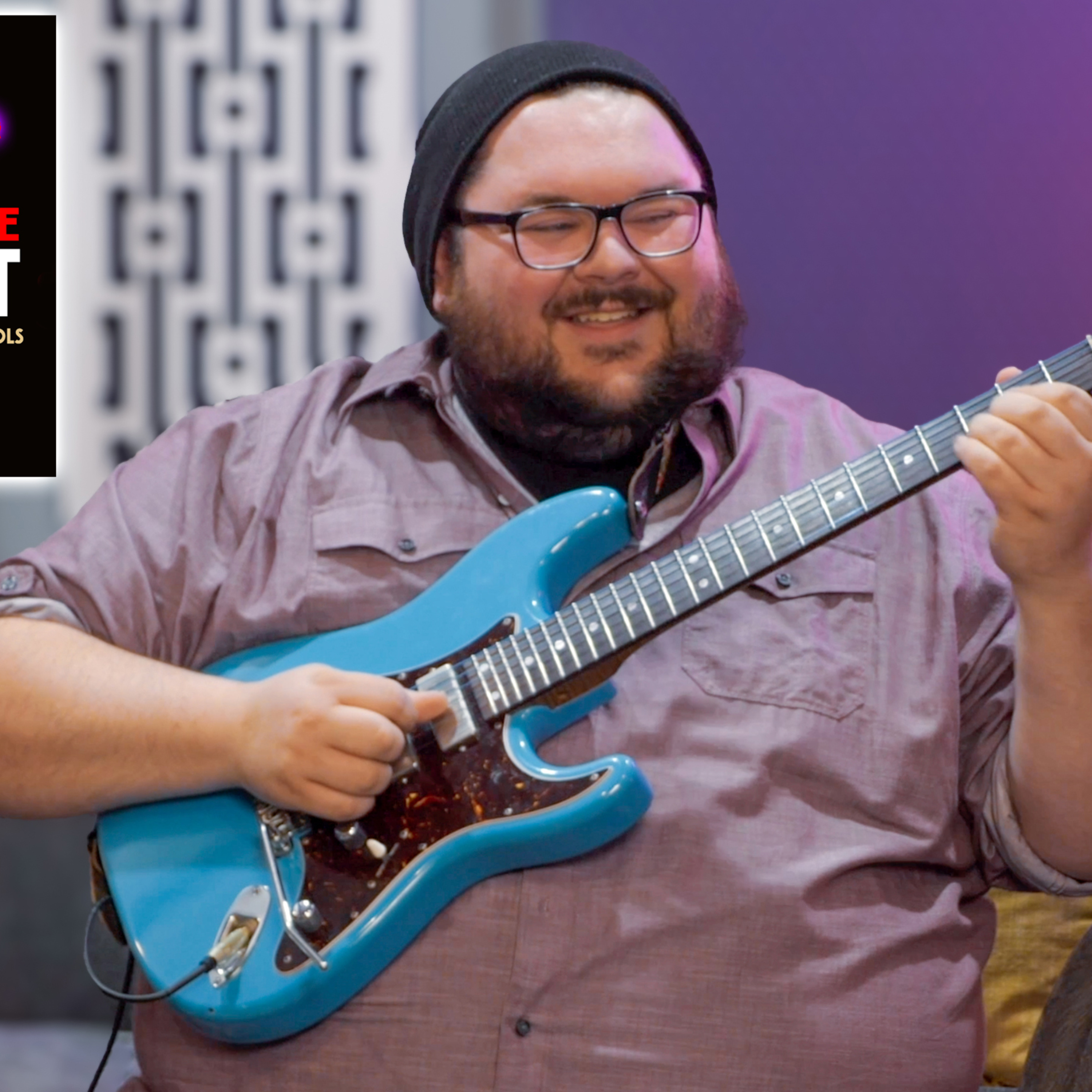
In Episode 28 of The No Cover Charge Podcast, Tyler Larson and Jared James Nichols sit down with Nashville guitarist and educator Kent Crawley for an inspiring deep dive into guitar technique, musicality, and creative improvisation.
Kent breaks down his unique approach to the fretboard, from chromaticism and voice leading to gospel and jazz influences that shape his playing. Along the way, the conversation explores tone, custom guitars, pickup choices, ear training, and the importance of connecting what you hear with what you play. Kent also shares stories from his musical upbringing, his father's role in developing his ear, and how influences like fusion, blues, and church music helped shape his sound.
Expect plenty of jaw-dropping guitar moments, practical lessons for players, and a fascinating look at how great musicians actually think about music.
If you're into guitar improvisation, fusion concepts, and learning how pros approach the instrument, this episode is packed with insight.
Click here for all things Kent Crawley (kentcrawleymusic.com)
Subscribe on Apple Podcasts (podcasts.apple.com/us/podcast/no-cover-charge-…)
The No Cover Charge Podcast on Spotify (open.spotify.com/show/1etwgleKExKzncMWSeSqe6?s…)
Instagram (instagram.com/nocoverchargepodcast)
TikTok (tiktok.com/@nocoverchargepod)
Facebook (facebook.com/profile.php?id=61579811813164)
The No Cover Charge Podcast with Tyler Larson & Jared James Nichols is your all-access backstage pass to the world of guitar—and there's never a cover at the proverbial door. Hosted by two of the most passionate guitarists you'll find, Tyler and Jared deliver a mix of electrifying interviews with legendary guitarists, laugh-out-loud tales from the road, deep dives into guitar culture, and no-holds-barred gear talk.
Whether you're a lifelong shredder or just love music, you'll find something unexpected in every episode—a hidden gem, a new perspective, an epic jam, or a story that'll stick with you. It’s always a good time, and best of all? No cover charge.
Plug in and hang out.
Transkriptvom Podcast bereitgestellt · Zeitmarken springen hin
None. 4. What the dude did I hear you harmonizing with yourself? Actually, what's funny is I have that on a record. You went nuts. Yeah, and it and and ironically, it's it's about that I wrote for my partner. Oh cool. Yeah, it's called Wonder Bread. It's on my band's album, so it's called Food for Thought. The band is called Mr. Mayo.
I love the fact that this is all just food oriented right away. That's hilarious, dude. Yeah, well, it's, it's a very like meme based kind of thing. All the like song titles are like very like neem oriented. We got a song called Chimkin Grease. OK, the question is. Chimkin. You know, like those memes are.
Like MG but not G Yeah, like love. It, you know, the where they put like the memes where the dog's talking. It's like Chimkin. Yeah, like that. And, you know, I didn't want to call it chicken grease because, you know, like I'm, I'm not DeAngelo. I. Met a dude the other day, I was hanging out and he had this tattoo and he had a piece of pizza on his hand right here.
I was like that's cool. And then I looked at the other hand and he had like it looked like some sort of like dip. And I said dude what's up with the tattoo? He goes love pizza with ranch bro and he goes check it out and he just rubbed his hands together like that and I looked at him and I just went that's insane.
Sometimes people need a reminder of what they love. I love pizza and ranch bro. That's. That's ridiculous, right? That makes that makes me happy. That does make me happy. Do you? Have any tattoos? I don't have any tattoos. Yet you got any food tattoos, Jared? Not yet. Okay, okay. Dude, I'm not opposed to a food tattoo.
What would you get if you get a food? I don't know man, you. Have to choose right now. Probably an egg, yeah. I was going to. Say, just like an egg on a skillet. Yeah, like a skillet with an egg. That's pretty good. I'm going bacon, actually. You're the bacon boy. Big old piece of bacon, dude.
So how long you been scatting like that over your plane? Since the beginning? Because I think a lot of people are going to see that and go what did I just see? So I. Started playing, I was like 13, whatever. And I always kind of I, I sang before that. I've always been a singer. I'm always a little hoarse today so I apologize in advance, but.
Getting that Eddie Vedder Grizz here bro. Yeah, but I was always taught like, all right, you need to be able to sing what you're playing because it actually like, And as a teacher, I've, I've grown to know it's like you're connecting your auditory memory and your muscle memory together. You're firing those neurons at the same time, rather than separately, because a lot of people tend to do this, you know, and they're, they're just playing patterns and stuff and not really actually hearing what they're playing.
So that's a big thing. And then playing gigs and stuff, playing out, especially playing like R&B and soul and funk and a bunch of people being like, Oh yeah, that's a thing that's like, that's like a stage thing. So for me, I'm like, it's just a parlor trick, you know? But I, I can like definitely see the, the merit behind where it came from too.
It was like, oh, I, I feel connected because in, in truth, this is just a tool. This is the instrument, this is the instrument. These are the instrument. This is the instrument. These guitars that I built with my my Taco. He's a mad guy. He's been it's. His name Give him a. Shadow John Carney. He's in Lapeer, MI.
What's up, John? Like seriously, like he taught me so much just about setting up a guitar, making it feel good and like it's OK to have preferences. And, and he he's one of those older guys that wasn't like, well, it's got to be vintage. You know, he's like, let's let's see what's new. Like if you like what's new, let's find what you like. And, and that that kind of became these two guitars. And I have a few others that I built with them as well. And yeah, there there's a lot of just stuff on here that you don't really see like so this is. What is going on right there?
Wait, did that just go sideways? Wait a minute, wait, wait, wait, wait, wait wait. Is that a five way? So, right, so it's three, but then it's 6. I've never seen that in my whole life. Three-way switch to sort of describe what's going on. Three-way is just three old school Fender style, correct? Yep, Yep, Yep, Yep. Let's slick it to the right.
Yeah, it's this company called Freeway Switch, like freeways and Hwy. found them during the pandemic and it was just like, oh, these, these look, 'cause man, I'm, I'm not the greatest solderer on the planet, but I can do it. I'm. I'm a bad it's. Just a pile of solder when I leave. It I'm just and then I burn the guitar and then I burn myself and I'm just like and then I unplug it, no.
Output exactly. I'm sitting there going with like tweezers and stuff going oh dude. That's the worst. It's like it's like playing operation. And and then when you never can get it, and then you just like you're looking at the schematic, you're just like, I'm done. I'm doomed. Also are, you know, are swear he's OK?
Oh. Yeah, if they're too bad, he'll put a pinch harmonic over. Like if I would say Mother I. Was gonna say fart guys. Oh yeah, that's OK. We're dirty. But yeah, man, these guitars came out of like, hey, you have preferences, find what they are. And I found pretty early on I really love like a flat, you know, radius. The flattest I'll go is at 12, a little bit of ADHDI don't know if you guys can tell.
We were talking about the switch. Yeah, I was going to go back. Yeah, we'll go back to just keep rolling. Yeah. What's the radius give you though as far as feel for for lay people, what's a bigger or smaller radius? What's that doing for you? Obviously like for those that don't know, like the smaller the number, the rounder it is on the fret board this way. So the higher the number, the flatter it is. So with the flatter radius I feel like I'm not having to like jump like this.
Like your your literal like technique, you can kind of keep your hand a little bit more. Yeah, uniform. Yeah, so, and and I always say this to people go, well, like, oh, they assume I'm a three finger player until I start doing the extra pinky stuff. And that comes from like, all right, a lot of my technique is built around this kind of all right, within a fourth kind of fingering position just because like Alan Holdsworth, I think guys like that.
I really like the extended stuff. But but then, you know, growing up playing, studying all the Blues players and stuff and. Sounds great, you got a great feel brother. Thanks man. Hell yeah, brother. Hell yeah, brother, we got a great feel. I really dig like vintage style tones, you know, so you you know these are three Firebird pickups. There is a difference between Firebird and mini humbuckers. And whereas if you take the cover off of this, you'll see a real magnet if you guys are familiar with like like P rails or anything of that.
So it's it's two blades next to each other versus like a mini humbucker. You have the bobbins. What brought you to the Firebird? Was there a certain tonal thing you were looking for or did you get one? You're like, yeah, that's good. And. It came out of kind of utility just because playing single coil pickups and just having the hum and then you you work in studio and it's like, what's that noise? It's 60 cycle hum.
Grow up, you know? Right. I love P 90s, I love single coils, but it was those like, oh, hey, you, you're getting a lot of noise and playing venues where they have like dirty power to. It's just like, yes dude, you can't hear anything. Right. All the tone that you've been spending your whole life building towards is just negative. People will say that to me where they'll go like, oh man, my, my dream guitar is like a, you know, 54 or 55 Les Paul with P 90s and I go, that's amazing.
But. You're going to sound like a boom box. I don't want to break your spirits, man, but you go in a a historic venue with old power, chances are you're not really going to be able to hear that guitar too well so. Really very lucky that my father is very eclectic, so I listened to so many musicians and Johnny Winter was one of them. Yeah, I did of.
Course. And so the three Firebird. That's awesome. For this one, the bottom row. So bottom row and top row. Yeah. For lack of, you know, bridge. Anything with bridge, outer 2 and the neck. OK, The upper row just brings in the middle pick up. So this is bridge and middle, middle by itself and then neck and middle.
Yeah. All right. Bridge. We all love a good bridge. All right, now this will be the outer 2, so semi telly middle position, so that'll be that kind of like. And that is nice. I like that sound. That's. Cool, that's a good one. That's a good one. Neck, you know, that's a good neck. And then let's see.
And that's that difference between those the the the mini hum versus the the Firebird pickup is these have that like top end clarity that I think this one is these two together. And that's kind of that Mark Knopfler thing that and I'm going to try to think you're. Good man. Does a hollow thing, does a hollow thing middle.
This man does the really like good like slide tones, like middle position tones. So like I'll, I'll do some like fake slide stuff for a second. See like that sounds awesome. Right. And then the last one is, is that fourth position? So you can get those really cool like and I'm around you and I'm I'm using less than I've ever used in my life. Sorry, don't look over here.
Sometimes you guys are both so like inspiring to to be around. Dude, the feeling is mutual. I'm watching you and I'm, you know, it doesn't happen a lot, but it just happened when you said, oh, I do this live thing. You ever have it? Remember when you were younger and you were playing with someone and they'd start jamming something and you're watching.
I'm so intent. You're like, where am I? Like I forgot where I was. I was like, wait a minute, what? Did he? Wait? What was I doing? Oh, I got to play too. So, so that kind of stuff actually came from like I, I do play slide like I, I can, I don't think I have one on me today. I usually don't think to bring them. We'll see if we can make it work. I got a shitty metal one or a shitty glass one. I mean.
Keyword shitty. Shitty. That's great. What I can tell about you? Fisher Price slide. Is, dude, you're, you have really big ears. Like I can hear it. I can when he plays. The thing that I think is so captivating to me when I'm listening and I'm watching you play is how big your ears are and how you're able to put some.
There's certain sounds that you're pulling in notes. You're not afraid to go to that. I would be like, oh, I would never go there because I don't know how to put that in the vocabulary if that makes. Sense that's, that's fair and that's, that's actually like, I feel like, you know, one of my missions on on this planet, but like I, I really love teaching and a lot of those things that people are afraid for are some of my favorite things to teach. Yeah, you're like, let's go, let's. Go #1 like the chromatic stuff that people seem to be so, you know, so afraid to be locked in the box, right? Number one, separate rudiments from embellishments, chromaticism or anything like that, like half steps, they're just embellishments.
So you can still have the boxes that you're playing, for instance. Well, we're still in that G kind of thing. All right, Let's just say we have this first, like that little group right there. I'm going to bend half steps into all of those notes. And so because of the quality of the guitar, you know, we're getting that vocal quality when, when we do our regular vibrato, we're only getting above the note.
You know, we're not getting below the note. This is actually something I think I I've like, I've been having a, since I've been teaching, I've been having to like really think back to like where, where did I come up with this stuff? And it's not like AI came up with it. It's my thing. No, it's like a who did I study that did that?
When did I start only believing this and I never knew anything else? Yeah. Yeah, I think I actually got it from Brian May because Brian does a lot of that stuff, like covertly. He likes that opera kind of sound with a vibrato. So that was like, all right, I have a target note in mind. If I bend from 1/2 step below, it doesn't.
I'm not, my brain isn't going. Oh my God, I'm not playing in the scale anymore. My brain is going, I have a target. So it's about the notes that you're playing. It's not about like where your fingers are. Yeah, it's not where you're sitting on the on the Ning. Yeah, so. So All right, I'm gonna throw you under, you know, throw.
The under the bus. All right, so two things kind of what I'm doing here. And this is a really popular sound in like, like the gospel like sounds especially like if you listen to like sacred steel, like AJAJ Ghent and and his father Aubrey or Derek uses that kind of sound as well, Derek Trucks or Robert Randolph. It's two chords.
It's literally just two chords. If you take the 1 chord and A2 chord of a major scale and treat them as tension release and put them on one string, you know, So First things first, all right, We're going to, we're in the key of G, ladies and gentlemen. All right, so we're going to use the notes of AG major triad and an A minor triad. Guys both went to Berkeley.
We know those notes don't. Yep. Hey, it's it's literally the Yeah, No, yeah, it's it's just the first thing. Yes, those 3. Yep, you did. You did the inversions of the G Now do the inversions of the A minor. The way I'd love to teach this is all right. We know singers are prima donnas, right? You have a choir under your fingers, so each string is is its own singer. And when you layout these notes across the fret board like this, for instance, if you do the G and the A minor, you have your target and you have your tension, right? And each, each string is its own singer. So you've got the low part, or like the tenor, you have the middle part, the Alto, and then the upper part soprano, right? So now what would happen if you
just laid that across one string? All right, so now let's think, all right, we got the G string. All right, open G. So that's one chord, 2 chord, 1 chord, third of the one chord, third of the two chord, 5th of the one chord, 5th of the two chord, and then back to 1. So now. And that's that first layer.
So try doing that across the strings. No up, just up to the G. Up to the G, yeah, yeah. And literally you can think of it. Play them separately too, so you can hear play the notes of the G Perfect. Those are your targets. OK, Now if you go, go at it from this, come at it from above. Go target tension and release, Tension and release, Tension and release. And then maybe you won't take your finger off and it'll kind of keep that slide going.
That's. An interesting way to think. Oh. That's really cool, man. And I think that that is the joy of teaching, just articulating the stuff that's in your head. It actually makes you a better player. And being able to describe something, I think is what actually can make a guitar player truly. Respectable because some people can just RIP in your face and then when they try and show it to you, it's like, well, it's just this and that to me.
I've had teachers like that in the past where they're incredible players, but they just can't. They can't teach. And being able to have that multi faceted skill set I think is really valuable not only as a player, but as just a contributing musician to any group. How do you see the fret board? How do you visualize things? Because the reason I ask that is as we know, we're all at, we're all on the same road at different kind of stops. So whether you're just picking up the guitar and you're like, OK, I remember seeing up the A string, you know, right when you start and then all of a sudden you find boxes and find little patterns.
I guess what I'm wondering is when I'm watching you play and you're doing these kind of Daredevil style dramatic things and I just think in my head, what is he actually seeing? Again, it's that whole idea of rudiment versus embellishment #1 when you're practicing this stuff, limitation exercises are key. We tend to see that we're taught these like, you know, big scale positions and then we end up just playing up and down and it's like, I know my major scales. Do you really like, do you know the sounds of it? Do you, do you know where your targets are? Do you know, like what you're outlining? I always tell people like limit yourself to a space of an octave.
So for instance, that thing we were just doing, I would also take that in the in the triadic approach and you'll actually hear it. Dude, when I listen to you play like that, it almost sounds like a tape, like the flutter of a tape. Like I press play and sometimes it would catch up and it's. Cool.
And there's definitely a hula dancer somewhere. Yeah. The this here. Here come the SpongeBob comments. You know, but that's, and that's like I got that from playing in like gospel churches, just that kind of like 2 chord system where it's like you have a target chord and a passing chord. Playing with keyboard and organ players. A lot of my stuff that is derivative from that. And, and, and I, I love keyboard and organ. Shout out Antoine Kirkland like the silent assassin you, wouldn't you?
He's one of those dudes you wouldn't be able to tell that he's like, insane. Insane. What are some keyboard type things that translate to your guitar playing since you appreciate him so much? On guitar we're taught these chord shapes and we're not taught taught movement right, knowing things like common tones, proper voice leading, as they would say in classical music. Traditional harmony.
Yeah, traditional harmony stuff, really good exercise would be a 1415 and doing this from like a triadic perspective, you know, we're in the perpetual key of G So if I do this inversion here of G, I've got I'm, what's that first inversion, you know, 35? All right, if we're going to our four chord, we've got GBD.
The common tone between the one and the four chord, if you spell them out, 135 versus 4/6 and 8/8 is 1. I'm going kind of fast here, but we can put this up here. So we have the the root is in common between these two chords. So rather than going like this, which is what a lot of us do, it's not a bad sound, but you're actually gonna move those notes there and, and people. Oh, that's pretty simple, right?
Yeah. Like, keep it simple at 1st and then exploit those things because you can get so much out of like, say, say we do a progression. We're just going, well, this is, I don't know. I don't know if we can borrow this song. Oh, we'll borrow. Oh, we ain't afraid to borrow. You know what you got? You know gravity, right, the one to the four thing. All right, So being able to play between these? But you're getting the tonality of both of those chords. I'm not just playing a scale, I'm playing to the targets within that too.
And, and the beauty in that is like, oh, you feel less patterning patterns are great. You know, we use them. It's it's. It's an old standby, like a place, a safety net for you when you're going out there. You can have your your licks to fall back on to sort of connect the dots between your ideas. It's a little road map for the for the board, in a layman's terms.
Here's another thing too. Think rhythmically once you have the right notes. If you're thinking just pure rhythms, pure motifs as what what they can be called like watch this. I'm I'm going to do I'm going to do this. Let's let's it's same chord progression. I'm going to take Mary had a little lamb and put it over. This.
I love that song. Right. Dude 12. And you can have those targets in line. When I'm playing that, I was just seeing the notes of the chord, right? And I was going, oh, I can, I know what the right notes are. I know what the neighboring tones of those chords are. I'm going, oh, hey, I'm going to land on you.
Yep. It's like I have an ending goal. I've I've, I have something to, to kind of like aim. There's a difference between, there's a really cool thing I saw it was the difference between accuracy and precision. Accuracy is basically like, all right, you hit a bullseye right one time. Precision is like you may not be hitting the bullseye every time, but you have 3 arrows that are in the exact same spot. That's precision.
It's very precise. Maybe I have the analogy backwards people. English. You know, English isn't my first language. Music is. I also know that you can be precisely wrong every time if you, if you feel like very precisely learned it the wrong way. But yeah, dude, it's just, it's, it's a lot of this boils down to limitation exercises and like making myself stick to just what works. And then you can do the small things like all right, now we're going to start bending in from 1/2 step below all of these notes, so.
Yeah. Let's go through like a progression of where you might start and where it's LED you to, and we'll for sure play through that. All right, so start with just these notes here, and then those are your target notes. You have the scale around that as well. I'm playing everything within an octave of B right now, the third of the scale, not the root.
Don't, don't be so tied to the root, people. You know, we're not the bass player. We can play the pretty notes. But now it's all right. I have the notes of the scale. Now I can start using some of those bends. I'm kind of doing that halfs to bend into any of the notes in the phrase. Dude, I kind of do that in like a weird hillbilly way, you know?
But now I oh, I just, but still, it's like that style. I give it a try brother. I personally like the the extra 1. I think I. Saw Jeff back once or someone do like a he did like a like one of those. Little half step Rd. So take down the notes of the scale across the string though. Grabbing all underneath. Underneath the entire thing, that's just like a really good limitation.
Exercise and make yourself do that. Also, great year training man, like really to get your talking about strings and your your touch. And not a letting the attack actually die. That's the the final boss of that exercise. Well, and then the fun part is coming back down. Coming back down is like way harder.
Yeah, dude. I caught it. Oh man. Oh, it's all that's hard. It's it's like a recite the alphabet backwards or something. Right before the week of my 13th birthday. I'm a September baby. Virgo Virgos for all you horoscope girls out there. Gemini here, the evil twin. Pisces. What does that say about your tone? Tonoscope.
Somebody would subscribe to that e-mail letter. I think it's. Your weekly tonoscope. Now. Now we're talking, fellas. I'm not even lying. That was it. That was the, that was the tune. And like hearing those like nuances in that tune. I did have lessons, about six months of lessons, six months of lessons in the first two years.
I got grounded a lot because I was a boy. Well, it was, I was playing guitar probably like 12 to 16 hours a day. I had my guitars with me at school. I was that weird kid. I was the weird kid too, dude. Bringing your guitar to school. In between classes trying to get my home I worked done in class so I had time in between. Guitar, yeah.
Dude, cuz I learned the riff. He's like, yeah, you have that. It's like, yeah, I'm gonna teach you the riff, right? And then can I learn the rest of the song? No, no, we normally just stop right here the. Rest of smoke on the water no one knows that you mean. You wanna learn the? That was. Actually, when I learned a power chord too, I was like, oh, so this is a power chord, but he's not playing it like that.
Yeah, well then the Guitar Hero version when they're gone. Oh yeah. They had a little bit of a bounce to it when they didn't have the rights to the song, so they had to record them. The little swing smoke, yeah. What is that that is wrong? I really want to learn that solo though. Like I can still play that to this day. Like note for note.
It's funny, I switched guitars just because New. New strings, people. Yeah, but I I didn't have a bar. To learn how to. That that's literally that bar bend, but from behind where it was. And I, I spent like 3 weeks on this with this guy and he was like, you still want to keep like, yeah, yeah, I I want it.
I wanted to play it exactly like the record. And my, my father, Mike Crawley, he a huge music collection. Like, I was so lucky, so very lucky, because he's a very eclectic guy, and he has about somewhere between 10:00 and 12:00 bookcases full of CDs that are alphabetized. Oh, your dad's all in. Yeah, alphabetized, and they're in chronological order within the alphabet.
I also have to say it's like cancellation. Did you twist the best of Deep Purple to the left? Where's my copy of the Eagles? All right, you little it's Black Sabbath. Yeah, like, like he would know. I was like a toddler and he had the the box set of Zeppelin, you know, all the releases. That first one, the Zeppelin two, I ripped the the inner sleeve and to this day there's this little he goes, he'll pull it out and remind me.
He goes. Remember when he did this? Like I don't remember when I think. About it every day. He's like, just remember when this is all yours, you did this, but he would sit there with me. He's not a musician. I'm I'm literally like the only like one that pursued music in in my family and definitely my family was like scared of that a little bit They're.
Like what's he doing? Yeah, like, oh, oh, no, they had no like frame of reference. But what happened was he would sit there with me. He was, he was like a big part of my year training. He would sit there with me when he was home on weekends. And I remember very vividly, like, all right, why don't you listen to this?
OK, All right, I'm going to show you just one part. Listen to this part. It was the old C like boombox CD player. All right, listen to this part be whatever song. And I want you to sing along with this part. And that's kind of where that singing stuff came into play. I want you to sing the part.
OK OK, Once you're humming it, I want you to try to finger along with it, figure out where it's at. OK, now try to play with it. All right now, now try and play without singing. Cool. Now I'm going to turn off the volume and I want you to play the part and it better line up when I turn the volume back up.
That's awesome. So. That's funny. He you said he's not a musician because he has a very musical tendency. So he has I to this day, I'll always like, if I ever have any, like, ear, like call dad. Yeah, call dad, like, hey, what do you think of this? And he'll give it. He'll be very like, oh, hey, can you like add like a shadowing guitar part to this? Like, can you put an acoustic on this or you're like, just something, a producer.
Yeah. He's got a producer's ear and he's amazing. He's an audiophile kind of guy. You bring me back to like my youth too, because like with my dad, it would be like, I would be in my bedroom practicing something. And like, he was like, I remember he was like, oh, you got to learn the ventures and you got to learn like all this guitar.
He was like, and I was like, that's cool. And then I'd come out and I would show him. I'd be like, listen. And he would just be like, it's not right. And he didn't know how to fight. But he would literally say that he'd be like, hey, you better keep working on that. And then because it's like your dad too. I was like, oh, man.
So I'd go in my room. And it's not important for dads to not give too much encouragement on the way up. You got to you got to leave some sort of place to go if you just are constantly applauding your kid. I'm not a dad, but I have a great dad. And I think that the yearning for your father's approval, your mom's always going to give. It to you?
No, no, no. That's a real thing, though. That's like, I don't even know if dads do it instinctively or what because it would be kind of weird to be like, I will not give all the love to my child, but I think it's just a natural. You want to see your kid do better and, and as a result, you you kind of skip over the the padding on the back to be like, Oh yeah, you're on the way now Do it like this and it's like excitement more than. It's also kind of a little tough lovey, yeah, but not even like, not even like a really good way.
Yeah, it was he would he would be like, he'd have those moments of like, yeah, that was good, good job. But it would it would you'd have to work for. Yeah, you got to work, you know, got to earn it. And, and, and that was the to, to both of their credit to like they, they both supported, you know, as much as like my dad was more like he's going to be good at this.
And my mom was like, I don't understand what's going on. Like it took her until maybe like my senior year of high school, like what would have been like 5-6 years of playing, we had our like Christmas performance. I did run Rudolph, run nice. Mom's like, please. Tell me you like shredded some augmented arpeggios or something. Rudolph the Red Nosed Reindeer.
No, no, no, I I did do some like I was like into like Eddie Van Halen and and stuff like that at that time. And the fusion stuff kind of happened around that time, but I was, I wasn't. You weren't there. You weren't you weren't totally quite clear yet. You. Were just, you know, boring old Van Halen at that point. Well, man.
And the thing about Eddie, man, like rhythmically him and Hendrix both, like if you just like study both of those guys. And then at that time it was like, OK, that. And then I was also playing in churches. I started playing in like predominantly like black churches when I was 15. So having that plus that it was like, oh man, I have a lot of work to do.
And, and, and, and being in an area where people will tell you that you suck straight up. The couple times I got sat down and it's, it's being called sat down, it's like, Hey, you didn't do your work. I don't know. It's you're subtracting rather than adding to the music. It is the worst gut feeling and you're just like, I'm going to do my work. When did that fusion path reveal itself to you? Because that is something that it's not your only trick in the bag, but it is something that not a lot of people can necessarily execute or really even understand some of the time.
Is there a gateway guitarist that brought you in there? Guitarist. Actually OK saxophone player great. John Coltrane. Oh, you got their Coltrane. The first record my dad put on of Coltrane for me to hear was my favorite things. And that's that's like straightforward is like harmony can get like there's some cool changes and stuff in it, but it's like very diatonic harmony, one scale.
It's it's most of it is the Dorian mode. Yeah. So if you play an E minor 7, but then you take your pinky and put it on the 11, yeah, it's those two chords. So it's E minor 11, F# minor 11. And so you get to kind of, you know, and any of those things and hearing. You know that's where the change is. Learning that kind of stuff.
Did you have someone show you that? I was paying for half my lessons and it wasn't super consistent but he knew I wanted to learn. I was learning from books all the YouTube like REH videos like. Complex dude. Well, one of the first videos I actually got into, Speaking of like jazz, the first jazz thing I got into was like when I was like 14.
It was the Joe Pass videos. Yeah. Like, you know, and he's sitting there going, yeah, I don't overthink stuff, you know, And he's sitting there doing like all this like really sick, like walking bass stuff where, you know, you know, all that kind of stuff, which, you know, people are like, oh, that's sucked. You know, I'm nervous, guys, you know. Here I'll play some walking bass just to. Oh yeah.
But the thing about that is you, you can learn one thing and kind of be a poser. And that's how I started what because jazz isn't my Forte, but I had to learn it all to, you know, pass my classes. And you find what about these genres actually translates to your guitar playing. Most guitar players, when they see this chord, they go, what, what, what do you think they play we're.
Going to play some E, they're going to play some E over. It Yeah, no. Where's your head going then? This is actually like the the good lesson for rock players that are getting into jazz. This is Larry Carlton's money notes or, or the the don't play the butter notes kind of thing. Look at what the upper structure triad is.
That just means, all right, when I spell out my chord, we know in Western harmony we have 135791113. In this case for E minor, we're playing the seven, the nine and the 11 AD major triad. We have AD major triad. What, what? What scale? All goes great over D major triad play D major pentatonic or B minor pentatonic over this right?
That's cool, man. All right, so those are the five notes that you want to lean into phrase wise. Those are those can be your targets. You can still play the whole scale. You know, it's just you have kind of a, oh, I have something to latch onto at the ends of my phrases. I don't know if anybody caught the reference there.
Of course I heard it. Funnily enough, technique wise I learned economy picking the first month I started playing OK like that and I didn't realize that affected me until. You took Rick Graham's course, didn't you? Who's Rick Graham? No, I'm just kidding. Rick, Rick, I love you, mate. I really hope we get to hang at some point. And but yeah, seeing seeing guys like Rick or like Frank and Bali and and I I didn't make that connection until being around those guys and and that was kind of my foyer and more fusion stuff.
He does the oh gosh. Sorry, Frank. Now isn't that the one where the girls are like? No, OK, that's the, that's the shop builder. That was, I remember I seen that when I was a kid and I was like, yes, dude. This is economy begin then doing the the history search. It's like he's the one of the biggest proponents of like. I thought Holdsworth the first time that I saw you play because of the stretches you were doing and I just identify him. You mentioned Sean Lane.
Are there other guitar players that you in that vein that you could cite and. Frank and Bali. Scott Henderson's also a really great one. George Benson. George Benson's incredible. George, you know George and like how he plays too like and how he lays out the fret board is very ingenious. He scats as well. He's he's.
He's that's the first thing I thought. Like I do, I scat like George There's. A good good rephrasing of that. It's, it's just turned into that whole thing of like when studying all these players and like getting that flow down, for instance, like the Holdsworth thing and part of the Holdsworth community, they're all nuts.
Is that right? Yeah, yeah, it's he, he was a human being, you know, a wonderful human being. I wish I would have gotten to meet him. But like studying his stuff and just realizing, oh, OK, he had a, a very like mathematic approach. Did everything from a single string at 1st and then he's like, I'm going to throw away any of the scales that come up with that have 4 semitones in a row.
So he didn't actually have that frame of reference of like this is the major scale he did, but it was like from his own. Yeah, he didn't believe in Eastern or Western. It was just Holdsworth. Yeah, or the whole idea of seeing the whole fret board, like seeing the whole scale so it didn't matter like everything like if I play just some like structures from the C major scale, you know, any of.
That's all I think. I think if I turn on all the all the. Goodies. Can you give me some juice dude? The. Dorian and Lydian are the home bases a lot of the time because Dorian. What's really cool about this, it's that is the mode that is symmetrical. If you go, if you do the scale formula forward and backward, it's the same thing, right? That's why on on his charts, he saw the experiment thing supposedly.
And all these are just triads over bass note kind of things. We're like going. You know, there doesn't really matter what I do, it's still in in that all in the same key. But progression wise, let's see if we can just go, you know, 2-3 and four of the scale. So it didn't really matter where my like leading around. This is another this is a Brett Garcia trick, but I I call this lazy chromaticism play 3 notes per string. C major scale, right?
There's an extra finger you're not using every time. Yes, there is. Fill in the gap. Well, oh shit, no, not 4 notes for string. Well, it is. It is 4 notes for string, but yeah. Right, don't do stuff. Don't, don't, don't slime. Yeah. And now adding that to that flat five thing earlier, you see how it's like compounded. Yeah, it's starting to like.
Sounded like a lot of off notes on purpose. Conviction. Yeah. Conviction's everything, right? Addiction is everything, and if you're not playing rhythmically, it's gonna sound like a bunch of notes. But listen to Kenny Garrett. Kenny Garrett's an amazing saxophone player, and he's playing like all this insane language.
So go from like a beast. We're gonna groove over this, right? Cool. But all right, we know that we can land on these E minor pentatonic notes, but I can play AB7 line, any scale of B7, it doesn't matter. Conviction. Conviction. Exactly. Yeah. It doesn't sound wrong to me. Do me a favor, play any stock B7 line, do AB7 line, but then end in an E minor pentatonic line, all right?
It's fusion, Jared. I didn't even. I just literally dude, if you saw my face there, I was just like. I want OK for the folks at home. You all know how badass that was, right? That's fusion. There the fact the fact his your ears perked up. Yeah, yeah, your ears went. I'm playing that. Yeah, yeah.
Kent Crawley. What? Where can people learn from you? Are you in via FaceTime or virtual or in person or all the above? Courses, Yeah, yeah, yeah. So if you go to kentcrawleymusic.com, you can sign up for lessons there via. I have, I have like a whole onboarding thing. I do Zoom, I do in person for people that are here in Nashville. And then I do have some courses on my website. I have a book out about chromaticism. Wow.
So that's awesome. So Sam wrote a chromatic book. I did. I did write a chromatic book. Hey Ken, can I just play an A chord and just you just like burn it down? Sure, Just literally sure bro. None. The.
