

Kapitelklicken springt direkt hin
Shownotes
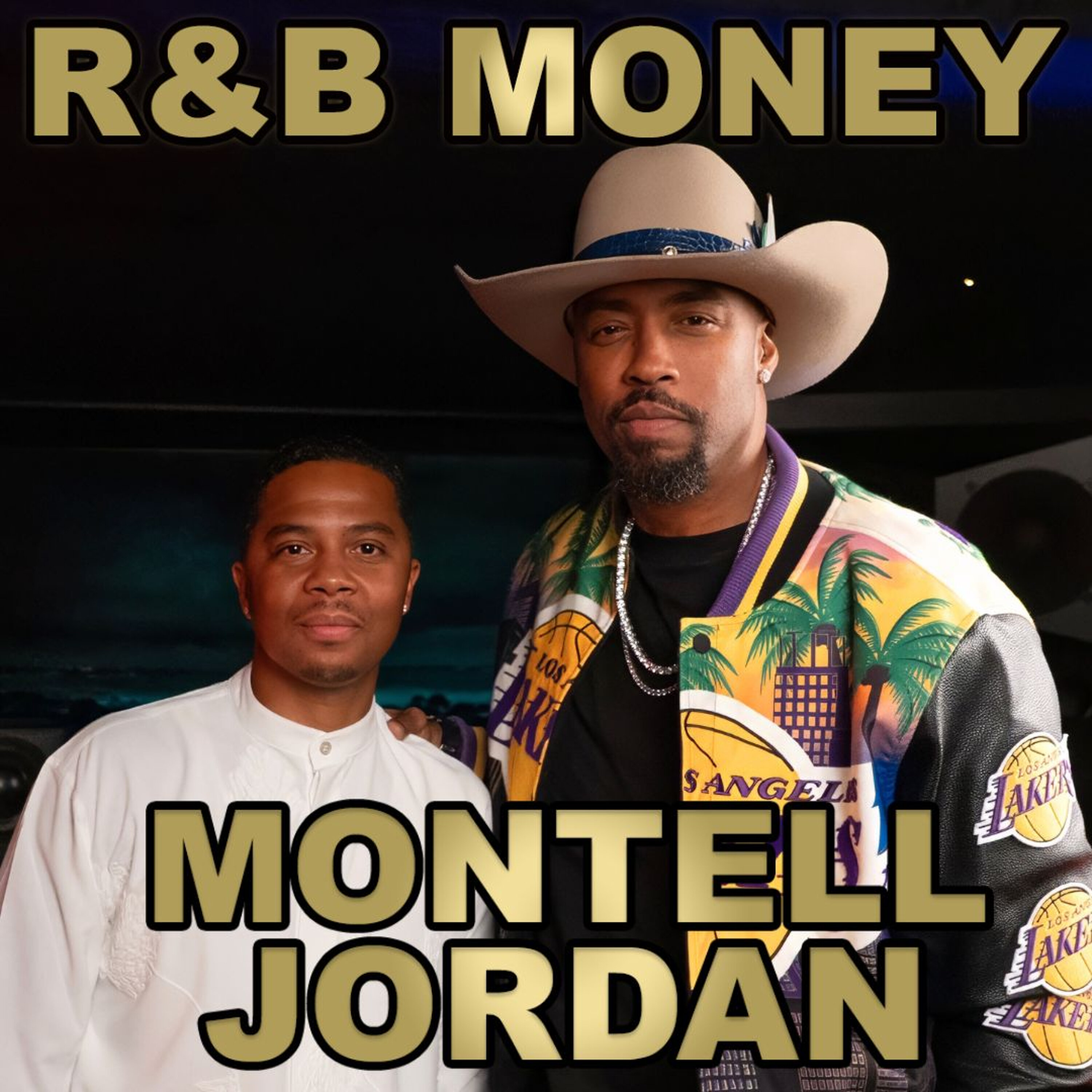
R&B legend Montell Jordan joins the R&B Money Podcast to reflect on his incredible journey from '90s superstar to pastor, cancer survivor, and children's book author.
Montell takes us behind the music, sharing stories about signing with Def Jam, creating the timeless anthem “This Is How We Do It,” and delivering hits like “Get It On Tonite,” “Somethin' 4 Da Honeyz,” and “Let's Ride.”
Beyond the music, Montell opens up about his battle with cancer and recovery, how faith and family helped him through one of life's toughest challenges, and his transition from entertainment into ministry. He also discusses his new children's books and his mission to inspire the next generation.
See omnystudio.com/listener for privacy information.
Transkriptvom Podcast bereitgestellt · Zeitmarken springen hin
Ladies and gentlemen, I'm Jay.
Valentine, and this is the R & B Money Podcast.
And today... I have the man I've been chasing down. He has finally come to the building.
You know, I'm going to talk about the song, so I ain't going to say the rest of the songs. We're going to get into that because this man is a major songwriter, major producer. He has legendary Hot 100 number ones.
Not, you know, it's at 97-ish. Number one. The man, the tallest R & B singer who ever lived. Yes. He signed the roof today. My brother, Montel Jordan. Thank you, brother. Welcome to the podcast, brother. Thank you, bro. I'm so glad to be here.
Oh, man.
Wonderful to be here with you. Oh, man. Listen, I don't get excited about much. Come on, man. Stop.
I'm usually pretty chill, bro. I'm usually pretty chill.
Come on, man. Until Jordan's in the building, bro. I love this, man. I love this space. Yeah. So me being here is just, man, I'm grateful. Yeah. I'm grateful to be here. How you doing, brother? I couldn't be better if I were twins, man. I am really, really good. I am healthy. The journey that I've been on to be able to still be doing what I do, to still tour, to still... write, to still speak. Uh, all those different things are super, super cool to, to still be able to, you know, be living life and living it abundantly, bro. Yeah.
It's good to see you here too, man.
Because, and I, and I say this to a lot of our counterparts in our business, man, being able to show up as you, if I didn't know you and I just met you on the streets, I'd be like, That's Montel Jordan. You look exactly the same. Like, no, and it's a thing. When you're in entertainment, you have to show up as yourself.
Yeah.
I tell people that all the time. I'm like, I get it.
You want to just let this happen and life happen.
Hey, man, you are an entertainer. Show up as yourself.
I'm going to take care of me. Yes. And my wife taking care of me when I'm not taking care of me. I love that. It's got to be right. I love that, man.
So, you know, on this show, we like to start in the beginning.
All right. Let's go back to, I don't know if you was ever a little Montel, man.
You know, most of y'all came out as 10, 12-pound babies, man.
Yeah. Baby Montel. Baby Montel, South Central Los Angeles. Grew up on 4th Avenue, Slauson. I was a hood kid. Come up at the time where, you know, Crips and Bloods is kind of thick, and I had to learn how to navigate neighborhoods. You know, playing outside was... you know, till the streetlights came on. I was a church kid.
So I grew up playing piano in the church from the time I was about nine or 10 years old up until I went away to college. And so that was kind of my upbringing. I had both a mom and a dad at home. So I had a two parent home. I was probably more afraid of my dad than the gangbangers. So that was why I did not, you know, ever join a gang, but I was close enough to it to be gathering information as a kid, to be affiliated and close enough, you know what I mean, to be able to tell real stories about the neighborhood later on in life. But I was a church kid.
I was insulated by the church in the center of South Central LA. I was there during the LA uprising or the LA riots. And I remember driving down those streets and You know, as people was carrying TVs on their back and buildings was on fire. Yeah. Now we was doing the same thing in the Bay. Yeah. It was like, yep. We know what happened in LA, but we going to lose. Catching fire too. Yeah. Okay. We're going to get a VCR. Yeah. You're going to get something.
Everybody will come up. Yeah. And I remember growing up, I, we would watch the Cosby show in the living room of our house and we all sat on the floor. So just say, if you had a couch, the whole family would be actually sitting on the floor and, Because every night, the nightly news would be talked about. Another family was, you know, somebody shot into a house and somebody was killed from a drive-by shooting. And as a family, and you could hear gunshots, you heard helicopters, boys in the hood was very accurate. Yeah. And so as a family, I remember sitting with my brothers and sisters, my mom and dad, we'd all be on the floor watching television and stuff like that. So yeah, Little Montel, I listened
to all types of different music growing up. I had a very eclectic musical style because I was brought up in church. But at night, I would be listening to the Mighty 690, which was a station that played pop music. So that's where I would listen to Tina Turner and The Police and Billy Idol and Cyndi Lauper. You know, real poppy to Katrina and the Waves. Oh, yeah. Wham! Like, this is where I was getting that. And then also in L.A. there was KJLH, you know, Kindness, Joy, Love and Happiness, now Radio Free. And that station was where I got all my Luther Vandross and Freddie Jackson, Lana Richie, Michael Prince, you know. And then 1580 K-Day at the time was 1580 K-Day. That was the hip hop station. Yeah.
So literally from the pop, the R & B and the hip hop. That's what I grew up listening to while playing gospel music in church. And that's kind of the filter or the student schooling that I went to that started to formulate who I would be as a musician and one day songwriter. So coming up in that time, in that era, the gangster rap era, honestly, for L.A. Oh, yeah.
How did you.
like you said, you avoided the gang life, but how did you avoid that even from a musical standpoint?
Cause right. We've all been teenagers. Sure.
We've all been in young where we're influenced by what's happening. And for people that don't understand that aren't from California.
Yeah. NWA ice tea. Yeah. Like when ice cube went solo, like those times major were major. That was big. And, obviously doing music, did it not have an effect on you because you were in church? You know, I love that you're asking me some things that I don't think I've really talked about. So I came up, you know, well, I went to Sarah high school and guardian in California producer came out of that school guy by name of rhythm D rhythm D was one of the huge producers.
They used to work for easy. He used to work for ruthless. You did a lot of bone thugs records and stuff like that. So, I remember being at one of those conferences early on in my career. You know what I'm saying? Like ERE. Yeah. The whole thing. All those or whatever. And I'm on an escalator, you know, coming down and EZE is on the escalator with me. Okay.
And he's like, yo, are you Russell's singing nigga, right? And I'm like, yeah. It was like, you happy? And I was like, yeah, I'm good. You know what I'm saying? And so later, when me and Rhythm were trying to get together to work on a song, I'm in the studio or whatever, we get a call, they shut the studio session down because I'm with Def Jam, they're with Roofless, and because of that, we could not work together. EZ was like, nah, we're not doing that. And that's what I found a lot about when it came to collaborations back in the day. I know we're kind of jumping forward from childhood, but it just reminded me that back then it was kind of like you had labels and clicks and people that only worked with their people. And so,
you know, that was just a memory to just flash back to me right there. Yeah. You know, coming up in LA, I remember being at the different things and events or whatever. And that was my little, my moment with Eazy-E. Yeah.
So did you always steer toward singing and playing? Because like I said, during that time, obviously in hip hop, did you, or were you ever on that side where you're like, ah, let me try this rap thing.
I was a church musician, so I was a pianist. That was my main thing. Singing, other than me, kind of singing tenor, you know, from the piano. That was my thing. My boy, Shep Crawford. Yeah. The legend. The legend, Shep Crawford.
Wait, y'all in the same church together?
Oh, yeah. Oh, yeah. We're going to get to the Shep Crawford era, too. Yeah. I didn't know that. Oh, yeah, for sure. That's my godbrother. Wow. You know, we got Jerry Carols together as kids. Our first singing group together was the Christian Stars of Life in church. Like, I grew up like life, life as a kid.
Yeah.
Yeah. He was Magic Johnson. I was Cap, you know, from the. Yeah. Yeah. But yeah. So I grew up playing piano. I only sang by default. And literally, as I got older, a lot of the older black guys in church who I looked up to, you know, maybe somebody gets incarcerated, somebody gets murdered. Yeah. And eventually by, you know, by default, there were no. Men left.
So that's happening even to the church musicians.
Oh yeah. This was okay. So again, people, I went to church on the corner of 51st and Hoover, Carver Missionary Baptist Church. Yep. Yep. All right. Yeah. So literally I can remember playing music in church and then we would play until the pastor got up on the pulpit. And we knew that when the pastor got up, we knew we had a little bit of time. So we would walk out of the side of the church walk out the street on 51st, and we would walk down past, you know, Crip neighborhood. We would walk down. Now, and it would be, the boys would be outside, you know, sitting on the porch and doing whatever. We knew them. Hey, what's up? How you doing or whatever? Because their mamas and their grandmamas went to church. Went to church. And
they in church. So we got the, you know, we got the neighborhood pass because those guys knew us. Yeah. which is like I said, we didn't have to join gangs. It's hard to ask a nigga where you from if he got on slacks too. Yeah. Yeah. And white socks. You just being a bully. White socks with church shoes.
You just being a bully if you ask a nigga where you from and he got that fit on. They knew it. Right. They knew it. So we walk up the block to, you know, the Coco's liquor store or whatever. We get some chili Fritos and, whatever, one of them pickles, you know, and, and then we would come back. And by the time we got back, you know, a passive, I think I feel my help coming on. Yeah. And so that's when we would do that. And so literally my understanding of musicality, things like that, I didn't have to, I didn't have to sing really until those guys started, you know, kind of disappearing. And when they started disappearing, it was kind of like, okay, we need a guy to, to come in and to, you know, to sing this song.
And so I never meant, I remember as a kid, cause I was an artist too. I used to draw and I could freehand draw things. And I used to trace things, all of that. I used to look at album covers, like the four tops and the spinners. And I always wanted to be in a group. So I never saw myself as a vocalist. I never saw myself as a soloist. I always saw myself as part of a group. I'll even go further and say, If you listen to my earlier albums, I had so many backgrounds and harmonies and arrangements because I stacked my vocals a bunch of different times because I wanted to feel like I was in a group.
So even though it was me. If you think about it, you go back to the.
90s, obviously the 80s, those times, even a solo artist's album sounded like groups because back then it was a thing to stack vocals together.
Harmonies. Like, it didn't matter if you was a solo artist or not. No.
It's so interesting now where, you know, I'll be in a studio with an artist and they're like, oh yeah, we're just going to lay the one.
That would kill me. Huh? That would kill me. That feels light in the ass. They want some ad-libs. You don't got nothing else you want to add to this? You sure? They don't want to do ad-libs. They don't want to do... It's just the one vocal. Yeah. Like, man, it's just when you stack and you layer vocals and... Bro.
So many different things that you can do. I would take that main note and i would record one two three four five and i'd have one straight up one and pan left one pan right one hard left right go to the next note so i would have just from three main notes and then one of those little crunch we call it the crunch note that that funny note that's in there to give it the descent you know the dissension and everything and so i would have you know, 20 tracks of just background vocals to blend.
Before Pro 2. And have, oh yeah, this is, this is tracks. This is. And tape. Tracks going to tape. Yeah, we always laugh about that, man. Analog. That we would go to lunch when they said they had to fly the vocals. We'd be like, hey man, let's go eat. Yeah, we'll be back. Let's go eat, we'll be back. Yeah.
Now it's just like, yeah, no, no, no. It's a good time. Put it right there. It's a good time to know that though. To have experienced that. Yeah. Yeah. All right, so now you're in church. Yeah.
You focused on trying to be in a group.
Yes. Obviously y'all started with a gospel group.
Do you have the aspirations of record deal, being a star, putting out records? Or is it just, I'm in my church gospel group and we sang on Sunday.
It's crazy because I never had the idea of being a recording artist. I didn't have, as a kid, Church and music, musicianship, songwriting in church, it was just what I did. It wasn't something I aspired to be because I was doing it. For us, the success was if somebody shouted after we sang and we got to do the shout beat. I looked at artists and I appreciated artists, but I never saw myself as being an artist. I never even saw myself as being a musician, any of those things back then. It was literally, I can remember, once again, Shep and I, we would have conversations as a kid. And the conversations were like, if one day you become a pastor before I do, I'll be a deacon at your church. So we were looking at being
NBA stars, or we wanted to be in the WWF before it was the WWE. We wanted to be wrestlers. We knew we wanted to be something. And we knew we wanted to be something that would be good enough to get us out of the hood. You know, the whole idea, I want to buy my mama a house. You know, look, mama, I made it. We wanted that.
But for me, I never pointed towards music at that time as something, you know, that would be my profession. And are you hooping this whole time? I'm playing, but I'm not. balling like that. I'm like, literally I'm playing piano. I'm taking music lessons. I'm playing saxophone. I recognize the gift that I have is to play by ear more than to read music. And so in my, in my schooling and things like that, even though I'm tall and my name is Jordan, I don't play no ball other than with my guys. You know, there are guys that are seriously, you know, from age two, like I was not that. And so because I was tall, but I didn't play like that. Even though I was okay and I was good, for me being as tall as I was,
it was not the pathway for me. And I knew it. Yeah.
So when do you start writing and producing? Are you writing gospel records?
I remember writing songs for church choir. We were mostly playing and arranging. So honestly, before I became even a singer-songwriter, I was learning music production. When I say I was a late bloomer, late bloomer in basketball, I was a late bloomer in songwriting. I think probably it wasn't until many, many years later, like later on in high school that I even started thinking about trying to record, you know, demo tapes and stuff like that.
What did you go to school for? What did you go to college for? Because you end up going to, is it Pepperdine?
I went to Pepperdine. Yeah, I studied communication. I minored in business. That was actually kind of when the music stuff really took off. I went to Pepperdine because it was the whitest school I could find. And I genuinely mean that. It's beautiful over there, though. The campus is amazing. I had a teacher that, although I wanted to go to an HBCU, he basically said, you know, if you have been taught your whole life you know, that you have to be twice as good as a white person, why would you go and compete against other blacks in college or whatever? And I was like, oh, I don't know.
So I found the whitest college I could find, which was Pepperdine. I went out to Pepperdine. And I remember as a freshman, my first year at Pepperdine, there was a play that they were doing, a jungle book. And I went out there and I tried out for the play and I got the role of Mowgli. What is Mowgli?
Mowgli is the little... Dude, the boy in Jungle Book. Okay. I'm like, you? Yeah, I know. I was a big Mowgli, but I was not big enough to not wear like a diaper, like a big, like a toga almost. Okay. And I played that role and I sang and that was my very first year at Paramount, which is, I think about it, it's just terrible right now.
Did you audition for that role or was that just like, okay, this is.
The role we're going to give you? audition for the role. Because I was about to say, it sounds a little like they was trying to play you, dog. I was a freshman. I didn't know. Because like I said, I played music a lot and I understood musicality and things like that. I started singing later on in church by default because I had to. But when I got to Pepperdine, it was just kind of like, wasn't there to play basketball.
I didn't know what I would be. And music was the thing that I knew. And so When I went and I sang, I don't want to say, I want the part of Mowgli. I think I went there thinking, I want to be in this play. I want to be in the play. And I ended up getting that role from that standpoint. I just think it's funny to be at the whitest school in America playing Mowgli in a toga. Especially coming from South Central. No doubt.
That's the other part, right? Me being from California, me understanding the land.
You know what I mean? You going from South Central to.
or being in church on 51st and Hoover to being in Malibu at Pepperdine.
Let me tell you, funny story. It's still not very black over there. Oh, no. Oh, no, not at all. All these years later. Back when they were talking about Ebonics and we talked about code switching and stuff like that. I remember I literally had to learn how to speak two languages when I was out at Pepperdine because I remember going to school, being away from home for an entire year, And I came home and my younger brother, Brian, and that's my guy and my boy's hood, my baby brother, you know, they used to find Volkswagen's and they would, they would take Volkswagen's and they would take them and literally by hand reconstruct a Volkswagen. I think the LA bug connection is what it was. Reconstructed into what? To
these little souped up Volkswagen's. Okay. Dope. Like literally they would take the cab of the car and they would really rebuild engines by hand. And I remember my brother, when I came home from college, my brother and some of his guys were sitting on the front porch of our house on 4th Avenue, they were fixing up some Volkswagen's.
I rolled up from college, old college boy, And I walk up the front porch and I say, what's up, fellas? And my brother looked at me, looked at his guy. Oh, man. Fellas.
Yeah.
You can get in the house. And it's your little brother. It's my younger brother. But from that time, I was like, okay, I got to make sure that when I'm home and I'm where I am, you know what I'm saying? I got to be able to, to speak and I got to translate, you know, and then when I go out to Pepperdine, I have to be able to, you know what I'm saying, articulate and, you know, extemporaneously come up and speak at the whatever, blah, blah, blah. It's a different world. Yeah. It was very, very different.
While you're at Pepperdine, is there any shift for you with the music business or is that after you graduate from school?
Where the seed was planted musically for me, the artistry seed was my senior year of high school at Sarah High School. Talent show. It's the very first time because remember, I'm a church musician. This is what I did. So my whole high school career, none of those guys in high school with Sarah, none of them knew I played music in church. None of them knew I played piano.
It was just like I tried to fit in in basketball. I tried to fit in in different things in high school. And it wasn't until the senior high school talent show. Where for the first time I showed them, I sat down to the piano and I played Lana Richie's Jesus is Love and I sang it live. And in that moment, it was like this aha moment from all of my peers that I'd been around for three years. It was kind of like, oh, that's what he does. And I didn't know that. And in that moment, I felt that and it was kind of like, oh, maybe this is what I what I do. So that's why when I graduated after taking that high of that talent show and that being appreciated or accepted, that's when I get to Pepperdine.
I'm like, Oh, let me try out for the showcase singers. Let me try out for, you know, maybe this is my space where I'm saying where I thrive. Now I'm still listening to music, not just now Luther and, and, and Freddie Jackson. I'm now moved into the space. I'm, I'm huge on the Minneapolis, the, Jimmy Jam, Terry Lewis.
I'm big on Alexander O'Neill is my guy. The guy. My dude. I remember nights going to bed, you know, sleep in the dorm and having Sunshine playing, you know, by Alexander. Yeah. Memorizing every riff and every line because you sound like a man. He's a man's man singer. I still hadn't started writing songs or anything like that.
It was just at that time I was emulating other artists. So if I love Luther, I want it to try and sound like Luther. I want it to try and move and do this. So there's a whole lot of girls messing around, trying to get. And so I would imitate. I didn't even know what Montel Jordan sounded like. I knew Montel Jordan could sound like Luther. I knew Montel could sound like Charlie Wilson. I knew Montel Jordan could sound like. Ronald Isley, all the stuff I listened to growing up. You just copied it. I just copied it.
And so I didn't know how to sing like Montel Jordan. I knew how to sing like Marvin Gaye, you know? And so I was just kind of putting all these stylings and all these characters into an arsenal that I didn't know what I would use for later. But I just was eclectically grabbing the styles of these people to navigate how I love listening, you know, to music. And essentially developing yourself. Yeah. Without even knowing it. Didn't know it.
Developing your voice.
When does the time come where you start to think that you can actually make money doing it?
There's two moments that come to mind. I don't know. You got me flashing back to a lot here, but I remember. The whole purpose of this thing, right? Yeah. Okay. So how do, how do we get here? You know what I mean? Nobody's supposed to be here. I mean it. Man. Yes. So yeah, I, somehow I remember this moment where I, was a part of this group called the Showcase Singers.
And we had some tryouts during the, you know, we, I mean, we sang Peebo Bryson. Oh, yeah. I auditioned for that song and I crushed that song. And there was another guy who also sang the song, white guy. And he did a great job on the song. But I smashed that song, bro. Like, like I smashed it. It was either James Ingram or Peebo Bryson, but I smashed the song. And this is at Pepperdine. This is at Pepperdine.
Okay.
With the Showcase Singers. And they did not give, and I know this, I did not get to sing the song because the girl that was singing the song was a white girl who was a smaller white girl. Okay. And the aesthetics of this big black guy singing with this small white girl, it just, and a love song, it just didn't fit. So I remember walking away from that, like, I can sing the Marvin Gaye stuff, but I'm not allowed to kind of sing in this space. So- That was one space that I remember. The second thing that I remember about the music thing really starting to turn on about when, you know, this was a pathway that I could actually consider doing. It was Shanice Wilson. And this is a couple of years later. But Shanice Wilson,
her mom, Crystal and Penny had a Crystal Penny showcase in Pasadena, California. And I would go and I was. I was trying to now I'm doing the Budweiser best in the West, you know, talent showcase. I'm now moving. You didn't caught the bug. I caught the bug. I'm trying to think of where maybe the moment was where my singing really started to catch. I think maybe I'm working with the girls group. My wife, she's actually a, was a member of this group and they were called in a sense, in a sense, in a sense, in a sense. Okay. Okay. Yeah. All right. Great, great singers.
I am, now producing. I'm still not really singing. Are you in college still or are you out now? I'm out of college. I'm out of college now. We're trying to get girls groups on and trying to do those things. And I remember we end up meeting some people in Cali with Michael Conception. You know what I'm saying? Yeah, Mike is a legend. Yeah, Mike and my daddy was partners.
A lot of things. Yeah, he's a legend. And one of his guys was a you know, a guy that worked alongside of him and he was trying to help us produce some records and things like that. And so that's a long story that it should not be fully recorded, but I will say that during that time period, the girls group was trying to get placements and things like that.
And so I would also enter into those competitions just, you know, because I was working as well and I would start winning some of these little competitions and stuff. And it was kind of like, well, dude, you know, you, you killing the vibe by you entering a girl's group and then winning the competition. And so that was a space where not only that, like Alexander O'Neill and stuff like that, but I really started really falling in love with, with hip hop. So I thought I was more of a rapper. So now you're a rapper. Now I'm a rapper.
This whole time during this explosion of NWA, the West coast is cracking back in the day or a.
Couple of years before. Yeah. before you in the church. Now you out of school, you done went to Pepperdine, you done code switched. Yeah. And now you're a rapper. And now I'm a rapper. And, and most of that time, even as a kid growing up, I didn't really sing, but I, but I was, I was rapping. I would grab bars. I would freestyle. I remember going up to six flags and, and people would stand outside six flags and make a big cipher and, and start, you know, spitting.
Like I was, I became a rapper and I wasn't like a hard rapper or hood rapper, but, I was really good with words, you know? And so those were kind of the, like I said, the spaces.
That- Were you more in like the LL Cool J space?
I liked Dana Dane. Ah, yeah, yeah, yeah. Slick Rick. Yeah, yeah, yeah. For whatever reason, I heard a British accent and that was just like, I feel like that's supposed to be me out there. So you was doing that before? Yeah. I had a song where I was, you know, we- rhyming and adding little jokes and stuff and step out the house. I hear my bell go cling. I'm black, but I smell like Irish spring. And like, I was doing all that type of stuff, just trying to be creative and happen. Yeah. So now I'm doing more rapping, but singing and it's all, none of it's put together.
Like none of it makes sense, you know, to me. And then when I finally start getting around that showcase stuff, now I'm singing and, We were at one talent show, and I met Buster and Shivani, producers. Yeah, yeah. Buster and Shivani, we recorded a song. It was called Coming on the Inside. All right. All right. Yep. That's what it was. Yep, yep. And I remember- R & B.
Because I wanted to, you know, I'm now leaning into the, okay, am I R & B? Am I this? Am I that? And I don't know what I sound like. And it was just a mix of a lot of stuff, bro, Finally, when it really clicked was I was at the Crystal Penny Showcase. I think Janet Jackson was there. I don't know if they were celebrating Janet's birthday or if Shanice's birthday and Janet was there. But I'm there and I'm showcasing.
And I invited the people from my job to come. I'm working at a little spot in Santa Monica. I invite them to all come out. I'm singing at the showcase. And I remember singing a Luther song or singing something else at the showcase. And during the showcase, and I very clearly remember singing, and people were dropping money at my feet. And the same feeling I had when I was at the piano in high school, when they applauded me and affirmed me in that space on this stage with Janet and Shanice and, you know, it was a nighttime and, Oh, this is what I'm supposed to be doing.
And so those to me were the two big moments that I remember that really started me on the trajectory towards, okay, do I really want to try and do this? And if I do, what is the path going to be to trying to get a record?
Label executives, talent scouts, managers, anything coming to you at this point or no?
No, this was just me doing the talent show, you know, finding some way to get an outlet. Yeah. You know, people say, you're really good. And so what happens from that night is I go and I get fired the next week. So God, thanks Lord. No, it was literally, you know, I had been doing the talent show for like weeks and weeks and weeks when I invited my, my coworkers to come through and see me the next day I'm at work. And people are saying, yo, that was really good. You're good.
Yeah.
You're not going to be here long.
Hmm.
I don't see you being at this company long. Cause that was so good. And literally a week afterwards. I mean, what'd you got fired for? I don't remember what I got fired for. You're like Craig. Did you get fired on your day off? They brought me a cake. What? I got fired and they brought me a cake. The day I got fired, they came in with a cake and people signed cards and everything. Like, like I quit.
I didn't quit. I got fired and they gave me a cake. So like when you say God, it literally was, I would not.
They were sending you off to what you were supposed to be doing.
Bro, I was employee of the month, the month before. How do you go from employee of the month to getting fired? I wasn't late. I wasn't doing wild stuff. It just was like, yeah, this is not for you. And so, yeah. So in that moment, when I got fired, That was the moment where relationship with the law professor at Pepperdine University, Dr. Bernie James, he was a big influence in my life, still is. I asked him the question, do you ever wished or thought you could have done something else with your life other than law? I knew he was a musician at one point and he thought to himself, I got a beautiful wife, a dope house, you know, I'm living a good life. I always wondered what, you know, if I had pursued music, what that would be.
So now that I'm fired from this company, I'm thinking to myself, well, do I want to try and go to law school? Or this music thing that I'm not sure what it would be. What if I gave it my all? Because I know the window of getting into the music industry is a very small window. So maybe I take that shot now and do law later. Or if this doesn't work. So I drove a red Fiero.
I sold the red Fiero and I bought an Asonic ASR-10 keyboard. Being 6A driving a red i was sitting back and wow yeah it is wow but i could push the seat all the way back so my legs was stretched out it's a two-seater for sure no trunk all that that's the air but i sold the fierro i got a sampler keyboard i moved to and i had some roommates at college and you know guys who were kind of kind of producing or wanted to be in a group and do things like that we toyed around with you know, music groups. I had a group called Two Times the Swing and we was all, I was Money Swing and my.
Boy was Shy Love.
Nobody was Two Times? No. Because you were Swing. Yeah, I know it was Two Times. Yeah, it was Two Times the Swing because I was Money Swing, my boy was Ant Money and then my boy Shy, he was like the swing. He was like the the Teddy Riley. Okay. Okay. The beat maker and everything. So we played around with that for a while, you know, in college and stuff like that. But now, um, I sell my car, I get the keyboard. I took away in North Hollywood with my boy, Tom Cunningham. We get an apartment out there.
I go on welfare. I literally go and, you know, government security, government assistance, lockdown on the ramen noodles and hot dogs. And, because I cut up the hot dogs in my ramen noodles. Yeah. And I took away. That's pasta for the hood. That's it, buddy. Yeah. That's it. And I started doing, I love that hood pasta. It's hilarious. Yeah.
And so I started now trying to record a demo. And I would, you know, I think about the line where Kanye say five summer, you know, making five songs a day for all these summers or whatever. That's what I did. I locked away and I just started making tracks, making tracks, sampling, making tracks. and trying to find what my sound would be or what it would be like to really go after it. And I also had John Singleton.
He was a fraternity brother, and he also was now trying to launch a record label. I didn't know that. New Deal Productions started New Deal Records. And so he was one of the first ones that gave me money to help try and record a demo tape. And the thing that I remember most about that time was in me trying to find Myself, who I sound like and what I would be. I was emulating other people. And I got turned down a lot of times. Oh, this is funny. I end up in an executive's house. Me and my two boys, we get to his house somehow.
And he pulls the, I think he was a guy who found the Good Girls. A group called the Good Girls. Everybody good girls. So I'm in this executive's house. And they pulled a rug out. So me and my guy, my boy sets his keyboard up in the corner. He doesn't play, but he programs. So he's going to be the teddy, but he's just kind of back there giving him teddy. My boy, Ant, he did not sing, but he could dance or whatever. So he was like the Damien, you know. And I was a singer. And I remember we went into this executive house and we sat and I sang. We did some of the songs, a song or two that we produced or whatever. And he sat there and he looked at us. And he said, that's okay.
And he was like, but you kind of sound like Guy. And there's already a Guy. There's already an Aaron Hart. He's like, but I'll tell you what, gangster rap, that's going to be the next big thing. This was still that era where gangster rap was coming. And so he basically was like, yo, gangster rap, that's the way to go.
And so I walked away from that like, okay, an executive is like telling me gangster rap is the way. So I went from there and I started writing gangster rap. I know it's terrible, bro. But I was like, did you change your name from Money Swing to Gun Swanger? Big Pume Pume. Big Pume Pume is wild. Yeah. Big Pimp Pimp. Hey, give this man credit if you changed your name. Big Pimp Pimp. Yeah, so I started writing gangster rap music. And I'm so conflicted, bro, because I'm right.
You know what I'm saying? You know, walk in the house, slap my mom in the face. No, no. Bro, I'm not a gay. I don't, you know. I don't know what's going on.
I says, wow, because you're thinking this is my way in.
Yeah. He's an executive. He knows. So let me go and give him something. Let me give him a gangster rap. He'll sign me. Yeah. None of that worked out. Eventually I work on a demo tape where John gives me the money to actually record a demo and not with my, with my guys. It's just kind of solo working on it. Yep.
And so I go and I start sampling blues albums. So I'm listening to B.B. King. I'm like, if you think I sound like this person, you think I sound like this, I have to carve out something that doesn't sound like anybody else. Nobody's sampling blues records. So I sampled B.B. King, this great song called Back in L.A.
And literally B.B. King has this dope guitar riff and he's saying, Back in L.A. And so I took that and I created a hip hop you know, track that underneath that blues record. And I sang back in LA and it was one of my three songs on a demo that eventually made its way, you know, to a DJ who got it to Russell Simmons. And that's how I got introduced to really getting the opportunity to do music.
And I still didn't know who I was supposed to sound like at that time. So did Russell want to sign you immediately once he heard that demo? Russell, when he heard the demo. wanted to meet me. And Russell wasn't sure if he should sign me. So that was a journey where I did go to New York City. And after spending an entire day with Russell telling people...
Russell never really talked to me directly. It's just the entire day while I was there. Yeah, it was weird, bro. It was like... Like, I'm there. Okay, so like a quick instance, we were in a restaurant. Russell's at a different table. I'm there. I'm there with South Central Cartel, Y & V. I'm there with Warren G. Like, it's a bunch of us there that are being looked at that came from the West Coast that are now Russell's looking at. Right.
He's trying to compete with Death Row at this point.
Correct. And I'm not even sure Death Row was there at the time. I don't think it existed at this time when I came in. It was still like ruthless and those. Oh, OK. But he was trying to get out on the West Coast. OK. And so from that standpoint, I'm there at the restaurant, but we don't really talk. And then as everybody's leaving, they invite me to come up to his penthouse. I'm like, yeah, sure. So me and Paul Stewart, the guy who I did my production deal with, we go up to Russell's penthouse. And while we're there, Russell goes and gets on the treadmill and he's literally looking up. The window, New York skyline, talking on his phone. I'm sitting back on his couch, me and Paul just kind of sitting there. He don't say anything.
After a couple of minutes of us sitting there, LL Cool J walks in. And when LL walks in, Russell looks back and he says, hey, Todd, this is my rap singer. He's going to document street life in Los Angeles. Yeah. And then so Todd sits down and talks to me. We talk for a minute or whatever. I'm geeked out. Oh, my God. Yeah. L.L. Leaves or whatever. Russell's still sitting, just walking on a treadmill. You don't even look. 30 minutes later, he enters Rem Run. Joey Simmons. His brother.
Run DMC. Brother. Yeah. Joey comes in. Russell looks back and he says, Joey, meet Montel Jordan. He's my rap singer. He's going to document street life in Los Angeles. And then Joey sits down and he talks about, oh, so what do you do? I'm like, I'm his rap singer. I'm his rap singer. Yeah. Music and, you know, I try and tell stories from South Central Los Angeles. Okay, this X, Y, and Z. And so literally from meeting a bunch of different celebrities and, you know, met celebrities down.
All one night. This is all one day. The first thing that Russell actually said to me was, you want to go to the movies? And I said, sure. So we ended up going to the movies and I'm sitting in the theater with Paul Stewart. Russell is sitting in front of me in the theater. And while we're sitting there in the theater into the movie, about 10, 15 minutes into the movie, I think the movie was Judgment Night.
I think it was one of Cupid Gooding Jr. 's very first movies early on. A guy comes walking in and he sits next to, to Russell and, And Russell leans back in the theater and he said, this is Dre. And so I'm like, okay, cool. How you doing, Dre? And so we watched the movie. They are laughing. They're talking the whole movie like really loud, like obnoxiously. And I'm thinking, dude, this is crazy that you can be in a theater and be acting like this or whatever.
And so after we watched the movie, Russell says, you want to go to strip club? And I'm like, yeah. Like this is me literally hanging out With Russell Simmons all day without really talking to him. So we get into the car. We drive to a strip club called Ten's. It's in Manhattan. And when we pull up into the parking lot, before we go into the parking lot, we sit there for a second. And Russell says, sing the song.
Sing the song. And I'm like, okay. So the song that was on my demo. L.A. record. L.A. record. All right. Damn, it's good to be back home in city streets where I used to roam. The neighborhood has changed, but somehow it stays the same. Liquor stores on every other block. I see my homies, so I make a stop. And though I'm tempted, I won't fall back in the game.
You know what I'm saying? As I play that, I sing that in the car. And the guy that's driving, he's sitting there with his arms folded or glasses or whatever, and he's nodding, he's nodding. I finished the song. He looks at Russell. He said, I signed him. And Russell, the last thing he said to me pretty much that night was, Go back to L.A. and get a lawyer.
You didn't even have a lawyer at the time. No. It's just you and Paul. It's me and Paul. So I went back. I called my girl at the time. It wasn't my wife. She's my girlfriend. She's the one that gave me $ 77 to get on a plane. Come on, $ 77. Come to New York City. What? I see why y'all still together. That's right. Listen, that was an investment. Yes, it was. Returning dividends.
Yes, yes.
Hey, bro. But I get back to the hotel. I call her up, and I'm telling her about my day. I'm like, yo, I met the most amazing people. I met the artists. Running down the line. New Jack City. I met, I think, Chris Rock. I'm sitting at the table with these artists. Oh, I met Joey. I met Rembrandt. I met LL Cool J. I met this guy named Dre Herrick. I met this, this, da-da-da-da-da. And she's like, hold on, hold on. You met Dre Herrick. Dre Herrick.
Dre Herrick. who's Dre? I don't know. His name is Dre, Andre Herrick. She's like, Andre Harrell. Yeah, that's it. I met Andre Harrell. And then we went to the movie and she was like, no, no, no, no, wait, wait, wait. Yeah. Come back to that. You met Andre Harrell. What did, what did, what did Andre say? I was like, he said, I signed him. Then what do you mean? I signed him.
I was like, we were in the car. I sang the song. And Andre said, I signed him. And then this without the other, she was like, do you know who Andre Harrell is? I'm like, no, I do not know. It's like, mary j blinds jodeci yeah heavy d yeah yeah like uptown richard yeah yeah yeah and so from that moment i i realized at that point that russell knew hip-hop andre knew r & b they were good friends and they were competitors so but he got to start with with absolutely yeah And so if Russell wanted to venture into doing something with R & B, he wasn't going to do it without Andre co-signing. And same thing with Andre. Andre was trying to get those hip hop artists and everything. He would go to Russell and
be like, should I do this or that? So for me, I always have to go back and say it was Paul Stewart that got the demo tape that got me to Russell. And it was Andre that co-signed it. So you go back to L.A. I go back to L.A. You get a lawyer. I get a lawyer. How good or bad is the deal? I mean, we here now, brother.
This is called R & B money. Yeah, yeah, yeah. I'm going to ask some questions. Let's go get to the money. All right. Or the money that you didn't get. No, no, no. Oh, that's it. The music business. You all up in the business right now. Music business. The word business is bigger than music. Absolutely. And I believe that A deal is what you agree to. Yes. So whether you get a good deal or you get a bad deal, the deal itself, if you take it, is something you agree to. Something you agree to. So I agree to a bad deal.
Got you. I agree to a bad deal. My bad deal was initially it was seven albums or 10 years, and I got $ 130, 000 advance. to record the album. To do the whole album? To do the whole album. $ 130, 000, not for your pocket? No, no, no. Okay. I didn't get an advance. I got $ 130, 000. But you said you didn't get an advance at all? No, I got nothing.
I got $ 130, 000. The This Is How We Do It album in its entirety. It was made for $ 130, 000. Sample clearances and everything was recorded for $ 130, 000. Okay, so this artist shall remain nameless, but I remember having a conversation with a young artist. At Equinox. He was at a gym.
And we were talking about this artist also writing and producing. And not really understanding that that budget money was his since he was a writer-producer.
Did you understand that as a writer-producer? My situation was different, okay? Here's why. I was signed not directly to Def Jam. I was signed through PMP, through Power Move Productions. And so because I was signed through Paul's label... Yeah. I'm now subject to whatever deal. And y'all splitting the points. Absolutely. Yeah. Yeah.
And honestly, I didn't even know a whole lot about points back then. I thank God that at least my lawyer was, you know, we didn't get the money that we felt like we could have tried to negotiate because the deal came and it basically, it was not like the artist advance. It was like, here's the, the budget for an album is $ 130, 000. Just bring us an album.
So we went back and said, okay, 130,000. Like, can we get like, you know, 200,000, 250,000, whatever. It's like, no, I don't think you understand, bro. You can take 130,000 or there's no deal. There's no deal. And so at that point, you know, I'm on ramen and noodle. Yeah. Government assisting. And I'm like, okay, 130,000. Well, I'm like, uh, listen, I will figure this out. We'll, we'll make it work. Yeah. Yeah.
I think of my lawyer saying at the time, yo, we should take the deal. I'm like, okay, I don't know. You're the lawyer. You should take the deal. Let's take the deal. Yeah. And so we took the deal later. You know, you find it's like, you know, was like $ 350, 000, $ 400, 000, you know, to put that whole thing together. But it was even more. Oh, yeah. Oh, yeah. Okay. I got $ 130, 000. Okay.
And so that $ 130, 000, the first check that came in or whatever, the $ 40, 000, You know what I'm saying? I had 40,000 of the 130. I took that and I bought music equipment. Oh, you bought some more equipment. Yes. Okay. I bought a MPC 60. Yeah. Yeah. Yeah. You know, I bought, I had my keyboards and stuff like that.
And I started buying the plug in the, you know, the, all the analog stuff that people needed back then to, I had the traditional little setup. Setup.
Yeah.
Workstation, the whole thing. That's what I had. That's what I had. And so I started from there and I started, Met up with a guy named OG Pierce, who's passed away now. OG knew musicians. So if I had an idea for a song, he had an idea, he could go get a jazz musician to come and play the bass. Everything you could hear in your head. He could have Will Downing come in and sing backgrounds. Oh, Will Downing.
He knew people. Yeah. You know, that I didn't know any of these folks or whatever. And so. he had jazz musicians and people that respected him that he would call them in and they would, you know, come do their thing, do their thing on songs or whatever. When do you get to, this is how we do it.
Like, give me, give me the breakdown of, is it, obviously you said you love Slick Rick.
Yes.
So was that always in your head that at some point I want to flip this or, you know, are you just sitting in there, you know, with the stack of records and you going through and, uh-huh.
What's the moment for you with that record, bro?
I remember that moment very distinctly. And it was at a Kappa party at USC, on USC's campus. The building was called Annenberg. And we used to throw some dope parties back in the day. And I remember being at Annenberg Hall. It was crazy because Kappas would wear all the red and Bloods would get into the party and somehow...
We would always end up fighting with the Bloods at these parties or whatever. But what I remember about that particular night, that particular party, is it was just so dope in the room. The energy, the sound, the DJ, everything was just right. Everything felt good. And everything felt good at 10 o'clock. Everything felt good at 11 o'clock.
DJ was doing his thing. Everything felt good at 12 o'clock. But around one o'clock in the morning, the DJ put on Slick Rick's Children's Story. Yeah. And I was watching the entire room. And there was just this moment when that song came on. And it felt like people were almost like walking to the floor with their drinks and they're just like, Uncle Ricky. And I'm watching this And I'm feeling it at the same time. It felt like the entire room, not just the people, it felt like the actual room was moving and I'm there and I'm listening to that song and I'm like, oh my God.
And I said, I've always loved, you know, Rick and I love Day in the Day and I love the show. I love all these songs. I was like, with this record right here, it's like if I ever get in the music business, man, I'm going to sing over this record. If I ever get in the music business, I'm going to sing over this record. Now, so this is like, 89 or 90 when I'm saying that. Yeah. I'm going to sing over this record. And so years later, working on demos or this or that, still, I always said, if I get any music bigger, I'm going to sing over this record. Yeah, yeah, yeah. So even once I get to Def Jam, and now I got the $ 130, 000 budget, and I'm now able to- 40 didn't went on equipment, so then you got 90 left. That's it. My math
is quick. Yeah. We agree, you know, with OG because of points and stuff that we had available and producer credits and things like that. Now, I think we did like a flat thing with him. Yeah. Yeah. Like twenty five thousand or whatever to sit with me and record songs at his studio. We'll pay for the studio. You have to do. Yeah. So we a lot of it went to the pan of samples because I was a hip hop. I was an R & B artist on a hip hop label. Yes. And because I was. You're a rap singer. Rapping.
You're a rap singer, man.
You listen to my first album. I was rapping all over that album.
Yeah.
I'm rapping all over that album. And so in that space of paying OG and doing those different things, I did flip the track. I sampled Children's Story early on in the process. And I had the track. I just didn't know what to do with it. So I go in and I start. Recording all the songs on my very first album. Album was not called This Is How We Do It to start. It was just Montel Jordan Untitled Project. And I'm recording all of these songs. And as we're getting down to the end of the project, that's when I really start to hone in and say, okay, I got to do the right thing with this song.
Because Slick Rick was on Def Jam. I'm on Def Jam. And you know this. There are some songs you just don't touch. Right. Right. Like you don't. It's just off limits. Yep. You know. And I'll be honest. I'll go on a limb right here. I like Beyonce's Before I Let Go. I knew you'd say that. I like it now. Because you spent your whole life listening to... But... Yeah. To me, it was one of those songs that's just like... Don't touch it. Don't touch that. She killed it, though. No, she killed it. She killed it. It took me a while to get it. Yeah, I get it. But she killed it. That's an honest assessment of music and of taste and what you like. Right? Because.
also this business, as much as we get into our, um, musical, you know, upper echelon, you know.
I'm, I know, yes, high pollutant. The truth of the matter is that we are in a subjective business. Correct.
If someone doesn't like it, they don't like it, but you're right.
There are certain records where it's just like, Man, leave it alone. Certain records are okay. Meaning, this was a great record, and you made it. Like, okay, when I think of Smokey Robinson cruising and D'Angelo cruising, I'm like, okay, you took a really, really good song, and you crushed that. And I wasn't thinking, no, don't touch cruising. I didn't think that. But there are some songs that you think, leave it alone. Don't do that. Yeah, got you. That's disrespectful. Yeah.
And that's how I felt about Slick Rick's Children's Story. I felt like I'm touching something. No touching. You're not supposed to touch that. And so I felt like if I did do it, I had to do it the right way. And so that is how it was the last song we recorded on the first album. That's how the album got the title. This is how we do it.
And it was literally one of the things that's interesting about this is how we do it is that opening line. I never sing that melody ever again in the song. It's only at the top. Yeah. The rest of the song is a chant. The rest of the song is a chant. Ah, okay. And I called myself, and we've had a company back in the day, Melody Man Music.
Because when I hear songs, I don't know how you write. When I hear songs, I hear melody first. Yeah. And then after I hear melody, then the words fit into the melody. Some people hear words and then give it.
Yeah, but I was never, for me personally, I wasn't like a poetry person.
Okay. Most writers that started writing poetry first, I think they hear words first. You know what I mean? Yeah, yeah. For me, I was always a melody guy too. I would hear melodies in my head. That was me. And I would start to paint the picture of whatever story I wanted to tell. To me, I hear melody first. Yeah.
And then once I hear the melody, words go in there. I didn't even have the verses or anything. I just know this is how we do it. Yeah. This is how we do what? Everything. I don't know. It could be anything.
Were you writing the full top line or were you and OG doing top line two together or just doing tracks together?
No, me and OG were doing tracks together. Okay. He was the producer. I was writing. You were doing the top line. Okay. It was a journey of where... We were 50-50 on a lot of those songs that we did, but he was all producer. I was all writing. All writing. Yeah. Okay. He didn't write choruses and hooks and stuff like that.
He just... Did you know you had something? With that song? When you finished. Did you have that feeling like, man, my life about to change? Mm-hmm. Yeah? Mm-hmm. Yes. Obviously, from the outside looking in, I'm always a person that I'm a one listen person.
Yeah.
You know, people play me a song. No brainer. Yeah.
When people play my own, no brainer. Some people may disagree with that song or that, whatever. But for me, that's how I look at it. And the first time I heard, this is how we do it.
I was like, Oh my God. Word.
Okay. I was like, Oh my God, this is, it was everything to me like it was it's the ultimate party record but it's also your storytelling is immaculate brother thank you like your storytelling is even when you just you were explaining the L.A. record it made me feel like okay this feels like L.A. Without even hearing the track part. I'm just hearing the lyrical and the melody and everything that you're doing.
But I'm like, oh, real songwriting.
And most people who aren't songwriters don't understand how to write something fun.
Fun is not easy. No, fun is not easy. Fun is not easy in music. Now, we can write the love song, the heartbreak, the, you know. Yeah. I lost my girl. I got my girl. We get married. Okay. Yes. Fun.
Because there's a very thin line where fun starts to sound corny.
Oh, for sure.
And if you can figure out how to write a fun record, that's not corny.
Right. Or that maybe some people think is a little corny. Yeah.
You can live your life off that record.
The corn factor is, is what I was trying to avoid with This Is How We Do It. Because even with that... It could be circus-y almost. You know what I mean? And so that wasn't on the stick ricks. Children's Story is actually dirty.
It's more dirty and grimy than This Is How We Do It.
Yeah. So adding the line, that little synth line, that was... That's where I get labeled a new jack artist. Gotcha. Okay. Because the hip hop, where I become hip hop and R & B is the Slick Rick's grime. And so when those things come together now, lyrically, I have to do the right thing. Like you said, the corn factor is looming, right? Yeah. And so from that standpoint, once I got, this is how we do it. Now I got to craft the right story. to make sure that everything that we've talked about from being a kid growing up, walking down the block with the Crips, you know, that the grandmamas is up in the church.
Was that the, to all my neighbors, I feel like that's your, you know what? So Kendrick, Kendrick has the record humble.
Yeah.
Well, if you're not from here, you don't know what he's saying.
Yeah.
But after every, when he starts the record, he says funk after every, Line, I'm like, oh, get it.
He's gangbanging. Yes. So when I hear you say for all my neighbors, I'm like, he's, you know. Yeah, yeah. He put the ism in there without flat out just saying. That's right. What it is. That's right. You know what I mean? And so now if you go back, if I give you context that has a storyteller for me, I didn't even see myself initially as a songwriter. I felt like I'm a story. I'm Russell's rap singer. Yeah.
Russell hired me to be his rap singer to document street life in Los Angeles. So I'm going to document street life in Los Angeles. So back in a time, I remember, you know, this is long, you know, it doesn't matter now, but I remember being out with my brother, you know, and going to the mall one day and my brother got pissed off because he saw this car that you know, back in the day of pullout stereos. Yeah, absolutely.
Somebody left a pullout stereo in a car. He thought that was disrespectful. Like you have a pullout. Take it out. Take it out. That's what it's for. I'm going to take it. Yeah. So he went and he grabbed a crowbar out the back of his car. He went, he slid it into the side of the window. He pulled back and the whole window shattered. He pulled it out and we got in a car and we drove off. Now, That is just a memory that one, this is my little brother. Yeah. Two, I'm a part of a felony. Three, I'm like, I have never seen anything like this in my life, but that's a story. Yeah. Now I didn't do it. Am I accomplished? Yeah. But this to me is where affiliated comes in.
Right.
So now I can tell a story, you know what I'm saying? About how to snatch a pullout. Yeah. Out of somebody's ride. And it's authentic and it's true and it's valuable. And dudes that did that recognize, yeah, it shouldn't have left the pool. Yeah, I get that. Now, I never actually told that in a song, but that's my life experience of those stories. Like when I say I went up to Coco's liquor store and I got some chili Fritos, I said chili Fritos for a reason, because in the hood, in the, in the, The liquor stores, they would open a bag of Fritos. They had the big thing of chili. You would put cheese and you eat it out of the bag with a plastic. But if you're not from there, you don't know that.
Right.
And there are things indigenous to New York neighborhoods that I wouldn't know. But on the West Coast, if I'm Russell's rap singer and I am documenting street life in South Central L.A., if I'm supposed to sing what Ice Cube raps about. Got you. That's what I was doing. And so this is how we do it. It's literally me reach for my, I tipped up 40 ounces. It was Miller genuine drive for me. And so I could just say, I tip up a 40 and I turn it up. Yeah. Designated driver, take the keys to my truck.
That's me. Like I'm, I'm not going to drive drunk. Right. And that's the dichotomy of me being a church kid.
You were faded. You did say you were faded.
I did. It's a shot. I was faded. You know, But the dichotomy of what's happening is I'm still a church kid and I still love God. So how do I give these hoodisms and still be true to the fact that I'm a church kid? So that's when I'm drinking. I reach for a 40 and I turn it up. But I'm responsible. So a designated driver takes the keys to the truck. I've had multiple... Church hood niggas. Yes, sir.
On the show. Okay. L.A. Okay. Church hood. Because our church hood is different in the Bay. Okay. It's not the same. And sometimes it's funny because I said it before. So I was like, oh, yes, it's not. Okay. It's not. Your area is different.
We pretty much, the guys that are church guys in the Bay are church guys.
They still from the hood. Yeah.
But they're not really part of the activities.
Mm-hmm. Y'all out here. Mm-hmm.
I call it Kojic Crippin.
1,500 of nothing. Like... Yeah.
Very, very talented guys that have come on here that I've had the conversation with that are from L.A.
Yeah.
South Central, from Watts, from, you know what I mean?
Like, the surrounding areas, from Compton.
Like, it's different because, like, you're in church playing, but you still part of the festivities and activities.
Yeah. So, it's a very different thing. So, for you to say, how you were telling those stories, even though you were coming up in the church, it ain't really no difference in church and state here. It's all kind of the same thing. Yeah. That line in the sand is because when water washes over it, you can move the line. So literally that's, yeah, that's like Nate dog was church singer. Yeah. Flat out. Well, full gangster. Oh, listen, you know what I mean? So I get it. Okay, tell me this.
As y'all are this record and you do this amazing song, how long does it take to become the biggest record in the world?
From you creating it, did.
You have it for a minute or was it immediate when you played it for Russell and Def Jam that they're like, oh, this is out of here?
I get the deal in December of 93 with Def Jam. I get the equipment in January of 94. I proposed to Kristen January of 94. I start putting the demo tapes and stuff together in March, April, and May of 94. Start recording at that time. June of 94, I get married. Okay. July is around the time when I record This Is How We Do It. Now I'm getting all those other songs and everything. Now we get This is how we do it around July. So I turned in the album because now they were trying to think about releasing the album in the fall. So you got the album in July, August.
So you got September, October, November, December. And so they get, this is how we do it around late July, August. And so they start servicing, this is how we do it. And we fought for that record because- Some people wanted Something for the Honeys to be the first single. Okay. Some people... I can see that, though. This is how we do it.
I can see that as more of a guarantee of like, this record feels good.
It's not so different.
Yeah. You know what I mean? This is how we do it is an anomaly. It sits by itself. This is how we do it doesn't... If if something for the honeys doesn't work as a new artist it's probably over the chances was it was over yeah so given the opportunity to let something for the honeys go simmer bubble up introduce me and then drop the bomb you know yeah there was no jab right we didn't get no jab before the the full out knockout punch we literally just came and just came out swinging absolutely and so the song gets serviced to radio right as we're about to enter into the, you know, November when radio starts shutting down and Def Jam, they're new at this when it comes to having R & B music. And
so they were like, we know we wanted the song to come out later in the year. We're going to push it, you know, to the top next year. And then people don't even get back to their offices until mid-January. So we'll push it to February. And so what they serviced, In the DJ pools during the holiday season, the Christmas breaks and everything, those DJs gravitated towards this is how we do it, and they started playing it. So we were getting radio spins in the mix. So that was A and B side.
Yes.
That was A and B side. Something for the honeys on one.
Well, no. We kept something for the honeys. We had this is how we do it, and the B side was a song called I Want to Get Laid. All right. Yeah, Pastor. There you go. There you go, buddy. Church. Yeah, that's it. And yeah, so DJs are playing the song. It's getting rotation. It's playing. And so people are really gravitating toward the song all throughout the holidays, which was cool. And then as the top of the year comes around, they're going to resurface the record to radio all over again. And at the same time, although Def Jam approved the Slick Rick sample and cleared everything from my album, there's an artist named Capelton And Capleton is like a Caribbean reggae artist.
And he drops a song called Tour. And Tour has, it has the Slick. Children's Story sample. Children's Story sample. Same time. Same time. So I freak out. Oh, yeah. Because I had to pay for my sample. Bruh just, you know. He just dropped it. And so it's going crazy. And I'm feeling that same thing I felt back when I was at Annenberg up at USC. And I'm like, no.
You feel like you missed your time.
I'm like, oh, no. How is this? I finally got to this spot. And then, you know, this. And so Def Jam comes in kind of to the rescue. Cease and desist. Well, they sign him. Oh, yeah, that's a way to do it. So they signed him.
We got somebody else that has one, and we need yours to keep, you know, be a little quiet.
So they signed him. Oh, wow.
Old school music business. That couldn't even exist in this day and age anymore.
Yeah. You know what I mean?
I tell people all the time, like, listen, maybe they weren't as good as Michael Jackson, but there were kids that could sing back then.
That were signed and never came out. Yes, yes. And so Capleton had a career. Like, Def Jam did what they did with him. But what they did was they could control the narrative of the song. And so because the records had the same sample, it allowed DJs to play both records, even though only one of them was ready.
But yours was the one that was being pushed. Yeah. Wow. Probably. I mean, five million records later. Absolutely. Yeah, for sure.
Okay, so now that's moving. The interesting part, as you said to me, is during this time, you're married.
Yes.
That is very different in this space.
Nobody knows it. Nobody knows, but your reality is your reality. Sure. Right? And at this point, because you also have a record on your album that always stood out. It stood out to me back in the day.
It's funny because I had a homeboy that couldn't sing.
Couldn't sing. But he loved Daddy's Home. Oh, wow. And he would be singing it.
And I'd be like, man, of all the songs where this man is singing his heart out, you want to be walking around singing this song sounding crazy.
Wow. But the lyrics in that record are very personal. Yes. It's obviously your real story. Yes. Yes? Yes. Daddy's Home is on that first album. That is... I want to say on the This Is How We Do It album, I think it's one of the only songs that Shep produced. So is that something you were dealing with at the time, like being a young married man with a child, not really being able to be there? No. I am the child. Oh, wow.
I didn't know that. Yeah. So I have a great dad. Mr. Jordan is a great dad. Mr. Jordan is not my biological father. So I've never met my biological father. So I am telling a story of what I thought my biological father would be saying to me. Wow. I know I'm not the man you thought I'd be. We started out so young, your mother and me. I know that I hurt you. I was a child trying to be a man. I walk right on my only son, left you in your mother's hands. And now I'm standing right here with tears, with tears streaming from my eyes. Your mother raised a fine young man. I know I miss so much of your life. Look at me. Don't turn away.
I'm making no more promises. You know, I'm just trying to find the words to say daddy's home. Wow.
Now, now the song is even more to like, cause I'm thinking you're writing this from the perspective of like, this is not me there.
I'm chasing this dream. And now I'm trying to make it right with my son. I've never heard the voice of my father that I could ever remember. And so, This is me thinking about what he would say to me. Do you remember the day I walked out on you? There was nothing you could say, nothing you could do. I missed your first steps. I couldn't hear you. I didn't see you walk. I missed your first things when you tried to talk. Now, I know and you know you can take care of yourself. You had to run.
You had to run to somebody else. When you needed a father, I wasn't there. Tell me, son. Tell me that you cared. And Shep comes on. Daddy, why would you leave your only son? He's me. Daddy, why would you leave your only son? Could it be something that I have done, you know, to leave me here all alone?
You know, all those things. So it was just, and it was that song right there. That was Carver Baptist Church. That was 51st and Hoover. That was just piano vocals, what we call mature vocals that, you know, from commission things.
In my opinion, you were definitely in your... Aaron Hall, R. Kelly bag on that record. I was like, okay, he going there.
Yeah, I was trying to show, so I'm Russell's rap singer, most of the whole album, but on that one song, he can sing. Because to this day, which is wild, 30 years later, there are people, when I do concerts or shows, they will hear me sing and they will think it's a compliment. You know what I say? Dude, I didn't know you could sing like that.
Now you were, for lack of a better term, you were early at T-Pain. Where people felt like, because the records were so fun and, you know, and joyous and knocking.
Because T-Pain can sing. T-Pain can sing. Yeah, he can sing. Really sing. But he gave a style and he didn't know.
And most people pointed to the fact of putting auto-tune on his voice.
Yeah.
But I pointed to the fact of the style of records.
Correct. Even more. Yeah. Right?
Because you just don't historically put singers in that class because most singers can't make up-temples.
Right. Our party records are fun music. Making fun party up-tempo records is not easy.
No.
That is not easy, bro.
No, and that's why you go to the club and you're going to hear one or two R & B records.
Most of the other records are going to be rap records. Because that's where it is. Yeah. And it's a style of singing.
You have to get away from yourself as a singer-singer to make those records. I had this argument with somebody the other day about their hate relationship with, what's my guy, Return of the Mack, with Mark Morrison, which.
Is one of my favorite songs. That's one of the greatest. I love that song. I love that song more than you. I'm about to tell you. People have said they've never seen me and Mark Morris in the same room at the same time. This is how we do it. Return of the Mac. Yes, sir. Pony and Poison. Yes. Those records.
All right. Any club in the world. Yeah. In the world. Yeah.
Are going to turn the party up from an R & B standpoint.
You cannot miss with those records. Yes.
You drop one of those records, it's going up.
You know what I'm saying?
Yeah, yeah. And if you listen to those records, they're not like the singy, singy record.
Yeah. No, no, no. You know what I mean? Yeah. So I think it gets put into this space.
So when you say, oh, people act like it's a compliment to tell me I can sing.
Like, no, I know you can sing. You know what I'm saying?
But to the average listener, to make those type of songs, you have to be thinking in your mind at some point, can people sing this drunk?
Yeah.
You just have to, you got to think to yourself, can, can someone sing this drunk?
You know what I mean?
So in having that bro, like I just wanted to, that's so at you here, bro. Just tell you the record's amazing. I know, you know that because you see it on your royalty checks. But from somebody who I consider myself a bit of a purist with these things.
Yeah.
I love that record, man.
And the records you've written, the records you've been a part of, like your career has spanned way beyond what people know.
Well, just Cisco incomplete.
Yeah. Deborah Cox, nobody's supposed to be here. Yes. Like, come on, bro. It ain't fair. It's not fair that you can, and that you can go from those same script, bro. Wow. You going in a bag, bro.
That record is so well written for Deborah Cox and Whitney Houston. It's so well written of a woman trying to warn the next woman about.
This, as they call them now. That's a beautiful record. Piece of, you know what I mean? I have to go back to my boy Shep. That dude is... What y'all have been able to do, man, I mean, talk show shit. Shea Jones. You know what I mean? Like, the records you've been a part of, man, are so special.
And, you know, I wanted you to come here today, man, because I've appreciated what you've given to the music business.
Wow, man. And the reason why we even created this show was for that. You know what I mean?
To really have real conversations, really talk about how this thing really goes. And what goes into it.
Yes, sir. You know what I mean?
All the success as well.
The things that come along with it and the stresses of it, the things that, like, you going through your cancer journey.
Yeah. Like, I'm sure that wasn't by accident. Because the ups and downs of what we go through, it puts a different thing on us. Yes, sir. And it's tough at times to fight through that.
It's a different way to carry, for sure. You know, for you, you know, now be writing books. Like this is, bro, your journey and your wife's journey as representing you during this time. That in itself is wild. We somehow made it through the music business. Married now.
Yeah. Going on, you know, 30, 32 years in. I think we only know. Of maybe one or two other couples. Of all the couples that we know that were in the music business that had been married that length of time. My guy, Jamie Jones, from All For One. Oh, yeah. They've been married just about as long as we have.
The entire time? The entire time. And other than that, I've watched executives get married and divorced. Dude, it's not a business that's really... Doesn't promote it. At all. Does not support marriage. Yeah. And, I mean, this R & B thing is, you know, you get those type of records and you get put in those spaces where- It comes with energy. Yeah. This is how we do it, the album. Yeah. So now you got a double platinum album. Obviously, five-time platinum. What does that consider? Five-time platinum single. Yeah.
Like half a diamond, I think.
Half a diamond, which is, to me, I'm like, I would have thought the record was diamond, actually.
Mm-hmm.
As much as it plays, as much, you know what I mean?
Yeah.
So before you go into your second album, are you now being sought after as a songwriter and a producer?
What's interesting is we are learning quickly from the first album, from the This Is How We Do It album, that there are songs that Now, I understand also my voice is still developing, right? So even though we have this new jack feeling hip hop R & B album that came together, the second album that we start heading into. Yeah.
The More album. The More album. It actually was originally called More to Tell, meaning Montel, More to Tell. Okay. But we just shortened it and called it More. And because I was brought in as Russell's rap singer- They brought in an A & R named James Jones. Okay. And James Jones was one of the protégés that was underneath Andre Harrell. Gotcha. So at the time, you had Andre.
He had some guys like James Jones, JoJo Brim, a guy named Sean Diddy Combs. Like, he had a bunch of those guys that were coming up underneath him. And so they went, you know, Diddy goes the bad boy. Somebody goes here. James came to Def Jam and he became the A & R that would help shape the more album, which meant less of what Montel Jordan thought I was supposed to be. And it became more of me emulating what he saw as a vision for me as an R & B. Even coming up with a double platinum album. Oh, yeah. Oh, yeah. It was still a shift. Yeah. Oh, definitely. Definitely. Definitely. And so for me, I'm thinking I'm ready to try and go back in and do what I did on the first album. Like, no, man, we got to smooth out, you know, and so on.
The biggest way I can think about it is when I think about my first album, the This Is How We Do It album, and then my sound, that nasally... real vibe, you know, type of feel. Yes. Yeah. Okay. I'm here. Yeah. There's a song on the second album, on the more album called super lover man. And it uses this dope sample. And so literally the more album wasn't me. Gotcha. I was a product of, I got the waves now to brush down waves in the.
Have you renegotiated your deal?
Did you get to that point yet or not even by the second album? No, we renegotiated a deal. So now I got to get a budget for the second album. Right. I think we got a $ 600, 000 budget for the second album, but that money was not like I got an advance. Yeah. Once I, I don't ever remember getting an advance from a label. Most of the times when I got money, it was money for the budget. Yes. Correct. And so we got that. And a lot of that budget, was I have an A & R now. Because remember, my first album, even though I had DJ P and I had Paul Stewart, I had people like Tina Davis who were around, we didn't have an A & R on a This Is How We Do It album. We did the album, and we turned in, and the songs we
turned in became what it was. You got to tell me, brother, because I'm trying to find the money. I'm trying. I'm trying to find this money. No, seriously. Because, okay.
Now you have this successful album and maybe you're not making the money from the record side. Is the publishing deal came in yet? Or was the publishing deal tied into that deal?
After the first album, we did a publishing deal. Okay. I did a publishing deal. Okay. All right. All right. My first publishing deal was for $ 600, 000. Okay. Nice check. The first advance, I want to say, was like $ 360, 000 of that $ 600, 000. The reason why I know it. Okay. The reason why I know how much it was, was because- We're faith people, so we're tithers. And so when we got a check for $ 360, 000, we had to write a tithe check for $ 36, 000. And so writing for the first time in my life, 36,000. And then on another line, writing $ 36, 000 to a church was something I had never imagined that I would do. So from that, that's when you go and it's like, OK, we need to get a crib. You know, so that's that's the first thing.
That's the first thing we did. We put a down payment crib in Windsor Hills. I got a truck. I got a big black truck because the label we negotiated, my wife negotiated in the deal that if we sold gold, if we sold half a million records, that they would get me a truck. I mean, he was singing about it. And then after a million records, they would pay off my college loans. So, at a million, they stroke a check for 70-something thousand. So, I never had... Fannie Mae. Yeah. So, now we got a $ 600, 000 budget. But understand, and you know this, so, now, whatever monies I'm recouping from the first album, and there's so much in there, but After what they spent on This Is How We Do It, what they spent on Something for the Hunnids, all the
stuff that they spent, now they want me to go back in the very next year. So I did that song, the album in 94. They released it in 95. At the end of 95, I'm working on a new project because it drops in 96. So the very next year, I drop. So are you, in between those two, are you on the road? I am opening for Boyz II Men, Mary J. Blige, and TLC. Wow. Yes. That is an amazing lineup. That's crazy. So the beautiful part about that, on being on that tour as the opener, Kristen fought for that. Nobody thought I would be able to get on that tour, but she went to Al Haim and basically said you got the biggest tour we got the biggest record come on give us some space or whatever so they gave us like seven and a half minutes
to open the show so you was doing that as a promo run in a sense too oh it wasn't getting really paid hardly nothing really it was and people don't understand the difference in time yeah as in the nineties and now, because now you have a, this is how we do it. You're doing a club every two nights. Yeah.
Back then it wasn't the pop out club hosting, go grab a bag here, grab a bag there.
It was like, no, I got to figure out how to become a touring artist. Absolutely. So I have to, in a sense, go on this first run, no matter how big it is or small it is. And take with promo. Absolutely. You really just paying cost. It was the modern day Chitlin circuit. Yes. And I did the Chitlins. For thousands of people, though. Did it. Maybe. I'm talking about when you get on the tour with Boyz II Men. Oh, with Boyz II Men. That's different. When I get to Boyz II Men, we're doing stadiums. You know what I mean?
I remember we did, I think, the Georgia Dome with like 77,000 people. That's crazy. Yeah. And so I'm on tour with Boyz II Men. I'm the opener. And it was like, if the show started at 7 p.m., You was on at 7.05. I'm over 7. Listen, off by 7.12. So, listen. Right. Yeah. Because you do math. Yeah. So, we started getting to cities early. Okay. And we would go to the radio station. Yes.
And we would tell them, hey, if you want to hear your favorite record. Get there at 6.30. You got to be there early.
Yeah.
Because I'm going on at 7.05.
And at this point, that record is huge.
Oh, it's massive. It's massive. It's the opener. I'm the opener. Yeah. What I mean, I'm the opener for TLC and Mary J. Blige. For sure. For sure. Yeah. So we're out there. And then after we're out there for maybe a month or two, Mary J. Blige, I'm going down, blows up. She leaves the tour. I'm about to go do my own tour.
So instead of bringing another act in, Boyz II Men are just like, okay, well, it'll be Montel, TLC and us. Yeah. And I moved from seven and a half minutes, seven minutes, you know what I'm saying? And we'll give you, you know, 12 minutes. Yeah. Okay, cool. So now I got a 12 minute show. We've advanced and now we moving up into space. Maybe a month after that, my girl T-Boz, her sickle cell. Yeah. And TLC leaves the tour. And so they don't bring anybody in. It's just now me and boys and men. So they give me 25 minutes.
Up the pay a little bit, you know what I'm saying? And then it's just me and Boyz II Men. And me and those guys toured for almost a year.
And are you trying to record your new album while you're out there or are you waiting?
On the road. On the road. And when we do have breaks to go home or when we're out in different cities or whatever, we were recording. Yeah. So that's where the Moore album is getting done. That's where the Moore album is mostly getting done on the road. And it didn't take long. A lot of the writing was done on the road. But eventually, once we came off the road, we had like, you know what I'm saying, a couple of months where we went into the studio. Right.
And you're still writing those songs, though. I'm writing. You're still writing your songs. I wrote. But you're just writing what the space they want you to be in. So I've written every song that I've ever done or co-written. If it wasn't something that I wrote, I wasn't going to do it. I would co-write, I'd collaborate, and I wrote songs. In doing what we did to be able to get the Moore album done, eventually that's when we come in, they bring in James Jones, and then we smash out an album. It literally, it may have been a month and a half, but we're in the studio day and night, bunch of producers in different rooms, you know what I'm saying, mashing out this album. Yeah, you get through the Moore album. It wasn't even a sophomore
jinx for you because you're still successful. You're still a gold or platinum album too with more, right? Well, here's what we don't know about more. My first single for more was a song called I Like. Okay. And the song I Like that was supposed to be my first single, they took that song and they sacrificed it and put it on the Nutty Professor soundtrack. So I'm in the Nutty Professor movie. Yeah, as you. As me. I do This Is How We Do It, and I do a little something for the honeys. And on the soundtrack, my song I Like is one of the first singles off that soundtrack. Yeah, which is cool. But then they take the song, and then they also release it and release my album. So it sold the soundtrack. It sold 500,000
copies as a single. And it sold. It started selling my album. Now, the cool thing about that, too, is when we say 500,000, we're not talking streams here. You're talking about a record. 500,000 people go out and purchase something. So, yeah. Yeah. That was how the More album started out. And then after the I Like song, and then there's a journey with that single being a remix because... Us and 112 had the same sample on I Like and Only You. Literally, they had the same average white band sample. My song and their song, same tempo, same song from the same kind of producers who were from the same camp that Andre had grown. Yeah. So their thoughts and their feels and their vibe, everything was, you know, that whole thing. Yeah.
So we got through that. We dropped on the more album we dropped. I like drop falling. I think we dropped what's on the night, which was, like I said, pretty good. Devante. Devante. You wanted to only artists outside of Jodeci and Tupac. Yeah. Who has a Devante record. Yes. And, and I gotta say, I gotta bring my boy back into this. the record that Devante gave is not the record that it fully became to be what's on tonight.
So Shep came in and helped finish the production, finish the production. Okay. That's a beautiful way of saying that. Yeah. Yeah. It's a legend. You know what I'm saying? I love Devontae. I love the group. I love everything they've ever done. And it was just, I think at that time he was navigating an interesting space and just some of the stuff that we had to go in and Shep had to get that song to where we love it. So speaking of Shep. Yeah. It's been your boys since y'all was, you know. Yeah. Babies. Yeah.
The run that y'all went on. It's so special. From your records to outside records. So now as y'all moving into maybe this more R & B space.
Now we bringing in him. I'm bringing in more. Moves in more into the production side. I brought Shep in as my music director. He was on tour with you too. Absolutely. Okay. So after I went from doing the track shows and opening up and stuff like that, when I finally started going to get a band or whatever. I'm like, immediately, Shep.
Shep got to go with me. Come with me. And Shep was like, let's go. And Shep was like, any church musicians that had the chops to get out there that wanted to go, he put it together. Okay. He's putting together the shows, the ADATs and the DAT tapes and all of that to line up.
So when does it start then? Are y'all sought after as writers and producers, as a team together? Or are y'all shopping records to people?
After we're doing the More album, we're now in the studio and we're writing songs. And what we're finding is some of the songs that I'm writing for me, they don't fit. Or a lot of the ballads and things that I'm doing, Def Jam is not really going well. for my ballads and stuff. So we start looking outwardly. Okay. Well, can some of these songs be converted from guys songs to girls songs? Can we change the keys and tell the stories differently? And so that's where the, the superpower, I think that Shep and I have, we called ourselves the storytellers back then. The superpower that we had was just the chemistry. We felt like we wanted to be the next Jimmy Jam, Terry Lewis. Yeah. Like, you know,
if we could get somewhere near that, that was the, that was the goal. And our chemistry was Shep was a dope producer. And he will tell you this because I was a producer before I was a artist and songwriter. So remember I was making beats. I had the MPC X, Y, and Z. And we would have music sessions where Shep was an incredible musician. You know, like I said, his hands are phenomenal. And, him and a couple other guys, but particularly him, we were going to the studio and I would start saying, hey, I want something like this.
I want a beat like this. It needs to be this tempo. And I started teaching them, hey, your kick drums need to sound like this. Your snare drums, you got to whittle it down right there. You got to truncate it right here. Take off the tail end. Your hi-hat sounds like... You need the trunk... Yeah, yeah. You need to sound like that. You need to slow it down.
And the whole feel of what was happening back then, like he listened and was so dope and absorbing everything. It was like, he was an extension of you, of me and his himself musically, but he was able to take direction and together. That's what was just so special. And, you know, there's this thing in the nineties where everything was just behind the beat and it, In other words, we knew that if there was a song that was just like a marriage. It was delayed. It was delayed.
It was just a hair off sort of that made you rock differently. Create a bop. Exactly. And so Shep was great at that. We did things like that. And Shep was like, he went through a lot of pain in relationships and stuff. So he was writing from a place that I didn't fully even comprehend. And so a lot of the songs of love and this or that, he was the main guy that wrote choruses that were out of this world.
