

Kapitelklicken springt direkt hin
Shownotes
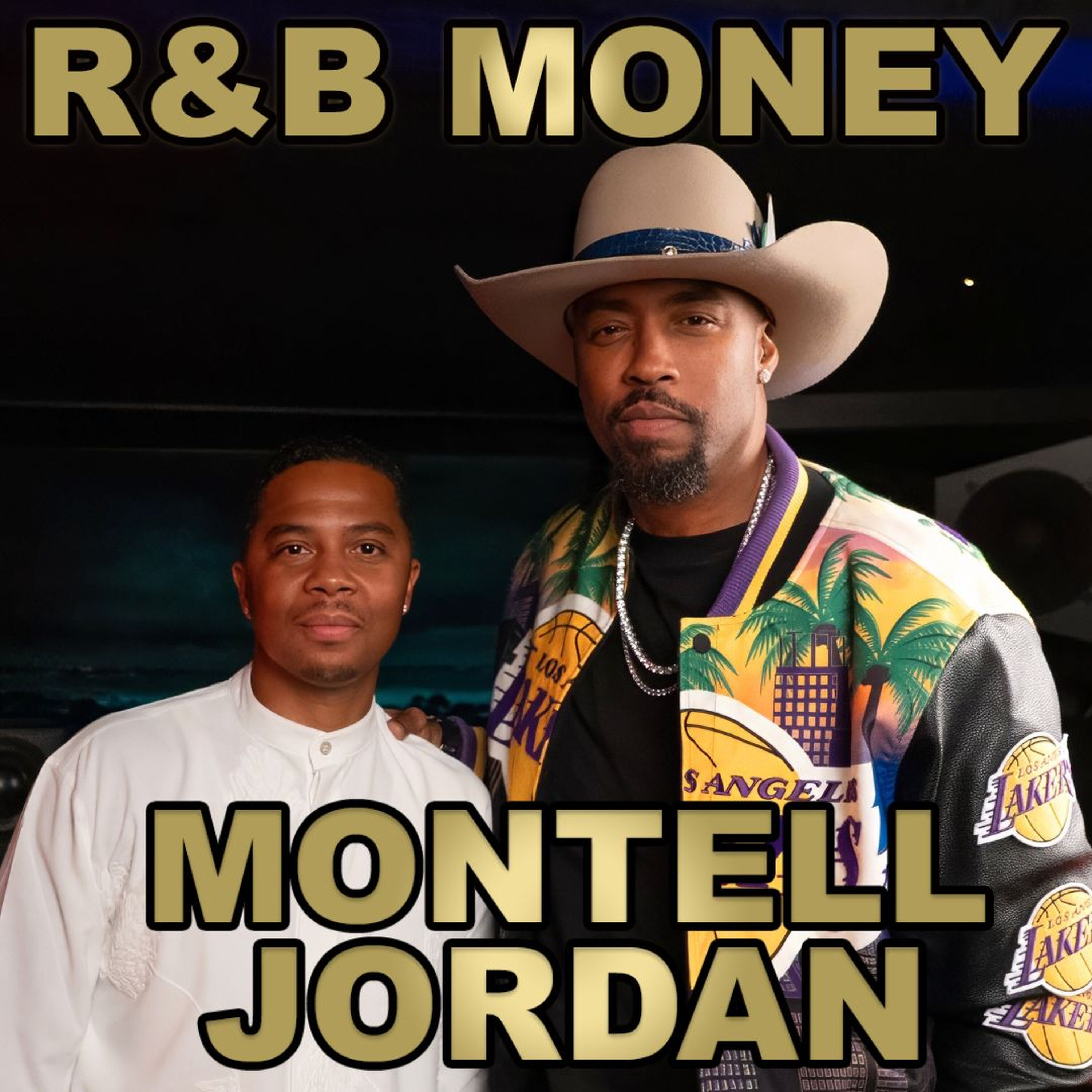
R&B legend Montell Jordan joins the R&B Money Podcast to reflect on his incredible journey from '90s superstar to pastor, cancer survivor, and children's book author.
Montell takes us behind the music, sharing stories about signing with Def Jam, creating the timeless anthem “This Is How We Do It,” and delivering hits like “Get It On Tonite,” “Somethin' 4 Da Honeyz,” and “Let's Ride.”
Beyond the music, Montell opens up about his battle with cancer and recovery, how faith and family helped him through one of life's toughest challenges, and his transition from entertainment into ministry. He also discusses his new children's books and his mission to inspire the next generation.
See omnystudio.com/listener for privacy information.
Transkriptvom Podcast bereitgestellt · Zeitmarken springen hin
R & B money.
We are.
Jake. Jake Valentine.
We are the authorities on all things R & B.
So nobody's supposed to be here. Yeah. Debra Cox. Yeah. Was that originally for you?
No.
That was for Patti LaBelle. Oh, my God.
Yeah.
Hear the voice. Yeah. We had a girl demo that record because we sat down and wrote it for Patti LaBelle. Because that's not Debra's first record, is it? No, she had an album. She had an album before that. Yeah. Okay. But she had some dance records. Yeah. That was Clive's girl and he wanted her to, you know what I'm saying?
That record is incredible, man. We were very intentional when we were writing. I was doing it for the performance. We knew it. We knew it. We were like, she's going to love this. And she was like, I hate this. I hate this record. Why would you think I want to sing this? She didn't want it. Yeah. That record sat around for a year. Did you ever have a conversation with her later on where she was like, I was wrong? Yes. This record's incredible. She told it. But the other part too, though, is that where Debra took it.
Oh my God. Vocally is a different space. Historical. Historical. Where she goes with that record is just like, oh. She's different. Yes. She's different. Yeah.
Debra says she pulling up too. I remember you told me that, Debra. You said you pulling up to the podcast.
She's different, bro. So now we got Nobody's Supposed to Be Here. Yeah.
Does it turn into people looking for y'all now? Are y'all still just like, okay, we got a couple records here. We'll see if such and such wants a song. The whole sought-after production team.
I'm going to give credit where credit is due. We made records. Kristen Jordan shopped everything. We weren't walking into, at least not at that time. We were in the studio mashing out songs. And just all the producers, everybody, me and Shep, songwriters, we built a stable and we were like, we were just writing and mashing out. And then like once a week we would all to come together in the red room, you know what I'm saying?
And sit down and be like, okay, we're going to play records. Oh, that's whack. That's garbage. Oh, that's good. That's got something to it, you know? And we may have done 15, 20 records and maybe only one would make the cut because the thing was, we're not going to put out nothing whack. And Mrs. Jordan wasn't going to let nothing go out that was garbage. I love that.
I mean, that was frustrating as hell because we think stuff is bummer. She's like, nah, they're not looking for that. They don't want that. I've been in the office with Clive Davis. I've been in the office with Sylvia Rohn. I've been in the office. This is what they're asking for. But we as artists wanted to, I as an artist, it was stuff I just wanted, stuff I like. I'm like, oh, if they don't get this, then whatever. They don't hear it.
They don't hear it. But she was right most of the time. Yeah.
So, male record, which, let's be honest, most male artists don't give other male artists their hits.
Correct. Incomplete. Yeah. Was that a Montel Jordan record at first? Okay, so that went through two transitions. It was initially a Montel record. Okay. But we knew Def Jam... at that time, was just like, dude, no doubt, like, they wanted me to make a party record.
Because now you had had Get It On Tonight out too, right?
Or Incomplete, or no? Or yeah, Let's Ride Out. Yeah, Let's Ride. Yeah, Let's Ride Out. Right, so Get It On hadn't come yet. But I had. He was a no-limit soldier for me. No, that's right. Yeah, yeah. There's a story behind that.
Yeah, yeah.
Shout out to Eddie Bishop. So more and then the Let's Ride album. And even Let's Ride was a different vibe. It was still double time. Yeah. So it still had a vibe to it. But, you know, and then when you get home tonight with Billy Dee Williams in the video, the sample to Marvin Gaye, I Want You record. You know, so everything kind of had to have tempo. And we also knew, if I throw a really... Because I did some...
On that album, oh, my God, with, like, Teddy Bishop and those guys, Noonie and them, we had some incredible ballads, bro. And they were never going to see the light of day. So... Never see the light of day.
Even though Def Jam, for the Moore album, wanted you to kind of smooth it out, get a little more R & B.
They didn't really want you to go ballad, though. No, no, no. I wasn't going to be releasing ballads. Okay. So, literally, the song that could have been a song for me... Mm-hmm. we wrote it for Michael Jackson. Incomplete. Michael Jackson. And I don't think Michael Jackson ever heard the record. I don't, I don't think he was ever given the record. Yeah.
Had the opportunity to turn it down or whatever. But that record, it got to Cisco.
Is he the only artist that had cut that record?
He is the only artist, I believe, that I remember to cut that record. That record is, oh man. Yeah. It's an all-timer. That's a, That record is. Yeah. It's a copyright. Yeah, buddy. It's a copyright. Yeah. Pretty faces from the covers of the magazines from they covers to my covers. Yeah. Yeah. Yeah. Yeah. I see what you was putting down, blood. That was cool. I see it.
I see it, blood. Yeah. That's good. That was good stuff. It's the same album as Thong Song, ain't it? Yeah. It's the second single. It's the second single. Mm-hmm. Oh, yeah. Because when that record dropped, it was just like, oh, okay. He not playing no game. And to have a record like Thong Song that was just a straight beast at the time, and the video, everything, to follow with a ballad that was almost just as strong or bigger, it showed that you could have up-tempo songs and follow with strong music.
And it's really hard to have back-to-back smashes.
Yeah.
Because what people don't realize is when that first single comes out, it takes a long time before it burns out.
It can smash. Yeah, it's got a tail end on it.
Because there was a song that I wrote for Mario. It was the second single after Let Me Love You. It's a record called How Could You, which people love. And I think the streets love it even more. But I remember the time. I remember being, I was in San Francisco.
When Let Me Love You dropped. And I knew I had the second single. I was at home.
And I was listening to Cameo. And Big Von played the record. And I remember he thought Let Me Love You was my record. You know, my guys back home, they knew I had this single that was coming out. And he played Let Me Love You. And I was like, oh, how could you? It's never coming out. I remember that.
Wow. You felt that? I was like, oh. It's not going to get there. Oh, man. My great record that we did. Oh, man. It's going to be tough. I just knew it.
Even then, because Let Me Love You, once again, first listen, when I hear the record.
I'm like, oh, this is just special. This isn't going away for another 18 months. It's going to be out. When is my song going to ever come out? And if it comes out, it's going to be.
But it did do well. It did well for me. And well for him. And obviously, it was a great underdog record. But The success of Let Me Love You actually hurt How Good You.
Yeah, for sure. It just did. Yeah. You know what I mean? And that happened.
So for you to have a record like Incomplete come after the thong song?
Yeah. That was... That was... Like, it's almost impossible. That was dope.
It's almost impossible for that type of success back to back.
Yeah. Five or six weeks, number one with Incomplete right after the thong song. Yeah, bro. Congratulations. Thank you. Congratulations. Thank you.
So as you're going through all of this, and is it helping you in your artist career dealing with your label that you're having this outside success to?
I mean, that would be an interesting question to know what the label thinks about that. But I felt like I had to go outside of the label. to live as a songwriter because it felt like other than them wanting me to be an artist and tour or this and that, it didn't feel like they saw me as a songwriter, even with, you know, the, the songs that we did for, for Cisco, you know, and, and did songs for, for Drew Hill and Kelly Price. Like we were there, but. Lil Mo. Yeah. Yeah. You writing records.
We were, we were getting them in. We were getting them in. But the label still is not seeing you that way. They don't see me. They don't see me. We signed you as an artist. You're not baby-faced to them. No. This was new for them. And it was new for me, too. Because you were one of their first R & B artists.
I was their... One of their first, yeah. Allison Williams was there. Orange Juice Jones was there. I was the first person to give them a number one record. Number one pop record. Yeah. So... I think they didn't see me as somebody that could be like a staff dude to write songs for other artists that were were there yeah you know what i'm saying i got you yeah we need to hit get montel instead it was like no get montel in studio let's bring in so and so and so we we want you know this person to come in with montel so Instead of just letting you do your thing. Yeah. Chef, just go crazy.
Yeah.
Because obviously y'all were going crazy for everybody else. No. So that's how we got with like Teddy Bishop and them. They're like, oh, we want you to work with Red Zone. We want you to work with Noontime. Yeah. Okay. I'll go work with them. But I'm writing my own songs. Got you. I got a question. I'm always wanting to know this. Why didn't you and Nate Dogg ever do a record together? That is a great question. I love Nate.
And Nate was... A good dude. I hung out with Nate a couple of times. We had some wild nights. When I first moved to LA, I hooped with Nate a few times. Yeah.
He used to pull up to the gym in a stretched, like escalade or not escalade, like a stretched truck.
Mm-hmm. Mm-hmm. With Hennessy. He'd drive. He did not have a designated driver with the keys to the truck. And then come play basketball. Yeah. At LA Fitness in Northridge. He was different. When I first moved to LA. Yeah. He done. Nate was a good dude, man. This is really... Nate is what an artist looks like. Okay, this is what... Okay, all right. Yeah, yeah.
This is when we hopping out to stretch some with, you know, your feelings with me.
And then come home. Yeah. But yeah, why did y'all do a record? I think labels were territorial back then. In other words, like I said, you know, I believe... I wanted to work with Rhythm D. I wanted to work with Eazy-E, this, that, or the other. The fact that you were on Def Jam. You were on Def Jam.
And so Def Jam had to have, you had to work with Def Jam artists. And so, because I wanted to work outside and do different things with other people, it felt like, you know, I remember, okay, so I remember there's a song on Deborah Cox's after Nobody's Supposed to Be Here. She has a song We Can't Be Friends. Yes. R.L.
Written by Shep Crawford. I didn't know Shep did that record too. Yeah. It was me on that record before it was R.L. Okay. So what would happen though is labels looked at their brand or looked at me as a commodity and I can remember somebody saying, you know, we were, we gave the song, you know, your voice is on. We can't be friends. I was on. We can't be friends on the background. Are you credited? I think so. Okay.
All right.
It's probably there. Yeah. I'm there with, with like, and, and that was the song I was on that song and Def Jam would not clear me to be on that song. And it record, this is a, this is a, I'm not going to say any names.
All right.
This is, this is that, this is that moment. No, not yet, but yeah, you can not say a name on this one, but I need a story later on. Yes, yes, yes. But it basically was, I was like, we love her. She just came off one of our biggest. Yeah. It would be fantastic for me to be on that record. It makes sense. And the label was like, nah, I'm just saying the label to keep a part of people.
The label was like, nah, you know, she's a bum. You can't be on records. She's a bum. After having a smack? She's got a smash record. She's this, she's that, she's that. And she was like, yeah, you know, you dust a bum off, a bum is still a bum. Wow. And so they would not allow me to be on that record because they felt like they were trying to.
That's crazy for whoever, whomever, to say that about the Deborah Cox.
Oh, yeah. I was heartbroken. Because, first of all, R.L. is my guy. I love him. Yeah, yeah. And he was a label mate with her. You know, he was in the... Of course, he's the group next or whatever. Yeah, yeah. I just flips it. They put R.L. on the song. Boom. Another hit record. For me, I'm like, here's another opportunity for me to have a ballad. Right. And not get it.
Because on the other side, the other label was rolling. They're like, okay, yeah. Yeah, okay. But your label was like, nah. No. So... To answer the question again, it's like, why I didn't work with Nate is because labels, my label, Def Jam was protective of their brand. The word was always, we have to watch over the logo. We watch over the logo.
The Def Jam logo was, nah. Yeah, that would have been legendary. Don't fit the logo. Montel Debra Cox did not fit the logo. You and Debra Cox, yeah. Yeah.
I don't understand any of that, but you know, this is a music business and some things I just don't understand.
Well, what we can understand, what we probably agree on is probably the logo is still there. Even if things changed for me or for Debra, this or that, what they sought out to protect, it worked because that's what they protected. Okay.
Yeah.
All right. The logo is still there.
As you're going through this business and you're diagnosed with cancer, what are your thoughts? Because what people don't understand is that artists live a different life. You know, there's not a whole bunch of no's. There's a whole bunch of, you know, we need and this, you got to do this and you got to do that. And, you know, and then obviously when something like that happens, you start to have to face a reality.
Mm-hmm. The human side really kicks in. Yes, sir. What are your thoughts when you get that diagnosis? My journey with cancer and the music business are completely separate. So we're kind of now kind of fast-forwarding through me doing a couple of albums. Mm-hmm. eventually having some falling outs, leaving a label, trying to do an independent thing, getting jerked by a label, meaning a label actually took an entire album of mine right at the time when the internets was really starting to, the ESPs, and we don't fully understand. They took an entire project of mine and just put it out and probably to this day still read stuff from some of what I thought was a very dope album. From that journey didn't end up doing
some independent release stuff. So the music thing shifted for me. And so eventually I take a step from music and go into full-time ministry. That's me giving my sayonara. And I learned a lot. I felt like Jeff felt like I had an abusive relationship with music. I felt like to me, when you love something that doesn't love you back, that's abuse. Yeah. And I felt like I loved music and music did not love me back. I mean, music business.
I feel like music. You said music itself. I felt like music did not love me back. I felt like when I was leaving the business and I was like, hey, I'm about to go into ministry, you know, it was like, okay, bye. Glad you found God. See you. These are my last tours, my last shows. Okay. I didn't feel, no, Monta, your pen is neat. Oh, where are you going, bro? I did not feel it. And I think God had to set it up that way so that I would leave.
Because if I did feel somebody be like, no, then I might feel like, okay. Right, right, right. It's a real breakup. Yeah, it was. It was. And so I leave that. I go into full-time ministry. We go through a bunch of different changes. But to get to now... where this diagnosis happened. The diagnosis happens, you know, a little over about two years ago. It happens in 2024, January 2024. And I did, you know, I had been getting regular physicals and checkups for a decade, you know, from the time I'm about 41, 42, because when I went in the ministry, the church incentivized, hey, you get extra kickback, you know, on your check if you go and you know, and get your family checked and you're healthy.
So I'm like, cool. So I had a track record of recognizing, you know, what was going on in my body. There was a time when I was pre-diabetic. And so I changed and shifted some stuff to get my A1C levels now. So I always kind of knew what was happening with my body. In that journey of those years of doing ministry and then getting to this place of where I got to January of 2024 and my PSA levels, and I will probably give you some medical terminology here.
PSA is a prostate specific antigen level. It's how much proteins are produced in the body. PSA level for men should be below six. To just say that number, arbitrary number should be below. It should be zero but if it's one or two or whatever it's okay if you're african-american if you're black man when it starts getting into the number four stuff like that then it's kind of like okay we need to start looking at this if it gets to six that's the whoa okay you need to And there are guys who got 6, 10, 27, 104.
That number can go crazy, and that determines what stage cancer is. So when I started seeing my level pop up to 6.1, it was kind of like, hey, we may need to go see a urologist. Did some scans. They wanted to do a biopsy. I go do a biopsy, and that's when I sit down with the urologist and he says, Hey, I got some good news and bad news.
Bad news is cancer. The good news is we got it early. And so you have more options available to you. When I heard the doctor say it's cancer, like I said, once again, as a faith guy, one, I'm terrified to hear that. But at the same breath, I know that there's life and death in the power of, of my words.
And so when he said his words, Hey, it's cancer. My thought was, this is not going to kill me. It's cancer. Okay. This is not going to kill me. And then after that, now I'm thinking, I don't know what my life might look like after whatever happens with this, but it's not going to kill me. And so from that point, that's when, you know, and my wife knows I would, you know, when the levels came up higher, I came back in December for my physical. Like, yeah, my numbers were off and they want me to come back in two weeks. Okay. Went back in two weeks later and they're like, Hey, the numbers are still off.
Even though they're a little lower, it's still, we want you to go see a urologist. Okay, cool. You need me to go with you? I'm good. Go see the urologist. Hey, we want to take some scans of you. Okay. Let's do some scans. Okay.
Yeah.
We see something on the scans. We want to do a biopsy. Okay. Well, I'm about to go to Australia. Can, you know, is it, is it, you know, is it important? It's like, well, it's, you know, it's not, you know, it's not like urgent, but it is important. Right. Okay, cool. So when I go and I get the biopsy or whatever, and then I come back and when I get the results like a day or two later from the biopsy, they're like, okay, yeah, it's canceled. So now I have to call my wife and try and downplay what I just heard. There's no handbook, bro. Yeah. There's no song written, I think, in how to tell somebody, hey, I, I got this disease. So I'm now calling her and I'm, I'm downplaying like, Hey, so, you know, results came back,
got a little battle ahead for us. You know, I'm trying to, you know, and, uh, that was a hard call to make, man, you know? And then how do you tell your 11 year old daughter? Hmm. Yeah. Cancer. How do you call your mom and tell your mom, Hey mom, you know, I got cancer. So my wife and I, we kept it like five, six months. We vetted doctors, tried to figure out what the next move was. Statistically, one in every eight men will be diagnosed with prostate cancer.
One in every six will be black and twice as likely to die from it. And it is 99% treatable when it's caught early. And I'm trying to determine what my course of action is going to be. And they told me, well, you can watch it, you can treat it, you can remove it, or you can radiate it. Those were the four options. Watch it, active observation. It's at 6.1.
Let's just see if it stays there. And you know what cancer does, bro. Watching it is, I guess for some people, you can watch it, but I'm not designed like that. So the next thing was to treat it. So treatments are, you can put seeds, you can do, you can freeze it, you can ablate it, you can do high food treatment. Like there's different treatments that all are supposed to be able to do some things to try and kill the cancer without completely destroying the prostate to the place of where it's not usable in the body anymore. The reason why a lot of men don't talk about it or why it's such a secretive thing is because the prostate has three major functions. The first major function is it sends blood flow to the penis.
The second, meaning when you get aroused, it sends a signal to the brain and the brain sends blood flow, but that comes from the prostate. So when you don't have a prostate anymore, getting erections is more difficult because that sensor is not there anymore. Right. The second thing the prostate does is it's what creates semen. So you have no more seminal fluid if you don't have a prostate.
And then the third thing a prostate does is your prostate and your bladder are like dancing partners. So when you are going through your regular day and your bladder gets full or you realize you have to go to the bathroom, you normally can tell, I should go to the bathroom right now. I feel like I have to go pee or I don't have to go now. I can go later. Like your bladder is talking to your prostate and it tells the prostate, I need to go pee now. And then the prostate sends the signal to the brain to say, I need to go pee. When you don't have a prostate, He don't have the signal out or don't have the dancing part to tell you when you got to go pee, which is something called incontinence.
Incontinence is when guys end up peeing on themselves or have difficulty getting to the bathroom in time. And so those three things, no semen, difficulty with erections, and restroom challenges, that's what scares men about dealing with the prostate because it deals with a very sensitive part of the body, right?
And so now my wife and I, we're trying to determine what course of action we want to take. So yeah, we're like, okay, well, let's treat it. You know, let's try and find one of them treatments that work. The HIFU, that might work for us. That'd be cool. And then we have some great doctors and friends that basically were like, you can do that treatment, but after a couple of years, chances are you're going to have to do something else because the data behind that shows that those things only potentially last for a certain amount of time. And because I'm so young at 50, early fifties, you know, you can't risk, you shouldn't risk, you know, with it running in your family as well, you know? So that's what
we chose to have my prostate removed in November of 2024.
So by doing that though, you don't know, it's no longer once, once they remove it, the cancer's in the prostate.
So hopefully, Because that prostate is also connected to nerves and lymph nodes and stuff. And so naturally, the objective is you want to get it detected early if you have it, because you want to keep it isolated in the prostate. Because if it gets out of the prostate, that's when it goes into the lymph nodes and then the other places in the body. So we opted to have the radical prostatectomy surgery, have the prostate removed. and trust that it was going to be isolated in the prostate.
And in doing that, what was seen as early first stage prostate cancer, when they biopsied what they took out of me, they realized it was very aggressive stage two prostate cancer. So me watching it could have been- Cost you your life. It could have cost me my life. From January being at a PSA of 6.1, To right before the day before my surgery or a couple of days before my surgery being at six point nine, like it lived, lived almost an entire point. Yeah. Within, you know, eight, nine months time. So we felt like we did the right thing. So now you're cancer free. That was the first time. Well, you got cancer twice. Yes. So it came back. I'm a two time cancer survivor. Wow. So had the surgery in November. About eight or nine months
goes by. I'm about to be a spokesperson. I'm about to be the poster boy for prostate cancer in 2025. I'm going on Good Morning America. I'm doing a tour. I didn't partner that with zero prostate cancer. Like I'm about to tell the world, you know, how I navigated it. My PSA level, it never went all the way back down to zero. So I continued getting regular scheduled checkups and follow-ups. And, you know, the number would go up a little bit or go down and go down. And then it spiked a little bit. And they were like, you know, we need to get some more CT scans.
And there it went. They looked. They found cancer in my left lymph node and in my prostate bed where the prostate used to sit. And so that's now when I am a week away from going out into the world to tell them all these things that I'm telling you right now about prostate cancer. But I'm not telling the story from the other side. Now I'm telling the story from the thick of having cancer. For the second time.
For the second time. So basically, fast forward, I do a proton therapy, which is a laser treatment. that for me took 37 treatments, which took seven and a half weeks, was five days a week, every morning, driving an hour over to Emory in Atlanta and getting placed in a machine where I had to lay still with a full bladder and empty bowels and have them shoot radiation into my body. That was hard, bro. Wow. That was hard. Now, to just tie in some R & B love into that story, my wife knew that we would need assistance and help. So we had family, we had community, we had prayer partners. We had a whole big thing of, you know, all meets all. I'm going to recover all.
And she enlisted some friends and people to come alongside of us on that journey because that's weighty, man. And a lot of people could not handle, everybody can't handle that type of journey. But maybe you can handle one day of that journey. And so one of our good friends, she reached out to Q Parker and asked him on day one of my, you know, going to the hospital.
I walk into the hospital and when I walk in for my very first treatment, Q Parker is there. And that guy was there and he said, I want to be here. I said, you here? He was like, no, we'll be here every day. I can be here. And for weeks upon weeks upon weeks, every day of those 37 treatments, I think for about 32 or 33 of those days, he would drive an hour, At five something, six o'clock in the morning to come across town to meet me at the hospital so he could be there for me and for my wife while I went through my cancer treatment. That. Amazing person. Crazy. Amazing man. That's crazy.
So I always have to show that. And I had a lot of people. A lot of people were very, very supportive. That man didn't have to do that, man. Right. In this business, you know.
Sometimes you have those conversations with people where they're just like, Oh, it was just a music business. And I met him through this or I met him. Like you can find real people, real family. You can within this thing. You can, you know, it's kind of like how you said earlier, where you just like, you had this breakup relationship with the music business. Didn't feel like it loves you. Didn't love you back. You know, it was abusive to you.
But then years later, He got a brother in music.
Yeah. That sits with you and shows up for you. Yeah. That you would have never known without music. Oh, no question. So that in itself is incredible. So music may have loved me in ways that I didn't know. Right. I think that's fair to say.
Right. And I think also where we, um, sometimes where we, where we look for the love or how we look for the love, you know, I haven't put out, I mean, I put out enough music of my own, but I, obviously been more of a businessman and a songwriter in in my career but it really shocks me still and you know people are like what do you mean man you had that one song that i really and i'm like wow that's crazy but you stop at as we go on in our lives and if it's not a consistent thing all the time yeah we kind of forget about it and we're like oh yeah i put out a song it's yeah You know, it still shocks me that people will call me and ask me to do a show. Yeah.
I'm like, I don't perform. You know what I'm saying? Like, that's not even something that I... You don't go get that bag, man.
Man, you jumped on that one song with Tank. And I'm like, yeah, because he practically made me. You know what I mean?
But I also realize how many people live their lives through our music.
Oh, wow. Yeah. And what it does for them.
Yeah.
It is the most eye-opening thing ever when somebody tells you that your music is a part of their life. Has done anything in their life.
Yeah.
Shocking to me. Yeah. So I think today, in just the journey of the last couple of hours, we were at a church and met a woman. And the woman was like, I'm so glad to meet you. For the past 20-something years, I work with Tony Robbins, you know, big, that big dude, whatever. And she's like, and, you know, every single time we get together and do X, Y, and Z, we always play your song. I'm like, for 27, for 20 something years, this is how we do it.
You would never know. I would never know it. I would see that dude and never know. Right. Right. You wouldn't even put that to the, yeah. Music is a part of, There's a person that helped me with my eating and with changing my diet and things like that, Rochelle T. Parks, Coach Ro. Coach Ro is another just astounding woman. And she works with ET, incredible speaker, motivational guy.
And they do these different things on the net and just motivate people and stuff like that. And she started out. Like planking, you know, with people on that while they would be on their calls, she would be on a Zoom and she would be planking or whatever. And eventually other people started seeing her on her bike or planking or whatever. And so this is how we do it was like three minutes and 40 something second song or something like that. So they would put on my song and plank for the song play and plank for the duration of the song on Zoom calls. And they would do that for over a decade of time. So when she meets me for the first time to help me reorganize a meeting or whatever, she's like, you don't know this,
but you've played a part in my life because while I've been doing my life during the past decade with these people, your music has been there every single day that we do that. And so it's just always wild to hear the places that your music shows up.
Yeah.
Yeah. What's next for you? I feel like my wife has championed me for so many years. I'm actually enjoying being a cheerleader for her. Yeah. You know, it's something when somebody can help you reach your dreams. And I know she's allowed a lot of her dreams to maybe die so that mine could live. And I feel like this is my opportunity in life and her authorship and her speaking and the things that she wants to do or has wanted to do. As a husband, I want to see her shine, man. Yeah. And so I want to champion her. And so we have a children's book and we have a marriage book. And so I'm trying to find ways to reinvent our brand That it's not just Montel to Arne. The God is saying this is how we do it. We are, Kristen and Montel joined
marriage coaches that help public marriages heal in private. We are authors of a marriage book. We're authors of a children's book. We are now speakers and things like that. So I'm trying to what's next for me. And I still enjoy creating music. I learned that music doesn't make me. I make music. Music doesn't define me, I define music.
So wherever I drop a song, it's normally something, it could be an artist that I just feel And if they want to get with Unc, because that's how I'm going to become Unc. You know? I love it. I love that, bro. I love it. I love it. Listen, I used to remember Uncle Charlie. Here's Uncle Charlie.
Man.
But now when they started calling me Unc, I'm like, you know, when LaRussell wants to do a song. That's my guy. Yeah, yeah. And so I'm headed out this weekend, his birthday. I was at his, I'm going to his backyard. Are you going to the backyard? I'm going to his, on his birthday. And I've been in the backyard. I met his mom. Yeah. What a, Beautiful, beautiful guy. And he invited me to come be a part of his birthday party. I'm like, yeah, I'm coming to celebrate you on your birthday. I love that. So a guy like LaRussell.
And we did a song together. We did another song together. I'll never know if it'll even come out. But we did like two songs. No, LaRussell, they're going to come out. OK. LaRussell puts out music. He put out music. What? Yeah. Yeah. So yeah, LaRussell. And there's this kid out of LA, I think, who's like a teacher in Alabama somewhere, DJ Stussy.
And he's got a song blacker than BETM, blacker than EZ. Like he's black and he blew up and he's coming up. And I did a song with him on his recent album, you know, Born to Be a Star. And so there are artists I still want to record with one day. I was with Sean Stockman. it's my brother day oh my god yeah what a what a those guys amazing human you pulled out the guitar we worked on a little something you know for the show we're like yo let's record this let's do an acoustic version of this yeah yeah so there's still a lot of music in me there's still i.
Need to Come pull up on you, man, and go through your computer because I know it's some.
Oh, it's stuff. Yeah, I know it's something in there. I know it's something in there. Something in there.
So while we're speaking of shining the light on your wife, I would love.
For her to come sit on this couch with us. I would love that. Yeah, yeah, yeah, yeah. Thank you. Thank you. So now we have on the couch with us your wonderful wife. Better have. The legendary. Yeah. Wife slash manager. Yeah. 32 years? How many years? 32 years. 32. Mm-hmm. So have you managed my tail the entire time? Correct. Mm-hmm. Correct.
From first deal?
From day one.
Wow.
Yep.
There were some others who came and gone who were in the mix. Yeah, yeah, yeah. Partnerships and things like that. But ultimately, this is, you know, she's been a constant. Yeah.
How was that for you as a wife to an R & B superstar?
To be honest with you.
Also managing it. You know what?
Honestly, when I first met Montel, he was doing rap. Like, he was doing this Dougie Fresh thing, right? And it was great. Like, the cadence was dope, whatever. But he invited me to church because, you know, he was dating a heathen girl. No, so he invited me to church.
Learn to convert. All right.
Yep.
Learn to convert. That's a thing. That's a thing. That's an L.A. thing. That's a song.
But when I saw him sing for the first time, I was like, wait, what are we doing? I was like, the rap thing is cute. We got to cut that out. This is the real gift. And he was like, but you know, me and my boys. I was like, yeah.
All right.
When you finish with that, let me know. And then we'll do something real. And so, yeah. So then we decided to do a demo. And man, it's funny because we did. I think we ended up doing like seven demos, but it was. On the last one, it became a real thing. But I always knew he had this gift and this talent. I actually came from a music background.
And I grew up... Because you were in a singing group.
Yes, because I was in a singing group. But when I was a kid, I grew up in the Bay.
Oh, okay. Yep.
I grew up in a place called Runner Park.
Ah, yes. Yes.
And so we would hang out at an after-school program by a lady named Layla Crawford. And she would teach us how to write and rap and sing and do back of house and taught us all kinds of things, front and back of house of music. And so me and some friends of mine, they were in a rap group and I was their dancer, but they wasn't serious.
I was really tired of them. They kept getting high.
You know, Rohnert Park, ain't much to do out there but get high.
No, man. I'm very familiar. I got cousins that's from the Bay Area jungle. Yes, you would say. Which is Marin City. Yeah, yeah, yeah.
And the guy we were rapping with was also.
She left the group dancing because they weren't serious. Yeah. They were getting high and weren't serious. Yeah.
Booty breaks.
Tupac Shakur. Yeah. Catching. Yeah. Listen. It all makes sense now. Yeah, man. Yeah, man.
So I run away to have. To get a real job, to do a real thing, I'm going to be a lawyer. That's how that was going to go. And then ran away to go to college, and I'm playing ball. And then I run into him. I'm just like, oh, okay. At first, I was not interested.
At all. No love. No. No love.
No.
You was too churchy, bro. No. I got nothing. I got no action. She was in man-hitter mode the day she met me. Yeah, man. I was like, goodness gracious. Like, nothing? Like no rhythm?
Yeah.
This is my Mac Daddy vibe I'm giving you.
It was crazy. But that's, I mean, there was so much going on. Like when I first got to college, the first couple of days I went on, it was.
Like, you got me right. Wait, what?
You asked me out to dinner. Are you serious right now? So then by the time I get to be, I'm like, yo.
You got a job.
I just want you to know, do you have a job? And he was like, wow, you want me to pay for you? I was like, I have no interest in you paying me. I just need you to pay for your own meal.
That's it.
He was like, wow.
Okay.
All right then. So yeah, it was a little rough. It was a little rough exterior, but yeah. But the second time I saw him. So see, the first time, sometimes you don't see somebody, but the second time I saw him.
She saw me for the first time, the second time.
Buddy, he came out in the all white track suit. I was like, oh, that's the man from the other night. I was like, wait a minute, wait a minute.
Yeah.
It was like that.
I was like, oh, snap. Okay. But we just had to get him into the R & B. That's it. That's it.
So were you already thinking from a business standpoint?
Yeah. Well, I want to be on that side of the business.
Well, to be honest with you, when we were doing records at first, I was, as I was singing and When we were entering this contest, it was crazy. I was like, we're singing, we're dope, but then he's winning all the contests. I was like, this is dumb. I'm on the wrong side of this. I don't want to do this anymore.
Those who don't manage. And so I was like, you know what?
I know how to do this part. So I always knew that I could be successful at that part. And so when we end up getting the deal, we get to Def Jam and they're like, hey, so you know if they know you're the wife, they're not going to take you seriously. I was like, the devil's a liar. There's no truth in that. I'm not doing that.
I worked really hard to get here.
And so I said, you know what? I'll be Kristen Hudson and you'll never know.
Huh? Yeah.
First two years, nobody knew we were married.
Yeah. He told me, I'll make you a million dollars.
I'm not going to make you eggs. You good with that?
And I was like, you can buy a lot of eggs with a million dollars. Let's go. You can't buy many eggs no more. No, not anymore. Remember, this is long ago. I would have been like, ah. I don't know. My math. Can you buy me five eggs? Eggs is important.
Gas and eggs right now.
Eggs is important. Well, yeah.
So for you, like you said, obviously, wildly enough, both of you guys were set out to be lawyers.
Yeah.
Yeah.
And it's funny because when his mom comes to me, like when we get, when we're going for our deal, it's like, baby. So here's the thing. You need to get him to get a real job. Now he got a real degree and he needs a real job. You got to tell him this music stuff is foolish.
As you're getting the deal.
And I was like, I can't do that. I said, because the thing is, is that if we don't pursue this, he'll always wonder what if.
Yeah.
I said, so I'll never do that to him. We'll walk this all the way out. Now, if it don't work, we'll go to law school. It'll be fine. We can always do that. But if we don't try this now, we're going to regret it.
Yeah.
And I was like, I just believe. My dad didn't believe either. My dad was like, so you're going to marry the music man. I was like, daddy, don't do that.
But if you haven't, you know, and we talk about that, like this music thing is, it's magic.
Yeah. Right.
And everybody doesn't always, I say this, everybody doesn't always believe in magic.
Well, you know, especially if they can't see it.
Well, it's a thing when you, when you, so I have this thing, like when I see something and I say a diamond in the rough, like I just, I'm like, um, I'm determined.
That's it.
When we were doing the music thing and when we did our first CD, like again, on our first album, we didn't have any A & R people like Tina Davis.
Yeah. She was an intern. She was an intern.
And she was like, hey, let me help you. Yeah, man. She was like, hey, let me help you dig out these files. Because we had to do budgets. They didn't know how to do budgets. And so Tina came alongside and she was like, yeah, let me show you how this goes. And let's see if we can get this to New York. And she wasn't on their radar. We weren't on their radar. And then once we turned that out, it was like, okay, interesting.
Yeah. It shifted for everybody.
Absolutely.
Absolutely.
Absolutely.
So, Martel earlier was saying how now a big part of his focus is for you to see out, you know, your dreams.
Yeah. And the things that you've been wanting to do. Yeah.
Can you kind of let us know the things that you're, you know, what you got going, what you're planning, what you guys are doing together?
Yeah, what you doing?
What we doing? We, right now, have released a children's book named Shiloh and the Not-So-Scary Girl Above His Bed, which is a flip on fear.
Okay.
Keep talking. I'll just read the book while you talk.
But Shiloh, it comes from our youngest son. He was afraid of the monster that lived under his bed. And this little child... kept running into our room every night. I was like, oh boy, he got to sleep in his own bed. We got to figure this out.
We married. We grown.
We got to figure this out.
Y'all got kids, kids. So y'all like, yeah, it's been going on too long.
You're not going to have no other siblings like this. But really, so I had this thought of like, hey, what if the thing that you're afraid of, the monster that you think that lives under your bed, like what if he's more afraid of you than you are of him? And then what if he's only there because he wants a friend? He was like, wait, what? But learning to lean in and ask him questions like, why are you afraid of this? What does this really look like? And when we do that with our kids, what we're doing is we're, Teaching them how to face fear and learning how to, for us, we invite faith into that so that we can do brave steps. We can do brave things.
Be bold and courageous.
Fear is coming.
Absolutely.
But can you still be brave when fear comes?
And if we practice now, then when they sit across from me, when they're on as a marriage couple. Right. And so they're sitting on our couch and they're afraid to leave, afraid to go, afraid to make a choice. I'm afraid I'm doing the wrong thing.
Yeah.
But that's just because they didn't learn how to deal with their childhood fears.
Yeah, yeah. We say unattended childhood fear becomes adult trauma. So we're trying to help children age three to seven be able to understand fear, recognize that it's not like, oh, don't be scared. No, don't be dismissive about a child's fear, but to have them recognize it, lean into that, and understand that even in the face of fear, they can still...
Be brave. They can still take a brave step.
We're building brave.
Yeah. I love that.
Of many. And the second one, we'll talk about.
Is the book out now? Yes. Where can people find the book?
ShilohTheBrave.com and anywhere books are sold. Amazon, Bucks a Million, Barnes and Noble.
Yeah. Yeah. This little dude has a whole world. Yeah, he does.
And so we're going to work on an animated series for him. Music.
Yep.
And he has a second installment coming next year as well. That would be the first day of school. So we're going to talk about all childhood fears. So like being afraid of the dark or the first day of school, not making friends.
Going to the dentist, getting shots, all those different things. All the things we all have faced in our childhood. That is correct.
And the things that we've also faced with helping our kids in their childhood.
That's correct.
Yeah, like that is the big part for me that I picked up from it of just as a parent myself.
Yeah. You know, we... I always say our generation is kind.
Of, to me, you know, some people might be, you know, they might not like this comment or this statement, but I believe that our generation was probably the first generation that truly continued to learn with their kids.
Yeah.
Instead of just teaching. Yeah. I believe that.
I don't hear it as much people just being like, that's just because I said so. Like to me, just because I said so, it's like.
One of the worst things. Yeah.
Yeah.
That was most people's parents, period. Grandparents, great-grandparents, just adults. Yeah. Because I said so. Yeah.
Well, I think you're saying just because I said so because you don't know how to explain to me.
Right.
That's correct.
Yeah.
Well, and the truth is, so our oldest daughter- pretty much broke us of that. She was the most inquisitive.
Oh my God.
Oh, dear God. She had a zillion questions, but it was because she was so smart. So she's processing in real time. And then she would say, well, what does that mean? And you would tell her and like the next sentence, she'd kick it back to you.
Yeah.
And you'd be like, articulate, tell me what that means. And that means to say your words and be very eloquent in what you're saying and you're trying to make sure that everybody knows what you mean.
Great.
And then she'd kick it back to you. So as I was articulating it, I was like.
Who are you? Because I said something.
That didn't work. And the funny part is, now she has a son who is four and he's the exact same way, like, but on a turn up. And she's like, I can't believe he's got so many questions. I was like, we usually give birth to ourselves. For the most part, you know, but.
I feel like even within that, Now you try to figure out like, okay, what did I need?
Yeah.
Maybe, you know, everybody has some things they didn't get.
That's correct.
So it's like, okay, now it's building generation by generation. We got to make each other better.
You want to do better. You want to do better.
And like I said, I just believe that our generation is, to me, the first generation that really has continued to learn. Like I really want to know what my kids are going through.
I want to ask questions.
Yeah.
Yeah.
So that's, I mean, that's really what we're after. And the truth is, is that we're after the kids, but the parents are also learning.
Of course.
Because they're learning to lean in.
Of course.
Because if you learn to lean in and you get inquisitive, and not just with their kids, but with each other, learning to lean in and say, so what do you mean by that? Why do you feel like that? What's making you think that?
Yeah.
And when you get to those origins and the way that people think about Now you can really unwrap, like, is that a lie or is that true?
Right. Right. Because I said so type of generation. It's literally like, I didn't like hearing it.
Oh, I hated that.
I didn't like, you know, because I told you, I don't owe you no explanation. Right. You know, and so now that was the thing that I, you know, you catch yourself as a parent. If you say something to your parents, you're like, I said, I'll never say that.
Yeah, for sure.
Right here doing the same thing. For sure. That one and what's the other one is the... Do as I say. Not as I do. Yeah. What? Right. What do you mean? What was that? So you don't want me to rob this bank? Yeah. I was sitting in the car when you did it. But it's wrong. I ain't supposed to rob no bank. I think I'm going to become a bank robber. You know what I mean? And I, you know, I, so I love to hear. Yeah. These type of stories.
I love to hear, you know, that you guys are doing this for the community.
Yeah. This is not just for you. No, no, no.
Now for us, like this is, this is about teaching children how to overcome fears, but really how to navigate their lives. But we're doing it like a classroom. We're doing it like a community.
Yeah.
Today we, we got to go minister to a whole organization of kids that like, man, they need hope.
Yes. LA Dream Center. That was incredible. We're sending books to all of them. Yeah. It's really like, One, with the world we live in today, where there's erasure taking place of content and of literary works and books that aren't, you know. So one, Black authorship, Christian-based authorship. I think those things are important. And so this is kind of our contribution to the fabric of what is written, you know. Yeah.
History is told, you know, by who has the power. And so with what power we have, we have to document the different things about faith and life and the things that we're learning. Telling the story. Yeah. I mean, honestly, our job is to be a storyteller. That's it.
That's true.
Still storytelling.
Absolutely. We're born to be hope dealers.
Yeah.
To give people hope, to remind them that, listen, no matter what we face, whatever that looks like, if you have just a little bit of hope, you're going to get on the other side of this mountain.
Yeah.
So you guys did it in music and we get to do it in penmanship of books now. Like you get to do it in podcasts.
Yeah.
People just need a little bit of hope.
Yeah. No, absolutely.
I completely understand it at this point, what, I was put here to do, to do and to help with, you know what I mean? I, like I said, it's when.
You meet people and you.
Start to realize how they, you know, shape their lives through conversations or music or books and all these, the arts, us being creative and, you know, us giving them something that they can apply.
That's it.
Yeah.
With purpose, for purpose, on purpose.
Yeah.
Now you're doing something. Now you're cooking with grease, Mommy.
I feel good about it. I feel good about it. Good. Well, you should. Yeah.
Because you guys do this, and you do it well.
Thank you.
There's lots of people that do it. They don't do it well.
Well, I hope they do it well. That's what I say. I hope they do it well.
I'm just so glad that we've been able to create a safe space.
No doubt. For us. That's it.
Our people, our creatives, all facets of the business, you know, where people can really tune in and learn.
But people can also come here and teach. Yeah. Or tell their stories, you know what I mean?
Without it being the foolishness or anything else connected to that.
I agree.
I want people to talk about their journeys and how they got here and what they're doing.
Yeah.
And learn new things. I'm learning new things. Yeah.
You know, everybody that sits down with me, there are things that people may bring up. I'm like, wow, I didn't know that. Yeah.
You know, to tell their stories and being survivors. Yeah. It's just incredible.
It's just incredible that the journey you all have had together.
Yeah.
We've been in this, the thick of it.
Yeah. We've been married for 32 years. Yeah. To each other. Yeah.
And we've been through the music business, so it's been like 189.
187.
So speaking of the music business, I have a very cool part of this show that we do.
All right. So, you know, I want to get into the mind. Okay.
You know, these records, you know, what was inspiration, things that, you know, that made you write these records and Records you grew up on.
Yes. Can you play something for me, dog? Tank sent this in for you. Yeah. Come on. He's hilarious. Think about it. R & B singers.
What else?
R & B songs. Come on. We've got to know. Before you go. We're on the show. Everybody want to know. You're the funniest.
Ronald.
The funniest.
That was You're top five. Come on, Rance.
Okay.
Yes, sir. All right. So, Mr.
Mattel George, here at R & B Money, We would like to know your top five R & B singers and your top five R & B songs.
In no order. Okay. Just, you know, today. Okay. Because, you know, you might watch this episode and be like, man, I wish I would have. Today, though. Okay. So when you're saying top five R & B singers today. No, no, no. Just period. I'm saying your all time. Okay. My all time. I start with Stevie Wonder. You know, I'm from the hood.
I put S on the end. All time. I know all times. All time.
Yeah.
It could be all times. Yeah. Stevie Wonder. Stevie Wonder. Okay. No question.
Hands down.
Just had, you know, 50 year anniversary of Songs in the Key of Life. Yes. So Stevie, I must put Luther Vandross. Stevie. Luther. Stevie and Luther. I have to put Prince.
His royal badness.
Not just vocalists, but musicianship. Everything. Package. Favorite. I must put Marvin Gaye. Okay. Yes, yes, yes. I'm loving this list, brother.
Yeah.
I know what you want to say. But you're thinking he's too new school. But I'm telling you, go with it.
Rock with it. You think I should have him go?
Man, he's my favorite right now.
I mean, there's a lot of guys. There's a lot of guys.
But I'm just going to tell you.
But he's more popular. Bro, I'm a huge Bruno Mars fan. As am I. Bruno is cold-blooded. First of all, the Silk Sonic album is in my top five of all time. Bruno can be on this list, brother. With the Rushmore of the luther and i don't know you got uncle charlie you got mr big like we got we got dudes out there man but for me yeah i'm a huge bruno fan okay i like it i.
Like it all right uh you got personal history yeah top five r & b songs.
Top five r & b songs as stevie wonder i still know all the words to that song Eight times 88 is four. And, you know, but. Mm-hmm. Did you know that true love asks for nothing? Mm-hmm. Sister acceptance is a weighty game. Did you know that life is giving love a guarantee to last forever? Mm-hmm. Another day. Crazy. Incredible.
Stevie Wonder. Stevie Wonder. Legend. Yeah. So that would be one of my first R & B songs. Okay. Superstar.
Mm-hmm.
By. Luther. Luther Vandrell. Okay. Mm-hmm. I am an Atlantis from the Isley Brothers. Isley Brothers. Yeah. He's heavily influenced in my songs. You hear me doing Ronald Isley all the time in my songs. Fourth song would be Got to Give It Up.
Yeah.
That's a party song. Yeah, it is. Yeah, it is. Yeah, that's my joint. And then I'll go with, between Michael Jackson, it's either Off the Wall or... Rock with you. Rock with you.
Yeah.
I don't know. You name both. You can have both, bro. You go ahead. I mean, yeah.
He's lit.
His bridges, his, yeah. I think that's a top five I would put in somebody else's. It is.
What's your favorite princess?
My favorite princess? Adore.
Yeah.
Agreed. Hands down. Adore is my favorite.
If I was your girlfriend too, that's one.
If I was your girlfriend's dog.
But a dog. You're not wrong.
Okay. All right. So now we're going to build. All right. We're going to build the ultimate R & B superhero. We're going to build your Voltron.
Your R & B Voltron where you put all these great attributes together.
Okay. You have the vocals. Mm-hmm. You have the stage performance.
Mm-hmm.
You have the styling, the drip. Mm-hmm. You have the passion. Mm-hmm.
And since you are an amazing producer and writer, who's going to write and produce for this artist? We'll start with the vocals. Who's the vocals? But this is the ultimate. It don't matter, male, female, mix, you can build it.
Yeah. To me, the ultimate, even though he wasn't in my list, I think ultimate vocally. Mm-hmm. it's gotta be Marvin Gaye. Tone, delivery, styling. I could listen to, yeah, I would go with Marvin. Okay. Okay. So we got Marvin for the vocals. Yes. Performance style, stage. Who's gonna kill the stage? Yeah. When I see the energies of the different There's guys like Bruno Mars, guys like Tone. Hey, there are guys who are just crazy on stage. But I think, I think I would have to go with Prince. Mm-hmm.
And the argument, I know my, listen, I love Michael. I love James Brown. Mm-hmm. On stage. Mm-hmm. And these guys came, I think, from that mold. For sure. Yeah.
From that club. Yeah.
Yeah.
But Michael and Prince come from James Brown. Prince had something really electric stage performance. And he did it in a high heel. Yeah. Michael didn't have to do it in a high heel. He did do it in a high heel. James might have had a little heel. James had a wedge. He had a kitten heel. A wedge. He had a wedge. Prince had a high heel. Okay.
So Prince stage performance. Okay. Who going to put that fly on? Who going to do it when you see him? Who got the drip? This is probably going to be completely wild. Okay. All right. But I feel like Parliament. George Clinton. George Clinton. The P-Funk. The P-Funk. those dudes just had something future really out of this world.
Yeah.
Yeah. Yeah.
You know, they had to win a diaper. Like it just like, you know what? You wore the diaper in college.
It is going. Right. I see what you're doing here. I see it. It's good. He was part of the people. Is that what you told yourself when you was in the play? I know I'm in the jungle book, but I can't. Yeah. I'm in Funkadelic. Yeah. It wasn't. Mowgli. Okay. Mowgli. Okay, so. Okay. I like that. I actually really like that. That's strange. Nah.
But at the same breath, it was so unique. Superstar, too, though. First of all, dude. Okay, let me just sidebar. Us being, when it comes to drip and clothing and all of that or whatever, that wasn't, back in the day, dudes was wearing masks. Wild. Al Green was wearing some wild stuff. Yeah. Isley Brothers. They was like on some weird, wild. Like, why are you wearing? I mean, the first rappers that came out. Oh, yeah. Yeah. So. You look at some of those. All right. All right. Yeah. Yeah. All right.
Who has the passion? Who's going to make you feel it? There are different levels of passion. Mm hmm. you know, Michael Jackson gives you, she's out of my life passion. The little cry. Yeah. That's a different. passion. But then I feel like I'm going to go out on a limb and I'm going to say Teddy Pendergrass. Hmm. That's real passion. Grown man passion. Had grown man, like, There was a manly thing. It was that thing that I think I just appreciated. And not a lot of artists had it. The blue notes, being a drummer, but the passion.
There was something in his voice. I remember growing up and staying at my mother's friends as they were getting ready to go out to a Teddy Pendergrass concert. It was a woman only concert. Oh, yeah. Yeah, I heard about that. First of all.
That you could do that.
That's great.
You know, Tank and Tyrese tried to do that at Versus. A whole bunch of niggas showed up.
And I had to sing my part when we did Sloan. I'm like, I look at him like, what are these niggas doing?
See my shirt? One of these for the ladies. What are you doing in here? I was pissed.
I ain't going to lie to you. I was actually pissed. I was actually pissed. I ain't going to hold you. That was the whole concept that they was going Teddy P. The verses, ladies only.
Teddy did it. They said Teddy, the women came home that night. They said Teddy had the candles there lined up and he turned out the lights. Like you said. And blow out a handle. Wasn't no men invited. They said. Yeah. Yeah, they didn't pull it off. So Passion. Teddy P. I give it to Teddy.
So for this incredible artist that you just named, who's writing and producing that album?
Hmm. I am loyal to the soil. Okay. I'm 10 toes down with my guy. I would give it to Shep. And I know that's bias.
Well, Shep writes smashes.
I would give it to Shep. And if I can cheat... I think that although Face, you got some incredible songwriters and producers out there. Jimmy Jam and Terry Lewis.
Jimmy Jam and Terry Lewis. Those are just.
I wanted to be them.
Yeah, you're not wrong.
I wanted to be Jimmy Jam and Terry Lewis. Wear hats like that. I wanted to have a catalog like them. So my nod to Shep. is because we thought we could be the next wave behind Jimmy Jam and Terry Lewis. I love that. So if I got an artist that sounds like Marvin Gaye, can dance like Prince, his clothing and attire, whatever, is just something that's anything from Parliament to Andre 3000, just it's hard to copy and emulate.
He's passionate like Teddy Pendergrass. And he's produced by Jimmy Jam.
And Terry Lewis. And another diamond.
And Shep Crawford. Shoot. Oh, yeah, yeah, yeah, yeah. Watch out.
Here we come.
Yeah. I love that. Got something. Okay.
I got one more thing before I let y'all go.
Oh, yeah. I got it. I got it. Push play for me, dog. I ain't saying no names. I ain't saying no names. I ain't saying no names. I ain't saying no names. We were. We were. What you did. Don't say shit.
I ain't saying no names.
I ain't saying no names. Y'all would have let him play on 51st and Hoover. Good job. Oh, yeah. Sit right in. Oh, yeah. He's right there.
Absolutely.
Right there. Very important part of the show. Yes.
A lot of people tune in and stay tuned in so they can see this part of the show.
Understood.
It's a segment called I Ain't Sayin' No Names. Where Mattel Jordan tells us a story.
Yes. Funny or fucked up. Yes. Or funny and fucked up. Yes. The only rule to this game is you can't say no names. Okay. You got something for me? I got something. Something for the people? I got something for the people. Okay. All right. Now, I'm going to try not to make the pastor cuss. Okay.
Because I've done enough cussing. Because to this day, I have forgiven.
Yeah. And this still kind of steams me a little bit. It steams me a little bit.
Yeah, yeah, yeah.
So, I am up. I am traveling. It's early in the morning. I know what it is like for an artist to be traveling early in the morning. And I'm with my daughter. And we see an artist in the airport. We are headed to the same city to do a show together. Oh, okay. Show together. Yes. Okay. We see this artist. It's early in the morning. We're all sitting in the airport. We're about to board the plane. I see him. I'm a fan of this artist as well.
And so I'm telling my daughter, yes, this artist sings this and this and this. This is they. And I'm like, you want to go up and you want to meet him? And she's like, yes, dad. So me and my daughter go up to this artist in the airport in the morning. And we are like, What's up, artists? This is my daughter, Sydney.
Would it be cool if we, you know, grab a photo together? And he was sitting there and he goes, nigga, it's too early for this shit. And he don't even look at me. I'm standing with my daughter. That's what he said. Quote. And I'm standing there with my daughter like, okay. And I just take her by the hand and we walk away. And for me, if you're a peer of mine. Yeah. Now, granted, it was early. Mm-hmm. yo, you know, maybe we get to the next city. I got you. Yeah. Or, well, I'm really tired right now. Can we, but to give me a, yeah, it's too early for this. That was disrespectful. Yeah.
And so from that time.
I'm cool on it.
I'm cool on you.
And then y'all had to go do a show together.
And we did a show together. Yeah. Whew. Yeah, that was tough. Now, I don't know how much of not saying no names one is not supposed to say on this. But, you know, should I leave it at that or should I let people? It's your story, brother. I ain't saying no names.
Yeah.
But.
Yeah.
That's enough.
Is that enough?
You don't get no fame.
Okay. They get no shine.
They get nothing.
They get no shine.
No shine.
Shade.
No shine.
Okay. Good shade. I hope he makes up. Or they make up for it. He won't. Okay. All right. All right. All right. Yeah.
There's certain people in life and when they do things and it's not the only thing, you know.
Yeah.
But you walk away and you go, oh.
Yeah.
If I never see you again, it'll be too soon.
Okay. Gotcha. I get it. And I was a fan. There were songs that I really.
I don't listen to it anymore.
Love and appreciate. But now I do.
As if you never existed.
Skip, skip, now.
He actually inspired a game we do.
Yeah.
And we bring people back from the past that are no longer, and then we trade ones.
That are current. How did you even bring that up? Well, listen. That is dangerous. Yeah, our family, we will. We play an exchange game. Like if we could bring somebody back.
You could bring Prince back.
But somebody else had to go. And they have to have equal. Value. Yeah. You could even partner up two artists. You could partner up. Get rid of him. Yeah. And dude is always on the first. He's always.
A hundred percent. And it might bring him back for like a. A turkey sandwich.
Well, don't trade me out, guys. No, no, no. At y'all next family event, be like, no, no, no. And start disappearing. No, Tim, no.
Hey, if we could trade this show host out for this one.
No, don't delete. Let me in. I want to stay. Terrible game. But my man never makes it. Nah, I get it. I get it.
That's the chopping block.
Yeah, I get it.
People, you know, they have those interactions sometimes. It's just like you said.
I'm cool. I can tell you. Yeah.
The people that are watching think I know every I ain't saying no names.
And I don't. I know some. But I don't know all of them. 90%. And a lot of times, though, funny, I'll guess too. I'll try to guess.
But, nah, man. That situation is not cool. But I get it, you know.
Art is... They get in their mood sometimes.
Yeah, just be nicer, people.
I was with my daughter. Yeah, be nicer, man.
But I just want to say thank you. I want to say thank you to you and your wife. This has been amazing. I'm super appreciative of y'all pulling up on me. I love what y'all got going on. And I appreciate the journey.
Yes, sir. As a fan.
Thank you.
You know, and as a colleague in the music business, but especially as a fan, you know, I think that, um.
That hits, that hits hard when you say that just for the record. Yeah, man. I mean, it is one thing to be peers and to be a fan of somebody you appear with or to say that, or to be able to say it. Yeah. That's, that's no, I don't take that.
I sing them songs, brother. I'd be singing along. I'd be having a good time when them records drop, man. Get it on tonight.
I'm like, okay, this is, the lyrics are a little shady. You know what I mean? But I'm rolling. I was terrible with that.
But like I said, man, you know, what you've brought to the music industry can never be forgotten. The music you've done, man. And I hope and pray you feel the love that the music business does have for you. And that the people in it have for you, you know, and I'm sure when you go out there and perform, you see it every night.
You see it every night, man. I hope that you never feel like this business don't got love for you. I feel that way today. Yeah. Yeah. I feel like I am loved. Cause R & B money got love for you, brother. I know that's right. Yeah. R & B money. Yeah. Yeah. Thank you, bro. Thank y'all. I'm Jay Valentine. This has been R & B money. I'll see y'all next week.
