

Most Americans Say They’re Working Class. Are They?
Dienstag, 20. Oktober 2026 · 18 min
Kapitelklicken springt direkt hin
Shownotes
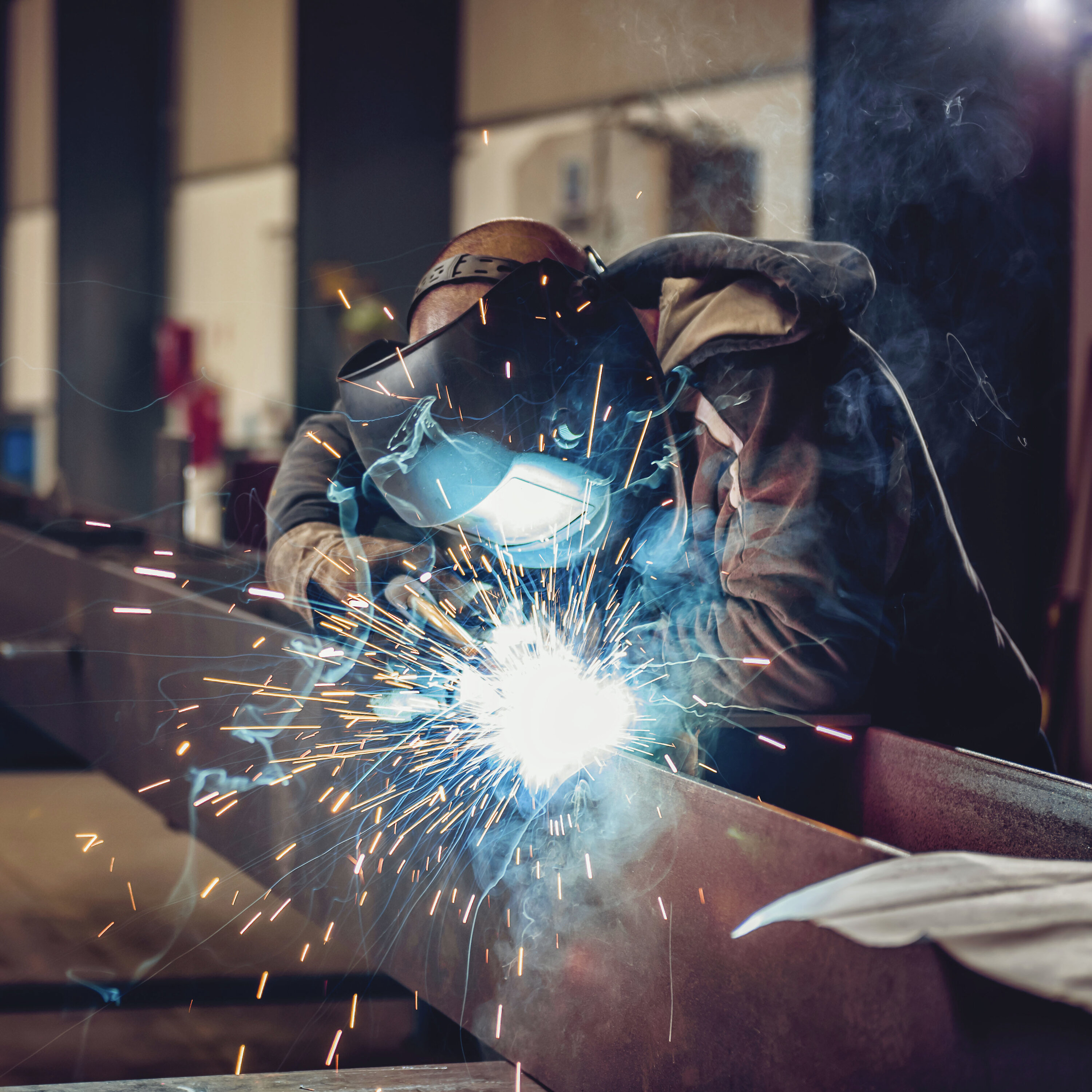
The “working class” in America used to conjure a vivid image: factory workers, blue-collar jobs and a political coalition born out of the Industrial Revolution. But as Republicans and Democrats try to court voters ahead of midterms, a question keeps coming up: What is the working class today?
On today’s Big Take podcast, host Sarah Holder talks to Bloomberg Opinion columnist Allison Schrager, labor activist Bertha “Mama Cookie” Bradley and Distinguished Professor of Law Joan C. Williams about the moving target of defining and catering policy to working Americans.
Read more: Nobody Knows What ‘Working Class’ Even Means Anymore (bloomberg.com/opinion/articles/2026-05-29/grah…)
We have a special Bloomberg subscription offer for podcast listeners at Bloomberg.com/podcastoffer. (bloomberg.com/subscriptions/podcasts)
Hosted by Sarah Holder; Guests: Allison Schrager, Joan C. Williams, Bertha “Mama Cookie” Bradley; Produced by Rachael Lewis-Krisky and Brunella Tipismana Urbano; Edited by Aaron Edwards. Engineering by Emma Munger.
See omnystudio.com/listener for privacy information.
Transkriptvom Podcast bereitgestellt · Zeitmarken springen hin
Bloomberg Audio Studios.
Podcasts. Radio.
News.
Our priority is the working class.
Democrats.
I think it shows you how deeply out of touch the Republican Party is with the concerns of working class Americans.
Republicans. This is a working families administration. This midterm season, everyone's talking about the working class.
And they are really the truly the enemy of the working class.
But who are the working class really? Politicians, pundits and pollsters have all been asking this question because these days it seems like there isn't one clear answer. Is it a cultural signifier, an economic category? Is it about your education or is it about working a particular kind of job?
When you're talking about working class, you're talking about the people.
That's Bertha Bradley. She's 67 and lives in Durham, North Carolina. She goes by Mama Cookie, inspired by a nickname her grandmother gave her.
You're talking about my grandmother. She was a working class. My grandfather was a working class. I'm a working class person that's not making enough money, that never made enough money to do anything to help me. Just enough to get by.
Bertha says she worked in fast food for 30 years. For 20 of those years, she was also a home health care worker. Three years ago, she retired from those jobs. But she still works as an activist and organizer with the Union of Southern Service Workers, fighting for fair wages.
Working class is when you're sitting there and the federal government is still sitting at $ 7. 25 an hour. When they know that they're right. For 17 years, you can't give up a wage?
To Bertha, defining the working class isn't so complicated.
Working class is people that are struggling every day.
But as economic conditions change in the U.S., the people who say they share in that struggle are changing too. A recent Pew survey showed that this year, more Americans are starting to consider themselves working class. Middle-income Americans, Americans without a college degree, and blue-collar workers were especially likely to identify as working class, according to Pew. But 50% of Americans with college degrees and 50% of upper-income Americans did too. So what's behind this working class identity shift?
And with the last primary over and general elections just around the corner, could it be a deciding factor for who takes power in Washington and beyond? I'm Sarah Holder, and this is The Big Take from Bloomberg News. Today on the show, we dig into how the definition of working class has evolved over time and what that moving target could mean for political messaging and policymaking.
The term has less meaning, and that might not be a bad thing. The labor force is very different. We have this huge change with AI. We honestly don't know how that's going to shake out. So maybe these definitions from the 19th century don't really serve us anyway.
Earlier this year, Bloomberg opinion columnist Alison Schrager wrote a piece headlined, Nobody Knows What Working Class Even Means Anymore. So I wanted her to take us back to a time when the definition was clearer. Alison, when did the idea of a working class emerge in America? Who was this term invented to describe?
Well, it's described factory workers in the sort of earlier industrial days. Sort of this downtrodden group that didn't have a lot of education, worked physically hard, maybe didn't even have a very long life because of that work, and didn't have a lot of representation.
And in the 20th century... The idea of the working class wasn't just in economic status. It wasn't just about working hard, not making a lot of money. It was also sort of a political identity. Why was that so important?
A lot of factory workers organized, you know, in the 20th century, and they also gained a lot of political power. There became this sort of political resonance of the working man, someone who worked with their hands, maybe, you know, was part of a union. And this sort of became the backbone in the mid-20th century of the middle class as well.
And I don't know if you recall Joe the Plumber a couple decades ago.
The prototypical campaign talking point. Joe the Plumber, the middle class American voter just trying to make it work on his salary.
Yeah. I mean, a lot of plumbers aren't middle class. A lot of them earn actually quite a lot of money. But there's this image of them being working class. You know, they work with their hands. They get dirty. They have to wash their hands at the end of the day and do all these sort of physically demanding things. Yeah. Anyway, it's not necessarily maybe as economic. It sort of, again, you kind of are like, I'm the salt of the earth.
I speak for the common man. It had all of that.
I mean, the idea of and the definition of working class has been shifting. In recent years, it's no longer this 20th century idea sprung from the Industrial Revolution. What is changing and what has that shift actually looked like?
I was just reading before here, Pew did a study where 60 percent of Americans consider themselves working class, which would suggest anyone who has a paycheck because like that's the percentage of people who are in the labor force.
That's up six percentage points from 2024. What do you make of that?
I think it might be the resonance around it is changing. And it could be sort of different political shifts, more solidarity. When I was in graduate school, there was a big movement to unionize us. It didn't work then, but it's worked since then. Traditionally, sort of knowledge workers, white collar workers, PhDs, feeling like they're part of this working class movement, working class history. So if you look at people who I would think of hold a lot of the definition of working class, not in terms of physical labor, but in terms of you know, financial uncertainty, physically sort of having jobs that are maybe demanding, but just not like factory work.
It would be service sector jobs. That is a very growing share of our economy. And I think they legitimately could be called working class.
The fact is that economic inequality has now gotten so bad that even younger college grads can't find jobs. a stable job in their 20s often and can't afford houses or childcare in their 30s.
That's Joan C. Williams, distinguished professor of law at University of California College of the Law, San Francisco, and the author of Outclassed, How the Left Lost the Working Class and How to Win Them Back.
That's the bad news economically. That's actually the good news politically.
Pew research shows that right before President Obama was elected, people with college degrees leaned more Republican. But that dynamic has flipped completely in the past two decades. Democrats are now the favored party among the college-educated. And as of 2024, Republicans had picked up a six-point advantage among those without a four-year degree. Joan says this election season, Democrats are trying to seize an opportunity to gain some ground back and speak more to both groups.
Democrats' tight focus on affordability reflects that their college-educated base is finally having problems leading a stable middle-class life. Does that mean that these younger college grads are now the working class and Democrats don't need to connect with a traditional working class in order to win elections? No, actually, if you think that, you just can't do math. 60% of voters in 2024 lacked college degrees, and you can't win an election if you really cannot make progress with 60% of voters. College-educated voters tend to be concentrated in larger cities and relatively limited areas of the country. And, you know, place matters in American politics. So places like the Rust Belt are more heavily non-college than the rest of the country.
And that's where elections are being decided.
What are the substantive differences between the kinds of policies that Democrats would be pitching to a college-educated voter caring about affordability and a non-college-educated voter caring about affordability? Isn't it just like, we'll make things more affordable, we'll lower health care costs, child care costs, housing costs? Isn't that a universally sort of resonant message if what you care about is affordability?
You're very right.
It is.
It's the number one priority across class lines. This is from a study that Jared Abbott and I put out just a few weeks ago called The Left's Coalition Crisis, understanding the massive divide between working class and college-educated voters and how to bridge it.
In the study, Joan and her colleague defined the working class as middle-income voters without college degrees. They compared those voters with college-educated voters that leaned Democrat and had incomes in the top 25 percent.
And we did find that affordable basics were the number one concern of both college-educated voters and non-college-educated voters.
So that's like the one thing that sort of bridged that divide, perhaps.
Exactly, exactly.
It's true that that is the cross-class bridge, but there are a huge number of differences. For example, 10 out of 12 of the top working class priorities are economic and That's not true for college grads. A lot of their highest priorities are cultural. First of all, defense of democracy is really high. And then other sort of culture wars issues are really quite high. The other thing is that college grads' top economic priorities, they all concern prices.
Whereas for the working class, their top economic priorities also concern fair wages, economic opportunity. So although college grads are focused solely on the price side of the affordability equation, non-college voters are also focused on the wages side. Huge numbers of Democratic campaigns this cycle are focusing on affordability issues.
Paychecks and prices is what they should be focusing on and what they are focusing on. And if Democrats can position themselves as being the party to insist that hard work should yield a stable life, that's a very, very compelling message.
With midterms rapidly approaching, who wins might just come down to which party understands the priorities of working Americans. So how are Republicans adapting as Democrats try to regain ground? And who could come out on top? That's after the break. Joan, your research really focuses on Democrats and Democratic strategy. You're looking at how Democrats can better speak to and serve voters that are considered working class. But how are Republicans adapting their messaging and their policies to this economic moment?
Well, Republicans are struggling. I mean, Republicans traditionally have had close to perfect pitch culturally in connecting with these voters in the middle. And Trump in particular has had close to perfect pitch, but he's getting a little off in doing things like saying that he doesn't give a fig about affordability. And Trump's second term has not centered issues of creating a stable floor for the American worker. So Republicans are struggling now to get him back on focus.
Trump's hold on working class voters of color, particularly Latinos, has really, really sharply eroded. The fact that Latinos who are literally citizens are being dragged off the streets probably has an effect. It's also part of a larger effect among working class voters. Trump's support, even among white working class voters, is finally beginning to erode some. And he hasn't done the things that he promised to do to help working class voters. And in fact, in many, many ways, he's made prices higher, farmers' lives more difficult. So he's reaping what he's sown.
I'm wondering where the Democratic Socialists of America fit into this conversation, because we've been talking about Democrats and Republicans, but DSA-backed candidates have made headway, at least in primaries, in Michigan, Florida, New York, and Do you see them as potentially resonating more with working class or middle class voters?
Well, if you look at the profile of someone who says they're a socialist, it's these younger college grads. By at least one survey, socialism is now more popular than capitalism among those under 30, although free markets are really popular. So What socialism means to Americans is super mixed up and super scrambled. But the fact that people who have done everything right, studied hard, gone to college, graduated from college, and find they can't get a stable job, that's very alienating.
As we saw, I mean, that happened to blue-collar workers a generation or two ago, and the result is they went to the far right. Now it's happening to more privileged workers, and the result is that they also are becoming more extreme, but they tend to go to the far left.
I am wondering what candidates gain through policymaking that targets this more expansively defined, perhaps, working class, and what they lose.
What they gain is a potential for what I call the Mamdani Economic Coalition. which is working class people and these younger college grads. That's what they gain.
Bigger tent.
The upside is tremendous. What the risk is, the fact that younger college grads are meeting bumps in the road economically, that that will be used as an excuse not to connect culturally with people who are in the middle. Affordability is important, but It's also really important to recognize that in order to create a coalition with working class voters, you have to kind of meet them where they are culturally, because there are massive, massive differences culturally between middle status, non-college voters and college educated liberals. And far too often, Democrats...
have talked in a way that signals that their only or most important audience is these college-educated elites. And that's really important to turn that around. You know, as someone said, saying affordability five times fast is not enough.
What do you want to see from elected officials and candidates as we head into the midterms? What's top of mind for you?
A living wage. Affordable housing, better health care, better child care, better schools for our children.
That's Bertha Bradley again. Mama Cookie. Her message for politicians and policymakers from either party?
Talk to the people. The people. And quit coming out in the communities and running these ads or whatever. Quit doing that. Talk to the people. Ask us what we need and keep them promises. Keep what you're saying you're going to do. Don't come into our communities and then you get your votes in and then you're gone. And we don't see you no more until it's re-election time again.
They need to stop doing that because you're making people lose faith and hope in the government system, period.
This is The Big Take from Bloomberg News. I'm Sarah Holder. To get more from The Big Take and unlimited access to all of Bloomberg.com, subscribe today at Bloomberg.com slash podcast offer. If you liked this episode, make sure to follow and review The Big Take wherever you listen to podcasts. It helps people find the show. Thanks for listening. We'll be back tomorrow.
