

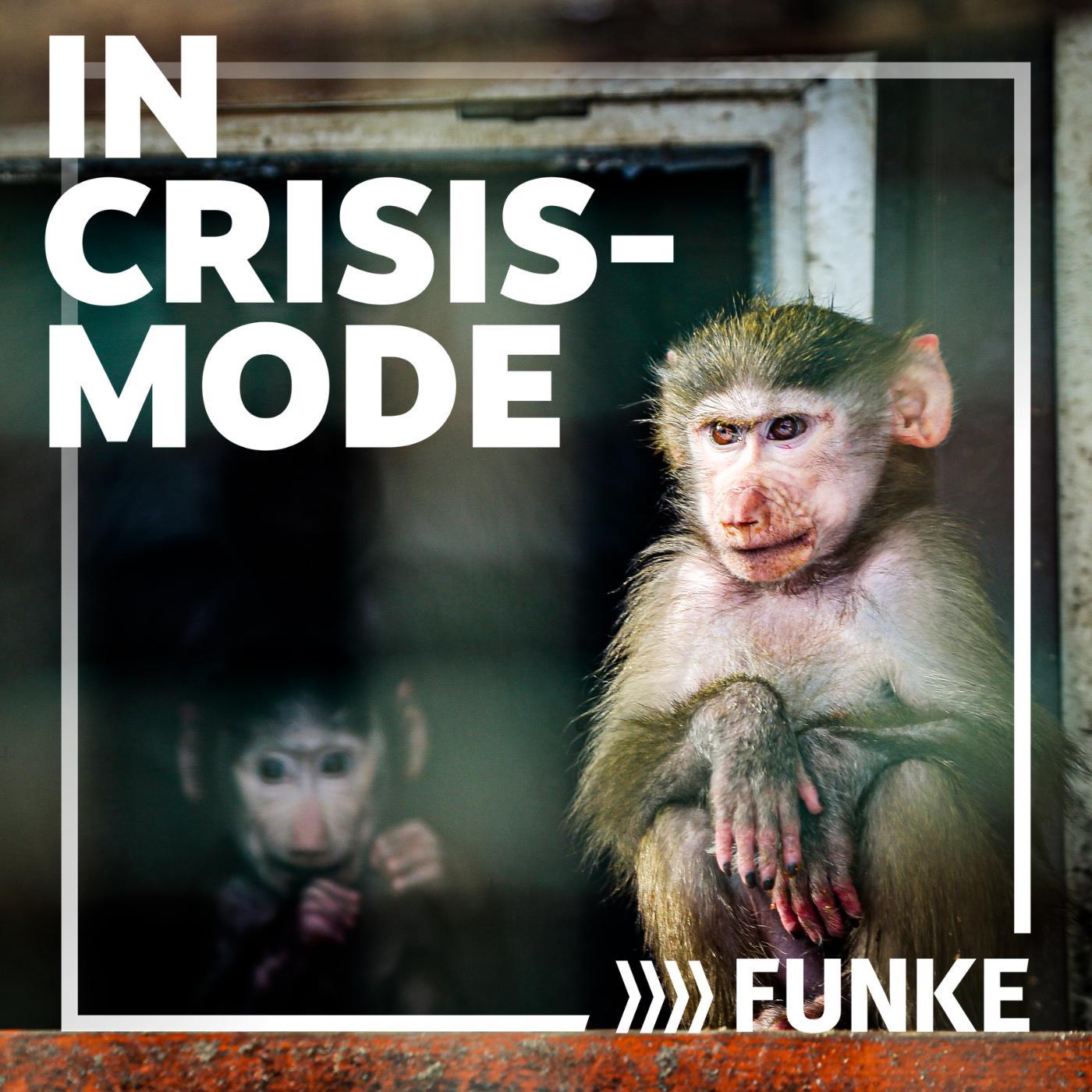
Im Krisenmodus· Folge 146
A Leopardess, War, and the Animal Rescuers of Kharkiv
Mittwoch, 15. April 2026 · 26 min
Kapitelklicken springt direkt hin
Shownotes
This episode was made with AI.
At the Feldman Ecopark in Kharkiv, leopards, monkeys, alpacas – and hundreds of animals from frontline regions – live together. Since the beginning of Russia’s war of aggression against Ukraine, the park has repeatedly come under fire: enclosures have been destroyed, staff members killed, and power outages are frequent.
Despite this, the ecopark is once again becoming a place where not only animals are cared for, but where people can also briefly find relief from the war. In this episode of “In Crisis Mode”, FUNKE war and crisis reporter Jan Jessen reports from Kharkiv: on the evacuation of thousands of animals under fire, on daily life with power cuts and drone attacks, and on a zoo that has suddenly become part of the front line itself.
In addition, animal welfare activist Ralf Seeger talks about his missions in combat zones: abandoned animal shelters, evacuations with special units, and the question of why, in war, he makes no distinction between humans and animals.
Guests:
Olena Klymenko – spokesperson for Feldman Ecopark near Kharkiv, responsible for communications and rehabilitation programmes for both people and animals in the park.
Ralf Seeger – founder of the organisation “Heroes for Animals,” through which he has been delivering humanitarian aid to Ukraine since the start of the war and evacuating animals from heavily destroyed frontline areas. He is also known from the VOX documentary series “Harte Hunde – Ralf Seeger greift ein.”
Host:
Jan Jessen – Head of Politics at NRZ and war and crisis reporter for the FUNKE Mediengruppe.
🧭 Chapter overview
1 – The Leopard and the War
Opening at Feldman Ecopark: a leopard, the dog Amira, artillery in the background – a zoo on the frontline.
2 – From Excursion Site to War Zone
Olena Klymenko describes the park before the war – and what has been left of it since the attacks began.
3 – Evacuation Under Fire
Thousands of animals are evacuated from the park. Many die, staff members are killed – an attempt to save a system in chaos.
4 – Everyday Life in Emergency Mode
Power cuts, generators, drone attacks – and a petting zoo that also becomes a target.
5 – Animal Rescue at the Front
Ralf Seeger on missions in the Donbas: destroyed animal shelters, evacuations, drone threats, and cooperation with the military and police.
6 – Between Frontline and Refuge
A zoo as a place of shelter for people – and the question of what places like this can still offer during war.
📬 Contact & feedback
Questions, comments, or suggestions?
✉️ krisenmodus@funkemedien.de
🟢 Subscribe Now
“Im Krisenmodus” – available on all major podcast platforms:
Spotify (open.spotify.com/show/0IQW1w25NYSrz60aAPzwvB?s…) | Apple Podcasts (podcasts.apple.com/de/podcast/im-krisenmodus/i…) | Deezer (deezer.com/de/show/3737197) | YouTube (youtube.com/@Krisenmodus-Podcast_FUNKE)
📅 New Episodes
Every two weeks, always on Wednesdays
“Im Krisenmodus” is a podcast by the FUNKE Mediengruppe
Transkriptvom Podcast bereitgestellt · Zeitmarken springen hin
Die Übersetzung von Jans Stimme vom Deutschen ins Englische wurde mit einer KI erstellt. Die Black Leopard moves slowly, crouched low, toward the fence, growling softly. Her eyes are fixed on a dog walking beside me through the snow. Amira, that's her name, seems completely unimpressed. For her, this is everyday life.
She knows the leopard is safely inside her enclosure and can't harm her. Dangerous, truly dangerous. Here is only the human being. In the background, artillery can already be heard. For the animals in Feldman EcoPark near Kharkiv, the war has long since become part of the soundscape. Before the Russian invasion four years ago, this park was a popular destination for families.
Today, it is a place where animals continue to live under fire and where people try to cope with the war. Children from occupied territories, traumatized soldiers, journalists, rescue workers. The question is, how do you rescue animals in a war where there isn't even enough protection for people? And how can a zoo still become a kind of refuge?
In Crisis Mode, the podcast from Conflict Zones with Jan Jessen. Hello, I'm Jan Jessen, crisis and war reporter for the Funker Media Group. During my most recent visit to Ukraine, I also traveled to Kharkiv, where I visited Feldman Ecopark, located about a 15-minute drive from this northeastern Ukrainian city of millions.
Around 5,000 animals once lived in this park. In this episode of our podcast, I speak with two people who are fighting for the lives of these animals in very different ways. Olena Klimenko, the spokesperson for Feldman Ecopark, and Ralf Seeger, founder of the organization Helden für Tiere, known to many from the Vox documentary Harte Hunde, Ralf Sieger greift ein.
Wir beginnen in der Park mit Olena. Wenn du auf Feldmann Echo Park kommst, die erste, die du in der Entrance sehen kannst, ist eine große, black Memorial Board. Auf es sind Bilder von Menschen, die ihre Leben zu retten, die Tiere zu retten. Animals, die die in den Russland wurden, die in Februar 2022 verabschieden.
At der Zeit, die Frontline über Kharkiv rollen. Russland waren in der Stadt, und die Krieg in der Stadt auch machte massive damage. zu diesem Zoo. Was folgt war ein Unprecedented evacuation effort. Thousands of animals waren brought to safety. Others that had escaped from destroyed enclosures were recaptured.
All of this took place under life-threatening conditions and six people lost their lives. That blackboard at the entrance of the park commemorates them. Olena welcomed us as we entered the park and guided us through the grounds. It's a vast area, covering around 140 hectares. It feels like a mix between.
Als erstes als Januar, eine Glidebomb hat den Ort geführt. Last Jahr gab es viele Droner-Aktiken, so die Park ist noch nicht sicher, aber die Tiere sind nicht sicher. wieder hier leben. At the beginning, I asked Olena what kind of place this park is. She told me it was founded in 2011. At its peak, it housed around 5,000 animals from roughly 300 different species.
In addition, it offered therapy programs for children with disabilities, for veterans, and for people simply seeking rest and recovery. There was equine therapy and other services, and everything was free of charge. The park was funded by an oligarch, a very wealthy man for whom it was important to create a place like this in Kharkiv, a place for relaxation and escape.
People from all over Ukraine used to come here to unwind, to stroll through the grounds and to see the animals. And then, as mentioned, the Russian invasion began. All the time, everyone was talking about the war, but everyone was hoping it would never actually happen. Evacuating 5,000 animals at once would have been impossible.
When we began the large evacuation, around 300 animals died due to shelling and stress, and six of our employees and volunteers were killed during these attacks. I am grateful to all the zoos and animal parks that took in animals. The animals were distributed all across Ukraine. This shelling lasted nearly 200 days. For 200 days, the zoo was under constant fire.
Naturally, no enclosure remained intact. As Olena said, around 300 animals were killed. Many others escaped at the time, fleeing into the nearby forests. They were later brought back or recaptured by helpers and transported to the west of the country to keep them safe. As I mentioned earlier, six people lost their lives.
Six staff members who tried to help, who attempted to get the animals out safely. They were killed during the Russian shelling. Then, in the autumn of 2022, a Ukrainian counteroffensive pushed Russian forces back behind the borders. That's when the constant shelling of the park finally stopped. The park's management began to consider reopening, to start bringing animals back.
But the damage from that time is still visible today. There are small memorials marking where rockets struck. Craters can still be seen. At the same time, it's clear how much has been rebuilt in recent years and that many animals have returned. There are wolves in the park, bears, leopards, including the very rare black leopard I mentioned at the beginning.
There are many birds and even a kind of petting zoo. The park is, in a way, alive again, but it remains dangerous. At present, there are about 1,500 animals here, compared to the former 5,000. Many of them are animals rescued from combat zones. This war in Ukraine is devastating for wildlife. Rockets, artillery and mortar fire are destroying entire forest areas near the front lines.
Deer, roe deer and other animals are dying in large numbers. People fleeing war zones often leave their animals behind. Pets like dogs and cats, but also livestock such as cows and pigs. The team at Feldman EcoPark takes care of these animals. At the same time, the park has once again become a place where people come, People who are themselves traumatized by the war.
I want to ask Olena what rehabilitation here actually means in concrete terms. Rehabilitationen Programme sind Menschen, die sich psychologisch verabschiedet hat. Ich bin selbst die Menschen, die über die Ocupation verabschiedet hat. Wir offeren eine große Menge Aktivitäten hier. Ich selbst experience die Ocupation, und dann kam hier und starte arbeiten in der Park.
Die Gruppen, die zu uns kommen, sind sehr divers. Some simply want to sit quietly with the animals, others go to the llamas, hug them, feed the lemurs, talk to the animals, just to find a bit of calm. There are also groups who come here with psychologists, especially with children. We then organize different activities and sometimes even bring facilitators to work with them.
And we offer hippotherapy, meaning therapy with horses. Wenn es die Kinder, dann können wir uns anwählern anwählern anwählern anwählern anwählern anwählern anwählern anwählern anwählern. Olena is not just the park's spokesperson, she is herself shaped by the war. She lived through the occupation and now works in a place where people hug llamas, feed monkeys and sit in small garden shelters, just a few kilometers from the front line.
But Feldman EcoPark is not only a rehabilitation center for people, it is also a refuge for animals that no longer have anyone. And unfortunately it remains a target of attacks. As I mentioned earlier, when you walk through the park, You can see fresh traces of strikes everywhere. The large aviary that was hit in January.
The drone attacks in the middle of last year. It all feels somewhat surreal. You can't help but wonder, why attack a zoo? Why target a place like this? Olena doesn't have an answer either. She takes me to the contact area, essentially the park's petting zoo, and shows me a goat. It looks adorable, white, with a shaggy tuft of hair, and very trusting.
It comes right up to us. Und, als sie mir mit einem smiley sagt, »This ist die größte Mann im ganzen Zoo.«. Das ist Snowy. Der Großteil ist 92, und der Großteil ist 98. Sie lieben ihn und nicht wollen ihn zu begetan, so er hat ihn zu uns gegeben. Er ist jetzt, so zu sprechen, der man in der Stadt der Nähe ist.
Diese sind nur die Pets von den Bereichen der Frontline. Und das hier ist unsere Kontakt-Zone. Anyone kann kommen, spenden mit ihnen, hug sie. Especially Kinder love es. Last Jahr, ein Schahead-Drone struck hier in der Kontakt-Age und zwei Götz. Some others suffered concussions. A drone that simply, randomly, hit our animals.
It's already hard to comprehend. On the one hand, there is this petting zoo, a place where children come to spend time with the animals, to pet them, to feed them, to enjoy a moment of normality. And then, Russian forces fire a drone into exactly this area. Of course, it is impossible to say with certainty what exactly happened, whether it was a malfunction, whether the drone was shot down.
It is difficult to imagine that something like this was deliberately intended, even though this war is marked by numerous war crimes. In any case, this is not a military target in any meaningful sense. If anything, it feels like a waste of ammunition to strike a place like this. But as I said, we simply don't know. Was ist sicherlich, dass es sehr distressing ist zu hören, was passiert in diesem Zoo.
Aber Feldmann Eco-Park ist nicht nur mit Schellingen, es ist auch mit etwas, was viele Menschen will erkennen von den news. Russische Anfragen auf Energie Infrastruktur. Last Winter, ich sah das selbst. Hundreds of thousands of Menschen in Kyiv, Odessa und Kharkiv waren nicht ohne Energie. Und of course, this also affects Feldman Ecopark.
Power outages are life-threatening in a zoo that keeps exotic animals, Die Probleme sind wirklich sehr, weil wir auch von den Abläuern beschäftigen, wie die Elektrik, und sie verliebt sind. Wir haben viele Probleme mit Elektrik und Heating. In einigen Bereichen, die Wärmung auf die Elektrik beträgt auf die Elektrik, und wir haben constantes Power-Otages.
Wir haben Tiere, wie Zebras, Möge und Lemurs, die in den Umständen müssen, wo die Temperatur nicht mehr unter 25 Grad Celsius ist. Wenn die Kraft rauskommt, wir auf die Generator. Aber weil sie fast alle Zeit laufen, sie ständig abbrechen. Wir sind sehr dankbar zu unseren Partnern aus Deutschland, die uns mit Generatorn und Finanzamt unterstützen.
Denn Sie können nicht sagen, dass es heute kalt wird, und wir werden nicht mehr können, Sie heute. Wir sind wirklich dankbar, dass sie mit den Generatorn unterstützt, und mit einer bestimmten Unterstützung. Und dank dieser Stelle, wir haben auch wirklich die Zimung verletzt. So, as a result, generators from Germany are being used in an attempt to keep the animals warm.
They also rely on heating, something I witnessed myself, by using wood in some areas. In certain enclosures, especially in the monkey houses, you can see smoke rising from the roofs. When I asked about it, I was told they have started using wood for heating because there is not always enough diesel for the generators.
And even when there is fuel, the generators cannot run continuously, they would simply break down. So they improvise, as they so often have to do. In this case, heating is partially done with wood. At the same time, Russian forces repeatedly target the energy infrastructure with missiles and other munitions, striking substations and other critical facilities.
In that sense, Feldman EcoPark has also become a symbol of many aspects of this war. Civilian infrastructure under attack, volunteers forced to improvise, people stepping in to help, and a massive dependence on external aid. Another person who repeatedly travels to the front lines to rescue animals is Ralf Seeger.
Many may know him from the Vox documentary, Harter Hunde, Ralf Seeger greift ein. Ralf is a martial artist, animal welfare activist, and founder of the organisation Helden für Tiere. Since the beginning of the Russian invasion four years ago, he has been travelling to Ukraine again and again. I spoke with him about why he decided to become active in this war and how dangerous his missions are. Vielen Dank.
Also bei mir war diese Entscheidung also sofort gefallen. Der Krieg hat angefangen und, oder der Krieg fing an, so muss man das sagen. Und ich habe zum Wort zum Steve gesagt, du musst fahren und dort helfen. Am Anfang war er natürlich nicht so begeistert. Steve war wie ich auf ehemaliger Fallschirm. For me, that decision was made immediately.
The war had started, or rather, I should say, when the war began. And I told Steve, I have to go and help there. At first, he wasn't too enthusiastic because he naturally thought, man, we might not come back from this. Steve, like me, is a former paratrooper and knows the dangers of war, and he understands what can happen there.
That was always a major issue. But shortly afterwards, he came to me and said, wherever you go, I'm coming with you. And then, right from the very beginning of the war, we set off, straight to Borodyanka. At that time, Bucha and Erpen were already there. Es war extrem schlecht. Und das ist es, dass wir sofort begannen.
Wir konnten nicht weitergehen. Ich still remember Boradyanka in particular. Es war ein verrückter Fall, mit mehr als 700 oder 800 dogs in einem shelter die die Hörer hat, die die Tiere zu fendern. Und Sie haben einfach zu verstehen, dass sie sich nicht mehr zu tun haben, weil sie nichts zu essen haben.
Und sie dann hat sie die deaden Böden ihrer companions. Ich sage es genau so. Ich habe viele Tiere dort auch. Wir haben sie in Kyiv gebracht. Wenn man die Augen in die Augen sieht, war es einfach sehr heart-breaking, zu sehen, was diese Schmerzen hatten. Es war eine sehr, sehr schwierige Zeit. Wenn man dann in die Augen von diesen Tieren geschaut hat, war das einfach nur schlimm, was diese armen Wesen mitgemacht haben. Das war eine sehr schlimme Zeit.
Ralf Seeger set out at a time when many were still wondering how long this war would actually last. He and his team were already standing in the suburbs of Kiev, in Bucha, Irpin, Borodyanka, places that would later become synonymous with war crimes. He says that animals do not distinguish between Russian or Ukrainian, and he in turn does not distinguish between humans and animals.
After that, we were of course able to continue traveling into the Donbass region, which we still do to this day, and we carried out many, many large-scale rescue operations there, for both humans and animals. It was always bilateral, because I think it is important that, when you are operating in a war zone, you help wherever help is possible.
I don't differentiate between whether it's a cat, a dog or a human. I try to evacuate everything. Ja, das ist, natürlich, sehr kommentierbar. Ich muss sagen, dass ich manchmal ein bisschen flinche. Wenn die Leute so tief in die Worte, so stark mit den Anfragen, ich auch in meiner eigenen Erfahrung bemerke, wenn ich etwas über die Worte auf sozialen Medien beschreiben, ich bekomme eine solidere Antwort.
Aber wenn ich etwas über die Anfragen, über ein Schönen Hund sitzen irgendwo allein, die Reaktionen sind sicherlich stärker, und diese Posts erreichen viel mehr Menschen. Und das macht mich manchmal wundern ob die Standards haben sich geändert. Aber was ich wirklich an Ralf ist, dass er sagt, wir versuchen, alles zu schützen, including Menschen, die in危险.
Er ist nicht nur auf die Föße auf die Tiere. In der gleichen Zeit, muss man auch sagen, dass was Ralf Seeger und andere animal-rescuers sind, ist extrem gefährlich. Die Frontline in Ukraine hat sich verändert dramatically. In der Beginn, waren mainly reconnaissance drones in den air. Today, working near the front has become extremely dangerous for journalists, but also for aid workers, because the so-called kill zone has expanded to around 40 km in depth.
Drones are everywhere in the air, attacking anything that moves through the area, and I asked Ralph how much this has changed his missions. Jan, wir haben am Anfang, wie ich das schon erwähnte, schweren Beschuss erlebt immer durch Akküllerie. Raketen, die waren sehr gefährlich, denn man muss wissen, die sind extrem stark.
Zum Beispiel die S-300. At the beginning, as I already mentioned, we experienced heavy shelling, mainly artillery and rockets. They were extremely dangerous. You have to understand, they are extremely powerful. For example, the S-300 systems. If you were within a few hundred meters of an impact, you were effectively gone.
Over the years, it has become much more insidious, especially what you mentioned, drones. That is something that is no longer controllable. Wherever you move, you basically have almost no chance. That is why I carry out my missions together with Kraken, the Ukrainian Military Special Unit, and the White Angels, the National Police Unit of Ukraine.
Sie haben speziell Equipmenten, aber nur diejenigen, die nicht kontrolliert werden. Against Fiberoptik Dronen, es gibt keine Möglichkeit, sich zu retten. Good Freunde meiner Freunde, ich bin in Kupiansk mit ihnen auf meiner letzte Mission vor Weihnachten. Ich habe auch zwei Kinder, weil ein Dronen die Haus neben der Tür geflogen hat, und der Mann hat died.
Wir haben sie geflogen. Shortly afterwards, the dam of a huge reservoir was blown up. And those two people who were with me on that very day, a 23-year-old female police officer and a 35-year-old male officer, were a few weeks later in exactly the same area and were hit by a drone. They didn't survive.
I have experienced this so many times. In that place, life and death are sometimes incredibly close to each other. Und die beiden gibt es nicht mehr. Das habe ich so oft erlebt, Leben und Tod ist da manchmal ganz irgendwie beieinander. Ja, und natürlich muss man sagen, dass Ralf auch die Geschichte von Feldmann Eco-Park folgte.
Wie ich sagte, am Anfang der Krieg, als die russische Forces in Februar 2022 eröffnet wurden, war das Park unter konstantem Schelling. Viele, viele Tiere sterben. Helper haben auch ihre Leben verloren, während die Tiere evakuieren. Und Ralf hat das selbst gesehen. Er war da auch auf der Seite. Wir waren in Harkow und dann kriegte ich durch den Sascha mit, aber auch durch die Polizei von dort, von Harkow, dass im Ekopark noch viele Tiere sind.
Ich kannte den Park gar nicht und dann wurde mir gesagt, es ist fast unmöglich dahin zu kommen, weil der Okkupant auch noch Teile vom Park kontrolliert. Ich wusste gar nicht, was das ist. Das ist so ein Freizeitpark gewesen mit vielen Tieren da drin. Ja, als du gesagt hast, Eko Park. Ich erinnere mich, wenn wir in Kharkiv waren, und dann habe ich von Sascha, aber auch von der Polizei in Kharkiv, dass es noch viele Tiere gibt.
Ich wusste nicht, dass es dann auch nicht möglich ist, weil die occupierenden Teilen waren, die es noch nicht kontrolliert. Ich wusste nicht, was es war. Es war quasi ein Leisure Park mit vielen Tiere im Hintergrund. Ein sehr guter Ort, aber auch außerhalb Kharkiv. Wir fahren dort, und es gab noch viele Checkpoints, und sie fast nicht uns durch.
Natürlich war es mit Sascha, und dann kam wir, und dann sah wir eine große Bison, die noch ein paar Bison tiefer waren. Ich glaube, da waren auch ein paar Lions und Bears da. Auf der Weg, ein whole group of Pigs, die es kamen, kam vor uns. Und dann war die Ukraine schon wieder da. Sie waren in den Trenchen, in den Trenchen.
Und sie sagten uns, hurry, hurry, get out of hier, weil die Schelling immer wieder kommt. So we left again, but we also met staff members from the park. I think a day or two later I learned that people had been killed there as well in those attacks. And many animals had died. Nazar and Arrest, for example, were there with us.
They also rescued a goat, which I believe is still alive today in Lviv, at Domivka. Es war eine ziemlich wilde Situation, und ich still remember die Wälde da sehr clearly. Huge impact craters überall, right next to the roads, constant shelling. Ich bin eigentlich glücklich, dass es jetzt wieder peace ist in dieser Bereich.
Aber wir müssen nicht vergessen, dass so viele Tiere, die in der Nähe des Lebens, die nicht weg sind, die in schulden. Entweder von starvation or were torn apart by shells and rockets, and that many people also lost their lives there. Da in dem Gebiet wieder Ruhr eingekehrt ist. Ich war, wo wir letztes Nacht, wo Chans gefahren sind, auch noch da vorbeigekommen.
Habt ihr wieder gesehen, dass dort gearbeitet wird. Also das freut mich, aber man darf nie vergessen, dass dort so viele Tiere, die auch eingesperrt waren, die da nicht wegkamen, die haben keine Option gehabt, ganz, ganz schlimm verhungert sind oder zerfetzt wurden von Granatenraketen und dass natürlich da auch viele Menschen ihr Leben gelassen haben.
Es ist nicht über die Fronten auf eine map. Es ist über sehr konkrete lives. A Goat wie Snowy, die Kinder, die Kinder, die sie zu strocken, die sie, die sie, die sie, die sie, die sie, die sie zu leben. Olena hat gezeigt, was war zu einem Ort war, das war ein Publikum, months von Schelling in 2022, destroyed enclosures, dead animals, dead colleagues. Und yet, sie hat es geübt.
Für mich, das auch wurde ein Symbol von Ukrainianem Resilienz, Das ist das, was wir oft gesagt haben, in diesem Podcast zu sprechen. Diese Determination nicht zu geben, zu sagen, wir gehen, weil wir sehen, in diesem Ort. In diesem Fall, es ist ein Ort die Menschen brauchen, wo sie sich calm finden, wo sie sich zurückkehren, wo sie sich von den Horrors haben, wo sie auf der Fronten erleben, wo sie Soldaten, Journalisten oder Rescue-Worker sind, und wo Kinder von den Unterrichtern von den Unterrichtern auch kommen können.
Und manchmal, alles überlappt. In diesem Park heute, sie auch in die Tiere aus den Frontline-Ares nehmen. In dem sind die Tiere, die in den Nets getrennt, die jetzt über die Reise in den Combat-Zonen zu protecten Menschen von Schelling und Drone-Attacken. Diese Net-Tunnel, die für Kilometreien, sind es um Menschen zu retten, aber für die Tiere, sie werden ein Threat.
Tiere getrennt in sie, und sie, auch, finden ihre Weg zu Feldmann-Eco-Park, wo sie versuchen sie zu retten. Ralph Seger tells a similar story from a different angle, from vans full of dogs and cats, from destroyed villages, from operations alongside special units, where drones can become lethal at any moment.
He travels from the Lower Rhine to the front lines because it is not reasonable, but because he believes it is right, to bring back animals and humans who otherwise would have almost no chance. Neither Olena nor Ralph can stop this war, and neither can we, Aber sie können sich nicht alles, was wir sehen, wie wir die Menschen sehen, die wir sehen, wie wir die Tiere sehen.
Und das ist wo wir kommen, ob wir schauen, zu schauen, zu tun, zu erzählen, oder zu schauen, weil wir nicht mehr sehen, die Kriege. Das, auch, ist eine Entscheidung, und es hat die Vorteile für Menschen und die Tiere. Das war Krissen Modus. Der Podcast wurde von Alexander Baumeister, a journalist working at a radio station within the Funkamedia Group If you enjoyed this episode, follow us and leave a rating It really helps make our work more visible and feel free to send me suggestions for future episodes at christenmodus at funkamedian.de Take care, see you next time All the best, bye.
